

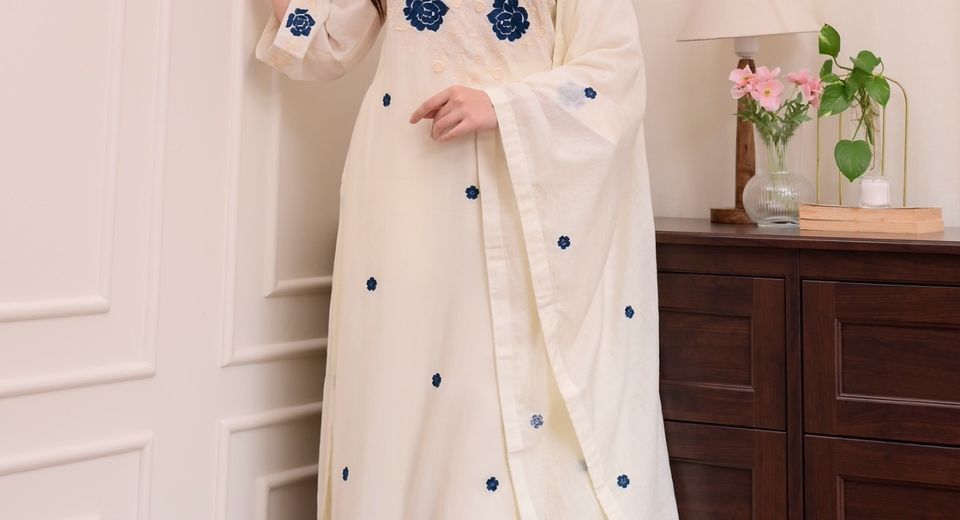
A flattering kurti begins with proportion, not a clothing size or a rule about hiding the body. The most useful Kurti Shapes and Hemlines That Flatter Curvy Women are the ones that allow comfortable movement, create visual balance and follow the wearer's personal style. A well-cut A-line kurti, a clean straight kurti or a controlled flared silhouette can all work beautifully when the hem, fabric and bottom are considered together.
Fit also means practical comfort. A kurti that pulls across the bust, catches at the hip or has a hem ending at the widest part of the calf will rarely feel polished, regardless of its label. The guide below explains how to evaluate salwar suits by line, length, fabric weight and styling details rather than relying on vague advice about wearing only dark colours or oversized clothes.
How to Read Kurti Proportions on a Curvy Body
Kurti proportions look balanced when the garment skims the body without pulling and the hem creates a deliberate relationship with the bottom. Three measurements matter most: the fullest body point, the length of the kurti and the width or volume of the trousers underneath.
Begin by identifying where the garment is most fitted. A kurti may follow the bust and release below it, remain nearly straight from shoulder to hem or widen gradually from the waist. None of these choices is automatically more flattering. The important question is whether the line gives enough room at the fullest area and whether the hem finishes at a visually comfortable point.
As a practical starting point, a knee-length kurti often measures roughly 40 to 44 inches, while a calf-length kurti may measure approximately 46 to 50 inches, depending on height. These figures are not fixed standards. A taller wearer may need extra length for the same visual effect, while a petite wearer may find a shorter hem easier to balance.
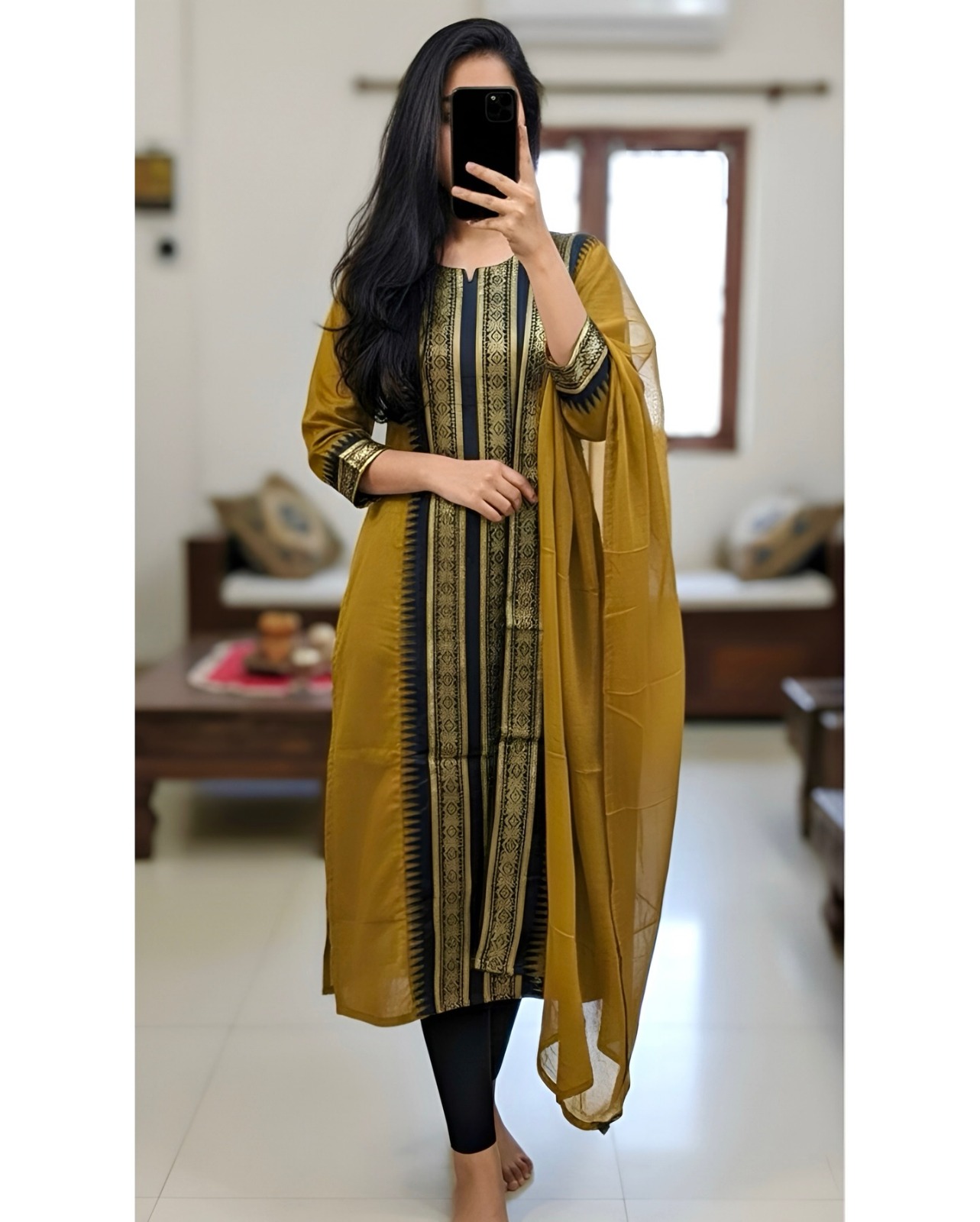
Vertical details can make an outfit feel longer without making the kurti tight. A centre placket, a column of buttons, an open-front layer, a long dupatta edge or a narrow printed panel can create an uninterrupted line. Heavy horizontal borders placed exactly at the widest hip point can interrupt that line, particularly when the kurti and bottom contrast sharply.
Kurti Shapes and Hemlines That Flatter Curvy Women
The most reliable choices include gently shaped A-line kurtis, straight kurtis with adequate ease, controlled flares and carefully placed asymmetrical or high-low hems. Each shape suits a different balance of comfort, structure and movement.
Why does an A-line kurti work so well?
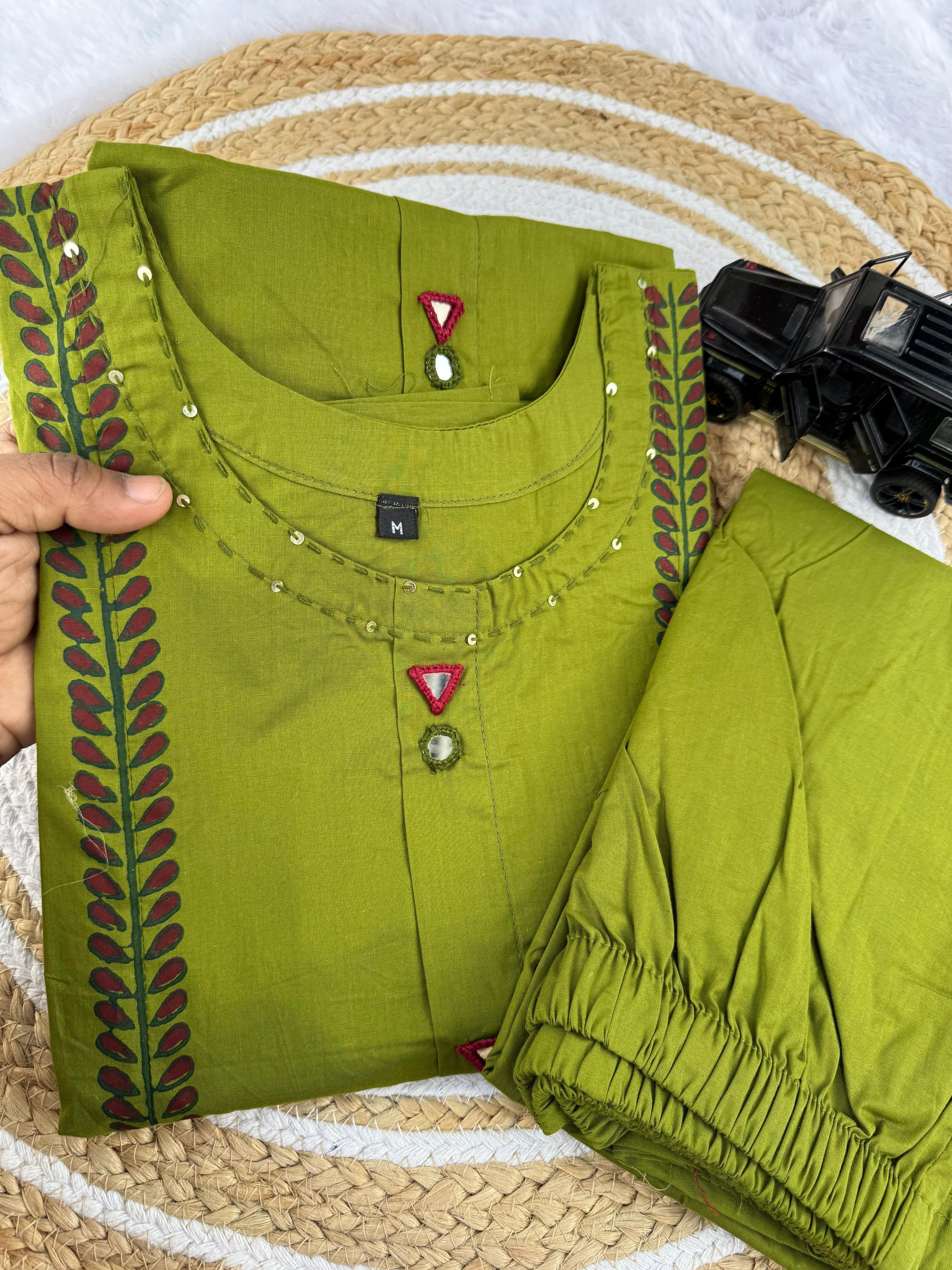
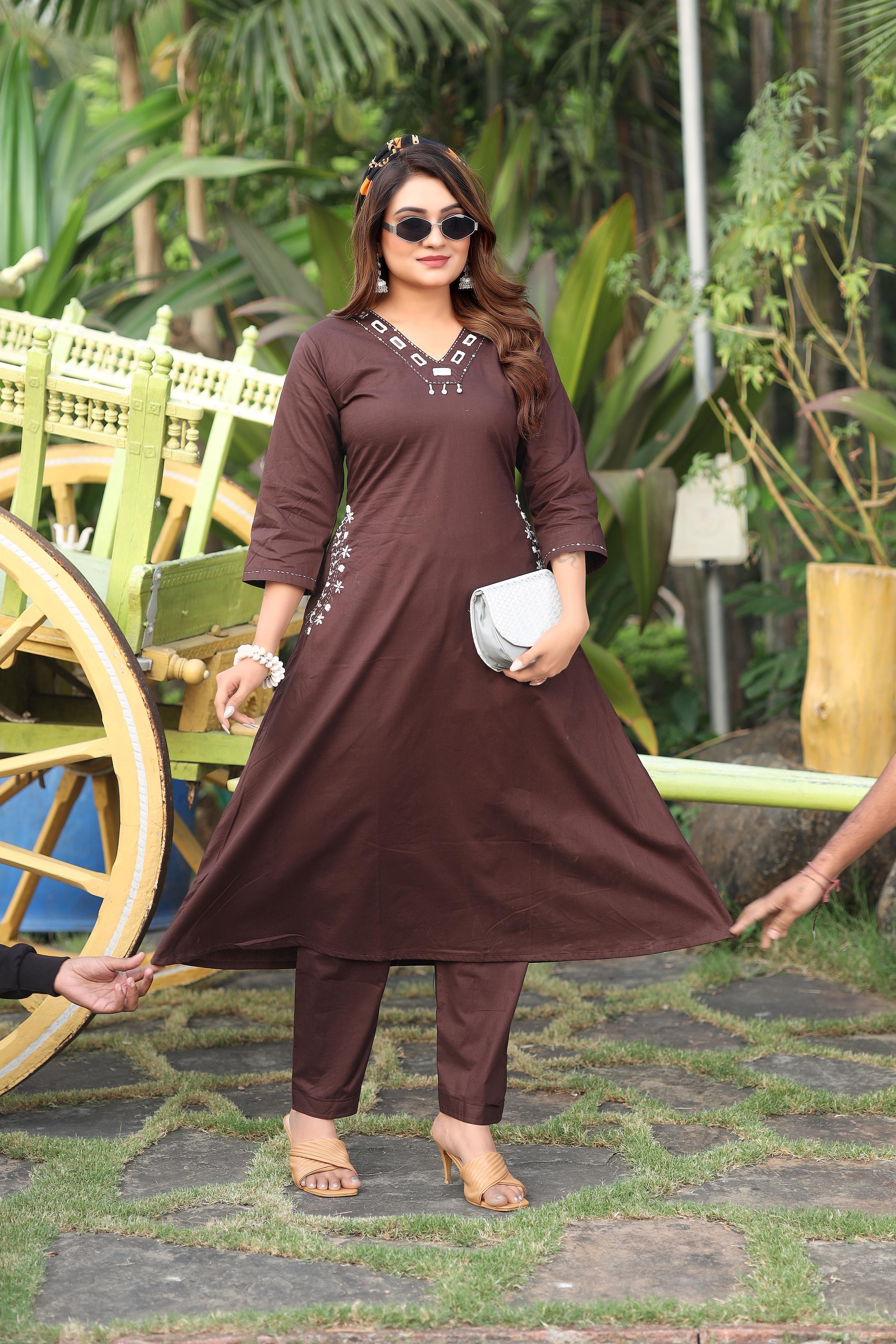
An A-line kurti works well because it creates gradual room from the bust or waist towards the hem instead of adding sudden volume at the hip. The silhouette follows the upper body and allows the lower half to move freely, making it particularly useful when paired with slim trousers, cigarette pants or leggings.
The flare should be controlled rather than extremely wide. A modest increase in width gives the eye a smooth outward line, while excessive gathers can add bulk around the stomach and hip. The Designer Cotton A-Line Kurti Pant Set with Mirror Work demonstrates how a shaped upper garment can be paired with a relatively neat bottom for a balanced outfit.
A-line kurtis are especially versatile for daily wear and semi-formal dressing. Cotton, linen cotton and lighter rayon generally hold the line without becoming stiff. For a festive outfit, mirror work or zari can be concentrated around the neckline and upper bodice so that decoration frames the face rather than widening the hip area.
When is a straight kurti the better option?
A straight kurti is a strong option when the garment has enough ease at the bust, waist and hip and the side seams fall cleanly from shoulder to hem. A straight cut doesn't mean a tight cut; approximately 3 to 5 inches of additional ease over the largest body measurement often gives a more comfortable, elegant result, although personal preference and fabric stretch also matter.
Side slits are important in a straight kurti. Slits beginning around mid-thigh or slightly above the knee can prevent the hem from clinging across the hip and make walking easier. A slit that ends too low may restrict movement, while a very high slit can change the visual balance of the outfit.
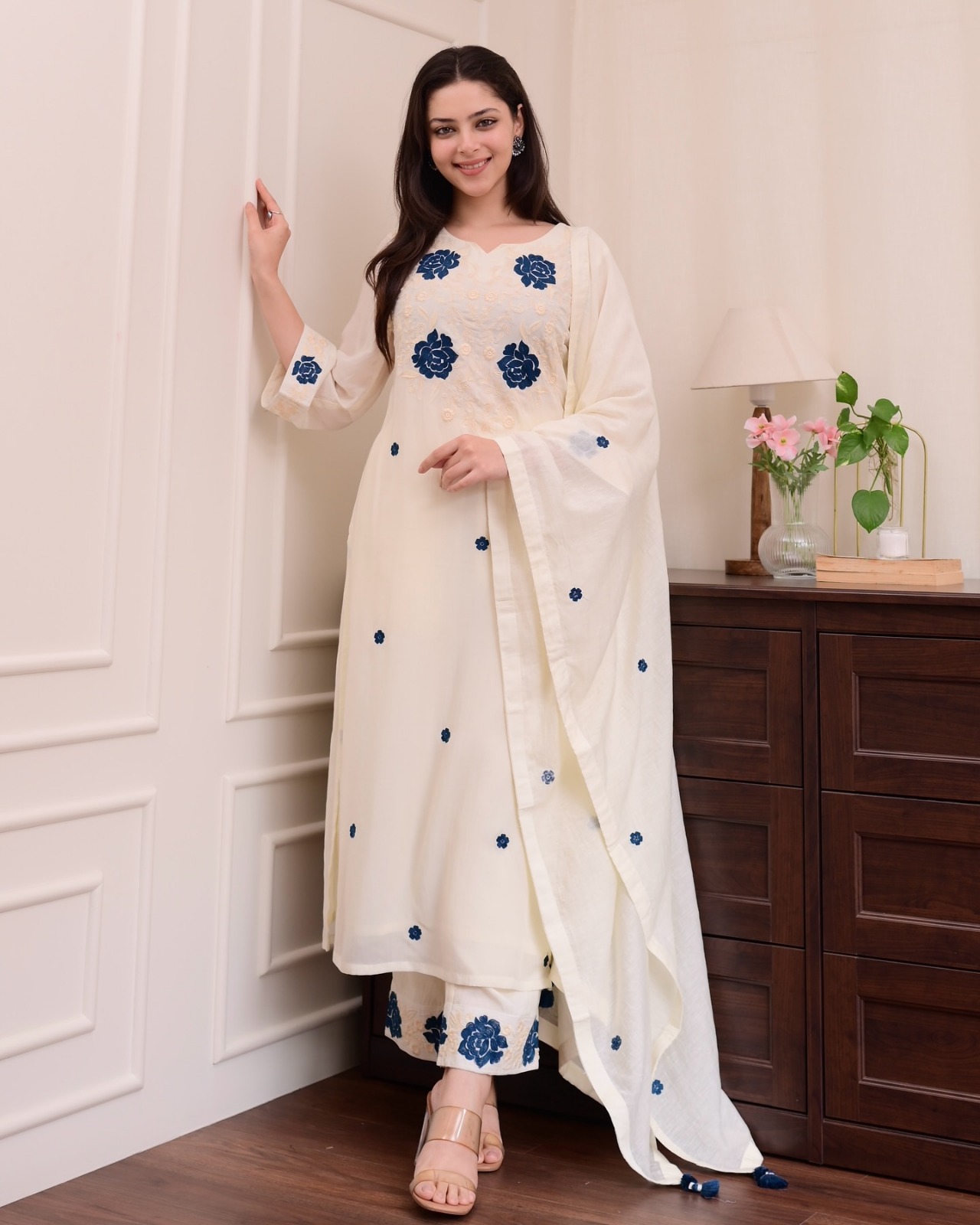
The Designer Cream Straight Kurti Set with Dupatta offers an useful styling direction: a simple straight line can be softened with a flowing dupatta and a coordinated bottom. A straight shape also suits the Beige Embroidered Silk Kurti Pant Dupatta Set Women, where embroidery can provide interest without requiring a dramatic flare.
How should a flared or Anarkali-style kurti be chosen?
A flared kurti is most flattering when the flare begins below the fullest part of the bust or at a naturally comfortable waist position. A flare that starts too high may create unnecessary volume around the chest, while one that starts at the hip can emphasise the exact area it's intended to skim.
Look for panelled construction, vertical seams or a few broad gores rather than many tiny gathers. Panel seams distribute the volume and help the kurti fall vertically. A flared salwar suit also needs a bottom with visual restraint; cigarette pants or narrow churidar-style trousers usually create more balance than heavily pleated palazzos.
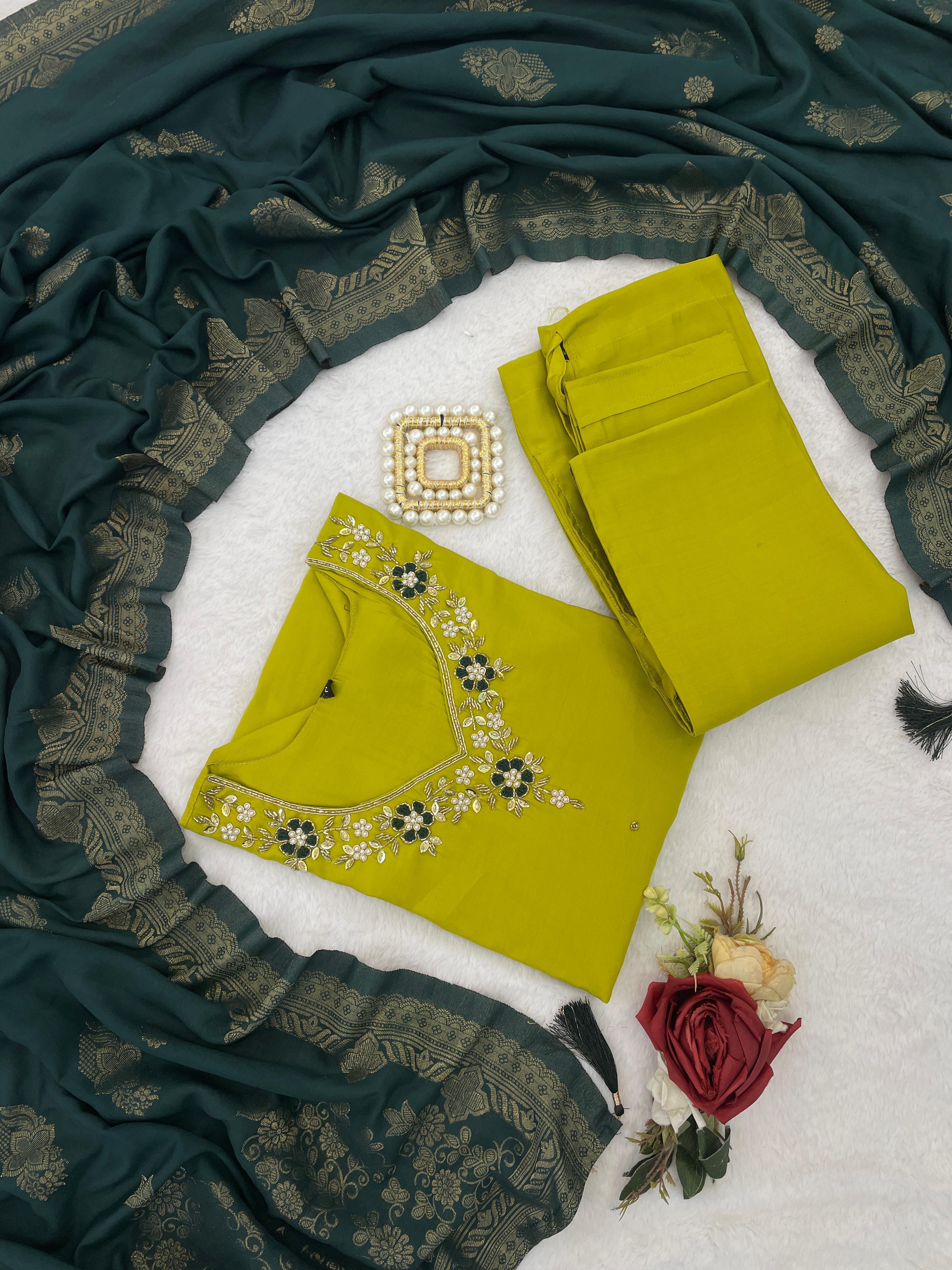
For festive dressing, the Mustard Embroidered Kurti Pant Set for Women Festive shows how colour and embroidery can make a flared or softly shaped outfit feel celebratory. The key is to check where the embroidery ends. A border placed near the lower hem can be attractive, but a dense band at the widest point may make the silhouette look shorter.
Which Kurti Hemline Length Creates the Best Balance?
The best kurti hemline is the length that leaves a deliberate amount of bottom visible and doesn't finish at the widest part of the calf or hip. The correct choice depends on height, leg shape, footwear and the volume of the trousers.
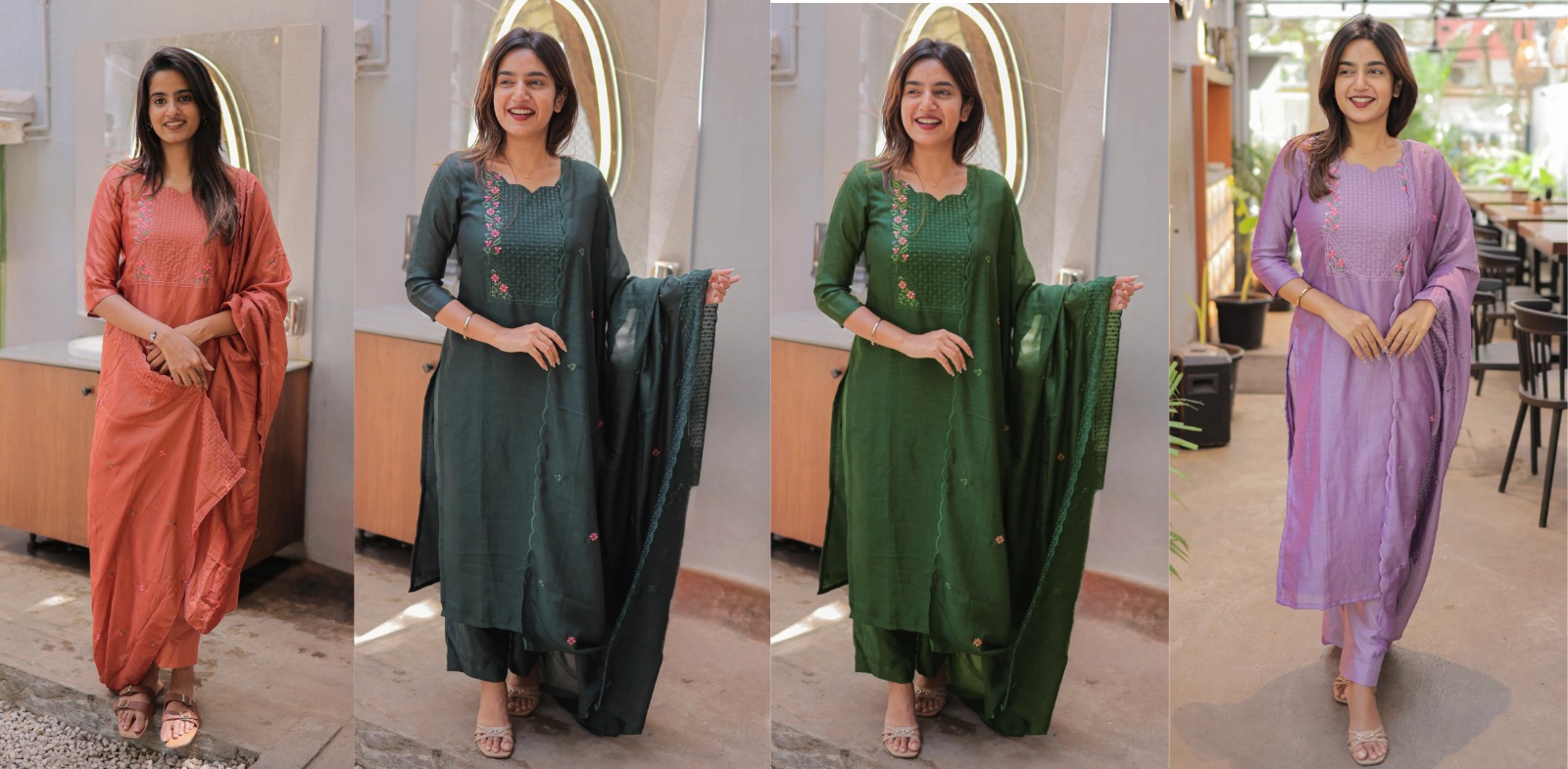
A hem around the knee is flexible with cigarette pants, straight pants and leggings. The length exposes more of the lower leg and can make a heavier or more voluminous bottom appear lighter. A hem below the knee, ending several inches above the ankle, creates a longer column and works well with narrow trousers and low-profile footwear.
A calf-length kurti can look graceful with straight pants, but the exact endpoint deserves attention. If the hem lands at the widest part of the calf and the trouser hem is also visible at a similar horizontal line, the outfit may appear visually crowded. Moving the kurti hem slightly above or below that point often improves the proportions.
High-low hems can add movement and expose the front of the trousers, but the difference between front and back should look intentional. A gently curved high-low hem usually appears more refined than a sharp, extreme drop. Asymmetrical hems are useful when paired with a plain bottom because the hem itself becomes the main line of interest.
Curved hems can be more forgiving than perfectly horizontal hems because the side edges rise slightly and create movement around the legs. A narrow side slit has a similar effect. Both details are especially practical in straight kurtis that need walking ease without a large flare.
How Fabric Changes the Shape of a Salwar Suit
Fabric weight and drape determine whether a kurti skims, stands away from the body or clings to curves. A shape that looks graceful in linen cotton may behave differently in rayon, silk or crisp cotton.
Which fabrics support a clean, easy line?
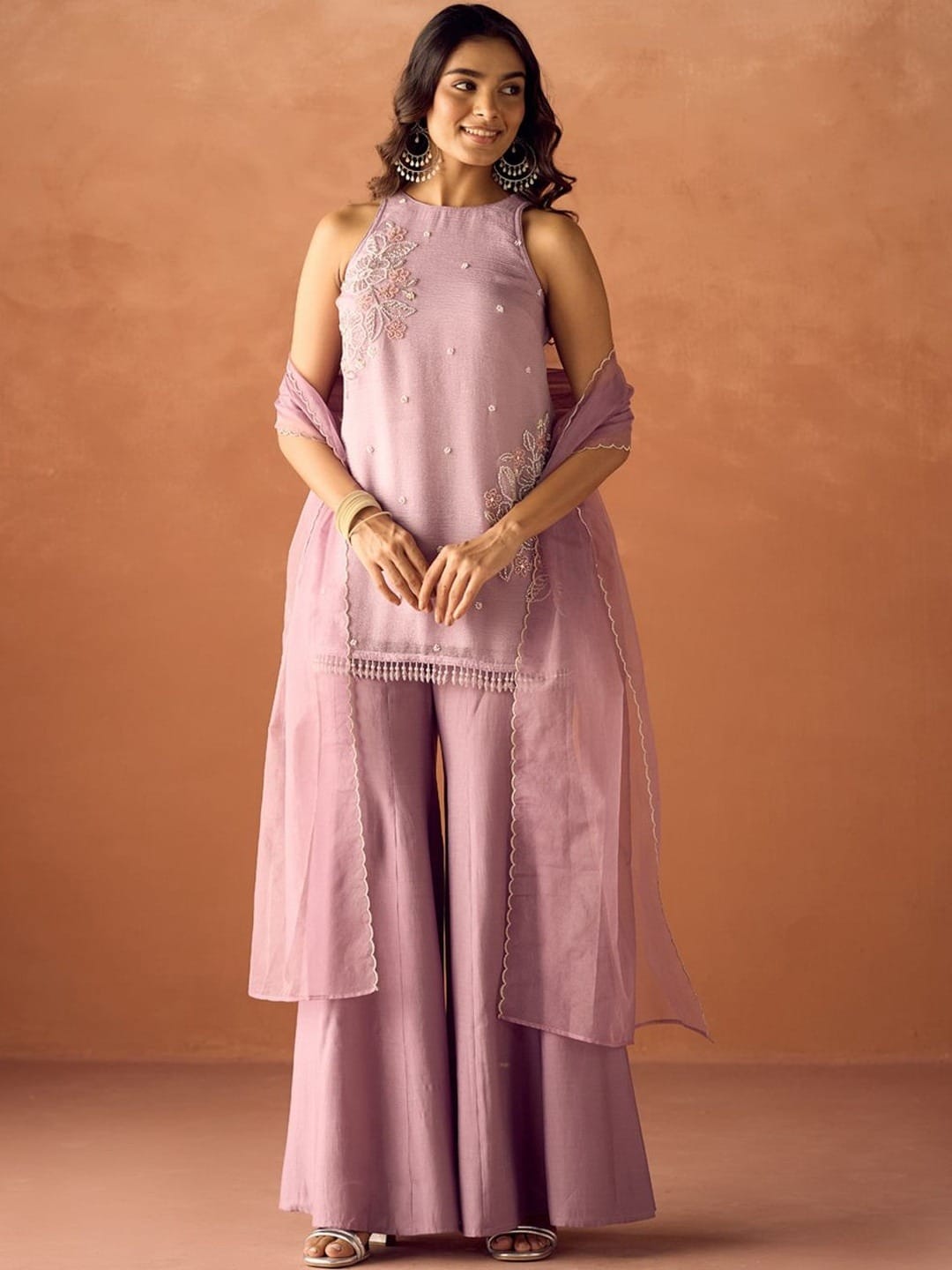
Medium-weight cotton gives structure and breathability, while linen cotton creates a softly structured line with natural texture. Rayon has fluid drape and can be comfortable for a straight or gently flared kurti, but rayon may cling if the garment is cut too close to the body. Silk blends and Banarasi silk can look dressy, although lining and seam allowance become more important because embellished fabric may have limited flexibility.
The Ivory Floral Linen Cotton Co-Ord Set for Women shows why fabric character matters: linen cotton can hold a relaxed shape while remaining lighter-looking than a heavily embellished textile. The Peach Printed Cotton Kurti Pant Set for Women Casual brings a different lesson, because printed cotton can support everyday movement without relying on a dramatic silhouette.
Very thin fabric often benefits from a lining, particularly in pale shades. A lining should allow movement and should not end abruptly at a visible point that changes the way the outer fabric falls. Heavy stiff fabric may require a simpler cut because excessive flare, embroidery and volume can make the whole outfit feel cumbersome.
How should prints and embroidery be placed?
Prints and embroidery look balanced when their scale and placement support the garment's lines. Vertical motifs, small repeated prints and concentrated neckline details can guide the eye up and down. Large motifs placed directly across the fullest hip area can become the dominant feature, so placement should be checked in a mirror from several distances.
Kalamkari Print Salwar Suits often provide an useful example of how an all-over print can carry visual interest without additional embellishment. Maharashtra Paithani Inspired Salwar Suits and Odisha Sambalpuri Salwar Suits may use distinctive borders or traditional motifs, so the border position should be considered alongside the kurti length rather than treated as a separate detail.
Matching Bottoms and Dupattas to the Kurti Shape
The bottom should counterbalance the kurti's volume: narrow bottoms usually complement flared kurtis, while straighter or shorter kurtis can accommodate more volume in palazzos or Patiala trousers.
Cigarette pants and straight pants create a clean vertical base under A-line, flared and embroidered kurtis. Palazzo pants work best when the kurti is shorter, lightly shaped or made from a fabric that doesn't add excessive bulk. A wide palazzo under a long, heavily flared kurti can obscure the waist-to-hem structure and make walking less comfortable.
Patiala trousers have pleats and volume around the hips, so they pair naturally with shorter kurtis that allow the drape to remain visible. Punjab Patiala Salwar Suits show how regional volume can be part of the design rather than something to minimise. The styling priority is proportion: a shorter, more fitted upper layer generally gives the trousers room to make their statement.
A dupatta can restore vertical movement to an outfit with a broad neckline or wide bottom. Wearing a lightweight dupatta over one shoulder creates a long edge, while a front drape can frame the torso. Avoid pinning a thick, heavily embroidered dupatta across the widest bust and hip line if the goal is a streamlined appearance.
Gujarat Bandhej Salwar Suits can bring strong colour and tie-dye pattern into the outfit, so a simple kurti shape may provide useful visual calm. A Rani Pink Embroidered Rayon Kurti Pant Dupatta Set adds another practical idea: matching pieces can create a continuous colour column, while the embroidery supplies definition around the upper body.
Small Fit Adjustments That Make a Large Difference
The most effective fit adjustments are often small: adding bust ease, changing the side-slit height, moving a pocket and checking the sleeve opening. These details can determine whether a kurti feels tailored or merely oversized.
A bust dart or princess seam can improve shape without making the garment tight. If a kurti pulls horizontally across the bust, sizing up may solve the problem at the chest but create excess fabric elsewhere; a garment with bust shaping or a local alteration may produce a cleaner result.
Pockets should sit where the hand can enter naturally and should not open across the fullest hip. A side-seam pocket can be practical, but it needs enough depth and reinforcement to prevent the seam from pulling. Sleeves also deserve measurement: a sleeve opening that's too tight restricts movement, while a very wide sleeve can add unnecessary width near the upper arm.
Check the shoulder seam before judging the full silhouette. A shoulder seam that sits too far outward can make the upper body look broader and cause the armhole to droop. A comfortable shoulder, smooth bust area and straight side seam usually matter more than whether the kurti is labelled oversized, relaxed or regular fit.
Building Occasion-Wise Looks Without Losing Proportion
Everyday, workwear and festive salwar suits can all flatter curvy figures when the level of detail matches the silhouette.
For everyday wear, choose breathable cotton, linen cotton or fluid rayon with a practical hem and enough side-slit ease. The Peach Printed Cotton Kurti Pant Set for Women Casual suits the principle of pairing an easy fabric with a manageable set. A simple sandal and a light dupatta keep the outfit functional rather than visually crowded.
For office or daytime events, a straight or gently A-line kurti in a solid or restrained print usually looks composed. The Designer Cream Straight Kurti Set with Dupatta can be styled with minimal jewellery and a structured bag, while a longer dupatta edge adds movement without requiring a busy print.
For weddings and festivals, silk, mirror work, embroidery and regional-inspired motifs can provide occasion value. The Mauve Crunchy Silk Embroidered Kurti Palazzo Set for Women pairs a dressier textile with a wider bottom, so keeping the dupatta placement simple helps preserve the outfit's shape. The Mustard Embroidered Kurti Pant Set for Women Festive gives a brighter route, where the colour can remain the focus and the accessories can be selective.
Colour should support confidence rather than follow a supposed body-shape restriction. A monochromatic outfit lengthens the visual line, while contrasting separates can define the waist or highlight a beautiful print. Neither approach is inherently more flattering; the most successful choice is the one that gives the wearer the desired amount of structure and expression.
A Practical Fitting Checklist Before Buying
A kurti is ready to buy when the shoulders sit correctly, the bust lies flat, the fullest hip has adequate ease and the hem works with the intended bottom.
- Measure the bust, waist and hip at the fullest points while wearing the undergarments normally used with the outfit.
- Compare those measurements with the garment chart rather than selecting only by a lettered size.
- Check whether the fabric has stretch; woven cotton, linen cotton and silk generally require more precise ease than knitted fabric.
- Raise both arms and sit down to test the armhole, bust and side slits.
- View the hem from the front, side and back, especially when ordering a calf-length or high-low kurti.
- Match the kurti length to the intended trousers before deciding whether the silhouette looks balanced.
- Inspect embroidery, zari and borders for placement at the neckline, sleeve, hip and hem.
The strongest Kurti Shapes and Hemlines That Flatter Curvy Women don't depend on concealment. They depend on enough room, thoughtful lines and a clear relationship between the kurti, bottom, dupatta and footwear. Once those proportions are understood, choosing a salwar suit becomes a design decision rather than a search for rules.
Common Questions About Choosing Flattering Kurti Proportions
Which kurti shape is most flattering for curvy women?
A gently shaped A-line kurti is a dependable choice because it skims the upper body and releases gradually below it. A well-fitted straight kurti can be equally flattering when it has sufficient ease at the bust and hip and includes practical side slits.
What kurti length looks best on a curvy body?
Knee-length and calf-length kurtis can both work, provided the hem does not finish at the widest part of the calf or hip. Match a longer kurti with narrow or straight trousers, and use a shorter kurti when the bottom has substantial volume.
Can curvy women wear straight kurtis?
Yes, curvy women can wear straight kurtis successfully when the garment skims rather than pulls. Look for adequate bust and hip ease, a smooth shoulder seam and side slits that allow comfortable walking.
Are Anarkali kurtis suitable for curvy figures?
Anarkali kurtis are suitable when the flare begins below the fullest bust area and falls through controlled panels or gores. Avoid excessive gathers at the stomach or a dense hem border placed directly at the widest hip point if you prefer a lighter visual effect.
Which bottom should be worn with a flared kurti?
Cigarette pants, straight pants and narrow churidar-style trousers usually balance a flared kurti because they keep the lower silhouette neat. A wide palazzo can also work, but the kurti should be shorter or only gently flared so the combined volume does not overwhelm the outfit.
Do dark colours make a kurti more flattering?
Dark colours can create a continuous visual column, but they are not required for a flattering kurti. Fit, fabric drape, hem placement and the relationship between the kurti and bottom have a greater effect on overall proportion than colour alone.


