

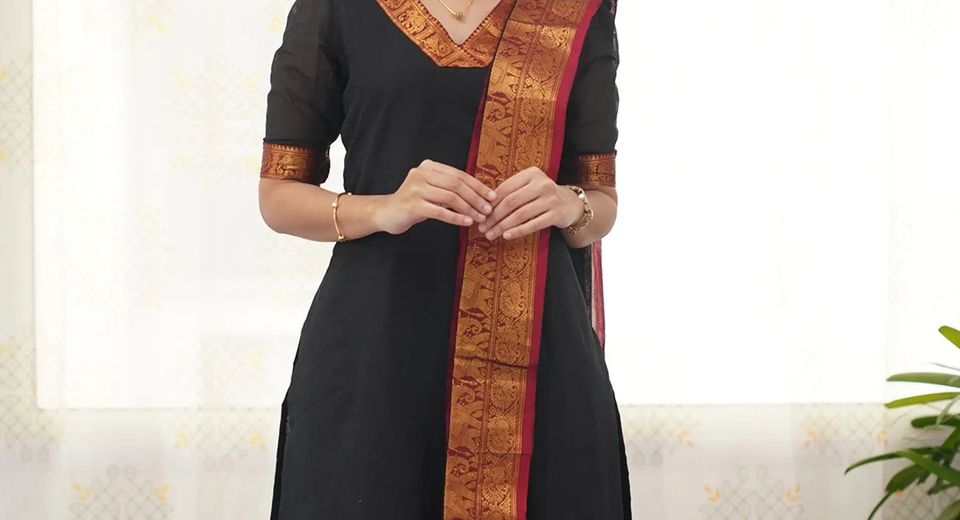
Kurti Lengths That Balance Each Shape for Patiala vs Dhoti Pants can change the entire proportion of a salwar suit. A hem that works with a narrow cigarette pant may look heavy over a gathered Patiala, while the same hem can make a dhoti pant appear wider or shorter. The useful starting point isn't a fixed fashion rule but the relationship between hemline, trouser volume, torso length and footwear.
Patiala pants usually carry generous pleats and volume from the waist to the ankle. Dhoti pants have a softer, tapered drape with folds that gather around the thigh and narrow towards the calf or ankle. Because the two silhouettes distribute fabric differently, kurti length should be chosen with the lower half of the outfit in mind.
Why trouser volume changes the ideal kurti length
The ideal kurti length depends on where the lower garment is widest and where the eye should pause. A shorter kurti reveals more of the Patiala or dhoti drape, while a longer kurti creates a continuous vertical line and reduces the visual impact of the trousers.
For most adults, the most versatile hem positions fall between the high hip and mid-thigh. The correct position within that range depends on height and torso-to-leg proportion. A person with a long torso may carry a longer kurti comfortably, whereas a petite wearer may need a hem several centimetres above the knee to prevent the outfit from looking compressed.
Patiala pleats need room to remain visible. A kurti ending around the high hip or upper thigh exposes the characteristic gathers and prevents the outfit from becoming one uninterrupted block of fabric. Dhoti pants usually tolerate a slightly longer hem because the tapered lower leg creates a natural vertical finish.
Volume also affects movement. A hem that falls directly across the fullest part of a Patiala can make the lower half look wider and interrupt walking comfort. A curved hem, side slit or slightly shorter front can distribute the fabric more gracefully without sacrificing coverage.
Kurti Lengths That Balance Each Shape for Patiala vs Dhoti Pants
Patiala pants and the short-to-medium kurti
A short-to-medium kurti ending at the high hip, upper hip or upper thigh usually balances traditional Patiala pants most effectively. The recommended hem is commonly 27 to 34 inches from the shoulder for an average-height adult, although the measurement must be adjusted for the wearer's height and preferred coverage.
A 27-to-30-inch kurti gives maximum visibility to the pleats and works well for a festive Punjabi silhouette. A 31-to-34-inch kurti offers more coverage while still allowing the Patiala gathers to remain the focal point. Side slits beginning above the fullest hip area help a straight kurti sit comfortably over the trousers.
Patiala pants already create horizontal movement through their folds, so a heavily flared Anarkali-style kurti can add unnecessary volume. A straight kurti, lightly shaped A-line kurti or short peplum-inspired cut normally gives a cleaner balance. A kurti with a dense border is best finished above the widest part of the Patiala rather than directly across it.
Dhoti pants and the medium-to-long kurti
A medium-length kurti ending between the mid-thigh and just above the knee generally suits dhoti pants. An useful starting range is 32 to 40 inches from the shoulder, with the shorter end working for petite frames and the longer end suiting taller wearers or a more covered look.
Dhoti pants gather near the waist and upper leg before tapering down, so a longer kurti can smooth the transition between the torso and the folded fabric. An A-line kurti with a narrow flare works particularly well because the hem echoes the dhoti's gradual movement without adding a second concentration of pleats.
A straight kurti that reaches the knee can look elegant with a slim dhoti pant, especially when the side seams include slits. However, a knee-length hem may conceal too much of a heavily draped dhoti and make the garment look like an ordinary trouser. The amount of visible drape should therefore guide the final length.
Choosing a hemline for different body proportions
Body-shape advice works best when treated as a proportion guide rather than a set of restrictions. The strongest kurti length is the one that places the hem away from a visually widest point, preserves comfortable movement and creates the desired amount of leg exposure.
Petite frames
Petite wearers generally benefit from a shorter kurti with Patiala pants and a moderate mid-thigh kurti with dhoti pants. Hemlines that stop above the knee prevent the outfit from visually shortening the legs. A monochromatic kurti and trouser combination, a V-shaped neckline and low-contrast dupatta can add further vertical continuity.
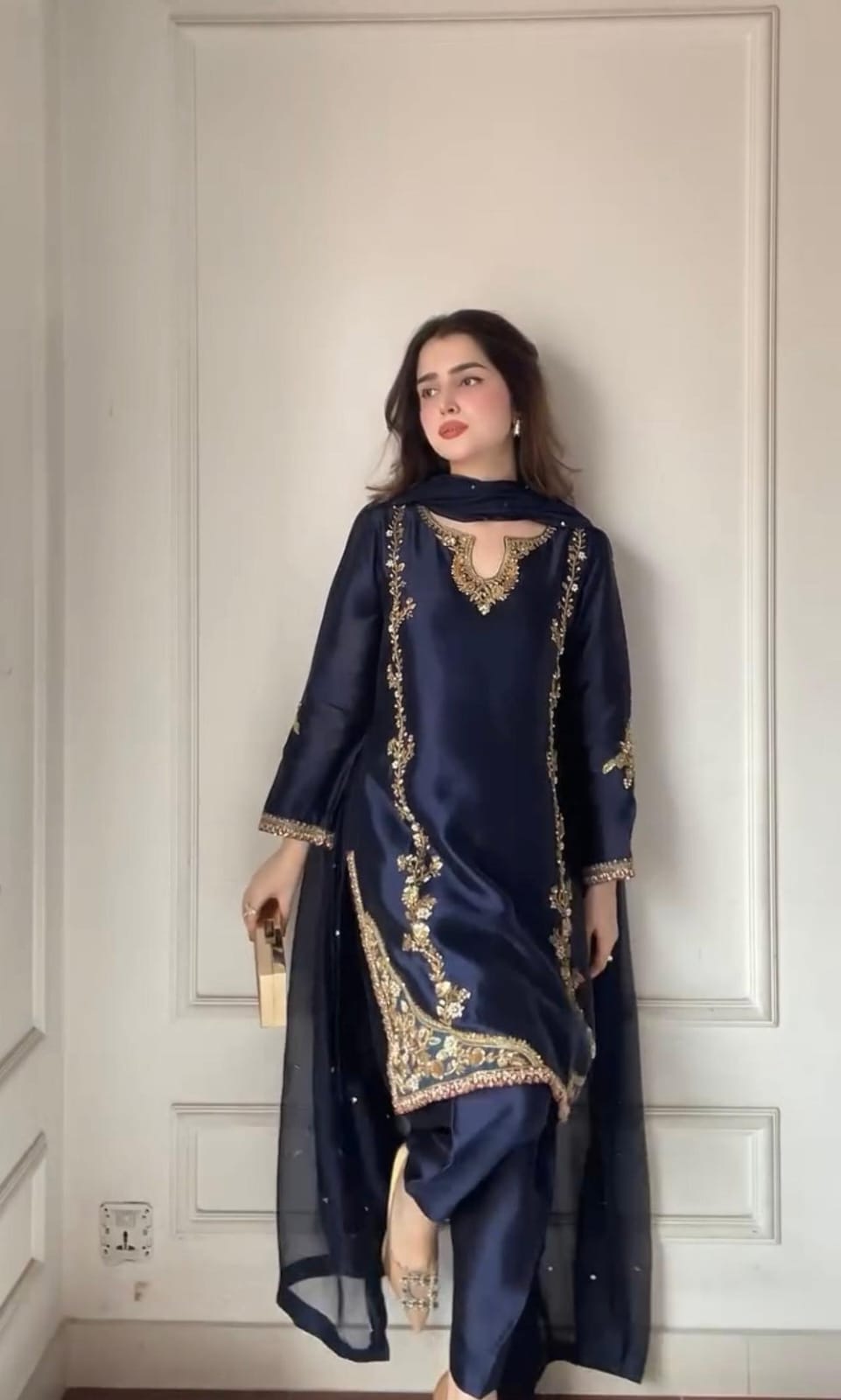
The Midnight Blue Natural Crepe Patiala Kurta Set with Embroidery demonstrates why a compact silhouette can be useful: the Patiala volume remains visible when the kurti doesn't extend too far over the gathered trousers. Small motifs and a narrow border usually look more proportionate than an oversized decorative panel on a petite frame.
Tall and long-legged frames
Tall wearers can carry a longer dhoti-pant kurti, including a hem near the knee, because additional fabric doesn't usually overwhelm the proportions. A 30-to-34-inch kurti can still work with Patiala pants when the goal is to highlight the trousers, while a 36-to-42-inch kurti gives dhoti pants a more streamlined, contemporary appearance.
Taller frames can also handle stronger contrast between kurti and trouser colours. A long vertical neckline, an extended side slit and a dupatta worn along one side reinforce the length of the silhouette. Very short kurtis remain possible, but a wide waistband or dramatic Patiala pleat pattern may create a visually segmented look.
Curvier or fuller hip proportions
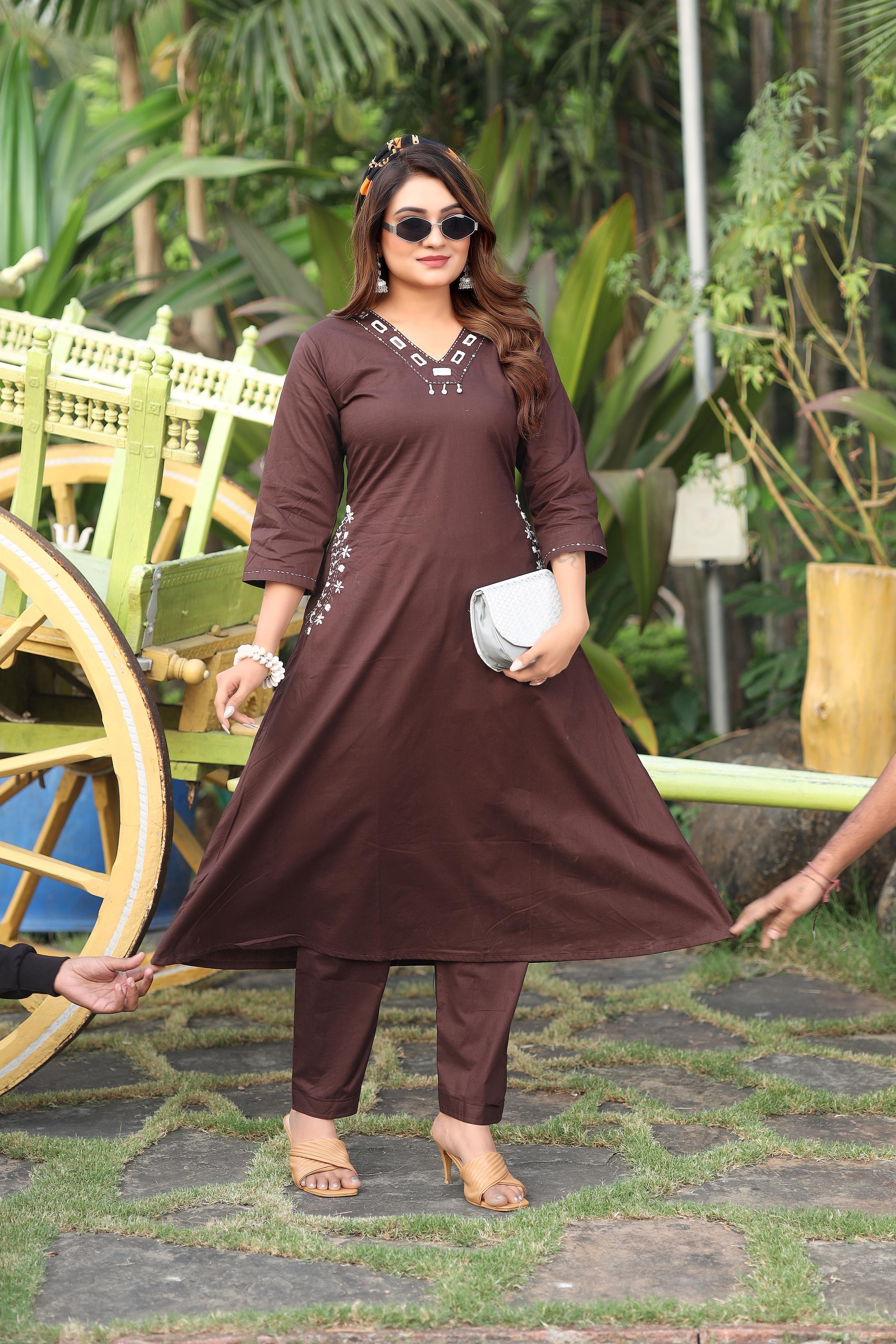
A curvier figure is often balanced by a kurti that skims the body and ends either above the fullest hip or below it, rather than stopping precisely at the widest point. With Patiala pants, an upper-thigh hem keeps the pleats visible without placing a second volume point across the hips. With dhoti pants, a mid-thigh or just-above-knee A-line shape can provide smoother coverage.
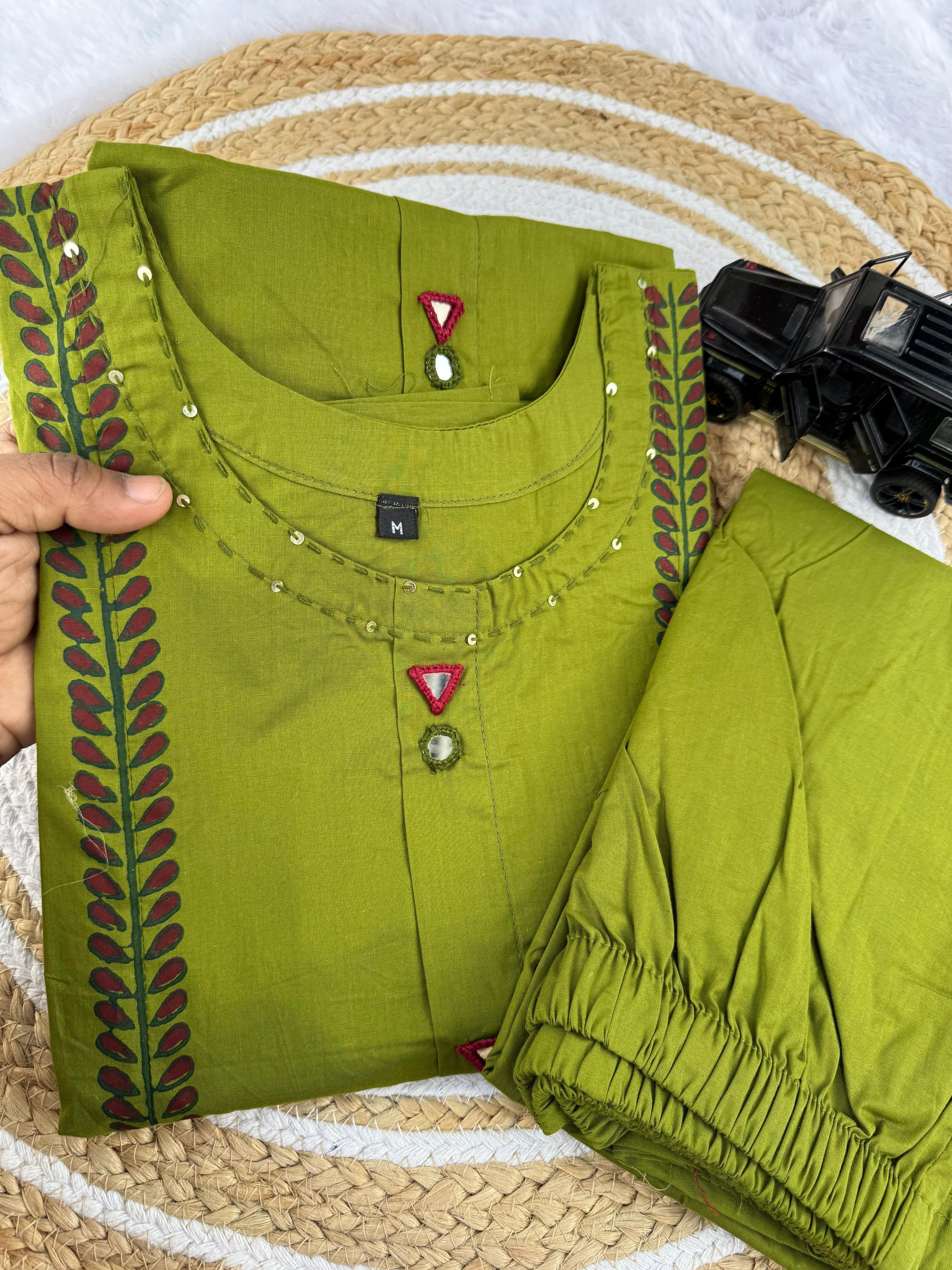
Softly structured fabrics are useful because they fall away from the body without standing stiffly. The Designer Cotton A-Line Kurti Pant Set with Mirror Work illustrates the value of a controlled A-line shape: the flare creates ease without competing with a gathered lower garment.
Straight or rectangular proportions
A straight body line can gain definition from a kurti that introduces a gentle waist shape, curved hem or side slits. Patiala pants pair well with a shorter fitted or semi-fitted kurti because the trouser volume supplies contrast. Dhoti pants can support a slightly longer A-line kurti, a waist seam or a dupatta draped diagonally to create movement.
Contrast borders, yokes and embroidery placed around the neckline or waist can create visual breaks. A completely straight, long kurti with a very loose dhoti pant may hide the waist and produce a boxy outline, particularly in a heavy fabric.
How to measure the right kurti length at home
The most reliable way to choose a kurti length is to measure from the shoulder point to the intended hem while wearing the footwear planned for the outfit. Measure over the undergarment or camisole normally worn with the kurti, because extra layers can alter the fall by a small but visible amount.
- Mark the waist relationship: Note whether the kurti should end at the high hip, upper hip, mid-thigh or knee. The intended stopping point matters more than copying a catalogue measurement.
- Check the trouser volume: Put on the Patiala or dhoti pants and observe the widest fold. Keep the kurti hem above that point or below it; placing the hem directly across the widest fold can add visual width.
- Test movement: Sit, walk and raise one arm. A side slit may be necessary if a straight kurti restricts the hips or catches on the folds of the trouser.
- Compare the front and back: A curved hem or a back hem 2 to 4 inches longer can provide coverage while keeping the front proportionate. This adjustment is especially practical with dhoti pants.
- Account for shrinkage: Cotton may shrink if washed in hot water, while silk blends and crepe should follow their specific care instructions. Leave a small alteration allowance when purchasing an unfinished or easily tailored garment.
Ready-made size charts should be checked for shoulder, bust, hip and garment-length measurements separately. Two kurtis labelled medium can differ by 3 to 5 inches in length, and that difference is significant when pairing a kurti with a voluminous trouser.
Fabric, print and detail choices that support the silhouette
Fabric weight influences how a chosen length behaves. Lightweight cotton, crepe, Chanderi silk and fluid silk blends can create movement without making a short kurti look bulky. Stiffer brocade or densely embroidered fabric may need a shorter or more controlled hem when paired with Patiala pants.
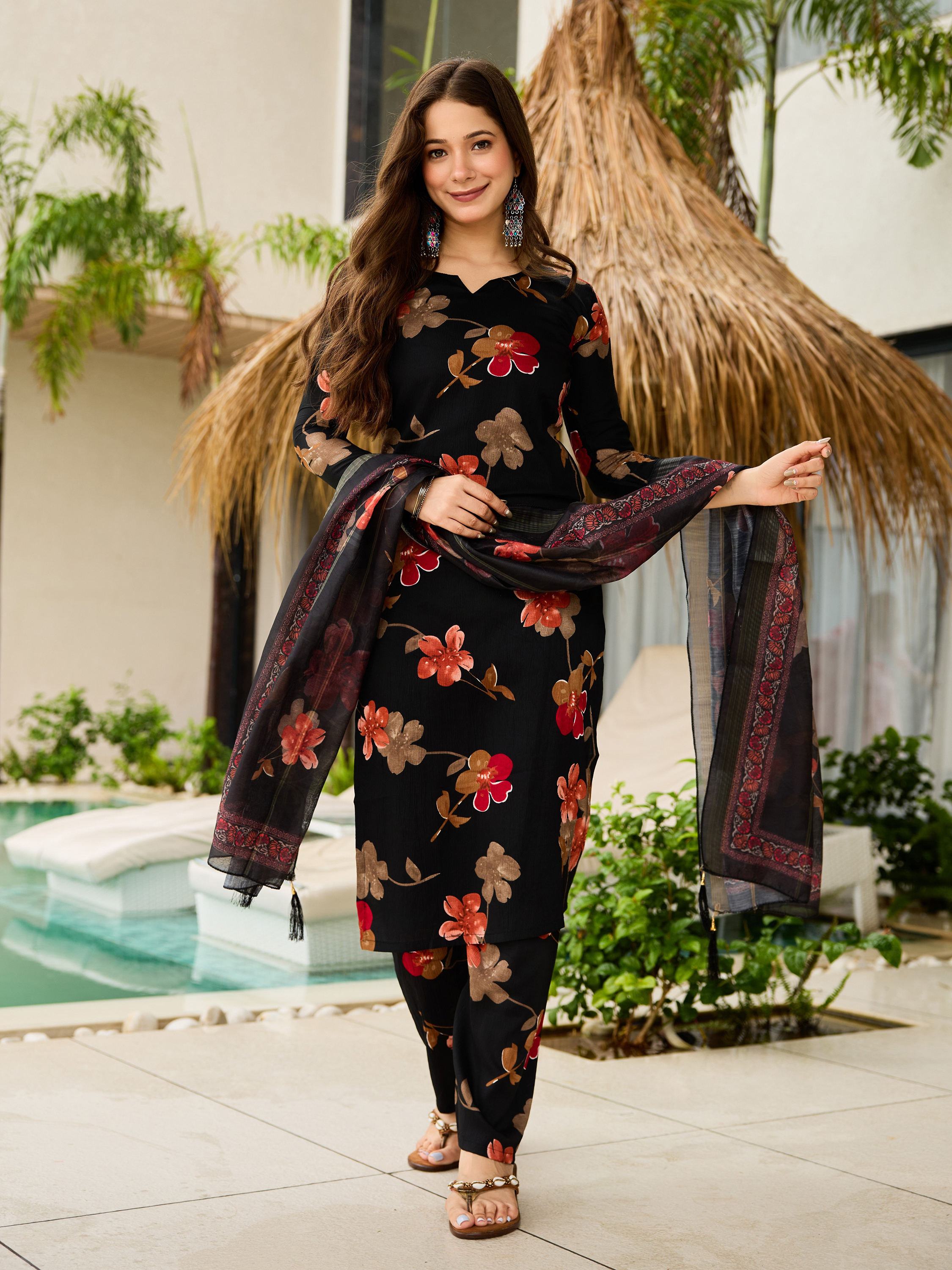
The Cream Chanderi Silk Kurti Pant Dupatta Set for Women brings an useful reference for a lighter, dressier texture. Chanderi silk can maintain an elegant surface while keeping a medium-length kurti from appearing excessively heavy. A slim border at the hem helps define the endpoint without visually widening it.
Zari and mirror work draw attention to the areas where they're placed. A broad zari hem on a long kurti creates a strong horizontal line, while a narrow zari border on a medium kurti keeps the lower silhouette lighter. The Navy Blended Silk Zari Kurti Pant Dupatta Set and Royal Navy Silk Kurti Pant Set with Zari Dupatta show how deep colour and metallic detail can create a formal look without requiring a very long kurti.
Print scale should follow garment scale. Small or medium motifs suit shorter kurtis and petite frames, while larger motifs can work on a longer kurti worn by a tall wearer. Kalamkari Print Salwar Suits (Copy), Gujarat Bandhej Salwar Suits and Odisha Sambalpuri Salwar Suits demonstrate how regional print languages can remain distinctive when the silhouette gives the pattern enough uninterrupted space.
Embroidery placement can also redirect attention. Neckline embroidery lengthens the upper body, a vertical front panel draws the eye downward, and a border near the hem emphasises the transition to the trousers. The Mustard Embroidered Kurti Pant Dupatta Set Women and Elegant Teal Embroidered Kurta Pant Dupatta Set use embellishment as a proportion tool rather than relying only on colour.
Dupatta and footwear can correct a nearly-right length
A dupatta can improve balance when the kurti length is close but not perfect. Wearing a dupatta in a long vertical fall on one side adds length, while wrapping it tightly around the neck creates horizontal layers and can make a short torso look more compact.
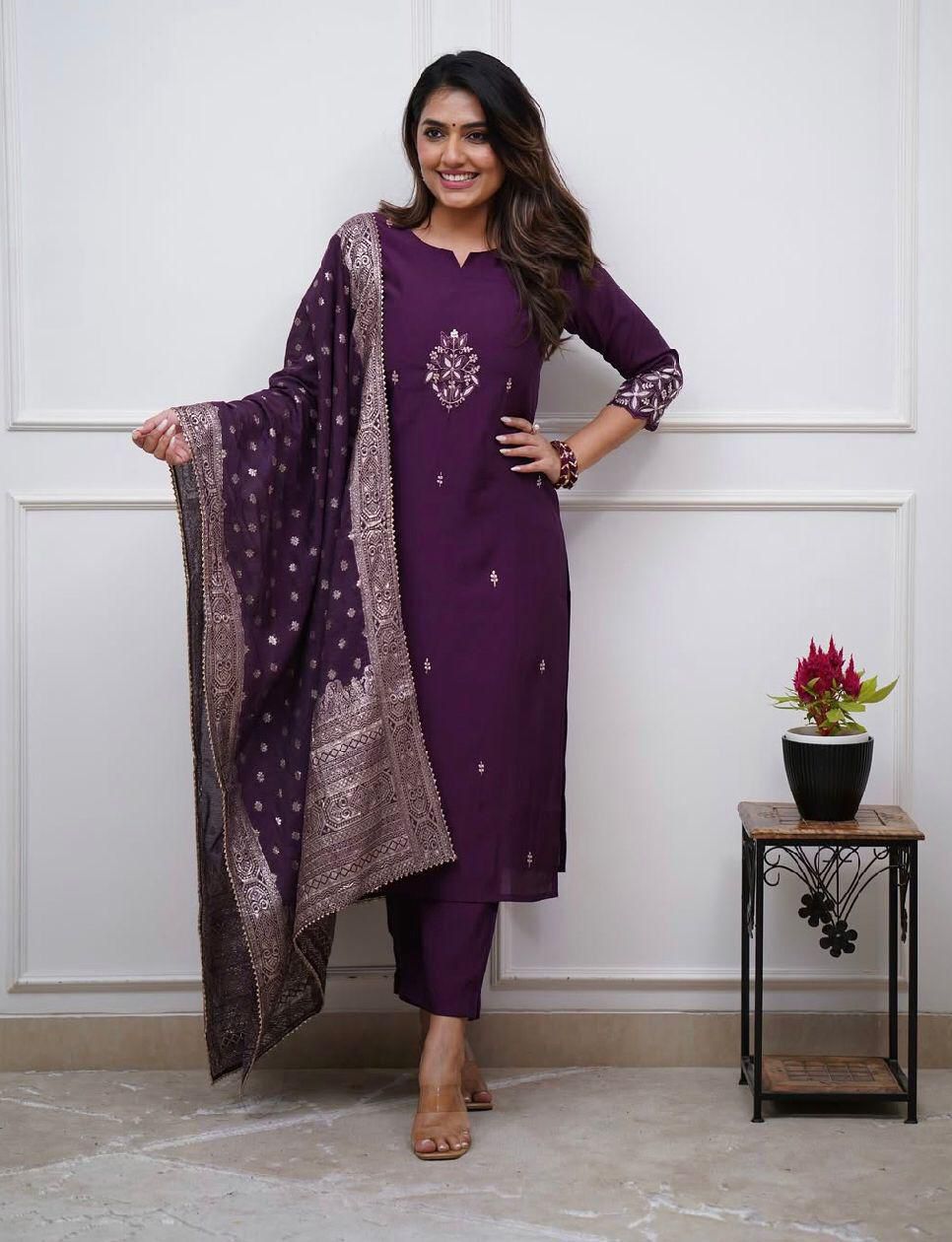
With Patiala pants, a dupatta pinned over one shoulder and allowed to fall past the hip keeps the pleats visible. With dhoti pants, a narrow front drape or a single-side fall prevents the additional fabric from competing with the folds at the waist and thigh.
Footwear changes the apparent relationship between hem and floor. Flat juttis preserve the time-honoured proportion of Patiala pants, while a low block heel can give dhoti pants a longer line. The trouser hem should finish safely above the floor; excess fabric dragging under the heel can distort the drape and cause avoidable wear.
The Elegant Pista Festive Wear Kurta Pant Set is an example of a lighter festive palette that can work with delicate footwear and a clean dupatta fall. Maharashtra Paithani Inspired Salwar Suits add a more heritage reference point for styling silk, borders and drapes without requiring excessive layering.
Common length mistakes and practical fixes
The most common mistake is selecting a kurti by length alone without considering the trouser's volume. A 34-inch kurti can look short with a tall wearer and long with a petite wearer, so the same number can't guarantee the same visual result.
- Hem across the widest fold: Move the hem 2 to 4 inches higher or lower, depending on desired coverage.
- Too much fabric over Patiala pleats: Choose a shorter straight or lightly A-line kurti, or use side slits to reveal the folds.
- Dhoti pants disappearing under a long kurti: Raise the hem to mid-thigh or use a curved front hem.
- Boxy effect: Add a shaped waist, a vertical neckline, a diagonal dupatta or a narrow belt only if the garment design supports it.
- Shortened appearance: Reduce contrast between kurti and trouser, avoid a broad hem border and select footwear that shows the ankle.
Trying the complete outfit in front of a full-length mirror is more informative than judging the kurti on a hanger. Check the silhouette from the front and side, then take a few steps to see whether the hem rises, catches or hides the intended trouser detail.
When choosing among regional styles, Punjab Patiala Salwar Suits naturally support shorter kurti proportions that reveal pleats, while a more streamlined pant set may support a medium or longer kurti. The best result comes from respecting the construction of the lower garment rather than forcing every salwar suit into one standard length.
Questions About Kurti Lengths with Patiala and Dhoti Pants
What kurti length looks best with Patiala pants?
A short-to-medium kurti ending at the high hip, upper hip or upper thigh usually works best with Patiala pants. A shoulder-to-hem length of about 27 to 34 inches is a practical starting range, adjusted for height, coverage and the volume of the pleats.
Can I wear a long kurti with dhoti pants?
Yes, a medium-to-long kurti can work well with dhoti pants, especially when the dhoti has a tapered lower leg. A hem between mid-thigh and just above the knee usually preserves some drape while creating a smoother vertical line.
Which kurti length suits a petite woman wearing Patiala pants?
A petite woman generally benefits from a kurti ending at the upper hip or upper thigh with Patiala pants. Shorter hemlines, low-contrast colours and visible ankles help prevent the gathered trousers from making the frame look compressed.
Where should a kurti hem fall on a curvy body shape?
A kurti hem should usually finish above the fullest hip or below it rather than directly across the widest point. An upper-thigh hem with Patiala pants or a mid-thigh A-line hem with dhoti pants can provide coverage without adding a second horizontal emphasis.
What fabric works best for a kurti with voluminous Patiala pants?
Lightweight or softly structured fabrics such as cotton, crepe, Chanderi silk and fluid silk blends generally balance Patiala volume well. Very stiff or heavily embellished fabrics may look bulky unless the kurti is shorter and more controlled.
How can I make a slightly long kurti look balanced with dhoti pants?
A side slit, curved hem or shorter front can restore visibility to the dhoti drape. A vertical dupatta fall and footwear that reveals the ankle can also lengthen the appearance of the lower silhouette.


