

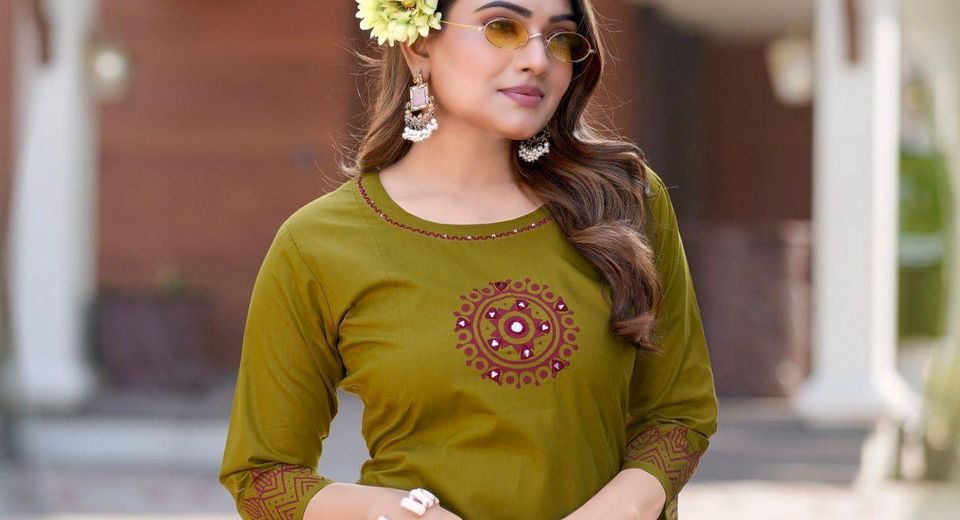
Kurti Lengths Slits and Shapes Worth Trying for Women With A Short Torso can change the apparent balance of an entire salwar suit. The aim isn't to hide your body or follow a fixed petite rule. The useful aim is to place hems, waist seams, necklines and volume so the eye travels vertically instead of stopping across the upper body.
A short torso usually means that the distance from the shoulder line to the natural waist is shorter in proportion to the legs. You may notice that a standard kurti waist seam sits too high, a long top makes the legs appear shorter, or a bulky dupatta gathers close to the neck. Small changes in cut and styling solve these problems more reliably than choosing a smaller size.
How can you identify a short torso before choosing a kurti?
A short torso is a proportion in which the upper-body length is relatively shorter than the lower-body length, not a measure of overall height. Stand naturally in front of a mirror and compare the distance between the shoulder line and natural waist with the distance from the waist to the floor. A high natural waist, a short space between the bust and waist, or trousers that usually look low-rise can all indicate a shorter torso.
Clothing fit provides another practical test. If a kurti's empire seam lands directly under the bust, if a drawstring waistband sits almost at the ribcage, or if a yoke occupies much of the chest, the upper body may look compressed. A measuring tape can make the diagnosis clearer: measure from the shoulder point beside the neck to the natural waist, then compare that measurement with the kurti's shoulder-to-waist or shoulder-to-hem proportions.
don't confuse a short torso with a petite frame. A tall woman can have a short torso, while a petite woman can have a long torso. The best kurti length therefore depends on vertical proportions, bust fit, hip width and footwear rather than height alone.
Kurti Lengths Slits and Shapes Worth Trying for Women With A Short Torso
The most reliable starting point is a kurti that ends around the upper hip, mid-thigh or just above the knee, depending on the bottom worn underneath. These lengths create visible separation between the top and bottom, helping the legs appear longer without requiring an extremely short hem.
Upper-hip and mid-thigh kurtis
An upper-hip kurti works well with high-waisted palazzos, cigarette pants and salwar trousers when the hem doesn't cut across the widest part of the hip. A mid-thigh kurti gives more coverage and usually creates a clean vertical line over straight pants. The hem should fall smoothly rather than catch at the hip, because horizontal bunching adds width and makes the torso seem shorter.
The Teal Cotton A-Line Kurti Pant Set with Handwork demonstrates the usefulness of a controlled A-line shape with coordinated pants. A set with a similar colour relationship between kurti and trousers reduces a hard visual break, while a slight flare keeps the silhouette from looking boxy.
Knee-length kurtis
A knee-length kurti can flatter a short torso when the lower half is slim or lightly tapered. Choose a hem that finishes at, or a few centimetres above, the kneecap rather than directly at the widest part of the calf. Straight pants, cigarette pants or narrow churidars support the long line; very wide palazzos can make a knee-length top look heavier unless the kurti has a clean, narrow fall.
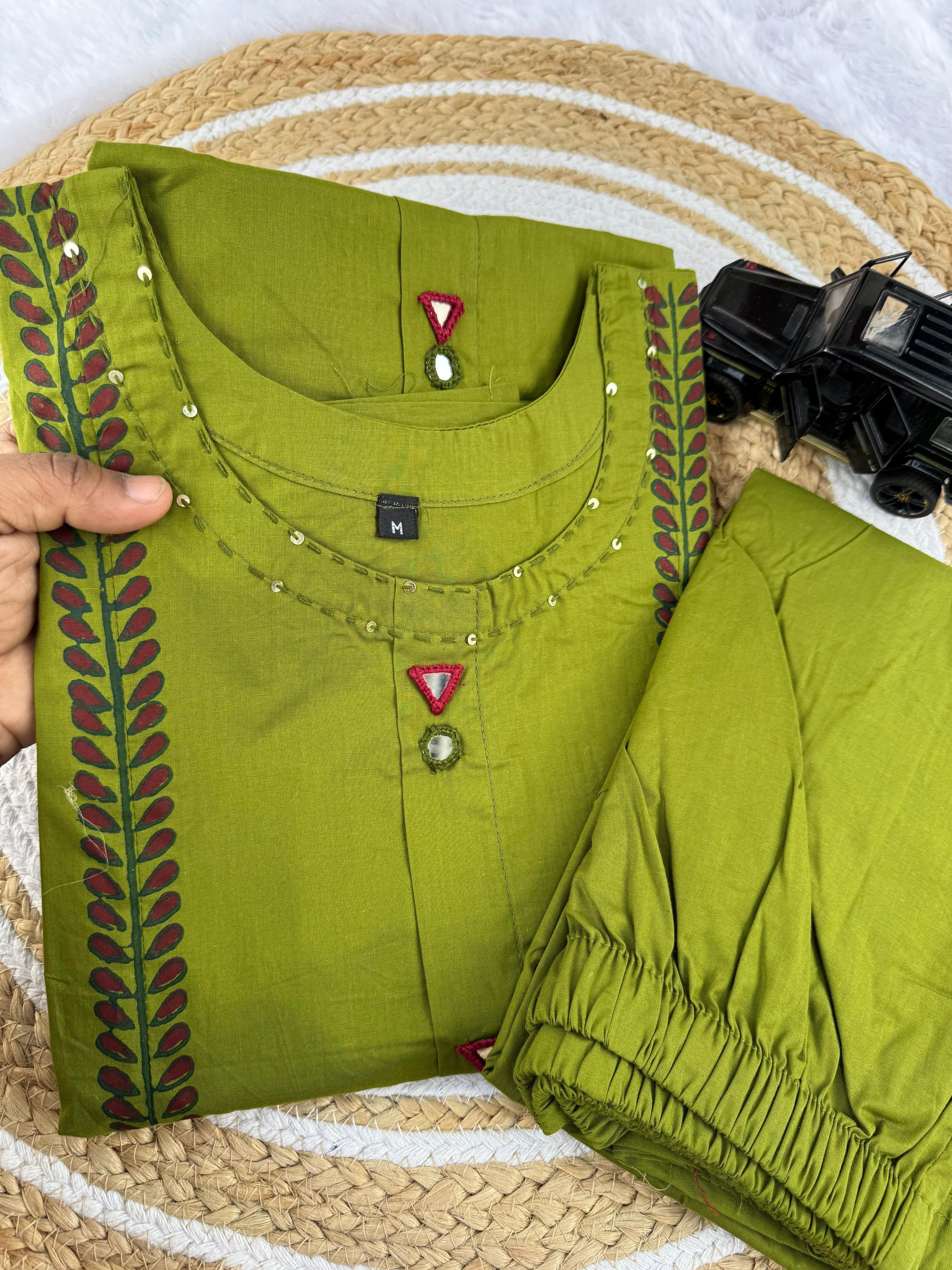
The Olive Green A-Line Cotton Kurti Pant Set for Women is a useful reference for casual dressing because the A-line silhouette gives movement without adding a thick horizontal waist division. Wear the set with low-profile sandals or pointed juttis when you want the trouser line to remain visible.
Long kurtis and floor-skimming anarkalis
A long kurti isn't automatically unflattering for a short torso. A long style works when the fabric falls in one uninterrupted column, the neckline is open enough, and the flare begins below the bust rather than directly under it. Floor-skimming anarkalis need especially careful fitting because a high flare can make the upper body look crowded.
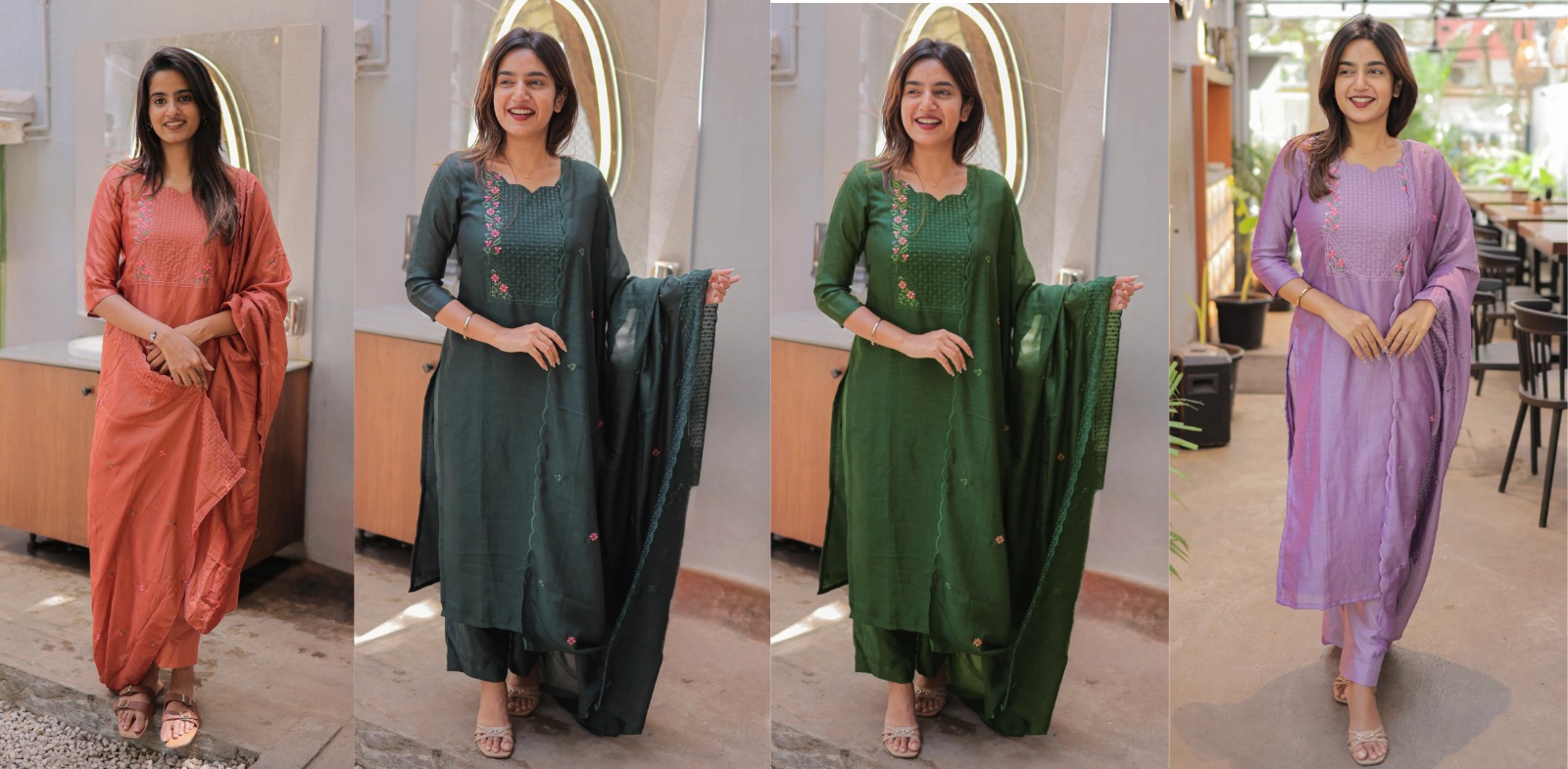
For festive dressing, the Mauve Crunchy Silk Embroidered Kurti Palazzo Set for Women shows why a longer, fluid top can work with a short torso when the palazzo trousers and kurti share a continuous colour story. Keep the dupatta open over one shoulder instead of wrapping it tightly around the neck.
Which kurti shapes create a longer-looking line?
Straight, gently A-line and panelled shapes usually create the most balanced vertical line for a short torso. The correct shape depends on where the garment adds width and where the hem ends.
Straight kurtis
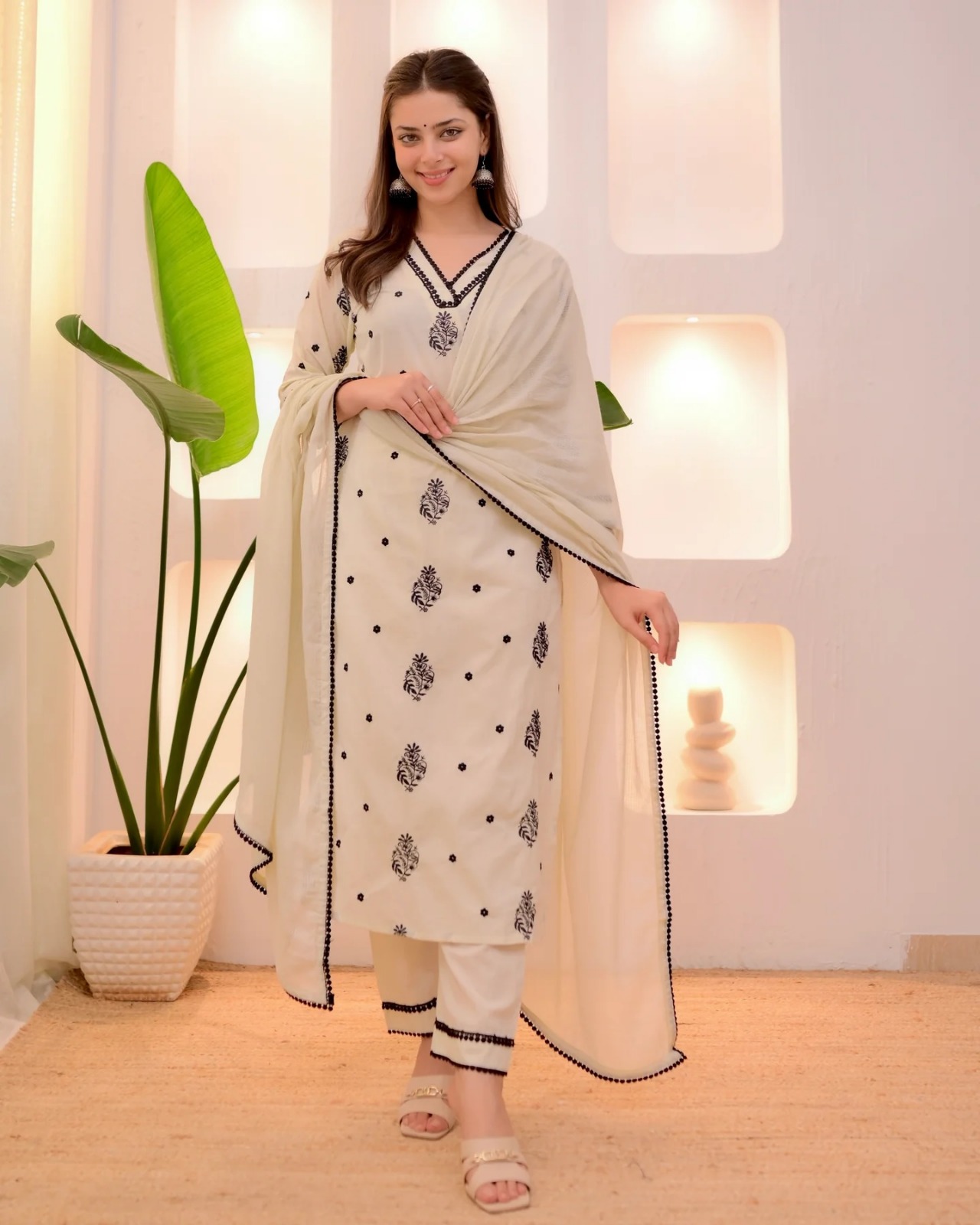
A straight kurti lengthens the body when the side seams fall cleanly from the underarm to the hem. Choose moderate ease rather than an oversized fit, and look for a neckline that opens the chest. A V-neck, shallow scoop neck or narrow split neckline can expose a vertical section of skin without making the outfit revealing.
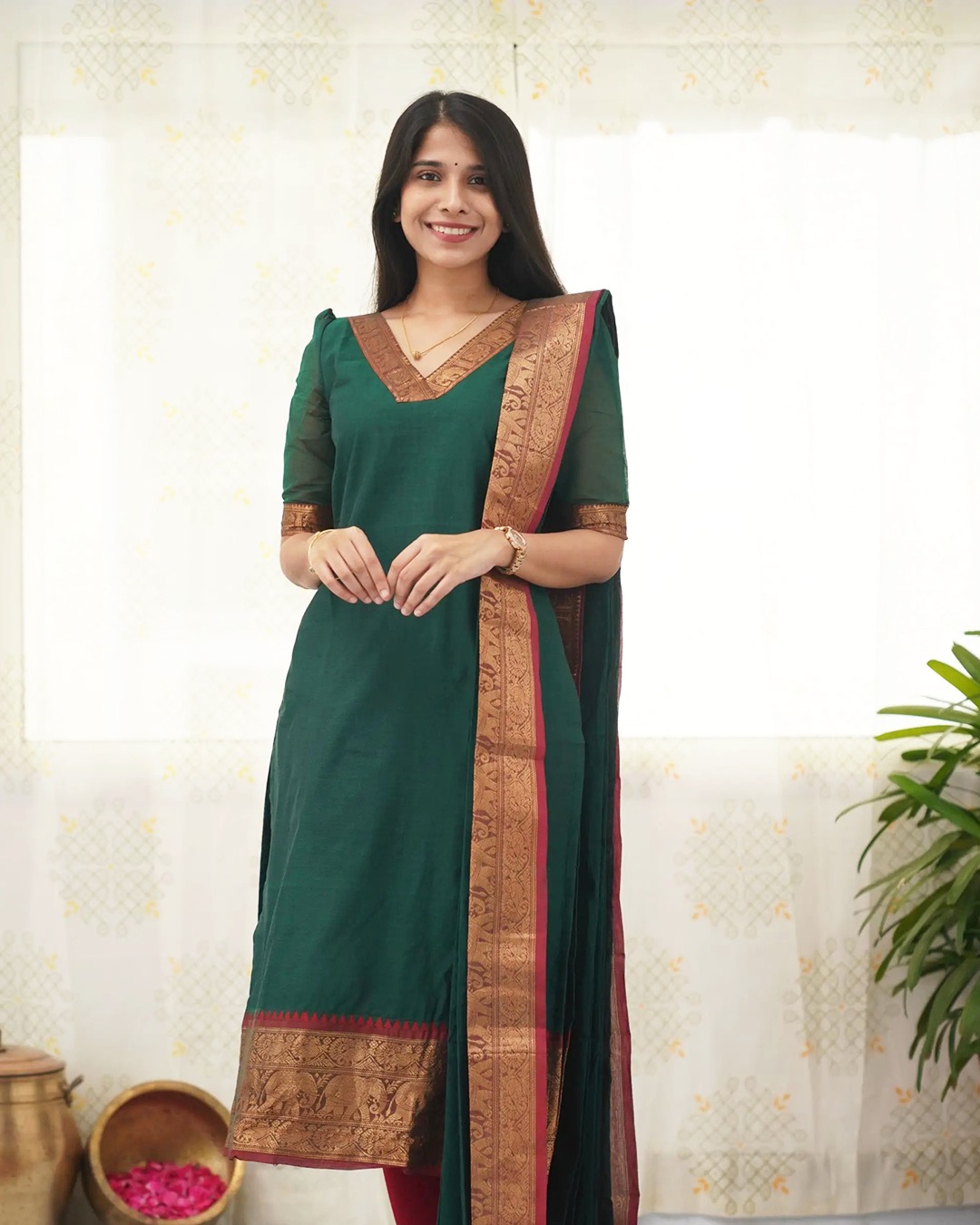
The Black Kanchi Cotton Kurti Dupatta Set for Women can illustrate this principle in a wardrobe: a dark, relatively uninterrupted front creates a strong column, while a contrasting dupatta can be placed on one shoulder to avoid piling fabric around the waist. Side pockets should sit flat because a pocket that gapes at the hip interrupts the line.
Soft A-line kurtis
A soft A-line kurti is flattering when the flare begins below the bust and remains gradual through the hem. A flare that begins at the neckline or immediately beneath the bust can resemble an empire cut and shorten the visible torso. Look for two or four vertical panels, restrained gathers and a hem that clears the broadest hip area.
The Designer Cotton A-Line Kurti Pant Set with Mirror Work is an example of why surface decoration should be assessed with the cut. Mirror work placed mainly on the chest can make the upper body look wider, while small vertical or border details near the centre and hem can guide the eye downward.
Panelled and asymmetrical shapes
Vertical panels, a centre placket and a modest asymmetrical hem can add length without relying on a deep neckline. A high-low hem is most effective when the shortest point is above the knee and the longest point doesn't drag over the footwear. Avoid too many overlapping panels, because layered edges can create several horizontal interruptions.
How should side slits be placed on a short torso?
Side slits should begin around the high hip or slightly below the widest part of the hip, depending on the kurti length. A slit that starts too high exposes the waistband and divides the body at the upper torso, while a slit that starts too low can restrict walking and make a long kurti look heavy.
For a mid-thigh or knee-length straight kurti, a slit of roughly 15 to 25 centimetres often gives enough movement without opening the side excessively. A calf-length kurti may need a 25 to 35 centimetre slit, especially when worn with narrow pants. These figures are starting points rather than rigid rules; sitting, climbing stairs and taking normal walking strides should determine the final alteration.
Centre-front slits and button plackets create a second vertical line, but the opening should stop well above the bust if the fabric pulls. A narrow V-shaped neckline paired with a centre placket can lengthen the upper body more effectively than a very deep neckline alone. Side slits are particularly useful in straight kurtis because side openings release the hem without adding flare across the waist.
don't place a slit through a large motif, heavy zari border or delicate embroidery unless the design has been engineered for that opening. The Kanchi Cotton Zari Woven Kurti Set with Traditional Dupatta needs the zari border and woven pattern to remain stable at the side seam; a tailor should preserve border alignment while adjusting slit height.
Which bottoms balance a short-torso kurti?
Mid- to high-rise bottoms with a relatively smooth waistband usually balance a short torso better than very low-rise trousers or bulky gathered salwars. The kurti and bottom should meet without a thick band, visible drawstring knot or large contrast break at the ribcage.

Palazzos
Palazzo trousers work when the kurti ends above the widest part of the thigh or when both pieces form a continuous colour column. Choose fluid fabric, moderate width and a waistband that sits at the natural waist without bunching. A narrow vertical print or pressed crease adds length, while excessive pleats at the waist add volume directly beneath a short torso.
Pants and cigarette trousers
Straight pants and cigarette trousers are dependable with mid-thigh and knee-length kurtis. An ankle-length hem can expose the narrowest part of the leg, but the trouser should not stop at the fullest part of the calf. Matching the trouser colour to the kurti, as seen in coordinated pieces from Kalamkari Print Salwar Suits (Copy), keeps the lower body visually uninterrupted.
Patiala and gathered salwars
Patiala trousers require more care because their pleats and drop-crotch shape add volume below the waist. A shorter, straight kurti can balance Patiala volume, but a long, heavily flared top usually creates too much fabric. Punjab Patiala Salwar Suits offer the traditional reference point; for a shorter torso, keep the kurti relatively clean and allow the salwar's pleats to remain the main volume.
How do necklines, sleeves and dupattas affect proportions?
Open necklines, slim sleeve details and controlled dupatta placement make the upper body look less crowded. A V-neck, vertical keyhole, narrow notch or open round neck generally creates more length than a high closed collar, especially when the kurti has a short or medium hem.
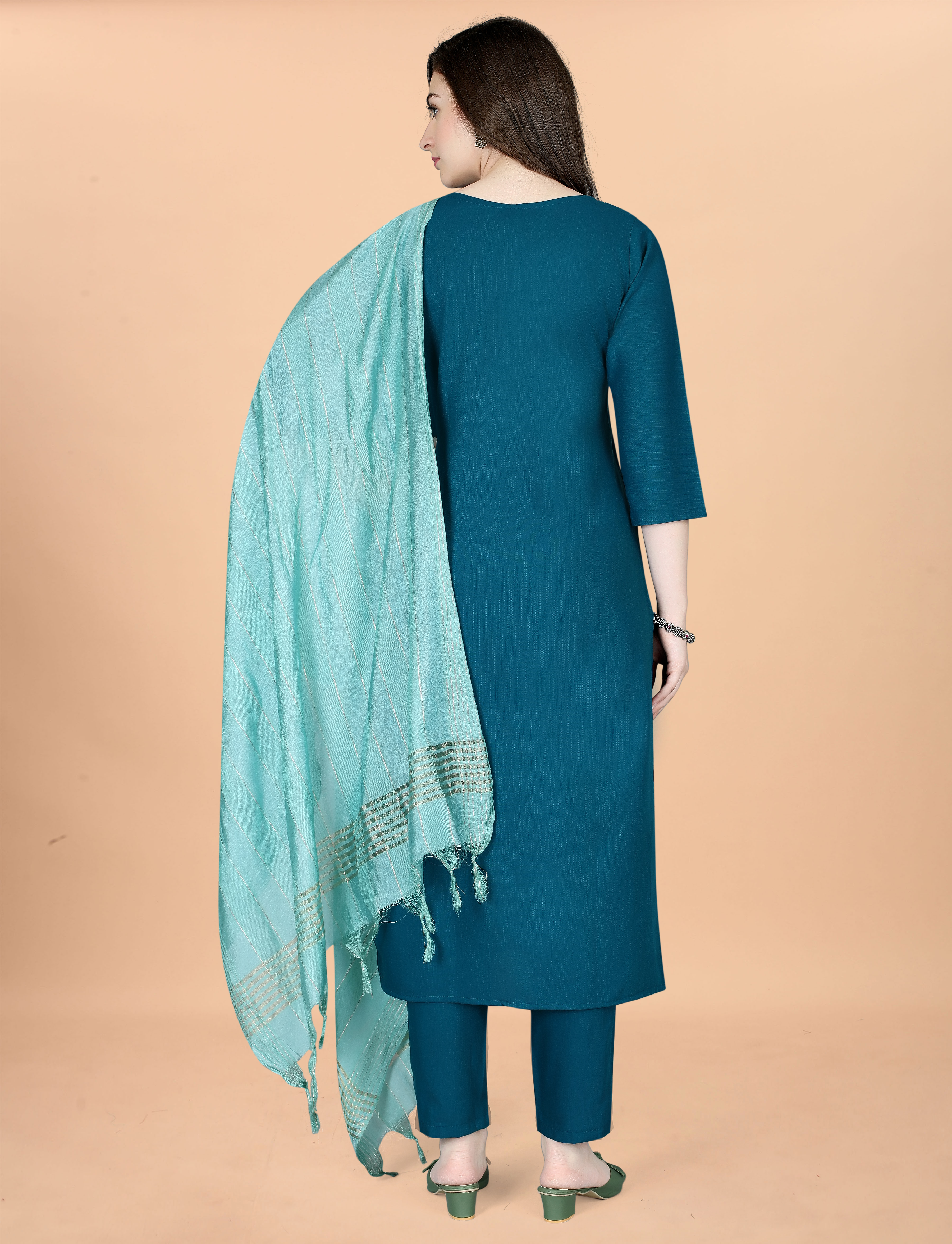
Three-quarter sleeves can work well because the exposed wrist creates a light break near the arm rather than a heavy horizontal line across the torso. Very wide bell sleeves, large sleeve cuffs and elbow-level contrast borders add visual width, so use them only when the rest of the kurti is narrow and vertically structured.
A dupatta should usually sit over one shoulder or fall in a slim vertical loop when the torso is short. Wrapping a thick dupatta twice around the neck creates a horizontal band at the busiest part of the outfit. Maharashtra Paithani Inspired Salwar Suits and Gujarat Bandhej Salwar Suits can be styled with the dupatta draped lengthwise over one shoulder, allowing the weave, border or print to remain visible without crowding the neckline.
Colour continuity also matters. A kurti and bottom in related tones create a longer uninterrupted column, while a sharply contrasting waistband creates a visible division. Contrast can still work when the kurti ends above the hip and the waistline is intentionally high, but avoid placing heavy contrast, embroidery and gathers at the same narrow point.
How should you alter or shop for a kurti with a short torso?
Measure the shoulder, bust, natural waist, hip, kurti length and sleeve length before buying or altering a kurti. Bust and shoulder fit should be corrected first; shortening a garment at the hem can't fix a high armhole, a tight bust or an empire seam that sits in the wrong place.
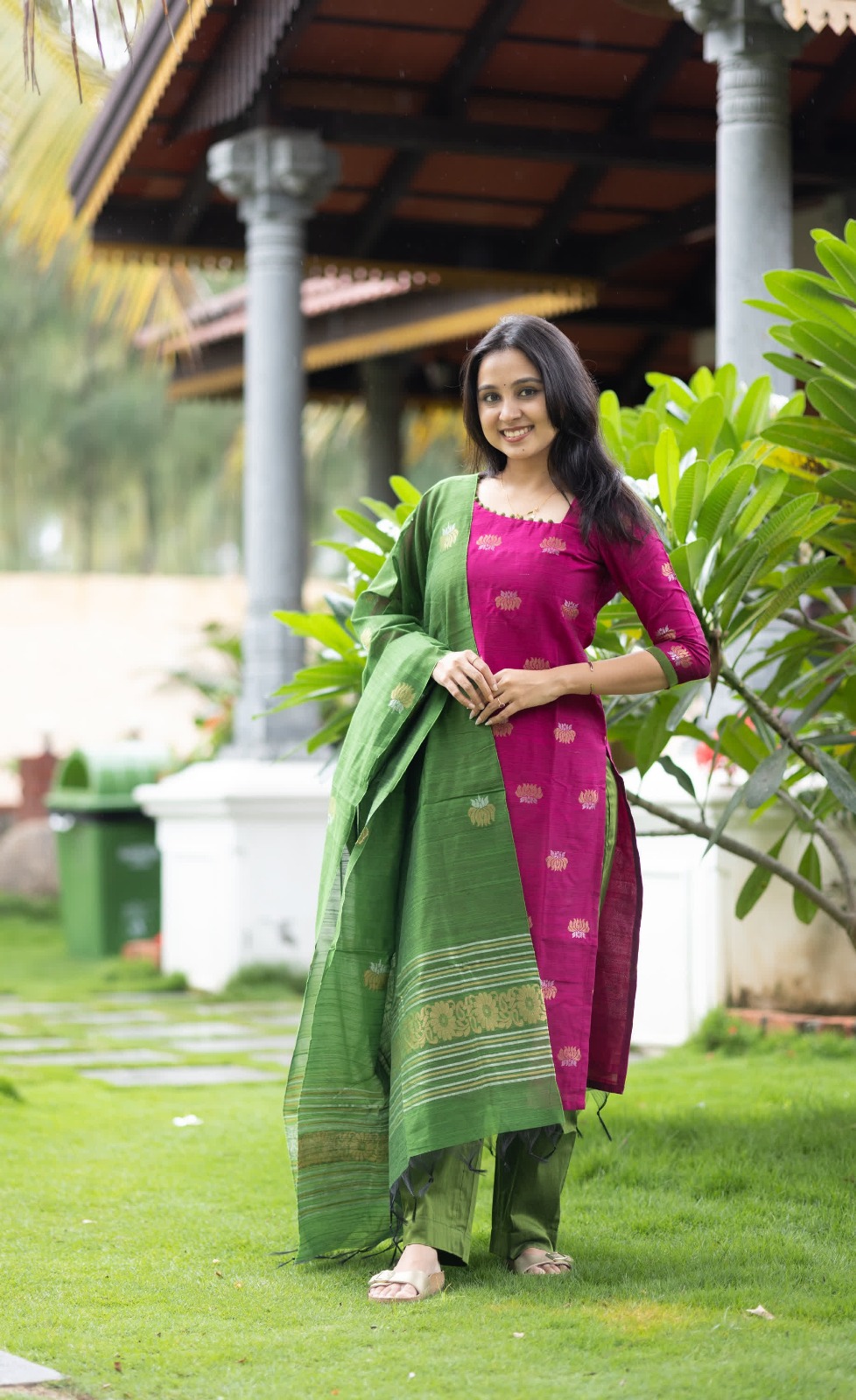
When a kurti is too long, remove length from the hem only if the border and motif allow it. A tailor can sometimes shorten a panelled kurti at a seam above the flare, but cutting through an embroidered border can destroy the intended proportion. When the waist seam is too high, lowering the seam may require additional fabric and isn't always possible in a finished garment.
Look for product measurements rather than relying only on labels such as small, medium or large. Compare shoulder width, bust ease and garment length with a kurti that already fits well. Cotton fabrics such as Kanchi cotton and printed cotton may have less drape than silk, so the same length can look more structured in cotton and more fluid in silk.
Odisha Sambalpuri Salwar Suits are a helpful reminder that pattern scale affects proportion as much as silhouette. Large horizontal motifs can broaden the upper body, while smaller repeated motifs, vertical borders and a clear centre line tend to direct attention downward. A print doesn't need to be avoided; its placement simply deserves the same consideration as the hem and neckline.
For everyday wear, the Peach Printed Cotton Kurti Pant Set for Women Casual can be styled with a simple one-shoulder dupatta or no dupatta, depending on the setting. For a more detailed festive option, the Mustard Embroidered Kurti Pant Dupatta Set Women benefits from keeping the bottom and footwear visually close in tone, so embroidery remains the focal point without making the torso appear compressed.
The most useful final test is movement. Sit down, lift your arms, walk several steps and check whether the hem rides up, the slit opens too far or the waistband folds under the kurti. A theoretically flattering length isn't a successful fit if it restricts movement or requires constant adjustment.
A practical proportion checklist before wearing the set
Check the neckline first: an open vertical shape should sit flat without gaping. Check the shoulder and bust next: pulling at either point makes the whole kurti look shorter. Check the hem after that: the hem should avoid the widest part of the hip or calf unless the design intentionally uses that line.
- Choose an upper-hip, mid-thigh or carefully placed knee-length hem.
- Prefer a gentle A-line, clean straight cut or vertical panel construction.
- Place side slits around the high hip or below the widest hip point.
- Use smooth mid- to high-rise bottoms without bulky waistband gathers.
- Keep dupatta volume away from the neck and upper chest.
- Match the bottom and footwear tones when you want maximum vertical continuity.
- Judge every alteration by sitting, walking and raising your arms.
These rules are flexible rather than prescriptive. A short torso doesn't limit you to one kurti length, one neckline or one salwar suit shape. The strongest outfit is the one in which the cut, fabric, print, border and movement work together.
Common Questions About Kurti Proportions for a Short Torso
What is the best kurti length for a woman with a short torso?
A mid-thigh or upper-knee kurti is often the easiest length to balance a short torso, especially with straight pants or cigarette trousers. Upper-hip kurtis also work with high-waisted palazzos, while long kurtis need a clean vertical fall and a flare that begins below the bust.
Are long kurtis suitable for women with a short torso?
Long kurtis can suit a short torso when the fabric falls in an uninterrupted column and the flare does not begin directly under the bust. An open neckline, one-shoulder dupatta drape and coordinated bottom can prevent a long silhouette from looking compressed.
Where should a kurti side slit start?
A kurti side slit should usually start around the high hip or slightly below the widest hip point. A mid-thigh kurti often needs a slit of about 15 to 25 centimetres, while a calf-length kurti may need 25 to 35 centimetres for comfortable walking.
Which kurti shape is most flattering for a short torso?
Straight and gently A-line kurtis are generally the most dependable shapes for a short torso. Straight cuts create a clean column, while gradual A-line cuts add movement without placing excessive volume beneath the bust.
Can women with a short torso wear palazzo pants with kurtis?
Women with a short torso can wear palazzo pants when the kurti ends above the widest part of the thigh or shares a continuous colour relationship with the trousers. Moderate width, fluid fabric and a smooth waistband prevent excess volume near the ribcage.
How should a dupatta be draped with a short-torso kurti?
A dupatta should usually be draped over one shoulder or in a slim vertical loop rather than wrapped repeatedly around the neck. Keeping fabric away from the upper chest preserves the neckline and prevents a horizontal band from visually shortening the torso.


