

Kurti lengths slits and shapes worth trying for hourglass figures become easy to choose when you begin with proportion rather than clothing size. A defined waist, balanced shoulders and hips, and a naturally curved silhouette usually look best in kurtis that follow the body without clinging. The most useful decisions affect hem placement, side-slit height, neckline width, and the amount of volume in the lower half. A well-cut A-line kurti, a lightly shaped straight kurti, or a short kurti worn with high-waisted bottoms can all work beautifully when the visible waist remains visible.
Hourglass dressing doesn't require tight clothing or a narrow waist belt. The practical goal is to preserve balance: allow fabric to skim the bust and hips, place shaping near the natural waist, and avoid adding equal bulk at every point of the body. The same principles apply to a cotton everyday kurti, a silk festive set, and a three-piece salwar suit with dupatta.
Start with the right kurti length for an hourglass figure
The most flattering kurti length depends on where the hem finishes in relation to the widest part of the hips and the shape of the bottoms. A kurti ending just above the knee, around mid-thigh, or several inches below the knee can all suit an hourglass figure, but each length creates a different visual line.
Short kurtis for high-waisted bottoms
A short kurti works well when the hem sits near the upper hip and the trousers or palazzos begin at the natural waist. The combination lengthens the legs while keeping the waist proportion visible. Choose a kurti that's long enough to cover the fullest part of the bust comfortably, and avoid a hem that cuts directly across the widest point of the hips.
Short kurtis pair especially well with straight pants, cigarette pants, or moderate-volume palazzos. Designer Cotton A-Line Kurti Pant Set with Mirror Work demonstrates why a clean A-line can make a shorter silhouette feel structured rather than boxy. Wear a short ethnic kurti untucked, because tucking can create unnecessary bulk around the waist.
Mid-thigh and knee-length kurtis
Mid-thigh to knee-length kurtis offer the most versatile proportion for everyday dressing. The hem gives enough coverage for movement while leaving the lower leg visible when paired with tapered pants. A waist seam, princess panel, or subtle flare keeps fabric from falling in a straight column over the curves.
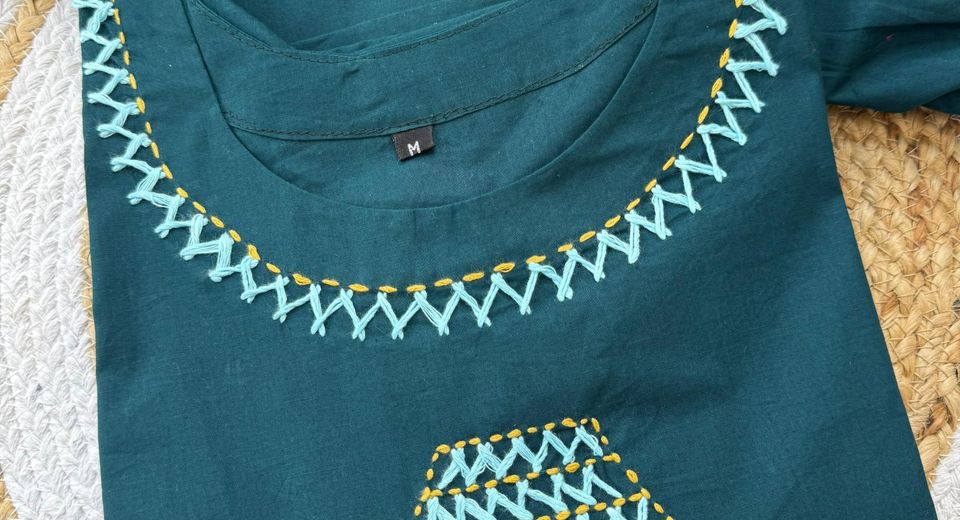
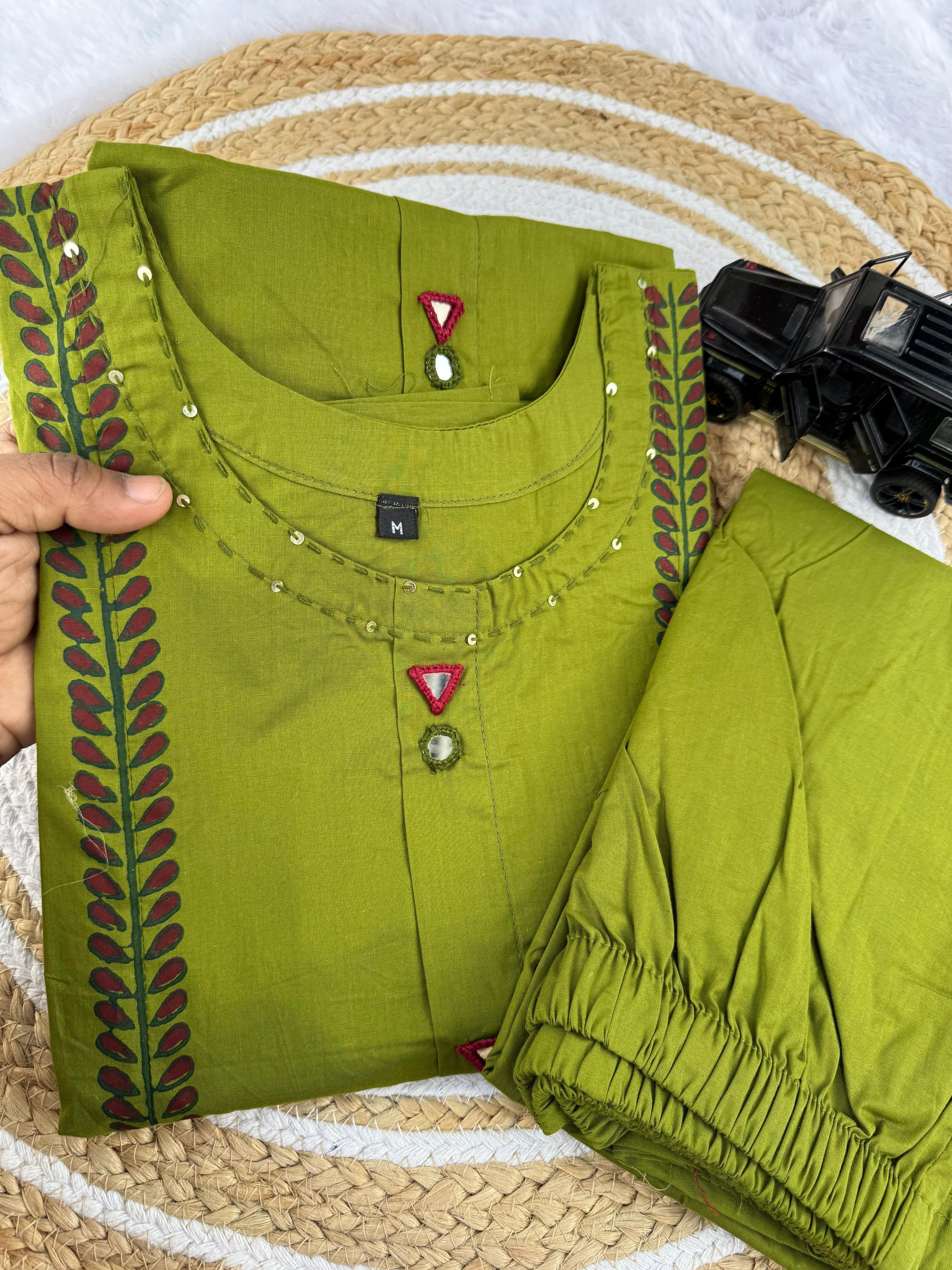
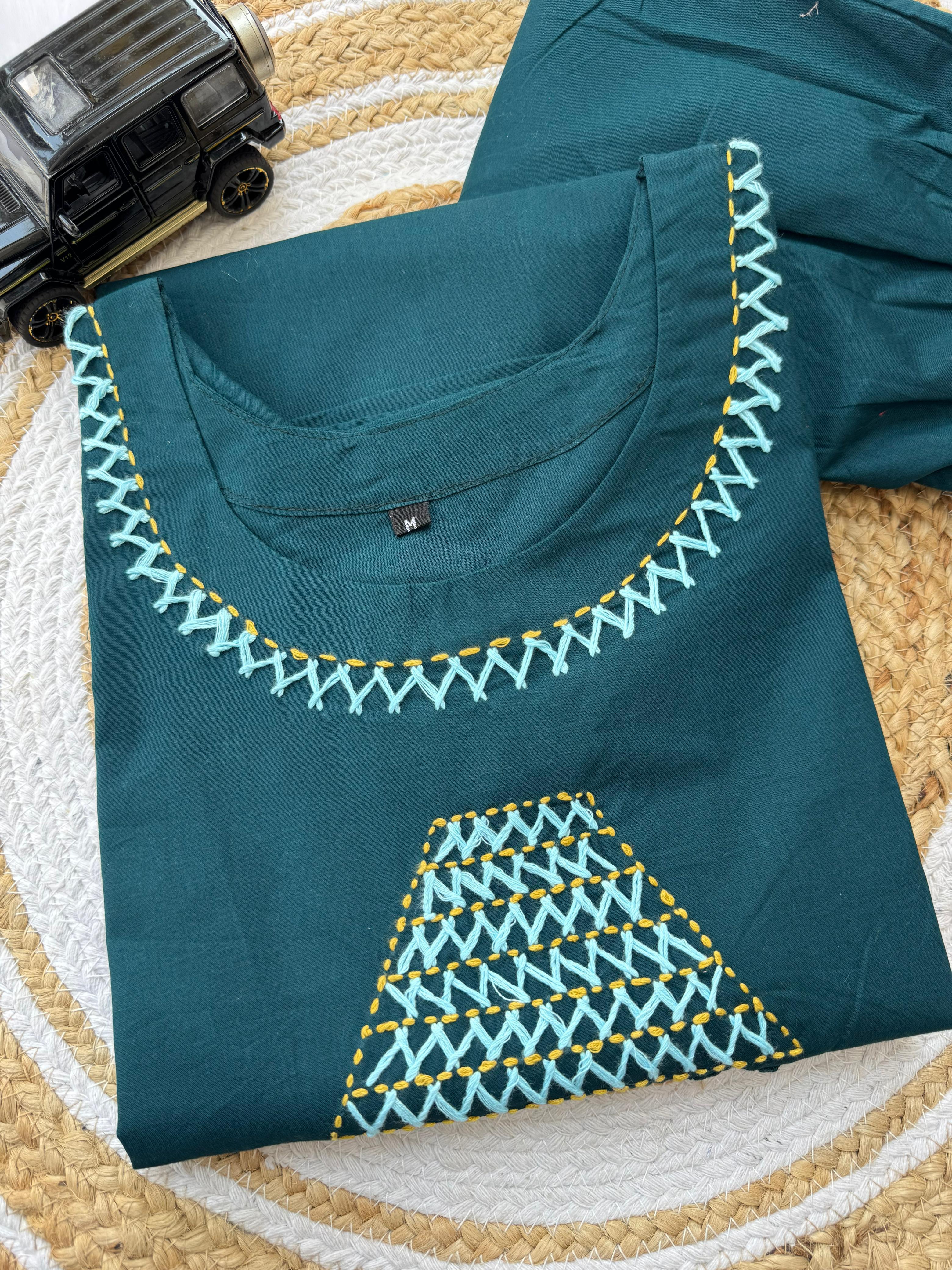
Teal Cotton A-Line Kurti Pant Set with Handwork and Olive Green A-Line Cotton Kurti Pant Set for Women are useful examples of this proportion. Cotton A-line silhouettes allow air between the garment and the body, which matters in warm weather, while controlled flare prevents the outfit from looking oversized.
Long kurtis and below-knee hems
A long kurti is most balanced when the side opening, lower volume, and bottom shape are considered together. A below-knee kurti with narrow pants creates a long uninterrupted line, while a long kurti with wide palazzos needs a higher slit or a more fitted upper body to prevent visual heaviness.
Long kurtis can be particularly elegant for festive dressing, but a completely shapeless cut may hide the natural waist. Look for vertical seams, a curved hem, a waist panel, or a slightly raised empire seam. A long hem should also leave enough walking room; fabric that catches around the knees changes the way the entire outfit hangs.
Kurti lengths slits and shapes worth trying for hourglass figures
Kurti shapes that usually flatter an hourglass figure include gentle A-line cuts, tailored straight cuts with side slits, wrap-inspired fronts, and lightly flared Anarkali silhouettes. Each shape works for a different reason, so the best choice depends on whether you want definition, ease, height, or movement.
A-line kurtis for waist-to-hip balance
A-line kurtis create a gradual flare from the upper body and are often the safest choice when you want comfort without losing shape. A-line construction gives the bust room, skims the waist, and releases over the hips rather than pulling across them. The flare should remain moderate; excessive fabric beginning at the chest can make the torso look wider.
Red Cotton A-Line Kurti Set with Mirror Work Design and Brown Cotton A-Line Kurti Pant Set with Mirror Work show how surface detail can sit on a structured silhouette without requiring a tight fit. Mirror work is most balanced when concentrated around the neckline, yoke, or upper chest rather than spread heavily across the widest hip area.
Shaped straight kurtis for a polished line
A shaped straight kurti suits an hourglass figure when the side seams follow the body gently and the fabric has enough ease for sitting and walking. A straight cut doesn't need to be tight. Two to four centimetres of wearing ease around the bust and hips can preserve a clean line while preventing strain at the seams.
Straight kurtis look refined with cigarette pants, slim salwars, or narrow palazzos. The straight silhouette is especially useful for office wear because it reads formal without depending on heavy embellishment. A side panel or princess seam can provide shaping more discreetly than a belt.
Wrap and empire-inspired shapes
Wrap-inspired kurtis define the waist through diagonal lines, making them effective when the neckline and overlap remain secure. Choose a fixed wrap or an internal tie if you want reliable coverage. An empire-inspired cut can also work, but the seam should sit close below the bust rather than high on the chest, because an overly raised seam can shorten the torso.
Lightweight fabrics suit wrap-inspired shapes because they fold without creating thick layers. Chanderi, soft cotton, and fluid blended silk can form graceful diagonal lines, while very stiff fabric may make the overlap protrude.
How side slits change the balance of a kurti
Side slits control movement and reveal the lower garment, while slit height changes the apparent length of the legs and the amount of hip definition. A slit that begins below the fullest part of the hip generally gives an hourglass figure a cleaner line than a very high opening.
Low and medium slits
Low slits ending around the knee or slightly above create a modest, continuous silhouette. Low slits are practical for long kurtis, formal settings, and outfits worn with slim pants. Medium slits reaching mid-thigh offer more movement and work well with tapered trousers, but the kurti should not pull open when you walk.
Test a slit while taking three normal steps, sitting on a chair, and climbing one stair. A side slit that looks restrained while standing can spread significantly during movement. The opening should reveal the bottom garment without exposing the side of the hip unnecessarily.
High slits with wide bottoms
High slits can work with palazzos when the upper kurti is relatively clean and the waistband sits securely at the natural waist. The opening lets the wide trouser leg show, creating vertical movement. High slits become less balanced when combined with a very loose kurti, a low waist, and a bulky dupatta, because all three elements add width around the middle.
Mauve Crunchy Silk Embroidered Kurti Palazzo Set for Women illustrates the value of coordinating slit height with bottom volume. A polished silk set benefits from movement, but a defined upper shape and controlled side opening keep the palazzo from overwhelming the figure.
Match the bottom shape to the kurti
The bottom garment should counterbalance the kurti rather than repeat its widest point. Narrow pants sharpen a flared kurti, moderate palazzos soften a fitted straight kurti, and salwars add volume best when the upper kurti has a visible waist or a neat shoulder line.

- Cigarette pants: Cigarette pants create a streamlined lower half under A-line, straight, and knee-length kurtis. Choose a hem that ends at the ankle or just above it to avoid bunching.
- Palazzos: Palazzos work with short kurtis, shaped long kurtis, and higher side slits. A high-rise waistband keeps the waist from disappearing beneath a long top.
- Patiala salwars: Patiala salwars bring substantial volume through pleats. Pair Patiala salwars with a shorter, more fitted kurti so the outfit has one clear focal area rather than volume from shoulder to ankle.
- Straight salwars: Straight salwars provide ease without the dramatic fullness of a Patiala. Straight salwars suit casual cotton sets and longer kurtis with modest slits.
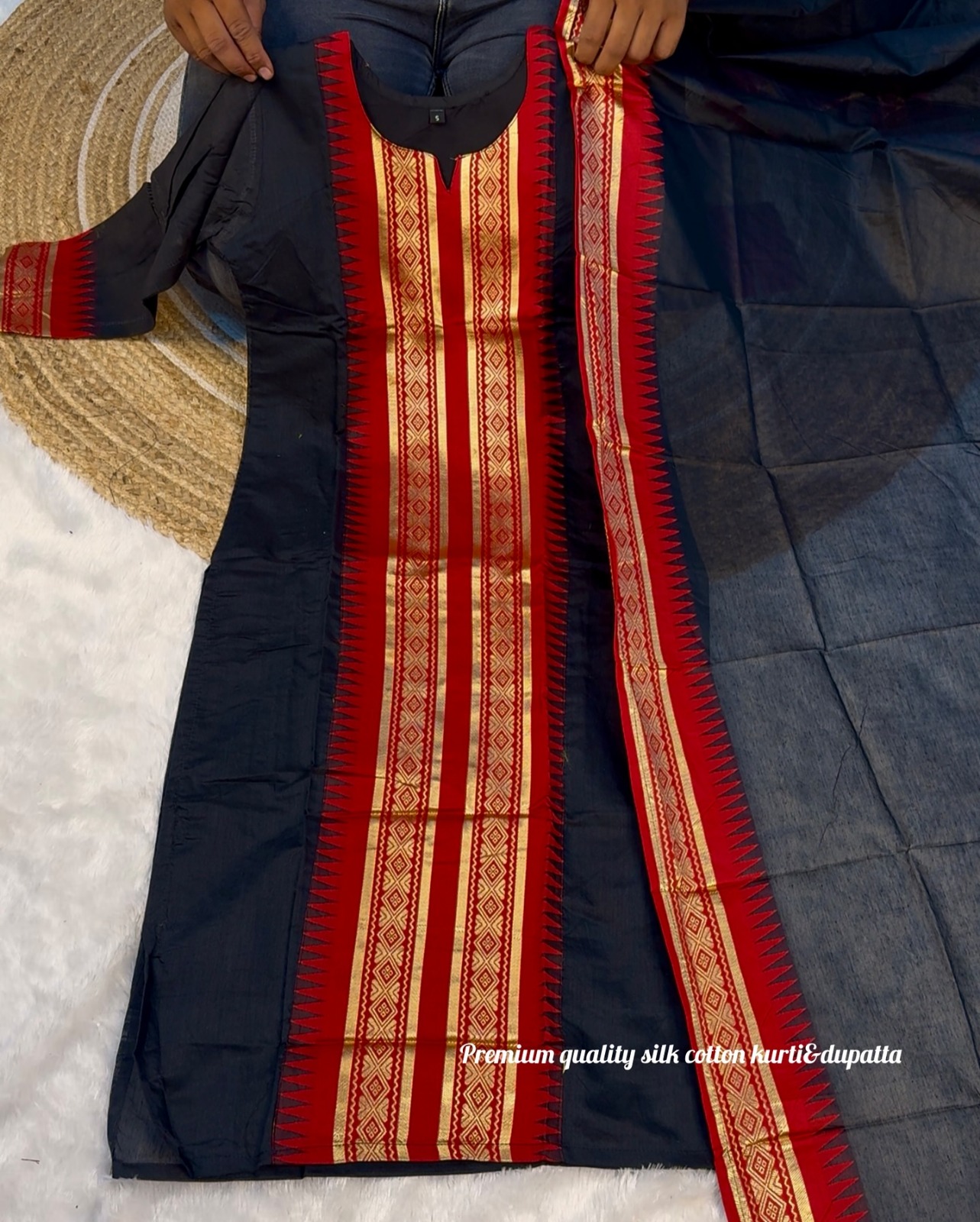
Peach Printed Cotton Kurti Pant Set for Women Casual is a practical reference for a softer everyday proportion, especially with minimal accessories and a narrow trouser leg. Navy Blended Silk Zari Kurti Pant Dupatta Set offers a dressier route: subtle sheen and a coordinated dupatta can carry the occasion while the pant keeps the lower line controlled.
Necklines, sleeves and waist details that preserve proportion
Necklines and sleeve widths influence how a kurti balances the bust, shoulders, and hips. A moderate V-neck, open round neck, square neck, or shallow boat neck can work well, provided the neckline matches the garment's structure and the wearer's comfort.
Choose a neckline according to the upper-body line
A moderate V-neck adds a vertical line and can make a shorter torso appear longer. A square neck gives definition to the upper body without adding excessive width. A round neck is flexible, while a wide boat neck draws attention toward the shoulders and works best when the kurti has some lower-half structure.
Avoid choosing a neckline only because it's described as slimming. Measure the opening against the bust and shoulder width, then check whether the neckline stays flat while you raise your arms. A neckline that gapes or pulls changes the intended silhouette more than the label on the pattern does.
Sleeves and waist details
Three-quarter sleeves usually create a balanced line because they finish below the elbow and leave the wrist visible. Short sleeves can work with a longer kurti, while very wide sleeves need a simpler lower half. A narrow waist panel, vertical embroidery, or closely spaced princess seams can define the centre without adding a belt.
Traditional surface design can also guide the eye. Kalamkari Print Salwar Suits often use narrative motifs and borders, while Maharashtra Paithani Inspired Salwar Suits can introduce rich woven-style colour placement. Gujarat Bandhej Salwar Suits add visual rhythm through dotted tie-dye effects, so keep the silhouette relatively clear if the print is strong.
Fabric and print choices for a comfortable fit
Fabric weight, recovery, and drape matter as much as the cut when dressing an hourglass figure. Cotton holds an A-line shape and remains breathable, blended silk falls closer to the body, and lightweight fabrics reduce bulk at seams and side openings.

Choose cotton for daytime wear when you want structure and airflow. Choose blended silk or silk-like fabrics for festive settings when you want fluid movement and surface sheen. Zari, embroidery, and mirror work add weight, so inspect whether embellishment is concentrated at the neckline or distributed across the entire front.
Print scale also affects proportion. Small repeated motifs can create a quiet surface, while large motifs or broad horizontal borders draw attention to the area where they sit. Odisha Sambalpuri Salwar Suits and Punjab Patiala Salwar Suits may both be visually expressive, but their styling needs differ: a patterned Sambalpuri-inspired look can pair with a clean bottom, while a Patiala outfit needs a shorter upper layer to manage its volume.
A practical fitting checklist before buying
A kurti fits an hourglass figure correctly when the bust, waist, hips, slit, and hem remain comfortable during ordinary movement. The garment should not pull diagonally from the bust to the underarm, ride upward at the back, or open at the slit when you sit.
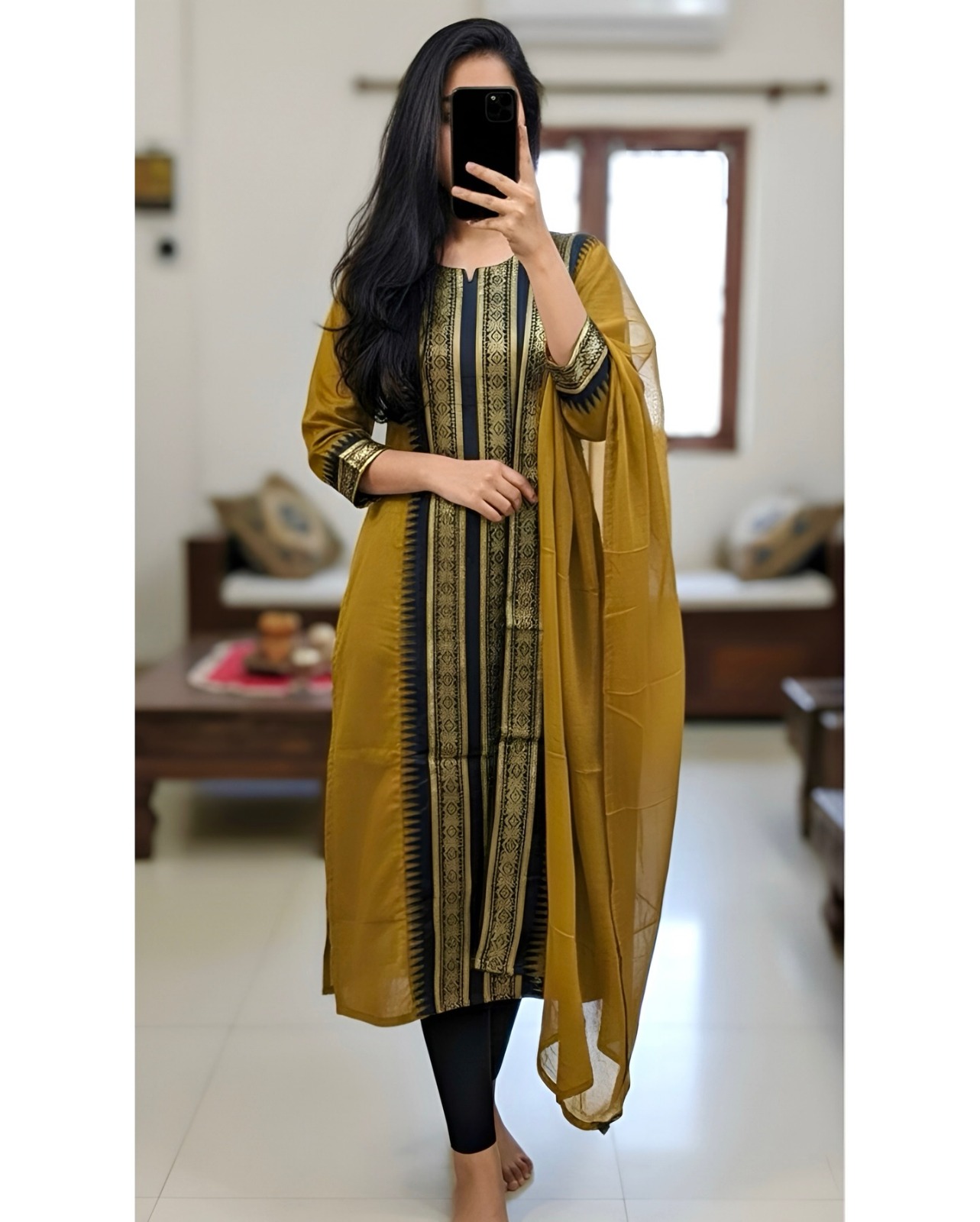
- Measure the bust and hips: Use the larger measurement when comparing a ready-made kurti size chart, then check the garment's listed ease.
- Check the shoulder seam: The seam should sit near the shoulder edge without falling down the arm or cutting into the neck.
- Test the waist: Raise both arms and sit down. A waist seam that climbs several centimetres may be too restrictive.
- Inspect the slit: Walk, sit, and climb one step. The opening should not pull apart across the hip.
- Compare the hem with the bottom: Long hems need narrow or controlled bottoms, while short hems can accommodate more volume below.
- Consider the dupatta: A heavy dupatta can add bulk across the bust, so place it diagonally or let it fall from one shoulder when the kurti already has embroidery.
The most reliable choice isn't always the most fitted one. A garment with an accurate shoulder, adequate bust ease, a comfortable hip line, and intentional shaping will usually look more polished than a smaller size pulled tight across the curves.
Common Questions About Kurti Proportions for Hourglass Figures
Which kurti length is most flattering for an hourglass figure?
Mid-thigh to knee-length kurtis are the most versatile because they skim the curves and pair with both narrow pants and moderate palazzos. Short kurtis work well with high-waisted bottoms, while long kurtis need a controlled slit or visible waist detail.
Are A-line kurtis suitable for an hourglass body shape?
Yes, A-line kurtis suit an hourglass body shape when the flare begins near the waist rather than immediately below the bust. A moderate flare provides room over the hips without hiding the waist or adding unnecessary volume to the torso.
What slit height should an hourglass figure choose?
A low or medium side slit is usually the easiest choice for a balanced kurti outfit. A higher slit can work with palazzos, but the upper kurti should be relatively shaped and the waistband should sit securely at the natural waist.
Can an hourglass figure wear a straight kurti?
An hourglass figure can wear a straight kurti when the side seams have enough ease and the cut is gently shaped rather than boxy. Princess seams, side panels, or a waist detail can preserve definition without making the kurti tight.
Which bottoms pair best with a kurti for an hourglass figure?
Cigarette pants create a streamlined look with A-line and straight kurtis, while palazzos balance shorter or fitted kurtis. Patiala salwars work best with shorter, cleaner kurtis because both garments should not add substantial volume at the same level.
How should an hourglass figure style a printed or embellished salwar suit?
A printed or embellished salwar suit looks balanced when the silhouette remains simple and the detail is placed intentionally. Pair a strong print with a controlled bottom, or pair a heavily worked kurti with minimal jewellery and a dupatta arranged diagonally rather than in several thick layers.


