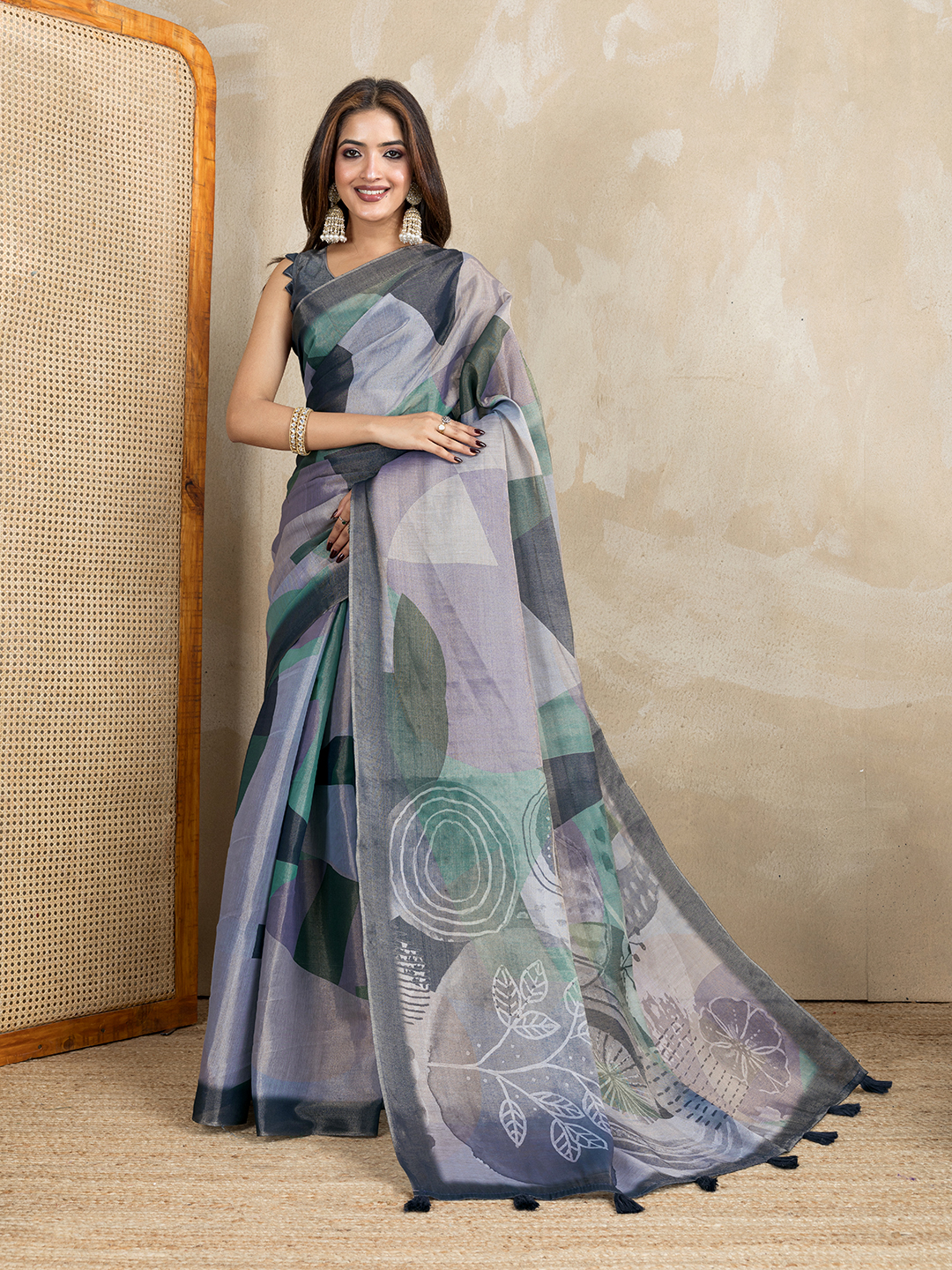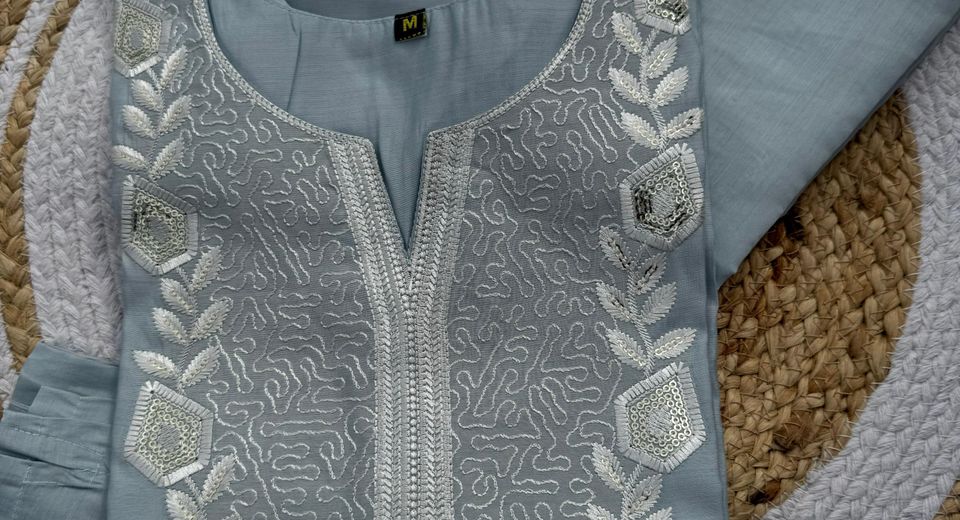
Kurti Fabrics That Feel Cool but Still Hold Their Shape can make the difference between a salwar suit that looks composed at 9 a.m. And one that appears tired by lunchtime. Cotton, rayon, Chanderi, organza and blended fabrics each manage heat, moisture, creasing and drape differently. The right choice depends on fibre, yarn density, weave, lining, silhouette and laundering habits.
A breathable kurti should allow air movement and absorb or release moisture without becoming limp. A well-shaped kurti should retain its shoulder line, side seams, hem and neckline after sitting, walking and washing. Understanding those requirements together helps you choose a practical everyday suit instead of judging fabric only by its first touch.
Kurti Fabrics That Feel Cool but Still Hold Their Shape: What creates summer comfort?
A kurti feels cool when its fibre and weave allow air movement and manage moisture efficiently. Loose or medium-density weaves create small air spaces, while absorbent fibres such as cotton can take up perspiration and reduce the sticky feeling common in humid weather.
Fabric weight also matters. A lightweight textile isn't automatically cooler because a tightly packed synthetic fabric may feel warmer than a slightly heavier cotton with better air permeability. Surface finish makes a difference as well. A brushed or heavily coated surface can trap warmth, whereas a dry, crisp or lightly textured surface often feels less clingy.
For Indian summers, cotton is usually a dependable starting point for breathable daily-wear salwar suits. Rayon can feel cool because it's smooth and fluid, although its drape may need more support to remain crisp. Chanderi and organza provide airiness and visual structure, but they're often used selectively in panels, dupattas or overlays rather than as a complete everyday garment.
Do natural fibres always feel cooler?
Natural fibre doesn't automatically guarantee the coolest or most durable kurti. A dense cotton satin can feel warmer than a light cotton voile, while a quality rayon can feel cooler against the skin than a coarse, loosely finished cotton.
Check four practical clues before buying: the fabric thickness, the closeness of the weave, whether the textile clings when moved across the hand, and whether the garment includes lining. A lined kurti may look neater but feel warmer if the lining is polyester and extends across the entire bodice. A partial cotton lining or unlined construction may be more comfortable in high heat.
Kurti Fabrics That Feel Cool but Still Hold Their Shape: Which fibres balance both?
Cotton with a medium-weight weave, cotton-rich blends, structured rayon and Chanderi are among the most useful options when a kurti must feel breathable while retaining a defined silhouette.
Cotton
Cotton offers reliable airflow, moisture absorption and a firm hand when the weave is sufficiently dense. Poplin, cambric and medium-weight woven cotton generally hold an A-line, straight or panelled kurti better than very thin voile. Cotton can crease more visibly than rayon, but that crease is often preferable to fabric that stretches or collapses around the hips.
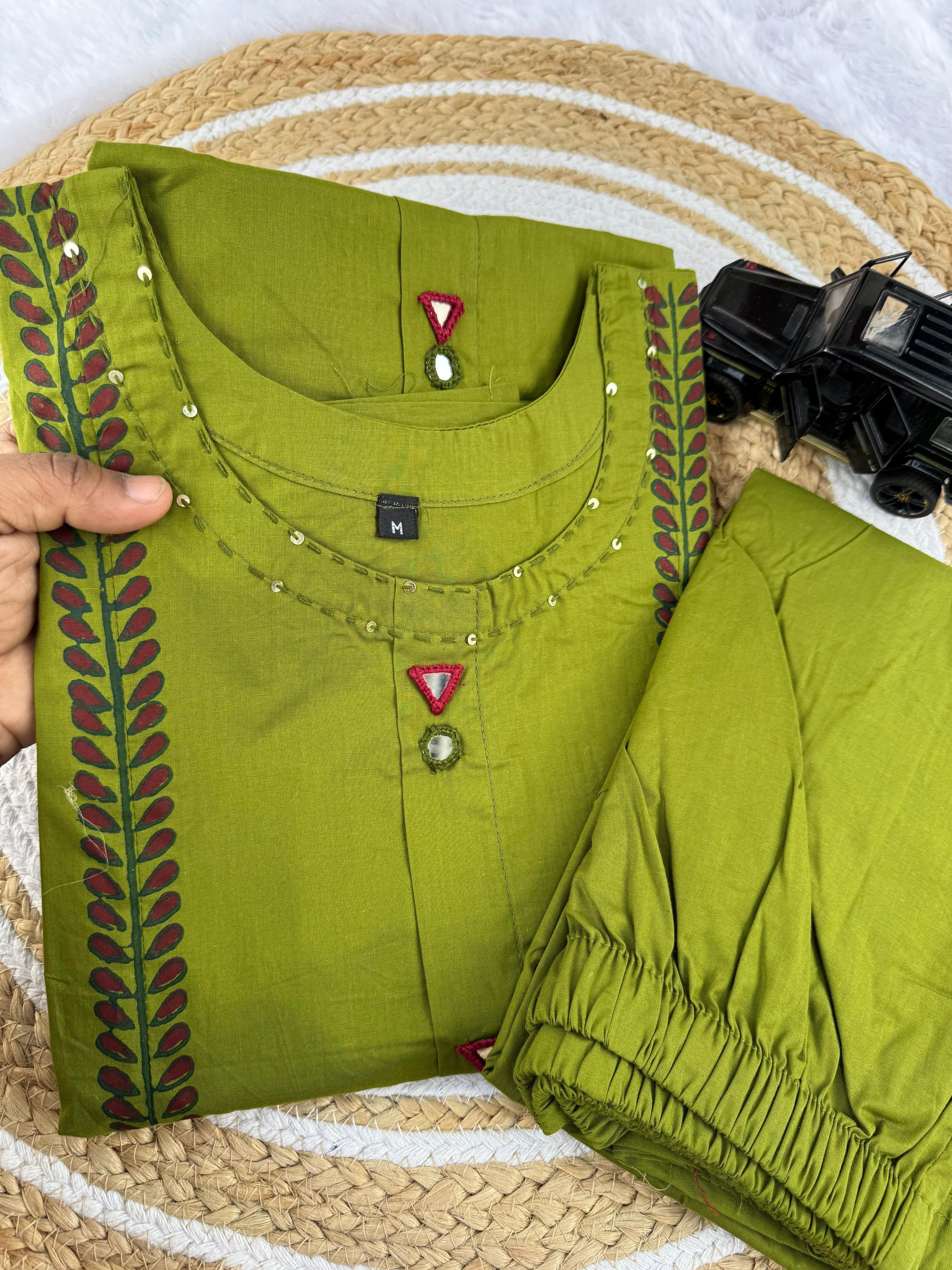
A cotton kurti benefits from shoulder seams, a stable neckline facing and a hem with enough depth to prevent rolling. Cotton also responds well to light starch, although frequent heavy starching can make fibres brittle over time. Designer Cotton A-Line Kurti Pant Set with Mirror Work demonstrates why cotton suits structured silhouettes: an A-line cut can remain comfortable around the body while the fabric supports a clean fall.
Rayon
Rayon feels cool because its smooth fibres create a fluid, low-friction surface that drapes away from the body. Rayon is particularly comfortable for straight kurtis and relaxed pant sets in warm weather. The trade-off is shape retention: thin rayon can lengthen when wet, twist at seams or develop a stretched hem if it's hung while dripping.
Choose rayon when you want softness and movement, but inspect seam finishing and garment weight. A heavier rayon with stable stitching is more dependable than a very thin rayon with a glossy, clingy finish. Purple Embroidered Rayon Kurti Pant Dupatta Set shows how embroidery and a three-piece construction can add visual definition to a fluid base without requiring a stiff fabric.
Chanderi and cotton-silk textures
Chanderi provides a light, slightly crisp hand that helps a kurti or dupatta keep its outline while remaining airy. Chanderi may contain silk, cotton or a blend, so the care label matters more than the name alone. Cotton Chanderi usually feels more matte and casual, while silk-blend Chanderi often has greater sheen and a dressier fall.
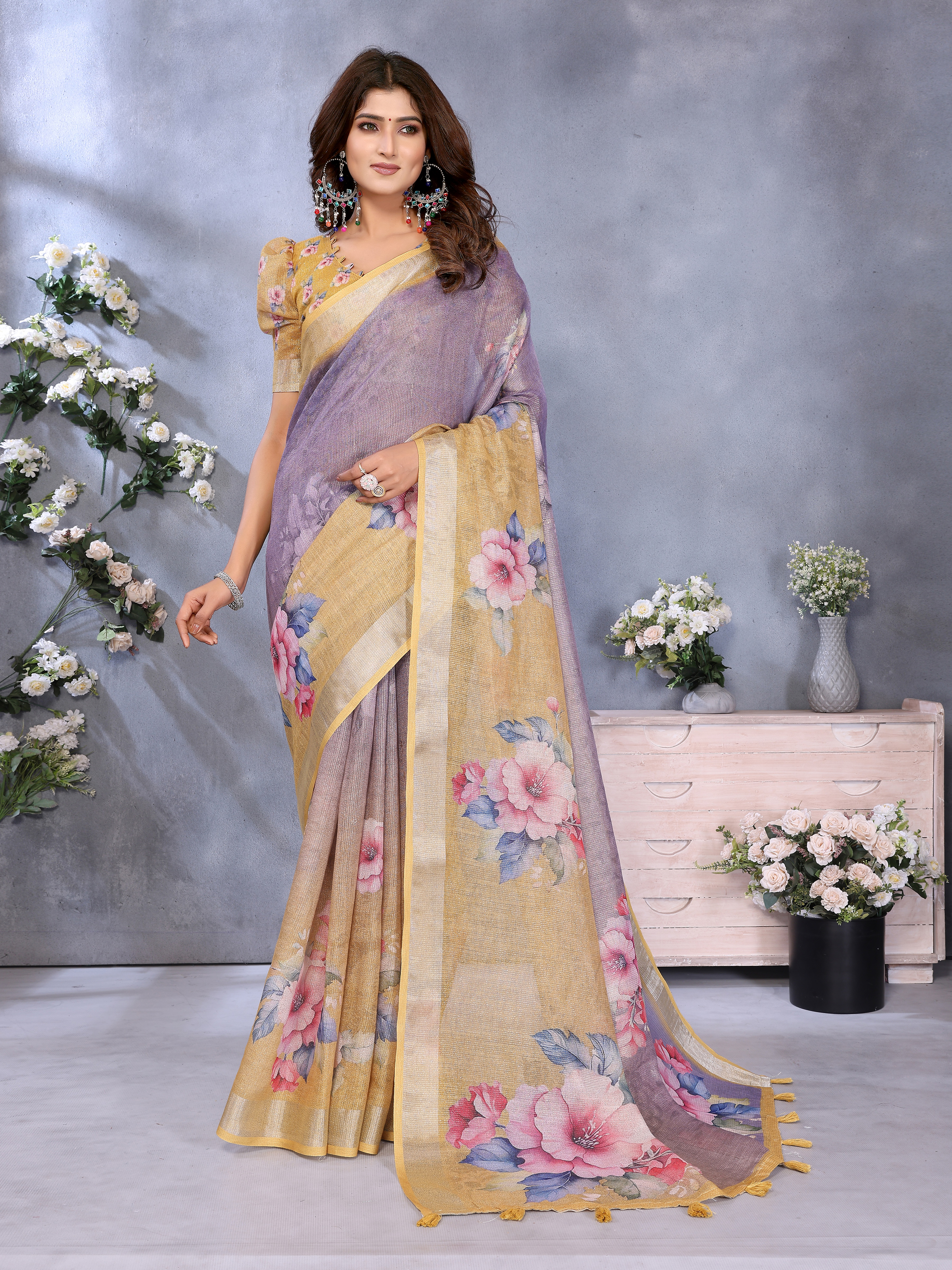
Chanderi works especially well for dupattas, yokes, sleeves and festive overlays. Maharashtra Paithani Inspired Salwar Suits illustrates how a lighter, dress-oriented textile can carry woven-inspired visual interest without needing a heavy garment. Chanderi isn't always the best choice for rough daily washing, but it can offer a strong balance of elegance, low bulk and shape.
Organza and supportive layers
Organza holds shape extremely well because its yarns create a crisp, open surface, but organza alone isn't the most forgiving fabric for a full kurti in hot weather. Organza is better used for dupattas, sleeves, yokes or small overlays where its structure adds volume without placing a stiff layer across the whole body.
Lavender Kurti Pant Set with Organza Dupatta shows the practical division of labour between fabrics: a comfortable kurti and pant can provide movement, while an organza dupatta contributes lift and occasion-ready structure. A breathable base paired with a lighter structured accessory often feels cooler than a fully embellished, heavily lined suit.
Kurti Fabrics That Feel Cool but Still Hold Their Shape: How do weave and cut matter?
Weave and silhouette affect shape as much as fibre does because fabric must resist movement, gravity and repeated compression at the elbows, waist and seat.
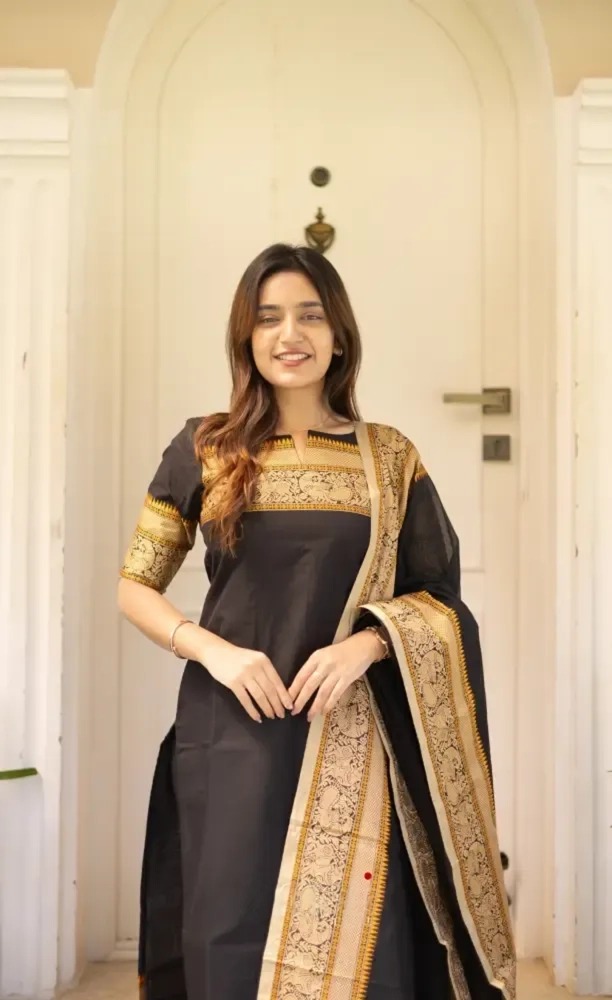
A plain weave with balanced warp and weft yarns tends to feel stable and predictable. A looser weave can be cooler but may stretch or snag more easily. Twill has diagonal strength and can resist abrasion, although a dense twill may feel warmer. Slub yarns create texture and visual depth, but irregular thickness can make a garment look less sharply pressed.
An A-line kurti is forgiving because the flare begins below the bust or waist, reducing strain around the hip. A straight kurti needs fabric with enough body to fall vertically instead of clinging. An Anarkali needs controlled fullness, seam balance and sometimes a firmer lower panel to stop the flare from collapsing. A palazzo suit requires attention to trouser fabric because a fluid textile can look elegant while a thin one may lose crease definition at the knees.
Teal Cotton A-Line Kurti Pant Set with Handwork pairs a shape-friendly A-line idea with cotton's practical breathability. Royal Orange Kurti Pant Set can be considered through the same lens: strong colour creates visual impact, while actual comfort depends on fabric weight, ease and whether decorative work adds stiffness or bulk.
Silhouette should also match the fabric's recovery. A softly fluid fabric suits a relaxed straight cut, while a crisp cotton can support panels, pleats and controlled flare. A very fitted kurti in a non-stretch woven fabric needs sufficient ease, or the side seams and neckline may pull during normal movement.
Kurti Fabrics That Feel Cool but Still Hold Their Shape: Which construction details help?
Stable construction details help a breathable kurti retain its shape without making the whole garment heavy or hot.
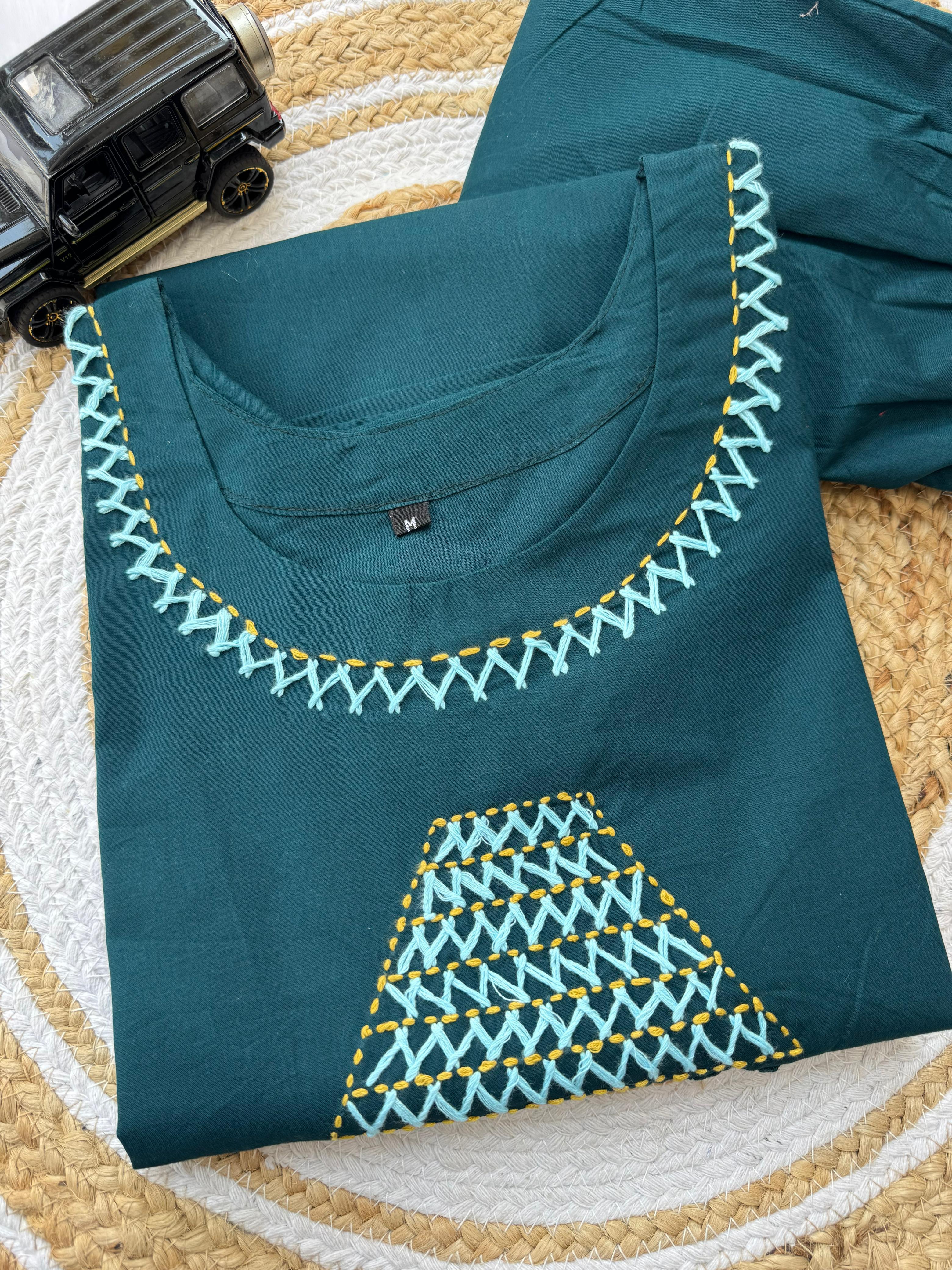
- Neckline facing: A properly fused or stitched facing prevents the neck from stretching during dressing and washing.
- Shoulder reinforcement: A clean shoulder seam, narrow stay tape or suitable lining keeps the upper silhouette from sloping.
- Side-seam ease: Two to four centimetres of wearing ease, depending on the cut and fabric, reduces pulling across the bust and hip.
- Hem depth: A deeper hem gives the lower edge weight and reduces curling, particularly in cotton and rayon.
- Panel construction: Vertical panels distribute fullness and make an A-line or Anarkali look intentional rather than shapeless.
- Moderate embellishment: Mirror work, zari and dense embroidery should be balanced across seams so that a heavy area doesn't drag the garment out of alignment.
Designer Cream Straight Kurti Set with Dupatta is a useful reference for a straight silhouette: a clean cut benefits from a fabric and construction that let the side seams fall vertically. Red Cotton A-Line Kurti Set with Mirror Work Design takes another approach, where cotton supplies everyday ease and mirror work supplies definition. Decorative work can improve perceived structure, but embellishment can't compensate for a weak or unstable base fabric.
Garment length and sleeve design also influence comfort. Three-quarter sleeves in breathable cotton provide coverage without enclosing the entire arm, while very wide sleeves can catch perspiration and lose their shape at the underarm. A hem that ends around the knee may feel cooler than a floor-length layer because less fabric gathers around the legs.
Kurti Fabrics That Feel Cool but Still Hold Their Shape: How should shoppers test fabric?
Compare cotton, rayon and festive fabrics by testing drape, recovery, opacity, seam stability and care requirements rather than relying on fibre names alone.
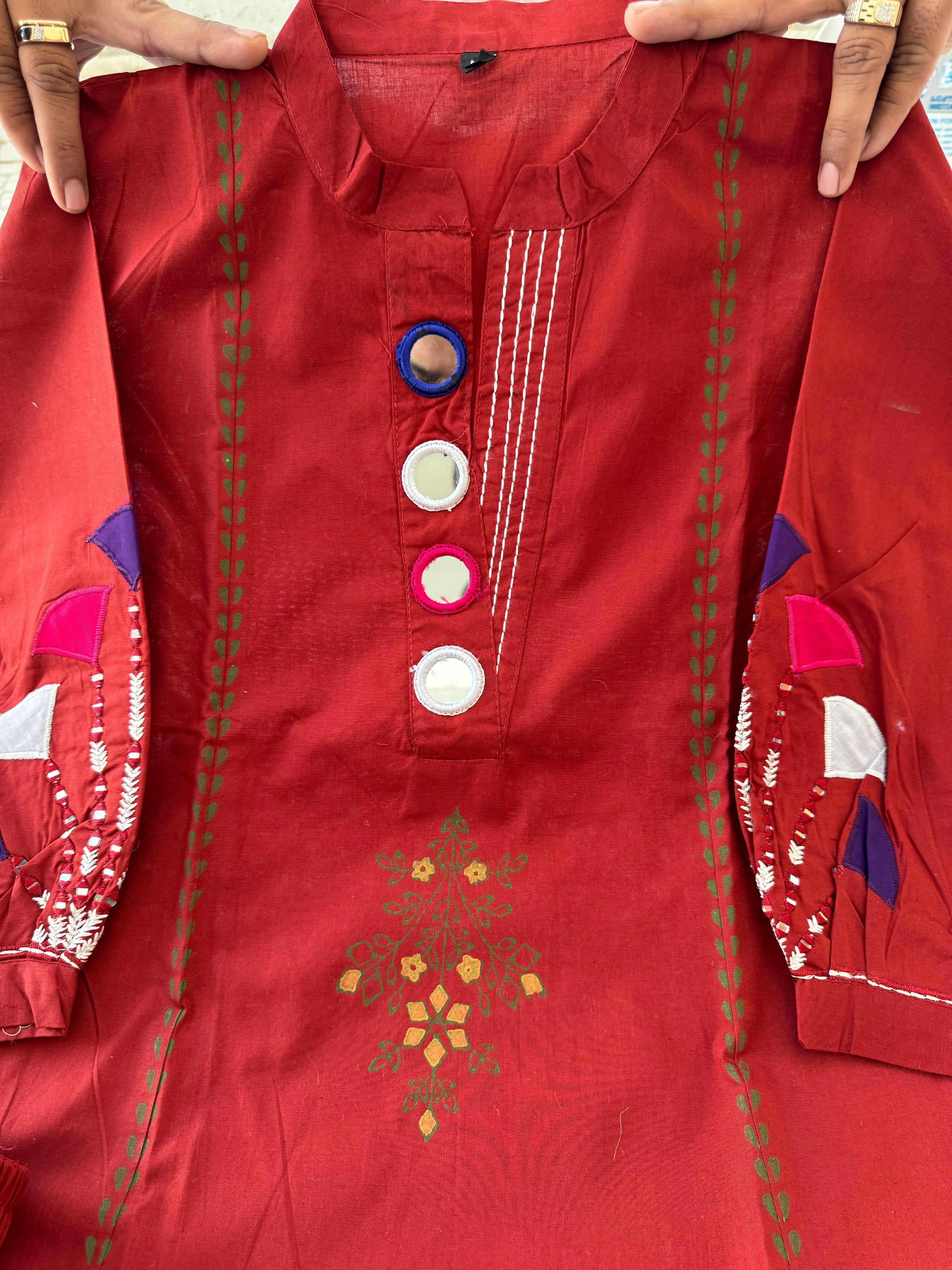
- Scrunch a small section for five seconds. Cotton usually shows a clear crease, rayon relaxes into a soft fold, and crisp fabrics such as organza spring back more visibly. Decide which behaviour suits your routine.
- Hold the fabric against light. Excessive transparency may mean that the kurti needs lining, which can reduce summer comfort. Check whether the lining is cotton, polyester or another fibre.
- Pull gently across the grain. The fabric should return close to its original width. Permanent distortion suggests that the garment may lose shape with wear.
- Inspect the reverse side. Loose threads, unsecured embroidery and rough finishing can cause irritation or seam failure. Zari, mirror work and dense threadwork require especially careful backing.
- Check the crease recovery after release. A garment that immediately develops deep folds may need more pressing, while a completely limp fabric may need a structured cut or supporting dupatta.
- Read the care instructions. A fabric that requires dry cleaning after every wear may be unsuitable for a daily summer wardrobe, even if the first touch feels pleasant.
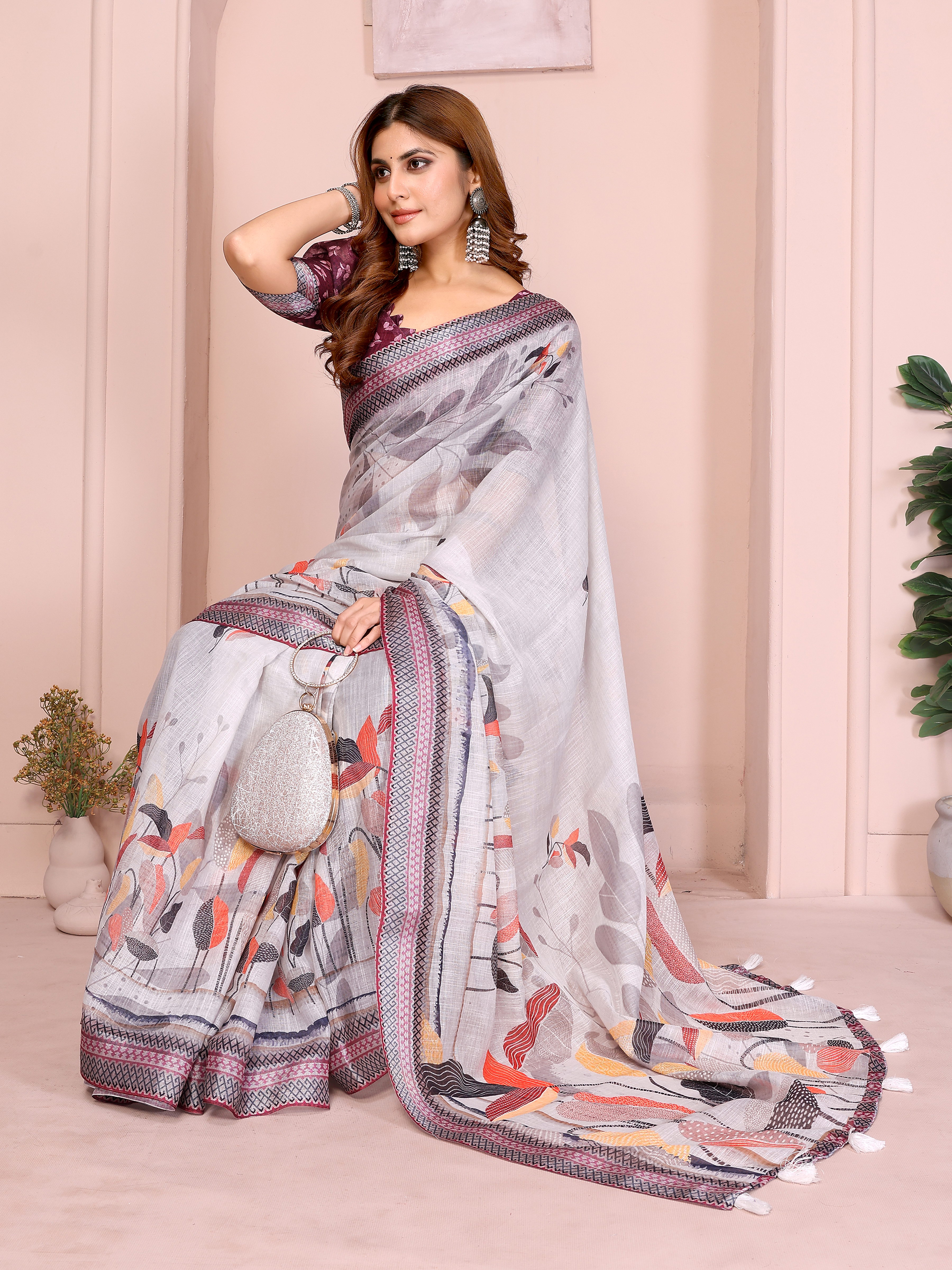
Classic Yellow Cotton Kurti Set with Woven Dupatta is a useful example of how cotton can serve regular wear while a woven dupatta adds visual interest. Reducing unnecessary layers is often more effective than choosing a lighter-looking colour because heat is influenced by fibre, lining and garment density.
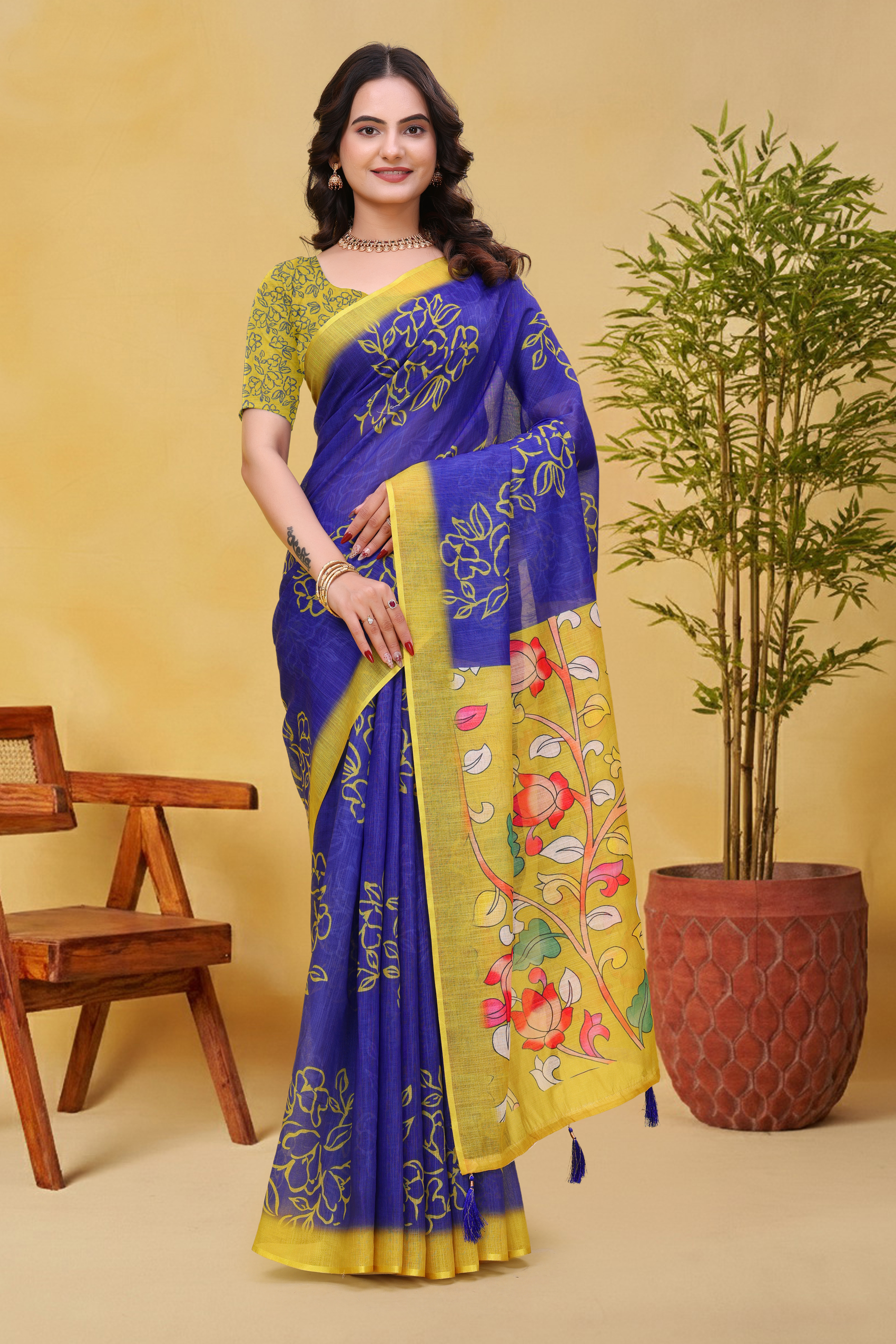
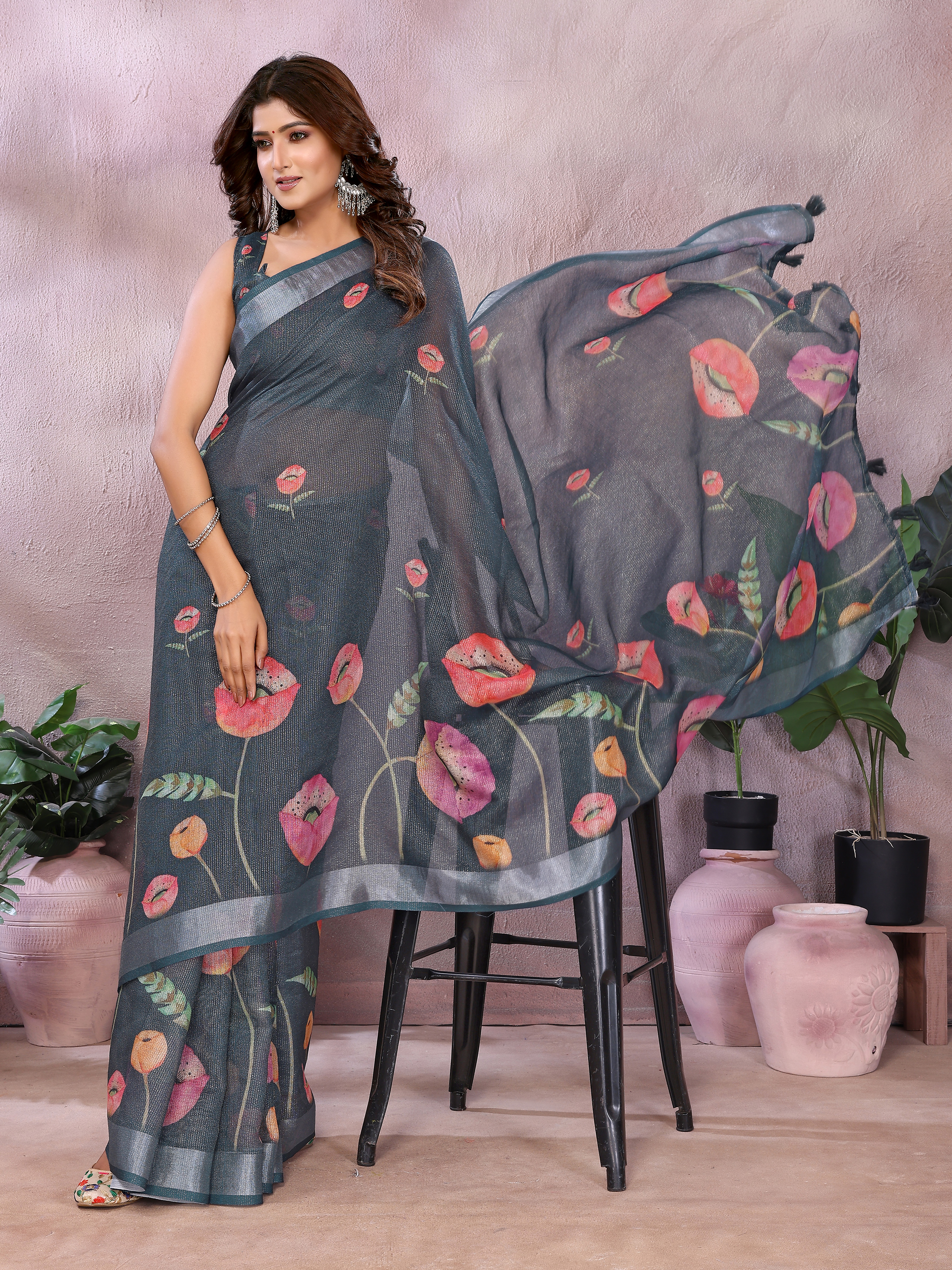
Regional textile-inspired styles also show why weave and finishing matter. Kalamkari Print Salwar Suits may use printed surfaces that need careful washing to protect colour, while Gujarat Bandhej Salwar Suits and Odisha Sambalpuri Salwar Suits can contain distinctive patterning whose appearance depends on the underlying weave. Maharashtra Paithani Inspired Salwar Suits and Punjab Patiala Salwar Suits similarly remind shoppers to assess the full construction rather than assuming that a traditional visual style identifies one universal fabric.
Kurti Fabrics That Feel Cool but Still Hold Their Shape: How should you wash and store them?
Wash breathable kurtis gently, dry them in shade with their seams aligned, and store them only after they're completely dry.
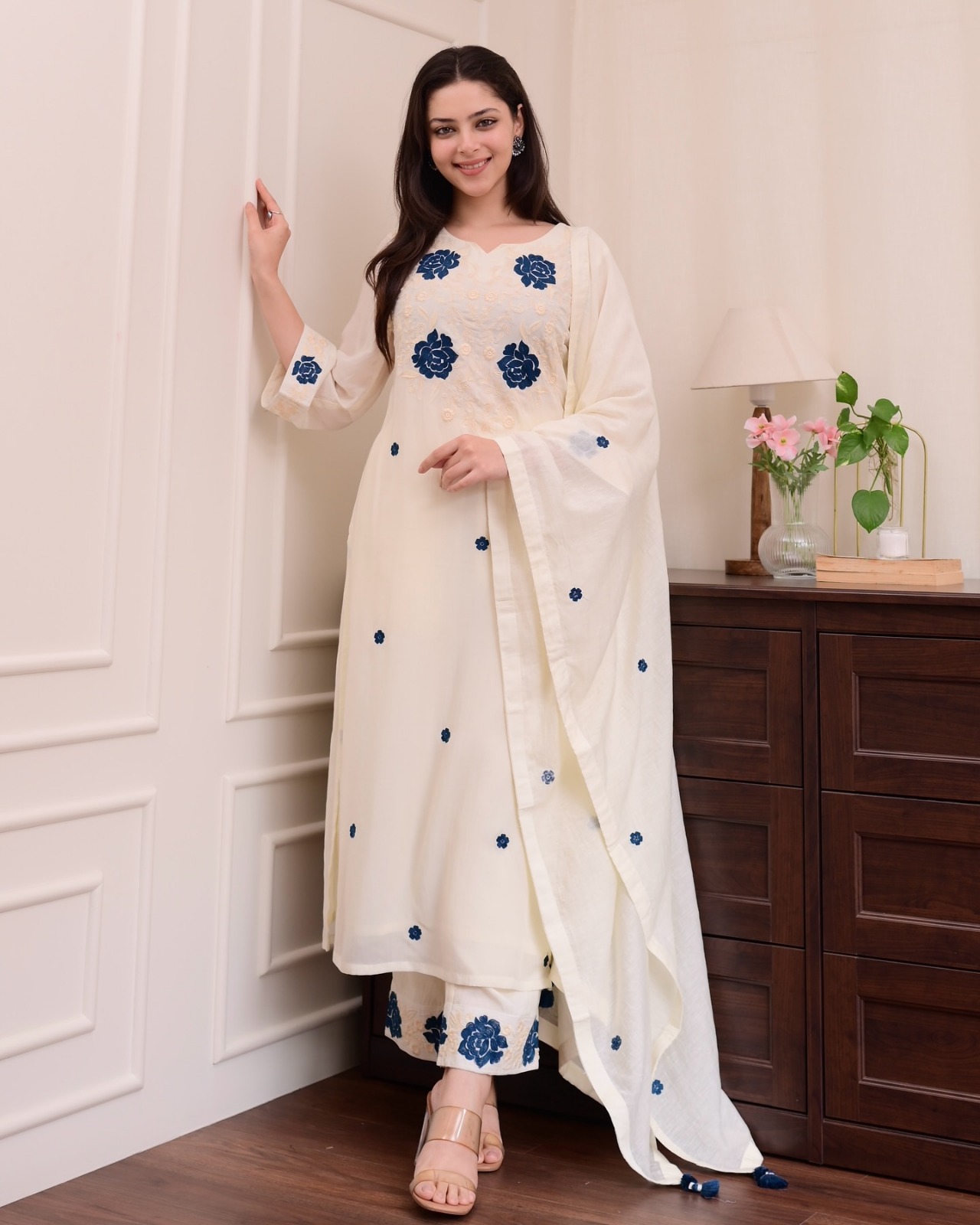
Turn cotton, rayon and embellished garments inside out before washing. Use cold or lukewarm water, a mild detergent and a short cycle or gentle hand wash. Avoid wringing rayon because twisting can permanently distort the length and side seams. Press excess water between clean towels instead, then lay the garment flat or hang it on a broad hanger according to the care label.
Drying in direct, intense sunlight can fade printed cotton and weaken some dyed fibres over repeated exposure. Shade drying helps protect colour, especially for Kalamkari Print Salwar Suits, Gujarat Bandhej Salwar Suits and Odisha Sambalpuri Salwar Suits. Keep mirror work, zari and embroidery away from rough surfaces that may snag threads or scratch adjacent garments.
Iron cotton while it's slightly damp on the appropriate heat setting. Press rayon from the reverse side on low to medium heat and avoid dragging the iron across the garment. Chanderi and organza usually benefit from low heat and a pressing cloth. Never press directly over metallic zari, sequins or mirror work.
Store rayon and heavier cotton kurtis on broad hangers only when the shoulder seams are strong enough to support the garment. Fold delicate Chanderi, organza and heavily embroidered pieces to prevent shoulder bumps. Keep garments away from compressed plastic for long-term storage, and refold delicate pieces every few months to reduce permanent crease lines.
A practical wardrobe can therefore combine medium-weight cotton for regular wear, rayon for fluid comfort, and Chanderi or organza for lighter festive structure. Matching fibre, weave, cut and care routine gives a salwar suit a better chance of staying cold on the body and composed in the wardrobe.
Common Questions About Choosing Cool, Structured Kurti Fabrics
Which fabric is best for a kurti in hot and humid weather?
Medium-weight cotton is usually the most reliable choice because cotton absorbs moisture and allows comfortable airflow. Lightweight rayon can also feel cool, but rayon needs gentler washing and stronger seam finishing to retain its shape.
Does rayon lose its shape after washing?
Thin rayon can stretch, twist or lengthen when it is soaked, wrung or hung while dripping. Wash rayon gently, remove excess water without twisting, and dry it according to the care label to reduce distortion.
Is Chanderi suitable for everyday salwar suits?
Cotton Chanderi can work for occasional everyday wear, while silk-blend Chanderi is generally better suited to festive use and careful handling. Chanderi dupattas, yokes and sleeves often provide structure without making the entire suit heavy.
How can I tell whether a kurti will hold its shape?
Check the fabric recovery, shoulder seams, neckline facing, hem depth and side-seam finishing before buying. A medium-weight weave, moderate wearing ease and stable construction usually retain shape better than a very thin fabric or overly fitted cut.
Is organza comfortable for summer kurtis?
Organza is airy and highly structured, but it can feel stiff or less comfortable as a full kurti fabric. Organza usually works better as a dupatta, sleeve, yoke or overlay paired with a breathable cotton or rayon base.
How do I stop a cotton kurti from looking crushed?
Choose a medium-weight cotton with a stable weave, avoid overloading the washing machine, and remove the garment promptly after washing. Dry the kurti with seams aligned and iron it while slightly damp to reduce deep creases.