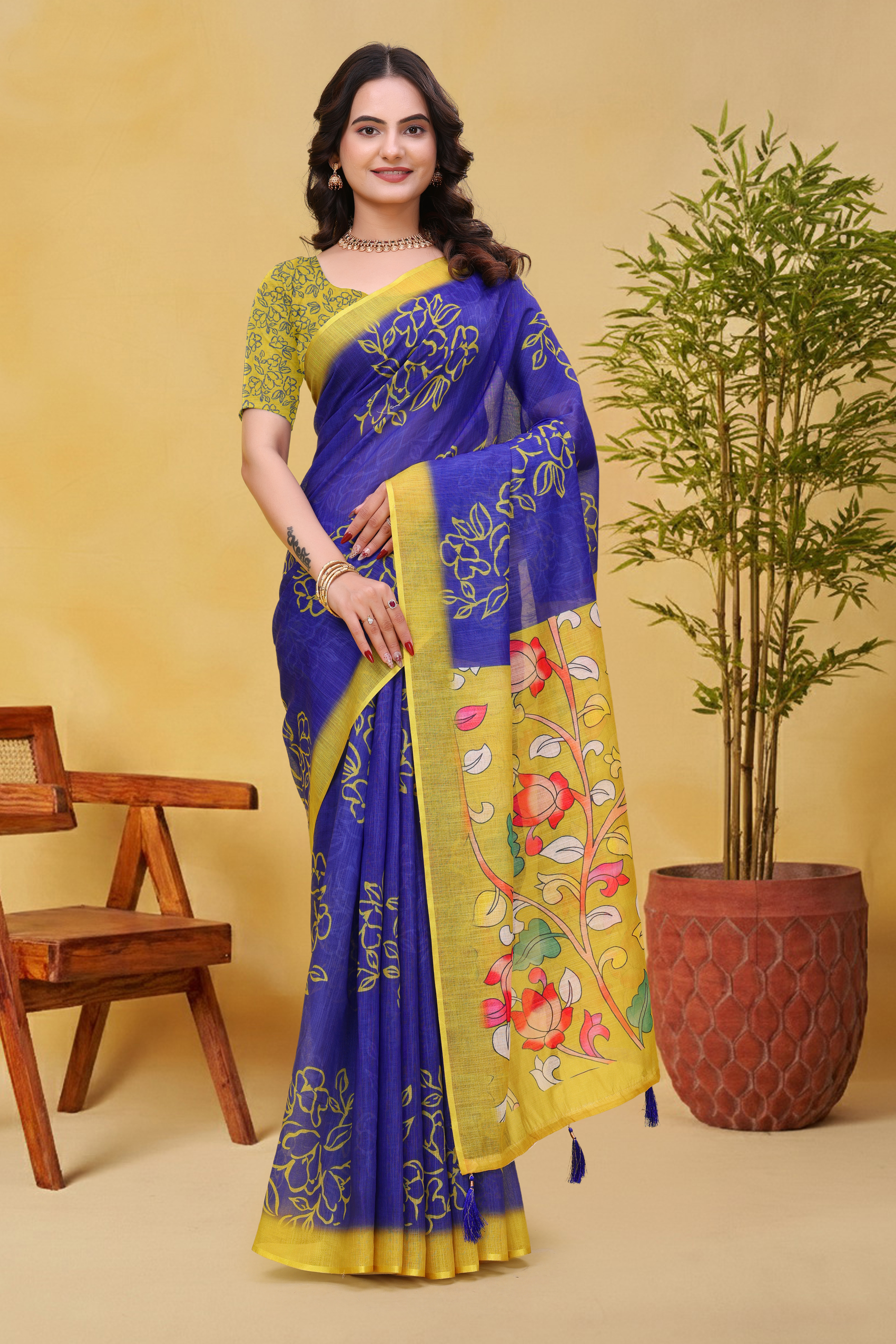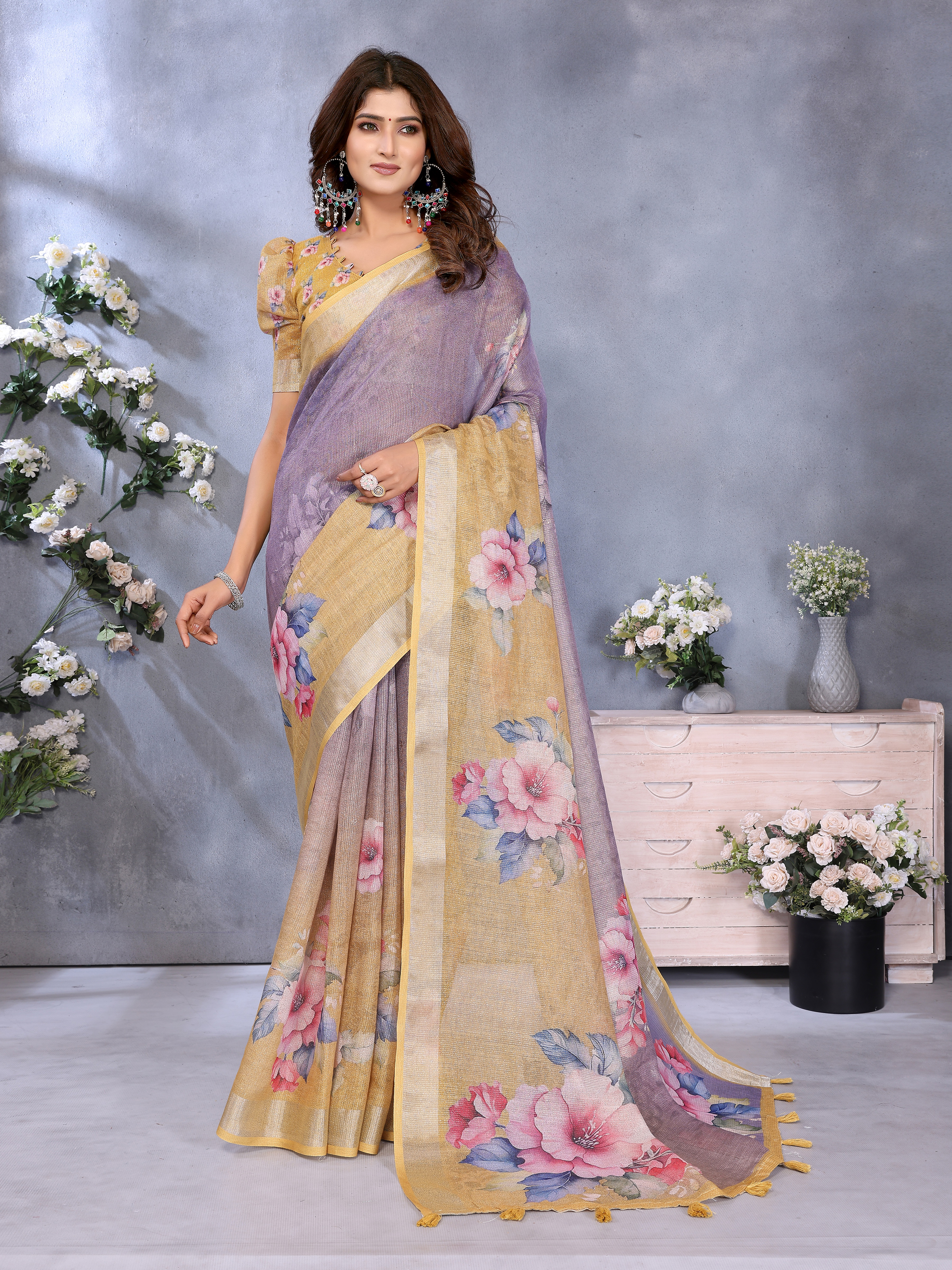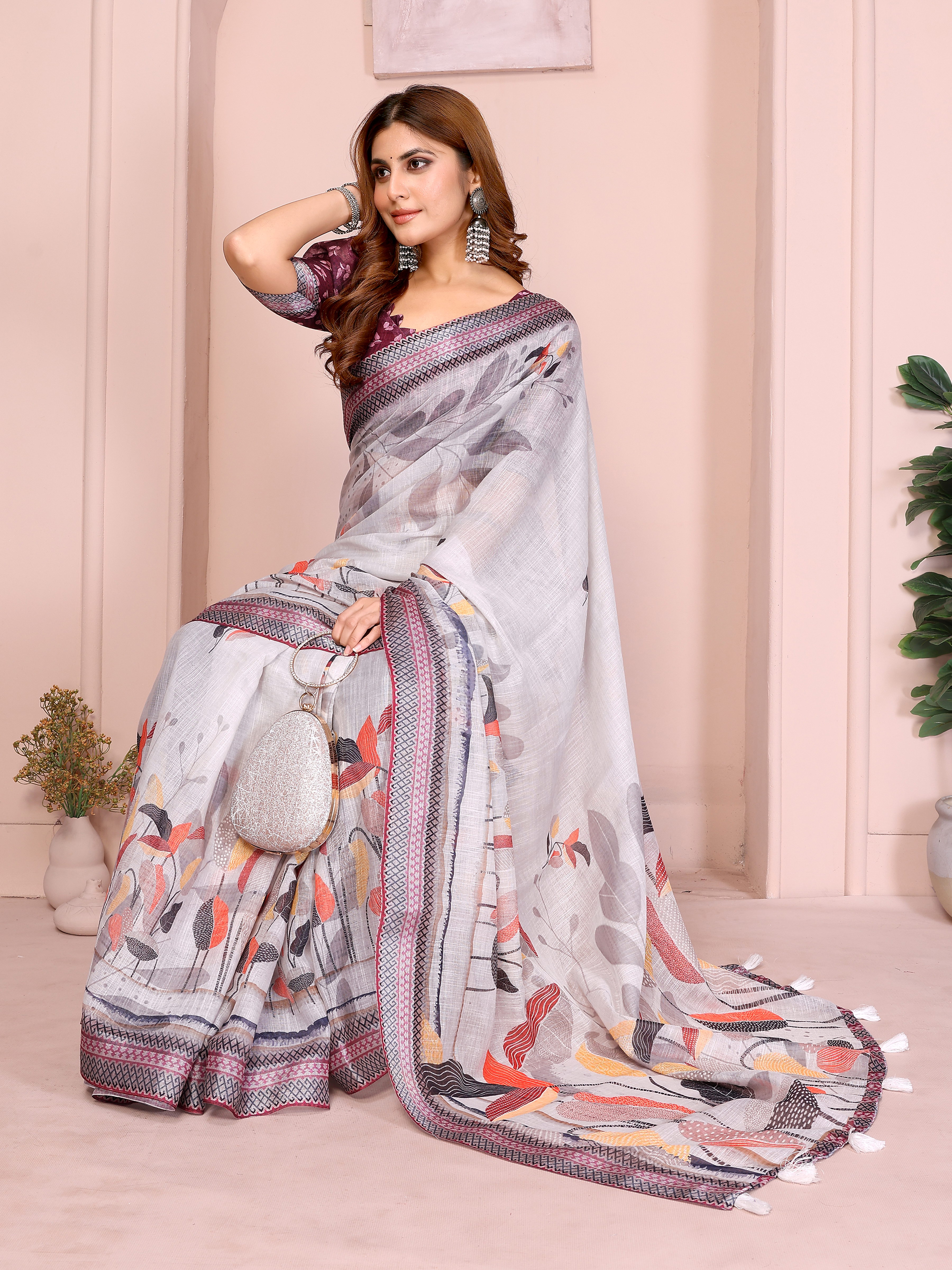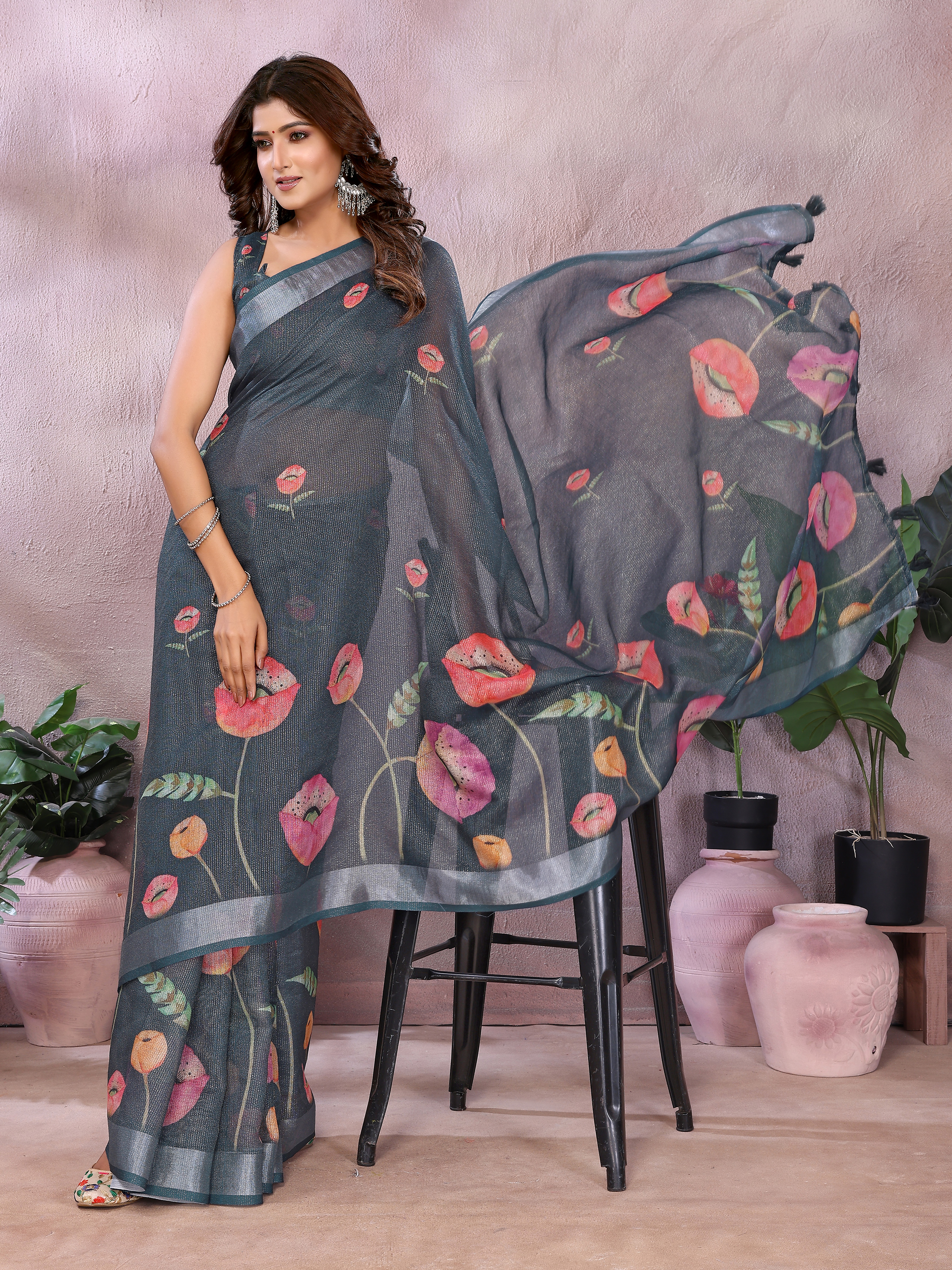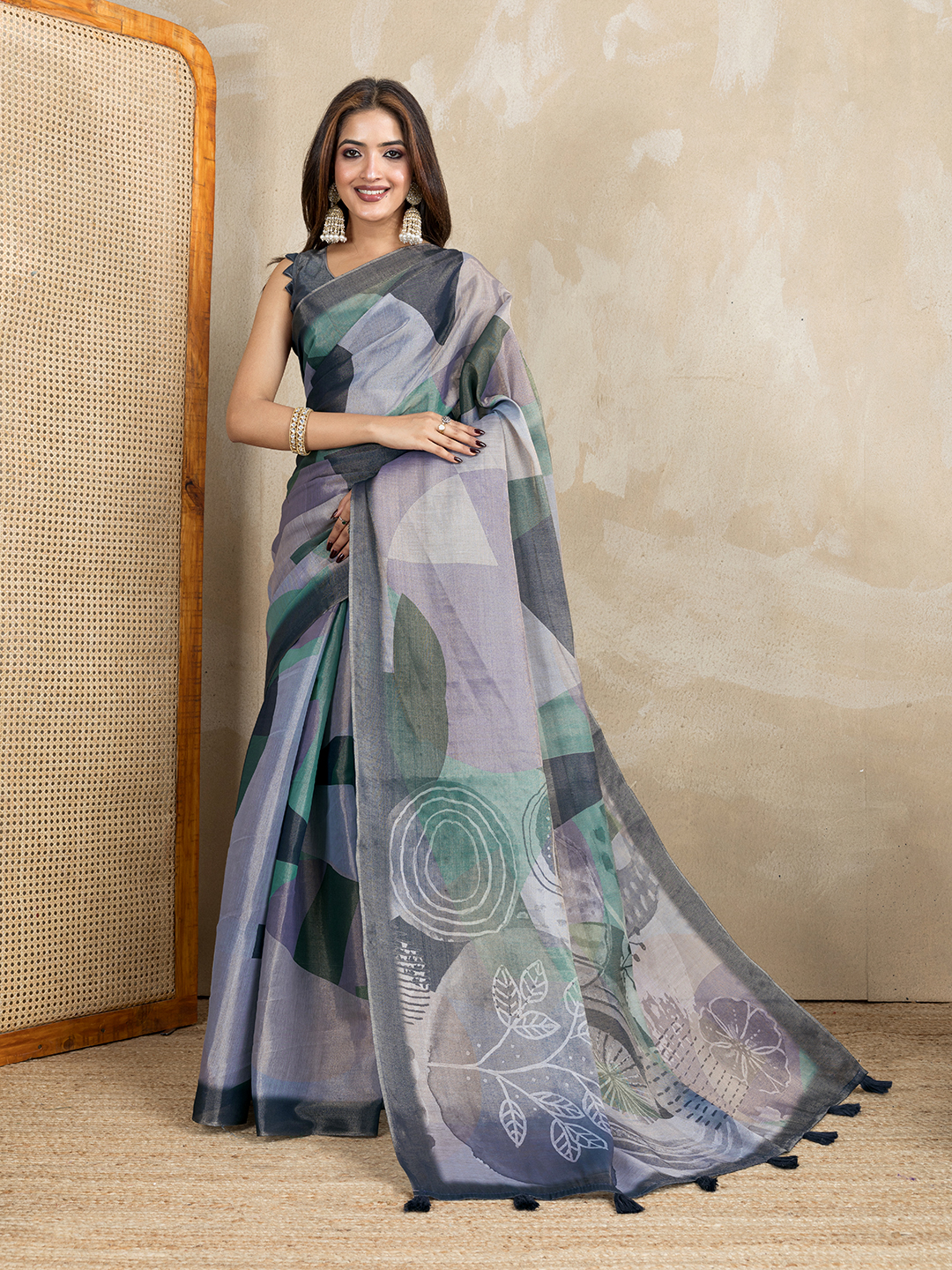
A kurti can look thick in a photograph and still feel light on the body, while a finely woven fabric can carry surprising weight. Kurti Fabric Weight Matters More Than Thickness When You Shop Online because weight influences drape, opacity, warmth, packing, drying time and the way a salwar suit moves. Thickness only describes how deep or raised a surface appears. Online shoppers need a more practical reading of fabric details, product photographs and construction clues before choosing a cotton, jacquard or zari-woven kurti set.
The most useful question isn't simply whether a fabric looks substantial. Ask how much material is present in each square metre, whether the fabric has a compact weave, whether a lining has been added and whether embellishment contributes extra weight. These details help predict comfort far more accurately than a close-up image.
Kurti Fabric Weight Matters More Than Thickness When You Shop Online: Why the distinction matters
Kurti Fabric Weight Matters More Than Thickness When You Shop Online because weight gives a better indication of how a garment will drape, breathe, crease and feel during wear. A loosely woven cotton fabric may look thick because its yarns are fluffy, but it can remain very light. A compact Kanchi cotton or jacquard weave may look smooth and relatively thin while hanging with more body.
Fabric weight also affects movement. A lightweight cotton salwar suit usually swings easily and dries faster after washing, making it practical for commuting or warm weather. A medium-weight woven kurti tends to hold a straighter line through the torso and sleeves. A heavier fabric can create a polished fall, but it may feel warm, take longer to dry and require more space in a suitcase.
Weight isn't a quality score by itself. A light fabric can be exactly right for a summer Haldi ceremony, while a heavier fabric may be more suitable for an evening gathering or an air-conditioned venue. The right choice depends on climate, silhouette, lining, season and the amount of movement expected from the outfit.
Kurti Fabric Weight Matters More Than Thickness When You Shop Online: How GSM works
Fabric weight is commonly expressed as GSM, meaning grams per square metre, although many Indian apparel listings don't publish the number. GSM measures the fabric before tailoring, so the finished kurti will weigh more after adding seams, lining, embroidery, zari, buttons and a dupatta.
As a broad shopping guide, fabric below about 100 GSM is usually very light and may need lining if the colour is pale or the weave is open. Fabric around 100 to 160 GSM often suits breathable everyday kurtis. Medium fabrics around 160 to 240 GSM generally offer more structure and opacity. Fabrics above 240 GSM can feel dense or substantial, although fibre and weave still change the result.
These ranges are not strict industry rules. A 140 GSM linen-like weave may feel cooler than a 140 GSM tightly packed synthetic fabric. A 180 GSM cotton jacquard may feel firmer than a plain 180 GSM cotton because the patterned construction uses more yarn. Zari, brocade-style surfaces and multiple layers can increase the garment weight without making the base fabric visibly thicker.
When GSM is missing, read substitute clues. Look for words such as lightweight, handloom-textured, compact weave, lined, unlined, jacquard, zari woven, sheer or opaque. Product measurements, close-up images, customer photographs and descriptions of seasonal use can help you estimate the fabric category, but none replaces a published GSM figure.
Does a heavier kurti always feel warmer?
A heavier kurti doesn't always feel warmer because fibre, air space and weave determine heat exchange as well as total weight. Cotton absorbs moisture and can feel comfortable in heat, whereas a dense polyester fabric of similar weight may feel less breathable. An open weave can allow air circulation even when the garment has a textured surface.
For Indian summers, prioritize breathable fibres, a moderate or low fabric weight, loose sleeves and minimal lining. For winter events or indoor venues, a medium-weight jacquard or layered kurti can provide useful structure without requiring a heavy shawl.
Kurti Fabric Weight Matters More Than Thickness When You Shop Online: Reading drape from photographs
Kurti fabric weight gives a strong clue about drape, but the weave and cut determine the final silhouette. Lightweight fabric tends to follow body movement and may gather at the waist or flare softly. Medium-weight fabric usually creates cleaner vertical lines. Heavy, firm fabric can hold an A-line or straight-cut shape but may resist fluid movement.
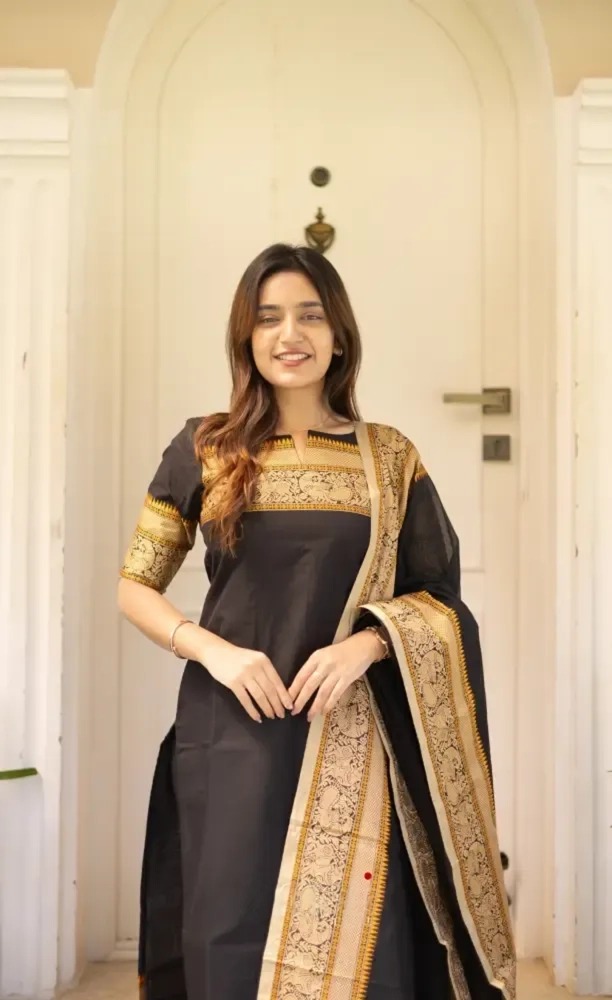
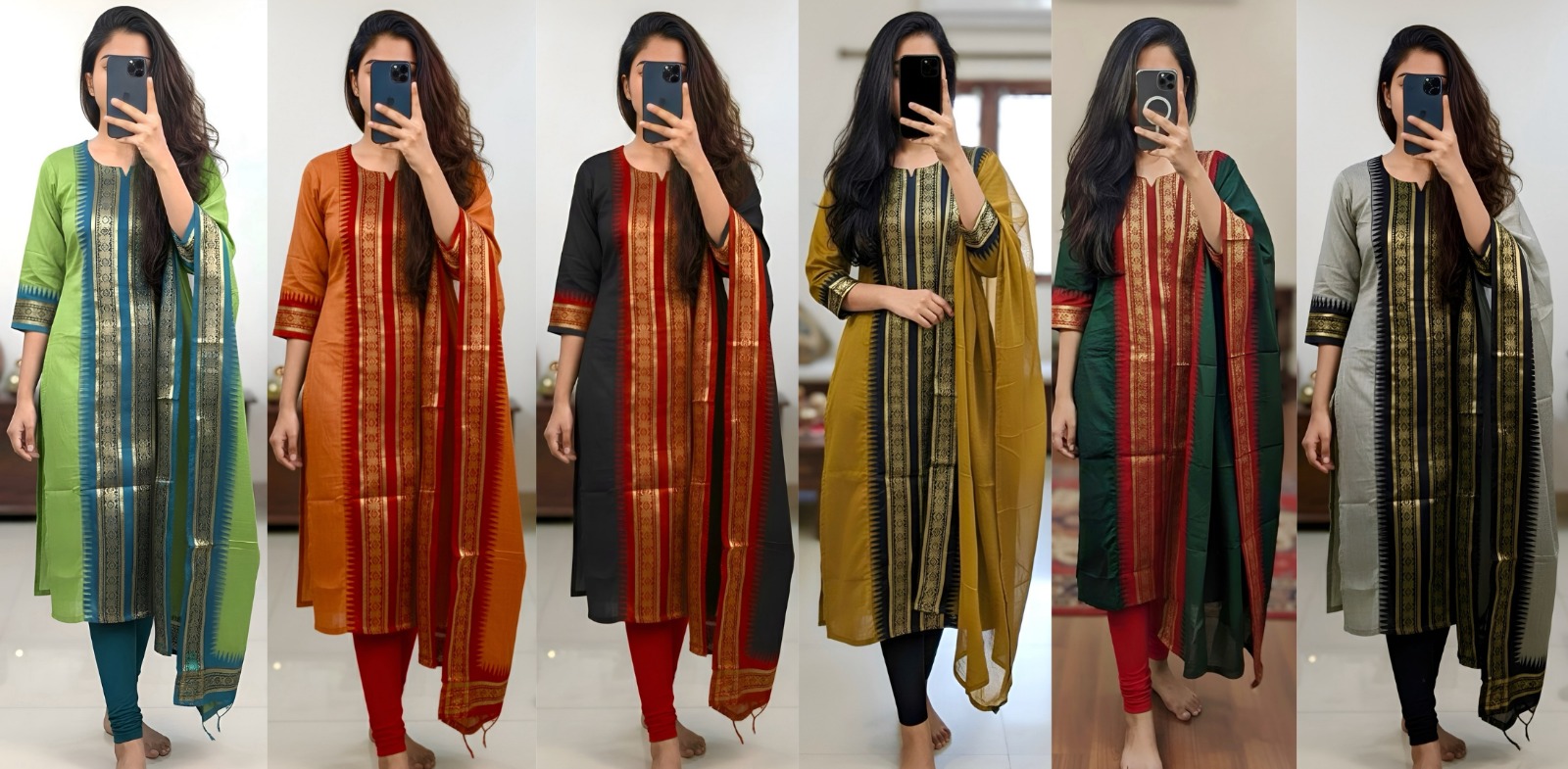
Black Jacquard Woven Kanchi Cotton Kurti Set is useful to evaluate through the relationship between surface pattern and structure. Jacquard construction often creates a defined face, so the garment may retain shape better than a plain, loosely woven cotton of similar visual thickness. That structure can make a straight kurti look neat without relying on stiff interfacing.
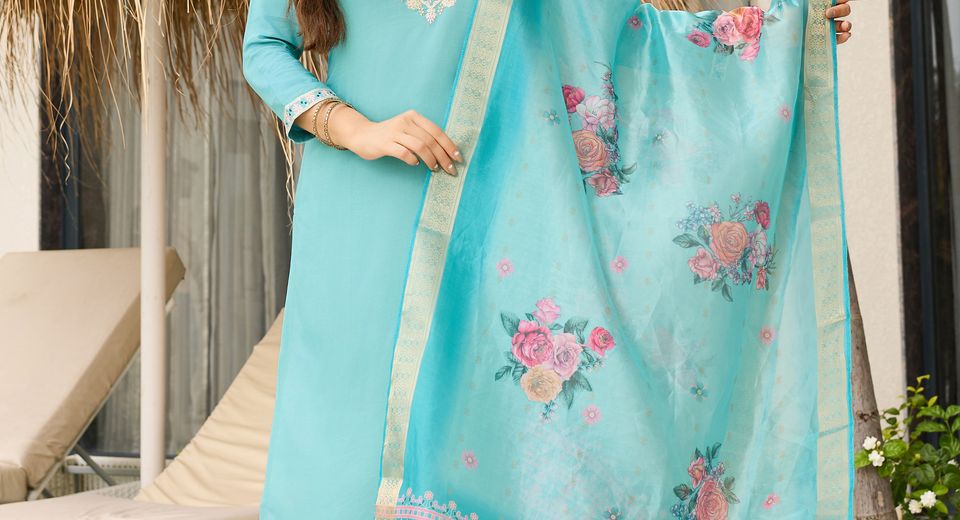
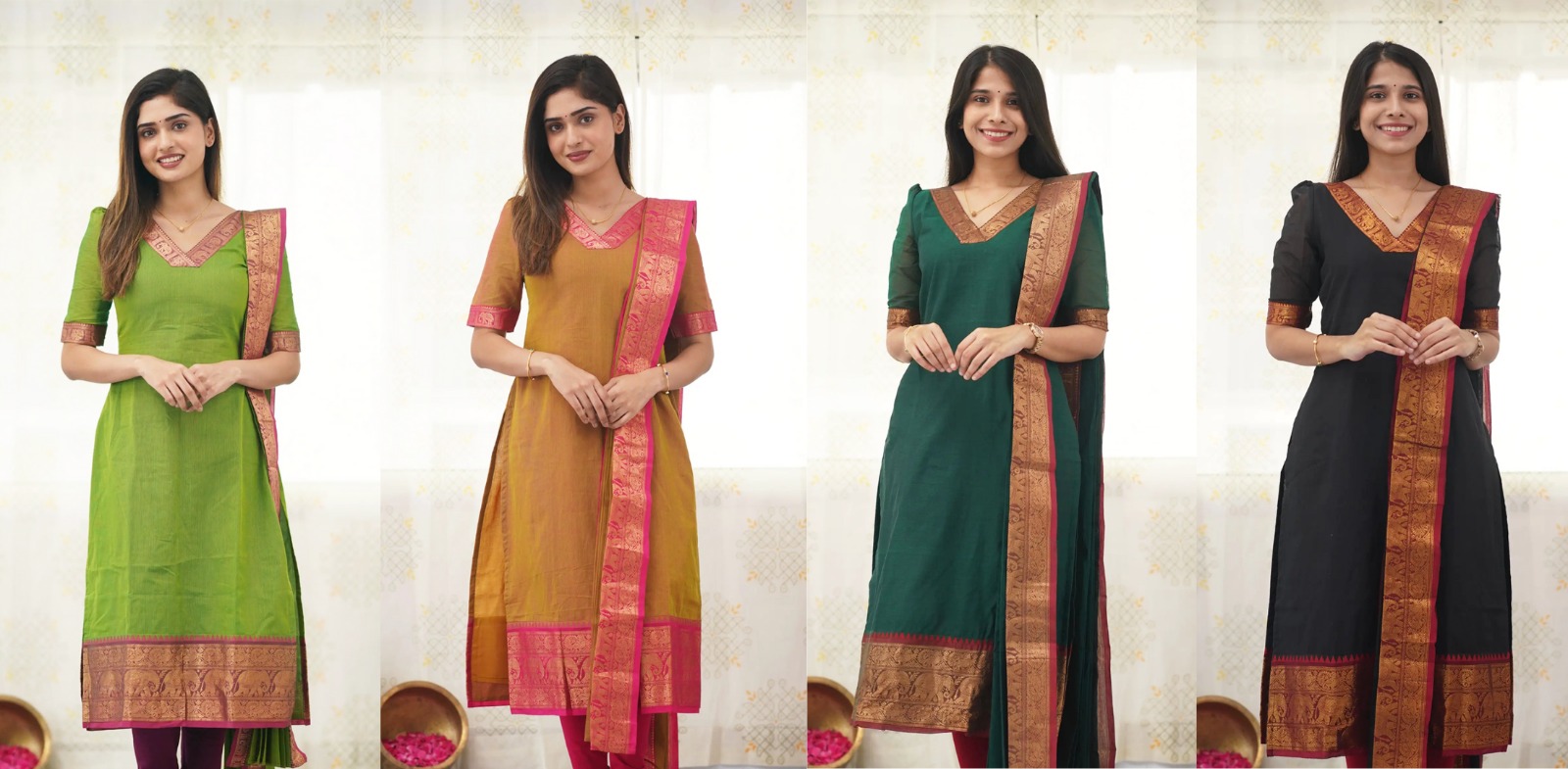
Kanchi Cotton Zari Woven Kurti Set with Traditional Dupatta shows why a complete outfit needs to be evaluated rather than judged by the kurti alone. Woven zari detail and a coordinating dupatta can add weight around the shoulders and neckline, even when the main kurti remains comfortable for daytime wear.
Photographs can reveal useful drape clues. A fabric that falls in long, uninterrupted vertical folds is likely to have moderate weight or good fluidity. A fabric that holds sharp side edges may be firmer. A dupatta that spreads flat without collapsing may contain a denser weave or decorative yarn. These observations are not laboratory measurements, but they're more informative than a zoomed-in texture alone.
Kurti Fabric Weight Matters More Than Thickness When You Shop Online: Comparing fibres and weaves
Cotton, jacquard and zari-woven kurtis should be compared by fibre, construction, surface yarn and intended use rather than by appearance alone. Cotton identifies a fibre, while jacquard identifies a method of creating a woven pattern; a fabric can be both cotton and jacquard. Zari identifies a metallic-looking yarn or decorative thread that can add density and weight.
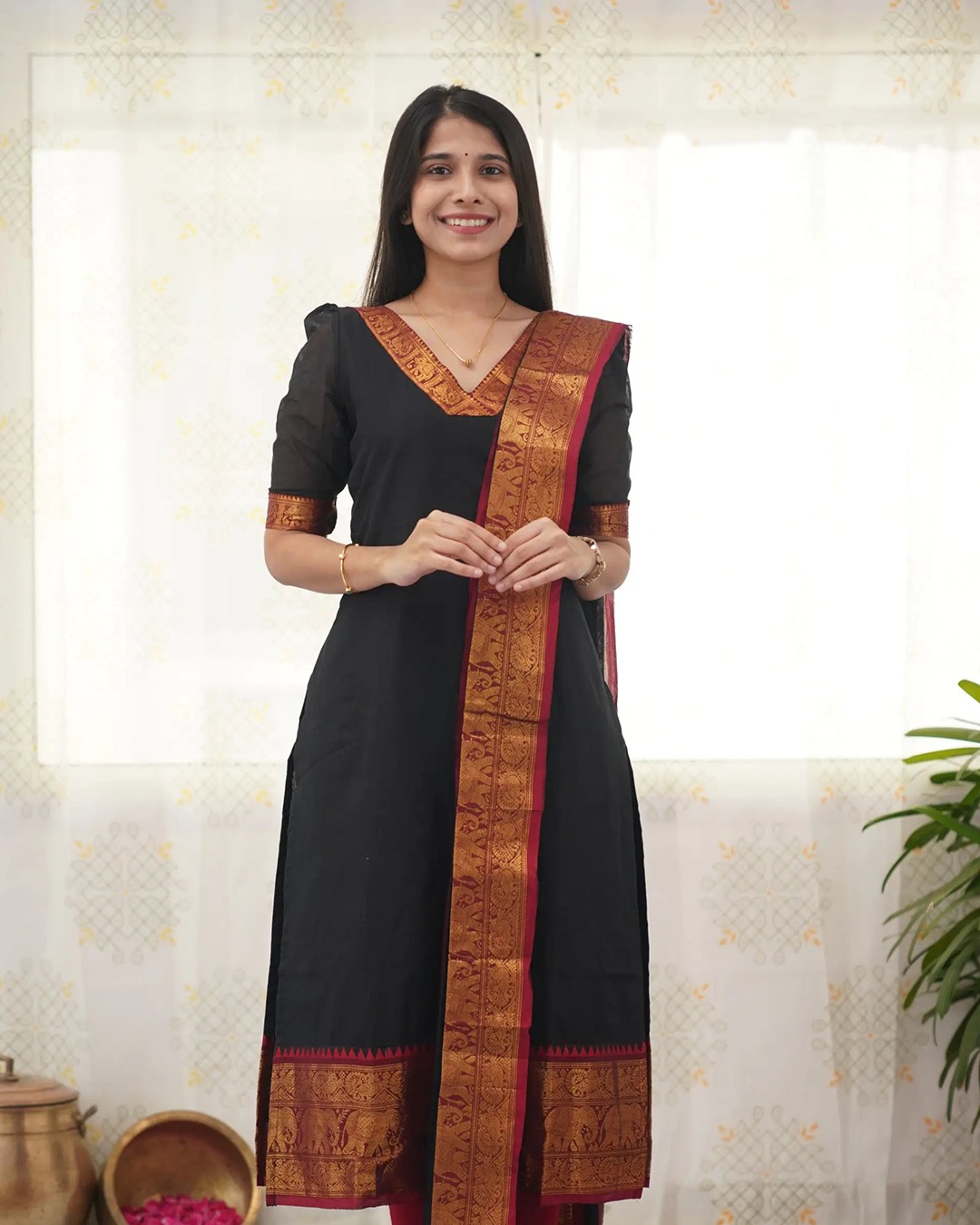
Plain cotton is often easy to wear in warm weather, but opacity depends on colour, yarn count and weave. Pale cotton may need a slip even when the fabric feels comfortable. Kanchi cotton with a compact woven surface can provide more body and visual richness than lightweight plain cotton while remaining suitable for many daytime settings.
Jacquard fabric forms patterns within the weave rather than printing every motif on top. Woven motifs can add structure and reduce the limpness that some lightweight fabrics develop after repeated washing. Jacquard doesn't automatically mean heavy; a fine jacquard can be comfortable, while a dense jacquard can feel formal and warm.
Zari-woven fabric deserves a separate check because metallic yarn changes both handle and care needs. The surface may feel slightly firmer, and repeated rough friction can affect decorative threads. Mustard Designer Kurti Dupatta Set with Rich Weaving and Mustard Kanchi Cotton Kurti Set with Zari Dupatta illustrate why colour, woven detail and dupatta construction all contribute to perceived richness and total weight.
Traditional design collections can also signal different construction expectations. Maharashtra Paithani Inspired Salwar Suits may suggest woven-looking decorative elements, Gujarat Bandhej Salwar Suits are associated with tie-dye-inspired pattern language, and Odisha Sambalpuri Salwar Suits may feature a strong textile identity through regional motifs. Collection names provide cultural direction, but individual product specifications still determine fibre, weight and care.
Kurti Fabric Weight Matters More Than Thickness When You Shop Online: Which listing details matter?
The most useful online details are fabric composition, lining information, garment measurements, weave description, dupatta material and clear care instructions. A listing that names only a colour and generic premium fabric gives too little information for a confident comparison.
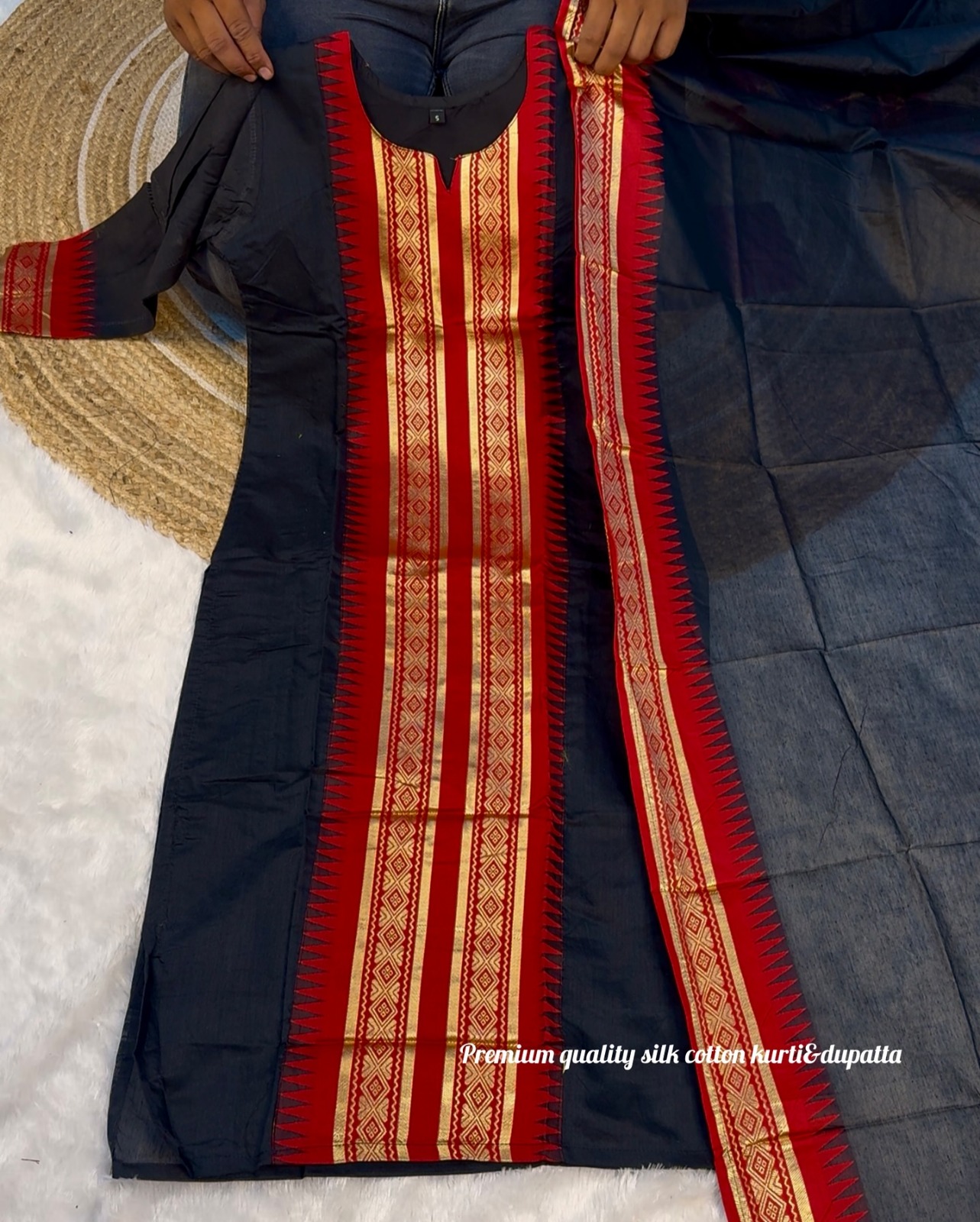
- Fabric composition: Check whether the kurti is cotton, a cotton blend, viscose, polyester or another fibre. Fibre affects breathability, drying speed, crease behaviour and hand-feel.
- Construction terms: Words such as jacquard, zari woven, dobby, slub and embroidered indicate surface or structural detail that may change the garment's weight.
- Lining: A lined kurti can feel heavier and less airy than an unlined garment. Lining may improve opacity and shape, especially in pale colours.
- Set components: A three-piece salwar suit may include a kurti, bottom and dupatta made from different fabrics. The dupatta can be the lightest or heaviest part of the set.
- Measurements: A longer Anarkali with extra flare uses more fabric than a short straight kurti, even when both use the same material.
- Care instructions: Hand wash, separate washing, shade drying and low-temperature ironing often indicate that the surface or decorative work needs gentler handling.
Use several clues together instead of treating one adjective as definitive. Lightweight may describe the base cloth while a lined bodice and ornate dupatta make the entire outfit moderately heavy. Rich weaving may refer to visual complexity rather than a thick, warm fabric.
Kanchi Cotton Jacquard Woven Kurti Dupatta Set and Kanchi Cotton Jacquard Kurti Dupatta Set Online are examples of names that point toward both fibre family and woven construction. Product names don't replace a full specification, but they tell you which details deserve closer inspection.
Classic Yellow Cotton Kurti Set with Woven Dupatta and Navy Kanchi Cotton Kurti Set with Woven Dupatta also demonstrate why colour and styling should not be confused with weight. A dark navy fabric can appear visually denser than a yellow fabric in photographs, even when the two have comparable construction. The woven dupatta may still alter the total weight of each set.
Kurti Fabric Weight Matters More Than Thickness When You Shop Online: Choosing weight for use
The best kurti weight depends on the weather, duration of wear, movement required and level of formality. A low-to-medium-weight cotton set suits regular office use, travel and daytime errands because it usually dries faster and occupies less luggage space. A medium-weight jacquard or zari-woven set can suit festive lunches, family functions and evening gatherings where structure matters more than rapid drying.
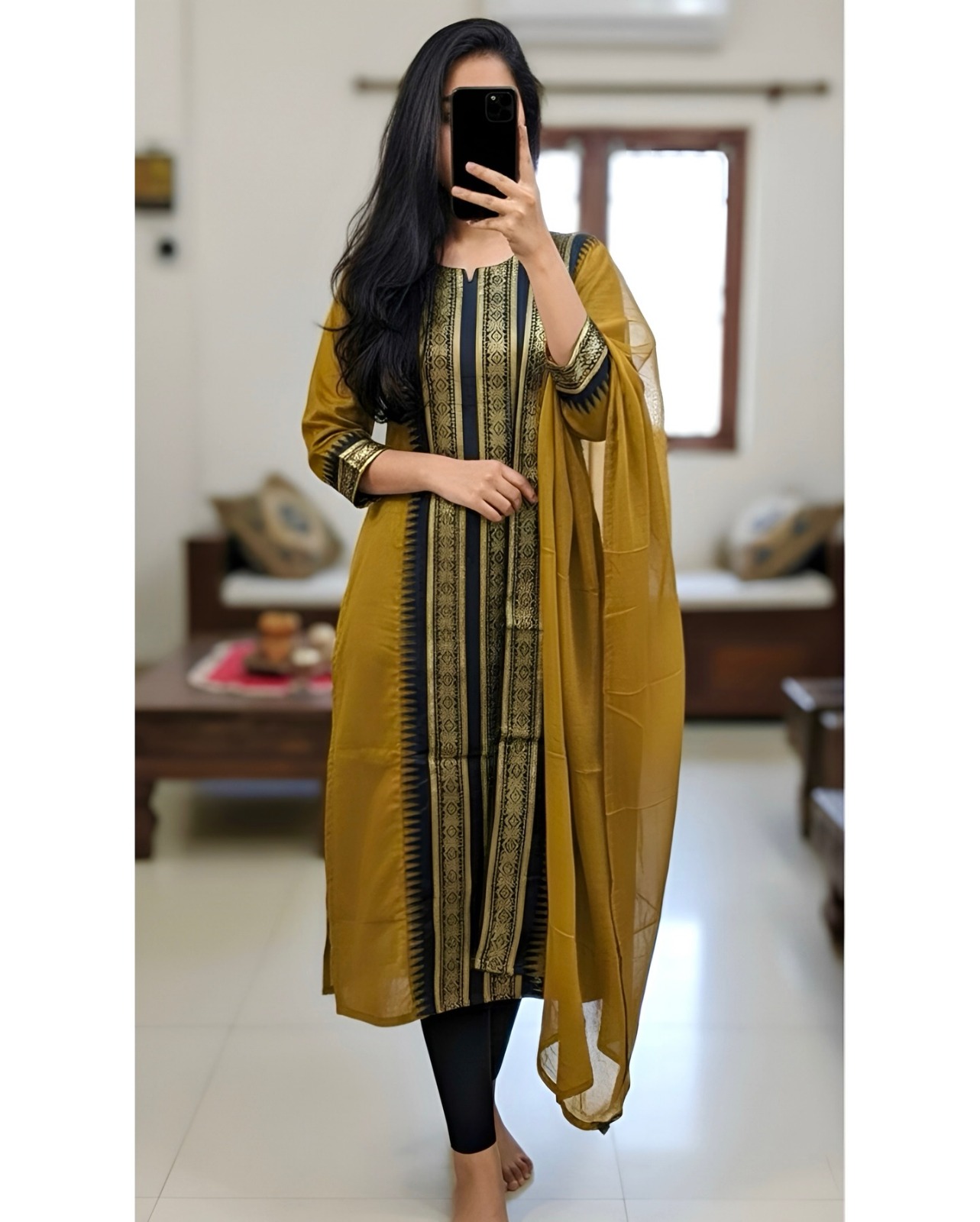
For a Haldi ceremony, choose a breathable base with enough opacity for movement and photographs. Yellow and mustard shades can show perspiration or damp patches differently from navy or black, so airflow and lining deserve attention. For travel, avoid choosing solely by visual richness; consider whether the fabric creases easily, how it can be washed and whether the dupatta needs careful folding.
For office wear, fabric that holds a clean vertical line is often easier to style under a light jacket or with a simple bottom. For a festive event, woven motifs and zari can create interest without requiring heavy embroidery. A salwar suit with moderate weight is often the most versatile choice because it balances drape, comfort and polish.
Punjab Patiala Salwar Suits may involve a fuller bottom that uses more fabric, so the complete outfit can weigh more even when the kurti itself is light. Kalamkari Print Salwar Suits (Copy) may draw attention through printed artwork rather than dense woven construction. The product's individual fibre and measurement details remain more reliable than the collection label when estimating comfort.
Kurti Fabric Weight Matters More Than Thickness When You Shop Online: A practical checkout checklist
Before ordering, compare the fibre, construction, lining, garment length, dupatta fabric and care method in one place. This five-minute check reduces the chance of receiving a set that looks right online but feels too warm, too sheer or too stiff for the intended use.
- Identify the fibre and ask whether the fabric is plain, jacquard, printed, embroidered or zari woven.
- Check whether the kurti, bottom and dupatta use the same material or different materials.
- Look for GSM; if GSM is unavailable, combine terms such as lined, compact weave, lightweight and sheer with customer photographs.
- Compare garment length and flare because more fabric increases total garment weight.
- Read the care instructions before purchasing delicate zari or structured woven clothing.
- Match the expected weight to weather, travel plans, sitting time and the amount of movement required.
The most dependable online decision comes from combining measurable information with practical context. A photograph can show texture, but fabric composition and construction explain performance. A thickness descriptor can suggest surface appearance, but weight gives a better starting point for judging drape, opacity and wearability.
When two salwar suits appear similar, choose the one with clearer specifications rather than the one with the more dramatic close-up image. Understanding GSM, weave, lining and garment dimensions makes online ethnic-wear shopping less dependent on guesswork and more likely to produce a comfortable, useful wardrobe addition.
Common Questions About Kurti Fabric Weight When Shopping Online
How can I check kurti fabric weight online if GSM is not listed?
Check the fibre, weave, lining, garment length, dupatta material and care instructions together. Terms such as lightweight, compact weave, jacquard, lined and zari woven provide useful clues, while customer photographs can help you judge drape and opacity.
Is a thick cotton kurti always heavier than a thin jacquard kurti?
No. A fluffy or loosely woven cotton can look thick while remaining light, whereas a compact jacquard weave can look fine and still carry more weight. Yarn density, weave and lining matter more than surface thickness alone.
What GSM is comfortable for an everyday cotton kurti?
Cotton fabric around 100 to 160 GSM often works well for everyday wear, although climate, weave and lining change the result. A breathable 180 GSM cotton can feel cooler than a dense synthetic fabric of lower GSM.
Does a zari-woven dupatta make a salwar suit feel heavier?
Yes, zari and dense woven details can add weight, particularly in the dupatta and around the shoulders. Check the kurti and dupatta specifications separately because the lightness of the kurti does not indicate the weight of the complete set.
Which kurti fabric weight is better for summer in India?
A low-to-medium-weight breathable cotton or cotton-rich fabric is generally more comfortable for summer. Choose an open or comfortable weave, minimal lining and a silhouette that allows airflow, while checking pale colours for opacity.
Why can two kurtis made from cotton feel different in weight?
Cotton describes the fibre, not the complete construction. Yarn thickness, weave density, jacquard patterning, lining, garment length and the amount of fabric used can make two cotton kurtis feel substantially different.