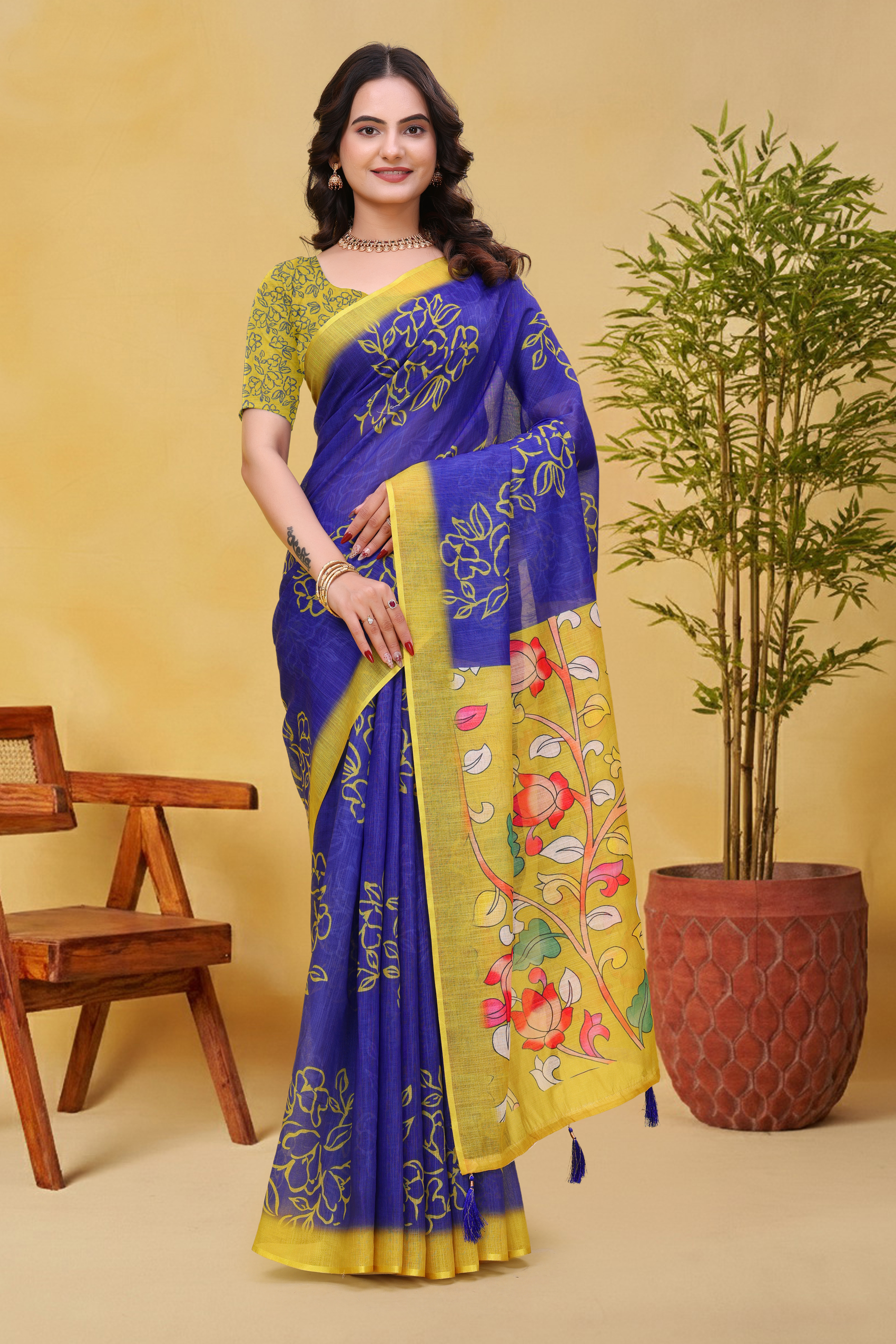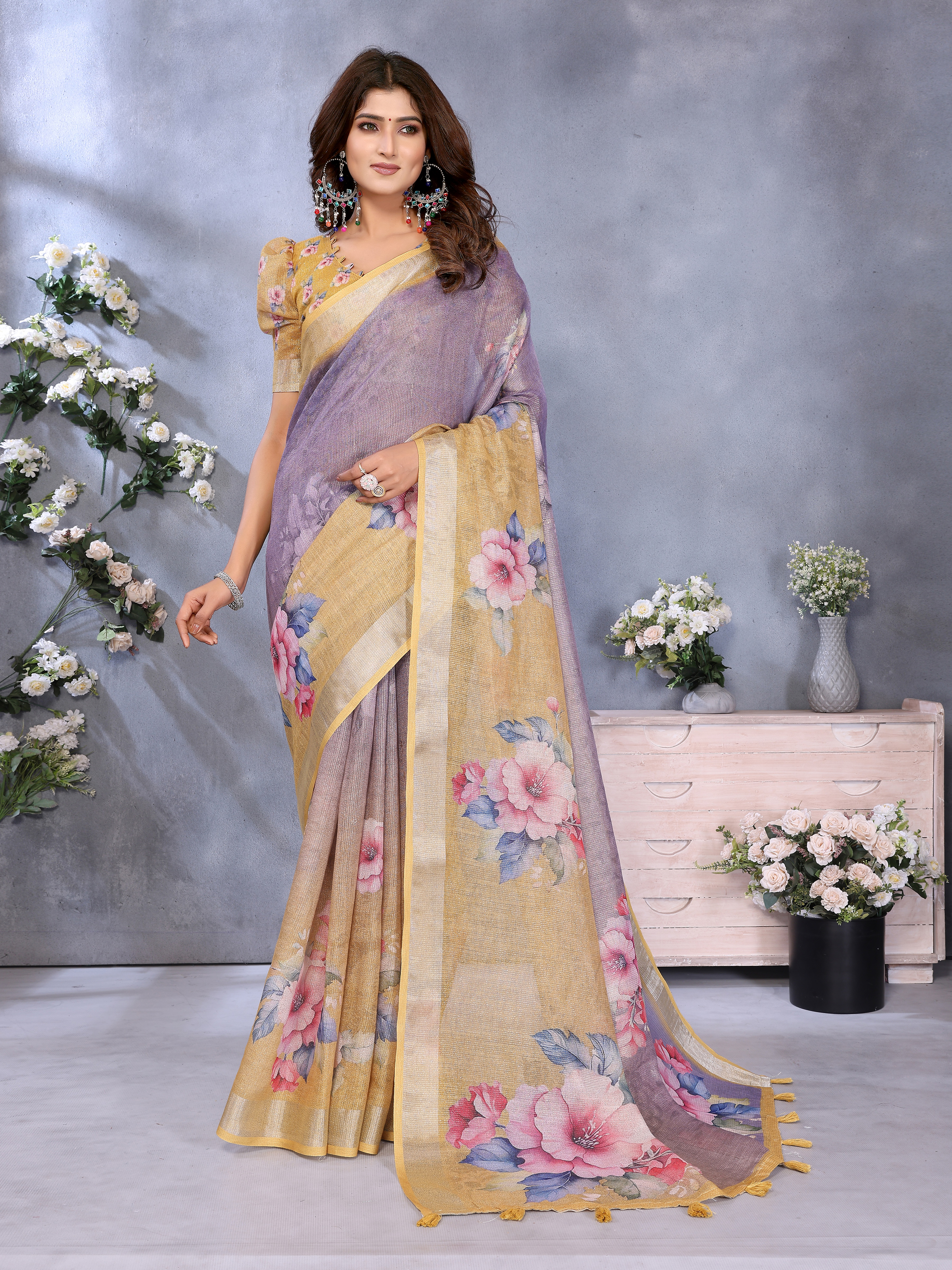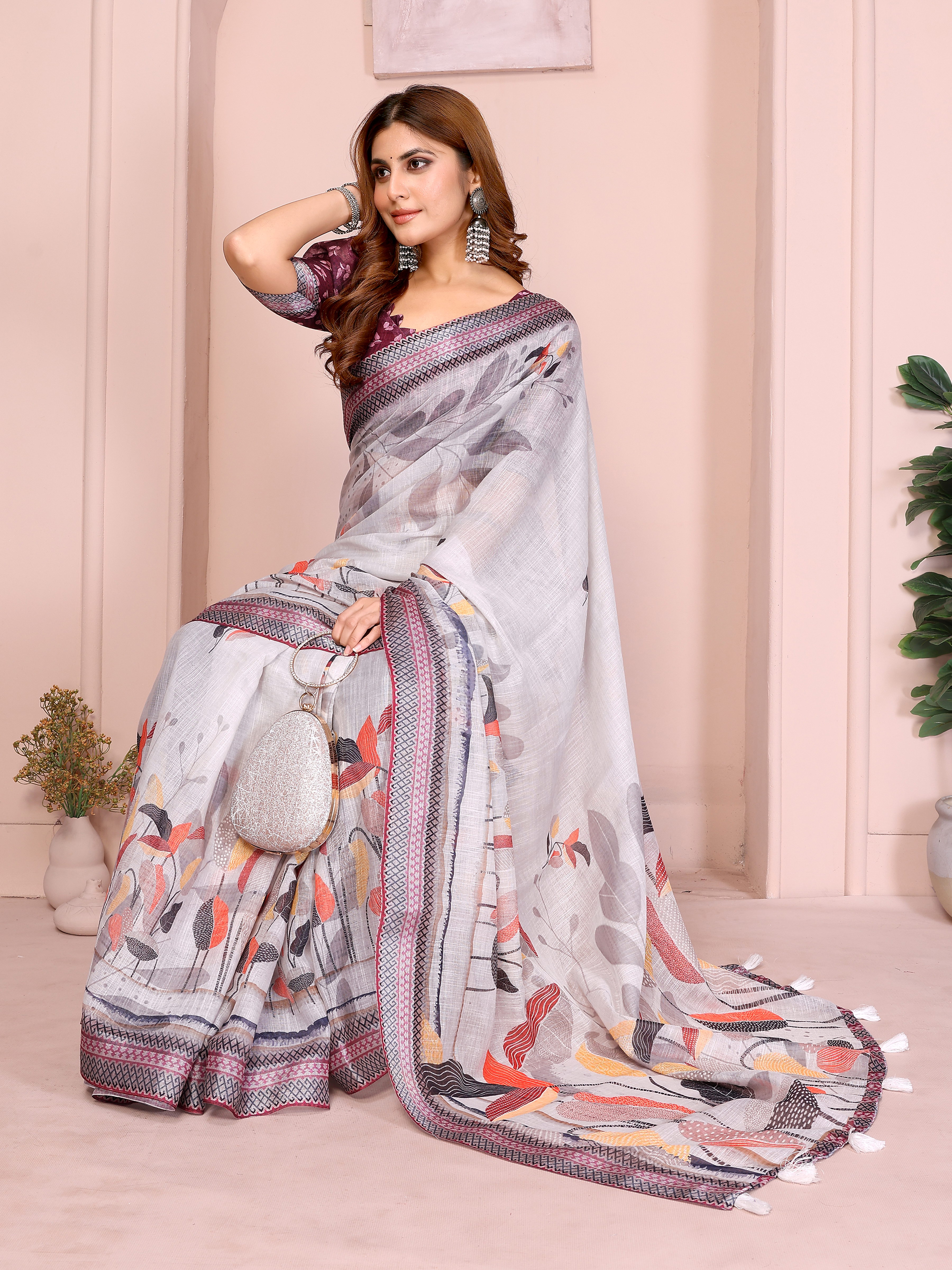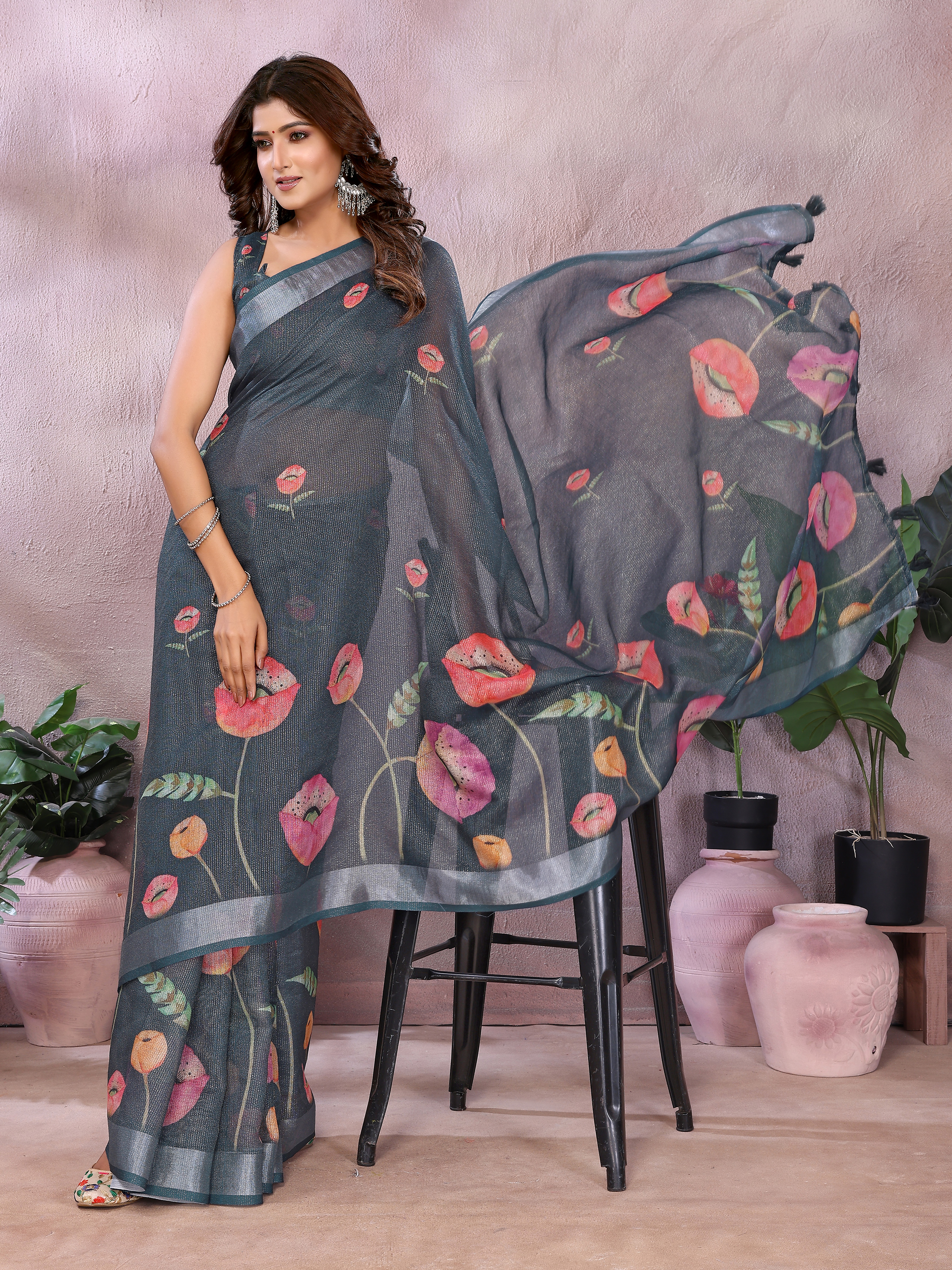
Kurti buttons that stay closed without pulling across the bust begin with accurate bust ease, not with a tighter button or a safety pin. A kurti should lie smoothly over the fullest part of the chest, keep the centre front vertical and leave enough room for sitting, reaching and breathing. Button choice, placket width, fabric structure and seam placement then determine whether that comfortable fit remains secure throughout the day.
Button gaping is usually a fit problem rather than a body problem. A readymade salwar suit may fit at the shoulders and waist while still being too narrow over the bust. Understanding where the tension comes from helps you choose a better size and request a small alteration before the garment becomes uncomfortable.
Why do Kurti Buttons That Stay Closed Without Pulling Across the Bust need enough ease?
Kurti buttons pull open when the front panel has less usable width than the wearer needs at the bust, forcing the two placket edges apart. The strain may also come from buttons placed too far apart, a weak placket, a curved bust seam or fabric that has little give.
Readymade size charts commonly list the garment bust measurement, but shoppers sometimes compare that number with their body measurement as though the two should be identical. A garment measurement of 40 inches on a body measuring 40 inches leaves no wearing ease. The fabric must accommodate arm movement, posture, undergarments and natural changes in body circumference during the day.
For a woven cotton or silk kurti, 3 to 4 inches of total bust ease is a practical starting point for a comfortable straight silhouette. A close-fitting style may use around 2 inches, while a relaxed A-line kurti can provide 4 to 6 inches because the extra width continues below the bust. Stretch rayon may need less measured ease, but a narrow cut can still gape if the button placket is under tension.
Check the fullest bust point rather than the high bust or bra-band area. The fullest point can sit lower than the armhole, especially in a long kurti. A garment that feels fine near the shoulders may still pull horizontally at the third or fourth button because the chest requires the greatest circumference there.
What does Kurti Buttons That Stay Closed Without Pulling Across the Bust look like in practice?
Kurti buttons that stay closed without pulling across the bust remain aligned when the wearer stands, sits and moves the arms forward. Button gaping appears as diagonal folds radiating from a button, a visible gap between the placket edges or buttons that tilt away from the centre front.
A centre-front line that bends toward one side is another useful warning sign. If a button opens only when the arms move forward, the garment may have adequate standing ease but insufficient movement ease. A kurti should be tested with the bra or camisole normally worn underneath.
How much ease helps Kurti Buttons That Stay Closed Without Pulling Across the Bust?
A comfortable kurti usually needs 3 to 4 inches of total ease over the body bust when made from a stable woven fabric. The correct amount depends on the silhouette, fabric, lining, bust shape and how closely you want the salwar suit to fit.
Measure the bust with the tape level across the fullest area, keeping the tape comfortably touching the body without compressing it. Measure the garment from armhole seam to armhole seam, double that number and compare the result with the body measurement. For example, a 38-inch body bust generally needs a woven kurti measuring about 41 to 42 inches at the bust for everyday comfort.
Ease isn't the same as a loose-looking garment. An A-line shape can preserve bust comfort while narrowing at the upper hip, and princess seams can provide shaping without forcing the centre-front buttons apart. A straight kurti needs enough width at the bust and hip because the side seams can't release extra room below the chest.
Deep armholes can create a misleading sense of room. A low armhole may allow the kurti to move, but it can also pull the whole garment upward when you lift your arms. A correctly positioned armhole, shoulder seam and sleeve cap distribute movement more evenly and reduce pressure on the button line.
Heavy or lined fabrics deserve extra consideration. Banarasi silk, zari-decorated fabric and dense jacquard don't yield as easily as lightweight rayon or chiffon. A silk kurti that measures only 2 inches above the body bust may feel significantly tighter than a rayon kurti with the same numerical ease.
Which construction keeps Kurti Buttons That Stay Closed Without Pulling Across the Bust secure?
A stable, sufficiently wide front placket with closely spaced buttons provides the most reliable support against bust gaping. The placket should be reinforced with interfacing or a firm facing, and the buttonholes should sit on the centre line rather than close to the edge.
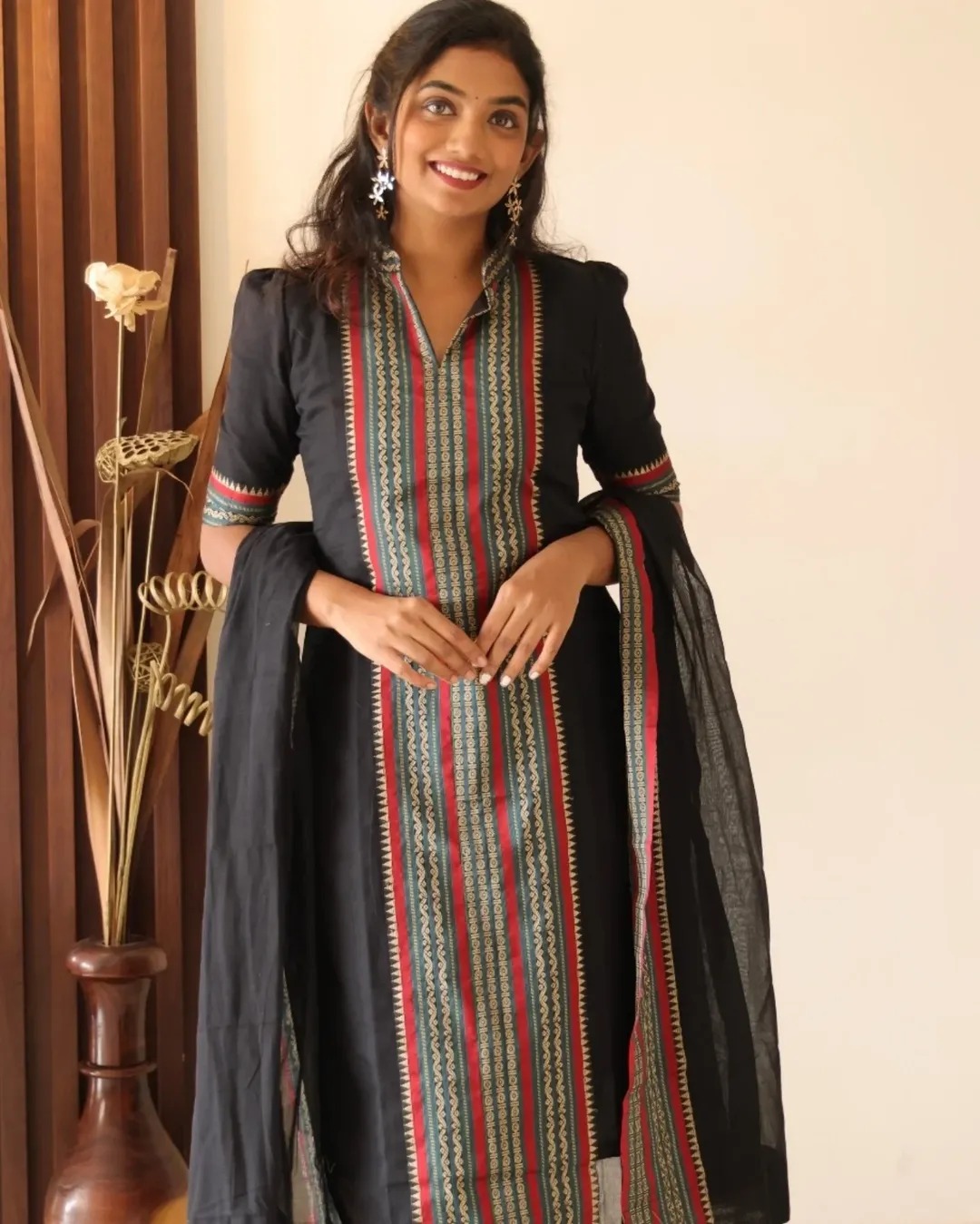
Button spacing matters because each gap creates a separate point where fabric can spread. On a fitted or semi-fitted kurti, spacing of roughly 2.5 to 3.5 inches is usually more secure than leaving 5 or 6 inches between buttons. Add an extra button at the bust level when the existing gap falls across the fullest point.
Buttons should be large enough for the fabric weight and securely shanked or stitched. A tiny flat button on a thick cotton or jacquard placket can cut into the cloth and work loose. A button that's too large for a narrow loop can also distort the placket. The button, thread, loop and placket should function as one balanced closure.
Hidden inner snaps can support a visible button front, but snaps should not be used to force a too-small kurti closed. A sew-in snap placed between two buttons can prevent accidental opening when the garment already has comfortable bust ease. Position the snap where the placket edges naturally separate, then test it while sitting and moving.
Princess seams, side panels and an A-line flare can improve fit because they distribute fabric around the bust instead of concentrating all the width at the centre front. A straight kurti with a decorative embroidered front may have less flexibility for alteration, so inspect the side-seam allowance before buying if a bust adjustment may be needed.
Which fabrics support Kurti Buttons That Stay Closed Without Pulling Across the Bust?
Medium-weight cotton, cotton blends, rayon with enough drape and lined silk blends are generally easier to fit securely than very thin, slippery or rigid fabrics. Fabric alone can't prevent gaping, but fabric with suitable structure allows the placket to stay flat and the buttons to hold their position.
Cotton has a stable hand and is often forgiving for everyday wear, although unlined fine cotton can crease and shrink. Designer Cotton A-Line Kurti Pant Set with Mirror Work illustrates why an A-line silhouette can offer bust room without appearing oversized through the waist. Check the wash-care instructions before assuming the initial measurement will remain unchanged.
Rayon drapes smoothly and can be comfortable over the bust, but lightweight rayon may stretch around buttonholes or shift during wear. Teal Embroidered Rayon Kurti Set needs the same movement test as a cotton set, especially when embroidery or lining adds weight to the front panel.
Chiffon is light and fluid, so it may require a firm facing or lining around the placket. Shop Floral Digital Printed Chiffon Kurti Palazzo Set with zari embroidery demonstrates why embellishment changes the fitting equation: zari embroidery can add weight, while chiffon itself offers little structural support.
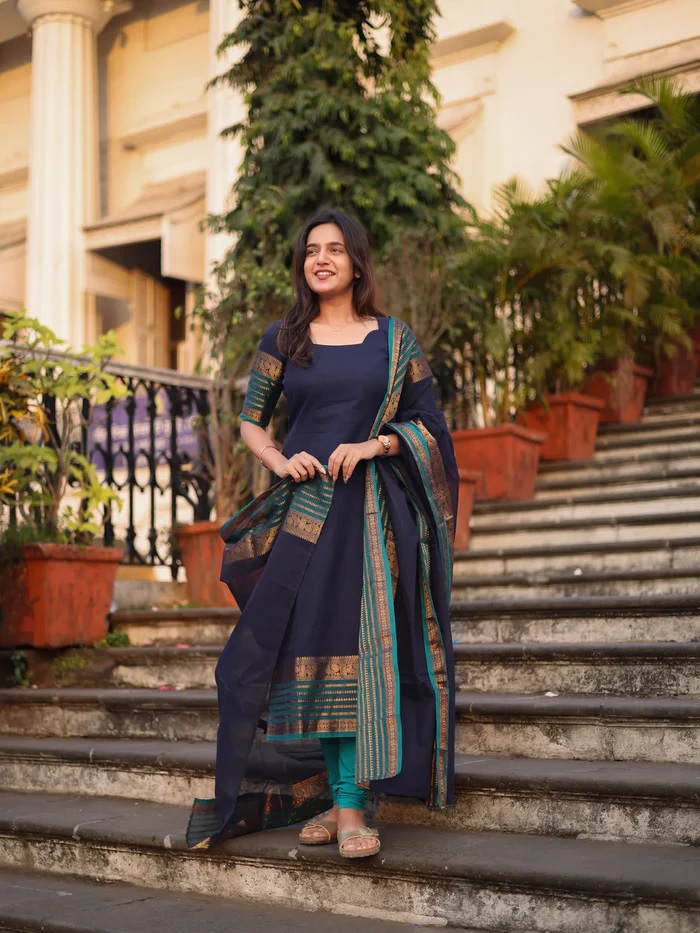
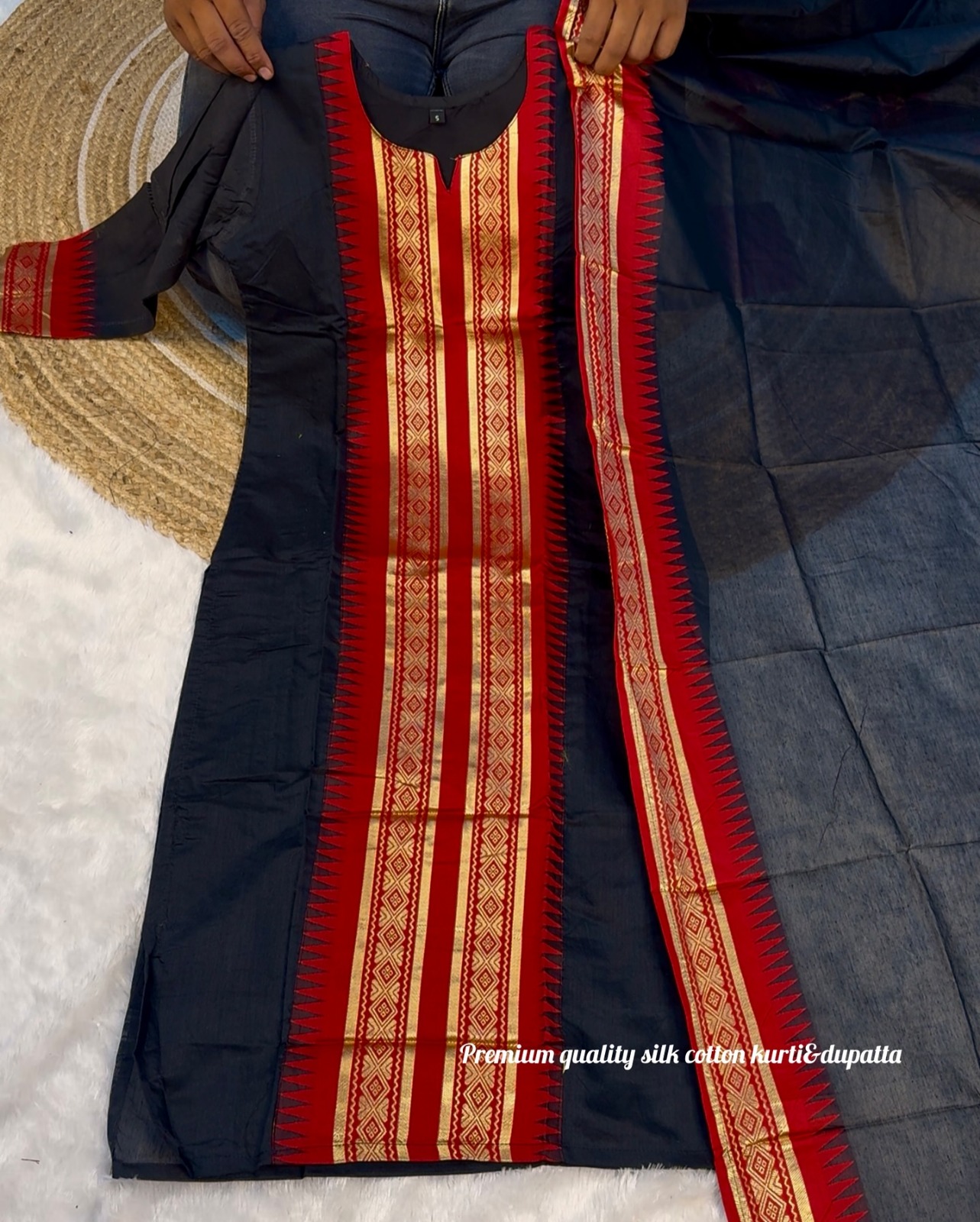
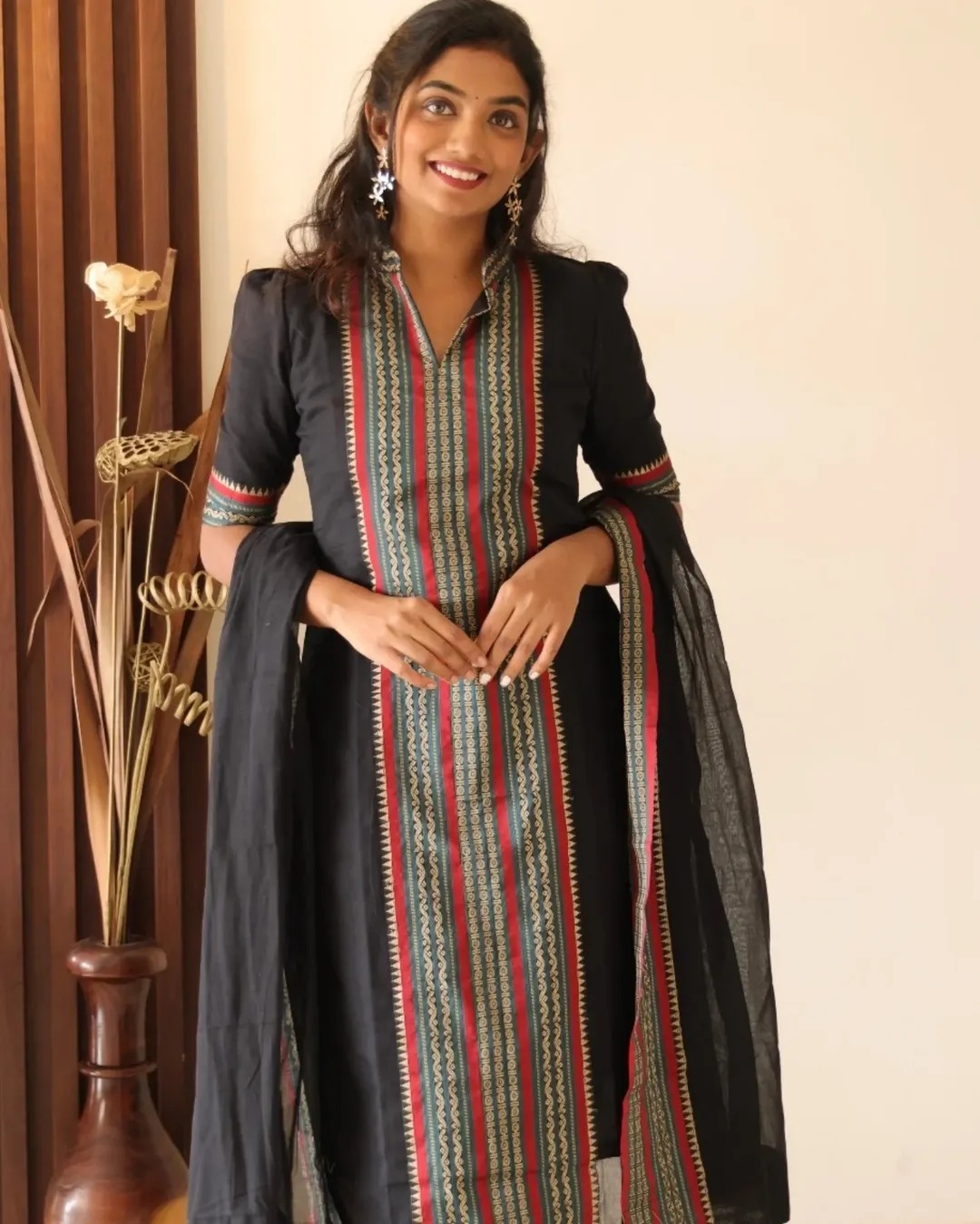
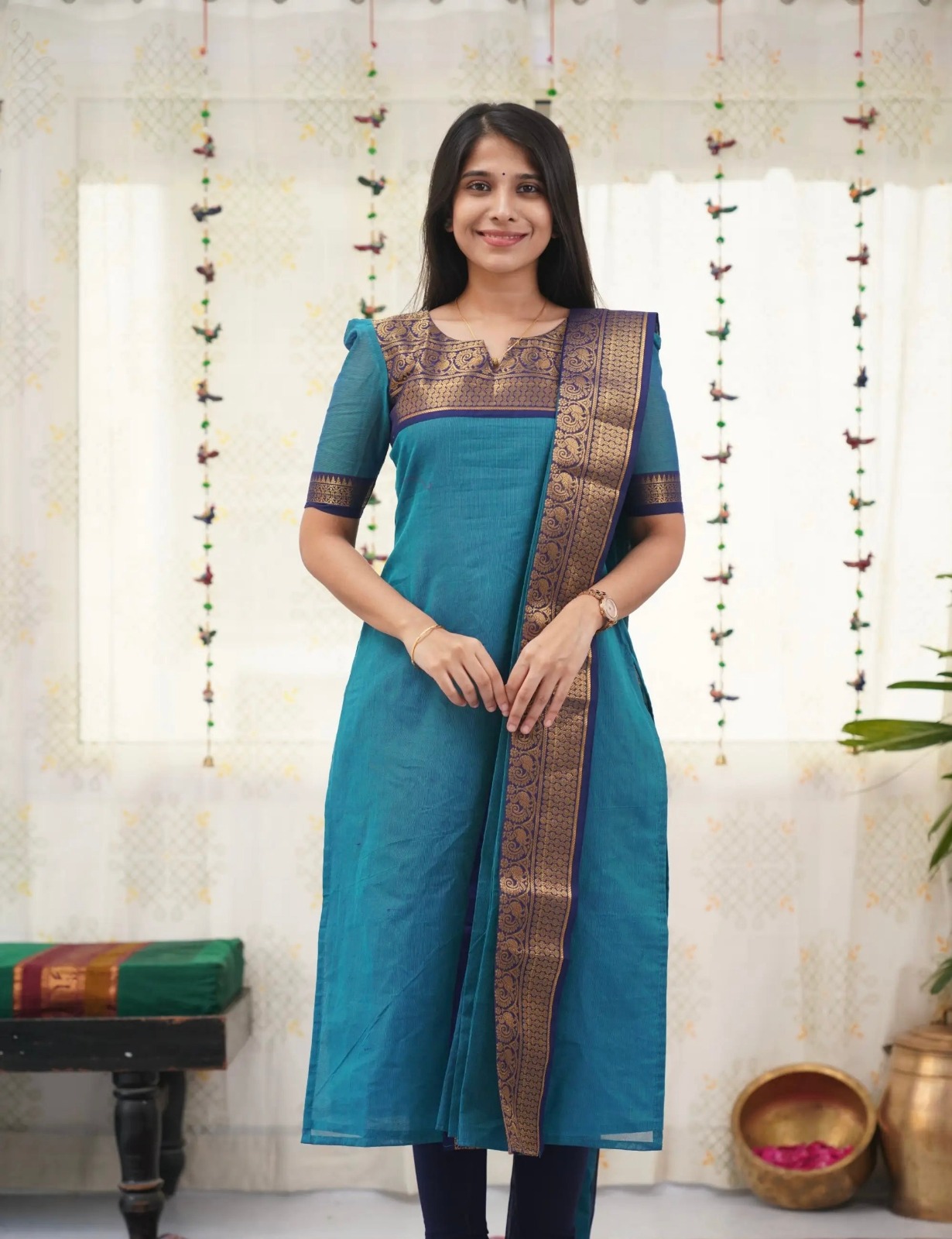
Kanjeevaram-inspired textures, jacquard and other dense weaves can look crisp but may resist movement across the bust. Navy Kanchi Cotton Kurti Set with Woven Dupatta and Blue Kanchi Cotton Jacquard Kurti with Elegant Dupatta are useful examples of structured cotton surfaces where accurate ease and button placement matter more than choosing a larger size indiscriminately.
Silk needs an especially careful fit because pulling can mark the fabric and stress embroidery. Cream Embroidered Silk Kurti Pant with Designer Dupatta and Mauve Crunchy Silk Embroidered Kurti Palazzo Set for Women should be assessed with the full styling combination, including the inner layer, because lining and embellishment can affect how the front falls.
How can you check Kurti Buttons That Stay Closed Without Pulling Across the Bust before buying?
Check the bust, button alignment, armhole, placket and side seams in that order before judging the colour or embroidery. A salwar suit that passes these five checks is more likely to remain comfortable beyond the first few minutes of wear.

- Measure your body: Record the fullest bust, natural waist and upper hip measurements. Keep the tape level and avoid pulling it tight.
- Read the garment chart: Confirm whether the listed bust is a body recommendation or the finished garment measurement. Ask for clarification if the chart doesn't state this.
- Inspect the front: Close every button and look for diagonal drag lines, raised edges or a centre front that curves away from vertical.
- Test movement: Lift your arms, reach forward, sit and bend. The buttons should not become load-bearing during ordinary movement.
- Check the placket: Look for reinforcement, even button spacing and buttonholes that are not fraying or pulling open.
- Inspect alteration room: Identify seam allowance at the side seams and underarm. Extra fabric there makes a professional bust adjustment more realistic.
Dupattas can hide a front that's already under strain, so inspect the kurti before draping the dupatta. A dupatta should complement the outfit rather than act as a cover for an opening button.
Style details can also affect the visual balance of a button front. A straight kurti with a contrasting dupatta may draw attention to the centre line, while a patterned garment can make minor folds harder to notice but doesn't remove the underlying tension. Regional-inspired options such as Kalamkari Print Salwar Suits (Copy), Maharashtra Paithani Inspired Salwar Suits, Gujarat Bandhej Salwar Suits and Odisha Sambalpuri Salwar Suits may use different visual rhythms, yet the same bust-fit checks still apply.
What alterations make Kurti Buttons That Stay Closed Without Pulling Across the Bust reliable?
A tailor can usually improve a gaping kurti by adding a hidden snap, moving buttons, inserting a side panel or performing a full-bust adjustment, provided the garment has enough seam allowance. The correct alteration depends on whether the problem is closure placement, insufficient width or incorrect shaping.
Moving a button slightly toward the outer edge can close a small gap, but the adjustment should be balanced across the placket and checked for centre-front alignment. Moving one button too far can create a new ripple or make the remaining buttons sit unevenly.
A hidden snap is suitable when the kurti fits comfortably everywhere else and only one section opens during movement. Use a strong sew-in snap matched to the fabric weight, reinforce the area if necessary and avoid adhesive products that can stain silk or weaken after washing.
A side-seam gusset or panel can add room when the side seam has accessible allowance. A professional tailor may also use a full-bust adjustment, which adds width and sometimes length over the bust while preserving the shoulder and waist fit. A full-bust adjustment is more precise than simply sizing up, especially when the larger size would make the shoulders too broad.
don't cut into the placket or embroidery before confirming the alteration plan. Dense zari, mirror work and embroidered borders can limit where seams may be opened. Wash cotton garments according to their care instructions before final alteration because shrinkage can reduce the available ease.
How do you maintain Kurti Buttons That Stay Closed Without Pulling Across the Bust?
Maintain secure kurti closures by washing the garment according to its fibre requirements, drying it without stretching the front and reinforcing loose buttons promptly. Regular care prevents buttonholes from enlarging and plackets from becoming distorted.
Fasten all buttons before washing when the care label permits machine washing, and place delicate garments in a laundry bag. Hand-wash embellished chiffon, silk or zari-decorated pieces when instructed, keeping soaking time short and avoiding vigorous rubbing around the button front.
Dry a wet kurti flat or on a broad hanger according to the care label. A thin hanger can pull the shoulders downward and make the front placket appear longer or uneven. Press the centre front from the reverse side when possible, using a pressing cloth for silk, zari and embroidery.
Examine thread tension every few wears. A loose button should be resewn before the buttonhole stretches, and a fraying buttonhole should be repaired rather than repeatedly forced over the button. These small repairs preserve the closure and prevent a comfortable garment from developing avoidable gaping.
Good fit remains the primary solution. Kurti buttons that stay closed without pulling across the bust result from enough room at the fullest point, a supported placket, suitable button spacing and movement testing before purchase.
Common Questions About Keeping Kurti Buttons Closed Across the Bust
Why do my kurti buttons gape only when I sit?
Kurti buttons may gape when sitting because the torso shortens and the bust circumference changes with posture. A kurti with little movement ease can look fine while standing but pull across the chest when the wearer bends or sits. Test the garment in several positions before buying or add a hidden snap only when the overall fit is already comfortable.
Should I buy one size larger if my kurti pulls at the bust?
Buying one size larger can help if the shoulders, armholes and neckline still fit correctly, but it is not always the best solution. A tailor-made full-bust adjustment or side-panel alteration preserves the shoulder and waist fit more accurately. Compare the finished garment bust measurement with your body bust before choosing a size.
How far apart should buttons be on a kurti?
Buttons on a fitted or semi-fitted kurti are generally more secure when spaced about 2.5 to 3.5 inches apart. Add a button near the fullest bust point if an existing gap falls across that area. Heavy fabrics and large buttonholes may need closer spacing for stability.
Can a hidden snap stop kurti buttons from opening?
A hidden snap can stop accidental opening when the kurti already has sufficient bust ease and only one section separates during movement. A snap cannot correct a garment that is fundamentally too small across the bust. Reinforce the placket and select a snap suitable for the fabric weight.
Which kurti fabrics are easiest to fit across the bust?
Medium-weight cotton, stable cotton blends, well-constructed rayon and lined silk blends are generally easier to fit than very thin chiffon or rigid dense weaves. Lightweight chiffon may need a lined or reinforced placket, while silk and zari embroidery require careful ease because they resist stretching and can show strain.
How can I test a kurti for bust fit at home?
Close every button and check for diagonal folds, open spaces and a centre front that bends away from vertical. Raise both arms, reach forward, sit, bend and wear the undergarment normally paired with the kurti. The buttons should remain aligned without pressing into the fabric during each movement.