A Kundan necklace can make a plain Anarkali look occasion-ready without turning the outfit into bridal wear. The key is controlling visual weight: choose one noticeable necklace, keep the earrings moderate, use a clean dupatta drape and let the Anarkali's neckline remain visible. Kundan Necklace With a Simple Anarkali Without Bridal Styling works especially well for festive lunches, pujas, family dinners, engagement guests and cultural events where formal dressing is welcome but bridal jewellery would be excessive.
Why a Kundan necklace works with a simple Anarkali
A Kundan necklace works with a simple Anarkali because the flowing silhouette provides a calm background for the necklace's structured stones and gold-toned setting. An Anarkali usually has a fitted bodice, a defined waist or yoke and a flared lower half, so jewellery placed around the collarbone adds detail where the eye naturally pauses.
Kundan jewellery traditionally combines a metal setting with polished stones that reflect light, often creating a formal effect even when the clothing is understated. That formal effect doesn't automatically make an outfit bridal. Bridal styling usually comes from accumulation: a heavy choker, long haar, oversized earrings, maang tikka, nath, stacked bangles and ornate hair accessories worn together.
A simple Anarkali becomes more contemporary when the necklace has one clear job. A short necklace can frame a wide or scoop neckline, while a medium-length necklace can fill the open space above a plain bodice. The rest of the accessories should support the necklace rather than compete with it.
Kundan Necklace With a Simple Anarkali Without Bridal Styling starts with proportion
The easiest way to avoid a bridal result is to match the necklace size to the Anarkali's neckline and embroidery density. A necklace measuring approximately 14 to 16 inches usually sits near the collarbone, while a 17 to 20-inch style creates a longer vertical line over the bodice.
Choose the necklace according to the neckline
A sweetheart, scoop or gently rounded neckline suits a collar necklace or a compact Kundan choker. A V-neckline benefits from a pendant-led necklace or a longer strand that follows the V shape. A high round neckline generally needs either a necklace worn just above the fabric edge or no necklace at all; placing a heavy piece directly over a high embroidered neckline can look crowded.
A square neckline can carry a geometric Kundan necklace because the straight edges of the neckline create a deliberate contrast with the necklace's rounded stones. A boat neckline usually looks better with a shorter necklace and small drop earrings, because a long necklace can interrupt the broad horizontal line.
Use embroidery as a visual measurement
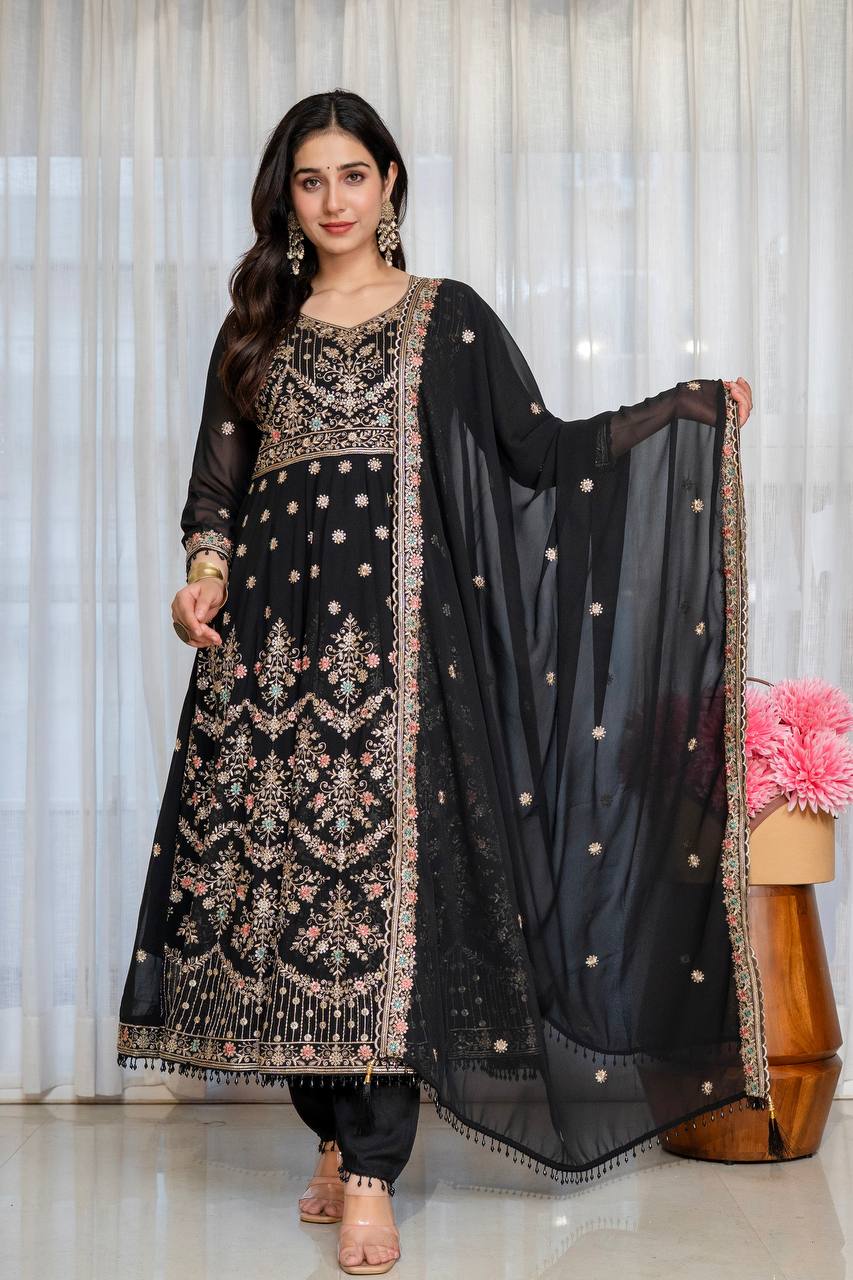
An embroidered Anarkali with zari, sequins or Moti lace work needs a smaller necklace than a solid Anarkali with an undecorated bodice. For example, the Black Anarkali Suit Set with Sequin Zari and Moti Lace Work already has reflective detail around the garment, so a medium Kundan pendant and small pearl or stone studs will look more balanced than a wide layered haar.
A relatively restrained necklace can carry more responsibility with the Black Embroidered Anarkali Suit Set with Zari Work. If the embroidery sits mainly on the hem or dupatta, the open upper bodice can accommodate a wider necklace. If the embroidery covers the chest, choose a shorter piece that ends before the most detailed area.
How to balance colour, metal and stonework
Gold-toned Kundan jewellery pairs most naturally with warm Anarkali colours, while pearl accents and pale stones soften darker colours. The safest pairing isn't always a matching colour; a controlled contrast can make the necklace appear intentional rather than decorative.
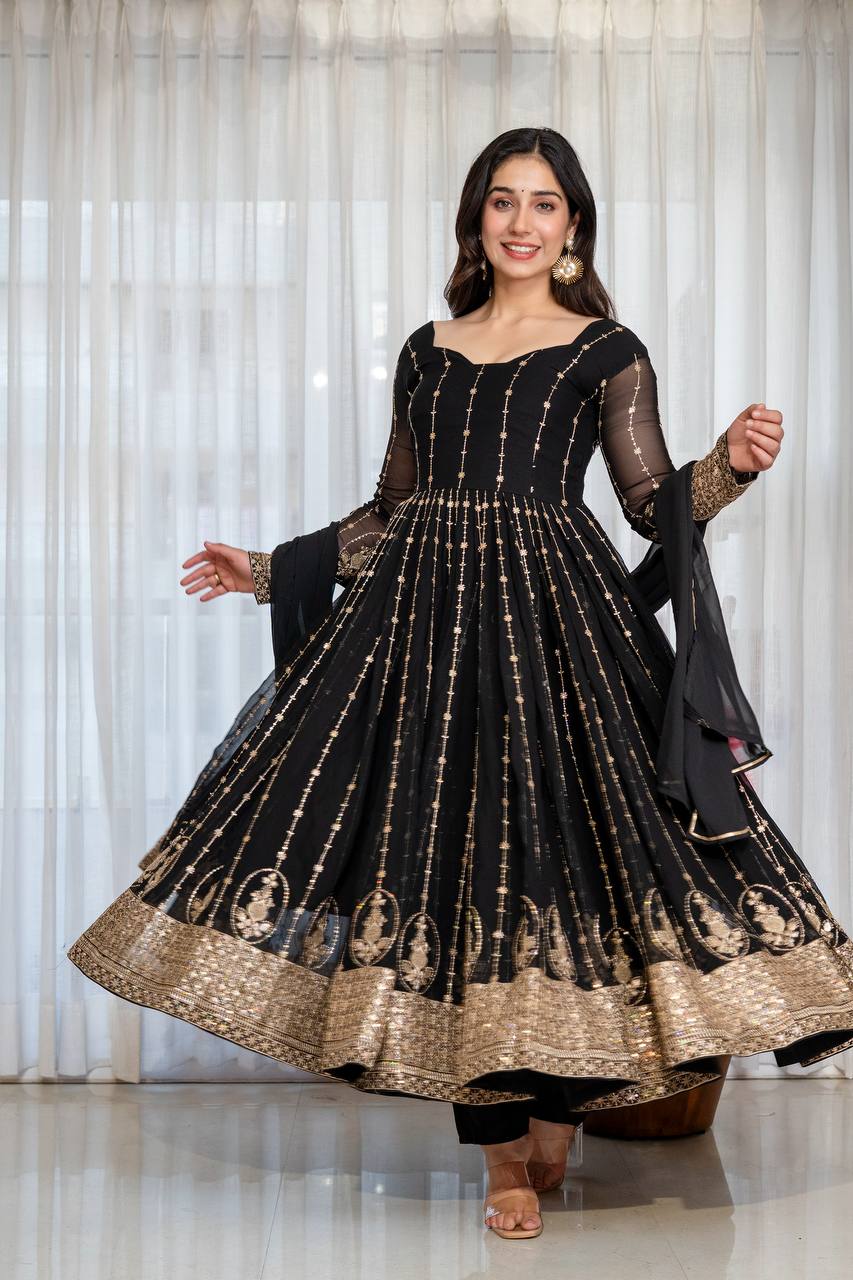
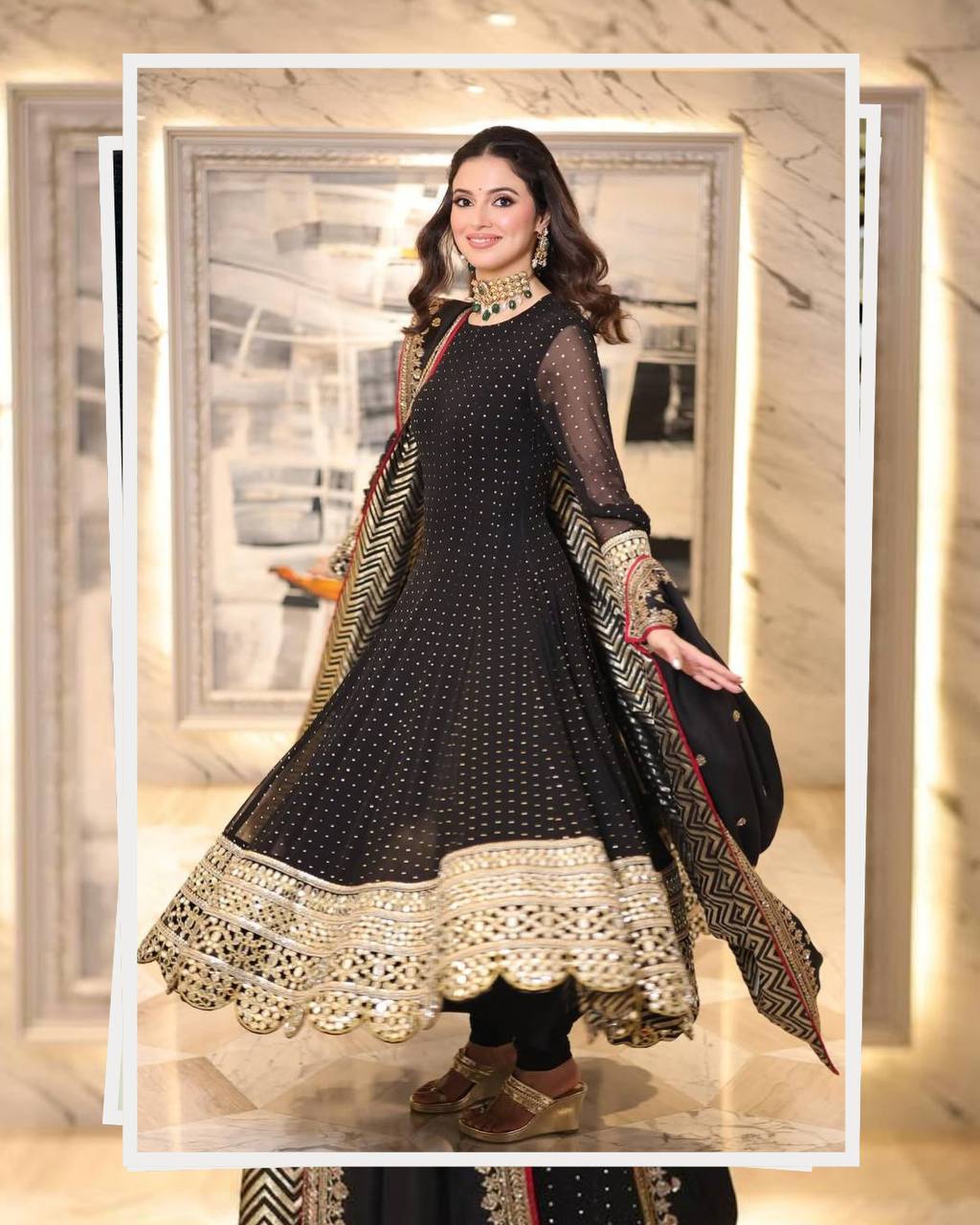
Black Anarkali suits create a strong background for Kundan stones, but black clothing can make a heavy necklace look more formal than intended. With a black outfit, select an open necklace design, fewer layers or a necklace with pearl drops instead of a fully packed choker. The Black Anarkali Suit with Zari, Sequins & Moti Lace Work already has shine, so avoid adding a sequinned potli and a heavily embellished dupatta at the same time.
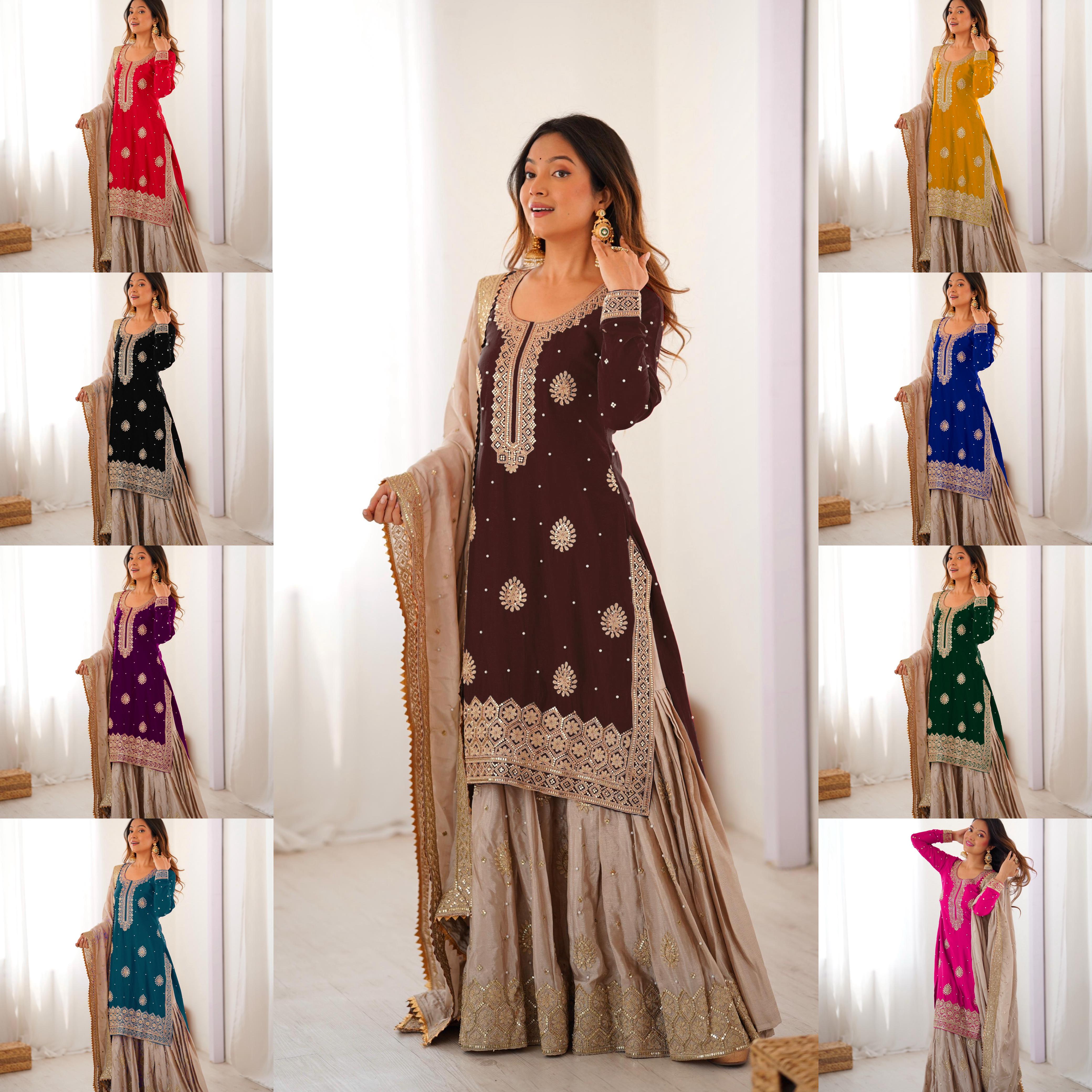
Maroon creates a rich combination with antique gold, ruby-toned stones and warm ivory accents. The Maroon Embroidered Rayon Cotton Anarkali Suit Set can be styled with a medium-length Kundan necklace, plain gold-toned bangles and a neutral clutch. The rayon cotton composition also makes the outfit suitable for a daytime gathering where an extremely formal silk-and-jewellery combination might feel too grand.
White and ivory Anarkalis allow the necklace to become the main colour statement. The White Embroidered Anarkali Suit Set with Gota Patti Dupatta can take a necklace with green, pink or uncut-style stones, provided the dupatta remains lightly draped and the earrings stay small. A white outfit with a large necklace, large earrings and a heavily decorated dupatta can quickly move into bridal territory.
Green supports both traditional and contemporary Kundan combinations. The Green Embroidered Anarkali Suit Set for Women can be paired with a necklace containing ruby-coloured accents for contrast or with pearl details for a quieter finish. When the Anarkali has a saturated colour, a gold-toned necklace with limited coloured stones is usually more versatile than a multicoloured set.
Dupatta drapes that keep the necklace visible
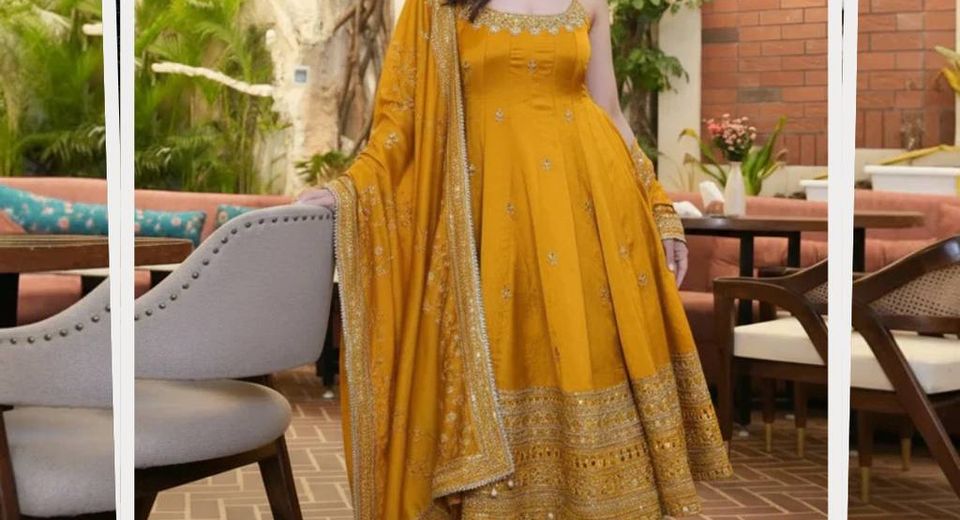
An one-shoulder or open-front dupatta drape keeps a Kundan necklace visible and prevents the upper half of a simple Anarkali from looking overloaded. Place the dupatta over one shoulder and let the opposite side fall close to the arm, leaving the neckline and upper bodice unobstructed.
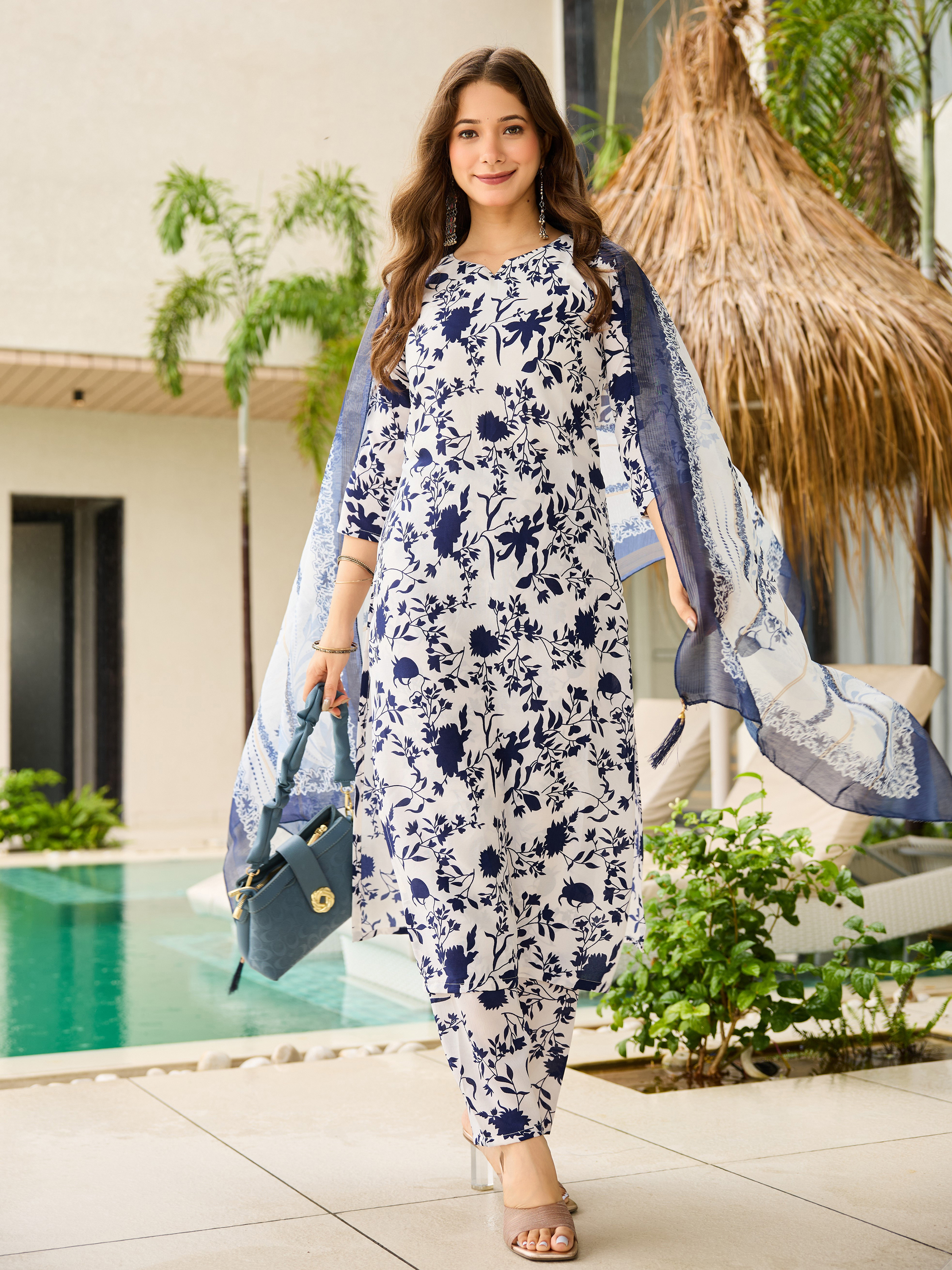
A narrow pleated drape over one shoulder is useful when the dupatta has a decorative border. Keep the pleats narrow near the shoulder, then allow the fabric to fall vertically rather than spreading it across the chest. A wide spread across the front can cover the necklace and create several competing horizontal lines.
For a more relaxed family event, place the dupatta over both shoulders and allow it to hang open in front. This drape works best with a shorter necklace because the fabric frames the jewellery without hiding it. Pinning the dupatta at the shoulder can help preserve the neckline during movement, especially when the Anarkali is worn for several hours.
A neck-wrap drape should be used carefully. Wrapping an embellished dupatta around the neck can conceal a Kundan necklace, rub against stone settings and make the upper body appear crowded. If a neck-wrap is necessary for warmth or modesty, choose a slim necklace with a single pendant rather than a broad choker.
Which supporting accessories make the look non-bridal?
Small or medium earrings, one restrained wrist detail and a simple hairstyle make Kundan jewellery look festive without looking bridal. Supporting accessories should repeat one element of the necklace, such as pearl, gold or a single stone colour, rather than reproduce the entire necklace set.
Earrings and bangles
Choose pearl drops, small Kundan studs or compact jhumkas when the necklace is prominent. Large chandbalis can work without a necklace, but wearing large chandbalis with a heavy necklace usually creates too much width around the face and chest.
Two to four slim bangles on one wrist provide movement without creating the stacked bridal effect of multiple thick bangles. A watch with a gold-toned case can make the outfit feel more daytime appropriate. Avoid wearing a full bangle stack, oversized ring and large earrings when the necklace already has multiple layers.
Hair and makeup
A low bun, soft ponytail or open hair tucked behind one ear gives a Kundan necklace a modern frame. A large central maang tikka, ornate bun accessory and braided hair jewellery should be avoided when the goal is explicitly non-bridal.
Makeup can remain defined but not heavily ceremonial. A warm neutral eyeshadow, softly lined eyes, peach or rose blush and a lip colour that echoes one stone in the necklace are enough for most daytime functions. Evening events can support a deeper lip or more defined eyeliner, but both dramatic eyes and a dark lip may compete with an elaborate necklace.
Where this styling works beyond weddings
A Kundan necklace with a simple Anarkali suits occasions that call for polish without bridal symbolism. The combination works for Diwali gatherings, Navratri evenings, Eid lunches, family anniversaries, festive office celebrations, temple visits and milestone birthday dinners.
For a daytime puja or Haldi ceremony guest look, use a shorter necklace, a light dupatta drape and practical footwear such as embellished juttis or low block heels. Avoid trailing jewellery and long dangling elements that can catch on seating, food service or crowded indoor spaces.
For an evening cultural programme, a medium necklace with subtle earrings can add enough shine to a plain Anarkali under warm indoor lighting. A small metallic clutch and block heels complete the look without introducing the head-to-toe ornamentation associated with bridal dressing.
Regional textiles and surface patterns can also change the mood of the same necklace. A printed suit from Kalamkari Print Salwar Suits (Copy) gives Kundan jewellery a craft-led, artistic setting, while a design from Maharashtra Paithani Inspired Salwar Suits creates a more classic colour story. Gujarat Bandhej Salwar Suits and Odisha Sambalpuri Salwar Suits can both work with Kundan, but the necklace should remain moderate so the regional pattern remains visible.
A Patiala-inspired silhouette from Punjab Patiala Salwar Suits usually has more volume and movement than an Anarkali. If Kundan jewellery is worn with that style, choose a compact necklace and let the dupatta or salwar volume provide the statement. The contrast demonstrates why jewellery scale should respond to the whole outfit, not only to the neckline.
A practical styling formula for getting ready
Start by putting on the Anarkali and identifying the clearest empty space above the embroidery. The clearest empty space determines whether a short necklace, pendant necklace or no necklace will produce the cleanest result.
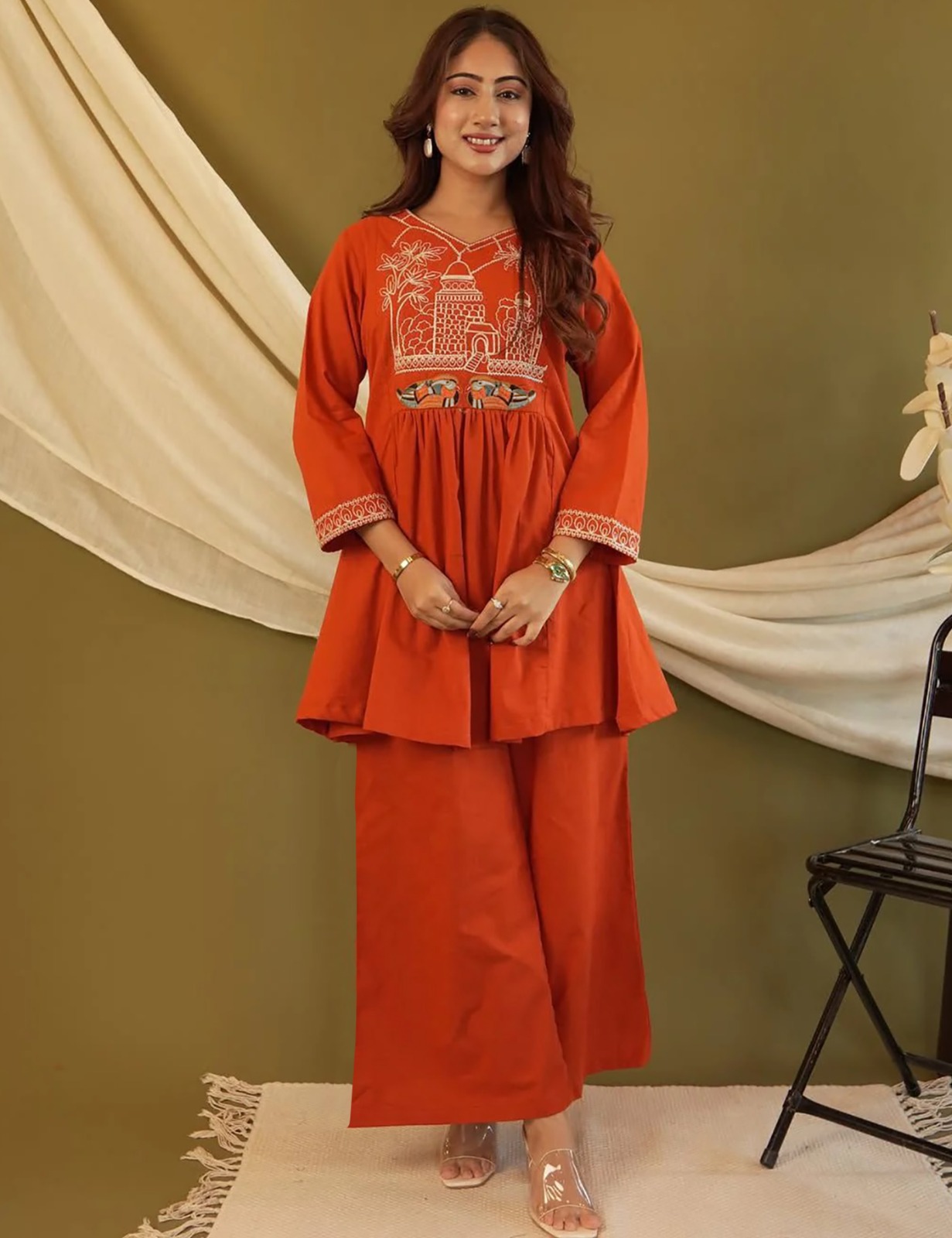
- Check the neckline: Measure visually from the neckline edge to the top embroidery. More open space can take a longer necklace; less space calls for a compact piece.
- Choose one focal point: Make the necklace the focal point if the Anarkali is plain, or make the embroidery the focal point if the bodice is detailed.
- Test the dupatta: Drape the dupatta before finalising earrings. A fabric border can cover more jewellery than expected.
- Limit repeated shine: If the necklace has polished stones, keep the clutch, bangles and shoes less reflective.
- Photograph the full outfit: A mirror selfie from the waist up can hide excess volume. Check a full-length photograph to see whether the necklace, dupatta and hem feel proportionate.
- Check comfort: Wear the necklace for 15 minutes before leaving. Kundan settings can feel heavier than they appear, and a necklace that shifts can disturb the neckline.
The most reliable version of Kundan Necklace With a Simple Anarkali Without Bridal Styling uses one statement necklace, modest earrings, a controlled dupatta and no more than one additional ornate accessory. The result remains recognisably festive while allowing the Anarkali's colour, cut and embroidery to contribute to the outfit.
Care tips for Kundan jewellery and embellished Anarkalis
Kundan jewellery should be kept dry, wiped with a soft cotton cloth after wear and stored separately in a fabric-lined box. Perfume, hairspray, sweat and moisture can dull metal finishes or affect the appearance of stones and foil-backed settings. Apply fragrance and hair products before putting on the necklace.
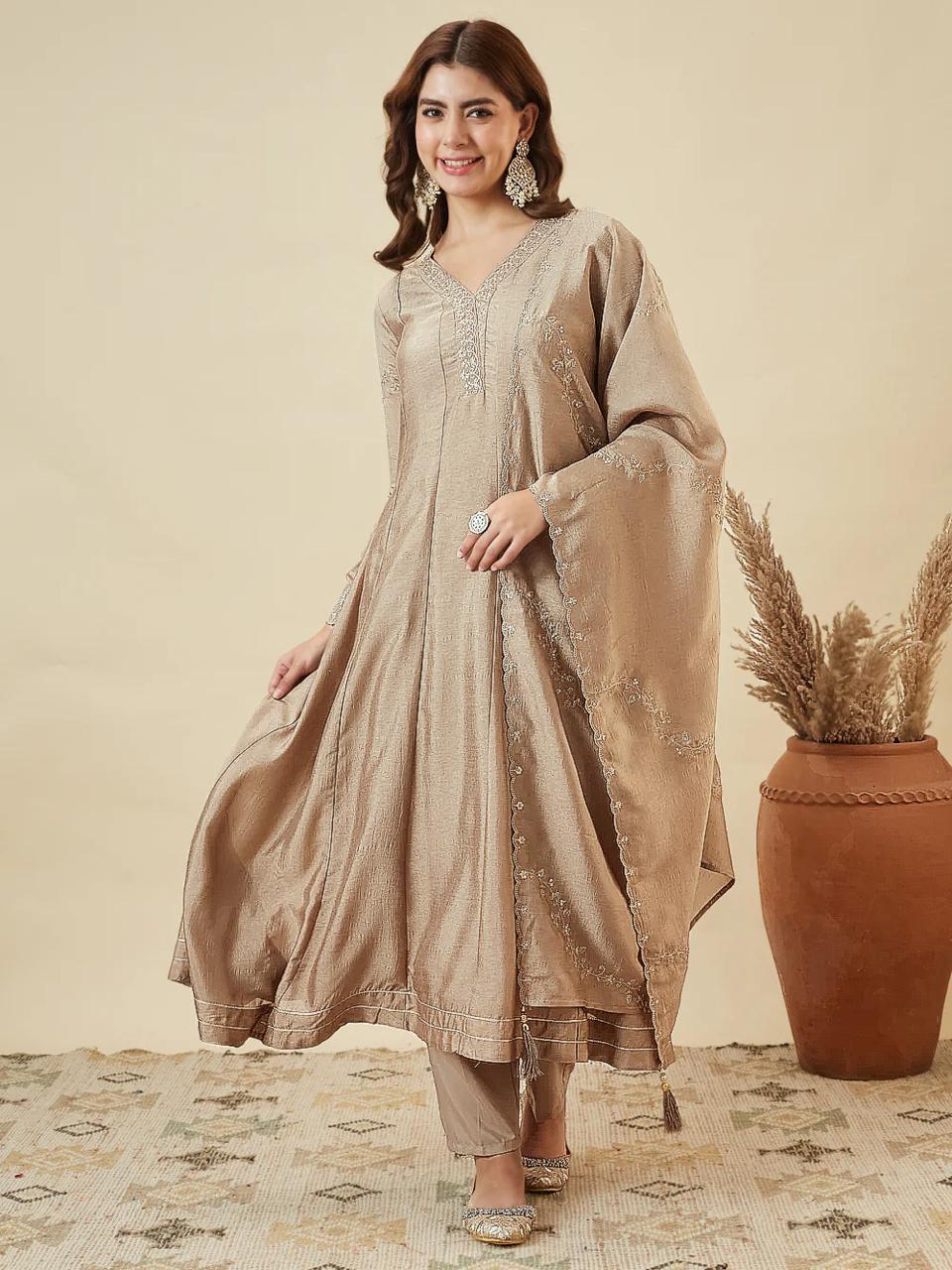
An embellished Anarkali should be folded with the decorated surface turned inward or separated with soft muslin to reduce snagging. Do not compress zari, sequins or Moti lace work under heavy accessories in a crowded wardrobe. Follow the garment label for washing; many decorated salwar suits are safer with professional cleaning than with machine washing.
During travel, place the necklace in a rigid jewellery box rather than a loose pouch. Keep the dupatta in a separate cloth bag, and avoid storing damp garments in luggage. These small precautions help preserve both the jewellery finish and the embroidered Anarkali for repeated festive wear.
Common questions about a non-bridal Kundan Anarkali look
A non-bridal Kundan Anarkali look depends on restraint rather than avoiding time-honoured jewellery altogether. Necklace proportion, a visible neckline, moderate earrings and a simple dupatta drape create the distinction.
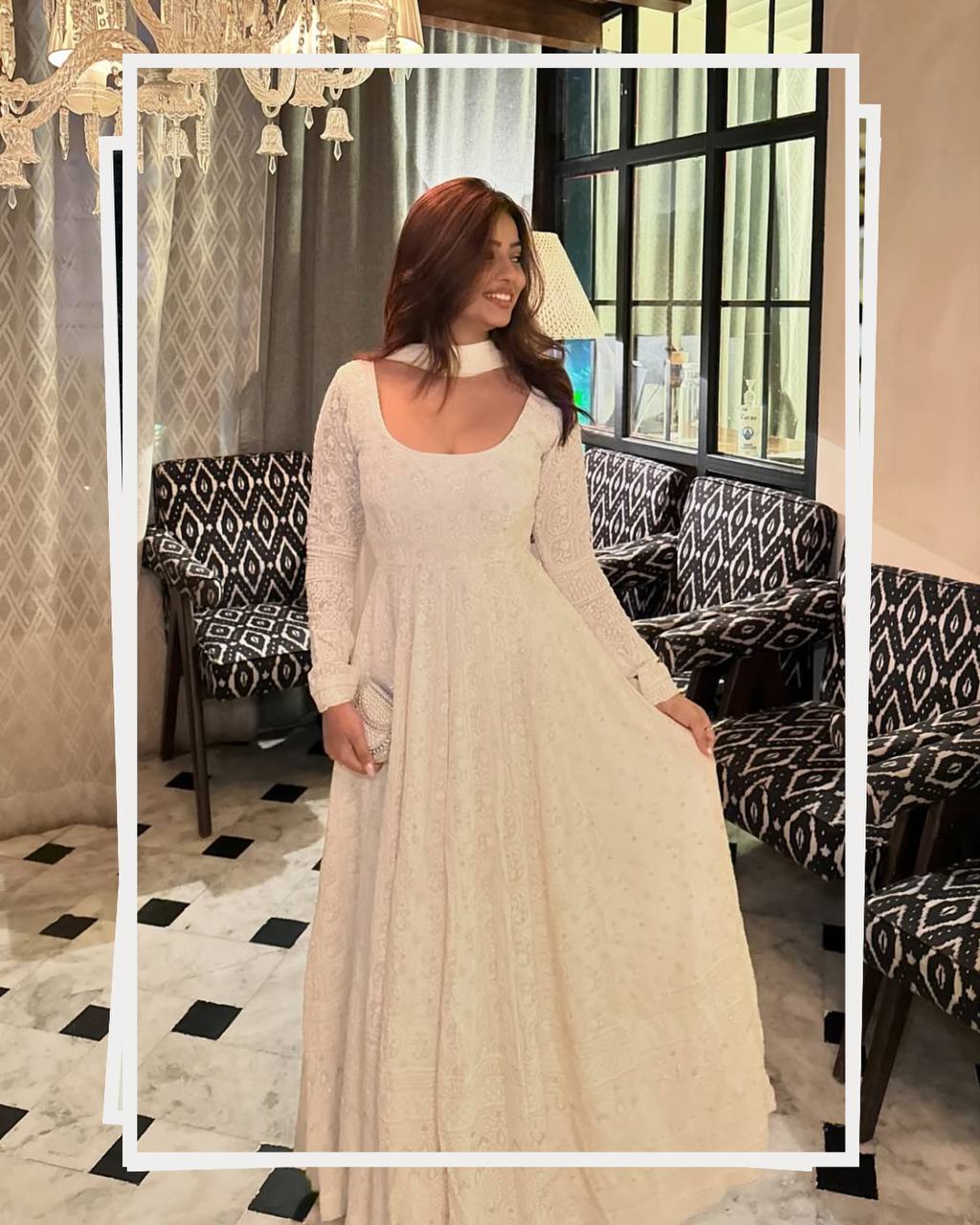
Questions About Styling Kundan with an Anarkali Without a Bridal Look
Can I wear a Kundan necklace with a simple Anarkali without looking bridal?
Yes, you can wear Kundan with a simple Anarkali without looking bridal by choosing one statement necklace and keeping the earrings, bangles and hair accessories restrained. An open dupatta drape and a clean neckline also make the styling feel more contemporary.
What necklace length suits an Anarkali suit?
A 14 to 16-inch necklace generally suits open, scoop and sweetheart necklines, while a 17 to 20-inch necklace works better when the bodice has clear vertical space. A high neckline usually needs a compact piece or no necklace so the upper half does not look crowded.
Can I wear Kundan jewellery with a black Anarkali?
Yes, Kundan jewellery works particularly well with a black Anarkali because the stones and gold-toned setting stand out against the dark colour. Select an open or medium-sized design if the suit already contains zari, sequins or Moti lace work.
Which earrings should I wear with a heavy Kundan necklace?
Small Kundan studs, pearl drops or compact jhumkas are the safest earrings for a prominent necklace. Large chandbalis and oversized earrings are better worn without a heavy necklace because both pieces add width and visual weight around the face.
How should I drape a dupatta with a Kundan necklace?
Drape the dupatta over one shoulder or leave it open over both shoulders so the necklace and neckline remain visible. Avoid wrapping a heavily embellished dupatta around the neck because the fabric can hide the jewellery and make the upper body look crowded.
Is Kundan jewellery suitable for a daytime family function?
Kundan jewellery is suitable for a daytime family function when the necklace is compact or medium-sized and the rest of the accessories are simple. Pairing the necklace with a printed or lightly embroidered Anarkali, practical footwear and soft makeup keeps the look festive but not ceremonial.