

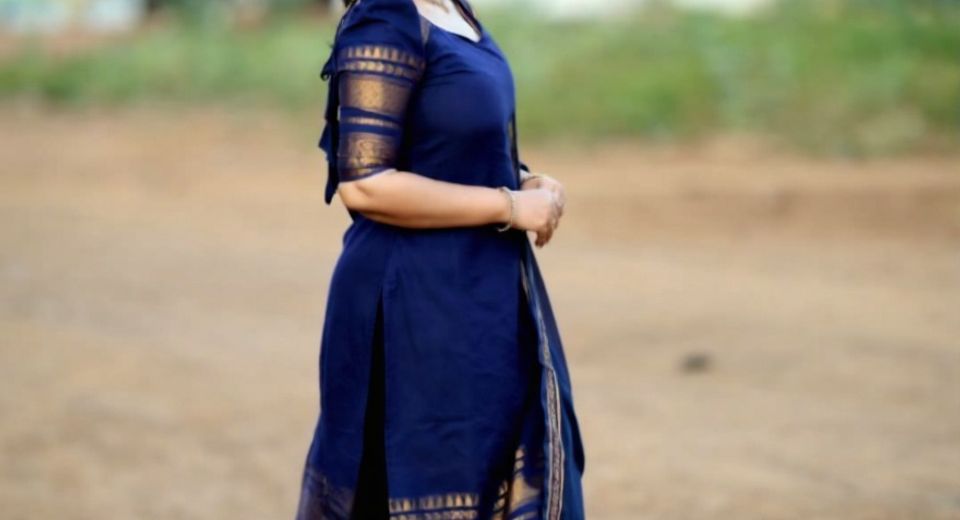
Keyhole Neck Kurtis for Different Face Shapes Jewellery and Styling can turn a simple salwar suit into a carefully balanced outfit. The small opening below the neckline draws attention to the centre of the upper body, while earrings and a dupatta decide whether the overall look feels elongated, softened or visually busy. Matching these elements to your face shape doesn't require strict beauty rules; it requires attention to line, scale and proportion.
A keyhole neckline usually has a round, teardrop or narrow slit-shaped opening secured with a button, tie or small hook. The opening may sit close to the collarbone or lower on the chest. A high keyhole creates more vertical focus, whereas a broad rounded keyhole adds width. These differences matter when choosing jewellery, hair placement and dupatta draping.
Why Keyhole Neck Kurtis Need Thoughtful Jewellery Styling
The best jewellery for a keyhole neckline leaves the opening visible and gives the face a clear frame. A short necklace can compete with the keyhole, so earrings are often the more reliable first choice.
When the keyhole is embroidered with zari, mirror work or threadwork, jewellery should repeat one detail without copying every element. For example, gold-toned jhumkas can echo zari, while small kundan studs can support festive embroidery without covering the neckline. A plain cotton keyhole kurti can accommodate a longer chain, provided the pendant doesn't fall directly inside the opening.
The size of the jewellery should relate to the scale of the kurti. A delicate keyhole on a lightweight Chanderi or cotton outfit suits fine hoops, small jhumkas or a slim chain. A richly worked salwar suit with a substantial dupatta can carry medium-sized chandbalis or a layered bangle stack. Oversized earrings and an elaborate necklace together often hide the neckline and make the upper body look crowded.
For a useful proportion check, stand approximately 1 metre from a mirror and examine the complete head-and-shoulder area. If the eye lands first on the necklace rather than the face, remove the necklace or choose a shorter, finer design. If the face disappears among a large dupatta border and heavy earrings, reduce one of those elements.
Keyhole Neck Kurtis for Different Face Shapes Jewellery and Styling
Face shape can guide jewellery lines: vertical pieces lengthen, rounded pieces soften angles, and horizontal width can balance a narrow face. Face-shape styling is a flexible reference, not a rule that limits personal taste.
Round face
Longer earrings and a slightly elongated keyhole help create a more vertical visual line for a round face. Choose slim drop earrings, linear danglers or narrow teardrop earrings that finish below the widest part of the cheek.
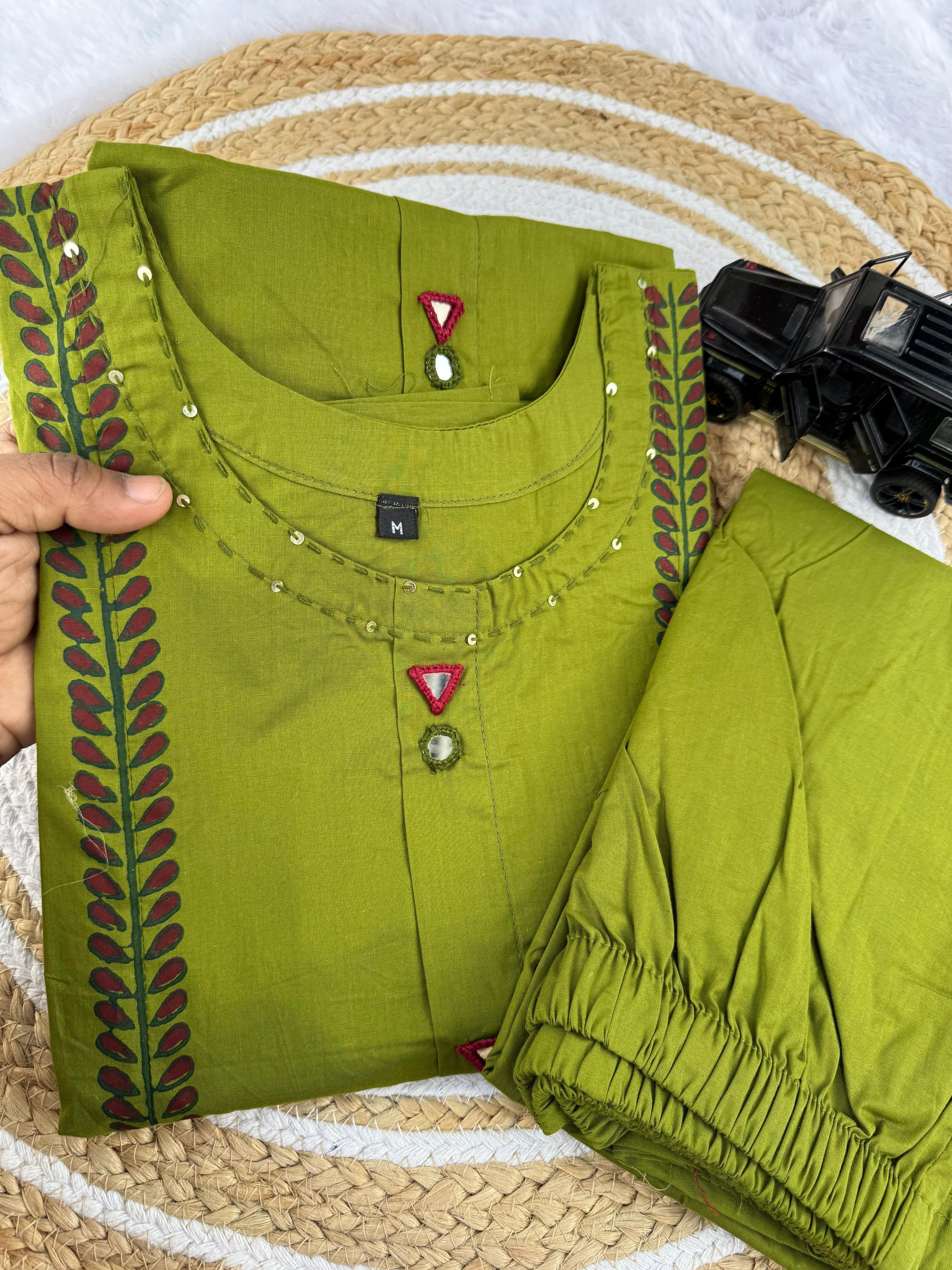
Avoid placing all the emphasis on wide circular hoops if the goal is a lengthened appearance. A V-shaped dupatta drape or a dupatta falling in two narrow vertical panels can reinforce the same direction. The Mustard Embroidered Kurti Pant Dupatta Set Women works well with antique-gold drops when the dupatta is worn over one shoulder and allowed to fall straight rather than gathered at the neck.
Oval face
Oval faces can accommodate most earring shapes, so the neckline and outfit detail should determine the final jewellery choice. Medium jhumkas, hoops, chandbalis and short necklaces can all work when their scale matches the keyhole.
Avoid adding unnecessary length if the keyhole already extends vertically from a high neckline. The Blue Kanchi Cotton Jacquard Kurti Dupatta Set can be styled with medium silver-toned jhumkas and a neat side drape, keeping the jacquard weave visible while preserving the natural balance of an oval face.
Square or angular face
Rounded jewellery and curved drapes soften a square or strongly angular face. Choose rounded jhumkas, pearl drops, oval hoops or chandbalis with a curved lower edge instead of sharply geometric earrings.
A soft, open dupatta drape also helps. Do not fold the dupatta into a rigid narrow strip across the shoulders, because a straight horizontal fold can repeat the angularity of the jaw. The Designer Cotton A-Line Kurti Pant Set with Mirror Work benefits from rounded earrings in gold or champagne tones, especially when the mirror work already introduces small reflective points around the bodice.
Heart-shaped or inverted-triangle face
Wider earrings near the jawline balance a broader forehead and a narrower chin. Chandbalis, flared danglers and medium jhumkas add visual weight where the face naturally tapers.
Keep the jewellery near the face rather than choosing an extremely long, narrow drop. A softly draped dupatta that begins below the collarbone can also prevent extra volume at the temples and upper forehead. Kanjeevaram-inspired zari accents pair especially well with warm gold earrings, but the earrings should remain moderate if the keyhole has heavy embellishment.
Long or rectangular face
Short-to-medium earrings with horizontal volume help balance a longer face. Rounded studs, button earrings, clustered pearls and broad medium hoops create width without overwhelming the keyhole opening.
A rounded keyhole or a neckline with a wider border can support that balance. A dupatta worn close to the neck in a soft curve can reduce excessive vertical length, while a very long pendant may make the face and torso appear longer. The Black Kanchi Cotton Kurti Dupatta Set for Women gives a strong background for pearl clusters, antique-silver jhumkas or a compact gold choker worn above rather than inside the keyhole.
Choosing the Right Keyhole Shape and Neckline Height
The opening shape should repeat or counterbalance the natural lines of the face and upper body. A narrow vertical keyhole lengthens, a rounded keyhole softens, and a wider horizontal opening adds visual breadth.
People with a fuller face often prefer a keyhole that's narrow and moderately deep, because a small vertical opening prevents the neckline from adding unnecessary width. People with a long face may prefer a rounded or slightly broad keyhole that introduces a horizontal pause. An oval face can accommodate either option, with jewellery and fabric detail deciding the emphasis.
Neckline height also changes the result. A high collar with a small keyhole looks polished and compact, making it suitable for workwear or daytime dressing. A lower keyhole with a broad embroidered border feels more festive, but it demands careful placement of the pendant and dupatta. The Kanchi Cotton Zari Woven Kurti Set with Traditional Dupatta shows how zari borders can make a modest opening look occasion-ready without requiring a large necklace.
Check the keyhole construction before buying or wearing the set. The opening should lie flat when you sit, raise your arms and turn your head. A keyhole that gapes at the button or pulls across the bust changes the intended shape and can make even well-chosen jewellery look misplaced. A tailor can move a hook by 1 to 2 centimetres or add a discreet snap if the neckline needs more security.
How Dupatta Draping Changes the Face and Neckline Balance
A dupatta should frame the keyhole without covering its centre or adding bulk directly beneath the chin. The most useful drape depends on the neckline depth, fabric weight and the visual effect you want.
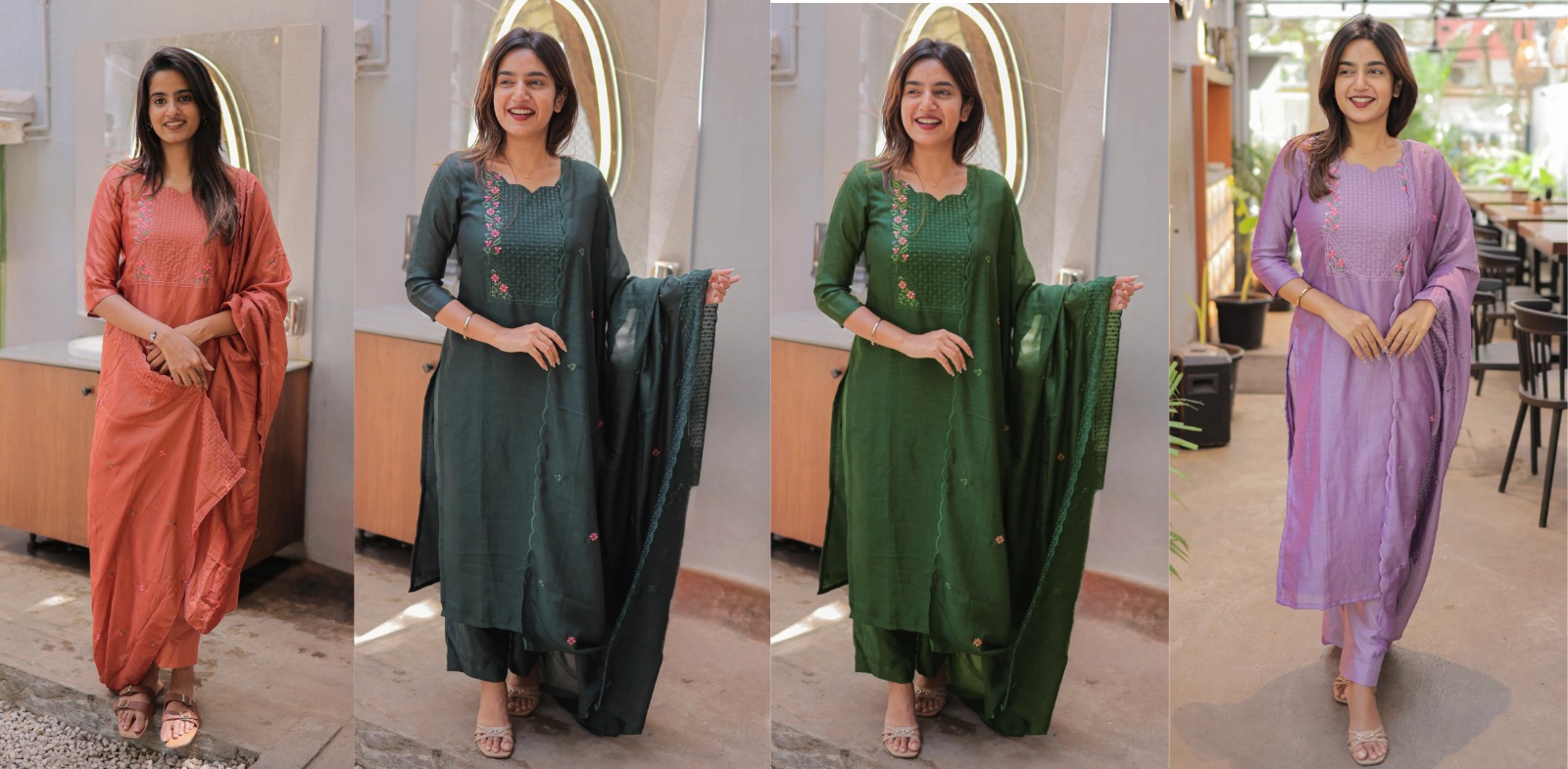
For a lengthening effect, place the dupatta on one shoulder and let one edge fall in a clean vertical line. This works particularly well with a round face, a short torso or a narrow keyhole. For a softer effect, bring the dupatta loosely around the neck but keep the keyhole visible between the two sides. This approach suits angular faces and lightweight fabrics such as cotton or Chanderi.
Heavy woven borders need more space than a plain dupatta. With a Paithani-inspired border or substantial zari edge, pin the dupatta slightly behind the shoulder rather than stacking the border under the chin. The Navy Kanchi Cotton Kurti Set with Woven Dupatta can be worn with the woven edge displayed on one shoulder, while small gold hoops keep the neckline from becoming visually dense.
A three-point test makes draping easier: the face, the keyhole and the main dupatta border should each remain identifiable. If all three are hidden in one cluster, move the border lower or change the earring size. If the outfit looks empty, add one focal detail rather than several competing accessories.
Styling Keyhole Kurtis for Work, Festivals and Family Events
Workwear keyhole kurtis look most polished with controlled jewellery, a secure neckline and a dupatta that doesn't require constant adjustment. Small hoops, pearl studs or compact silver jhumkas usually provide enough definition for an office or daytime meeting.
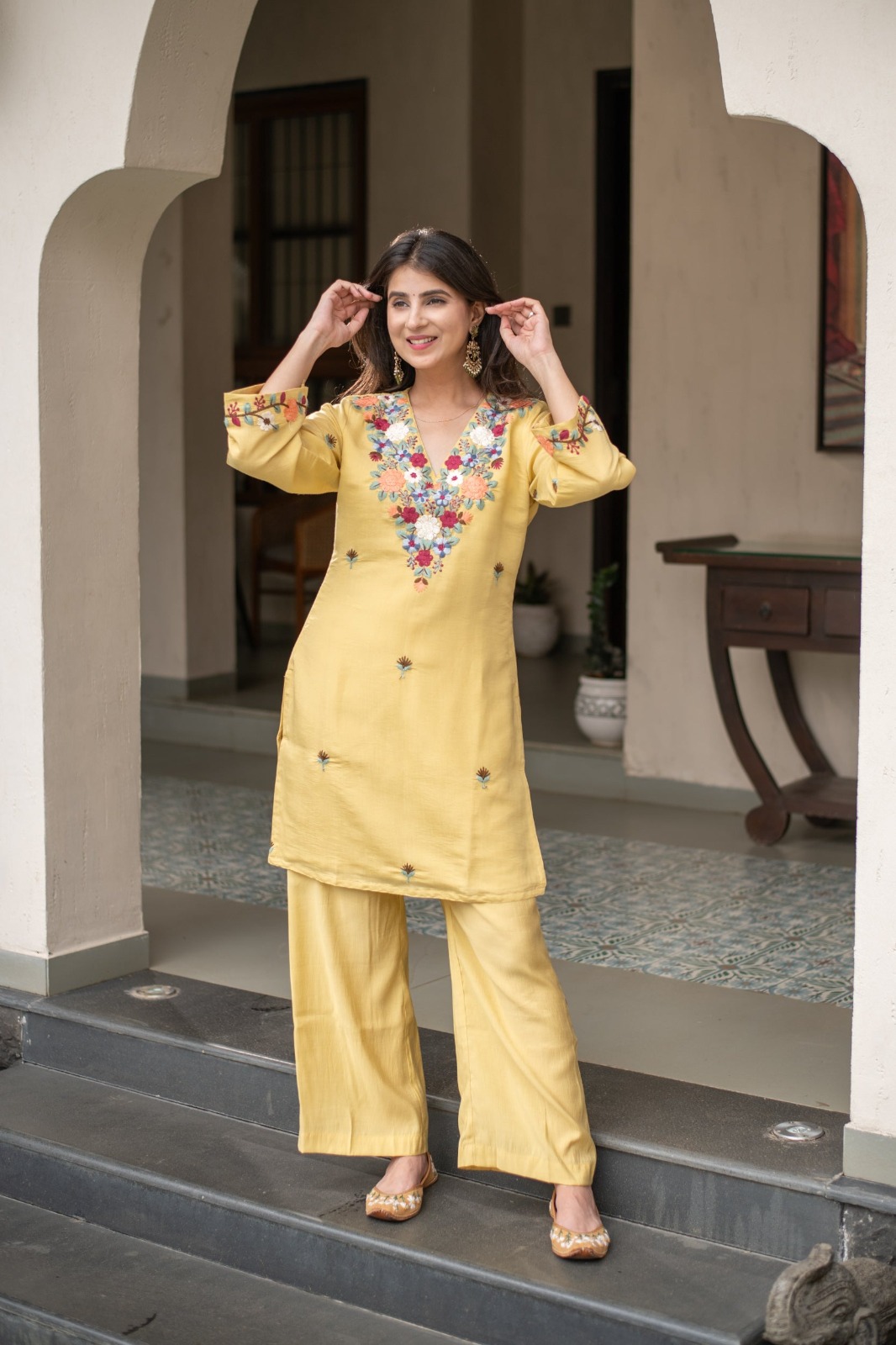
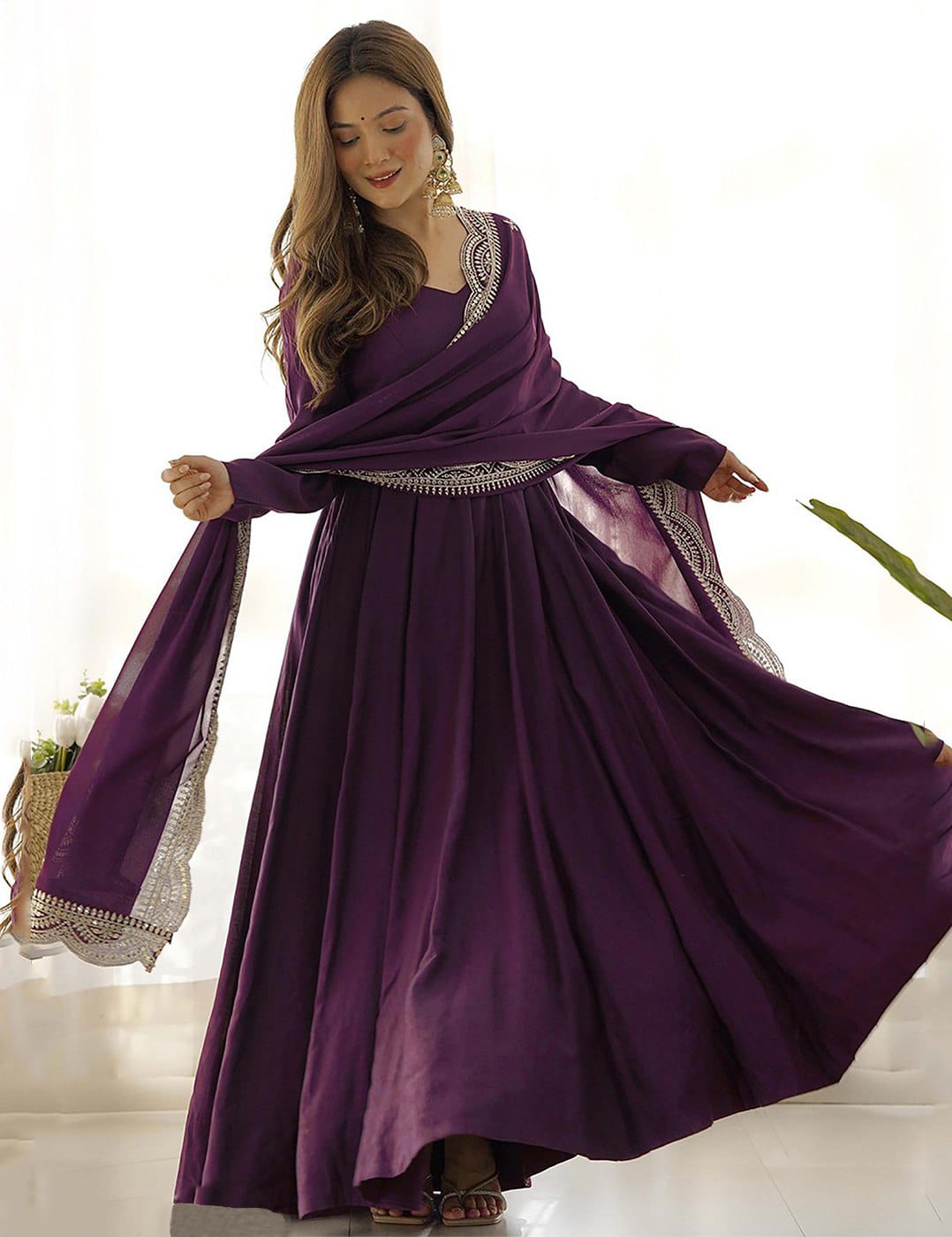
The Elegant Wine Ethnic Kurti Set with Dupatta can move from work to dinner when styled with restrained gold studs during the day and medium chandbalis in the evening. Keep the handbag and footwear simple if the wine colour, keyhole embroidery and dupatta already provide strong contrast.
Festive dressing allows more texture, but the jewellery should still respect the neckline. Mirror work, zari and woven borders already reflect light, so select either statement earrings or a statement necklace as the main focal point. The Royal Navy Blue Kanchi Cotton Kurta Set with Elegant Woven Dupatta can take antique-gold earrings and bangles, while a necklace is optional if the woven dupatta is draped close to the collarbone.
For a Haldi ceremony, breathable cotton, yellow or green accents and jewellery that can tolerate movement are practical choices. Lightweight jhumkas, fabric-covered bangles and a pinned dupatta reduce the need for repeated adjustments. For a wedding reception, a heavier earring, a small bindi and a controlled side drape can create occasion impact without covering the keyhole.
Using Regional Textile Details Without Overloading the Look
Regional textile references already carry visual identity, so jewellery should support the weave or print rather than compete with it. Kalamkari Print Salwar Suits often have dense floral or narrative motifs, making antique-finish earrings and a plain dupatta edge a sensible pairing.
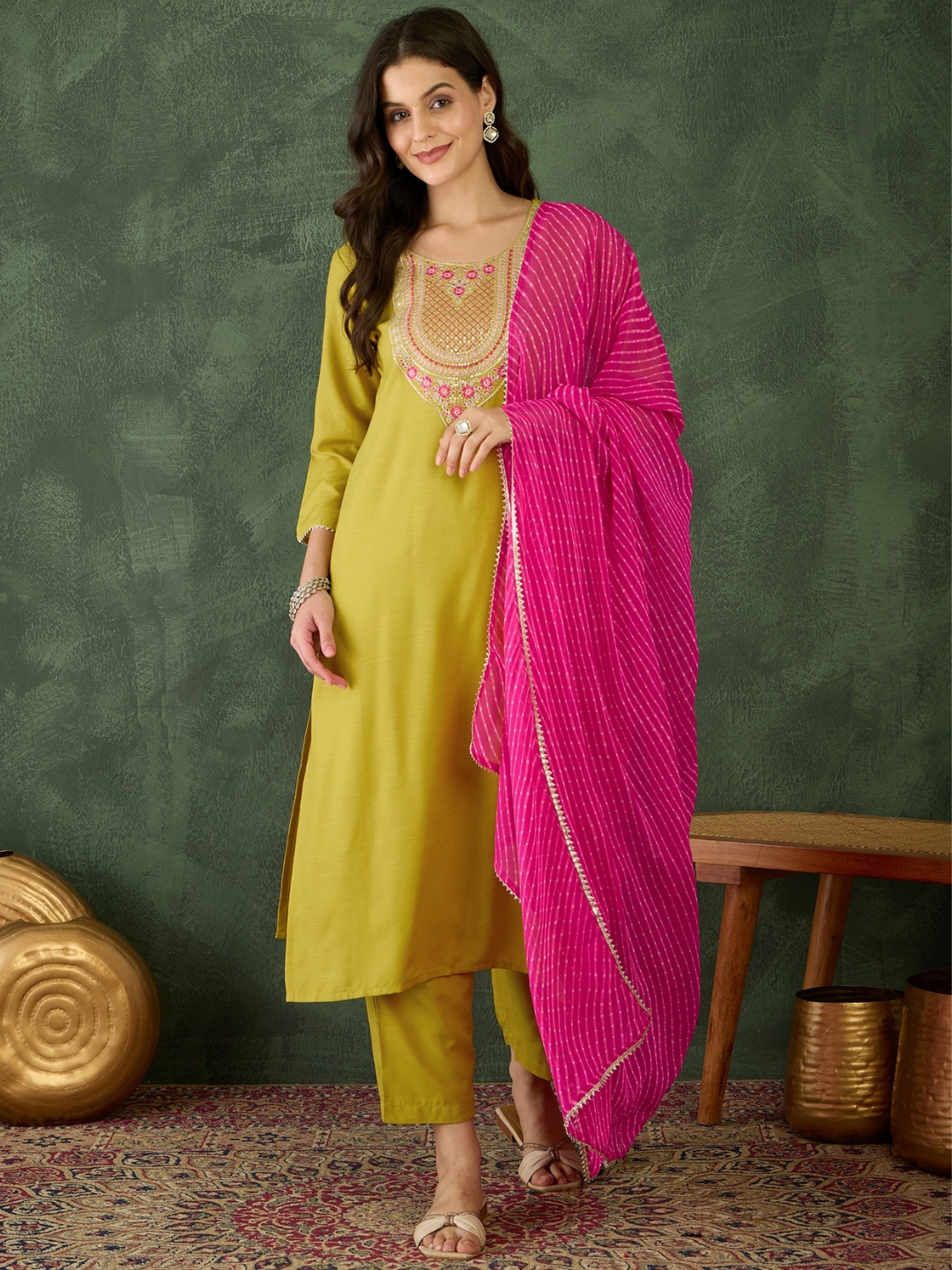
Maharashtra Paithani Inspired Salwar Suits are associated with rich borders and jewel-like colour contrasts. Choose one metal family, such as gold or antique gold, and keep the necklace shorter than the keyhole opening. Gujarat Bandhej Salwar Suits contain lively tie-dye patterning, so medium jhumkas and a solid-colour accessory can provide a visual resting point.
Odisha Sambalpuri Salwar Suits often reward simple, textural styling. Silver-toned earrings, a narrow bangle stack and a neatly folded dupatta allow the textile character to remain visible. Punjab Patiala Salwar Suits have more volume through the salwar, so a longer earring or vertical dupatta edge can keep the full silhouette visually balanced.
Colour matching is more reliable when you match undertones rather than searching for an identical shade. Yellow-gold zari suits warm gold jewellery, while cool blue, black and wine shades can work with antique gold, silver or oxidised metal depending on the embroidery. A matching necklace isn't compulsory; repeating one accent colour in the earrings, bindi or bangles is often enough.
A Practical Fitting and Accessory Checklist
A good keyhole-neck outfit should remain comfortable, secure and proportionate while you move. Test the clothing and accessories together before an important event.
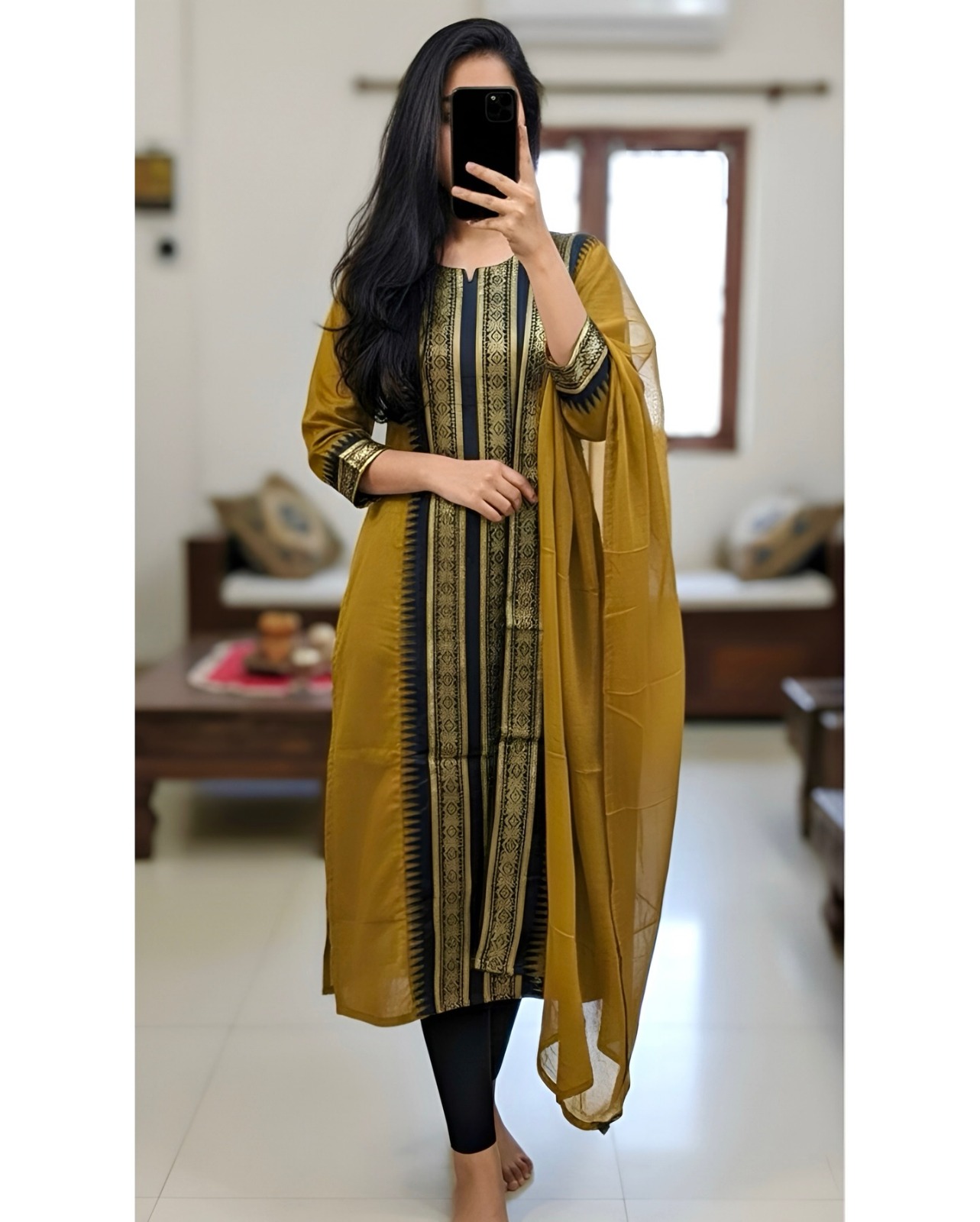
- Check the opening: Sit, bend slightly and lift both arms to confirm that the keyhole doesn't gape or pull.
- Check the pendant: Place a pendant outside the opening first; move it higher or remove it if it falls into the keyhole and obscures the design.
- Check earring weight: Wear statement earrings for at least 20 minutes at home before an event. Heavy earrings can pull the earlobe and become uncomfortable during long ceremonies.
- Check the dupatta: Use a small safety pin or brooch on the shoulder if the fabric slips, but avoid pinning through delicate zari or fragile woven borders.
- Check the whole silhouette: Photograph the outfit from the waist up and full length. The best styling choice should work for both the face and the complete salwar suit.
- Check care needs: Remove jewellery before washing. Follow the garment label, avoid soaking zari-heavy pieces, and dry cotton and woven fabrics away from harsh direct sunlight.
The strongest Keyhole Neck Kurtis for Different Face Shapes Jewellery and Styling combinations are not based on a single face-shape rule. They come from coordinating three visible decisions: the direction of the keyhole, the scale of the jewellery and the way the dupatta frames the upper body. Once those decisions are clear, colour, regional textile detail and occasion can guide the finishing touches.
Common Questions About Keyhole-Neck Kurti Jewellery and Face-Shape Styling
What jewellery looks best with a keyhole neck kurti?
Earrings are usually the safest choice because they frame the face without covering the keyhole. Use jhumkas, hoops, chandbalis or drops according to your face shape and keep a necklace fine or short if the neckline is embroidered.
Which keyhole kurti is suitable for a round face?
A moderately narrow, vertical keyhole paired with longer, slim earrings can create a lengthening effect for a round face. A one-shoulder dupatta drape with a clean vertical fall reinforces that proportion.
Can I wear a necklace with a keyhole neckline?
Yes, but the necklace should not sit directly inside the opening or hide its embroidery. Choose a short chain above the keyhole or a longer pendant that clearly falls below it, and avoid combining it with very large earrings.
How should I style a keyhole kurti for a long face?
Choose rounded or slightly broad earrings that add width near the cheeks and jaw. A rounded keyhole, a soft dupatta curve and a medium-length necklace are generally more balanced than several long, narrow accessories.
Should the dupatta cover a keyhole neckline?
The dupatta should frame rather than fully cover the keyhole when the neckline is a design feature. Keep the centre opening visible, or drape the dupatta behind one shoulder so the neckline and embroidery remain easy to see.
What jewellery works with a heavily embroidered keyhole kurti?
Medium earrings and minimal or no necklace usually work best with heavy embroidery. Match the jewellery metal to the zari or embellishment, then use the dupatta border as the second major detail instead of adding several competing accessories.


