

Keeping the Waist Defined With Saree With a Belt Without Ruining the Pleats depends on controlling pressure rather than tightening the belt as much as possible. A belt should sit over the finished waist fold and lightly anchor the saree, while the lower pleats remain open enough to fall naturally. The right fabric, belt width, pleat count and fastening method make more difference than the belt itself.
A successful belted saree has three separate support points: the petticoat or saree shapewear holds the inner wrap, pins or a hidden elastic stabilise the pleat stack, and the belt finishes the waistline. When the belt is expected to perform all three jobs, the fabric usually bunches, the pallu pulls sideways and the pleats lose their vertical fall.
Keeping the Waist Defined With Saree With a Belt Without Ruining the Pleats: Why does a belt flatten pleats?
A belt flattens saree pleats when it compresses the pleat stack unevenly or sits below the point where the pleats are secured. A saree has several layers at the waist, including the tucked inner edge, wrapped fabric, front pleats and sometimes the pallu crossing the torso. Excessive pressure creates horizontal ridges, pulls the top pleat sideways and makes the lower edge fan out.
Fabric weight changes the result. Banarasi silk and zari-rich sarees hold a sharp fold but can become bulky under a narrow belt. Linen cotton sarees have more body and may resist flattening, while soft silk settles quickly but can shift if the inner tuck is loose. A belt can't compensate for an unstable base drape.
The safest sequence is to complete the saree drape first, secure the pleats with pins or hidden elastic, and use the belt only as a finishing layer. A belt should define the waist visually while applying enough pressure to prevent movement, not enough pressure to reshape every fold.
Keeping the Waist Defined With Saree With a Belt Without Ruining the Pleats: How should you prepare the drape?
Prepare the drape by securing the waistband, setting the front pleats and arranging the pallu before fastening the belt. A stable foundation prevents the belt from becoming the only support for the saree.
Which base layer gives the smoothest waist?
A petticoat with a flat, secure waistband gives the smoothest base for a belted saree. A loose drawstring can gather fabric into a thick ridge, while a rolling waistband creates an uneven line beneath the belt. Saree shapewear can create a smoother silhouette, but the waistband should remain comfortable when you sit and walk.
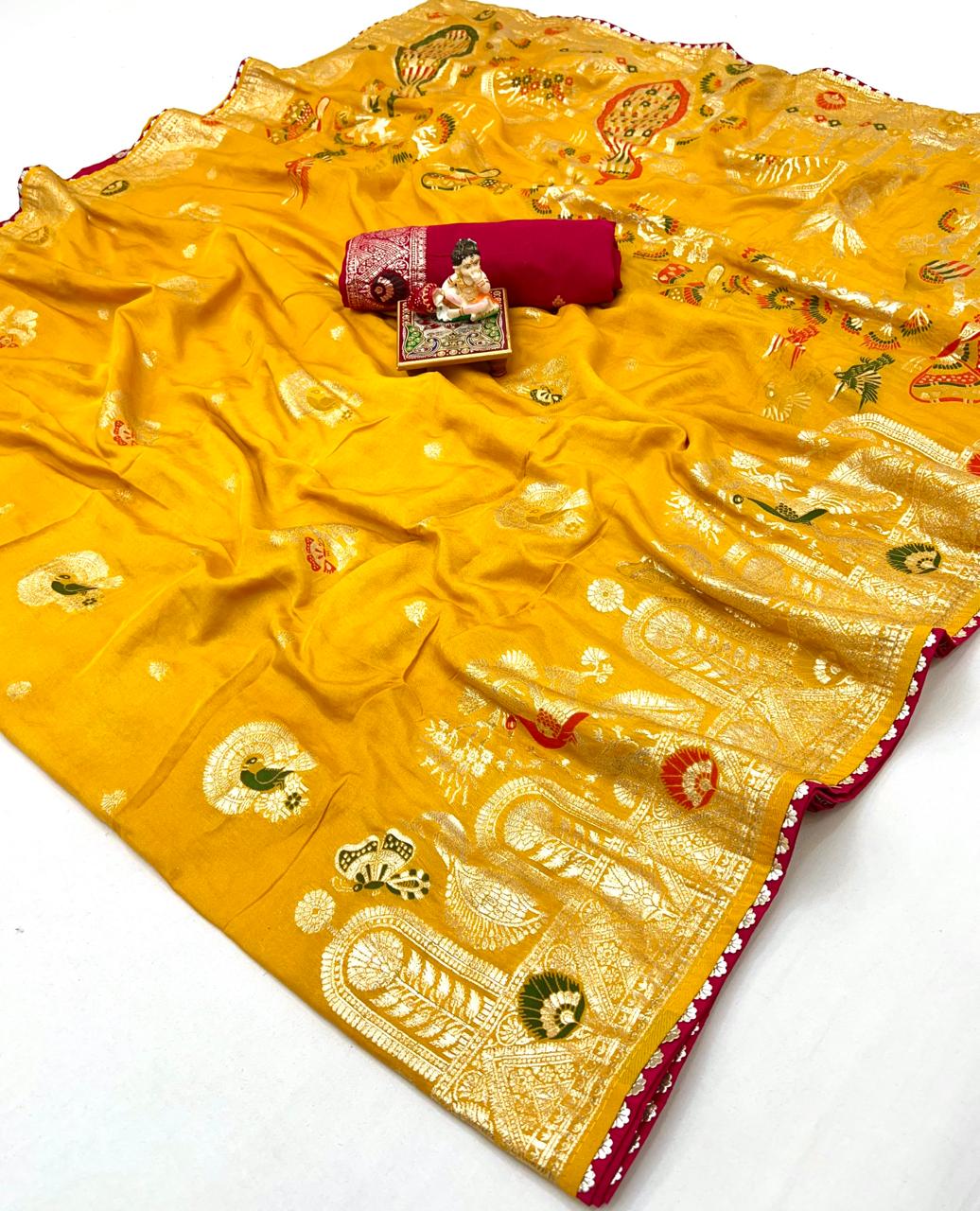
For a lightweight saree such as Designer Black Soft Silk Saree with Intricate Patterns, a smooth base layer helps preserve the fluid fall. For a heavier fabric such as Royal Mustard Bloom Banarasi Silk Saree, a firm waistband distributes weight across the abdomen instead of allowing the saree to drag from one hip.
How many pleats should a belted saree have?
Five to seven front pleats measuring approximately 10 to 12 centimetres each usually give a balanced belted drape. The final number depends on saree width, fabric thickness and the fullness preferred at the front.
Align the bottom edges first, then smooth the fabric upward towards the waistband. Pinning only the top edge can allow the pleats to spread at knee level. A horizontal safety pin through the inner side of the pleat stack provides discreet support, while a heavy Banarasi silk saree may need a second support point 8 to 10 centimetres below the waistband.
Keeping the Waist Defined With Saree With a Belt Without Ruining the Pleats: Where should the belt sit?
A saree belt should sit at the natural waist or two to three centimetres above the top edge of the front pleats. The belt should cross the wrapped saree and pallu without cutting across the widest part of the pleat stack.
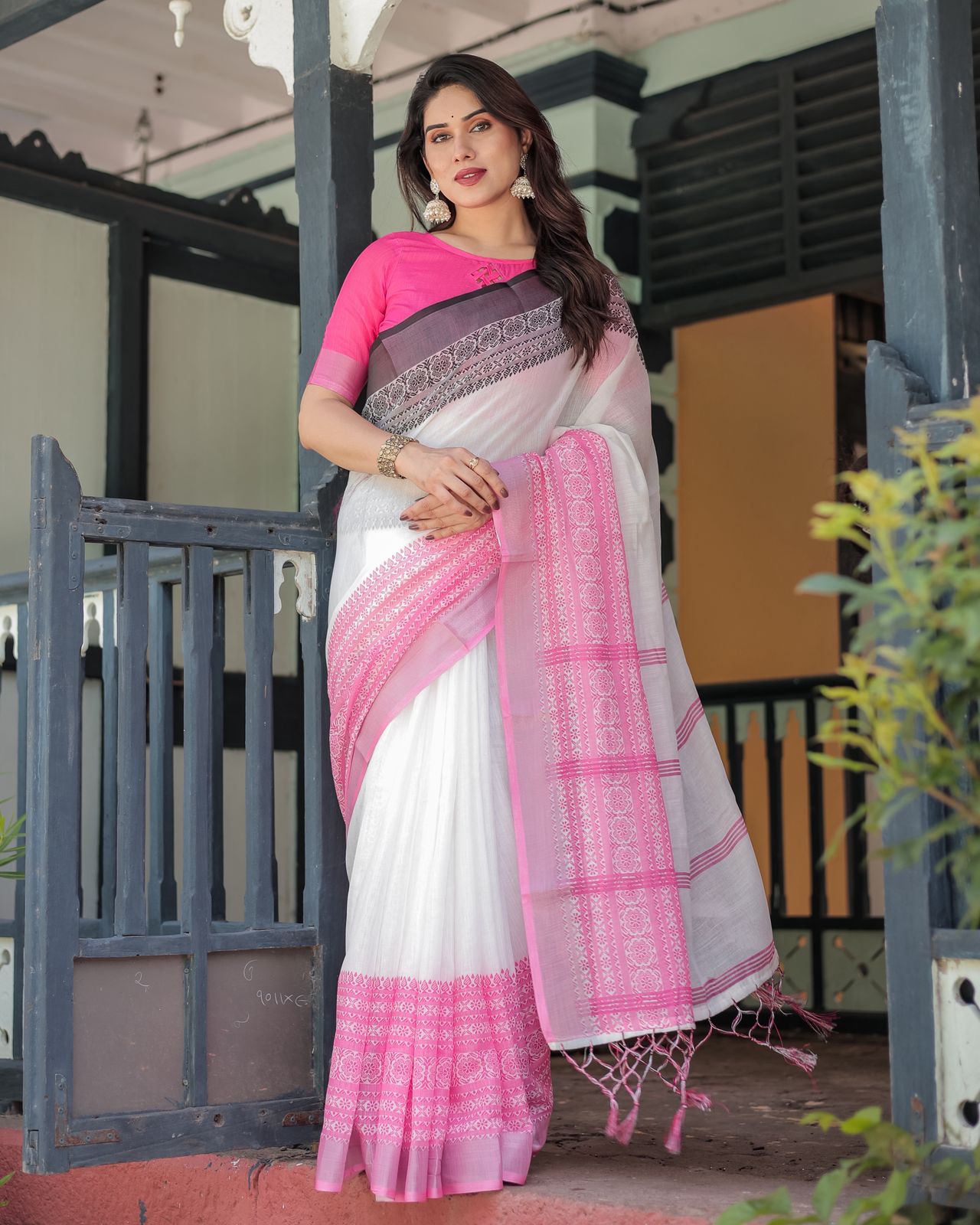
Check belt placement from the front and side before tightening it. From the front, the lower belt edge should look level. From the side, the belt should not dip sharply into the back or press the pallu into a narrow band. Level placement keeps the waist defined without producing a squeezed silhouette.
Very wide belts can hide the upper pleats and make the saree appear visually shorter. A belt measuring 2.5 to 4 centimetres in width usually defines the waist while leaving the pleat structure visible. A 5 to 7 centimetre belt works better with a broad, uncluttered pallu and enough fabric to support extra coverage.
A cropped blouse generally works with a belt at the natural waist. A longer blouse may look more balanced when the belt sits slightly higher, provided the top pleat remains visible and doesn't fold underneath the belt.
Keeping the Waist Defined With Saree With a Belt Without Ruining the Pleats: Which belt width works?
A medium-width belt with a smooth inner surface protects saree pleats better than a rigid, narrow belt with sharp edges. Soft leather, fabric-covered metal, padded textile and flexible imitation-leather belts are easier to adjust than stiff ornamental waistbands.
A narrow belt concentrates pressure on one line and can create a deep indentation. A broad belt distributes pressure, but an overly rigid broad belt can flatten the upper drape. The most practical belt has slight flexibility and a fastening that permits small adjustments rather than only one tight setting.
Metal belts with heavy stones or large links require additional care. Weight can pull the pallu down, while rough edges may catch Banarasi silk, zari or delicate printed surfaces. A thin, smooth fabric layer between a textured belt and a fragile saree can prevent snagging.
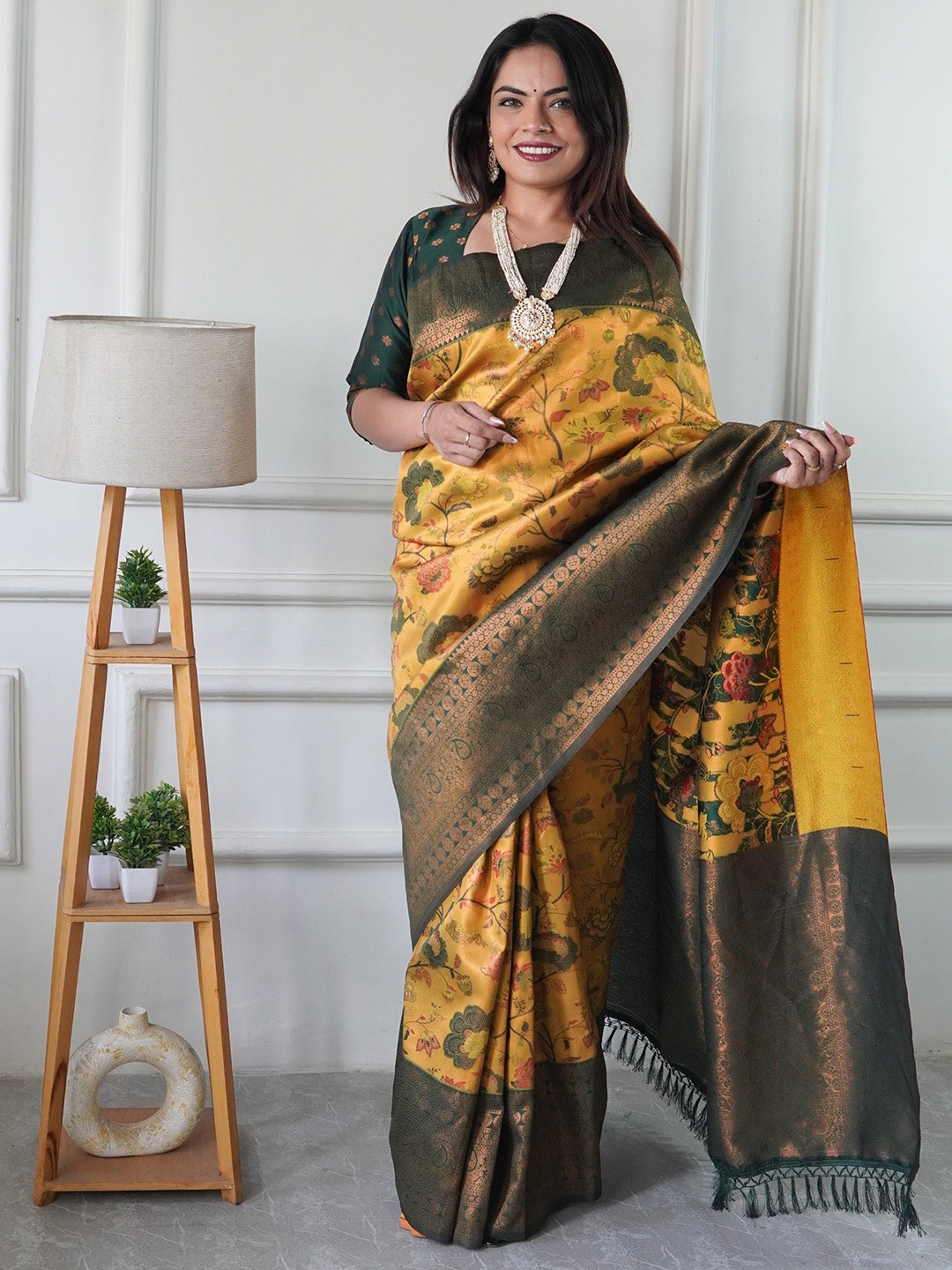
Traditional Mustard Maslin Silk Saree With Rich Pallu demonstrates why belt weight matters. A rich pallu already adds visual and physical weight on one side, so a light or medium belt keeps the silhouette balanced. Mustard Teal Banarasi Soft Silk Zari Weave Saree can take a more structured belt, but raised zari motifs should not sit directly beneath a sharp belt edge.
Keeping the Waist Defined With Saree With a Belt Without Ruining the Pleats: How should you fasten it?
Fasten the belt loosely at the back first, inspect the front pleats, and tighten it by one small adjustment only if the saree shifts. Staged fastening prevents sudden compression and makes correction easier.
- Complete the saree drape and arrange the pallu in its intended position.
- Stand naturally and breathe normally instead of pulling the stomach inward while measuring the belt.
- Bring the belt around the waist with the fastening at the back or slightly to one side.
- Close the belt at the loosest comfortable setting, leaving approximately one finger of space between the belt and saree.
- Check that the front pleat edges remain vertical and that the pallu has no sharp horizontal crease.
- Reduce the space by a small amount only if the saree moves during walking.
A discreet waist hook or small safety pin can stop a fabric belt from rotating. Attach the support to the inner saree layer or petticoat waistband rather than piercing the visible pallu. Avoid pinning through zari borders because repeated pinholes can disturb metallic threads.
Elegant Mustard Linen Cotton Saree Set benefits from staged fastening because linen cotton can form a crisp ridge when pressed abruptly. Gentle, even pressure preserves the fabric's structured fall while preventing the belt from leaving a deep mark.
Keeping the Waist Defined With Saree With a Belt Without Ruining the Pleats: How do you balance the pallu?
Balance the pallu by anchoring its shoulder fold separately from the waist belt. The belt should secure the waist area, while a shoulder pin or brooch controls the pallu's height and spread.
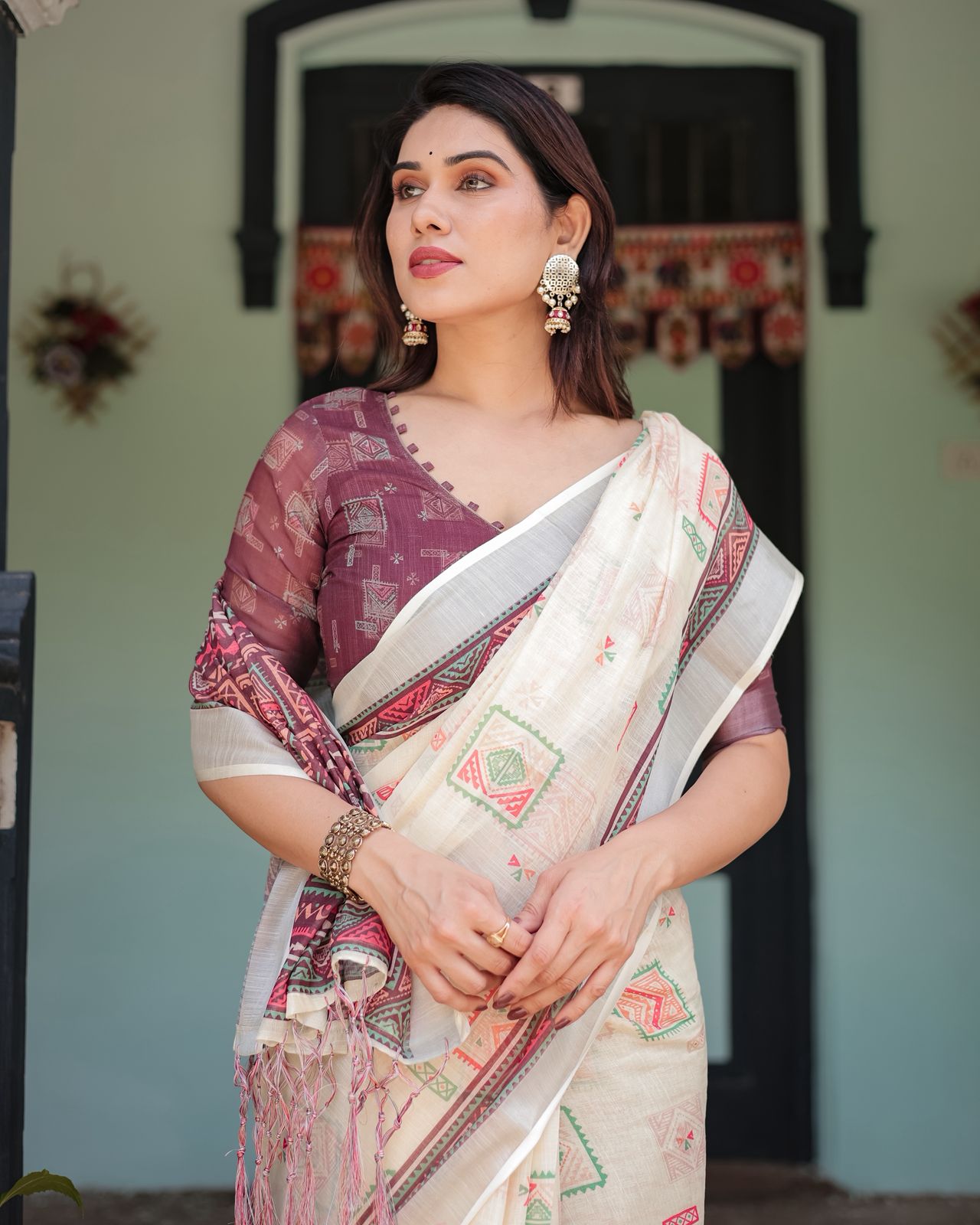
Use one concealed pin at the shoulder and, when necessary, one small pin near the waist-side edge of the pallu. Avoid pulling the pallu diagonally across the waist before fastening the belt because diagonal tension drags the front pleats towards one hip.
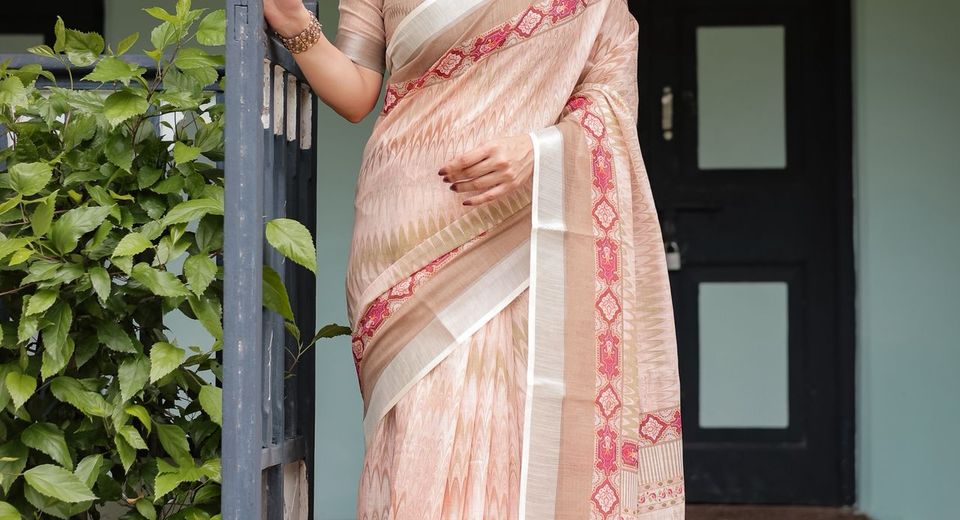
A pallu with a heavy zari border should fall with slight ease rather than being stretched flat. Elegant Beige & Peach Linen Saree with Designer Border can look cleaner when the border forms a controlled vertical line instead of being pulled tightly beneath the belt.
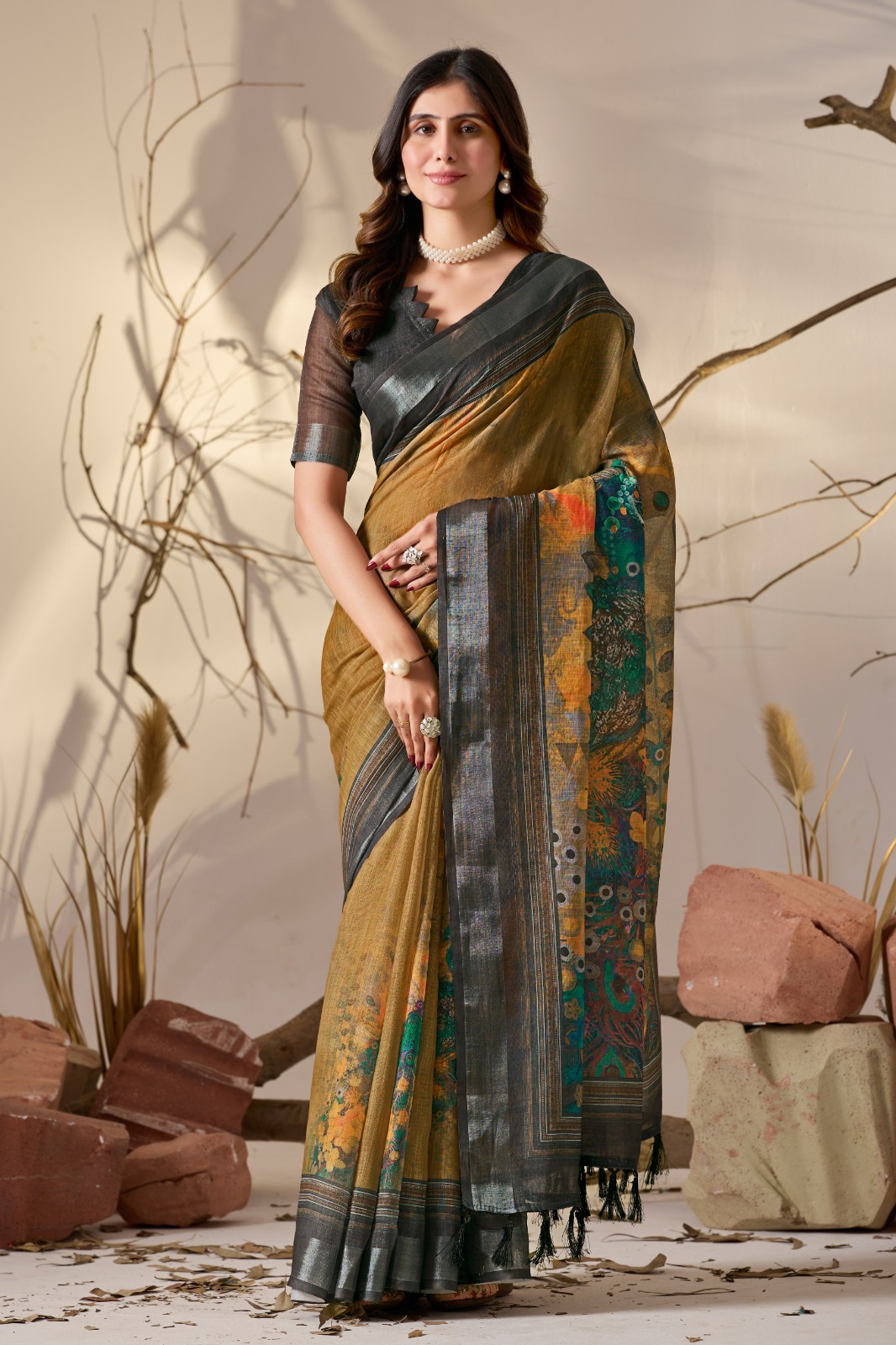
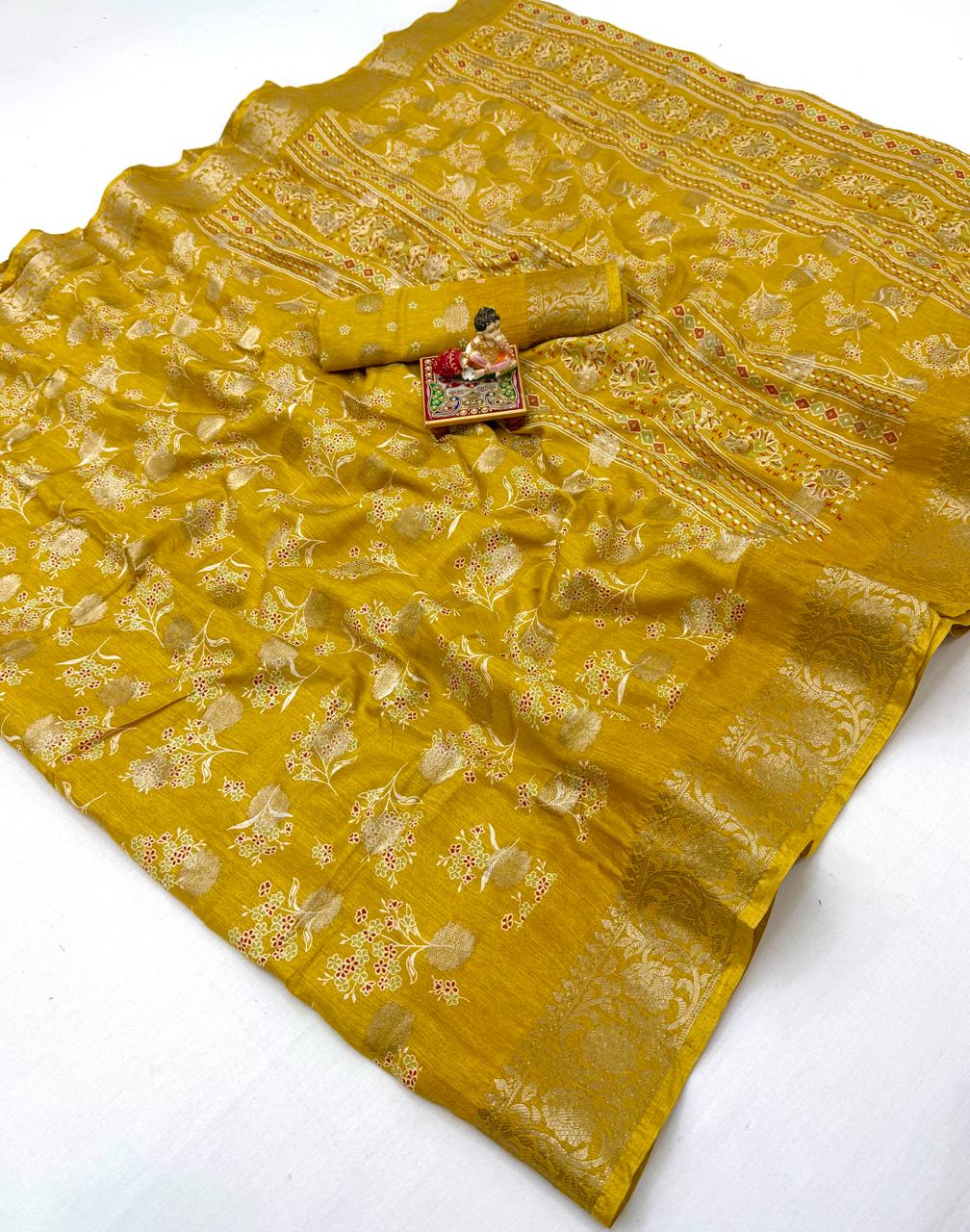
Printed sarees require an additional visual check. On Mustard Floral Printed Linen Cotton Saree With Blouse, uneven pleats may be more noticeable because flowers and motifs break across the folds. Match the lower motif direction where possible, but don't force every print element into alignment at the cost of comfort.
Keeping the Waist Defined With Saree With a Belt Without Ruining the Pleats: Which fabrics are easiest?
Medium-weight silk, silk cotton and linen cotton sarees usually work best with a belt because they hold a fold without collapsing into excessive bulk. Slippery fabrics need stronger inner support, while thick fabrics need a wider, flexible belt.
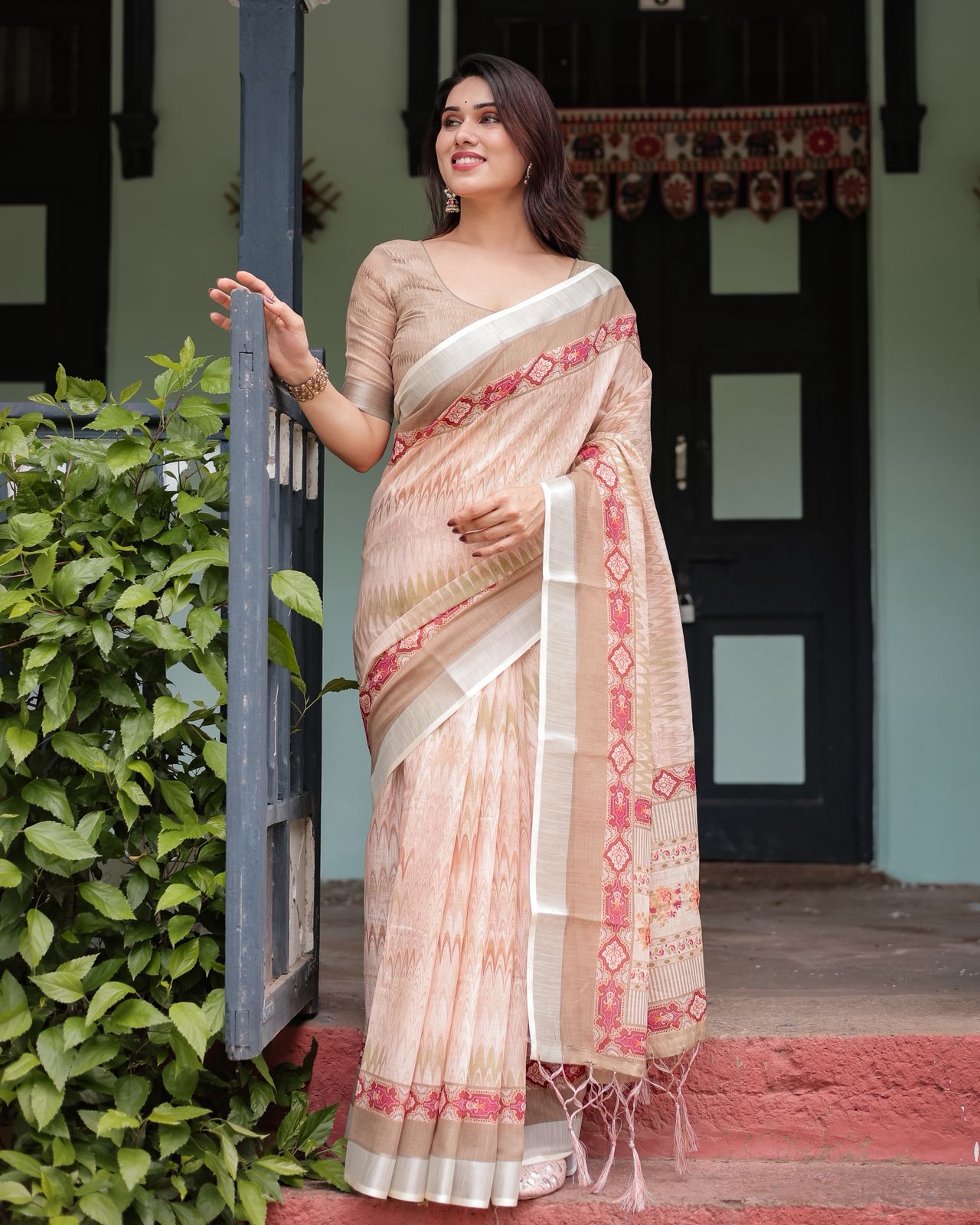
Soft silk offers a smooth fall and works with a narrow or medium belt when the pleats are pinned. Banarasi silk gives a formal, sculpted appearance but needs a belt with a smooth underside. Linen cotton brings crisp definition and suits fabric-covered belts that echo the saree's texture.
Navy Blue Floral Silk Saree with Peach Zari Border can support a clean waistline when the belt colour relates to the peach border or blouse rather than competing with the navy base. Colour coordination improves the finished look, but secure construction remains more important than matching accessories.
Chanderi, georgette and very lightweight organza require gentler handling because concentrated pressure can leave visible impressions. A soft textile belt or narrow sash with a concealed tie is safer than a heavy metal belt for those fabrics. Test the belt on an inside fold for 10 minutes before wearing it to a long event.
Keeping the Waist Defined With Saree With a Belt Without Ruining the Pleats: How can you test the final drape?
Test the final drape by sitting, walking, climbing a few steps and lifting one arm while wearing the completed belt. A saree that looks perfect while standing can pull at the waist or shift at the hip during movement.
Walk for five minutes and inspect the top pleat, lower pleat edges, back fastening and pallu shoulder fold. A belt that leaves red pressure marks, causes restricted breathing or makes the top pleat curl is too tight or poorly positioned.
Sit on a firm chair for two minutes and stand without holding the saree. If the pleats spread, reinforce the inner stack rather than tightening the belt. If the belt rolls, adjust the base waistband or choose a more flexible belt.
For a budget-conscious trial, browse Sarees from Rs 1000 to Rs 1500 and test belt placement on medium-weight styles before committing to a more elaborate event drape. Sarees Under 20% Off and Sarees Under 10% Off can also be useful for comparing fabric behaviour, but the discount should never determine whether a belt is structurally suitable.
Heavier formal sarees from Sarees Flat 60% Off or Sarees Flat 50% Off may require a belt with a smooth lining and two concealed pleat supports. Always inspect the saree after removing the belt, especially when zari, delicate prints or a linen border has been under pressure for several hours.
Keeping the Waist Defined With Saree With a Belt Without Ruining the Pleats: What care prevents permanent marks?
Prevent permanent marks by removing the belt soon after the event, opening every fastening and hanging the saree loosely before folding it. Long compression can set a horizontal crease into silk, linen cotton and zari work.
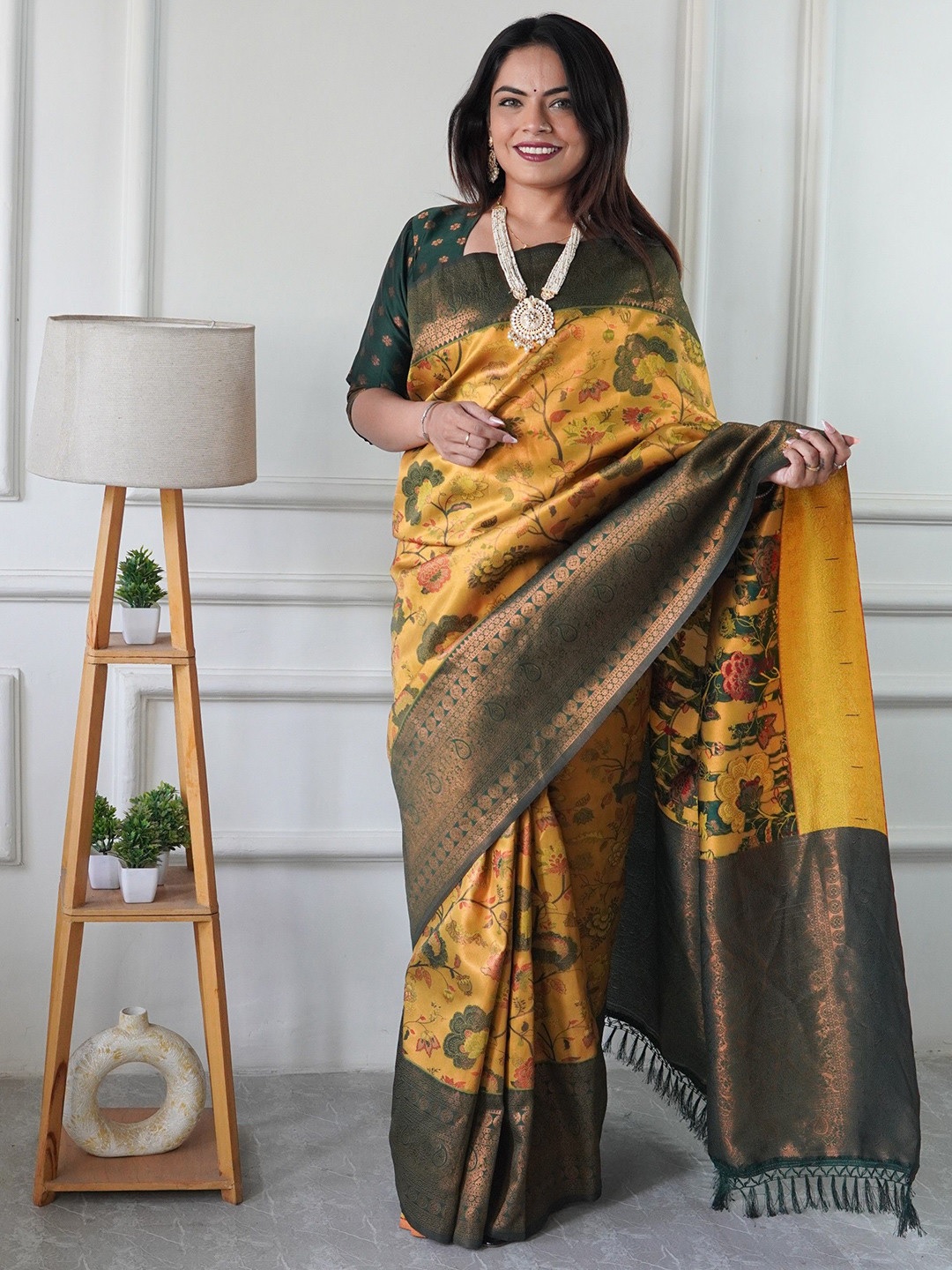
Never iron directly over a belt mark without checking the fabric's care requirements. Banarasi silk and zari should be handled with low heat and a protective cotton cloth, while printed linen cotton should be tested on an inconspicuous section. Avoid spraying perfume or hair products onto the belt area because alcohol and oils can stain silk surfaces.
Fold the saree along broad natural sections instead of pressing the belt crease into the same line repeatedly. A clean muslin cover protects the saree during storage and allows air circulation. These simple steps preserve the pleat structure for the next wearing rather than treating every drape as disposable.
Common Questions About Defining the Waist With a Belted Saree
Can I wear a belt over saree pleats without pinning them?
A belt alone is not reliable support for saree pleats. Pin the inner pleat stack or use a hidden elastic first, then add the belt loosely as a finishing layer so the folds stay vertical during movement.
What is the best belt width for wearing with a saree?
A 2.5 to 4 centimetre belt suits most sarees because it defines the waist without hiding the upper pleats. A wider 5 to 7 centimetre belt works with a broad pallu and heavier fabric, provided the belt remains flexible.
Should a saree belt sit above or below the pleats?
A saree belt should sit at the natural waist or about two to three centimetres above the top edge of the front pleats. Placing it below the pleat stack can crush the folds and create horizontal ridges.
Which saree fabrics work best with a belt?
Medium-weight silk, Banarasi silk, soft silk and linen cotton usually work well with a belt because they hold a defined fold. Very lightweight georgette, Chanderi and organza need a soft belt and gentle pressure to avoid visible marks.
How tight should a belt be over a saree?
A belt should be snug enough to stop the drape from shifting but loose enough to allow normal breathing and sitting. Start at the loosest comfortable setting, leave approximately one finger of space, and tighten only if walking reveals movement.
How can I stop the pallu from pulling sideways when I wear a belt?
Secure the pallu separately at the shoulder and avoid stretching it diagonally across the waist before fastening the belt. A concealed shoulder pin controls the pallu while the belt anchors only the waist area.


