Kaamdani Sarees Feel Festive Even When the Embroidery Stays Delicate because celebration dressing doesn't depend on dense ornamentation alone. Fine metallic or thread-like accents catch lamplight, frame a woven texture and give a saree movement without making the garment feel heavy. The result suits Diwali gatherings, Eid visits, pujas, intimate receptions and festive lunches where elegance matters as much as sparkle.
Kaamdani work traditionally refers to small decorative stitches or embellishments placed across a textile, often creating scattered dots, floral traces, paisley suggestions or a softly shimmering surface. Contemporary sarees may combine Kaamdani-inspired embroidery with sequins, zari, threadwork, net, georgette, silk or crushed textures. Understanding the relationship between embroidery and fabric makes it easier to choose a festive saree that looks luminous rather than overloaded.
Kaamdani Sarees Feel Festive Even When the Embroidery Stays Delicate: Why the Work Shines
Kaamdani embroidery looks festive because small reflective details respond to light, movement and distance. A few carefully spaced motifs appear brighter when the wearer walks or turns, while the unworked ground preserves visual calm.
Dense embroidery creates a continuous statement, but delicate Kaamdani work creates rhythm. The eye notices one glint near the pallu, another along the border and a third across the body. Spacing gives the saree a composed appearance in daylight and a more celebratory glow under warm indoor lighting.
The base fabric changes the effect considerably. Sheer net makes embroidery appear suspended over the body, georgette gives the saree fluid movement, and silk lends depth and structure. Crushed fabrics scatter light across irregular folds. A saree with modest embellishment can therefore appear more festive than a heavily worked saree in a flat, non-reflective material.
Kaamdani-inspired details are especially practical for gatherings that begin in the afternoon and continue into the evening. Subtle work remains polished in natural light, while metallic accents become more visible after sunset. That flexibility makes delicate embroidery suitable for family celebrations rather than limiting it to one dramatic event.
Kaamdani Sarees Feel Festive Even When the Embroidery Stays Delicate: Choosing Fabric
The best fabric depends on the amount of movement, structure and shine you want from the saree. Fluid fabrics suit relaxed drapes, while silk and structured blends hold pleats and borders more firmly.
Net and georgette create movement
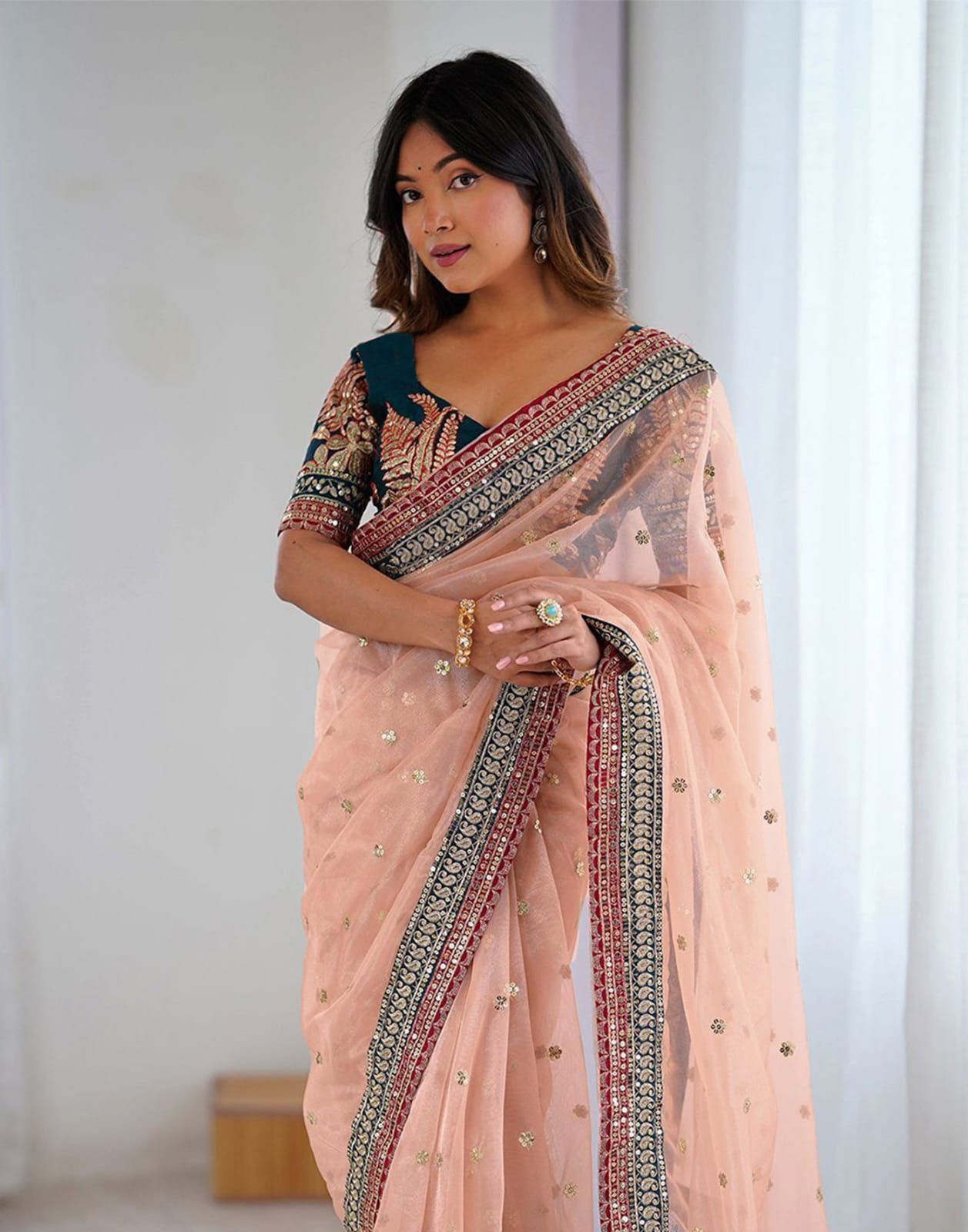
Net and georgette are useful when you want a light, flowing silhouette with visible embroidery. Net can create a translucent, airy pallu, while georgette falls closer to the body and usually forms softer pleats. Peach Embroidered Net Party Wear Saree with Blouse demonstrates how a pale base and surface work can create occasion impact without a dense all-over design.
A lined blouse or a well-finished petticoat is important with net sarees because transparency affects the final colour and drape. A matte petticoat gives the embroidery a cleaner background, whereas a shiny lining can make the entire saree appear more reflective than intended.
Silk gives delicate work a defined foundation
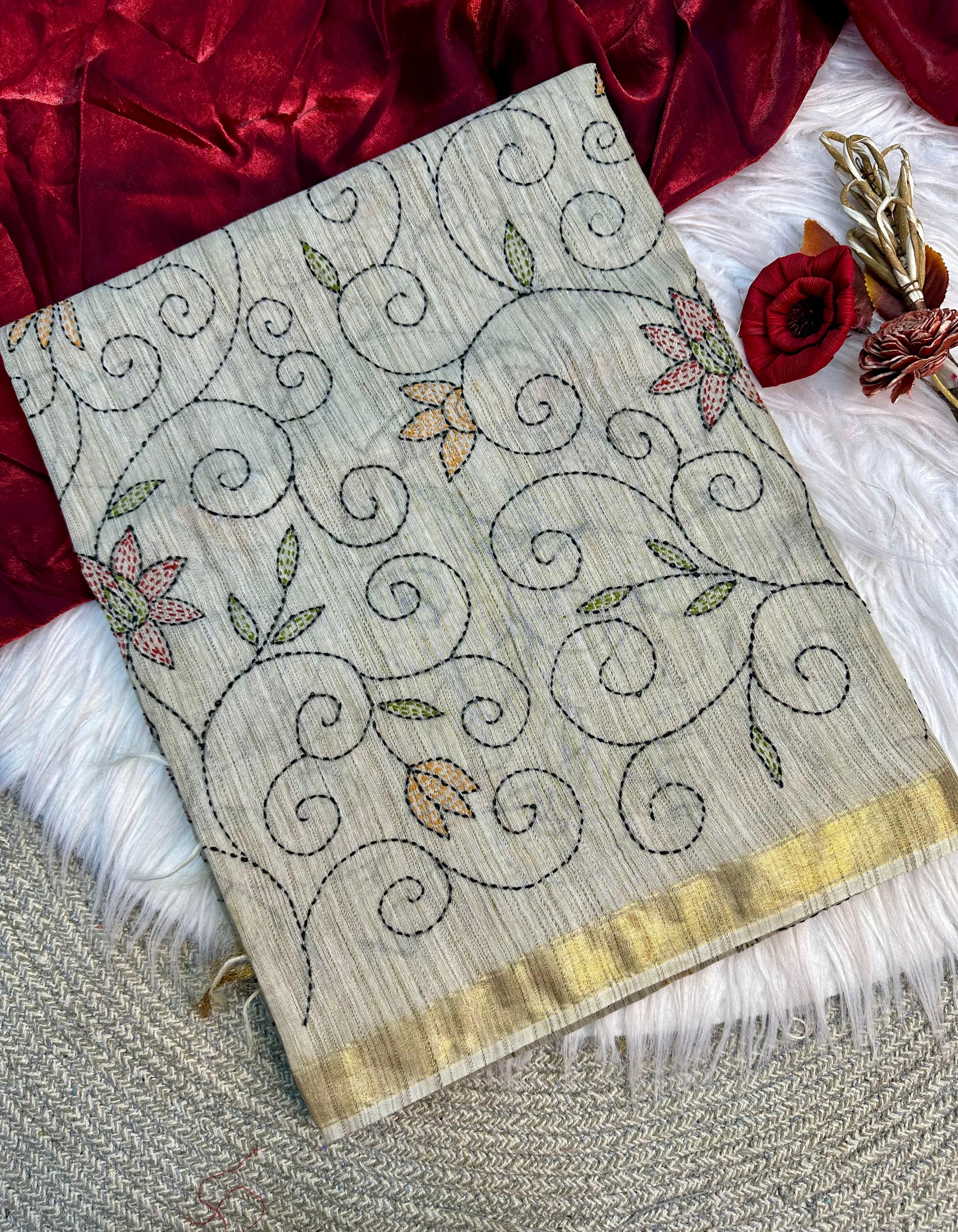
Silk gives delicate embroidery a richer foundation because silk yarns reflect light from beneath the surface work. Premium Handloom Silk Saree with Handkatha highlights the importance of texture, hand-feel and woven character rather than relying only on sparkle.
Banarasi silk and Kanjeevaram are different from Kaamdani sarees, but both demonstrate how a strong textile foundation can make restrained surface detail feel ceremonial. Banarasi silk commonly gains festivity from zari-woven motifs and a formal sheen, while Kanjeevaram is recognised for a firmer silk body, contrast borders and architectural motifs. These comparisons help shoppers distinguish between shine created by fabric and shine added by embroidery.
Crush textures spread the glow
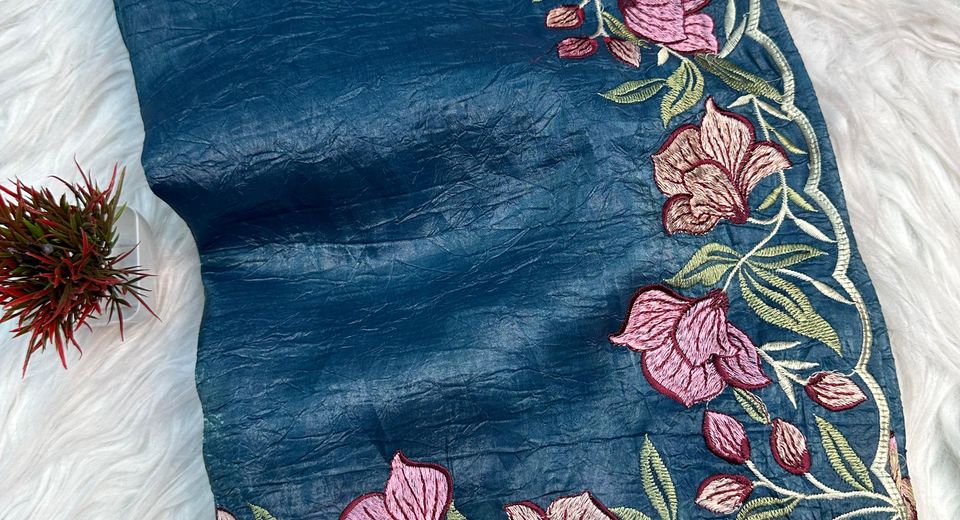
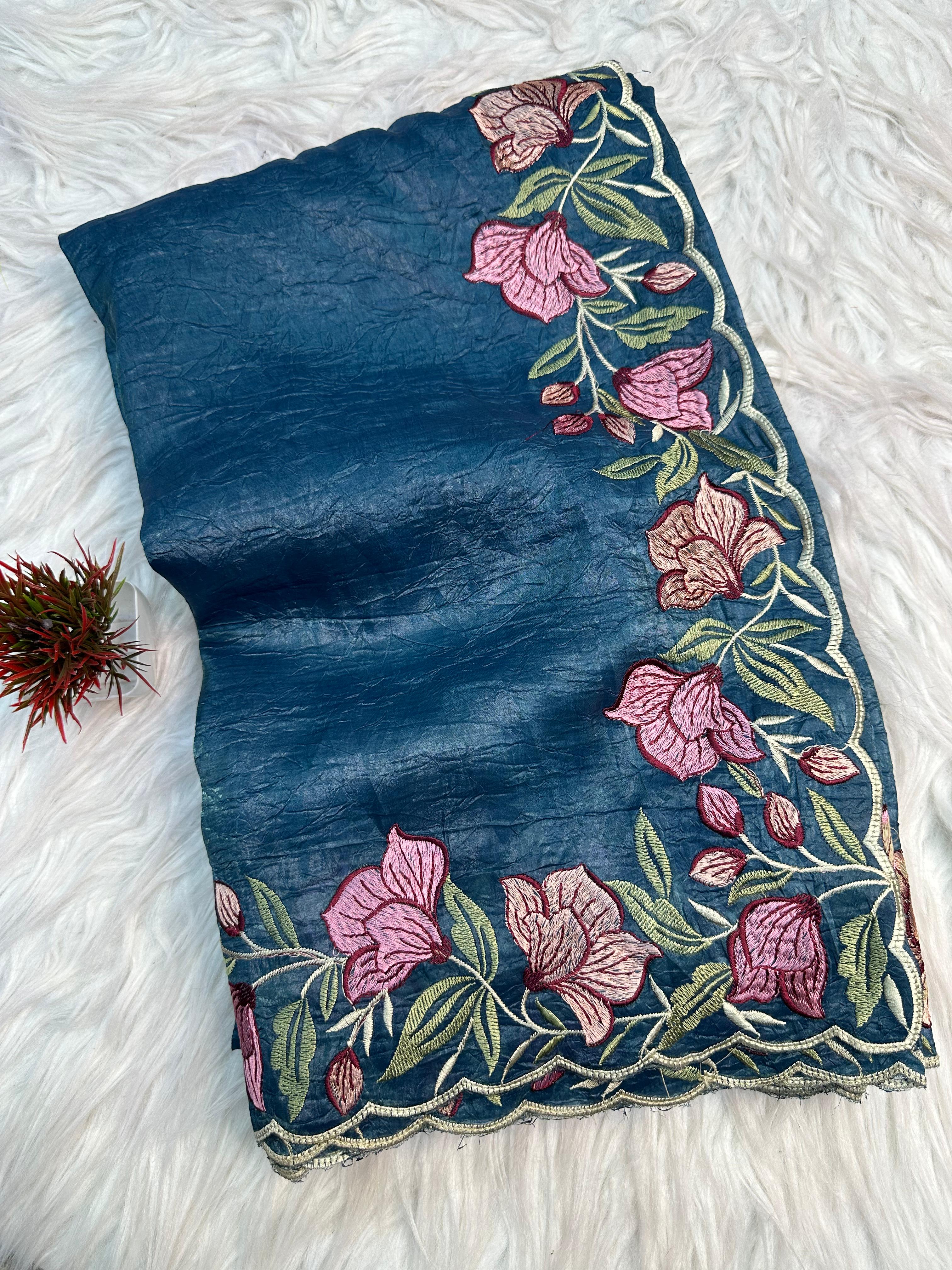
Crushed fabrics reflect light across irregular folds, so they can look festive even when embroidered motifs are small. Teal Blue Gold Crush Saree with Floral Threadwork shows how colour contrast, crushed texture and floral stitching can share attention instead of competing for it.
Crush fabrics need careful pleating because uneven folds are part of their appearance. Pressing the saree completely flat can reduce the intended texture, while very loose pleats may hide the border. Light steam from the reverse side is safer than placing a hot iron directly over embroidery or metallic details.
Kaamdani Sarees Feel Festive Even When the Embroidery Stays Delicate: Selecting Colour
Deep jewel tones, warm metallics and carefully chosen pastels make delicate embroidery appear festive by creating contrast between the base and the embellishment. The strongest colour depends on lighting, skin undertone, venue and the jewellery already in your wardrobe.
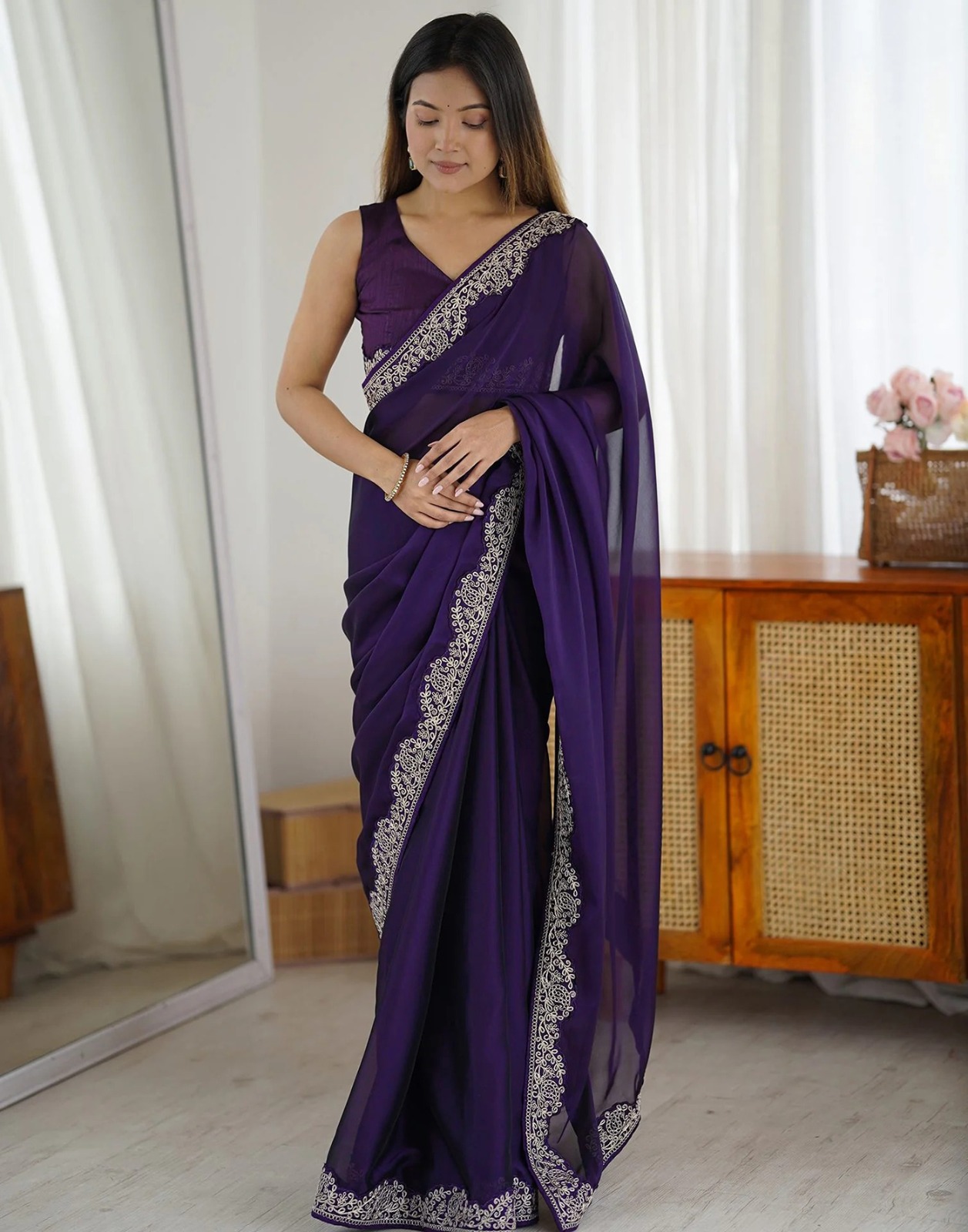
Purple, rani pink, teal, emerald, wine and midnight blue give small silver or gold accents a visible background. Premium Purple Saree for Festive Celebrations supports a restrained styling approach because a saturated base carries much of the visual richness. The saree doesn't need a heavily decorated blouse when the colour already establishes depth.
Rani pink works particularly well for daytime ceremonies and family portraits because it reads bright without requiring very reflective accessories. Rani Pink Heavy Smooth Sitara Saree with Sequin Embroidery takes a more noticeable route, pairing a smooth ground with sitara work. Keep the rest of the outfit controlled when the saree has a high sparkle level.
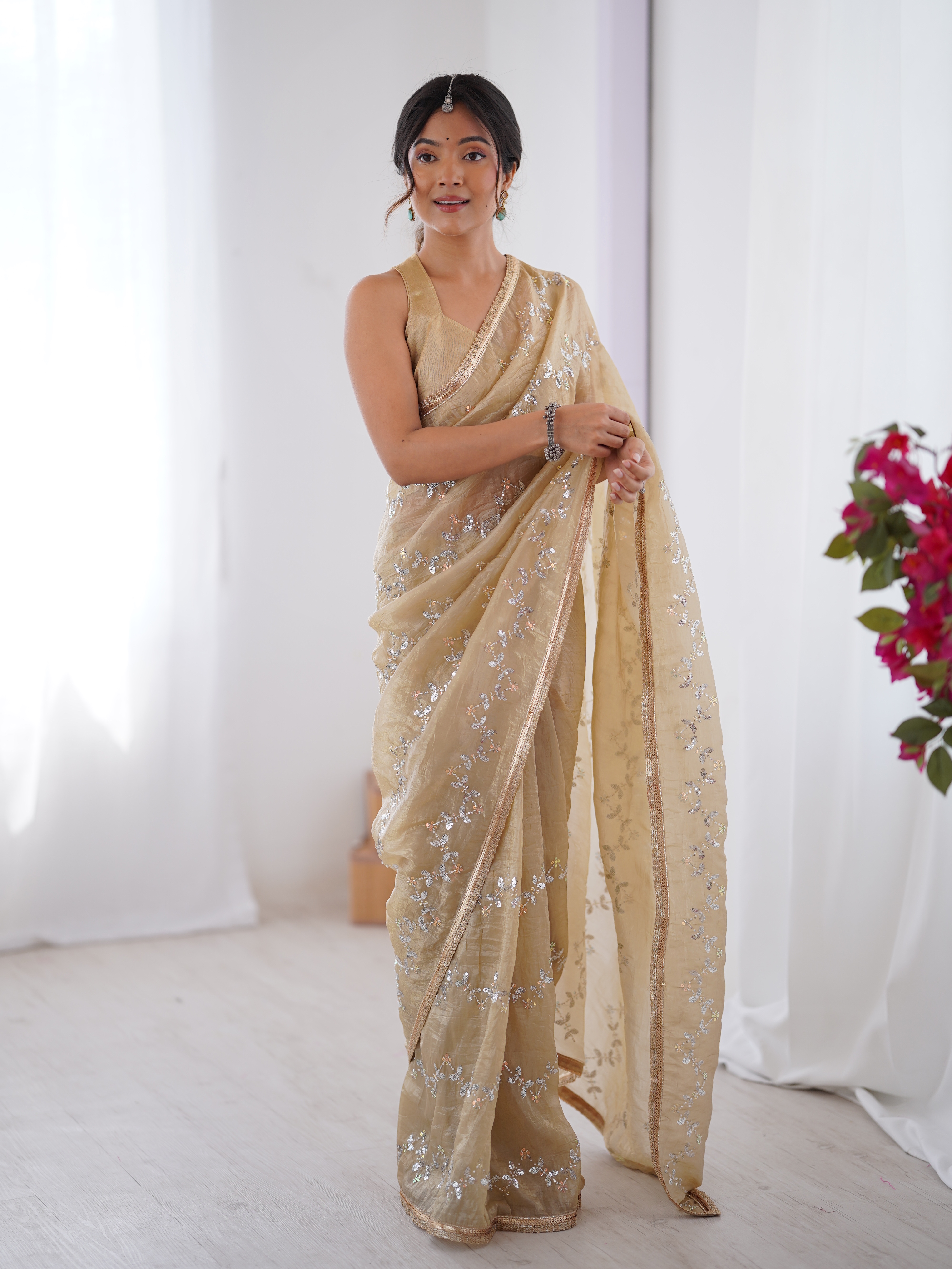
Gold, champagne and warm beige create a softer, traditional mood. Golden Glow Gold Crush Embroidered Party Wear Saree for Women can be balanced with muted makeup and antique-finish jewellery rather than bright stones in several colours. Gold-on-gold combinations look refined when the blouse has a different texture, such as matte silk or raw silk.
Pastels work when the embroidery supplies enough definition. Peach, blush, mint and powder blue can appear understated in photographs unless the border, blouse or jewellery provides contrast. A darker blouse, a defined waist drape or a narrow metallic border can prevent a pale saree from looking washed out in low light.
Useful colour references also appear in Pink Georgette Sarees, Red Banarasi Silk Sarees for Weddings Under 1100 and Gray Color Sarees Under 1000. These collections illustrate three different approaches: softness and movement, time-honoured contrast and neutral versatility. Price should not be the only measure of value; inspect the fabric, finishing, lining and embroidery attachment before deciding.
Kaamdani Sarees Feel Festive Even When the Embroidery Stays Delicate: Styling the Outfit
A delicate Kaamdani saree looks most polished when the blouse, jewellery, drape and hairstyle repeat one or two details from the embroidery. Repeating every colour and motif can make the outfit feel visually crowded.
Build the blouse around the saree
A plain blouse in the saree's deepest shade is the safest choice for scattered embroidery because it gives the eye a resting point. A boat neck or high round neck suits a formal festive setting, while a square neck or short sleeve can make a lightweight saree feel more contemporary.
A textured blouse adds structure when the saree is very fluid. Raw silk, handloom silk or matte satin can provide definition without competing with fine work. A simpler blouse is preferable when the saree already includes sequins, a broad border or a strongly reflective crush surface.
For Purple Wedding Wear Embroidered Saree, a blouse in deep plum, antique gold or controlled tonal purple can create continuity. A contrasting blouse works better when the saree has a quiet body and a clearly defined border. Test the combination in daylight and warm indoor light because metallic embroidery changes appearance between the two.
Choose jewellery by scale rather than quantity
Medium-scale jewellery usually complements delicate embroidery better than several large statement pieces. A pair of jhumkas, a short necklace and two or three bangles can frame the face and hands without obscuring the saree.
Gold jewellery warms gold, peach, red and olive bases, while silver, pearls and uncut-style stones suit cool pinks, blues, greys and lavender. Mixed metals can work when the saree itself contains both gold and silver accents, but the combination should appear deliberately in at least two accessories.
A heavy necklace isn't automatically necessary for a festive saree. A long chain or pendant can lengthen the torso when the blouse neckline is high, whereas a choker can balance an open neckline and a low bun. Match jewellery scale to embroidery density rather than to the importance of the event.
Use the drape to reveal the embroidery
The pallu should remain visible when the most detailed embroidery is concentrated along its edge. A front pallu drape shows the border and surface work in photographs, while a conventional shoulder drape gives a cleaner, more classic line.
Five to seven even pleats work well for most lightweight sarees, followed by a discreet pin from the reverse side. Excessive pinning can leave visible punctures in delicate net or snag loose embroidery. A small safety pin covered with fabric or a saree belt can provide stability without flattening the pallu.
Kaamdani Sarees Feel Festive Even When the Embroidery Stays Delicate: Matching the Event
Kaamdani sarees suit events where guests move between conversation, food, photographs and rituals because delicate work offers polish without excessive weight. A lightweight net or georgette saree is comfortable for a daytime puja, while silk or crushed fabric gives more presence to an evening reception.
For a Haldi ceremony, choose a breathable saree in yellow, peach, pink or green and keep metallic work modest so the outfit remains easy to move in. A family dinner benefits from a softer pallu and medium jewellery. A Diwali gathering can support gold or silver accents because lamps and indoor lighting make reflective embroidery more visible.
Party Wear Sarees provide an useful reference for evening dressing, but a party-ready saree doesn't always require dense sequins. Heavy Sitara Fancy Saree for Wedding & Party Wear demonstrates the high-shimmer end of the spectrum, while a lightly embroidered Kaamdani saree gives a quieter alternative for hosts or guests who prefer movement and comfort.
Consider the venue before choosing the hem, footwear and pallu. Outdoor lawns call for secure pleats and block heels that don't sink into grass. Indoor halls allow a longer pallu and more delicate sandals. Crowded functions favour a shorter, firmly pinned drape that won't catch on chairs or handbags.
Kaamdani Sarees Feel Festive Even When the Embroidery Stays Delicate: Care and Buying Checks
Delicate embroidered sarees last longer when they're stored clean, dry, loosely folded and away from direct pressure. Care begins before purchase, because loose threads, weak attachments and rough finishing can become more visible after repeated wear.
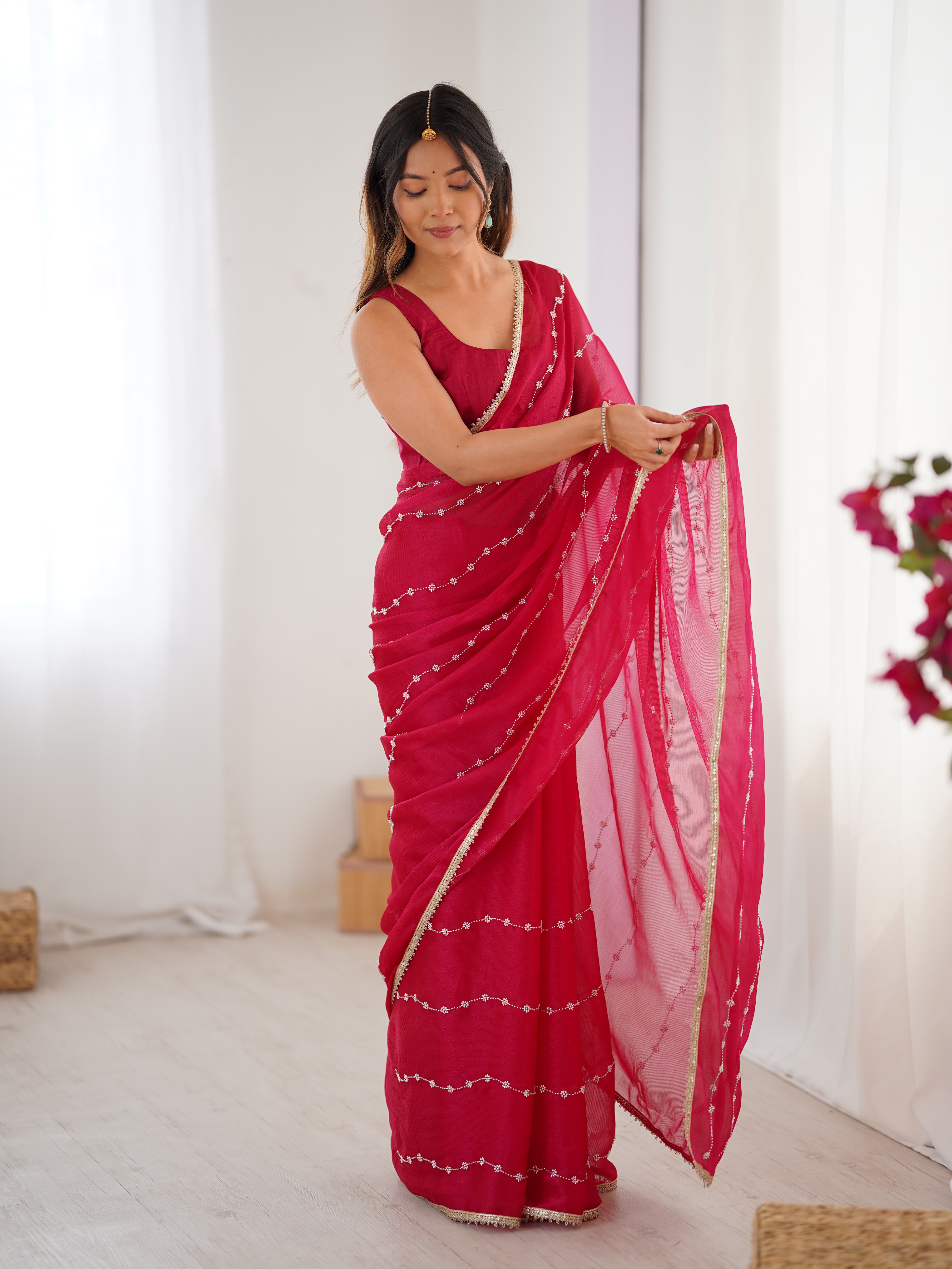
Inspect embroidery attachment at the border, pallu and blouse neckline. Small stitches should sit securely without long exposed threads. Check whether sequins or metallic elements have sharp edges that could catch on the blouse or petticoat. Examine the reverse side for dense knots, uneven backing or areas where the fabric puckers around the work.
Ask whether the saree requires dry cleaning or gentle professional cleaning. Do not soak metallic embroidery, net, silk or crush fabrics at home unless the care label specifically permits washing. Blot a fresh spill with a clean, dry cloth instead of rubbing the affected area.
Air the saree after wearing it, then fold it along different lines every few months to prevent permanent creases. Wrap delicate embroidery in soft cotton or acid-free tissue and store the saree in a breathable fabric bag. Avoid plastic for long-term storage because trapped moisture can encourage odour, mildew or tarnishing.
Compare fabric composition, blouse stitching, fall and edging before comparing prices. A low-priced saree may still be worthwhile when the embroidery is secure and the finishing is clean, while a higher price doesn't guarantee better construction. Silk Sarees Under 3000 With Discount can be an useful starting point for budget research, but fabric quality and care requirements should remain part of the decision.
Kaamdani Sarees Feel Festive Even When the Embroidery Stays Delicate: Questions Readers Ask
Is Kaamdani embroidery suitable for daytime festivals?
Yes, Kaamdani embroidery suits daytime festivals when the saree uses a breathable fabric and moderate reflective work. Pastels, peach, pink, ivory and soft green are comfortable in sunlight, while a narrow zari border adds enough definition for photographs.
What blouse works with a lightly embroidered Kaamdani saree?
A plain tonal blouse is the most versatile choice for a lightly embroidered Kaamdani saree. Raw silk, matte satin or handloom silk can add structure, while a heavily sequined blouse may make a delicate saree look visually crowded.
Can a Kaamdani saree be worn to a wedding?
Yes, a Kaamdani saree can be worn to a wedding when the colour, border and accessories provide enough formality. Jewel tones, silk bases, antique jewellery and a well-defined pallu create a wedding-ready look without requiring all-over heavy embroidery.
How should a delicate embroidered saree be stored?
Store a delicate embroidered saree clean, dry and loosely folded in a breathable cotton bag with soft tissue around the embellished areas. Refold the saree periodically, avoid direct sunlight and never press hot iron directly over zari, sequins or metallic embroidery.
Is net or silk better for a festive saree?
Net is better for a light, airy drape, while silk is better for structure, depth and a more formal silhouette. Choose net for movement and transparency, and choose silk when crisp pleats, a substantial pallu or a heritage handloom feel matters more.
How much jewellery should be worn with delicate embroidery?
Medium-scale jewellery usually brings the best balance with delicate embroidery. Jhumkas, a short necklace, bangles or a single statement ring are enough when the saree already has metallic accents, especially for an evening event.
Common Questions About Wearing Delicate Kaamdani Sarees for Festive Events
Is Kaamdani embroidery suitable for daytime festivals?
Yes, Kaamdani embroidery suits daytime festivals when the saree uses a breathable fabric and moderate reflective work. Pastels, peach, pink, ivory and soft green are comfortable in sunlight, while a narrow zari border adds enough definition for photographs.
What blouse works with a lightly embroidered Kaamdani saree?
A plain tonal blouse is the most versatile choice for a lightly embroidered Kaamdani saree. Raw silk, matte satin or handloom silk can add structure, while a heavily sequined blouse may make a delicate saree look visually crowded.
Can a Kaamdani saree be worn to a wedding?
Yes, a Kaamdani saree can be worn to a wedding when the colour, border and accessories provide enough formality. Jewel tones, silk bases, antique jewellery and a well-defined pallu create a wedding-ready look without requiring all-over heavy embroidery.
How should a delicate embroidered saree be stored?
Store a delicate embroidered saree clean, dry and loosely folded in a breathable cotton bag with soft tissue around the embellished areas. Refold the saree periodically, avoid direct sunlight and never press hot iron directly over zari, sequins or metallic embroidery.
Is net or silk better for a festive saree?
Net is better for a light, airy drape, while silk is better for structure, depth and a more formal silhouette. Choose net for movement and transparency, and choose silk when crisp pleats, a substantial pallu or a traditional handloom feel matters more.
How much jewellery should be worn with delicate embroidery?
Medium-scale jewellery usually provides the best balance with delicate embroidery. Jhumkas, a short necklace, bangles or a single statement ring are enough when the saree already has metallic accents, especially for an evening event.