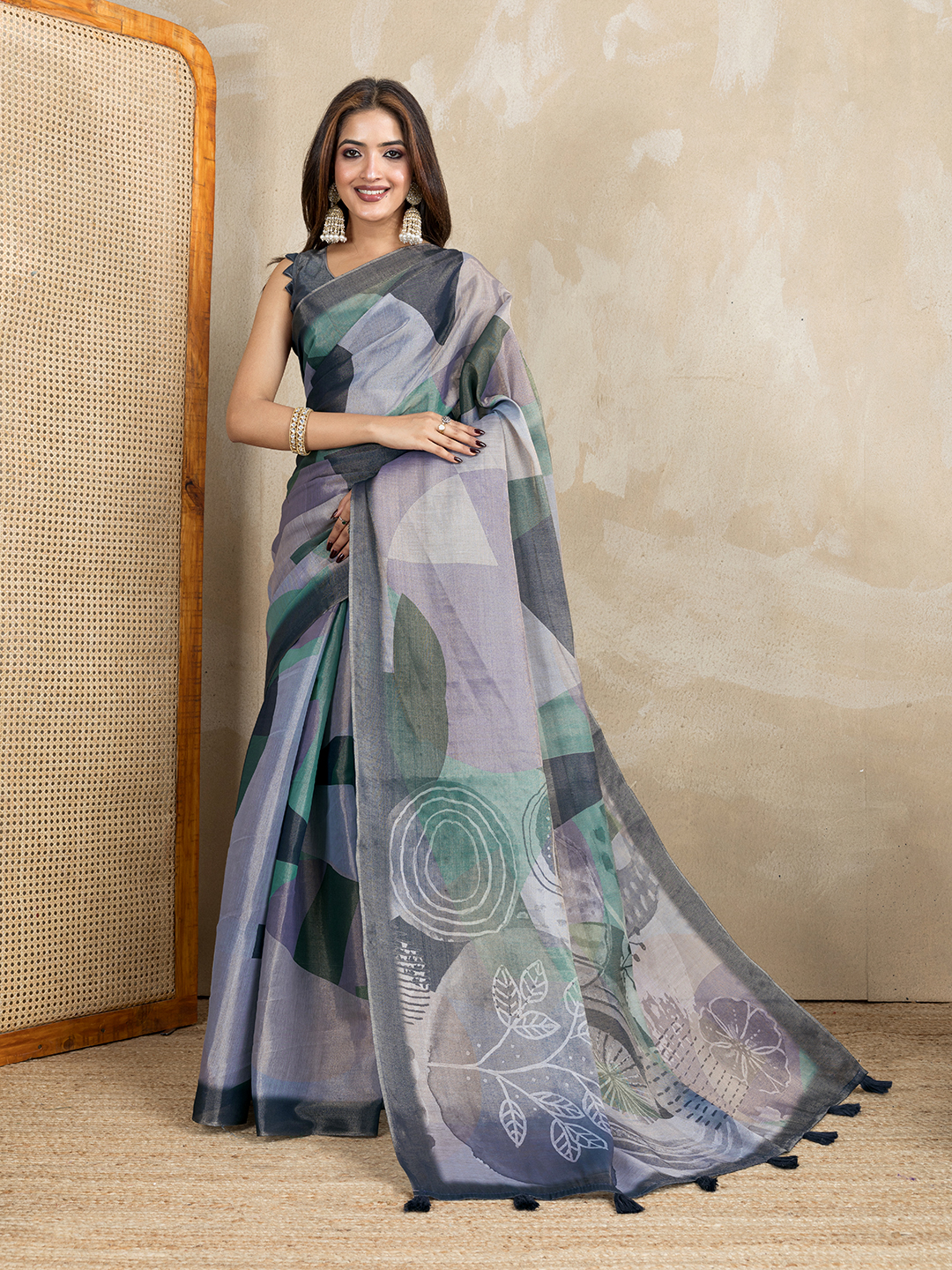
Kaamdani Kurta Sets Add Festive Detail Without Making the Fabric Stiff when the embellishment, base textile and garment construction are chosen together. Fine metallic accents can catch the light during Diwali gatherings, Eid lunches, pujas and wedding festivities while cotton, Chanderi or silk-blend fabric keeps the outfit comfortable for several hours. The key isn't simply the amount of embroidery; placement, stitch tension, lining and fit all affect how freely a kurta moves.
Festive clothing is often associated with dense zari, thick brocade and heavily layered silhouettes. Kaamdani offers a lighter alternative. Small metallic motifs can create sparkle without covering every inch of the cloth, allowing the kurta to bend at the elbows, drape at the waist and remain easy to fold. Understanding that balance helps shoppers choose a salwar suit that looks occasion-ready without feeling rigid or overheated.
What makes kaamdani suitable for festive kurta sets?
Kaamdani is delicate surface embellishment created with fine metallic thread, narrow metallic wire, small sequins or tiny decorative stitches arranged over a fabric base. The motifs may form dots, stars, flowers, vines or geometric shapes. Because the decoration is often scattered or outlined instead of packed into a solid panel, the base fabric retains more of its natural movement.
Traditional kaamdani techniques vary by region and artisan, while contemporary garments may combine metallic thread with routine embroidery, sequins and zari-inspired highlights. The result reflects light as the wearer moves, giving a festive effect without depending on a heavily structured garment. A lightly worked kurta can therefore look dressier than a plain everyday suit while remaining suitable for sitting, walking and travelling.
The foundation fabric determines whether the ornament feels light or restrictive. Cotton and cotton blends provide breathability, Chanderi gives a crisp and airy drape, and silk blends add lustre with moderate structure. Embroidery placed on a fluid base generally feels more comfortable than heavy work mounted on velvet, thick brocade or multiple layers of stiff interfacing.
Kaamdani Kurta Sets Add Festive Detail Without Making the Fabric Stiff: how does construction affect comfort?
Kaamdani Kurta Sets Add Festive Detail Without Making the Fabric Stiff when the design uses flexible stitches, modest motif density and enough unworked fabric around moving parts of the body. Garment construction determines whether the finished kurta remains easy to bend, sit in and wear for a long celebration.
Why does motif spacing matter?
Motif spacing preserves movement because unworked areas can flex between decorative elements. Open sections around the underarm, elbow, waist and side seams act as movement zones. A floral scatter across the front can therefore look richly detailed while remaining more flexible than an entirely filled jaal.
Dense embroidery isn't automatically a sign of poor construction, but dense embroidery needs a suitable foundation and careful placement. A decorated yoke may remain comfortable because the upper torso moves less than the sleeves. The same level of work extending across the elbows or side panels can restrict bending and make the garment feel firm.
How do backing and thread tension change the hand feel?
Backing should stabilise the embroidery without turning the fabric papery. Excessive backing adds stiffness, warmth and weight, particularly on the front panel. Balanced thread tension also matters because overly tight stitches pull the cloth into ridges, while even stitches allow the fabric to lie flat and flex.
The reverse side of a garment provides useful evidence before purchase. The back should not contain long, loose metallic threads that can catch on bangles or snag during dressing. The backing should feel secure rather than cardboard-like, and seams should not have bulky knots that press against the skin.
Which fabrics keep an embellished kurta comfortable?
Chanderi, cotton blends and lightweight silk blends are practical bases for comfortable embellished kurtas because they combine visual polish with manageable weight. The best choice depends on weather, event timing, lining and the number of hours the outfit will be worn.
Why choose Chanderi for festive embroidery?
Chanderi has a light hand, subtle sheen and crisp drape that makes small metallic motifs visible without requiring dense ornamentation. Chanderi silk can feel more formal than plain cotton while remaining suitable for warm indoor celebrations. A lining may improve opacity, but a thick or synthetic lining can reduce breathability.
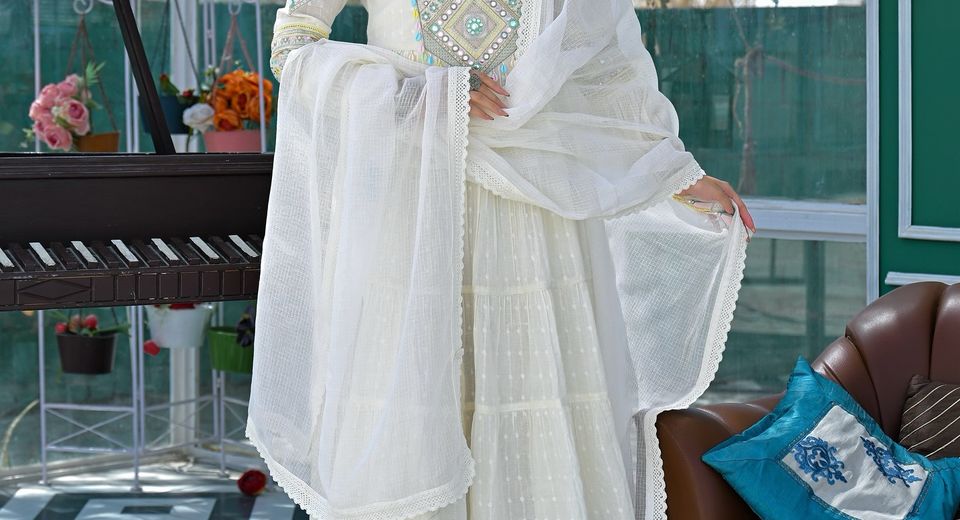
Ivory Floral Embroidered Chanderi Silk Kurta Set Women shows how floral embroidery and a lightly lustrous base can provide visual richness without excessive surface work. Cream Chanderi Embroidered Kurta Set with Dupatta brings another direction for shoppers who prefer a neutral palette with coordinated festive detail.
When does a silk blend work well?
A silk-blend base brings sheen, fluidity and slightly more body than very thin cotton. Added structure helps a straight kurta keep its shape, particularly when paired with tailored trousers or a narrow pant. Silk blends are useful for evening events where artificial lighting highlights both fabric lustre and metallic embroidery.
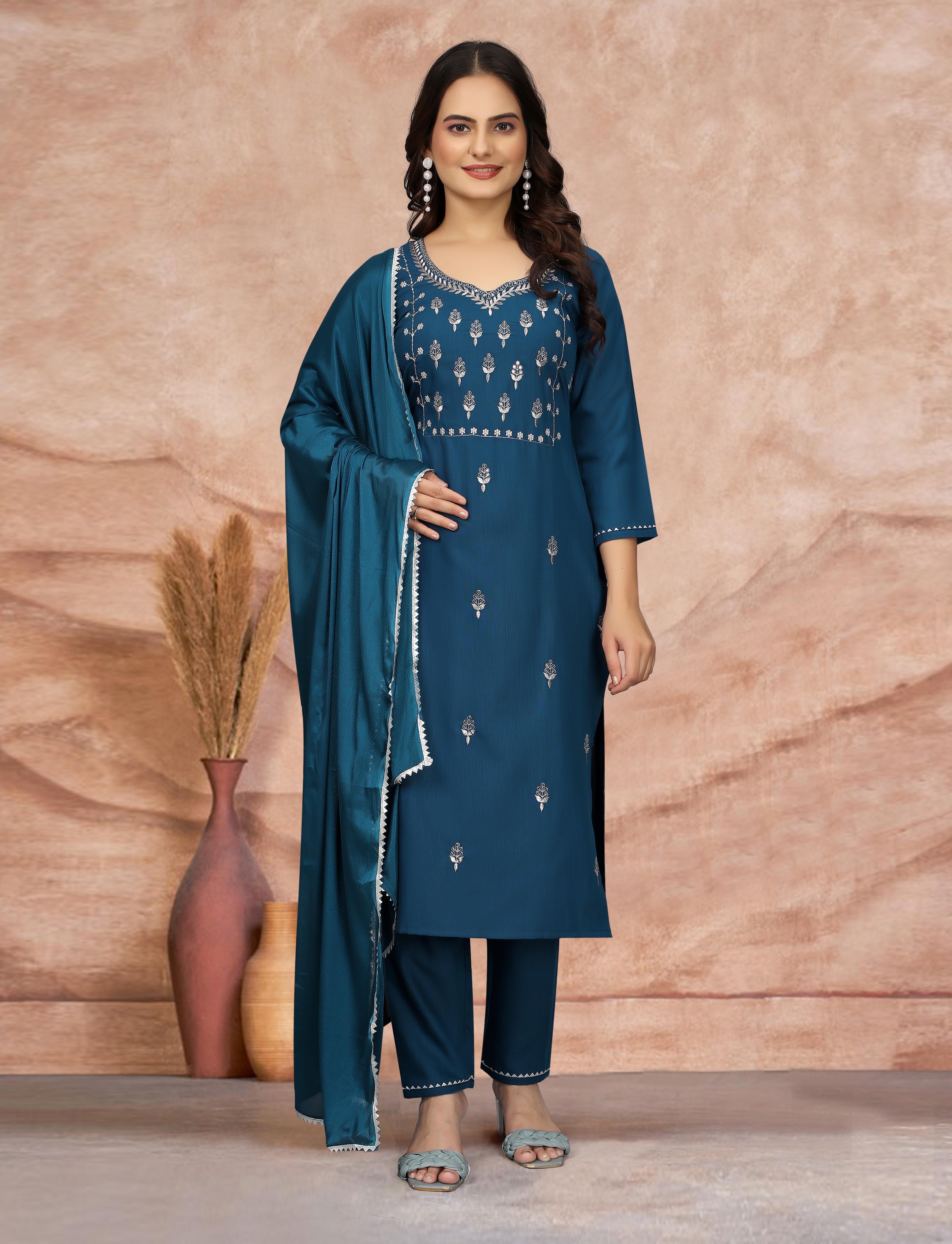
Teal Blue Embroidered Silk Blend Kurta Dupatta Set demonstrates how a saturated colour can carry festive impact even when the silhouette remains simple. Teal, rani pink and deep blue shades can look dramatic with moderate embellishment, allowing the outfit to remain visually strong without becoming physically heavy.
Are cotton and cotton blends suitable for festive wear?
Cotton and cotton-blend fabrics suit daytime pujas, family lunches and celebrations in humid weather because they generally feel breathable and less clingy than synthetic-heavy textiles. Small kaamdani motifs on cotton can look refined when the neckline, cut and dupatta provide enough polish.
Festive Embroidered Salwar Suits is useful for comparing embellished silhouettes, while Maharashtra Paithani Inspired Salwar Suits gives colour and border references rooted in heritage textile design. Karnataka Silk Salwar Suits shows how a silk-rich look can add sheen when the event calls for a more formal finish.
How can you judge softness before buying?
Judge softness by checking fabric movement, seam flexibility, embellishment density and lining rather than relying only on the amount of visible sparkle. A brief inspection can prevent a beautiful festive set from becoming uncomfortable after an hour.
- Pinch a plain section. A fabric that compresses gently between the fingers is more likely to move comfortably than a board-like embroidered panel.
- Bend the sleeve. Fold the elbow area once. The sleeve should bend without crackling, pulling sharply or forming a rigid tube.
- Check the underarm. The underarm needs enough room for movement, and concentrated embroidery should not rub against sensitive skin.
- Examine the front panel. Look for spaces between motifs and confirm that metallic work doesn't form a heavy continuous sheet from shoulder to hem.
- Assess the lining. A cotton lining can improve comfort, but multiple layers may add heat and weight. The lining should move with the outer fabric rather than pulling against it.
- Review the dupatta edges. Dense borders can pull on a lightweight dupatta. A balanced border should define the drape without making it awkward to arrange.
Fit changes the experience of embellished clothing as much as fabric does. A kurta that's too tight creates tension across embroidered seams, while an oversized kurta may cause motifs to fold unpredictably. Measure the bust, shoulder, sleeve and desired kurta length, then compare those measurements with the size chart instead of relying only on a standard size label.
How should a kaamdani kurta set be styled for a festive event?
Style a kaamdani kurta set with one controlled focal point, breathable layers and jewellery that complements the metallic accents. A festive kurta already contains surface interest, so styling usually benefits from balance rather than additional decoration everywhere.
How should the kurta and dupatta share attention?
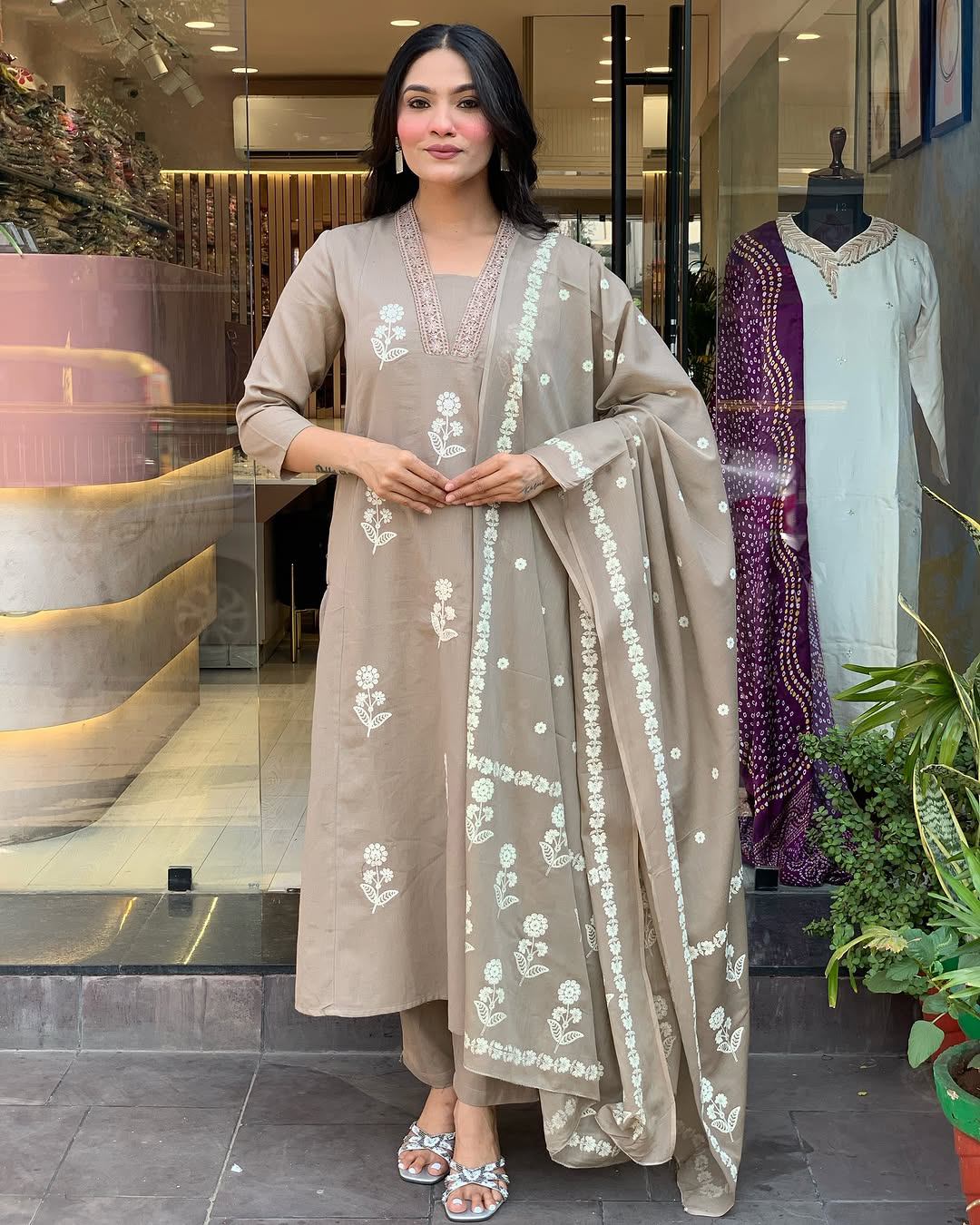
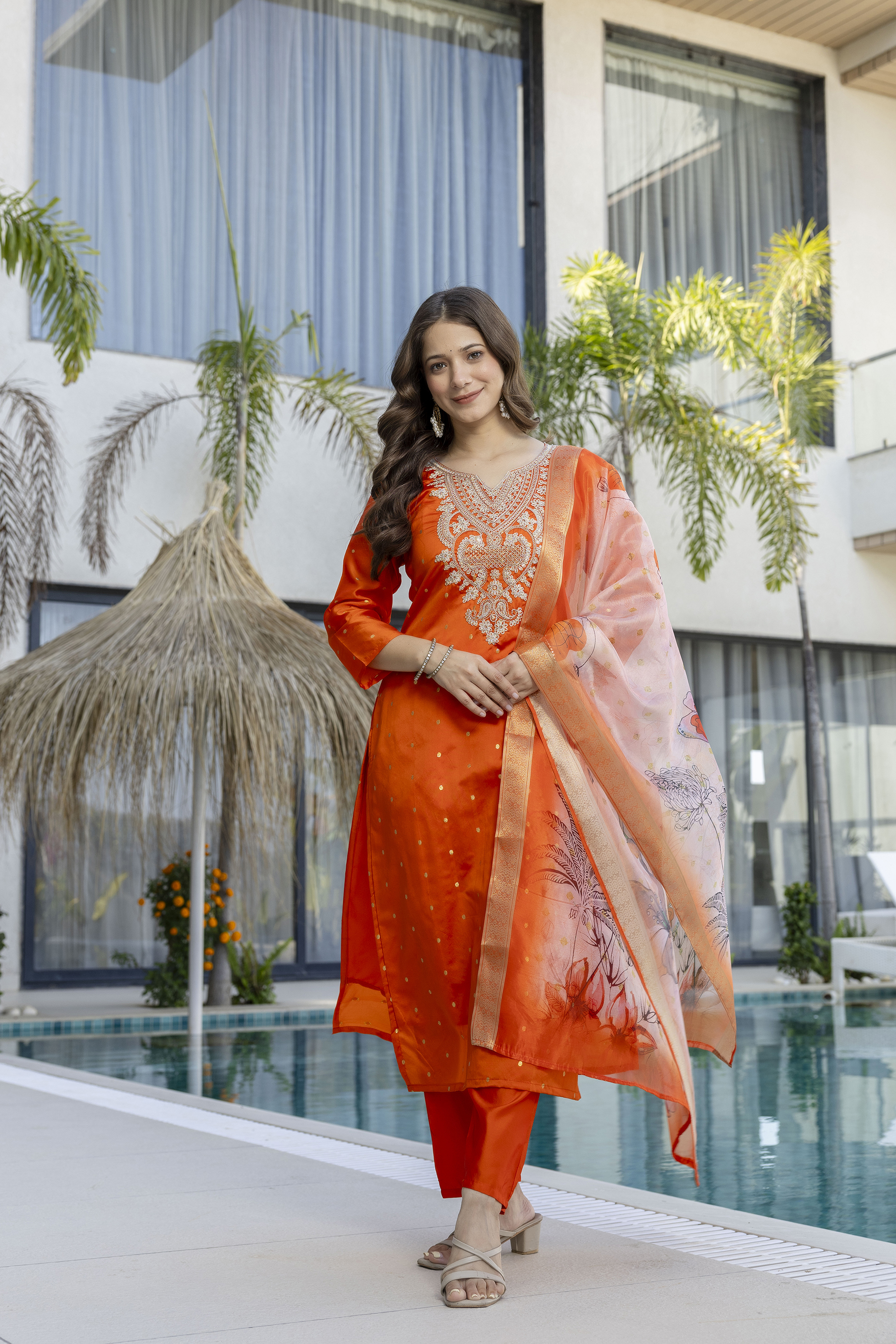
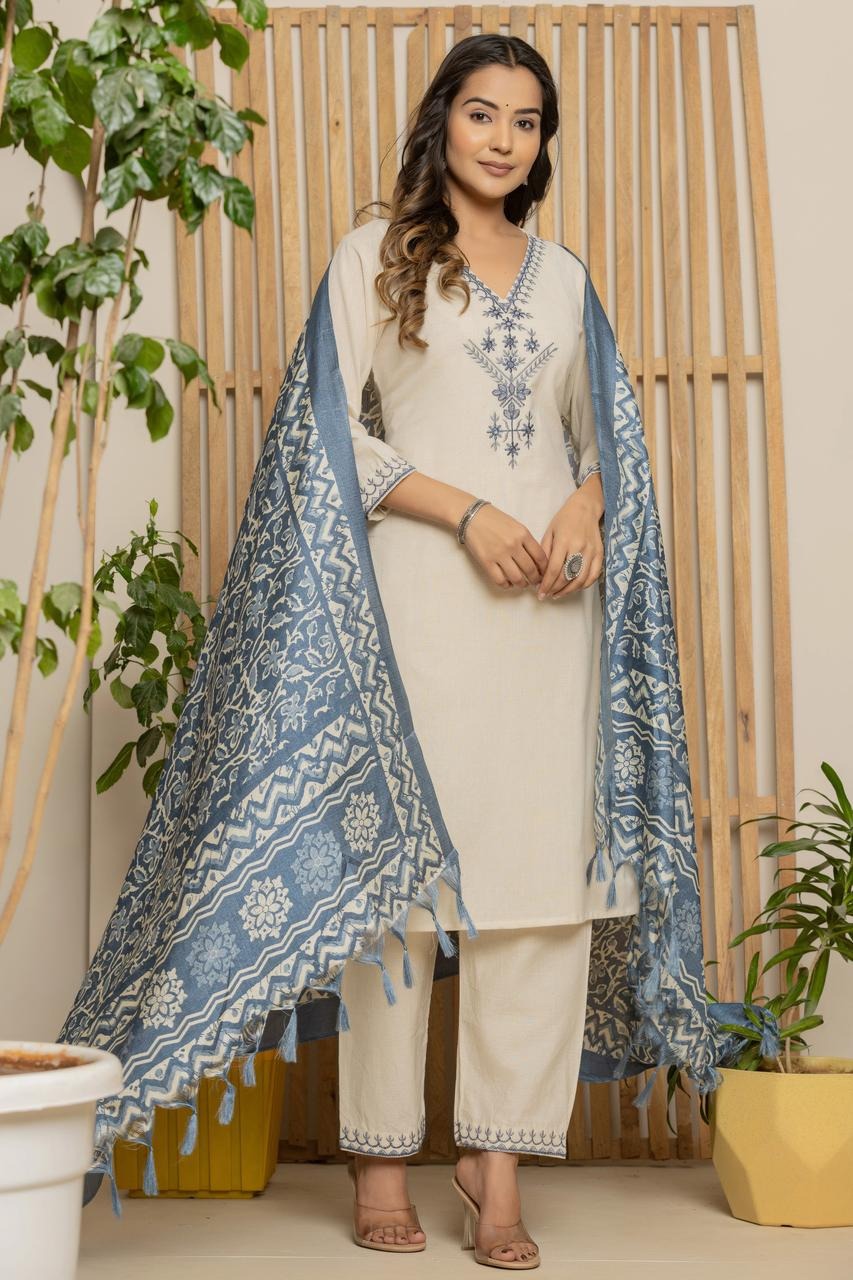
A heavily detailed kurta pairs well with a lighter dupatta featuring a narrow border or scattered motifs. A simpler kurta can support a more expressive dupatta. Beige Kurta Set with Blue Chanderi Dupatta for Women demonstrates how contrast in colour and texture can create interest without requiring dense decoration on both pieces.
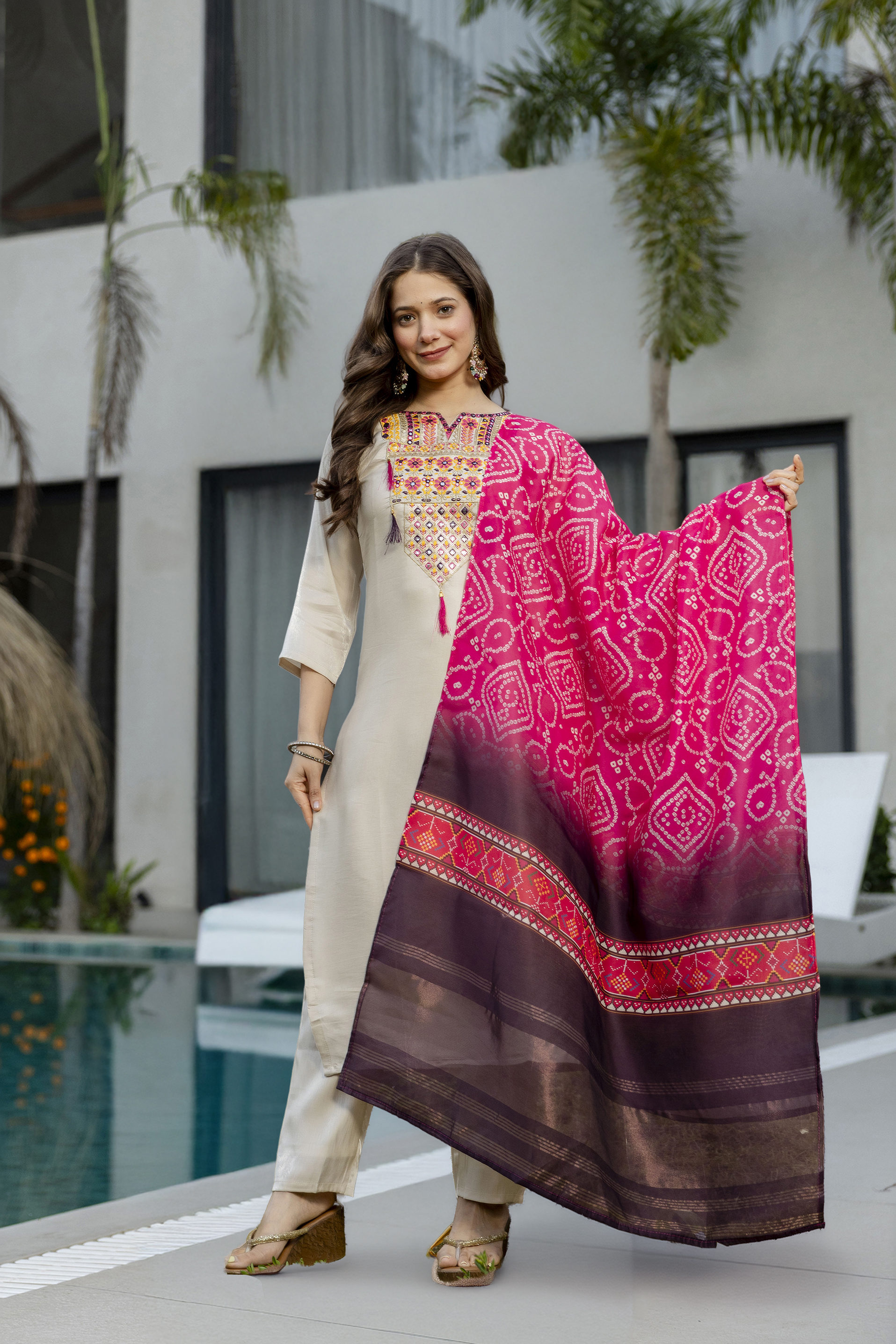
Bandhani-style patterning introduces visual rhythm through dots and colour variation. Cream Embroidered Kurta Set with Bandhani Style Dupatta suits shoppers who want embroidery on the kurta and a patterned drape rather than metallic work across the entire outfit. The combination keeps the overall look festive while allowing the fabric to remain visually open.
Punjab Phulkari Embroidered Salwar Suits can also suggest an useful styling principle: let one textile tradition lead the outfit. Pairing strong floral embroidery, a busy printed dupatta and heavy jewellery may obscure the individual details, whereas one primary motif family creates a clearer appearance.
Which accessories keep the look comfortable?
Small jhumkas, pearl drops or a slim bangle stack can finish a lightly embellished kurta without making the outfit feel overloaded. A short necklace suits an open or round neckline, while a longer chain can sit naturally with a higher neckline. Gold, silver or antique-finish jewellery can echo the metallic thread according to its colour.
Footwear should support the length of the event. Cushioned juttis, low block heels and embellished flats are practical when a celebration includes standing, staircases or outdoor movement. A compact potli or small shoulder bag preserves the festive mood without adding bulk to a lightweight kurta set.
How should kaamdani kurta sets be washed and stored?
Kaamdani kurta sets should usually be dry-cleaned or gently hand-washed only when the care label permits, then dried flat or on a broad hanger away from direct sunlight. Care depends on the base fabric, metallic material, lining and colour fastness, so the garment label should take priority over a general method.
For approved hand washing, use cold water and a small amount of mild detergent. Do not scrub the embroidered surface, wring the kurta or soak golden embellishment for a long period. Press excess water between fresh towels, reshape the garment and dry it in shade. Direct, strong sunlight can fade coloured fabric and dull some golden details.
Ironing requires a low temperature and a pressing cloth placed between the iron and the embellished surface. Steam should be used cautiously because moisture and heat may affect adhesives, metallic threads or delicate backings. Never drag an iron directly over sequins, zari or raised kaamdani motifs.
Store a clean, fully dry kurta set folded with soft tissue between heavily decorated sections, or hang it on a broad padded hanger if the fabric creases easily. Keep metallic work away from rough jewellery, exposed hooks and damp cupboards. A breathable cotton garment bag is preferable to sealed plastic for long-term storage.
What should you compare before choosing a festive salwar suit?
Compare fabric weight, motif density, lining, garment measurements, dupatta construction and care requirements before choosing a festive salwar suit. These details predict comfort more reliably than colour or online photographs alone.
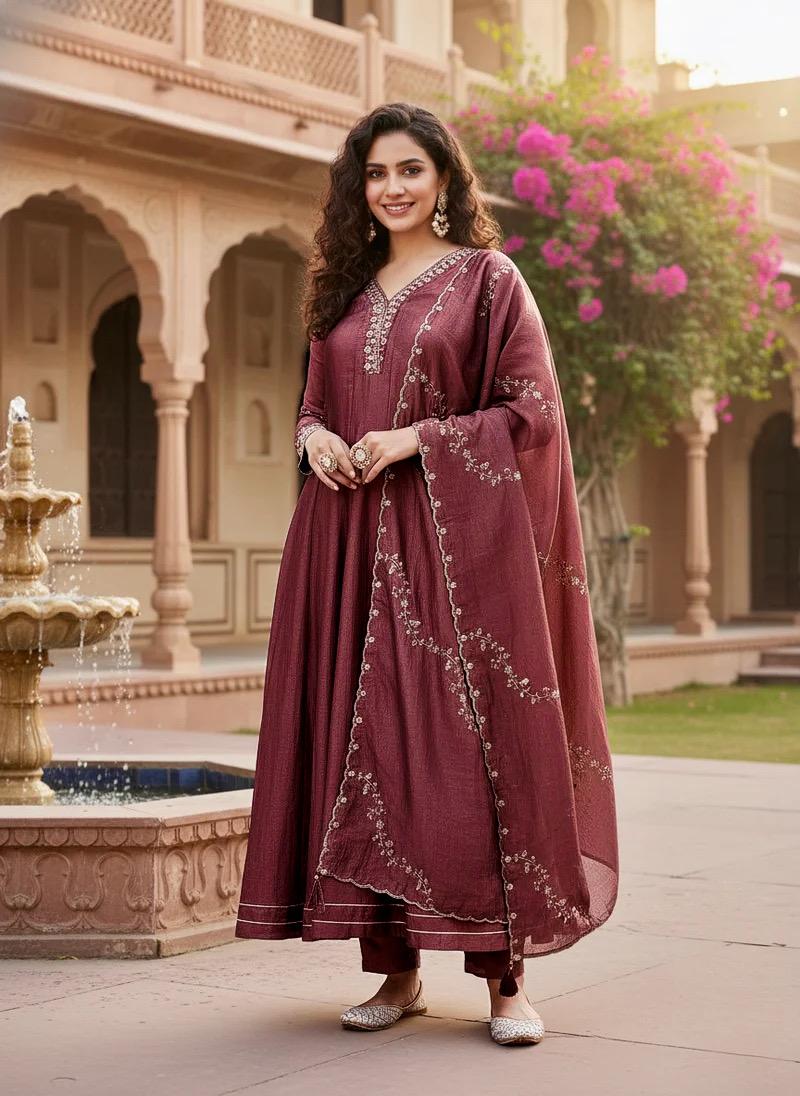
For a daytime Haldi ceremony or warm family gathering, prioritise breathable cotton, Chanderi or a light blend, open motif spacing and a manageable dupatta. For an evening reception, a silk blend, deeper colour and slightly denser yoke can provide formality without requiring a fully embellished silhouette. A festive outfit that matches the climate and duration of wear will usually feel more successful than a heavier design chosen only for maximum shine.
Check whether the pant or salwar adds another layer of heat, whether the kurta has side slits that support movement and whether the dupatta border pulls at the shoulders. These small construction details determine how naturally the complete outfit behaves during meals, photographs, travel and conversation.
Kaamdani Kurta Sets Add Festive Detail Without Making the Fabric Stiff when careful design allows the metallic work to decorate the fabric rather than dominate its structure. Choosing a breathable base, moderate embroidery, a flexible lining and a proportionate dupatta creates festive salwar-suit dressing that remains graceful, wearable and comfortable beyond the first photograph.
Practical Questions About Comfortable Kaamdani Kurta Sets
Are kaamdani kurta sets heavy to wear?
Kaamdani kurta sets are not necessarily heavy because small metallic motifs can be spaced across a lightweight base. Weight increases when the garment uses dense embroidery, thick backing, heavy borders or multiple linings, so construction matters more than the name of the embellishment.
Which fabric is best for a lightweight festive kaamdani kurta?
Chanderi, cotton blends and lightweight silk blends are strong choices for a lightweight festive kaamdani kurta. Chanderi gives an airy, lightly lustrous finish, cotton blends suit warm daytime events, and silk blends provide more evening sheen with moderate structure.
How can I tell whether an embroidered kurta will feel stiff?
Check whether the sleeve bends easily, whether motifs have visible spacing and whether the front panel has thick backing. A rigid elbow, papery reverse side or continuous layer of dense embroidery usually indicates less flexibility.
Can I wear a kaamdani kurta set to a daytime Haldi ceremony?
You can wear a kaamdani kurta set to a daytime Haldi ceremony if the base fabric is breathable and the embellishment is not excessively heavy. Cotton, Chanderi and light silk blends are more comfortable in warm conditions than thick brocade or heavily lined fabrics.
How should I wash a kaamdani kurta set?
Follow the garment care label first, because metallic embellishment and different fabric bases require different treatment. When hand washing is permitted, use cool water and mild detergent, avoid scrubbing or wringing, dry the garment in shade and iron it only through a pressing cloth.
What jewellery works with a lightly embellished kaamdani kurta?
Small jhumkas, pearl drops, slim bangles and a simple necklace work well with a lightly embellished kaamdani kurta. Match the jewellery finish to the metallic thread and choose one main accessory focus so the embroidery remains visible.