A bridal look can change dramatically when a single ornament is placed at the correct angle. Jhumar Jewellery and Its Role in North Indian Wedding Outfits becomes especially clear in the way a jhumar frames one side of the forehead, adds movement near the temple and balances a saree, sharara or salwar suit without requiring a full headpiece. The ornament is also called a passa in many parts of North India, although regional names and shapes vary. Choosing the right jhumar involves more than matching gold with gold; placement, hairstyle, face shape, garment weight and wedding function all matter.
What is a jhumar, and why does its placement matter?
A jhumar is a side-suspended head ornament worn near the temple, usually on the left side of the head, with a chain secured into the hair. The ornament typically has a crescent, fan or clustered pendant shape, and small beads or pearls may hang from its lower edge. Unlike a maang tikka, which follows the centre parting, a jhumar creates an asymmetrical focal point.
Jhumar placement matters because the ornament occupies the visual space between the forehead, eyebrow and ear. A jhumar worn too far forward can cover the eyebrow and make the face appear crowded. A jhumar placed too close to the ear can look detached from the rest of the bridal jewellery. The most balanced position usually sits slightly above the outer eyebrow, with the pendant following the temple rather than touching the cheek.
The chain should follow the hairline without pulling the hairstyle sideways. Two or three discreet bobby pins crossed over the chain provide better support than one pin placed vertically. Bridal jhumars made with kundan, polki or heavy enamel can be surprisingly weighty, so a small section of backcombed hair or a hidden braid anchor helps prevent slipping during several hours of photographs and movement.
Jhumar Jewellery and Its Role in North Indian Wedding Outfits
Jhumar Jewellery and Its Role in North Indian Wedding Outfits is to add a defined side profile, connect the hairstyle to the face and introduce ceremonial detail without repeating the necklace or earrings. The ornament has associations with royal court dressing, Muslim bridal traditions and North Indian festive wear, but contemporary brides and wedding guests style it across communities and garment categories.
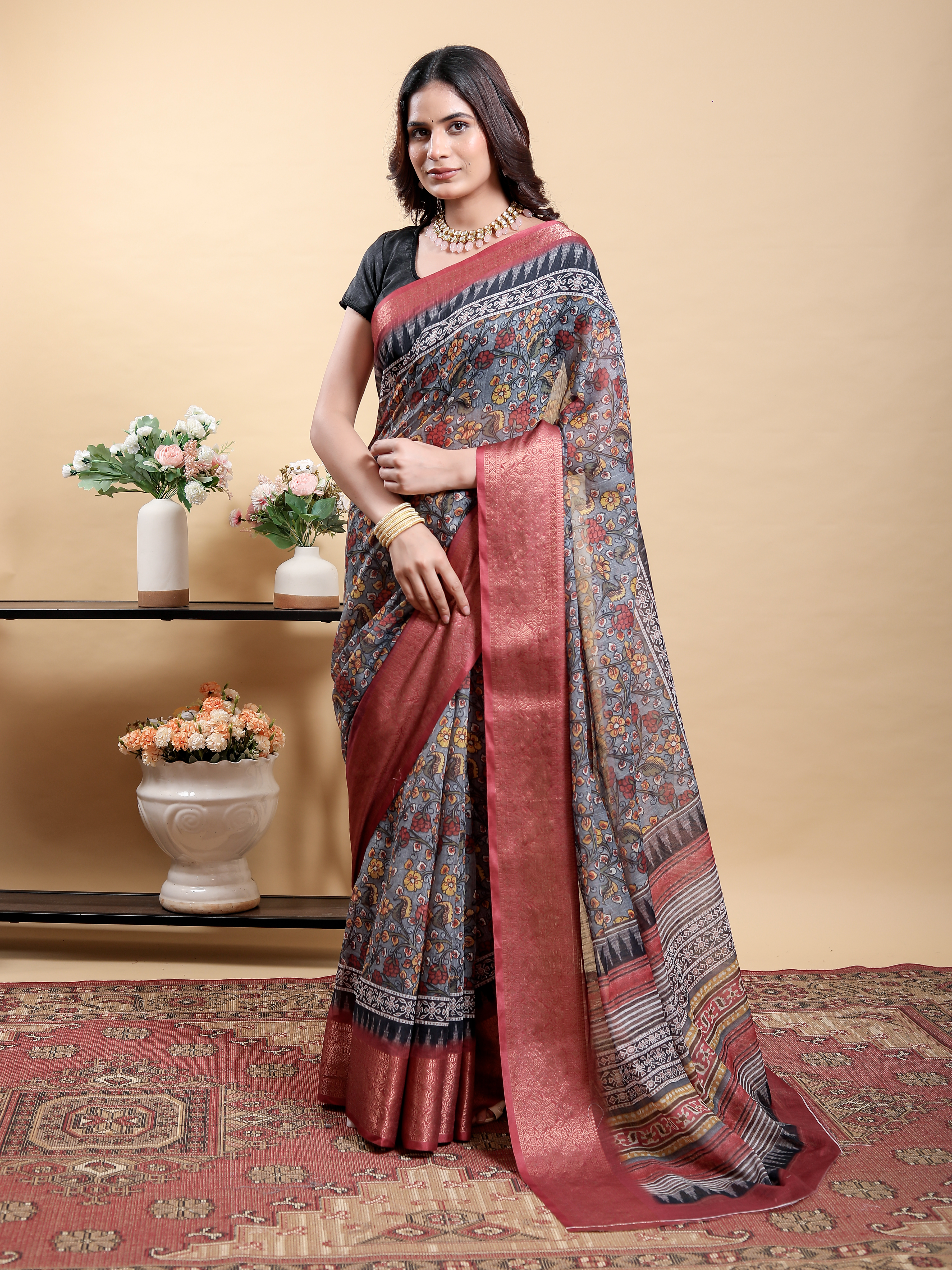
A jhumar works particularly well when an outfit has strong vertical or central decoration. A heavily embroidered lehenga can benefit from a side ornament because the jhumar breaks the symmetry of the blouse, dupatta and necklace. A saree with a broad zari border gains a softer counterpoint when the jhumar repeats the saree's metal tone but not its exact motif.
The accessory also photographs effectively from a three-quarter angle. A central maang tikka is most visible from the front, while a jhumar remains visible when the wearer turns slightly. That quality makes a jhumar useful for wedding portraits, where side profiles, veil shots and close-ups are common.
How is a jhumar different from a maang tikka or matha patti?
A jhumar hangs on one side of the forehead, a maang tikka rests along the centre hair parting, and a matha patti extends across the forehead through one or more side chains. These pieces can be worn together, but each adds a different visual line.
Pairing a large jhumar with a broad matha patti may overwhelm a petite face or compete with an elaborate veil border. A small jhumar can replace a maang tikka for a deliberately asymmetrical look, while a medium jhumar and a fine centre tikka create a balanced combination. The decision should follow the scale of the hairstyle and neckline rather than a rule that every bridal accessory must be worn at once.
Matching a jhumar to sarees, suits and festive separates
The best jhumar pairing repeats one important detail from the outfit, such as zari, pearl edging, enamel colour or embroidery, instead of matching every colour simultaneously. A restrained accessory allows the garment's weave and silhouette to remain visible.
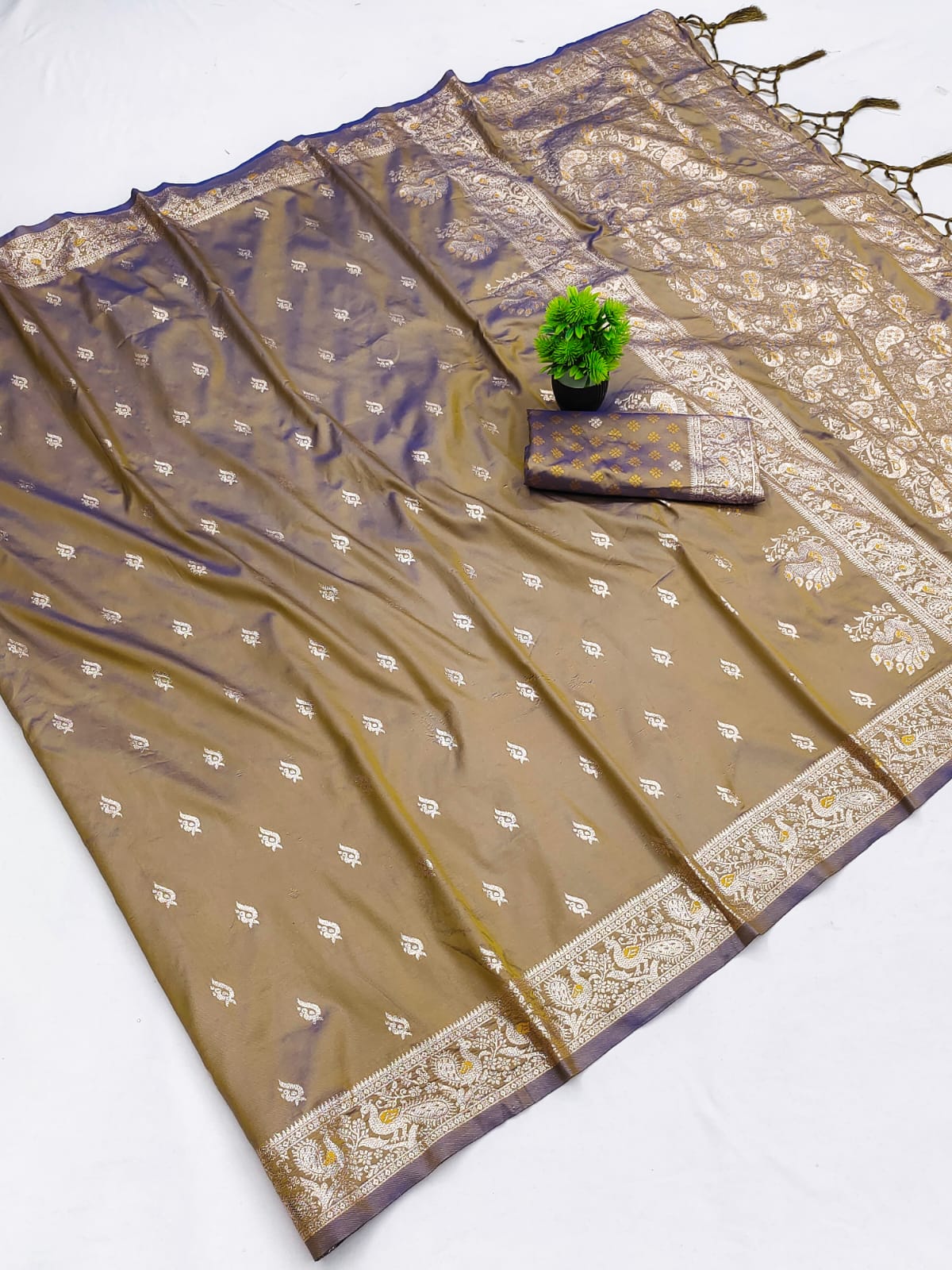
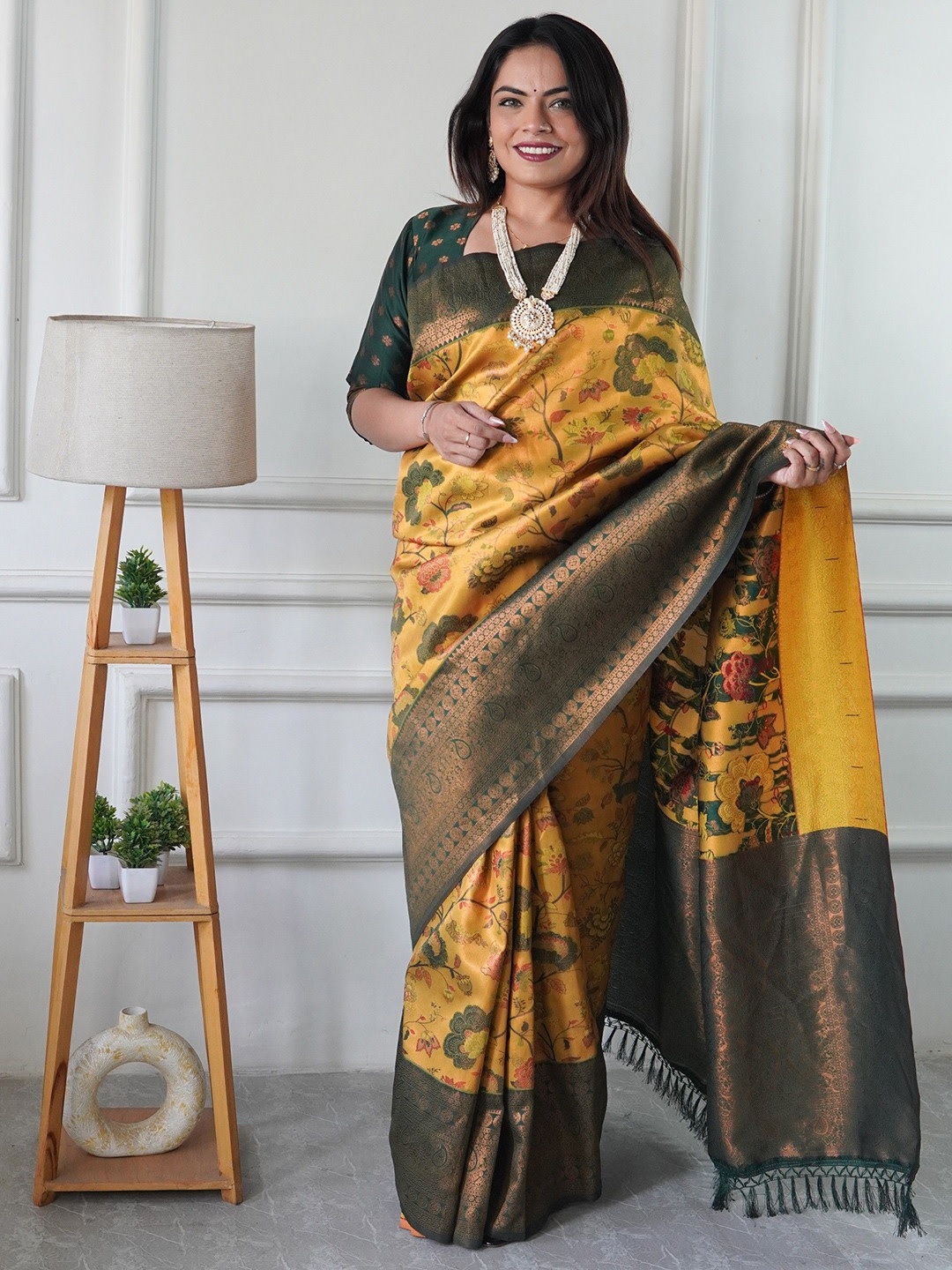
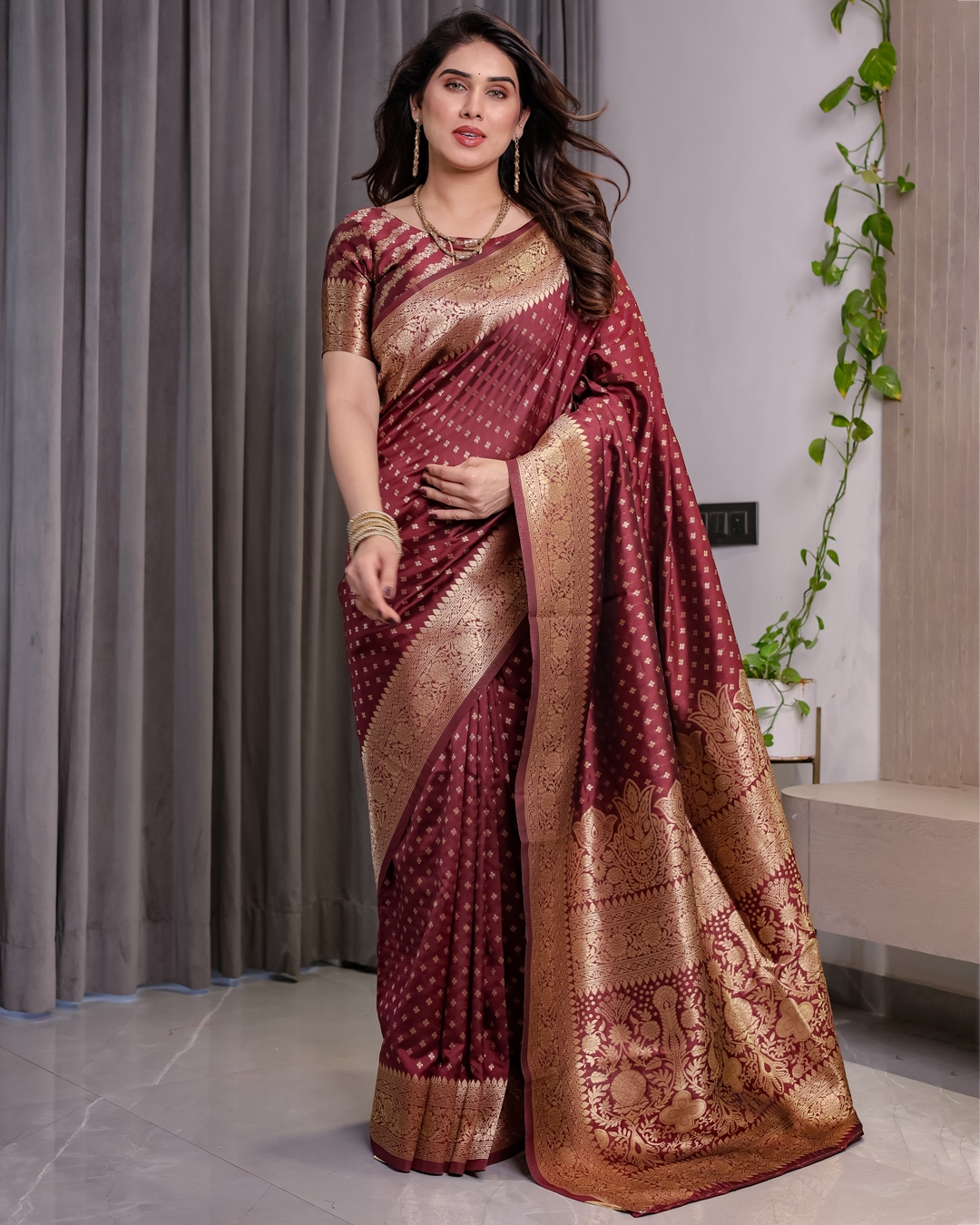
A Maroon Banarasi Soft Silk Saree with Golden Zari Border suits an antique-gold or warm yellow-gold jhumar with pearl drops. The rich maroon and golden zari already provide depth, so a medium crescent jhumar is more effective than an oversized multi-tier design. A Maroon Banarasi Silk Saree With Floral Jacquard Zari Border can take a floral or kundan jhumar when the pendant echoes the saree's woven flower pattern without copying it literally.
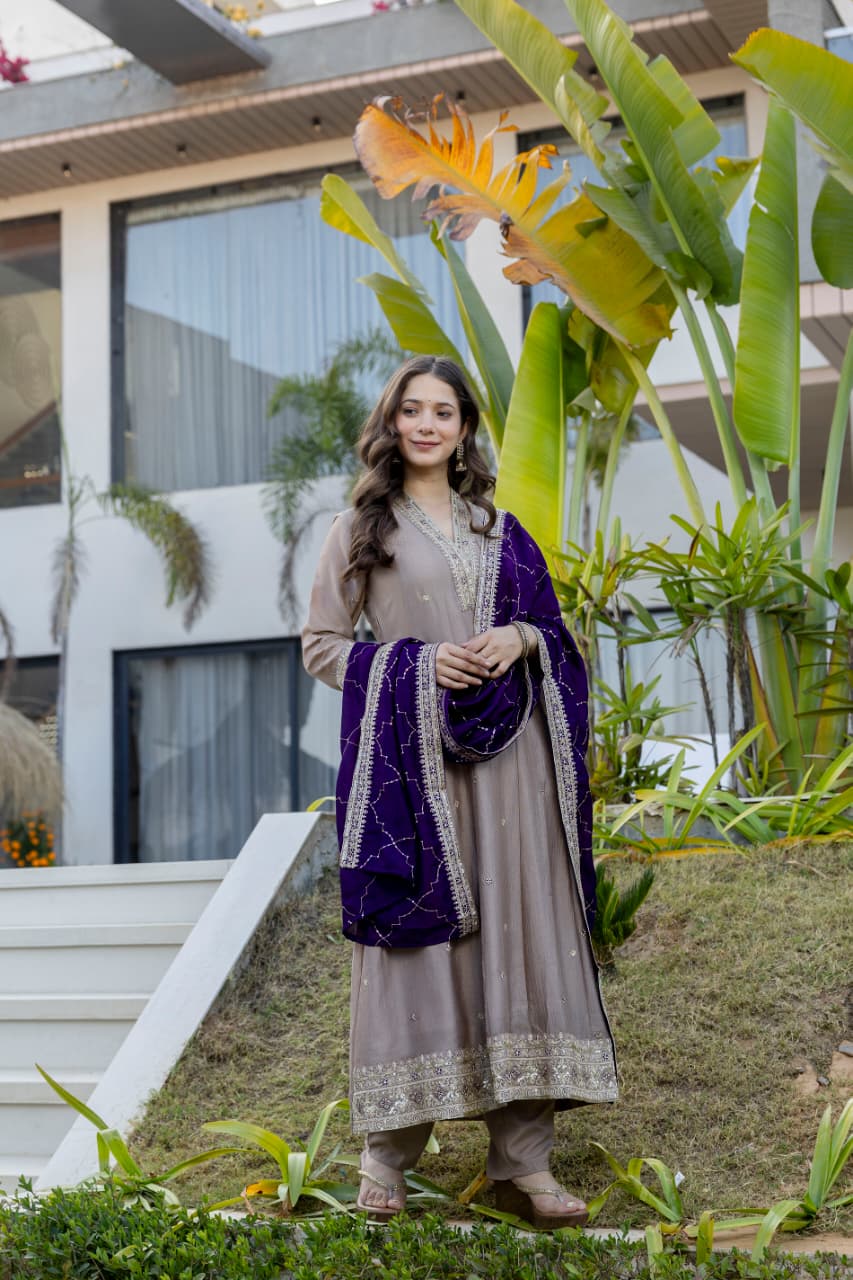
A Royal Plum Banarasi Soft Silk Saree With Golden Zari Border pairs well with champagne-gold, antique-gold or ruby-accented jewellery. Purple and plum textiles can make bright yellow gold look particularly strong; choosing a slightly muted finish keeps the overall look refined. An Emerald Green Banarasi Silk Saree with Peacock Deer Pallu already has a distinctive pallu motif, so a jhumar with small green stones or uncoloured pearls will support the design rather than compete with the peacock and deer imagery.
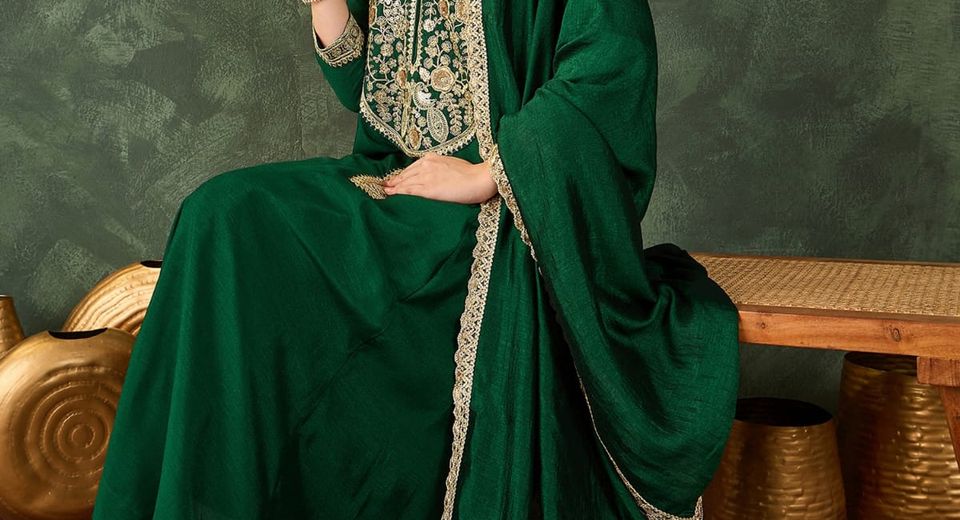
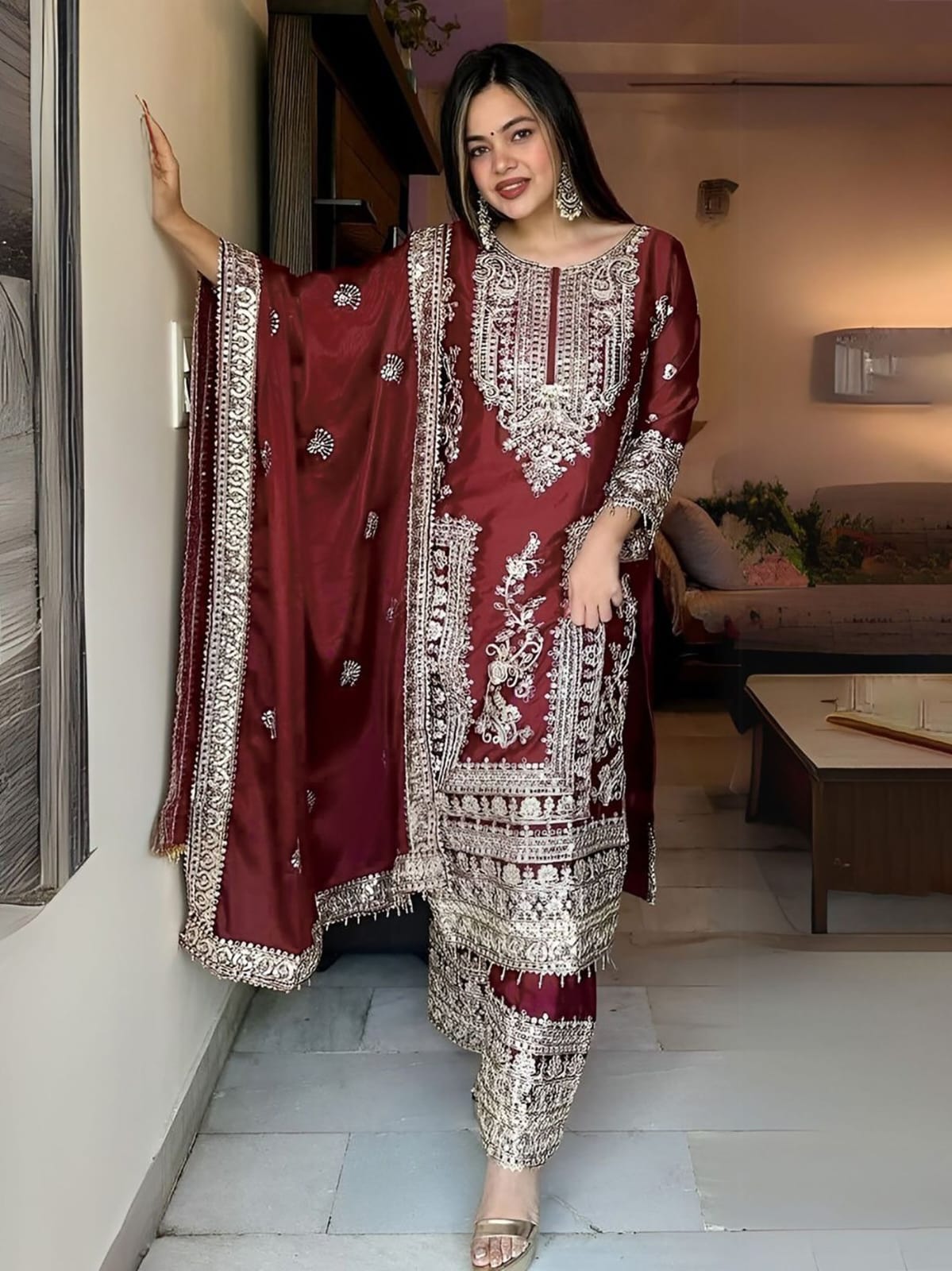
Salwar suits and kurta sets allow more flexibility because their necklines and dupattas often leave the face less visually crowded than a fully embellished bridal blouse. A Maroon Wedding Wear Embroidered Palazzo Suit Set can be styled with a compact jhumar, jhumka earrings and a low side bun. An Emerald Green Vichitra Silk Embroidered Kurta Set with Dupatta works with a pearl-edged or emerald-accented jhumar, especially when the dupatta is pinned behind one shoulder.
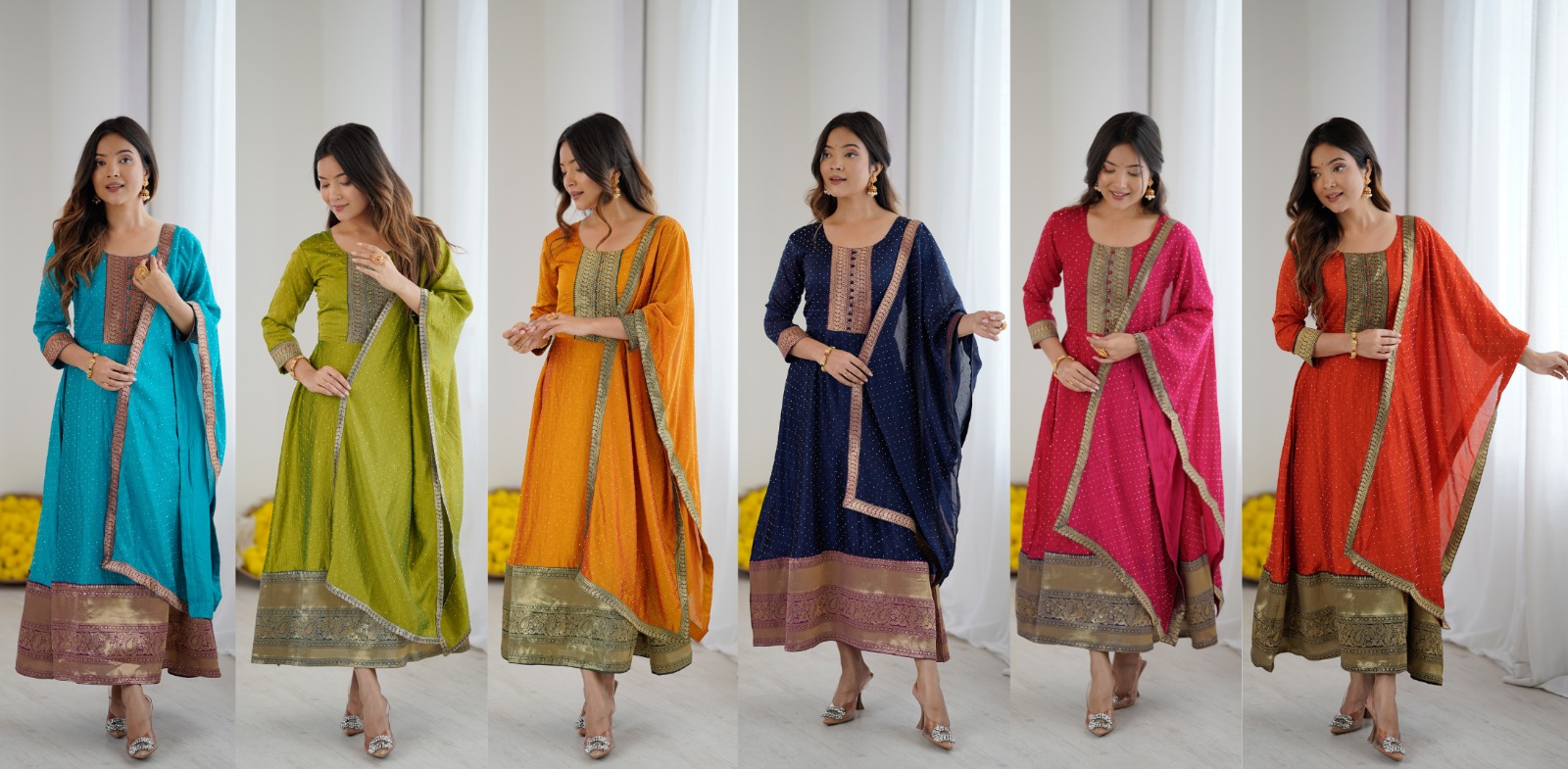
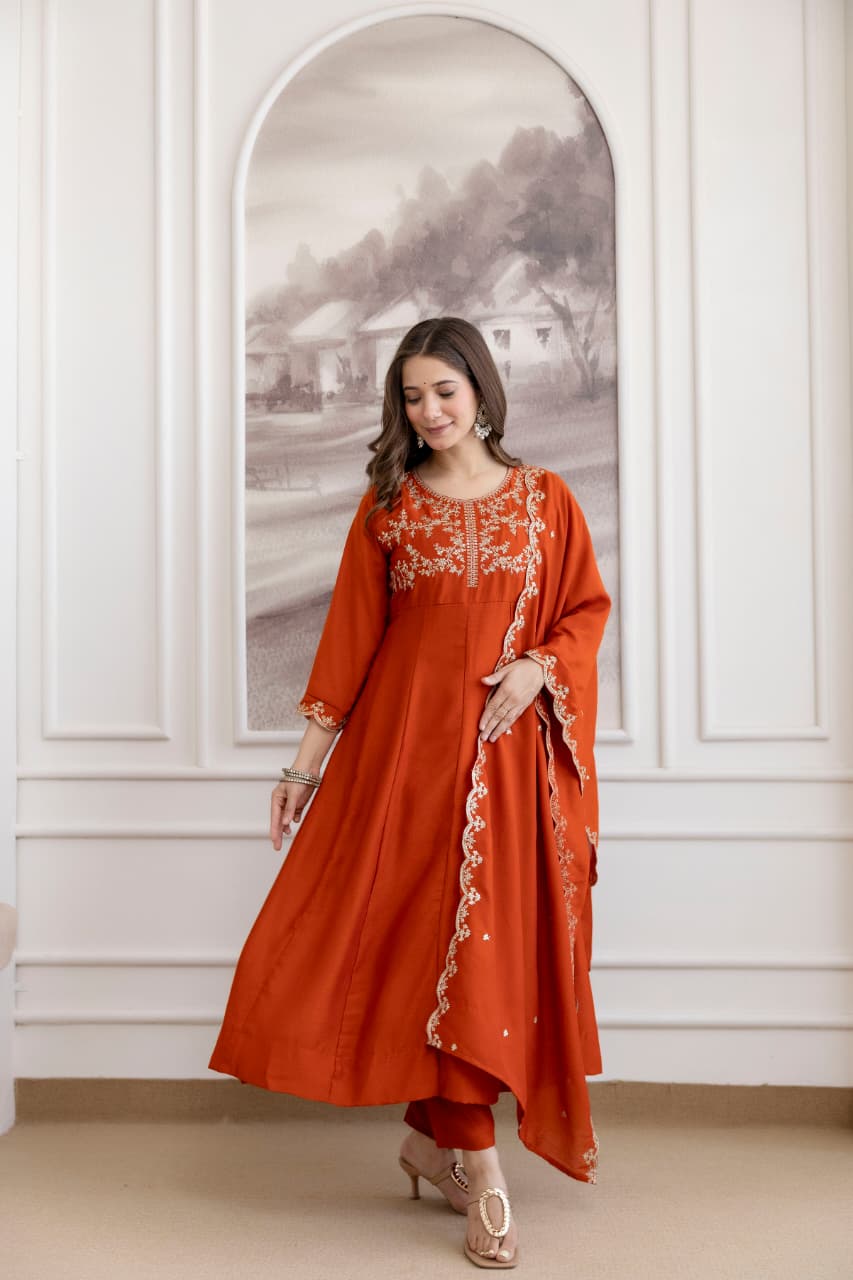
A Rani Pink Vichitra Silk Embroidered Kurta Set with Dupatta benefits from rose-gold, kundan or pearl details rather than a heavy yellow-gold piece. A Rust Orange Vichitra Silk Embroidered Kurta Pant Set can carry antique gold or uncut-style jewellery because rust orange has enough warmth to support a deeper metal finish. These combinations show why jhumar selection should consider fabric sheen, embroidery density and dupatta placement together.
Choosing the right metal, stones and scale
The right jhumar scale is determined by face size, hairstyle and garment decoration, not by bridal status alone. A petite wearer often looks balanced in a pendant measuring approximately 4 to 6 centimetres from top to bottom, while a large updo or heavily embellished bridal outfit can support a 7 to 10 centimetre design.
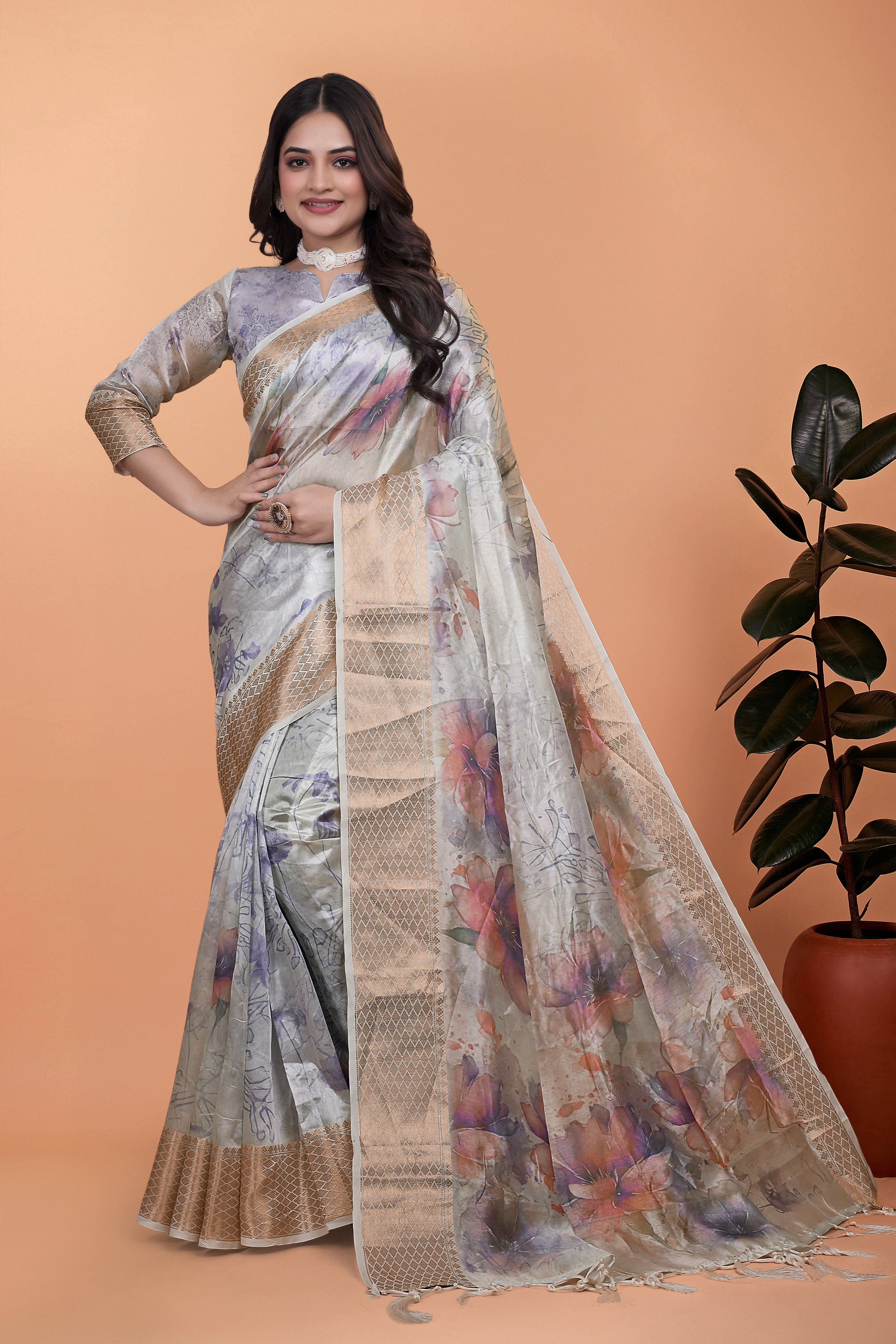
Kundan jhumars offer a polished, stone-set appearance and usually coordinate well with embellished wedding clothing. Polki designs have a more irregular, uncut-diamond effect and suit modern bridal styling. Meenakari introduces coloured enamel and can connect a jhumar to a contrasting dupatta or blouse detail. Pearl drops soften the edge of a metallic design and are useful when earrings, necklace or veil already carry substantial sparkle.
Gold-tone jewellery generally harmonises with maroon, rust orange, mustard, red and warm ivory. Silver-tone or white-metal jhumars work naturally with cool pink, lavender, icy blue and some emerald combinations. Rose gold can bridge pink clothing and classic gold embroidery, but the finish should appear intentionally repeated in at least one other accessory.
Weight deserves practical attention. A jhumar that feels comfortable for five minutes may become painful after a six-hour wedding schedule. Before the event, wear the ornament with the planned hairstyle for at least 30 minutes, turn the head from side to side and check whether the chain pulls at the scalp. A lightweight alloy, hollow gold design or fabric-backed pendant can provide the same visual volume with less strain.
Function-wise styling for a North Indian wedding
What jhumar works for a Haldi ceremony?
A lightweight, colourful or pearl-trimmed jhumar works best for a Haldi ceremony because it stays comfortable and doesn't compete with turmeric-yellow clothing or floral decoration. Choose enamel, fabric, beads or a small gold-tone design rather than delicate heirloom pieces that may stain.
For a Haldi ceremony, secure the chain firmly and keep the pendant away from wet turmeric paste, floral water and hair oils. A simple braid, low bun or half-up hairstyle offers enough structure for a small jhumar without requiring a stiff bridal updo. Bright pink, green, orange and yellow accents can look festive in daylight, where excessive reflective stones may appear harsh.
How should a jhumar be styled for mehendi and sangeet?
A medium jhumar with colourful stones, pearls or enamel suits mehendi and sangeet functions because it adds movement while remaining lighter than a full bridal set. These events usually involve dancing, so the chain must be anchored into the hair rather than left to hang loosely.
With a sharara or palazzo suit, wear the jhumar with statement earrings and a restrained necklace, or with a necklace and smaller earrings if the neckline is ornate. A side braid makes the asymmetry deliberate, while a high ponytail can make a long pendant swing excessively. The Emerald Green Vichitra Silk Embroidered Kurta Set with Dupatta and the Rani Pink Vichitra Silk Embroidered Kurta Set with Dupatta both support lively stone or enamel accents for evening celebrations.
What jhumar suits the wedding ceremony and reception?
A structured kundan, polki or pearl jhumar suits a wedding ceremony or reception when its metal finish matches the principal jewellery and its size corresponds to the veil and hairstyle. Bridal styling can support a more elaborate jhumar, but the ornament should remain visible rather than disappearing beneath a thick veil border.
For a reception saree, a sleek jhumar with clear stones can echo sequins and crystal work. For a heritage pheras look, uncut stones, kundan or antique gold usually sit more naturally beside zari and brocade. A heavily embroidered lehenga may need only a jhumar, earrings and a necklace; adding a matha patti, large nose ring and layered necklace can obscure the face.
Hairstyle, dupatta and face-shape considerations
A side bun, low chignon or braid gives a jhumar the most stable foundation because the chain can be pinned into concentrated hair. A centre-parted bun makes the jhumar's asymmetry clear, while a side part can help a smaller ornament stand out. Loose hair can work for lightweight designs, but the chain should still be attached near the crown and temple.
Oval faces can accommodate most jhumar shapes. Round faces often benefit from elongated pendants that create a vertical line near the temple. Long or angular faces can look balanced with wider crescent shapes and pearl fringes rather than very narrow drops. These are styling guidelines rather than strict rules; the most useful test is whether the ornament leaves the eyebrow and cheekbone visually open.
The dupatta should not cover the jhumar pendant completely. Pin the dupatta behind the jhumar or below its chain when possible, leaving enough room for the ornament to be seen. If a veil must pass over the head, place the jhumar on top of the inner hair layer and use a concealed pin through the chain before setting the veil in place.
Common mistakes and a reliable wearing checklist
The most common jhumar mistake is treating the accessory as an isolated purchase. A jhumar can look disconnected when its metal finish, stone colour, scale or placement has no relationship with the rest of the outfit.
- Match the jhumar's dominant metal to the necklace, earrings or zari, but don't require every detail to be identical.
- Check the ornament from the front, side and three-quarter angles before finalising the hairstyle.
- Use at least two crossed pins for a medium or heavy jhumar and test the hold with gentle head movement.
- Keep the pendant above the cheekbone and outside the eyebrow line unless a deliberately dramatic editorial look is intended.
- Choose a lighter design for Haldi ceremony, mehendi and sangeet events that involve heat, dancing or outdoor activity.
- Photograph the complete outfit in the actual lighting because stones and metal can change appearance between daylight and warm indoor light.
Try the complete look one week before the wedding rather than on the event morning. Wear the blouse or kurta, earrings, hairstyle, dupatta and jhumar together for at least 30 minutes. That rehearsal reveals pressure points, slipping chains and colour clashes while there's still time to adjust the accessory.
Caring for a jhumar after the celebration
A jhumar should be cleaned gently after every wear and stored flat or in a padded compartment. Wipe perspiration and makeup residue with a soft, dry microfiber cloth; don't apply perfume, hairspray, oil or commercial metal cleaner directly to stones, enamel or pearls.
Keep pearl-trimmed and kundan pieces away from humidity because moisture can weaken adhesive settings and dull surfaces. Store each jhumar separately in a soft pouch so chains don't knot around the pendant. For heirloom gold or high-value polki jewellery, professional inspection before a major wedding is sensible, especially when stones are held by older settings.
Jhumar Jewellery and Its Role in North Indian Wedding Outfits extends beyond decoration: the ornament creates asymmetry, frames the face and helps a complete look feel culturally grounded without becoming visually overloaded. When its scale, placement and metal finish respond to the garment, a jhumar can serve equally well with a Banarasi silk saree, an embroidered kurta set or a formal palazzo suit.
Practical Questions About Styling Jhumars for North Indian Weddings
Is a jhumar worn on the left or right side?
A jhumar is traditionally worn on the left side of the forehead, near the temple. Some wearers choose the right side to suit their hair parting, face angle or family custom, so comfort and secure placement are also valid considerations.
Can a jhumar be worn without a maang tikka?
A jhumar can be worn without a maang tikka for an intentionally asymmetrical look. A small centre tikka may be added when the outfit needs more symmetry, but a large tikka and large jhumar together can overcrowd the forehead.
Can wedding guests wear jhumar jewellery?
Wedding guests can wear jhumar jewellery, especially with a saree, sharara, salwar suit or embroidered kurta set. Guests should generally choose a lighter and smaller design than the bride, particularly for the main ceremony.
How do you keep a heavy jhumar from slipping?
A heavy jhumar stays secure when its chain is pinned into a firm section of hair with two crossed bobby pins and, if needed, a small hidden braid anchor. Testing the full hairstyle for at least 30 minutes before the event helps identify slipping or pressure.
What jewellery goes well with a jhumar?
Jhumars pair well with jhumka or drop earrings, a coordinated necklace and a restrained maang tikka. Matching the dominant metal or one stone colour is usually enough; repeating every motif can make the bridal look appear crowded.
Which jhumar is suitable for a Haldi ceremony?
A lightweight jhumar with beads, enamel, fabric details or small pearls is suitable for a Haldi ceremony. Avoid delicate heirloom pieces that may be exposed to turmeric, water, hair oil or outdoor heat.