Jewel Tone Ethnic Wear Brings Depth to Festive Dressing Without Heavy Work by using saturated colour as the main visual statement. Emerald green, ruby red, sapphire blue, amethyst purple and deep teal can make a saree, kurta set or anarkali feel ceremonial even when the surface carries only a border, a few sequins or restrained zari. The result is festive clothing that feels polished, breathable and easier to wear for several hours.
Heavy embroidery isn't the only route to richness. Colour depth, fabric reflection, border placement, neckline shape and accessory contrast all influence how an outfit looks in photographs and warm indoor lighting. An useful festive wardrobe therefore begins with understanding what jewel tones do, how different fabrics change them and where embellishment adds value instead of visual noise.
Why Jewel Tone Ethnic Wear Brings Depth to Festive Dressing Without Heavy Work
Jewel Tone Ethnic Wear Brings Depth to Festive Dressing Without Heavy Work because dark, highly saturated colours create contrast and visual weight on their own. A plain emerald green saree can appear more dimensional than a pale pastel saree with scattered embroidery when the emerald shade catches the light and is paired with a deliberate blouse and jewellery.
Colour depth works through three practical effects. First, a saturated shade defines the outline of a garment, making pleats, drapes and flare easier to see. Second, deep colours reflect warm light in a controlled way, especially in tissue cotton, crepe, silk blends and satin-finish fabrics. Third, jewel tones create a strong base for small metallic details, so a narrow zari border or a few sequin motifs remain visible instead of getting lost.
Deep colour also helps separate the main outfit from the background. Emerald green photographs well against cream, beige and warm nude walls. Ruby and wine shades stand out against golden décor. Sapphire and peacock blue give a cool contrast with brass lamps and marigold decorations. These combinations let an outfit to look intentional without requiring embroidery across every panel.
Which jewel tones work best for festive Indian clothing?
Emerald, ruby, sapphire, amethyst, teal and garnet are the most versatile jewel tones for festive Indian clothing because they suit a broad range of complexions, metals and fabric finishes.

Emerald green
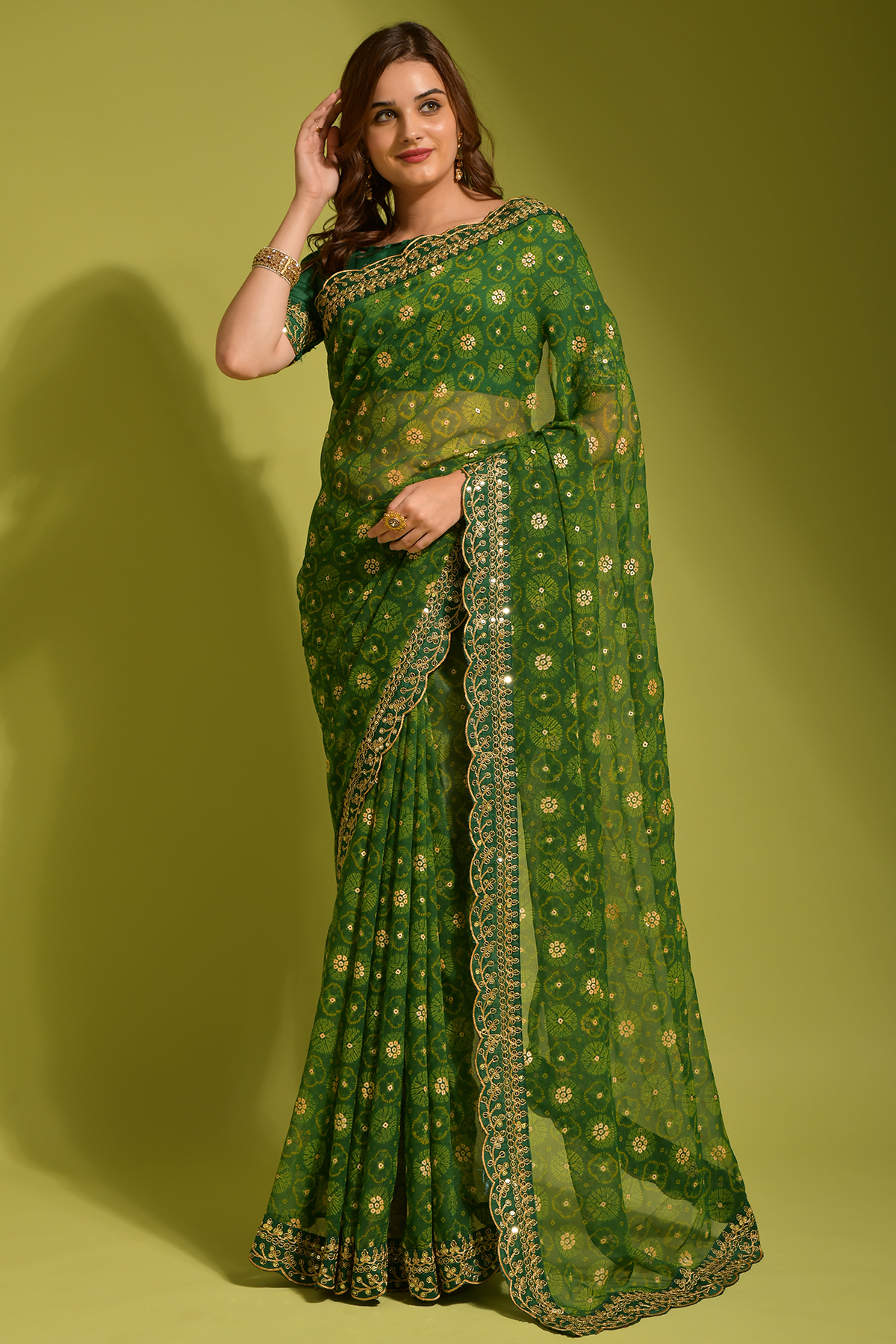
Emerald green has a balanced relationship with both gold and silver. Emerald Green Tissue Cotton Saree With Digital Floral Print demonstrates how a strong green base can carry a floral surface without dense threadwork. Gold jhumkas and a warm beige blouse bring out the yellow undertone of emerald, while silver earrings and a charcoal blouse make the same shade feel cooler and more contemporary.
Ruby, wine and garnet
Ruby red and garnet suit evening pujas, Diwali gatherings and wedding-related festivities because their warm undertones pair naturally with antique gold. Wine is a quieter alternative when bright red feels too intense. A wine-coloured kurta set can be finished with a gold-toned watch, tan potli and muted makeup instead of a fully embellished dupatta.
Sapphire and peacock blue
Sapphire blue creates a crisp, formal effect, while peacock blue adds green and turquoise notes that feel more playful. Sapphire works particularly well with silver zari, pearl jewellery and ivory footwear. Peacock blue can be paired with magenta, coral or antique gold for a more traditional festive palette.
Amethyst and deep purple
Amethyst purple gives an outfit a rich evening character without the intensity of black. Purple looks balanced with champagne, dusty pink or pale gold accessories. Because deep purple already has considerable visual weight, a clean neckline and one statement earring often look more refined than several ornate accessories.
How does fabric change the appearance of a jewel tone?
Fabric changes a jewel tone by controlling how much light the colour reflects, absorbs or scatters. The same emerald shade may look matte in cotton, luminous in tissue, fluid in crepe and more classic in silk.
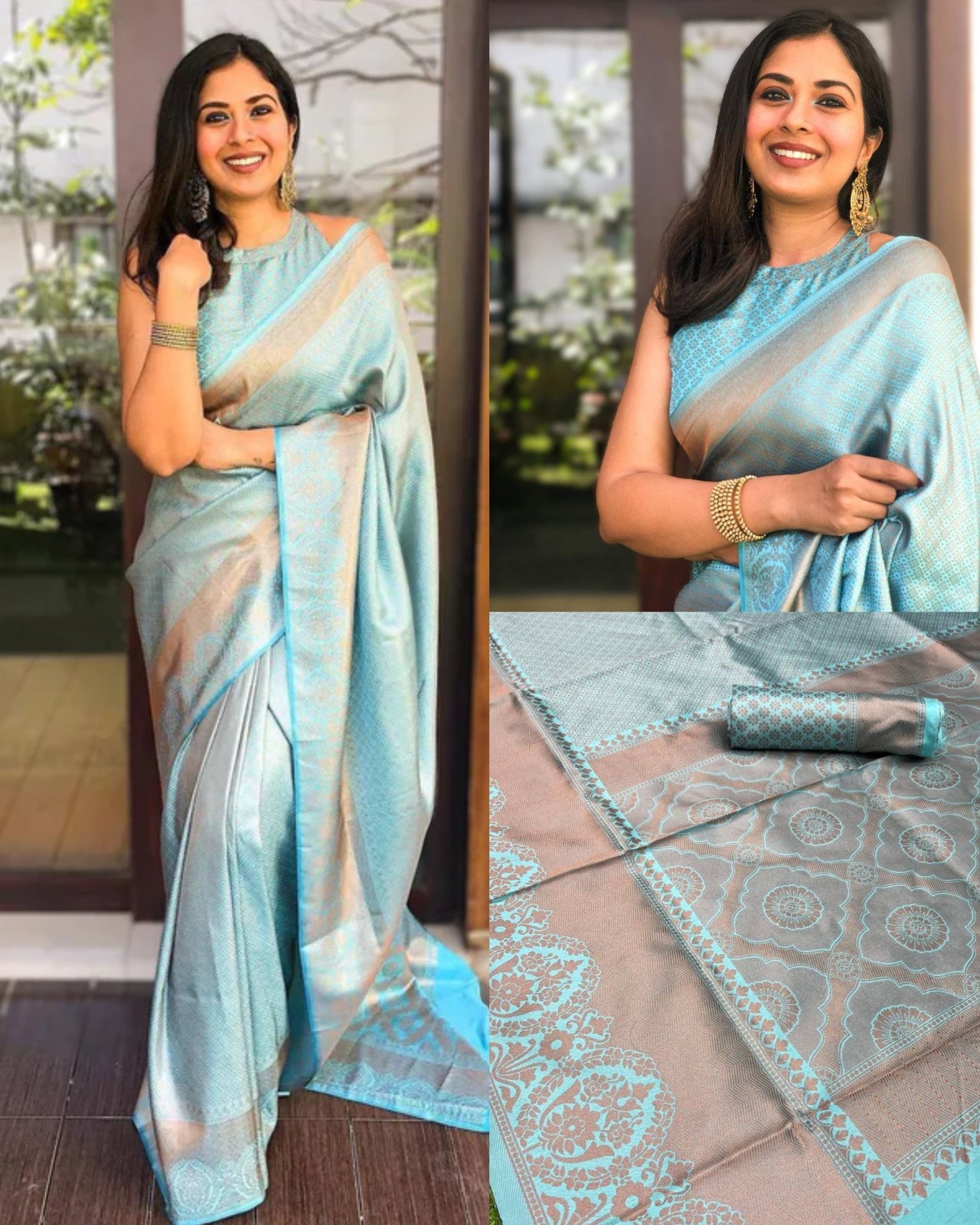
Tissue cotton has a light body and subtle glow, making it useful when you want colour impact without the weight of brocade. Emerald Green Tissue Cotton Saree With Digital Floral Print works because the fabric offers airiness while the saturated base prevents the look from becoming casual. Tissue cotton is especially practical for daytime celebrations, where dense velvet or multiple silk layers may feel warm.
Crepe falls close to the body and produces soft movement rather than a stiff silhouette. Multicolor Embroidered Crepe Maxi Suit Set for Festive Wear uses colour variation and a flowing shape to create interest across the garment. A crepe outfit benefits from a defined waist, neat sleeve finishing and earrings that echo one of the colours rather than competing with every shade.
Silk and silk blends reflect light more sharply, so they can make a plain jewel tone appear dressier. Banarasi silk and Kanjeevaram are especially effective when the weave itself supplies pattern through zari, contrast borders or classic motifs. These fabrics can look complete with minimal jewellery because the material already carries cultural and visual information.
Chanderi provides another useful balance. Its lightweight hand and characteristic sheen suit daytime festive dressing, particularly when paired with a jewel-tone blouse or a narrow metallic border. Chanderi doesn't require heavy embroidery to look occasion-ready because transparency, texture and crisp drape create subtle layers.
How should you build a festive outfit around one deep colour?
Build a jewel-tone festive outfit around one dominant colour, one supporting neutral and one metallic accent. This three-part formula keeps the clothing rich without making the overall look crowded.
Start with the main garment
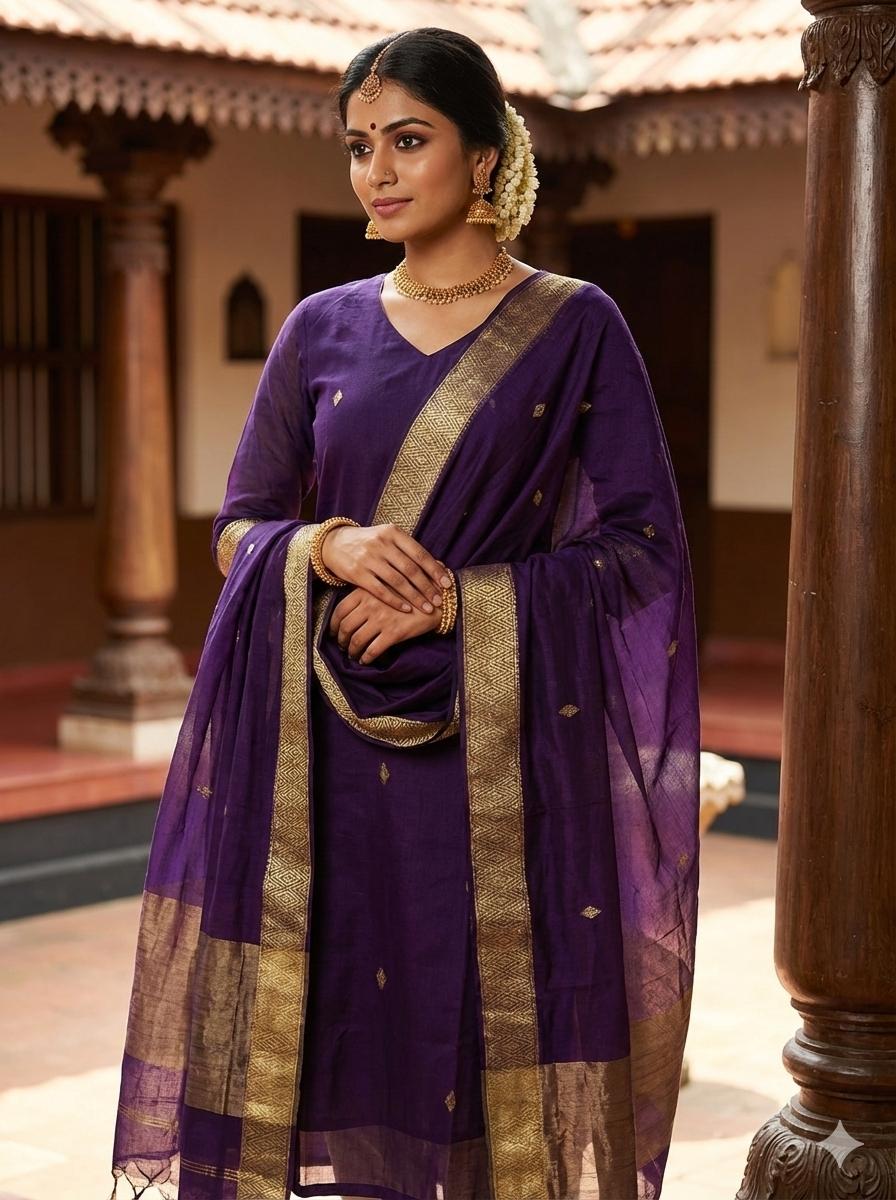
Choose a saree, anarkali, salwar suit or lehenga in the strongest shade first. Festive Wear Cream Embroidered Kurta Set shows the reverse approach: a light neutral can act as the base while a jewel-tone dupatta, footwear or jewellery supplies depth. A dark base generally creates more drama, while a cream base gives greater flexibility for daytime events.
A saree should be evaluated for its border width, fall and blouse compatibility. A wide zari border can be enough ornament for an emerald, wine or sapphire saree. A plain blouse in a related shade creates a long uninterrupted colour line, while a contrasting blouse adds a deliberate focal point around the face.
Use the supporting neutral strategically
Neutral shades such as ivory, cream, beige, charcoal and muted gold prevent a jewel tone from becoming visually dense. Beige works with ruby, emerald and peacock blue. Ivory softens sapphire and purple. Charcoal adds a modern edge to emerald and teal. The neutral doesn't need to appear in equal quantity; it may be limited to footwear, a blouse, a dupatta edge or a handbag.
Choose one metallic direction
Gold, silver and antique bronze each change the personality of a jewel tone. Gold makes emerald and ruby warmer and more heritage-inspired. Silver sharpens sapphire and purple. Antique bronze gives teal, garnet and wine an earthy finish. Zari should support the colour story rather than introduce a completely unrelated metallic shade.
Where do small embellishments create the most impact?
Small embellishments create the most impact when they frame the face, define the border or highlight movement. Concentrated detail is usually more effective than evenly distributing sequins, beads and zari over every surface.
A neckline with modest sequin work can draw attention upward while leaving the body of an anarkali light. Black Anarkali Suit Set with Sequin Zari and Moti Lace Work illustrates how sequins, zari and moti lace can work together when placed on a dark base. Black absorbs surrounding colour, allowing metallic and pearl details to become the focus.
Black Embroidered Anarkali Suit Set with Zari Work uses a similar principle through embroidery and zari. A black anarkali can be styled with emerald earrings, a ruby potli or a sapphire dupatta, but the accessory should repeat one clear colour instead of introducing several competing shades.
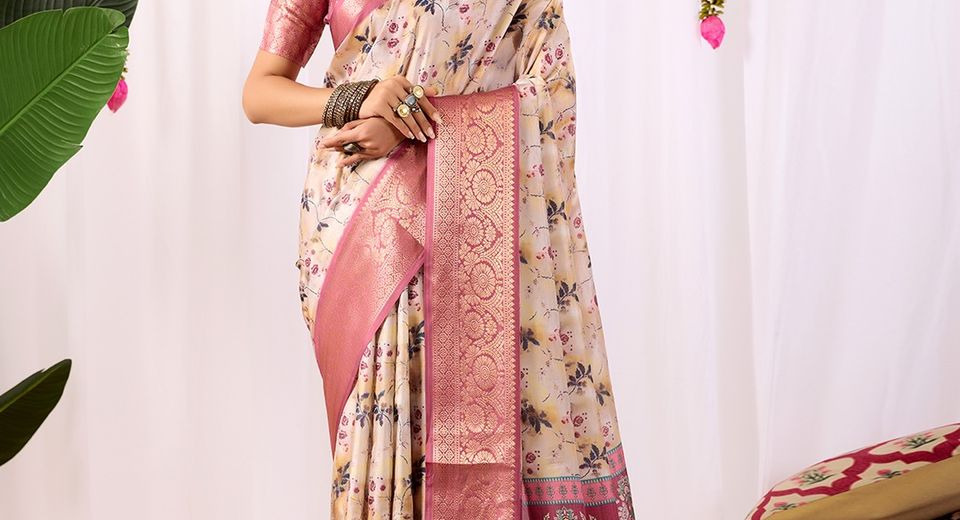
Border-led decoration is particularly useful on sarees. A narrow zari border can define the drape, while floral print or a solid jewel colour fills the larger area. Festive Beige Saree with Floral Print and Rich Zari Work demonstrates how a lighter base can carry rich metallic detail without becoming visually heavy. The beige foundation also allows the wearer to introduce emerald, wine or sapphire through the blouse.
How can jewel-tone outfits suit different festive occasions?
Style jewel-tone ethnic wear according to the time of day, duration of wear and formality of the gathering. Daytime events benefit from breathable fabric and softened contrast, while evening celebrations can support deeper colour and stronger metallic accents.
For a Haldi ceremony
A Haldi ceremony calls for colour, movement and fabrics that can tolerate a lively setting, so choose jewel-tone accents rather than fragile all-over embellishment. Teal, magenta, emerald or berry can appear in a dupatta, blouse or printed suit while the main garment remains easy to move in. Keep jewellery lightweight and avoid long pieces that can catch on chairs, floral décor or other clothing.
For a family puja
A family puja suits an emerald, ruby or sapphire saree with a restrained zari border, low block heels and small gold earrings. Classic Festive Wear Blouse for Stylish Saree Look can provide a structured foundation when the saree supplies most of the colour. Choose a blouse with a stable neckline and enough shoulder coverage if you expect to sit on the floor or move frequently.
For an evening reception
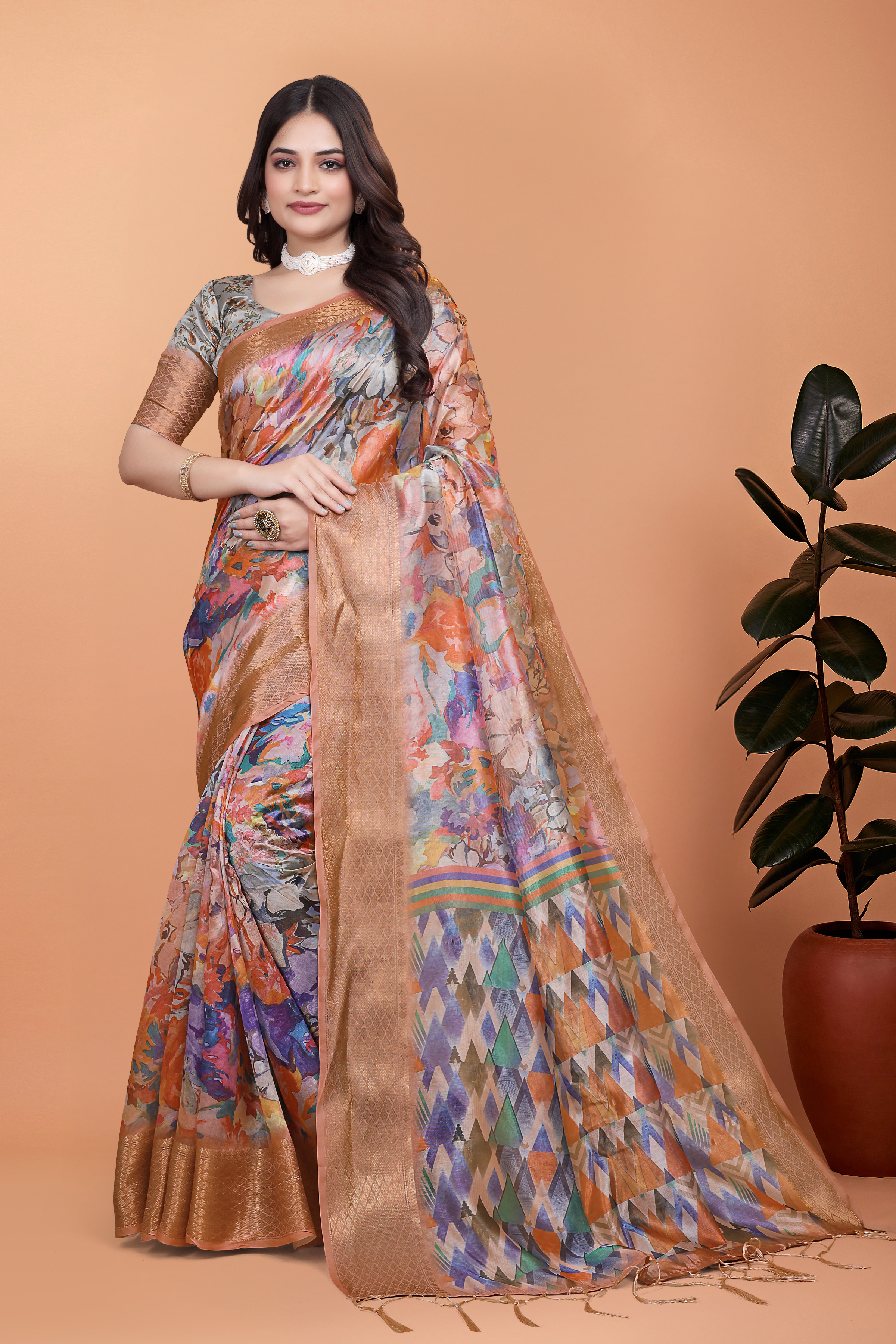
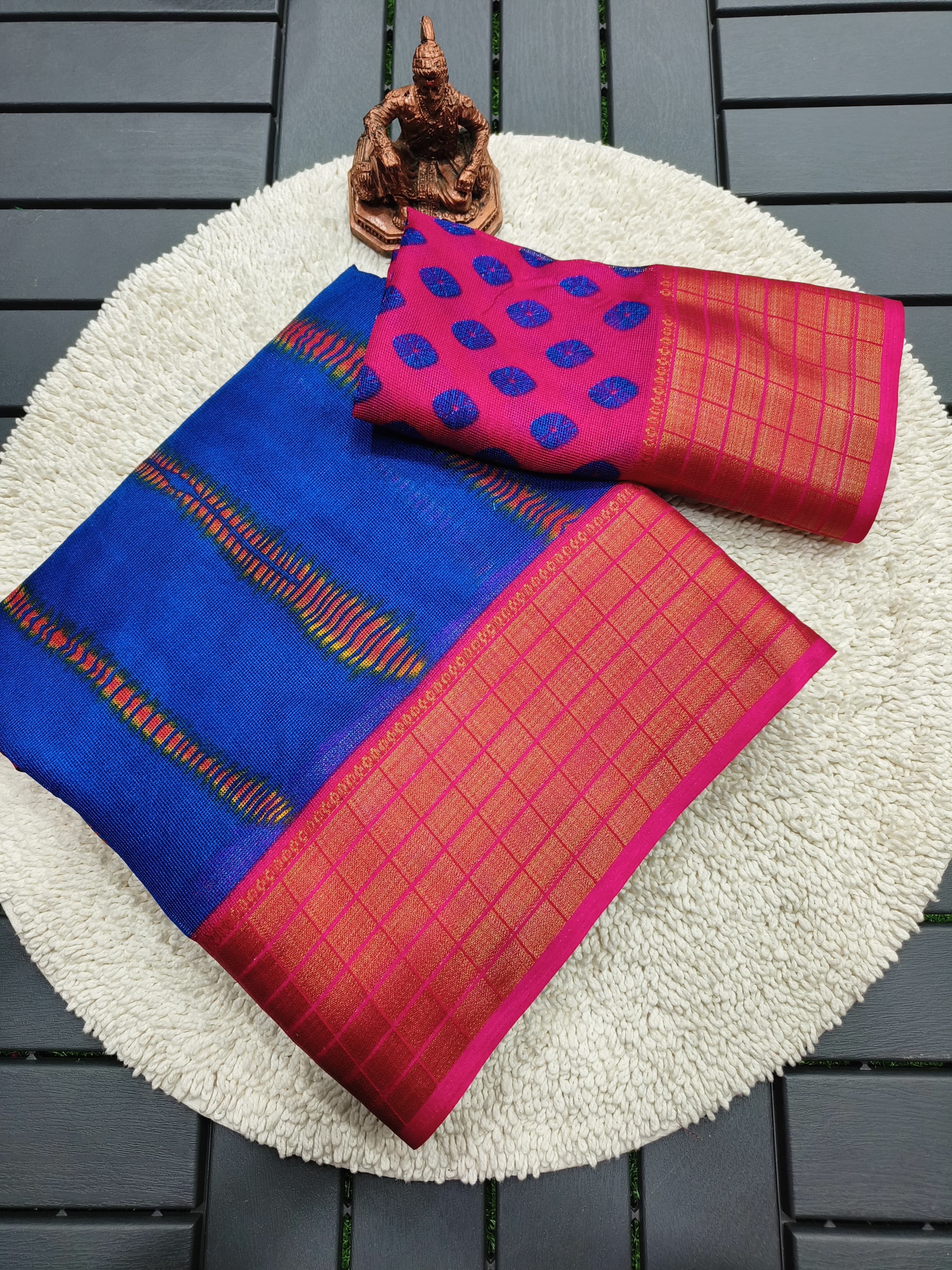
An evening reception allows a deeper base, reflective fabric and a more defined accessory. Colorful Ethnic Chinon Saree for Women can be styled with a plain jewel-tone blouse when the saree already contains multiple saturated shades. Keep the clutch and shoes in one quiet metallic or neutral tone so the colourful drape remains the focal point.
How should you balance jewellery, makeup and footwear?
Balance jewellery, makeup and footwear by repeating one colour detail and keeping the remaining elements quiet. A jewel-tone outfit already brings saturation, so every accessory doesn't need to make an independent statement.
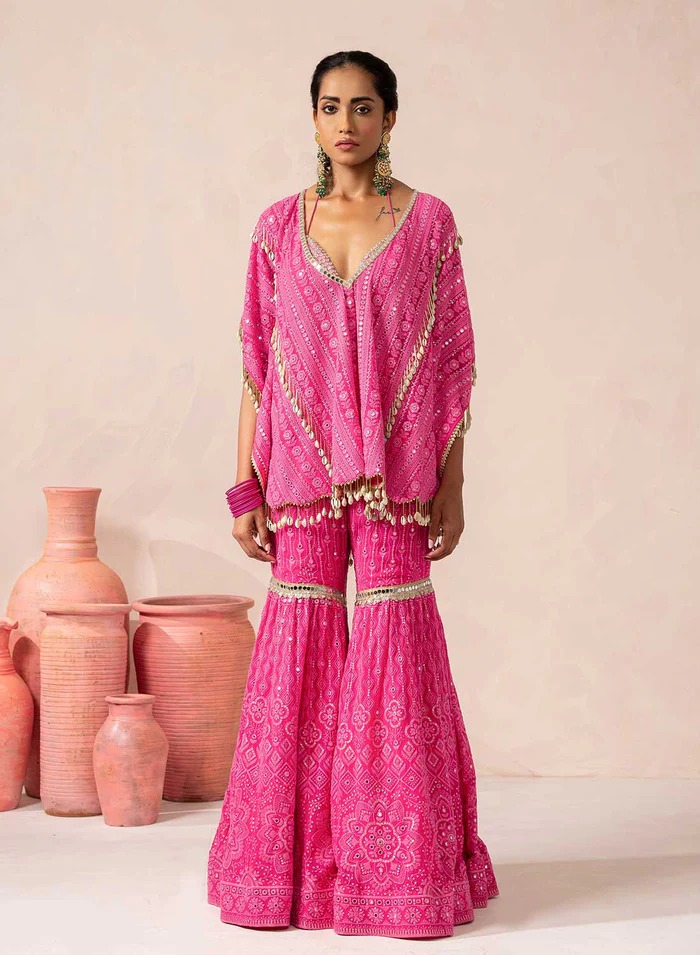
Gold jewellery is a natural choice with ruby, emerald and garnet. Silver or white metal complements sapphire, amethyst and cool teal. Pearls soften black, emerald and wine without making the outfit look less festive. A single collar necklace or pair of chandelier earrings is generally enough when the garment has a visible zari border.
Makeup should echo the temperature of the outfit rather than match it exactly. Warm terracotta, brick and rose work with ruby and emerald. Berry, mauve and plum suit sapphire and purple. A defined brow, even complexion and one stronger lip usually create more balance than heavy eye makeup plus a bold lip.
Footwear should be selected for the venue as carefully as for colour. Block heels of 2 to 3 inches offer more stability than thin stilettos for long festive gatherings. Metallic sandals work with zari, while beige, tan or charcoal footwear can quietly support a colorful outfit. A potli or compact shoulder bag should leave the hands free for greetings, food and photographs.
What should you check before buying a lightweight festive outfit?
Check fabric comfort, lining, seam quality, colour accuracy, embellishment placement and care requirements before buying a lightweight festive outfit. These details determine whether a visually rich garment remains practical after several hours of wear.
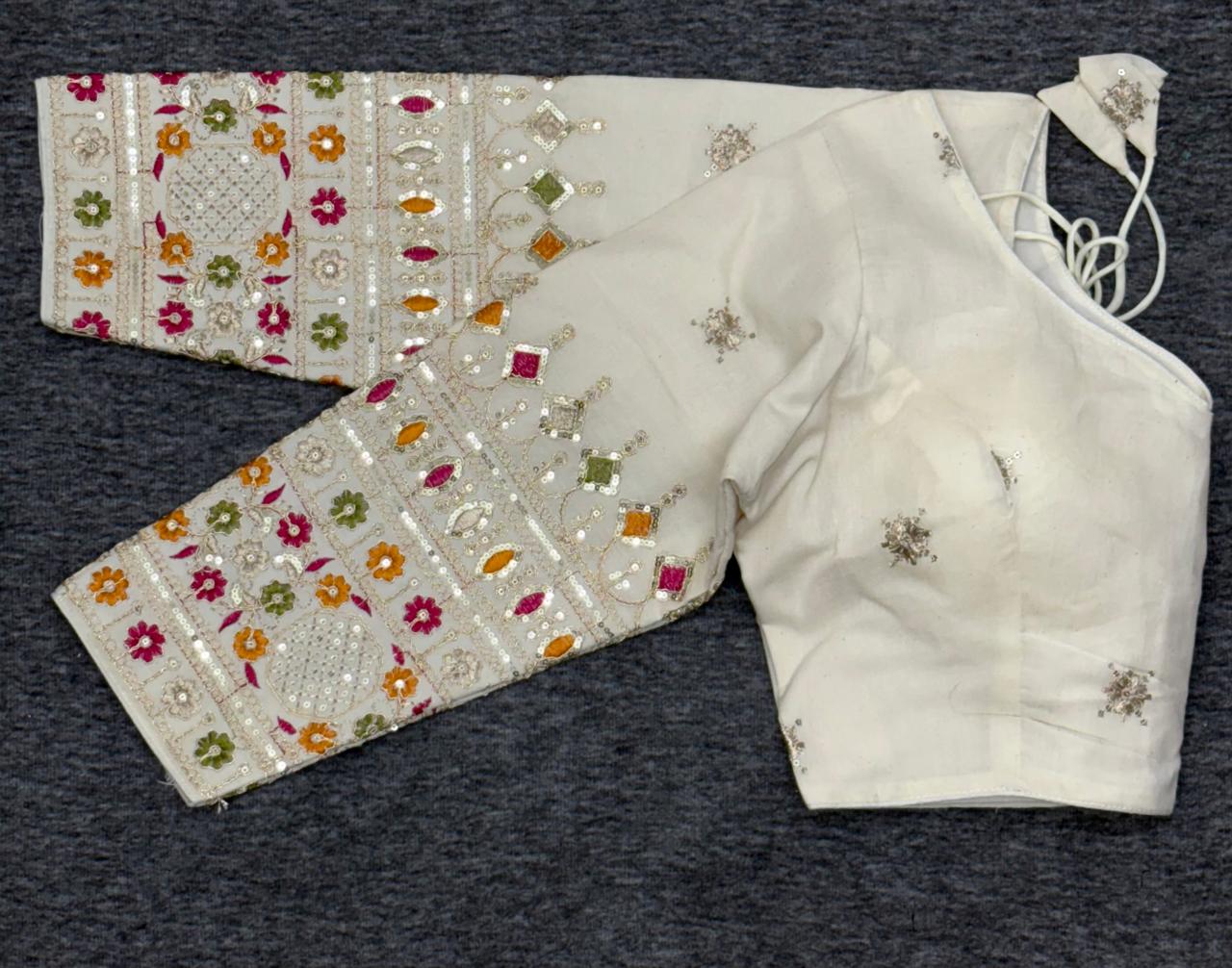
Ask whether the fabric is lined, especially in crepe, chiffon, chinon and tissue garments. A lining can improve opacity and drape, but a synthetic lining may feel warm against the skin. Examine the areas that receive the most friction, including underarms, waist seams, sleeve edges and the point where a brooch or bag might touch the garment.
Inspect zari and sequin attachment rather than judging only their shine. Loose threads around the neckline or border can worsen with repeated use. Moti lace and beadwork should lie flat and should not scratch the neck or arm. A moderate amount of secure embellishment is more useful than a dense surface that requires constant adjustment.
Read the care label before purchasing. Many embellished garments need gentle hand washing or professional dry cleaning, while printed or digitally dyed fabrics should be protected from prolonged direct sunlight. Fold sarees and suits with clean cotton muslin between layers, and refold stored textiles every few months to reduce permanent crease lines.
Jewel-tone clothing rewards restraint. A saturated colour, breathable fabric, one well-placed metallic detail and accessories chosen for contrast can create a festive look that feels memorable without heavy work, excessive weight or uncomfortable layering.
Common Questions About Styling Jewel-Tone Festive Wear
What are the best jewel tones for festive wear?
Emerald green, ruby, sapphire, amethyst, teal and garnet are strong festive choices. Emerald and ruby pair naturally with gold, while sapphire and amethyst work especially well with silver, pearls and ivory accents.
Can jewel-tone ethnic wear look festive without embroidery?
Yes, saturated colour, fabric sheen, a defined border and carefully selected jewellery can make an outfit festive without dense embroidery. Tissue cotton, silk blends, Chanderi and well-draped crepe create visual interest through texture and movement.
Which jewellery suits an emerald green saree?
Gold jewellery creates a warm traditional look with an emerald green saree, while silver gives the outfit a cooler modern finish. Choose one prominent jewellery element, such as jhumkas or a necklace, when the saree includes zari or a printed border.
How can I style a black anarkali for a festive event?
Style a black anarkali with one jewel-tone accent, such as emerald earrings, a ruby potli or a sapphire dupatta. Gold zari and pearl details already provide contrast, so keeping the shoes and makeup restrained prevents the outfit from looking crowded.
Are jewel-tone outfits suitable for daytime celebrations?
Jewel-tone outfits are suitable for daytime celebrations when the fabric is breathable and the styling is softened with cream, beige or ivory. Tissue cotton, Chanderi and lightweight crepe are more comfortable for daytime wear than multiple layers of velvet or dense brocade.
How should jewel-tone festive clothes be stored?
Store jewel-tone festive clothes clean and completely dry, preferably folded in breathable cotton muslin away from direct sunlight. Keep embellished garments separate from rough fabrics, and follow the care label for washing, steaming and professional cleaning.