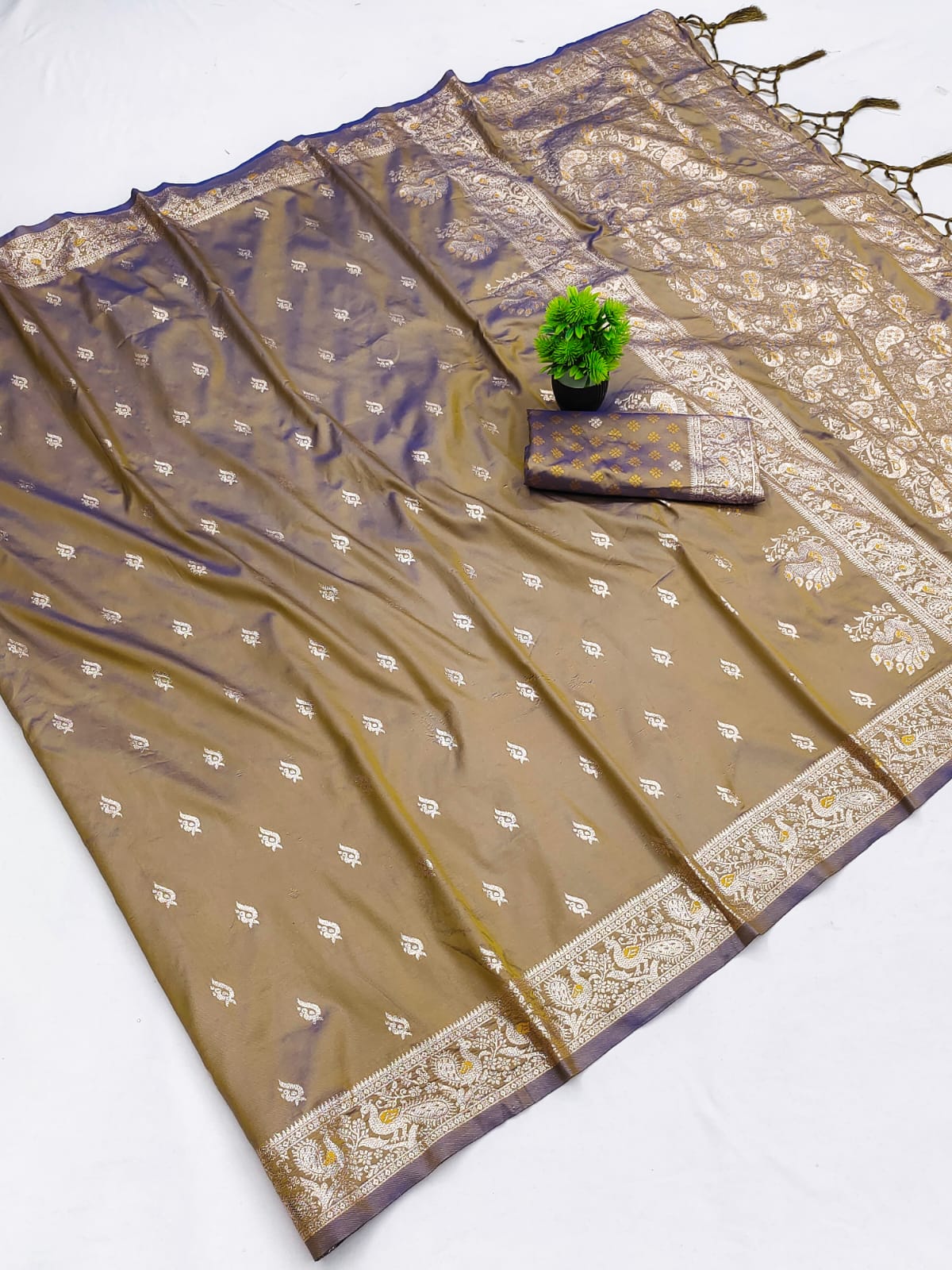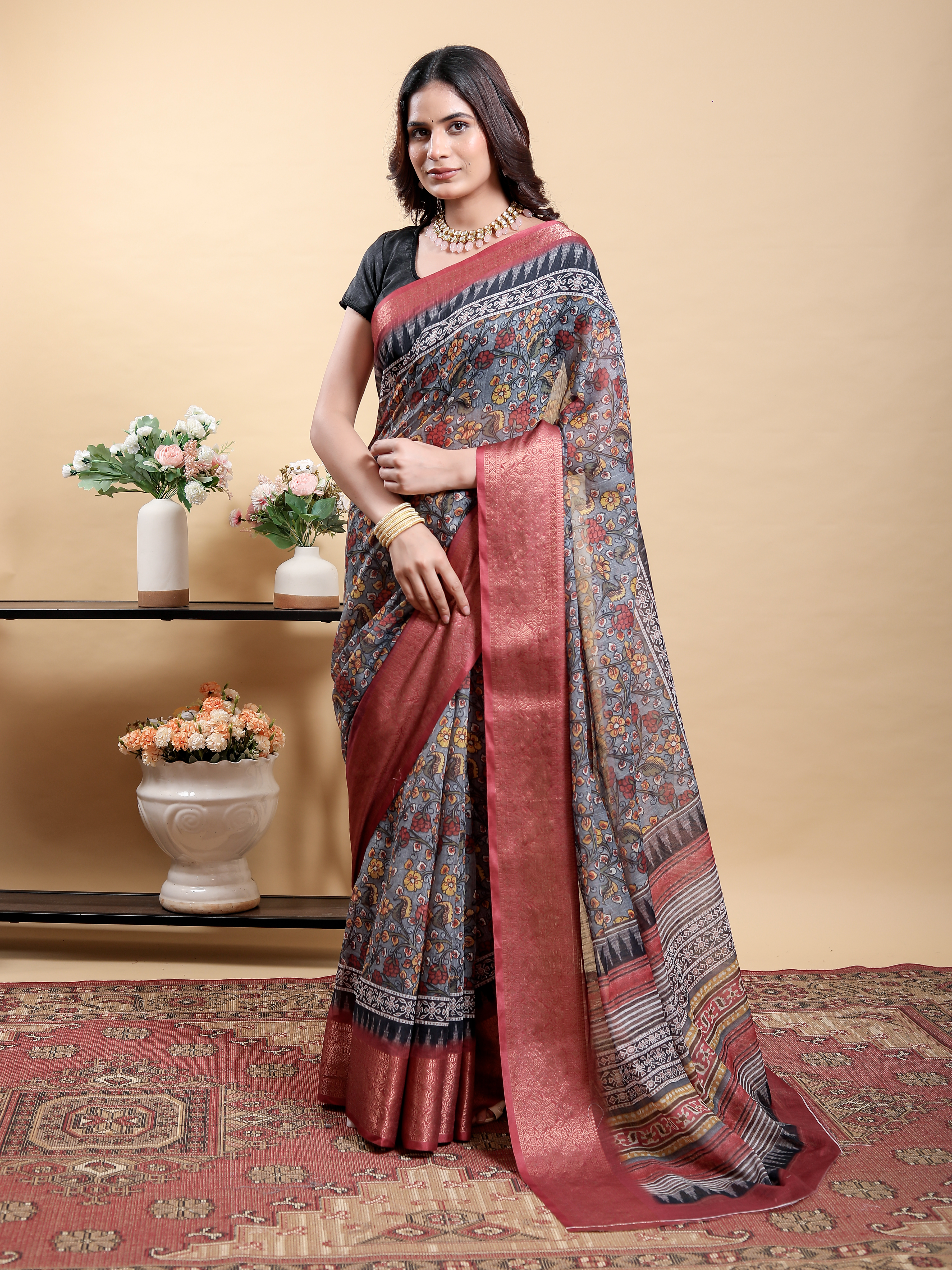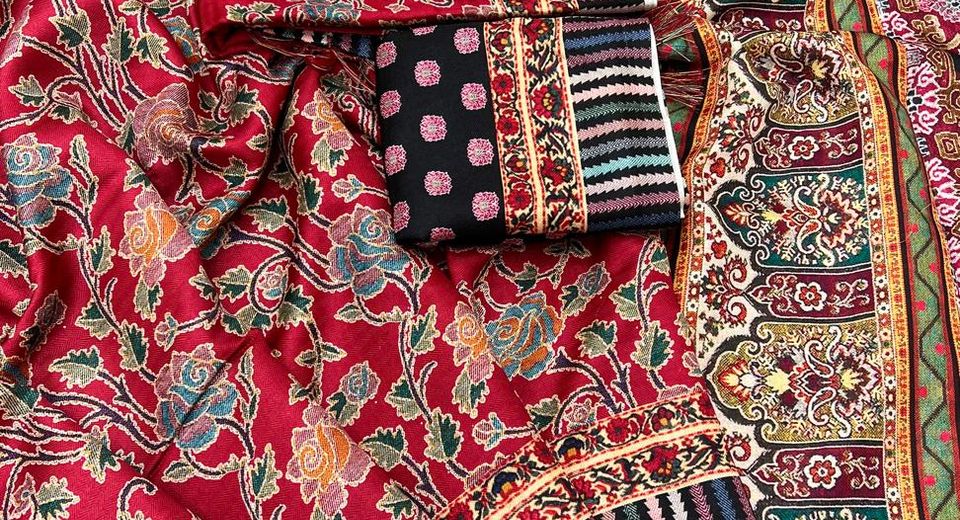
A Jaipur winter wedding outfit with a rewearable jacket needs to solve two problems at once: keeping you comfortable after sunset and looking festive in photographs. Jaipur evenings between November and February can feel sharply cooler than sunny afternoons, so a thin base layer, a warm textile, and a structured jacket are more useful than one heavily embellished outfit. The most successful combination uses a wedding-ready saree or suit as the foundation, then adds a jacket that can later work with trousers, dresses, or simpler Indian separates.
Rewearability also changes how you should shop. Instead of matching every element to one lehenga, choose a jacket in a versatile cut, a fabric with enough body to hold its shape, and embroidery that coordinates with several colours. A deep maroon, antique gold, charcoal grey, rust, or ivory layer can support multiple outfits without making each repeat look identical.
What makes a Jaipur winter wedding outfit with a rewearable jacket practical?
A practical Jaipur winter wedding outfit with a rewearable jacket combines a warm natural or blended textile, comfortable layering space, and decoration that suits more than one type of clothing. The jacket should sit smoothly over the base outfit without pulling at the armholes, while the hem should leave the saree pleats or palazzo silhouette visible.
Jaipur weddings often move between outdoor courtyards, decorated lawns, heritage venues, and heated indoor rooms. A jacket that looks beautiful but can't be removed easily becomes inconvenient during a long ceremony. Choose an open-front style, concealed hooks, or a short row of fabric-covered buttons so you can adjust your outfit without disturbing the drape.
Length affects both warmth and reuse. A cropped jacket ending near the waist works with sarees, high-waisted palazzos, and sharara trousers. A hip-length jacket offers more coverage and pairs well with straight pants or a plain kurta. A longline jacket creates a formal silhouette over a narrow salwar suit but may compete with a heavily bordered saree.
Which jacket fabric is warm enough for a Jaipur evening?
Pashmina, wool blends, velvet, brocade, and quilted silk blends provide useful warmth for a Jaipur winter wedding. Pashmina feels light and insulating, velvet blocks a little wind, and a lined brocade jacket gives structure for formal styling.
Fabric weight should match the venue rather than the calendar alone. An outdoor sangeet may justify a lined velvet or brocade layer, while an indoor pheras ceremony may need only a fine pashmina or silk-blend jacket. Avoid very thick padding over a saree because bulk around the waist can disturb pleats and create discomfort when seated on the floor.
How should you build the base layer?
The base layer should be close-fitting, breathable, and visually quiet enough to let the jacket and festive textile lead. A sleeveless blouse with a warm pashmina shawl, a full-sleeved blouse, or a lightweight thermal camisole beneath a kurta can all work, depending on the outfit's neckline and sleeve shape.
Colour planning starts with the base garment. A red or maroon foundation pairs naturally with antique gold, dull silver, black, and ivory jackets. Mustard and rust work with chocolate brown, bottle green, navy, and muted gold. Grey Pashmina creates room for jewel-toned accessories because the neutral ground doesn't compete with emerald, ruby, or sapphire accents.
Fit matters more in winter than in a single-season outfit because multiple layers can change the silhouette. Leave approximately 2 to 3 centimetres of ease around the upper arm and shoulder when the jacket will be worn over a blouse or kurta. Test the full outfit while sitting, raising both arms, and walking up steps before deciding that the fit is correct.
Can a saree and jacket replace a traditional blouse?
A saree and jacket can replace a conventional blouse when the jacket provides secure coverage and the saree is pinned for stability. The jacket should not be treated as a loose shawl if it has a fitted neckline or structured seams.
A full-sleeved blouse remains useful beneath a jacket because it prevents the garment from rubbing against bare skin and gives an extra layer for cold venues. A sleeveless blouse can create a cleaner line under a cropped jacket, but a pashmina shawl or warm stole should then be available for outdoor movement.
Which Indian textiles suit a rewearable winter wedding layer?
Banarasi silk, Pashmina, velvet, Vichitra silk, Chanderi, and brocade each create a different balance of warmth, shine, and formality. Pashmina brings the best light-to-warmth ratio, while Banarasi silk and brocade create ceremonial sheen without requiring heavy surface decoration.
Banarasi silk is elegant for an indoor reception but may require a separate outer layer if the venue is open-air. Chanderi is breathable and elegant for daytime events, although it's less insulating than Pashmina. Kanjeevaram silk has enough body for a formal winter wedding but normally benefits from a shawl or jacket after sunset. Velvet is primarily rich and warm, but velvet jackets should be lined carefully so they don't catch on silk sarees.
Pashmina sarees are especially adaptable because the shawl can be draped over the shoulders for an outdoor ritual and folded away when dancing or dining indoors. A shawl border can also guide the jacket palette. For example, a muted gold border supports antique gold embroidery, while a silver-grey border works with pewter zari or oxidised jewellery.
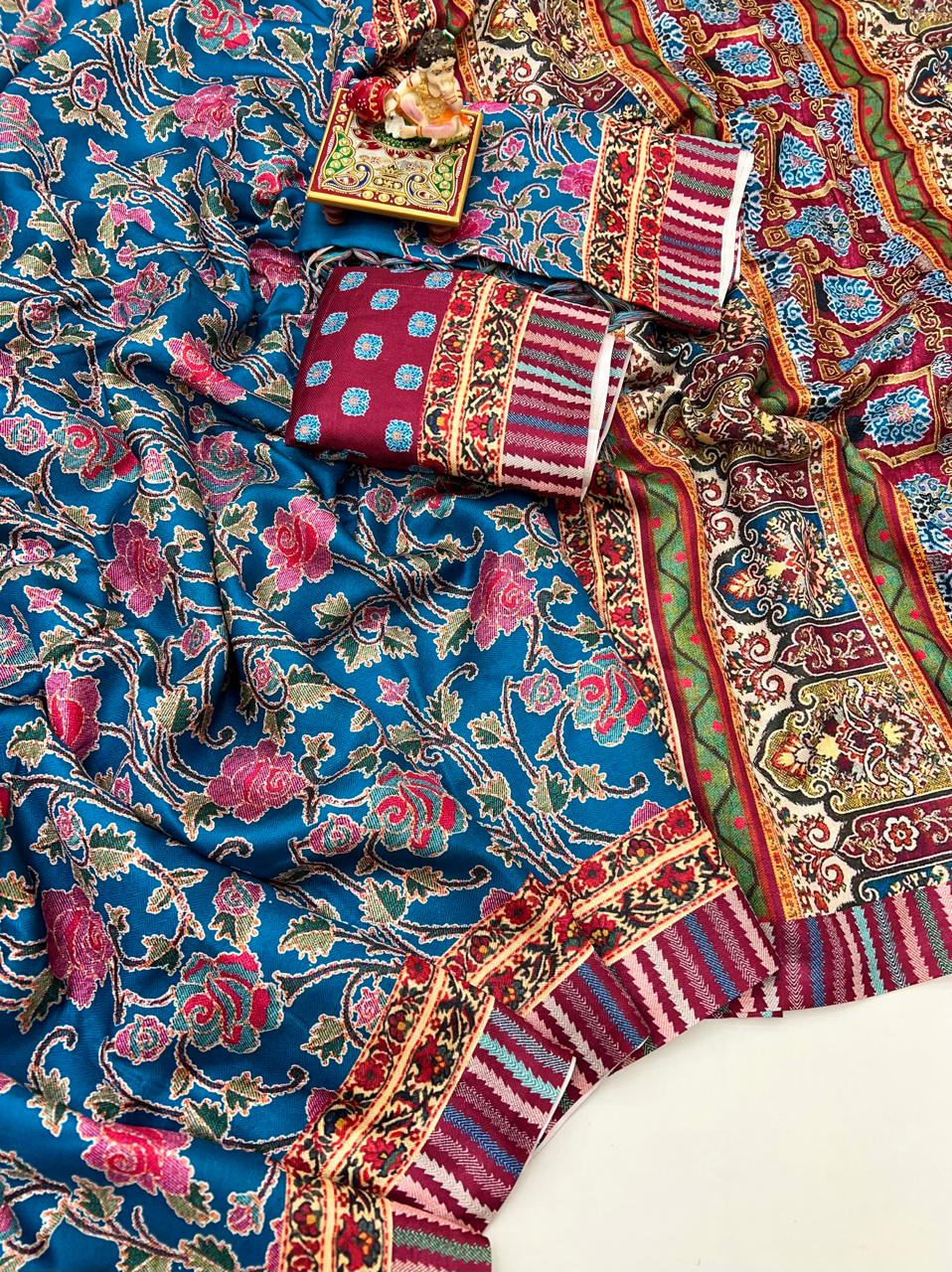
The Designer Red Pashmina Saree With Shawl gives a strong foundation for a maroon, black, ivory, or antique-gold jacket. The Red Floral Pashmina Saree With Shawl & Blouse Piece suits a simpler solid jacket because its floral surface already supplies visual detail. A jacket should frame a printed or embroidered saree rather than hide the most important motif.
How can one jacket work with more than one wedding outfit?
One jacket becomes genuinely rewearable when its colour, length, and ornamentation coordinate with at least three different separates. A mid-length maroon, black, ivory, rust, or deep green jacket can move between a saree, a palazzo suit, and a plain kurta-and-trouser combination.
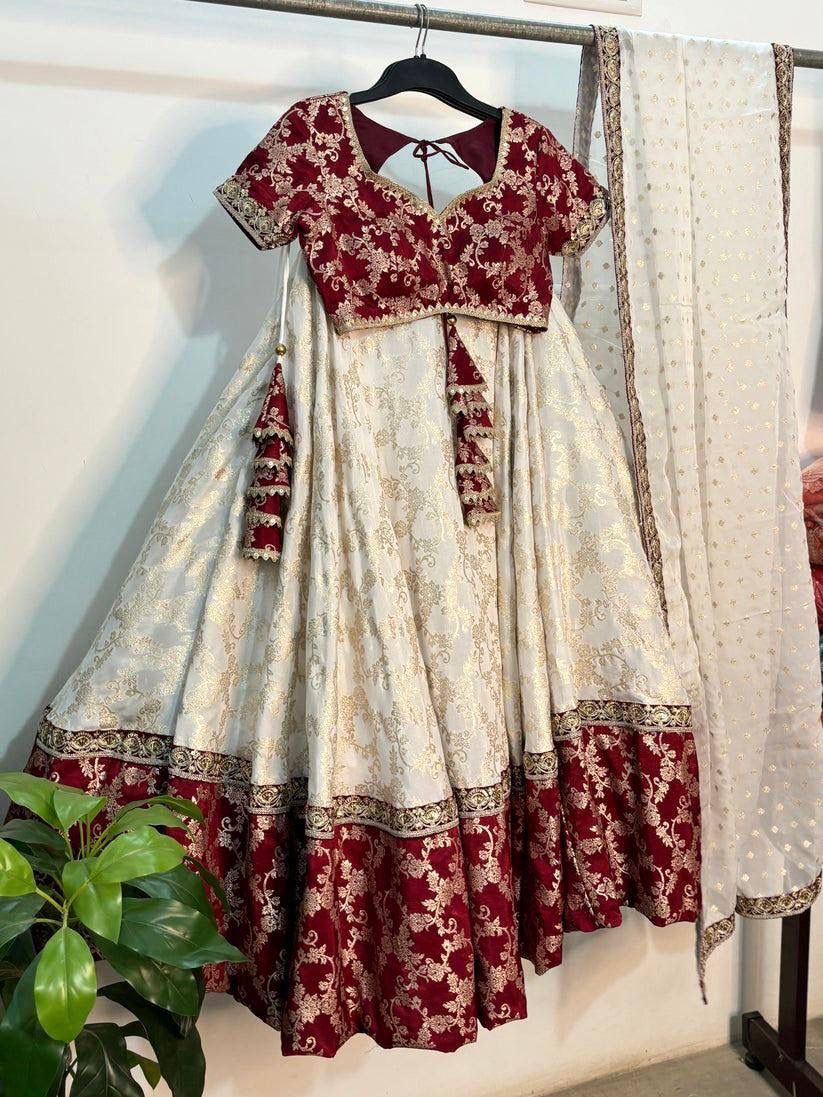
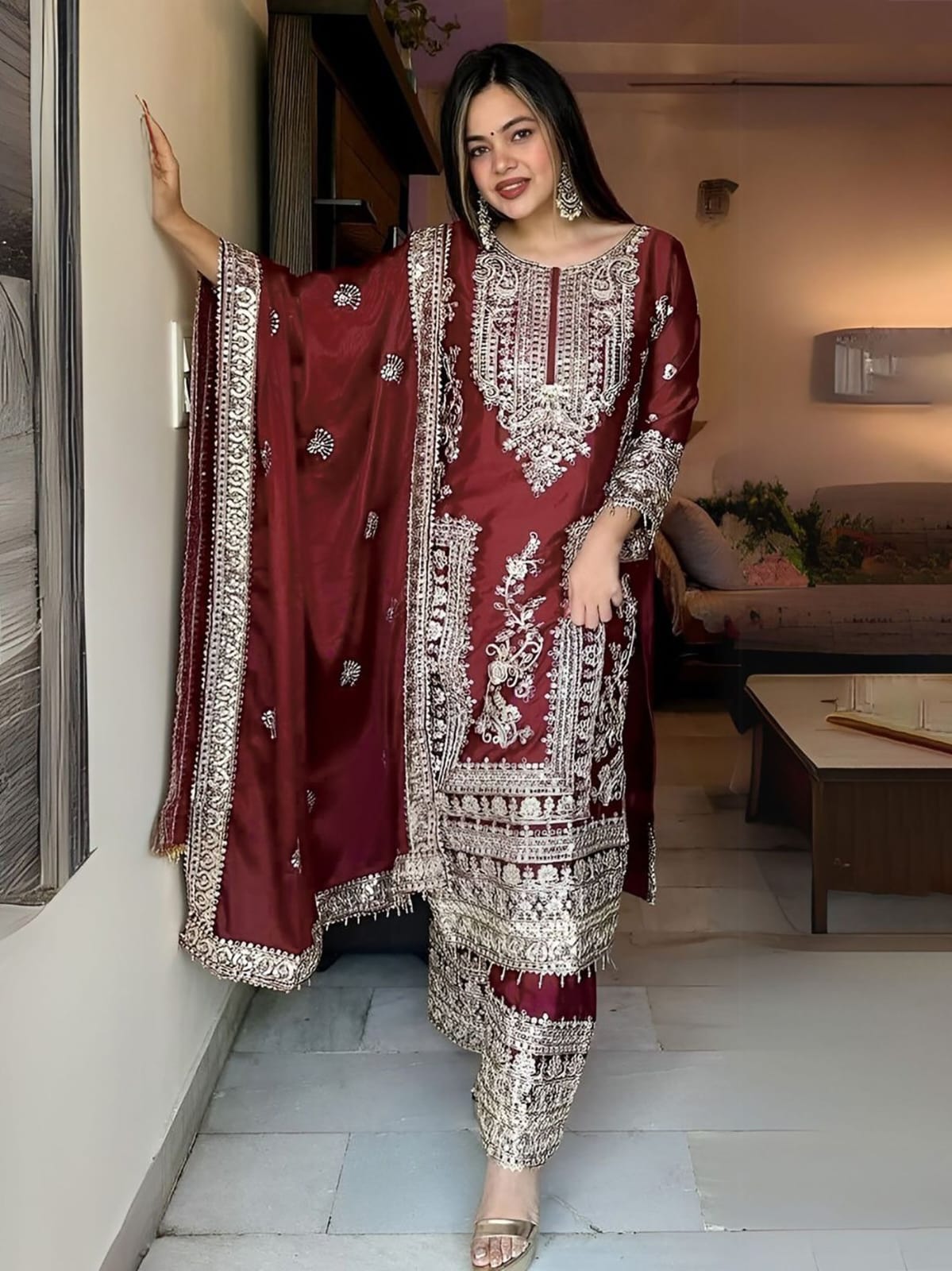
The Maroon Wedding Wear Embroidered Palazzo Suit Set demonstrates why a strong colour base can carry a separate layer. For a wedding, add a shorter jacket with antique gold thread or restrained zari. For later wear, pair the same jacket with cream palazzos, a black silk camisole, or a plain kurta so that the original matching-set effect disappears.
The Rust Orange Vichitra Silk Embroidered Kurta Pant Set gives another useful direction. Rust works with ivory, beige, chocolate, and muted gold, allowing a neutral jacket to be worn with the set at a reception and later with a simple black dress or wide-leg trousers. Rewearability improves when the jacket's embroidery includes no more than two dominant thread colours.
Which jacket details make repeat styling easier?
Medium-scale embroidery, a reversible construction, removable brooches, and a clean neckline make a jacket easier to repeat. Heavy bridal motifs concentrated across the front limit the garment to highly formal outfits, while all-over small motifs can work with both festive and semi-formal clothing.
Choose antique gold over bright yellow gold when the wardrobe includes red, rust, grey, mustard, and blue. Antique gold looks less costume-specific and blends with both traditional zari and contemporary jewellery. A plain back panel is also valuable because the jacket can be worn open without creating a crowded appearance.
Removable tassels, detachable shoulder ornaments, and a separate belt can change the jacket's identity. Wear the belt for a formal sangeet, remove it for a quieter dinner, and use the jacket open over a plain kurta for a third interpretation.
How do you style Pashmina sarees for a cold Jaipur wedding?
A Pashmina saree is easiest to style for winter when the pleats remain light and the shawl is treated as a deliberate layer rather than an emergency cover-up. Pin the pallu at the shoulder, secure the pleats at the waist, and keep the shawl either folded over both shoulders or draped over one arm when indoors.
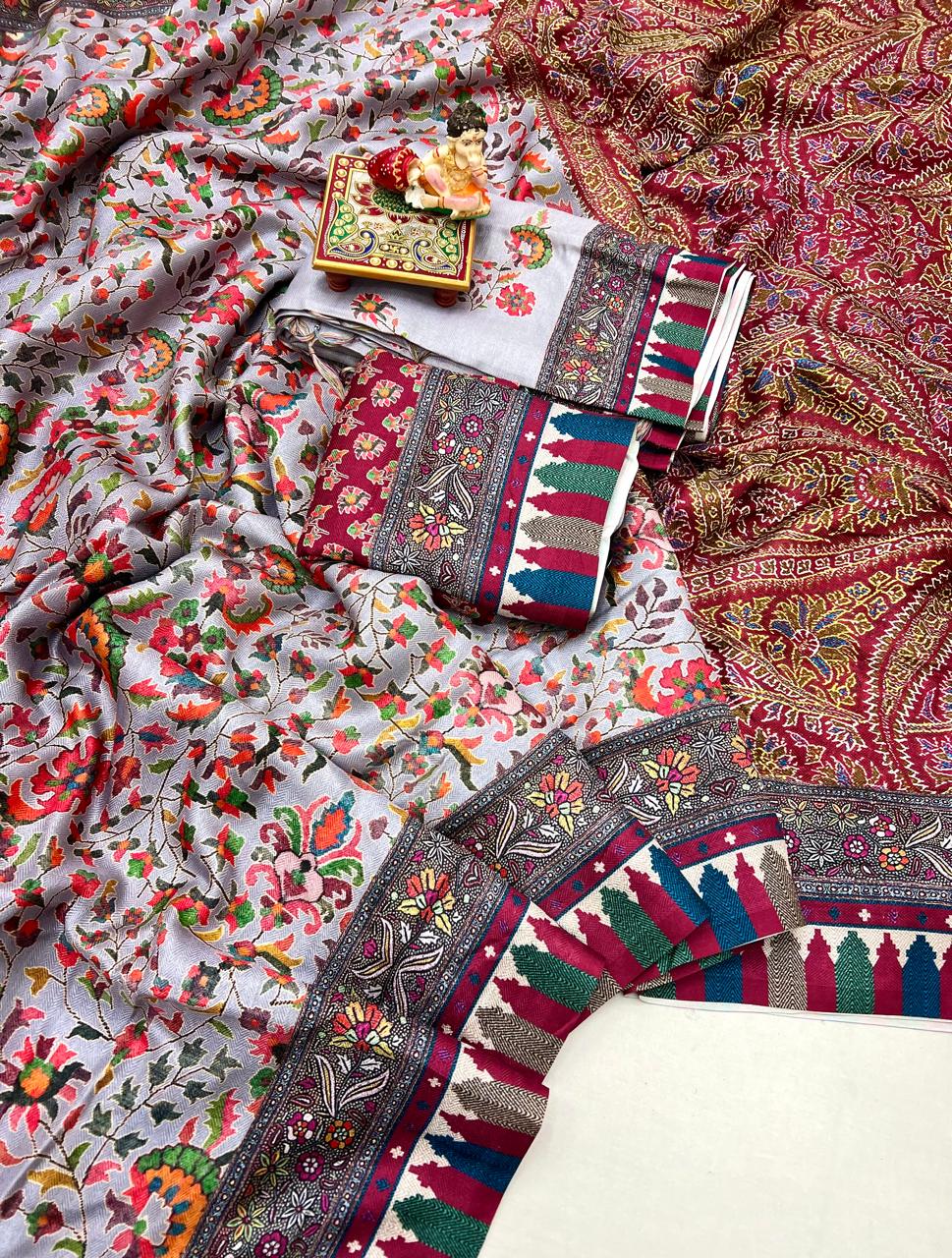
The Grey Kashmiri Style Pashmina Saree With Shawl & Blouse creates a neutral base for a wine, emerald, navy, or antique-gold jacket. Grey also allows colourful earrings or a contrasting potli to become the focal point without making the outfit visually heavy.
The Mustard Paisley Pashmina Saree With Shawl & Blouse Set works with deep brown, rust, plum, and dark green. A cropped brown velvet jacket can make the saree feel appropriate for an evening wedding, while a plain ivory jacket can later be worn with a cotton kurta and trousers.
The Traditional Blue Pashmina Saree With Shawl For Weddings supports silver zari, pearl jewellery, and charcoal or ivory outer layers. Blue is especially useful for rewearing because the same jacket can later accompany denim, navy trousers, or a white silk kurta without looking tied to one ceremony.
The Floral Pashmina Saree With Shawl & Blouse Piece should be paired with one dominant solid shade taken from the floral print. Repeating every flower colour in the jacket, jewellery, and footwear usually produces a busy result. Let the saree supply pattern and let the jacket supply shape.
What accessories keep a layered wedding outfit balanced?
Accessories should support the jacket's neckline and the saree's border rather than add another competing pattern. Medium-sized jhumkas, a single necklace, a compact potli, and low-heeled closed-toe footwear provide enough ceremony detail without making a winter outfit cumbersome.
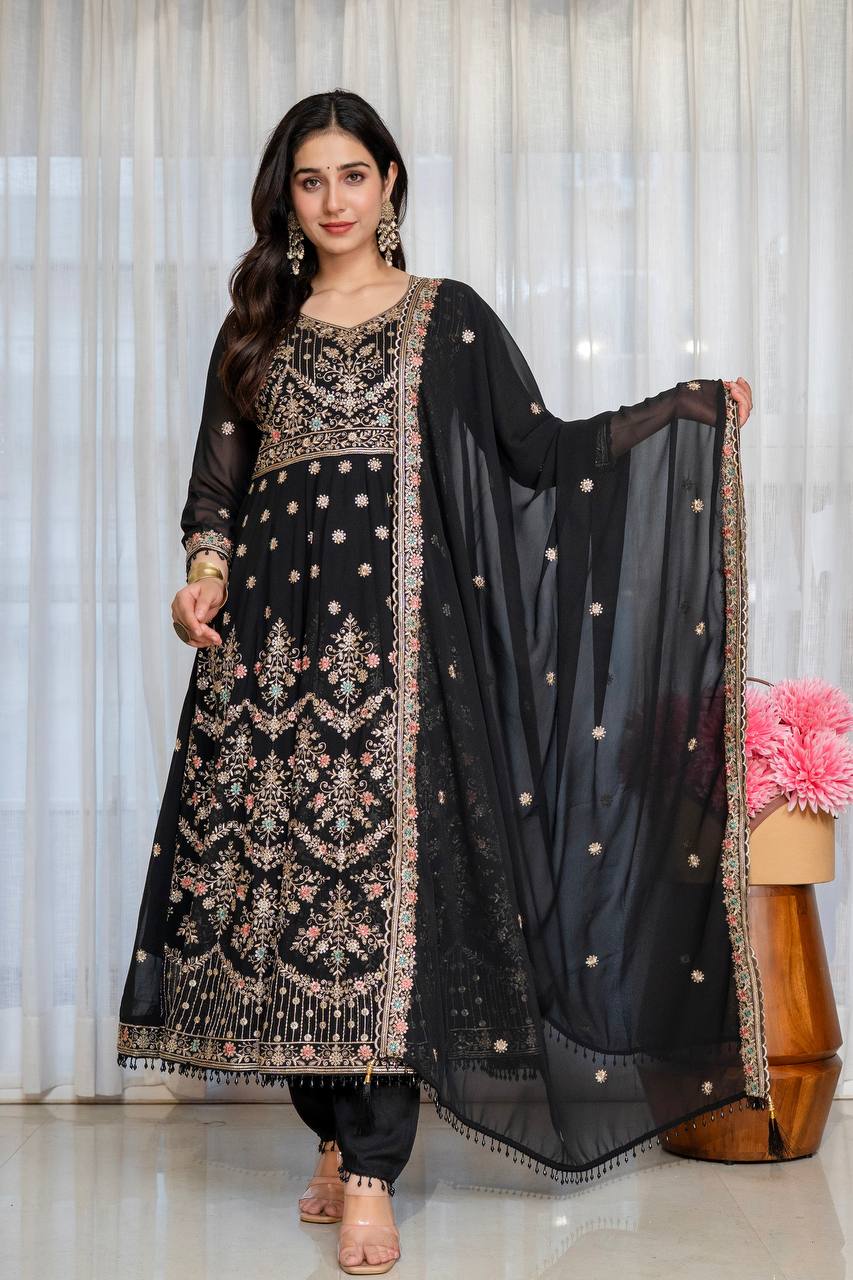
Jadau and kundan jewellery suit rich silk, velvet, and brocade, while pearls and oxidised silver create a quieter finish for grey, blue, or floral Pashmina. Match the metal family to the jacket's embroidery: antique gold zari usually looks more cohesive with warm-toned jewellery, whereas silver zari pairs naturally with cool-toned stones.
Footwear deserves practical attention in Jaipur. Block heels of 2 to 3 inches are steadier on stone courtyards than narrow stilettos, and closed-toe juttis keep feet warmer during outdoor rituals. Choose a shoe that accommodates socks or a cushioned insole if the ceremony includes extended standing.
A brooch can secure a shawl without damaging a delicate saree if it's attached to the jacket or blouse seam instead of the saree body. Avoid repeatedly pinning through fine Pashmina, Chanderi, or lightweight silk because small punctures can become visible after several wears.
How should you plan the outfit around a Jaipur wedding schedule?
A Jaipur wedding schedule often requires separate styling decisions for the mehendi, sangeet, wedding ceremony, and reception. The same jacket can appear different when the base textile, jewellery, and drape change.
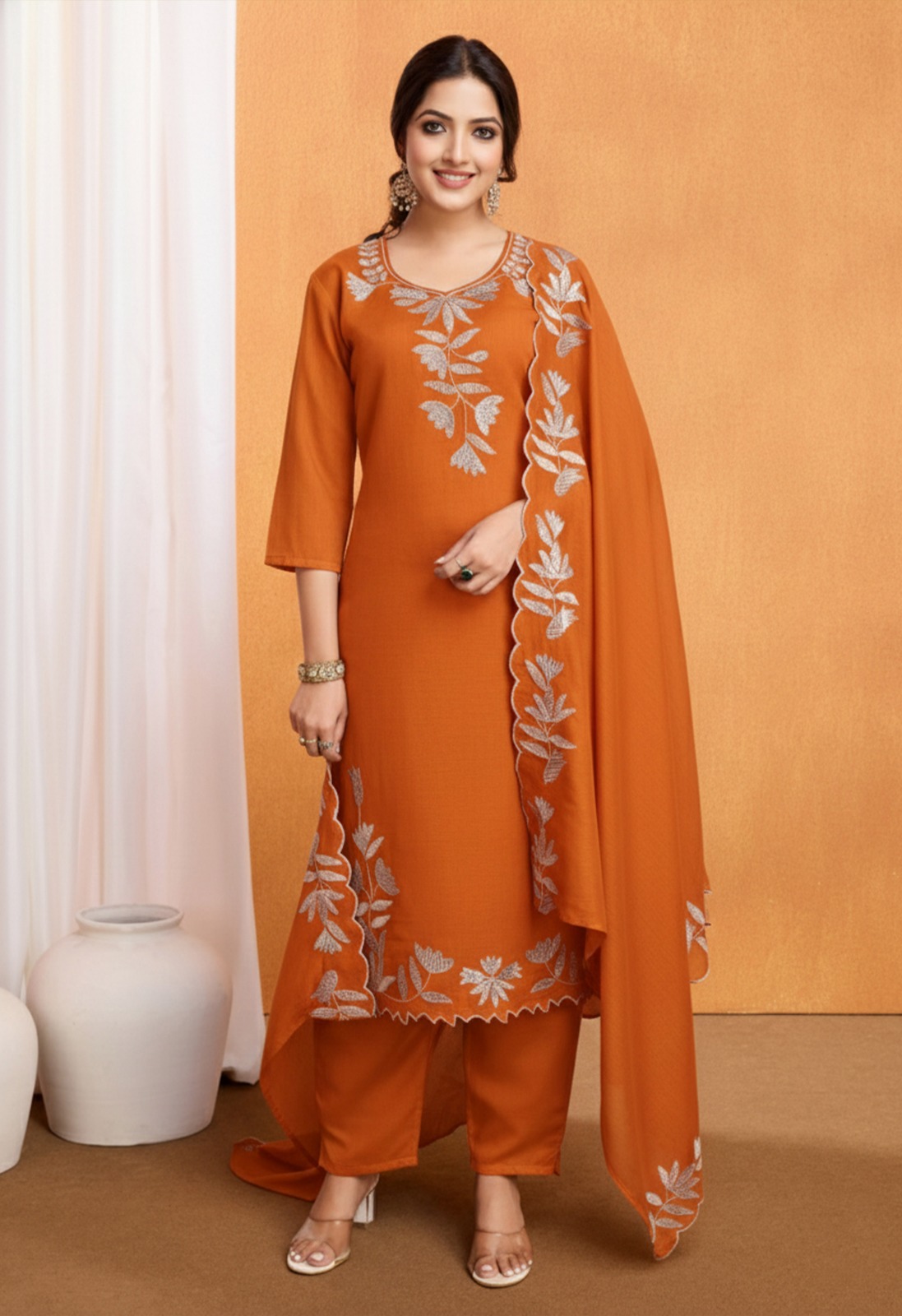
For a daytime mehendi, wear a lighter jacket over a printed kurta, palazzo trousers, or a Chanderi saree. Keep embroidery moderate because daylight reveals surface detail clearly. For an evening sangeet, use the jacket as a polished layer over the Maroon Wedding Wear Embroidered Palazzo Suit Set or a bright saree, and choose secure footwear for movement.
For the wedding ceremony, a Pashmina saree with a full-sleeved blouse and jacket brings warmth without losing traditional formality. The Designer Red Pashmina Saree With Shawl and the Traditional Blue Pashmina Saree With Shawl For Weddings can both take on a more ceremonial appearance through zari jewellery, a formal bun, and a carefully pinned pallu.
For a reception, a jacket over a saree can be worn open to reveal the blouse and waistline. Removing the shawl during indoor photographs prevents the upper body from appearing crowded and lets the jacket's cut show clearly.
How do you care for a jacket and winter wedding textiles?
Care begins before the wedding: air the jacket and saree for several hours, inspect seams and hooks, and test colour transfer on a hidden section. Professional dry cleaning is safer for velvet, embellished jackets, zari, and Pashmina than repeated home washing.
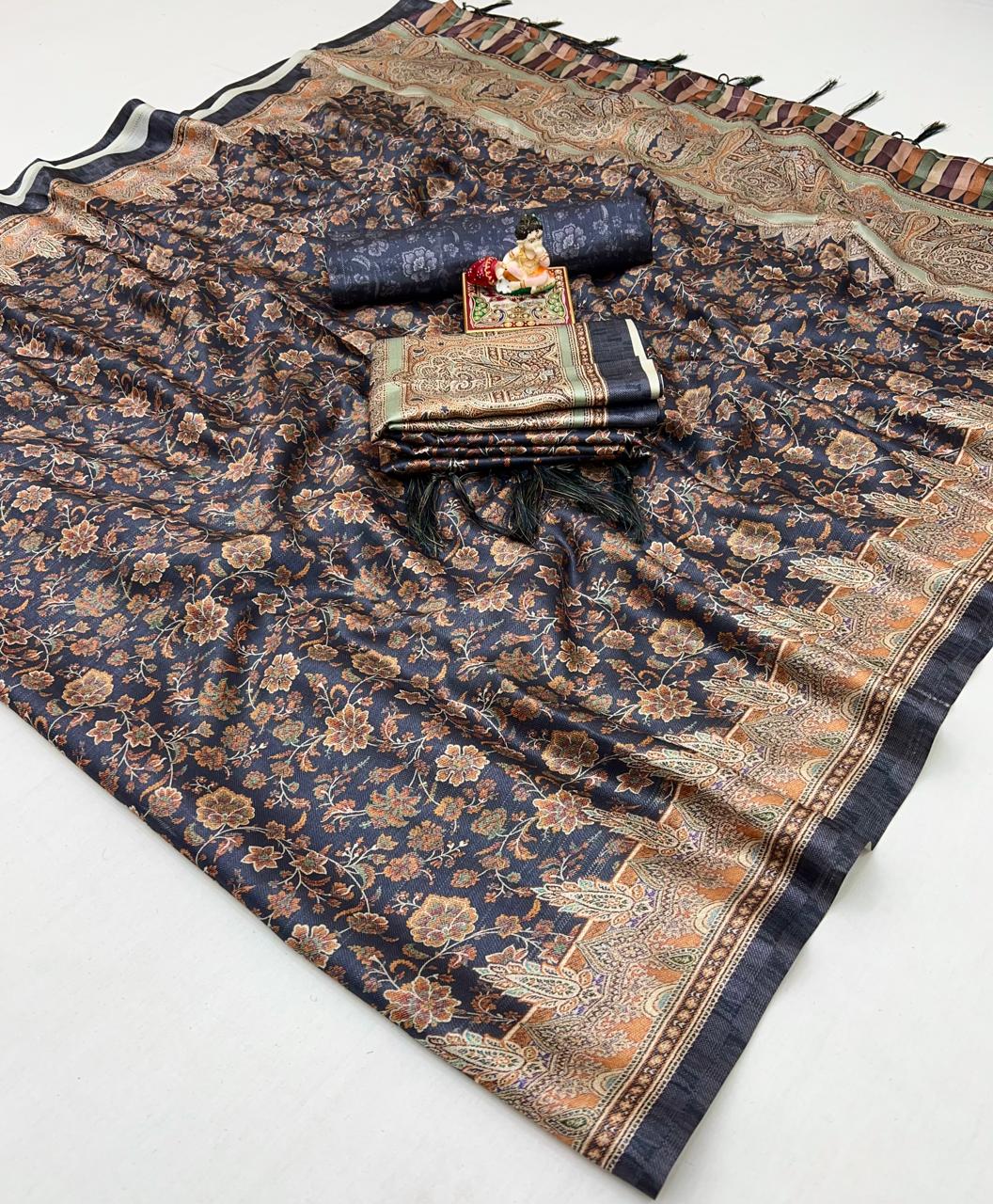
Store a structured jacket on a broad padded hanger so the shoulders don't develop sharp points. Fold heavy embroidery face inward with acid-free tissue between decorated surfaces, and keep the garment in a breathable cotton cover rather than sealed plastic. Plastic can trap moisture and encourage odour or mildew during storage.
Fold Pashmina sarees along existing crease lines and avoid hanging them for months because their weight can stretch the fabric. Never iron zari, velvet, or embellished surfaces directly. Use a pressing cloth and low heat only when the care label permits it; steam from a distance is often safer for minor creases.
After wearing the Jaipur winter wedding outfit with a rewearable jacket, allow every layer to air completely before storage. Food, perfume, and perspiration can attract insects or leave marks that become harder to remove over time. A simple airing routine protects the outfit for future dinners, festivals, and weddings.
How can you check whether the outfit is truly rewearable?
An outfit is genuinely rewearable when the jacket works with at least three existing garments, the fabric remains comfortable in both indoor and outdoor settings, and the decoration doesn't identify it too narrowly with one wedding. Try the jacket with a plain saree, a solid kurta, and trousers before purchase.
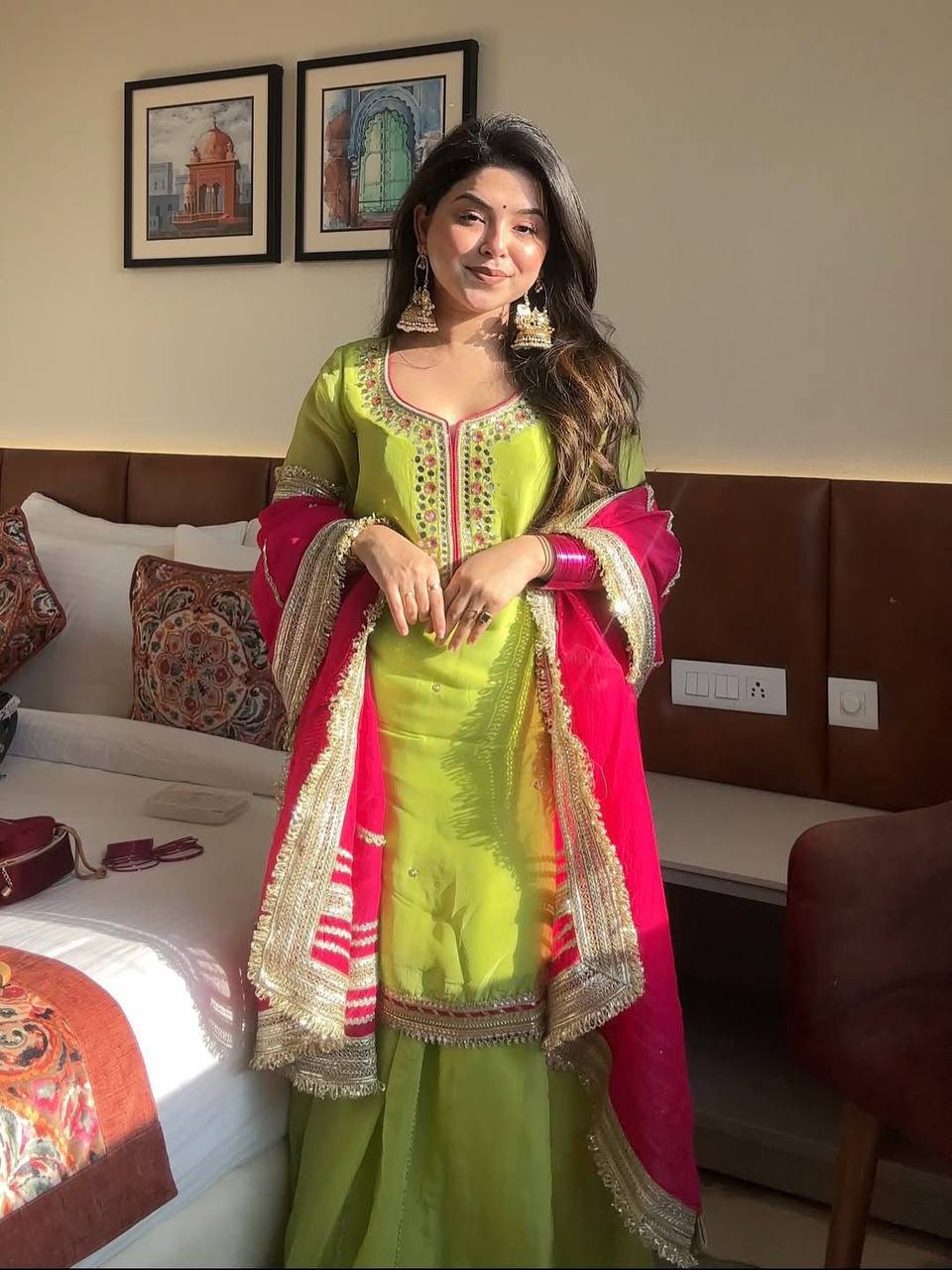
Photograph each combination in natural light and indoor light because embroidery and colour can change significantly between settings. Check whether the jacket covers the blouse hooks, whether the sleeve allows comfortable arm movement, and whether the hem catches on the saree border.
Budget should include alterations, lining repairs, professional cleaning, and a storage cover. Spending slightly more on a well-finished lining and reliable closures often creates greater value than choosing a cheaper jacket with uncomfortable seams or unstable embellishment.
A corporate Jaipur winter wedding outfit with a rewearable jacket therefore depends less on maximum decoration and more on coordinated materials, sensible proportions, and planned second uses. Pashmina, Banarasi silk, velvet, Vichitra silk, and Chanderi each have a place, provided the jacket matches the fabric weight and the demands of the venue.
Questions About Building a Jaipur Winter Wedding Look With a Rewearable Jacket
What should I wear to a winter wedding in Jaipur?
Wear a saree or palazzo suit with a warm layer such as a Pashmina shawl, lined velvet jacket, brocade jacket, or wool blend. Choose block heels or closed-toe juttis because Jaipur wedding venues may include cool outdoor courtyards and uneven stone surfaces.
Can I wear a jacket over a Pashmina saree?
Yes, a jacket works well over a Pashmina saree when the cut leaves the pleats and pallu visible. Choose a cropped or hip-length style, pin the saree securely, and avoid excessive bulk around the waist.
Which jacket colour is easiest to rewear with Indian outfits?
Maroon, ivory, black, rust, deep green, charcoal, and antique gold are among the easiest colours to rewear. These shades coordinate with red, mustard, blue, grey, and neutral sarees as well as plain kurtas and trousers.
Is Pashmina warm enough for a Jaipur wedding at night?
Pashmina is usually warm enough for a mild Jaipur evening when layered over a blouse or kurta, but a lined jacket may be more suitable for an open-air venue or a late-night ceremony. Wind, venue exposure, and personal cold sensitivity should guide the final layer.
How can I make a wedding jacket look less bridal after the event?
Remove detachable tassels, belts, or brooches and pair the jacket with a plain kurta, solid saree, black dress, or wide-leg trousers. A jacket with medium-scale embroidery and antique-gold detailing is generally easier to dress down than one covered in large bridal motifs.
How should I store a Pashmina saree and embellished jacket after a wedding?
Air both garments fully before storage, then fold the Pashmina saree along existing creases and place tissue between embellished surfaces. Keep the jacket on a broad padded hanger or fold it with acid-free tissue in a breathable cotton cover, and use professional dry cleaning when the care label requires it.