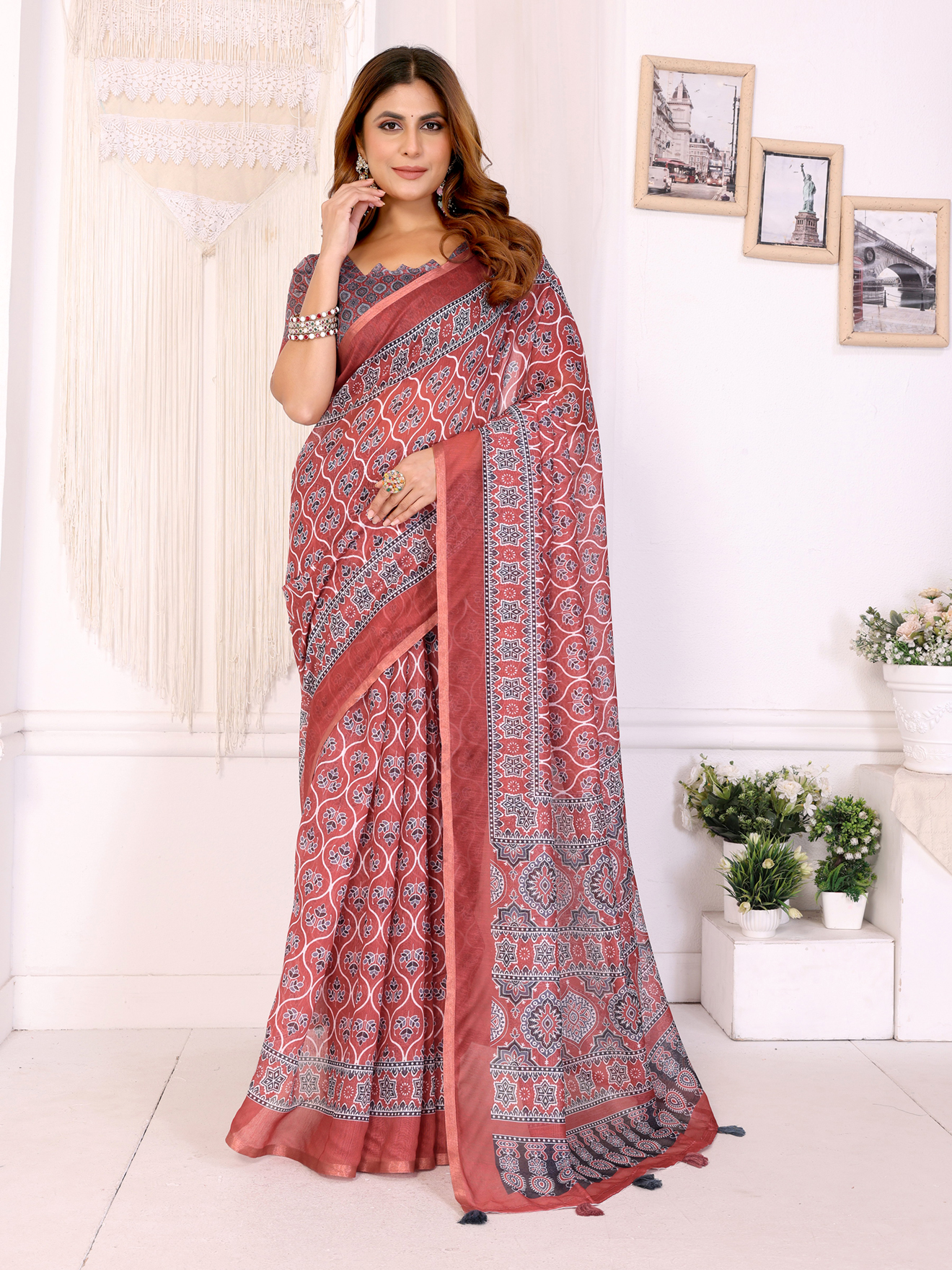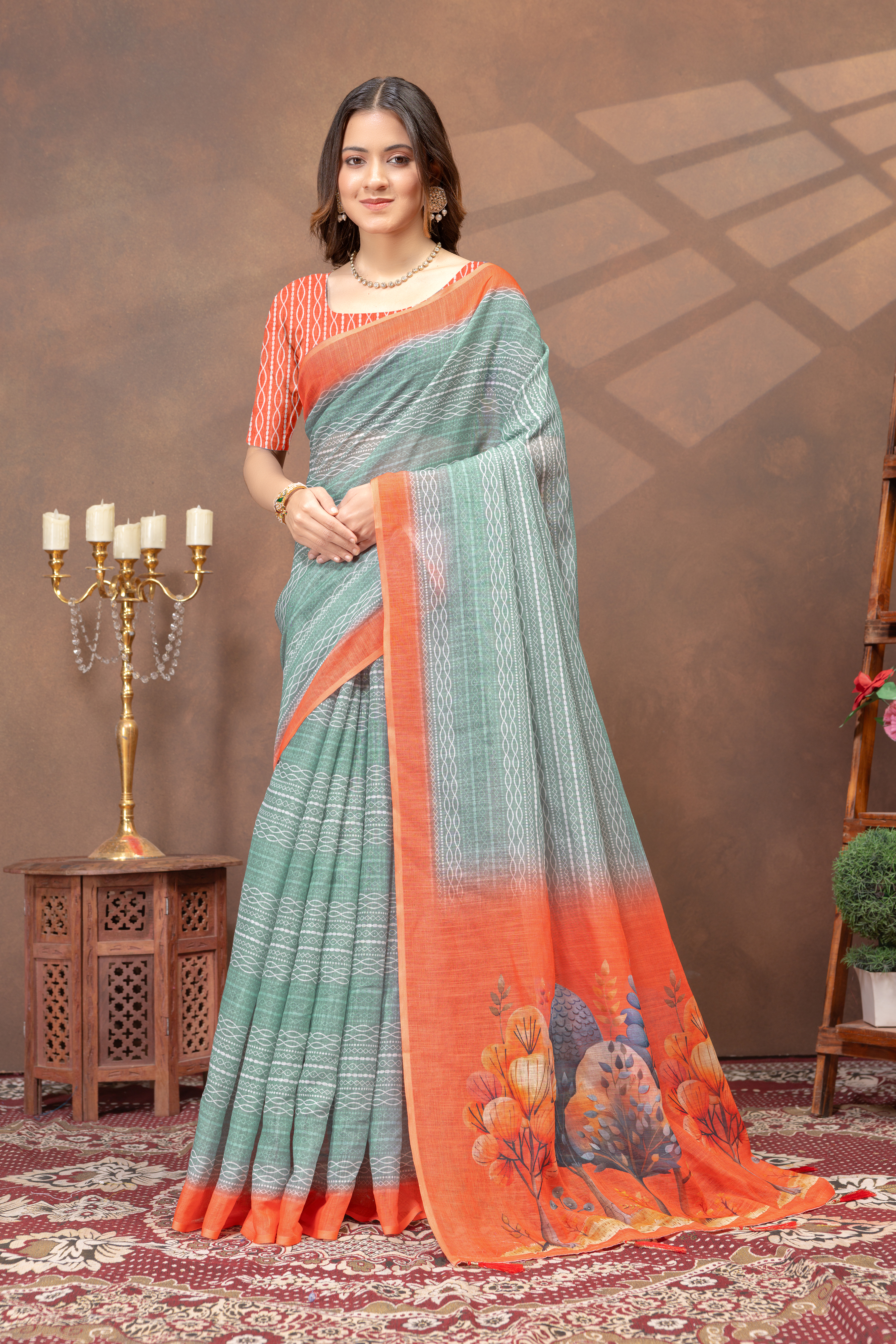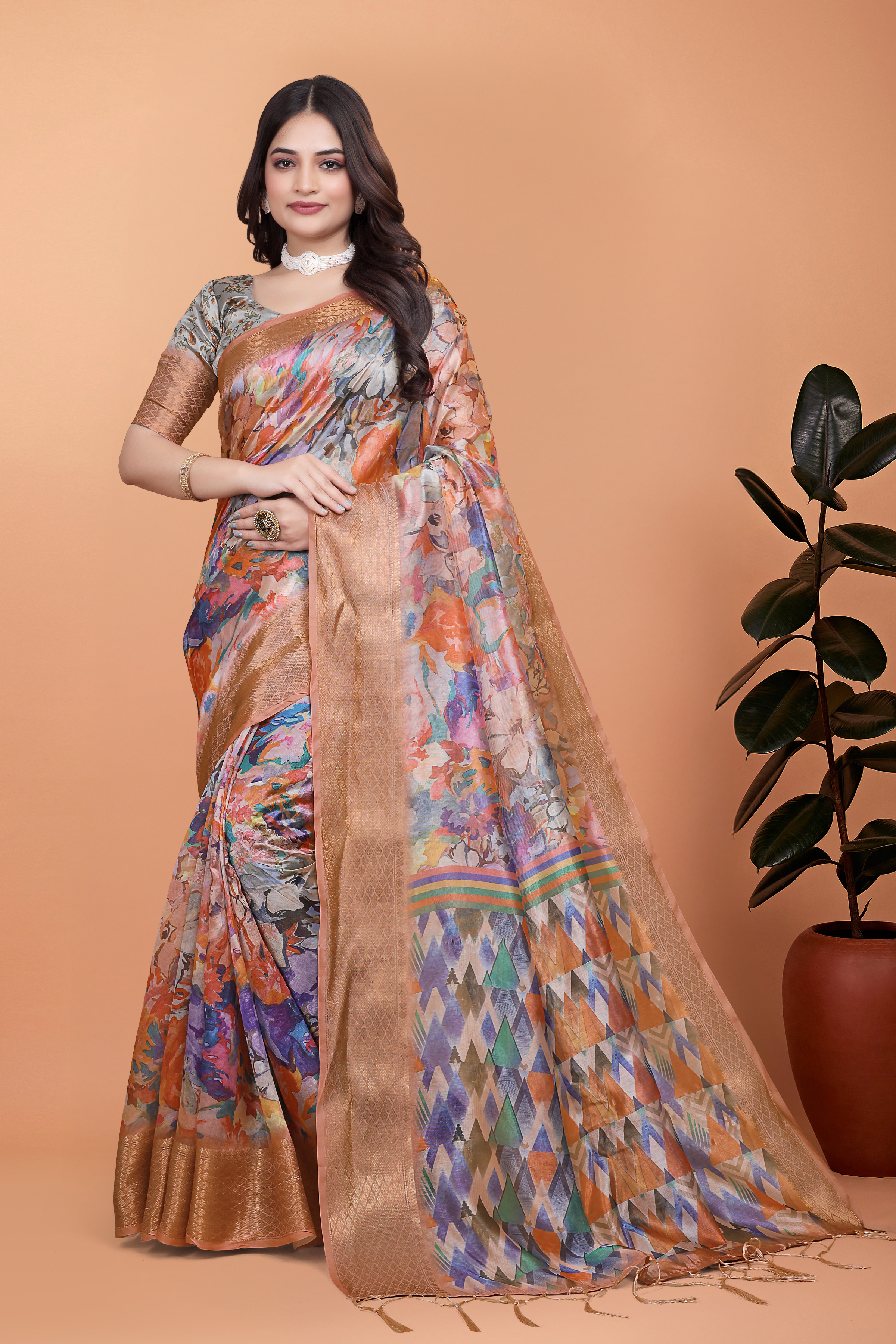
Jaal Work Sarees Create Detail Across the Fabric Without Looking Crowded because repeated motifs are arranged with deliberate spacing and visual rhythm. Flowers, vines, paisleys, geometric forms or woven patterns can cover the saree body while still leaving enough breathing room for the base fabric to remain visible. The effect is especially useful when you want a saree that feels richly designed without depending on heavy embroidery, oversized borders or too many contrasting colours.
The word jaal refers to a net-like arrangement. A saree can create that arrangement through zari, jacquard weaving, printing, embroidery or a combination of techniques. A fine floral network on Chanderi will look lighter than a bold woven repeat on Banarasi silk, even when both fabrics have similar motif coverage. Understanding the construction helps you judge whether a saree will appear subtle, festive, formal or overwhelming in natural light.
Jaal Work Sarees Create Detail Across the Fabric Without Looking Crowded: What creates the balance?
Jaal Work Sarees Create Detail Across the Fabric Without Looking Crowded when motif scale, negative space, colour contrast, border width and pallu design support one another. A repeating pattern gives the eye a route to follow, while empty areas prevent the entire saree from reading as one dense block.
Repetition is the first source of order. A recurring flower, leaf, paisley or diamond creates consistency across the body. Spacing is the second source of order. Even small gaps between motifs can make a densely patterned saree feel lighter. Hierarchy is the third source of order: the border or pallu may be more prominent than the body, but the three areas should still share a colour, shape or weave reference.
Contrast changes perceived density. Gold zari on a maroon or black ground appears stronger than tonal jacquard in a similar layout. A bright pink-and-green print can feel busier than a monochrome woven pattern because every motif separates clearly from the base. Product photographs can also exaggerate shine, so a full-drape image is more useful than a close-up alone when assessing pattern concentration.
Jaal Work Sarees Create Detail Across the Fabric Without Looking Crowded: How do you read the pattern?
You can read a jaal pattern by examining motif size, the distance between repeats, border proportion, pallu transition and the direction in which the pattern sits on the fabric. These details reveal how the saree will look in pleats and while walking.
Motif scale and negative space
Small motifs usually create a delicate and versatile surface, while large motifs make a stronger contemporary statement. Motifs measuring approximately 2 to 4 centimetres often work well for daytime gatherings because they add texture without dominating the outfit. Larger motifs can suit evening wear when the base colour is controlled and the border isn't equally elaborate.
Negative space doesn't mean that the saree looks unfinished. Negative space is the visible base fabric between motifs, and it gives the eye a pause. A jaal with consistent gaps often looks more refined than a pattern where every area is filled with zari or contrasting print. Uneven spacing may be intentional in a hand-painted or artisanal design, but the irregularity should look organic rather than accidental.
Border and pallu proportion
A wide border works best when the saree body has a quieter repeat, while a narrow border can preserve balance when the body already carries bold flowers or strong geometric forms. The pallu should complete the pattern rather than introduce an unrelated design. A defined border can also make a fluid saree easier to style because it creates a clear visual edge.
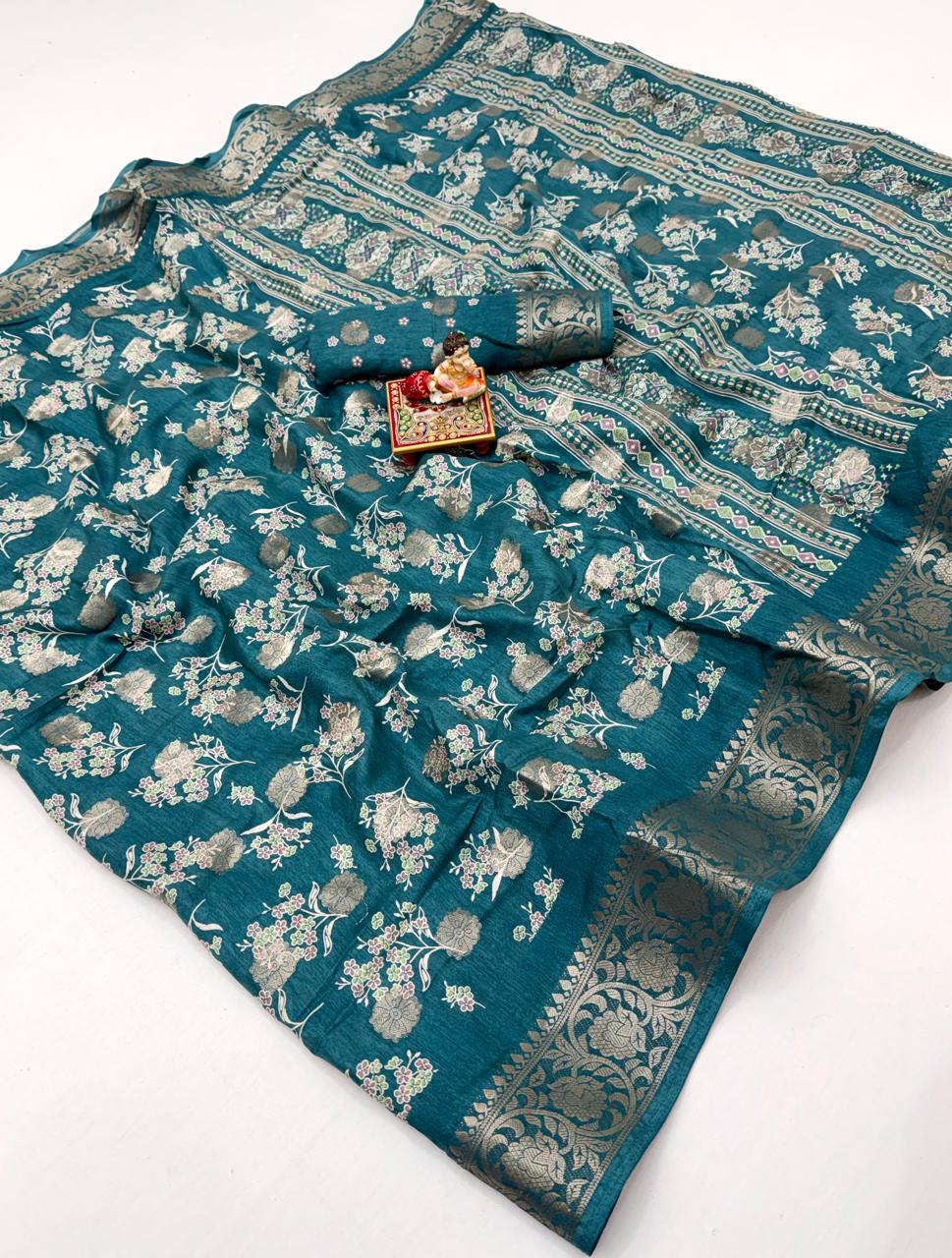
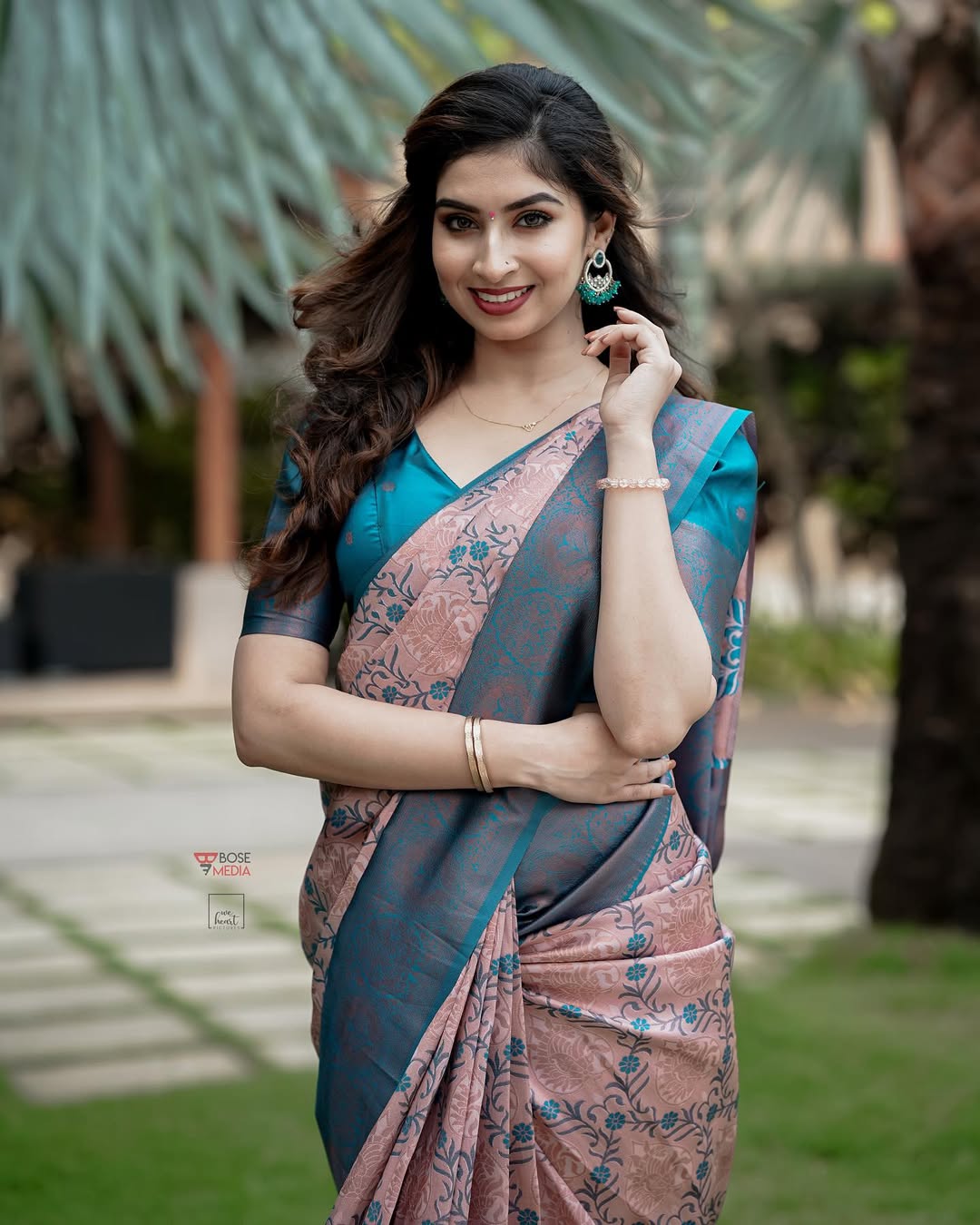
The Teal Ethnic Dola Silk Saree With Elegant Jacquard Border shows how a structured jacquard border can frame a patterned body. A teal blouse with minimal work or a blouse taken from the border shade will allow the saree to remain the main focus. Excessive embroidery on the blouse could compete with the border and reduce the clarity of the jaal arrangement.
Jaal Work Sarees Create Detail Across the Fabric Without Looking Crowded: Which fabrics work well?
Silk, silk blends, cotton, linen-cotton and tissue can all support jaal detailing, but each fabric changes the pattern's shine, weight, definition and formality.
Banarasi silk and soft silk
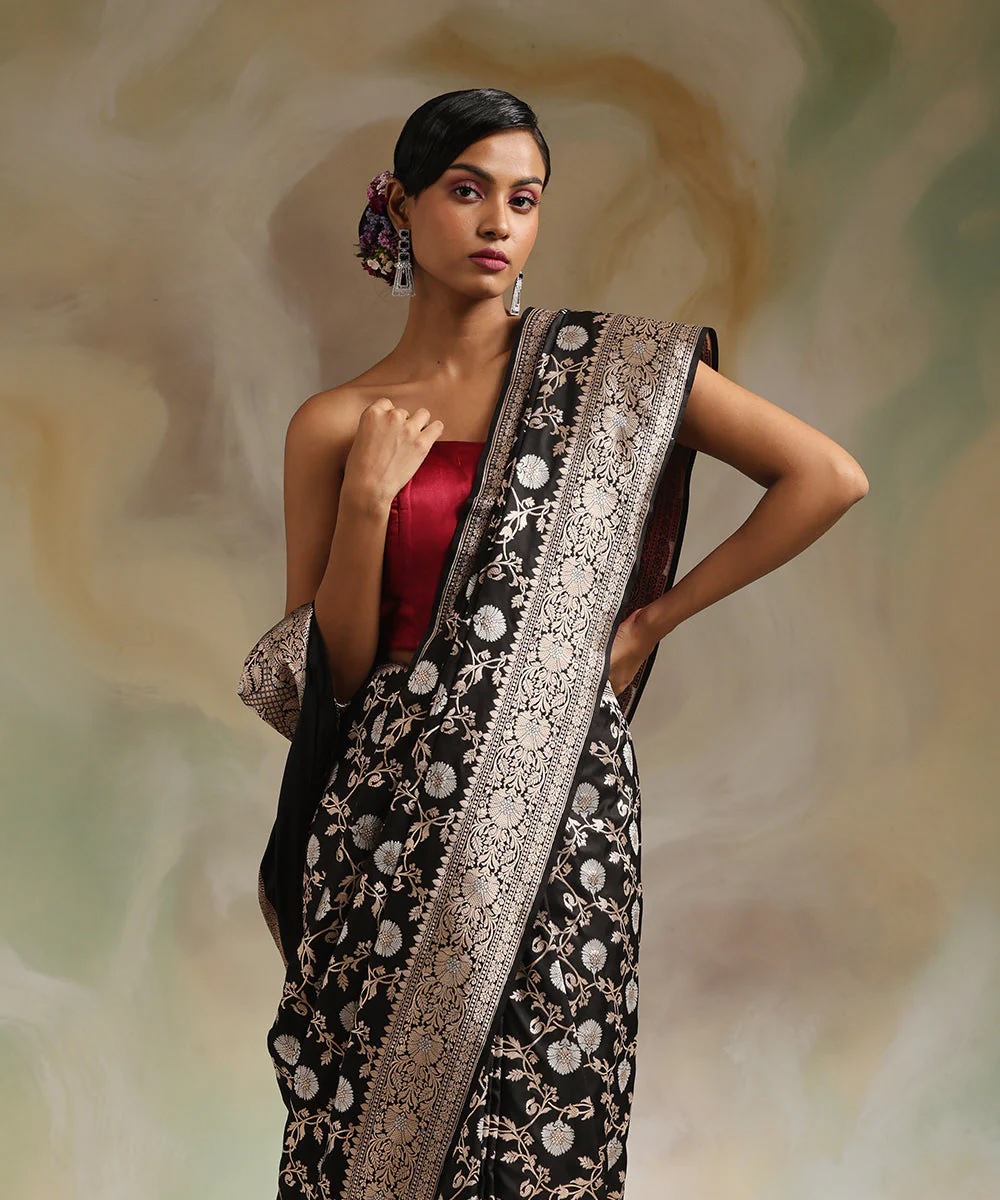
Banarasi silk gives zari and jacquard motifs a crisp appearance because its woven structure holds pattern definition. A dark Banarasi base can make gold or antique zari appear especially prominent, so a smaller repeat may create better balance than a large high-contrast motif. Stylish Black Banarasi Saree with Detailed Jacquard Work demonstrates how a black ground can make complex woven detail visible while keeping the palette controlled.
Soft silk has a fluid fall and a noticeable sheen, which makes it suitable for evening receptions, festive dinners and formal family events. Designer Black Soft Silk Saree with Intricate Patterns shows how a near-monochrome surface can gain interest from pattern rather than multiple colours. A matte blouse with a simple neckline can support the saree more effectively than a blouse covered in additional sequins.
Cotton, linen-cotton and tissue
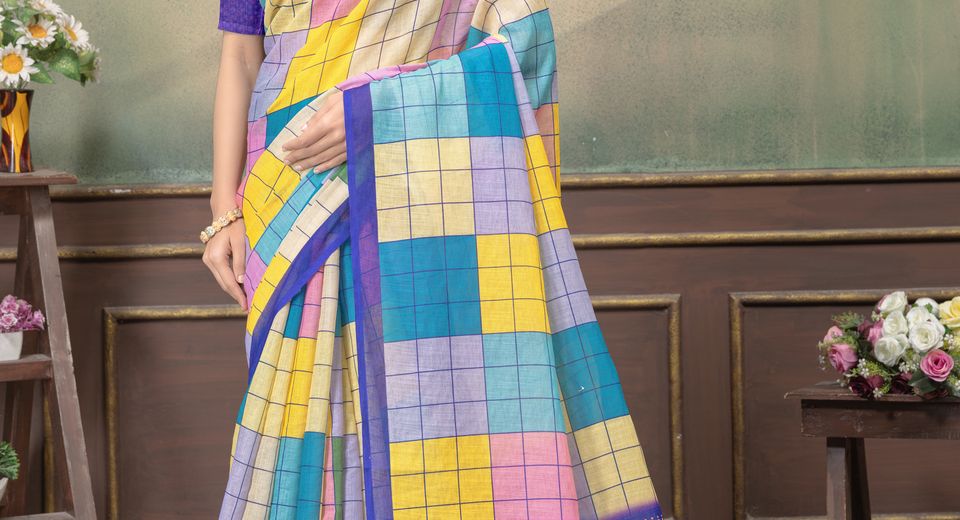
Linen-cotton and handloom cotton make repeated motifs feel relaxed and breathable, which suits daytime pujas, cultural gatherings and warm-weather celebrations. Multicolor Grid Print Linen Cotton Saree with Purple Border uses a structured grid rather than a traditional floral network, proving that a jaal-like rhythm can also come from geometric repetition. The purple border supplies definition without requiring a heavily decorated blouse.
Pastel Floral Tissue Handloom Cotton Saree with Zari Weaves combines a soft base with a restrained metallic element. Tissue catches light, so even a modest amount of zari may appear brighter under indoor lighting or camera flash. Keep jewellery selective when a saree has both reflective fabric and all-over pattern.
Cotton and linen-cotton may need more careful pleating because their structure can reveal uneven folds. Press the saree according to its care label, use a clean flat surface, and make front pleats of a consistent width. A well-set pleat pattern allows the jaal to remain readable instead of bunching into a dense band at the waist.
Jaal Work Sarees Create Detail Across the Fabric Without Looking Crowded: How does colour affect density?
Colour affects visual density by controlling how strongly motifs separate from the saree base. Low-contrast motifs blend gently into the ground, while high-contrast motifs appear larger, sharper and more prominent.
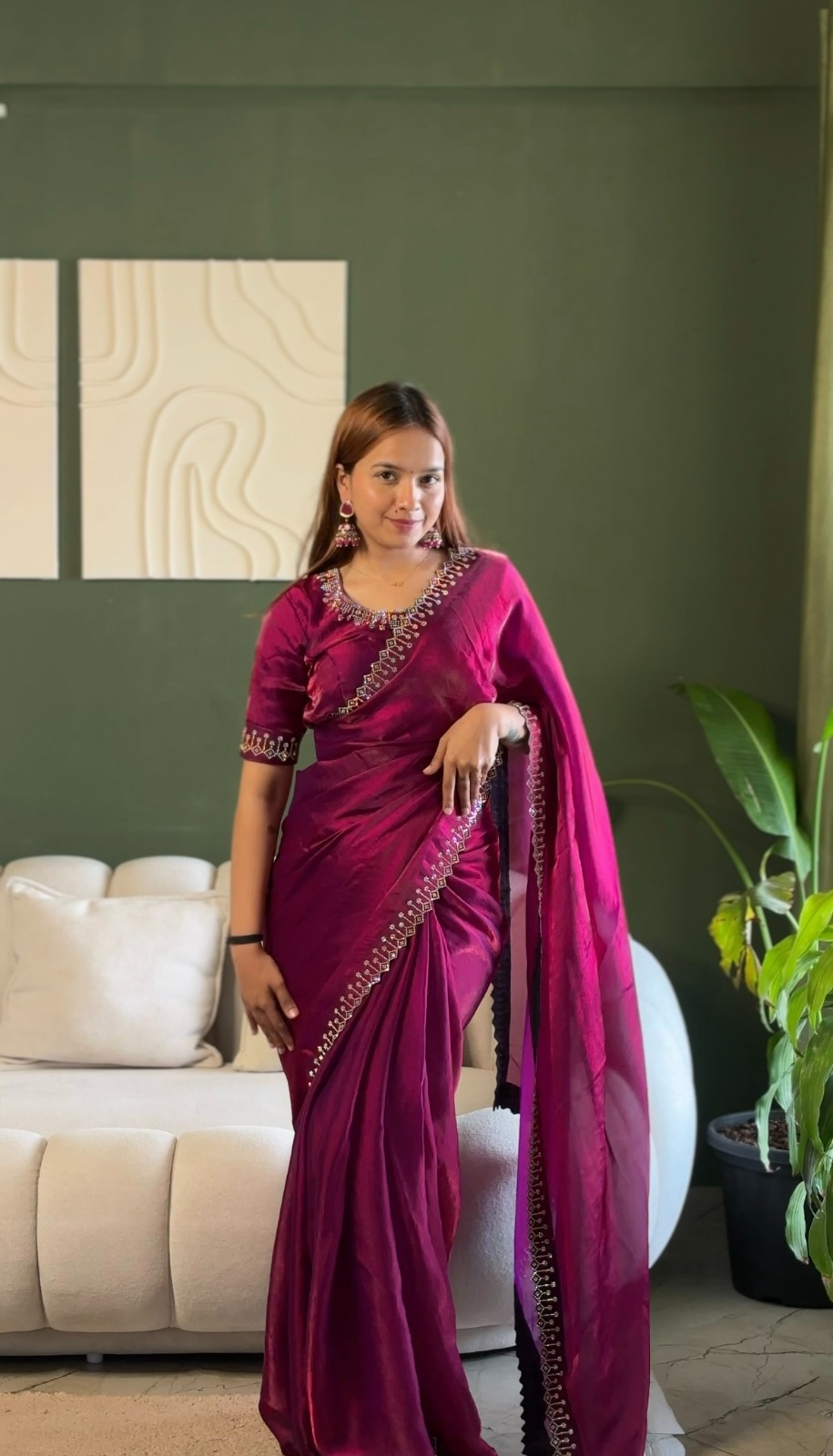
A tone-on-tone jaal in black, navy, ivory, muted rose or soft teal can look detailed without appearing loud. A contrasting jaal, such as gold on wine or pink on green, creates a more festive effect and usually needs simpler accessories. Complementary colours attract attention quickly, so the blouse should ideally repeat one established shade rather than add a new dominant colour.
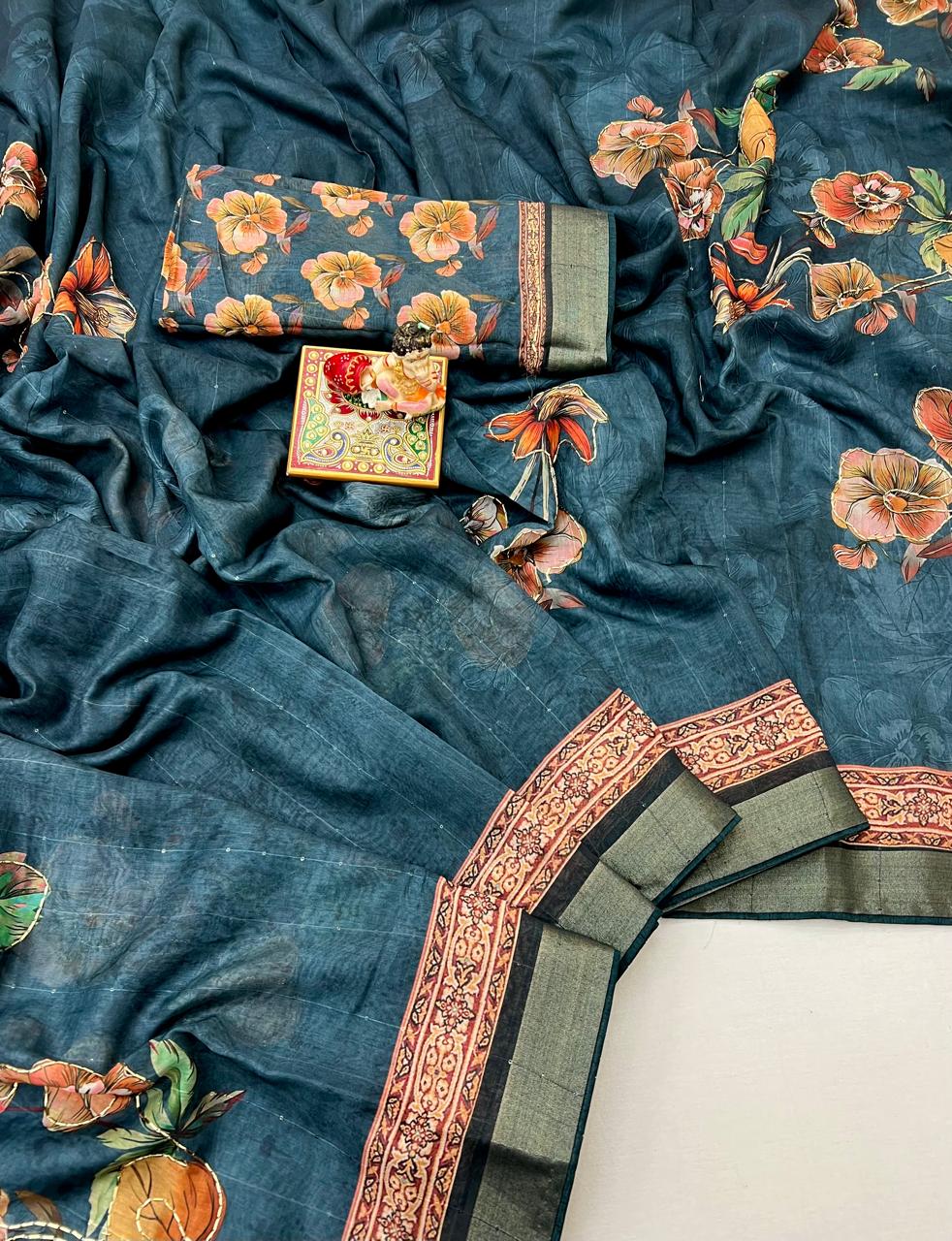
Green Pink Printed Handloom Saree With Blouse Piece offers a practical advantage because the coordinated blouse piece provides a natural starting point. Select one quieter shade from the saree for earrings, footwear or a bangle stack. Adding a third bright colour may make the overall look less intentional, particularly when the print already covers much of the saree body.
Teal Floral Linen Cotton Saree with Maroon Jacquard Border demonstrates how teal and maroon can create strong contrast while retaining structure. A maroon blouse with little or no surface work would reinforce the border. A heavily embellished teal blouse could compete with the floral body, the maroon edge and the pallu simultaneously.
Varnavi Royal Kalamkari Maroon Handloom Saree brings another way to think about surface detail. Kalamkari-inspired visual richness can come from narrative motifs, botanical forms and colour variation rather than a uniform metallic jaal. When a saree has several printed elements, a solid blouse and restrained jewellery help separate the design layers.
Jaal Work Sarees Create Detail Across the Fabric Without Looking Crowded: Which blouse and accessories fit?
A plain, lightly textured or selectively embellished blouse usually suits a detailed jaal saree because it creates a visual pause. The blouse should repeat one colour or material from the saree without copying every motif.
For gold zari, consider raw silk, silk, brocade or a matte blouse in a shade drawn from the border. A narrow zari edge on the sleeve can connect the blouse to the saree without creating another all-over pattern. For printed cotton or linen-cotton, a solid cotton, handloom silk or linen-blend blouse often looks more considered than a blouse with a competing print.
Neckline and sleeve shape influence the composition as much as colour. A high neck or elbow-length sleeve can add structure to a fluid silk saree. A simple round neck and short sleeve can keep a busy floral cotton saree easy for daytime. If the pallu has a prominent decorative section, avoid heavy embroidery across the shoulder and upper back because those areas overlap visually during draping.
Jewellery should follow the strongest material already present. Gold zari pairs naturally with gold-toned metal, while an understated printed linen-cotton saree may work better with silver, oxidised metal, terracotta or small pearls. Choose one statement element, such as chandelier earrings or a cuff, and keep the remaining accessories quieter.
Jaal Work Sarees Create Detail Across the Fabric Without Looking Crowded: How should you style them for events?
You can style a jaal saree for daytime, festive and formal events by changing the fabric, drape structure, jewellery scale and footwear instead of adding decoration everywhere.
Daytime celebrations and Haldi ceremony gatherings
Handloom cotton, linen-cotton and softly printed sarees suit daytime functions because they remain comfortable over several hours. Small jhumkas, a slim bangle stack and practical sandals are sufficient when the saree has multicolour motifs. For a Haldi ceremony, choose a secure drape and avoid jewellery that catches on the pallu or becomes uncomfortable in a crowded setting.
Festivals and family gatherings
Silk-cotton, Dola silk and tissue with restrained zari provide festive presence without requiring a heavily decorated blouse. Gold-toned earrings, a compact potli and footwear in a border shade create coordination. A neat open pallu shows the jaal clearly, while a firmly pinned pleated pallu is more practical when you expect considerable movement.
Weddings and evening receptions
Banarasi silk, soft silk and darker jaal patterns suit evening light because sheen and zari become more visible after sunset. Use a structured pleat, a secure shoulder pin and one statement accessory to keep the design readable. A blouse in maroon, black, ivory, antique gold or a shade taken from the border can look polished without repeating the complete saree pattern.
For a more contemporary drape, keep the pallu narrow and sharply pleated so the border forms a clean vertical line. For a heritage appearance, allow the pallu to spread across the shoulder, but check that the most detailed section remains visible. The best drape is the one that shows the saree's design hierarchy rather than hiding the pallu in folds.
Jaal Work Sarees Create Detail Across the Fabric Without Looking Crowded: How should you shop and care for them?
You should shop for a jaal saree by checking fabric composition, weave or print technique, border measurements, blouse-piece details and care instructions before comparing price. A lower price doesn't necessarily indicate poor design, and a high price doesn't guarantee that the pattern will suit your wardrobe.
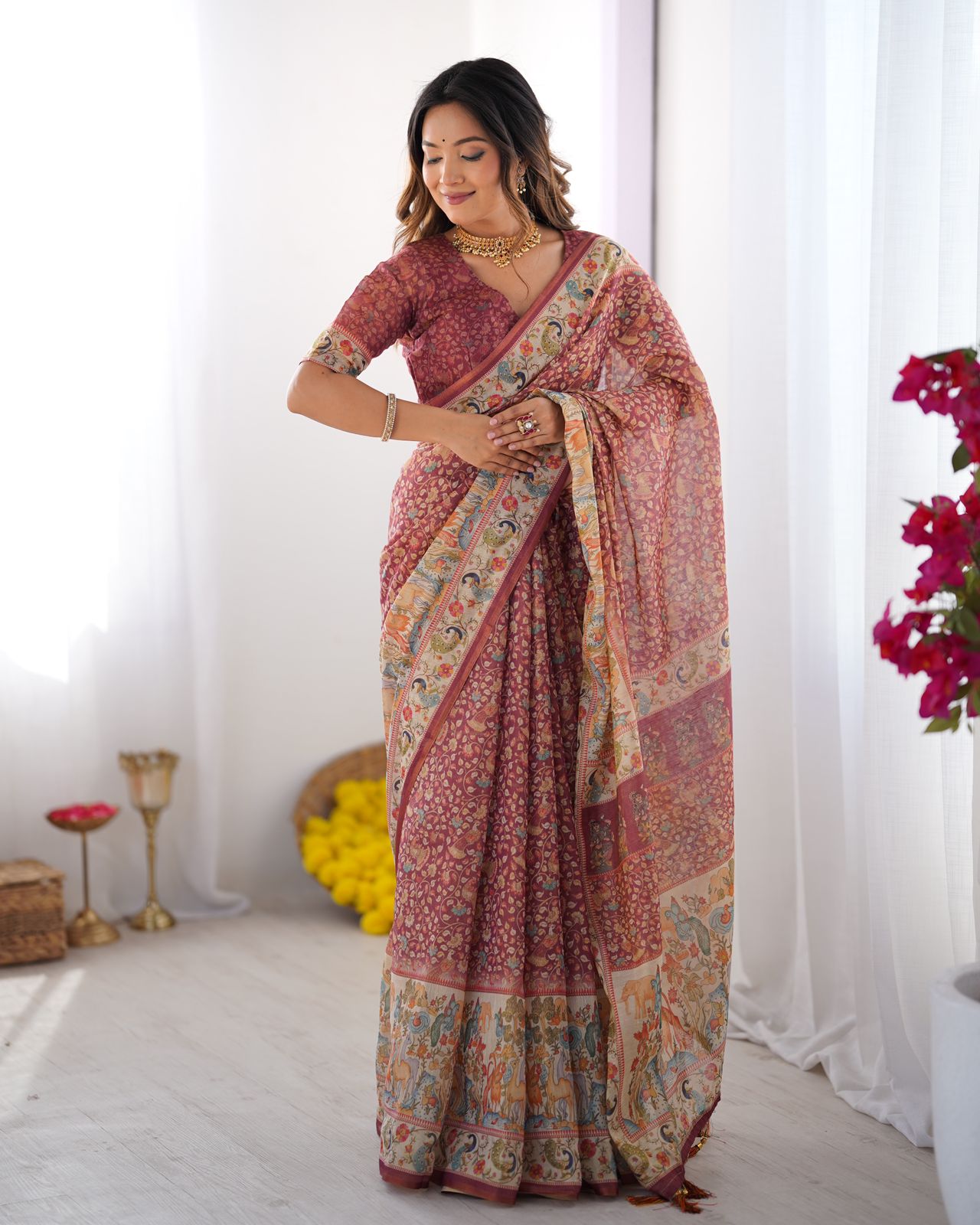
Check whether the description identifies Banarasi silk, soft silk, Dola silk, handloom cotton, linen-cotton or tissue. Ask whether the motif is woven, printed or embroidered, because each technique behaves differently after washing and repeated wear. Confirm whether the blouse piece is included, whether the border runs along both edges, and whether the photographed colour may vary by screen.
Practical price browsing can begin with Sarees from Rs 1000 to Rs 1500 when you want an accessible printed or lightly woven option. Sarees Under 20% Off and Sarees Under 10% Off can be useful for comparing modest reductions, but inspect the original fabric details rather than selecting only by discount percentage. Sarees Flat 60% Off and Sarees Flat 50% Off may offer stronger savings, so check size, availability and return conditions before relying on a specific colour or blouse piece.
Fold silk sarees with the zari facing inward to reduce direct exposure to air and friction, and refold stored sarees every few months to prevent permanent creases. Keep cotton and linen-cotton completely dry before storage. Use muslin or another breathable cover, avoid plastic for long-term storage, and separate dark dyed fabrics from pale garments when moisture or humidity is present.
Follow the stated wash method because zari, printed surfaces and tissue can respond differently to water and detergent. Dry-cleaning may be appropriate for silk or metallic work, while some handloom cotton sarees can require gentle hand washing. Never wring a saree with zari, and iron from the reverse side on a low or medium setting after placing a thin cotton cloth between the iron and the surface.
Jaal Work Sarees Create Detail Across the Fabric Without Looking Crowded: What should you remember?
Jaal Work Sarees Create Detail Across the Fabric Without Looking Crowded when the design has a clear rhythm, visible breathing space and a controlled relationship between body, border and pallu. The most useful buying test is to imagine the saree in pleats, not only spread flat.
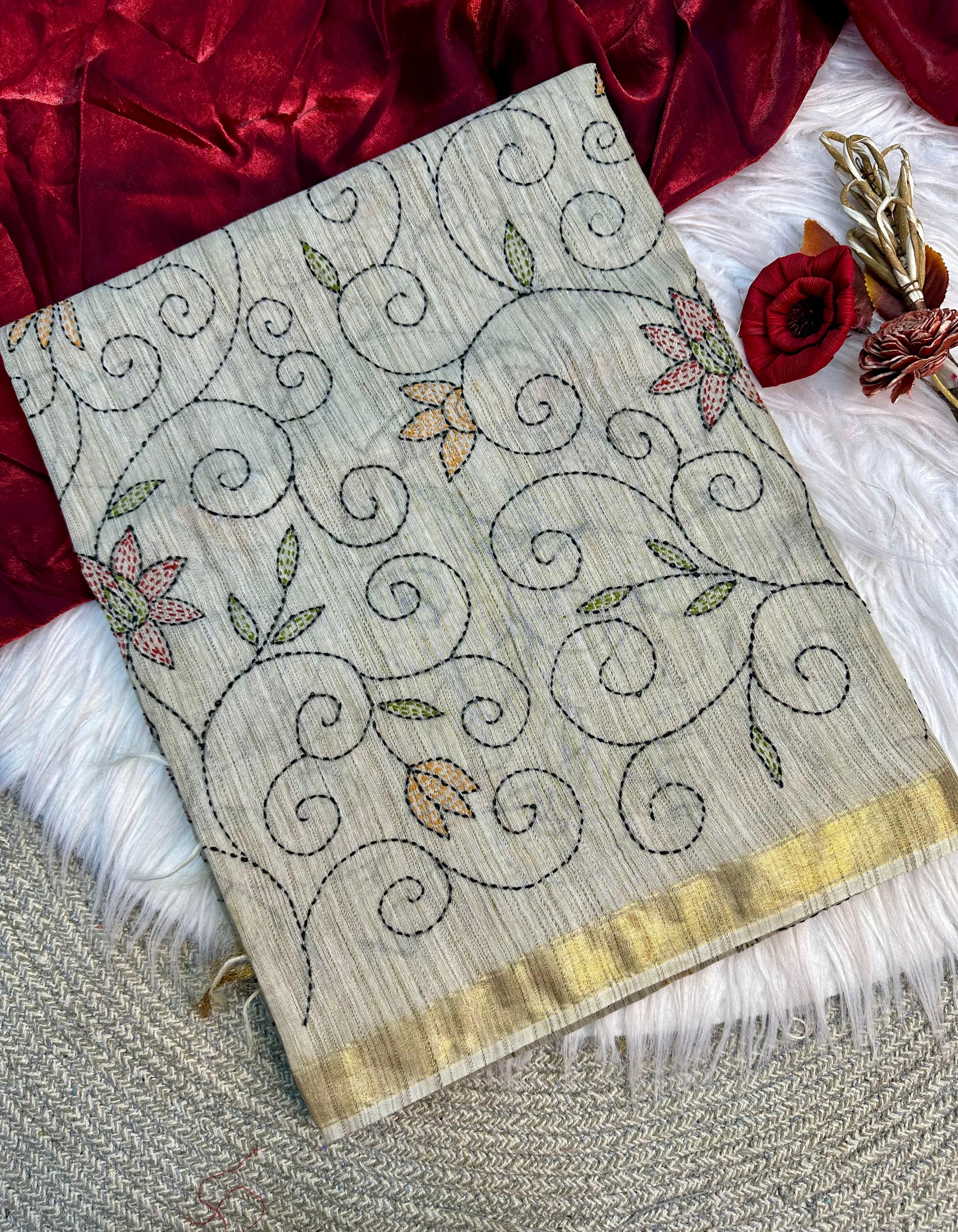
Choose motif scale according to the occasion, match fabric weight to the number of hours you'll wear the saree, and let the blouse provide contrast or rest. A detailed saree doesn't require equally detailed jewellery, makeup or hair accessories. A restrained supporting wardrobe allows the craftsmanship across the fabric to remain visible.
Common Questions About Balanced Jaal Work Saree Styling
What does jaal work mean on a saree?
Jaal work means a repeated, net-like arrangement of motifs across the saree body. The pattern may be woven with zari or jacquard, printed, embroidered or created through a combination of techniques.
How can I stop an all-over jaal saree from looking too busy?
Pair an all-over jaal saree with a solid or lightly textured blouse and limit jewellery to one prominent piece. Choosing a blouse colour from the border and avoiding a competing print will preserve visual balance.
Which fabric is best for a jaal saree?
The best fabric depends on the occasion: Banarasi silk and soft silk suit evening and formal wear, while handloom cotton and linen-cotton suit daytime events. Tissue can add festive shine but may make zari look brighter under indoor lighting.
Can I wear a jaal saree to a wedding?
Yes, Banarasi silk, soft silk, Dola silk and tissue jaal sarees can work well for weddings. Use structured pleats, a secure pallu, one statement accessory and a blouse that supports rather than repeats the saree's complete pattern.
What blouse colour works with a multicolour jaal saree?
A blouse in the border colour or in the quietest major shade of the saree usually works best. A solid maroon, teal, ivory, black or muted gold blouse can create separation without introducing another competing colour.
How should I store a saree with zari or jacquard jaal work?
Store the saree dry in a breathable muslin cover and refold it every few months to reduce permanent creases. Keep zari facing inward, avoid plastic for long-term storage, and follow the care label for washing or dry-cleaning.