
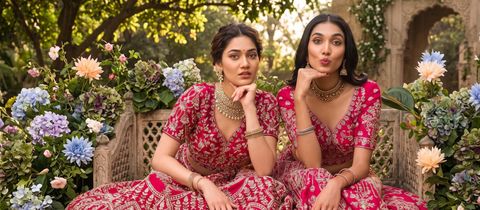
How U-Neck Blouses Change the Neckline Face and Overall Look becomes clear when the same saree is worn with a high, narrow neckline and then with a curved opening that reveals more of the upper chest. An U-neck creates a soft vertical frame around the face, changes the apparent length of the neck, and influences where jewellery and saree pleats sit. The result depends on the curve's width, depth, fabric, sleeves and the wearer's proportions, not simply on whether the blouse is fashionable.
An useful U-neck doesn't need to be deep or dramatic. A shallow 2.5 to 3-inch curve can open a crowded neckline, while a 5 to 6-inch U-neck creates a more visible, elongated frame. Understanding that difference helps when choosing a readymade blouse, matching a designer saree, or deciding whether cotton or silk will give the intended finish.
How U-Neck Blouses Change the Neckline Face and Overall Look around the face
An U-neck usually makes the neck appear longer and gives the lower half of the face more visual space. The curved line directs the eye downward from the jaw instead of stopping the eye at a horizontal collar or high neckline.
A high round neckline places fabric close to the throat, which can make a short neck look more compact. A boat neck expands the line across the shoulders and can make the upper body look broader. A V-neck creates a pointed direction, whereas an U-neck gives a gentler, rounded transition between the face and the saree.
The width of the U matters as much as its depth. A narrow U-neck with a deep centre produces a longer vertical impression. A broad, shallow U-neck exposes more collarbone and creates width, making a broad shoulder line appear more balanced. A medium-width curve generally works well for everyday sarees because the curve frames the face without competing with prints, zari or an ornate pallu.
Face shape also affects the impression. A fuller or round face often benefits from a medium-depth U-neck that adds open space below the chin. A long or narrow face may look more balanced with a wider, shallower U-neck, short sleeves or a stronger border at the neckline. An oval face can accommodate most U-neck proportions, so fabric weight and saree styling become more important than correction.
How U-Neck Blouses Change the Neckline Face and Overall Look through proportion
A shallow, medium or deep U-neck suits different proportions, jewellery plans and levels of coverage. The most reliable choice comes from measuring the neckline rather than selecting a shape from a photograph alone.
Shallow U-necks for an everyday frame
A shallow U-neck ending about 2.5 to 3.5 inches below the base of the neck gives modest coverage and a clean outline. Cotton sarees, office-appropriate handlooms and printed sarees pair especially well with this proportion. The shallow curve also leaves enough fabric above the bust for a stable readymade blouse fit.
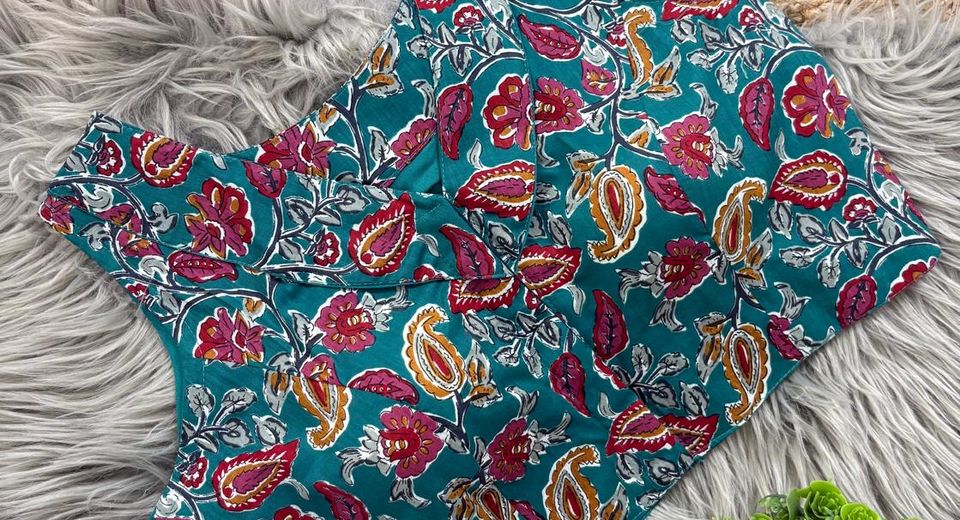
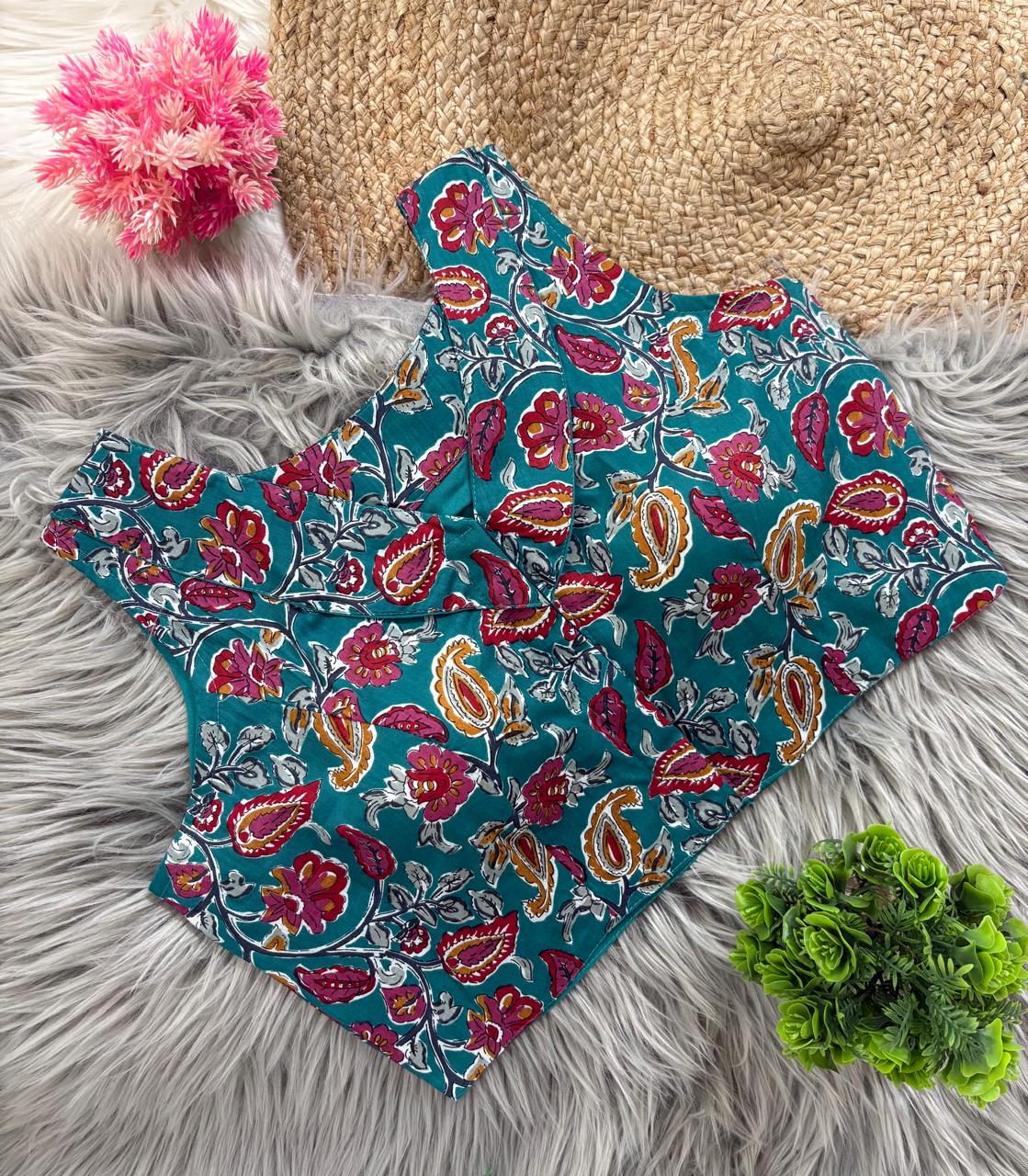
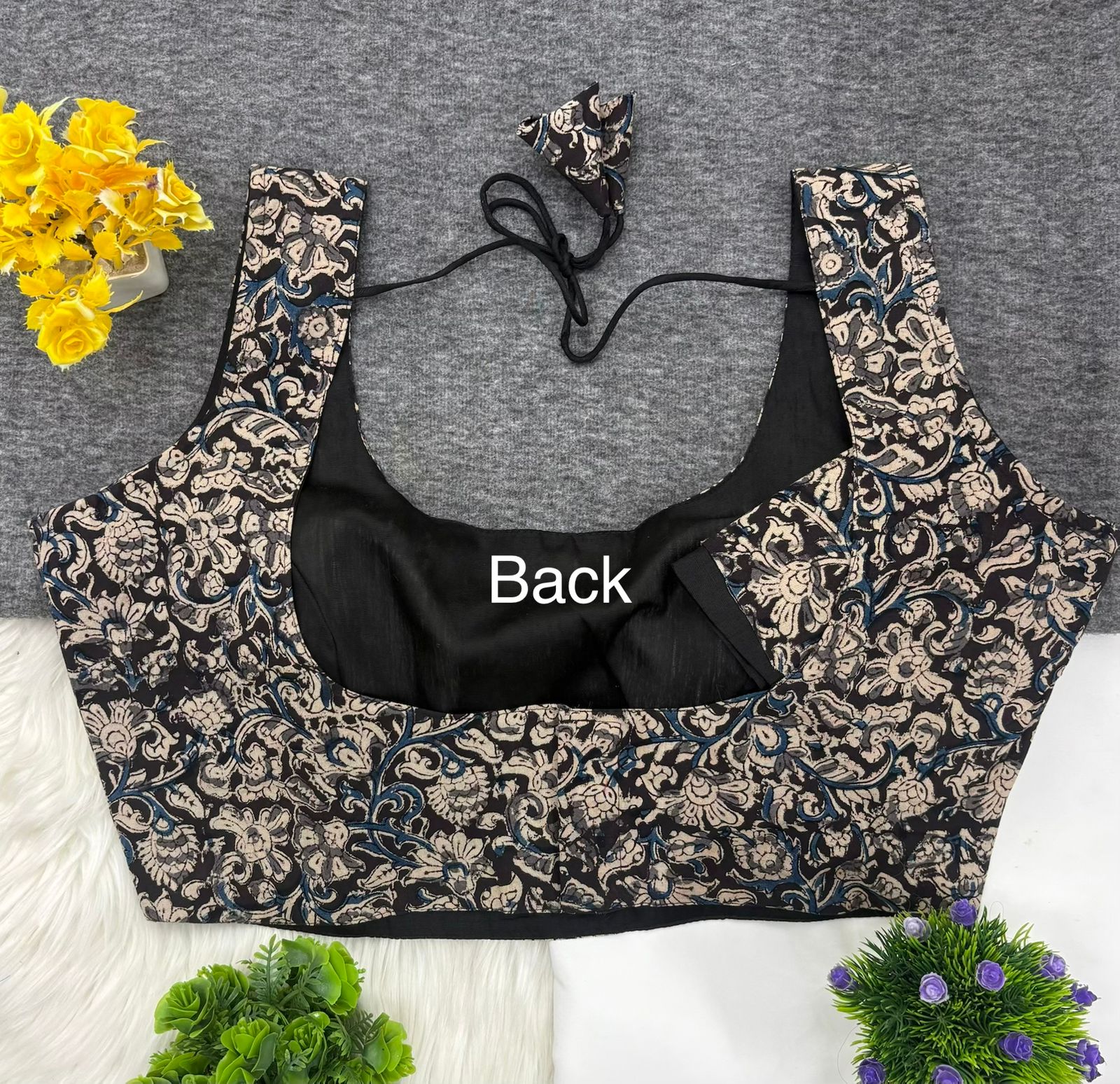
A shallow U-neck works when earrings, a short necklace or a saree border should remain the main focus. Narrow piping in a contrasting fabric can clarify the curve without adding heavy decoration. Kalamkari Cotton V Neck Collar Blouse for Women demonstrates how a structured neckline detail can create definition; although the design is a V-neck, its collar treatment offers an useful comparison with a softer U-neck.
Medium U-necks for balanced saree styling
A medium U-neck usually falls 3.5 to 5 inches below the neck and provides the most versatile balance. The opening creates visible space for a pendant while retaining enough coverage for comfortable movement and regular bra straps. Medium U-necks suit cotton, lightweight Chanderi, printed drapes and festive silk sarees.
A medium U-neck can also make a readymade blouse look less visually heavy when the bodice has padding, lining or a firm seam. Pure Kalamkari Cotton Padded Blouse for Women can be considered when comparing how a printed cotton bodice occupies the upper body; padding should be checked for smoothness at the curve because a neckline that pulls will distort the intended U shape.
Deep U-necks for an open silhouette
A deep U-neck creates the strongest lengthening effect, but a deep curve requires accurate bust, shoulder and armhole measurements. A curve extending 5 to 6 inches or more may shift during sitting, especially when the blouse is made from slippery silk or has limited back support.
Deep U-necks are most successful when the saree has a controlled drape and the blouse has secure shoulder seams. A Banarasi silk saree with zari may support a richer, more formal neckline, while a very busy printed saree may look calmer with a shallower curve. Deep doesn't automatically mean elegant; the neckline must stay centred when the wearer raises both arms.
How U-Neck Blouses Change the Neckline Face and Overall Look with fabric
Cotton gives an U-neck crisp structure, while silk and fluid fabrics create a softer curve. The fabric's recovery, lining and seam finish determine whether the neckline remains smooth after several hours of wear.
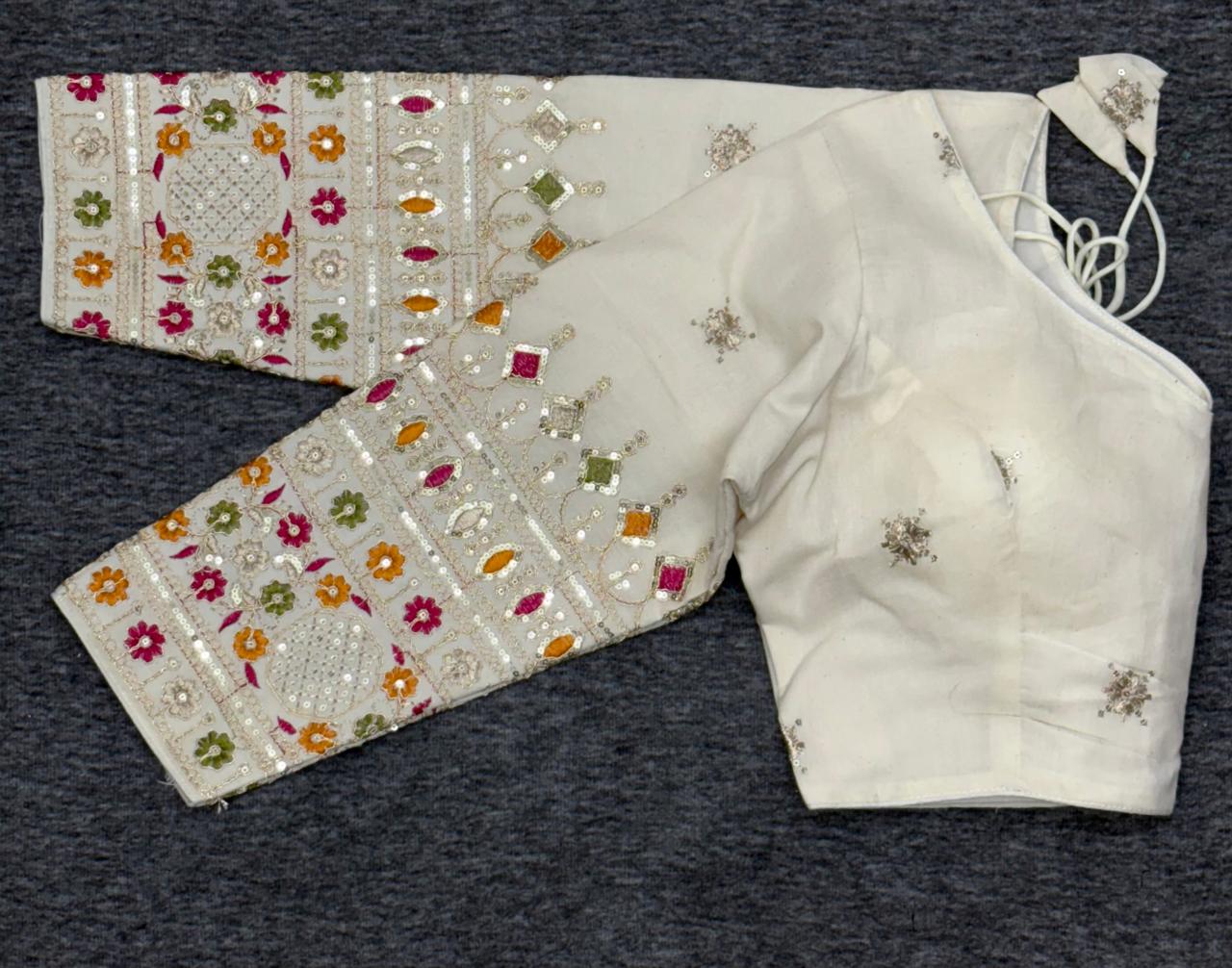
Cotton is practical for daily sarees because cotton is breathable and less slippery. Kalamkari cotton can make an U-neck feel artisanal and defined, but firm cotton may show puckering if the curve is cut too sharply. A narrow bias facing or full lining helps the neckline lie flat. Classic Festive Wear Blouse for Stylish Saree Look gives an useful reference for considering how an occasion-focused blouse can balance a decorative saree without needing an exaggerated neckline.
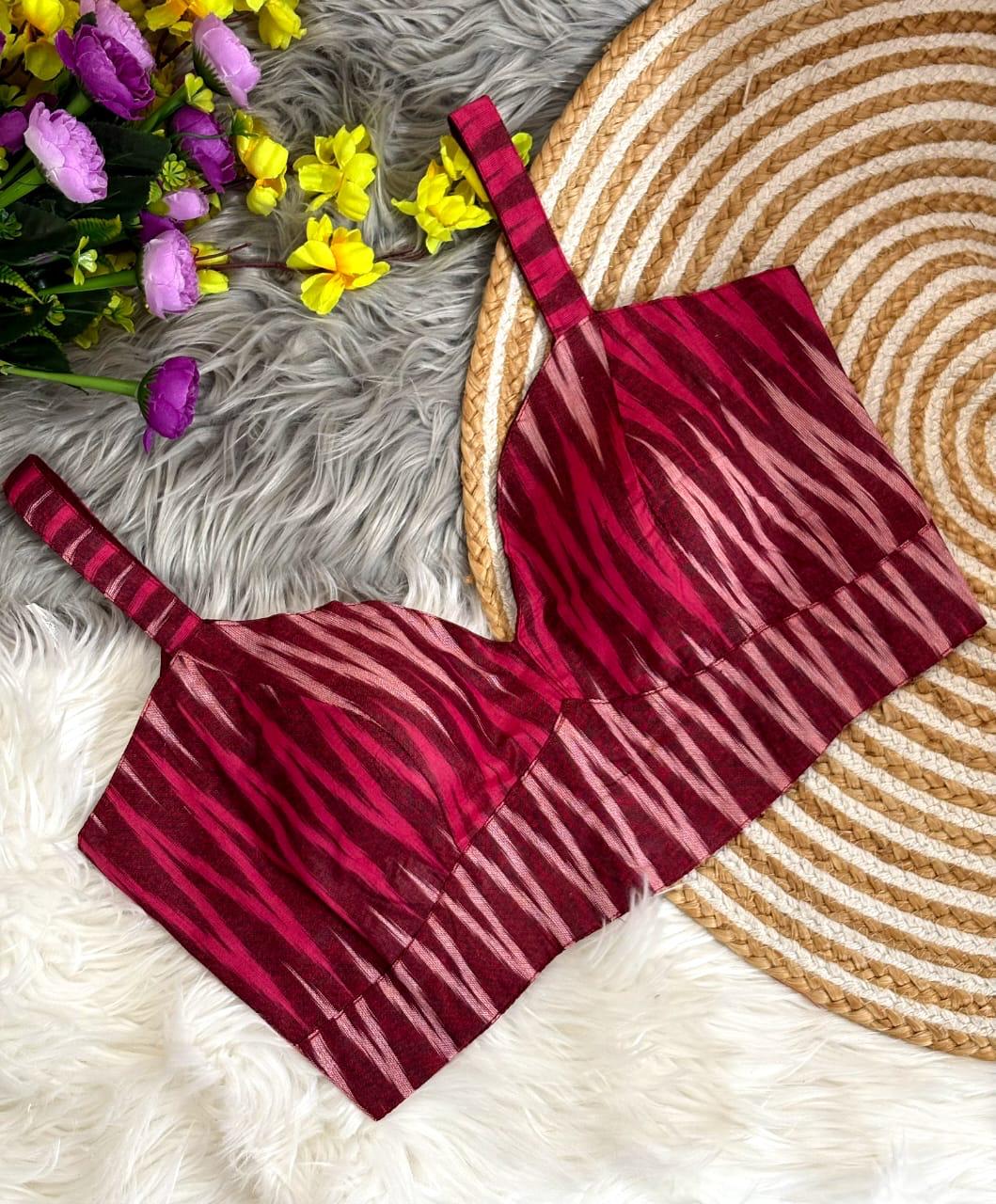
Ikat cotton gives the neckline visual texture through its woven pattern. Ikkat Cotton Padded Blouse for Women Sleeveless and Brown Ikat Cotton Padded Blouse Sleeveless Stylish show why sleeveless cotton designs need careful armhole and neckline proportion. When both openings are wide, the upper body can look overly exposed. A medium U-neck or a slightly higher curve prevents the blouse from losing structural balance.
Silk creates a dressier finish and works naturally with Kanjeevaram, Banarasi silk and wedding sarees. Banarasi Silk Golden Jari Padded Blouse for Women illustrates how zari and a formal fabric can carry attention around the bodice. An U-neck on a zari blouse is best kept smooth and proportionate; heavy embellishment directly along the curve can make the opening appear smaller and visually dense.
Lightweight fabrics such as Chanderi need adequate lining because an unlined U-neck can collapse or reveal seam allowances. A padded blouse needs particular attention at the bust apex: padding should sit symmetrically, and the neckline should not gape when the wearer bends forward. A structured neckline is valuable, but comfort remains the test of a successful readymade blouse.
How U-Neck Blouses Change the Neckline Face and Overall Look with saree pairing
An U-neck should repeat, soften or deliberately contrast with the saree's visual language. Match the neckline's formality to the saree's fabric, border scale and occasion rather than pairing every saree with the same depth.
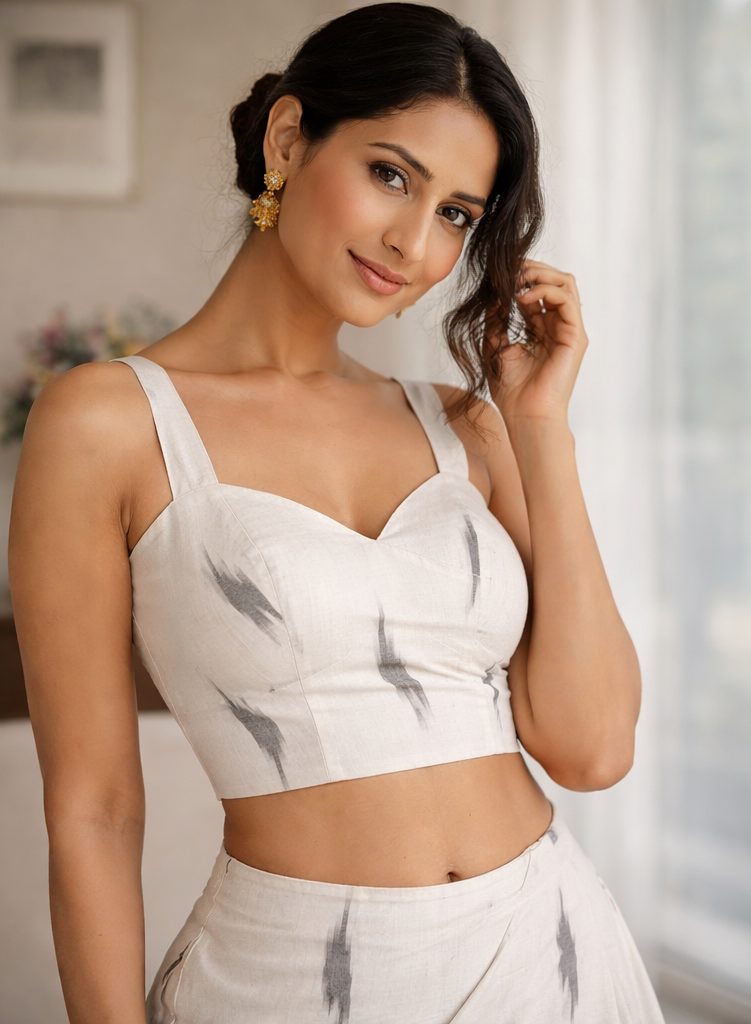
A cotton U-neck blouse suits daily sarees, printed drapes and workwear when the curve is neat and the sleeves allow arm movement. Cream Ikat Cotton Padded Blouse Sleeveless Trendy can illustrate a light, modern direction for an understated saree, although a sleeveless blouse should be balanced with a more covered pallu or a modest neckline when the overall look needs restraint.
A silk U-neck blouse pairs effectively with wedding sarees when the blouse colour either echoes a minor saree shade or brings controlled contrast. Blue Zari Work Cotton Saree for Wedding, for example, can be styled with a blouse that repeats blue, silver or a restrained complementary tone. A medium U-neck keeps the zari visible while giving the face breathing room.
A designer saree with a broad border usually benefits from a simpler U-neck because multiple strong lines can compete around the face. A plain blouse with a precise curved opening lets the saree border and pallu perform the decorative work. Conversely, a plain saree can support piping, embroidery or zari around the U-neck, provided the embellishment follows the curve instead of forming a bulky band.
Readymade blouses are especially useful when the neckline has been pre-shaped, but size selection must account for more than bust measurement. Check shoulder width, armhole depth, blouse length and the distance from the shoulder seam to the centre of the U. A blouse can fit at the bust and still look wrong if the curve sits too high or pulls toward one side.
How U-Neck Blouses Change the Neckline Face and Overall Look with sleeves and details
Sleeve length changes the apparent width of an U-neck blouse, so sleeve choice should be made together with neckline depth. Short sleeves add a horizontal break, elbow-length sleeves create a traditional line, and sleeveless cuts expose more shoulder and require stronger control of the neckline.
Short sleeves ending around 4 to 6 inches above the elbow create a balanced frame for a medium U-neck. Elbow-length sleeves add coverage and work well with Banarasi silk, Kanjeevaram and formal festive dressing. Sleeveless U-neck blouses look more contemporary, but a wide U-neck combined with a deep armhole can make the bodice appear narrow at the centre and broad at the sides.
Piping is one of the most effective details for defining an U-neck. Piping measuring 0.25 to 0.5 inches in a saree border colour makes the curve readable from a distance. Contrast piping can sharpen a cotton blouse, while self-fabric piping produces a quieter finish for silk.
Padding can improve the fall of a blouse, but padding doesn't replace correct measurement. The neckline should remain smooth when the wearer sits, lifts an arm and turns sideways. A padded blouse with a rigid or oversized cup can push the centre of the U outward and change the intended face-framing effect.
Jewellery should follow the available space. A medium pendant usually sits naturally inside a medium U-neck, while a choker can crowd a shallow curve. Long layered necklaces complement a deeper U-neck, but heavy necklaces and dense zari at the neckline can compete for the same visual area. Earrings become more prominent when the U-neck is simple, so earrings are a practical way to add festivity without overworking the blouse.
How U-Neck Blouses Change the Neckline Face and Overall Look after fitting
A correctly fitted U-neck remains centred, flat and comfortable through ordinary movement. Fit should be tested while standing, sitting, lifting both arms, bending slightly and wearing the intended saree rather than a different outfit.
Measure the fullest bust, under-bust, shoulder width, armhole and finished blouse length. Also measure from the shoulder seam to the lowest point of the U-neck. The last measurement controls how much chest is visible and prevents a readymade blouse from appearing unexpectedly high or low.
Check the neckline edge for gaping at the centre and near both shoulders. Gaping usually indicates excess width, insufficient bust support or a curve that's too wide for the blouse block. Pulling or diagonal wrinkles usually indicate inadequate ease, a misplaced dart or a cup shape that doesn't correspond to the wearer's bust.
Try the blouse with the saree pleats pinned and the pallu draped in the intended position. A broad pallu may cover one shoulder and make a slightly wider U-neck look balanced, while a narrow pallu leaves the neckline fully visible. The final judgement should happen in the complete outfit because the blouse is only one part of the face-to-waist visual line.
Care also protects the curve. Fold a cotton blouse flat rather than hanging it by thin shoulder straps, and use a padded hanger for heavier silk or zari pieces. Press from the reverse side on a low or medium setting suitable for the fabric, keeping direct high heat away from zari, padding and synthetic lining. Proper storage prevents the neckline edge from becoming wavy between wears.
The most flattering U-neck is the one whose width, depth and fabric support the wearer's proportions while leaving enough visual space for the saree, jewellery and face to work together.
Common Questions About Choosing a U-Neck Saree Blouse
Does an U-neck blouse make the neck look longer?
Yes, an U-neck can make the neck appear longer because the curved opening creates vertical space below the chin. A narrow, deeper U generally lengthens more, while a broad, shallow U adds width and creates a softer balance.
Which U-neck depth is suitable for a readymade blouse?
A 3.5 to 5-inch medium U-neck is the most versatile readymade choice for many saree looks. Check the shoulder-to-neckline measurement, armhole and bust fit instead of relying only on the labelled size.
Can a U-neck blouse suit a round face?
A medium-depth U-neck often suits a round face because the open space below the chin adds a gentle vertical direction. Avoid combining a very wide neckline, deep armholes and bulky neck jewellery if the upper body already looks broad.
Is a U-neck blouse suitable for silk sarees?
A U-neck blouse suits silk sarees when the curve is stable, the lining is smooth and the depth matches the saree's formality. Banarasi silk and Kanjeevaram pair well with medium or deeper U-necks when the blouse remains secure during movement.
What jewellery works with an U-neck blouse?
A pendant works well with a medium U-neck, while a choker suits a shallow curve and long layered necklaces suit a deeper opening. Avoid placing a very heavy necklace directly over dense zari or embroidery because competing details can crowd the face.
How can I stop an U-neck blouse from gaping?
A well-shaped neckline facing, accurate bust measurement, suitable padding and secure shoulder seams help prevent gaping. Test the blouse while sitting, bending and raising the arms; persistent gaping may require alteration at the centre front or shoulder.


