How to Wear a Kamarbandh With a Modern Saree Drape becomes much easier when you treat the jewellery as a structural part of the outfit, not merely as an ornament. A kamarbandh can define the waist, steady loose pleats and give a contemporary drape a deliberate finish, but the wrong width or fastening can pull the saree out of shape. The most reliable approach is to match the belt to the saree's fabric, secure it over the correct layer and test your sitting comfort before leaving home.
Why a kamarbandh works with a modern saree drape
A kamarbandh works with a modern saree drape by creating a visible waistline between the blouse and the lower pleats. Contemporary drapes often reduce the number of traditional pleats, use a pre-stitched pallu or place the pallu in a sharper diagonal, so a waist ornament adds definition where a classic tuck would normally provide structure.
Classic kamarbandh designs are usually made in gold-toned metal, temple-style motifs, kundan, pearls or linked chains. Modern versions may be slimmer, belt-like or finished with a clasp rather than a long tie. The design doesn't need to be heavily ornate. A narrow chain kamarbandh can suit a printed daytime saree, while a broad antique-gold belt can support a wedding or reception look.
Think about visual weight before choosing one. A wide belt draws attention to the middle of the body and works best when the blouse, saree border or pallu has enough detail to balance it. A narrow belt creates a quieter line and is easier to wear with a cropped blouse, a minimal pre-pleated saree or a saree featuring a strong print.
How to Wear a Kamarbandh With a Modern Saree Drape
How to Wear a Kamarbandh With a Modern Saree Drape starts with securing the saree completely before placing the jewellery. Put on the blouse, shapewear or petticoat, saree and footwear first; then position the kamarbandh over the firmest part of the waist without covering the blouse hem completely.
- Finish the drape first. Make the front pleats, secure the pallu and check the saree length with the shoes you'll wear. A kamarbandh should hold a finished drape rather than replace basic pinning.
- Locate the natural waist. Place two fingers above the navel and below the narrowest point of the ribcage. For many people, this position sits slightly above the saree's lower tuck and avoids pressure on the stomach when seated.
- Centre the main motif. Position a central pendant, floral medallion or buckle at the front unless an asymmetrical styling effect is intentional. The centre should align with the blouse's visual centre, not necessarily with the pallu edge.
- Fasten without compression. The kamarbandh should stay in place when you breathe normally. If you can slide one or two fingers beneath the belt, the fit is usually more wearable than a tightly pulled fastening.
- Check movement. Walk, sit, raise both arms and turn sideways. A secure kamarbandh should not ride upward by more than a small amount or drag the saree pleats out of alignment.
Use concealed safety pins only to stabilise the saree layers, not to pierce an expensive metal belt or delicate silk. A small safety pin through the saree's inner waistband can prevent slipping while keeping the visible border undamaged. Soft cotton tape stitched inside a fabric kamarbandh can also improve grip without adding bulk.
Four modern drapes and the right kamarbandh placement
Pre-pleated or pre-stitched drape
A pre-pleated saree usually needs a slimmer kamarbandh placed at the waist seam. Wide belts can hide the stitched structure and may make the garment look compressed. Choose a design with a flat back or side hook so the belt doesn't create a raised bump beneath the pallu.
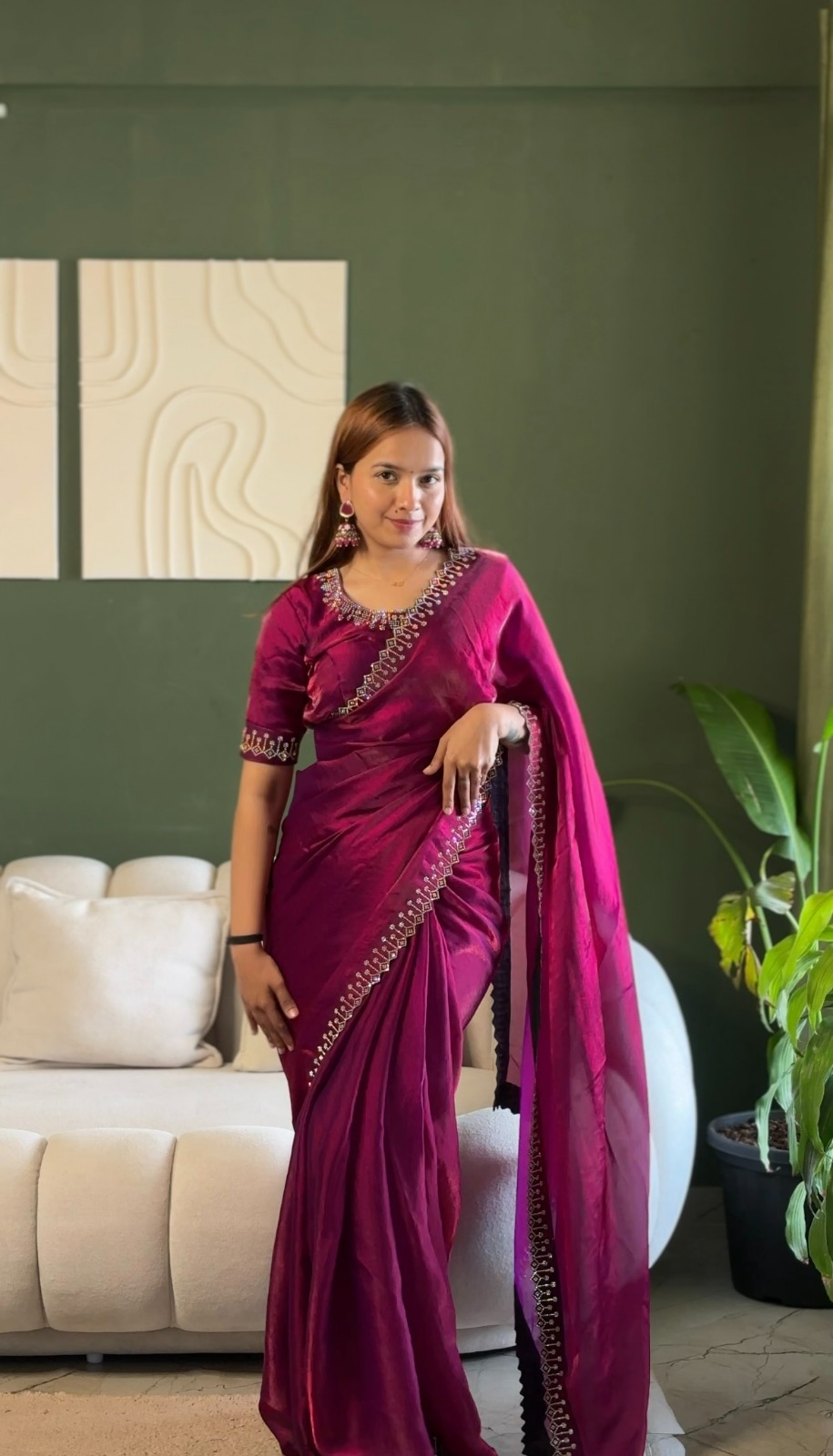
Belted open-pallu drape
An open-pallu drape benefits from a kamarbandh positioned slightly above the saree's tuck line. The open pallu creates a long vertical panel, while the belt supplies a horizontal line that prevents the outfit from appearing visually unfinished. Keep the pallu border visible by placing the kamarbandh below the blouse hem rather than across the lower edge of the blouse.
One-shoulder or cape-inspired drape
An one-shoulder drape needs a moderate-width kamarbandh because the upper half of the outfit already carries asymmetrical volume. Place the belt straight across the front and allow the shoulder detail to remain the main focal point. Avoid a large front pendant if the blouse has embroidery or a heavily embellished neckline.
Low-pleat contemporary drape
A low-pleat drape works with a flexible chain or narrow linked kamarbandh that follows the waist without pulling the fabric upward. Keep the lower pleats flat and use a discreet pin at the inner waist if the saree is slippery. A rigid, broad belt can make the lower section look stiff against a fluid satin or soft silk fabric.
How to match a kamarbandh to saree fabric and border
Saree fabric determines whether a kamarbandh will sit neatly or disturb the drape. Heavy silk can support a substantial belt, while satin, lightweight linen cotton and soft printed fabrics generally look better with a lighter design that doesn't create deep folds.
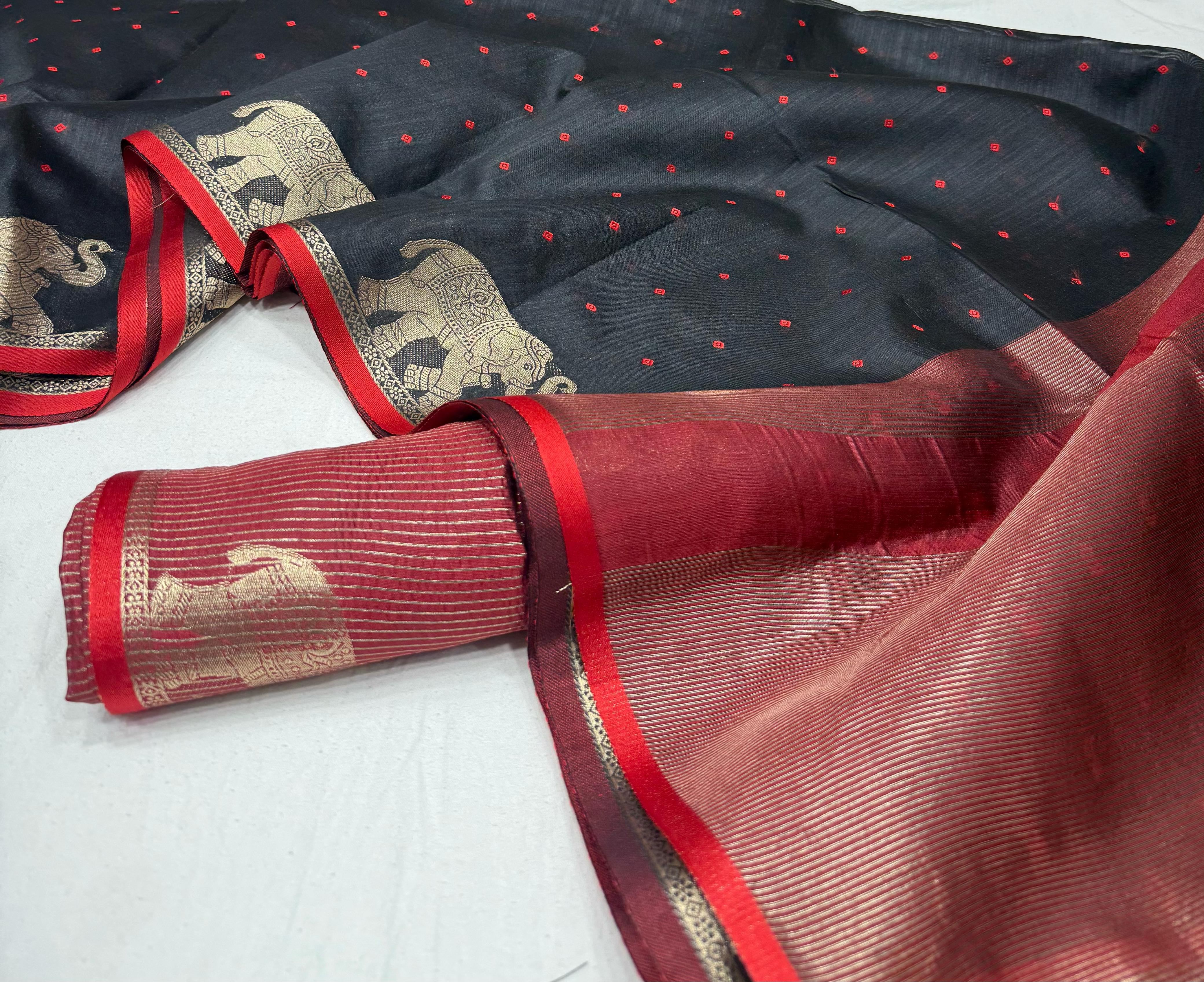
- Banarasi silk: Banarasi silk has enough body for a medium or broad kamarbandh, particularly when the saree carries zari or a woven jacquard border. Keep the metal finish close to the border's dominant tone.
- Soft silk: Soft silk can take time-honoured jewellery, but a heavy belt should have smooth edges to prevent snagging. A flat antique finish often complements the fabric better than a highly textured design.
- Satin: Satin reflects light strongly, so a slim gold, silver or crystal-detail kamarbandh usually looks more balanced than a large matte ornament. Test the belt for friction because satin can shift under a smooth metal surface.
- Linen cotton: Linen cotton has a relaxed texture and suits a simple chain, oxidised-metal style or fabric-backed kamarbandh. A very formal belt may look disconnected from the saree's casual weave.
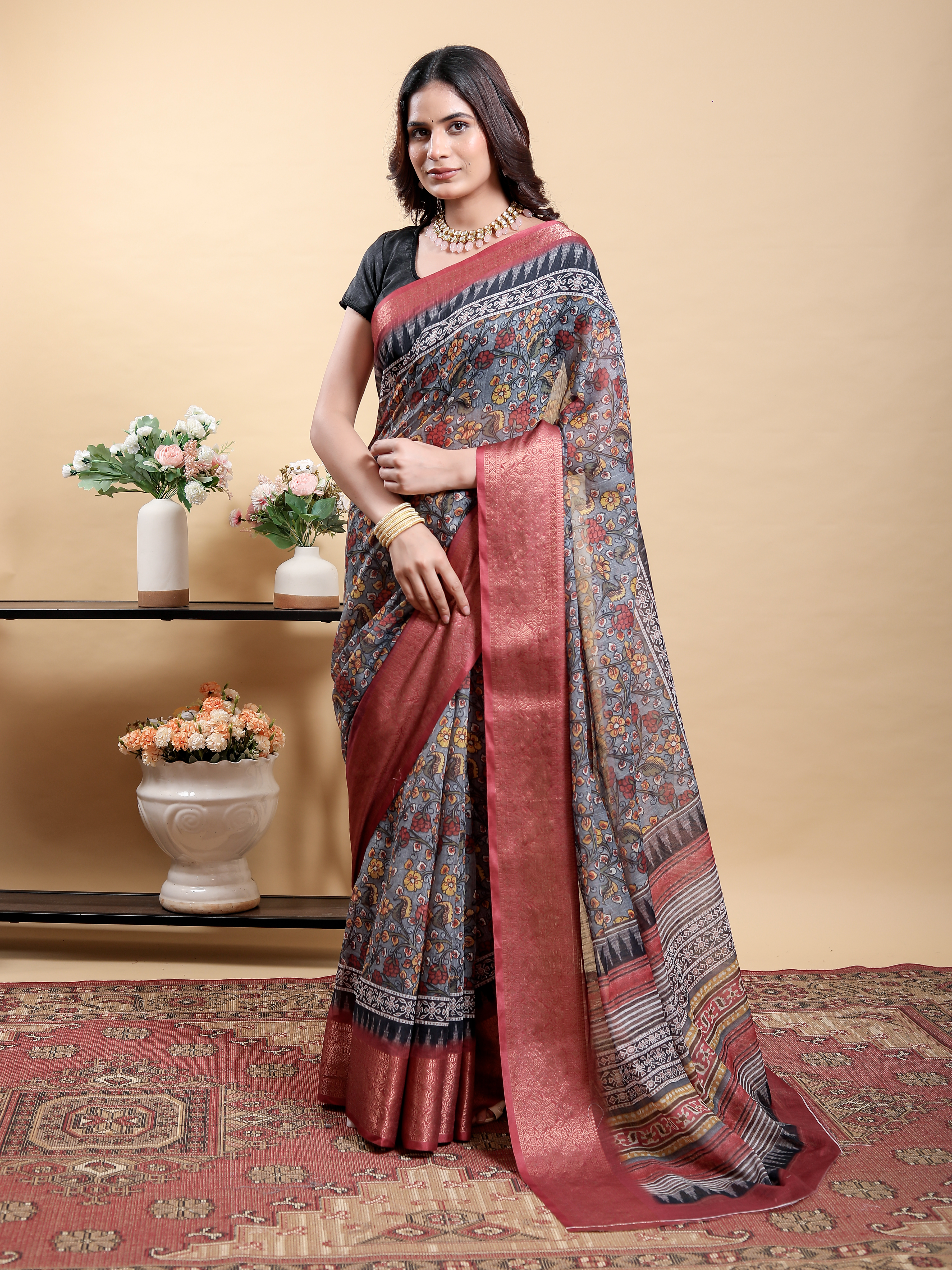
- Bandhani silk and Bandhej silk: Bandhani silk and Bandhej silk already contain strong visual rhythm through their dots and colour contrast. Choose a belt with a clear outline and limited surface detail so the print remains readable.
Border width also matters. A saree with a broad zari border can carry a broad waistband if the belt sits above the border rather than covering it. A narrow border usually pairs better with a slim kamarbandh, because a wide belt can become the only visible horizontal feature in the outfit.
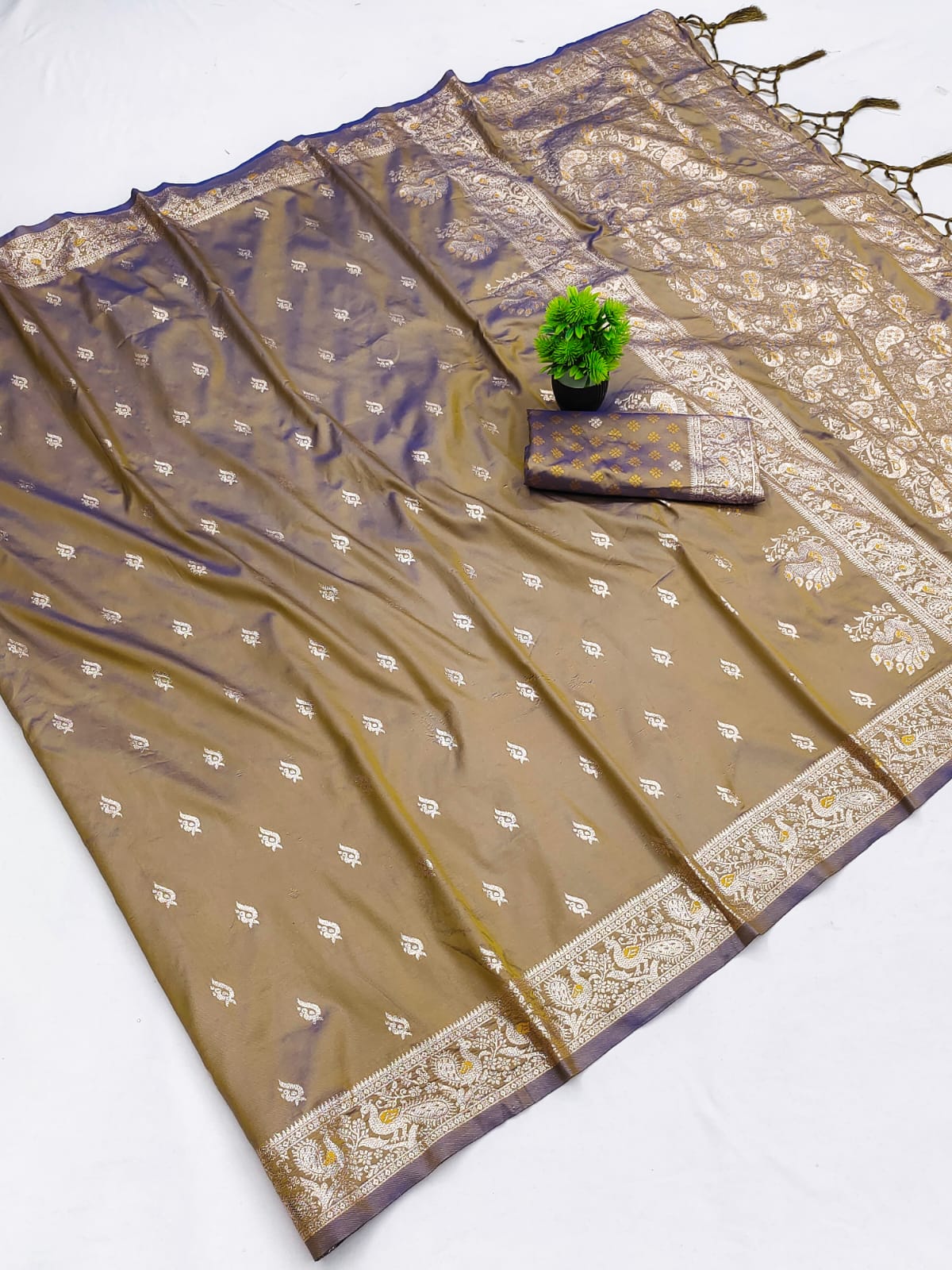
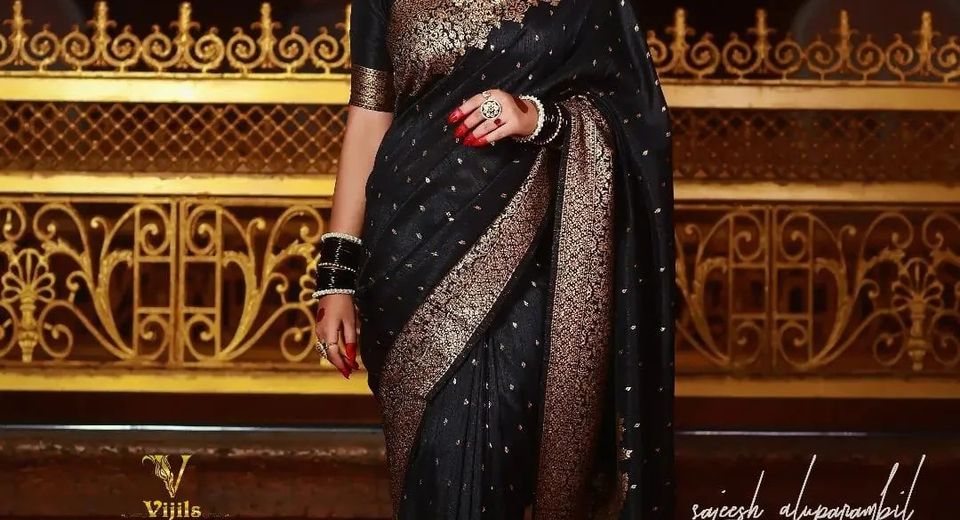
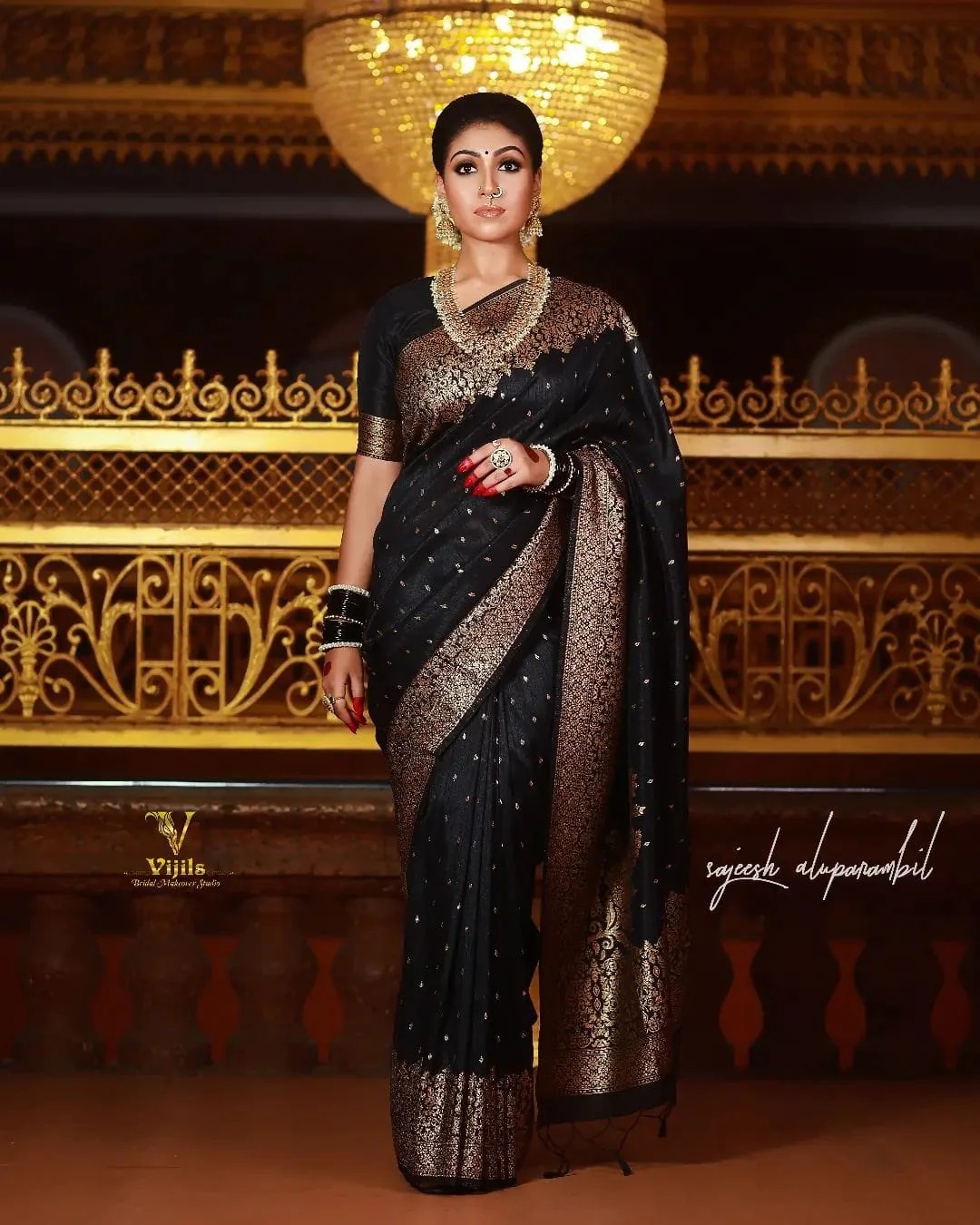
The Black Soft Silk Banarasi Saree with Royal Jacquard Border illustrates why proportion matters: a medium-width antique-gold kamarbandh can echo the woven border without competing with the Banarasi surface. The Black Multicolour Satin Saree with Contrast Pallu & Border calls for a lighter belt because the contrast pallu already supplies a strong focal point.
Blouse, colour and jewellery combinations that stay balanced
A balanced kamarbandh outfit repeats one visual element across the blouse, waist and saree border. Repetition can come from colour, metal finish, motif or texture, but repeating every detail usually makes the look crowded.
For a black saree, gold kamarbandh jewellery creates warmth and photographs clearly, while silver or oxidised metal gives a sharper evening effect. The Black Bandhani Silk Saree with Elephant Zari Border already provides an elephant motif and zari detail, so a belt with small linked motifs will look more considered than a second oversized animal pendant.
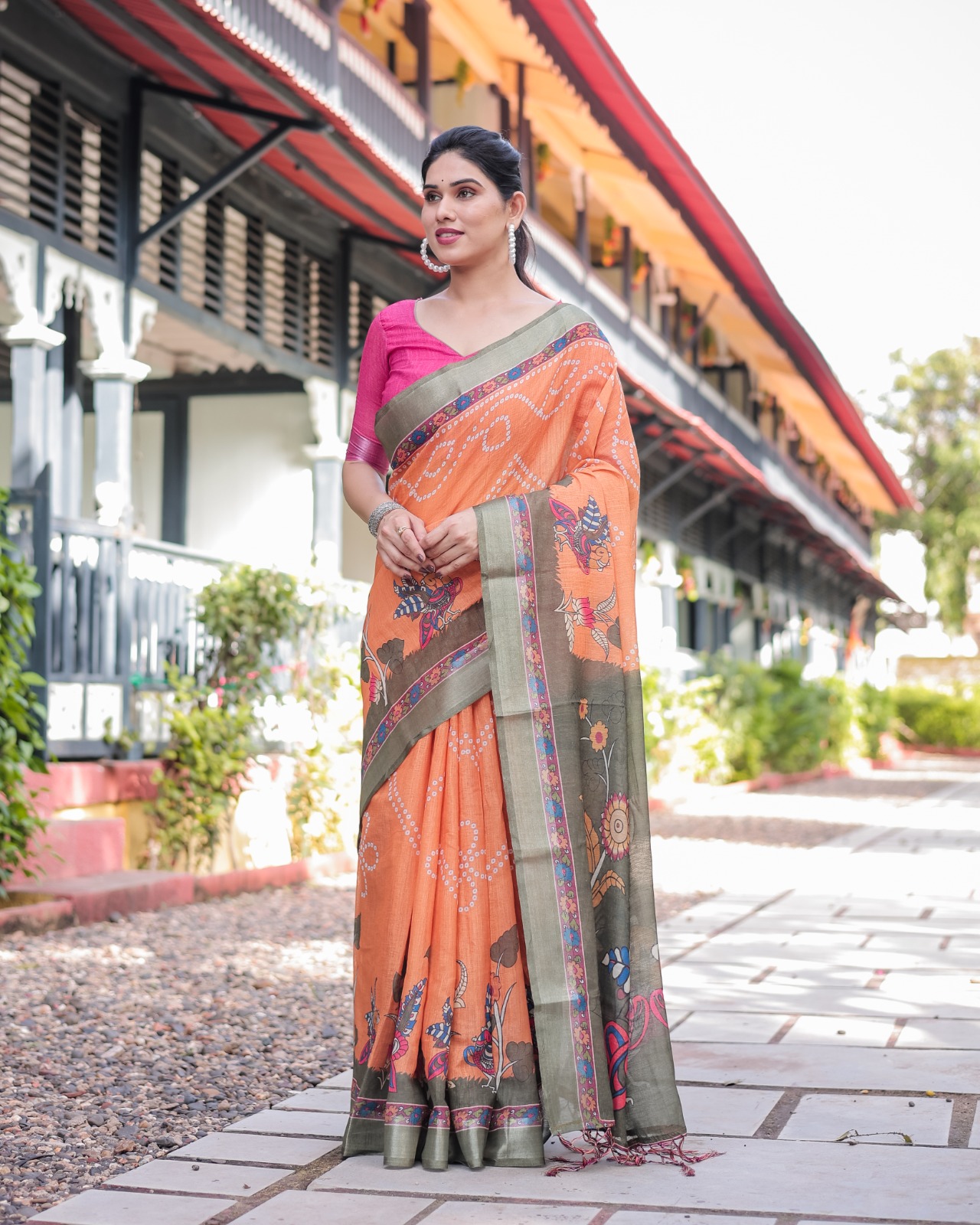
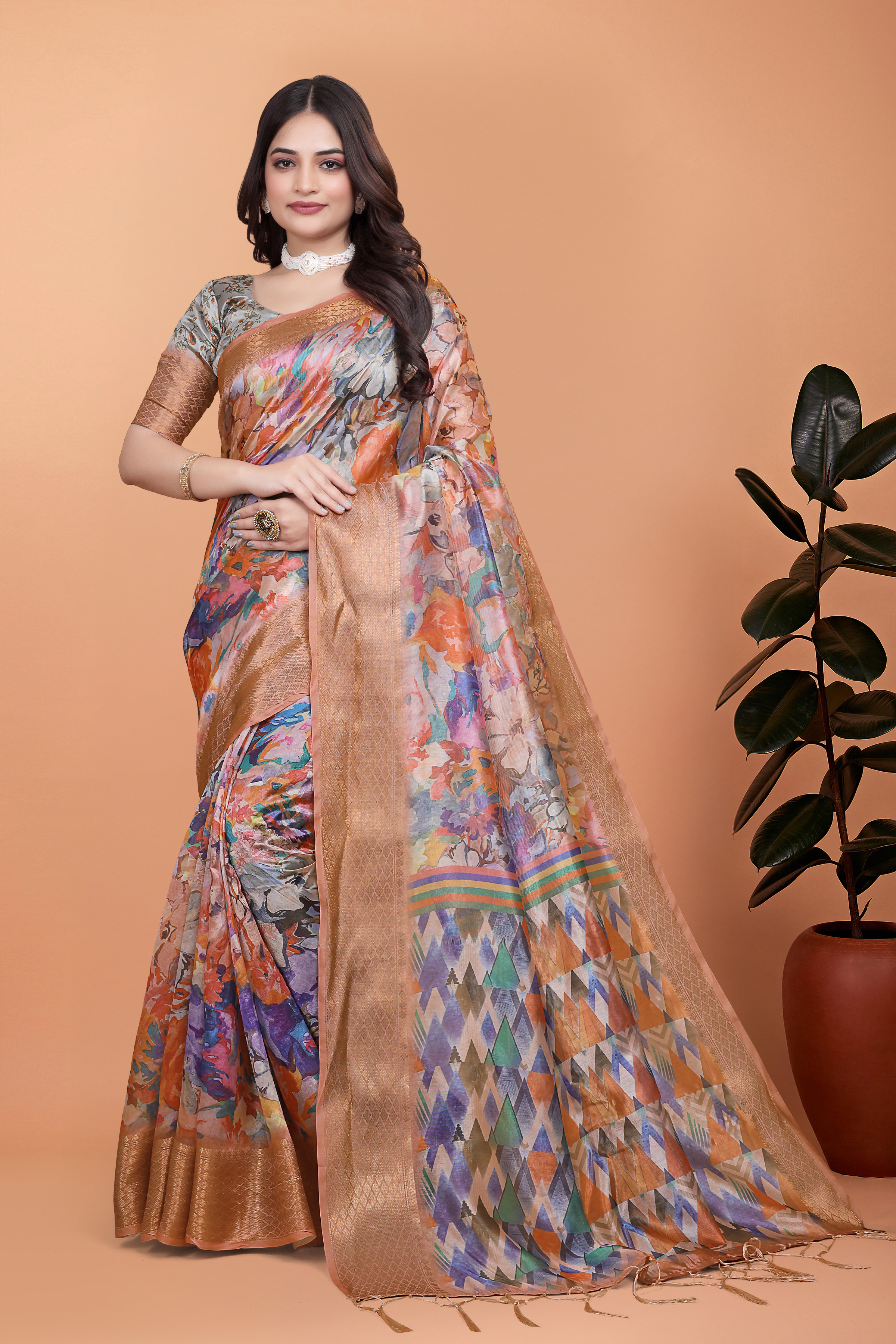
Bright sarees don't require a matching belt colour. Orange, red, magenta and emerald fabrics can work with antique gold because the warm metal bridges saturated shades. The Orange Bandhani Kalamkari Linen Cotton Saree is better suited to a restrained gold, brass or textile-backed belt than to highly polished bridal jewellery.
When the blouse is cropped, leave a narrow strip of space between the blouse hem and the kamarbandh if the design allows it. When the blouse is longer, place the belt over the saree at the waist and avoid covering the blouse embroidery. A sleeveless or short-sleeved blouse can support a bolder belt; a high-neck blouse with sleeves usually benefits from a quieter waistline.
Match the remaining jewellery to the kamarbandh's dominant finish. Gold jhumkas, a simple bangle stack and a small pendant can support an antique-gold belt. If the kamarbandh is the largest ornament, reduce the necklace size so the face, neckline and waist don't compete equally.
Comfort, fit and fastening details that prevent wardrobe problems
A comfortable kamarbandh should remain stable while sitting, allow normal breathing and avoid pinching the skin. Measure the waist over the clothing layer you'll actually wear, because a belt measured over a thin blouse may feel tight over a saree tuck and shapewear.

Adjustable chains are useful when the waist measurement may change during a long event or meal. Hook-and-eye closures offer a cleaner finish, while a tie-style kamarbandh allows finer adjustment but may show at the back. For a belt with a heavy central pendant, place the closure slightly behind the side seam so the front doesn't pull downward.
- Choose a broad, padded or fabric-backed design for a six-hour wedding function when metal edges may become uncomfortable.
- Choose a lightweight chain design for travel, dancing or a saree made from satin and fluid crepe-like fabric.
- Check that hooks are closed fully and that dangling charms can't catch on zari, jacquard or mirror work.
- Use a small hidden pin at the saree waistband if the belt shifts, but never rely on a pin to carry the full weight of a heavy kamarbandh.
- Carry two spare safety pins and a small piece of fashion tape for emergency pleat or pallu adjustments.
The Black Ethnic Mirror Work Bandhej Silk Saree needs particular care around dangling jewellery because mirror work and metal charms can catch each other. A compact belt with smooth links is safer than a highly fringed kamarbandh. For a more relaxed festive outfit, the Party Wear Maroon Cotton Saree With Designer Blouse can take a medium-width belt, especially when the blouse has a clean hem and limited neckline embellishment.
Ways to make the look modern without losing Indian detail
A modern kamarbandh look depends on editing rather than removing heritage elements. Keep one classic feature, such as zari, temple motifs, kundan or a chain silhouette, and simplify the surrounding styling.
Try wearing the belt slightly off-centre when the pallu is pinned over one shoulder and the blouse has an asymmetric neckline. The shift should be deliberate and small, usually no more than two to three centimetres from the centre. A diagonal belt placement can look accidental if the saree pleats are not equally controlled.
A plain blouse can make an ornate kamarbandh feel intentional. Conversely, a heavily embroidered blouse pairs better with a thin belt. The Black Ethnic Mirror Work Bandhej Silk Saree can be styled with a plain black blouse and a defined waist belt, while the Stylish Black Banarasi Saree with Detailed Jacquard Work may need a simpler belt because the jacquard surface already supplies richness.
For a daytime event, consider a narrow kamarbandh with small motifs and minimal layering. For a reception, a broader antique-gold design can work with a structured pallu and statement earrings. For a Haldi ceremony, keep the fastening light and avoid highly delicate finishes that may be damaged by turmeric, moisture or frequent movement.
Budget can guide fabric and jewellery decisions without dictating the final look. The collections Sarees from Rs 1000 to Rs 1500, Sarees Under 20% Off and Sarees Flat 50% Off can be useful starting points when choosing a saree whose border, print and fabric will work with jewellery already in your wardrobe. The key comparison isn't only the price; check the saree's weight, border width, opacity and likely slipping behaviour.
A final fitting checklist before you step out
A final fitting should confirm that the kamarbandh supports the saree without becoming a source of discomfort. Complete the check at least 30 minutes before leaving, because a rushed adjustment often causes uneven pleats or an over-tight fastening.
- Take a full-length photograph from the front and side to check whether the belt is level.
- Confirm that the pallu border, blouse hem and kamarbandh don't all meet at one crowded horizontal line.
- Sit for five minutes and make sure the fastening doesn't press into the abdomen or hip.
- Walk up and down stairs, since a slipping belt often reveals itself during movement rather than standing.
- Inspect the saree for snagging, especially around zari, jacquard, mirror work and loose threads.
- Pack a small repair kit containing pins, fashion tape and an extra closure if the belt design permits one.
A successful modern saree drape leaves the wearer free to move while giving the kamarbandh a clear, intentional role. Choose the belt according to fabric weight, place it at a stable part of the waist, repeat one colour or motif from the saree and test the outfit in motion. Those four decisions create a polished result more reliably than adding extra jewellery.
Common Questions About Styling a Kamarbandh With a Saree
Can you wear a kamarbandh with a pre-pleated saree?
Yes, a slim or medium-width kamarbandh works well with a pre-pleated saree when it is placed over the waist seam. Avoid a very wide belt that hides the stitched pleats or creates bulk beneath the pallu.
Should a kamarbandh sit above or below the saree pleats?
A kamarbandh usually sits above the main pleats and around the natural waist. The belt should stabilise the saree without covering the lower pleat line or the most important part of the border.
How tight should a saree kamarbandh be?
A saree kamarbandh should be secure but not restrictive, with enough room to slide one or two fingers beneath it. Test the fit while sitting, breathing normally and walking before wearing it to an event.
Which saree fabrics are best for a kamarbandh?
Banarasi silk, soft silk and other structured sarees can support medium or broad kamarbandhs. Satin and lightweight linen cotton usually look better with slimmer designs because heavy metal can pull or shift the fabric.
Can a kamarbandh be worn with a printed saree?
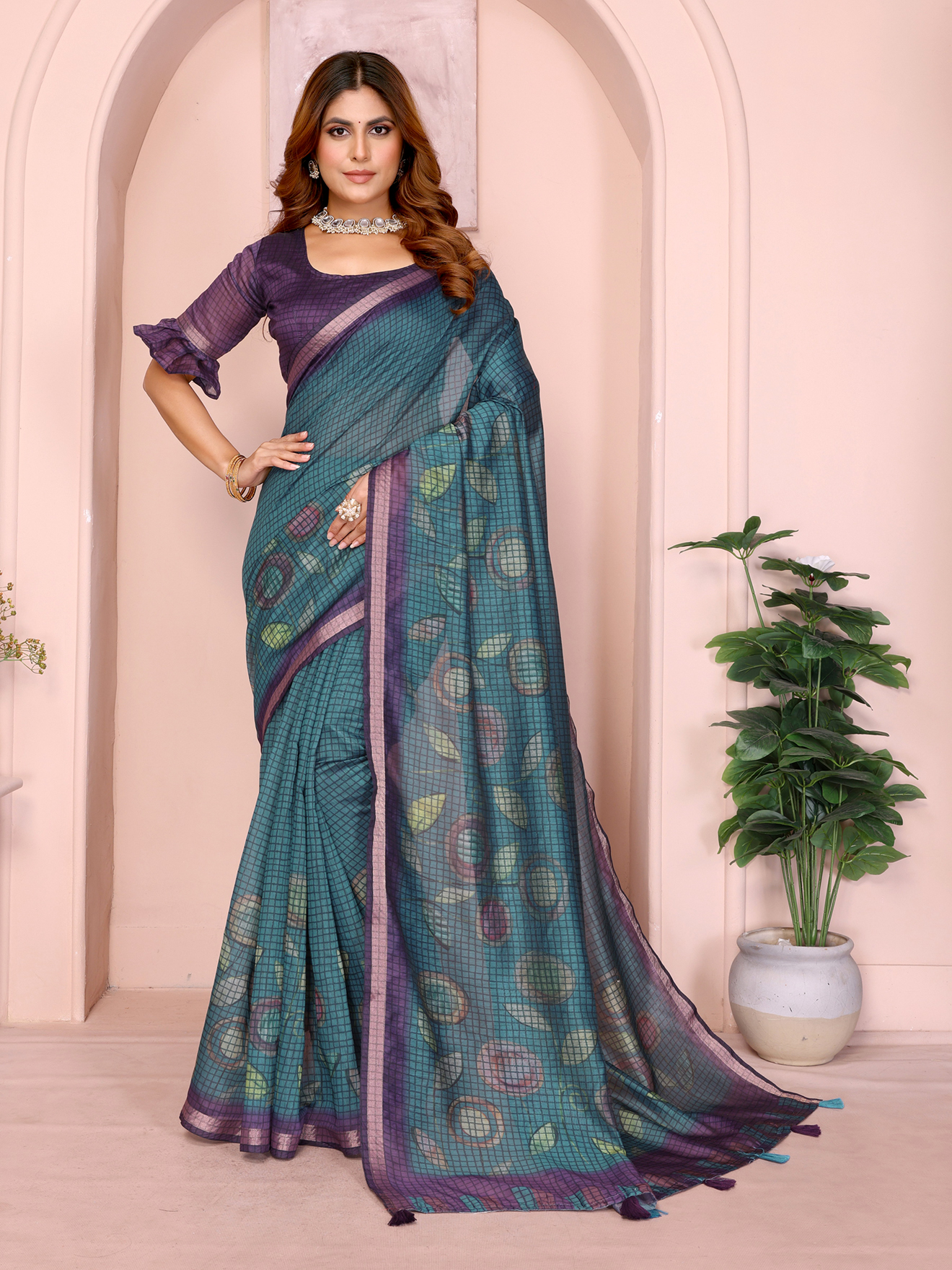
A kamarbandh can complement a printed saree when its scale is controlled. Choose a simple chain or limited-motif design for a busy Bandhani, Kalamkari or floral print, and reserve large ornate belts for quieter sarees.
What should you wear with a heavy kamarbandh?
Pair a heavy kamarbandh with simpler jewellery elsewhere, such as medium earrings, a few bangles and a restrained necklace. A plain or lightly detailed blouse gives the waist ornament enough space to remain the focal point.