How to Read a Kurti Product Description Before Ordering can save you from the most common online-shopping disappointments: a shorter-than-expected hem, an unlined dupatta, a narrow trouser leg or a set that doesn't include the garment you assumed was included. A useful product description contains clues about fabric, construction, measurements, components, colour and care. The skill is knowing which words describe appearance and which details affect comfort, fit and value.
Why product descriptions matter more than kurti photographs
A kurti photograph shows styling, while a product description records the practical specifications that determine what arrives at your door. A model may wear a garment with pins, a tucked hem or a carefully arranged dupatta, but the listing should clarify the actual silhouette and supplied pieces.
Read the description in a fixed order rather than scanning only for colour and price. Start with the product type, then check fabric, included components, measurements, workmanship, transparency, care and delivery information. That sequence separates a two-piece kurti pant set from a three-piece salwar suit and prevents assumptions based on the photograph alone.
Terms such as "printed," "embroidered," "woven," "A-line," "straight," "co-ord" and "jacquard" are not interchangeable. A printed motif is applied to the surface, embroidery adds stitched decoration, and a woven pattern is formed during fabric construction. An A-line shape widens towards the hem, whereas a straight kurti generally follows a more even vertical line. Those distinctions affect drape, movement and styling.
How to Read a Kurti Product Description Before Ordering for fabric clues
The fabric name tells you about likely feel, breathability, weight and care, but a fibre label and a style label often appear together. Cotton, rayon, viscose silk and silk describe material categories, while "printed," "jacquard," "woven," "embroidered" and "mirror work" describe surface or construction details.
Separate fibre from finish
Cotton usually suits warm-weather daily wear because the fibre is breathable, although the weave and lining still affect comfort. Rayon is known for a fluid fall and soft hand, but rayon garments may need gentler washing and careful drying. Viscose silk commonly indicates a smooth, drapey textile with a dressier appearance; the exact fibre composition and care label should take priority over the word "silk" in a style name.
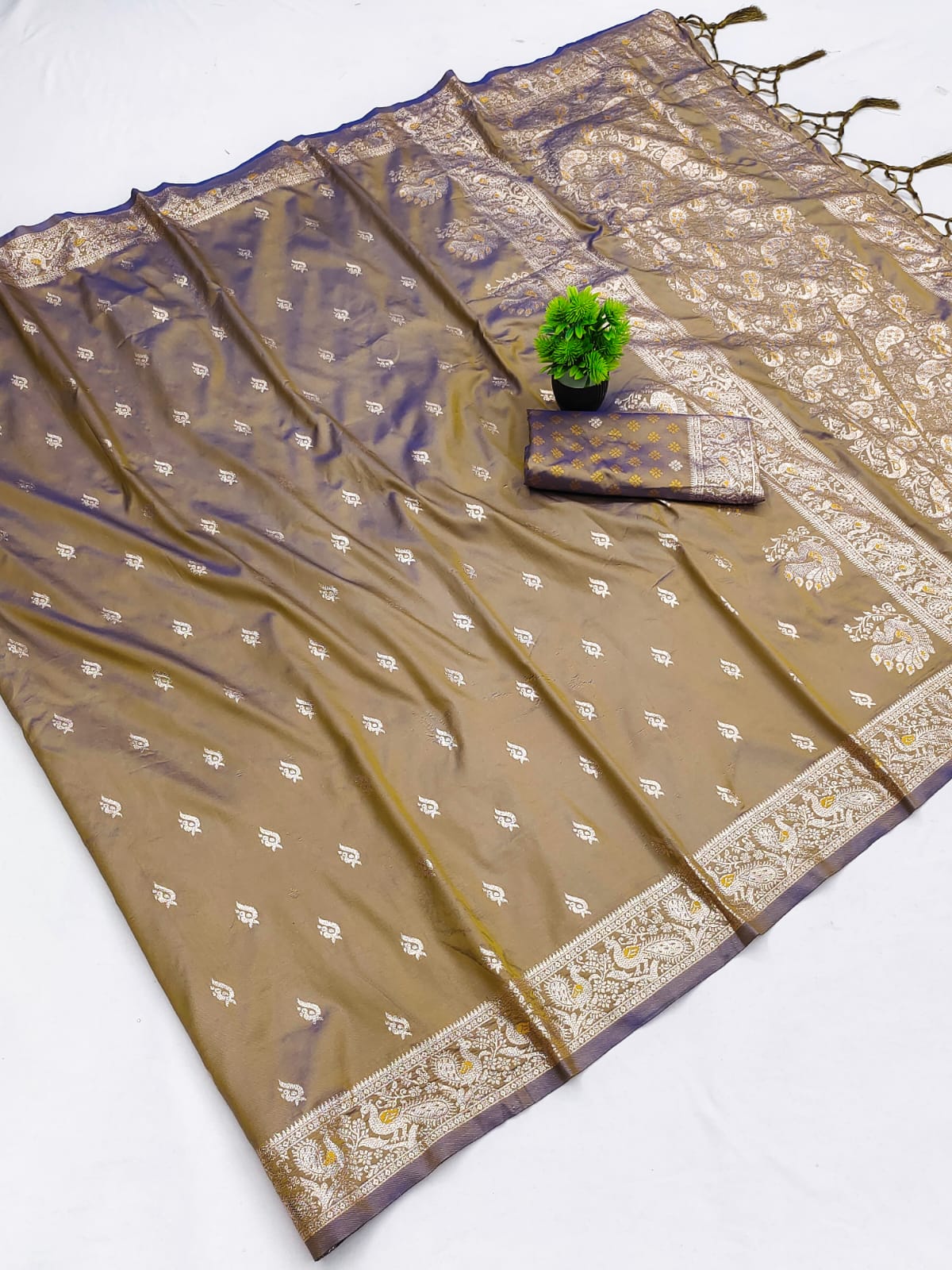
Banarasi silk, Kanjeevaram and Chanderi are distinct textile references, not interchangeable descriptions for every festive fabric. A listing that names only viscose silk should not be treated as Banarasi silk or Kanjeevaram. A description mentioning zari may refer to metallic thread used in a motif or border, so check whether zari is woven, embroidered or used as a small accent.
The product name Brown Cotton A-Line Kurti Pant Set with Mirror Work gives several useful clues before the detailed specifications are read: cotton identifies the principal fabric, A-line identifies the cut, pant set identifies a supplied bottom, and mirror work identifies decoration. The name doesn't by itself confirm lining, pocket placement, pant length or wash method.
Read weave and print terms precisely
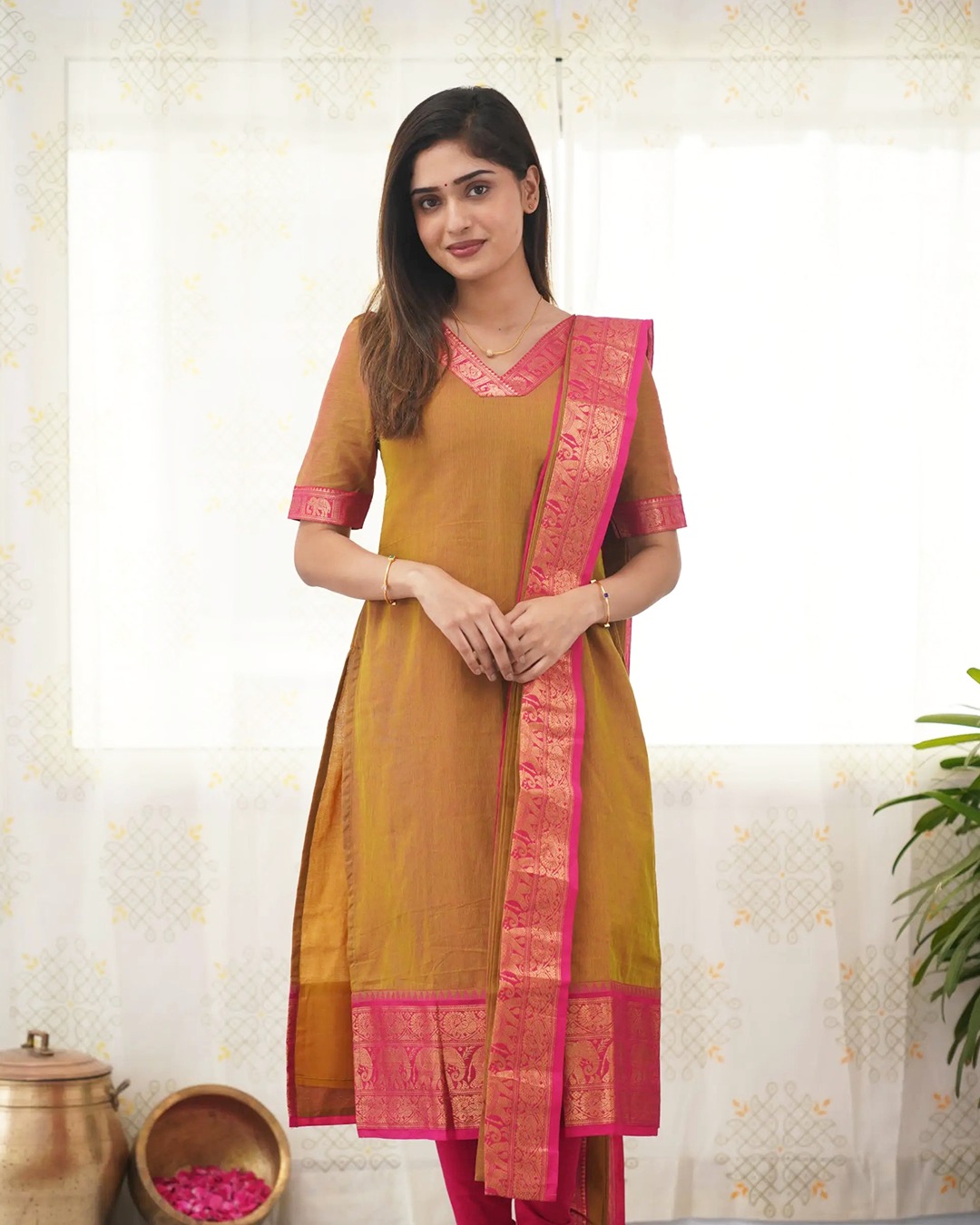
A woven pattern is part of the textile structure, while a print sits on the surface. The distinction matters because woven motifs can feel different from printed motifs and may respond differently to abrasion. Kanchi Cotton Jacquard Woven Kurti Dupatta Set signals a cotton jacquard construction and a kurti-with-dupatta format, but the description should still be checked for bottom inclusion, measurements and care.
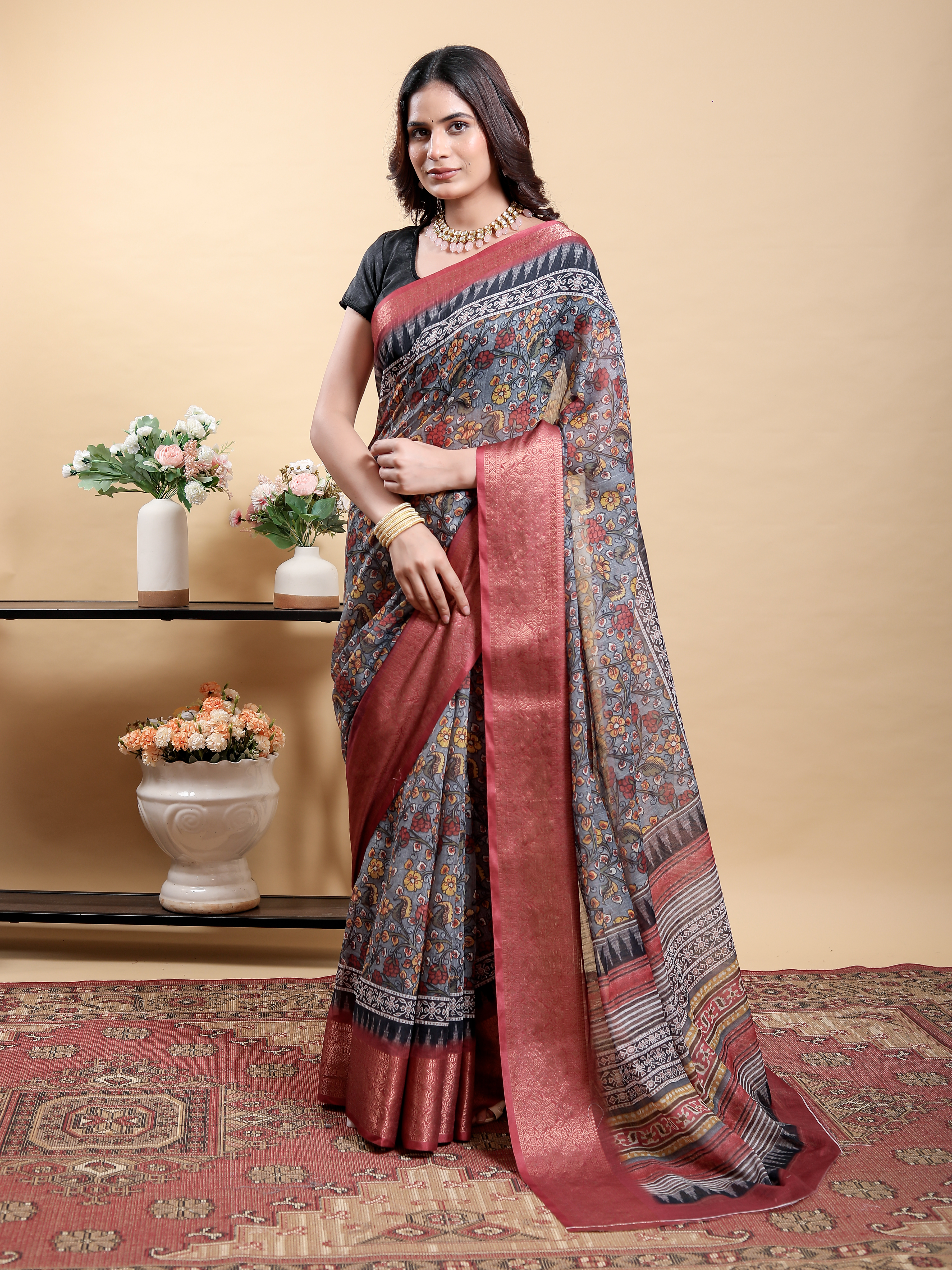
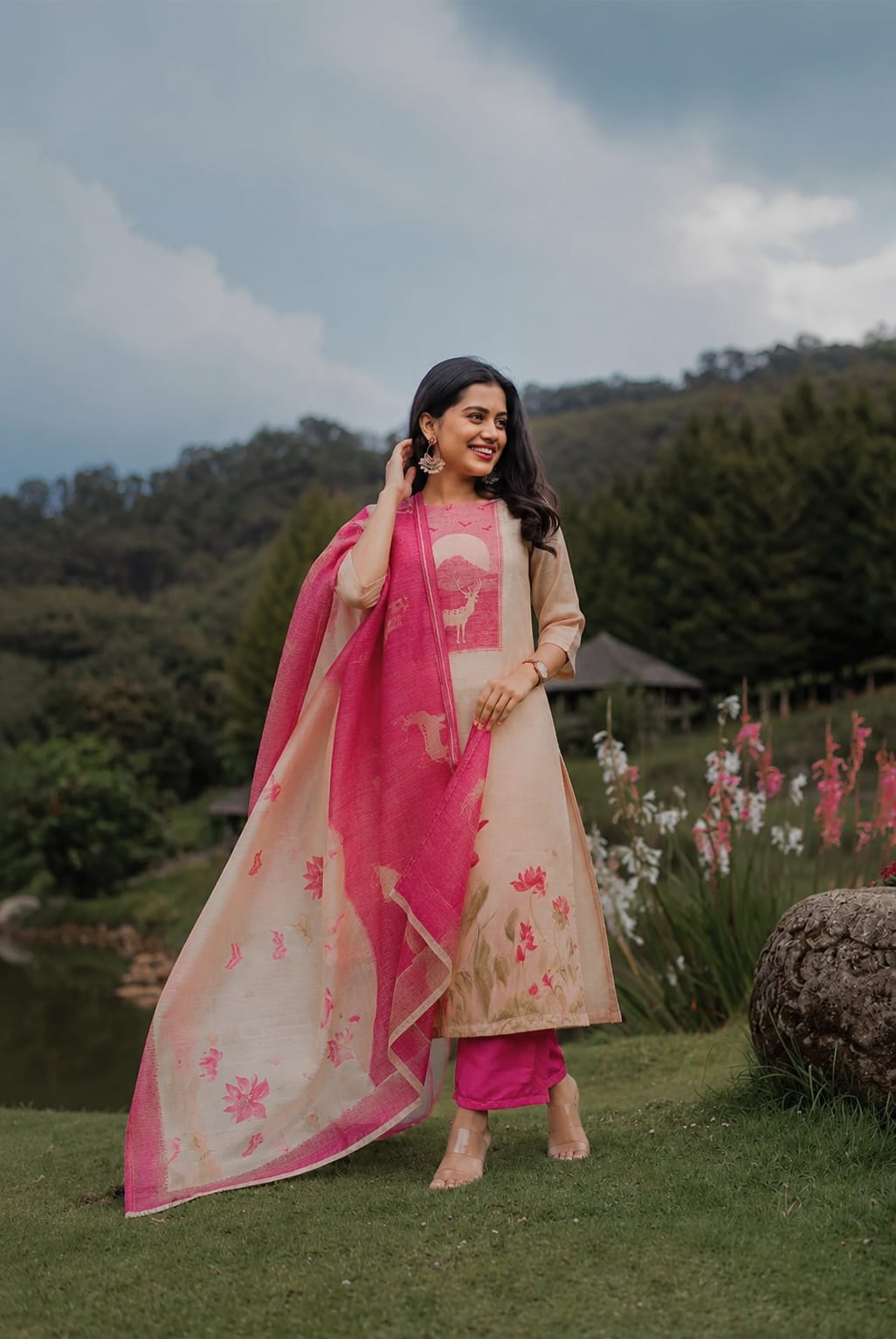
Traditional design references can also identify visual influence without proving that a garment uses a particular regional technique. Maharashtra Paithani Inspired Salwar Suits, Gujarat Bandhej Salwar Suits, Odisha Sambalpuri Salwar Suits and Kalamkari Print Salwar Suits (Copy) are useful collection names for browsing aesthetic directions. "Inspired" or a collection label should not be read as a guarantee of handloom origin, hand block printing or hand-dyeing unless the product description states that process clearly.
Which measurements should you check before choosing a kurti size?
You should compare your body measurements with the garment's own size chart, especially bust, waist, hip, shoulder, armhole and garment length. A familiar size such as M or XL isn't a universal measurement, and a kurti designed with a straight cut will require a different fit assessment from an A-line style.
Measure over the clothing you expect to wear underneath. Keep the tape level around the fullest part of the bust, measure the natural waist without pulling tightly, and record the fullest hip measurement. Measure shoulder width from one shoulder point to the other, and check sleeve length from the shoulder seam rather than from the neckline.
Compare body measurements with garment measurements when both are available. If your bust measures 38 inches and the listed garment bust is 40 inches, the two-inch difference is wearing ease, not a promise that every part of the garment will feel loose. A garment with little ease may look neat but feel restrictive when you sit or lift your arms.
Length deserves separate attention because small, tall and long-torso proportions change how a kurti appears. Check whether the listed length is measured from the highest shoulder point or from the neckline. A 44-inch kurti measured from the shoulder won't equal a 44-inch kurti measured from a low point. Also see pant or palazzo length, inseam, waist construction and whether the waistband is elastic, drawstring or fixed.
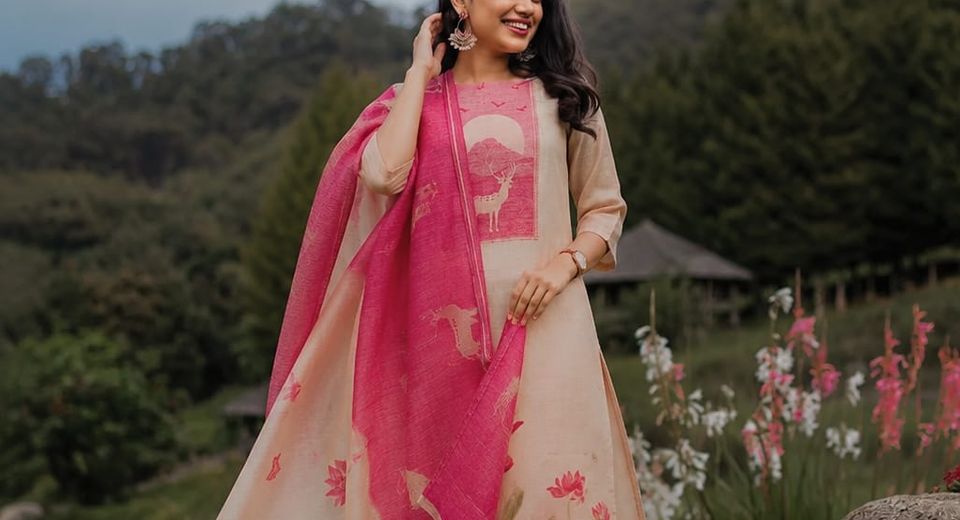
Product names can offer an early fit clue. Buy Beige Pink Printed Zarna Silk Kurti Set Online suggests a coordinated set, while Parrot Green Kanchi Cotton Kurti with Woven Dupatta explicitly identifies a kurti paired with a dupatta. Neither name confirms the available size ease, so the measurement table remains decisive.
What does a kurti set include?
A kurti set includes only the components stated in the description, so never assume that a photograph's jewellery, footwear, lining or bottom garment is part of the purchase. Common formats include a kurti alone, a kurti with pants, a kurti with a dupatta, and a three-piece set containing kurti, bottom and dupatta.
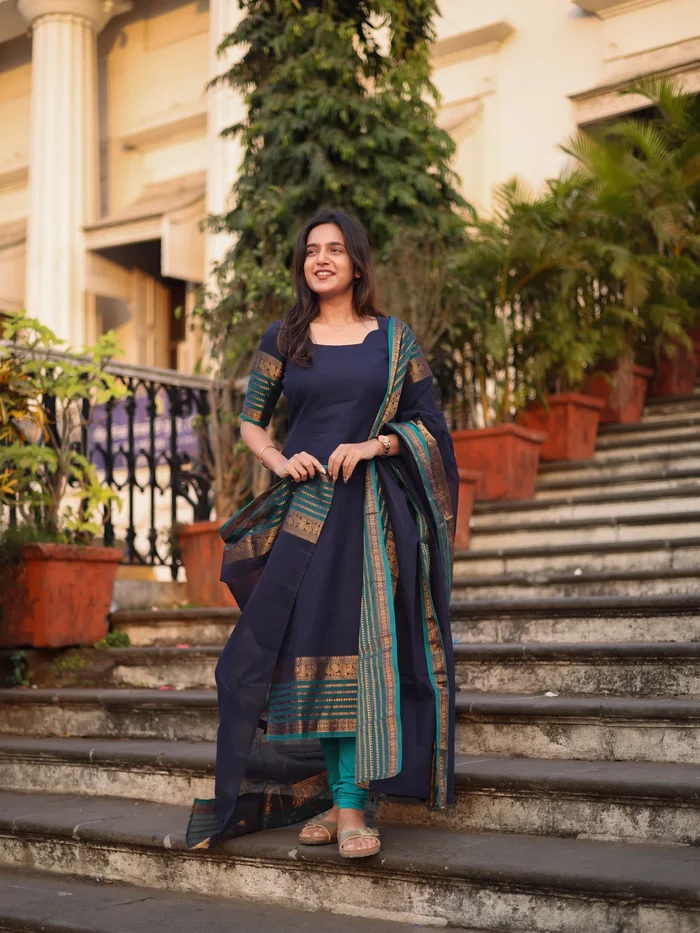
Look for an explicit "set includes" or "in the box" section. The wording should identify each supplied piece and, ideally, give measurements for every piece. "Kurti dupatta set" normally signals two components, while "kurti pant set" normally signals the kurti and pant. A product called a co-ord set may contain a top and bottom without a dupatta.
Printed Rayon Co Ord Set for Women Online | Varnavi illustrates why naming matters: "rayon" describes the principal material, "printed" describes the surface treatment, and "co-ord set" indicates coordinated separates. Check whether the listing specifies top and bottom lengths, waist construction, pockets and lining before deciding whether the set meets your needs.
A dupatta description should reveal approximate length and width, fabric, border, tassels, transparency and finishing if those details are available. A light dupatta can be comfortable for a Haldi ceremony, but a delicate surface or pale colour may need more careful handling. A bottom description should clarify whether the garment is a pant, palazzo, salwar or skirt and whether the waist has elastic or a drawstring.
How should embroidery, mirror work and zari be interpreted?
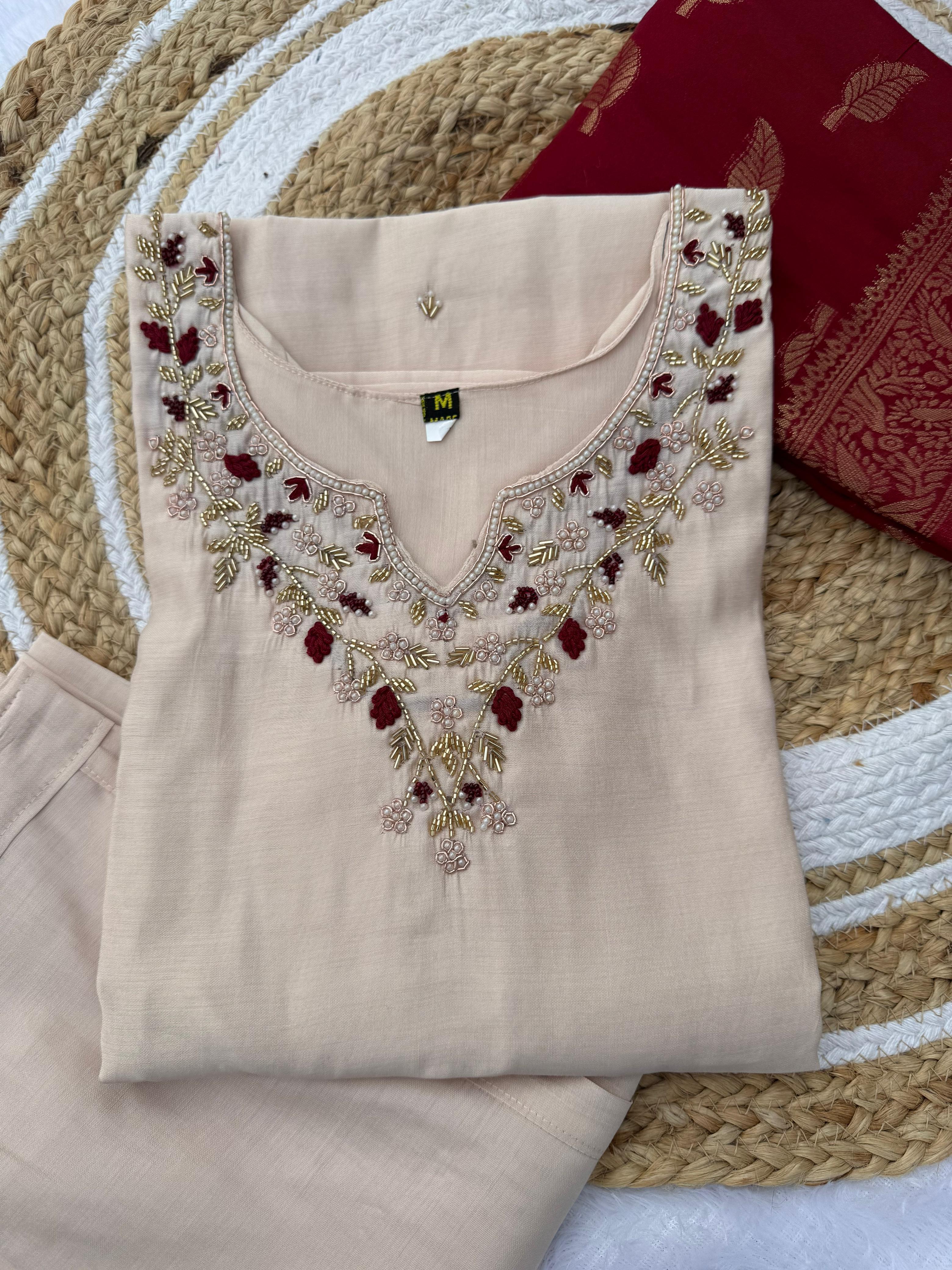
Decoration terms describe the visual treatment, not necessarily the amount of work, hand technique or durability. Embroidery may be concentrated at the neckline, sleeves and hem rather than covering the entire garment. Mirror work may use attached reflective pieces, and zari may be a metallic thread accent; the listing should be consulted for the placement and care requirements.
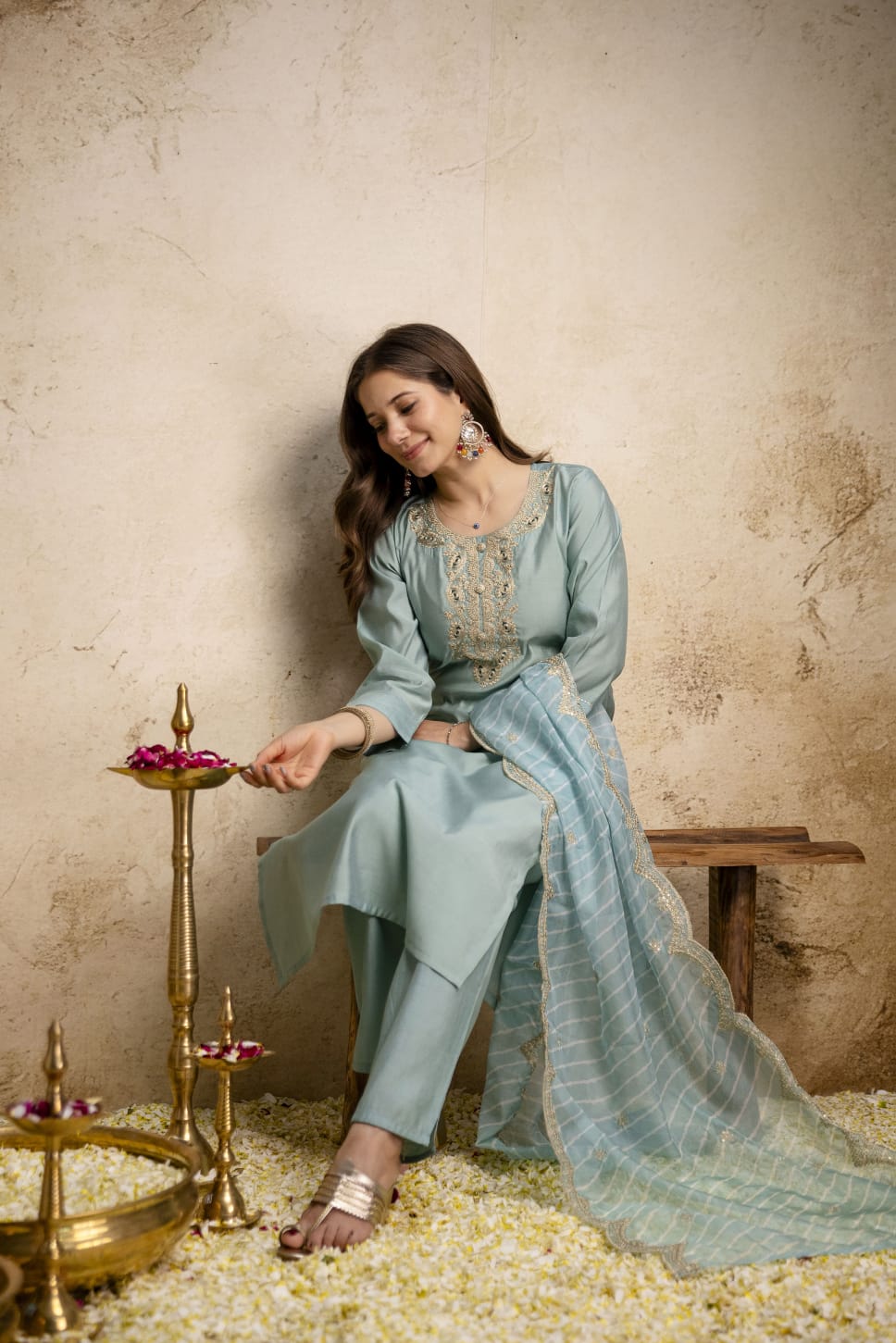
Check whether the description identifies embellishment as handwork, machine embroidery, applique, sequins, mirror work or woven detail. Handwork often requires gentler storage and cleaning, but a claim of handwork should be stated rather than inferred from a rich-looking photograph. A close product image can help you judge motif scale, yet only the written specifications can confirm construction details.
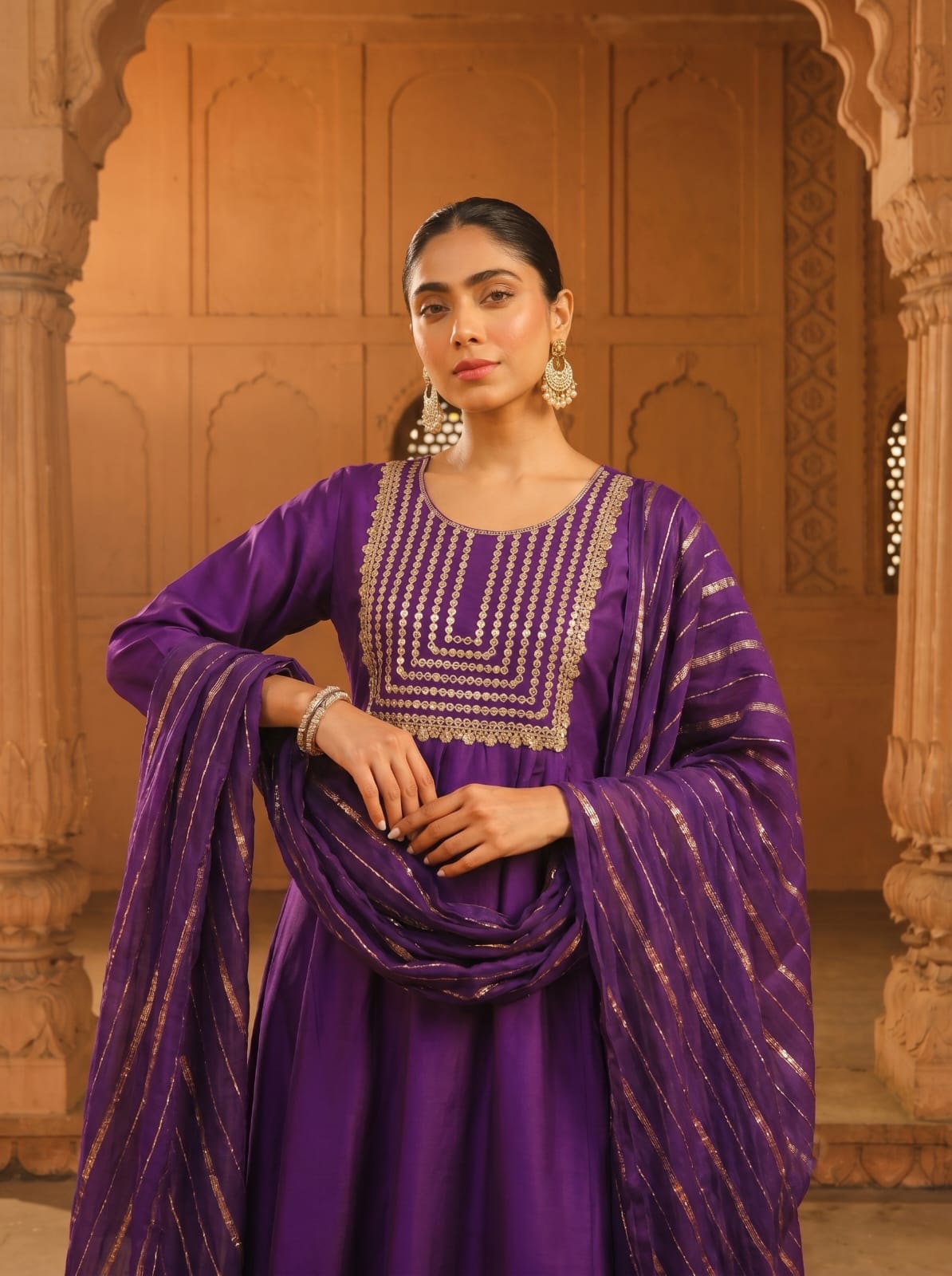
Royal Purple Embroidered Viscose Silk Kurti Set Online and Rani Pink Embroidered Viscose Silk Kurti Set Online both communicate three useful attributes through their names: colour, embroidered treatment and viscose silk fabric category. The detailed listing still needs to answer whether the embroidery is on the kurti, dupatta or both, and whether the set includes a bottom.
Decoration also affects practical comfort. Dense work near the armhole can feel different from embroidery on the hem, while rough sequins or mirror edges can catch on delicate bags and seating. A description that mentions lining, backing or finishing gives a better indication of wearability than the word "designer" alone.
How do colour, occasion and collection names affect your choice?
Choose colour by considering lighting, intended use and the difference between screen display and physical fabric. A phone display can make pink appear cooler, purple appear deeper or mustard appear brighter than it looks indoors. Product descriptions may mention colour names, but colour variation caused by screens and dye lots remains possible.
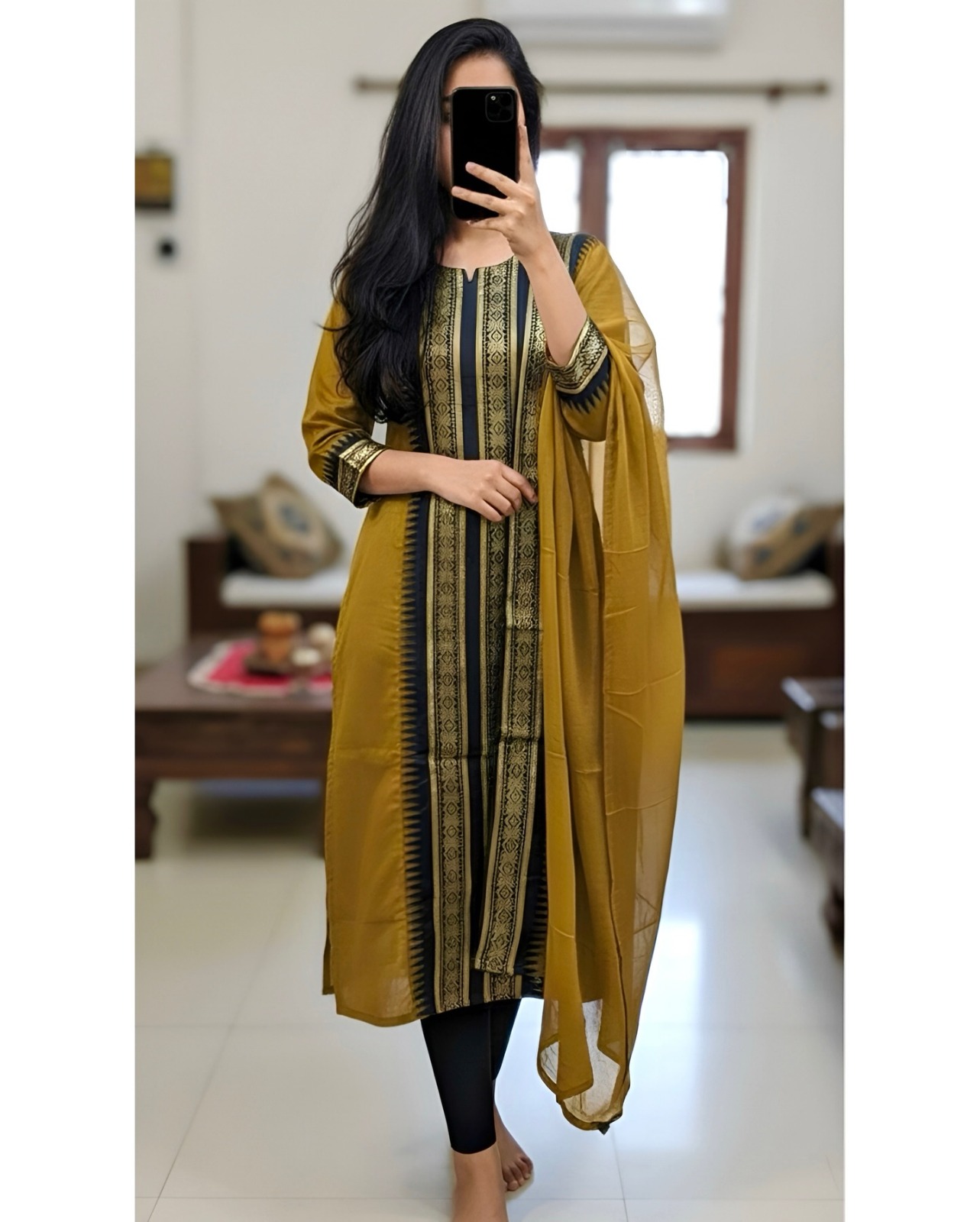
Mustard Designer Kurti Dupatta Set with Rich Weaving points towards a more textured, dressy appearance because "weaving" describes a structural surface detail. A rich-looking weave may add weight, so check fabric weight or lining information if you plan to wear the set in humid weather. The word "designer" communicates positioning, not a measurable fibre, stitch count or fit standard.
Occasion suitability should be judged from fabric, construction and embellishment rather than colour alone. Cotton and lighter woven fabrics can work for daytime gatherings, while embroidery, zari or mirror work may suit festive dressing. A Punjab Patiala Salwar Suits collection may suggest a relaxed, voluminous bottom silhouette, but the individual product's measurements determine the actual fit.
A collection label is helpful for narrowing a visual search, not for replacing the product page. Maharashtra Paithani Inspired Salwar Suits may appeal to shoppers seeking traditional-inspired borders, while Gujarat Bandhej Salwar Suits and Odisha Sambalpuri Salwar Suits signal different design references. Read the individual description to confirm print, weave, fabric and included pieces.
What should you check about care, price and delivery?
Care instructions should match the fabric and embellishment before you place an order. A garment marked for gentle hand wash should not be treated like a sturdy everyday cotton, and embroidered, zari or mirror-work pieces may need a protective garment bag and careful drying. Avoid storing damp textiles, and keep embellished pieces folded with a soft layer between heavy surfaces.
Price becomes easier to judge when you compare fabric, number of pieces, construction, embroidery, lining, finishing and expected use rather than comparing only the garment names. A two-piece viscose silk set and a three-piece cotton set solve different wardrobe needs. A lower price isn't automatically better value if alterations, lining or a missing bottom garment will add cost later.
Delivery details deserve the same attention as fabric details. Check the stated dispatch timeframe, estimated delivery window, size availability, alteration option and exchange conditions before payment. An outfit needed for a wedding or Haldi ceremony should be ordered with enough time for delivery, fitting and a possible exchange; an advertised "ready to ship" status may still differ from the final delivery estimate.
How to Read a Kurti Product Description Before Ordering: a five-minute checklist
A five-minute checklist can turn a visually appealing listing into an informed buying decision. Save or screenshot the specification section if you're comparing several salwar suits, because product pages may display measurements and care notes in separate tabs.
- Product format: confirm whether the listing is a kurti, kurti pant set, kurti dupatta set or complete three-piece salwar suit.
- Fabric: record the named fibre, weave, lining and finish; distinguish cotton, rayon, viscose silk and jacquard from print or embroidery terms.
- Measurements: compare bust, waist, hip, shoulder, length, sleeve and bottom measurements with your own tape-measure records.
- Construction: check closure, pockets, side slits, lining, waistband, transparency and the location of embellishment.
- Colour and surface: read colour notes and inspect close images without assuming that screen colour is exact.
- Care: note wash, drying, ironing and storage instructions, especially for zari, embroidery, mirror work and delicate fibres.
- Order risk: confirm stock, dispatch time, delivery estimate, exchange rules and whether alterations are available before paying.
Good online shopping doesn't require memorising every textile term. It requires translating each product word into a practical question: what is supplied, how will it fit, how will it feel, how should it be cared for and when will it arrive? That habit makes a product description useful evidence rather than decorative copy.
Common Questions About Reading Kurti Listings Before Ordering
How can I tell whether a kurti listing includes pants or a dupatta?
Check the product title and the explicit "set includes" section. A kurti pant set should name the pant, while a kurti dupatta set should identify the dupatta; never rely on the photograph alone.
How do I choose a kurti size when every brand has a different chart?
Measure your bust, waist, hip, shoulder and preferred garment length, then compare those numbers with the listing's size chart. Prioritise garment measurements and wearing ease over a familiar S, M or L label.
Is viscose silk the same as Banarasi silk or Kanjeevaram?
No. Viscose silk is a material description, while Banarasi silk and Kanjeevaram refer to specific textile traditions and constructions. A product should explicitly state a regional textile claim before you treat it as Banarasi silk or Kanjeevaram.
What is the difference between a printed and woven kurti?
A printed motif is applied to the fabric surface, while a woven motif is created as part of the textile structure. Product descriptions using "jacquard" or "woven" should still be checked for fibre, lining and care details.
Can I trust the colour shown in a kurti photograph?
Photographs and screens can change how colour appears, so the written colour name is useful but not perfectly precise. Check the listing's colour-variation note and review images in neutral lighting when possible.
What should I check before ordering an embroidered or mirror-work kurti?
Check where the embroidery or mirror work is placed, whether the garment is lined, how much of the set is embellished and what care method is required. Confirm the exchange window and order early if the outfit is needed for a fixed event.