

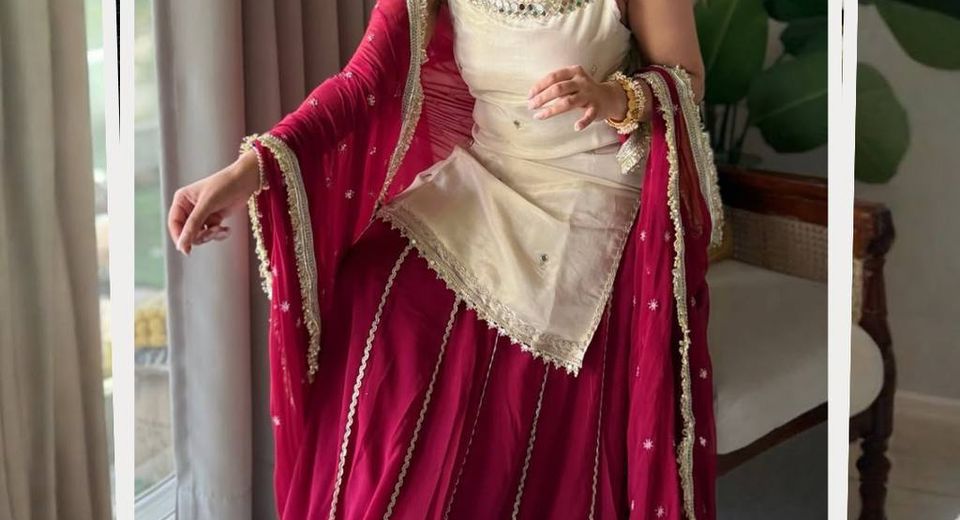
How to Get the Proportion Right for Belt With Saree, Suit or Lehenga begins with three practical measurements: the garment's volume, the visible length of the torso and the belt's visual weight. A belt can define a saree, give a straight salwar suit a clearer waist or connect a lehenga blouse to its skirt, but the wrong width can flatten pleats, hide embroidery or make the torso look shorter. The most reliable choice follows the outfit's construction instead of treating every waist belt as interchangeable.
For salwar suits, a belt is especially useful when the kameez has a straight or gently relaxed cut. A belt can also create structure on a crop-top lehenga and keep a saree pallu controlled during movement. The goal isn't to make every outfit tight at the waist. The goal is to create one intentional horizontal line while preserving comfort, drape and the garment's original design.
How to Get the Proportion Right for Belt With Saree, Suit or Lehenga: The Basic Measurement
The correct proportion comes from matching belt width and placement to garment volume and visible torso length. A narrow belt usually suits light fabrics and petite frames, while a wider belt balances heavy embroidery, broad borders and generous flare.
Start by measuring the visible torso from the shoulder line or blouse neckline to the intended waistline. An useful starting point is to choose a belt width close to one-sixth of that measurement. If the visible torso measures 30 centimetres, a belt around 4 to 5 centimetres wide will usually look balanced. The calculation is only a guide because zari, stones, metal hardware and raised embroidery make a belt appear visually wider than its physical measurement.
A 2 to 3 centimetre belt works with delicate sarees, slim dupattas and lightly decorated salwar suits. A 4 to 6 centimetre belt can balance a medium-weight Banarasi silk saree, an embroidered straight kurta or a moderately flared lehenga. A belt wider than 6 centimetres needs enough garment volume or surface detail to prevent the accessory from overpowering the outfit.
Contrast affects proportion as strongly as width. A bright gold belt appears more prominent against black, white or pastel clothing, while a belt close to the garment colour creates a longer, quieter line. A dark brown belt may look narrower on a rust or chocolate outfit than the same belt placed over ivory fabric. A polished metal buckle also attracts more attention than a flat fabric tie of identical width.
How to Get the Proportion Right for Belt With Saree, Suit or Lehenga When Styling a Saree
A saree belt should sit at the waistline that supports the pleats while leaving the pallu free to move across the torso. For most sarees, the best position is the natural waist or 2 to 3 centimetres above it, rather than directly beneath the bust.
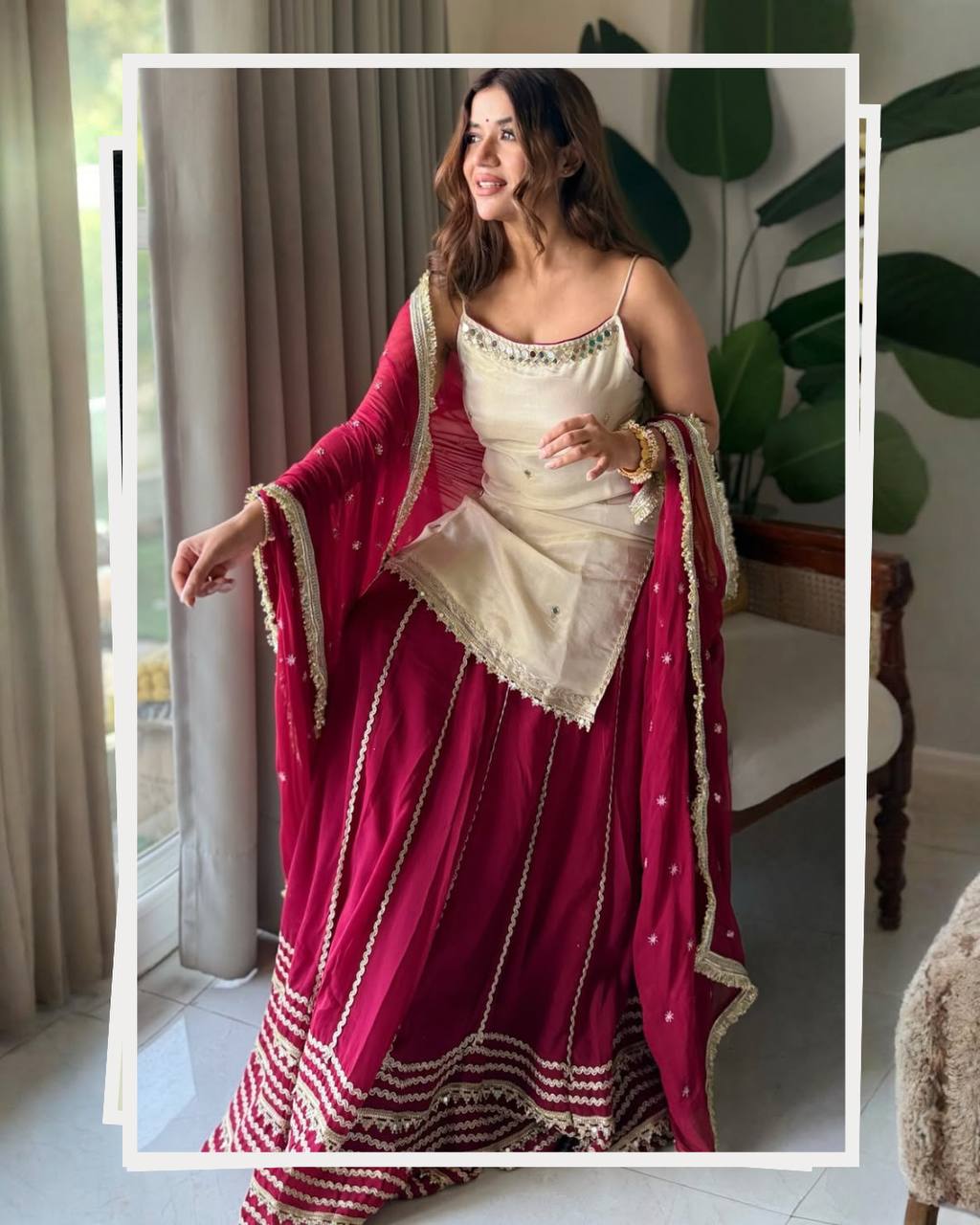
Secure the saree first with pins before adding a belt. A belt should not carry the entire weight of the pleats because pressure can distort the folds and pull the drape sideways. Pin the first pleat near the waist, smooth the remaining pleats downwards and place the belt over the stable section. The belt should hold the arrangement without compressing the pleats into a stiff, flat panel.
A lightweight chiffon, georgette or crepe saree can take a slim metallic belt or a soft fabric waist tie. A heavier Banarasi silk or Kanjeevaram saree generally needs enough structure to balance the fabric, but a rigid wide belt can interrupt a traditional woven border. A 3 to 5 centimetre belt is a practical middle ground when the saree has a visible zari edge.
The pallu arrangement determines how much of the belt should remain visible. A neatly pleated pallu can cross the shoulder while leaving the front of the belt exposed for a defined contemporary effect. A loose open pallu or Gujarati-style drape may look better when the belt is visible only at the front, allowing the side folds to retain movement.
How to avoid shortening the body with a saree belt
A saree belt flatters the body when it defines the waist without forming a thick contrasting block across the widest part of the torso. A belt close in colour to the saree, blouse or zari creates a continuous vertical impression.
A petite wearer can usually preserve visible leg length with a 2 to 4 centimetre belt placed slightly above the natural waist. A longer torso can support a 4 to 6 centimetre belt or a more noticeable buckle without appearing compressed. A fuller midsection may feel more comfortable with a flat, flexible belt over smooth pleats rather than a rigid accessory that digs into the waist.
A belt should not conceal the saree's most important craft details. A Paithani-inspired border, Sambalpuri pattern or carefully arranged pallu deserves visual space. Maharashtra Paithani Inspired Salwar Suits and Odisha Sambalpuri Salwar Suits show how regional motifs can carry an entire outfit's visual identity; an accessory should frame those details rather than cover them.
How to Get the Proportion Right for Belt With Saree, Suit or Lehenga in a Salwar Suit
A belt changes a salwar suit by establishing a waistline on a garment that may otherwise fall in one uninterrupted column. The strongest placement follows the kameez's existing cut and leaves room for the bust, arm movement and dupatta.
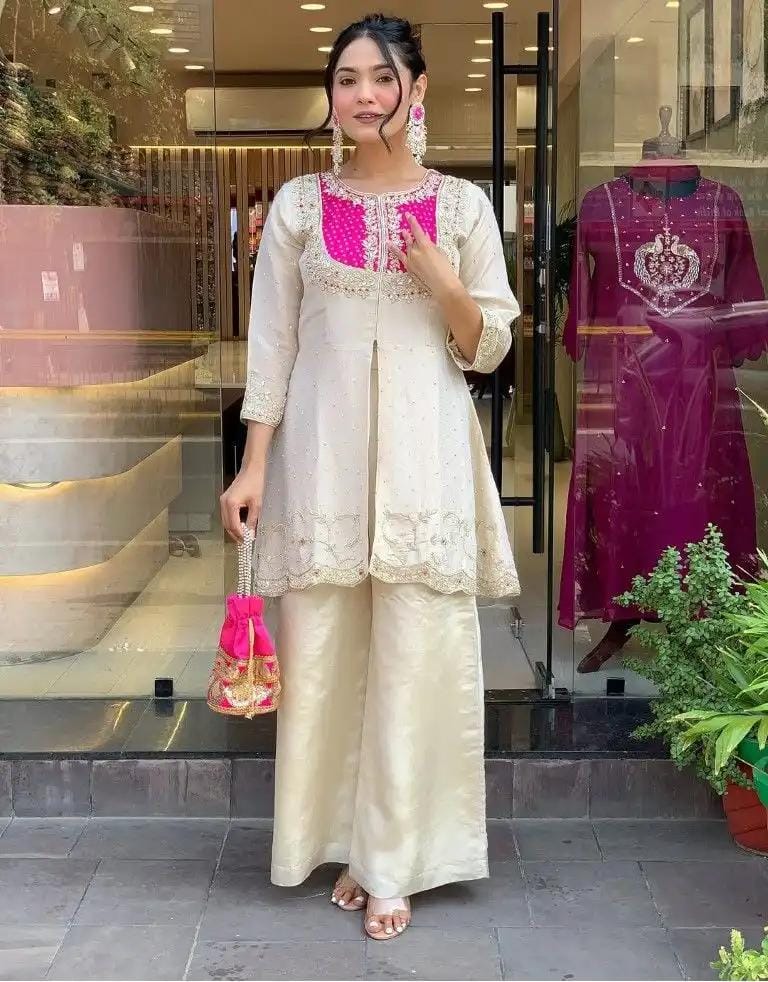
A straight kurta usually responds well to a belt placed at the narrowest comfortable point, often 3 to 6 centimetres above the hip line. A long Anarkali should be belted only at its fitted empire or natural waist seam. Belting the widest part of an Anarkali flare can gather excess fabric and make the lower half look heavy. A short kurta with palazzo trousers can take a slightly higher belt because the exposed trousers already create a strong vertical line.
Readymade construction affects how firmly a belt can be worn. A side-zip or fitted kameez can generally support more definition than a loose slip-on tunic. A belt should not cover a row of buttons, a heavily embroidered neckline or a waist seam designed to remain visible. Delicate threadwork should be protected by testing the belt over a plain section or by adding a smooth lining between the accessory and garment.
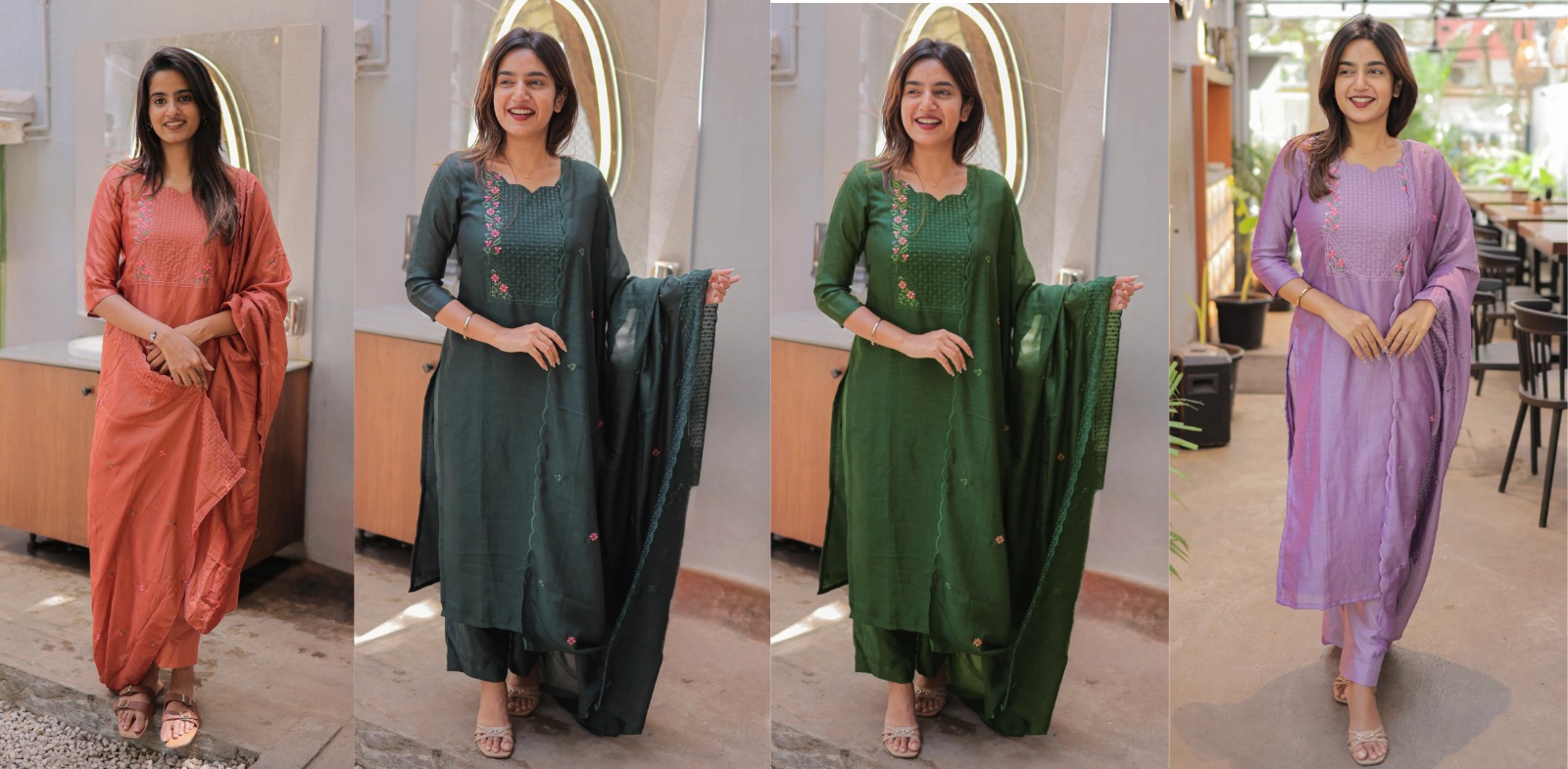
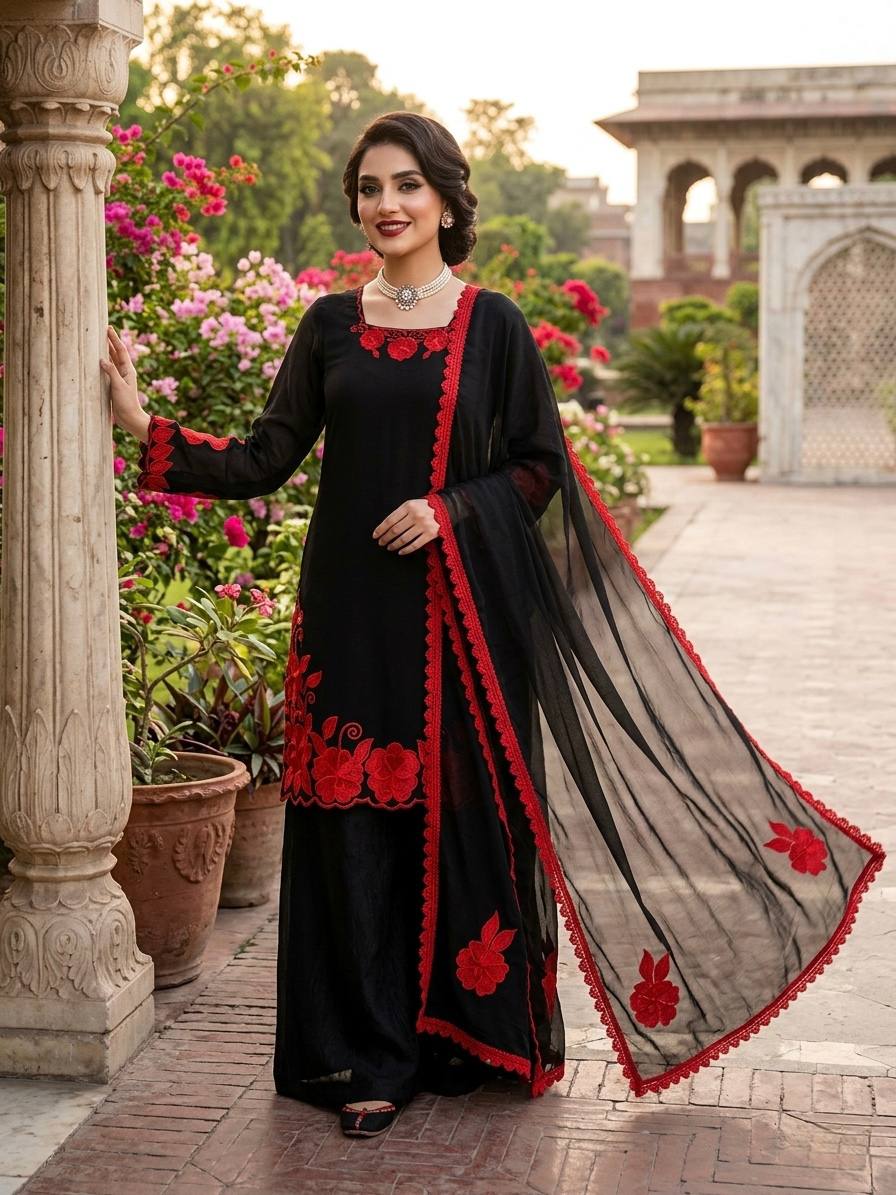
The Black Red Fendy Silk 3 Piece Readymade Salwar Suit Set shows why colour contrast should be considered before adding a belt. A black belt can reinforce the darker elements, while a bright metallic belt may compete with red detailing. The Orange Thread Embroidered Ethnic Suit Set can support a tan, antique-gold or muted orange belt, depending on whether the desired mood is earthy or festive.
The Rust Orange Embroidered Readymade Suit Set for Women benefits from accessories that respect its warm colour temperature. A brown, antique-gold or muted copper belt can sit naturally within the palette, while a sharply cool silver belt creates a stronger fashion contrast. The Embroidered Salwar Suit Set for Women should be assessed by the density of its embroidery: a plain belt works better when the bodice already contains a busy motif.
Which salwar suit silhouettes suit a belt?
Straight suits, short kurta sets and lightly flared kameez silhouettes are the easiest salwar suit shapes to belt. Relaxed tunics can also work when the belt is flexible and the dupatta is arranged away from the buckle.
Very gathered Anarkalis, layered peplums and low-waisted Patiala styling need more caution because extra fabric can collect around the belt. Punjab Patiala Salwar Suits often depend on generous drape and pleat volume, so a belt should be used lightly and placed above the fullest area. Kalamkari Print Salwar Suits may look more balanced with a plain belt that allows the print to remain the main focus.
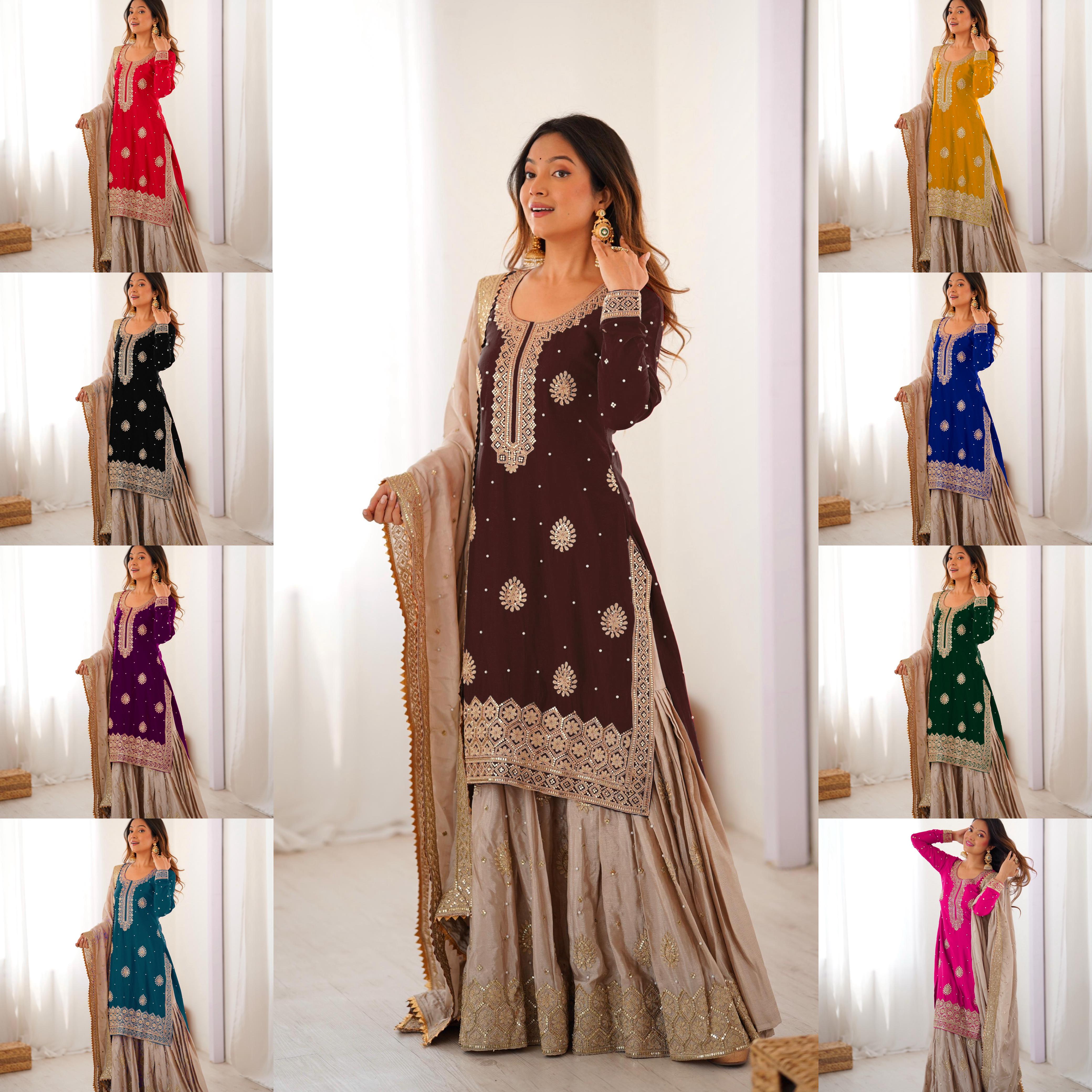
A belt can clarify the shape of the Multicolor Embroidered Crepe Maxi Suit Set for Festive Wear, but the belt should sit only where the maxi's construction permits it. With the Brown Chinon Silk Sharara Suit Set for Women, a slim belt can connect a short kurta to the sharara volume, while a wide belt may compete with the trousers' flare and make the lower half appear heavier.
How to Get the Proportion Right for Belt With Saree, Suit or Lehenga on a Lehenga
A lehenga belt should align the crop top, waistband and skirt without hiding the most important embroidery or the intended midriff gap. The belt normally sits at the finished skirt waistband or over the lower edge of the blouse, depending on the garment's construction.
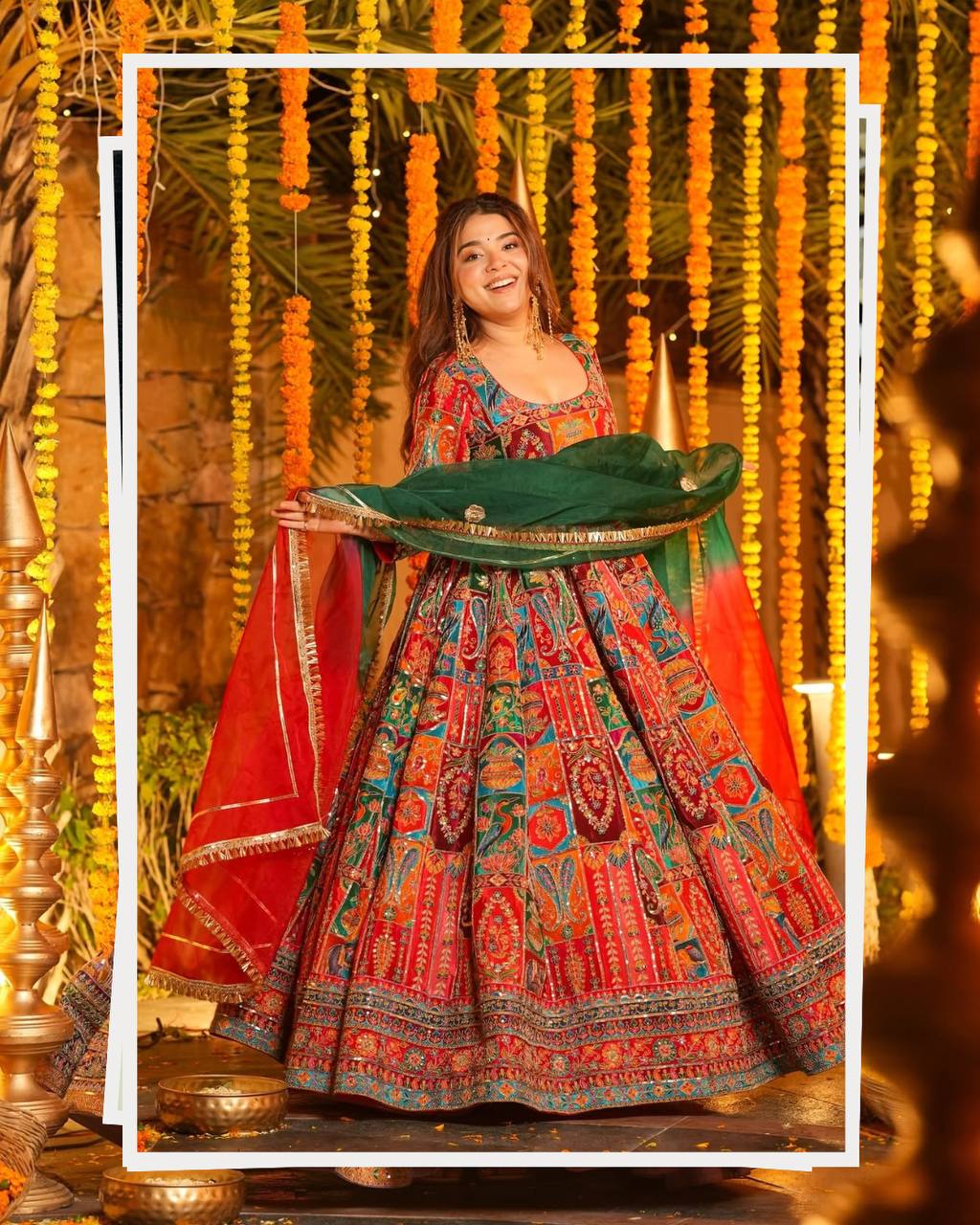
A crop-top lehenga benefits from a belt that visually joins the two separate pieces. When the top and skirt have heavy zari or stonework, choose a belt with a similar finish but a simpler surface. The Off White Vichitra Silk Crop Top Lehenga Set with Zari Work already creates a pale-and-metallic relationship, so an antique-gold or soft champagne belt is likely to integrate more smoothly than a high-contrast black belt.
Skirt volume determines belt scale. A narrow belt can disappear against a wide, layered lehenga, while a very broad belt can make a small crop top look shorter. For many contemporary lehengas, a 4 to 6 centimetre belt provides enough visual weight to meet the skirt's volume without covering too much of the blouse.
Check the belt while standing, sitting and walking. A lehenga belt that looks correct while standing may press into the waist when seated or catch on embellished fabric during movement. Leave enough ease for comfortable breathing and confirm that the belt doesn't pull the skirt waistband upward.
How to Get the Proportion Right for Belt With Saree, Suit or Lehenga and Regional Detail
A belt should support regional textile identity by repeating a colour, metal finish or motif rather than competing with it. Regional styling is most successful when the accessory acts as a visual bridge between the garment's separate elements.
Gujarat Bandhej Salwar Suits can work with a belt that echoes one colour already present in the Bandhej pattern. A red, green or mustard accent selected from the print will look more connected than an unrelated neon shade. A relatively plain belt is usually preferable when the Bandhej contains many small tie-dye dots.
Odisha Sambalpuri Salwar Suits often contain strong geometric or figurative motifs. A narrow belt in black, red, ivory or a restrained metallic finish can define the waist without covering the textile story. A wide belt with a large unrelated emblem may compete with the Sambalpuri pattern and create two competing focal points.
Kalamkari Print Salwar Suits carry detailed narrative and botanical imagery, so a matte belt in tan, brown, black or a colour drawn from the print can keep the styling coherent. Maharashtra Paithani Inspired Salwar Suits can support antique-gold accents when the border suggests zari, but a broad accessory should not cover a signature peacock or floral motif.
Regional reference should guide the mood rather than impose a costume effect. A modern belt can be used with a heritage print when its colour and scale respect the garment. A decorative kamarbandh can be appropriate for a festive event, while a simple flat belt may be more practical for a daytime salwar suit.
How to Get the Proportion Right for Belt With Saree, Suit or Lehenga for Comfort
The correct belt must remain comfortable during sitting, walking and eating, not merely look balanced in a mirror. Comfort depends on flexibility, fastening position, garment thickness and the amount of pressure placed over the waist.
Allow approximately 2 to 4 centimetres of ease beyond the waist measurement when the belt is worn over a saree or layered salwar suit. A belt worn directly over a single blouse or crop top may need less ease, but it should never pinch when the wearer sits. Choose a smooth backing when the outfit contains delicate silk, chiffon or raised embroidery.
Place a buckle or knot slightly off-centre if the front of the garment contains dense embroidery. A large buckle directly over a heavy motif can create a bulky cluster and may pull the fabric downward. An off-centre fastening also reduces pressure on the central pleats of a saree.
Avoid wearing a stiff belt over very fine fabric without a protective layer. Metal edges, rough hooks and textured backing can snag chiffon, organza and delicate crepe. Test the accessory on an inside seam or use a soft fabric belt when the garment surface is especially fragile.
Before leaving home, perform four checks: raise both arms, sit on a chair, walk for five minutes and adjust the dupatta. If the belt rides upward, pushes the pallu out of place or causes the kameez to balloon below the waist, change either the placement or the width. A smaller adjustment often improves the entire silhouette more effectively than adding another accessory.
How to Get the Proportion Right for Belt With Saree, Suit or Lehenga: A Quick Decision Guide
Choose the belt by identifying the garment's strongest existing line, then match the accessory to that line. The strongest existing line may be a saree border, a kameez waist seam, a crop-top hem or the waistband of a lehenga.
- For a light saree: choose a 2 to 3 centimetre fabric or slim metallic belt and place it at the natural waist.
- For a heavy Banarasi silk or Kanjeevaram saree: choose a structured 3 to 5 centimetre belt that doesn't hide the woven border.
- For a straight salwar suit: place a 3 to 5 centimetre belt at the narrowest comfortable point of the kameez.
- For a flowing Anarkali: follow the existing fitted seam and avoid belting the widest flare.
- For a sharara suit: keep the belt slim enough that the lower garment remains the dominant volume.
- For a crop-top lehenga: match the belt to the blouse hem or skirt waistband and use 4 to 6 centimetres when the skirt has substantial flare.
- For heavy embroidery: simplify the belt surface and repeat an existing metal or garment colour.
- For a petite frame: reduce width and use a slightly higher placement to preserve visible leg length.
The most polished result usually comes from one clearly chosen belt rather than several competing waist accessories. When the belt defines the outfit without hiding its textile, embroidery or drape, the proportion is doing its job.
Common Questions About Belt Proportion With Sarees, Salwar Suits and Lehengas
How wide should a belt be with a saree?
A 2 to 3 centimetre belt suits lightweight sarees, while a 3 to 5 centimetre belt generally balances medium or heavy sarees. Match the width to the saree's fabric weight and border, and avoid covering important zari or woven details.
Can you wear a belt with a salwar suit?
Yes, a belt works especially well with straight kurtas, short kameez styles and lightly flared salwar suits. Place the belt at the garment's intended waistline and avoid compressing a gathered Anarkali or covering a prominent embroidery panel.
Where should a belt sit on a lehenga?
A lehenga belt should sit at the finished skirt waistband or over the lower edge of the crop top. The correct position depends on the outfit's construction, and the belt should not hide the most important blouse or skirt embellishment.
Does a belt make a saree look shorter?
A belt can make a saree look shorter when it is very wide, strongly contrasting or placed too low on a short torso. A slimmer belt in a related colour, positioned at or slightly above the natural waist, usually preserves a longer visual line.
Can a wide belt be worn with an embroidered salwar suit?
A wide belt can be worn with an embroidered salwar suit when the kameez has enough volume and the belt does not cover the main motif. With dense embroidery, a simpler belt in a related metallic or neutral shade usually looks more balanced.
How do you stop a saree belt from slipping?
Pin the saree pleats securely before adding the belt and place the accessory over a stable, smooth section of fabric. A belt with a flat backing or light grip can help, but excessive tightening may distort the pleats and cause discomfort.


