How to Confirm the Length of a Kurti Without a Model Photo starts with one useful fact: a kurti's listed length is usually the garment length, measured from the highest shoulder point to the bottom hem. That number is more reliable than a product image because the number tells you exactly how far the hem may fall on your body. With a tape measure, a kurti you already own, and two body landmarks, you can estimate the finished length before buying a salwar suit set online.
A model photo can make a 44-inch kurti look short on a tall model or long on a petite model. A measurement chart removes that visual uncertainty. The method below explains how to read the number, compare it with your own clothes, account for design details, and choose the right length for straight kurtis, kurta sets, and three-piece salwar suits.
Why a model photo can't reliably show kurti length
A model photo can't provide a dependable kurti length because the visible hem depends on the model's height, torso proportion, camera angle, footwear, posture, and styling. A 42-inch kurti may end above the knee on one person and around mid-calf on another person. Wide-leg palazzos, a dupatta covering the side seam, and a raised arm can also distort the apparent hemline.
Photography creates a second problem: many product images are cropped below the ankle or shot from a low angle. A low camera angle can make a straight suit appear longer, while a high camera angle can make the same garment look shorter. Draped fabric may also hide whether the kurti has a straight hem, curved hem, side slits, or an uneven front-and-back cut.
The product specification is therefore the primary source for length. Look for terms such as "kurta length," "top length," or "garment length," and check whether the number is given in inches or centimetres. A measurement of 110 centimetres equals approximately 43.3 inches, while 115 centimetres equals approximately 45.3 inches. A difference of 2 inches can change a hem from knee level to below-knee level.
How to Confirm the Length of a Kurti Without a Model Photo
How to Confirm the Length of a Kurti Without a Model Photo becomes straightforward when you convert the listed garment length into a point on your own body. Measure from the top of your shoulder, beside the neck, straight down to the place where you want the hem to end. Compare that distance with the product's stated length.
- Wear a thin, comfortable top. Bulky clothing can add one or two centimetres and make the result inaccurate.
- Stand upright without stretching. Keep your feet together, shoulders relaxed, and eyes facing forward.
- Locate the starting point. Use the highest point of the shoulder near the neck, not the outer edge of the shoulder or the top of the sleeve.
- Measure vertically to the floor. Ask another person to hold the tape straight down your front. Do not follow the curve of your body.
- Mark the desired hem point. Use a removable fabric marker, a safety pin on your inner top, or a small piece of masking tape on clothing.
- Read the distance. If your desired point is 43 inches from the shoulder, a kurti listed at 43 inches should finish close to that point, subject to the brand's measuring method and normal production tolerance.
For a second check, lay a kurti that fits you well on a flat surface. Smooth the garment without stretching it, then measure from the shoulder's highest point to the hem. Compare the existing kurti's length with the new listing. A familiar garment often gives a more realistic visual reference than a model image.
Which body point should the measurement reach?
The correct body point depends on the silhouette and the look you want. Knee length usually sits around the kneecap, mid-calf length ends halfway between the knee and ankle, and ankle length finishes a few centimetres above the ankle bone. The same numbered length can look different because people have different torso-to-leg proportions.
- Short kurti: approximately 30 to 36 inches, usually ending around the hip or upper thigh.
- Knee-length kurti: approximately 40 to 44 inches for many adults, although height and proportions change the result.
- Mid-calf kurti: approximately 45 to 50 inches, depending on body height and shoulder-to-knee distance.
- Ankle-length kurta: commonly 52 inches or longer, with the final position affected by the wearer's height and footwear.
How to read a kurti size chart correctly
A kurti size chart usually gives garment length separately from bust, waist, hip, and sleeve measurements. Treat length as a vertical measurement and bust or hip as a horizontal measurement; one number can't substitute for another.
Check whether the chart describes body measurements or finished garment measurements. A body chart might list a 38-inch bust for a person who wears that bust size, while a finished garment chart might list a 42-inch kurti bust to provide ease. Length charts generally refer to the completed garment, but the product page should confirm the measurement point whenever possible.
Read the size chart for your selected size rather than assuming every size has the same length. Some manufacturers keep the length constant across sizes, while others increase or decrease it slightly. A chart may list a small kurta at 44 inches and an extra-large kurta at 45 inches. A one-inch grading difference is normal and should be included in your estimate.
Allow for a manufacturing tolerance of roughly 0.5 to 1 inch unless the seller specifies a different range. Cotton garments may also change slightly after washing, especially when washed in hot water or dried aggressively in direct sun. The initial listed length remains the best reference, but the care label matters for long-term accuracy.
Inches and centimetres: avoid a costly conversion mistake
Convert centimetres into inches by dividing by 2.54. A 100-centimetre kurti is about 39.4 inches, a 105-centimetre kurti is about 41.3 inches, and a 120-centimetre kurti is about 47.2 inches.
don't read 110 centimetres as 110 inches or compare a centimetre measurement directly with an inch measurement. Saving a screenshot of the product specification with the selected size can also help when checking an order confirmation later.
Use a kurti you already own as a fit reference
A well-fitting kurti you already own is the most practical reference for judging a new kurti's length online. Choose a garment with a similar silhouette, fabric weight, and shoulder placement because an oversized cotton kurta and a fitted viscose silk kurti may hang differently even at the same listed length.
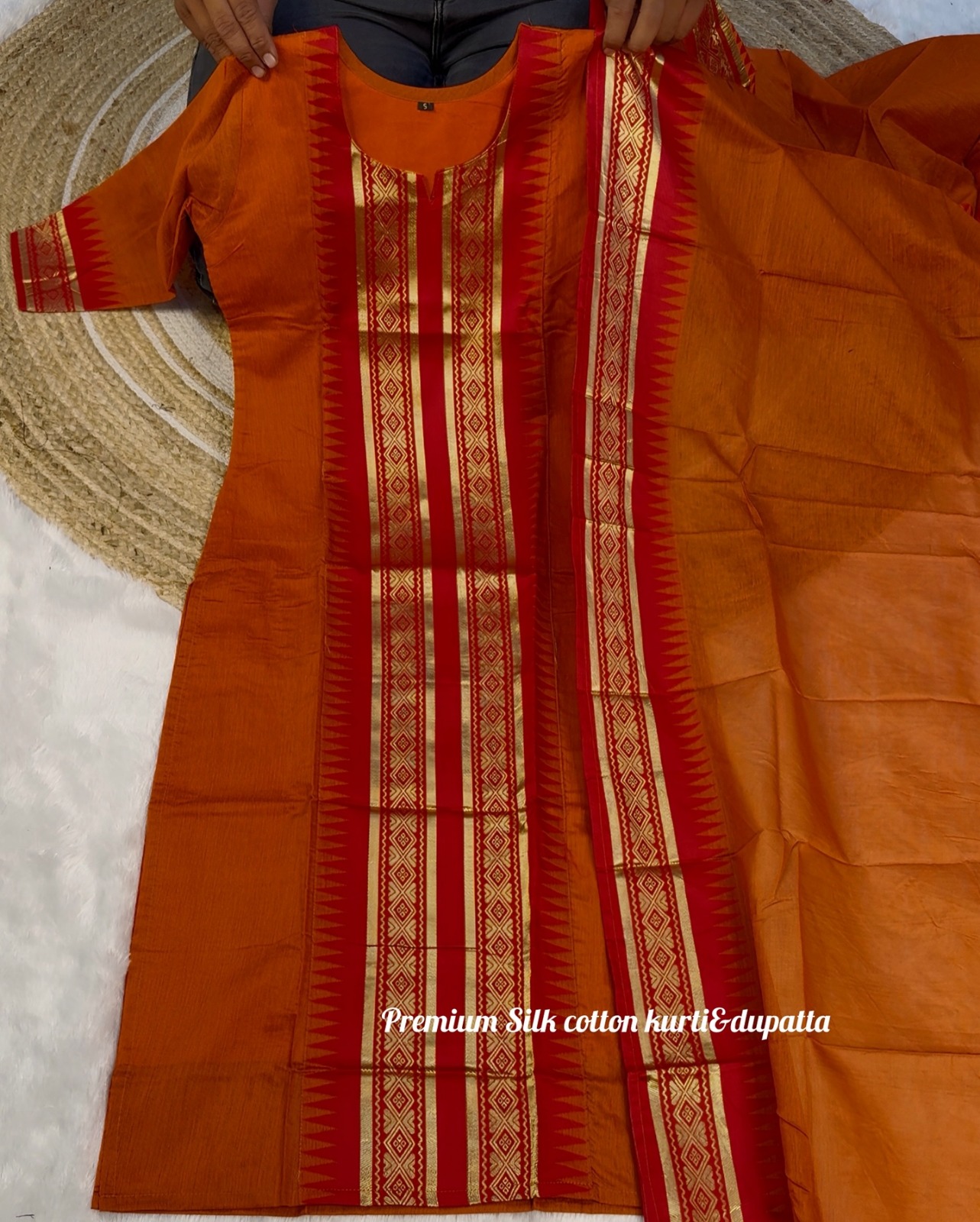
Lay the reference garment flat and measure three points: shoulder-to-hem length, bust width from armpit to armpit, and side-slit length from the hem upward. Double the bust width to estimate the garment circumference, but remember that this isn't a substitute for a proper size chart. Photograph the tape measure beside the garment if you want a record for future purchases.
For example, if a 42-inch reference kurti ends two inches above your knee and you want the new kurti to cover your knee, look for a listed length of about 44 inches. If the new product has a curved hem or a high side slit, measure the centre-back hem and the side hem separately when those details are provided.
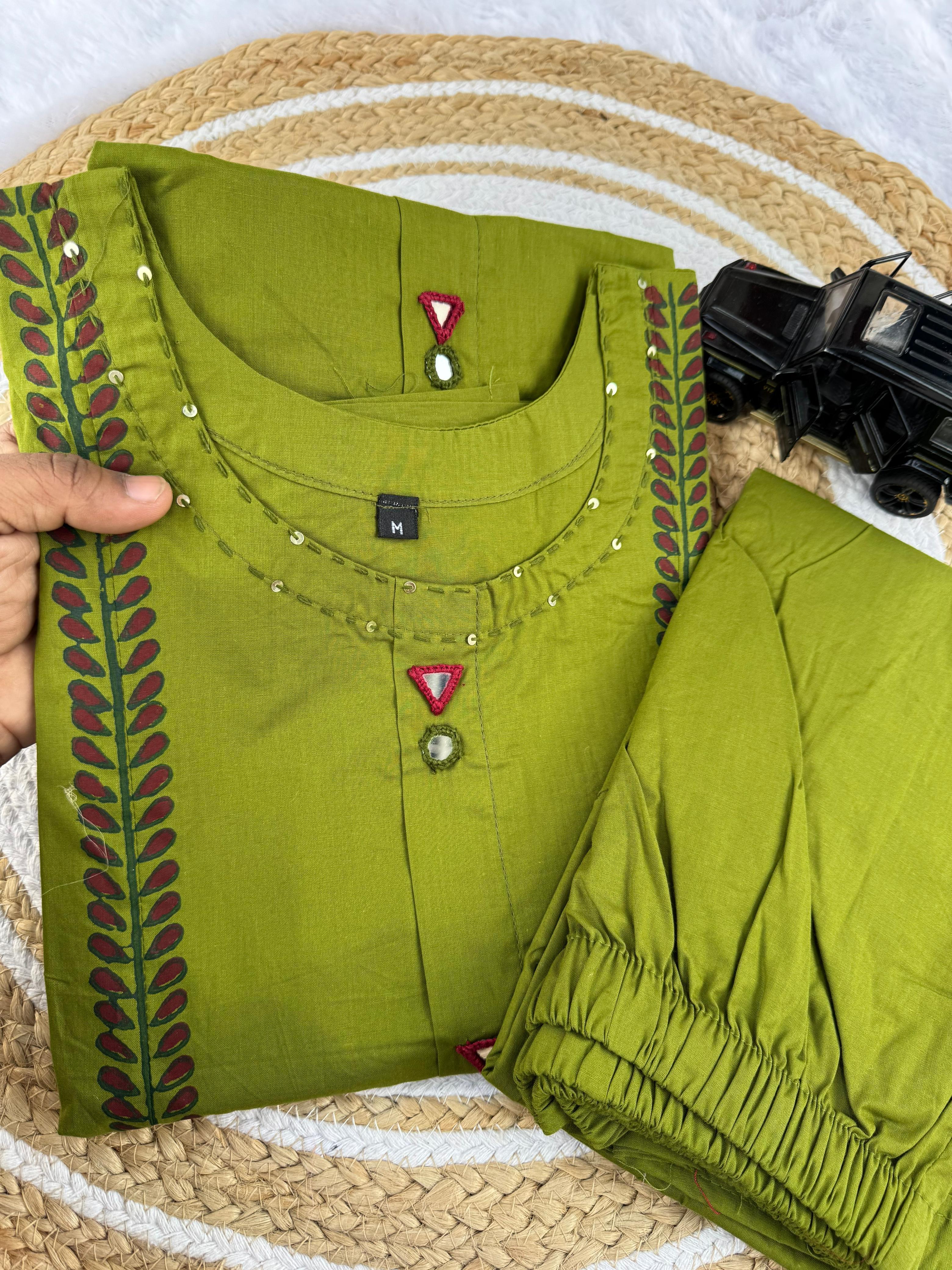
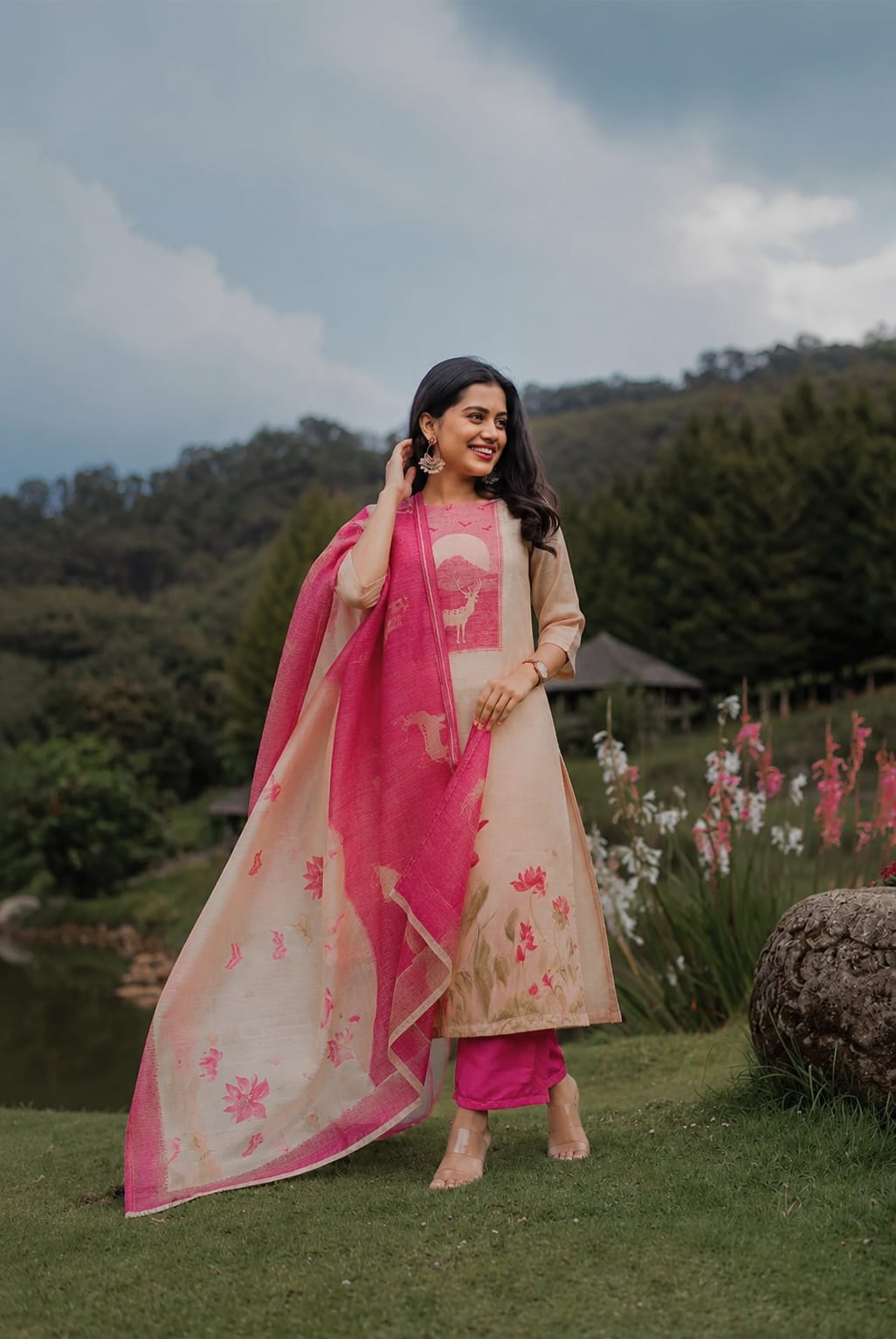
The Buy Beige Pink Printed Zarna Silk Kurti Set Online can be assessed this way by comparing its listed kurta length with a printed kurti already in your wardrobe. A lightweight printed set may drape closer to the body than a stiff cotton garment, so use a reference with a comparable fall rather than relying only on the colour or image.
Account for fabric, cut, and design details
Fabric and construction affect how a kurti hangs, but they don't change the importance of the listed shoulder-to-hem measurement. Vichitra silk, viscose silk, Kanchi cotton, cotton jacquard, and lighter printed silk blends can create different visual proportions at the same length.
A straight kurti normally presents the most predictable hemline because the front and back are close in length. Anarkali silhouettes flare from the waist or yoke, so the lower volume may make the garment appear longer even when the shoulder-to-hem number matches a straight kurti. A high-low hem requires separate front and back measurements; the shorter front measurement determines where the garment appears to finish while walking.
Side slits also change perceived coverage. A 44-inch straight kurta with a 14-inch side slit can reveal more of the leg than a closed 42-inch kurta. A curved hem may be longer at the centre and shorter near the side seam. When the listing mentions front length, back length, or centre-back length, record all available numbers instead of using one number for the entire garment.
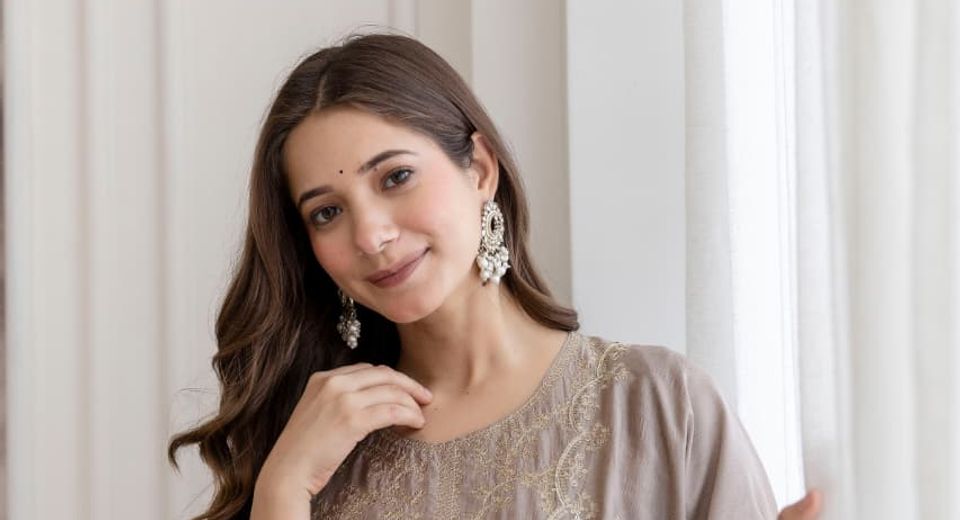
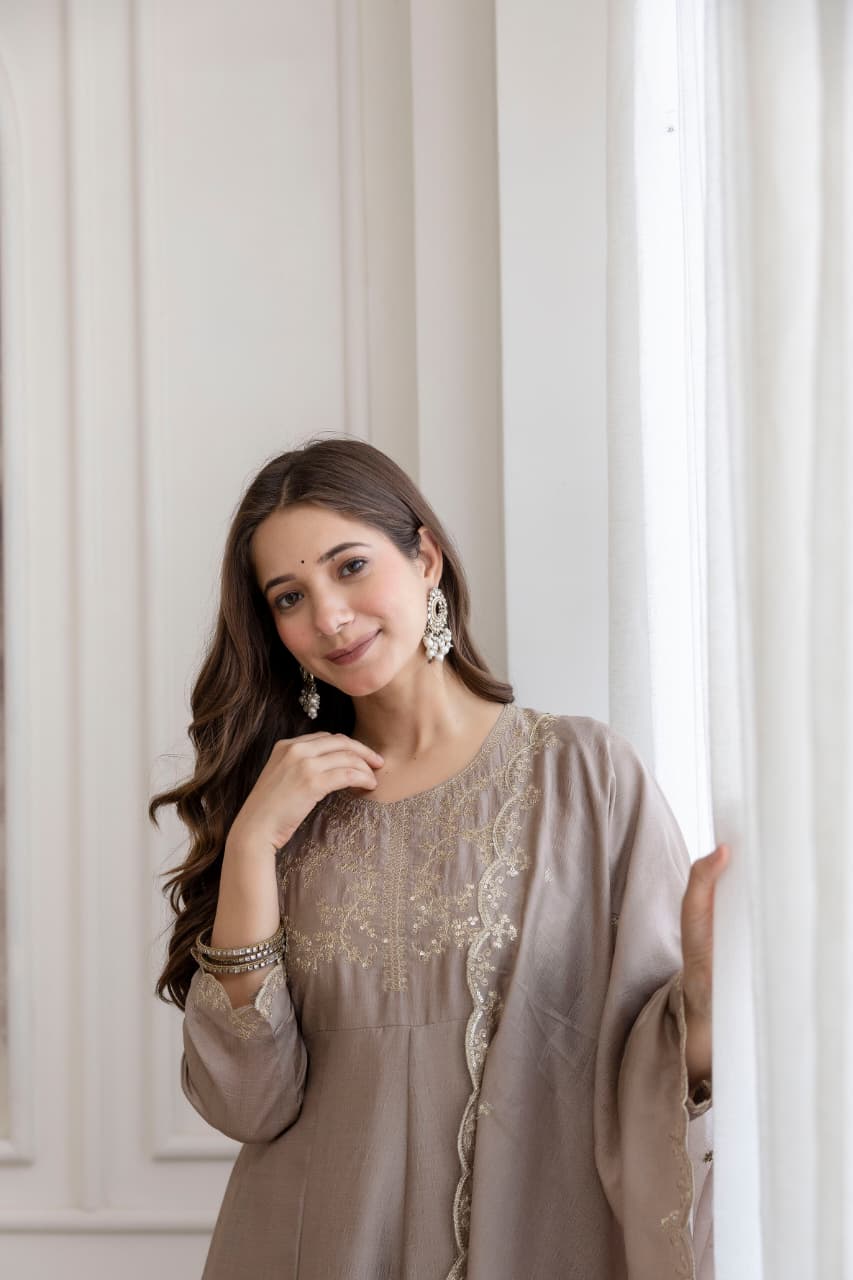
The Taupe Beige Embroidered Vichitra Silk Kurta Set Online illustrates why fabric and embellishment deserve attention. Embroidery can add weight to the front panel, while Vichitra silk may fall differently from Kanchi cotton. The measurement still begins at the shoulder, but the final appearance depends on whether the fabric hangs close to the body or holds its shape.
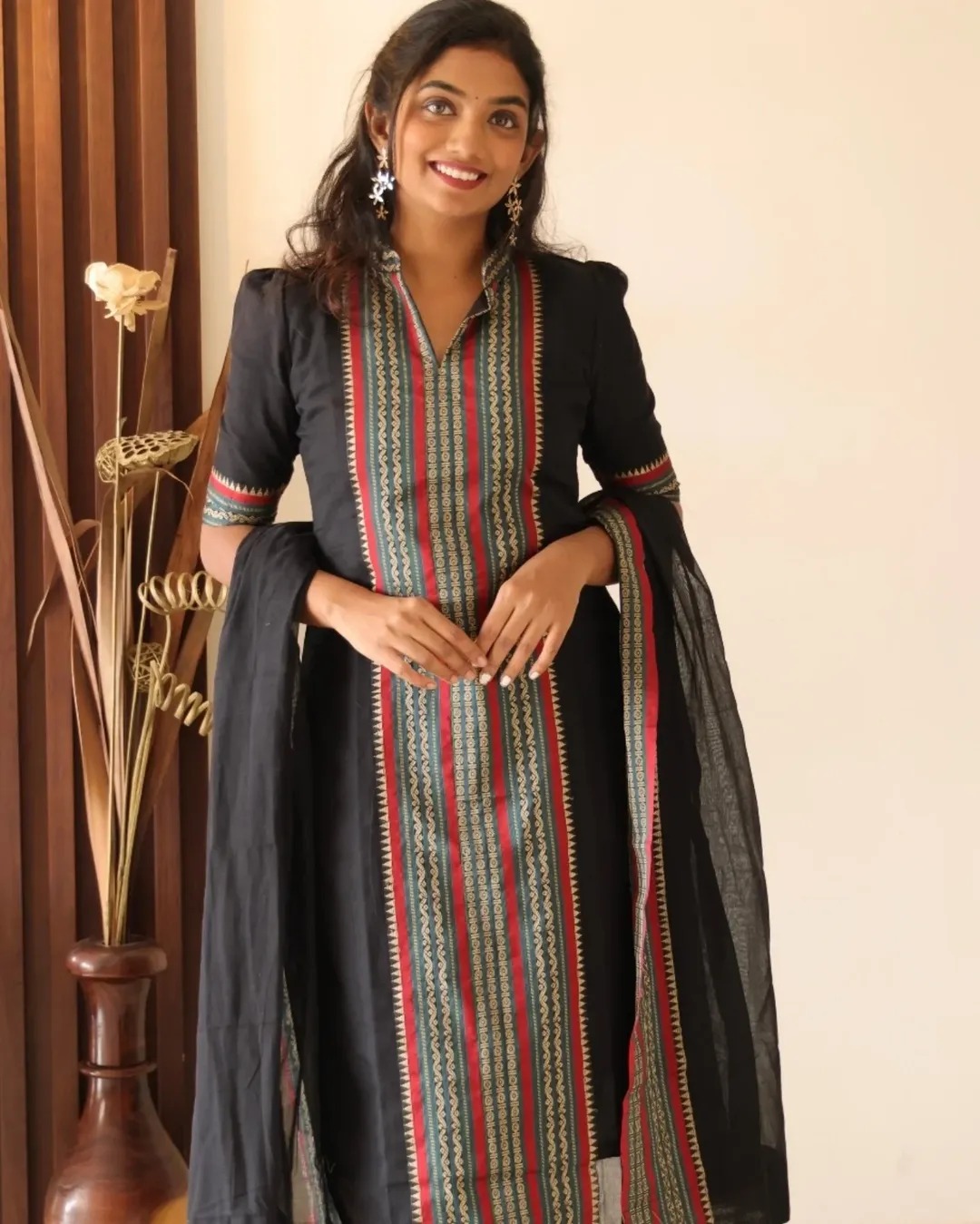
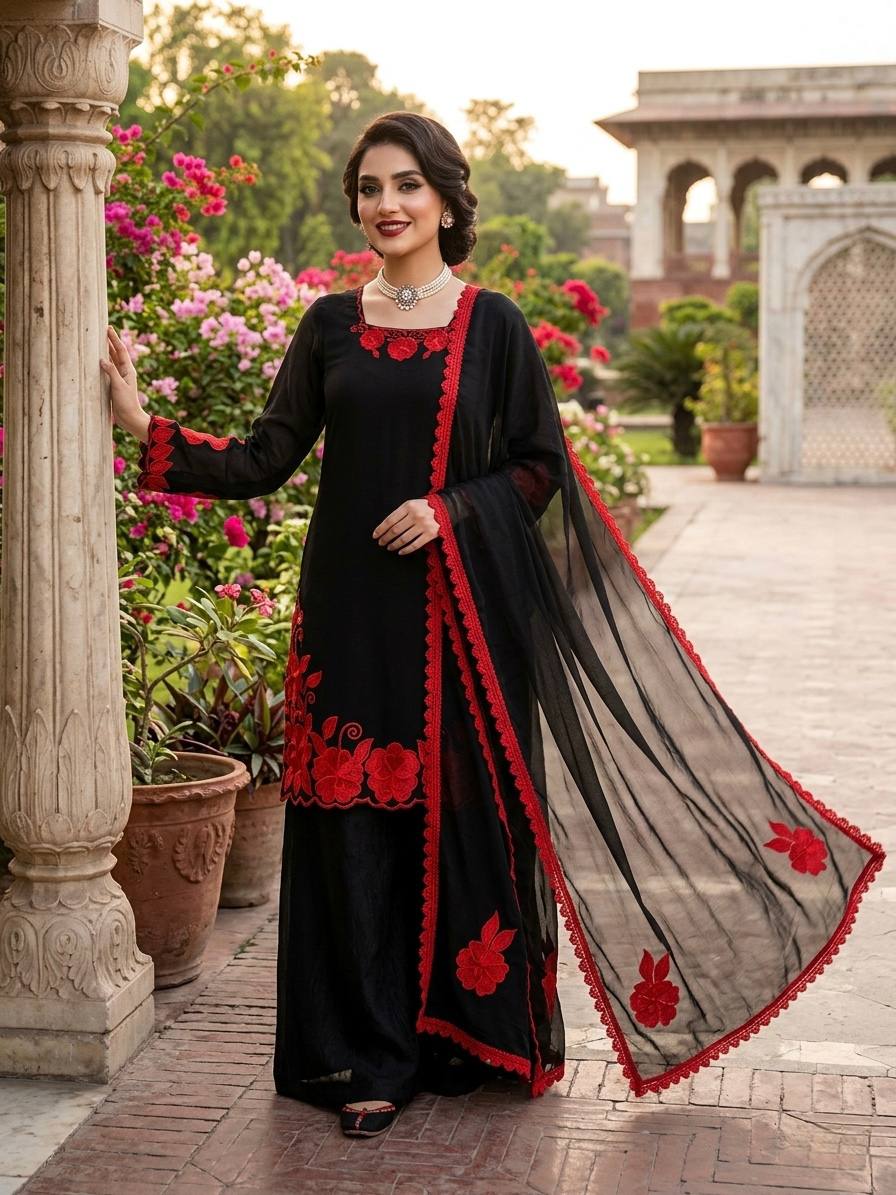
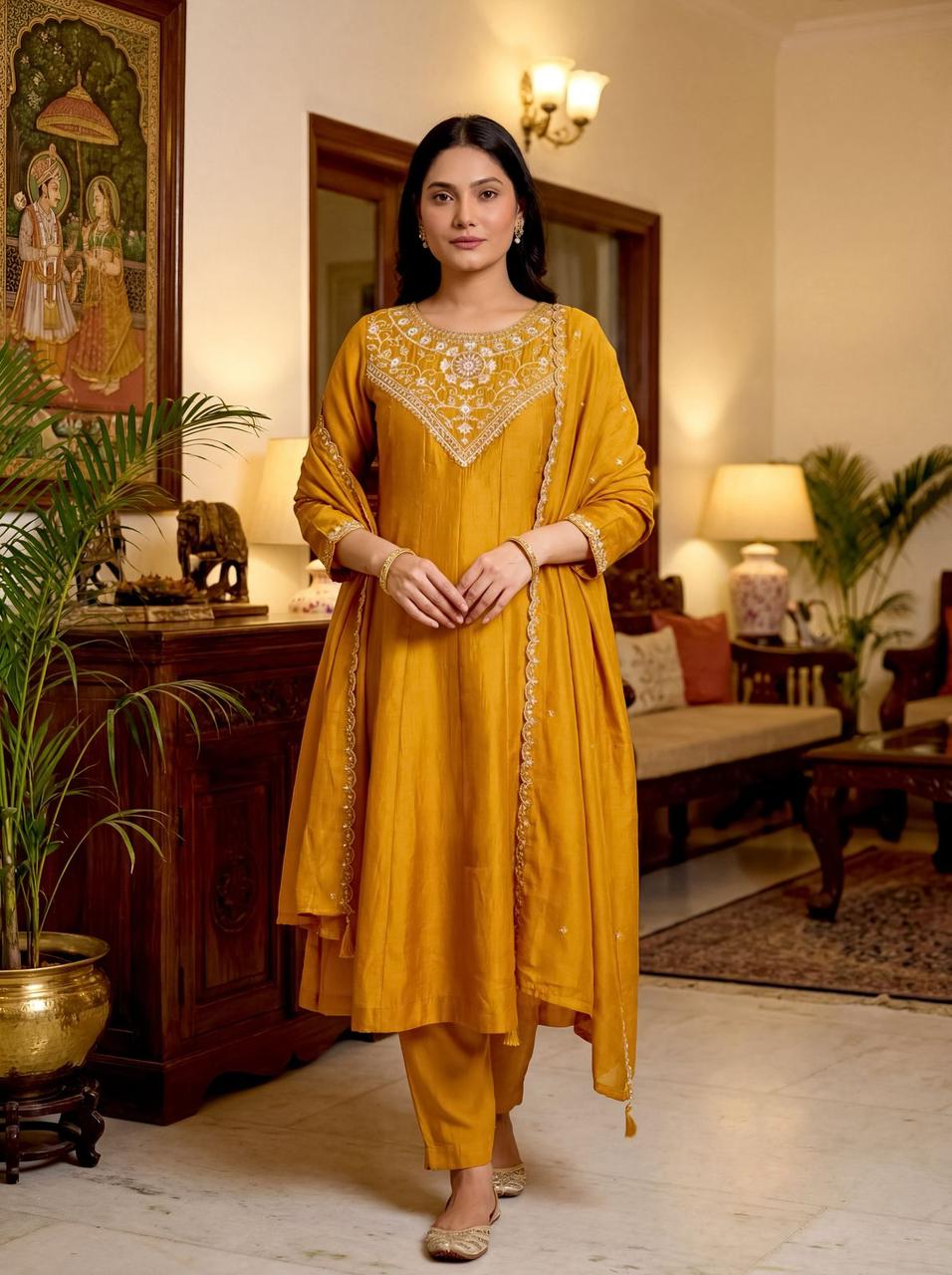
For a cotton reference, compare your desired hem with the Mustard Kanchi Cotton Kurta Dupatta Set or the Black Kanchi Cotton Kurti Dupatta Set for Women. Kanchi cotton and cotton jacquard may feel more structured than a fluid silk-blend kurti, so a reference measurement is useful even when the silhouettes look similar online.
Choose length according to height and styling
Height can guide your first estimate, but shoulder-to-floor measurement is more accurate than height alone. Two people who are both 5 feet 4 inches tall may have different torso lengths, so a universal rule such as "44 inches suits everyone" won't work consistently.
- For petite proportions: a 38- to 42-inch straight kurti may create a balanced knee-length or slightly below-knee silhouette, depending on shoulder-to-knee distance.
- For average proportions: a 42- to 46-inch kurti often falls between the knee and mid-calf, but the body measurement should decide the final choice.
- For tall proportions: a 46- to 50-inch kurti may be needed for below-knee coverage, while a shorter listed length can work intentionally as a tunic.
Bottom wear changes the visual balance. A knee-length kurti pairs easily with cigarette pants, churidar trousers, salwar bottoms, and straight pants. A mid-calf kurta often works with palazzos or narrow pants, while an ankle-length anarkali may need a closer-fitting bottom to prevent excess volume.
Traditional regional styling can also influence your target length. A set inspired by Maharashtra Paithani Inspired Salwar Suits may invite a more occasion-focused silhouette, while Gujarat Bandhej Salwar Suits, Odisha Sambalpuri Salwar Suits, and Punjab Patiala Salwar Suits may be styled with different proportions of kurta, bottom, and dupatta. The regional reference doesn't determine the garment measurement, but it helps you assess whether the intended look is short, knee-length, or longer.
Check fit details beyond the hem
A correct kurti length doesn't guarantee a good fit because shoulder width, armhole depth, bust ease, hip ease, and sleeve length affect comfort and appearance. Measure those points on your reference garment and compare them with the size chart before ordering.
Shoulder fit deserves special attention. A shoulder seam that sits too far outward can make the kurti look wider and shorter, while a narrow shoulder can pull the fabric upward and reduce the visible length. A tight bust can also cause the hem to ride up at the front, particularly in straight or embroidered kurtis.
Check the product description for lining, closure type, stretch, pockets, and side slits. A non-stretch woven garment needs enough bust and hip ease for sitting and raising the arms. A dupatta doesn't compensate for a kurti that's too tight or too short at the side seam.
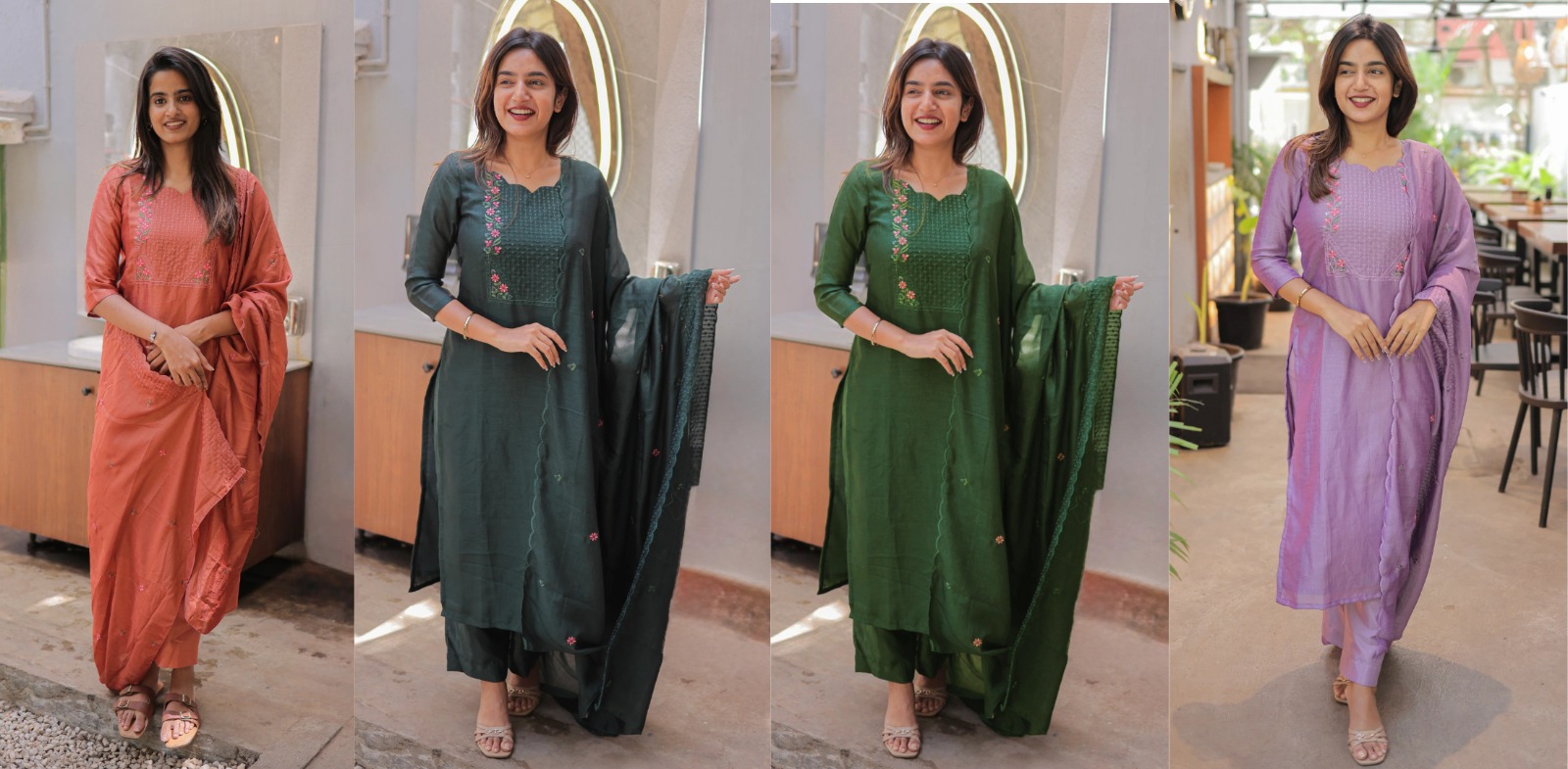
The Rani Pink Embroidered Viscose Silk Kurti Set Online and Royal Purple Embroidered Viscose Silk Kurti Set Online show why a complete set should be judged as three connected pieces. Note the kurti length first, then check whether the accompanying bottom has a rise and inseam that will maintain the intended proportion. A longer kurti with a short bottom may change how much fabric is visible below the hem.
A five-minute pre-order checklist
A five-minute measurement check can prevent most kurti-length surprises. Keep the product page open while completing the following steps.
- Write down your target point: knee, below knee, mid-calf, or ankle.
- Measure shoulder to target point: record the result in both inches and centimetres.
- Compare an existing kurti: use one with a similar cut and fabric weight.
- Confirm the selected size: check length, bust, hip, and sleeve measurements together.
- Inspect the hem description: look for straight, curved, high-low, front, back, or centre-back wording.
- Allow for tolerance: leave approximately 0.5 to 1 inch unless the seller gives a different specification.
- Review care instructions: avoid hot washing or high-heat drying when shrinkage could affect the final length.
Keep a personal measurement note on your phone with shoulder-to-knee, shoulder-to-mid-calf, bust, waist, hip, and preferred sleeve length. Updating the note once or twice a year is useful because posture, preferred footwear, and styling choices can change even when height doesn't.
The same process works for a printed or embellished set from collections such as Kalamkari Print Salwar Suits (Copy). A print can make a hemline appear visually busy, while a plain border can make the exact length easier to notice. Measurement remains more dependable than visual proportion.
What to do when the listed length is missing
Ask for the garment length before buying when the product page doesn't state it. A useful request should specify that you need the shoulder-to-hem measurement for the selected size, along with front and back lengths if the hem is uneven.
don't estimate from the model's height, the dupatta length, or the product's overall image dimensions. Do not assume that a "long kurta" has one standard length across sellers. Product naming is descriptive, while a numerical measurement is testable.
If the measurement is available only in centimetres, convert it before comparing it with your wardrobe. If the seller supplies a range, use the shorter figure for planning coverage and the longer figure for the maximum expected length. Asking about shrinkage is especially sensible for cotton garments that are not pre-shrunk.
Following these steps makes How to Confirm the Length of a Kurti Without a Model Photo a repeatable buying skill rather than a guess based on styling images. A tape measure, a known kurti, and a clear understanding of shoulder-to-hem measurement are enough to make a more confident choice among salwar suit sets online.
Common Questions About Checking Kurti Length Online
How do I check kurti length without a model photo?
Measure from the highest point of your shoulder down to the hem position you want, then compare that number with the kurti's listed shoulder-to-hem length. A well-fitting kurti in your wardrobe provides a useful second reference.
What does kurti length mean in a size chart?
Kurti length usually means the finished garment measurement from the highest shoulder point to the bottom hem. Check the product description because an asymmetrical, curved, or high-low kurti may list separate front and back measurements.
Is a 44-inch kurti knee-length?
A 44-inch kurti is knee-length for some wearers but below the knee or above the knee for others. Measure your own shoulder-to-knee distance instead of relying on height-based assumptions.
How can I convert kurti length from centimetres to inches?
Divide the centimetre measurement by 2.54 to convert it into inches. For example, 110 centimetres is approximately 43.3 inches.
Does kurti length change between sizes?
Kurti length may remain constant across sizes or change by about 0.5 to 1 inch depending on the manufacturer's grading method. Check the length row for your selected size rather than using the measurement from another size.
How should I measure a kurti with a curved or high-low hem?
Measure the centre-front, centre-back, and shortest side points separately when those measurements are available. Use the shortest point to judge leg coverage and the centre-back point to understand the garment's maximum length.