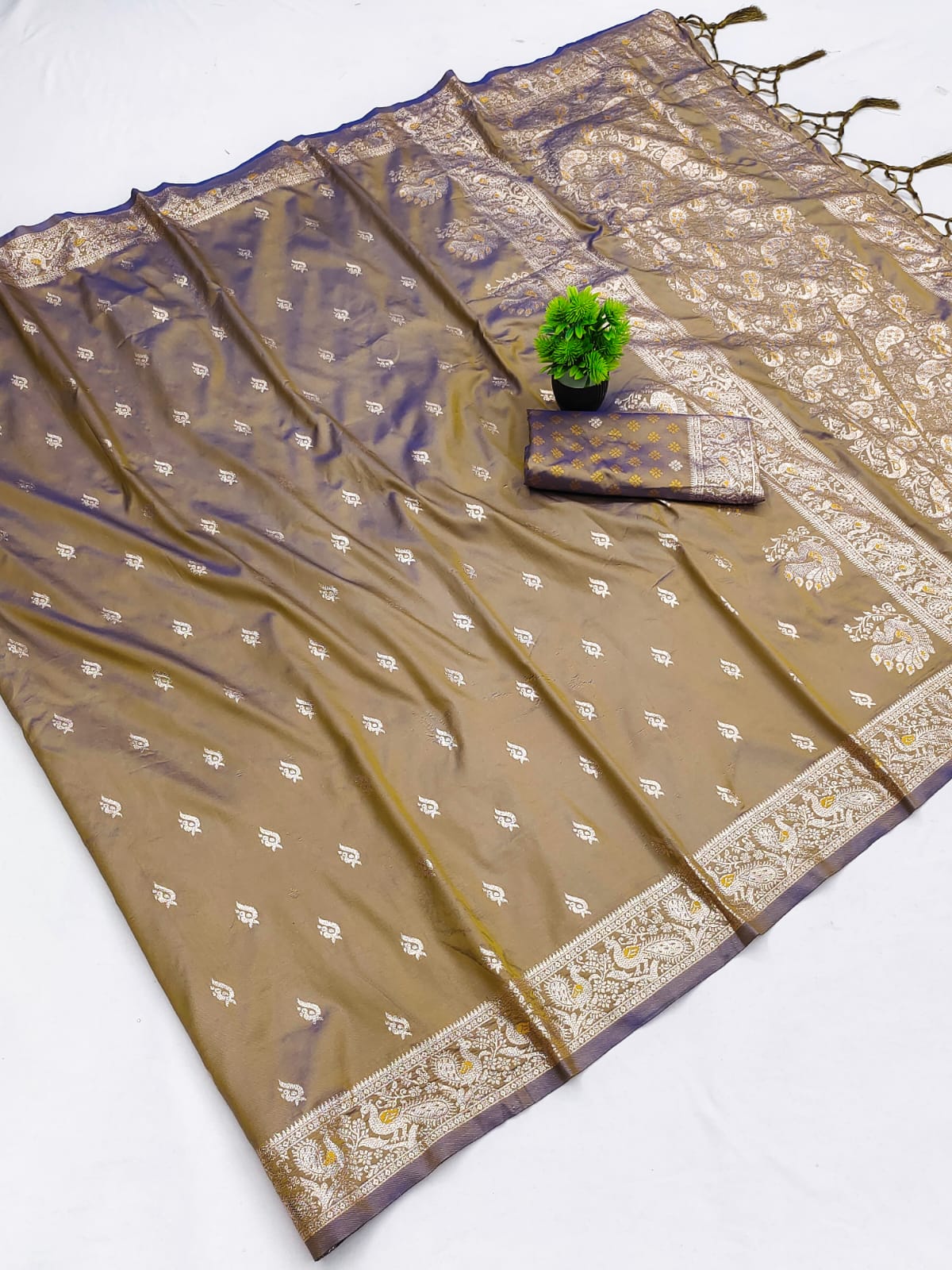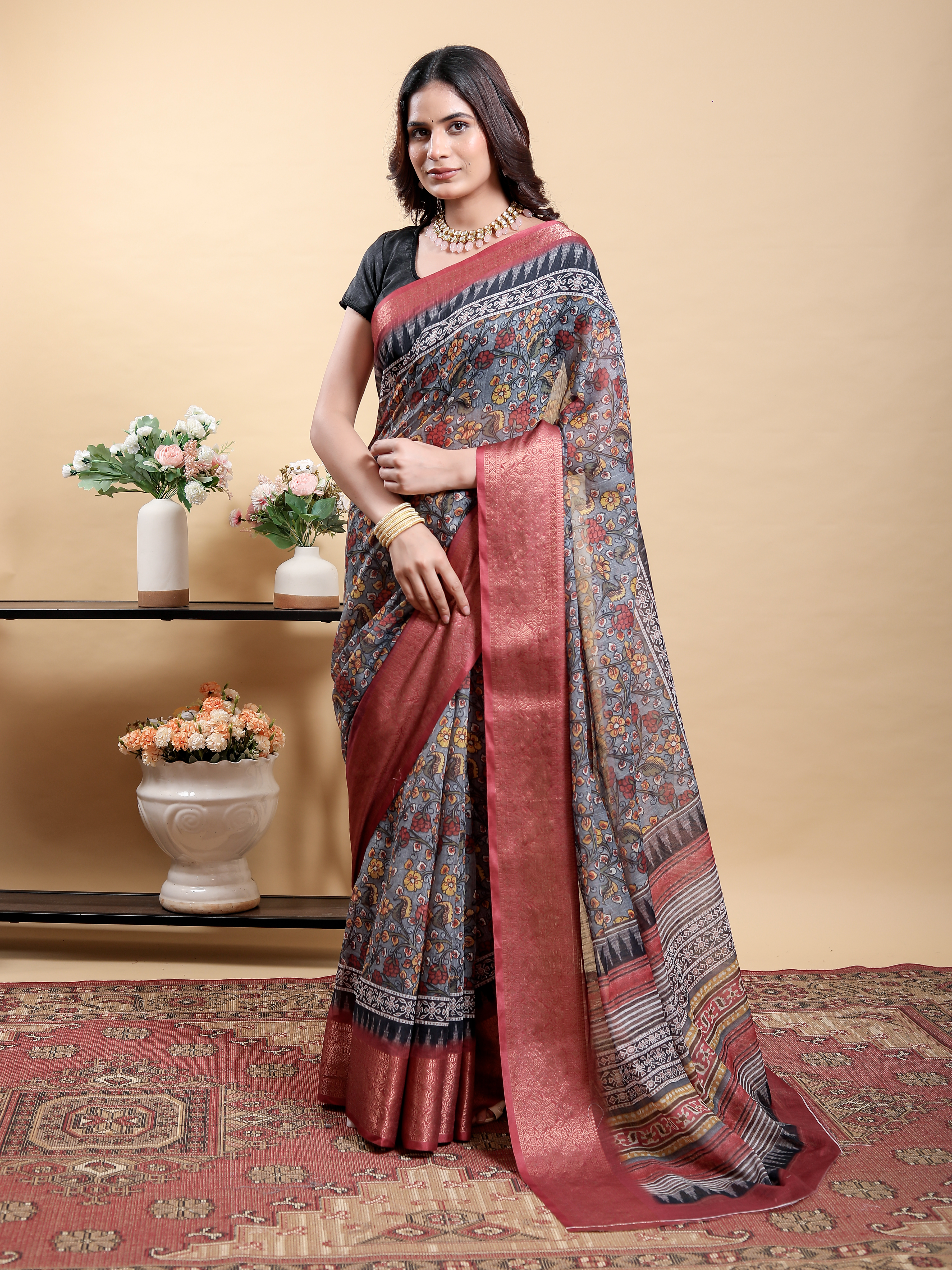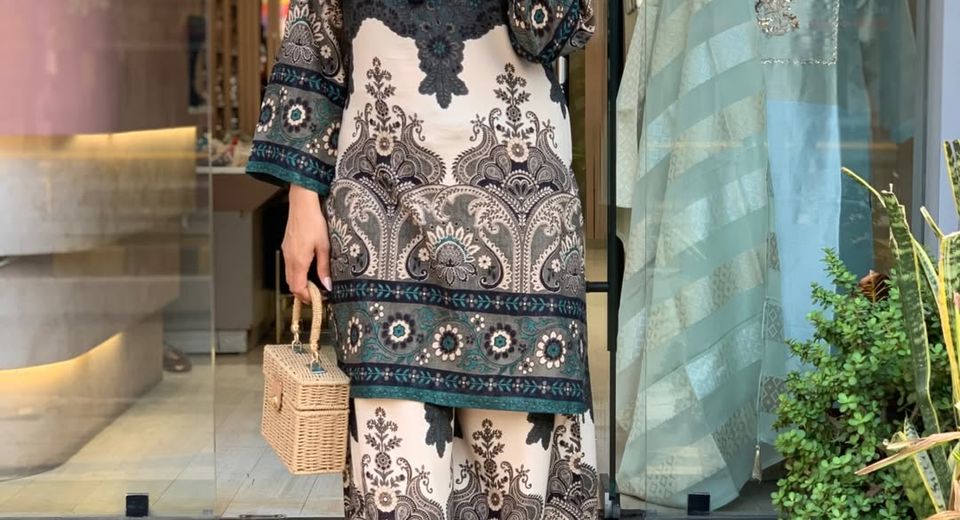
How to Compare Two Salwar Suits When Both Are Listed as Silk Blend starts with a simple fact: "silk blend" describes a category, not one same fabric experience. One suit may hold a small percentage of silk mixed with polyester, while another may use a different fibre ratio, weave, lining or surface finish. Both garments can therefore differ in drape, breathability, shine, weight, price and care requirements even when their product titles look similar.
A dependable comparison uses the full specification instead of the word silk alone. Check fibre composition, fabric weight, construction, lining, garment measurements, embellishment and care instructions in that order. A practical choice should suit your climate, body comfort, event, movement needs and wardrobe budget.
Why "silk blend" doesn't tell you everything
"Silk blend" means that silk has been combined with one or more other fibres, but the phrase doesn't automatically reveal the percentage or identity of every fibre. A blend may include polyester, viscose, rayon, nylon or another regenerated or synthetic fibre, and every combination can change the way a salwar suit feels and behaves.
Silk can contribute softness, natural lustre and fluid fall. Polyester can improve crease resistance, strength and drying speed. Viscose or rayon can create a smooth hand feel and graceful drape, although some versions need gentler washing. A lower silk percentage isn't automatically a flaw, and a higher silk percentage doesn't guarantee better comfort or durability.
Online shoppers should look for a fibre-composition field rather than relying only on the product title. A listing that states only "silk blend" provides incomplete information, so other specifications become especially important. A clear care label, detailed size chart and separate material information for the kurta, bottom and dupatta usually make comparison easier.
How to Compare Two Salwar Suits When Both Are Listed as Silk Blend
The most useful comparison asks seven questions: Which fibres are present? How heavy is the fabric? How does the fabric fall? Is the kurta lined? What type of surface work is used? Does the cut match your measurements? What care does the set require?
Start with fibre composition
Fibre composition should be the first technical comparison because it affects comfort, drying time, sheen and maintenance. A suit with an exact composition gives you more useful information than a suit described only as silk blend. Check whether the same fabric is used for the kurta, pants or salwar and dupatta, because three-piece sets often combine different materials.
A dupatta may be lighter and more translucent than the kurta, while the trousers may use a more durable synthetic-rich fabric for movement and easier care. Black Floral Silk Blend Kurta Pant Dupatta Set Women should therefore be assessed as three coordinated pieces rather than as one completely uniform textile. Confirm whether the listed material applies to the entire set or only to the main garment.
Compare weight and drape
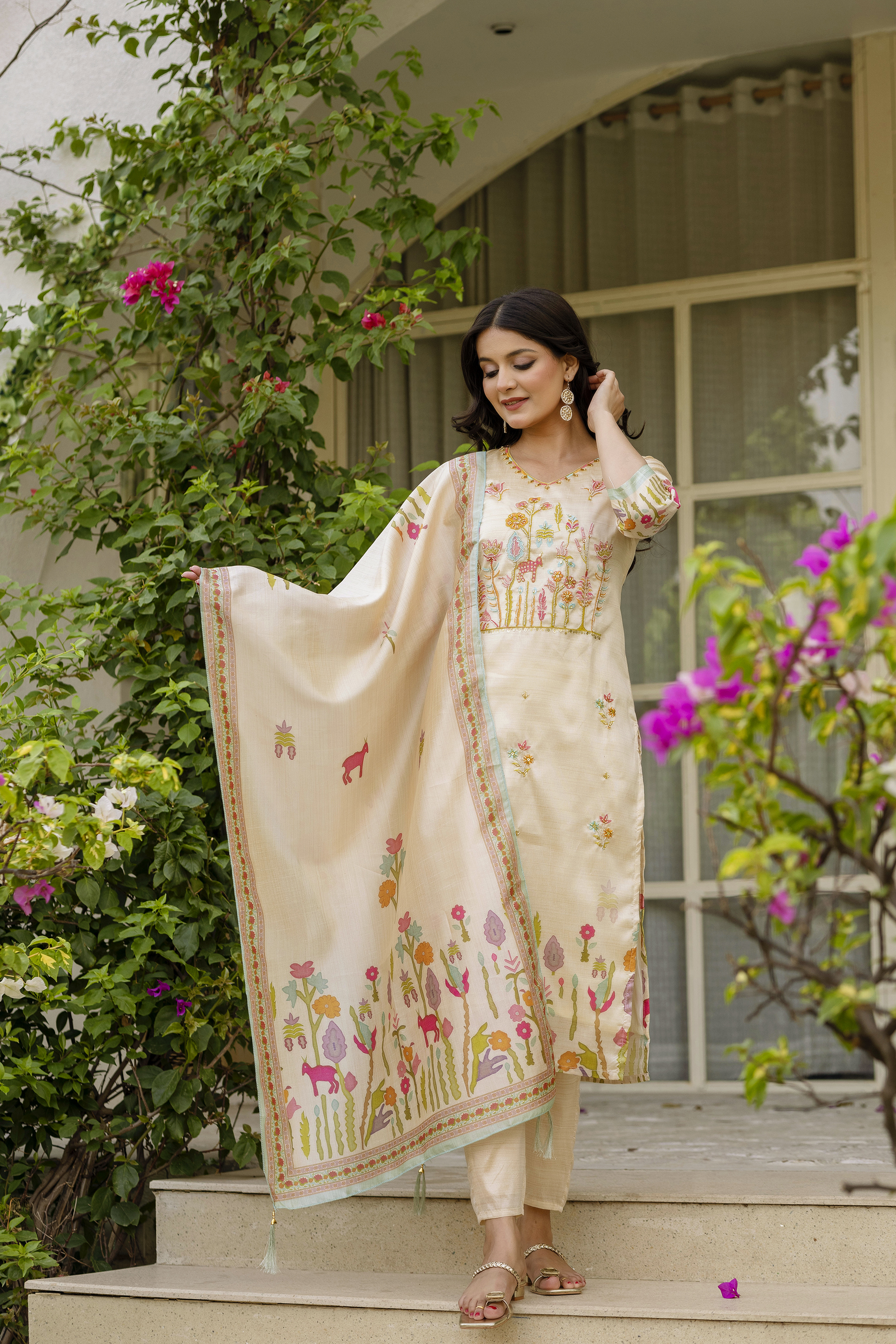
Fabric weight affects whether a suit feels airy, structured or warm, although online listings don't always state grams per metre. Product photographs can provide clues. A dupatta with broad, soft folds usually falls differently from a crisp, lightly finished dupatta, while a kurta that holds a sharp side seam may have more body or lining.
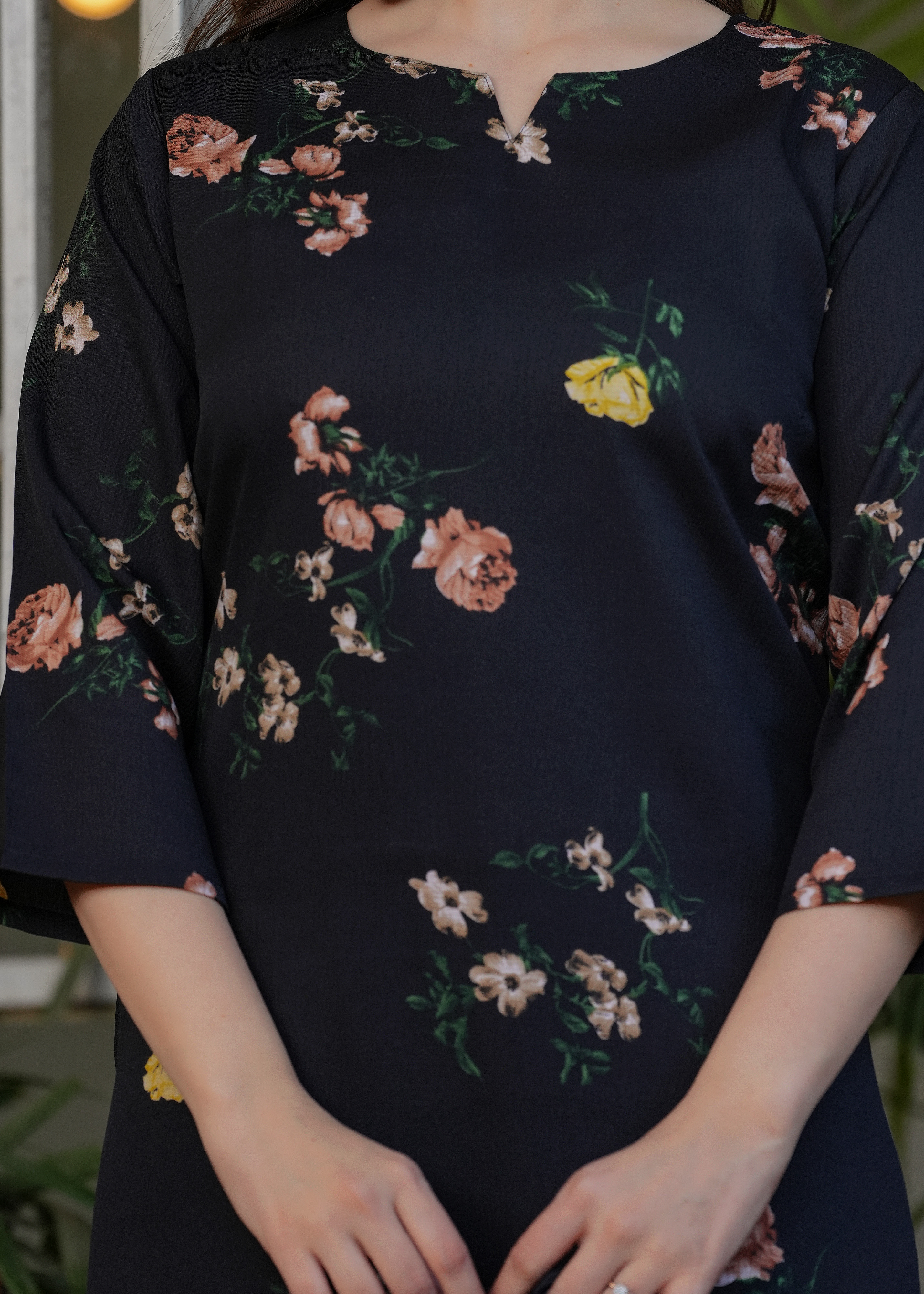
Surface shine is difficult to judge from a screen because studio lights and image processing can exaggerate lustre. Banarasi silk, satin-like blends and zari details may all appear glossy, but they don't drape in the same way. Close-up images can reveal whether the surface is smooth, grainy, raised, slubbed or textured.
Black Floral Printed Silk Blend Kurta Set with Dupatta is useful as a comparison example because a printed surface should be assessed for motif clarity, colour density and fabric fall rather than judged by shine alone. A print can look polished on a lighter fabric and more formal on a denser, more structured one.
Inspect construction details
Construction quality appears in seam finishing, hem width, neckline reinforcement, sleeve attachment, trouser waistband, side-slit stitching and dupatta edging. A straight kurta needs secure side-slit stitching because sitting and walking place repeated stress on that area. A pant set needs enough ease at the hip and a waistband that remains comfortable while seated.
Check whether seams are overlocked, folded or left with visible raw edges. Examine close-up images for loose threads, uneven piping and puckering around embroidery. A garment with a beautiful surface can still disappoint if the neckline stretches, the sleeve seam twists or the trouser waistband digs into the waist.
Which fit and lining details affect comfort most?
Fit and internal construction affect long-wear comfort more directly than the silk label. A smooth silk blend can feel unpleasant if the armhole is tight, the lining is scratchy or the trouser rise is too short.
Use garment measurements
Garment measurements are more reliable than a generic small, medium or large label because ready-to-wear sizing varies between brands and silhouettes. Compare bust, waist, hip, shoulder, sleeve length, kurta length and trouser length with a garment that already fits you well.
Leave practical ease around the bust and hip so that sitting, raising your arms and walking don't pull the seams. A straight suit usually needs less volume than a flared Anarkali, while a pant set requires careful attention to hip and thigh measurements. A fixed-waist readymade set can't be adjusted as freely as a drawstring salwar.
Check the lining and skin-contact areas
A lining can improve opacity, reduce cling and give a structured kurta a cleaner fall, but lining also adds weight and warmth. Check whether the kurta is fully lined, partially lined or unlined, and identify which surfaces touch the skin. A smooth cotton-blend lining may feel cooler than a dense synthetic lining, although the final result depends on the entire garment construction.
Embroidery, zari and sequins should be inspected from the reverse side whenever photographs allow it. Rough thread ends or exposed metallic backing can irritate the underarm, neckline or wrist. Royal Navy Silk Kurti Pant Set with Zari Dupatta may be suitable for a festive event when the zari is concentrated on the dupatta, but kurta comfort still depends on inner seams and lining.
How do prints, embroidery and zari change the decision?
Surface decoration changes weight, maintenance, price and occasion suitability, so two silk blend suits should not be compared on fabric wording alone. Printed suits are often easier to repeat, while embroidery and zari create greater visual formality but usually need more careful handling.
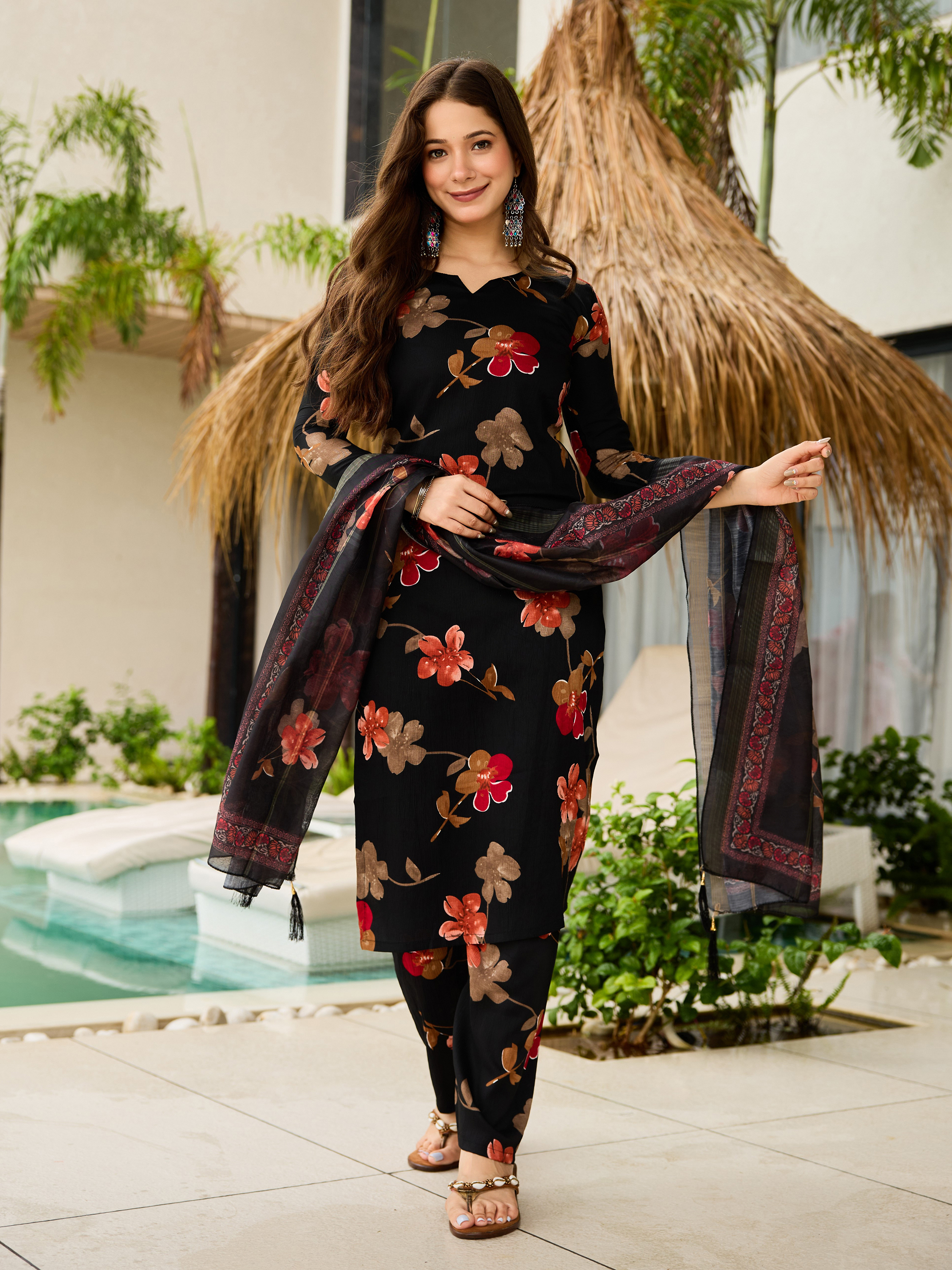
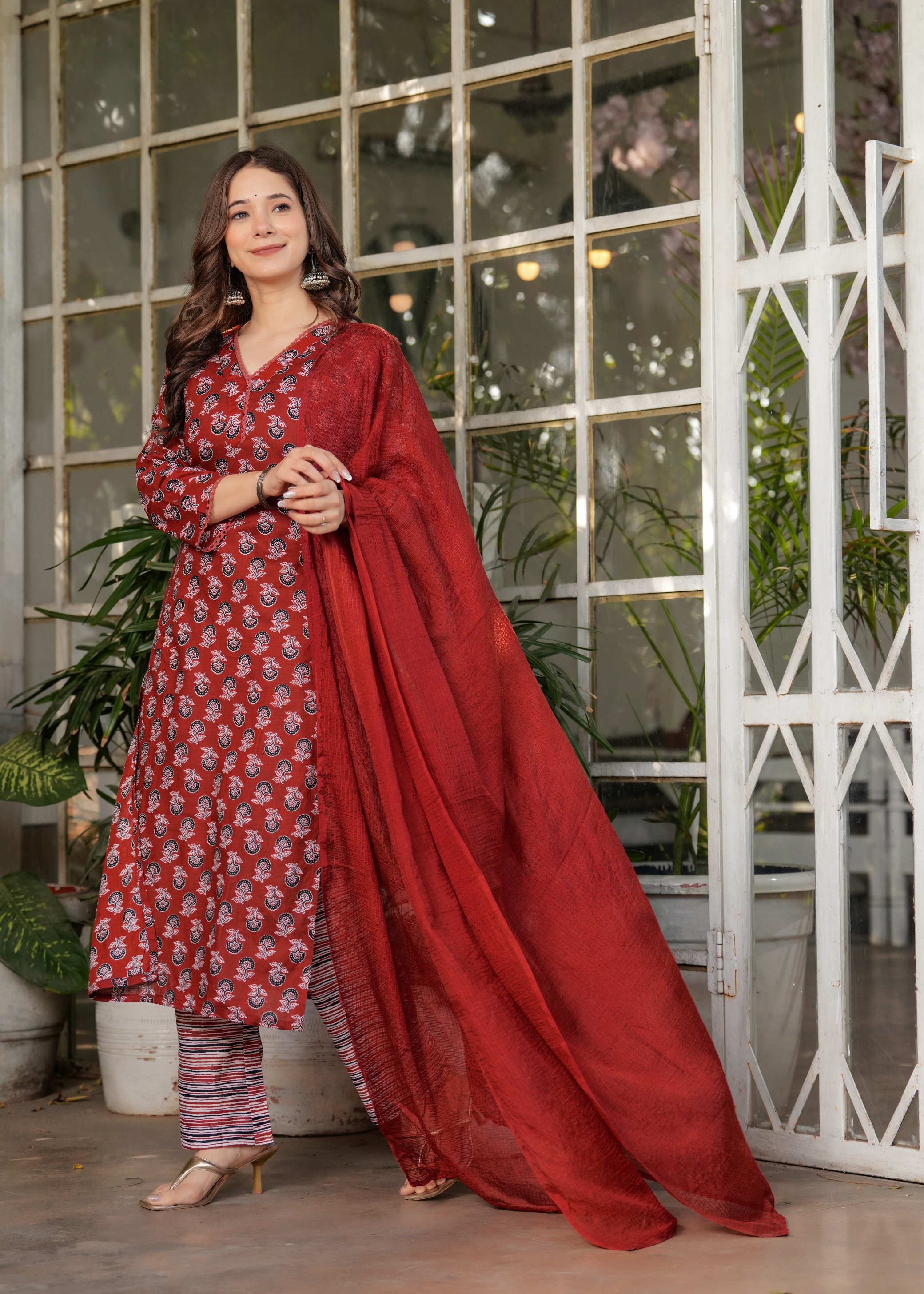
Printed motifs should be checked for registration, colour consistency and scale. Floral prints can look delicate when motifs are widely spaced and dramatic when the pattern is dense. Red Silk Blend Floral Straight Suit with Dupatta shows why base colour and pattern density deserve separate consideration: a vivid red floral design can look festive without requiring heavy embellishment.
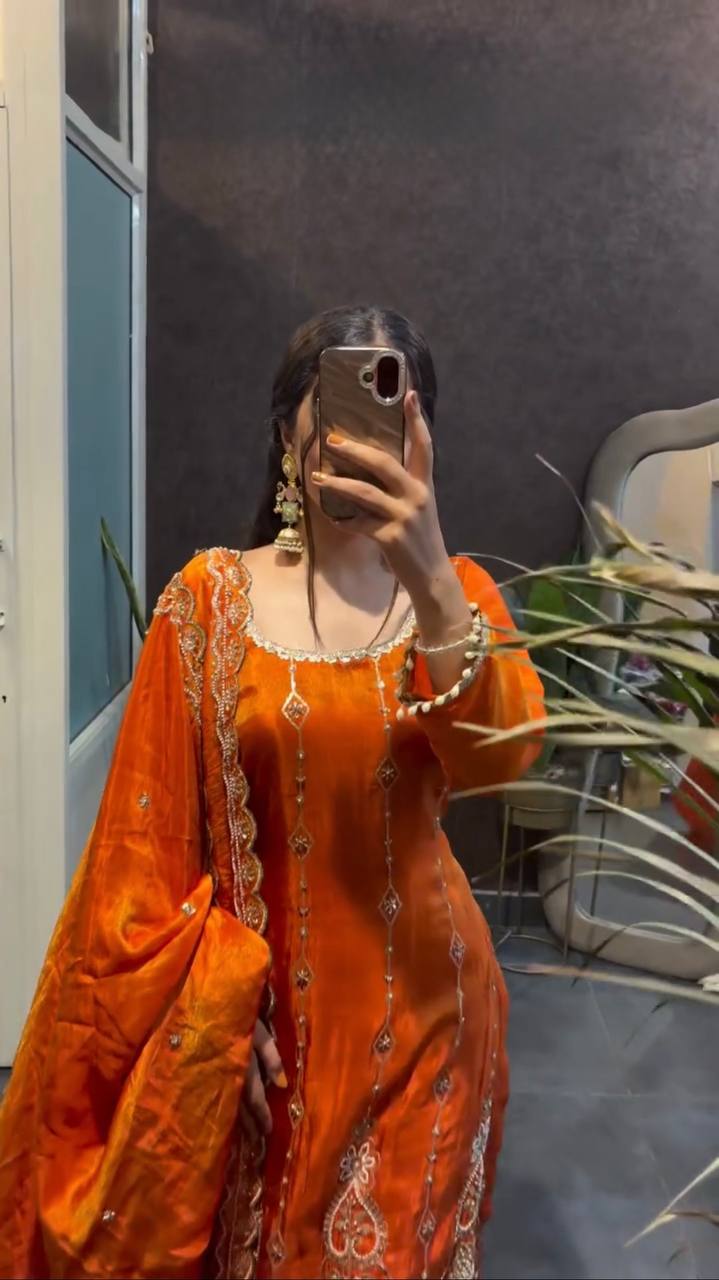
Embroidered suits need a second inspection for thread density, backing and weight distribution. Dense work around the neckline can make a kurta feel stiff, while embroidery concentrated at the hem may affect how the garment hangs. Rust Orange Embroidered Readymade Suit Set for Women should be evaluated by checking the location and weight of the embroidery, not by assuming that every embroidered silk blend feels alike.
Zari is a metallic decorative element that may be woven, embroidered or applied as a border. Zari adds shine and formality, but friction, moisture and rough washing can affect metallic threads. Royal Navy Silk Kurti Pant Set with Zari Dupatta and Navy Blended Silk Zari Kurti Pant Dupatta Set can be compared by checking how much zari is used, where it sits and whether the care instructions protect the decorative work.
Which silk blend suit suits the event and climate?
The better silk blend suit is the one whose weight, coverage and decoration match the event, season and amount of movement required. A lightweight printed straight suit can work for daytime gatherings, while zari, embroidery or a fuller silhouette can suit an evening celebration.
For a summer ceremony, prioritise a lighter kurta, comfortable lining and a dupatta that doesn't trap excessive heat. For an air-conditioned banquet, a denser weave or lined kurta may feel more comfortable. A very reflective surface can photograph well at a reception but may show creases more prominently under direct lighting.
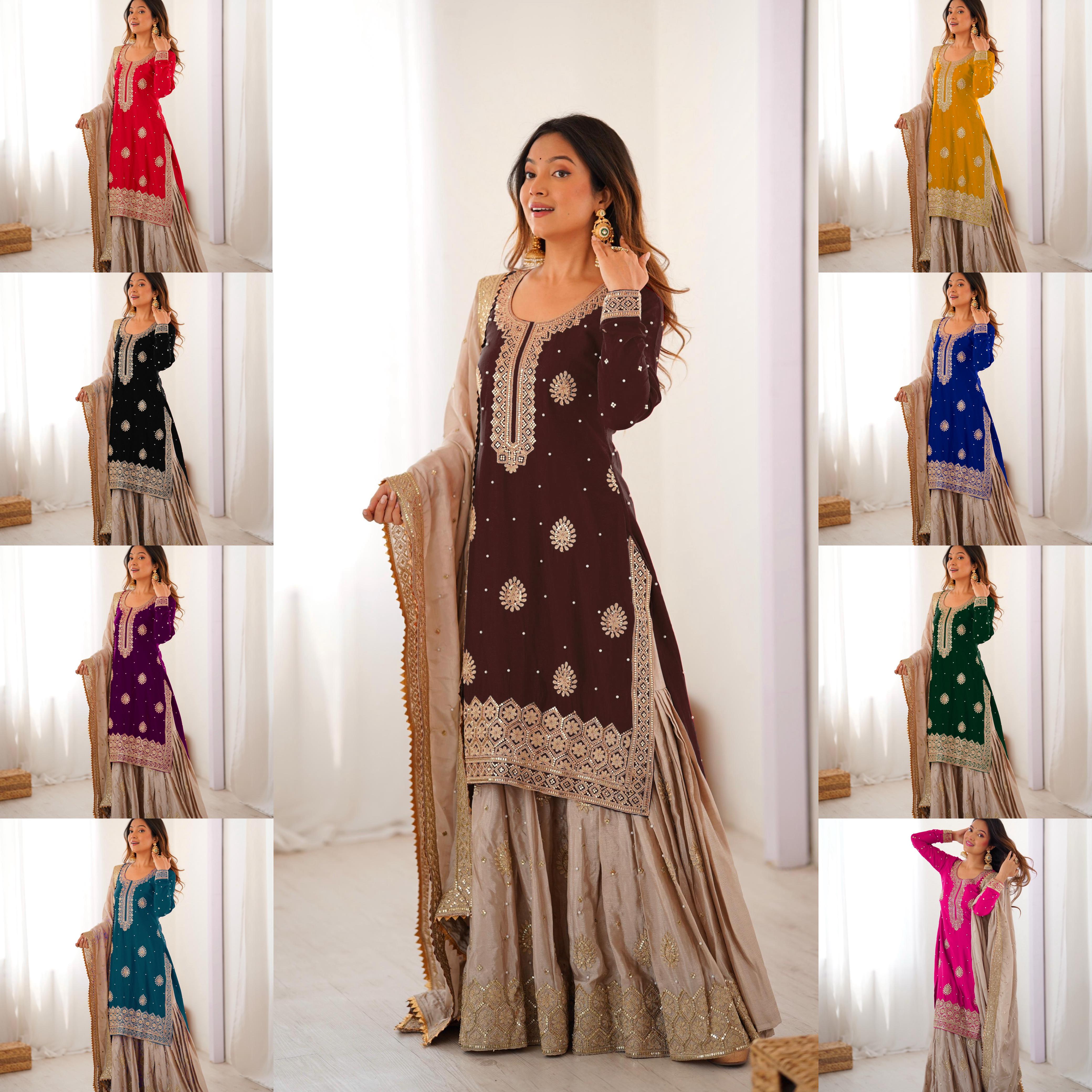
Haldi ceremony dressing requires practical movement and stain-conscious styling. A suit with manageable decoration and clearly stated care instructions is easier to wear around turmeric, food and outdoor seating than a delicate, heavily embellished garment. Brown Chinon Silk Sharara Suit Set for Women can be compared with a straight suit by considering silhouette, movement and decorative volume rather than relying on the shared presence of the word silk.
For repeated festive wear, versatility can matter more than maximum ornamentation. Black Red Fendy Silk 3 Piece Readymade Salwar Suit Set may be compared with a heavily decorated option by considering whether the kurta, bottom and dupatta can be styled separately with existing wardrobe pieces.
How do regional design references help you compare styles?
Regional design references help you compare visual language and styling direction, but they don't replace checking the actual fibre composition and construction of each garment. Collection names can suggest motifs, colour stories and traditional influences without proving that two suits use the same textile technique.
Maharashtra Paithani Inspired Salwar Suits may suggest jewel tones, peacock or floral references and a dressier woven look. Gujarat Bandhej Salwar Suits can point shoppers towards tie-dye-inspired patterning and lively colour contrast. Odisha Sambalpuri Salwar Suits may appeal to shoppers who prefer bold regional motifs and a handloom-inspired visual vocabulary.
Kalamkari Print Salwar Suits (Copy) can help illustrate how a printed silk blend should be assessed for motif scale, colour balance and print placement. Punjab Patiala Salwar Suits are useful when comparing a more relaxed, pleated bottom silhouette with a narrow pant or straight trouser. These references describe style direction; the actual product page still determines fabric, measurements and care.
How should you compare price and long-term value?
Price should be compared against composition, workmanship, decoration, included pieces and expected number of wears rather than against the word silk alone. A higher price may reflect more silk, dense embroidery, zari, lining, finishing or a more complex silhouette, but the listing should provide enough detail to support that difference.
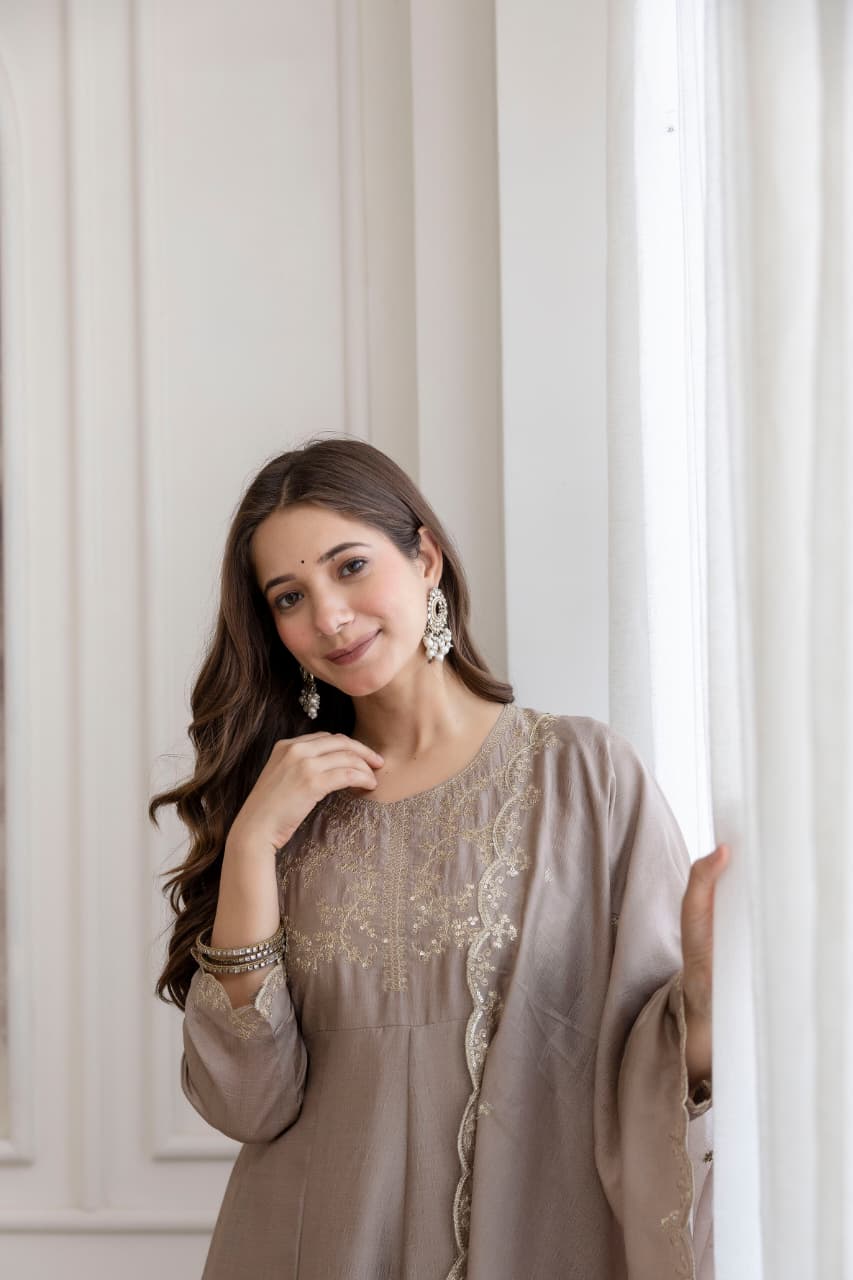
Calculate practical value by asking how often the suit can be worn, whether the dupatta can work with other outfits, whether the trousers have a usable fit and whether alterations are possible. A moderately decorated suit may offer better wardrobe value than a highly ornate design that works for only one event.
Read care instructions before buying. Many silk blends should be dry-cleaned or gently hand-washed in cool water, depending on the fibre mix and embellishment. Avoid wringing, prolonged soaking, direct harsh sunlight and high-heat ironing unless the care label specifically permits those methods. Store a fully dry suit folded with clean tissue or breathable fabric, and keep zari away from rough surfaces.
A five-minute comparison checklist before checkout
A five-minute checklist can prevent most avoidable mistakes when two silk blend suits appear similar online.
- Composition: Record every stated fibre and check whether the information applies to all three pieces.
- Measurements: Compare bust, hip, shoulder, sleeve, kurta and bottom measurements with a garment you already own.
- Construction: Inspect lining, seams, hems, waistband, side slits and the reverse side of decorative work.
- Drape: Compare the visible weight, fold behaviour and structure of the kurta and dupatta.
- Decoration: Separate the effect of print, embroidery, zari, sequins and borders because each affects care differently.
- Use: Match the suit to weather, event formality, movement and the number of times you expect to wear it.
- Care: Confirm washing, ironing, drying and storage requirements before purchase.
- Value: Consider the full set, alteration possibilities, re-styling potential and likely cost per wear.
The best comparison rarely produces a universal winner. A lighter printed silk blend may be the smarter choice for daytime repeat wear, while a lined zari or embroidered set may be worth choosing for a formal evening. Fibre content, construction and care instructions turn a vague label into a decision you can defend.
Common Questions When Comparing Silk Blend Salwar Suits
Are all silk blend salwar suits made from the same fabric?
No. Silk blend salwar suits can combine silk with polyester, viscose, rayon, nylon or other fibres in different proportions. The fibre ratio, weave, lining and finishing determine the final comfort, shine, weight and care needs.
How can I check the quality of a silk blend suit online?
Check the exact fibre composition, garment measurements, close-up images, lining information, seam finishing and care instructions. Product photographs should also show the reverse side or construction details when embroidery, zari or sequins are present.
Is a silk blend salwar suit suitable for summer?
A lighter silk blend can work for summer if the kurta has comfortable lining, moderate coverage and a fabric that does not feel overly dense. Check the blend and construction because a synthetic-rich or heavily lined suit may retain more heat.
Which is easier to maintain: a printed or embroidered silk blend suit?
A printed silk blend suit is generally easier to maintain because it has fewer raised or metallic elements that can snag or lose finish. An embroidered or zari suit may require dry cleaning or gentle handling, so the care label should guide the decision.
How much ease should a ready-made salwar suit have?
A ready-made salwar suit should provide enough ease for sitting, walking and raising the arms without pulling across the bust, hip or armhole. Compare the garment measurements with a well-fitting outfit and allow more room for structured straight cuts than for loose silhouettes.
Does a higher price mean a silk blend salwar suit is better?
A higher price does not automatically mean better quality. Compare fibre composition, workmanship, lining, decorative density, included pieces, fit and care requirements to understand whether the price is justified for your expected use.