How to Choose a Dupatta for a Monochrome Kurta Set becomes easier when you separate colour matching from texture, proportion and occasion. A black, maroon, dark green or pastel blue kurta-and-bottom combination already has visual unity; the dupatta should either strengthen that unity or introduce a controlled point of contrast. The most reliable method is to choose one dominant colour, one supporting texture and one clear focal detail instead of adding several competing elements.
A monochrome outfit uses different shades, finishes or patterns within one colour family. Monochrome doesn't mean that every garment must be an identical shade. A maroon kurta with a wine dupatta, a black set with an ivory embroidered stole, or a pastel blue suit with a slightly deeper blue sheer layer can all read as monochrome when the palette remains controlled.
How to Choose a Dupatta for a Monochrome Kurta Set by Starting with Colour
Start by deciding whether the dupatta should blend into the colour family, create a soft tonal shift or provide a deliberate contrast. That decision determines the mood of the complete salwar suit more strongly than a small motif or border.
Use a tonal dupatta for a seamless appearance
A tonal dupatta sits close to the kurta colour but differs in lightness, saturation or surface finish. A wine dupatta with a maroon kurta looks richer than an accurate colour match because the two layers remain distinguishable. A charcoal dupatta over a black kurta creates depth without breaking a formal palette. Tonal styling works particularly well for office celebrations, intimate dinners and events where bright restraint matters.
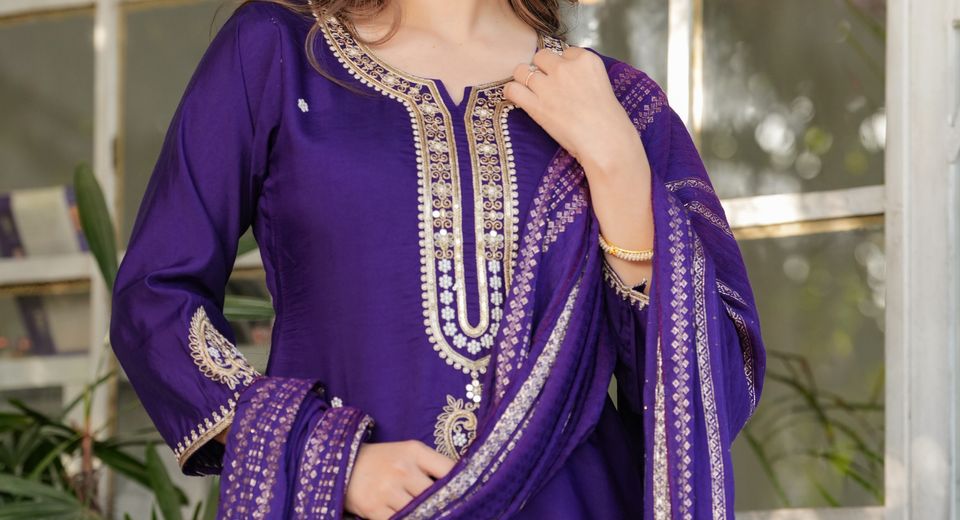
When the kurta has heavy embroidery, a tonal dupatta prevents the outfit from becoming visually fragmented. The Maroon Embroidered Chanderi Kurta Set with Dupatta demonstrates why related maroon shades and a measured sheen can look more sophisticated than adding a completely unrelated bright colour. Keep jewellery in a compatible family, such as antique gold with maroon or silver with cool black.
Choose contrast when the base colour needs definition
A contrast dupatta works best when the kurta and bottom are relatively simple or when the contrast colour appears in an existing embroidered detail. Black pairs effectively with ivory, white, rust, emerald, deep red and muted gold; pastel blue pairs well with white, silver, lilac and soft grey. A contrast colour should occupy the dupatta and perhaps one small accessory, rather than appearing in every part of the outfit.
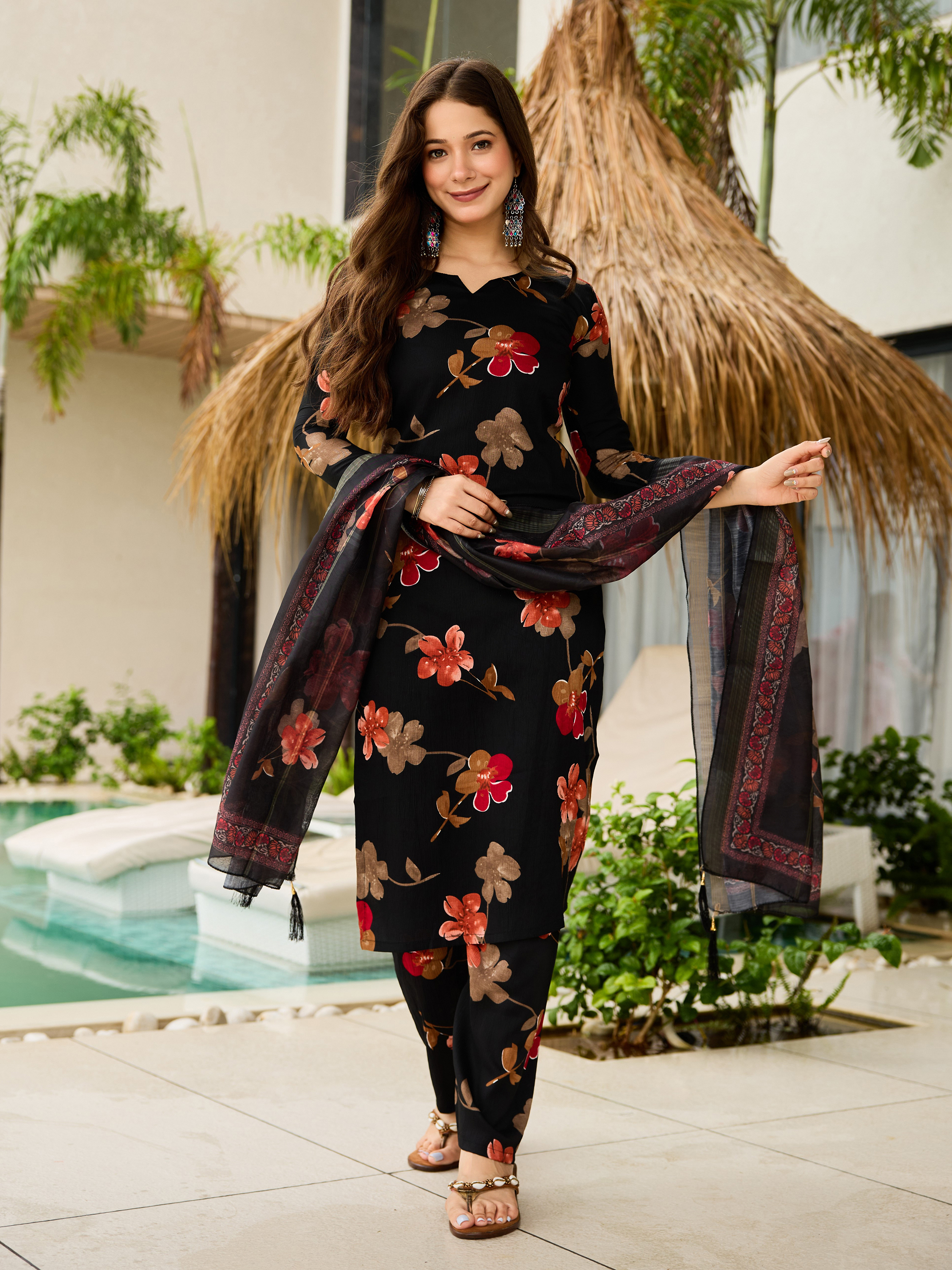
The Stylish Black Kurta Pant Dupatta Set with White Embroidery shows an useful contrast principle: white embroidery can act as a bridge between a black base and a lighter dupatta. The Black Embroidered Georgette Kurta Set with Dupatta offers a similarly dressy direction, where a lighter or metallic-toned layer can bring attention to the fabric's movement without competing with the black foundation.
Which Dupatta Fabric Works with a Monochrome Salwar Suit?
The best dupatta fabric depends on the structure of the kurta, the amount of embroidery and the practical demands of the event. Chanderi, georgette, silk blends, cotton and bandhej-style fabrics create visibly different silhouettes even when they share the same colour.
Match fabric weight before matching colour
Lightweight fabrics such as georgette and soft Chanderi fall close to the body and create a longer, cleaner vertical line. These fabrics suit straight kurta sets, cigarette pants and outfits with detailed necklines because they don't add excessive bulk around the shoulders. A stiffer dupatta can hold a crisp pleat, but it may widen the upper body if the kurta already has broad sleeves or dense chest embroidery.
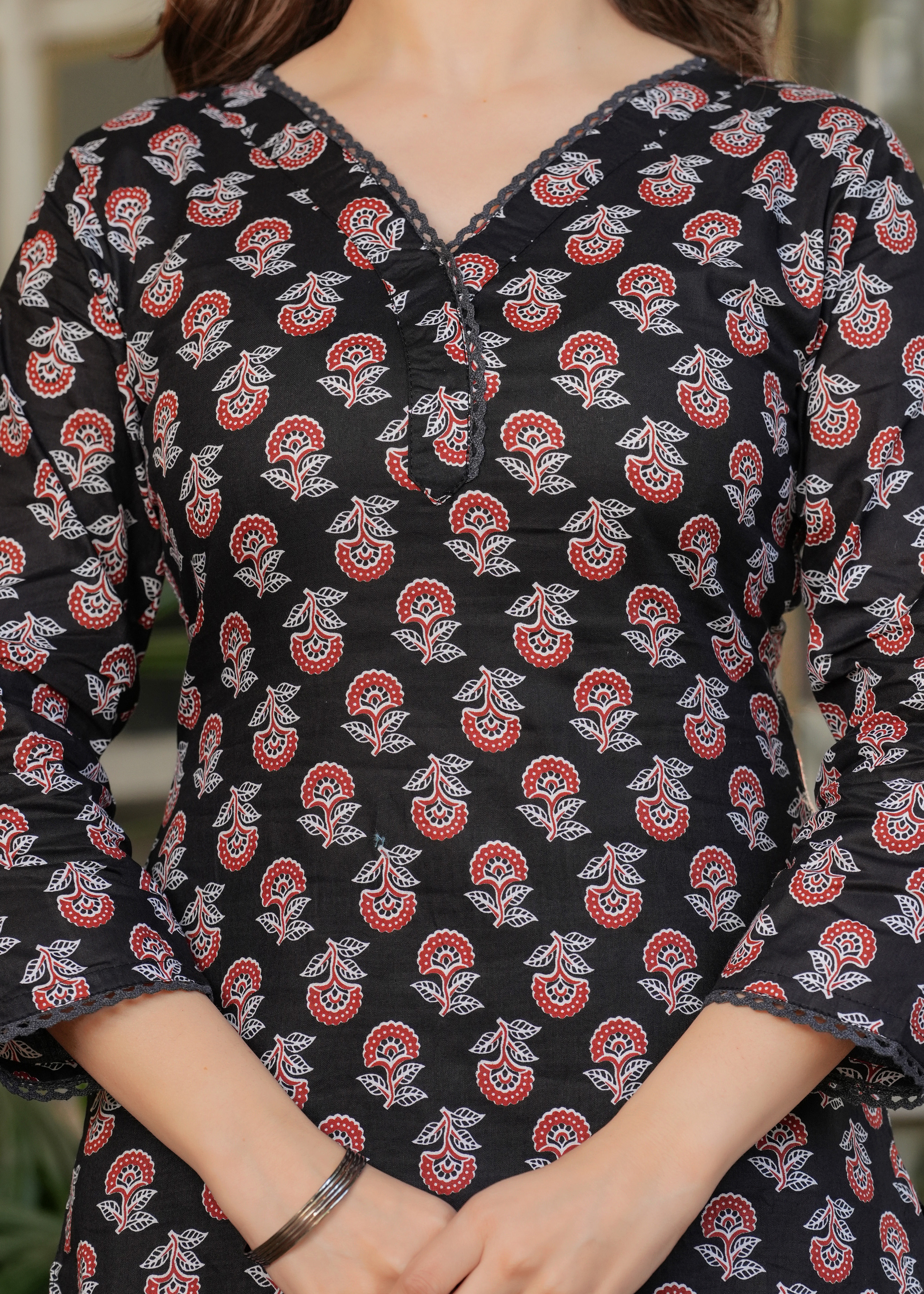
Silk blends have more body and usually reflect light, making them useful for evening wear and festive styling. The Black Floral Silk Blend Kurta Pant Dupatta Set Women can be styled with a controlled shoulder drape because the fabric's surface already supplies visual interest. The Black Floral Printed Silk Blend Kurta Set with Dupatta benefits from simpler jewellery and a less complicated drape so that the floral surface remains legible.
Use texture to make a same-colour outfit look layered
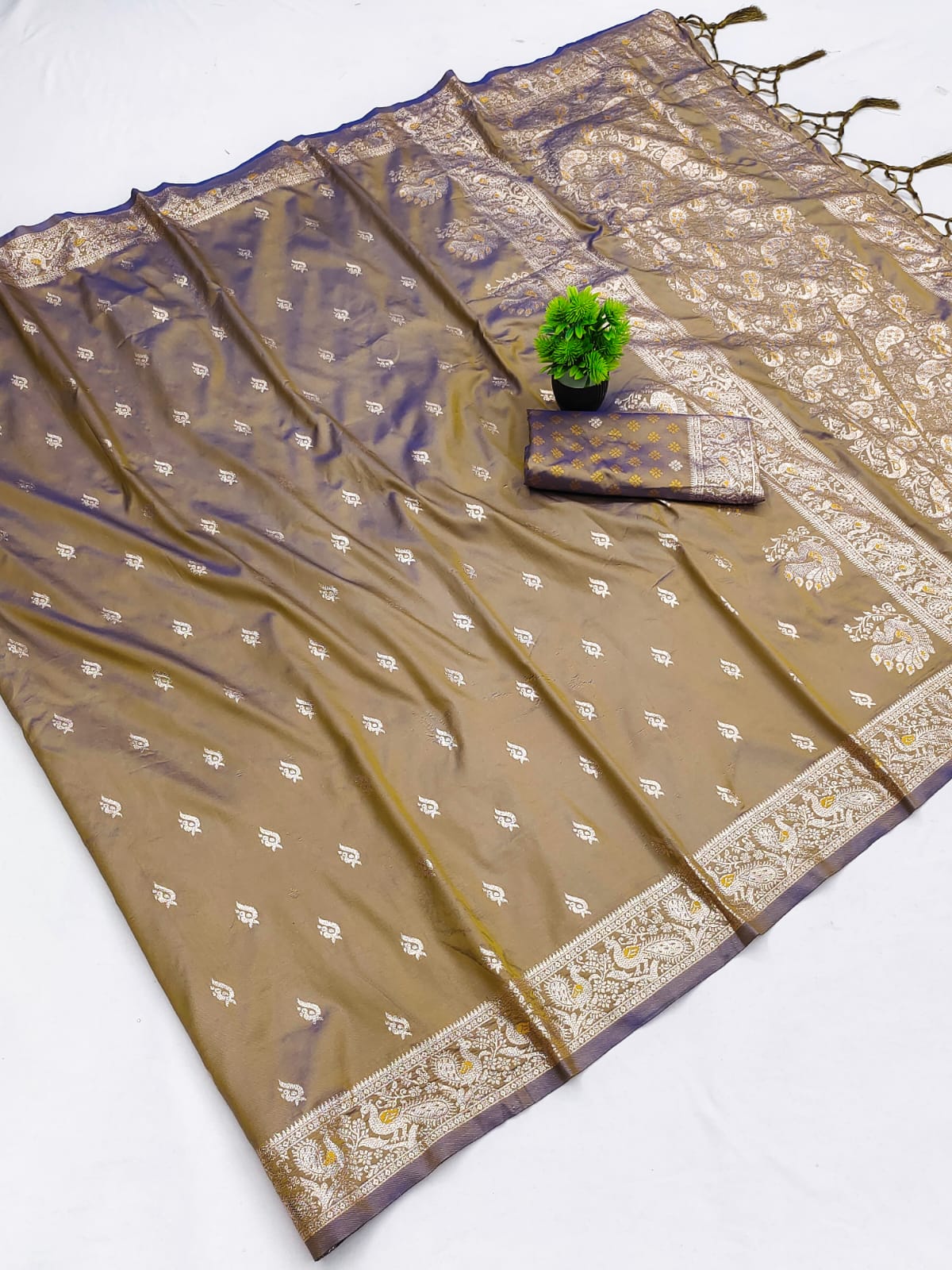
Texture prevents a monochrome set from appearing flat. A matte cotton kurta with a lightly lustrous dupatta creates separation without adding another colour. Chanderi contributes a delicate, crisp finish; georgette contributes fluidity; Banarasi silk contributes a denser shine; and a printed silk blend contributes pattern and reflected light. Combining two highly glossy fabrics can make a day outfit look unnecessarily formal.
The Maroon Viscose Chanderi Silk Embroidered Kurta Set for Women illustrates how a mixed or lustrous Chanderi surface can carry much of the outfit's richness. A plain or minimally embellished dupatta is often the better choice when the kurta fabric already catches light. For a daytime ceremony, a soft Chanderi or cotton layer is generally easier to manage than a heavy silk drape.
Should the Dupatta Be Plain, Printed or Embroidered?
Choose a plain dupatta when the kurta already has prominent embroidery, a printed dupatta when the base needs movement, and an embroidered dupatta when the rest of the outfit is deliberately quiet. The right surface detail depends on where you want the eye to rest.
Plain dupattas create a clean frame
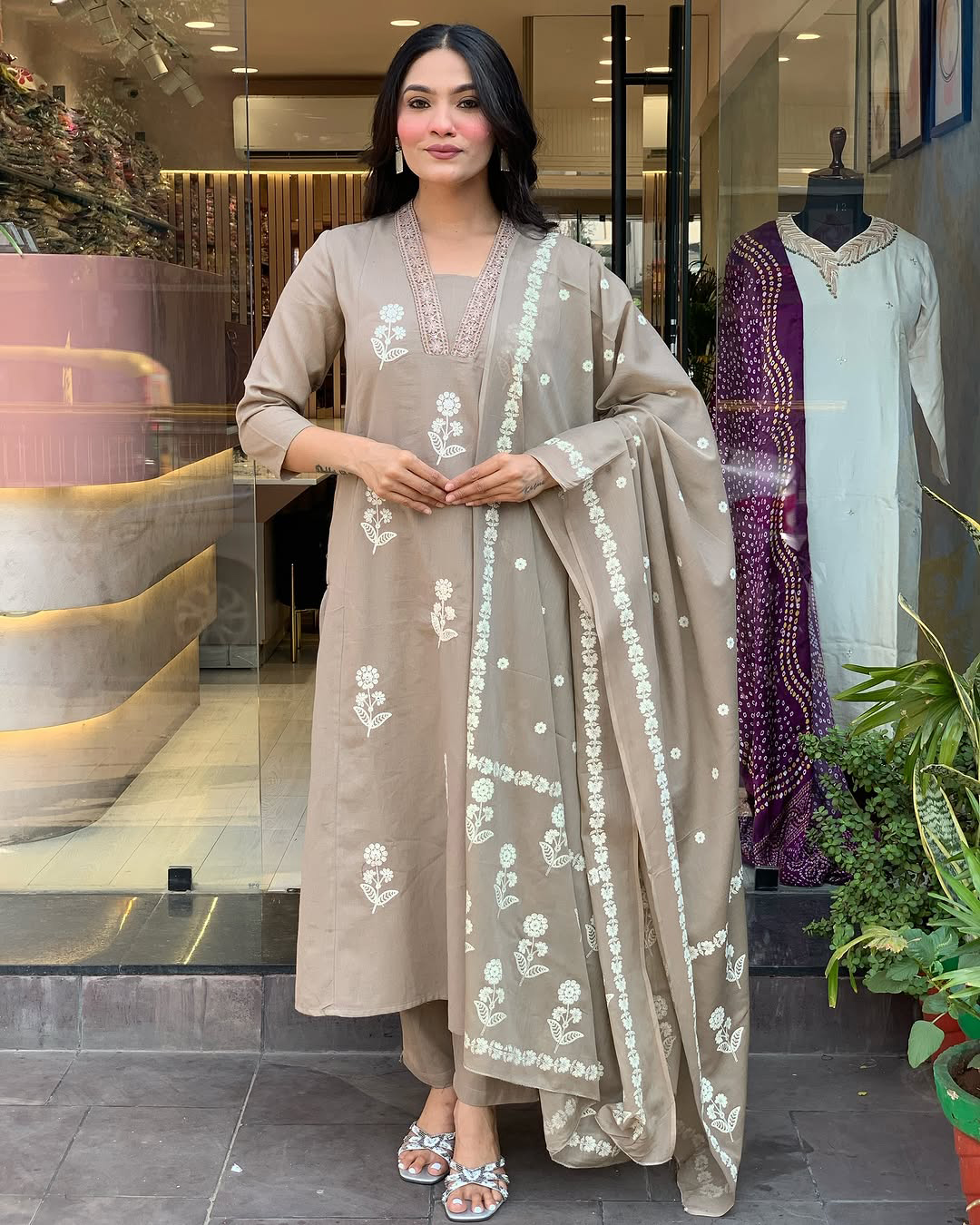
A plain dupatta isn't an empty choice; a plain surface highlights the cut, neckline, sleeves and jewellery. A plain ivory layer over a black embroidered set can soften the outfit for a daytime gathering. A plain deep green layer over a similarly coloured suit can maintain a jewel-toned appearance without introducing another motif.
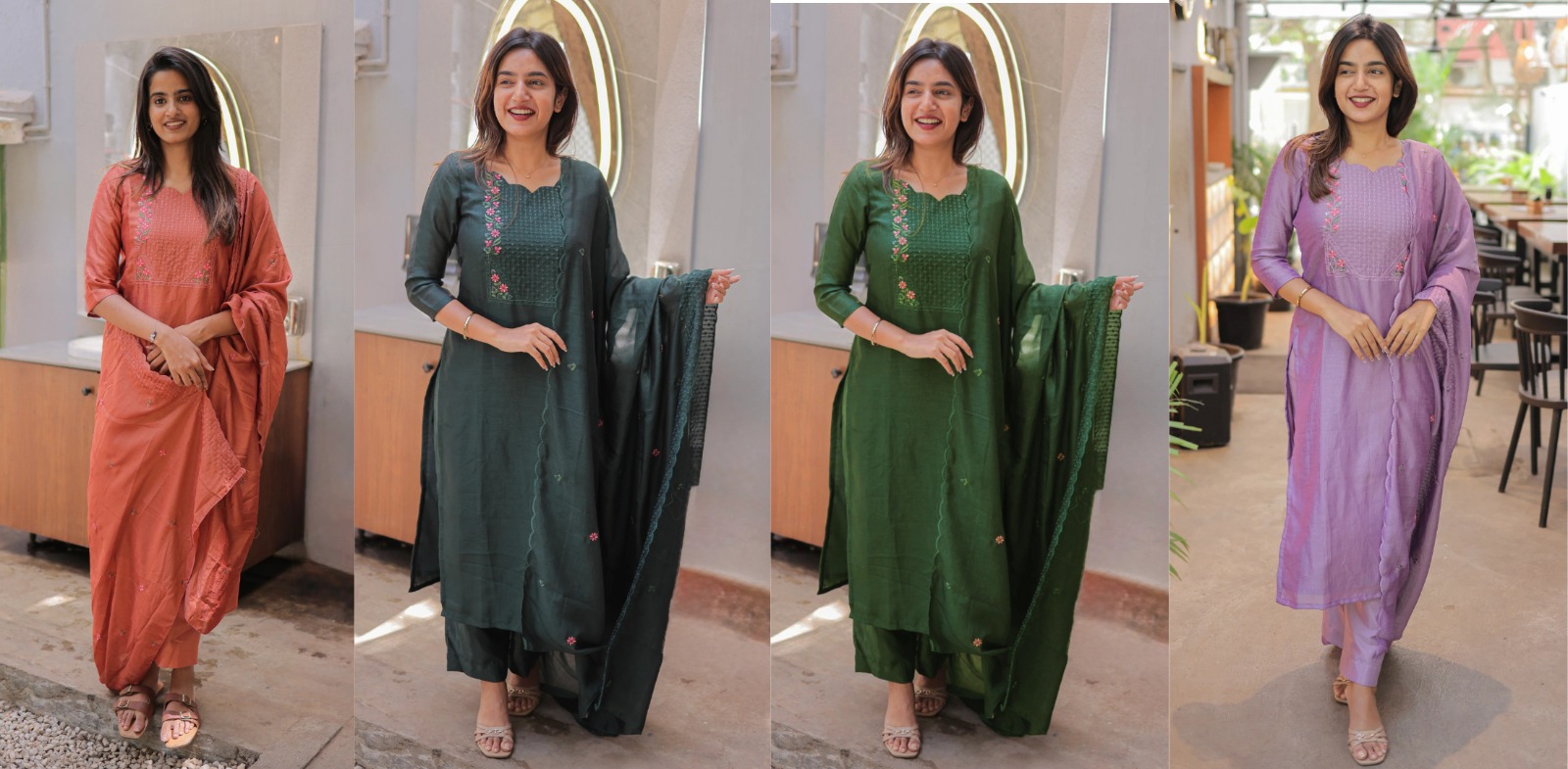
The Dark Green Embroidered Kurta Pant Dupatta Set works well with this approach because dark green already has depth. Avoid adding a large multicoloured print if the embroidery includes metallic thread or dense floral work. A narrow border, a small earring and a defined shoe colour can supply finish without overwhelming the embroidery.
Printed dupattas need a colour link
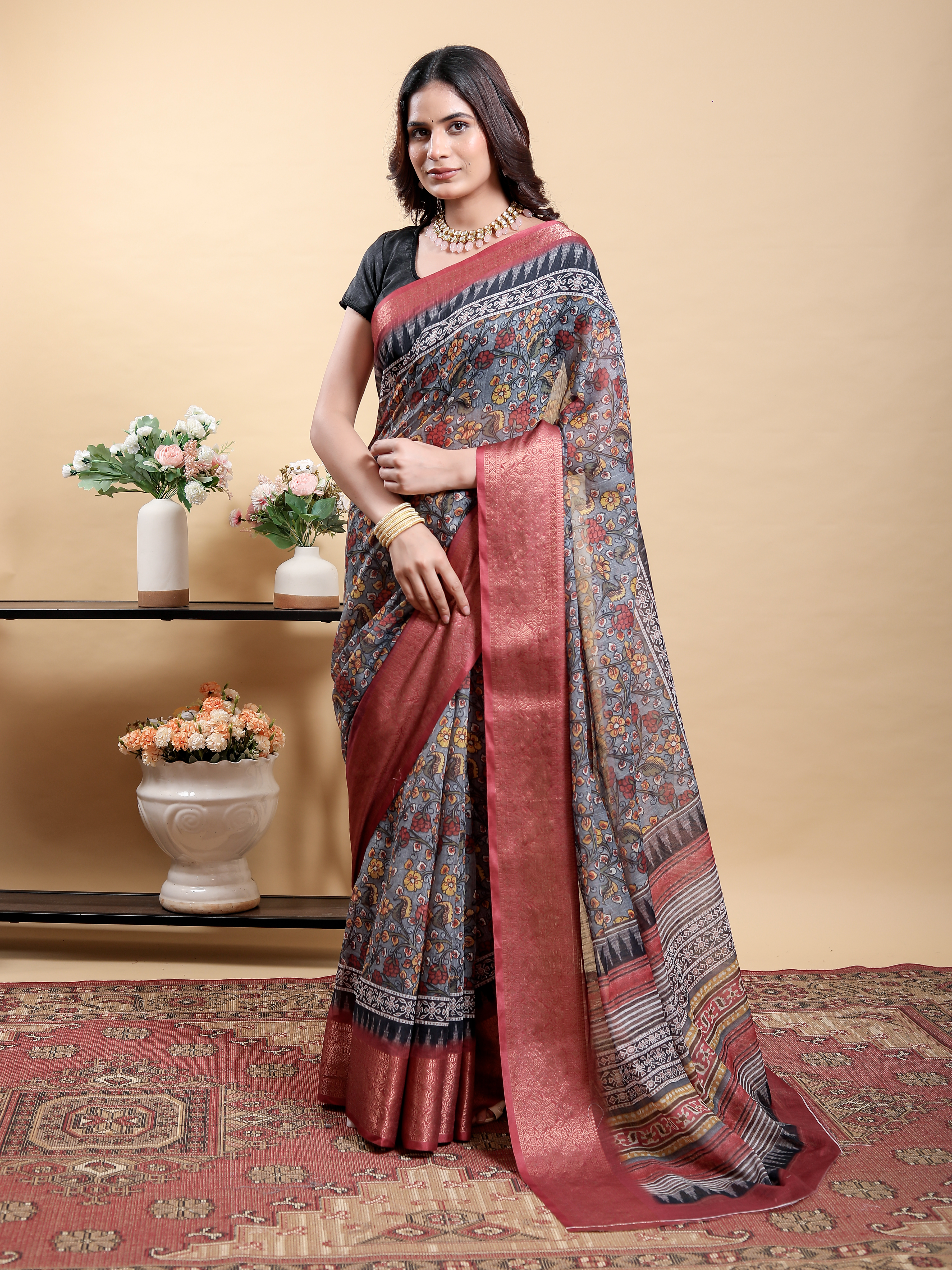
A printed dupatta looks intentional when at least one significant print colour repeats the kurta, embroidery or bottom. A Kalamkari print can include several colours, but one repeated maroon, black, indigo or beige element should visually connect the layer to the base outfit. Without a shared colour, the print may look separate from the suit rather than integrated with it.
The collection Kalamkari Print Salwar Suits (Copy) provides an useful reference for balancing a patterned layer with a restrained base. Bandhej and Sambalpuri-inspired designs also bring strong visual identities. Gujarat Bandhej Salwar Suits suit festive and celebratory styling when the rest of the outfit remains relatively simple, while Odisha Sambalpuri Salwar Suits can provide a structured pattern contrast for a plain monochrome kurta.
Embroidered dupattas belong with quieter garments
An embroidered dupatta should be the principal statement when the kurta and bottom have minimal surface decoration. Zari, threadwork, mirror work and sequin details each reflect light differently, so combining several dense techniques can make the outfit look busy. Repeat one embroidery colour in the earrings, footwear or clutch instead of adding multiple new accents.
How Do You Coordinate a Dupatta with Black, Maroon, Green and Blue Sets?
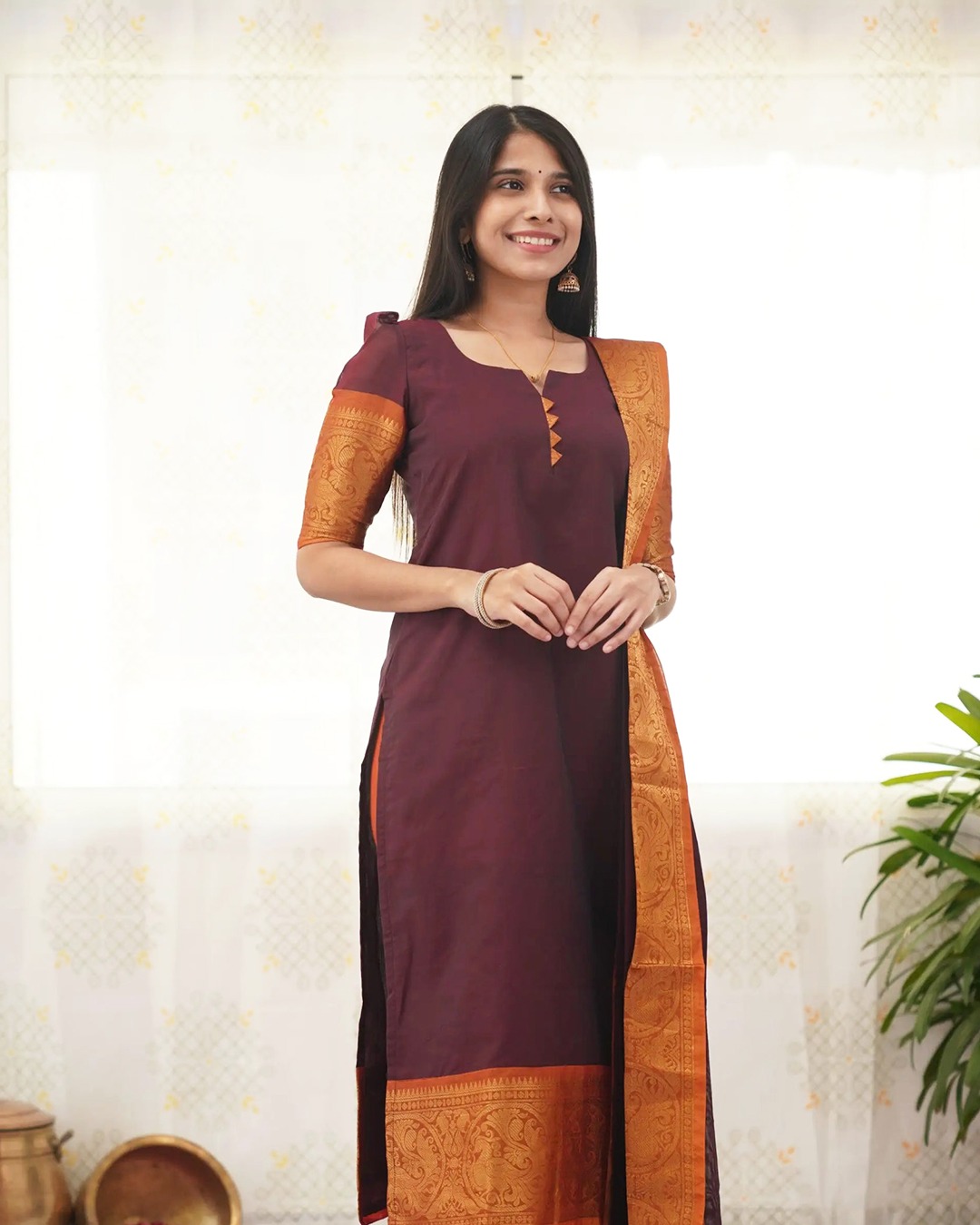
Coordinate the dupatta with the emotional character of the base colour as well as with its undertone. Warm colours usually pair comfortably with ivory, beige, antique gold and rust, while cool colours often benefit from white, silver, lilac or grey.
Black kurta sets
Black gives the widest range of dupatta options, but the finish should match the occasion. White embroidery and an ivory dupatta create a high-contrast daytime look; wine or maroon creates a dramatic evening palette; and metallic gold introduces festive formality. The Black Floral Silk Blend Kurta Pant Dupatta Set Women needs fewer additional motifs because the floral pattern already breaks up the solid black field.
For a modern office or gallery event, choose a matte black or grey dupatta and keep the border narrow. For a wedding-related function, a black base with zari, tissue-like sheen or a controlled jewel-toned layer can look more celebratory. Avoid combining black, bright red, heavy gold and a large multicoloured print in one outfit unless the event specifically calls for maximal festive dressing.
Maroon and dark green kurta sets
Maroon works with wine, rosewood, beige, muted pink and antique gold. Dark green works with emerald, bottle green, cream, dull gold and carefully chosen rust. A related shade preserves the richness of both colours, while cream or beige creates a more visible break between kurta and dupatta.
Maharashtra Paithani Inspired Salwar Suits can guide festive colour coordination because Paithani-inspired palettes often depend on a strong base colour and a defined contrasting border. Use the same logic without forcing a heavy border onto every outfit: select one accent colour, repeat it once, and let the main colour remain dominant.
Pastel blue kurta sets
Pastel blue looks balanced with white, powder blue, silver, lavender and soft grey. A white or sheer dupatta keeps the outfit airy for daytime events, while silver embroidery or a slightly deeper blue adds evening definition. The Pastel Blue Embroidered Chanderi Kurta Set with Dupatta demonstrates why delicate colour families work especially well with light-reflective Chanderi surfaces.
What Dupatta Border and Length Should You Choose?
A dupatta border should relate to the kurta's scale, while the length should allow the chosen drape to sit comfortably without constant adjustment. Border width, fabric stiffness and body proportions all affect the final balance.
A narrow border suits a small print, fine embroidery and everyday wear. A wider zari or woven border can support a festive outfit, especially when the kurta has a plain neckline and simple sleeves. If the kurta has heavy border work at the hem, repeating an equally wide border on the dupatta may create too many horizontal lines; a lighter edge will usually look cleaner.
Most dupattas are approximately 2 to 2.5 metres long, although the ideal length varies with fabric width and styling preference. A shoulder drape needs enough length to fall below the hip, while a front-open drape or double-shoulder wrap needs additional fabric. Petite wearers may prefer a lighter 2-metre layer to reduce pooling, while taller wearers or those choosing a full front drape may find 2.25 to 2.5 metres more practical.
Measure the dupatta against the kurta before finalising the drape. A very long, heavy layer can pull a lightweight kurta sideways, and a short layer can look accidental when worn over wide-leg pants. Pinning one shoulder and allowing the opposite end to fall naturally is often more flattering than creating many tight pleats.
How Should You Drape a Dupatta with a Monochrome Kurta Set?
The most flattering drape is the one that preserves the outfit's vertical line and keeps the chosen focal detail visible. Drape direction, pleat width and shoulder placement can change the apparent proportions of the body.
Use one-shoulder draping for a longer line
Place narrow or medium pleats on one shoulder and allow the remaining length to fall near the opposite hip for a streamlined silhouette. This arrangement works well with straight kurta sets and cigarette pants because the uninterrupted fall reinforces the vertical shape. A small pin under the shoulder can prevent slipping without flattening the fabric.
Try a front drape for statement borders
A front drape displays a printed field, zari border or embroidery more clearly than a simple shoulder fall. Bring both ends over the shoulders and allow the centre to form a soft U-shape, keeping the front volume moderate. This drape works particularly well with a plain kurta and a detailed dupatta, but it can hide a richly embroidered neckline.
Keep the drape practical for ceremonies
For a Haldi ceremony or a crowded family event, secure the dupatta at one shoulder and near the waist rather than relying on loose placement. A lighter georgette or Chanderi layer is easier to pin and less likely to drag against jewellery. The collection Punjab Patiala Salwar Suits gives an useful styling direction for more energetic, movement-friendly dressing: allow the dupatta to remain expressive while keeping the hands free.
How Can You Build a Complete Look Around the Dupatta?
Build the rest of the outfit by repeating one detail from the dupatta and leaving the remaining accessories quiet. Matching every accessory to every colour in a print usually reduces clarity rather than improving coordination.
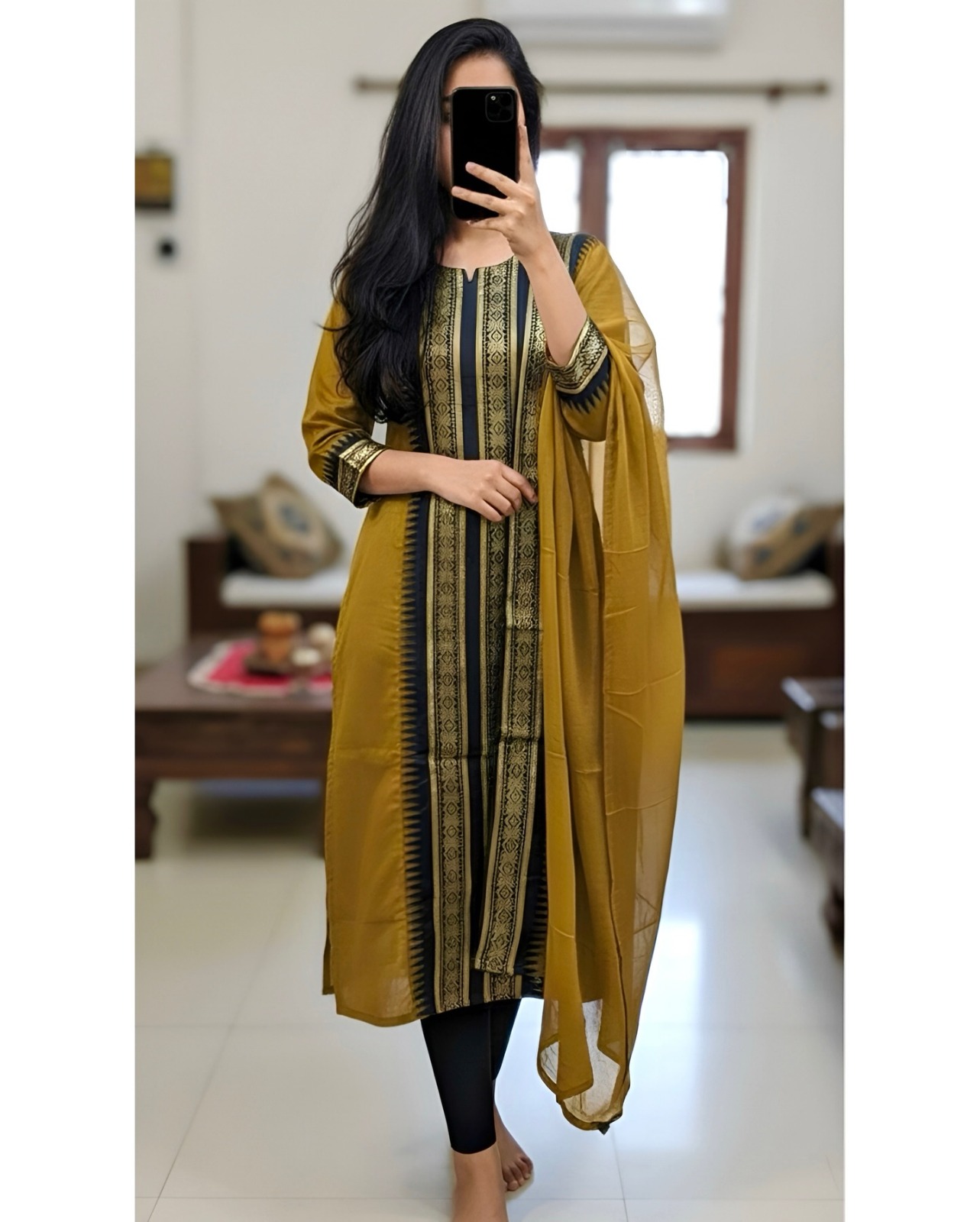
For a black and white combination, silver, pearl, black enamel or oxidised metal can work depending on the formality. For maroon and antique gold, choose one warm-metal finish and avoid adding bright yellow gold, silver and rose gold together. For pastel blue, pearl, crystal, silver and pale lavender accessories preserve the lightness of the palette.
Footwear should support the dupatta rather than compete with it. Juttis, low block heels and embroidered flats suit daytime salwar suits, while metallic heels or embellished sandals can raise the formality for evening events. A neutral beige, black, ivory or metallic shoe is often more versatile than a fourth bright colour.
Makeup and hair also influence how strong the monochrome effect feels. A defined lip can echo a maroon dupatta, while soft blush and a clean eye suit pastel blue or ivory styling. If the dupatta has substantial print or zari, a neat low bun, braid or controlled waves keep the face visible and prevent the upper half from appearing crowded.
The most dependable rule is to count visual statements. A heavily embroidered kurta, a printed dupatta and elaborate jewellery already provide three strong elements; adding a large border and ornate footwear may exceed the outfit's visual capacity. One dominant detail, one supporting detail and a quiet base usually create the most wearable result.
A Simple Decision Checklist Before You Buy
Use a short checklist to test whether a dupatta will complete a monochrome kurta set rather than distract from it. The checklist is especially useful when shopping online, where colour and fabric texture can be harder to judge.
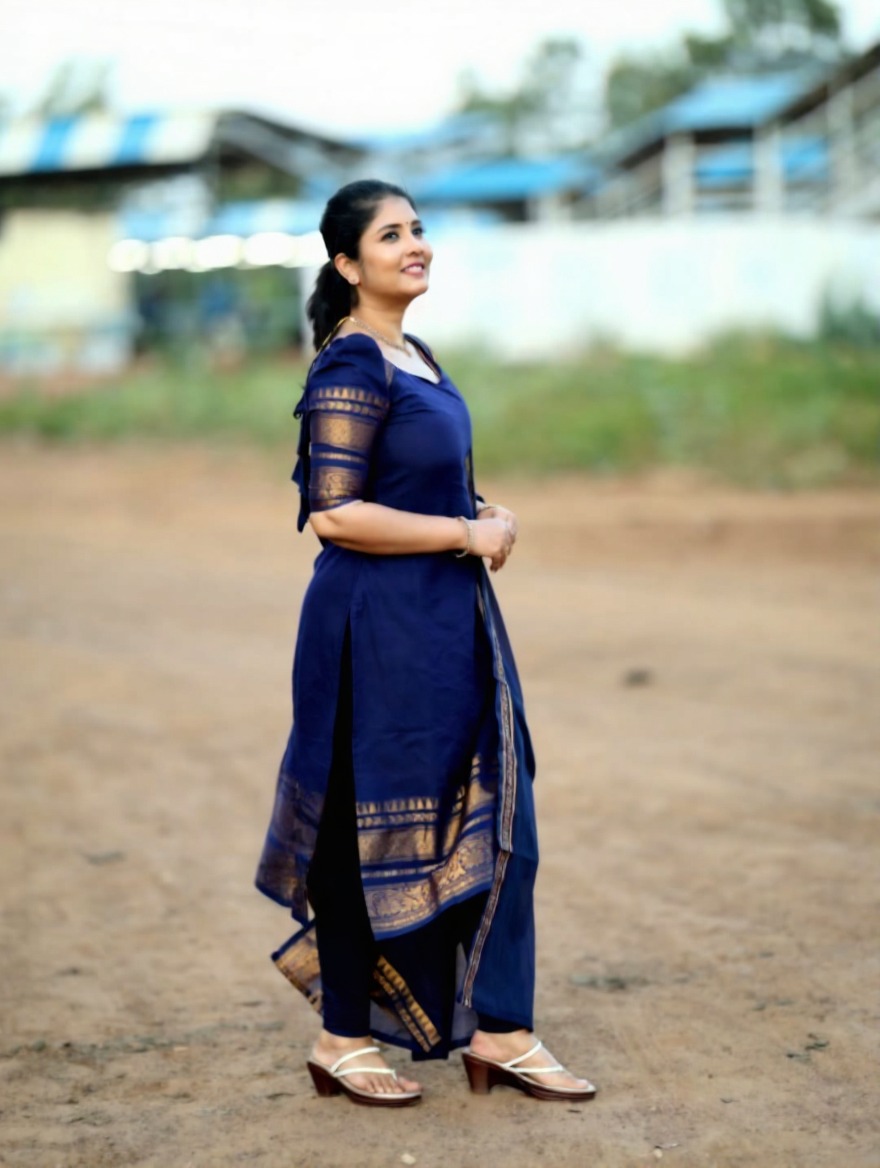
- Identify the base colour and decide whether you want tonal harmony, soft contrast or high contrast.
- Check whether the kurta is plain, printed or embroidered before selecting a second major surface detail.
- Compare fabric weight so that a heavy dupatta doesn't overwhelm a lightweight kurta.
- Look for one repeated colour in the print, border or embroidery to connect the dupatta with the set.
- Confirm that the length suits your intended drape and height.
- Match metallic finishes rather than mixing several unrelated zari or jewellery tones.
- Consider the event, movement required and likelihood of needing to pin the dupatta.
How to Choose a Dupatta for a Monochrome Kurta Set ultimately comes down to controlled repetition. Repeat a colour, texture or embroidery detail once, create enough difference for the layers to remain visible, and let the kurta set retain a clear visual centre. That method works across black silk blends, maroon Chanderi, dark green embroidery and pastel blue festive wear without making every outfit look identical.
Questions to Ask Before Pairing a Dupatta with a Monochrome Kurta Set
Can I wear a printed dupatta with a monochrome kurta set?
Yes, a printed dupatta works with a monochrome kurta set when at least one important print colour repeats the kurta, embroidery or bottom. Keep jewellery and footwear simpler if the print contains several colours.
What colour dupatta looks best with a black kurta set?
White, ivory, maroon, wine, emerald, muted gold and charcoal all work with black kurta sets. Choose white or ivory for sharper daytime contrast, and wine or metallic tones for a more formal evening look.
Should the dupatta match the kurta exactly?
The dupatta does not need to match the kurta exactly. A related shade, different texture or repeated embroidery colour often creates more depth than an identical colour match.
Which dupatta fabric is easiest to drape with a salwar suit?
Georgette and lightweight Chanderi are generally easy to drape because they fall softly and can be pinned without excessive bulk. Silk blends and stiffer fabrics hold structure well but may need more careful shoulder placement.
How long should a dupatta be for a kurta pant set?
A dupatta around 2 to 2.5 metres usually suits common shoulder and front-drape styles. Choose closer to 2 metres for a lighter, less bulky fall and closer to 2.5 metres for a full front drape or taller frame.
How do I style a dupatta for a Haldi ceremony?
Choose a lightweight dupatta and secure it at the shoulder and waist so your hands remain free. Bright colour, a manageable border and easy movement matter more than a complicated drape at a Haldi ceremony.