

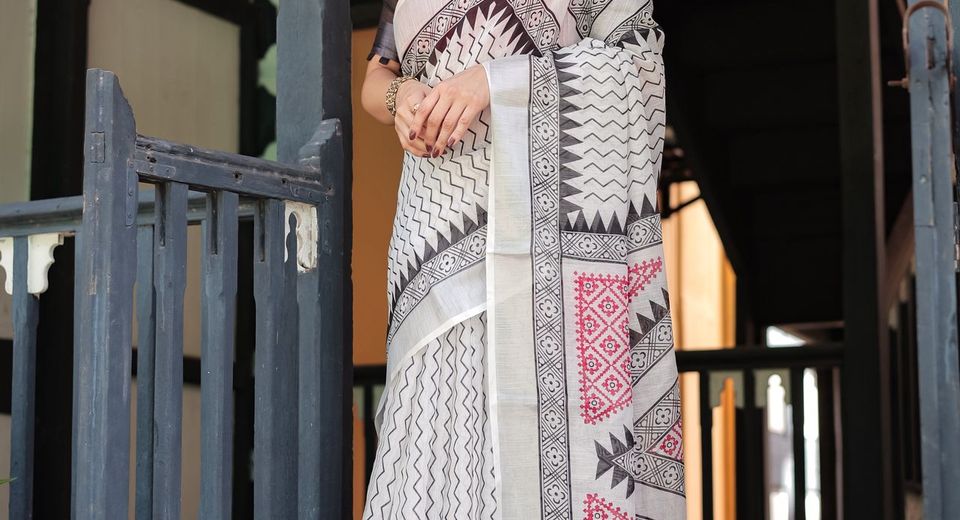
How to Add Depth Without Adding More Colours for Monochrome Ethnic Outfits begins with a change in what you notice. When a palette stays limited to black and white, ivory and charcoal, or several tones of one colour, fabric, surface, proportion and light must create the visual interest. A monochrome saree can look elaborate without a multicoloured border if its weave, blouse, pleats and accessories offer enough contrast.
Depth doesn't mean adding more decoration everywhere. Depth means giving the eye several details to read in sequence: a matte textile beside a polished one, a dense print against an open area, a fitted blouse beneath a fluid pallu, or a small textured accessory against a smooth garment. The same principle works for lehengas, salwar suits, shararas, palazzo suits and draped skirts.
How to Add Depth Without Adding More Colours for Monochrome Ethnic Outfits
Monochrome depth comes from combining surface contrast, visual weight and directional movement. A black-and-white outfit feels dimensional when the fabrics reflect light differently, the silhouettes occupy different amounts of space and the details are distributed with a clear hierarchy.
Begin with one dominant base rather than treating every element as equally important. A black saree may carry the largest visual weight, while a white blouse creates the main contrast and silver jewellery supplies the highlight. An ivory salwar suit may use tonal embroidery, a sheer dupatta and a structured belt to create layers without introducing another colour.
Keep the strongest detail in one or two areas. A heavily patterned saree usually needs a quieter blouse. A plain saree can support a sculptural blouse, an embroidered belt or a more prominent necklace. When every component has a bold pattern or reflective finish, the outfit loses hierarchy and appears busy instead of deep.
Use Fabric Contrast Before Adding Extra Colour
Fabric contrast is the most reliable way to make a restrained palette appear rich. Combining matte, glossy, crisp, fluid, sheer and raised surfaces gives the same colour different visual behaviour.
Pair matte and reflective textiles
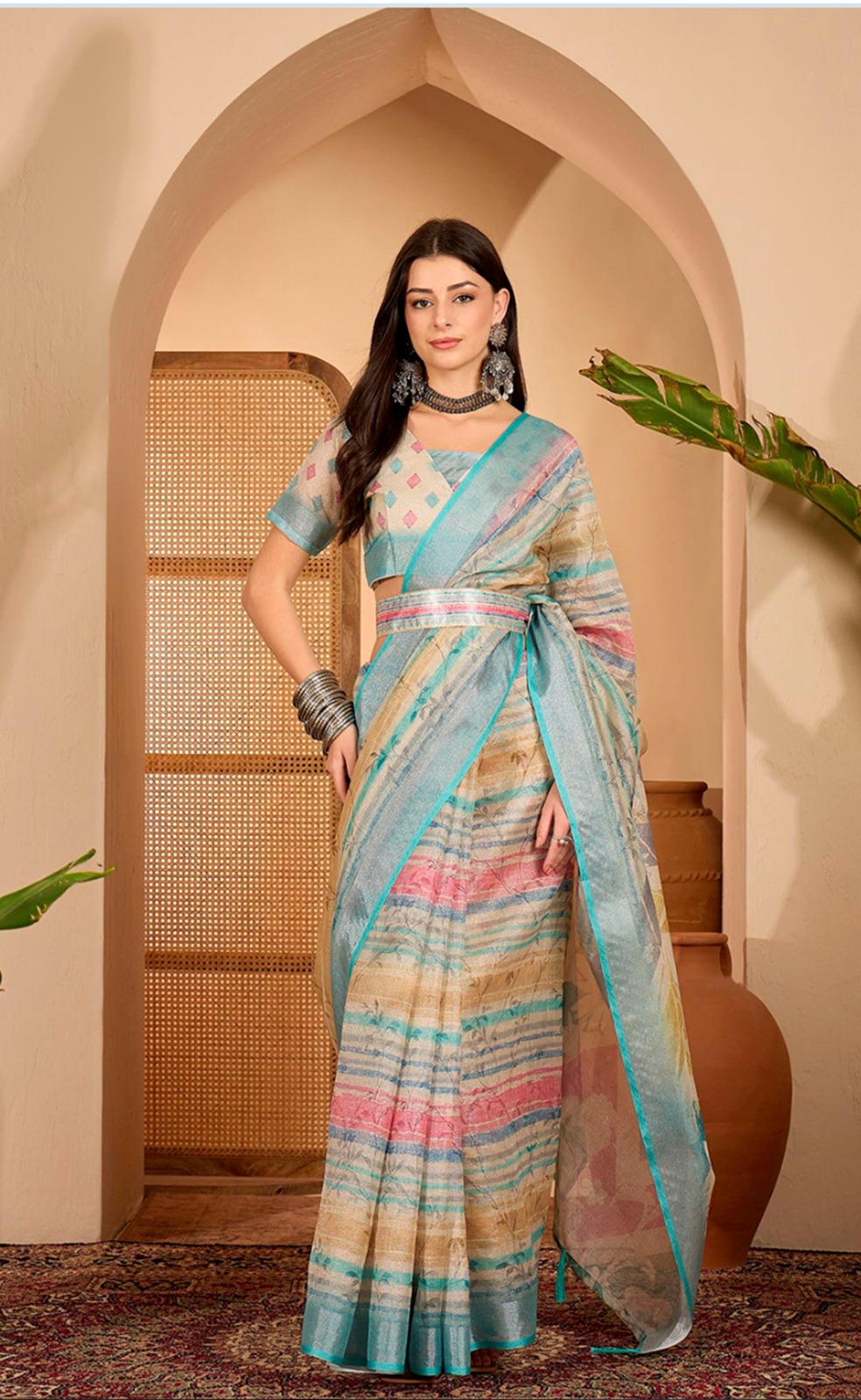
A matte textile absorbs light, while a reflective textile returns light from its surface. A linen saree with a smooth silk blouse therefore creates more contrast than a linen saree with a blouse made from the same linen, even when both garments use black.
Black White Printed Pure Linen Saree with Tassels demonstrates how texture can carry an outfit. Linen has a dry, tactile surface, and tassels introduce movement along the edge. Style it with a smooth black blouse, a narrow metallic cuff and firmly arranged pleats so the woven texture remains the main point of interest.
Black White Printed soft silk saree creates a different effect because soft silk gives the printed surface a gentle lustre. A blouse in matte raw silk, cotton silk or crepe separates the upper body from the saree without changing the palette. The contrast becomes especially visible under warm indoor lighting.
Use raised details in controlled amounts
Raised detail includes zari, jacquard motifs, embroidery, pleats, tassels, appliqué, brocade and textured buttons. These elements create small shadows and highlights, which remain visible even when the colours are nearly identical.
Use one dominant texture and one supporting texture. A Chanderi saree with a delicate zari border can work with a lightly embroidered blouse, while a heavily embroidered blouse needs a quieter saree surface. Combining zari, sequins, dense embroidery and a heavily patterned border in equal measure can flatten the design because no element has visual priority.
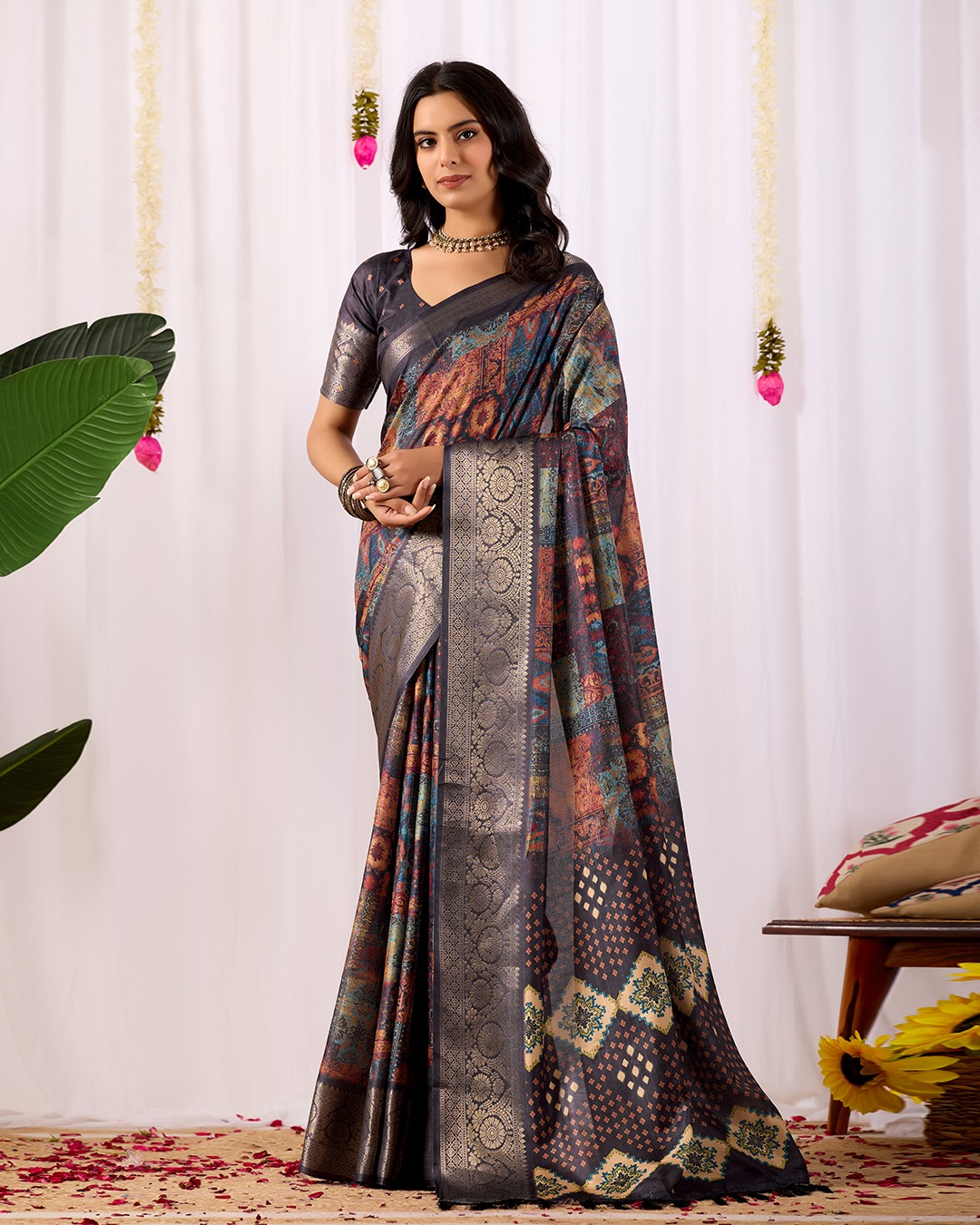
Black Chanderi Cotton Saree with Multicolor Geometric Print shows how weave and motif can work together, although the multicolour geometric print moves beyond a strict monochrome palette. For a monochrome interpretation, apply the same idea with black-and-white geometric forms, tonal weaving or a single contrasting border.
Shape the Outfit Through Proportion and Silhouette
Proportion creates depth by making some parts of an outfit compact and other parts expansive. A fitted blouse under a generous pallu, a short jacket over a long kurta or a narrow dupatta over a wide sharara creates overlapping visual scales.
Choose a blouse that changes the outline
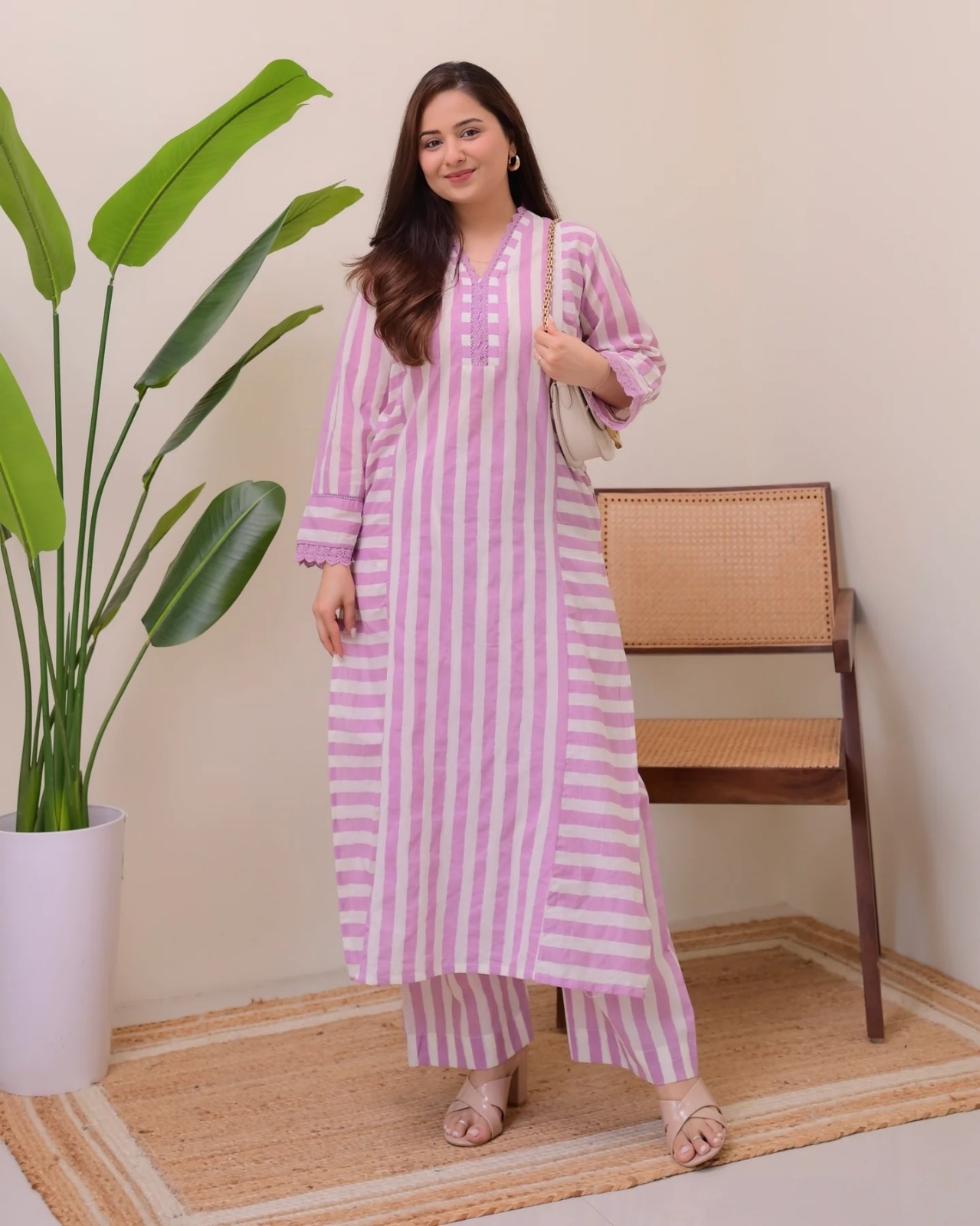
A high-neck blouse adds vertical structure, a boat neck broadens the shoulder line and a square neck introduces a clear geometric frame. Full sleeves add visual weight, while sleeveless or short-sleeved blouses leave more open space around the upper body.
Monochrome Magic Linen Saree with Bold Red Touch shows how a small accent can direct attention towards a border or pallu. For a strictly monochrome styling approach, create the same emphasis through a difference in sleeve length, neckline shape or fabric finish. A black linen saree with a sculpted white blouse will look more layered than black linen paired with an identical black blouse.
Blouse length also changes the balance of a saree. A cropped blouse exposes more of the waist and creates a break between the blouse and pleats. A longer blouse gives a continuous vertical line and can look more formal with a wide-bordered saree. Select the length according to the saree's border, the drape and the amount of visual detail near the waist.
Layer separates with different lengths
Layering adds depth when each garment has a distinct edge or function. A short embroidered jacket over a long kurta, a sheer dupatta over a solid salwar suit or a longline shrug over a sharara creates overlapping planes without requiring another colour.
Use tonal layering for a quiet result. Ivory raw silk trousers, a cream kurta with tonal embroidery and an off-white organza dupatta use closely related shades, but the different opacity, length and surface finish prevent the outfit from becoming one uninterrupted block.
Make Draping Do the Visual Work
Draping creates depth by changing the direction, density and transparency of fabric. Pleats produce repeated vertical lines, a fan-shaped pallu creates width and a relaxed shoulder drape introduces a diagonal line.
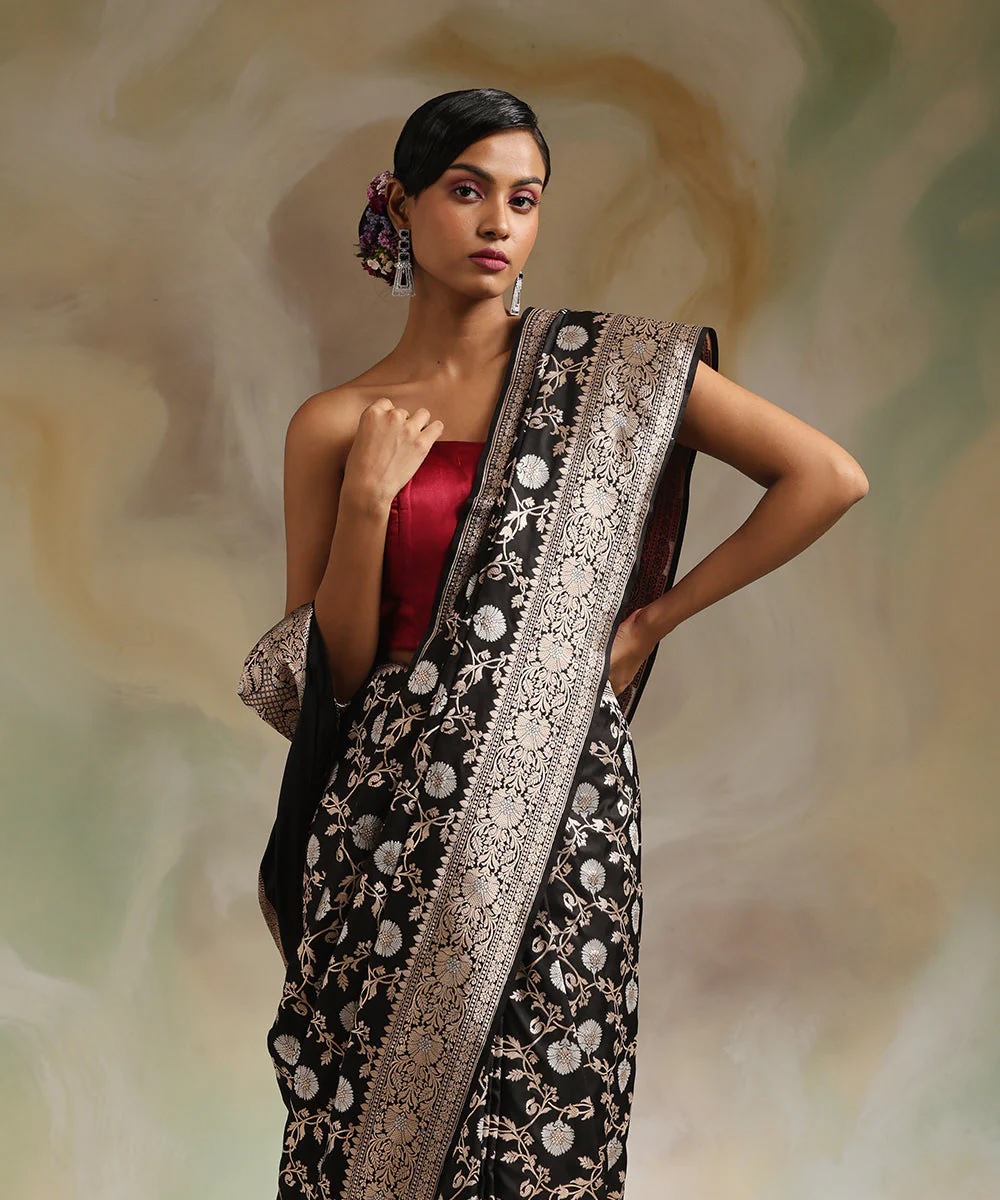
A clean Nivi drape works well when the saree has a strong print or border because the pleats provide order. A seedha pallu exposes a broad decorative panel and gives the outfit a more graphic shape. A Bengali-style pallu adds volume near the shoulder, while a slim pinned pallu creates a sharper architectural finish.
Aesthetic Monochrome Marshmallow Georgette Saree shows why fluid fabric benefits from deliberate structure. Georgette naturally forms soft folds, so defined pleats, a firm waistband or a sharp blouse neckline can prevent the silhouette from appearing undefined. Use discreet pins at the shoulder and waist to preserve movement while keeping the drape secure.
Change the density of the drape to suit the saree's surface. A densely pleated pallu can compete with an all-over print, while an open pallu may make a plain saree appear too bare. When the saree is minimal, a fan-folded pallu or a lightly gathered shoulder drape can supply the missing movement.
Transparency produces another layer. A sheer black organza dupatta over a black georgette kurta creates a second visible plane because the materials catch light differently. The same technique works with a translucent saree border, net sleeves or an organza jacket over an opaque satin skirt.
Use Borders, Prints and Repetition Strategically
Repetition creates cohesion, while a change in scale creates depth. A small geometric motif on the blouse can echo a larger geometric form on the saree without making the outfit look mechanically matched.
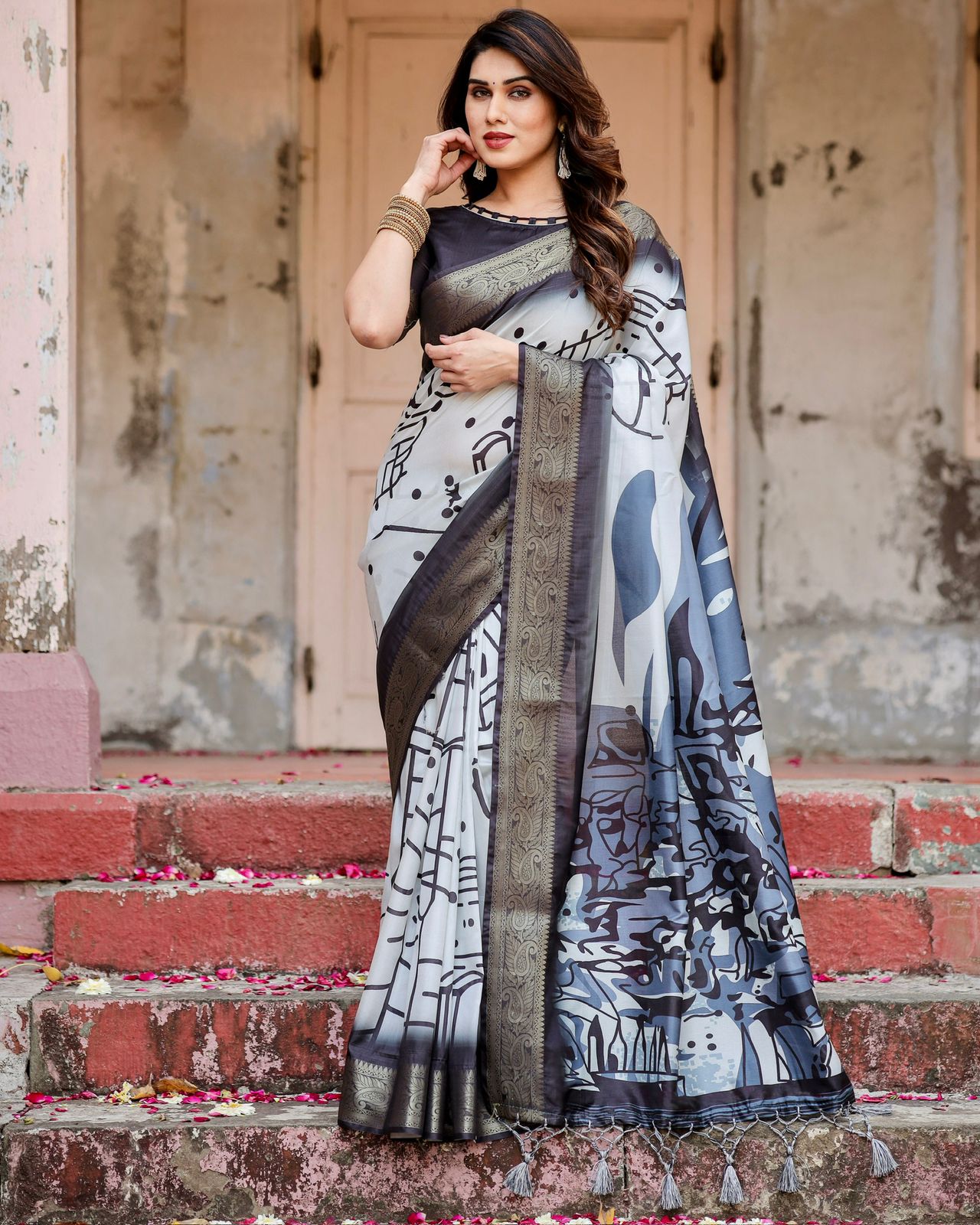
Designer Black & White Abstract Soft Silk Saree can be styled around the movement of its abstract pattern. Keep the blouse silhouette simple, then repeat one line, curve or angular form in the earrings, bangle profile or handbag construction. Repetition should be recognisable without appearing copied on every accessory.
Scale contrast is equally useful. Pair a large saree print with a small, closely spaced blouse motif, or combine a quiet saree with a blouse that has larger embroidery. Avoid placing equally bold patterns on the saree, blouse, dupatta and bag because equal intensity removes the visual hierarchy.
Borders also affect perceived proportions. A strong vertical border can lengthen the line of a saree, while a wide horizontal border at the hem can make the lower half appear more substantial. A high-contrast sleeve border can broaden the arm visually, so a narrow border is generally more discreet on a fitted sleeve.
Multicolor Heavy Chinnon Printed Saree for Women isn't a monochrome piece, but its printed surface illustrates an important styling principle: a busy pattern needs areas of visual rest. Apply that principle to a black-and-white saree by pairing a dense pallu with a plain blouse or a graphic print with an unembellished clutch.
Select Jewellery for Shine, Scale and Structure
Jewellery adds depth without changing the clothing palette when it contributes a different material, scale or outline. Silver, oxidised metal, antique gold, pearls and black stones can each create a different mood against black, white or ivory ethnic wear.
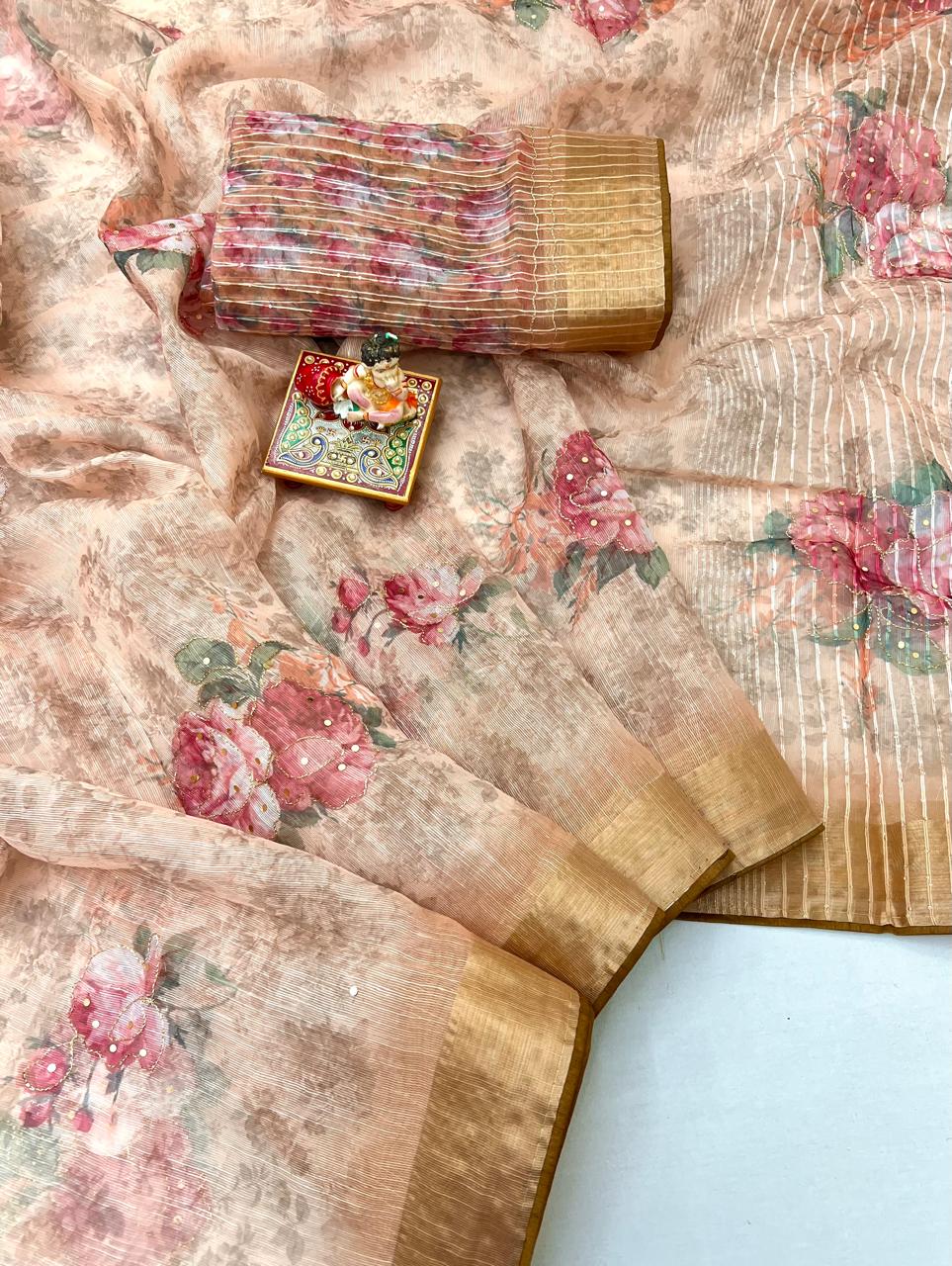
Silver and oxidised metal emphasise a cooler, graphic feeling, while gold and antique gold make the same black-and-white outfit appear warmer and more traditional. Pearls soften sharp geometric prints. Black beads and dark stones create continuity while still adding polished highlights.
Choose one focal jewellery piece and let the remaining pieces support it. A broad choker needs open space at the neckline, while long earrings usually work better without a heavy necklace. Stacked bangles add horizontal rhythm, but a single cuff creates a cleaner architectural effect.
Mix finishes carefully. Polished earrings with a hammered bangle, or a smooth clutch with a textured potli, gives the eye another difference to register. Matching every accessory in the same shine level can make a monochrome outfit look flatter, especially under direct lighting.
Control Negative Space, Light and Finishing Details
Negative space makes monochrome contrast easier to see. Exposed skin at the neckline, forearm or waist separates layers and prevents a dark outfit from becoming one dense shape.
Black and white create a high-contrast effect, while charcoal and ivory or cream and beige create a softer transition. Choose the level of contrast according to the setting. High contrast feels graphic and contemporary; close tonal values feel quieter and often suit daytime ceremonies or formal family gatherings.
Lighting should influence fabric selection. Satin, tissue and zari reflect flash photography and warm indoor lights, so they can appear brighter than expected. Cotton, linen and matte silk show weave more clearly in daylight and produce less glare in photographs.
Complete the outfit with finishing details that support its structure. A defined waist tuck, evenly spaced pleats, a pressed blouse sleeve and a proportionate handbag can make a restrained outfit look intentional. For a Haldi ceremony, breathable cotton, linen or Chanderi can keep the look comfortable while tonal texture supplies the richness. For an evening reception, soft silk, zari, organza or controlled metallic jewellery can provide more light response.
The most effective monochrome ethnic outfits don't rely on a larger colour palette to appear complete. They use a deliberate relationship between texture, silhouette, drape, scale and shine. When each element has a clear job, black and white, ivory and beige or one carefully layered colour can look expressive, occasion-appropriate and far more detailed than the palette first suggests.
Common Questions About Creating Depth in Monochrome Ethnic Wear
How can I make a black-and-white saree look less flat?
Use contrast in fabric, silhouette and finish rather than adding more colours. Pair a matte linen or cotton saree with a smooth blouse, add a structured drape and choose one reflective accessory such as silver jewellery or a zari-edged clutch.
Which blouse colour works with a monochrome saree?
A black, white, ivory or charcoal blouse works with a monochrome saree, depending on the desired contrast. A white blouse creates a sharper graphic break, while a black or charcoal blouse gives a more continuous and understated silhouette.
Can jewellery add depth to a monochrome ethnic outfit?
Jewellery adds depth through shine, scale and material. Oxidised silver creates a cooler graphic mood, antique gold adds warmth, pearls soften geometric prints and a single broad cuff can provide structure without competing with a detailed saree.
How should I drape a plain monochrome saree?
A plain monochrome saree benefits from a drape with visible direction and structure. Use well-defined pleats, a fan-folded or seedha pallu, or a relaxed shoulder drape with a sharp blouse neckline to create movement and visual layers.
How do I style a printed black-and-white saree without making it look busy?
Keep the blouse and accessories quieter than the saree's strongest print. Repeat one small shape or line from the print in the jewellery, choose one focal accessory and leave some areas of visual rest around the neckline or waist.
Which fabrics create the most depth in single-colour ethnic wear?
Matte and reflective fabrics used together create the clearest depth. Linen, cotton and Chanderi provide tactile matte texture, while soft silk, satin, organza, tissue and zari add light-catching contrast.


