

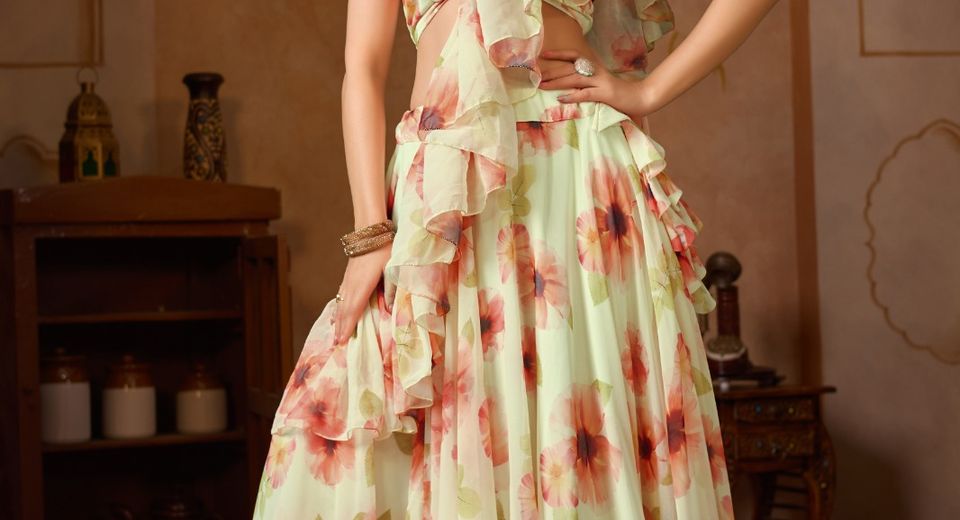
How the Fabric Moves, Feels and Photographs for Georgette Lehengas matters when a skirt must look elegant in motion as well as in a still image. Georgette has a light, slightly crinkled surface and a fluid fall that responds to walking, turning and even a small change in posture. Those qualities make georgette lehengas popular for receptions, sangeet celebrations, festive dinners and bridesmaid dressing, but the final result also depends on lining, embroidery, flare, petticoat structure and lighting.
A photograph captures one suspended moment, while fabric comfort reveals itself over several hours. Understanding both helps you choose a georgette lehenga that doesn't merely look attractive on a product page but also moves comfortably, photographs with dimension and remains manageable during a real celebration.
How the Fabric Moves, Feels and Photographs for Georgette Lehengas when walking
Georgette moves with a soft, fluid swing because its lightweight yarn structure allows the fabric to follow the body instead of holding a rigid architectural shape.
Compared with Banarasi silk, which usually has a denser hand and a more deliberate structured fall, georgette creates a gentler ripple around the ankles. Compared with stiff net, georgette generally bends closer to the legs and settles quickly after a turn. The result is movement that looks graceful rather than dramatically sculpted.
A georgette skirt with a wide circumference can still create visible flare. The amount of flare depends on the number of panels, the hem circumference, the weight of embroidery and the stiffness of the lining. Pastel Floral Georgette Lehenga Set with Ruffle Blouse can appear especially animated because the ruffle introduces another moving edge above the skirt hem.
Lightness doesn't automatically mean a larger flare. A narrow-cut skirt in georgette may skim the body, while a multi-panel skirt can open visibly during a twirl. Check the stated silhouette, hem width and product photographs rather than judging movement from the word georgette alone.
How does embroidery change georgette movement?
Embroidery makes georgette move more slowly and can pull the fabric downward in decorated areas.
Sequins, beads, mirror work and dense thread embroidery add concentrated weight. A heavily embellished waistband may help a lehenga sit securely, but dense work across the lower skirt can reduce the airy flutter of plain georgette. Blooming Georgette Sequins and Thread Embroidered Lehenga Set with Georgette Dupatta will therefore create sparkle and a controlled fall rather than the completely weightless movement of an unembellished skirt.
Embroidery also affects sound and handling. Sequins may catch against jewellery or another layer, and a heavily worked dupatta may need to be positioned rather than casually tossed over the shoulder. These are small practical considerations that become important during dancing, sitting in a car or moving through a crowded venue.
How the Fabric Moves, Feels and Photographs for Georgette Lehengas after several hours
Georgette usually feels light and pliable, but long-wear comfort depends more on lining, waistband construction, blouse fit and embellishment than on the outer fabric alone.
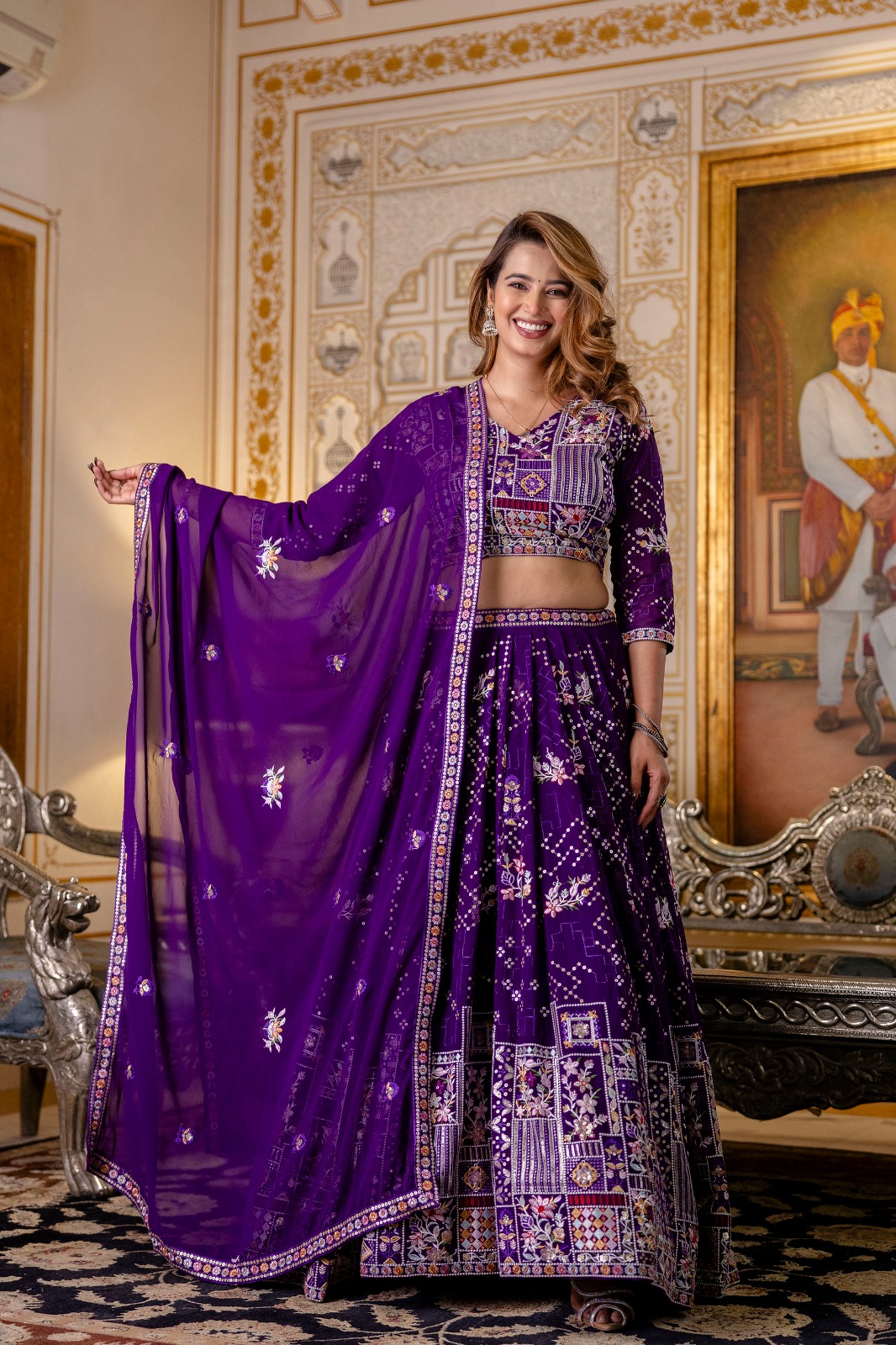
The outer layer may feel airy against the hands while the inner lining controls how the garment feels against the body. A smooth lining can reduce friction and prevent the skirt from catching on hosiery or footwear. A rough seam, stiff waistband or poorly finished hem can cause discomfort even when the georgette itself feels soft.
Georgette is also less forgiving of static and cling than a heavier fabric. Dry indoor air, synthetic underlayers and friction can make a skirt gather around the legs. A cotton or breathable slip, when compatible with the garment's transparency and fit, can reduce cling. Avoid adding a bulky underskirt unless the design has enough room to accommodate it, because extra volume can alter the intended fall.
Which details should be checked for comfort?
The most useful comfort checks are waistband pressure, blouse armhole depth, lining coverage, seam finishing and the weight of the dupatta.
- Waistband: A broad, properly fitted waistband distributes pressure better than a narrow elastic edge. Sit down while wearing the skirt to check whether the waistband digs into the waist.
- Blouse: Raise both arms and rotate the shoulders. Tight armholes can become uncomfortable during dancing even when the blouse looks well fitted while standing.
- Lining: Check whether the lining reaches the hem and whether it's opaque enough for the venue's lighting. A short lining can create an unintended contrast when the skirt sways.
- Dupatta: Sequins and dense borders add visual richness but also weight. A lighter dupatta may be easier to pin for a long ceremony.
- Footwear clearance: The hem should clear the floor by a small, safe margin when worn with the intended heels. Georgette can catch under a shoe if the length is excessive.
Ready-to-wear proportions can simplify dressing, while semi-stitched designs allow more adjustment. Semi Stitched Lehenga and Unstitched Blouse may suit shoppers who need a customised blouse or skirt fit, but tailoring time and a trial fitting should be included in the purchase plan.
How the Fabric Moves, Feels and Photographs for Georgette Lehengas in photographs
Georgette photographs well because its surface creates soft folds that show changes in light without producing the hard reflections associated with highly glossy fabrics.
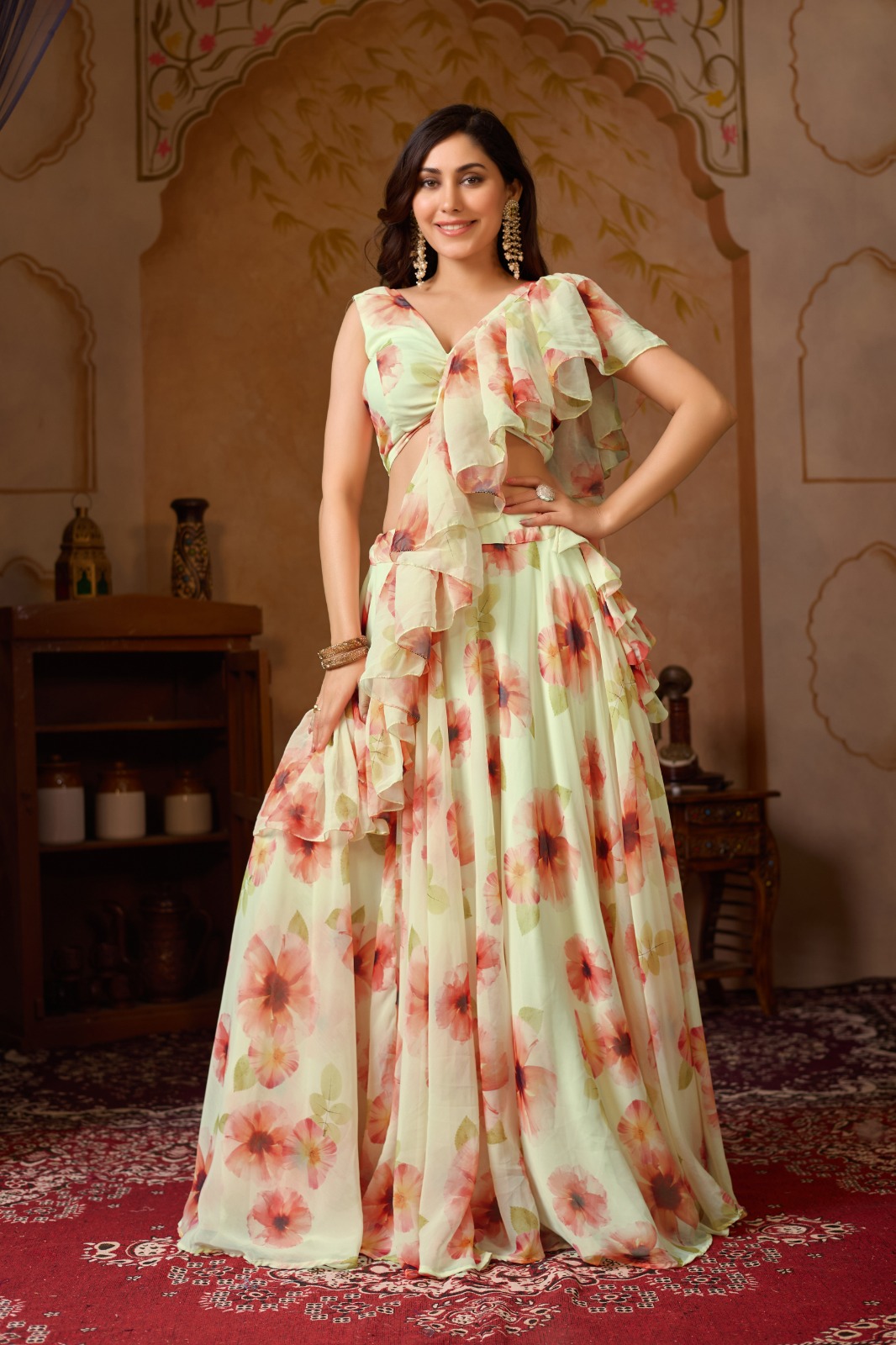
In a still photograph, fabric movement is communicated through diagonal folds, a lifted hem, a curved dupatta edge or the spacing between skirt panels. Georgette naturally forms these cues when the wearer takes a step or turns slightly. Blue Floral Georgette Lehenga Set with Heavy Flare gives the camera more visible fabric area and can make a walking photograph feel dynamic.
Floral prints and thread embroidery create visual direction. A viewer can follow a vine, border or motif from the waist towards the hem, which adds depth to a front-facing image. Sequins produce brighter points of light, especially when the photographer uses flash or places the subject near a warm spotlight.
Which lighting reveals georgette texture?
Side lighting reveals georgette folds most clearly, while direct front lighting produces a flatter appearance.
Ask the photographer to place the main light slightly to one side rather than directly above the subject. Side light creates small shadows in the crinkles and gathers, making the skirt's movement easier to read. Window light can work beautifully for daytime portraits, but harsh midday sunlight may deepen shadows under the waist and dupatta.
Warm lighting can enrich coral, red, pink and gold details, while cool lighting may make beige or ivory shades appear paler. Red Georgette Foil Embroidered Lehenga Set with Dupatta may show strong contrast under flash because foil embroidery reflects concentrated highlights. Test one photograph before a full shoot so that exposure can be adjusted.
A useful movement pose is a slow half-turn followed by stillness. The turn opens the skirt, and the pause gives the camera a sharp frame before the folds collapse.
How the Fabric Moves, Feels and Photographs for Georgette Lehengas during posing
The most flattering georgette poses introduce a small amount of movement without forcing the skirt into an unnatural spin.
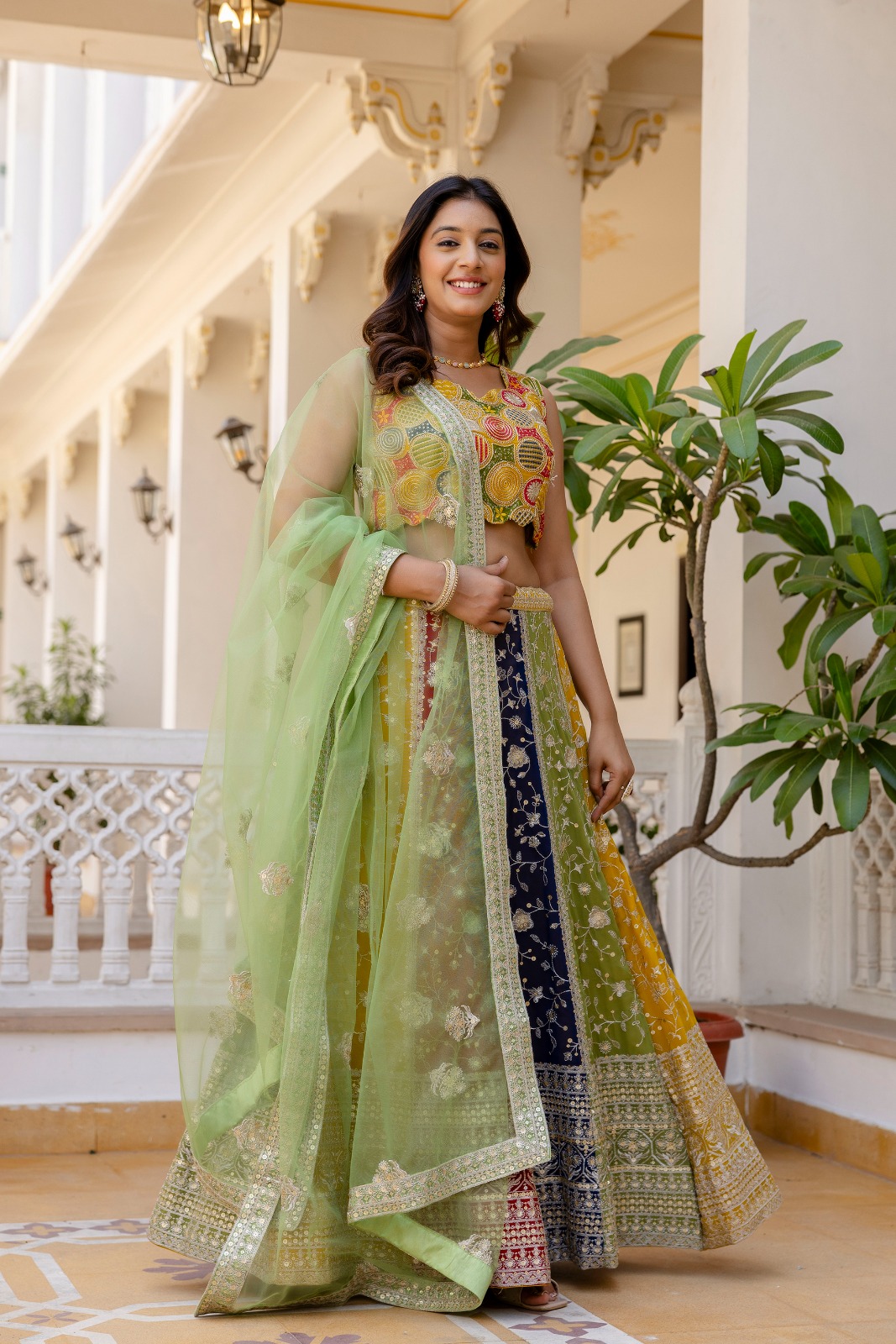
- Walking frame: Take two short steps towards the camera and let one hand hold a small section of the skirt. The lifted edge creates depth while preserving the fabric's natural fall.
- Half-turn: Turn the torso first and let the skirt follow. This creates layered folds instead of a flat, front-facing silhouette.
- Dupatta sweep: Move the dupatta across the body once, then pause. Repeatedly throwing it can disturb pins and hide the blouse embroidery.
- Seated pose: Arrange the skirt in a fan beside the chair rather than compressing all the fabric under the legs. Georgette photographs better when the folds remain visible.
- Close portrait: Keep the neckline, earrings and upper blouse in focus, while allowing a softly blurred georgette edge to enter the lower frame.
Very fast spinning can make a light skirt rise, twist the lining or expose footwear unexpectedly. A controlled turn is safer and usually produces a clearer photograph than a dramatic full rotation.
For a coordinated bridesmaid group, vary the direction of each person's pose instead of making everyone hold the same skirt position. One person can walk, another can face three-quarters towards the camera and a third can arrange the dupatta. Different fabric angles create a richer group photograph without requiring exaggerated movement.
How the Fabric Moves, Feels and Photographs for Georgette Lehengas across colours
Colour photographs differently according to saturation, reflectivity, contrast and the surrounding background.
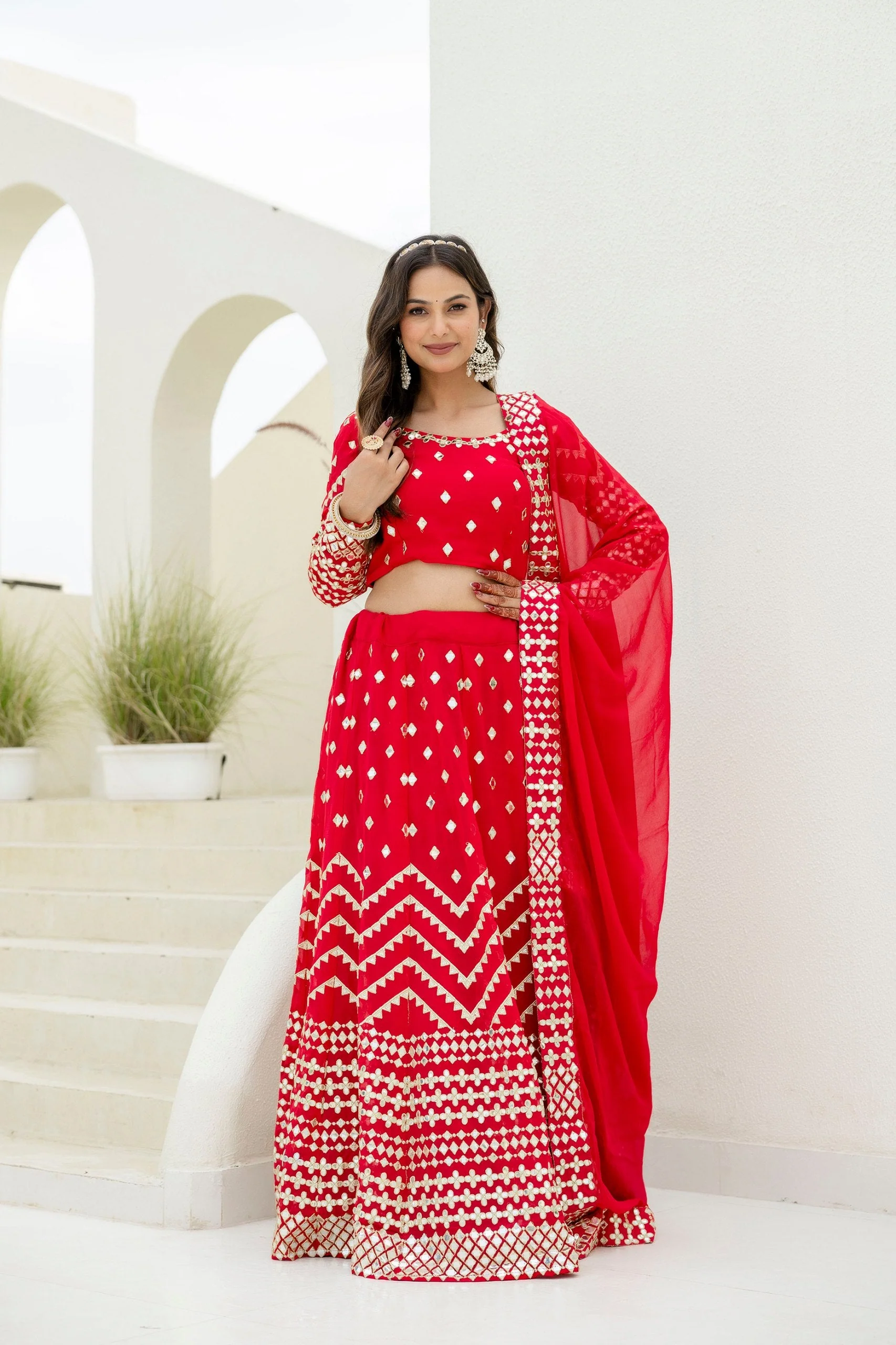
Pastel georgette tends to reveal soft folds and delicate floral details in daylight. Coral Bloom White Georgette Lehenga Set can create a fresh, high-contrast appearance against a darker indoor backdrop, while beige or champagne tones may need stronger separation from cream walls. Deep red and jewel tones usually hold their visual presence in evening photographs, although red can appear oversaturated under some phone cameras.
Sequins and foil work should be photographed from a slight angle when possible. A straight flash may create white hotspots that hide the design beneath them. A three-quarter pose allows reflective details to sparkle across several points instead of producing one large glare patch.
Photographs also exaggerate contrast between the skirt and the background. A pale lehenga can disappear against a white stage, while a very dark skirt may lose pleat detail behind a black backdrop. Ask for at least one image against a contrasting wall, curtain or floral installation.
The finish on Varnika Sequin Georgette Lehenga and Starfall Luxe Sequin Georgette Lehenga will look most dimensional when the camera catches several small reflections rather than one direct glare. Turning the shoulders slightly and lowering the chin can help the face remain visible when the blouse or dupatta contains reflective work.
How the Fabric Moves, Feels and Photographs for Georgette Lehengas before buying
The most reliable buying decision combines fabric information, garment measurements, lining details, embellishment placement and the event's practical demands.
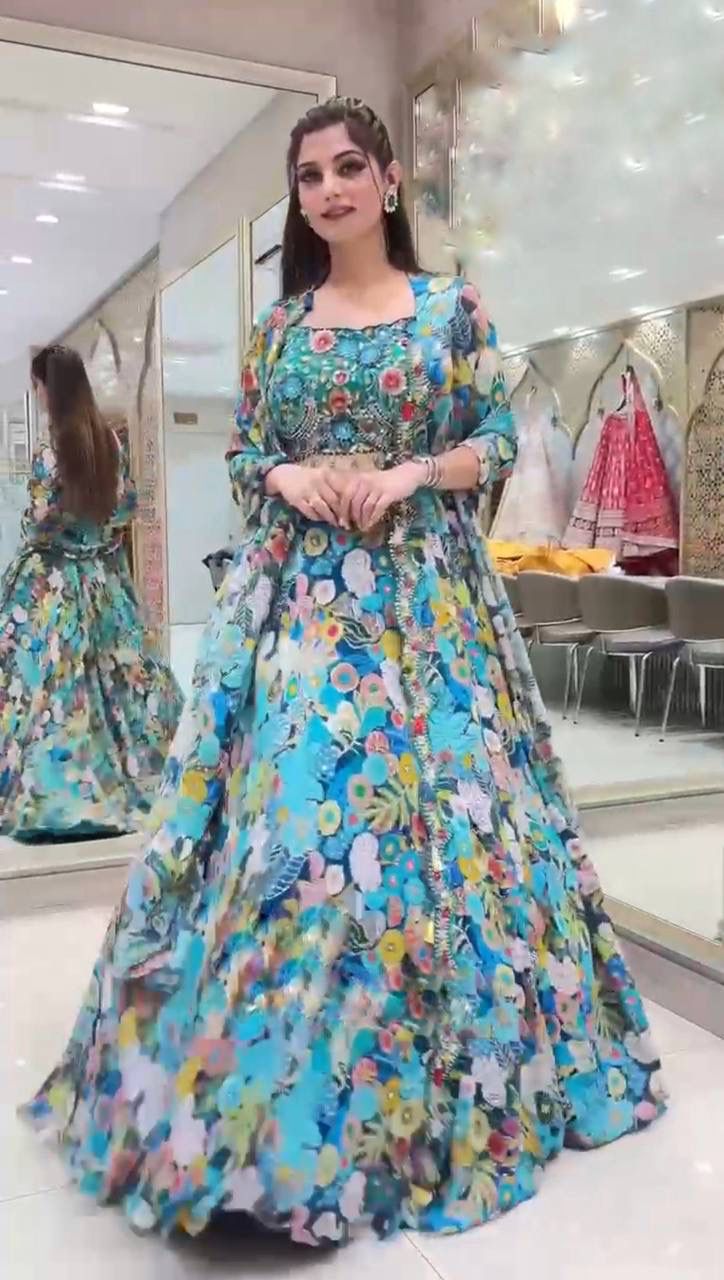
Begin by identifying the intended use. A light floral georgette lehenga may suit a daytime engagement or Haldi ceremony, while dense sequins and foil embroidery can make more sense for a reception or evening sangeet. A collection such as Georgette Lehengas Under 5500 with 50% Discount can help establish a budget, but price should be compared with construction details rather than treated as a substitute for them.
Compare the skirt's visual volume with the desired movement. A heavy-flare design offers more drama in photographs but needs more room while walking and sitting. A slimmer skirt takes less space in a crowded venue and can be easier to manage during travel. Bridesmaid Lehengas Under 5500 may be useful when several outfits need to remain visually coordinated without requiring identical silhouettes.
Check whether the garment is fully stitched, semi-stitched or supplied with an unstitched blouse. A semi-stitched skirt can accommodate some waist adjustment, but the final length still requires careful alteration. Ask a tailor to preserve the original hem balance when shortening a georgette skirt. Cutting too much from the lower edge can remove a border or disturb the placement of embroidery.
For shoppers comparing fabrics, Silk Lehengas Under 3000 and Net Lehengas Under 4500 with 51% Discount represent different movement expectations from georgette. Silk generally feels denser and may hold pleats more firmly, while net can create a more visibly structured or layered silhouette. A price comparison is useful only when the lining, surface work, skirt volume and tailoring requirements are also compared.
What should be checked when the lehenga arrives?
The first inspection should confirm colour, measurements, opacity, stitching and the security of embellishments before the outfit is worn outside.
- Photograph the garment in daylight and under indoor light to compare colour and transparency.
- Run a clean hand lightly over the embroidery to identify loose sequins, sharp thread ends or snagging points.
- Try the lehenga with the exact footwear, blouse undergarment and jewellery planned for the event.
- Walk, sit, climb a few steps and turn slowly to check hem safety and waistband comfort.
- Keep the care label and packaging until the fit and finish have been approved.
Georgette should generally be stored clean, dry and away from rough hooks or sharp jewellery. Fold embellished sections with soft tissue between layers, and avoid hanging a heavily decorated lehenga for very long periods if the garment's weight could stretch the shoulder or waistband area. Follow the care label for cleaning because dyes, foil, sequins and lining materials don't all respond identically to water or heat.
How the Fabric Moves, Feels and Photographs for Georgette Lehengas in one practical checklist
A georgette lehenga is ready for an event when the skirt moves freely, the lining remains comfortable, the hem clears the footwear and the surface work photographs without distracting glare.
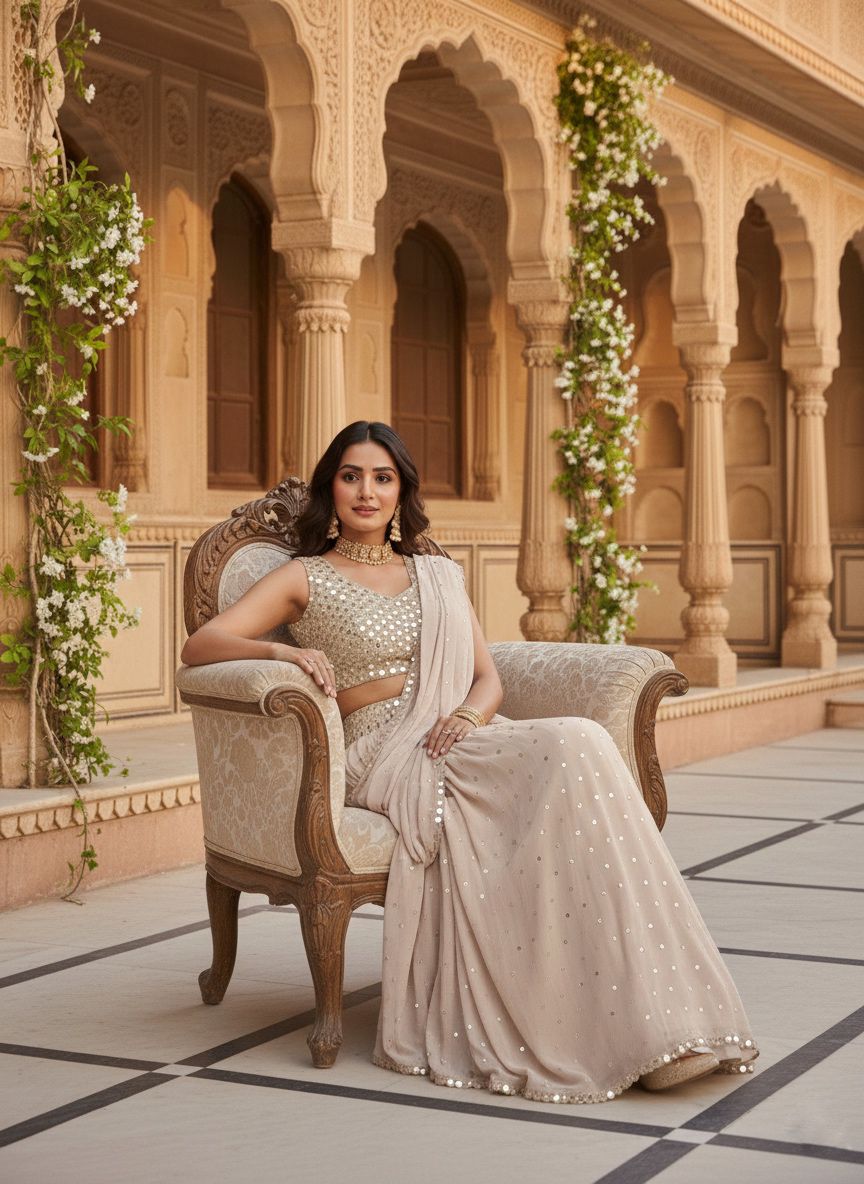
Use the following checklist during a final trial: walk for five minutes, sit for five minutes, raise both arms, complete one slow turn, inspect the hem under flash and take photographs from the front and three-quarter angles. These simple tests reveal problems that a static mirror check can miss.
Choose georgette when you want fluid movement, soft folds and a relatively light outfit, but select the flare and embellishment level according to the venue. A controlled silhouette often performs better than the most voluminous one when the celebration involves stairs, travel, dancing or a compact photo area. The best georgette lehenga is the one whose movement, feel and camera presence remain attractive after real hours of wear.
Common Questions About Georgette Lehenga Movement, Comfort and Photos
Is georgette comfortable for a lehenga worn all day?
Georgette can be comfortable for all-day wear because the outer fabric is lightweight and pliable. Comfort also depends on smooth lining, a correctly fitted waistband, breathable underlayers and a blouse that does not restrict the arms.
Does georgette give a lehenga enough flare?
Georgette can provide substantial flare when the skirt has multiple panels, a wide hem circumference or a supportive lining. Fabric alone does not determine volume, so check the silhouette, measurements and product photographs before buying.
Does georgette look good in wedding photographs?
Georgette photographs well at weddings because its soft folds show movement and respond gently to side lighting. Flash may create glare on sequins or foil embroidery, so a three-quarter pose and angled lighting usually show the surface work more clearly.
How can I stop a georgette lehenga from clinging to my legs?
A breathable slip or compatible cotton underlayer can reduce static and cling under a georgette skirt. Avoid bulky underskirts unless the garment has enough room, and keep synthetic layers to a minimum in dry indoor environments.
Is a georgette lehenga suitable for a Haldi ceremony?
A lightly embellished or floral georgette lehenga can suit a Haldi ceremony when easy movement and a lighter outfit are priorities. Avoid wearing heavily embellished pieces where turmeric, moisture or rough outdoor surfaces could damage delicate sequins and foil work.
How should a georgette lehenga be stored after an event?
Store a clean, completely dry georgette lehenga away from rough hooks and sharp jewellery. Fold heavily embellished sections with soft tissue between layers, and follow the care label before washing, steaming or pressing the garment.


