

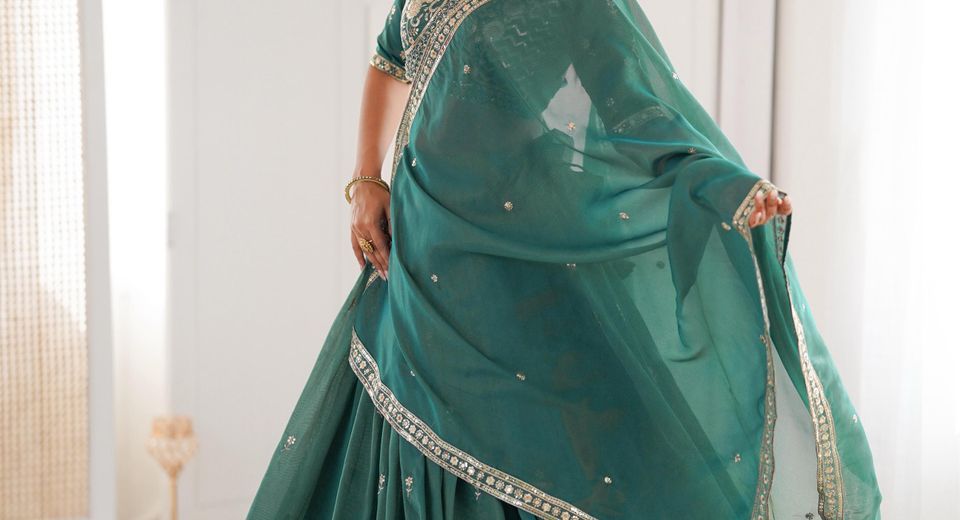
How Often Is Too Often for Dry-Cleaning Sarees, Lehengas and Heavy Suits? The practical answer is that Indian occasionwear should not automatically be dry-cleaned after every short use. A garment needs professional cleaning when sweat, food, makeup, body oil, smoke, rain or visible soil has reached the fabric. A clean outfit often needs only airing, inspection and careful storage.
A wedding lehenga worn for four hours in a cool indoor venue doesn't need the same treatment as a silk blouse worn through a humid Haldi ceremony. Repeated solvent exposure, pressing and mechanical handling can gradually dull colour, flatten surface texture, weaken delicate threads and loosen stitched or glued embellishment. A post-event inspection is more useful than a rigid cleaning ritual.
Start with the garment's condition
Dry-cleaning is too frequent when a clean, dry garment is sent for a full treatment after every brief wear. For most sarees, lehengas and heavy suits, one professional clean after several light wears, or after a genuinely dirty event, is safer than cleaning after every occasion.
Air a lightly worn outfit for 12 to 24 hours, inspect the lining and store the garment only when it's fully dry. A garment exposed to perspiration, rain, smoke, oily food or floor contact should be assessed promptly. Bridal lehengas and heavily embellished garments deserve extra caution because embroidery, zari, mirror work, sequins and layered linings may react differently to solvent, moisture and heat.
The label instruction "dry-clean only" describes the safest cleaning method when cleaning is necessary; it doesn't prescribe a frequency. A professional cleaner should inspect the fabric, dye, lining and ornamentation before deciding whether full cleaning, local treatment or low-heat pressing is appropriate.
What is a sensible starting schedule?
A sensible starting schedule is to air and inspect an outfit after every wear, spot-treat only when professionally appropriate, and consider full cleaning after two to four light wears or immediately after a visibly dirty event. The interval becomes shorter for garments worn in heat, humidity, crowded outdoor celebrations or food-heavy functions.
A simple four-hour indoor reception may leave a skirt clean while the blouse lining needs attention. A full day at a wedding may expose the hem, dupatta and sleeves to dust, perfume, perspiration and food. Cleaning decisions should therefore be made piece by piece rather than by assuming that every component requires the same treatment.
How Often Is Too Often for Dry-Cleaning Sarees, Lehengas and Heavy Suits after wearing them?
After wearing an Indian outfit, air each component in shade, remove loose debris, inspect high-contact areas and store the garment only when no dampness remains.
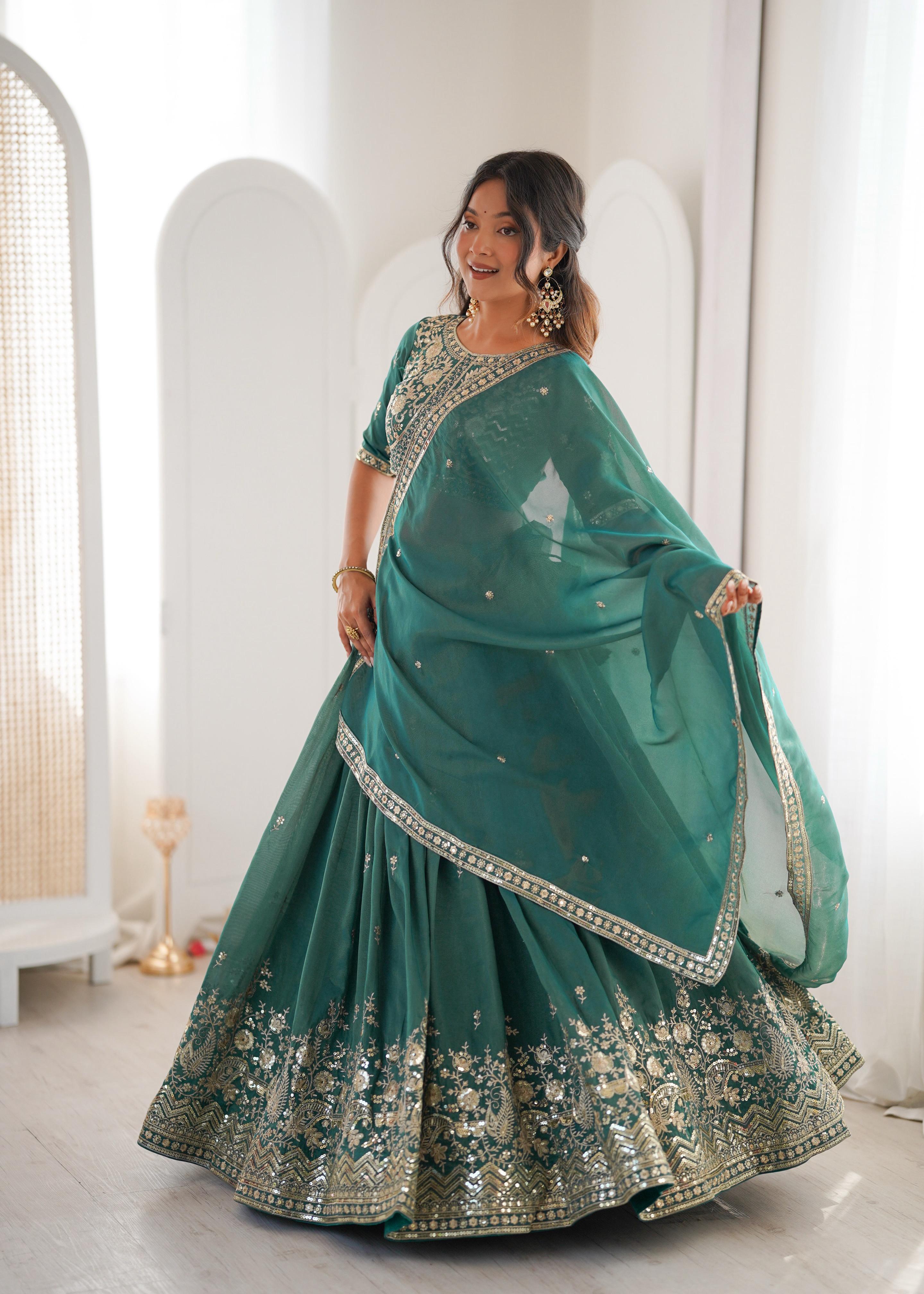
- Air the outfit: Hang the lehenga, saree or suit in a well-ventilated room for 12 to 24 hours. Keep the garment away from direct sunlight, kitchen smoke and damp bathrooms.
- Inspect the lining: Check the underarm area, neckline, waistband, cuffs and blouse back. These areas collect sweat and body oil sooner than the visible skirt or pallu.
- Remove surface particles: Shake the garment gently outdoors or use a very soft clothes brush on plain fabric. Do not brush directly across zari, mirror work, sequins or raised threadwork.
- Separate components: Air the dupatta, choli, skirt, blouse and underskirt separately. Folded layers can retain moisture and transfer dye or odour.
- Record marks immediately: Note whether a stain is oily, watery, coloured or cosmetic. Tell the cleaner what caused it because stain chemistry affects the treatment.
Never seal a recently worn outfit in a plastic garment bag. Plastic traps residual humidity and can encourage odour, mildew or colour transfer. A clean cotton muslin cover allows more air circulation while protecting the garment from dust.
don't spray perfume or deodorant directly onto silk, zari or embellished cholis. Allow fragrance, sunscreen and hair products to dry before dressing because liquid products can leave marks that become more difficult to remove after storage.
How Often Is Too Often for Dry-Cleaning Sarees, Lehengas and Heavy Suits by fabric?
Fabric determines the safest cleaning interval because silk, muslin cotton, georgette and synthetic blends tolerate handling, moisture and solvent differently.

Silk sarees and silk lehengas
Silk should be professionally cleaned when soiled, but not routinely after every brief wear. Natural silk can lose softness or surface lustre through repeated cleaning and high-heat pressing, while perspiration can damage fibres if left untreated for weeks.
Designer Threadwork Silk Lehenga Choli Set with Dupatta illustrates why a fabric-and-embellishment inspection matters. Threadwork can catch on rough hangers, and the silk base may show pressure marks if folded tightly. Air the set after use, keep the dupatta separate and ask for a specialist silk process when a stain appears.
Silk sarees should be stored folded with acid-free tissue or clean, unbleached cotton between major folds. Refold the saree every few months so permanent crease lines don't form in one place. Avoid spraying perfume directly on silk because alcohol, colourants and oils can create pale or dark spots.
Muslin cotton lehengas and suits
Muslin cotton can often be aired and spot-treated between professional cleans, but sweat and food marks should not be left until the next season. Cotton may absorb liquid quickly, and untreated stains can oxidise and become harder to remove.
Festive Multicolor Muslin Cotton Lehenga Choli Set and Premium Black Muslin Cotton Lehenga Choli Set require colour-aware care because multicolour surfaces and deep black dyes may behave differently. Do not soak a structured or embellished muslin lehenga at home unless the care label specifically permits washing. Water can cause uneven shrinkage, bleeding or distortion in the lining and embroidery.
Plain, washable cotton garments are a separate case from embellished muslin occasionwear. A professional cleaner can distinguish between a washable cotton base and a garment whose trims, lining or dye make home washing risky.
Georgette and fluid fabrics
Georgette should be cleaned only when necessary because repeated agitation and pressing can affect drape, surface texture and attached decoration. Lightweight georgette also benefits from broad, padded hangers that don't create shoulder points.
Blue Floral Georgette Lehenga Set with Heavy Flare demonstrates a storage issue that's easy to miss: a full flare places weight on the waistband and seams. Do not hang the entire set from a thin decorative loop for months. Fold the skirt loosely with tissue, support the blouse separately and avoid stacking heavy boxes on top.
How Often Is Too Often for Dry-Cleaning Sarees, Lehengas and Heavy Suits with embellishment?
Embellished garments usually require less routine cleaning and more careful inspection because every cleaning cycle can stress decoration and the base fabric.

Mirror work, zari, metallic thread, beads and sequins may scratch, tarnish, loosen or snag during mechanical cleaning. Adhesive-backed elements can also weaken from heat or solvent. Vibrant Mirror Work Muslin Lehenga Choli Set Online should therefore be shown to a cleaner before treatment, with the mirror work and any loose trims pointed out distinctly.
Turning a garment inside out isn't automatically safer. Inside-out cleaning can protect surface decoration in some cases, but a cleaner must first confirm that the lining, dye and construction can tolerate the selected process. A mesh laundry bag is suitable for some washable casual items, not a universal solution for a structured lehenga.
For Beige Mirror Work Ready to Wear Saree with Blouse, inspect the blouse underarms and the saree edge separately. A small mark on the blouse may justify local treatment rather than cleaning the entire saree. Light beige fabric can show water rings, so home dabbing with plain water isn't always harmless.
How Often Is Too Often for Dry-Cleaning Sarees, Lehengas and Heavy Suits after stains?
A garment should go to a professional cleaner promptly when it has visible oil, makeup, food, sweat, rainwater marks, smoke odour, dye transfer or mould risk.
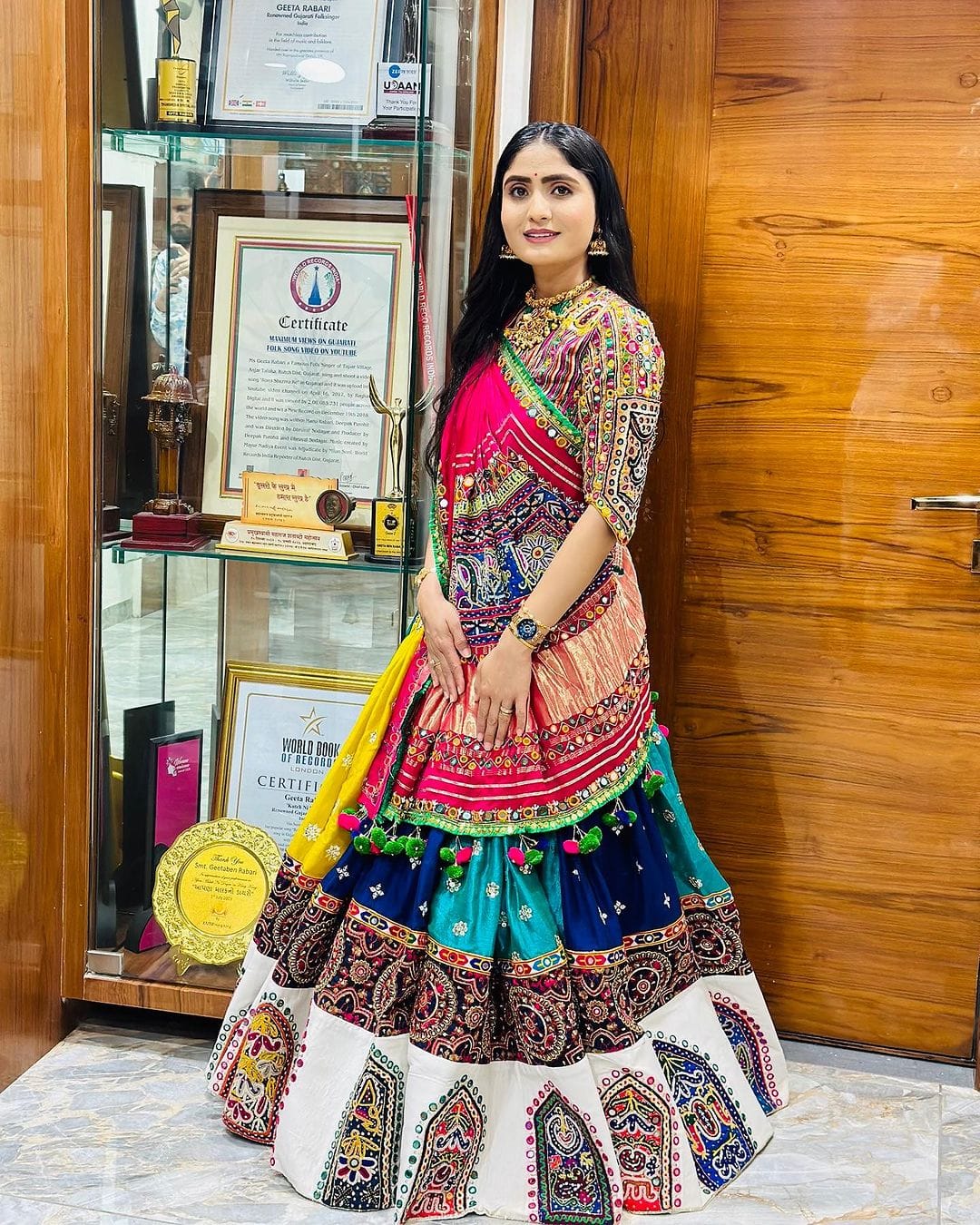
- Oil and ghee: Blot without rubbing and identify the spot before storage. Heat from an iron can set oily residue permanently.
- Foundation and lipstick: Avoid micellar water, makeup remover and wet wipes unless a textile professional approves them. Cosmetic solvents can spread pigment into silk or georgette.
- Perspiration: Do not leave a sweat-damp blouse inside a closed box. Air the blouse first, then seek cleaning if odour or discolouration remains.
- Rain and damp floors: Dry the outfit flat or on a suitable hanger in shade. Do not pack the outfit while damp.
- Haldi and mehendi: Haldi ceremony turmeric, mehendi paste and coloured powder should be reported specifically. Rubbing can drive pigment deeper into the weave.
- Mildew: Isolate the affected garment from the wardrobe and get professional advice. Brushing mould indoors can spread spores and stain particles.
don't iron over a stain, spray deodorant onto an embellished bodice or scrub a mirror-work panel with a toothbrush. A clean white cloth can be used to blot a fresh liquid spill gently, but rubbing and repeated wetting often enlarge the mark.
Tell the cleaner whether a mark came from oil, turmeric, lipstick, mehendi, wine, mud or water. The cause helps determine whether a solvent, controlled moisture treatment or another process is appropriate. Request a colourfastness test when a garment has contrasting panels or saturated dye.
How Often Is Too Often for Dry-Cleaning Sarees, Lehengas and Heavy Suits in bridal storage?
Bridal and ready-made lehengas should be stored clean, completely dry, lightly supported and protected from light, dust and compression.

Ready Made Lehenga garments are convenient for wedding shopping because a fully stitched choli reduces alteration time, but the finished construction also needs careful storage. Never hang a heavy skirt from a narrow decorative loop if the weight pulls at one seam. Use a padded hanger for the blouse and fold the skirt across a broad support with acid-free tissue.
Bridal outfits should be inspected before long-term storage, not merely folded after the reception. Remove pins, artificial flowers, safety pins and detachable jewellery. Metal accessories left against fabric can create rust marks or pressure damage. Store each major piece in a separate breathable cover, leaving enough space for air circulation.
White Digital Print Festive Lehenga Choli Set and Vibrant Multicolor Navratri Lehenga Choli Set also show why colour should guide storage. Keep bright and dark garments separated, particularly when humidity is high. Avoid newspaper because ink can transfer to light fabric, and avoid airtight plastic boxes unless a textile conservator specifically recommends them.
For long-term storage, inspect the garment every three to six months. Refold heavy skirts along different lines, check for insects and confirm that no moisture or musty smell has developed. Cedar or neem products may deter insects, but they should not touch the fabric directly because oils can stain delicate textiles.
How Often Is Too Often for Dry-Cleaning Sarees, Lehengas and Heavy Suits when shopping?
When shopping for a readymade, designer or bridal lehenga, ask about the fibre, lining, embellishment attachment, cleaning method and storage requirements before purchase.

Fully stitched choli shopping is easier when the fit and care demands are considered together. Ask whether the choli can be altered without disturbing threadwork, whether the skirt has a detachable can-can or lining, and whether the dupatta contains fragile borders. A garment that fits perfectly but can't be safely cleaned after a wedding may require more maintenance than expected.
Collections such as Mehendi Lehengas, Yellow Lehengas and Green Lehengas often suit daytime celebrations, but colour intensity and ceremony conditions still matter more than the category name. A yellow lehenga worn at a Haldi ceremony may need faster professional attention than a darker outfit worn briefly indoors because turmeric and moisture can settle into the fibres.
Semi Stitched Lehengas Collection pieces may allow more fitting flexibility, while a fully stitched outfit can be quicker for wedding dressing. Neither construction automatically needs more dry-cleaning. Cleaning frequency depends on fabric, lining, stains, sweat exposure and embellishment rather than whether a lehenga is designer, bridal, readymade or semi stitched.
A useful rule is simple: air after every wear, inspect before storing, treat stains promptly and professionally clean only when the garment has accumulated soil or odour. That approach preserves the colour, hand-feel, drape and decoration of occasionwear far better than sending every clean outfit to the cleaner by habit.
Common Questions About Dry-Cleaning Sarees, Lehengas and Heavy Suits
How often should a lehenga be dry-cleaned?
A lehenga should usually be dry-cleaned when it has visible soil, sweat, food, makeup, smoke odour or another stain, rather than automatically after every wear. A lightly worn, clean lehenga can often be aired for 12 to 24 hours and stored safely between professional cleanings.
Can a heavily embroidered lehenga be dry-cleaned after every wedding?
A heavily embroidered lehenga should not automatically be dry-cleaned after every wedding because solvent, mechanical handling and pressing can stress zari, sequins, beads, mirrors and threadwork. Ask a cleaner to inspect the garment and use spot treatment or airing when full cleaning is unnecessary.
How should I care for a silk lehenga after wearing it?
Air a silk lehenga in shade for 12 to 24 hours, inspect the blouse lining and skirt for sweat or stains, and store the pieces with clean cotton or acid-free tissue. Use a specialist silk cleaner when a mark appears, and avoid home soaking, direct perfume and high-heat ironing.
Can I wash a muslin cotton lehenga at home?
A muslin cotton lehenga can be washed at home only when the care label confirms that washing is safe and the garment has no vulnerable lining or embellishment. Structured or embroidered muslin garments may bleed, shrink or distort, so professional assessment is safer.
How do I remove Haldi stains from a lehenga?
Haldi stains should be reported to a professional cleaner promptly rather than scrubbed at home. Blot loose moisture without rubbing, keep the garment away from heat and explain that the mark contains turmeric because treatment depends on the dye and fibre.
Is dry-cleaning safe for mirror-work and zari lehengas?
Dry-cleaning can be safe for mirror-work and zari lehengas when the cleaner examines the construction and selects a compatible process. Point out loose mirrors, metallic thread, beads, sequins and adhesive trims before treatment, and never assume that turning the garment inside out eliminates the risk.


