

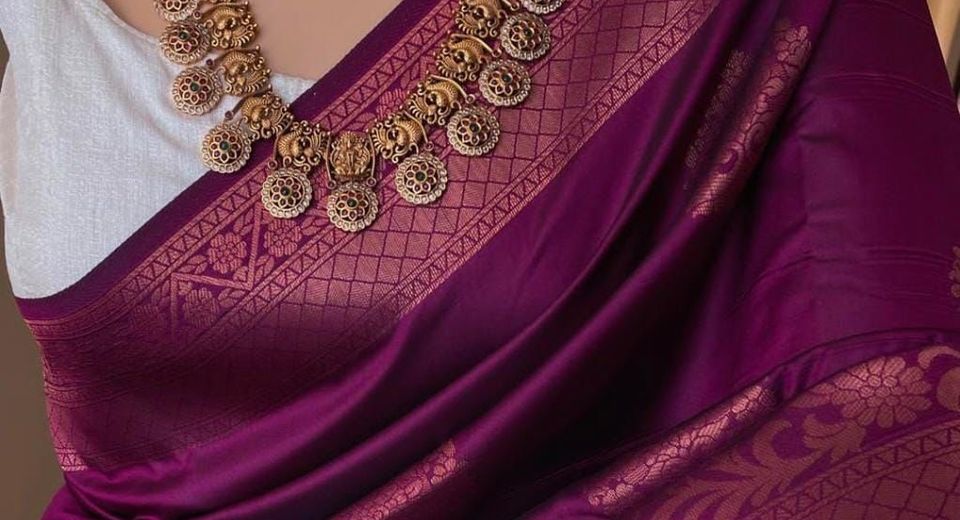
How Narrow Border vs Wide Border Saree Change With Height and Occasion becomes easier to judge when the border is treated as a proportion-setting detail rather than a small decorative strip. A border creates a horizontal line, changes the apparent length of the lower body, and influences how formal a saree feels. A 1-2 inch border usually keeps the saree body visually continuous, while a 4-8 inch border creates a stronger frame around the hem and pallu. Height, pleat width, fabric weight, blouse length and the event itself all determine which proportion looks most balanced.
How Narrow Border vs Wide Border Saree Change With Height and Occasion for Different Heights
Narrow borders generally preserve visual length, while wide borders divide the silhouette more clearly. The effect comes from where the eye notices horizontal lines, not from a fixed rule about body shape. A border near the ankle can make the lower portion appear shorter when the colour contrast is strong, while a low-contrast border can add definition without creating a dramatic break.
Height matters because a wide border occupies a larger percentage of a shorter visible drape. On a person around 150-158 cm tall, a 6-inch border may dominate the lower half, especially with a short blouse and high heels. On a person around 165 cm or taller, the same border can look more proportionate because there's more vertical space for the border, pleats and pallu to share.
Border width is only one part of the outfit's proportion. A long pallu, high-waist drape, narrow pleats and a blouse ending near the natural waist can add vertical continuity. A contrasting blouse, broad waistband, large necklace and very wide border create more horizontal interruptions. Evaluate the complete drape instead of choosing a border from a product photograph alone.
How Narrow Border vs Wide Border Saree Change With Height and Occasion for Petite Frames
Narrow borders, medium borders of about 2-4 inches and low-contrast edging usually create the most uninterrupted length on a petite frame. A narrow border saree in a fluid fabric can be useful when the wearer wants the saree to look light and elongated. A slimmer, neatly pleated pallu also reduces visual width around the torso.
A wide border can still suit a shorter frame when the border belongs to a monochromatic design. A peach saree with a peach or muted blue border creates less visual division than a black border against a pale saree body. A blouse close in colour to the saree body or border helps the wide edge look intentional rather than overpowering.
How Narrow Border vs Wide Border Saree Change With Height and Occasion for Tall Frames
Taller frames can usually carry borders from 4-8 inches without losing the saree's overall balance. A broad zari border, substantial pallu and slightly longer blouse can ground a tall silhouette. Tall wearers can also use contrast borders confidently because the outfit has more vertical length to absorb the horizontal line.
Very tall wearers should check saree length before choosing a dramatic border. A standard 5.5-metre saree may leave insufficient fabric for generous pleats and a full pallu, particularly for a wearer above 175 cm or someone who prefers a low-waist drape. A 6-metre saree gives more room for a broad border to remain visible at the hem without making the pallu too short.
How Narrow Border vs Wide Border Saree Change With Height and Occasion in Everyday Dressing
Narrow borders are usually the more versatile choice for work, college, daytime gatherings and repeated wear. A border of 1-3 inches gives the saree a finished edge without making the outfit feel heavily ceremonial. Narrow borders also allow floral prints, checks, stripes and textured weaves to remain the main visual feature.
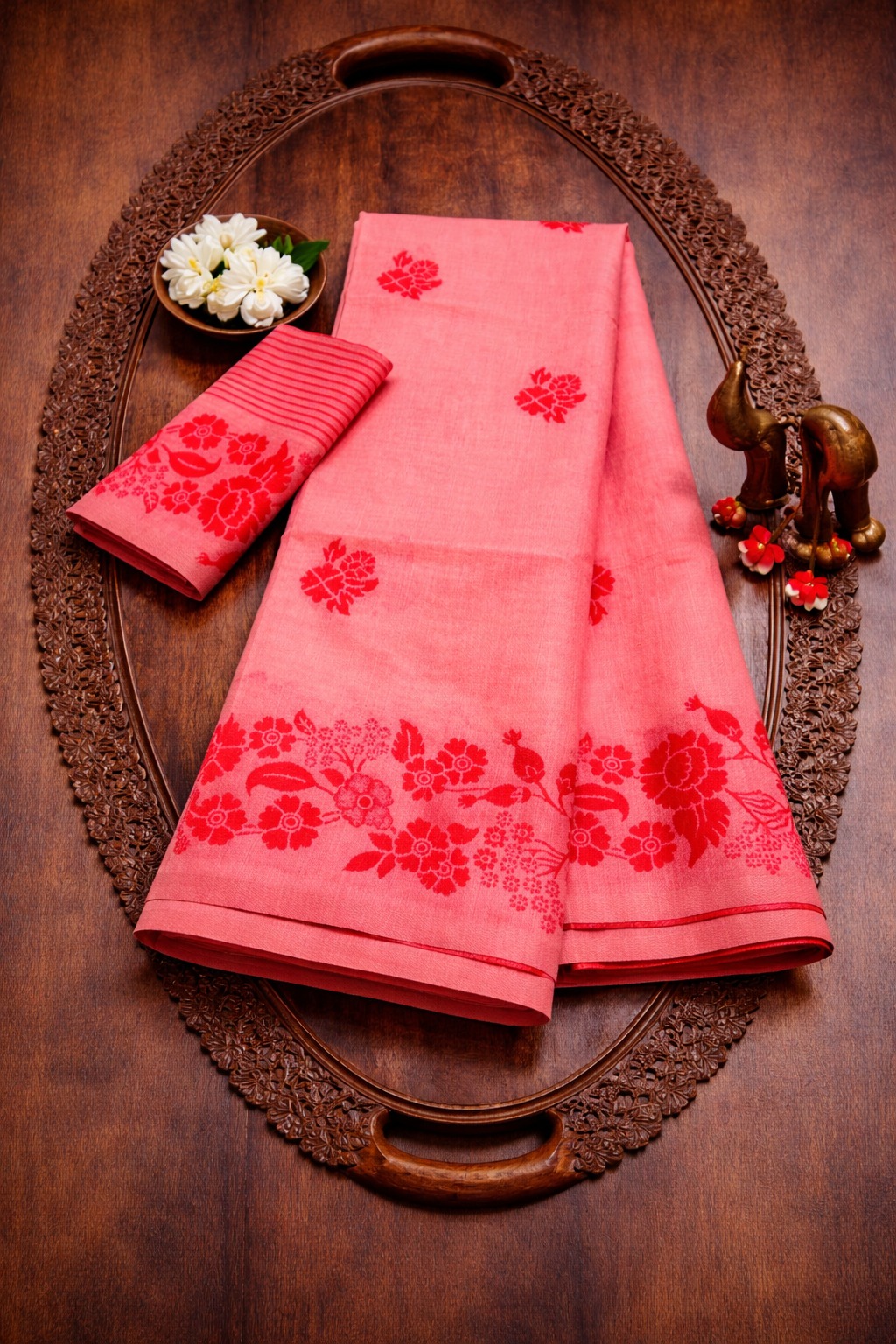
Linen cotton demonstrates this balance particularly well. Pastel Linen Cotton Floral Print Saree with Designer Blouse uses a soft printed surface where a restrained edge can support the print instead of competing with it. Peach Linen Cotton Floral Print Saree with Blouse for Women follows a similar daytime direction: the gentle colour and modest border suit lunch, office celebrations and summer family visits.
Light fabrics often benefit from a narrow or medium border because a very heavy edge can pull the saree downward. Linen cotton, cotton silk and lightweight Chanderi crease and fall differently from Banarasi silk. A border woven with dense zari may also make a light saree less fluid at the ankle. Check whether the border is printed, woven, embroidered or zari-based before judging it only by its measurement.
How Narrow Border vs Wide Border Saree Change With Height and Occasion When Draped
A narrow border looks most polished when the hem remains visible and the pleats are evenly spaced. Make 6-8 front pleats of similar width, secure them at the waist, and adjust the length so the lower border sits close to the floor without dragging. A slim, sharply folded pallu reinforces the vertical effect, while an open pallu creates more volume around the shoulder.
Office dressing benefits from a pinned pallu and relatively narrow front pleats. A casual Haldi ceremony allows a freer pallu, provided the shoulder is secured near the blouse seam and the footwear is comfortable. A narrow border doesn't require minimal jewellery; it simply gives larger earrings, a statement blouse or a printed fabric more room to remain visible.
The collections Sarees from Rs 1000 to Rs 1500 and Sarees Under 20% Off can be useful starting points for comparing narrow borders across printed and lightweight sarees. Price should not be treated as a substitute for checking fabric, border construction and care instructions.
How Narrow Border vs Wide Border Saree Change With Height and Occasion for Formal Events
Wide borders are particularly effective for weddings, religious ceremonies, receptions and evening celebrations because a substantial edge communicates formality. Wide zari, brocade, temple motifs and contrasting woven borders can make a plain saree look ceremonially complete. A broad border also gives the hem and pallu a stronger photographic outline in group portraits and seated photographs.
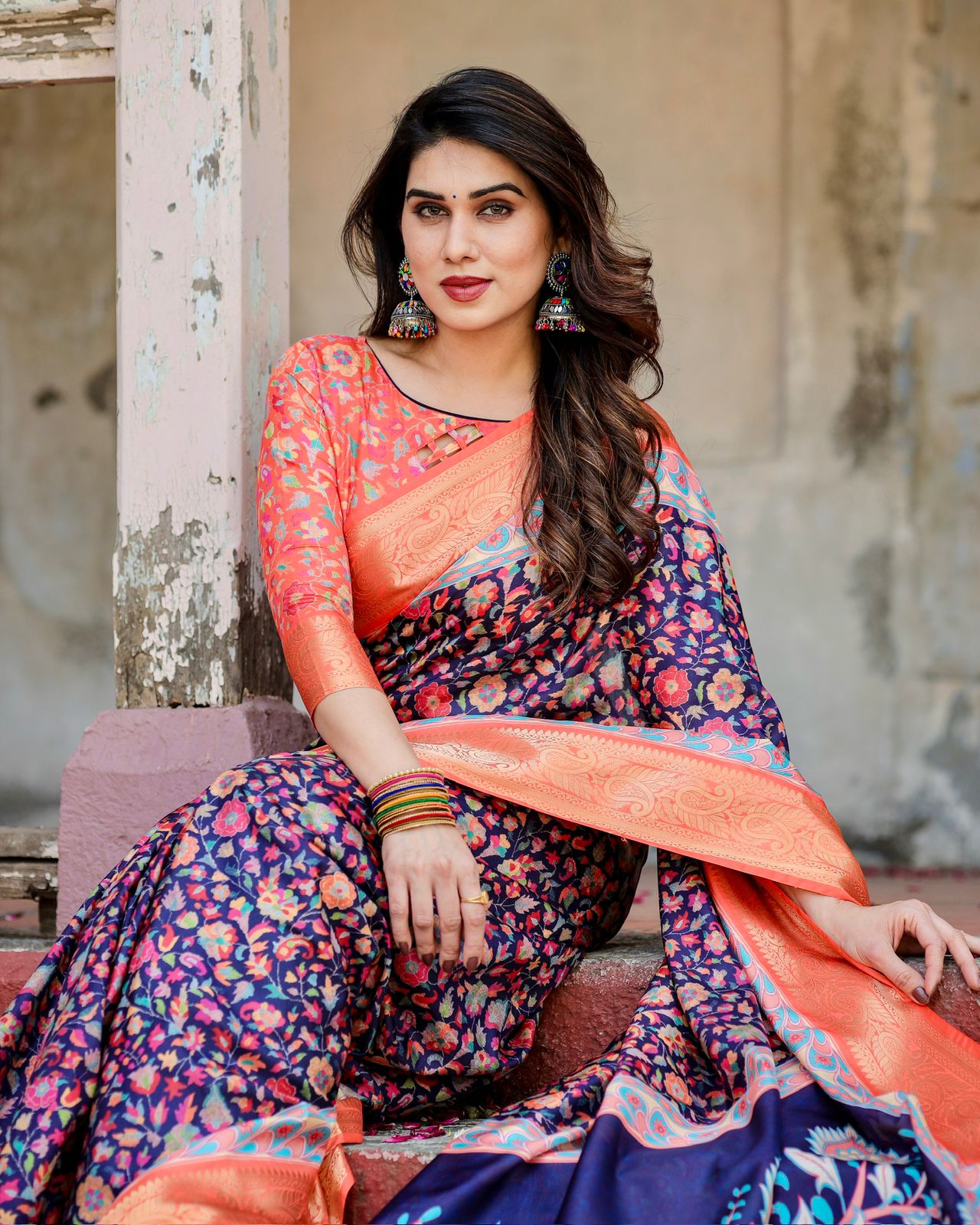
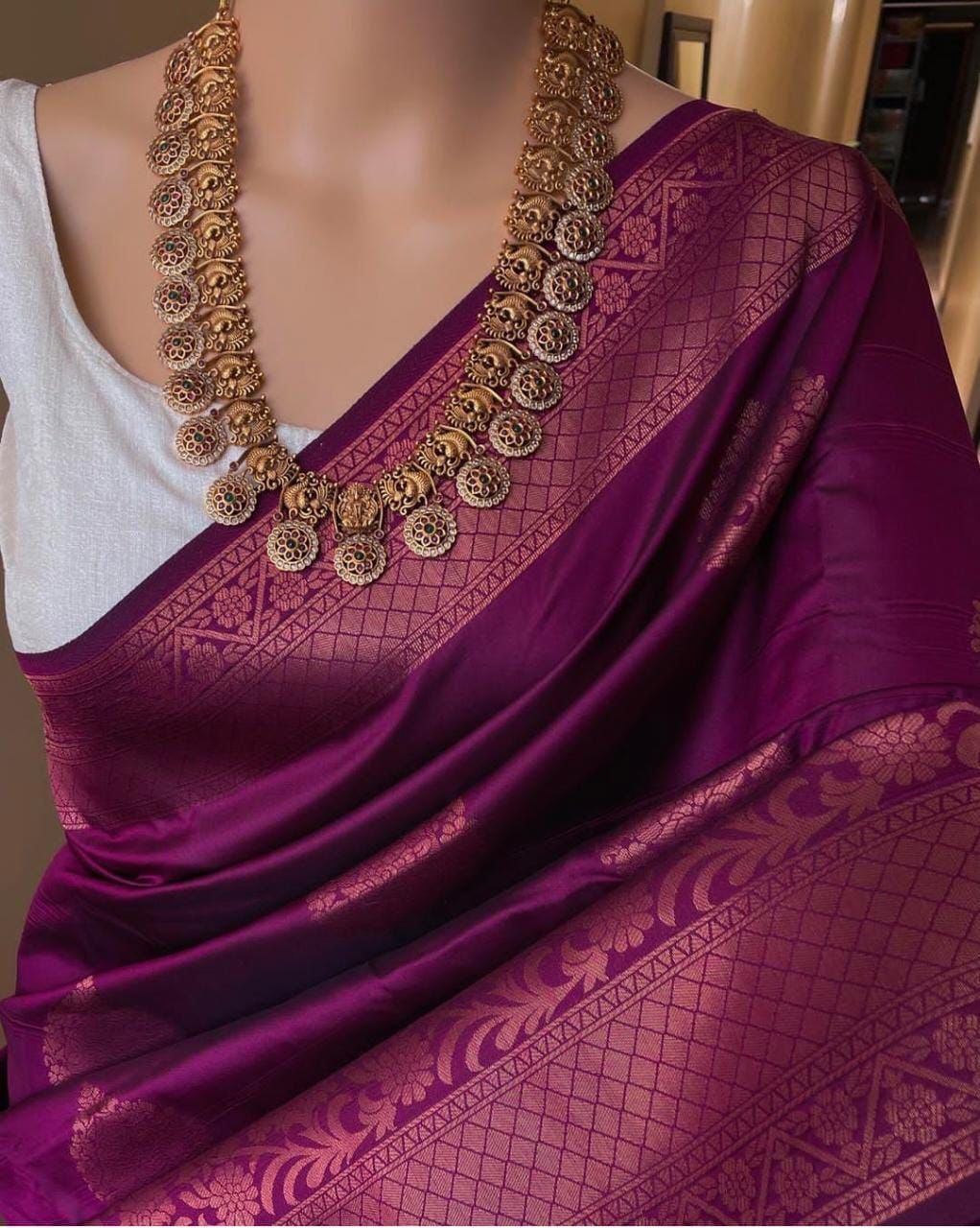
Pink Green Floral Silk Saree with Zari Border Festive shows how a silk base and zari edge can move a floral design toward celebration wear. Navy Blue Floral Silk Saree with Peach Zari Border creates a stronger colour frame, making it suitable for a festive dinner or wedding function where contrast is welcome. Wine Banarasi Silk Saree With Rich Zari Border Work has the visual weight expected from a traditional evening or wedding wardrobe, particularly with gold-toned jewellery.
A wide border doesn't automatically make a saree suitable for a formal event. A 6-inch printed border in casual cotton may remain relaxed, while a 2-inch gold zari border on silk can feel highly festive. Read the border together with fabric, shine, motif scale, blouse construction and pallu detail. Banarasi silk, zari and rich brocade generally communicate more ceremony than a plain cotton edge of the same width.
How Narrow Border vs Wide Border Saree Change With Height and Occasion When Styled for Weddings
A wide border remains balanced when the saree has enough length, the pleats are not excessively bulky and the blouse doesn't create an unrelated horizontal line. Let the lower border sit close to the floor without covering it with a deep ankle fold. A controlled full-length pallu balances a broad hem better than a very short pallu.
Contrast works best when one colour from the border returns in the blouse or jewellery. A navy saree with a peach zari border can be paired with a peach, navy or neutral blouse to connect the colours. A wine Banarasi silk saree with a rich zari edge can support a blouse with related metallic thread, while an unrelated bright blouse may divide the outfit into too many colour blocks.
Sarees Under 10% Off, Sarees Flat 60% Off and Sarees Flat 50% Off may contain different border treatments, so discount percentage should not determine the occasion suitability of a saree. Compare the border width, zari density, lining, blouse fabric and expected care before making a purchase.
How Narrow Border vs Wide Border Saree Change With Height and Occasion Across Fabrics
Fabric weight changes how a border hangs, folds and occupies space. Linen cotton has a crisper fall and may show the border clearly in each pleat. Silk has more body and lustre, so zari or woven borders can appear wider under indoor lighting. Chanderi is light and translucent, while Banarasi silk is denser and more structured; the same 4-inch measurement won't produce the same visual effect in both fabrics.
Peach Floral Linen Cotton Saree with Beautiful Blue Border illustrates the styling value of a coloured edge on a breathable daytime textile. Pink Floral Linen Cotton Saree with Green Border for Ladies and Teal Floral Linen Cotton Saree with Elegant Contrast Border show how contrast can provide structure without metallic shine. These types of borders suit daytime functions for wearers who want definition without wedding-level grandeur.
Printed borders are generally lighter and more flexible than densely woven zari borders. Embroidered borders can add stiffness at the hem, especially when beads, sequins or layered threadwork are used. A wide border with heavy zari may require extra pinning and a petticoat with a firm waistband. A narrow printed border may need less support but can disappear if the saree is draped too low or the hem is folded inward.
How Narrow Border vs Wide Border Saree Change With Height and Occasion in Care Requirements
Printed or lightly woven narrow borders are usually easier to maintain for frequent wear because they add little weight and can often be washed according to the base fabric's care instructions. Zari borders need more cautious handling because friction, moisture, perfume and harsh detergents can dull metallic threads. Professional dry cleaning is generally safer for silk sarees with substantial zari or embellishment, subject to the garment label.
Store a heavy-border saree folded with soft cotton or muslin between the folds. Refold a stored saree every few months to reduce permanent crease lines, and keep zari away from direct contact with rough wooden shelves or plastic packaging. Air the saree in shade after wearing it, particularly after a humid wedding or Haldi ceremony, before storing it.
How Narrow Border vs Wide Border Saree Change With Height and Occasion in a Final Buying Check
The best border choice combines height, occasion, fabric behaviour and the amount of contrast visible in the complete outfit. Choose a narrow border when you want everyday versatility, a longer uninterrupted line or a lightweight drape. Choose a wide border when you want ceremonial definition, a stronger hemline or a saree that can hold its own with formal jewellery.
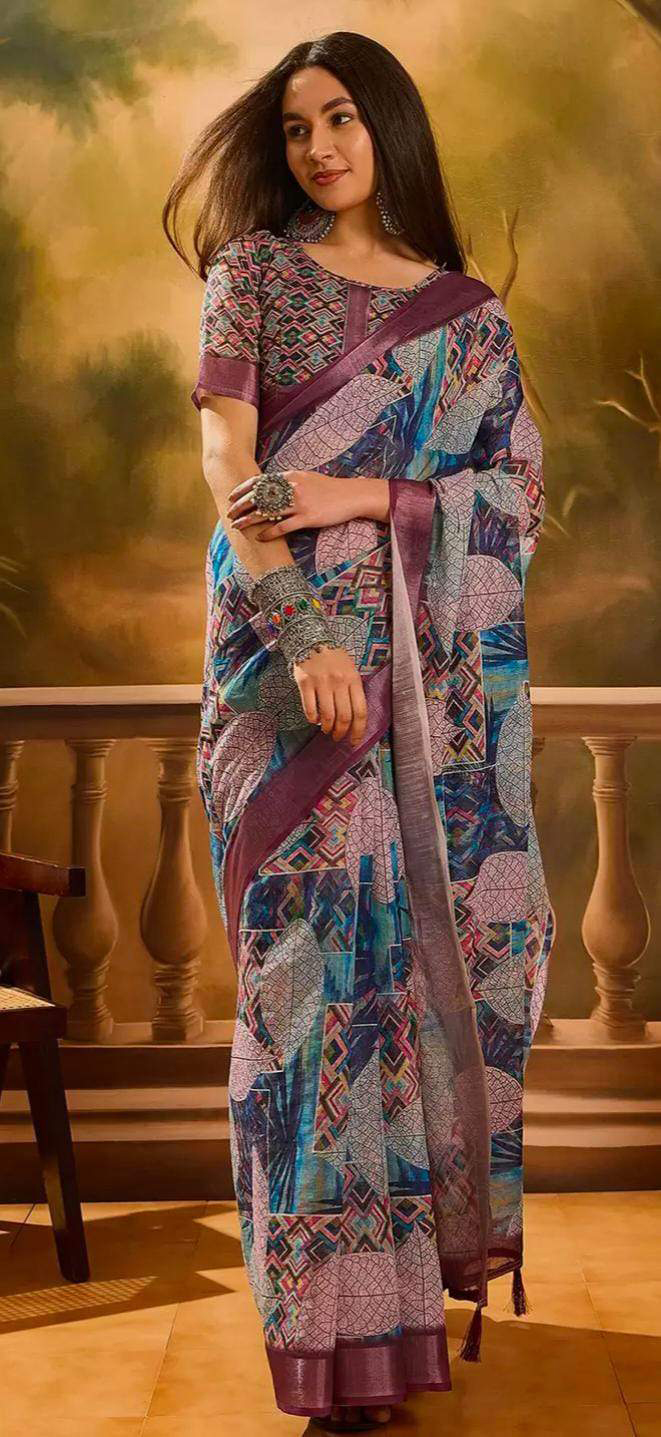
- Measure the visible border: check the actual width in inches rather than relying on terms such as broad, rich or elegant.
- Assess contrast: a 4-inch border close to the saree colour may look subtler than a 2-inch border in a sharply contrasting shade.
- Check fabric weight: compare linen cotton, Chanderi, silk and Banarasi silk because each fabric folds differently.
- Confirm saree length: consider whether 5.5 metres will provide enough pleats and pallu for your height and preferred drape.
- Match the blouse: repeat a border colour in the blouse or choose a close tonal shade to avoid unnecessary horizontal breaks.
- Plan the event: narrow borders suit work and daytime dressing, while zari-rich wide borders often suit weddings, receptions and festivals.
A mirror check should include the full saree, blouse, footwear and pallu rather than only the hem. Stand at least two metres away and observe whether the eye travels smoothly from shoulder to ankle. That simple test often reveals whether the border supports the wearer or becomes the only feature visible in the outfit.
Common Questions About Choosing Saree Border Width for Height and Events
Is a narrow border saree better for short height?
A narrow border saree often creates a longer, less interrupted visual line on a shorter frame. A medium 2-4 inch border can also work, especially when the border is close in colour to the saree body and the pallu is draped neatly.
Can tall women wear wide border sarees?
Tall women can usually wear wide borders of about 4-8 inches comfortably. Saree length, pleat volume and pallu size still matter, so a 6-metre saree may be more practical for a tall wearer who prefers a generous drape.
Are wide border sarees suitable for office wear?
Wide border sarees can suit office wear when the border is lightweight, understated and low in contrast. Dense zari, strong metallic shine and elaborate embroidery usually make a saree better suited to festive or formal events.
Which saree border is best for a wedding?
A wide zari, brocade or woven silk border usually suits a wedding because it gives the drape a more formal finish. A narrow zari border on Banarasi silk or another lustrous fabric can also work for a guest look when paired with an appropriate blouse and jewellery.
Does a contrasting border make a saree look shorter?
A strongly contrasting border can make the lower body appear visually shorter because it creates a noticeable horizontal break. The effect can be softened by choosing a longer pallu, a tonal blouse and a border that is medium rather than extremely wide.
How should a saree with a heavy zari border be stored?
A saree with a heavy zari border should be stored clean and completely dry, with soft cotton or muslin between folds. Refolding it every few months and keeping it away from rough surfaces, perfume and direct sunlight helps protect the metallic threads.


