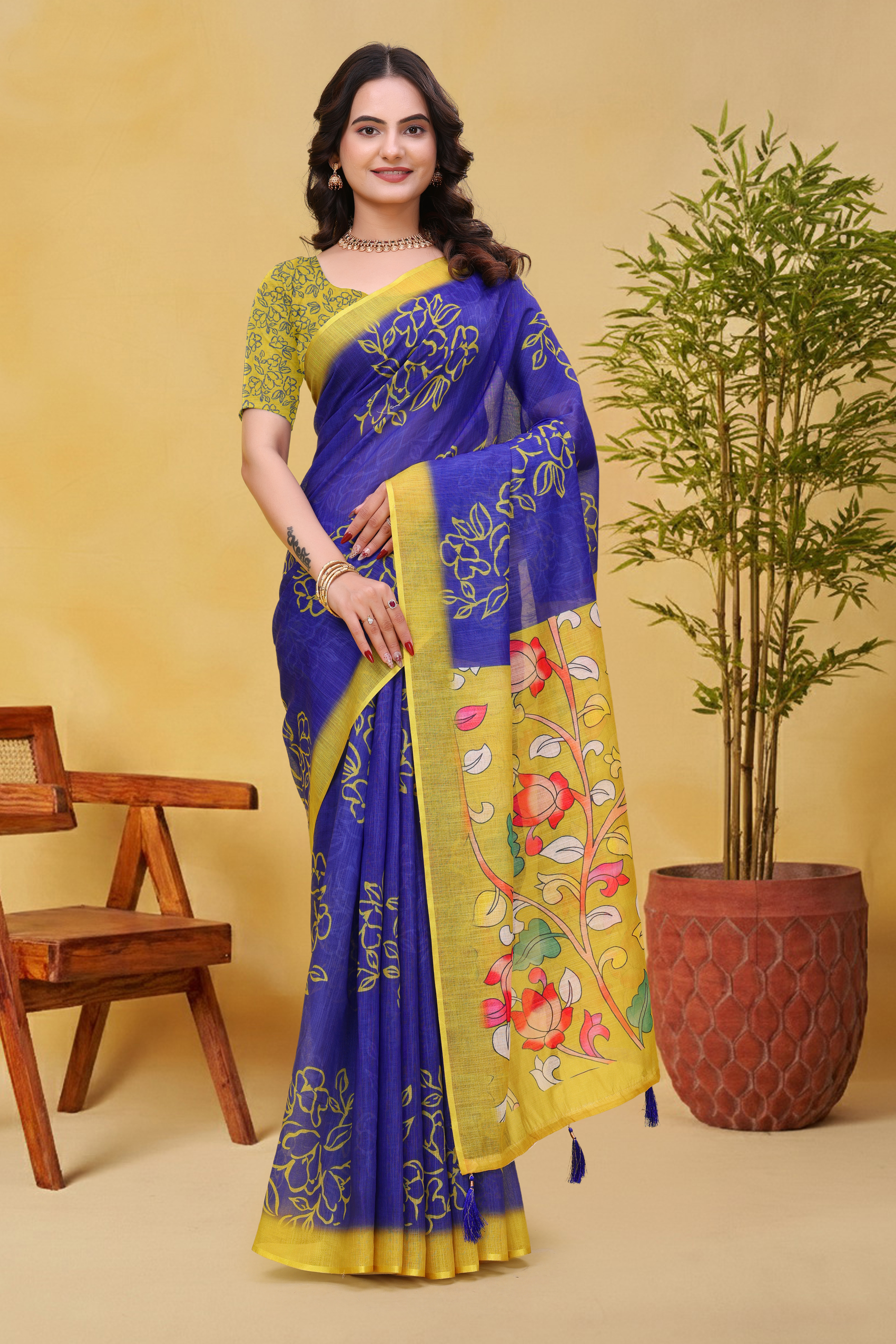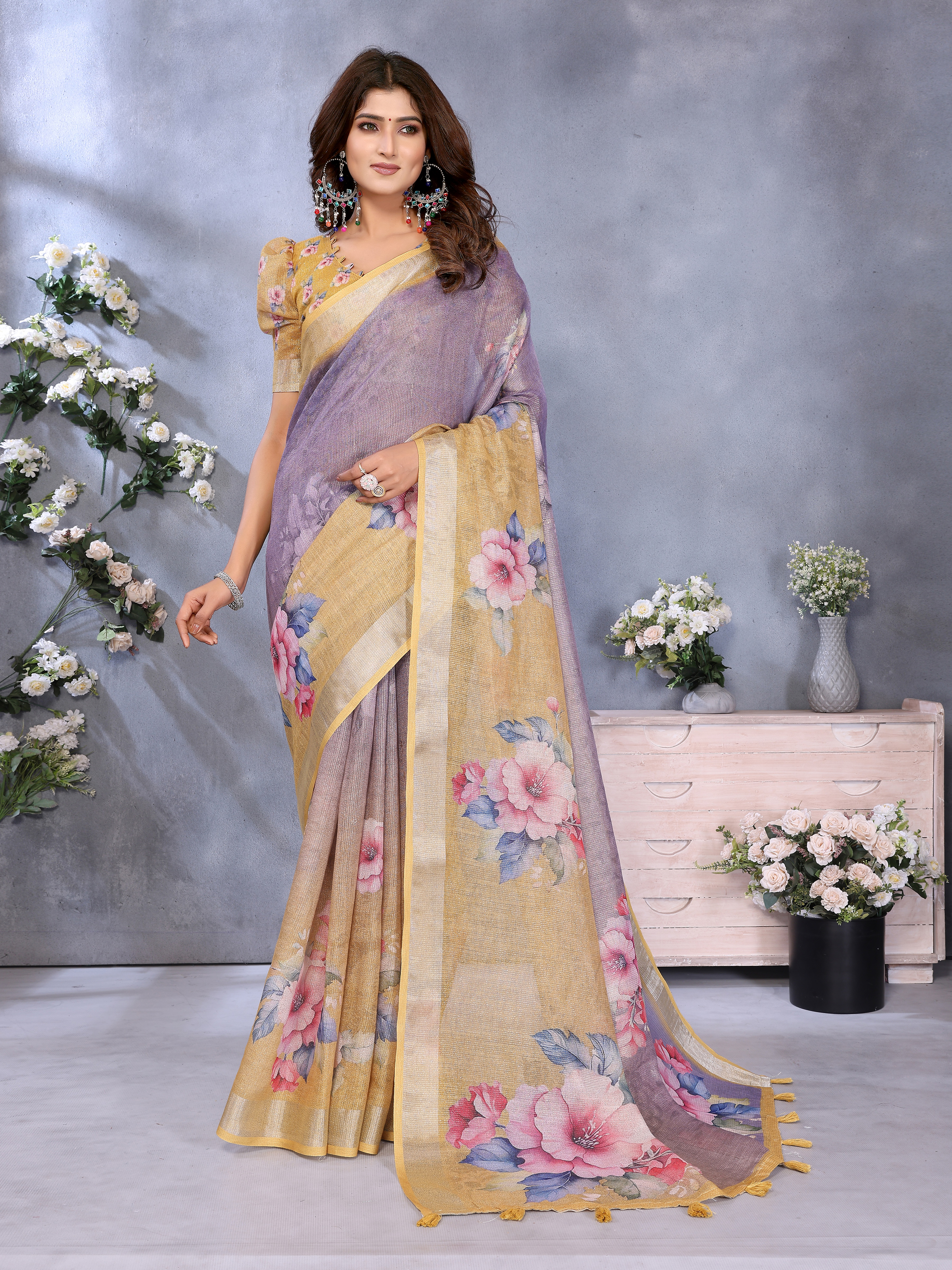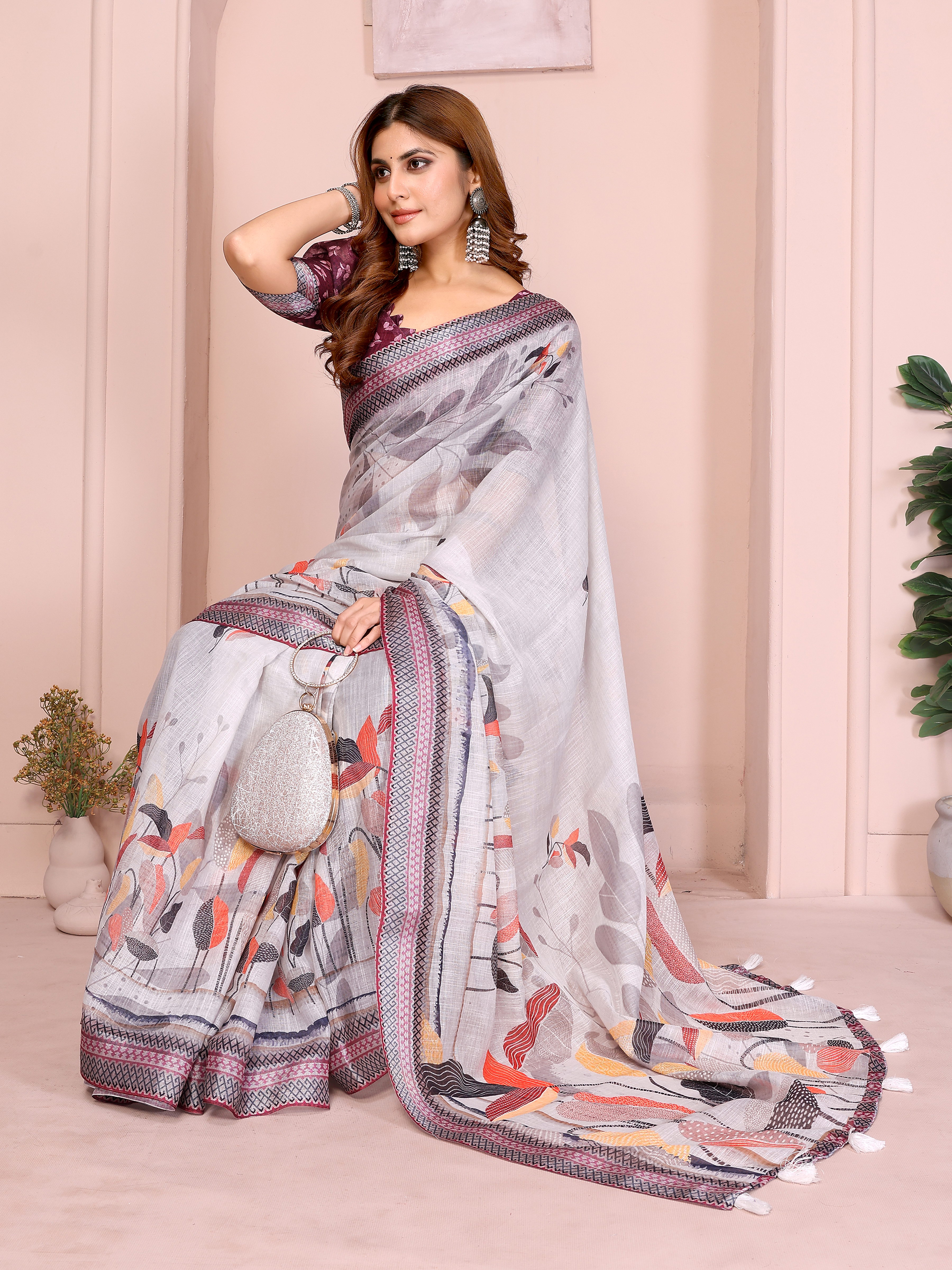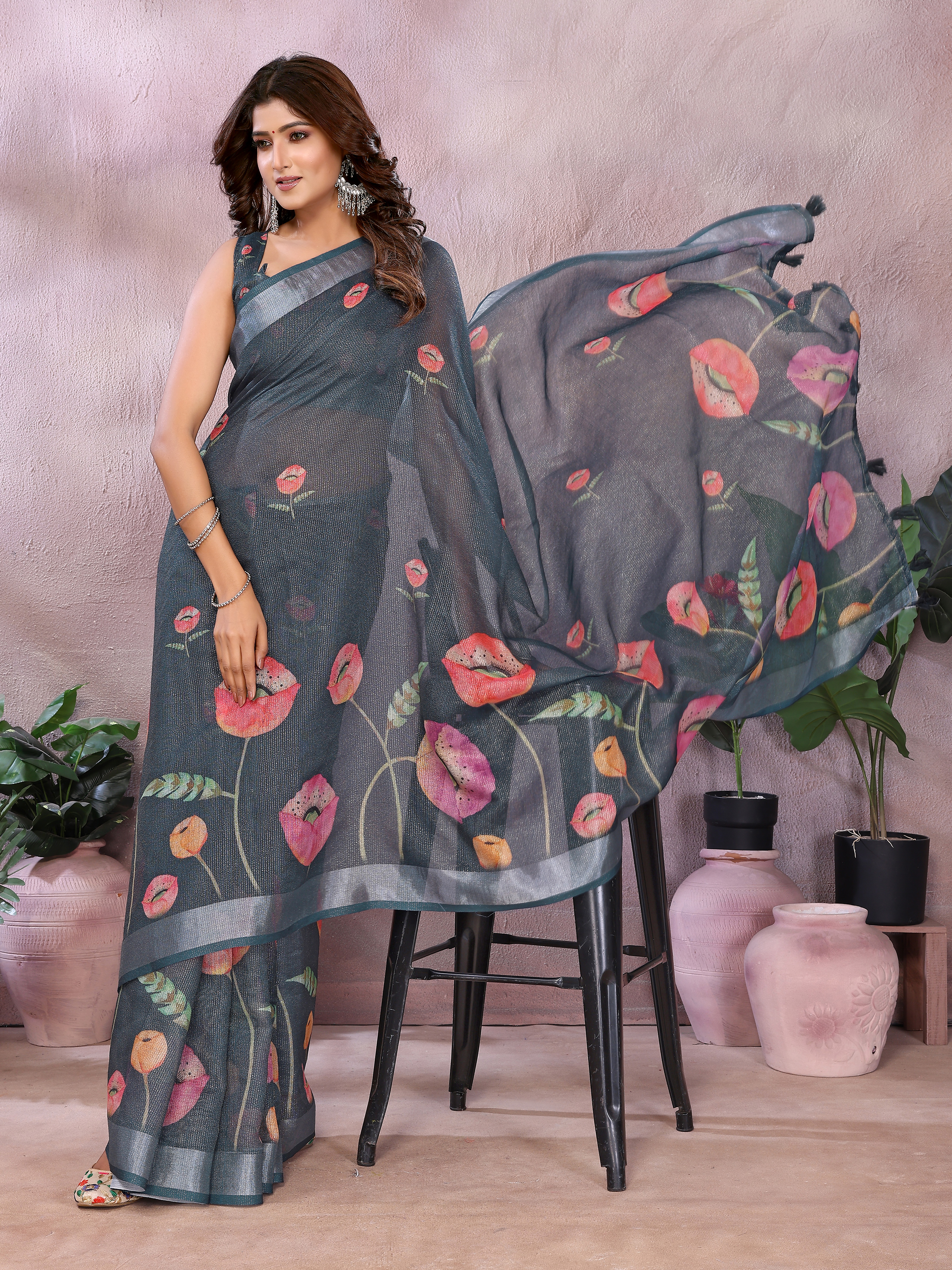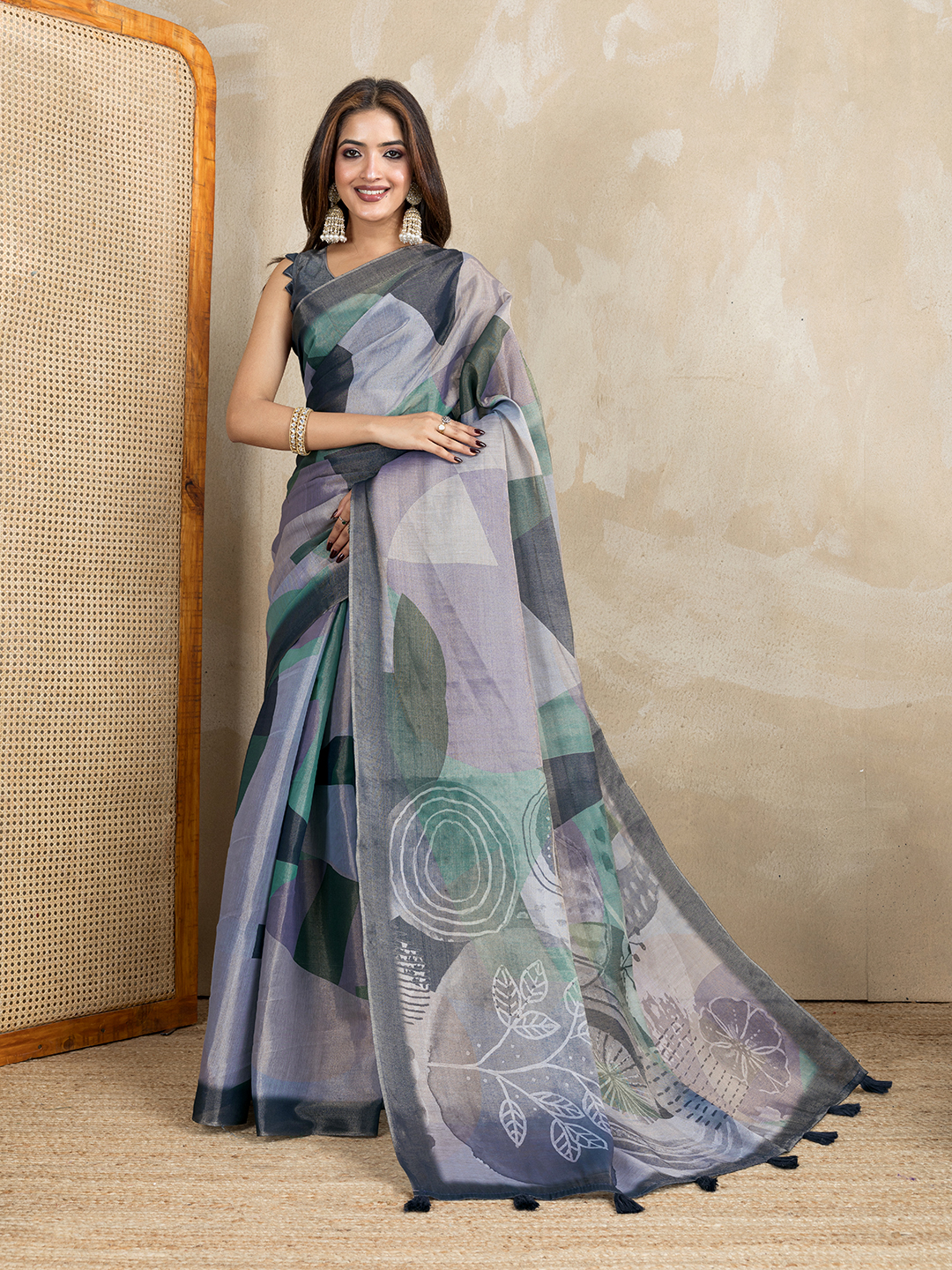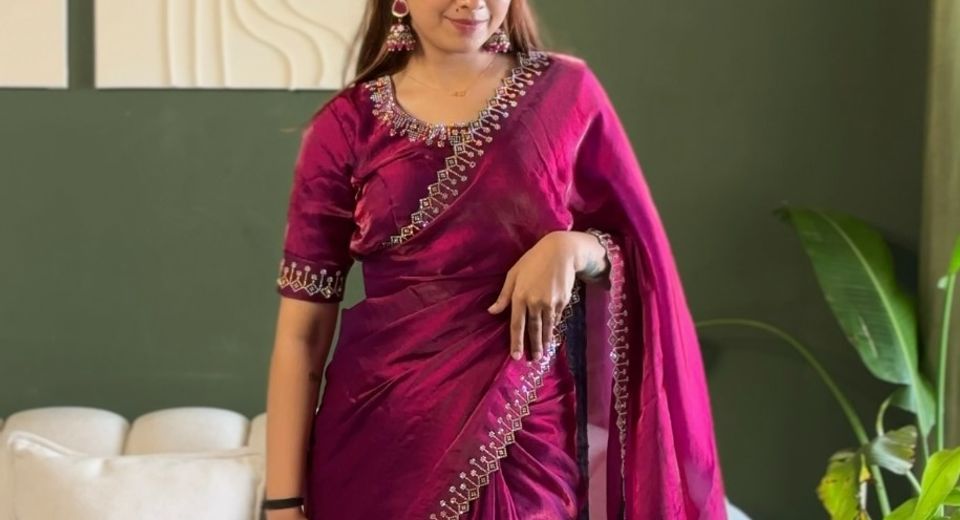
How Mukaish Kaamdani and Cutdana Create Three Different Kinds of Shine becomes easier to understand when a garment is viewed under moving light. Mukaish gives a fine, scattered glint; Kaamdani creates a softer metallic gleam through worked lines; and Cutdana produces sharp flashes from faceted beads. These techniques may appear together on sarees, dupattas, salwar suits and lehengas, but they don't reflect light in the same way.
The distinction matters when choosing clothing for a daytime Haldi ceremony, an indoor wedding reception or a camera-heavy evening celebration. Fabric colour, weave, embellishment density and movement can make one finish look subtle and another look brilliant. Understanding the difference helps you judge a garment from close-up photographs and not only from the word "shimmer" in a product description.
How Mukaish Kaamdani and Cutdana Create Three Different Kinds of Shine in One Garment
Mukaish, Kaamdani and Cutdana create different visual effects because they use different surfaces to catch and return light. Mukaish generally forms small metallic dots, dashes or motifs; Kaamdani uses metallic thread, wire or flattened elements in embroidered patterns; and Cutdana uses small faceted beads that act like miniature reflective crystals.
Every shiny embellishment depends on three practical factors: the material, the shape of its surface and the amount of movement in the garment. A flat metallic element reflects light in a concentrated direction. A curved thread spreads light into a softer line. A faceted bead breaks light into several small flashes as its angles turn.
- Mukaish: a pinpoint or dust-like shimmer distributed across the fabric.
- Kaamdani: a flowing, directional gleam created by embroidered metallic lines.
- Cutdana: a crisp, jewel-like sparkle created by faceted glass beads.
These categories describe the visual result rather than every artisan's exact construction method. Contemporary Indian occasion wear may combine zari, metallic foil, sequins, stones, beads and hand embroidery under one design description. A close-up image that shows spacing, height and surface texture is more useful than a generic claim that a garment is "sparkly."
How Mukaish Kaamdani and Cutdana Create Three Different Kinds of Shine Through Mukaish
Mukaish creates a fine, starry shimmer through small metallic inserts worked into fabric. Traditional Mukaish work is associated with thin metallic strips or wires inserted, flattened or secured into cloth to form dots, dashes and delicate motifs. The surface glints in separate points instead of reflecting as one continuous field.
The Mukaish effect is therefore distributed shimmer. The eye reads many small highlights across the garment, much like scattered stars rather than polished jewellery. Moderate spacing usually makes the effect more visible because the metallic marks remain distinct from the fabric around them.
Mukaish suits lightweight fabrics because small reflective accents preserve the drape. Chanderi, organza, georgette and fine silk blends can carry Mukaish while retaining movement. A pale fabric with sparse Mukaish may look quiet in shade and reveal dozens of tiny sparks when the wearer turns.
The base colour changes the apparent strength of Mukaish. Ivory, champagne and blush fabrics create a soft, tonal shimmer. Magenta, emerald and navy provide stronger contrast, making each metallic point more noticeable. A buyer seeking understated festive wear should look for visible fabric ground rather than maximum embellishment density.
When does Mukaish look most luminous?
Mukaish looks most luminous when angled fabric, directional light and gentle movement allow individual metallic points to catch attention. Daylight near a window, candlelight and warm wedding lighting can each reveal Mukaish differently.
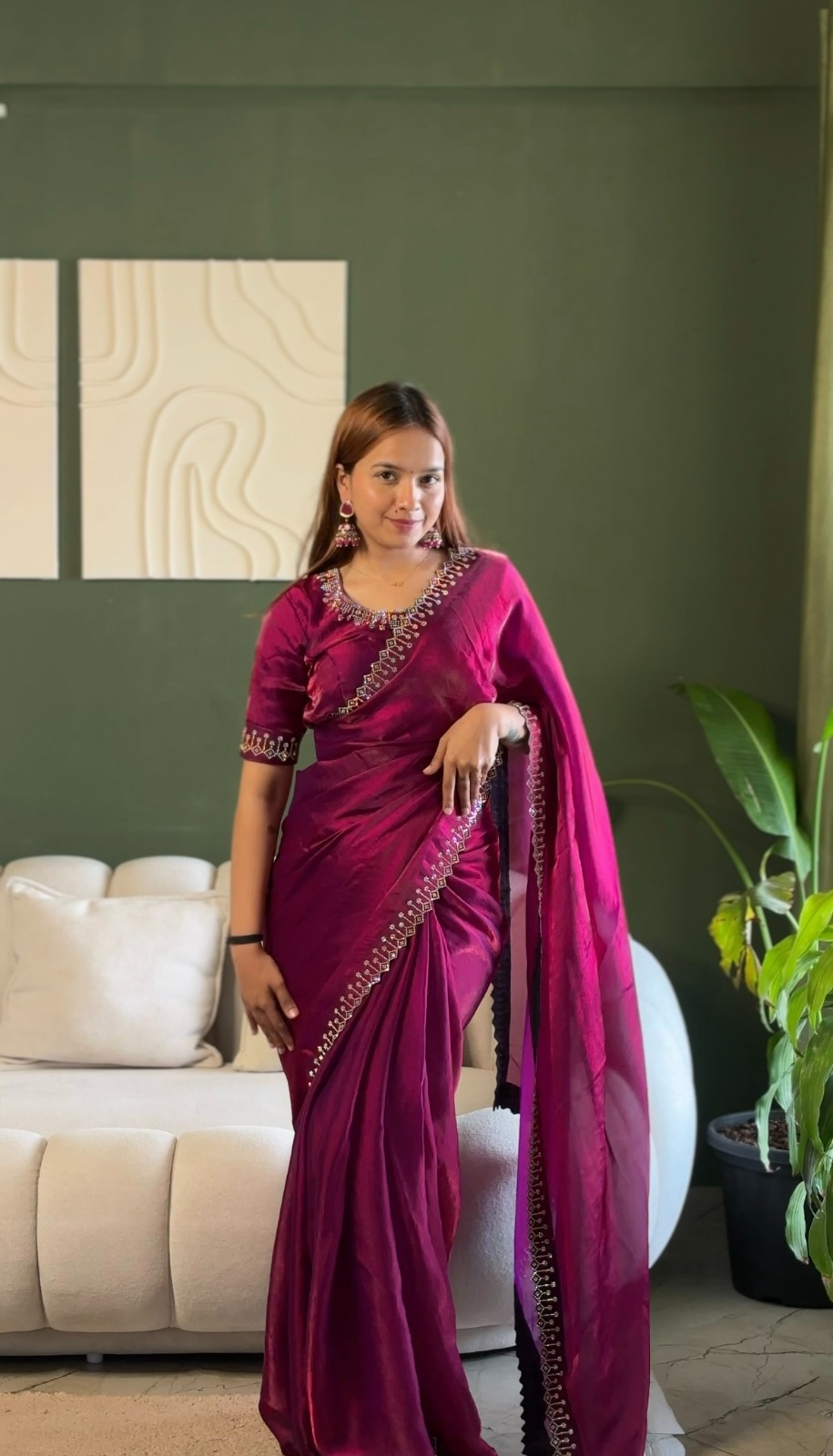
The Magenta Space Silk Saree with Jarkan Diamond Work shows how small metallic accents can coexist with stronger stone-like highlights without every surface competing equally. Mukaish can provide the scattered background shimmer while Jarkan or diamond-style work supplies more concentrated points of brightness.
Mukaish isn't automatically delicate or low-impact. Dense placement across a dark silk base can look dramatic, while sparse placement on ivory organza can look almost weightless. The visual result depends on contrast, scale and the distance from which the garment will be viewed.
How Mukaish Kaamdani and Cutdana Create Three Different Kinds of Shine Through Kaamdani
Kaamdani creates a more continuous metallic gleam because the embellishment follows embroidered lines, curves and motifs across the fabric. The technique traditionally involves metallic thread, wire or flattened metallic elements worked into cloth with fine hand control. Unlike isolated Mukaish points, Kaamdani can guide the eye along a vine, paisley, border or geometric design.
The Kaamdani effect is therefore directional gleam. Light travels visually along the embroidered line, producing a brushed, flowing or liquid impression. Kaamdani may resemble zari from a distance, although the construction, material and stitch treatment can differ according to the artisan and garment.
Kaamdani works especially well on dupattas and borders because linear embroidery gives definition to translucent or fluid fabrics. The SilkGlow Cream Salwar suit illustrates the relationship between a pale base and reflective surface details: cream tones soften the contrast, while metallic lines can add structure around the wearer.
Stitch direction also affects the shine. Parallel lines may give a satin-like gleam, while irregular floral work creates changing flashes as the garment moves. A curved motif can look bright from one angle and muted from another because the metallic thread doesn't present the same surface to the light at every moment.
How can you identify Kaamdani in a close-up?
Kaamdani can often be identified by following a continuous embroidered line through a motif instead of looking only for isolated dots. The surface may show thread turns, tiny secured points or wire-like outlines that connect one part of the pattern to another.
Retail terminology can overlap, so a close-up remains important. Zari, Mukaish and Kaamdani may all appear gold or silver from a distance, but their spacing and construction differ. A continuous border suggests linear embroidery; evenly scattered points suggest Mukaish; and raised faceted units suggest Cutdana or another bead-based technique.
The Multi Colour Organza Lehenga Choli with Digital Print, Cording Embroidery and Mukaish Work Dupatta demonstrates why different surface treatments should be read separately. A printed base creates colour movement, cording adds relief and Mukaish supplies small metallic accents. Kaamdani would produce a more connected line of light if used across the same kind of dupatta.
How Mukaish Kaamdani and Cutdana Create Three Different Kinds of Shine Through Cutdana
Cutdana creates the sharpest sparkle of the three because each small glass bead has angled surfaces that reflect light in separate flashes. Cutdana beads are commonly tubular or faceted pieces sewn onto fabric, and their reflective behaviour resembles miniature crystal trim rather than a flat metallic mark.
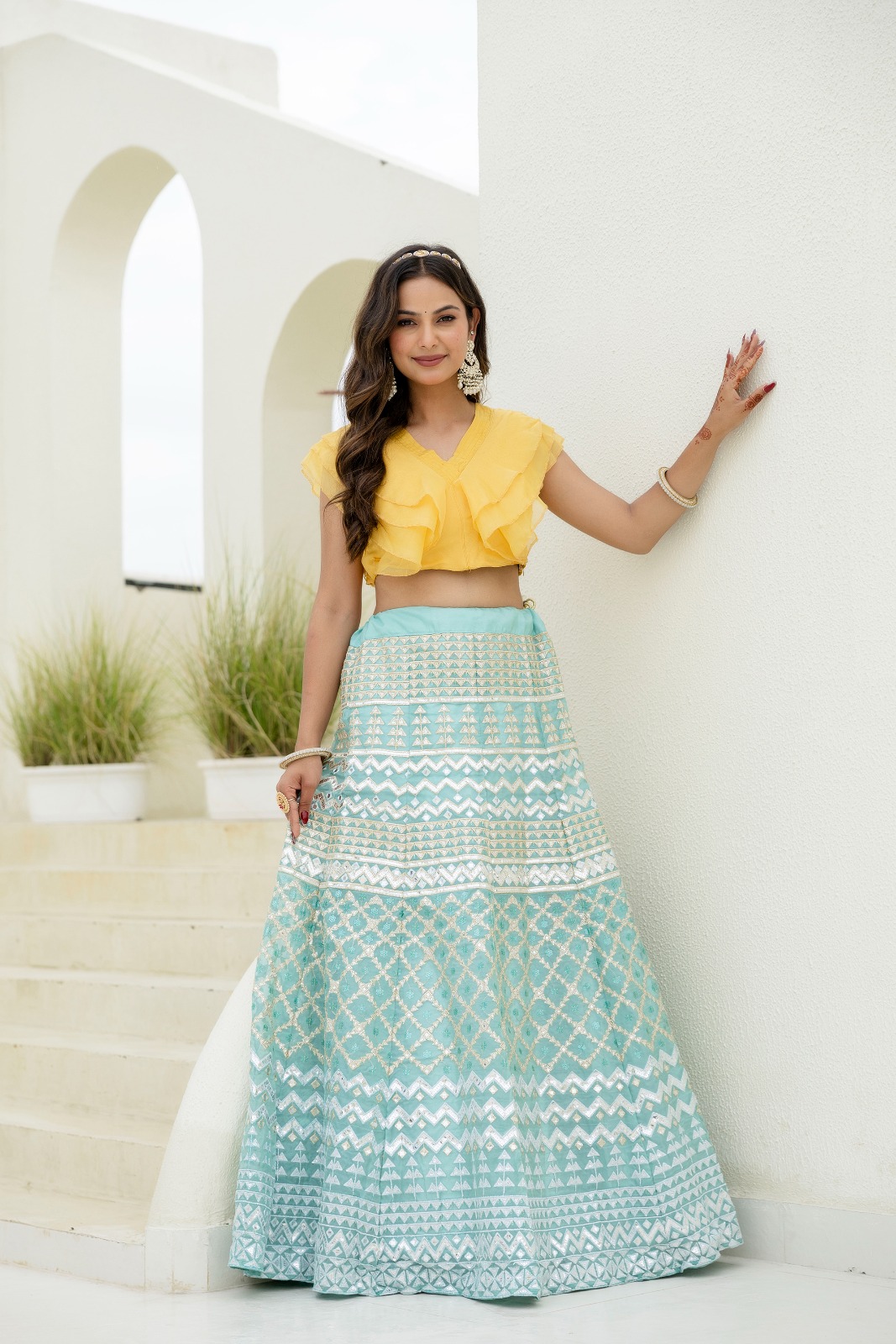
The Cutdana effect is therefore faceted sparkle. Cutdana can look bright even when the embroidery isn't extremely dense because each bead offers several planes for light to strike. Movement increases the effect: a turning shoulder, swaying dupatta or rotating lehenga hem can make the beads flicker rapidly.
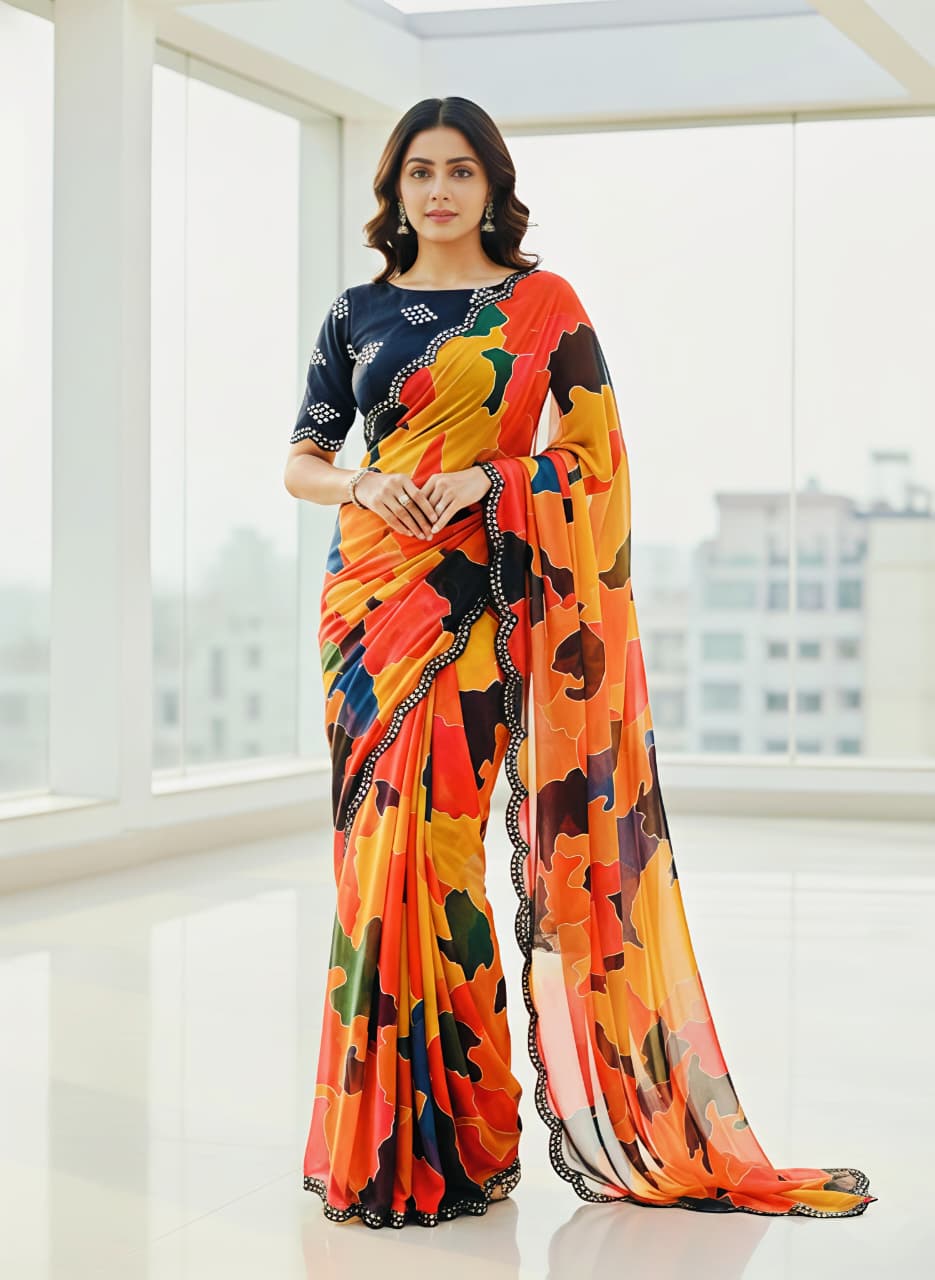
Cutdana is often paired with sequins, stones, pearls or zari to build contrast. A Sunset Mosaic Mirror Designer Saree illustrates a related principle: mirror-like surfaces provide concentrated flashes that contrast with softer textile areas. Cutdana creates a similar high-contrast effect through smaller, more numerous reflective units.
Organza and net intensify Cutdana's visual impact because their transparent or crisp surfaces don't absorb as much light as a thick matte textile. Georgette gives a softer moving backdrop. Velvet and heavily brushed fabrics absorb more light, allowing Cutdana to appear as isolated bright points rather than making the entire garment glow.
The Moonlight Charm Foil Sequin Organza Lehenga demonstrates how layered sparkle changes the eye's reading of a garment. Foil and sequins can create broader flashes, while Cutdana would add sharper, more tactile points. Combining both effects can be successful when one treatment dominates and the other works as an accent.
How Mukaish Kaamdani and Cutdana Create Three Different Kinds of Shine on Different Fabrics
The same embellishment looks different on silk, organza, georgette, Chanderi and velvet because each fabric reflects, absorbs and moves light differently. A smooth silk base can amplify metallic work, while a textured cotton-silk base breaks up reflection and makes the finish more muted.
Silk and silk blends
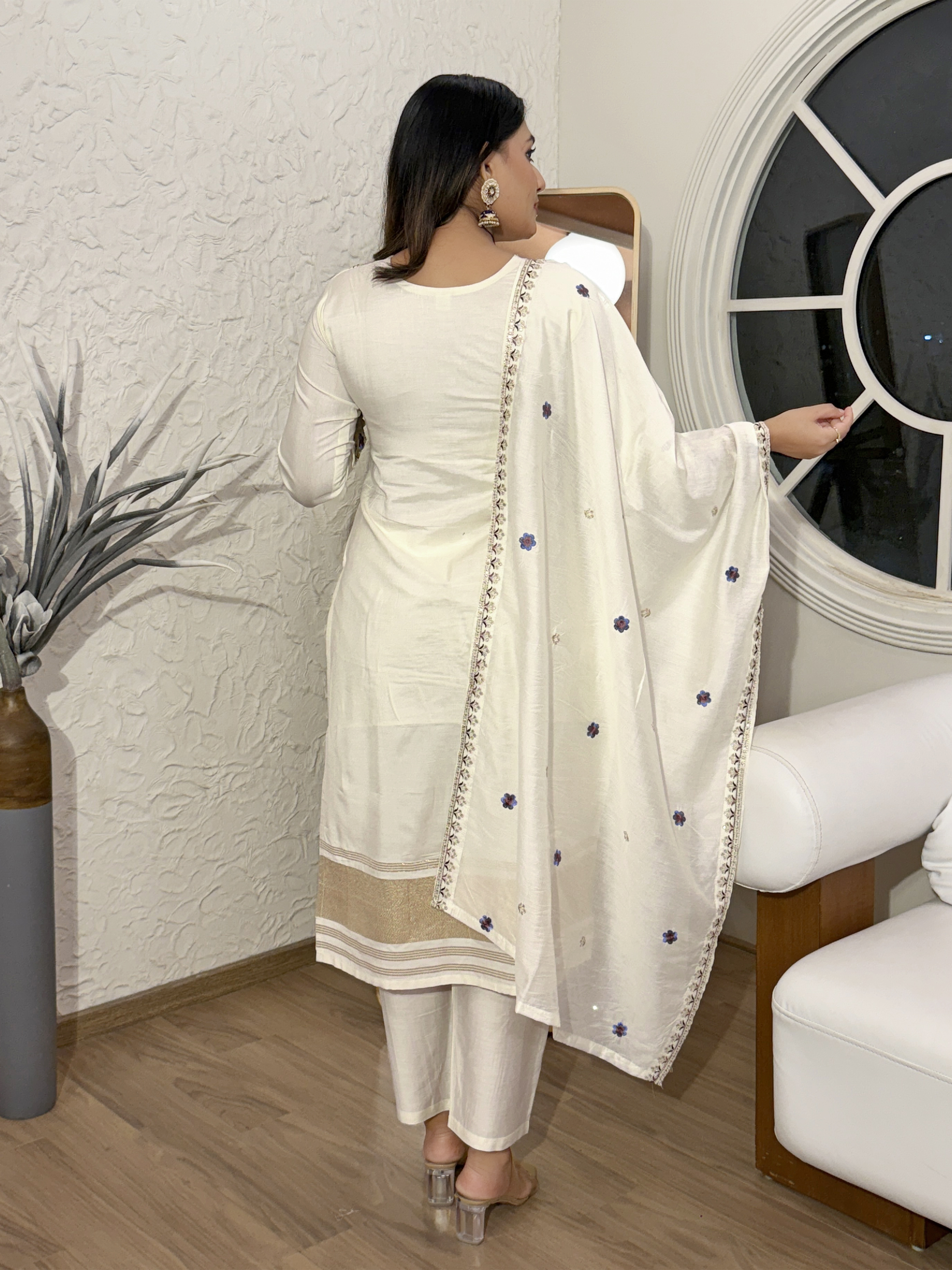
Silk and silk blends provide a fluid ground that supports all three shine effects. Banarasi silk already carries a woven lustre, so Mukaish may appear as small accents, Kaamdani as a fine overlay and Cutdana as high-contrast points. A Semi Stitched Lehenga Set can show the difference clearly because its structured panels usually hold reflective embellishment more steadily than a freely moving dupatta.
The SilkGlow Cream Salwar suit can look polished with moderate embellishment because the cream base reflects ambient light without creating harsh colour contrast. Stronger metallic work will appear softer on cream than on black, royal blue or deep wine.
Organza and net
Organza and net make reflective embellishment appear crisp because their surfaces are light, sheer and structured. The Multi Colour Organza Lehenga Choli with Digital Print, Cording Embroidery and Mukaish Work Dupatta shows how a Mukaish dupatta can add a scattered metallic layer without hiding a printed or embroidered base.
Georgette and fluid fabrics
Georgette softens hard reflection through its grain and movement. The Swarovski Shine Mosaic Print Georgette Saree may appear more fluid than a structured organza garment because georgette bends and gathers light as the saree moves. Cutdana or stone accents on georgette create lively flashes without necessarily producing a rigid silhouette.
Fabric weight also affects comfort and maintenance. Dense Cutdana, stones and zari can pull on a very light base, especially around a dupatta edge. Mukaish is usually lighter, but sharp metallic elements can still catch on jewellery or rough surfaces. Shine should be evaluated alongside drape, weight and seam strength.
How Mukaish Kaamdani and Cutdana Create Three Different Kinds of Shine for Different Venues
Choose Mukaish for dispersed daytime shimmer, Kaamdani for graceful metallic definition and Cutdana for high-impact sparkle in changing or evening light. Venue distance, garment movement and photography determine which finish looks most balanced.
- For a daytime Haldi ceremony: Mukaish on organza, Chanderi or silk blends gives festive light without appearing overly reflective under direct sun.
- For a formal dinner: Kaamdani borders and motifs create a polished glow under warm indoor lighting.
- For a reception: Cutdana, stones and mirror-style details provide visible flashes when guests are viewed from several metres away.
- For outdoor photographs: Moderate Mukaish or controlled Kaamdani may photograph more evenly than very dense sequins or reflective beads.
- For stage lighting: Cutdana and zari can produce strong highlights, but excessive surface work may create blown-out patches in flash photographs.
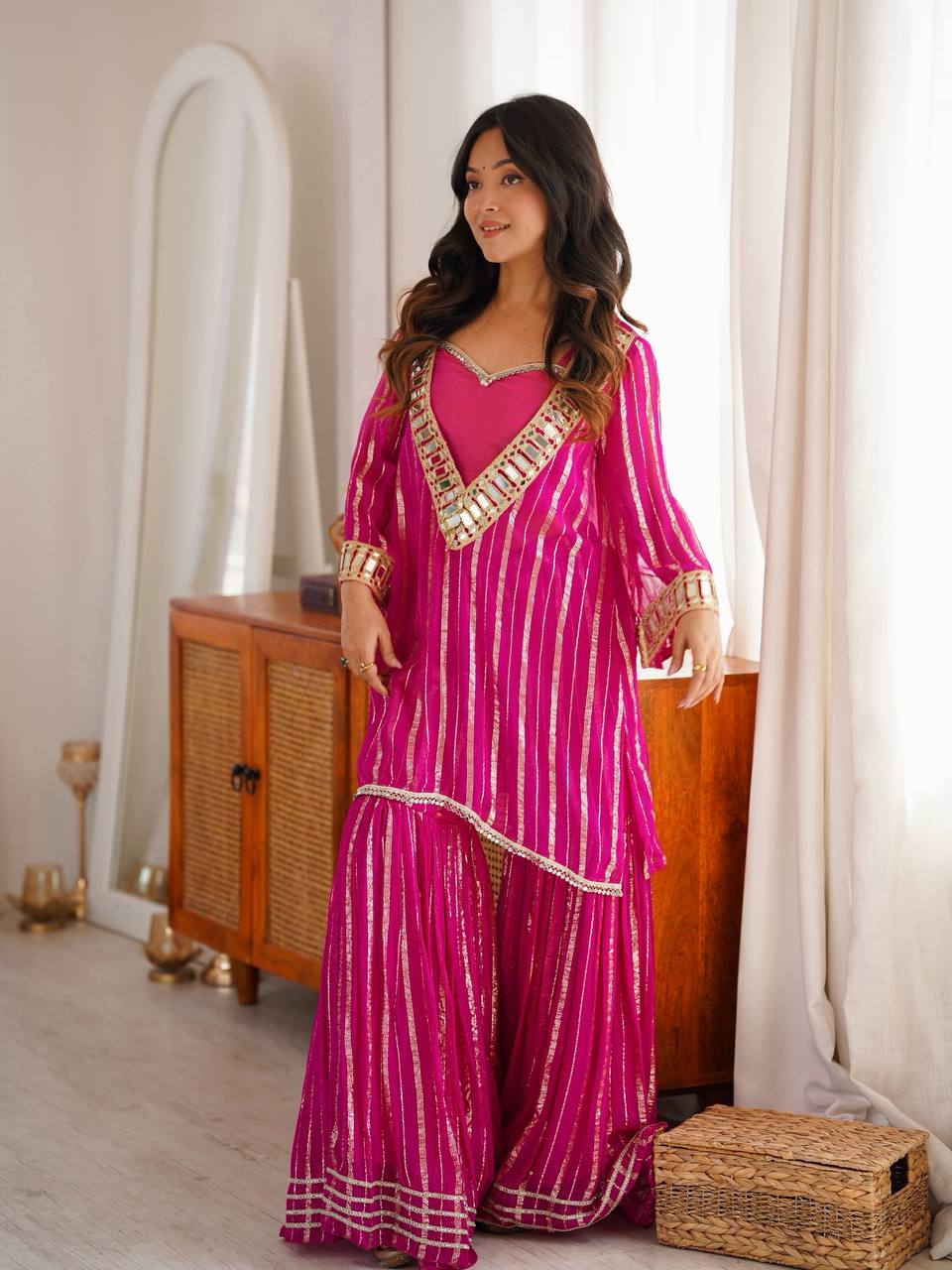
The Pink Mirror Work Zari Sharara Suit Set Online - Varnavi combines two high-reflection ideas: mirror work and zari. Such a set is likely to read as bright and defined from a distance, making it more suited to evening celebrations than a restrained daytime gathering.
The Pink Sharara Suit Set with Mirror Work Dupatta gives another useful comparison. A reflective dupatta near the face can brighten portraits, while a less embellished kameez keeps the outfit from becoming uniformly shiny. Placement matters as much as total embellishment.
How Mukaish Kaamdani and Cutdana Create Three Different Kinds of Shine in Photographs
Photography records shine according to light direction, exposure and surface angle, so a garment may appear subtler or brighter on camera than in person. Faceted Cutdana and mirror work often produce the strongest isolated highlights, while Mukaish can disappear in a low-resolution image if the metallic points are small.

Flash photography is especially reactive to flat mirrors, sequins and highly polished beads. A direct flash can create white spots that hide the underlying colour. Kaamdani lines usually photograph as controlled metallic contours, although dense zari or metallic thread can also reflect strongly.
For online shopping, inspect at least three image types when available: a full-length photograph, a close-up of the embellishment and a moving or angled view. The full-length image shows density and balance. The close-up reveals whether the surface is flat, threaded, raised or faceted. An angled image indicates how much the shine depends on movement.
Colour temperature also changes perception. Warm yellow light makes gold Mukaish and Kaamdani look richer, while cool white light can make silver work appear sharper. Pink, coral and red fabrics may appear more saturated under warm light, whereas blue and green fabrics can look deeper under cooler lighting.
How Mukaish Kaamdani and Cutdana Create Three Different Kinds of Shine After Care and Storage
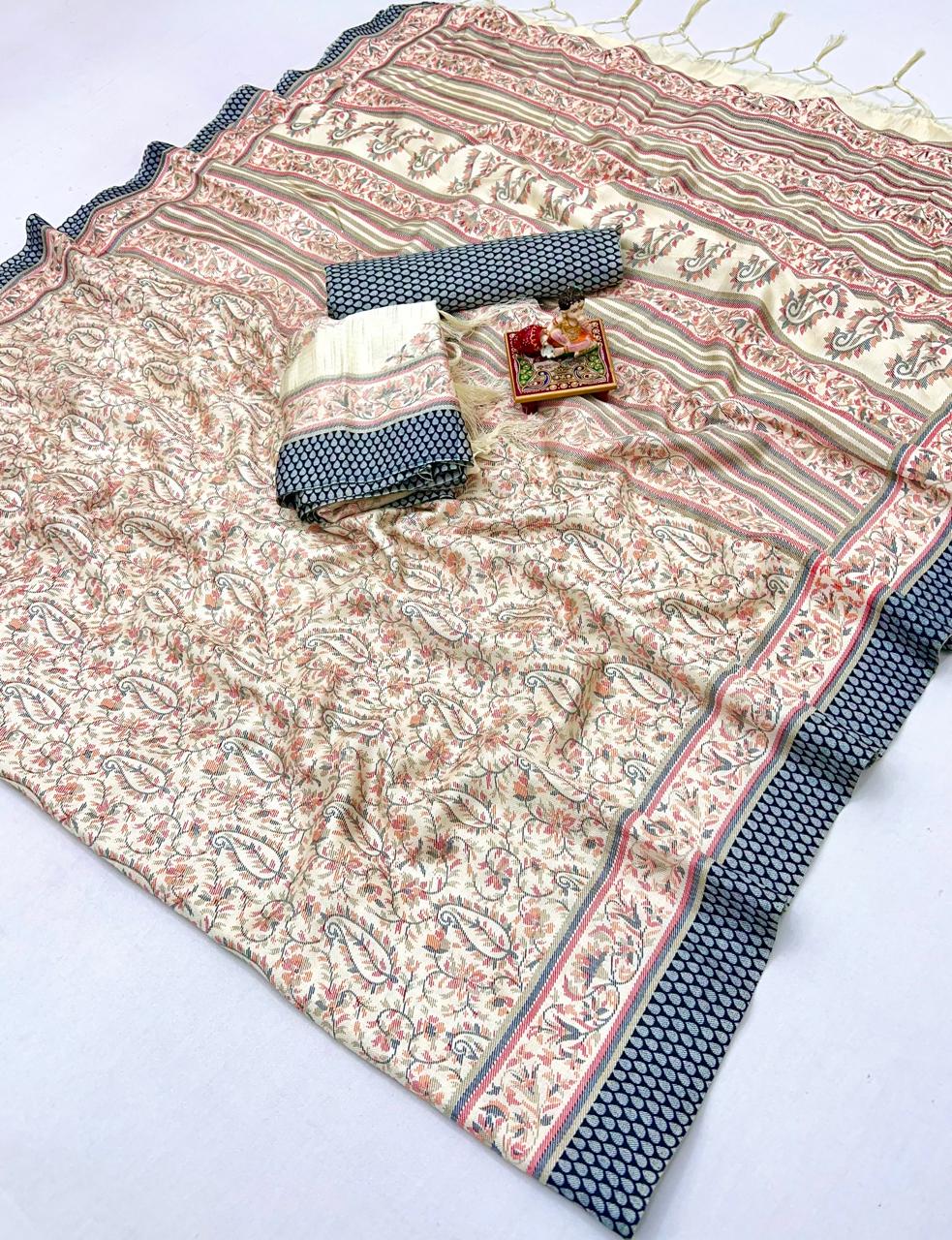
Protect shiny embellishment by using gentle cleaning, padded storage and separation from rough jewellery or fasteners. Mukaish, Kaamdani and Cutdana should not be treated as interchangeable surfaces because metallic elements and glass beads can respond differently to friction, moisture and pressure.
- Read the care label first. Professional dry cleaning is safer for heavily embellished silk, organza, georgette and structured lehengas than home washing.
- Store garments flat or loosely folded. Avoid sharp folds across dense Mukaish, Kaamdani borders or Cutdana motifs.
- Use soft cotton or muslin layers. A breathable cover reduces contact with rough shelves and helps prevent snagging.
- Keep embellishment away from direct perfume and hairspray. Alcohol, oils and moisture may dull metallic surfaces or stain delicate bases.
- don't iron directly over shine. Use a pressing cloth and low heat only when the care label permits it.
- Inspect the garment before wearing. Loose Cutdana beads, lifted metallic thread and sharp Mukaish elements should be secured before they catch on bags or bangles.
Small repairs are easier when completed early. A missing Cutdana bead can leave a visible gap in a dense motif, while a loose Kaamdani line can catch and pull across neighbouring stitches. Mukaish work should be handled gently because flattened metallic pieces can crease or lift if the fabric is dragged.
The most reliable buying decision comes from matching the shine to the garment's base, venue and intended movement. Mukaish brings scattered shimmer, Kaamdani gives directional metallic glow and Cutdana delivers faceted sparkle. Knowing those three behaviours makes it easier to choose a saree, salwar suit or lehenga that looks right both in person and in photographs.
Common Questions About Mukaish, Kaamdani and Cutdana Shine
What is the difference between Mukaish and Kaamdani work?
Mukaish usually creates separate metallic dots, dashes or small inserts across the fabric, while Kaamdani uses metallic thread, wire or related elements to form connected embroidered lines and motifs. Mukaish gives distributed shimmer; Kaamdani generally gives a more directional metallic gleam.
Does Cutdana shine more than Mukaish?
Cutdana usually appears brighter and sharper because its faceted glass beads reflect light from several angled surfaces. Mukaish can look equally dramatic on a dark or strongly contrasting base, but its shine is typically finer and more scattered.
Which embellishment is best for a daytime Haldi ceremony?
Moderate Mukaish on organza, Chanderi or a silk blend is often suitable for a daytime Haldi ceremony because it gives festive shimmer without excessive reflection in direct sunlight. Light Kaamdani borders are another balanced option.
Which fabric makes Mukaish work look brightest?
Smooth silk, organza and lightweight georgette can make Mukaish look bright because they provide a clean or mobile ground for small metallic accents. Dark colours increase contrast, while ivory and champagne create a softer tonal effect.
Can embellished sarees with Cutdana be washed at home?
Heavily embellished sarees with Cutdana should generally be professionally dry cleaned unless the care label specifically permits washing. Glass beads, metallic thread and delicate bases can snag, lose shape or become dull through rubbing and soaking.
How can shine be judged from an online product photograph?
Check a full-length image, a close-up and an angled photograph when available. A close-up reveals whether the embellishment is a flat metallic mark, embroidered line or faceted bead, while an angled image shows how strongly movement changes the shine.