

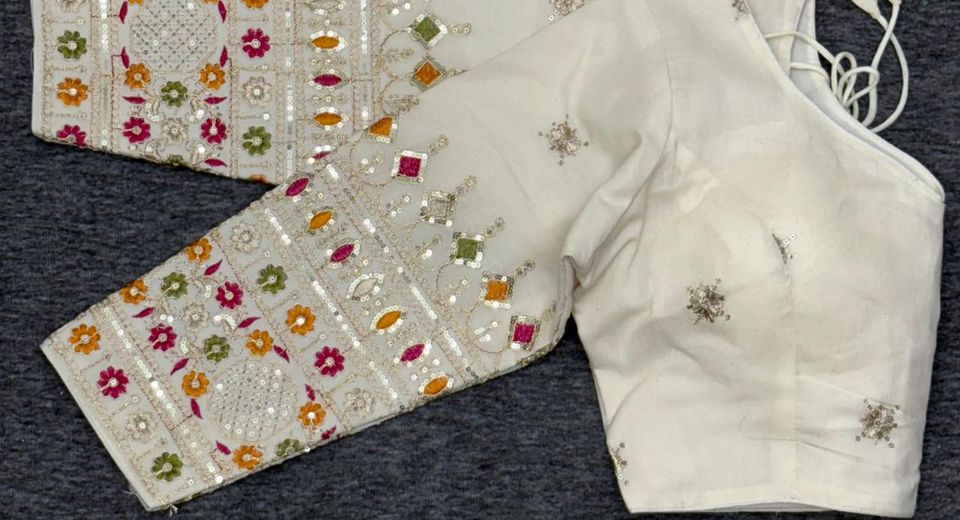
How Much Room Do You Need for Alterations in Blouse Seam Allowance? A useful starting point is 1 to 1.5 inches of extra fabric at each adjustable side seam, but the safe amount depends on the blouse construction, fabric, lining, cups, embroidery and existing seam width. A readymade blouse with only a narrow ¼-inch seam can't be enlarged as easily as a tailored cotton blouse with generous side seams.
Seam allowance is the fabric between the stitching line and the cut edge. Alteration allowance is the portion of that fabric that can be opened and restitched to change the garment's measurement. Those terms are related, but they're not identical. A blouse may have a visible seam allowance that's difficult to use because the fabric has been clipped, overlocked, padded or decorated.
The Basic Measurement
You generally need 1 to 1.5 inches of usable seam allowance on each side seam for a practical blouse enlargement, although 2 inches per side gives more flexibility for a substantial adjustment. A blouse with ½ inch of usable allowance on each side can usually provide only a modest increase, while a blouse with no extra fabric can't be enlarged through the side seams.
For example, opening both side seams with 1 inch of usable allowance can add approximately 2 to 3 inches to the total bust or waist circumference, depending on the original stitching and finishing. Two side seams each containing 1 inch may appear to offer 4 inches in theory, but the tailor must leave material beside the new stitch line for strength and fray control.
don't count every visible strip of fabric as usable allowance. A tailor may need to retain ¼ to ½ inch beside the new seam, and an overlocked edge may consume additional width. One inch of visible excess fabric may therefore yield only ½ to ¾ inch of dependable alteration room.
What can 1 inch of seam allowance change?
One inch of usable allowance on both side seams can often increase a blouse by about 2 to 3 inches overall. The adjustment is more predictable at the waist than at the bust because the bust area may require reshaping around darts, princess seams or padded cups.
Tailors usually distribute an enlargement instead of releasing one seam dramatically. A 2-inch increase may be divided across the left and right side seams, with smaller corrections at darts or a centre-back seam when the design allows them. Even distribution protects the neckline, armhole and centre-front alignment.
How Much Room Do You Need for Alterations in Blouse Seam Allowance at Each Seam?
You should leave 1 to 1.5 inches at each side seam for useful future adjustment, ½ to 1 inch at a centre-back seam, and at least ½ inch at selected darts when the design permits it. These figures describe usable fabric, not simply the distance from the stitch line to the cut edge.
Side seams are normally the first place to check because they can change bust and waist circumference without disturbing the front neckline. A centre-back seam can be especially helpful when the blouse already has hooks, a zip or dori ties. Darts can be released slightly, but releasing a dart changes bust shaping and may create excess fabric near the neckline.
- Side seams: These are the most useful locations for increasing or reducing bust and waist measurements.
- Centre-back seam: A back opening can support fitting changes, especially when hooks or a zip are already present.
- Darts: Darts can be released modestly, but releasing them changes the position and amount of bust shaping.
- Shoulder seams: Shoulder seams are useful for small length or shoulder-balance corrections, not for adding substantial bust room.
- Armhole seam: Armhole adjustments need caution because they affect sleeve attachment, mobility and underarm comfort.
Extra fabric should not be left as a thick, uneven ridge. A skilled tailor presses the allowance flat, finishes raw edges and blends the new seam gradually into the original shape. An abrupt change can create a visible bump under a saree or pull the blouse towards one side.
How Much Room Do You Need for Alterations in Blouse Seam Allowance When Fabric Changes?
Fabric and construction determine whether an apparent seam allowance can be used without damaging the blouse. Cotton generally tolerates careful unpicking and restitching better than fragile silk, while padded, lined and embellished blouses require additional inspection before alteration.
Cotton blouses
Cotton blouses usually offer the most straightforward alteration process because cotton is stable, easy to mark and less likely to show minor needle holes after stitching. The Pure Kalamkari Cotton Padded Blouse for Women may still need careful handling because padding and lining can restrict access to the side seam.
The Kalamkari Cotton V Neck Collar Blouse for Women illustrates why neckline structure matters. Releasing the side seam can add chest room, but changing the shoulder or neckline without checking the collar may distort the V shape. Cotton can also shrink, so washing or steaming the garment before final alteration is sensible when the care instructions permit it.
Silk and zari fabrics
Silk requires slower unpicking and a fine needle because needle marks, snags and shine changes may remain after alteration. Banarasi silk, especially when woven with zari, may have a pattern that must be matched after the seam moves.
The Banarasi Silk Golden Jari Padded Blouse for Women should be examined from the inside and outside before any seam is opened. Zari threads can catch on rough seam edges, and padded construction may make a side-seam release more complicated than the same measurement change in plain cotton.
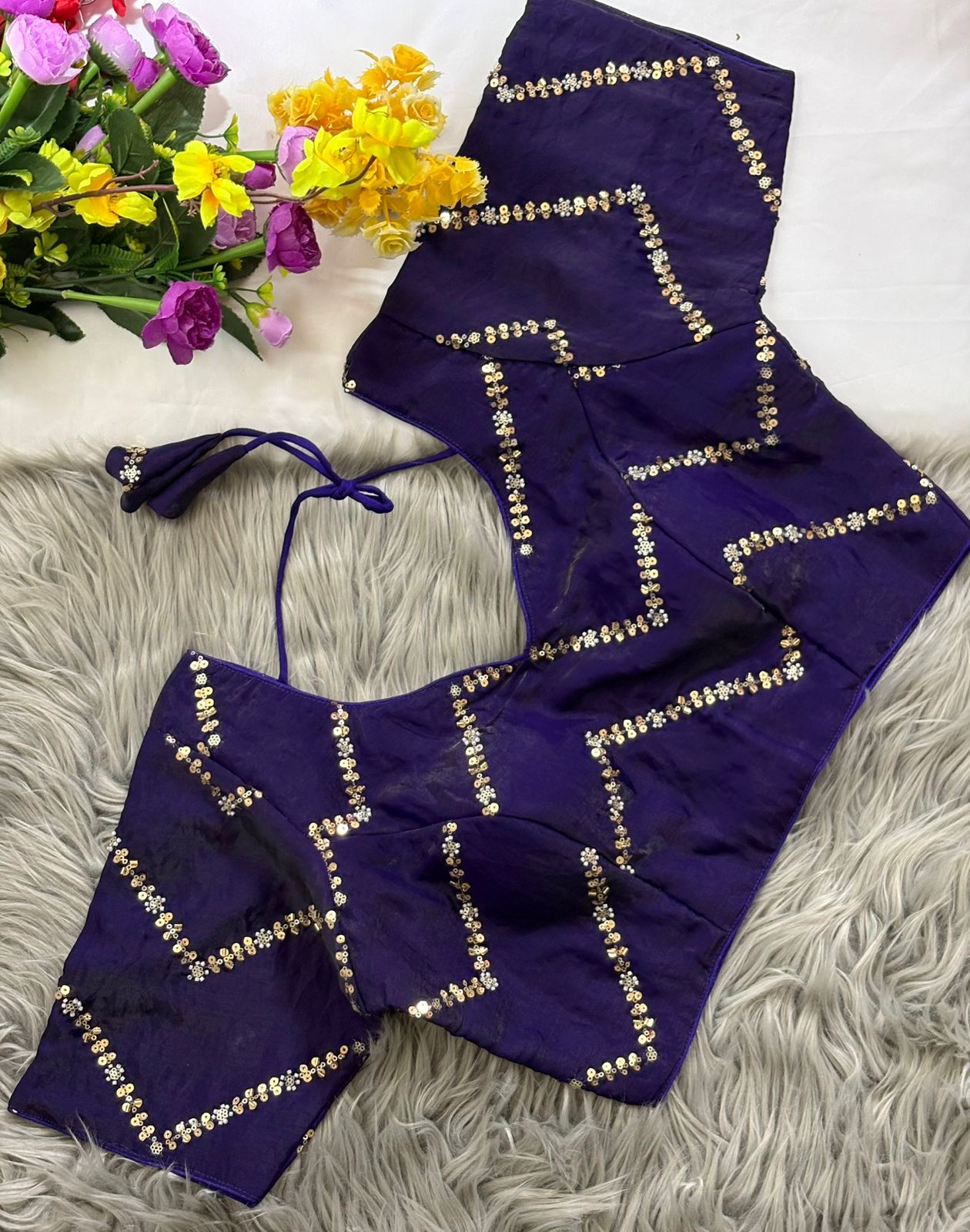
The Fendy Silk Zigzag Moti Work Readymade Blouse has another consideration: surface decoration. Moti work or zigzag embellishment may cross a seam, making the allowance technically present but visually difficult to release. Alteration is safer when the decorative area remains undisturbed and the tailor works below or behind the embellishment.
Ikat cotton and patterned fabric
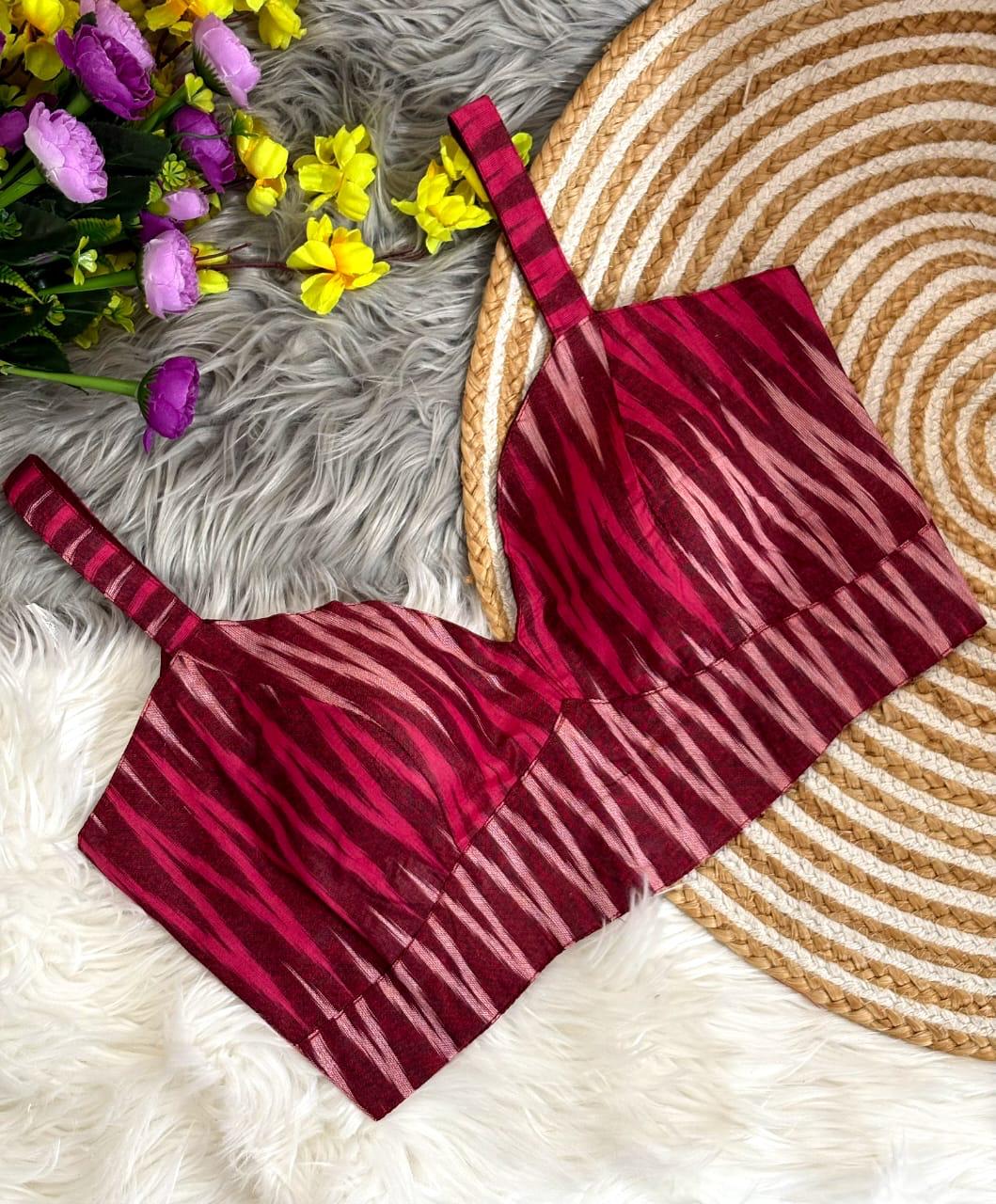
Ikat cotton can be comfortable and stable, but its woven pattern may make an uneven seam or shifted side panel easy to notice. The Cream Ikat Cotton Padded Blouse Sleeveless Trendy and the Ikkat Cotton Padded Blouse for Women Sleeveless should be checked for pattern alignment, lining attachment and cup placement before a tailor increases the bust.
Releasing an Ikat seam may expose a lighter or darker section that was previously hidden inside the seam. A tailor can sometimes avoid that problem by using a centre-back adjustment or distributing the change across several seams, but the available construction must be checked first.
How Much Room Do You Need for Alterations in Blouse Seam Allowance in a Readymade Blouse?
A readymade blouse can usually be altered larger only when the garment contains enough unused fabric, suitable seam placement and compatible lining or padding. The size label alone doesn't show whether an enlargement is possible.

Readymade blouses are often cut close to the body and finished with narrow overlocked seams. A tailor may be able to release ½ to 1 inch in total, but a larger increase can require fabric panels, replacement hooks or armhole reshaping. An inserted panel isn't automatically a flaw, but it may be visible at the side seam and may alter the original design.
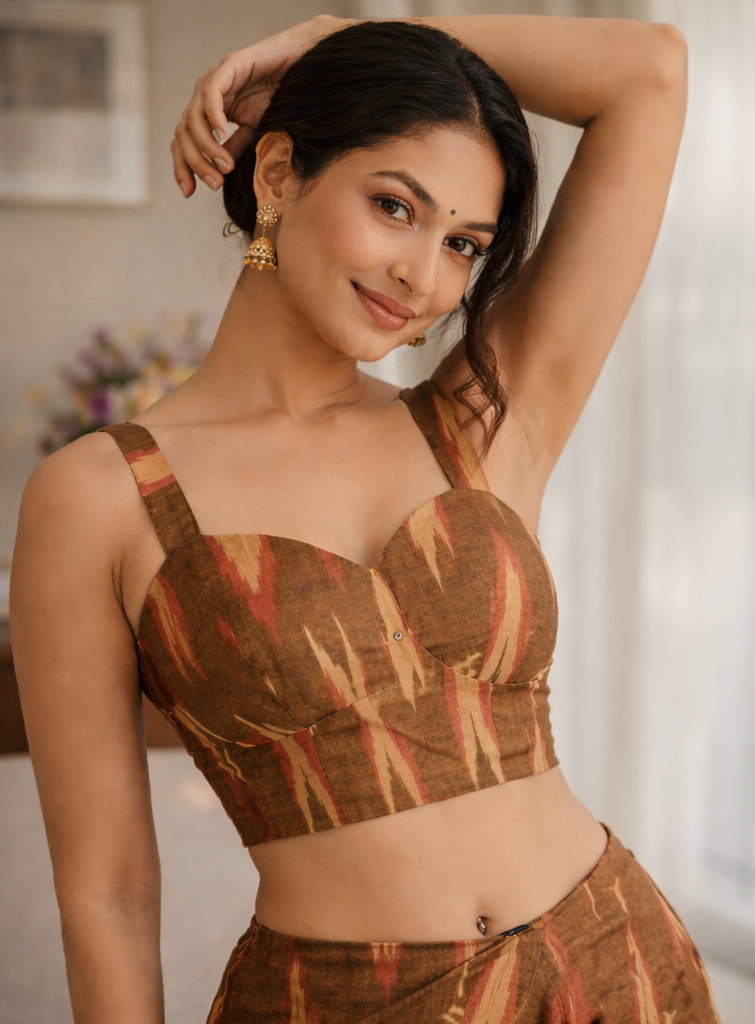
The Brown Ikat Cotton Padded Blouse Sleeveless Stylish may permit a small side-seam release if the lining follows the outer fabric and the seam isn't heavily finished. A padded blouse still needs an internal check because the cup edge, lining, elastic and outer shell must remain aligned after alteration.
The same principle applies to the Classic Festive Wear Blouse for Stylish Saree Look. A festive blouse may include lining, interfacing, hooks, piping or decorative seams that reduce the amount of simple alteration possible. A tailor should inspect the inside before assuming that a larger size can be created from a smaller one.
When should you buy a different readymade size?
You should choose a different readymade size when the blouse is more than approximately 2 inches too small at the bust, when the armhole cuts in, or when the shoulder width is already incorrect. Releasing side seams can't fully solve a shoulder, cup-position or neckline problem.
Buying slightly larger is often easier than buying smaller when a readymade blouse has simple construction. A tailor can reduce side seams and shorten straps, but reducing a heavily padded or embellished blouse can still affect its shape. Compare bust, underbust, shoulder and blouse-length measurements rather than relying only on S, M, L or XL labels.
How Much Room Do You Need for Alterations in Blouse Seam Allowance After Measuring?
You should measure the body and the blouse at the same points while wearing the bra or shapewear intended for the saree. The most useful comparison includes full bust, underbust, waist, shoulder width, armhole depth, sleeve length and blouse length.
- Measure the full bust around the fullest point while keeping the tape level across the back.
- Measure the underbust directly below the bust, especially for padded or fitted blouses.
- Measure the waist at the point where the blouse hem will sit.
- Measure shoulder width from one shoulder bone to the other, rather than from sleeve edge to sleeve edge.
- Measure blouse length from the high shoulder point to the intended hem.
- Compare the finished garment measurements with body measurements and note where the difference occurs.
Allow wearing ease in addition to body measurement. A close-fitting blouse may require roughly 1 to 2 inches of bust ease, while a firm padded blouse can feel comfortable with less apparent looseness because the cups support the bust. A blouse worn for a Haldi ceremony may need slightly more movement room than a structured wedding blouse used for short periods.
Check the blouse while sitting, raising both arms and taking a deep breath. Pulling across the bust, horizontal wrinkles near the armhole and hooks that strain open indicate insufficient ease. Excess fabric at the centre front, collapsing cups or a neckline that gapes indicate a shaping problem rather than a simple need for more seam allowance.
Can seam allowance make a blouse longer?
Seam allowance can make a blouse slightly longer only when extra fabric exists at the hem or shoulder seams. Side-seam allowance changes width, not length.
A tailor may lower the hem by ½ to 1 inch if enough fabric is folded inside, but a curved or embellished hem may leave small usable depth. Shoulder adjustments can affect length, yet they also affect neckline position, armhole depth and sleeve balance. Lengthening a blouse is therefore a separate alteration from releasing the side seams.
How Much Room Do You Need for Alterations in Blouse Seam Allowance Before Sewing?
You should inspect the inside of a blouse before purchasing or cutting it because the inner construction reveals the genuine alteration potential. Look for a seam allowance that's wide, continuous and free from embroidery, cup attachments, elastic and dense overlocking.
Ask the tailor to mark the proposed new stitch line with temporary basting before permanent sewing. Basting makes it possible to test the bust, waist, armhole and neckline while wearing the saree. A final fitting should take place before the seam is trimmed, because trimming removes the very fabric that could support a later correction.
- For a tailored cotton blouse: Aim for 1 to 1.5 inches at both side seams.
- For a fitted silk blouse: Preserve a generous allowance, but inspect for snags, zari and visible needle marks.
- For a padded blouse: Check the outer shell, lining, cups and elastic as separate layers.
- For a readymade blouse: Treat ½ to 1 inch of total release as a modest adjustment unless the inside proves otherwise.
- For a designer saree blouse: Protect embroidery, piping, neckline shape and pattern alignment before changing measurements.
The Ikkat Cotton Padded Blouse for Women Sleeveless and the Brown Ikat Cotton Padded Blouse Sleeveless Stylish also demonstrate why the outer appearance can't tell the whole story. A sleeveless blouse may have less room around the armhole because the cut edge is part of the visible design, so increasing the bust without checking armhole depth can reduce comfort.
Good alteration planning leaves enough fabric for the present fit and a realistic future correction, but it can't overcome a fundamentally unsuitable pattern. The right seam allowance is valuable only when the shoulder, neckline, armhole, bust point and fabric structure are already compatible with the wearer.
Common Questions About Blouse Seam Allowance and Future Alterations
How much seam allowance should a blouse have for future alterations?
A blouse should ideally have 1 to 1.5 inches of usable fabric at each side seam for practical future adjustment. A centre-back allowance of ½ to 1 inch can provide additional flexibility when the design includes a back seam.
Can a readymade blouse be increased by two sizes?
A readymade blouse usually cannot be increased by two full sizes through ordinary seam release alone. The tailor must check the bust, shoulder, armhole, lining, padding and available side-seam fabric; fabric-panel insertion may be necessary and may remain visible.
Is ½ inch seam allowance enough for a blouse alteration?
A ½-inch allowance may support a small adjustment, often around 1 inch overall after seam finishing. It is generally insufficient for a major bust enlargement, especially when the blouse is padded, lined or heavily embellished.
Can silk and Banarasi silk blouses be altered safely?
Silk and Banarasi silk blouses can be altered safely when the tailor uses careful unpicking, a suitable needle and a fitting plan that protects zari and embroidery. Needle marks, snags and pattern misalignment may remain, so a test fitting is important before the seam is trimmed.
Where should extra fabric be left in a saree blouse?
Extra fabric should primarily be left at the side seams, with additional allowance at a centre-back seam when possible. Shoulder seams and darts can support smaller corrections, but they cannot replace side-seam room for a substantial bust adjustment.
How do I know whether my blouse needs more ease or more seam allowance?
A blouse needs more wearing ease when it pulls during breathing, sitting or arm movement, while seam allowance determines whether a tailor can create that room later. Compare body and garment measurements, then inspect the inside seam before deciding whether alteration or a different size is more suitable.


