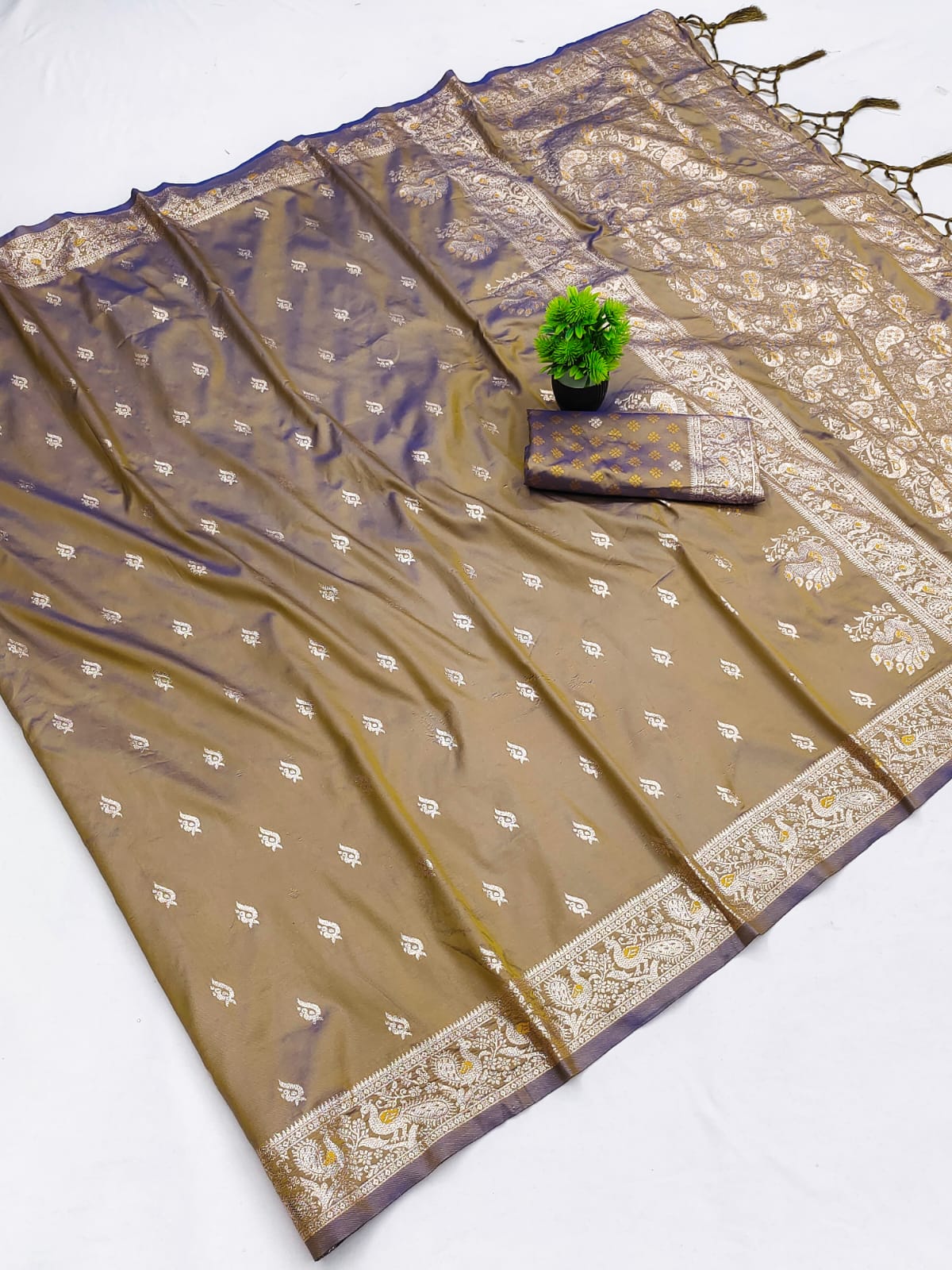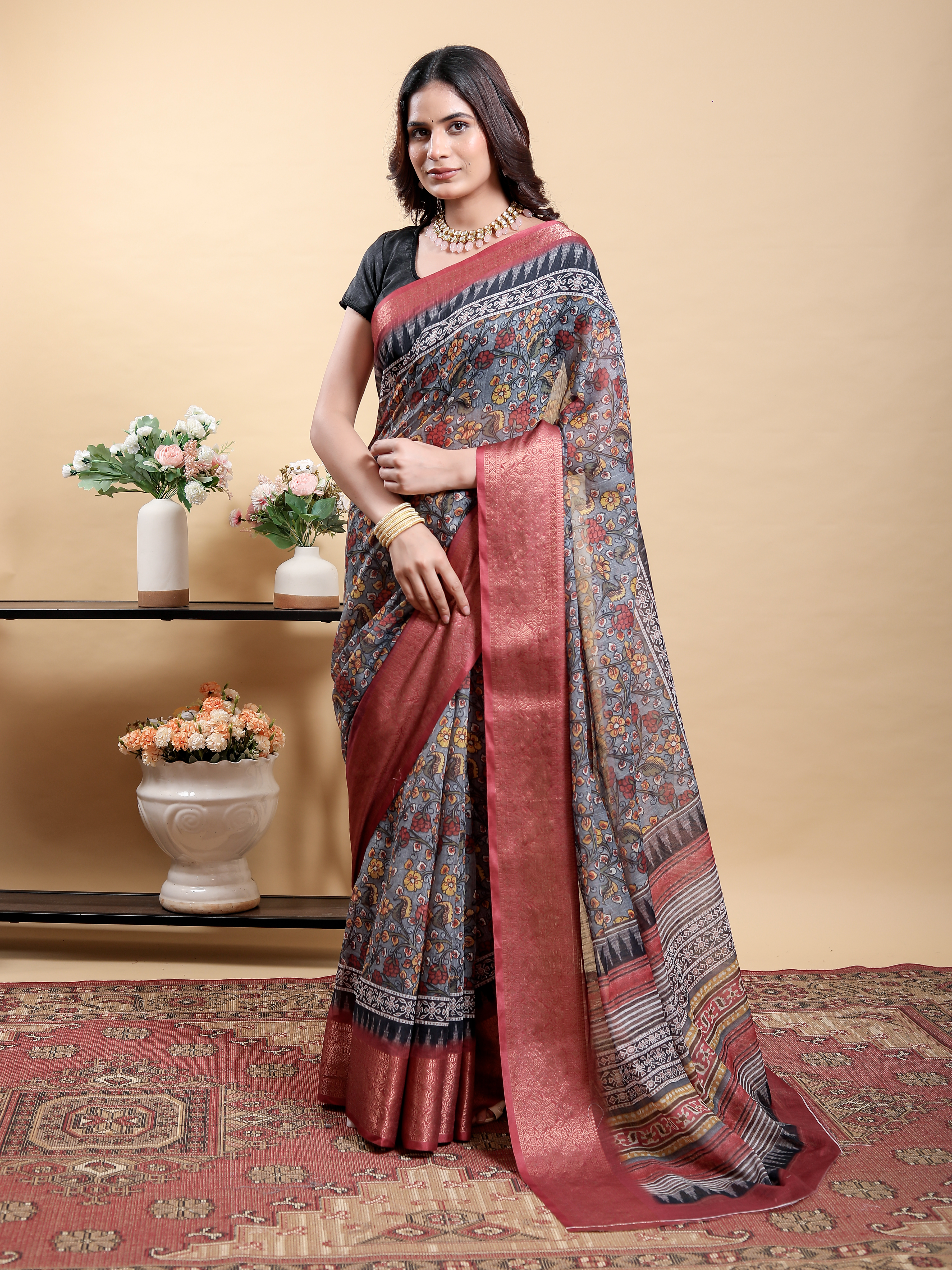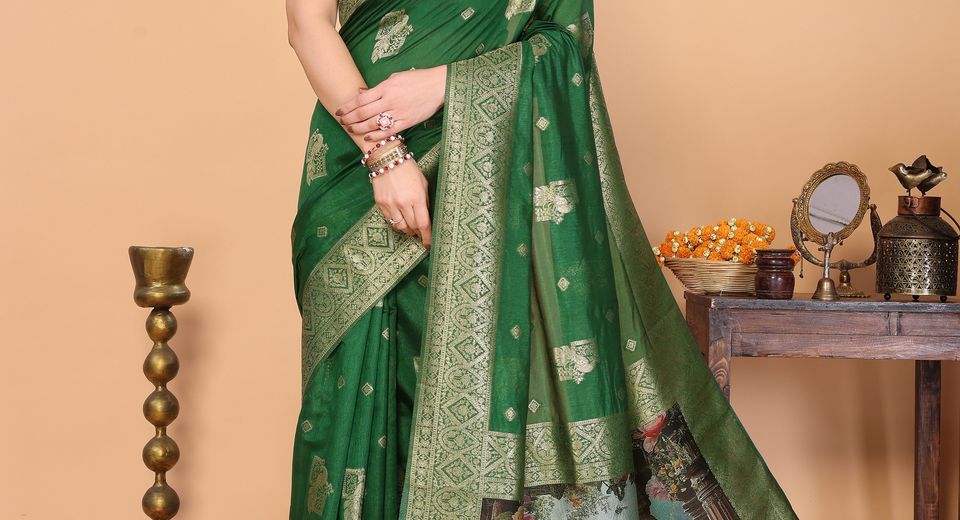
A Banarasi saree can look complete with remarkably little jewellery when its zari, pallu and colour are given room to show. How Much Jewellery Does a Banarasi Saree Actually Need depends on four practical details: the density of the zari, the blouse neckline, the formality of the event and the scale of your features. A wedding reception may justify layered necklaces and stacked bangles, while a family lunch may need only earrings, a ring and a slim bangle.
The useful goal isn't to count every ornament separately. The useful goal is to create visual balance, so jewellery frames the face and hands without competing with the Banarasi silk weave. The following method helps you decide what to wear before opening your jewellery box.
How Much Jewellery Does a Banarasi Saree Actually Need?
Most Banarasi saree outfits need two to four jewellery elements, with one element serving as the visual focus. A practical combination could be medium-sized jhumkas, four to eight bangles, a ring and a small bindi. A more ceremonial combination could add a choker, long necklace, maang tikka and waist belt, but the saree's zari density should determine whether every piece is necessary.
Think in terms of visual zones rather than a fixed jewellery checklist. Earrings and a bindi frame the face, a necklace fills the neckline, bangles add movement to the arms, and a ring or bracelet provides a small finishing detail. Wearing one strong piece in each zone can look more considered than placing several ornaments in every zone.
A Banarasi silk saree with a broad gold border already creates a strong horizontal line around the body. A heavy necklace, large earrings, many bangles and an ornate kamarbandh may repeat that visual weight too often. A narrower border or restrained jacquard pattern leaves more space for a statement necklace.
Let Banarasi Zari Decide the Jewellery Metal
Gold-toned jewellery usually coordinates most naturally with gold zari, while antique gold can soften a heavily patterned Banarasi saree and silver-toned jewellery can create deliberate contrast. Matching the jewellery metal to the dominant metallic thread is a reliable starting point, not an unbreakable rule.
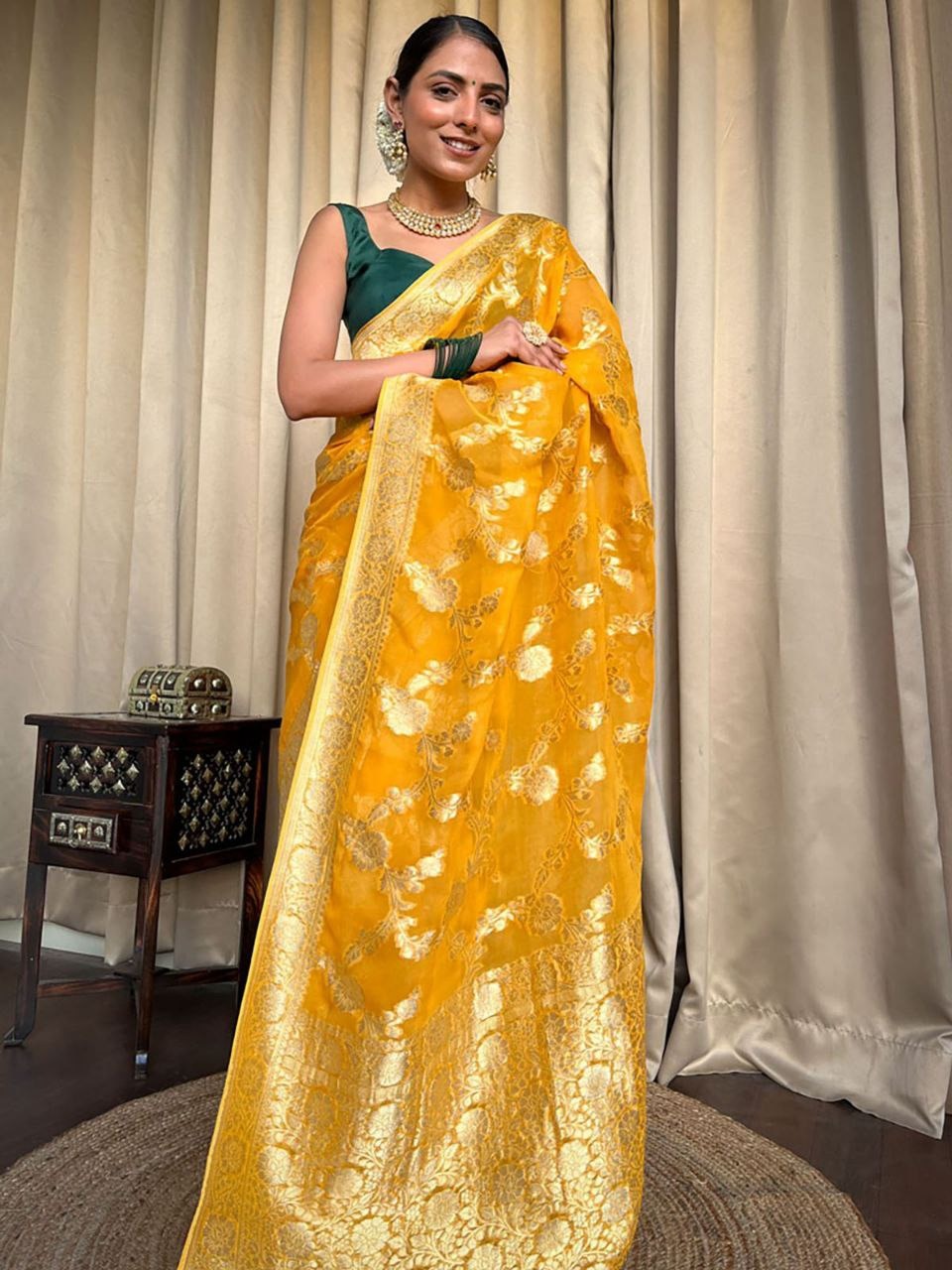
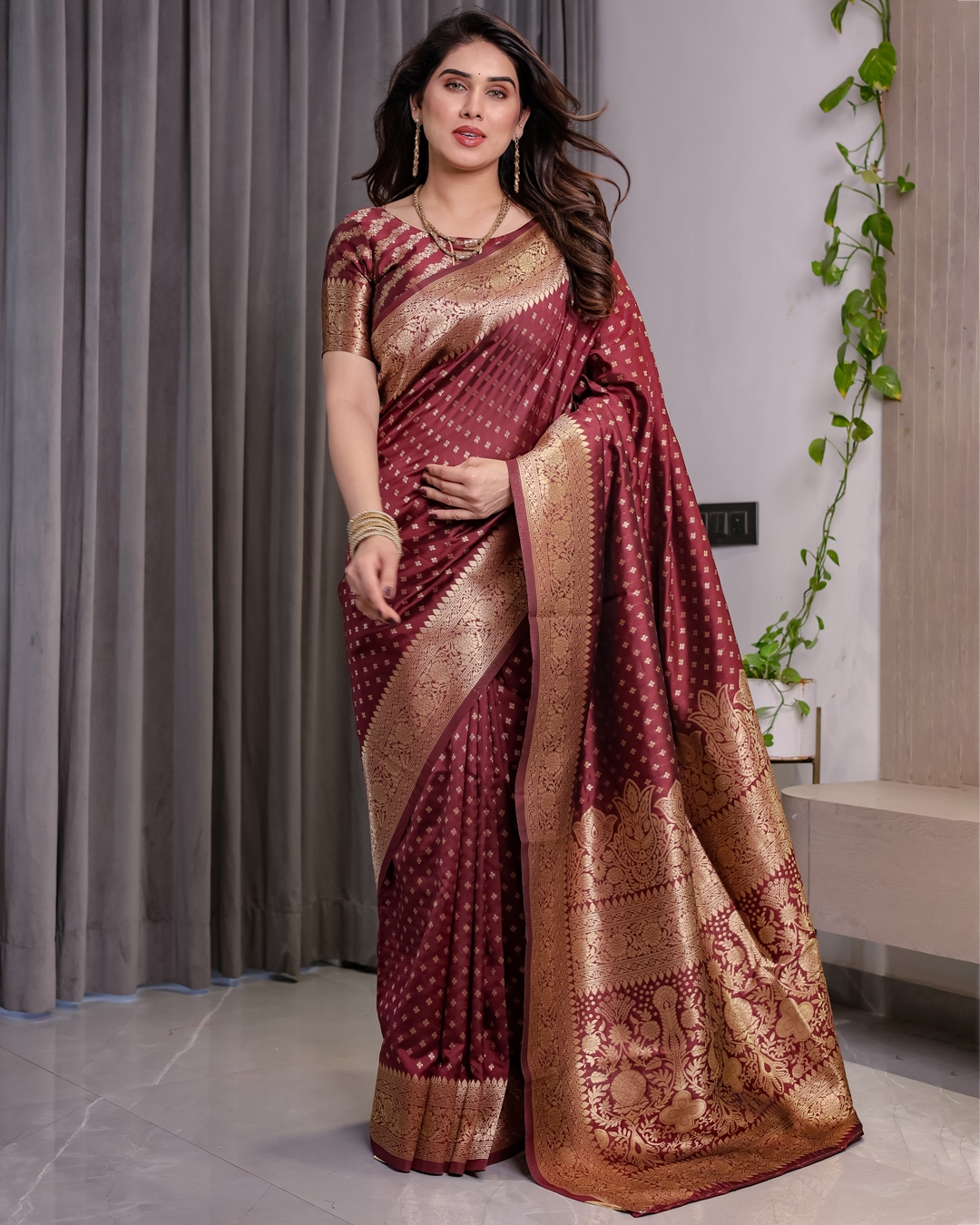
Gold zari has a warm yellow reflection that pairs well with temple jewellery, kundan, polki, gold-plated pieces and antique-finish necklaces. Maroon Banarasi Soft Silk Saree with Golden Zari Border can support warm gold jewellery because maroon and gold both have a deep, traditional visual quality. Medium-sized jhumkas and a short necklace may be enough if the border is already prominent.
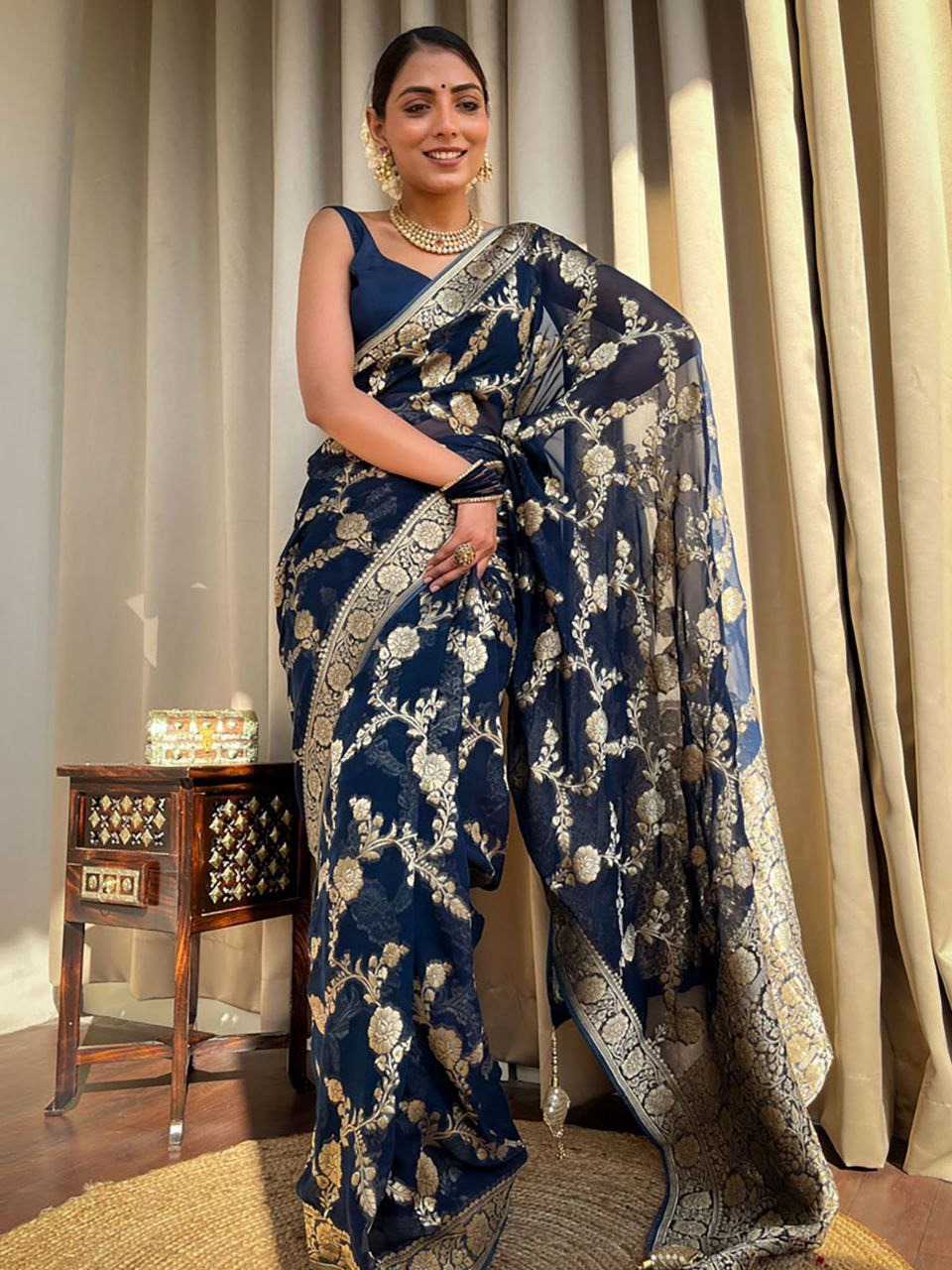
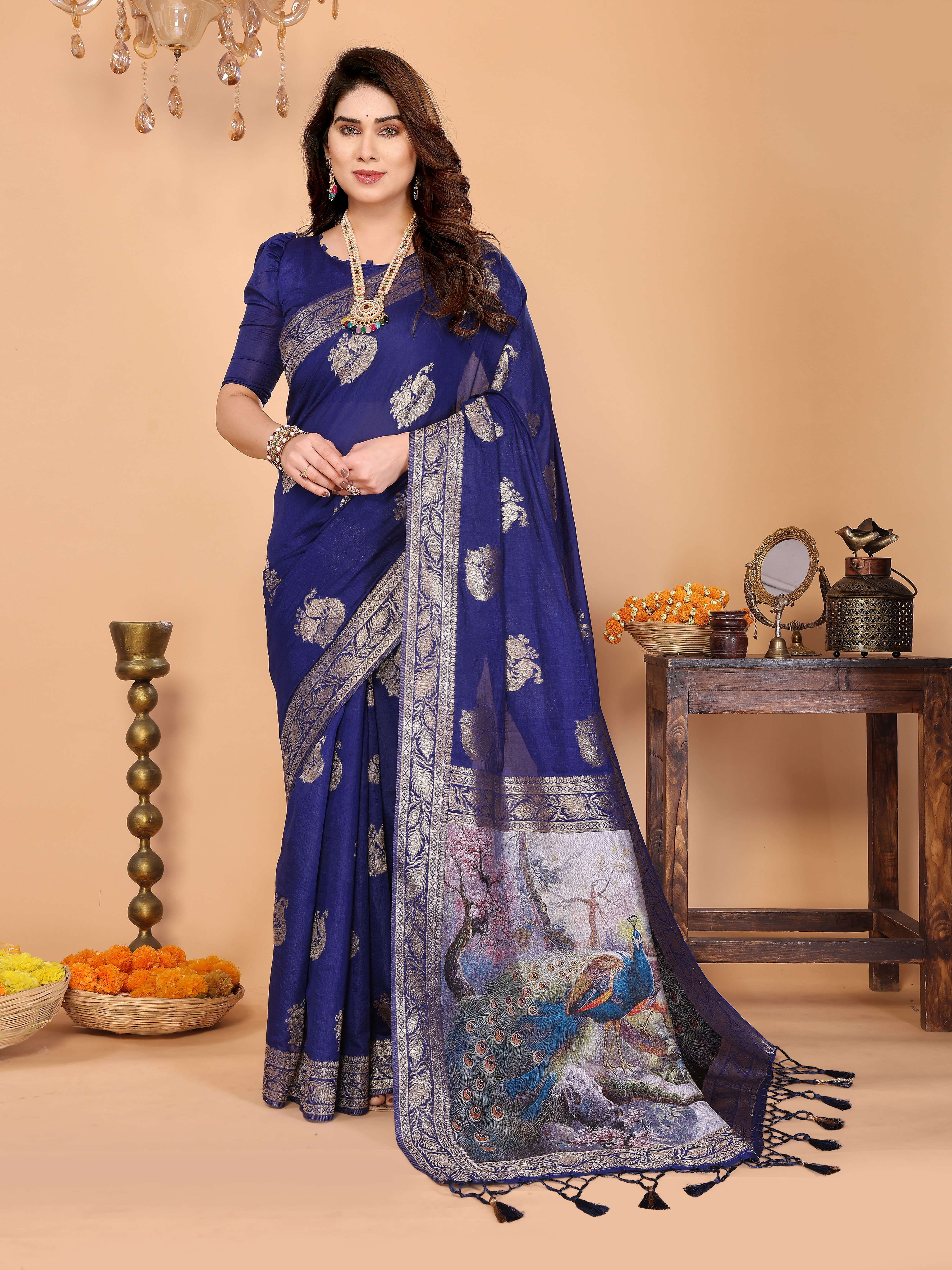
Silver zari, cooler embroidery or a blue-led colour palette can work with silver, white gold, oxidised silver or uncut stones with a pale setting. Royal Blue Banarasi Silk Saree with Golden Zari Paisley & Peacock Pallu still supports gold jewellery because its pallu contains golden zari, but the blue base suggests choosing a cleaner gold design instead of mixing several coloured stones.
Metal mixing works best when one metal clearly leads. Predominantly gold jewellery with one pearl detail feels intentional, whereas equal amounts of gold, silver, rose gold and coloured stones can make a patterned saree look busy. Repeating one accent colour from the pallu in the earrings or bangles is usually more effective than introducing three new colours.
How Should Saree Colour Affect Jewellery Choice?
The saree colour should influence the warmth, contrast and stone colour of the jewellery, but the jewellery should not exactly duplicate every colour in the weave. Deep shades usually tolerate larger gold pieces, while bright or pastel shades often benefit from lighter designs and more visible skin between ornaments.
Deep maroon, red and navy Banarasi sarees
Maroon, red and navy Banarasi sarees can carry antique gold, kundan, ruby-coloured stones and heritage temple motifs. Maroon Banarasi Silk Saree With Floral Jacquard Zari Border already has a repeating floral surface, so a plain gold choker or sculptural earrings will preserve definition better than a necklace with a competing floral pattern.
A red saree for a wedding can take a more ceremonial arrangement, especially with a heritage blouse and pulled-back hair. An useful combination is a broad choker, small or medium jhumkas, six to twelve bangles per arm and one ring. Red Banarasi Silk Sarees for Weddings Under 1100 can provide useful references for comparing red saree styling ideas, although the final jewellery choice should follow the border and pallu of the individual saree.
Pink, emerald and yellow Banarasi sarees
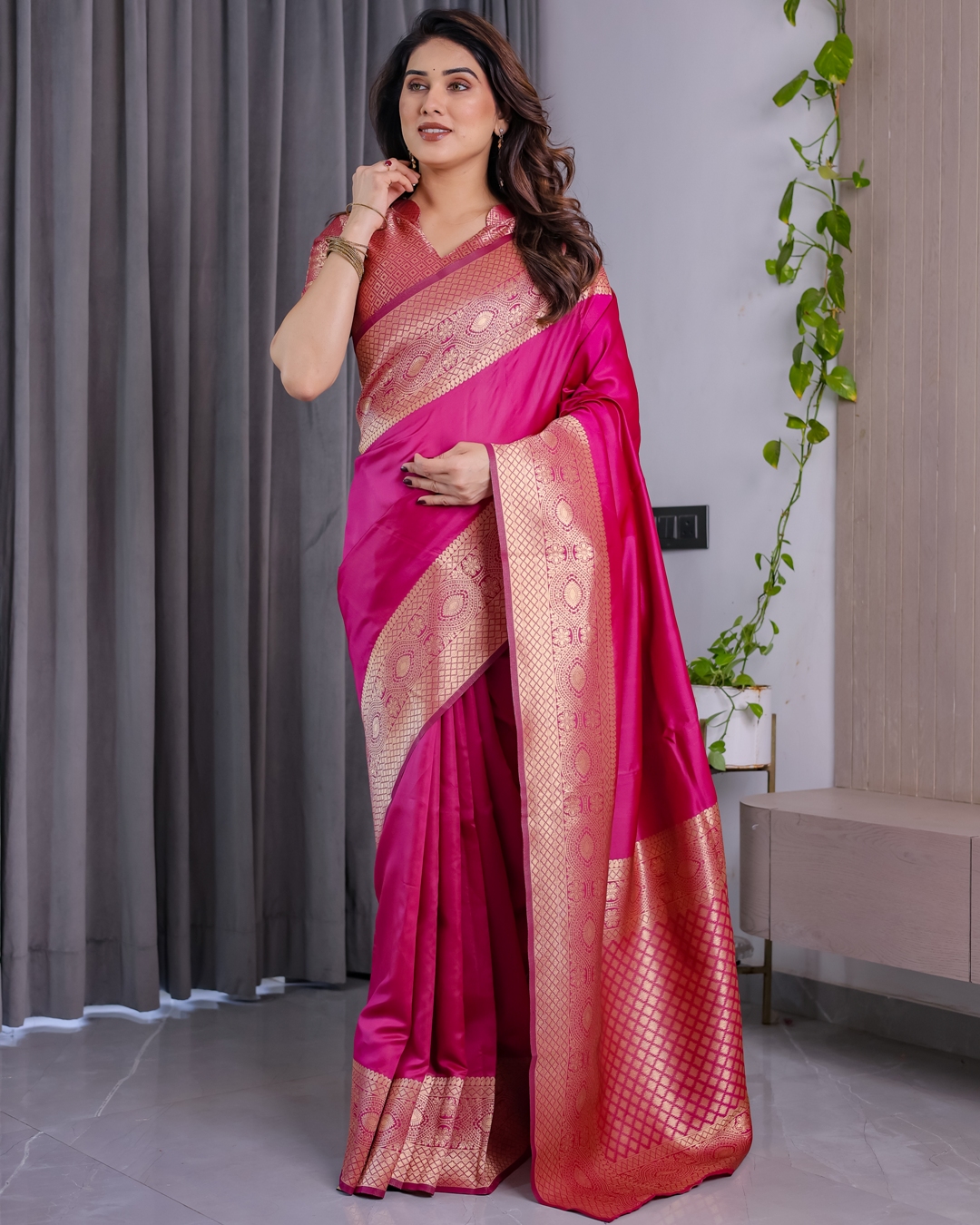
Pink Banarasi sarees pair well with yellow gold, pearls, kundan and soft green or white stones. Pink Banarasi Soft Silk Saree with Golden Zari Border can be styled with pearl-drop earrings and a fine chain for a daytime event, or with a gold choker and larger earrings for an evening celebration.
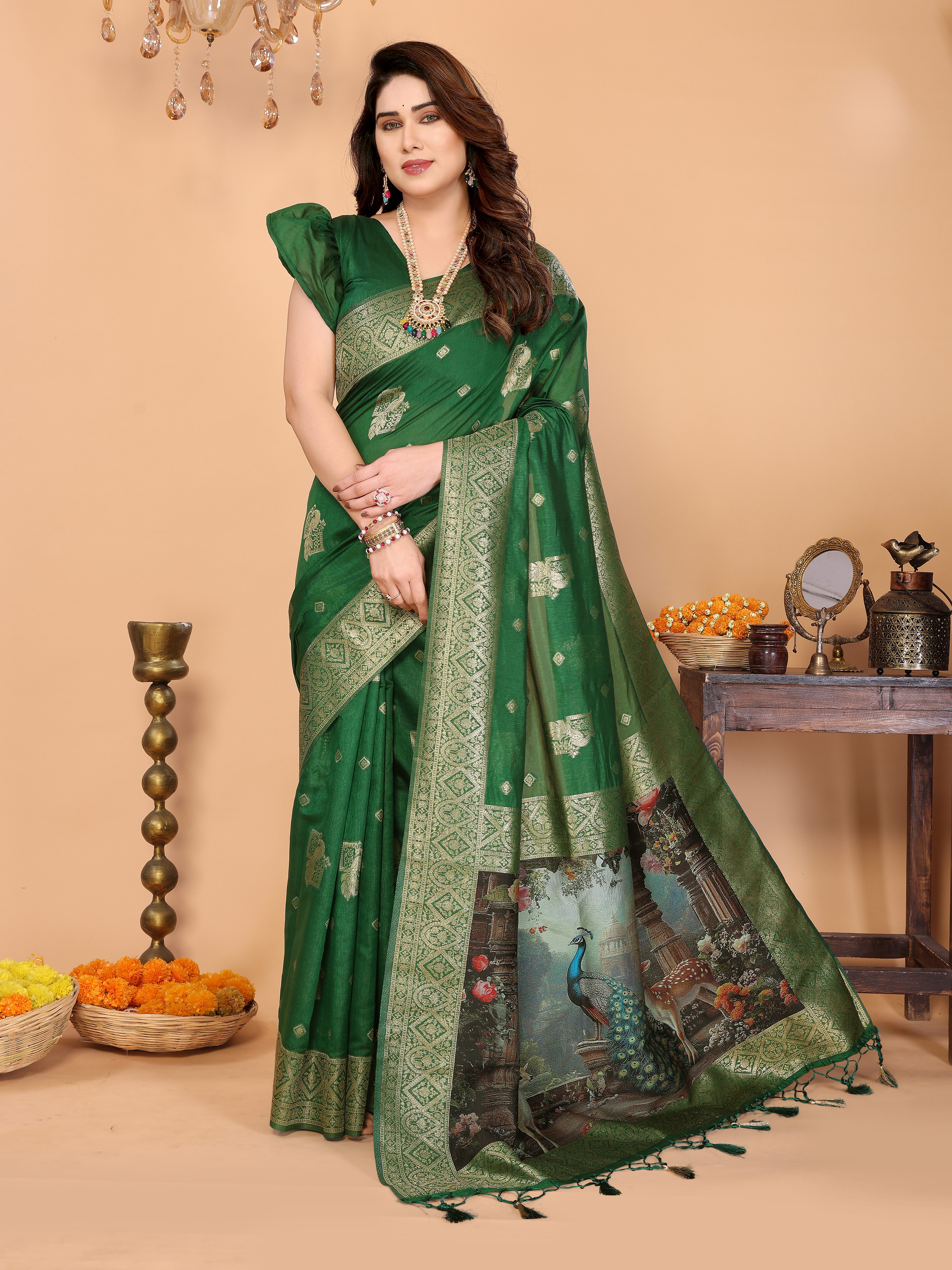
Emerald green looks especially balanced with gold, uncut stones, pearls and muted ruby accents. Emerald Green Banarasi Silk Saree with Peacock Deer Pallu has a narrative pallu motif, so earrings that echo a peacock curve or a simple gold texture can connect with the saree without copying the entire design.
Yellow Banarasi silk already has considerable brightness, especially when paired with gold zari. Yellow Banarasi Silk Saree With Rich Gold Zari Work usually benefits from one dominant gold ornament and smaller supporting pieces. A broad necklace can be replaced by chandbalis, a ring and stacked bangles when the pallu contains dense gold work.
Which Jewellery Combination Fits the Blouse Neckline?
The blouse neckline determines whether a necklace will frame the outfit or collide with the fabric line. A high neckline generally needs shorter jewellery or no necklace, while a deep or wide neckline can accommodate a choker, pendant or layered necklace.
High-neck and boat-neck blouses
A high-neck blouse usually looks cleaner with statement earrings instead of a large necklace. Jhumkas, chandbalis or shoulder-grazing earrings can provide face-framing detail while allowing the blouse embroidery and saree border to remain visible.
A boat-neck blouse creates a broad horizontal line, so a short necklace that sits above the neckline or a long pendant that falls below it can work better than a necklace ending directly on the fabric edge. Choose one length clearly rather than allowing several chains to bunch at the collarbone.
V-neck, sweetheart and square-neck blouses
A V-neck blouse naturally accommodates a pendant, a V-shaped necklace or a short rani haar that follows the opening. A sweetheart neckline works with a rounded choker, a delicate necklace or a layered set, depending on the amount of blouse embellishment.
A square neckline leaves a defined area for a choker or collar necklace. A necklace that's too long may fall into the saree rather than frame the blouse, especially when the Banarasi pallu is heavily woven. Photograph the blouse from the front while wearing the necklace and check whether the neckline remains readable.
How Much Jewellery Is Appropriate for Each Occasion?
The event's dress code should control jewellery volume more than the saree's price or the number of ornaments available at home. Daytime gatherings, office celebrations, festive lunches, wedding ceremonies and receptions each call for a different level of shine and movement.
Daytime puja, family lunch or festive visit
Daytime dressing usually needs earrings, a bindi, two to six bangles and one ring. Pearl drops, small jhumkas or a thin gold chain keep the outfit comfortable in natural light, where very reflective stones can appear overpowering.
A lightweight Banarasi silk saree can be styled with the same restrained approach as pieces seen in Silk Sarees Under 3000 With Discount: let the saree colour and border lead, then use jewellery as a frame. A neat low bun, a small gajra and visible earrings can create more polish than adding a second necklace.
Wedding ceremony or classic festive event
A wedding ceremony supports a choker or short necklace, medium-to-large earrings, six to twelve bangles per arm and one ring. A maang tikka is appropriate when the hairstyle exposes the centre parting and the outfit has a sufficiently classic finish.
Maroon Banarasi Soft Silk Saree with Golden Zari Border can take a classic gold set for a ceremony, while a lighter necklace may be preferable if the blouse has dense embroidery. A waist belt is optional rather than compulsory; it works best when the saree is firmly pleated and the belt doesn't cover an important border motif.
Reception or evening party
An evening reception allows more sparkle, but one statement piece should remain dominant. A crystal or stone necklace with smaller earrings, or large earrings with a bare neckline, creates a cleaner result than wearing both at maximum size.
Navy Blue Banarasi Silk Saree With Gold Jacquard Work can support a contemporary gold collar, sculptural earrings or a sleek layered chain. Party Wear Sarees can offer useful references for balancing evening shine, but the most successful combination still depends on the individual saree's jacquard scale and blouse cut.
How Many Bangles, Rings and Hair Accessories Should You Add?
Four to eight bangles per arm are sufficient for most non-bridal Banarasi saree outfits, while six to twelve per arm create a fuller wedding look. The number should also account for sleeve length, work on the blouse and the width of the saree border.
Short sleeves and sleeveless blouses leave more arm visible, so a slightly fuller bangle stack can create balance. Elbow-length sleeves already add a strong horizontal line, making four to six bangles per arm more proportionate. A single broad kada can replace several thin bangles when the saree has dense zari.
One ring is enough for a daytime outfit, and two rings can work for a wedding or reception. A large cocktail ring should not be paired with several oversized bangles unless the remaining jewellery is deliberately restrained.
Hair accessories should repeat the mood of the jewellery rather than compete with it. A small gajra works with gold jhumkas and a time-honoured Banarasi saree, while a sleek bun with a simple hairpin suits a contemporary necklace. A maang tikka becomes more visible with a centre-parted hairstyle, but it should not be added automatically when large earrings and a heavy choker already dominate the face.
What Should You Avoid When Styling Banarasi Silk?
Avoid matching a heavily patterned Banarasi saree with jewellery that repeats the same motif at the same scale. Floral zari, floral earrings, a floral necklace and a floral hair ornament can blur together instead of creating a coordinated look.
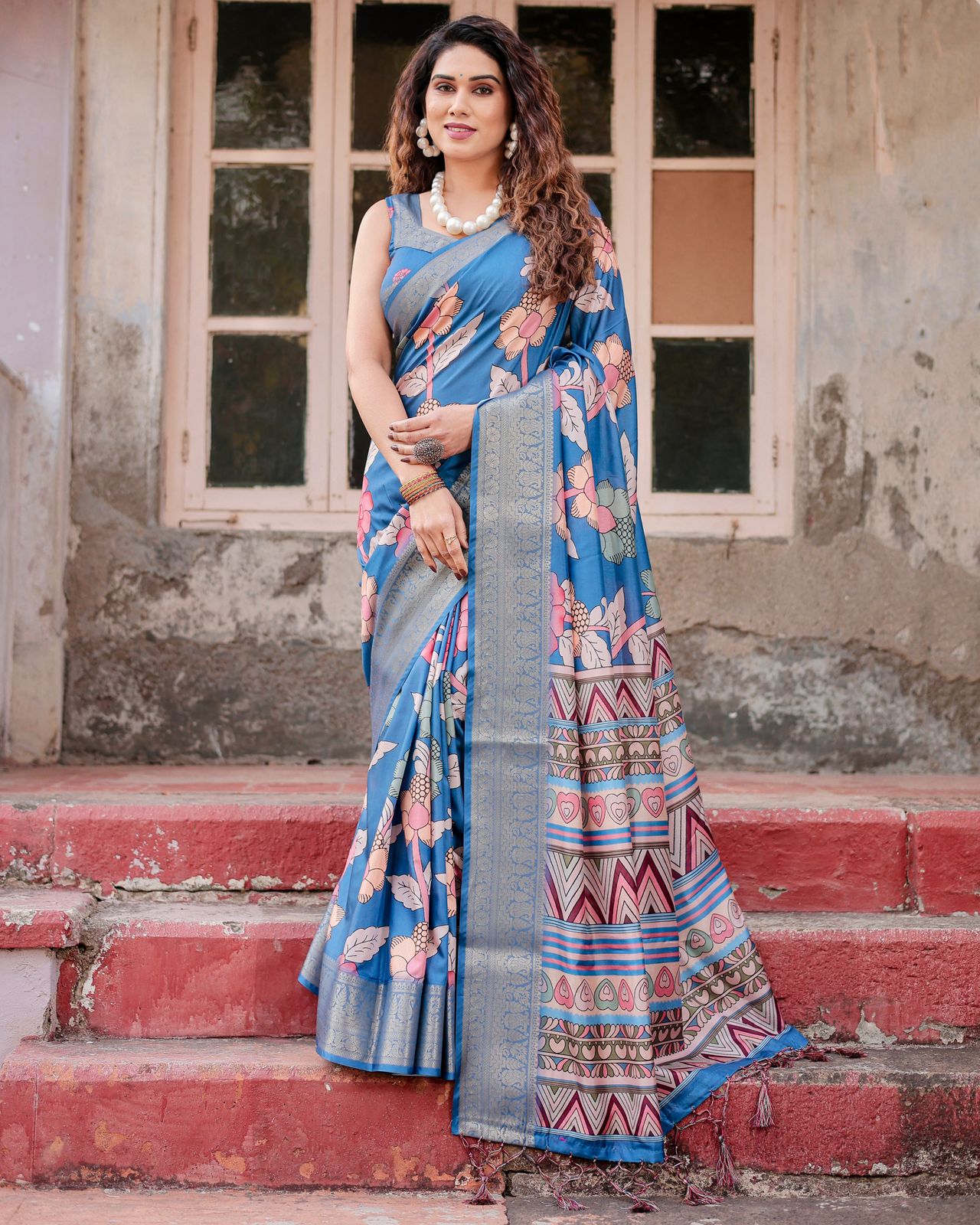
Avoid wearing a long necklace that disappears into a high-contrast pallu. Jewellery that can't be seen doesn't add useful balance, and hidden chains may also catch on the zari during movement. Test the full drape, including the pallu placement, before finalising the necklace length.
Avoid treating every classic piece as mandatory. A maang tikka, nath, kamarbandh, layered necklace, jhumkas, bangles and rings can all be beautiful separately, but a Banarasi silk saree may need only three or four of them for an elegant result.
Avoid ignoring comfort during a long ceremony. Heavy earrings should be supported securely, bangles should allow the wrist to bend, and a waist belt should not press against the body while sitting. Jewellery that needs constant adjustment will distract from both the saree and the wearer.
A Simple Final Check Before You Leave
Use a five-question check before completing the outfit: what is the saree's strongest feature, which jewellery piece is the focal point, does the blouse neckline remain visible, does one metal lead, and can you sit and move comfortably? If the answer to all five is yes, the jewellery quantity is probably right.
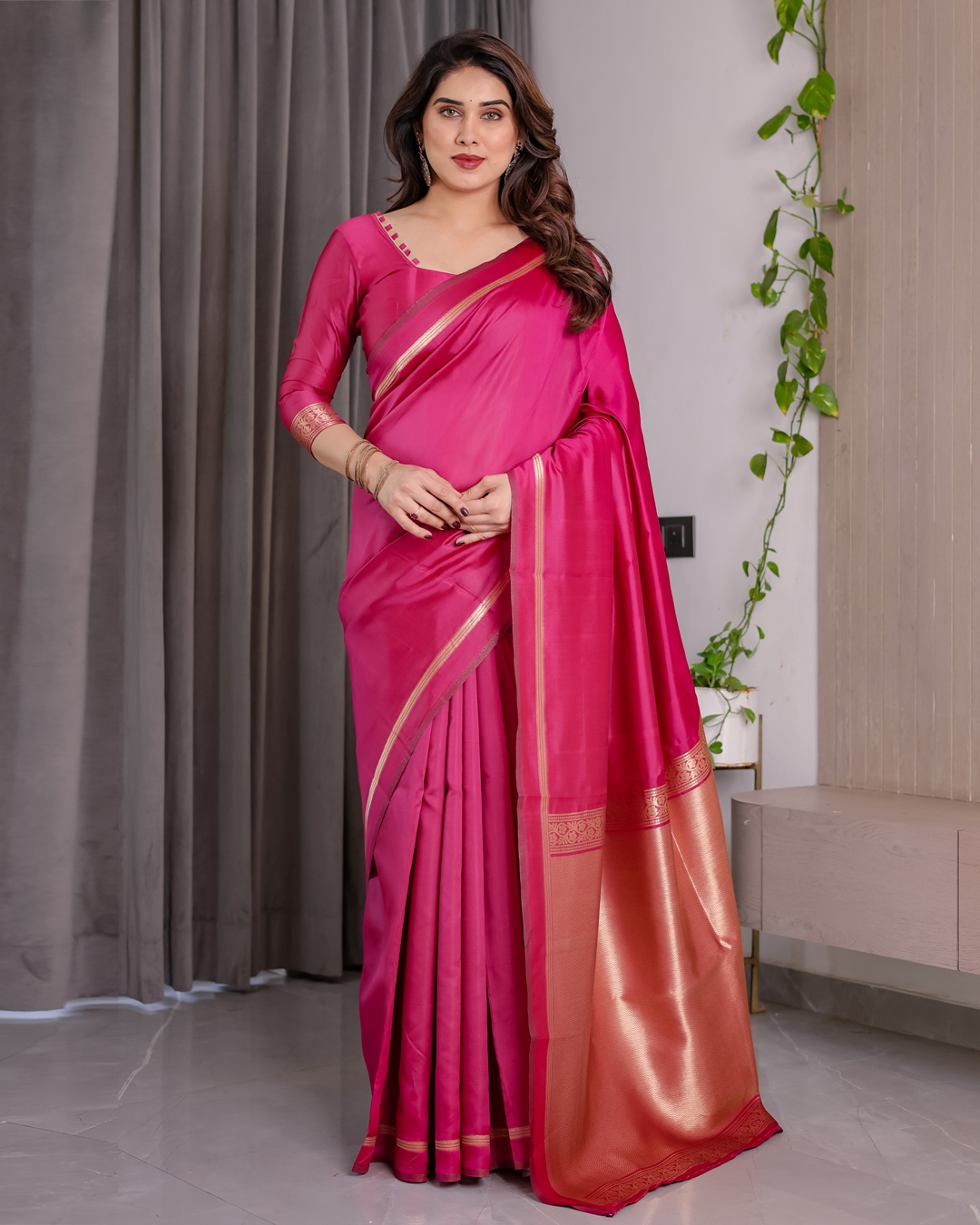
For a richly woven Banarasi saree, subtraction is often more effective than addition. Start with earrings, then add a necklace only if the neckline needs framing; add bangles according to the sleeve and event; finish with a ring, bindi or hair accessory rather than automatically choosing every available ornament.
The best jewellery combination makes the Banarasi silk look intentional from both close range and across a room. Gold zari, a distinctive pallu, a carefully chosen blouse and a controlled number of ornaments can create a richer impression than an overloaded set.
Common Questions About Jewellery for a Banarasi Saree
Can I wear a choker with a Banarasi silk saree?
Yes, a choker works well with a Banarasi silk saree when the blouse has a V-neck, sweetheart or square neckline and the saree doesn't already have excessive visual weight near the face. Choose a plain gold, antique gold or lightly stone-set choker when the pallu contains dense zari.
Should I wear gold or silver jewellery with a Banarasi saree?
Gold jewellery is the easiest match for a Banarasi saree with gold zari, while silver or white-gold jewellery suits cooler metallic details and creates intentional contrast. One dominant metal usually looks more polished than mixing several metals in equal amounts.
How many bangles should I wear with a Banarasi saree?
Wear two to six bangles per arm for a daytime or modest festive outfit and six to twelve per arm for a fuller wedding look. Sleeve length, bangle width and the density of the saree's zari should guide the final number.
Can I wear a maang tikka with large jhumkas?
Yes, a maang tikka and large jhumkas can be worn together when the necklace is minimal or absent and the hairstyle leaves the centre parting visible. Keep the maang tikka and earrings in a similar metal so the face doesn't have too many competing accents.
Is a kamarbandh necessary with a Banarasi saree?
A kamarbandh is optional and is most useful for a formal wedding or traditional ceremony where the saree is securely pleated. Skip it when the border or pallu has an important motif at the waist, or when the belt makes sitting and walking uncomfortable.
What jewellery works with a heavily zari-worked Banarasi saree?
Heavily zari-worked Banarasi sarees usually work best with one strong ornament, such as a choker, chandbalis or a broad kada, supported by small earrings or a simple ring. Restrained jewellery allows the zari border and pallu to remain visible instead of creating competing areas of shine.
Common Questions About Choosing Jewellery for a Banarasi Saree
Can I wear a choker with a Banarasi silk saree?
Yes, a choker works well with a Banarasi silk saree when the blouse has a V-neck, sweetheart or square neckline and the saree does not already have excessive visual weight near the face. Choose a plain gold, antique gold or lightly stone-set choker when the pallu contains dense zari.
Should I wear gold or silver jewellery with a Banarasi saree?
Gold jewellery is the easiest match for a Banarasi saree with gold zari, while silver or white-gold jewellery suits cooler metallic details and creates intentional contrast. One dominant metal usually looks more polished than mixing several metals in equal amounts.
How many bangles should I wear with a Banarasi saree?
Wear two to six bangles per arm for a daytime or modest festive outfit and six to twelve per arm for a fuller wedding look. Sleeve length, bangle width and the density of the saree's zari should guide the final number.
Can I wear a maang tikka with large jhumkas?
Yes, a maang tikka and large jhumkas can be worn together when the necklace is minimal or absent and the hairstyle leaves the centre parting visible. Keep the maang tikka and earrings in a similar metal so the face does not have too many competing accents.
Is a kamarbandh necessary with a Banarasi saree?
A kamarbandh is optional and is most useful for a formal wedding or traditional ceremony where the saree is securely pleated. Skip it when the border or pallu has an important motif at the waist, or when the belt makes sitting and walking uncomfortable.
What jewellery works with a heavily zari-worked Banarasi saree?
Heavily zari-worked Banarasi sarees usually work best with one strong ornament, such as a choker, chandbalis or a broad kada, supported by small earrings or a simple ring. Restrained jewellery allows the zari border and pallu to remain visible instead of creating competing areas of shine.