

How Much Ease Should You Have in Readymade Blouse Fit? The answer usually falls between 1 and 3 inches at the bust, depending on the fabric, construction and silhouette. A close-fitting padded blouse may need only 1 to 1.5 inches of ease, while a firm cotton blouse with sleeves often feels better with 2 to 3 inches. The correct allowance lets you breathe, sit and move your arms without making the blouse look loose under a saree.
Readymade sizing becomes easier when you separate your body measurement from the garment measurement. If your full bust measures 36 inches and a blouse measures 38 inches around the bust, the blouse has 2 inches of bust ease. That number matters more than the label marked M, L or XL, because size labels vary between designers and fabrics.
How Much Ease Should You Have in Readymade Blouse Fit?
The most useful starting point is 1 to 2 inches of bust ease for a structured blouse and 2 to 3 inches for a firm, non-stretch cotton blouse. A blouse with stretch, elastic panels or a flexible back can work with less added width because the fabric supplies movement. A rigid silk or heavily embellished blouse needs enough room for sitting, breathing and raising the arms without pulling across the bust.
Ease is not the same as looseness. Ease is the extra circumference built into a garment so the body can move. A 36-inch bust and a 38-inch garment bust indicate 2 inches of ease; a 36-inch bust and a 41-inch garment bust indicate 5 inches, which may create wrinkles, gaping or an untidy saree drape.
What is a practical ease range by blouse style?
A practical ease range is 1 to 1.5 inches for a fitted padded blouse, 1.5 to 2 inches for most silk or festive blouses, and 2 to 3 inches for structured cotton blouses. A relaxed or loose designer readymade blouse can use 3 to 4 inches, but the shoulder, neckline and armhole must still sit correctly.
- Fitted padded blouse: Choose approximately 1 to 1.5 inches of bust ease when the cups and seams are properly positioned.
- Silk blouse: Allow approximately 1.5 to 2 inches because Banarasi silk and similar woven fabrics have little natural give.
- Cotton blouse: Allow approximately 2 to 3 inches, especially when the cotton is crisp, lined or sleeved.
- Stretch or flexible-back blouse: Start with about 1 inch, then check the fabric composition and construction.
- Relaxed blouse: Allow approximately 3 to 4 inches if the design intentionally falls away from the body.
These figures are starting points rather than substitutes for the garment's actual measurements. A broad shoulder, fuller upper arm or prominent bust may require a different adjustment from a person with the same bust circumference but a narrower frame.
Which measurements matter more than the size label?
The bust, underbust, shoulder, armhole and blouse length measurements determine fit more reliably than a readymade size label. The bust measurement controls horizontal comfort, while the shoulder and armhole determine whether the garment feels wearable during movement.

Measure your body accurately
Measure over the bra you plan to wear with the blouse, keeping the tape level across the fullest part of the bust. Keep the tape close to the body without compressing the bust. Measure the underbust directly below the bust, the natural waist where the blouse ends, shoulder width from shoulder point to shoulder point, and upper arm circumference at the fullest area of the arm.
Take each measurement twice and record the larger consistent result. Measuring after a large meal, over a thick padded bra or with a tape sloping down the back can change the result by an inch or more. A close-fitting blouse exposes those small errors quickly.
Compare body and garment measurements
Subtract your body measurement from the corresponding garment measurement to calculate ease. For example, a 36-inch bust and a 37.5-inch blouse bust provide 1.5 inches of ease, while a 36-inch bust and a 39-inch blouse bust provide 3 inches. Repeat the calculation at the waist if the blouse is fitted below the bust.
Do not add bust ease to every measurement. Shoulder width should usually remain close to your shoulder measurement, with only enough room for the seam to sit naturally. Excess shoulder width can make a blouse look dropped even when the bust circumference is correct.
How does fabric change the right blouse ease?
Fabric changes the right amount of ease because woven materials differ in stretch, recovery, thickness and drape. Cotton usually needs more movement room than a soft stretch blend, while silk needs enough room to prevent strain because woven silk generally does not recover from repeated pulling.
Silk and embellished blouses
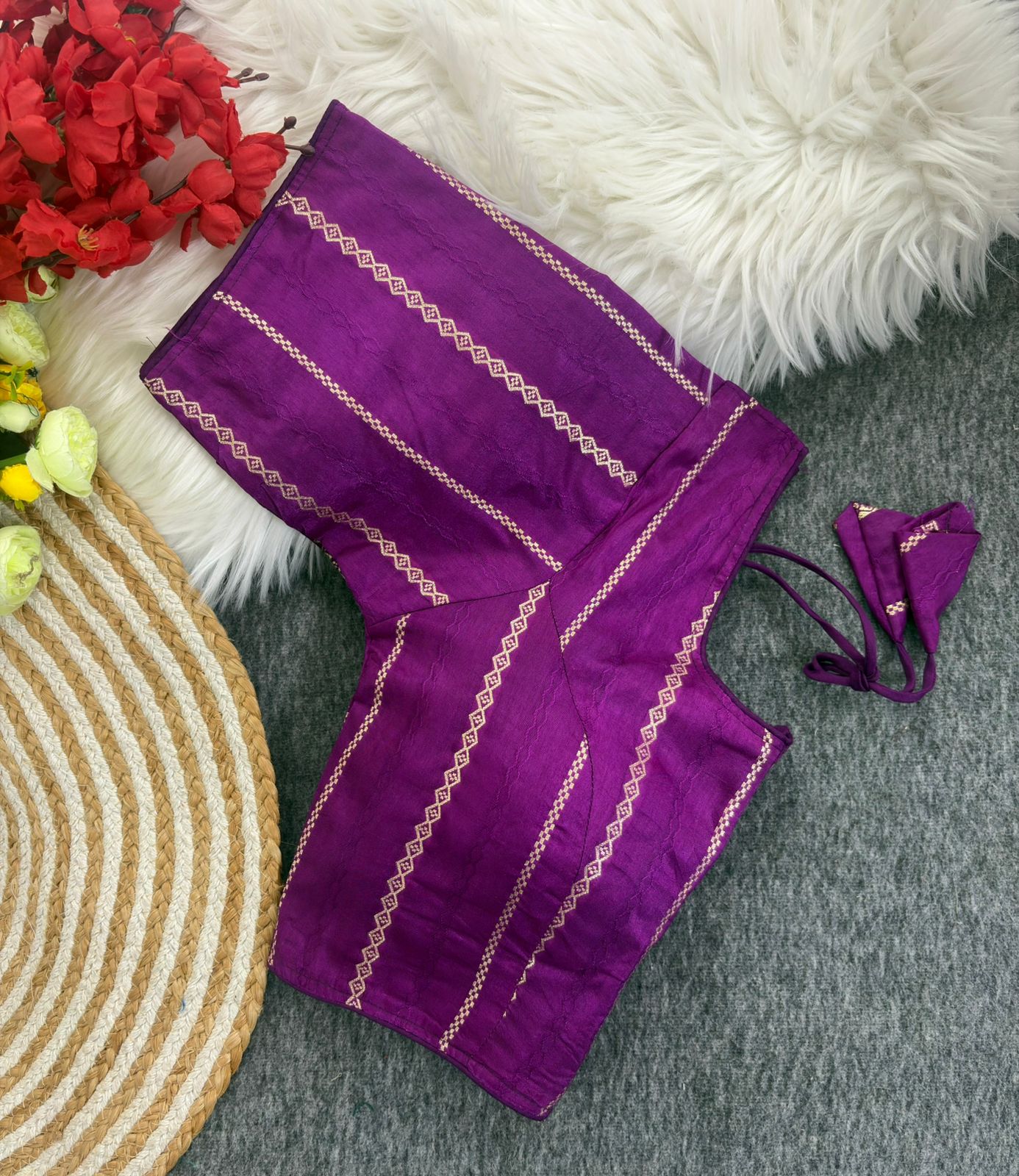
Banarasi silk, silk brocade and zari-embellished fabrics usually work best with controlled ease rather than a very tight fit. A fitted Banarasi Silk Golden Jari Padded Blouse for Women can look polished with around 1.5 to 2 inches of bust ease, provided the padded cups sit over the bust and the neckline does not pull.
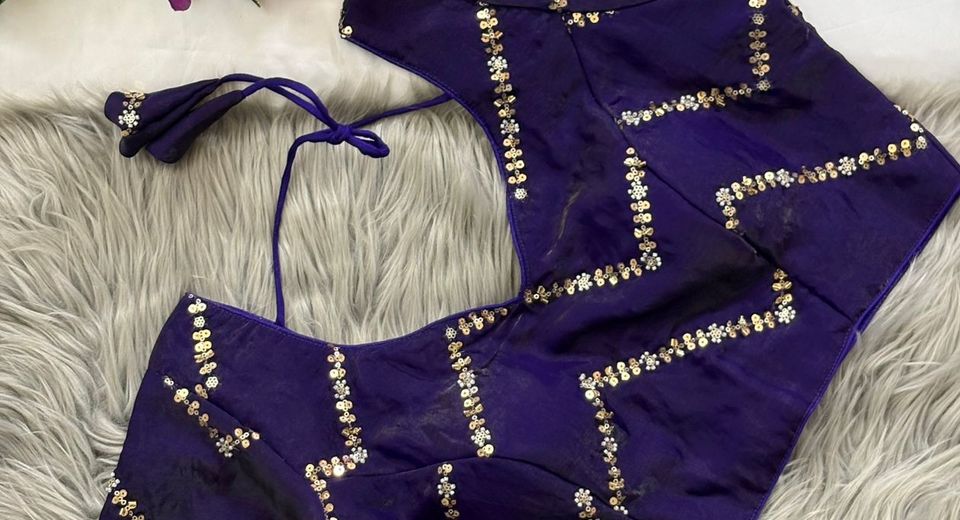
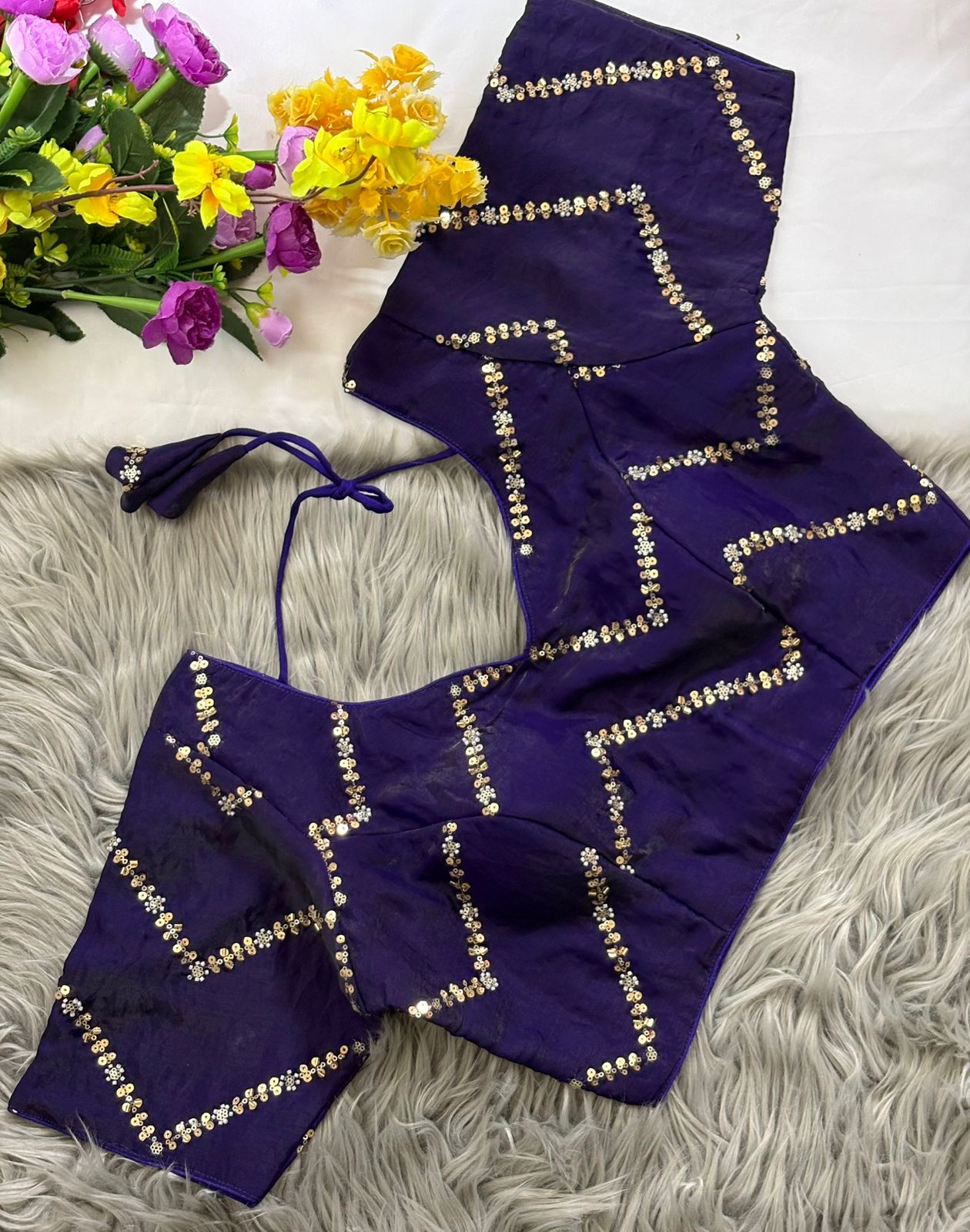
Heavy embellishment adds weight and stiffness to a blouse. A Fendy Silk Zigzag Moti Work Readymade Blouse may need slightly more practical room than an unembellished silk blouse because beadwork and motifs can reduce flexibility at the front and sleeves. Check whether the garment is lined, since a lining can make a woven silk blouse feel firmer than its outer fabric suggests.
Cotton and printed blouses
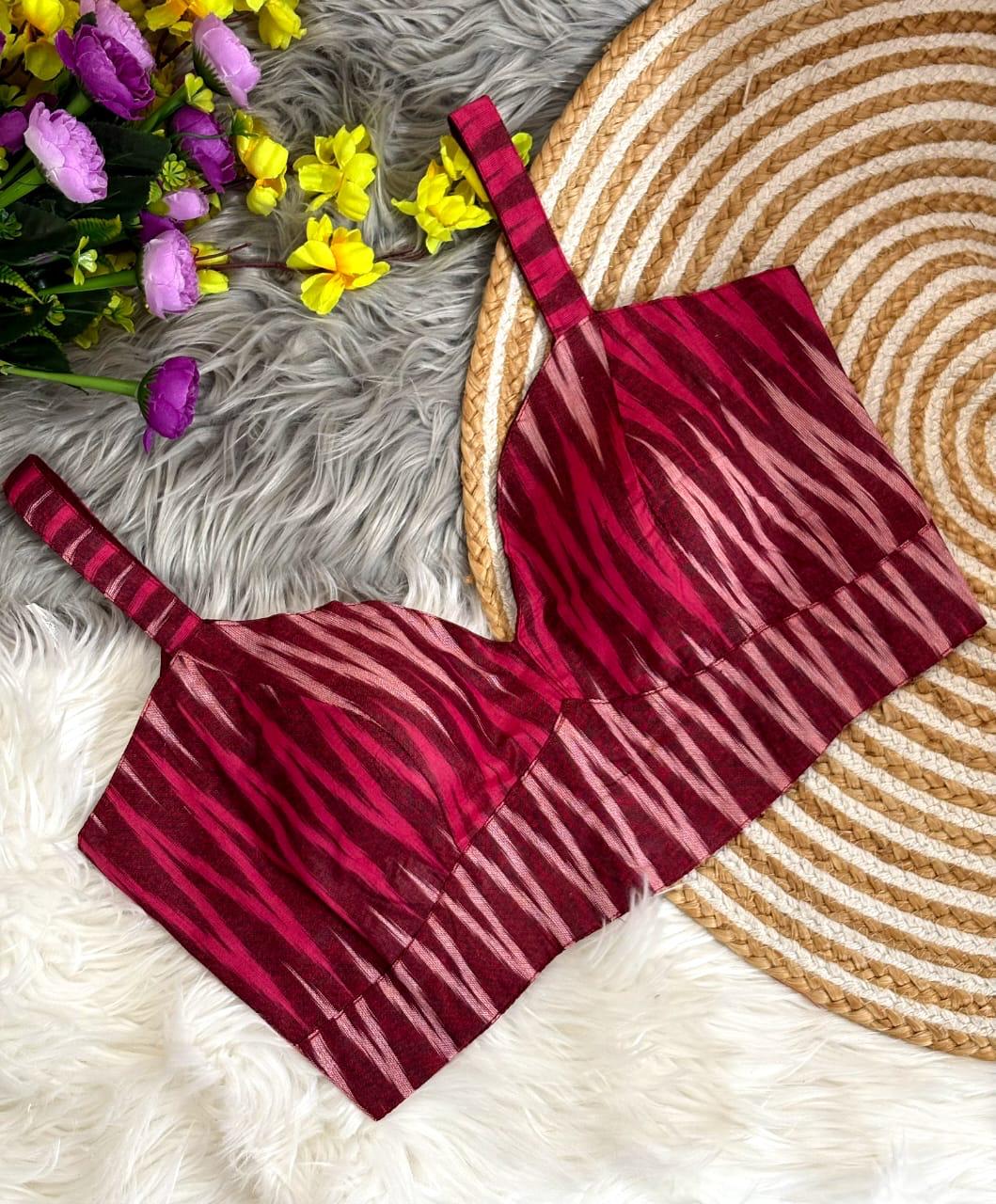
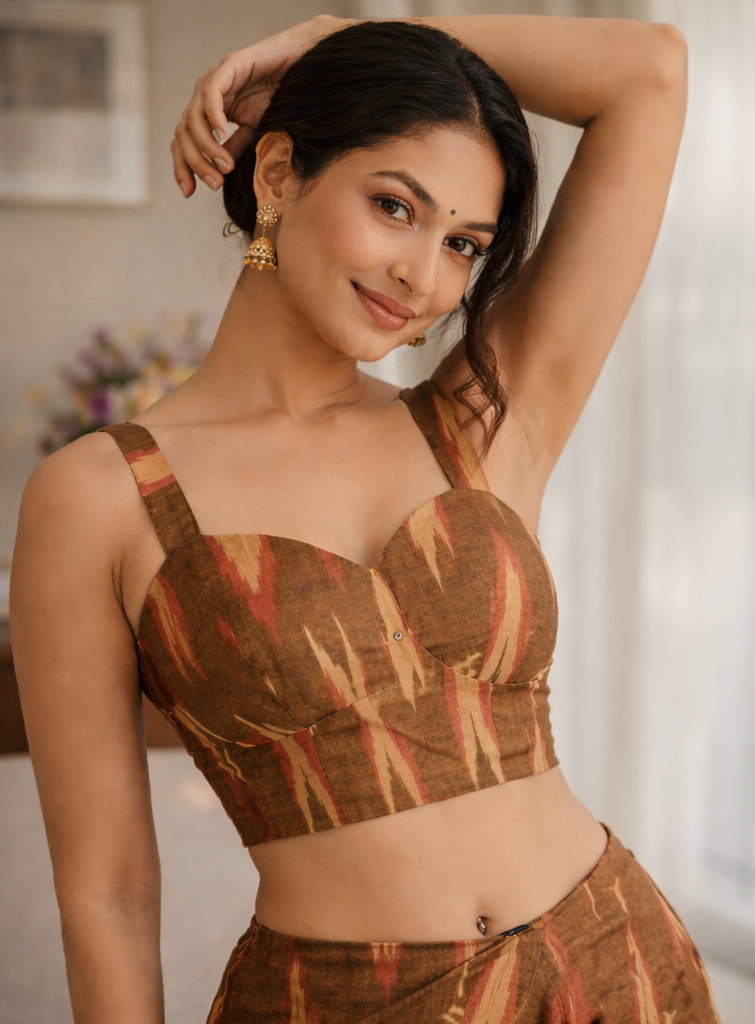
Cotton blouses often need 2 to 3 inches of ease because cotton has limited stretch and can feel restrictive at the armhole. A Cream Ikat Cotton Padded Blouse Sleeveless Trendy and an Ikkat Cotton Padded Blouse for Women Sleeveless can suit a closer bust fit when the armhole is comfortable, but the garment should not dig into the underarm when you lift your arms.
Printed cotton can soften after washing, but softening does not reliably create extra width. A Brown Ikat Cotton Padded Blouse Sleeveless Stylish may become more comfortable after careful laundering, yet a blouse that is already tight across the bust can still remain tight. Do not buy a smaller size assuming cotton will stretch permanently with wear.
Kalamkari and structured cotton
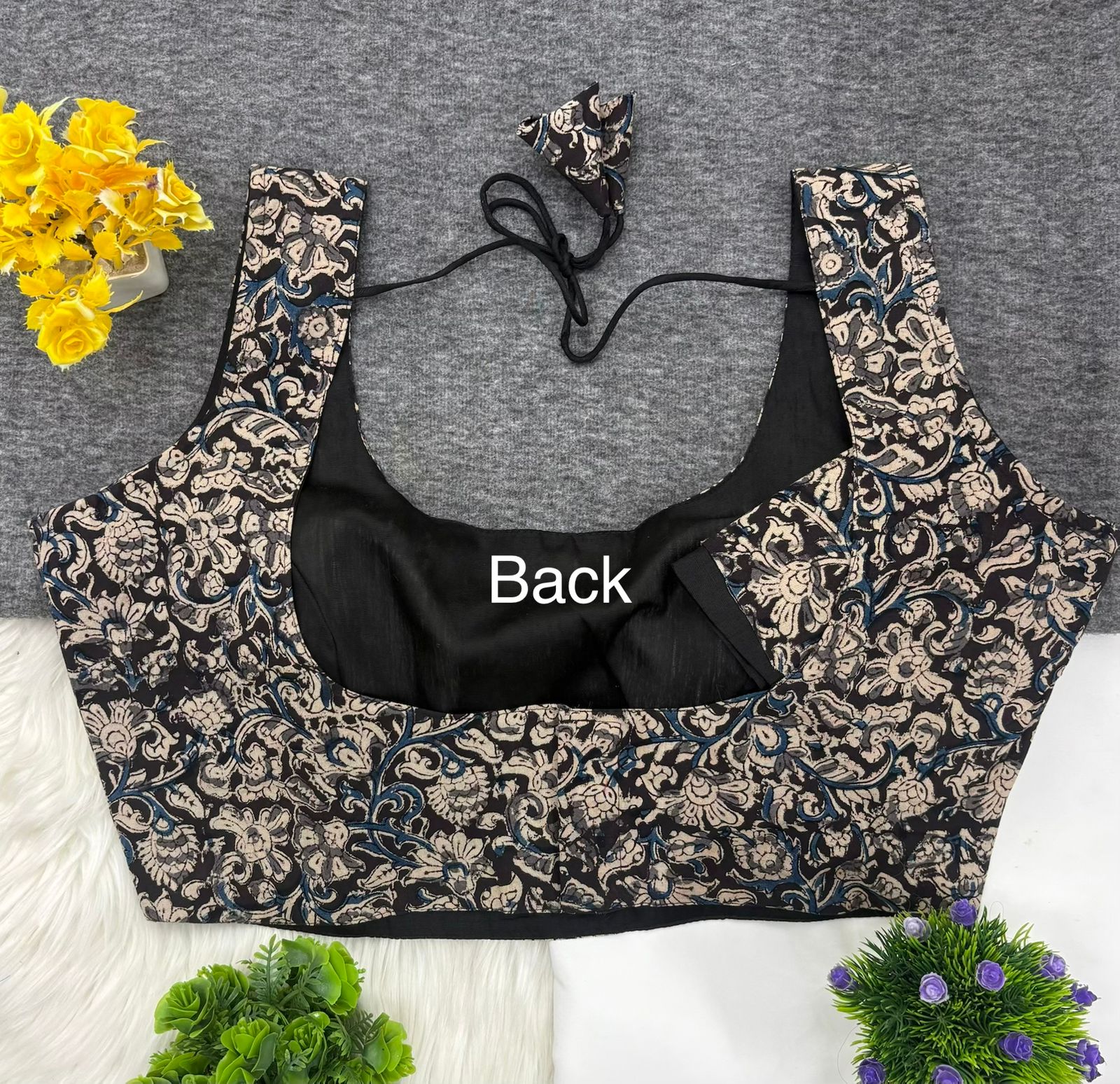
Kalamkari cotton is generally a woven, non-stretch fabric, so 2 to 3 inches of ease is a sensible starting point for regular movement. A Kalamkari Cotton V Neck Collar Blouse for Women can look sharp when the neckline lies flat and the shoulder seam sits correctly; extra bust width cannot compensate for a shoulder that is too narrow.
A Pure Kalamkari Cotton Padded Blouse for Women combines a structured textile with padding, making cup placement and armhole depth especially important. The blouse should allow the padded cups to cover the bust without the centre front lifting or the side seam moving forward.
How should a padded readymade blouse fit?
A padded readymade blouse should hold the bust smoothly without compressing it, and the padding should remain centred when you move your arms. The cup edge should not cut into the bust, the centre front should not gape, and the underarm should not rub.
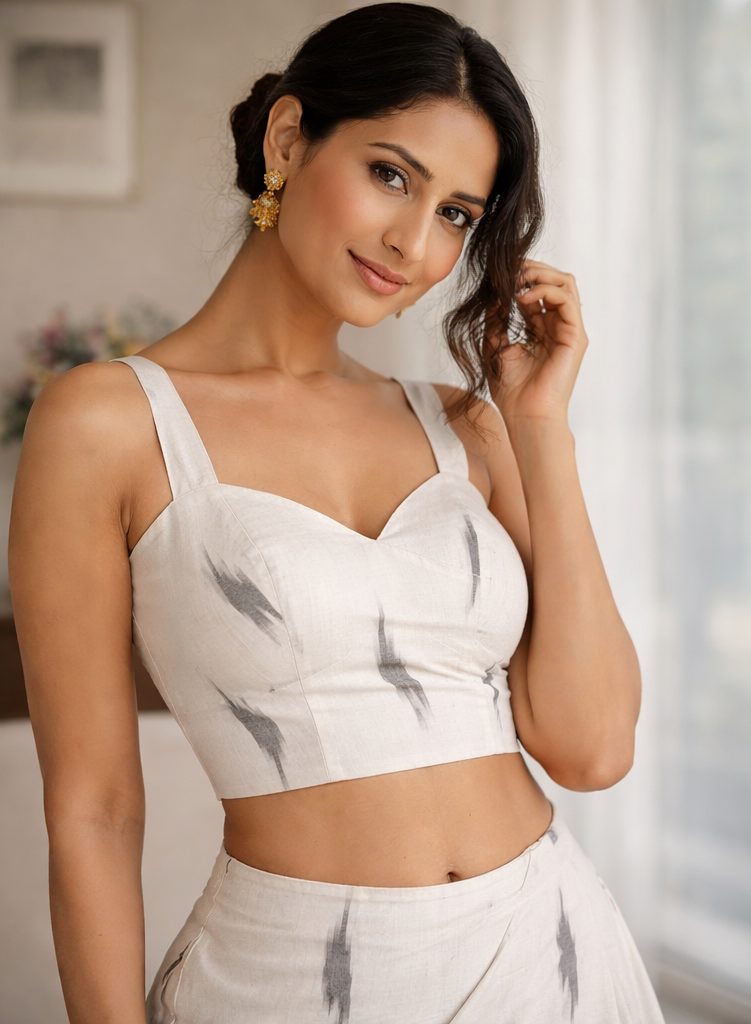
Padded blouses can feel tight even when the stated bust measurement appears generous because padding occupies internal space. If a 36-inch body bust is paired with a padded garment measuring 38 inches externally, the usable internal room may be slightly less than the full 2 inches of apparent ease.
Check these four points
- Centre front: The fabric should lie flat between the cups without a horizontal stress line.
- Cup position: The fullest part of the padding should align with the fullest part of the bust rather than sitting too high or toward the side.
- Side seam: The side seam should fall near the side of the body, not migrate toward the front because the bust is too full for the cut.
- Back closure: Hooks, zips or tie closures should close without fabric rippling sharply around them.
A padded blouse that feels comfortable while standing may still restrict movement when you bend or raise your arms. Test both actions before deciding that the fit is correct.
How can you test ease before wearing a blouse with a saree?
You can test readymade blouse ease in five minutes by checking breathing, arm movement, sitting, neckline stability and closure strain. These tests reveal functional fit more accurately than looking in a mirror while standing still.
- Take three normal breaths: The blouse should not tighten progressively around the bust or underbust.
- Raise both arms: The hem may lift slightly, but the armhole should not cut into the underarm and the neckline should not pull downward.
- Reach forward: The back closure should remain secure without a sharp horizontal fold across the shoulder blades.
- Sit for five minutes: The waist and underbust should remain comfortable while the fabric stays in place.
- Wear the intended bra: A blouse can fit differently with a balconette, padded, non-padded or minimiser bra.
Try the blouse with the saree petticoat or shapewear you will actually wear. A high-waisted layer can press against the blouse hem, while a saree pleat placed close to the bust can expose gaping that was not obvious with ordinary clothing.
What should you do when your measurements fall between sizes?
Choose the larger size when the fabric is non-stretch, the blouse is padded, or the larger measurement is at the bust and upper arm. Choose the smaller size only when the garment has reliable stretch or the larger size would create clearly misplaced shoulders and excessive neckline width.
When the bust fits but the waist is loose, a tailor can often take in the side seams. When the shoulders, armhole or bust are too small, alterations become more difficult and may affect the padding, neckline or sleeve balance. Readymade blouses with princess seams may offer better alteration potential than heavily embellished styles.
For a designer saree, a close but comfortable blouse usually photographs better than a visibly strained blouse. Avoid sizing down solely to create a sharper silhouette; wrinkles radiating from the bust, lifted hooks and a neckline that pulls are signs of insufficient ease, not a fashionable fit.
How do you choose a readymade blouse online?
Choose a readymade blouse online by comparing your largest body measurement with the garment chart, identifying the fabric, and checking construction details before relying on the size name. Product photographs can show the style, but measurements explain whether the style is likely to work for your body.
- Record your bust, underbust, waist, shoulder and upper-arm measurements.
- Check whether the listed bust measurement describes the body range or the finished garment.
- Look for lining, padding, stretch, sleeve length and closure type.
- Allow more ease for firm cotton, heavy zari, thick lining and full sleeves.
- Allow less ease for stretch fabric or a deliberately close-fitting blouse.
- Compare the blouse length with the point where your saree or lehenga waistline sits.
Different collections may use different size standards, so a medium in one designer readymade style may not match a medium in another. Keep your own body measurements in a note on your phone and compare every garment chart against them.
A readymade blouse can also support several styling directions. A Classic Festive Wear Blouse for Stylish Saree Look may work with a traditional silk saree, while a sleeveless Ikat blouse can give a cotton saree or contemporary designer saree a lighter appearance. Fit remains the foundation in both cases.
Common fit problems and what they reveal
Visible strain lines, gaping, shoulder slipping and armhole cutting each point to a different fit problem. Identifying the symptom prevents you from adding random extra inches everywhere.
- Horizontal lines across the bust: The blouse lacks bust ease or the cup shape is too small.
- Vertical wrinkles beside the bust: The garment may have excess width or the bust point may not align with the pattern.
- Neckline gaping: The neckline may be too wide, the bust shape may need a different cut, or the shoulder may be too broad.
- Armhole digging: The armhole is too high or the upper-arm measurement lacks room, even if the bust fits.
- Back hooks pulling apart: The blouse is too small around the bust, underbust or back.
- Shoulder seam falling outward: The size is too large at the shoulder or the shoulder slope does not match your body.
Alterations should address the actual problem. Adding width at the waist will not solve a tight armhole, and increasing bust ease will not correct a shoulder seam that is too wide.
A simple rule for comfortable blouse fit
Start with 1 to 2 inches of bust ease for fitted silk and padded styles, and 2 to 3 inches for firm cotton or sleeved blouses. Then confirm the result with movement tests, because comfort depends on armhole depth, shoulder placement, padding and closure design as much as on circumference.
The most reliable readymade blouse is one that stays smooth while you breathe, sit, lift your arms and drape your saree. A correctly measured blouse does not need to feel loose to be comfortable, and a very tight blouse does not automatically create a more elegant silhouette.
Readymade Blouse Ease and Fit Questions Answered
How much bust ease is ideal in a readymade blouse?
Around 1 to 2 inches of bust ease suits most fitted silk and padded blouses, while 2 to 3 inches is usually more comfortable in firm cotton styles. Stretch fabric may need less ease, but the garment must still allow normal breathing and arm movement.
Should a padded blouse be tight or comfortable?
A padded blouse should be close-fitting but comfortable, with the padding centred over the bust and no pulling at the neckline or closure. A blouse that compresses the bust or cuts into the underarm is too small even if the silhouette looks neat.
Does cotton readymade blouse fabric stretch with wear?
Most woven cotton blouse fabric stretches very little and should not be expected to gain a full size. Choose approximately 2 to 3 inches of ease for firm cotton, particularly when the blouse has sleeves, lining or structured padding.
How do I know if a readymade blouse is too tight?
Horizontal wrinkles across the bust, hooks pulling apart, restricted breathing and armhole digging indicate insufficient ease. Test the blouse while raising your arms, reaching forward and sitting instead of judging the fit only while standing.
What should I do if I am between two blouse sizes?
Choose the larger size when the fabric is non-stretch, padded or tight at the bust and upper arm. A tailor can often reduce excess width at the side seams, but adding room to a small padded or embellished blouse is usually more difficult.
Is ease different for a silk blouse and a cotton blouse?
Yes, silk blouses commonly need about 1.5 to 2 inches of ease, while firm cotton blouses often need 2 to 3 inches because cotton woven fabric has limited stretch. Heavy zari, lining and embellishment can make either fabric feel more restrictive.


