

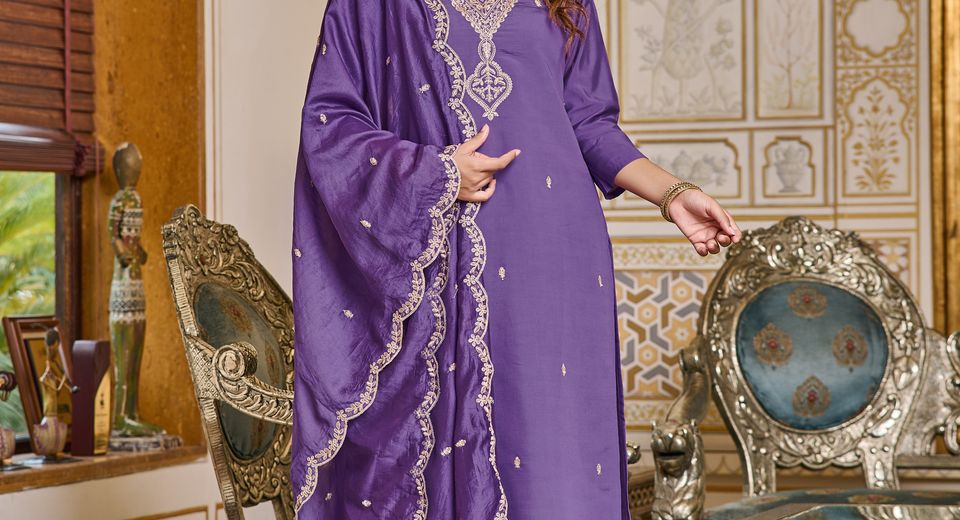
How Much Ease Should a Kurti Have at the Bust Waist and Hips? A well-fitting kurti usually needs 2 to 4 inches of total ease at the bust, 2 to 4 inches at the waist, and 3 to 5 inches at the hips. The ideal amount depends on the silhouette, fabric, lining, side slits and movement required.
Ease means the difference between your body measurement and the finished garment measurement. If your bust measures 36 inches and the finished kurti bust measures 40 inches, the kurti has 4 inches of total bust ease. Total ease is distributed around the garment, not placed entirely at the front.
A kurti with too little ease pulls across the bust, restricts the arms and makes side slits gape over the hips. A kurti with too much ease can look boxy, allow the shoulder seam to drop and create folds beneath the arm. The most useful fit is comfortable while standing, sitting, reaching and walking.
Start With These Measurements
A practical starting point is 3 inches of bust ease, 3 to 4 inches of waist ease and 3 to 4 inches of hip ease for a straight everyday kurti.
These figures describe total circumference ease, not the amount added to each side. A 36-inch bust with 3 inches of ease produces a 39-inch finished bust. A pattern may divide that room across the front, back and side seams according to the garment construction.
- Close-fitting kurti: 1.5 to 2.5 inches of total ease at the bust and waist, with a careful movement check.
- Straight kurti: 2.5 to 4 inches of total ease at the bust, waist and hips.
- Relaxed kurti: 4 to 6 inches of ease, especially in fluid rayon or lightweight layered styles.
- Firm cotton kurti: 3 to 5 inches of ease because woven cotton has little natural stretch.
- Long kurti with closed sides: 3 to 5 inches of hip ease to support walking and sitting comfortably.
Ease should not be confused with seam allowance. A tailor may leave 1 inch of extra fabric inside a side seam for alteration, but that allowance isn't necessarily part of the finished wearable measurement. Always compare your body measurement with the final garment measurement.
Measure the Body Correctly
The answer becomes more reliable when bust, waist and hip measurements are taken level, comfortably and over the undergarments normally worn with the kurti.
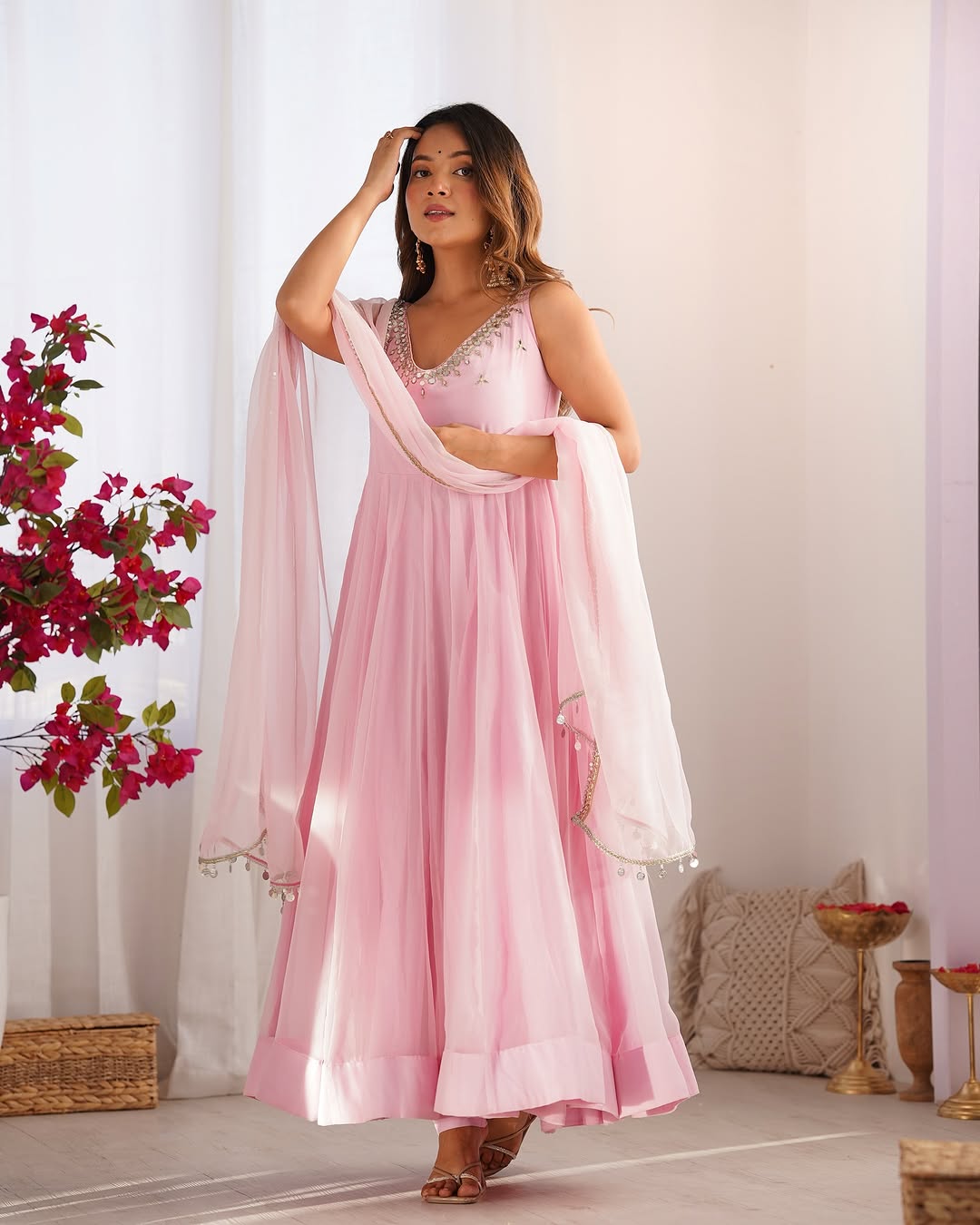
Measure the bust around the fullest part, keeping the tape parallel to the floor across the back. Keep one finger beneath the tape without pulling it tight. Measure the natural waist at the narrowest comfortable point, and measure the hips around the fullest part of the seat and upper thigh area.
Take each measurement while standing naturally rather than holding the stomach in or lifting the chest. Repeat every measurement twice. A difference of even 1 inch can change whether a straight kurti feels easy or restrictive, particularly when the fabric is a firm woven cotton.
Record your shoulder width, armhole depth, sleeve length and desired kurti length as well. Bust, waist and hip circumference can't explain every fitting issue. A narrow shoulder, shallow armhole or short sleeve can make a kurti uncomfortable even when the main circumference measurements are generous.
Wear the bra, camisole or inner layer that you'll normally use under the salwar suit when measuring. A padded bra, thick slip or thermal layer can change the bust and upper-waist measurement enough to affect the final fit.
Give the Bust Priority
The bust usually deserves the closest attention because the fullest upper-body measurement controls the front drape, armhole comfort and position of the side seams.
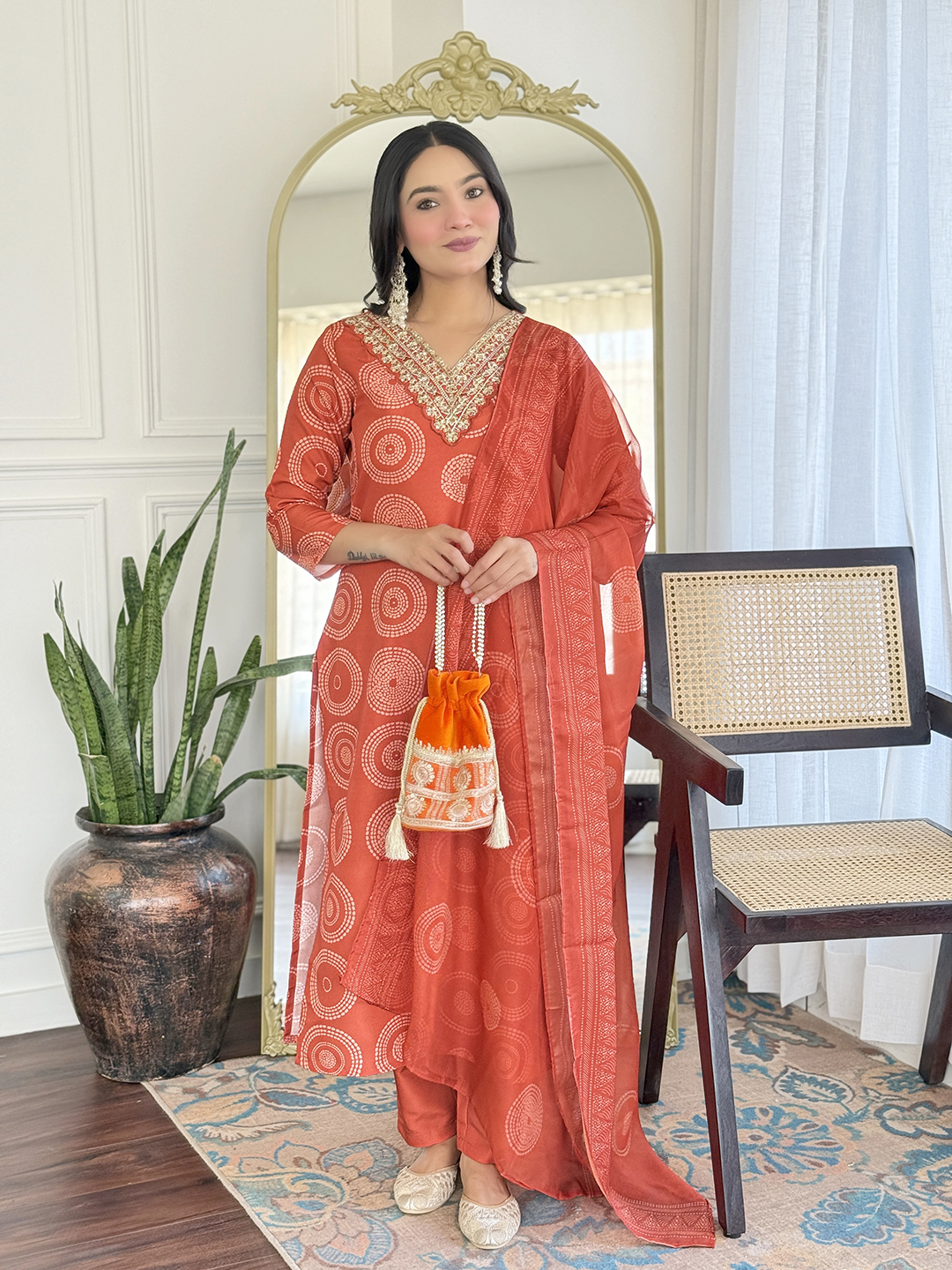
A 38-inch bust commonly suits a finished bust of 41 to 42 inches in a straight kurti. Two inches of ease may suit a fitted design, while 4 inches may be more comfortable for a relaxed rayon style or a kurti worn over a camisole.
Insufficient bust ease creates horizontal drag lines that travel from the bust towards the side seams. Buttons, hooks and zips may pull apart, and printed motifs or zari embroidery may appear stretched. A tight bust can also cause the front hem to rise when the wearer walks.
Excessive bust ease creates a different set of problems. The shoulder seam may fall beyond the natural shoulder, the neckline may shift backward, and fabric may pool below the armhole. A larger size isn't always the best solution for a fuller bust because the larger size may make the shoulders and neckline too wide.
A full-bust adjustment can be more precise than sizing up. The adjustment adds room through the bust while preserving the shoulder width, neckline and upper-back fit. A professional tailor can assess whether the garment needs extra front width, a bust dart or a different size.
Test the bust fit by raising both arms, reaching forward and crossing the arms over the chest. A kurti should not pull sharply across the bust or force the hem upwards during these movements.
Match Ease to the Silhouette
How Much Ease Should a Kurti Have at the Bust Waist and Hips? A straight kurti generally needs even, moderate room, while an A-line or Anarkali kurti can keep the waist closer and release volume below the bust.
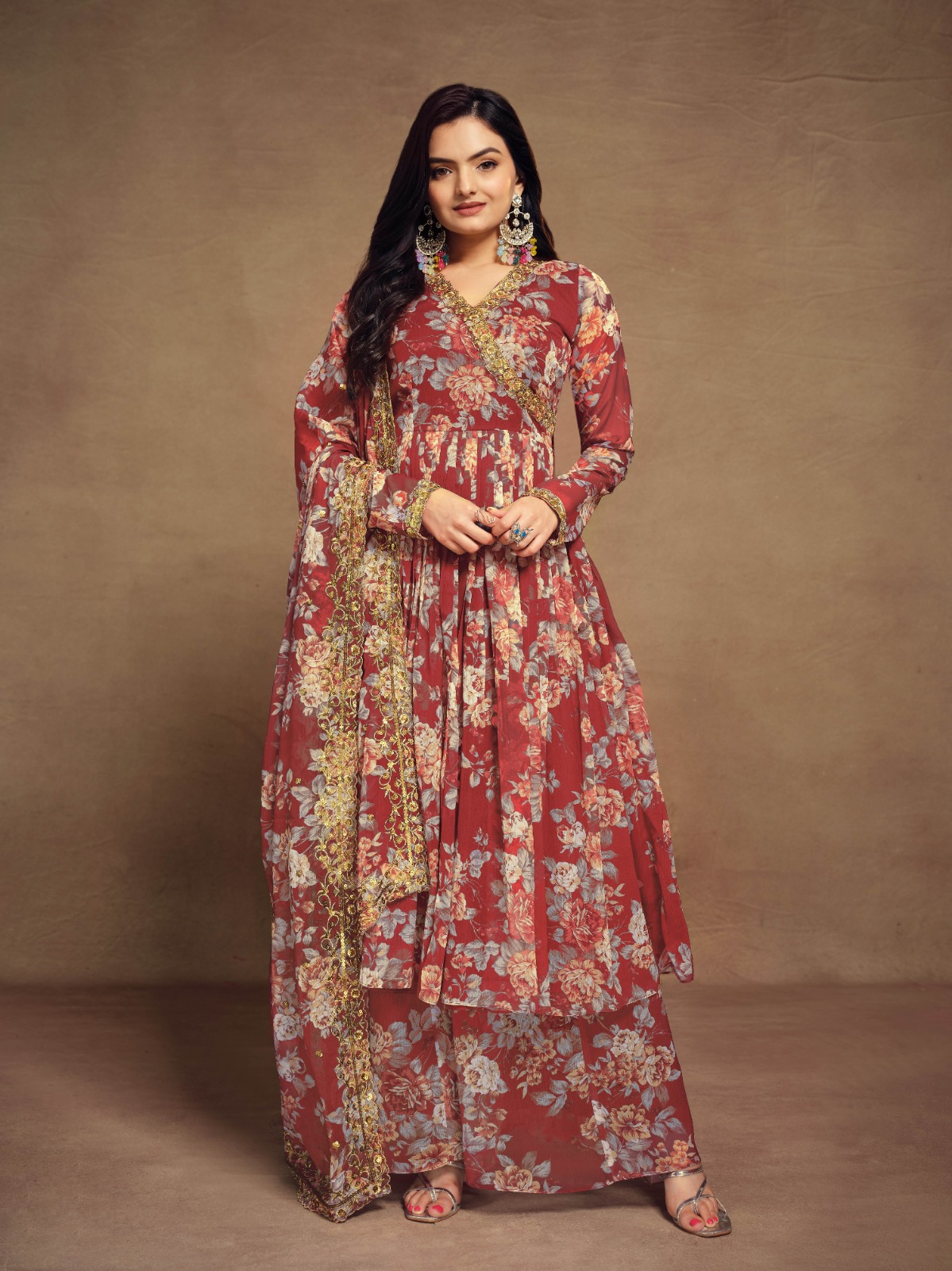
A straight kurti that finishes around mid-thigh should normally have 3 to 4 inches of hip ease. A longer kurti that reaches the knee may need 4 to 5 inches, especially when the side seams remain closed over the hips. A side slit can improve walking comfort, but a slit doesn't compensate for an undersized hip measurement.
A shaped kurti with darts, princess seams or a defined waist may use 2 to 3 inches of waist ease. A relaxed boxy kurti may use 4 to 6 inches at the waist. The correct choice depends on whether the design is intended to skim the body or create a visibly loose silhouette.
An A-line kurti can have moderate bust ease and increased sweep below the waist. The extra lower volume should come from the pattern shape rather than simply adding width everywhere. Adding equal width at the bust, waist and hem can make the garment appear unnecessarily oversized.
An Anarkali kurti uses flare to provide lower-body movement, so the waist may remain relatively shaped while the hem expands. Extra circumference at the waist isn't automatically useful if the design already provides flare below the waist seam.
Collections such as Kalamkari Print Salwar Suits (Copy) and Odisha Sambalpuri Salwar Suits often encourage attention to print scale and silhouette. A bold printed straight kurti can look wider when excessive ease is added, while a smaller all-over print may tolerate a more relaxed cut without appearing bulky.
How Much Ease Should a Kurti Have at the Bust Waist and Hips? Consider Fabric and Construction
How Much Ease Should a Kurti Have at the Bust Waist and Hips? Fluid fabric, firm woven fabric, lining and surface embellishment can each change how much room feels comfortable.
Rayon and fluid fabrics
Rayon kurti sets commonly work well with 3 to 5 inches of total bust and hip ease. Rayon drapes close to the body, so moderate ease can look neat without feeling tight. A close-fitting rayon kurti still needs sufficient room for sitting and arm movement.
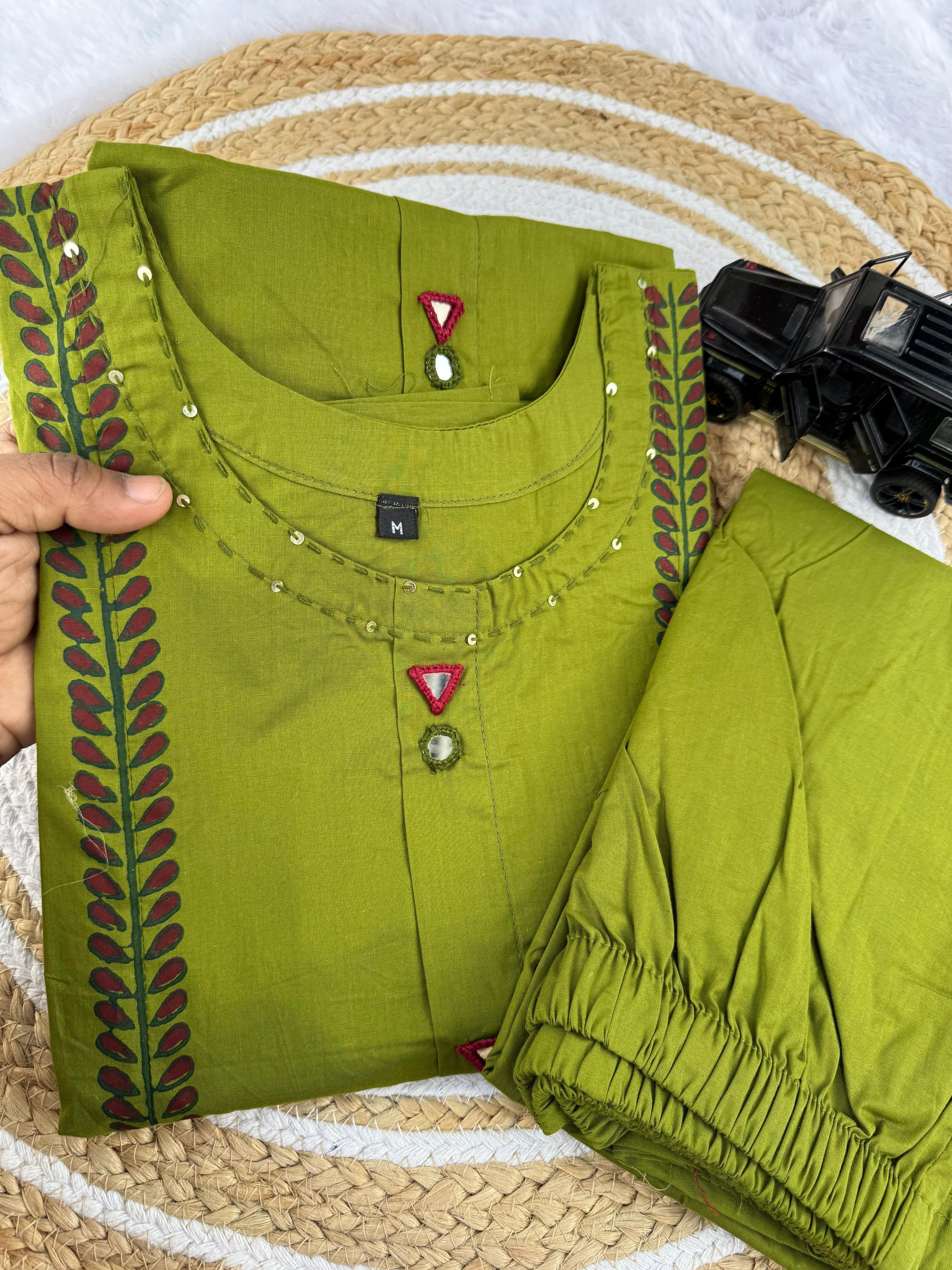
The Teal Embroidered Rayon Kurti Set and Purple Embroidered Rayon Kurti Set show why drape and decoration should be assessed together. Embroidery should lie flat over the bust and waist rather than buckle or stretch. A fluid fabric may hide small fit problems while standing, so test the garment while sitting as well.
Kanchi cotton and other firm woven cottons
Firm cotton needs slightly more practical room than stretch fabric because it gives very little during movement. A finished bust measurement with 3 to 5 inches of ease and a hip measurement with 3 to 5 inches of ease is a useful starting range for a straight cotton kurti.
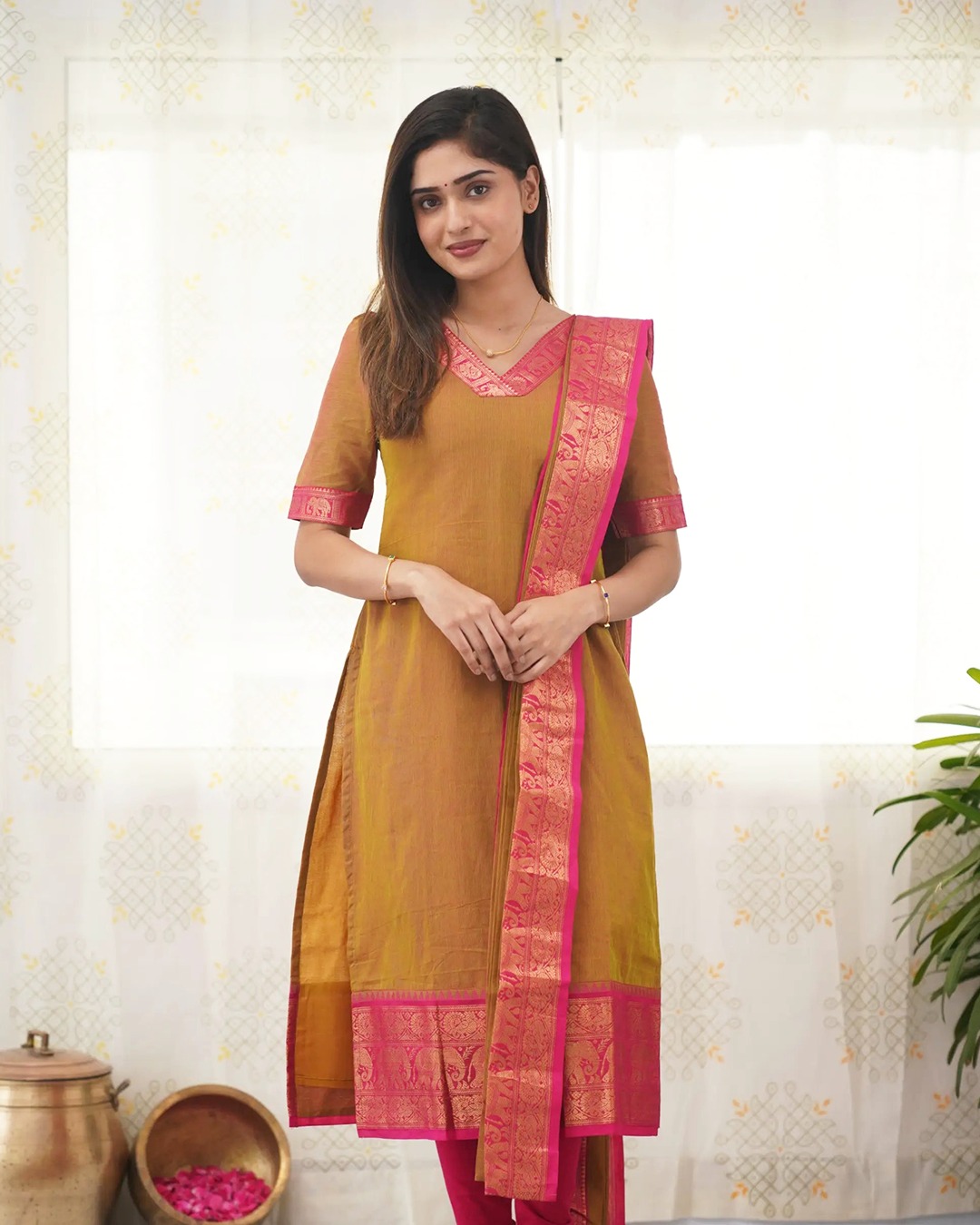
The Navy Kanchi Cotton Kurti Set with Woven Dupatta and Mustard Kanchi Cotton Kurti Set with Zari Dupatta illustrate why a nominal size such as medium or large isn't enough information. Compare the actual bust, waist, hip and length measurements before choosing a size.
Fabric shrinkage can also alter ease after washing. If a cotton garment isn't pre-shrunk, follow the care label carefully and avoid assuming that an initially generous fit will remain unchanged after repeated washing.
Chiffon, lining and embroidery
A chiffon outer layer may look loose, but the lining determines the real fit around the bust and waist. The lining should not be tight enough to restrict movement, because a flowing chiffon layer can't correct a restrictive inner bodice.
The Shop Floral Digital Printed Chiffon Kurti Palazzo Set with zari embroidery combines a light outer appearance with decorative work. Zari embroidery can reduce flexibility, particularly when it's dense across the bust or waist. Allow enough room for the embroidered area to lie flat during sitting and arm movement.
The Designer Cream Straight Kurti Set with Dupatta demonstrates a straight-set silhouette where the kurti should skim the torso without clinging. A dupatta can cover the body but can't make a tight bust or restricted armhole comfortable.
How Much Ease Should a Kurti Have at the Bust Waist and Hips? Read a Size Chart
How Much Ease Should a Kurti Have at the Bust Waist and Hips? Read the size chart as a comparison between your body measurements and the garment's finished measurements, because retailers don't always use the same sizing convention.
- Measure your bust, waist and hips in inches.
- Check whether the chart lists body measurements or finished garment measurements.
- Subtract each body measurement from the corresponding garment measurement.
- Compare the resulting ease with the intended silhouette.
- Check shoulder width, sleeve length, armhole and kurti length before ordering.
If your bust is 36 inches and the finished garment bust is 40 inches, the garment has 4 inches of bust ease. If your waist is 31 inches and the finished waist is 40 inches, the garment has 9 inches of waist ease. Nine inches may be intentional in a boxy straight design but excessive in a shaped kurti.
don't select a size using the bust alone when your hip measurement is significantly larger. A long kurti can fit correctly through the bust but ride up over the hips, pull at the side slits or develop diagonal wrinkles below the waist.
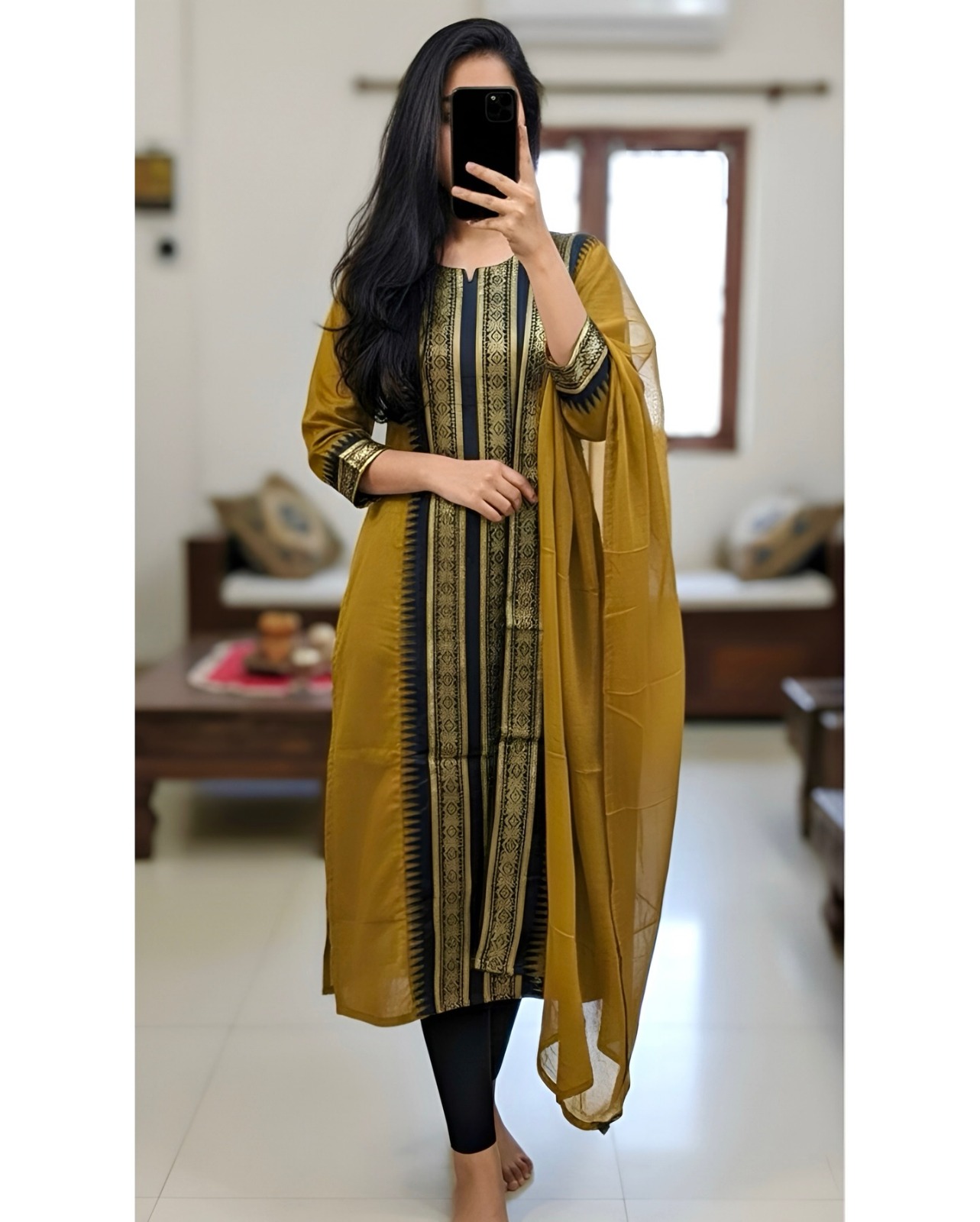
The Mustard Embroidered Kurti Pant Dupatta Set Women and Mustard Designer Kurti Dupatta Set with Rich Weaving show why a three-piece salwar suit should be assessed as a complete outfit. The kurti should allow movement, the pant should not pinch at the waist or thigh, and the dupatta should sit comfortably without compensating for poor fit.
Collections including Maharashtra Paithani Inspired Salwar Suits, Gujarat Bandhej Salwar Suits and Punjab Patiala Salwar Suits may use different visual proportions and fabric characteristics. A firm woven kurti, a printed cotton style and a relaxed Patiala-inspired set should not be expected to share identical ease values.
How Much Ease Should a Kurti Have at the Bust Waist and Hips? Check the Finished Fit
How Much Ease Should a Kurti Have at the Bust Waist and Hips? Check movement, seam position and visual drape rather than judging the fit only while standing still.
Signs of insufficient ease
- Horizontal wrinkles extend from the bust towards the side seams.
- Buttons, hooks or zips pull open during sitting or reaching.
- The kurti hem rises at the front when walking.
- Side slits gape over the hips.
- Embroidery, zari or printed motifs look distorted across the body.
- The wearer can't comfortably cross the arms or lift them above shoulder height.
Signs of excessive ease
- The shoulder seam falls more than approximately 1 inch beyond the shoulder point.
- Deep folds gather beneath the arm or along the side seams.
- The neckline shifts backwards or moves away from the body.
- The kurti looks wider than the intended silhouette despite a correct shoulder fit.
- The waist and hip area collapses instead of falling in a controlled line.
One problem can have more than one cause. A tight armhole may result from insufficient armhole depth rather than insufficient bust ease. A gaping neckline may need neckline alteration rather than a smaller bust measurement. A tailor should inspect the garment before removing or adding room.
For online purchases, compare the measurement chart with a well-fitting kurti already in your wardrobe. Lay the existing kurti flat, measure the bust and hip from side seam to side seam, double each measurement and compare the result with the listed garment dimensions.
The best ease is the smallest amount that permits normal movement without visible strain. Everyday cotton and rayon kurtis often feel comfortable with about 3 to 4 inches of total ease, while relaxed designs may need more and close-fitting styles may use less. Fabric, cut and personal comfort should decide the final number.
Common Questions About Kurti Ease at the Bust, Waist and Hips
How Much Ease Should a Kurti Have at the Bust Waist and Hips?
A straight kurti commonly needs 2.5 to 4 inches of total bust ease, 3 to 4 inches of waist ease and 3 to 5 inches of hip ease. Relaxed styles may need 4 to 6 inches, while close-fitting designs may use less.
How do I calculate ease from a kurti size chart?
Subtract your body measurement from the finished garment measurement. For example, a 36-inch bust and a 40-inch finished kurti bust produce 4 inches of bust ease.
Should a kurti be loose around the bust?
A kurti should have enough bust room for breathing, arm movement and sitting without horizontal pulling. Three to 4 inches of total ease is a practical starting point for many straight kurtis, but fabric and silhouette can change the requirement.
How much hip ease does a long straight kurti need?
A long straight kurti generally needs 3 to 5 inches of total hip ease, particularly when the side seams remain closed over the hips. A side slit improves movement but does not replace adequate hip width.
Does rayon need more ease than cotton in a kurti?
Rayon can often use moderate ease because its drape follows the body, but rayon does not automatically need less room. Firm cotton usually benefits from 3 to 5 inches of ease because woven cotton has little stretch.
Why does a kurti pull at the bust even when the size seems correct?
Bust pulling can result from insufficient full-bust width, a narrow armhole, a broad back or an unsuitable shoulder fit. Sizing up may solve the bust issue but make the shoulders too wide, so a full-bust adjustment may be more precise.


