

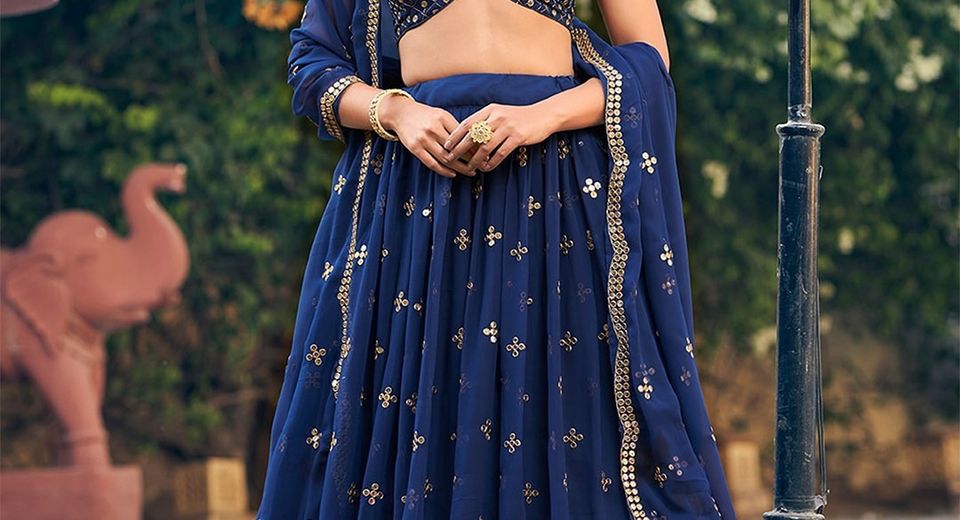
How Much Alteration Margin Should a Lehenga Have? The practical answer depends on whether the lehenga is readymade, fully stitched or semi-stitched, but most buyers should look for 1 to 2 inches of usable waist adjustment and at least 1 inch of side-seam allowance in the choli. Skirt length requires a separate check because embroidery, can-can and a finished hem can limit how much a tailor can remove or add.
An alteration margin is extra fabric hidden inside a seam, waistband or hem. Alteration margin isn't the same as wearing ease, which is the small amount of room the body needs to sit, walk and breathe comfortably. A lehenga can have a generous seam allowance and still feel tight if the garment was cut close to the body.
How Much Alteration Margin Should a Lehenga Have for the Waist?
A readymade lehenga should ideally have 1 to 2 inches of total waist adjustment, while a semi-stitched lehenga can offer more flexibility because the waistband and side seams are finished after purchase. A fully stitched choli should usually retain about 1 inch on each side seam where the design permits.
Total waist adjustment means the combined change available around the waistband, not 2 inches at each side. For example, 1 inch released at the left seam and 1 inch released at the right seam provides approximately 2 inches of additional circumference. Ask a tailor to measure the actual seam allowance instead of relying only on the labelled size.
- Readymade skirt: Look for about 1 to 2 inches of total waist release or reduction, depending on the construction.
- Semi-stitched skirt: The waistband can often be set to a broader measurement, but the tailor must preserve flare and panel alignment.
- Fully stitched choli: Keep roughly 1 inch at each side seam when possible, with extra attention to darts, cups and sleeves.
- Skirt length: A plain hem is easier to shorten than a border-heavy hem, but adding length is difficult unless hidden fabric or a separate border exists.
These figures are planning ranges rather than guarantees. Embroidery placement, lining, zipper position, elastic panels, attached can-can and the direction of a woven or printed design determine whether fabric can actually be moved.
How Much Alteration Margin Should a Lehenga Have in Different Constructions?
The construction of a lehenga determines where a tailor can alter it safely. A semi-stitched skirt usually brings the most flexibility, a fully stitched skirt gives limited correction, and a made-to-measure bridal lehenga should be ordered close to the intended measurements rather than bought several sizes too large.
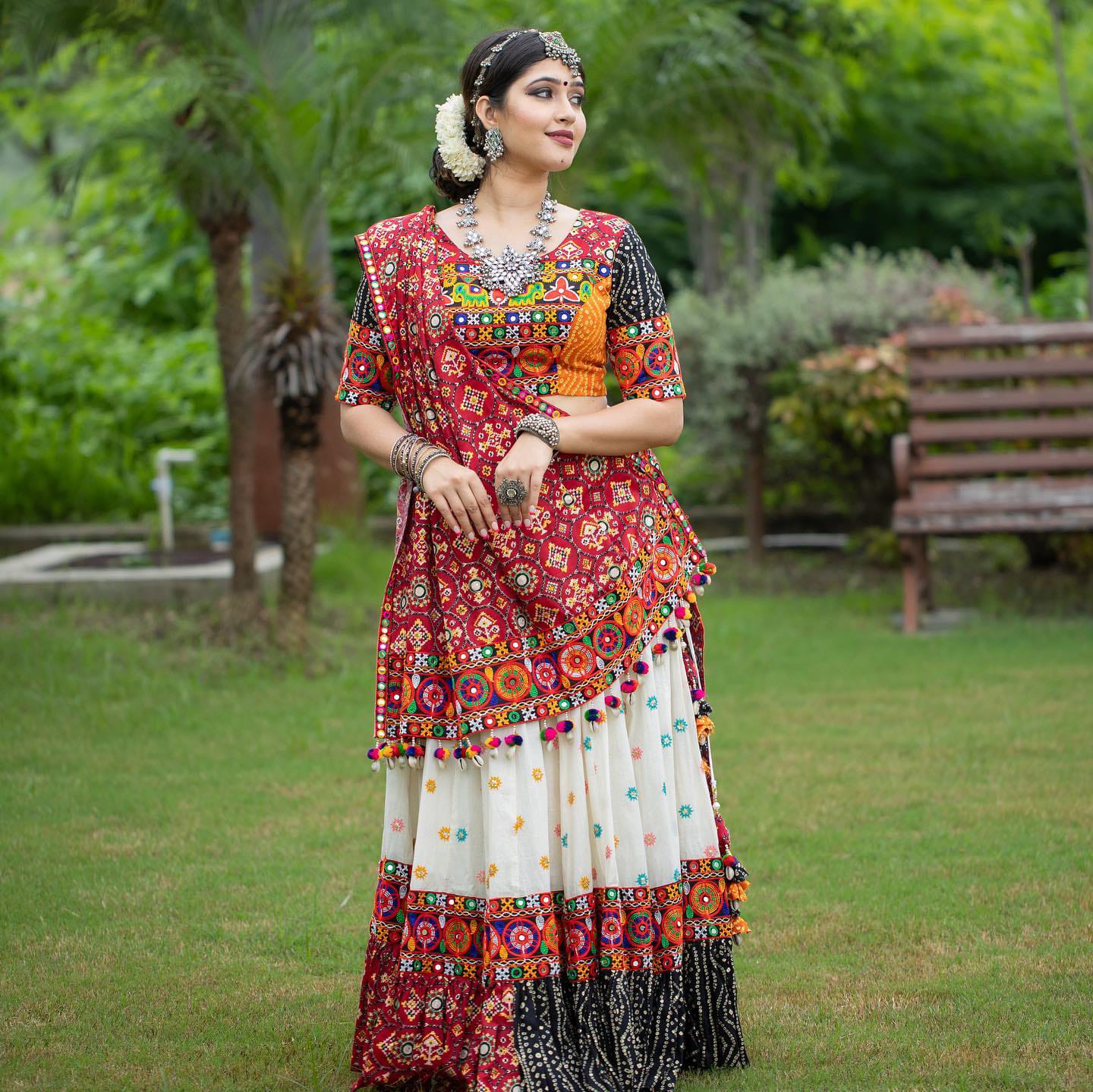
Semi-stitched lehengas
Semi-stitched lehengas are designed to be finished after purchase, so the waistband and side seams commonly allow a broader measurement range. The tailor still needs to match the centre front, centre back and decorative panels before closing the seams.
Embroidered Sequinned Semi-Stitched Lehenga Set shows why a tailor should inspect embroidery before cutting. Sequins near a proposed seam can snag during stitching, while a heavy embroidered panel may need hand-finishing after the waist is resized. Semi Stitched Lehengas Collection can suit shoppers who want measurement flexibility, but flexibility doesn't mean every size can be converted into every other size.
Readymade and fully stitched lehengas
Readymade lehengas have a finished waist, zip or hook arrangement, so a tailor normally works within the existing seam lines. Fully stitched choli shopping requires extra care because bust shaping, neckline depth and armhole placement are already established.
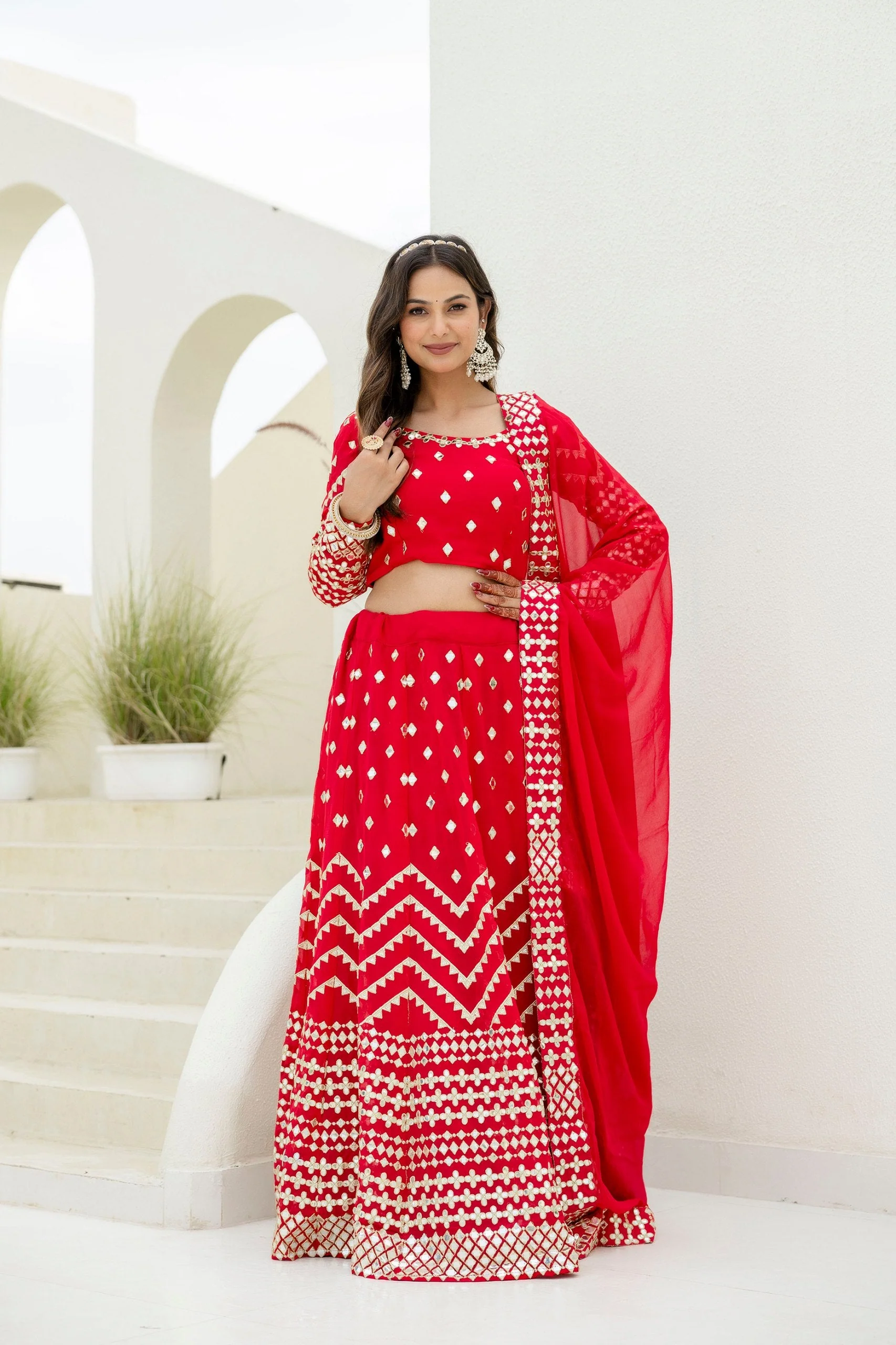
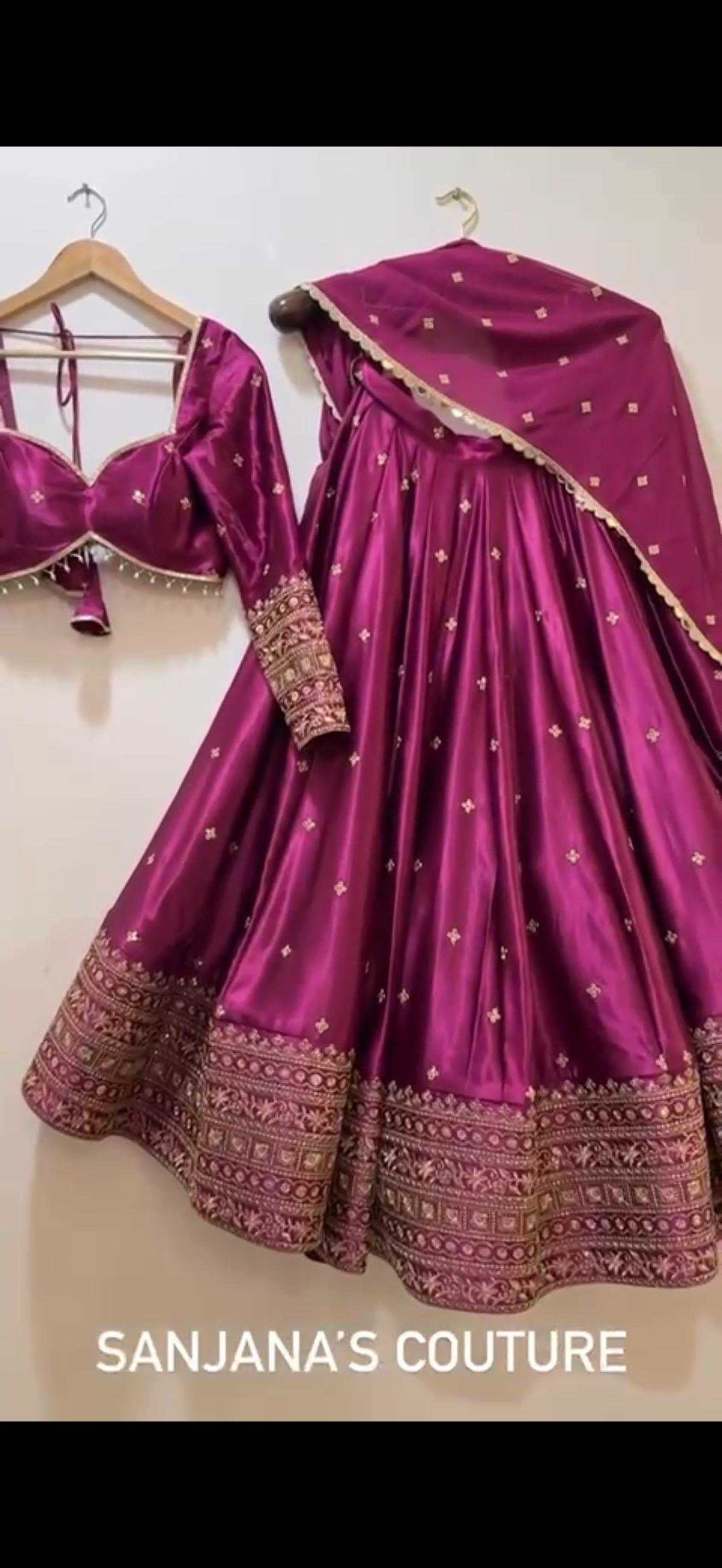
Red Multicolor Butter Silk Mirror Work Lehenga Set and Stylish Multicolor Butter Silk Lehenga Choli Set contain design details that should remain balanced after a waist alteration. A tailor may need to move hooks or add a discreet extension rather than cut through mirror work or a dense border. Magenta Satin Embroidered Lehenga Set Online should be checked for the zipper location and the amount of lining caught inside the seam before alteration begins.
How Much Alteration Margin Should a Lehenga Have After Measuring the Waist?
Calculate the waist margin by comparing your body measurement with the garment's finished inner measurement and then checking the hidden seam allowance. A size label can't tell you whether the extra fabric is usable.
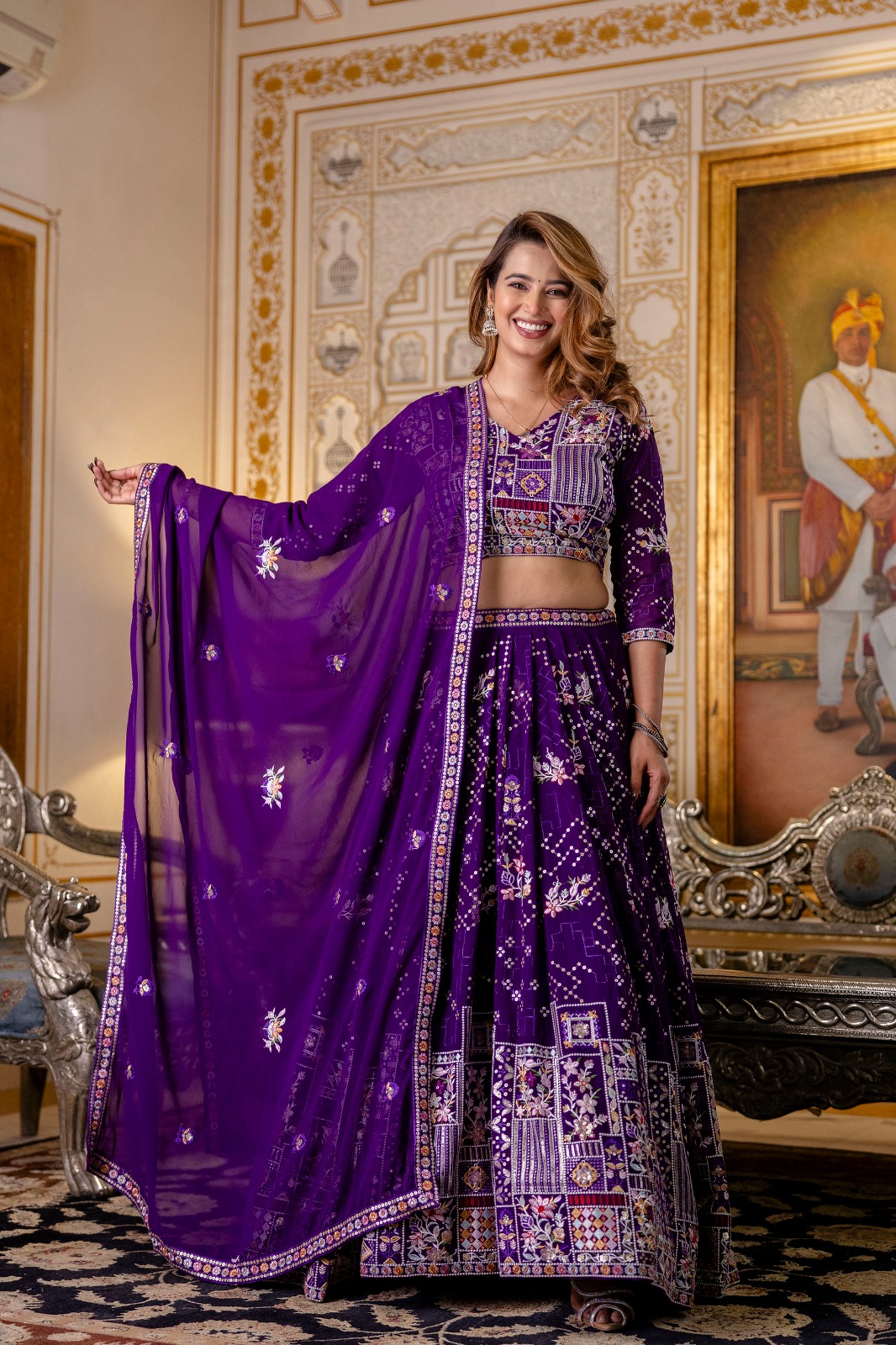
Measure your natural waist or the point where you plan to wear the lehenga, keeping the tape level and relaxed.
Measure the garment around the inside of the waistband rather than across the outside decoration.
Subtract your body measurement from the garment measurement to find the current ease.
Ask how much fabric remains beyond the stitching line at both side seams and the centre back.
Allow approximately 1 to 2 inches of wearing ease for a structured waistband, depending on comfort and whether you'll wear shapewear or a petticoat underneath.
For example, a wearer with a 30-inch waist may find a 32-inch finished skirt comfortable because the extra 2 inches act as ease. If the skirt measures 32 inches but has only a quarter-inch seam allowance at each side, the skirt can't reliably be expanded to 34 inches. Finished measurement and hidden construction must be considered together.
A drawstring or elasticated back can provide practical flexibility, but elastic isn't a substitute for correct fitting. A heavily embellished waistband may become uncomfortable when tightened, and a drawstring can distort the pleats if pulled too far. Ask whether the adjustment is built into the design or added as a repair.
How Much Alteration Margin Should a Lehenga Have for Length?
Most lehenga length corrections should be planned around the wearer's footwear because shortening is usually easier than lengthening. A tailor may remove 1 to 2 inches from a plain lower edge, but a wide embroidered border, scalloped finish or attached can-can make even a small reduction complicated.
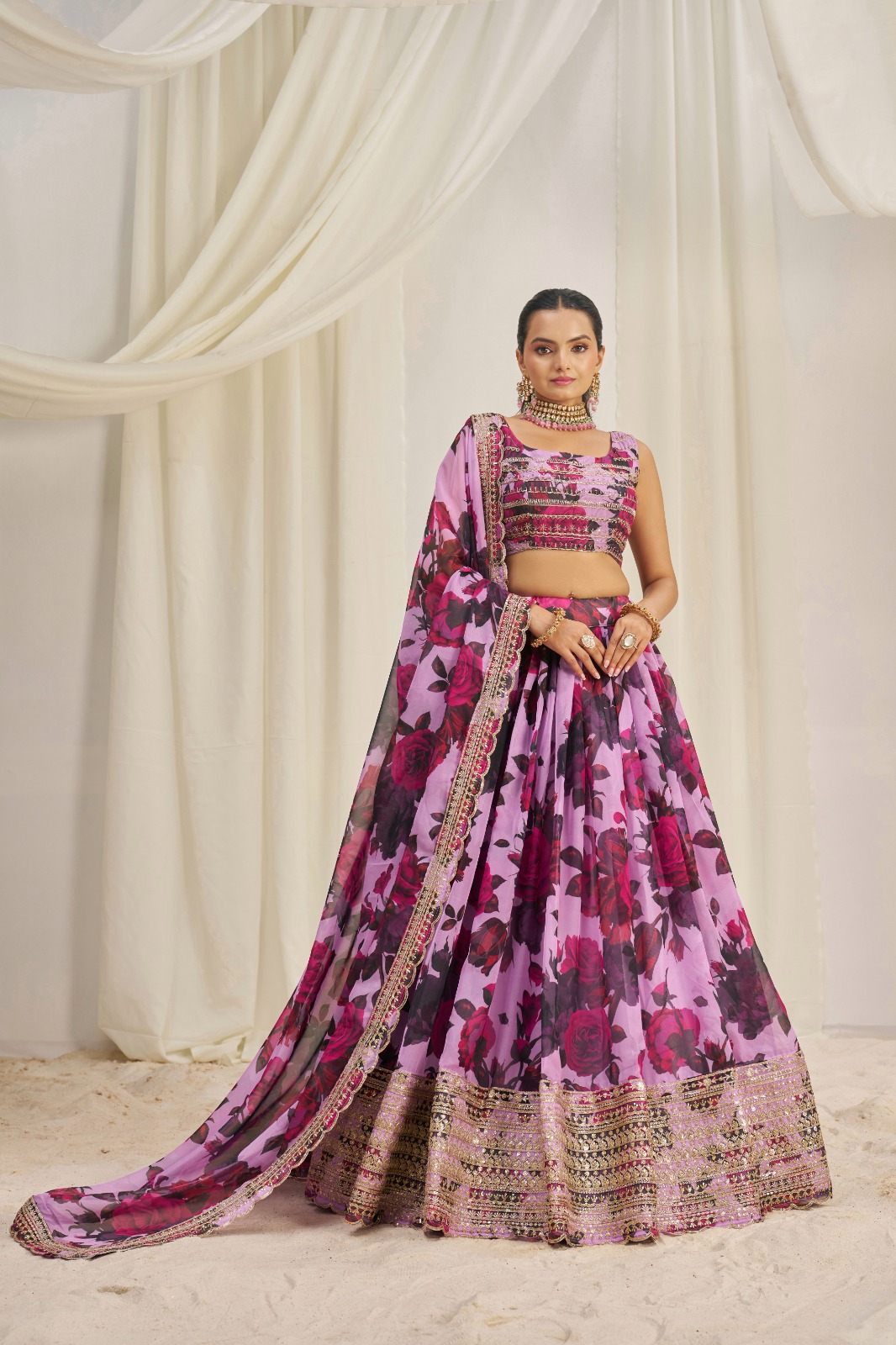
Wear the shoes intended for the event when measuring the skirt. The hem should generally sit just above the floor, with enough clearance to prevent the edge from dragging while walking. A bride wearing a 2-inch heel and a guest wearing flats need different finished lengths even when both have the same height.
Check where the skirt is designed to sit. A high-waisted lehenga and a low-waisted lehenga don't use the same waist-to-floor measurement. Measure from the actual waistband position to the floor, then subtract the desired clearance. Do not use a generic full-length figure copied from a size chart.
Lime Floral Embroidered Butterfly Net Lehenga Set and Red Butterfly Net Sequins Lehenga Set Wedding Wear show why fabric and finishing matter during length alterations. Butterfly net layers, lining and decorative borders may each need separate handling. A tailor who simply cuts the outer net can leave the lining too long or disturb the layered fall.
Adding length is possible only when suitable fabric is available. A tailor may lower the waistband, insert a matching band above the hem or reuse a deep border, but these solutions change the design and may not work with a continuous floral or sequin pattern. Confirm the available hem allowance before buying a skirt that already appears short.
How Much Alteration Margin Should a Lehenga Have in the Blouse?
A choli should usually retain about 1 inch of seam allowance at each side seam, but bust, shoulder and armhole adjustments require separate checks. A side seam can provide width, while a shoulder seam changes the neckline position and sleeve balance.
Bust and waist
Measure the fullest bust point, underbust and waist before ordering a fully stitched choli. A blouse that's loose at the waist but tight across the bust can't be corrected by taking in the waist. A blouse that's tight across the bust may need side-seam release, added panels or a neckline redesign.
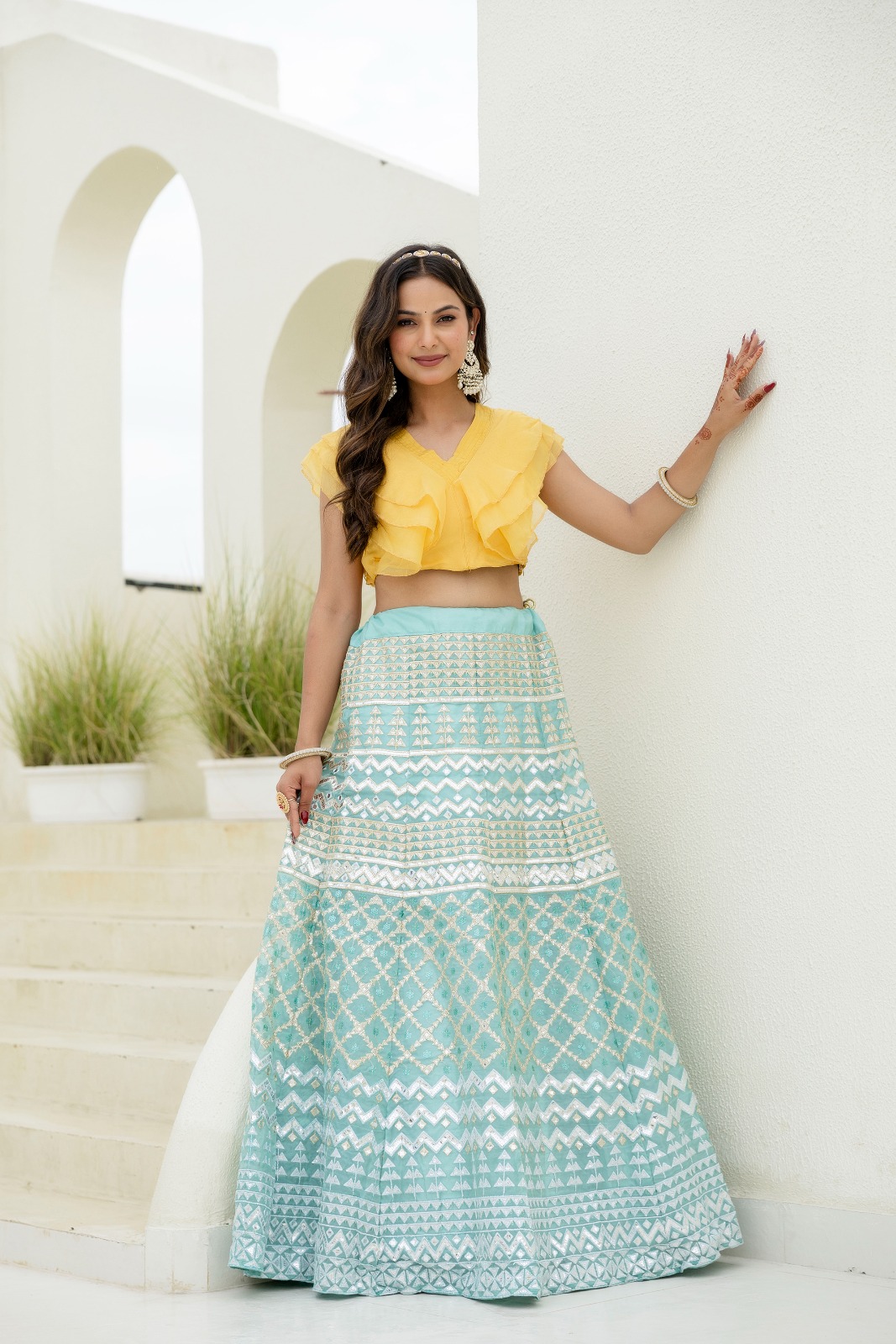
Pastel Floral Georgette Lehenga Set with Ruffle Blouse needs a careful inspection of the ruffle attachment and side seams because decorative layers can hide the stitching line. Altering the choli should preserve the ruffle's position and avoid pulling the georgette at the armhole.
Shoulders, sleeves and neckline
Shoulder width is difficult to increase without adding fabric or changing the sleeve join. Sleeve length is usually easier to shorten than to extend, especially when the cuff has embroidery. Neckline depth can sometimes be adjusted with an inner modesty panel, but lowering a heavily embellished neckline may cut through the design.
A good fitting appointment should include the bra or support garment intended for the event. Bridal and designer cholis often contain cups, lining or boning, and those components change the finished fit. Bring the dupatta as well if its drape depends on the blouse shoulder or sleeve shape.
How Much Alteration Margin Should a Lehenga Have Before Online Shopping?
Before shopping online, request the garment's finished measurements, garment type and alteration details rather than relying only on a small, medium or large label. Product photographs can show style, but photographs can't reveal hidden seam allowance.
- Confirm whether the skirt is readymade, semi-stitched or adjustable with a drawstring.
- Ask for finished waist, hip and length measurements of a fully stitched skirt.
- Check whether the blouse is unstitched, semi-stitched or fully stitched.
- Ask whether the hem contains can-can, horsehair braid, lining or a fixed border.
- Identify the closure: side zip, back zip, hooks, tie-up, elastic or a combination.
- Ask whether extra fabric is present at the waistband and side seams.
- Confirm whether the stated length includes the waistband, lining and decorative border.
Shopping for a readymade lehenga is faster, but a readymade garment gives you less control over the final fit. Semi-stitched lehengas can be a practical middle ground for wedding guests, bridesmaids and festive buyers who know their measurements but want more flexibility than a fixed size gives.
For a Haldi ceremony, a lighter skirt may tolerate a simple waist adjustment, while a bridal lehenga needs a more cautious inspection because dense embroidery, zari, sequins and multiple lining layers are expensive to alter. Mehendi Lehengas, Yellow Lehengas and Green Lehengas can help narrow colour choices by event, but colour selection doesn't replace a construction check.
How Much Alteration Margin Should a Lehenga Have Before the Tailor Starts?
Give a tailor the lehenga, blouse, footwear, undergarments and intended dupatta before final measurements are taken. A fitting made without the correct shoes or support garment can produce an inaccurate hem, bust line or waistband position.
Ask the tailor to mark the garment with temporary basting first. Temporary stitching allows you to sit, walk, raise your arms and check the drape before permanent cutting. Photograph the marked seams if the outfit is being altered at a different location.
Take special care with Bridal designs, embroidered borders and mirror work. A tailor should avoid cutting through motifs whenever possible and should secure sequins or zari near a new seam. Small hand-finishing charges may be worthwhile when the alternative is a visible break in the design.
Ready Made Lehenga shopping works best when your body measurements are within the garment's stated range and the skirt has ordinary seam allowances. A semi-stitched option is safer when your waist, hip and length measurements fall between standard sizes. Girls' lehengas also need movement room because children may sit, run and grow between purchase and the event; a tightly fitted waist is rarely a sensible choice.
As a final check, aim for a skirt that has 1 to 2 inches of usable total waist margin, a choli with approximately 1 inch at each side seam where possible, and a hem that can be shortened without damaging the border. Treat these figures as inspection targets, not promises. The actual embroidery, lining, closures and construction decide the safe alteration limit.
Common Questions About Lehenga Alteration Margins
How much waist allowance should a readymade lehenga have?
A readymade lehenga should ideally have 1 to 2 inches of total usable waist adjustment, with the amount divided across suitable seams. Check the hidden seam allowance because a larger finished measurement does not guarantee that the skirt can be expanded.
Can a semi-stitched lehenga be altered to any size?
No, a semi-stitched lehenga cannot be safely converted to any size. The fabric panels, embroidery placement, hip measurement, flare and available seam allowance limit the final size range.
Can a tailor make a lehenga longer?
A tailor can make a lehenga longer only when extra fabric, a lower waistband position or a matching border is available. Lengthening a skirt with a continuous embroidered or sequin border may change the design and may not be possible without visible alteration.
How much seam allowance should a lehenga blouse have?
A lehenga blouse should ideally retain about 1 inch at each side seam where the embroidery and construction allow it. Bust, shoulder, armhole and neckline adjustments need separate inspection because side-seam fabric cannot correct every fit problem.
Is a readymade or semi-stitched lehenga easier to alter?
A semi-stitched lehenga is generally easier to customise because the waistband and seams are finished after purchase. A readymade lehenga can still be altered, but its zip, lining, border and embroidery usually restrict the safe adjustment range.
How should I measure lehenga length before a wedding?
Measure from the waistband position where the lehenga will sit to the floor while wearing the intended wedding footwear, then allow a small clearance above the floor. Measure with the correct blouse, shapewear and petticoat because those layers can change the waist position.


