


A saree usually needs fewer safety pins than most first-time wearers expect, but the right number depends on the drape, fabric, blouse, and length of the event. How Many Safety Pins Do You Really Need for a Saree? For a standard six-yard saree, the practical answer is usually four to six pins: two for the pleats, one or two for the pallu, and one for securing the saree near the waist if the fabric shifts.
More pins don't automatically create a more secure drape. Too many pins can leave visible bumps, pull zari, catch delicate Chinnon, or make the pleats stiff. The aim is to anchor points that carry weight while allowing the rest of the saree to fall naturally.
The Short Answer
Most conventional sarees need five safety pins for a balanced and reliable drape. Use two small pins to hold the front pleats together, one pin at the shoulder for the pallu, one pin inside the blouse or shoulder seam to stop the pallu from sliding, and one discreet waist pin when the lower drape needs additional support.
A compact emergency kit should contain seven or eight pins even when only five are used on the saree. Two spare pins are useful if a pin bends, a pleat loosens, or the pallu needs adjusting after sitting, dancing, or travelling. Carry small and medium pins rather than relying on a single oversized pin, because a large pin can leave a wider hole in silk or lightweight fabric.
How Many Safety Pins Do You Really Need for a Saree with a simple drape?
A simple saree drape can work with three pins when the fabric has enough grip and the wearer isn't moving continuously. One pin holds the front pleats, one secures the pallu at the shoulder, and one anchors the pallu to the blouse or shoulder seam.
Three pins are usually sufficient for a short meal, a seated gathering, or a pre-stitched style with an already formed lower half. Three pins are less dependable for a wedding ceremony, outdoor photographs, vigorous dancing, or a slippery Banarasi silk saree.
How Many Safety Pins Do You Really Need for a Saree at Each Placement Point?
A standard drape needs five useful placement points: the front pleats, the waist tuck, the shoulder pallu, the inner pallu fold, and, when necessary, the side seam. Not every saree needs a pin at all five points, but the locations explain where support is most effective.
- Front pleat pin: Gather the pleats evenly and insert a small pin horizontally from the inside, catching several layers without piercing through the visible front panel. Place the pin approximately 5 to 8 centimetres below the waistband so the pleats remain neat while the pin stays hidden.
- Waist support pin: Add one pin inside the tuck when the saree is heavy or the underskirt fabric is smooth. The pin should connect the saree fabric to the underskirt waistband, not to bare skin.
- Shoulder pallu pin: Pin the pallu from underneath after arranging the desired fall. Catch the pallu and blouse shoulder seam when possible, because the seam provides stronger support than a single thin layer of blouse fabric.
- Second pallu pin: Use a second small pin 10 to 15 centimetres below the shoulder when the pallu is broad, slippery, or heavily embellished. Keep this pin on the inner fold so it can't be seen in photographs.
- Optional side pin: Add a discreet side pin only when the saree opens while walking. A side pin is particularly helpful for narrow pleats, low-friction underskirts, and drapes worn with a long, heavy pallu.
Pin heads should face inward and point in the direction of the fabric fold. A closed safety pin is safer than an open straight pin because the clasp protects skin and jewellery from accidental contact. Test every pin by moving the arm, sitting down, and taking a few steps before leaving home.
How Many Safety Pins Do You Really Need for a Saree Made from Silk?
Silk sarees generally need five to seven pins, with support concentrated at the waist and shoulder. A Designer Green Pink Wedding Wear Silk Saree or a Blue Lichi Silk Jacquard Saree with Elegant Rich Pallu may benefit from two waist-support pins because a rich pallu can pull the tuck sideways during walking.

Use medium-sized, smooth-finished pins for thick layers, but avoid forcing a pin through zari borders or dense motifs. Banarasi silk and Patola-style silk can show puncture marks if a pin is repeatedly inserted in the same location. Shift the pin position by a few millimetres each time the saree is worn.
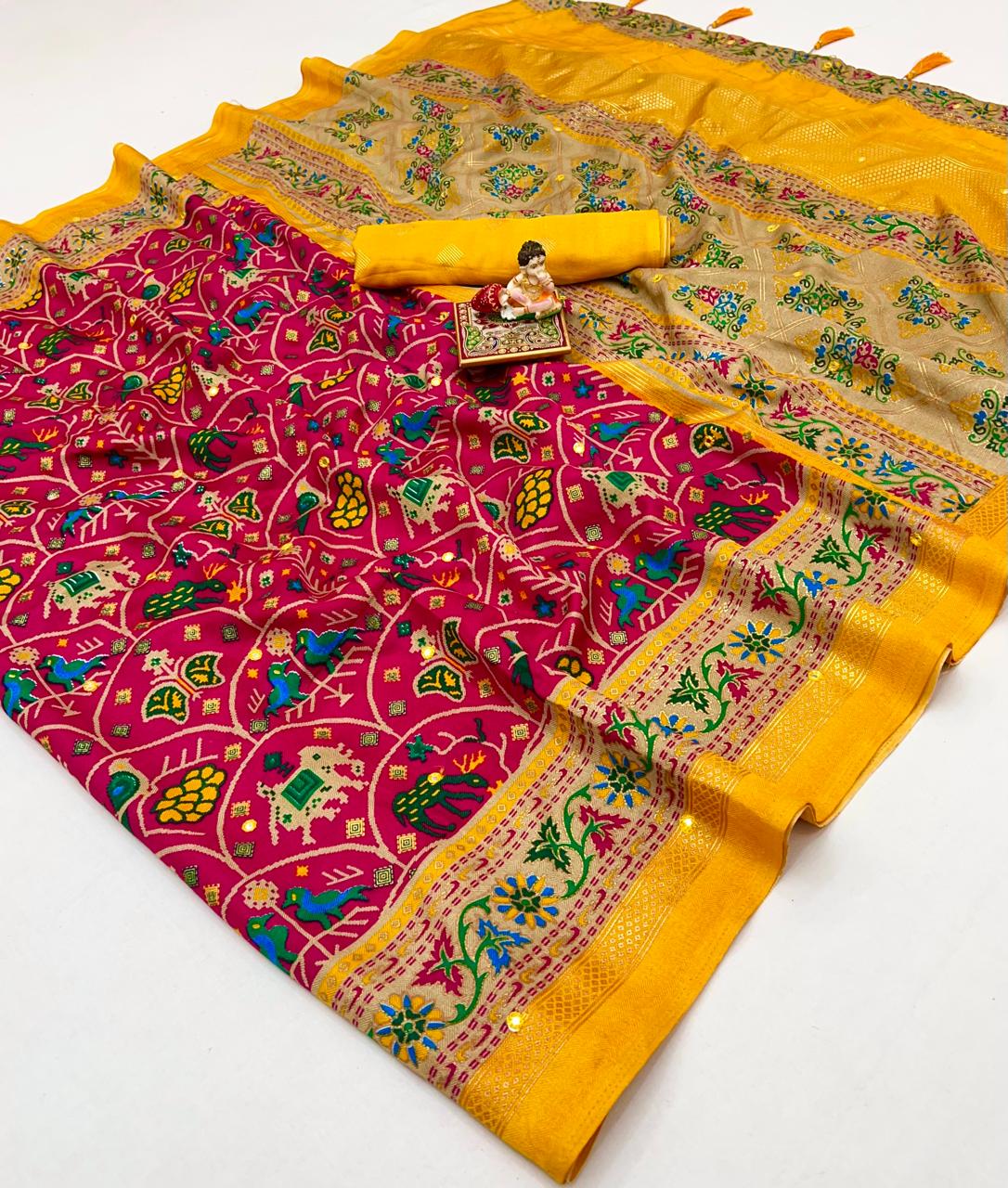
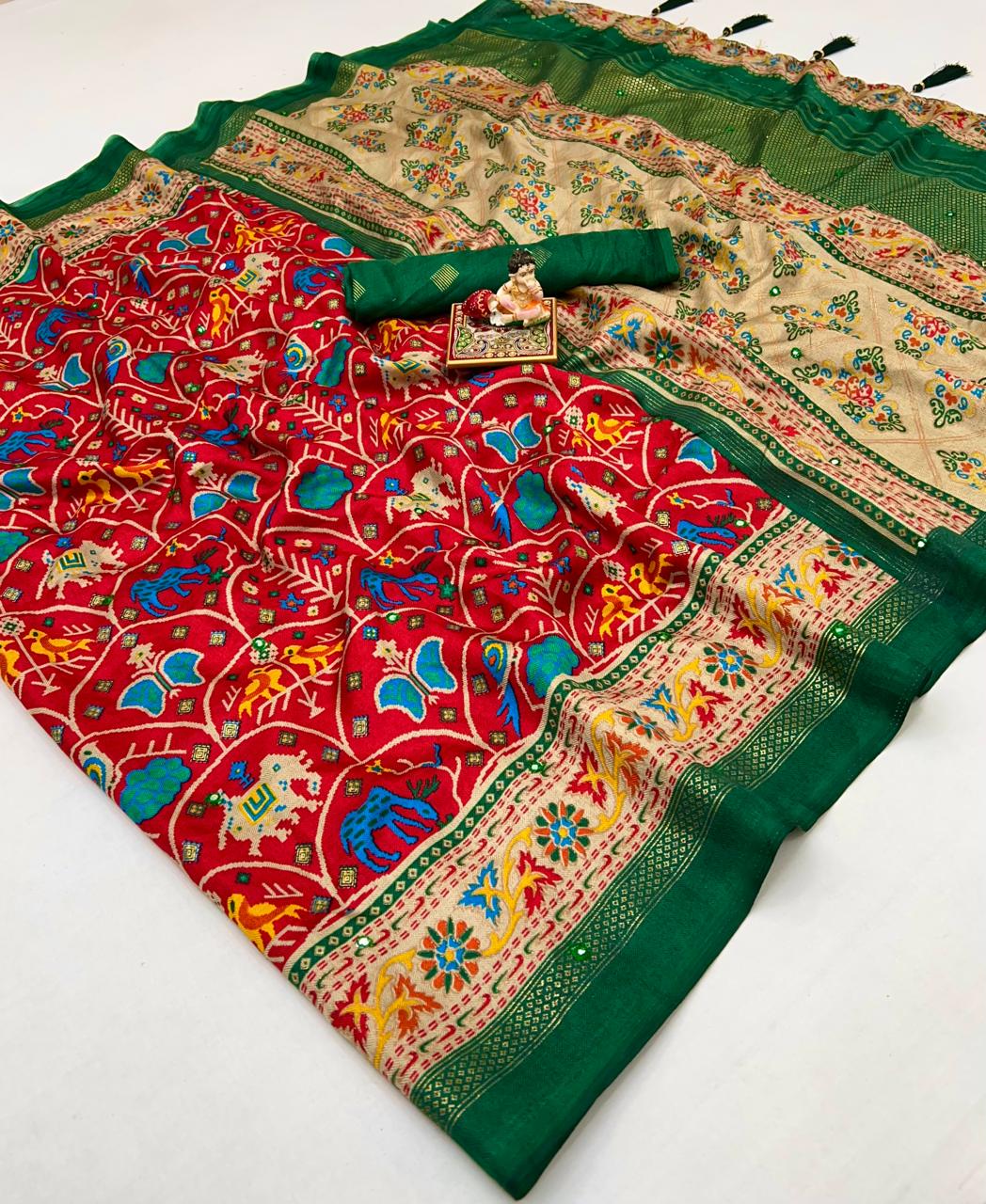
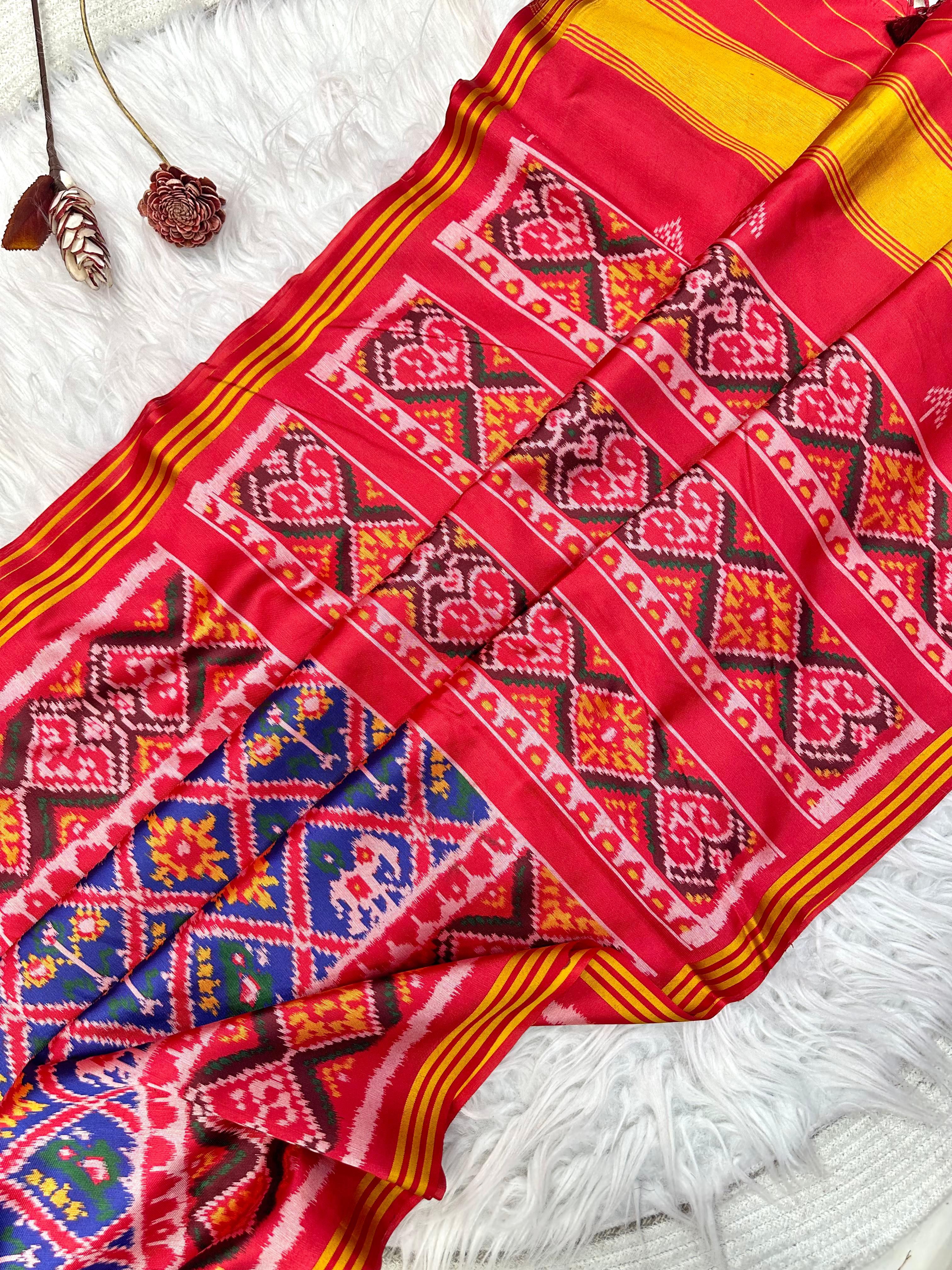
A Designer Rani Pink Patola Print Pashmina Silk Festive Saree and a Designer Red Patola Print Pashmina Silk Festive Saree may feel substantial at the border while remaining softer through the body. Secure the heavier border by folding an inner section rather than piercing directly through decorative areas. A fold gives the pin more fabric to hold and distributes the pull across several threads.
How Many Safety Pins Do You Really Need for a Saree with zari?
A saree with zari usually needs one or two additional support pins only when the pallu or border is heavy; extra pins should not be placed through the zari itself. Insert the pin through the plain inner fold, the seam, or a reinforced edge whenever possible.
Repeated pinning in one spot can weaken silk fibres and leave small holes that become more visible after pressing. Store the saree folded with pins removed, because leaving metal inside the fabric can create pressure marks and, in humid conditions, contribute to tarnishing or staining.
How Many Safety Pins Do You Really Need for a Saree Made from Chiffon or Chinnon?
Lightweight Chiffon and Chinnon sarees usually need four to five small pins, but delicate fabric requires gentler placement rather than extra hardware. The Coral Pink & Royal Blue Printed Saree with Designer Border can often be secured with one pleat pin, one waist pin, and two pallu pins if the border supplies enough structure.

Chiffon and Chinnon can snag around a rough pin spring or a damaged clasp. A Floral Chinnon Ready to Wear Saree with Mirror Lace and a Blue Floral Chinnon Ready To Wear Saree with Mirror Lace should be pinned through reinforced seams, lace edges, or folded sections wherever possible. Avoid placing a pin directly through a mirror, embroidery thread, or an exposed sheer panel.
Fold a small section of fabric before inserting the pin when the saree is very thin. A folded section gives the clasp more material to hold and reduces the chance of a sharp point touching the skin. Test the pin on an inconspicuous inner edge before fixing the final drape.
How Many Safety Pins Do You Really Need for a Saree with mirror work?
A saree with mirror work generally needs four to six pins placed around, rather than through, the embellished areas. Mirror pieces can crack under pressure, while embroidery threads can catch on the clasp and pull loose.
The safest method is to anchor the pallu above or below the mirror-work panel and to catch a lace or hemmed edge. A pin placed through a plain fold is more secure than a pin forced between two decorative elements.
How Many Safety Pins Do You Really Need for a Saree that's Ready to Wear?
Ready-to-wear sarees usually need two to four safety pins, depending on how the waistband and pallu are constructed. The lower pleats are often pre-stitched, so the wearer generally needs only a waist pin, one shoulder pin, and an optional second pallu pin.
A ready-to-wear saree should not be pinned through the elastic, zip, hook, or decorative mirror work unless the garment instructions specifically allow it. A Turquoise Floral Heavy Chinnon Ready to Wear Saree may need extra support at the pallu because a heavier Chinnon design can create more downward pull than a plain pre-stitched panel.
Try the ready-to-wear saree with the intended footwear before fixing the pins. Heel height changes the distance between the hem and floor, and a low hem can pull the waistband down while walking. A secure waist fit is more important than adding pins at the lower edge.
How Many Safety Pins Do You Really Need for a Saree at a Wedding?
A wedding saree should be prepared with five to seven working pins and two spares, tested at least 20 minutes before departure. Long events create more movement, perspiration, sitting, and fabric friction than a quick indoor appearance.
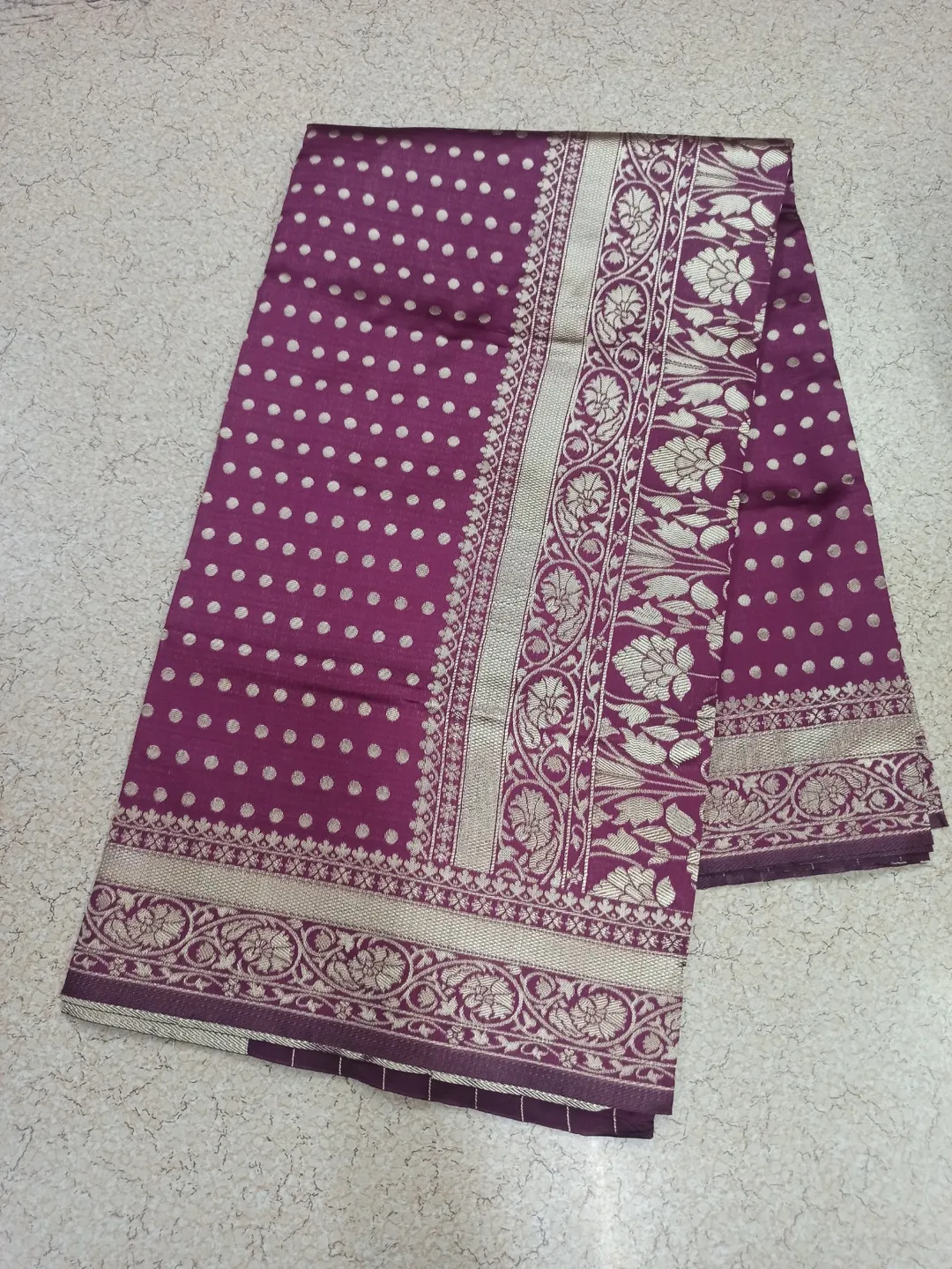
For a silk wedding saree, use a medium pin at the waist, two small pins for the pleats, and two pallu pins. Add one side pin only if the lower drape opens while walking. A festive Pashmina silk saree with a weighty border may need one additional waist pin, but the pin should support the tuck rather than pierce the decorative border.
For a reception or dance-heavy event, keep four spare pins in a small pouch along with a compact comb and a fabric-safe thread cutter. A friend or family member can check the shoulder and pleats after photographs, because pallu tension often changes when the arm is raised repeatedly.
Budget-conscious saree shopping can still include practical preparation. Sarees from Rs 1000 to Rs 1500 may be suitable for shorter functions where a simple five-pin drape is enough. Sarees Under 20% Off and Sarees Under 10% Off can include both lightweight printed styles and heavier festive weaves, so pin count should follow fabric construction rather than discount level. Sarees Flat 60% Off and Sarees Flat 50% Off may offer event-ready options, but the same inspection applies: check the weave, border weight, pallu finish, and lining before deciding how to secure the saree.
How Many Safety Pins Do You Really Need for a Saree Without Causing Damage?
The safest pinning method uses the smallest number of smooth, closed pins that hold the structural points. Pinning mistakes usually involve oversized pins, visible placement, damaged clasps, or attaching the saree to skin instead of to fabric.
- Use enough layers: A pin inserted through one thin layer can tear the fabric or pull out under weight. Fold the fabric or catch a seam whenever the material is delicate.
- Hide the pin: A pin placed from the outside can create a bump and expose the metal head in photographs. Insert pins from the inner side of the fold.
- Avoid over-pinning: A pin every few centimetres makes the front rigid and can distort the fall. One well-placed pleat pin is often better than four scattered pins.
- Discard damaged pins: Rust, rough edges, and loose clasps can snag silk or Chinnon. Discard any pin that doesn't close smoothly.
- Connect fabric to fabric: A saree pin should never be used as a substitute for a properly fitted underskirt or blouse. Connect the saree to the underskirt waistband or blouse seam whenever possible.
- Perform a movement test: A drape that looks secure while standing may pull when sitting. Test stairs, a chair, arm movement, and a few walking steps before finalising the placement.
Remove every safety pin before washing or sending a saree for dry cleaning. Store pins separately in a closed pouch so that metal doesn't rub against zari, silk, or mirror work. A small amount of care prevents pin holes from becoming permanent fabric damage.
Common Questions About Saree Safety Pins and Secure Draping
How many safety pins are usually needed for a regular saree?
A regular six-yard saree usually needs four to six safety pins. Five pins are a practical starting point: two for the pleats, two for the pallu, and one for waist support.
Where should I put safety pins in a saree?
Place pins inside the front pleats, at the waist tuck, and beneath the pallu at the shoulder. Use an additional inner pallu pin when the fabric is slippery, broad, or heavily embellished.
How many pins does a ready-to-wear saree need?
A ready-to-wear saree generally needs two to four pins because the lower pleats are pre-stitched. The usual placements are the waist, shoulder, and optional second pallu fold.
Can safety pins damage a silk saree?
Safety pins can damage silk when they are rough, oversized, repeatedly inserted in one spot, or pushed through zari. Use smooth pins, catch inner folds, avoid decorative borders, and remove pins before storage.
How do I stop a saree pallu from slipping?
Use one shoulder pin through the inner pallu fold and blouse seam, then add a second pin 10 to 15 centimetres below the shoulder if needed. A textured underskirt and a properly fitted blouse can reduce slipping more effectively than several extra pins.
How many spare safety pins should I carry to a wedding?
Carry at least two spare pins for a wedding and four if the event includes dancing or extended travel. Keep small and medium smooth-finished pins in a pouch rather than loose in a handbag.


