

How Elbow Sleeve Blouses Change the Overall Silhouette becomes clear the moment a saree is paired with a sleeve ending near the elbow: the arm looks framed, the shoulder line gains definition, and the saree fall appears more deliberate. Sleeve length does more than alter a blouse design. Sleeve length changes the visual balance between the upper body, waist, pleats and pallu. The right elbow sleeve blouse can make a soft saree look polished, give a narrow shoulder more presence, or add structure to an otherwise fluid drape.
That effect comes from three decisions working together: where the sleeve ends, how closely the blouse fits, and how the neckline meets the shoulder. Fabric, padding, seam placement and saree texture then strengthen or soften the result. Understanding those details makes choosing a readymade blouse easier, especially when a designer saree has a strong border or an unusually wide pallu.
How Elbow Sleeve Blouses Change the Overall Silhouette
Elbow sleeve blouses create a contained upper-body frame that visually connects the shoulder, bust and waist without exposing the full arm. The sleeve draws a horizontal line around the upper or middle arm, while the saree creates vertical lines through the pleats and pallu. Together, those lines produce a balanced silhouette with more coverage than a sleeveless blouse and less visual weight than a full-sleeve blouse.
A sleeve ending two to four centimetres above the elbow usually looks lighter than a sleeve ending directly at the elbow crease. A sleeve that reaches below the elbow gives more arm coverage but can make the upper body appear longer and slightly heavier. The difference is small in measurement but noticeable in photographs because the sleeve hem becomes a visual stopping point.
Elbow-length sleeves also reduce the emphasis on the bare arm. That can be useful when a saree has a heavily decorated border, a broad zari pallu or a dramatic drape. The blouse supports the saree instead of competing with it. A sleeve hem with a clean finish looks especially effective when the saree has geometric lines, woven motifs or a crisp fall.
Why sleeve placement affects proportion
Sleeve placement affects proportion because the eye reads the sleeve hem as a horizontal division. A high sleeve hem leaves more visible arm and creates an airier look, while a lower hem adds a stronger band across the arm. The best position depends on arm length, sleeve width and the visual weight of the saree.
For petite wearers, a slim elbow sleeve with a modest neckline can preserve vertical continuity. For taller wearers, a slightly wider sleeve or a border at the sleeve edge can add useful horizontal balance. A sleeve that's tight at the bicep but loose near the elbow may create a tapered shape; a straight sleeve gives a cleaner, more architectural outline.
What elbow-length sleeves do to shoulders, arms and the waist
Elbow-length sleeves make the shoulder line look more intentional and can either broaden or soften it depending on the cut. A fitted sleeve that begins close to the shoulder preserves the natural shoulder width, while a capped or slightly extended sleeve seam can make narrow shoulders appear broader. A dropped shoulder seam does the opposite by creating a relaxed, less structured outline.
Arm coverage is another important factor. A sleeve with moderate ease skims the upper arm and creates a smooth line under the saree pallu. A very tight sleeve can create visible horizontal pressure lines, especially in cotton or silk fabrics with little stretch. A sleeve that's too loose can make the arm look wider because the fabric stands away from the body.
The waist appears more defined when the blouse hem ends at the natural waist and the saree is draped with controlled pleats. A long blouse ending below the waist can lengthen the torso and reduce the contrast between blouse and saree. An elbow sleeve doesn't automatically create a smaller waist; the effect depends on the hem, side seams, darts and the height at which the saree is worn.
Padded construction can sharpen the upper-body outline when the padding is thin and evenly distributed. The Banarasi Silk Golden Jari Padded Blouse for Women demonstrates why a structured bodice can support a rich saree without requiring a large sleeve. Heavy padding, however, may make the bust look broader and can pull the sleeve seam upward. A correct bust measurement and shoulder measurement matter more than choosing a standard size by waist alone.
Which fabrics make elbow sleeve blouses look structured or fluid?
Firm fabrics create a clearer silhouette, while soft fabrics make elbow sleeves fall closer to the arm. Cotton, brocade and many Banarasi silk fabrics hold a sleeve edge visibly; lightweight silk, satin-like blends and soft viscose create a smoother transition from shoulder to elbow. Fabric weight therefore changes the same sleeve pattern substantially.
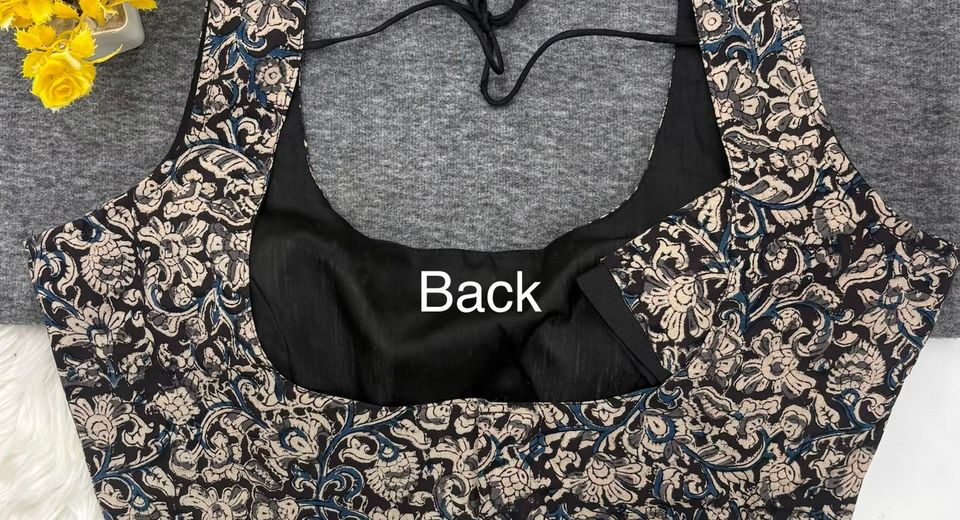
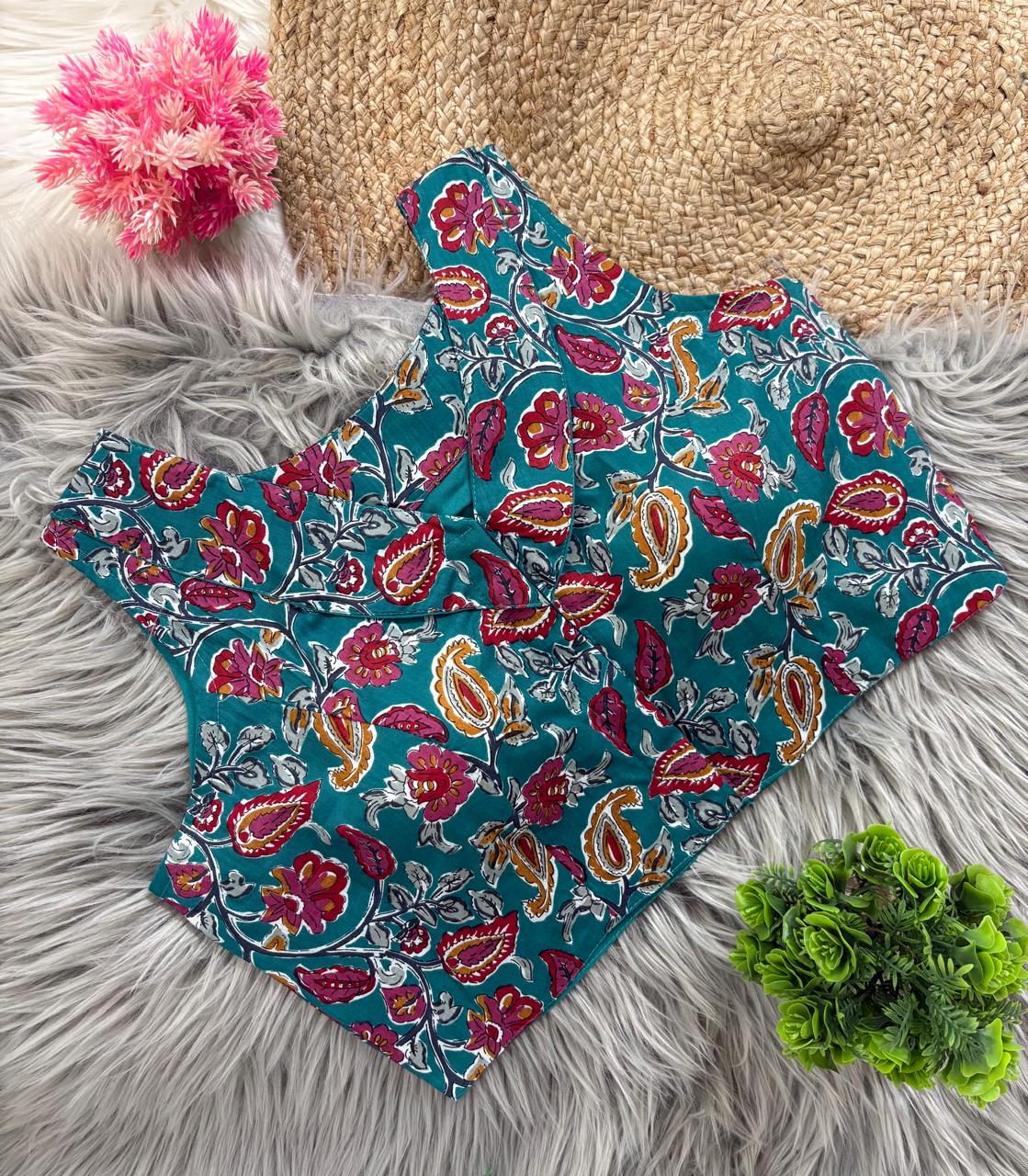
Cotton is practical for daytime sarees because cotton sleeves generally retain their shape, absorb moisture and remain comfortable in warm weather. The Pure Kalamkari Cotton Padded Blouse for Women gives a printed cotton saree a defined upper-body shape without relying on heavy embellishment. The Kalamkari Cotton V Neck Collar Blouse for Women adds another useful lesson: a collar and V neckline can create vertical direction even when the sleeve supplies a horizontal line.
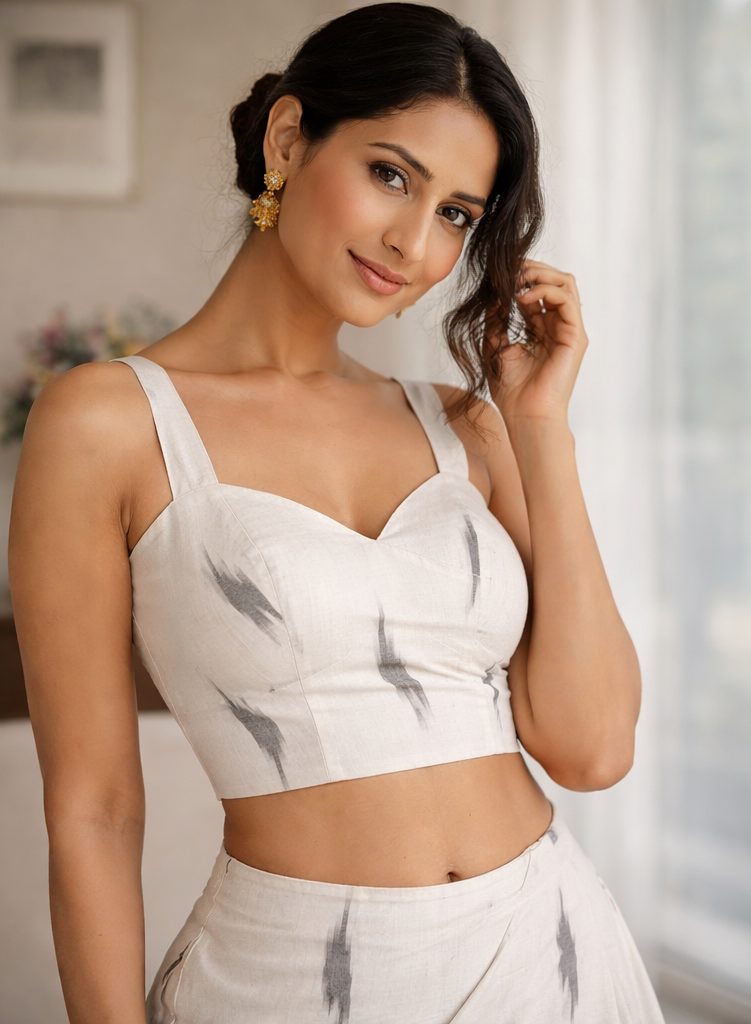
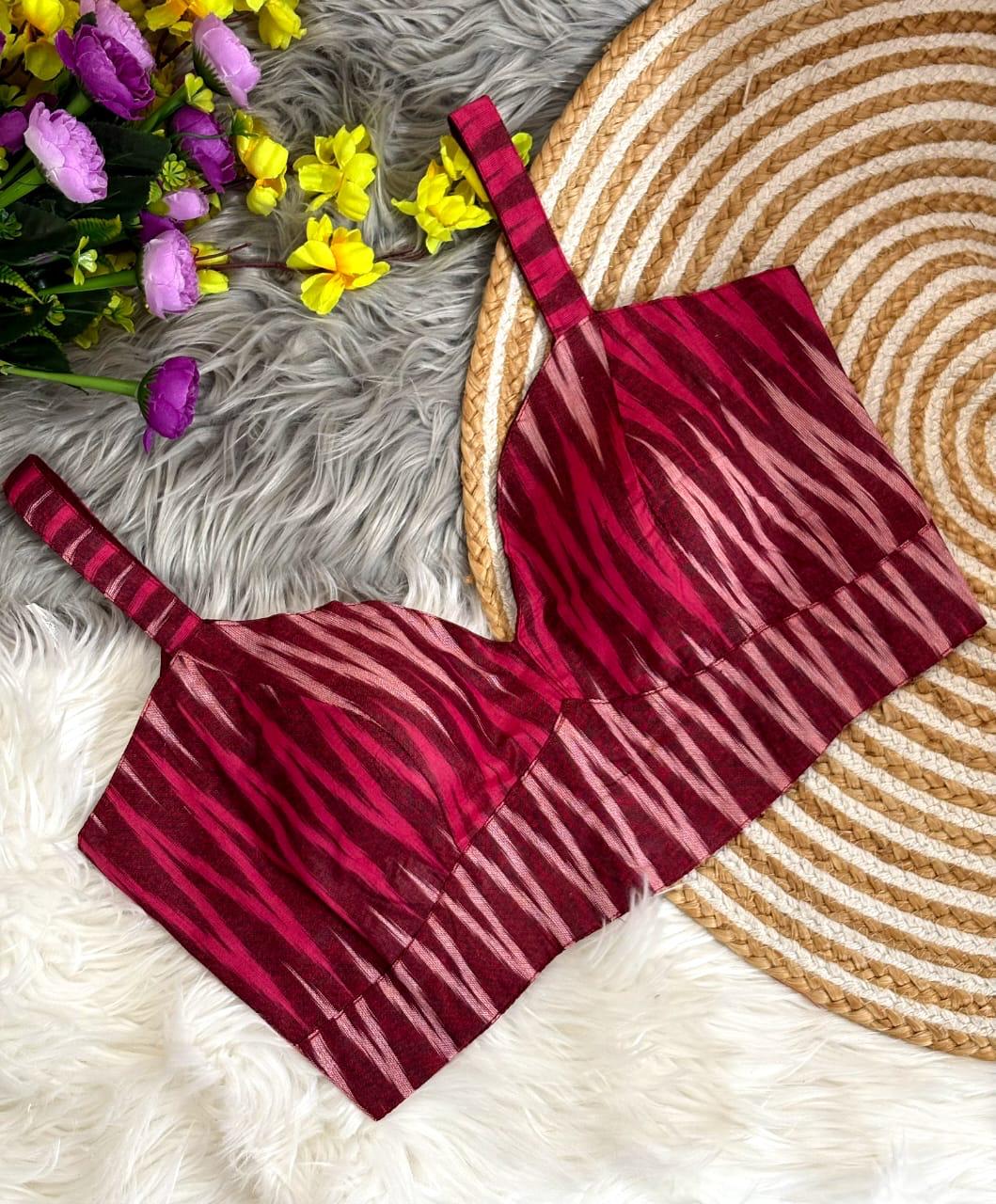
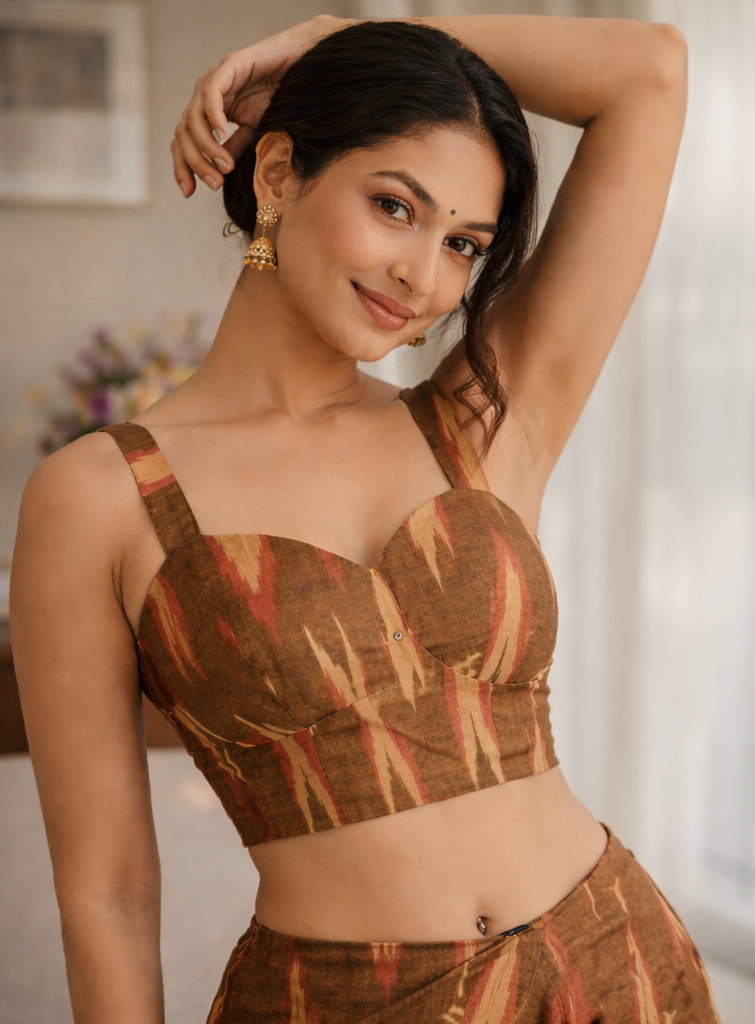
Ikat cotton has a naturally graphic appearance, so the sleeve edge becomes part of the pattern composition. A readymade option such as the Cream Ikat Cotton Padded Blouse Sleeveless is sleeveless, but it offers a useful comparison: removing the sleeve creates a longer uninterrupted arm line, while adding an elbow sleeve would introduce a visual break and a more formal frame. The Ikkat Cotton Padded Blouse for Women Sleeveless and Brown Ikat Cotton Padded Blouse Sleeveless Stylish create the same contrast through colour and pattern rather than sleeve coverage.
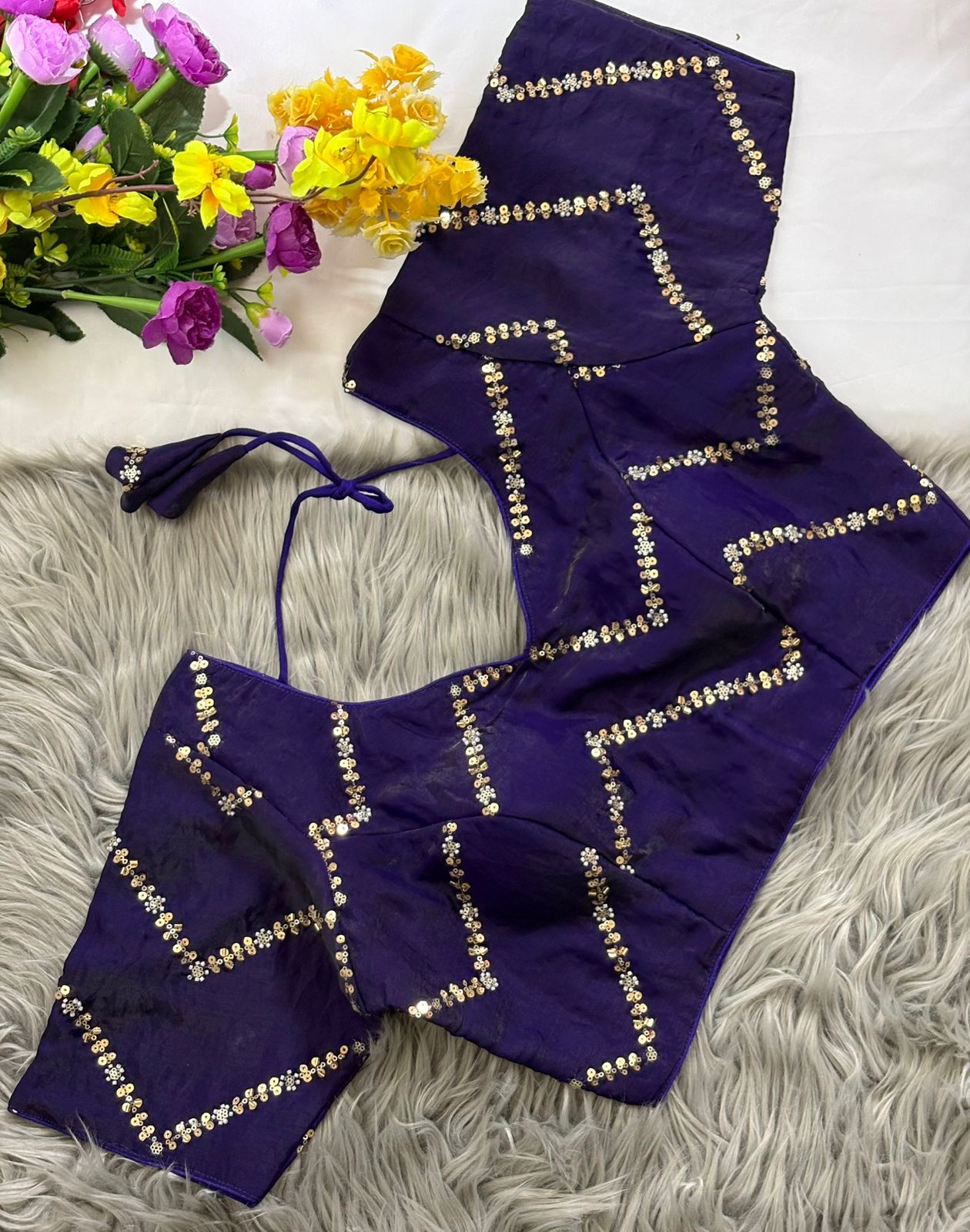
Silk works differently because its surface catches light along the shoulder, sleeve fold and bust. A smooth silk elbow sleeve can make the upper body look more continuous, while zari, brocade or raised embroidery creates a stronger outline. The Fendy Silk Zigzag Moti Work Readymade Blouse uses surface decoration to draw attention to the bodice, so the sleeve should fit neatly rather than compete with additional heavy borders.
How neckline and sleeve width work together
A V neckline lengthens the upper-body impression, while a boat neckline expands the shoulder line and a high round neckline gives a more enclosed appearance. Sleeve width must support that neckline rather than repeat its visual effect. A wide boat neckline with a very wide elbow sleeve can make the upper body look broad; a V neckline with a narrow sleeve usually creates a more elongated reading.
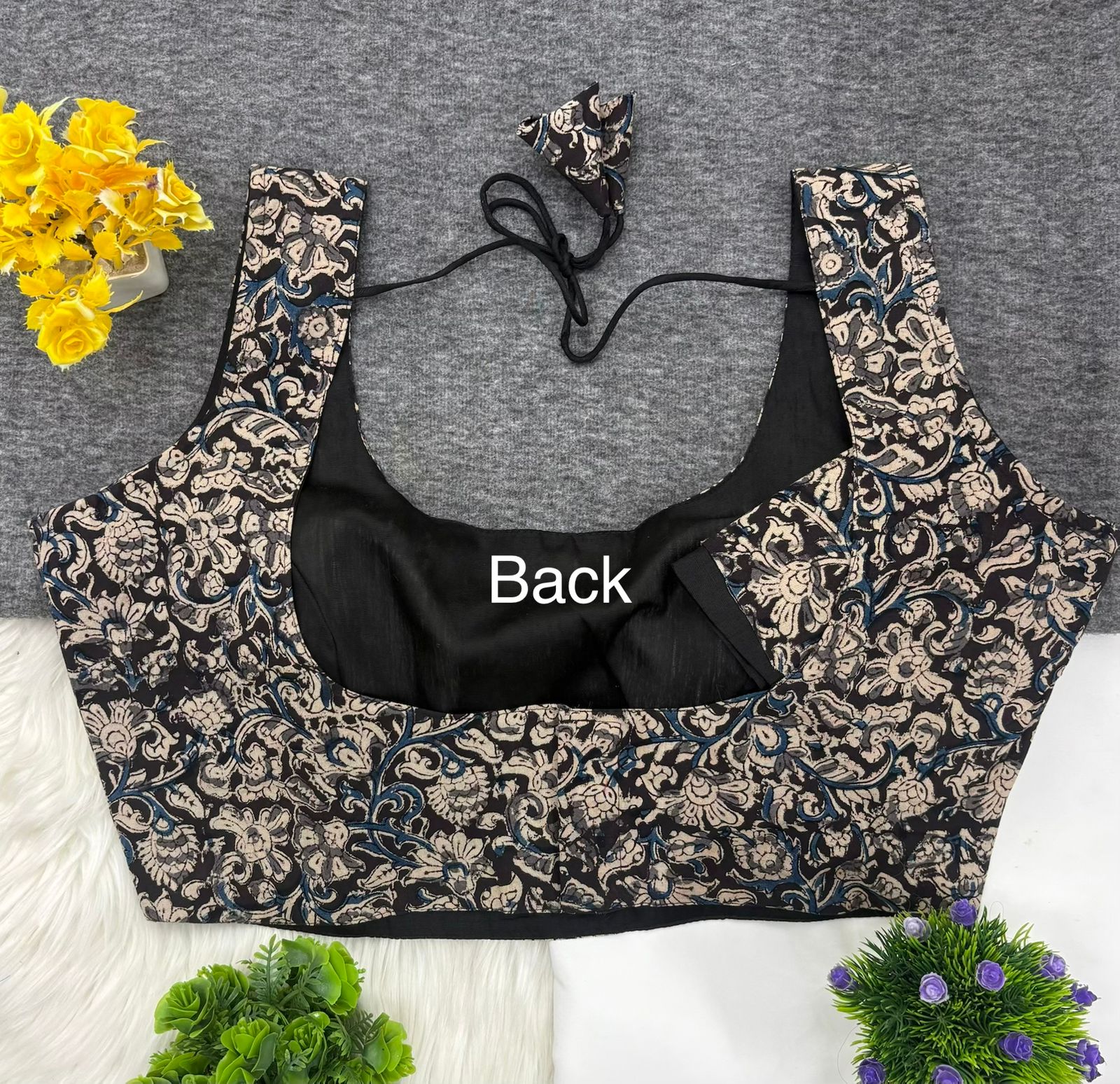
A collar introduces a strong horizontal element at the neck. The Kalamkari Cotton V Neck Collar Blouse for Women shows how a collar can add definition without requiring a deep neckline. When paired with an elbow sleeve, a collar works best when the sleeve edge is simple and the saree border isn't excessively wide.
Shorter necklines and fitted sleeves can look refined with lightweight Chanderi or cotton sarees because both the blouse and saree retain visual clarity. A deeper V neckline can prevent a high-coverage elbow sleeve from looking closed-in, particularly when the saree has a dense weave. A high neckline can be effective with a narrow sleeve and a simple saree, but too many horizontal details may compress the upper-body appearance.
Choosing sleeve width for different arm proportions
A sleeve with two to three centimetres of ease around the upper arm usually creates a smoother line than a skin-tight sleeve. Narrow sleeves can suit slim arms and structured fabrics, while moderate-width sleeves are often more comfortable and forgiving in cotton. Very wide sleeves need a controlled hem; otherwise, the arm and sleeve can merge into a single broad shape.
The sleeve hem should not cut across the fullest part of the upper arm when a slimmer appearance is the goal. Moving the hem slightly above or below that point can create a cleaner line. A narrow border at the hem can sharpen the finish, but a thick contrasting border makes the horizontal division more prominent.
How to pair elbow sleeves with different saree types
Elbow sleeve blouses pair most successfully with sarees whose weight and visual detail are balanced by the blouse structure. A crisp cotton saree benefits from a fitted cotton blouse, while a rich silk saree can support padding, zari or controlled sleeve embroidery. The goal isn't to match every detail but to distribute visual weight across the outfit.
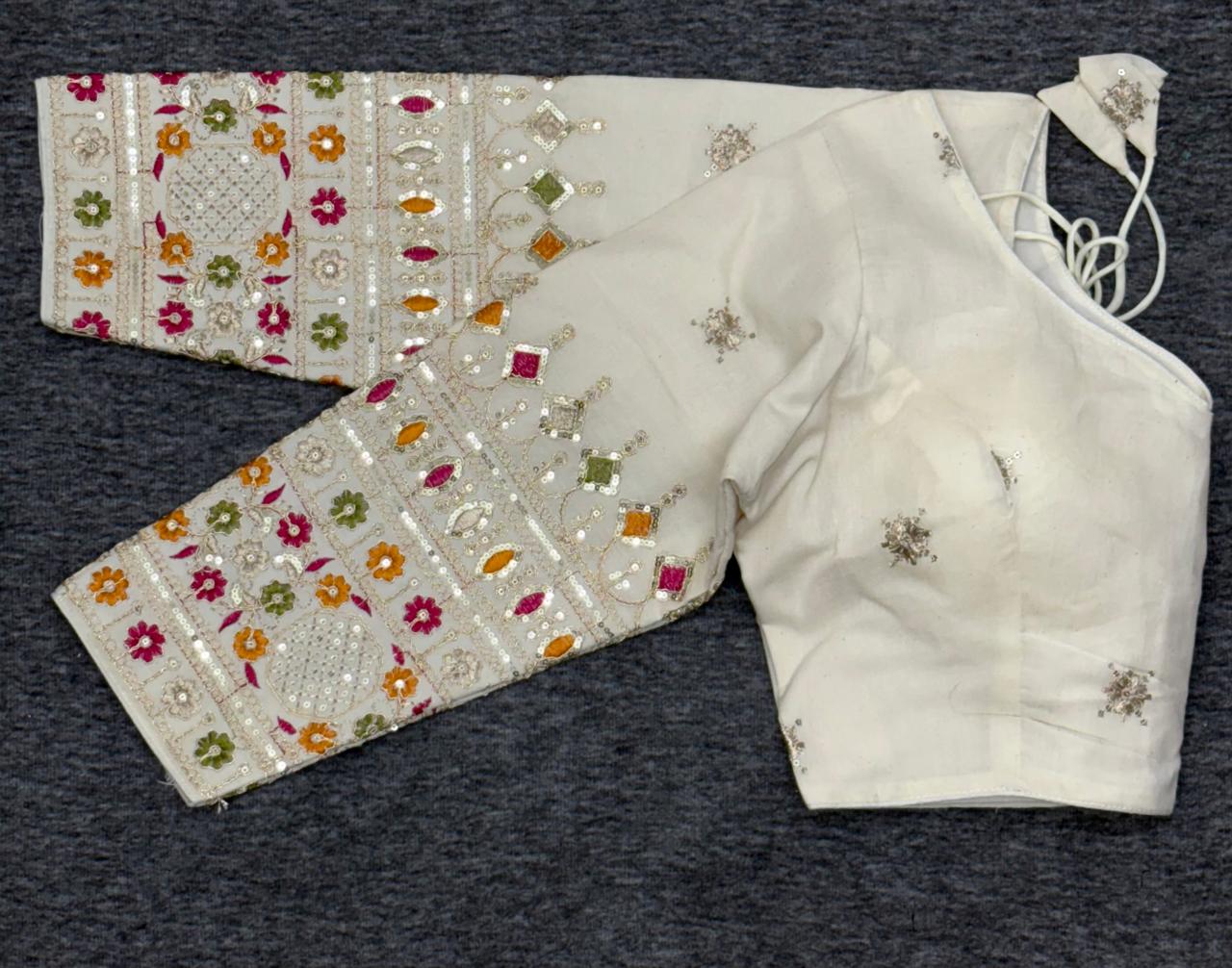
Banarasi silk with a zari-heavy pallu generally looks composed with a clean elbow sleeve and a neckline that leaves some openness near the face. The Banarasi Silk Golden Jari Padded Blouse for Women can work with festive drapes because gold zari reinforces the saree's formal character. Keep jewellery proportionate: large earrings and a broad sleeve border together may overcrowd the upper body.
Chanderi and lightweight silk sarees often benefit from sleeves that have minimal bulk. A soft elbow sleeve preserves movement and prevents the blouse from overpowering the translucent or airy quality of the saree. Cotton Ikat and Kalamkari prints can take a more defined sleeve because their patterns already provide structure.
A designer saree with sculptural pleats, an architectural pallu or a wide contrast border needs a blouse that supplies support rather than another competing focal point. A Classic Festive Wear Blouse for Stylish Saree Look can serve as a useful styling reference for festive dressing: let the sleeve and neckline create the frame, then allow the saree border to remain the dominant line.
Readymade fit checks that protect the silhouette
A readymade elbow sleeve blouse should be evaluated by shoulder, bust, armhole and sleeve measurements rather than by bust size alone. The shoulder seam should sit at the shoulder's natural edge, the armhole should allow comfortable movement, and the sleeve hem should remain level when the arm is relaxed.
Raise both arms to shoulder height before judging fit. A sleeve that pulls sharply across the underarm is too tight even if the bust closes comfortably. Sit, bend one arm and bring the hands forward to test whether the back neckline or sleeve cap restricts movement. These simple checks prevent the blouse from distorting the saree drape during a ceremony.
Padded readymade blouses need particular attention at the side seam. Padding should sit beneath the bust rather than above it, and the cups should not create a visible ridge under a silk saree. The blouse hem should meet the saree's waistline without riding up when the pallu is pinned. If alterations are possible, shoulder and side-seam adjustments usually improve silhouette more than shortening the sleeve by itself.
Readymade sizing can vary by pattern, so record four measurements: full bust, shoulder width, upper-arm circumference and blouse length. Add ease according to fabric. A non-stretch cotton blouse generally needs more movement room than a flexible blend, while a structured silk blouse may require careful placement of darts rather than extra looseness.
Small styling adjustments that change the final outline
The saree's drape determines whether an elbow sleeve looks streamlined or crowded. Keep pleats narrow and even when the blouse has a collar, strong print or zari. A lower, cleaner pallu can lengthen the visual line, while a high pallu pinned close to the shoulder adds coverage and makes the upper body look more compact.
Jewellery should respond to the blouse's strongest line. A long pendant complements a V neckline, medium jhumkas balance a boat neckline, and a collar usually needs simpler neck jewellery. Bangles stop near the sleeve hem, so a dense stack of bangles can create another horizontal band; two to four slim bangles often look more proportionate with an elbow sleeve.
Colour placement also matters. A blouse close to the saree colour creates continuity and makes the torso appear longer. A high-contrast blouse clearly separates the upper body from the saree and can make the waistline more noticeable. The same sleeve length therefore produces different results in a tonal outfit and a sharply contrasting outfit.
A useful fitting rule is to judge the complete saree silhouette from three distances: close enough to inspect the sleeve seam, far enough to see the waist and pleats, and in a photograph that shows the full drape.
How to choose an elbow sleeve blouse for your next saree
Choose an elbow sleeve blouse when you want a defined upper-body frame, moderate arm coverage and a polished transition between the saree and the shoulder. Begin with the saree's weight and border, then select the sleeve width, neckline and fabric. Do not begin with decoration alone.
For daytime cotton dressing, choose breathable cotton, moderate sleeve ease and a neckline that keeps the upper body open. For festive silk, consider thin padding, a clean sleeve edge and controlled zari or embroidery. For a printed saree, repeat one colour from the print in the blouse or use a calm neutral to prevent pattern overload.
For narrow shoulders, a boat neckline or modest sleeve extension can add width. For broad shoulders, a V neckline and a sleeve that follows the arm without flaring can create balance. For fuller upper arms, avoid a hem at the widest point and choose a sleeve with enough ease to lie flat without clinging.
The most reliable choice is the blouse that supports the saree's existing lines. When sleeve length, neckline, fabric and fit agree, the silhouette appears intentional from every angle. That is the practical value of understanding how elbow sleeve blouses change the overall silhouette: the blouse becomes a proportion tool, not merely an added layer of decoration.
Common Questions About Elbow Sleeve Saree Blouses
Do elbow sleeve blouses make the arms look slimmer?
Elbow sleeve blouses can make the arms look more streamlined when the sleeve has moderate ease and ends away from the fullest part of the upper arm. A sleeve that is too tight or ends exactly across the widest point can create a stronger horizontal line instead.
Are elbow sleeve blouses suitable for short women?
Yes, elbow sleeve blouses suit short women when the sleeve is relatively narrow, the blouse hem sits near the natural waist and the neckline creates some vertical direction. A tonal blouse-and-saree combination can also prevent the torso from looking visually divided.
Which fabric is best for an elbow sleeve blouse?
Cotton is a practical choice for breathable daytime wear and holds a defined sleeve shape. Silk and Banarasi silk suit festive sarees, while the best fabric ultimately depends on the saree's weight, the desired structure and the amount of ease required around the arm.
Can a readymade elbow sleeve blouse be altered?
Many readymade blouses can be altered at the shoulder, side seam, blouse length or sleeve hem, but alteration allowances vary by construction. Check the shoulder and armhole first because a poorly fitting armhole can distort the entire silhouette even after the waist is adjusted.
Should elbow sleeve blouses be padded?
Padding is useful when a smooth, structured bust line is desired, especially under silk or zari sarees. Thin, evenly placed padding usually looks more natural than thick padding, and the cups should sit correctly beneath the bust without creating ridges.
What jewellery works best with elbow sleeve saree blouses?
Jewellery should complement the neckline and avoid creating too many horizontal bands near the sleeve. Long pendants suit V necklines, medium earrings balance boat necklines, and simpler neck jewellery usually works best with collared elbow sleeve blouses.


