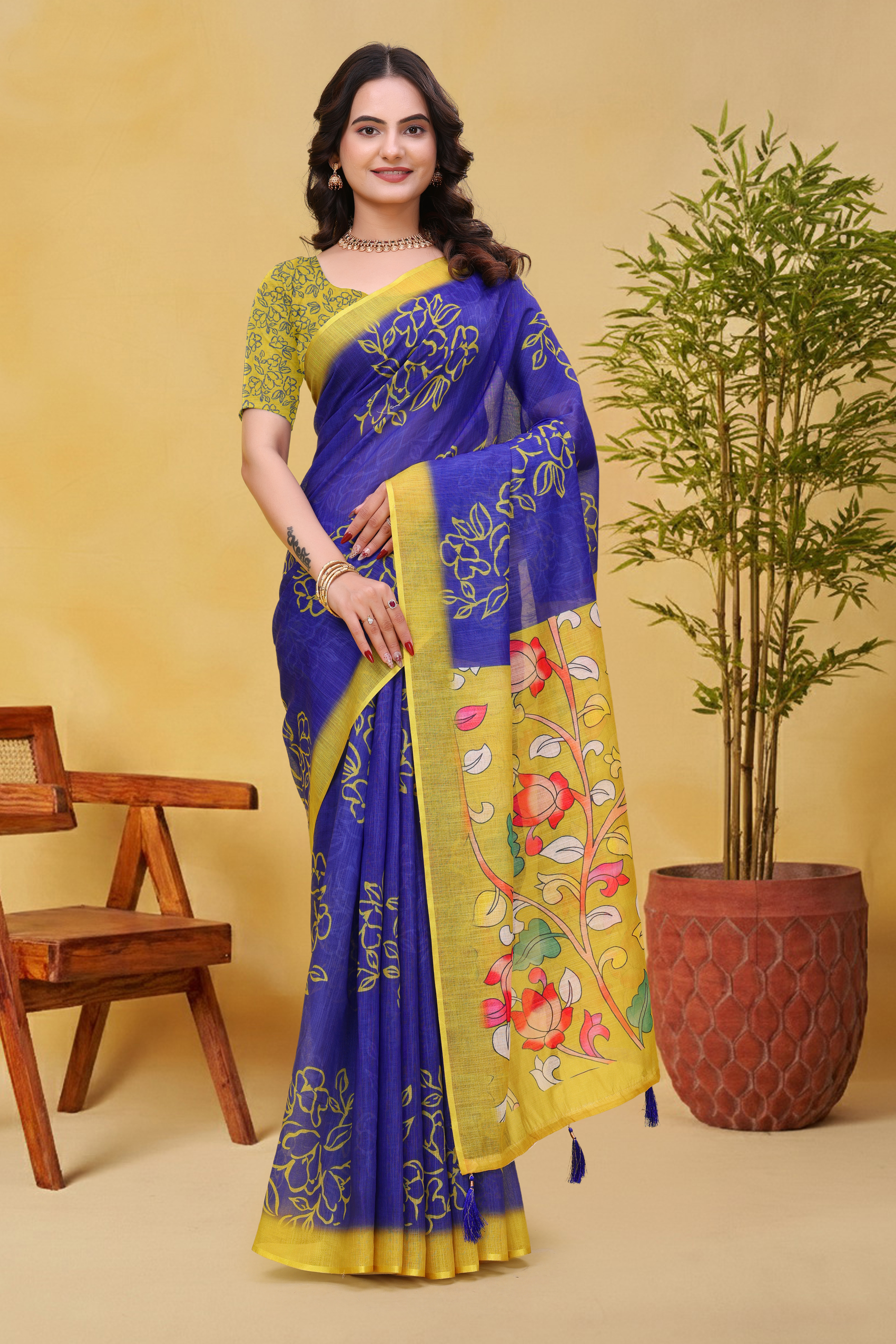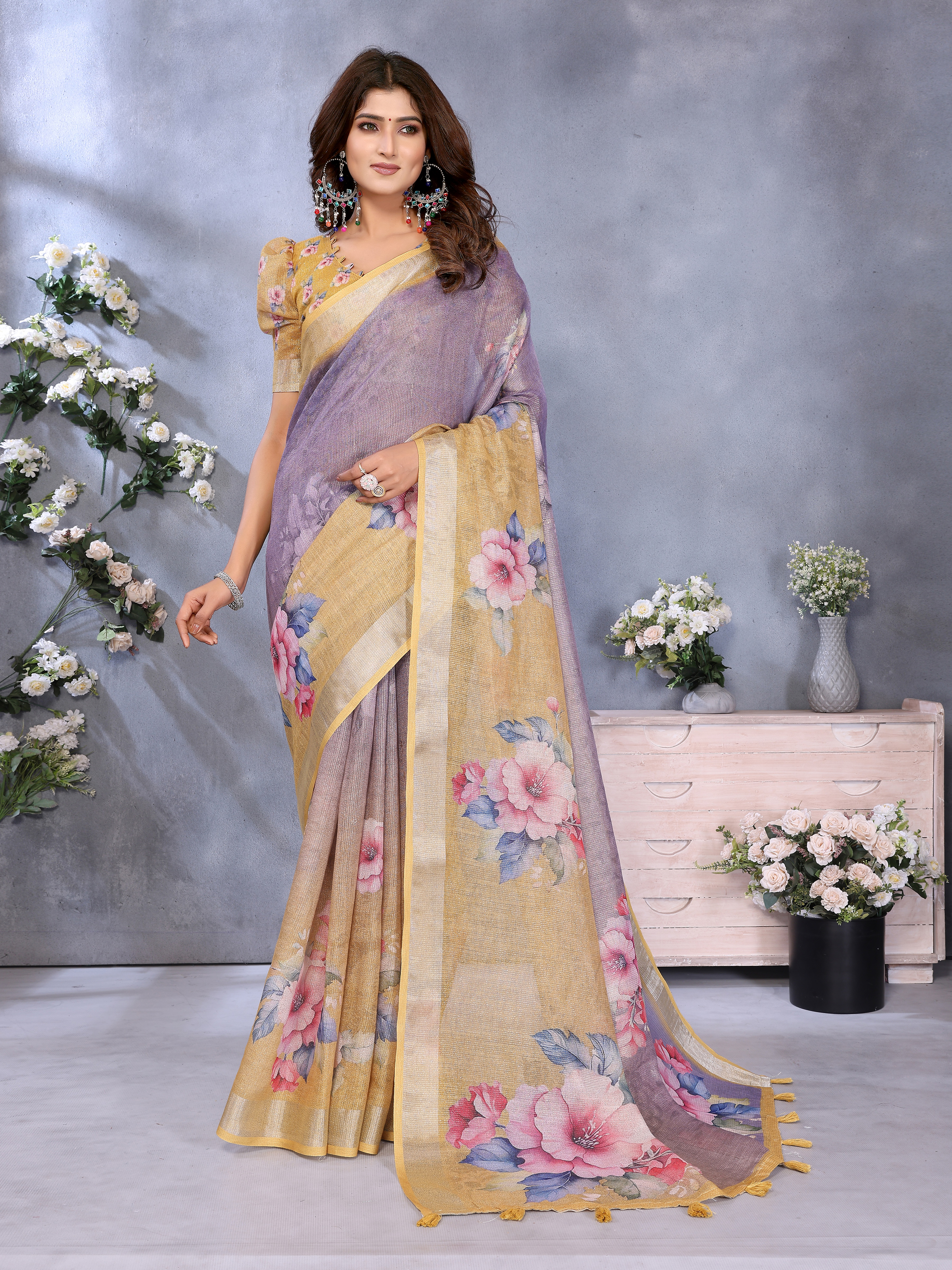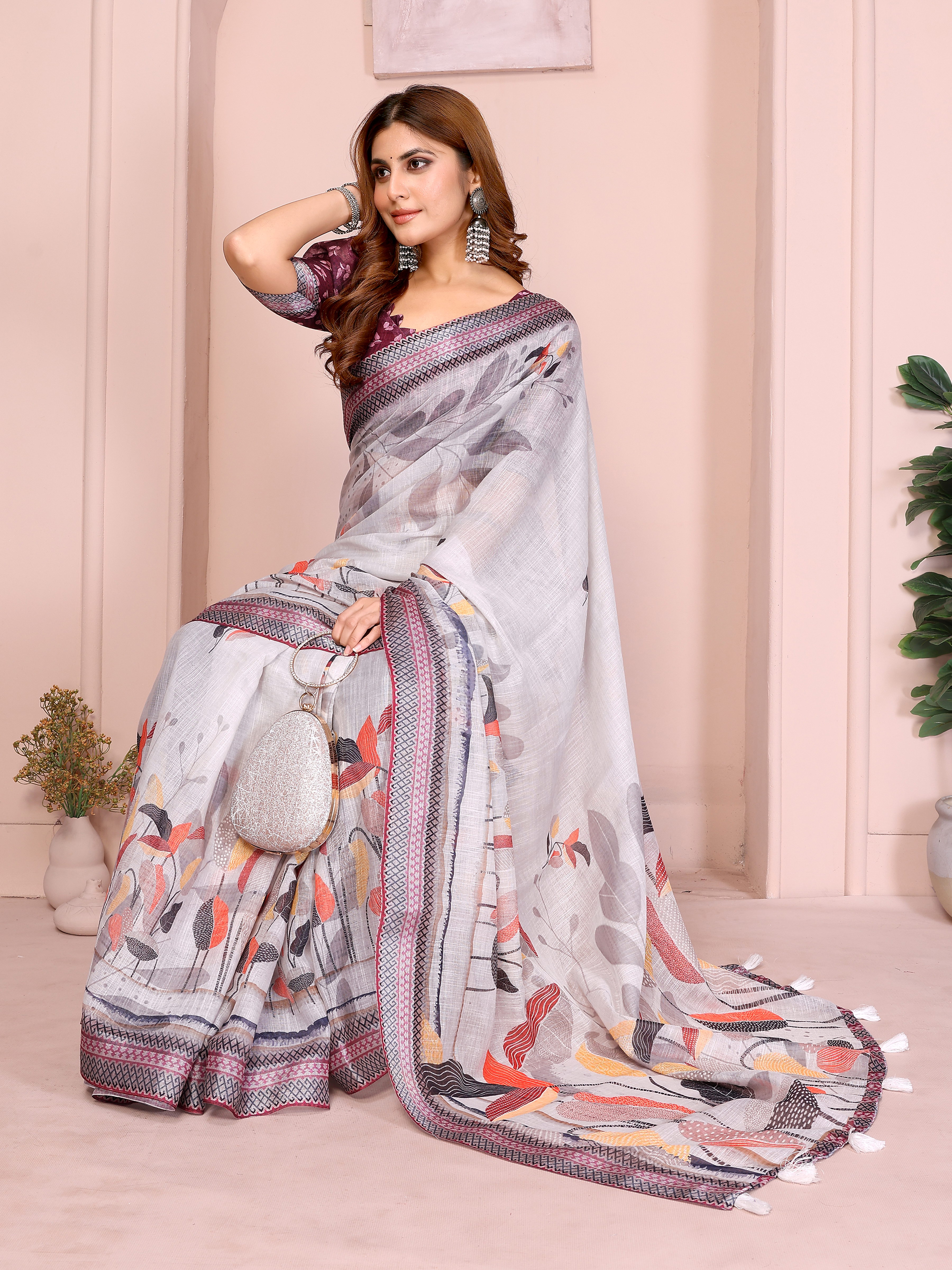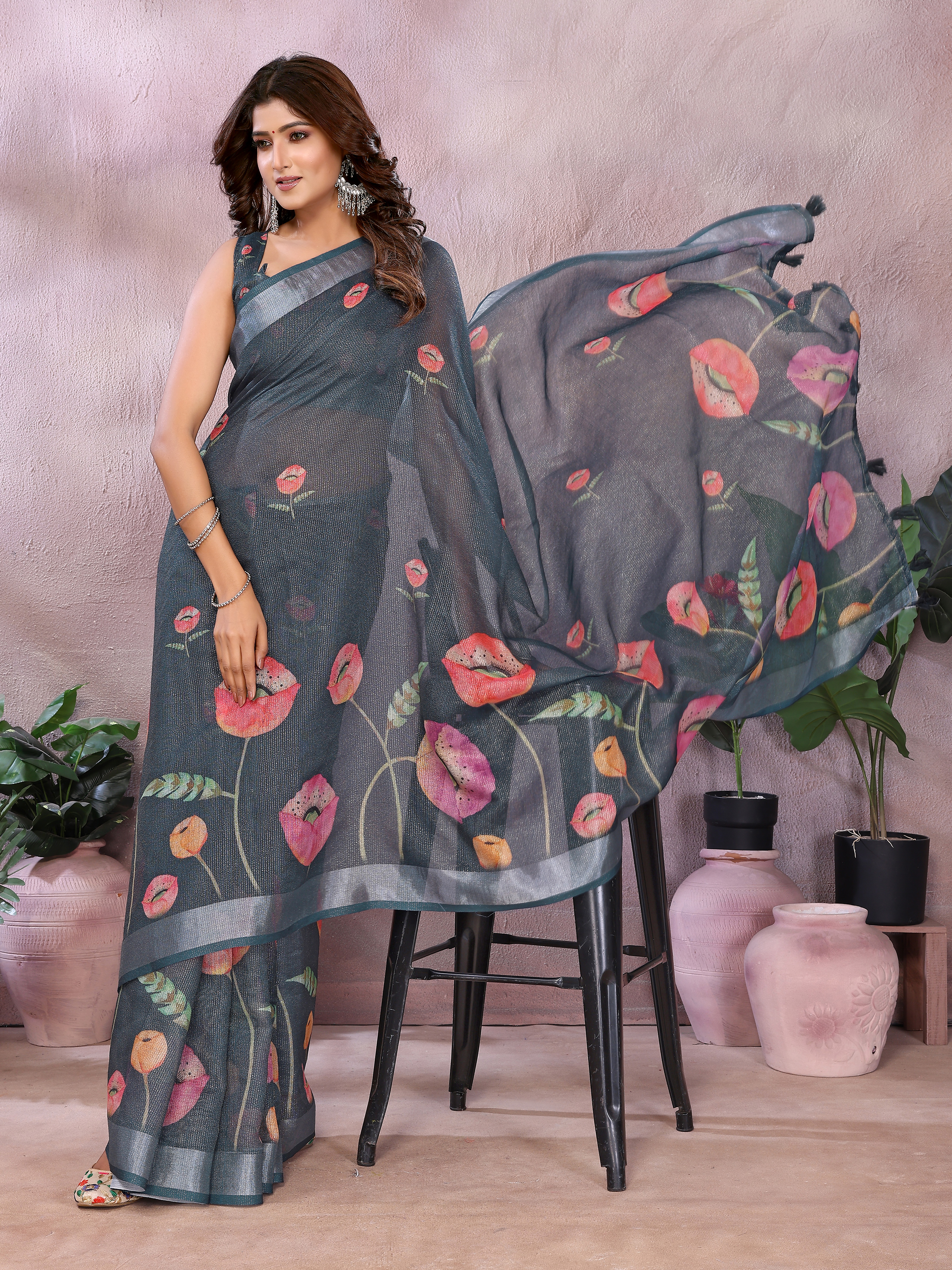
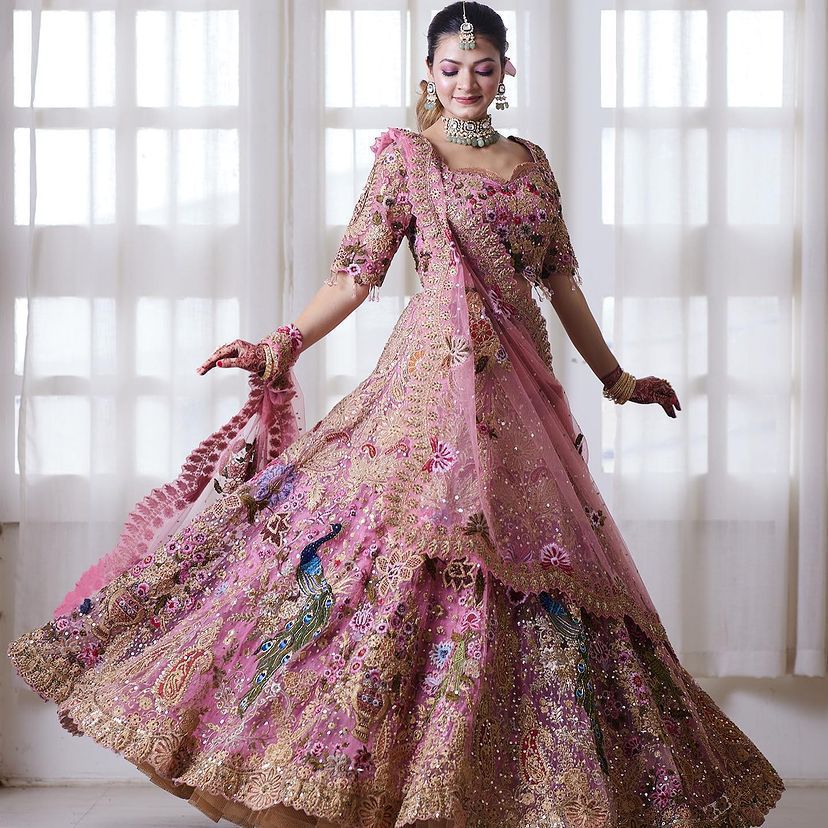
Heavy embroidery should be distributed across a lehenga not just added everywhere. The placement of threadwork, sequins, zari and borders determines whether a lehenga looks graceful in motion or visually crowded before you even notice its colour. A well-designed lehenga gives the eye a resting point, builds emphasis around the face and waist, and lets the flare move without turning every panel into a competing focal point.
That principle matters when comparing bridal, designer, readymade and fully stitched choli options. Two lehengas can contain a similar amount of embroidery but look entirely different because one concentrates detail around the hem and bodice while the other spreads dense work randomly across the skirt. Understanding distribution helps you judge photographs more accurately, choose a fabric suited to the embellishment, and buy a set that remains comfortable after several hours of wedding wear.
Why embroidery placement changes the appearance of a lehenga
Embroidery placement changes a lehenga's perceived proportion, visual weight and movement. Dense work attracts attention and can make an area appear broader or more structured, while a plain or lightly worked area gives the eye space to pause.
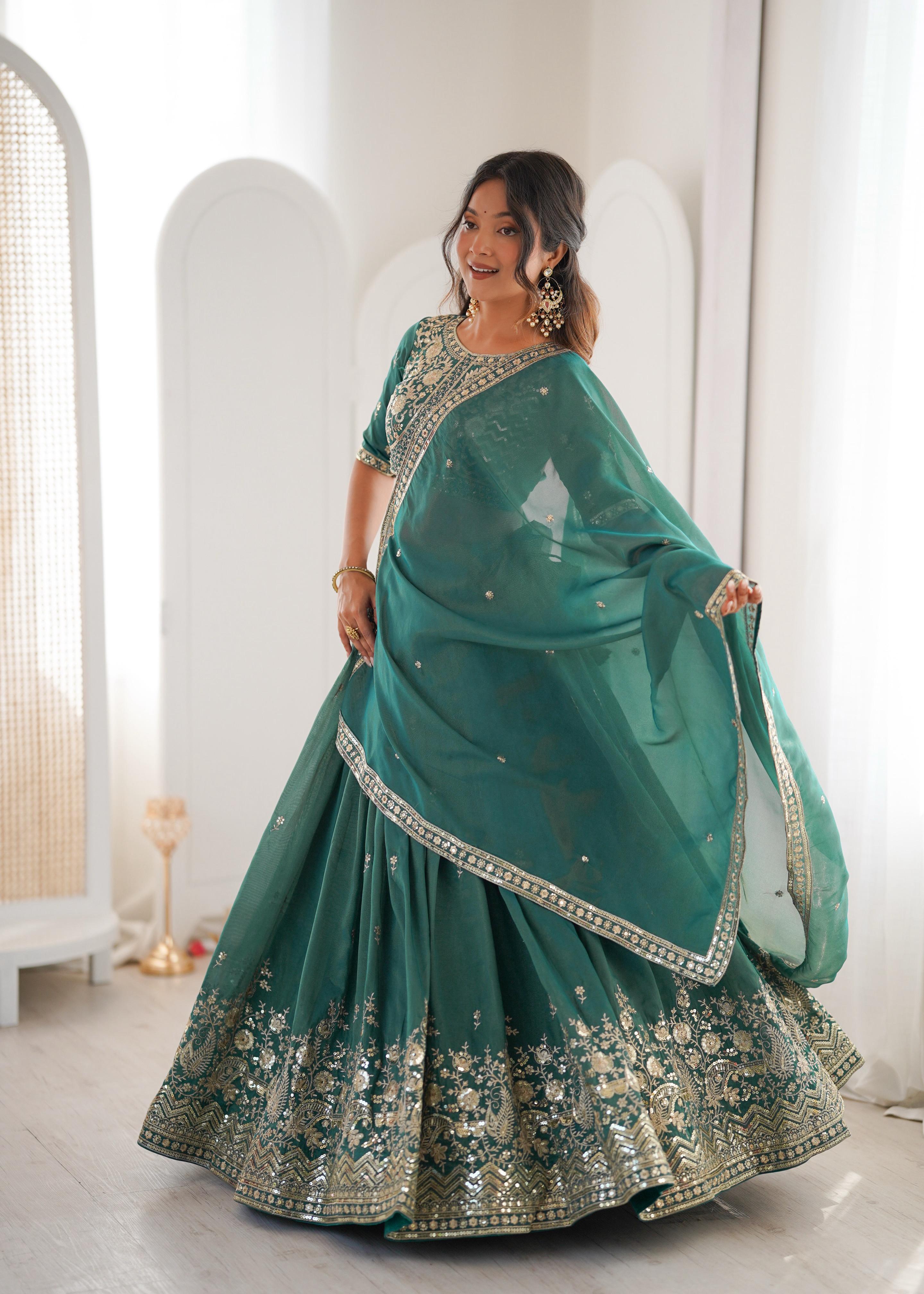
A lehenga usually has four visible zones: the choli, the waistband or midriff area, the skirt panels and the dupatta. Designers can use each zone for a different purpose. Embroidery close to the neckline frames the face. Work at the waistband defines the transition between blouse and skirt. A lower border gives the skirt a grounded finish. Scattered motifs connect the zones without making the entire garment equally loud.
The hem is especially important because a wide border carries visual mass. A 10 to 14-inch border can make a simple skirt feel ceremonial, but a heavy border combined with large motifs on every upper panel may make the lower half look dense. A narrower border with strategically placed butis often creates more movement and shows the fabric's fall.
Vertical arrangements also influence the silhouette. Elongated motifs running from the waistband towards the hem can create a longer visual line. Horizontal bands, repeated circular motifs and multiple parallel borders emphasise width. Neither effect is automatically better; the useful question is whether the pattern supports the wearer's preferred proportion and the lehenga's flare.
Heavy Embroidery Should Be Distributed Across a Lehenga Not Just Added Everywhere
Heavy embroidery should be distributed across a lehenga not just added everywhere because controlled density creates hierarchy. Hierarchy means that one or two areas lead the eye, while supporting details guide attention between them.
What should receive the most embroidery?
The choli neckline, sleeve edge, waistband and lower skirt border are usually the strongest locations for concentrated embroidery. These areas are visible in photographs, remain legible when the dupatta is draped, and help define the garment's structure.
A designer may repeat one motif at different scales rather than cover every inch with identical work. For example, a large floral motif can sit near the hem, smaller versions can appear on the skirt panels, and a fine outline can be echoed on the dupatta. The repeated shape creates continuity without producing a flat wall of decoration.
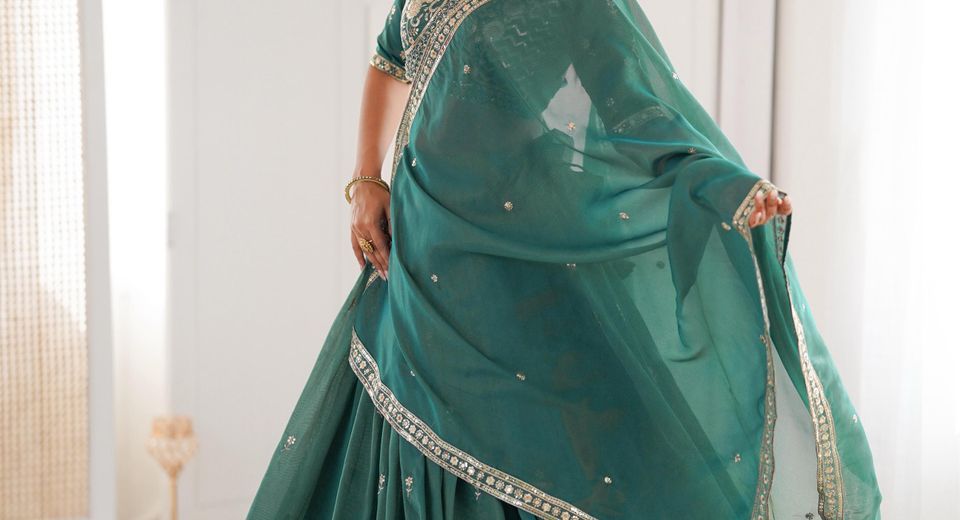
The Green Chinon Silk Sequins Embroidered Lehenga Set illustrates why fabric and placement need to be read together. Chinon silk has a fluid fall, so sequins can provide sparkle while selected areas preserve the softness of the skirt. A dense sequin treatment on every panel would change that balance by adding both visual and physical weight.
What does poor distribution look like?
Poor distribution often appears as unrelated borders, identical heavy motifs at random intervals, or dense decoration that hides the difference between bodice, waist and skirt. The result may photograph as busy because the eye has no clear place to settle.
Uneven finishing can also reveal itself in movement. If the upper panels carry too much embellishment, the skirt may feel stiff while the hem lacks enough structure to swing cleanly. If a heavy lower border is paired with a heavily worked dupatta, the two edges can compete when the dupatta crosses the front of the body.
How fabric determines the right embroidery density
Fabric determines how much embroidery a lehenga can carry before the garment loses fluidity, comfort or proportion. Silk, georgette, chinon silk, satin, organza and butterfly net respond differently to thread, sequins, beads and metallic work.
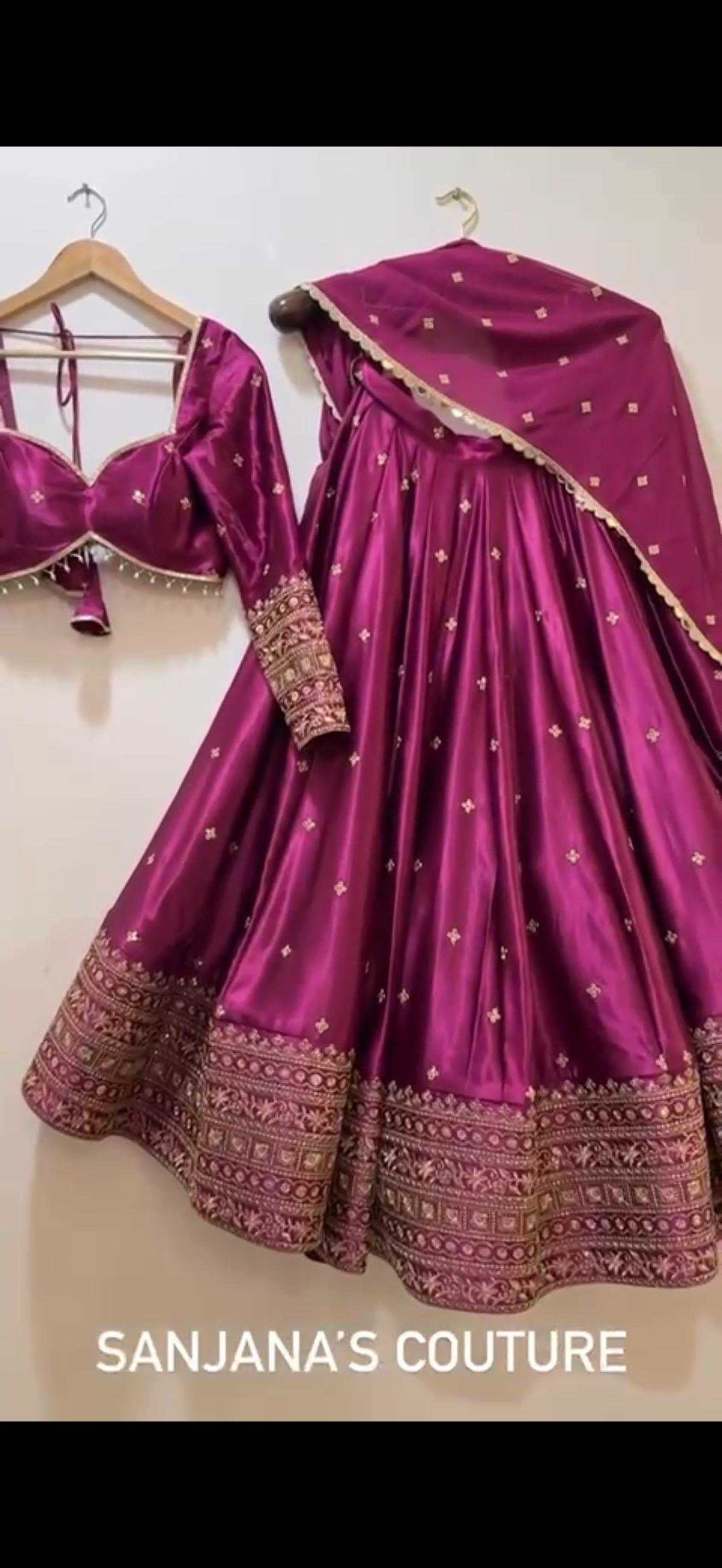
Silk can support substantial threadwork because its body gives the skirt structure. The Designer Threadwork Silk Lehenga Choli Set with Dupatta is a useful example of how a richer base can hold detailed threadwork without relying on sparkle across every surface. Thread embroidery also creates a softer, more matte effect than an all-sequin design.
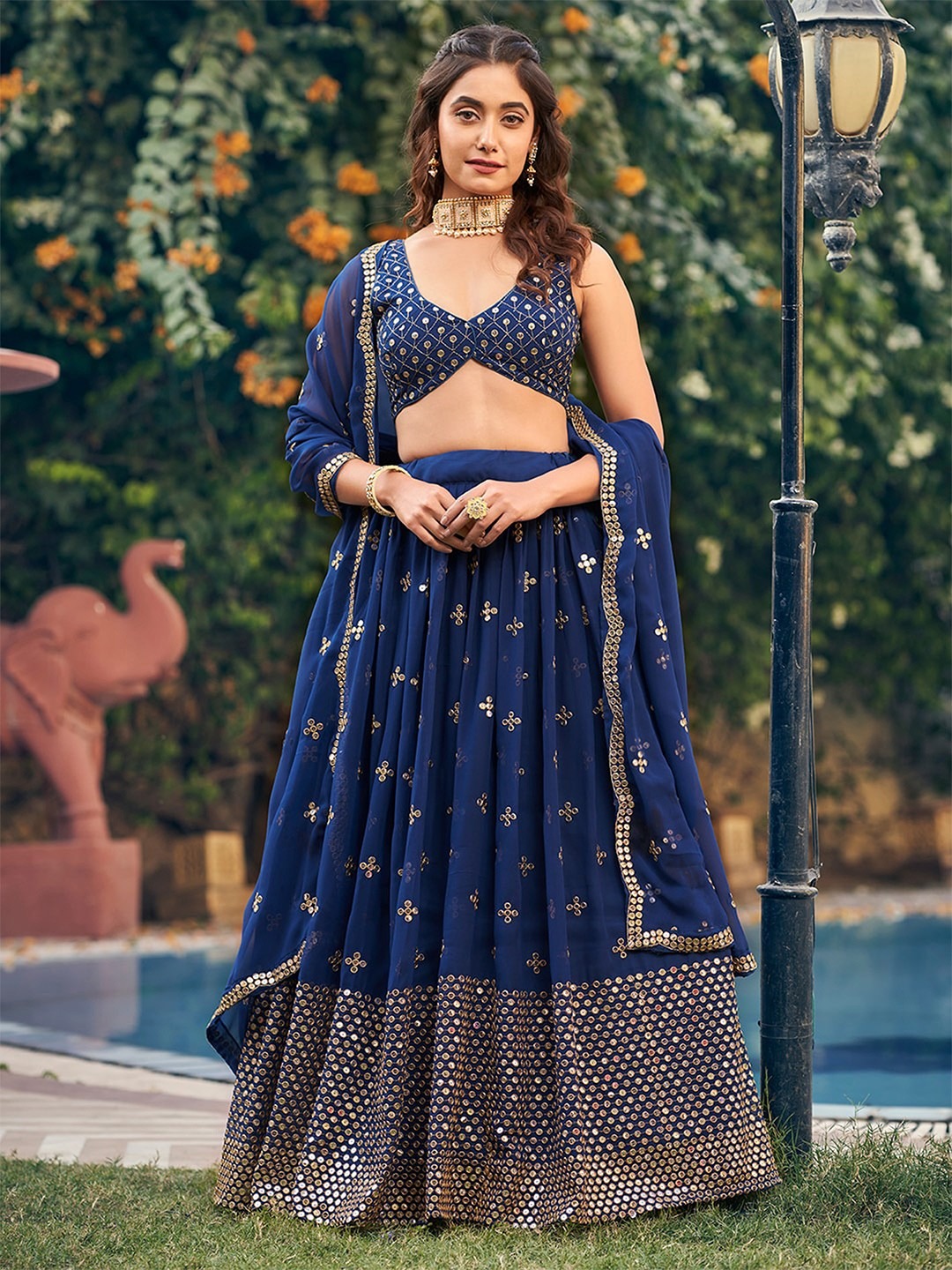
Georgette and chinon silk offer movement, but excessive embellishment can reduce their fluid fall. The Blue Floral Georgette Lehenga Set with Heavy Flare demonstrates why the phrase "heavy flare" should not be confused with "heavy decoration everywhere." A full silhouette can come from generous fabric volume, layered construction and a strong hem, not only from dense surface work.
Organza is crisp and translucent, so foil or sequin details can appear especially bright against it. The Moonlight Charm Foil Sequin Organza Lehenga uses the contrast between a light-catching surface and a structured fabric character as part of its visual appeal. Organza benefits from deliberate motif spacing because open areas preserve the fabric's airy quality.
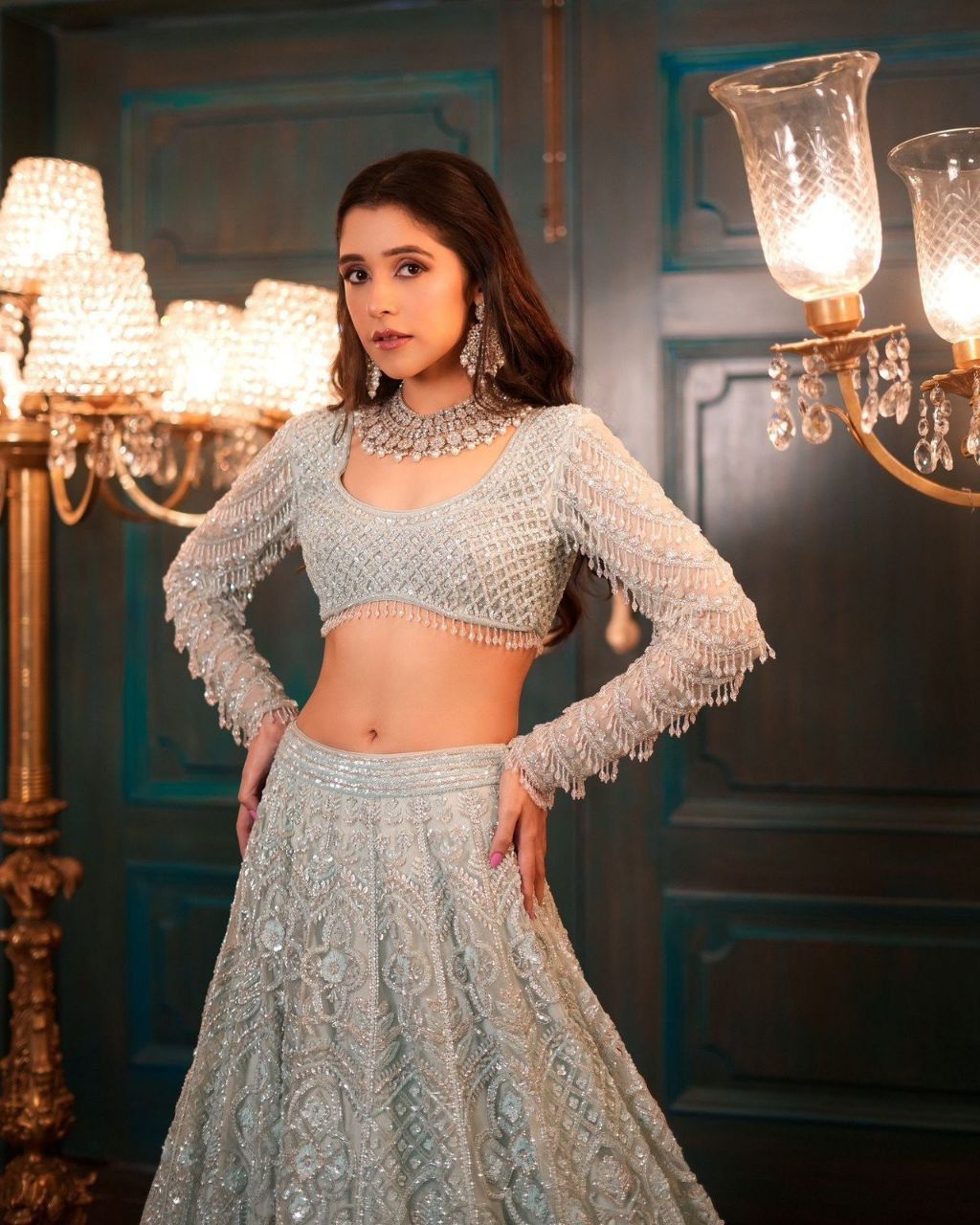
Butterfly net is lightweight and often used to create softness or volume. A large amount of embroidery on net can pull the surface down, distort the drape and make the dupatta or skirt feel less delicate. The Pastel Grey Embroidered Butterfly Net Lehenga Set and Lime Floral Embroidered Butterfly Net Lehenga Set show why net-based designs benefit from balancing embroidered zones with visible ground fabric.
Satin reflects light across a smooth surface, which means even moderate embroidery can look prominent. The Magenta Satin Embroidered Lehenga Set Online makes colour, sheen and placement work together; dense work should be assessed under indoor lighting as well as daylight because satin can amplify highlights.
How to assess embroidery balance while shopping online
You can assess embroidery distribution online by examining the full front, close-up, back, side and draped photographs rather than judging a cropped product image. A close-up proves workmanship, but only a full-length view shows whether the decoration is proportionate.
- Start with the silhouette. Identify where the skirt widens, where the waistband sits and how much of the hem is visible. Embroidery should support those structural lines rather than obscure them.
- Trace the eye from top to bottom. Look for a clear sequence from neckline to waist to skirt to hem. Repeated motifs should connect these areas without making all four zones equally dense.
- Check the negative space. Visible fabric between motifs isn't unfinished space. Negative space allows floral, paisley, geometric or jaal patterns to remain readable.
- Compare the dupatta with the skirt. A heavily embroidered skirt may need a lighter dupatta, while a simpler skirt can carry a more detailed border or pallu. Check whether both pieces use the same visual weight.
- Inspect the inside construction. Dense sequins and beadwork should be secured cleanly, with a lining or finishing layer that prevents scratching. Loose threads around the waistband and armhole deserve particular attention.
- Read the stitching information. A fully stitched choli reduces immediate alteration work, but measurements still matter. Check bust, waist, armhole, sleeve and blouse length rather than relying only on a generic size label.
Fully stitched choli shopping is convenient for a fixed event date because the basic shape is already assembled. A semi-stitched set may offer more room for customisation, but alterations can affect motif alignment, border placement and the final amount of visible embroidery. The Semi Stitched Lehengas Collection is therefore best considered by shoppers who have enough time for a skilled tailor to preserve the design while adjusting the fit.
How colour and motif scale affect visual weight
Colour and motif scale affect visual weight even when the amount of embroidery remains unchanged. Dark saturated bases, high-contrast metallics and large motifs generally command more attention than tonal threadwork on a pale base.
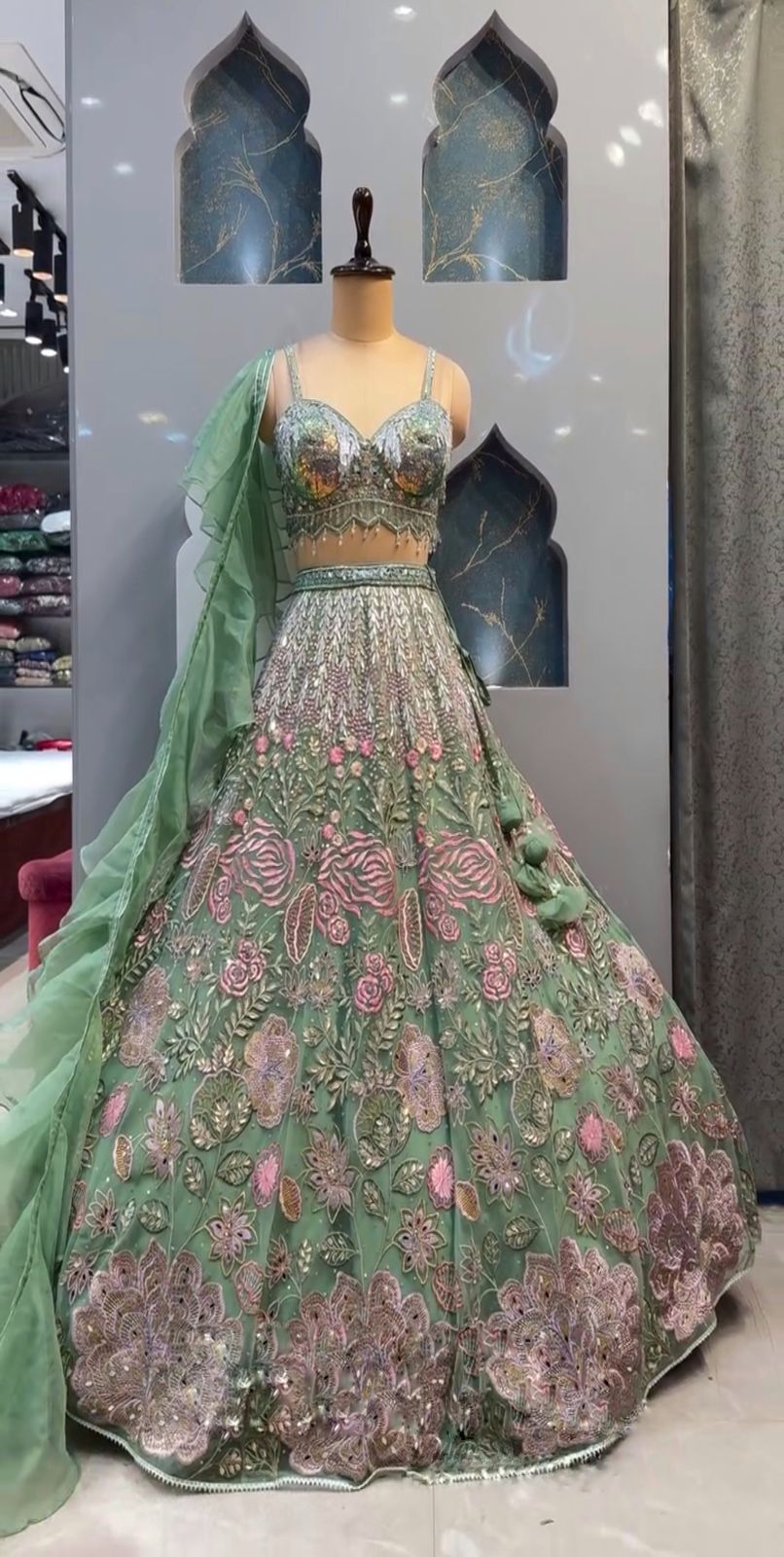
A bridal lehenga often combines a strong base colour with zari, sequins or dense threadwork, but balance can come from varying scale. Large floral motifs may be limited to the hem, medium motifs may sit on the skirt panels, and small details may finish the choli. That scale progression prevents the skirt from looking like a single uninterrupted block.
Green lehengas can use gold, antique zari, ivory thread or tonal green work depending on the desired mood. The Green Lehengas collection and the Mehendi Lehengas collection are relevant reference points for understanding how a colour family can move from fresh daytime embroidery to richer evening embellishment. Colour alone doesn't make a lehenga festive; the contrast between ground, motif and border also controls its intensity.
Yellow Lehengas often appear at Haldi ceremony events, where movement, daylight and turmeric-friendly styling matter. A yellow base with floral embroidery and a defined border can look celebratory without the weight of bridal-level all-over work. A lighter distribution is also practical when guests are moving between outdoor spaces and seated rituals.
Pastel shades need not be plain. Pastel grey, blush, powder blue and soft lilac can carry sequins or threadwork, but low-contrast placement usually keeps the result elegant. Strong contrast placed only at the neckline, waistband and hem can create definition without overpowering a delicate base.
Matching embroidery distribution to the event
The event determines how much visual and physical weight a lehenga needs. A daytime Haldi ceremony, evening sangeet, wedding pheras and reception each create different requirements for colour, movement and shine.
For Haldi and daytime celebrations
Daytime celebrations suit breathable movement, clear colour and controlled shine. A floral skirt with a defined border and lightly worked choli can remain photogenic outdoors without reflecting every ray of sunlight.
Yellow Lehengas and Mehendi Lehengas are useful starting points for this setting because the styling can remain lively without demanding the density of a formal bridal ensemble. Avoiding heavy work on every upper panel also makes sitting, walking and participating in rituals more comfortable.
For sangeet and evening parties
Evening events can support more sequins, metallic thread and reflective borders because artificial lighting creates sparkle. The Green Chinon Silk Sequins Embroidered Lehenga Set or Moonlight Charm Foil Sequin Organza Lehenga can be evaluated for how the reflective details are distributed across the skirt, blouse and dupatta.
Movement matters at a sangeet. A lehenga with a heavy hem but open upper panels can create a visible sweep during turns, while a fully loaded skirt may feel restrictive during dancing. Check the lining, waist finish and flare before choosing a highly embellished design for choreography.
For bridal and formal wedding wear
Bridal wear can carry the highest embroidery density, but bridal richness still needs structure. The Pink Bridal Sequins Lehenga Set with Heavy Flare makes the relationship between colour, sparkle and volume especially important: a broad flare already creates drama, so the embroidery should clarify the silhouette rather than flatten it.
Formal wedding shoppers should also consider photographs from multiple distances. Fine threadwork may disappear in a wide group photograph, while oversized sequins can dominate close portraits. A layered approach-strong choli detail, readable border, and smaller connecting motifs-usually performs well in both situations.
Readymade, semi-stitched and designer lehengas: what changes
Readymade, semi-stitched and designer lehengas differ mainly in fit flexibility, finishing time and how safely embroidery can be altered. Choosing among them depends on measurements, deadline and the complexity of the placement.
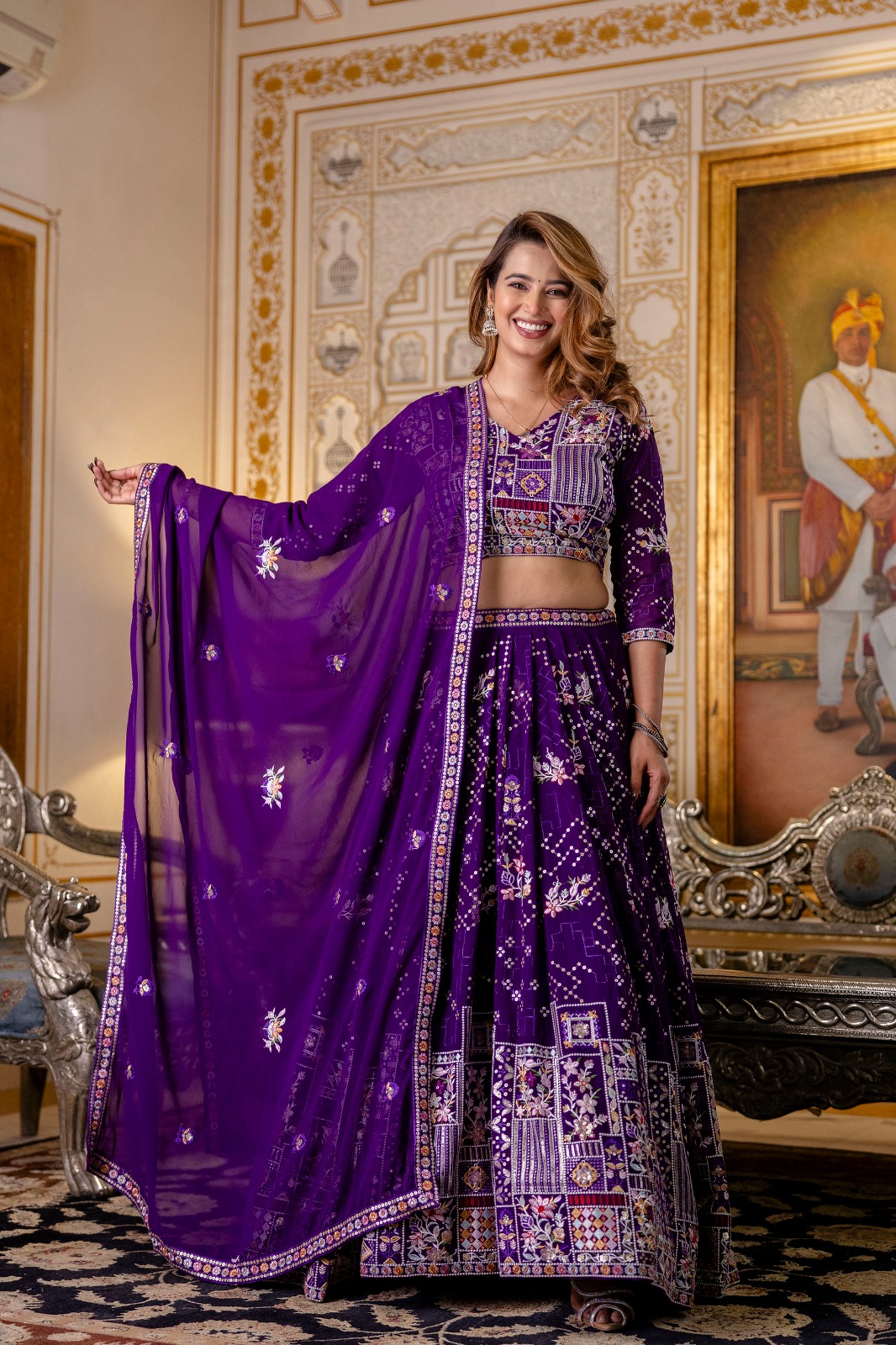
A Ready Made Lehenga is useful when the wearer needs a near-finished outfit with predictable construction. The buyer should verify the actual garment measurements, especially if the choli is fully stitched, because reducing or enlarging a blouse can cut through motifs, remove border detail or disturb the alignment of a neckline.
A semi-stitched lehenga gives a tailor more control over the waist and blouse fit. That flexibility is valuable for changing the neckline or adding modesty, but the tailor must preserve the intended relationship between the embroidered panels and the hem. A rushed alteration can make a balanced design look off-centre.
Designer lehengas often use more deliberate placement, custom borders or coordinated embroidery across the blouse and dupatta. The price difference may reflect handwork, fabric, lining, construction and finishing rather than simply a larger quantity of embellishment. Buyers should ask what kind of embroidery is used and whether the garment has been reinforced beneath high-density areas.
When comparing options, consider cost per wear as well as the event. A dense bridal skirt may be appropriate for one wedding but difficult to restyle. A silk lehenga with a defined border and moderate blouse work can often be worn again with a contrasting dupatta, shorter blouse or simpler jewellery.
A practical fitting and care checklist
A balanced embroidery design still needs correct fit and careful handling to look intentional. The waistband should sit securely without compressing the body, the blouse should allow arm movement, and the hem should clear the floor enough to prevent repeated snagging.
- Measure with the intended inner layers. A can-can, petticoat or shapewear layer changes the final waist and hip fit.
- Test the blouse movement. Raise both arms, sit down and rotate the shoulders before an event. Tight armholes can pull embroidery out of shape.
- Check the hem before wearing. Dense borders can catch on footwear, stairs and chair legs. A small alteration in length can prevent major damage.
- Store embellished pieces flat or folded with tissue. Acid-free tissue between decorated layers reduces friction and prevents sequins from catching on neighbouring fabric.
- Use professional dry cleaning. Home washing can loosen zari, bleed colour or distort net, organza and structured linings.
- Repair loose elements early. A tailor or specialist embroiderer can secure a loose sequin before repeated wear turns a small problem into a missing patch of decoration.
The most useful buying question isn't "How much embroidery does this lehenga have?" A better question is "Where does the embroidery work hardest, and where has the designer allowed the fabric and silhouette to speak?" That question applies equally to a bridal set, a girls' festive lehenga, a readymade purchase and a designer ensemble.
Once placement becomes part of the evaluation, product photographs become easier to read. The Designer Threadwork Silk Lehenga Choli Set with Dupatta, the Pastel Grey Embroidered Butterfly Net Lehenga Set and the Pink Bridal Sequins Lehenga Set with Heavy Flare represent different levels of surface impact. But each can be judged by the same principles: focal points, open space, fabric support, movement and coordination between the three main pieces.
Thoughtful placement gives the garment a visual rhythm, preserves the character of the base fabric and makes embellishment look more considered. The result isn't necessarily a quieter lehenga; it's a lehenga whose richness can be understood at a glance and appreciated more closely over time.
Questions to Ask Before Buying a Heavily Embroidered Lehenga
How can I tell whether a lehenga has too much embroidery?
A lehenga may have too much embroidery when the choli, skirt, border and dupatta all carry equally dense work with no visible fabric breaks. Check the full silhouette for a clear focal point and enough open space for the motifs to remain readable.
Which parts of a lehenga should have heavy embroidery?
The neckline, sleeve edges, waistband and lower skirt border are usually effective locations for concentrated embroidery. These areas define the outfit while allowing lighter motifs or plain fabric to preserve movement across the remaining panels.
Is a fully stitched choli better than a semi-stitched blouse?
A fully stitched choli is better when you need a finished outfit quickly and the measurements closely match your body. A semi-stitched blouse is better when you need significant fit or neckline changes, provided a skilled tailor can preserve the embroidery alignment.
Can a heavy lehenga be comfortable for dancing?
A heavy lehenga can be comfortable for dancing when the weight is supported by the fabric and concentrated in manageable areas rather than spread densely over every panel. Check the flare, lining, waistband, hem and arm movement before buying it for a sangeet.
What embroidery suits a daytime Haldi ceremony?
Daytime Haldi ceremony wear usually works well with floral threadwork, a defined border and moderate sequins on a bright or pastel base. Controlled shine is easier to photograph outdoors and keeps the lehenga lighter for movement and rituals.
How should I care for a sequin or zari lehenga?
Store a sequin or zari lehenga with acid-free tissue between embellished layers and keep it away from humidity and direct sunlight. Use professional dry cleaning rather than home washing, and repair loose sequins or threads before the next wear.