

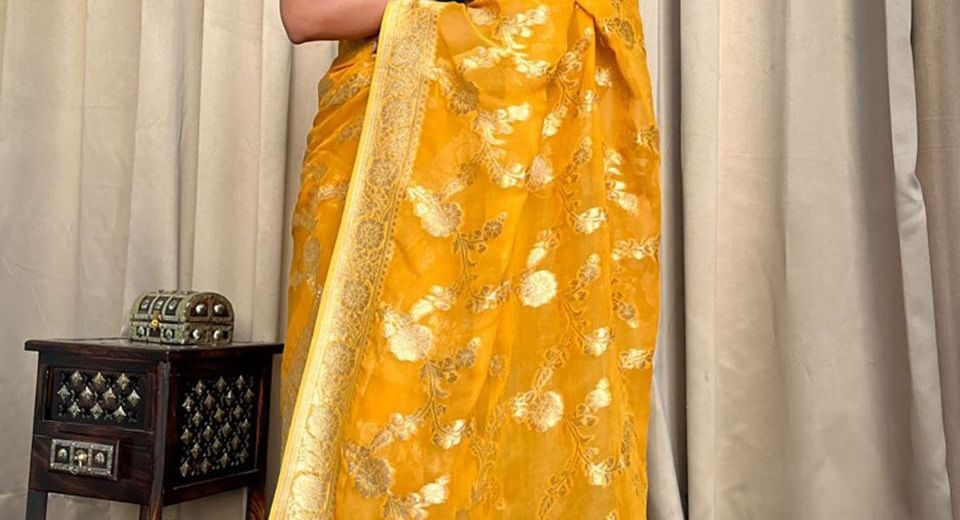
The jewellery metal you choose can change the entire mood of an ethnic outfit. Gold can make warm reds, mustard and cream look richer, while silver can sharpen pastels, cool pinks and jewel-toned blues. Gold or Silver Jewellery? Match the Metal to Your Ethnic Wear Colours becomes easier when you read the saree's base colour, border, embroidery and overall finish together instead of choosing pieces by habit.
An useful starting rule is simple: match gold with warm colours and visible gold zari, and match silver with cool colours, silver borders or a crisp contemporary palette. The rule isn't absolute. Fabric texture, jewellery scale, skin undertone and time of day can all change the most flattering choice.
Gold or Silver Jewellery? Match the Metal to Your Ethnic Wear Colours
Gold jewellery usually complements warm ethnic colours and gold embellishment, while silver jewellery usually works with cool colours and silver detailing. Use the dominant visual element of the outfit as the first decision point.
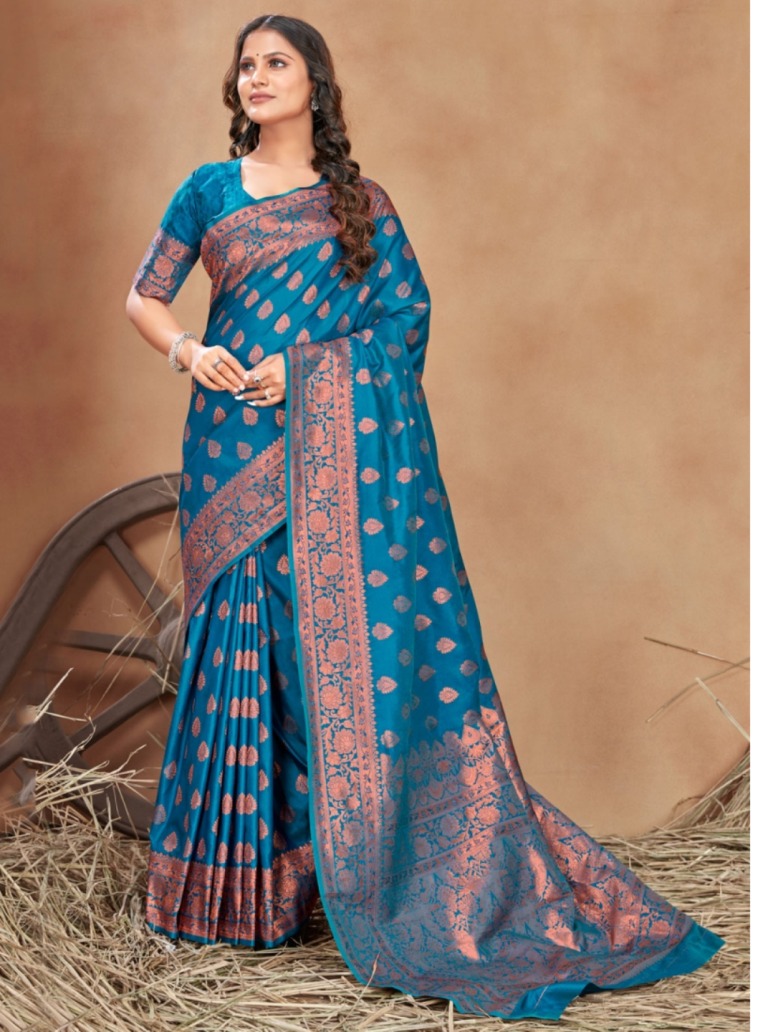
Warm colours include red, rust, orange, mustard, marigold, tomato pink, coral and camel. These shades mostly gain depth from yellow gold, antique gold or muted temple gold. Cool colours include cobalt, emerald with blue undertones, lavender, icy pink, teal, grey and blue. These shades often look cleaner with silver, pure gold, platinum-tone or oxidised silver jewellery.
Neutral colours need a closer look. Cream, ivory, beige, black and white can support either metal, but the border and embellishment usually settle the question. A cream Banarasi silk saree with rich zari reads warmer with gold. A white linen saree with a silver border looks more coherent with silver jhumkas or a sleek silver choker.
How should the border influence the jewellery?
The border should influence the metal more strongly than a small printed motif. A narrow silver edge can support silver accents, but a wide gold zari pallu can make gold the more balanced choice even when the saree body is a cool colour.
Look at the outfit from a distance of two metres. If the first detail you notice is gold zari, choose gold as the dominant jewellery metal. If the first detail is a silver border, mirror-work effect or cool metallic embroidery, choose silver. This distance test prevents small decorative details from competing with the complete silhouette.
When Gold Jewellery Works Best with Sarees
Gold jewellery works best when an ethnic outfit contains warm colour, gold zari, brocade texture or a ceremonial setting. Yellow gold adds visual warmth and echoes the traditional richness of silk, velvet, tissue and heavily woven fabrics.
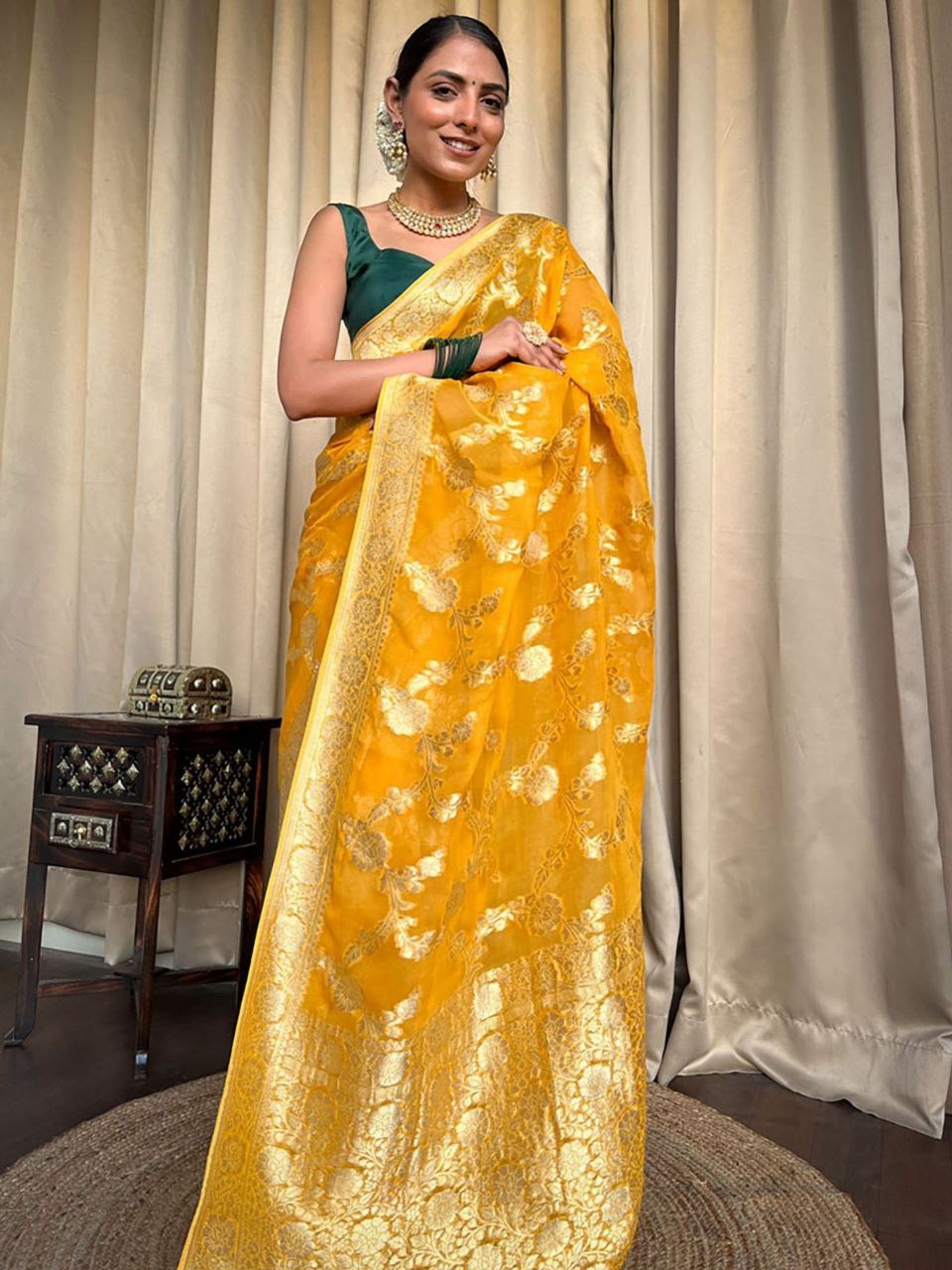
A Yellow Banarasi Silk Saree With Rich Gold Zari Work already carries a strong gold story through its yellow ground and zari. Pair the saree with a broad gold necklace, medium jhumkas and two or three slim bangles rather than adding several unrelated finishes. A red Banarasi silk saree with gold floral work can take a heavier gold haar, but the blouse neckline should determine whether the necklace sits high or low.
Golden Glow Gold Crush Embroidered Party Wear Saree for Women has a reflective surface, so polished gold can intensify its evening character. Keep the earrings structured and let one focal piece lead. A gold choker with drop earrings is often more refined than a long necklace, oversized earrings and a large maang tikka worn together.
Rust, bronze and terracotta create a particularly natural setting for antique gold. Rust Brown Gold Crush Saree with Floral Threadwork can be styled with antique gold earrings, a matte gold cuff and a warm stone such as garnet or uncut glass. Antique gold is useful when bright yellow gold looks too shiny against a muted, earthy outfit.
Cream also benefits from gold when the textile has a warm finish. Cream Gold Lichi Silk Saree With Rich Jacquard Work can be paired with yellow gold, champagne gold or kundan-style pieces. Champagne gold is a softer bridge between a pale saree and a formal jewellery set, especially for daytime weddings.
When Silver Jewellery Creates Better Balance
Silver jewellery works best with cool colours, white-based neutrals, silver borders, floral prints and outfits that need a lighter visual finish. Silver can also make classic clothing feel more contemporary without changing the textile itself.
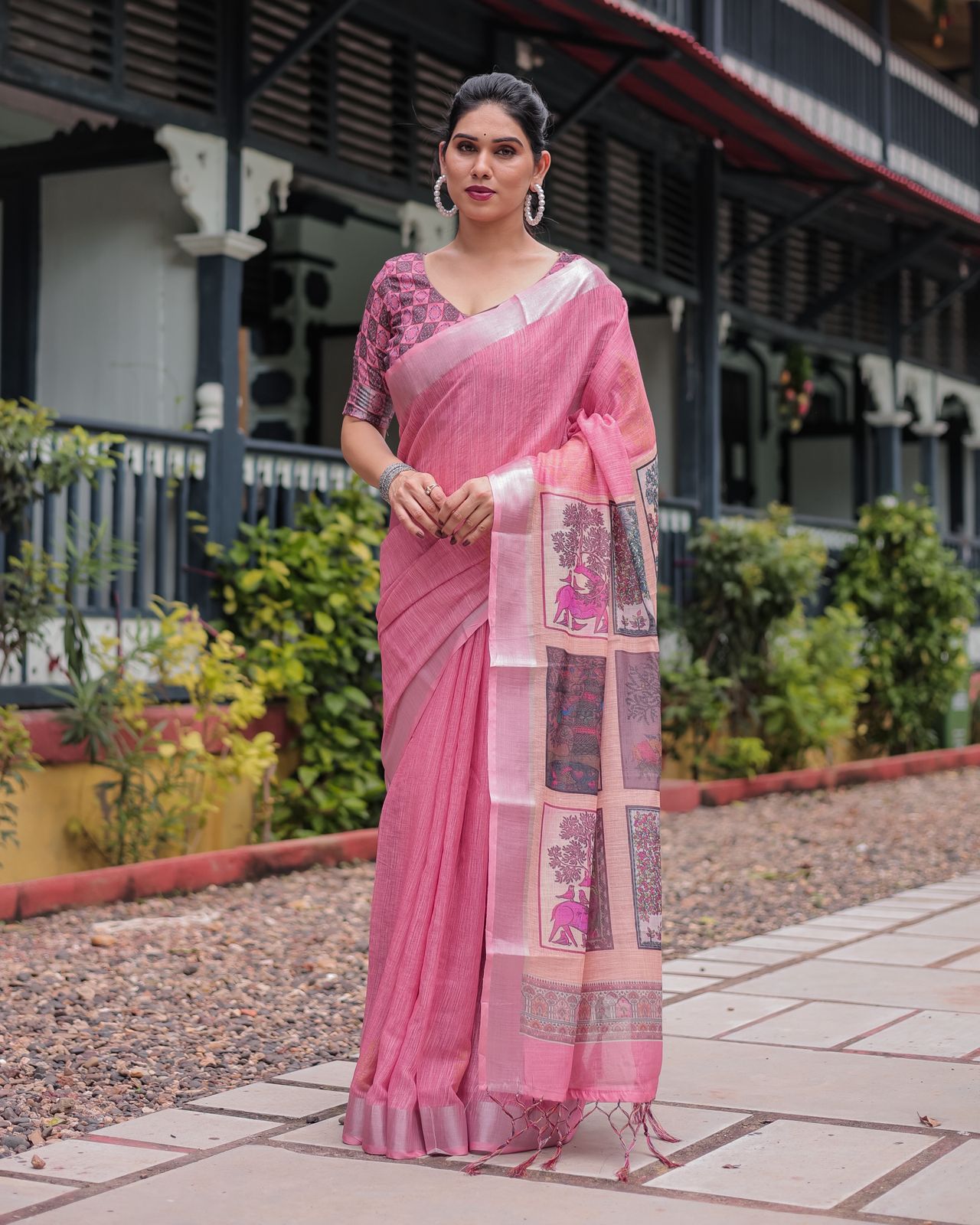
Premium Floral Print Heavy Linen Saree with Silver Border and Matching Blouse is a clear example of a silver-led look. Choose silver hoops, a flat silver collar or oxidised jhumkas according to the print scale. A busy floral print usually needs one clean jewellery shape, while a sparse print can accommodate a more detailed necklace.
Silver also suits powder blue, lilac, mauve, dove grey and cool blush. These colours can look overwhelmed by very bright yellow gold, particularly in daylight. Oxidised silver works when the outfit has a handloom, bohemian or artisanal character; polished silver works better with a crisp blouse, minimal print or modern drape.
Silver isn't limited to casual styling. A silver choker with uncut-style stones can look formal with a deep wine or navy saree, provided the saree doesn't contain dominant gold zari. Silver jewellery with white stones is especially effective for evening receptions because it reflects artificial light without adding another warm colour.
Can silver be worn with red or pink ethnic wear?
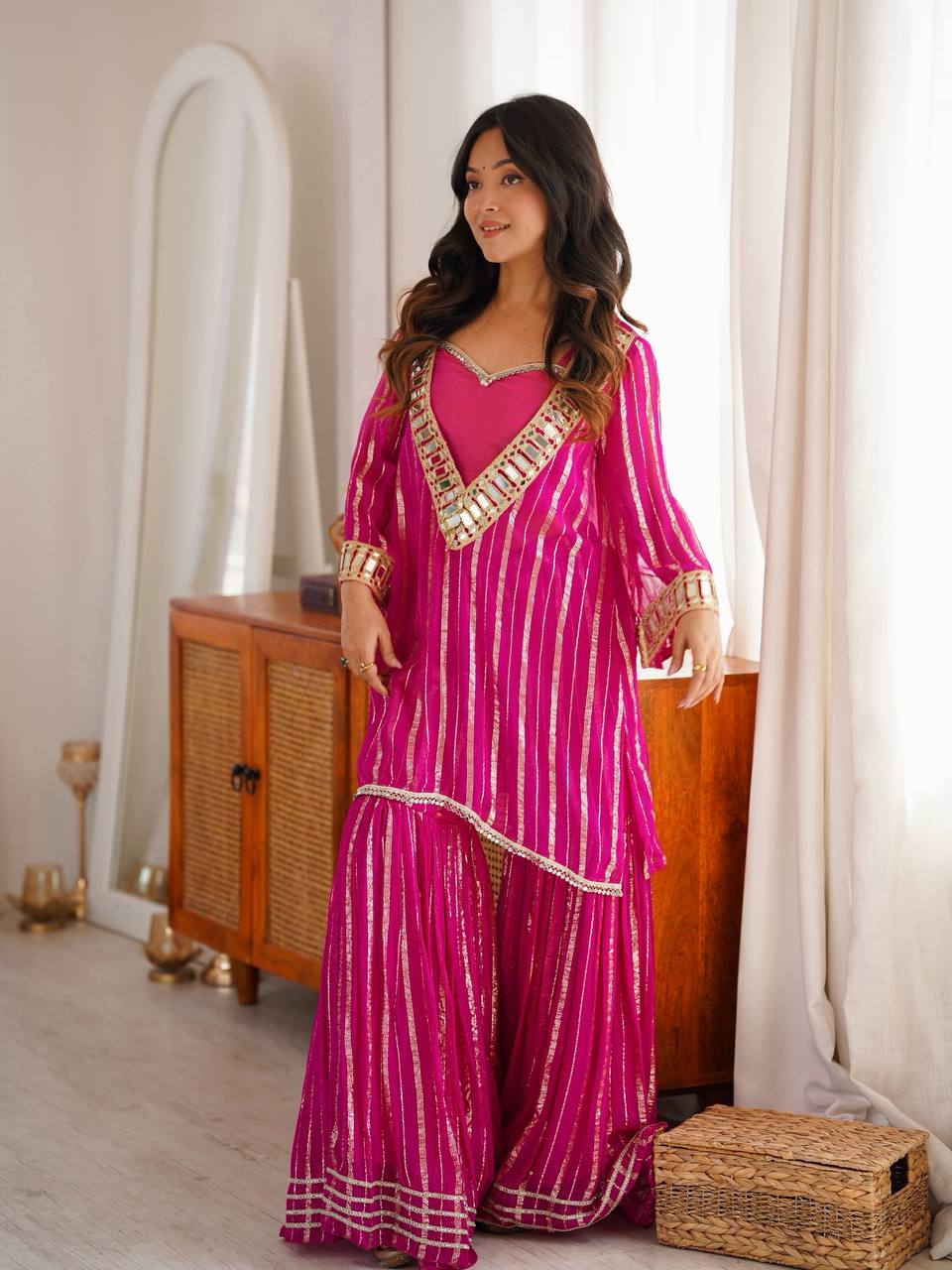
Silver can be worn with red or pink ethnic wear when the shade has cool undertones or the outfit includes silver, white or crystal embellishment. Blue-red, raspberry, magenta and fuchsia generally accept silver more easily than tomato red, vermilion and orange-red.
Test the fabric beside both metals under the event lighting. Red Banarasi Silk Saree With Gold Zari Floral Work strongly favours gold because its zari repeats the warm metal. A cool magenta saree with silver sequins would make a different case. Colour names on online listings are not always reliable enough for this decision, so a daylight photograph or fabric swatch is useful.
Use Zari, Embroidery and Fabric to Settle the Choice
Zari and embroidery often provide a more dependable jewellery cue than the saree colour alone. Gold zari calls for gold-led styling, silver zari calls for silver-led styling, and multicoloured embroidery permits a controlled blend.
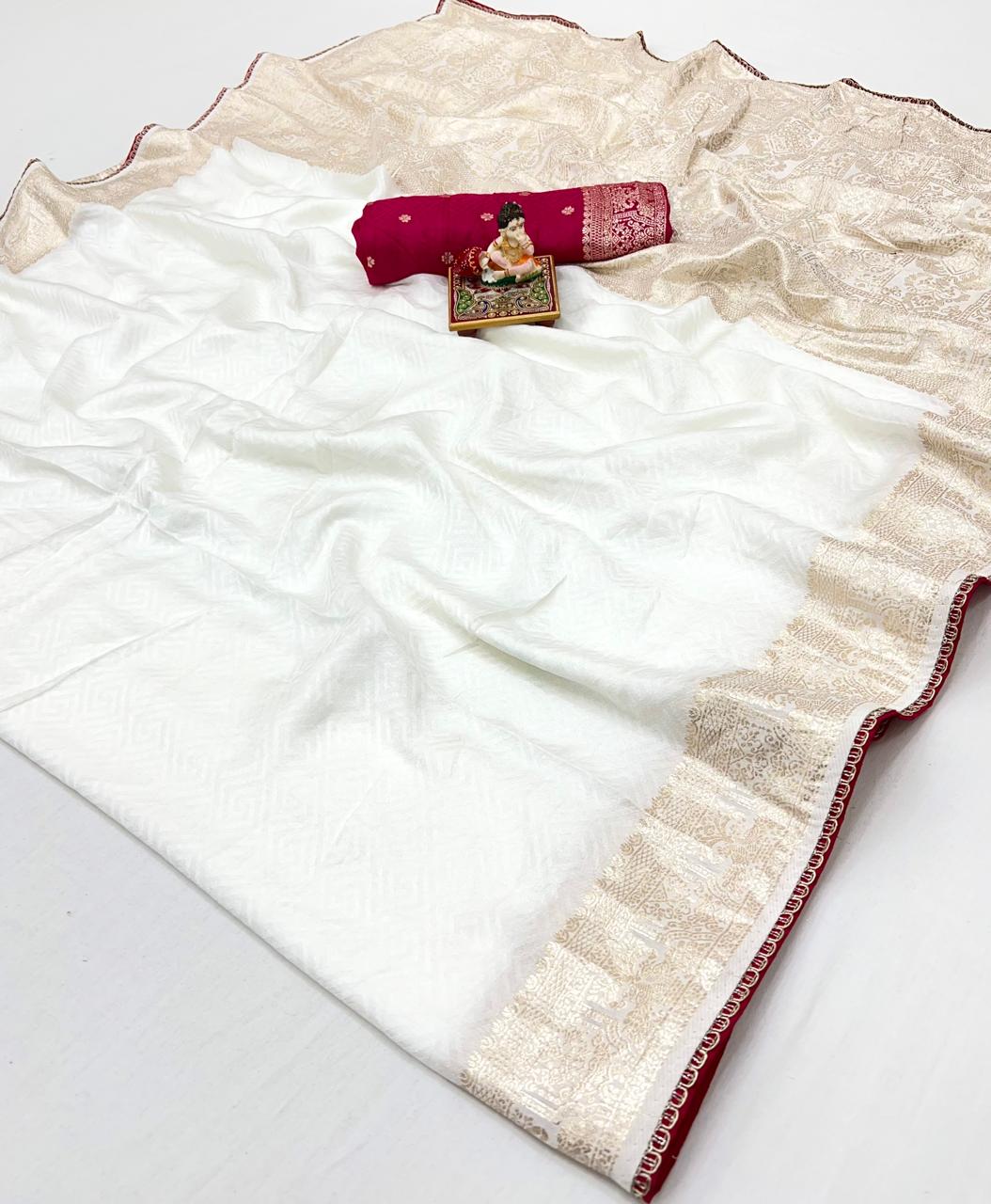
Banarasi silk has a dense woven surface that can carry substantial jewellery. Gold zari in Banarasi silk traditionally pairs well with kundan, polki-inspired pieces, temple jewellery and yellow gold. Kanjeevaram silk also supports gold strongly when the korvai border or pallu contains classic zari. Avoid matching every motif with a separate ornament; repeat the metal, not every shape.
Chanderi, linen and lightweight cotton often look better with jewellery that respects their visual airiness. A fine silver chain, small dome earrings or a narrow cuff can preserve the movement of a light fabric. Heavy gold may still work for a wedding, but reduce the number of pieces so the textile remains visible.
Golden Tussar Silk Saree with Elegant Zari Border Design needs less additional shine than a plain matte saree. Tussar's natural slub already creates texture, and a zari border supplies a second point of interest. Medium gold earrings and a simple bangle can complete the look without covering the neckline or competing with the border.
Red Yellow Elegance Leheriya Saree contains energetic colour movement, so jewellery should provide structure. Gold suits the warm red-yellow palette, but a restrained set, such as chandbali earrings and two bangles, will look more intentional than a large necklace layered over the diagonal leheriya pattern.
How Skin Undertone and Occasion Change the Metal
Skin undertone can guide the choice when an outfit supports both metals, but skin undertone should be treated as a secondary filter after zari and colour. Warm undertones often glow beside yellow gold, cool undertones often harmonise with silver, and neutral undertones can wear either successfully.
Veins are an imperfect but quick clue: greenish-looking veins may suggest a warm undertone, bluish or purplish veins may suggest a cool undertone, and a mix may suggest neutral. A better test is to hold a gold and silver earring near the bare face in daylight. The better metal is the one that makes the skin look even rather than noticeably yellow, grey or tired.
Wedding ceremonies often justify gold, especially with Banarasi silk, Kanjeevaram, brocade or red-and-yellow palettes. Daytime Haldi ceremony dressing benefits from lighter gold, matte gold or floral jewellery because turmeric yellow and bright polished gold can become visually intense together. Silver, pearl and white-stone jewellery can suit a reception, cocktail event or contemporary engagement outfit.
Venue lighting matters. Warm indoor bulbs make yellow gold appear even warmer, while cool white LEDs can make silver look sharper and sometimes harsher. If an event starts in daylight and continues indoors, choose a slightly muted version of your preferred metal rather than the brightest finish available.
How to Mix Gold and Silver Without Looking Mismatched
Gold and silver can be mixed successfully when one metal clearly leads and the second metal is repeated deliberately. Randomly combining a gold necklace, silver earrings and rose-gold bangles usually looks accidental because the eye has no hierarchy to follow.
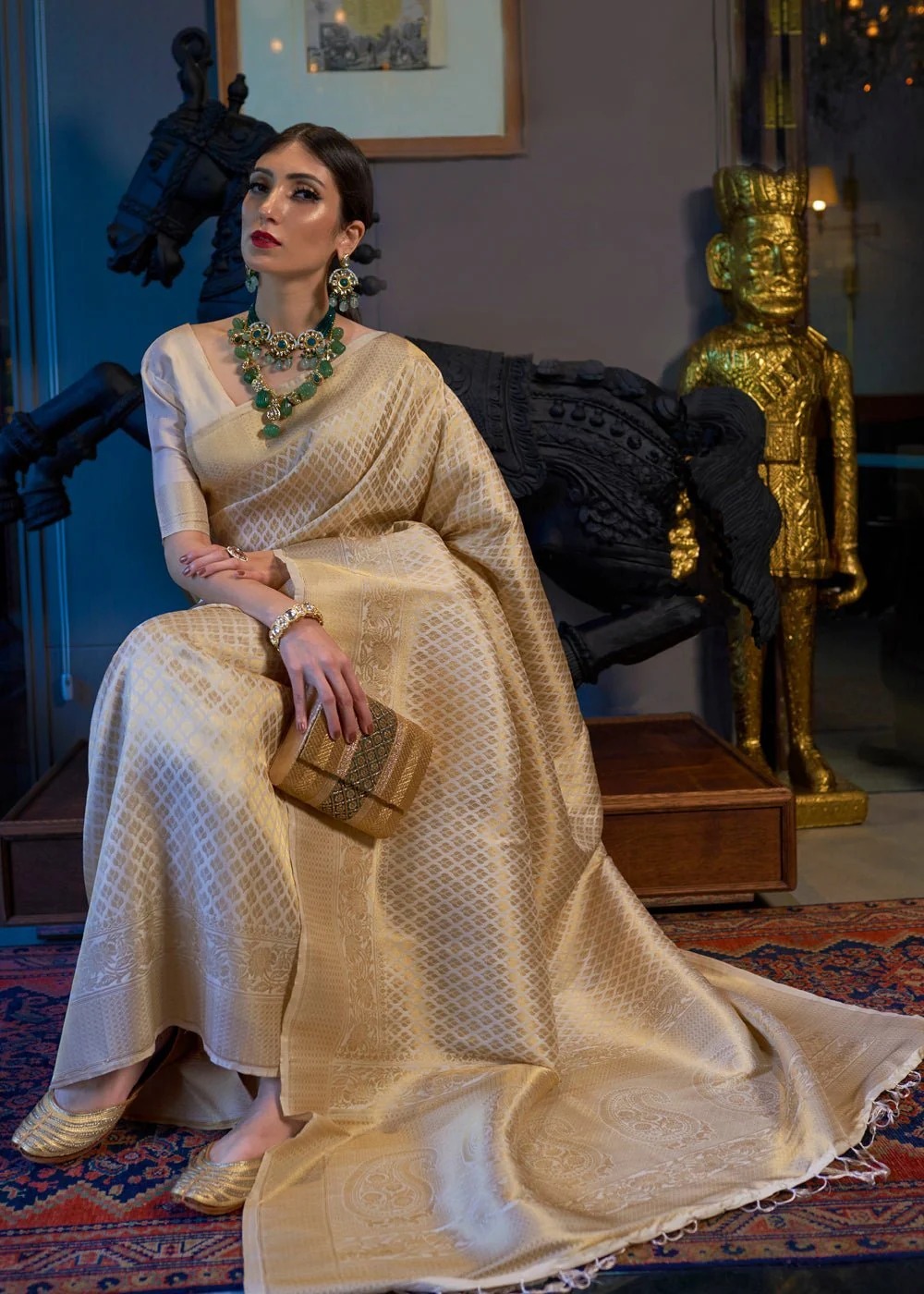
Use a dominant-to-supporting ratio of roughly 70:30. For a gold-zari saree, let the necklace and earrings be gold, then introduce a slim silver-toned watch or a two-tone bangle only if the blouse, handbag or footwear also supports the cooler accent. For a silver-border linen saree, make silver dominant and use a small gold detail in a ring or bangle rather than a large gold necklace.
Mixed-metal jewellery is easiest to wear when one item already combines both finishes. A two-tone bangle, layered chain or ring can act as a visual bridge between separate pieces. Keep gemstones consistent where possible: white stones unite gold and silver more easily than adding red, green and blue stones to an already complex outfit.
don't mix metals merely because the saree contains many colours. A multicoloured print still needs a visual anchor. Choose the metal that repeats the border or the most prominent warm or cool detail, then use the second metal sparingly.
A Practical Decision Process Before You Dress
Choose the jewellery metal by checking the border, the dominant colour, the fabric weight, the event and the neckline in that order. This five-step process produces a more coordinated result than selecting jewellery first.
- Inspect the border and pallu. Identify whether gold zari, silver zari, sequins or embroidery is visually dominant.
- Classify the base colour. Decide whether the saree leans warm, cool or neutral under natural light.
- Assess the fabric weight. Match dense Banarasi silk or brocade with stronger pieces, and lightweight linen or Chanderi with fewer, cleaner ornaments.
- Consider the event. Use richer gold for many time-honoured wedding settings, restrained matte gold for a Haldi ceremony and polished silver for contemporary evening dressing.
- Check the neckline and hairstyle. A high-neck blouse may need earrings and bangles instead of a choker, while a deep neckline can accommodate a necklace without crowding the face.
Photograph the complete outfit before leaving home. A mirror shows personal proximity, but a photograph reveals whether the jewellery disappears, competes with the saree or creates an unwanted bright spot near the face. Take one image in daylight and one under the venue's likely lighting.
Gold or Silver Jewellery? Match the Metal to Your Ethnic Wear Colours is ultimately a coordination exercise, not a permanent fashion rule. Repeat one clear visual cue, control the number of focal pieces and allow the textile to remain visible. The best jewellery choice makes the saree, blouse and wearer appear connected rather than making the metal itself the entire subject.
Common Questions About Choosing Jewellery Metals for Ethnic Wear
Should I wear gold or silver jewellery with a red saree?
Choose gold when the red saree has gold zari, warm orange or vermilion undertones. Choose silver when the red is cool blue-red, magenta or embellished with silver, white stones or crystal details.
Can I wear silver jewellery with a Banarasi silk saree?
You can wear silver jewellery with Banarasi silk when the saree has silver zari, cool colouring or a contemporary styling direction. Gold is usually more cohesive with Banarasi silk that contains traditional gold zari, especially in red, yellow, rust or cream.
Which jewellery metal suits a cream saree?
Gold suits a cream saree with warm jacquard, gold zari or beige undertones, while silver suits a cream saree with a white base, silver border or cool embellishment. Champagne gold is a softer option when bright yellow gold feels too strong.
Is oxidised silver suitable for wedding sarees?
Oxidised silver can suit a wedding saree when the outfit is handloom, artisanal, printed or casually draped. Polished gold, temple jewellery or refined silver with white stones may be more appropriate for heavily traditional silk and formal bridal styling.
How do I match jewellery with a saree that has both gold and silver details?
Choose one dominant metal based on the larger or more visible detail, then use the second metal in approximately 30 percent of the jewellery. A two-tone bangle or mixed-metal ring can connect the finishes without making the outfit look random.
Does skin undertone decide whether gold or silver looks better?
Skin undertone can guide the decision, but saree zari and colour should come first. Test both metals beside the face in daylight; the better choice is the one that makes the complexion look even and lively rather than unusually yellow or grey.


