
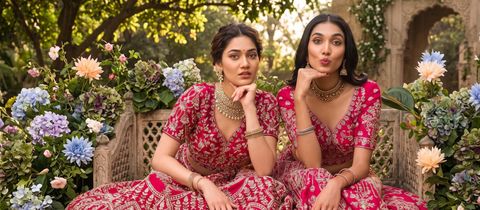
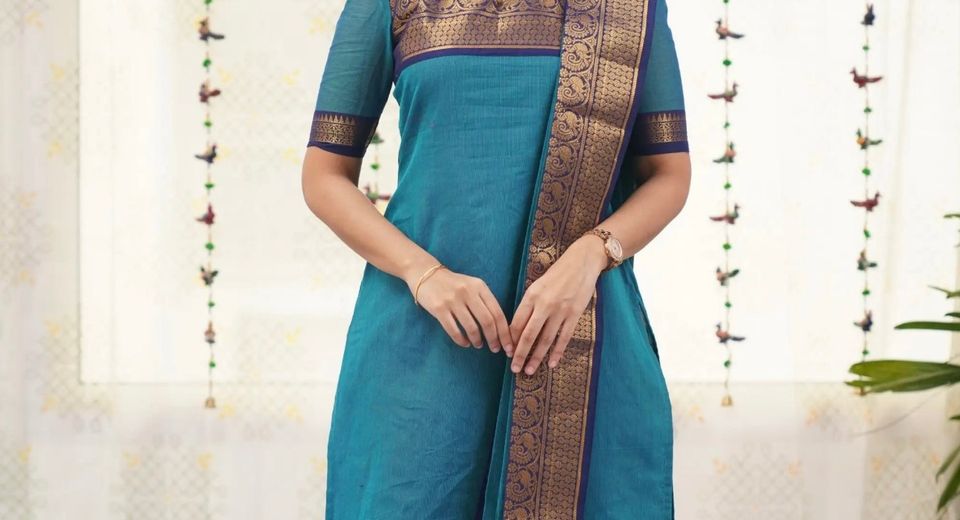
Getting Kurti Length and Proportions Right With Leggings depends on more than choosing a favourite colour. The hemline, side slit, sleeve length, fabric weight and footwear must work together so the outfit looks intentional rather than visually crowded. An useful starting point is to treat the kurti as the main vertical line and leggings as a close-fitting continuation of that line.
Leggings create a narrow silhouette from the hip to the ankle, so a kurti that ends at the widest part of the thigh can make the body look visually broader there. A hemline that finishes slightly above or below that point usually creates a cleaner transition. The right choice also changes with the kurti's cut: a straight kurti, an A-line kurti and an asymmetrical kurti need different proportions.
Getting Kurti Length and Proportions Right With Leggings: Which Hemline Works?
A kurti that ends between the mid-thigh and just above the knee usually works best with leggings because the close-fitting lower half remains visible without making the torso look too short.
For a straight kurti, a hemline around 5 to 10 centimetres above the knee is a reliable everyday proportion. The length leaves enough legging visible to show the slim line of the outfit while offering more coverage than a short tunic. A shorter kurti can work when the fabric is structured and the leggings are opaque, but the overall look becomes more casual.
A knee-length kurti creates a longer, more traditional line and suits cotton, silk-blend and woven fabrics particularly well. A kurti that falls below the knee can still be worn with leggings, but the silhouette begins to resemble a long tunic. In that case, a side slit, high-low hem or lighter fabric prevents the outfit from appearing heavy.
Very long kurtis ending near the calf generally pair more naturally with churidars, narrow pants or straight trousers than with standard leggings. Leggings can look visually compressed under a calf-length hem because only a small section of the lower leg is exposed. If a long kurti is your preference, footwear with a slight lift and a visible ankle gap can restore definition.
How should a kurti hemline be measured?
Measure from the highest point of the shoulder beside the neck to the intended hemline while standing straight, then compare that measurement with your height and the garment's side slit.
For a practical try-on test, wear the leggings and the shoes you expect to use. Check whether the hem ends at the fullest part of the thigh, directly on the knee or below the knee. A hem that lands exactly at a broad point can draw attention horizontally, while a hem a few centimetres away tends to look more deliberate.
Movement matters as much as the front view. Sit down, raise both arms and walk several steps. A kurti with a narrow hem or short side slit may pull upward when you sit, changing its apparent length. A straight kurti with a generous side opening often needs less extra length than a fitted kurti without a slit.
Getting Kurti Length and Proportions Right With Leggings for Different Kurti Cuts
Straight kurtis create the cleanest vertical line with leggings, A-line kurtis add movement around the hip, and heavily flared kurtis need a shorter or more structured lower layer to avoid visual bulk.
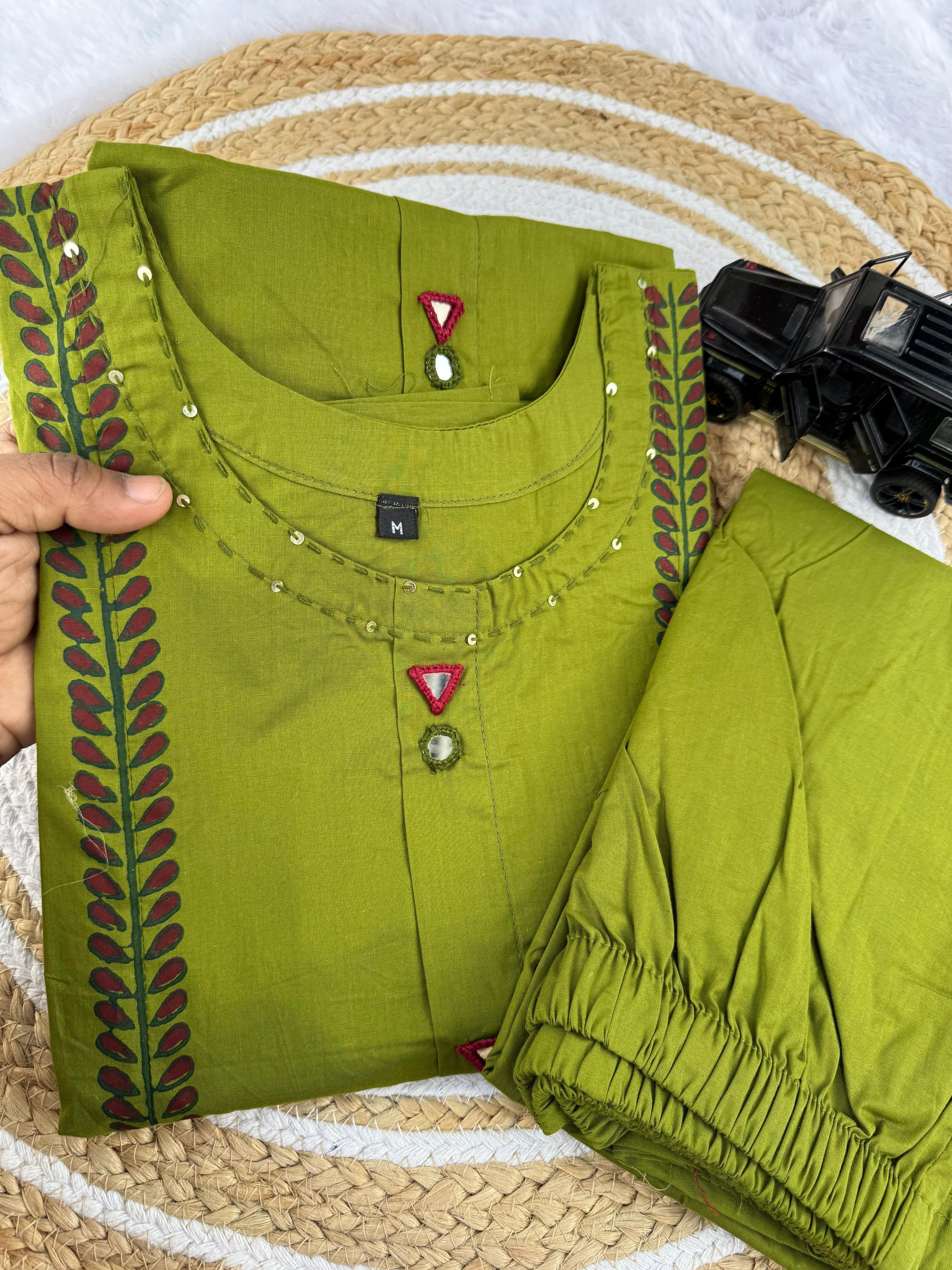
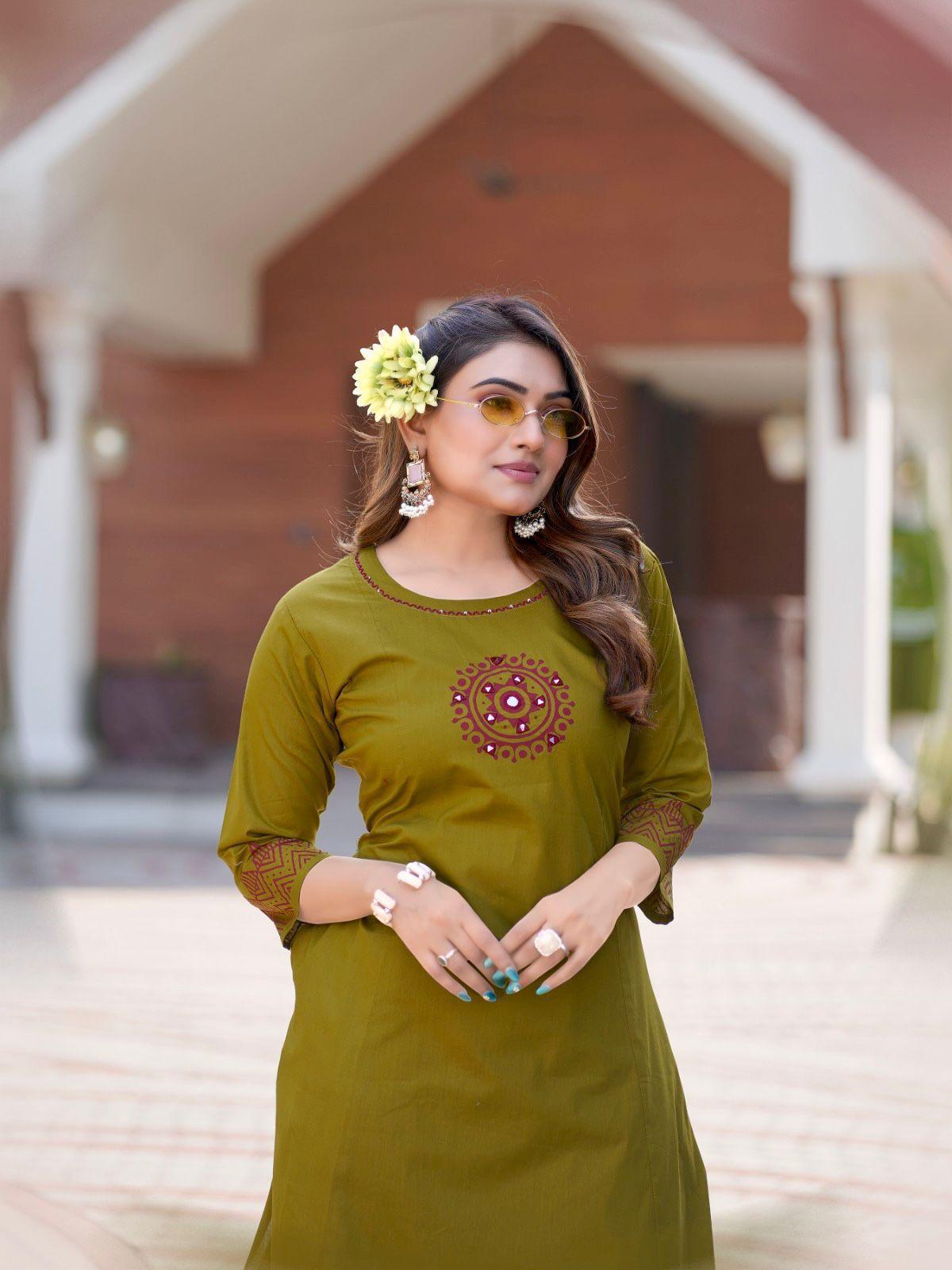
A straight kurti is the easiest shape to balance with leggings because the side seams usually fall close to the body. Olive Designer Kurti Set with Amrai Silk Dupatta demonstrates why fabric and length should be considered together: a polished dupatta and a streamlined lower half keep a straight or gently shaped kurti from looking too informal. Keep the leggings smooth at the ankle and avoid bunching at the knee.
An A-line kurti widens gradually from the bust, making it useful when you want more room around the waist or hips. The hem can be at the knee or slightly below it because the flare already provides movement. A sharply tapered legging balances the outward shape; a loose palazzo would create a different, wider silhouette.
An Anarkali or strongly flared kurti isn't automatically incompatible with leggings, but the volume must have a clear reason. A shorter flared kurti ending above the knee can look playful with leggings, while a long flared version usually benefits from a churidar-style bottom that echoes the heritage line. Avoid adding a wide dupatta drape across the waist if the kurti already has substantial gathers.
An asymmetrical kurti should be judged by its longest and shortest points rather than by its average hemline. A narrow legging helps show the diagonal shape. Wear a simple shoe and keep the dupatta placement controlled so the hem remains the main design feature.
Getting Kurti Length and Proportions Right With Leggings for Petite, Tall and Curvy Frames
Petite wearers usually benefit from a shorter, uninterrupted kurti line, taller wearers can carry longer hemlines, and fuller figures often look balanced in a straight or gently A-line shape with controlled volume.
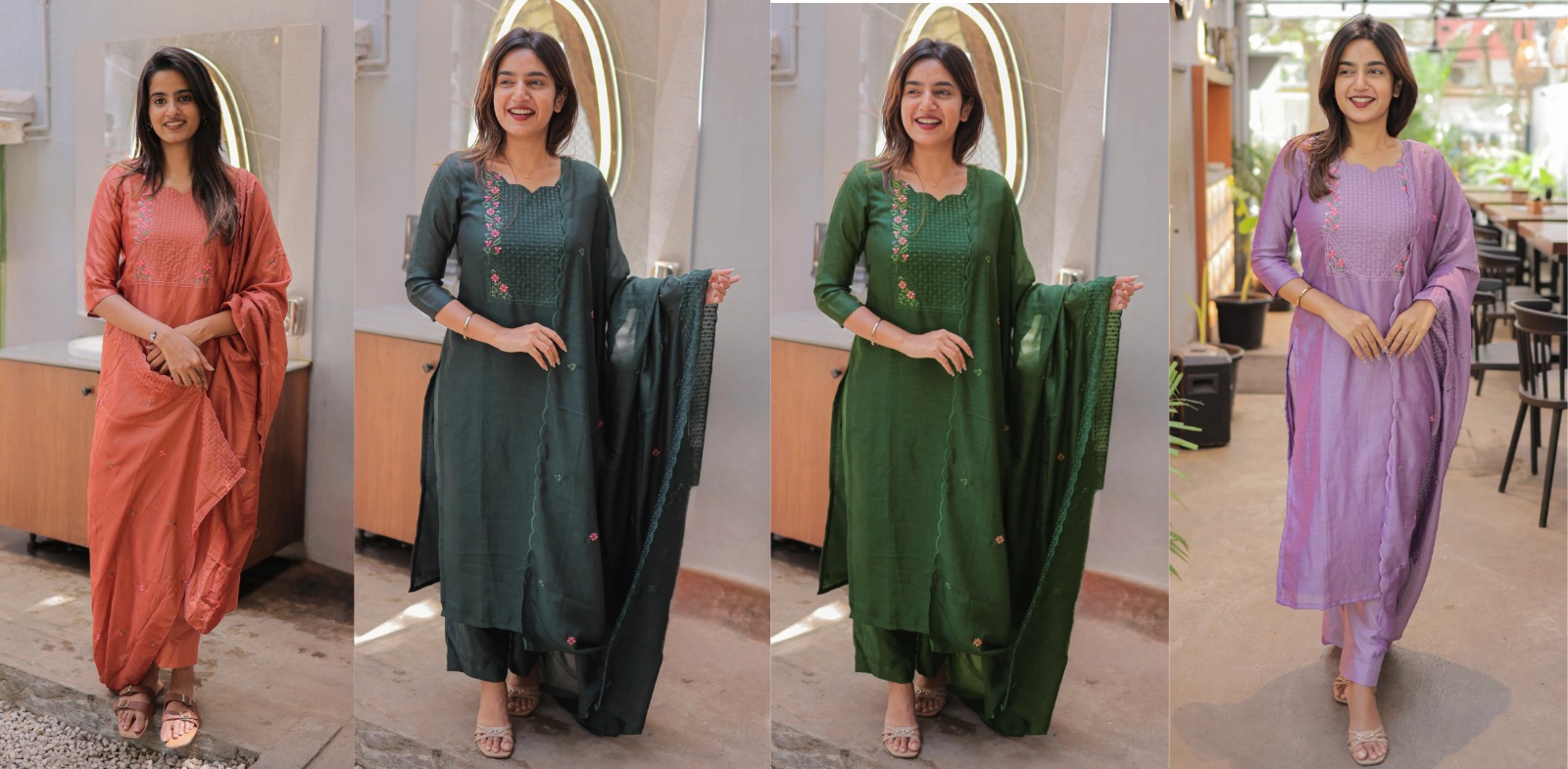
What proportions suit a petite frame?
A kurti ending above the knee or around the knee can help a petite frame appear longer when paired with leggings in a similar depth of colour.
Deep olive, navy, charcoal and black leggings reduce a strong horizontal break at the hem. Classic Yellow Cotton Kurti Set with Woven Dupatta can be balanced by keeping the dupatta narrow over one shoulder instead of wrapping it several times around the torso.
Three-quarter sleeves, a modest V-neck or a vertical woven detail can also extend the visual line. Avoid a very long kurti combined with a contrasting legging and a broad border at the hem, because three strong horizontal divisions can make the body appear shorter. A low-contrast sandal or pointed flat continues the line toward the floor.
What proportions suit a tall frame?
Taller women can comfortably wear knee-length and below-knee kurtis with leggings, particularly when the garment has a side slit or a visible vertical panel.
Longer sleeves, bold borders and contrasting dupattas can add proportion without making the outfit look undersized. Mustard Designer Kurti Dupatta Set with Rich Weaving can carry stronger surface detail because height gives room for the weaving and dupatta to be seen clearly.
If a tall frame looks too elongated in a single-colour kurti-and-legging combination, introduce a defined contrast at the hem, sleeve or dupatta. A waist belt can work on a casual straight kurti, but it should not be added over a heavily embellished or traditionally cut salwar suit.
What proportions suit a curvy frame?
A straight kurti with a comfortable skim over the bust and hips usually gives the most balanced result with leggings.
The garment should not cling at the stomach or pull across the side slit. A slightly longer knee-level hem can provide coverage while preserving the narrow line below. Leggings should have a firm, non-sheer knit and a smooth waistband that lies flat under the kurti.
A vertical dupatta fall, such as one placed over one shoulder and allowed to hang straight, adds length without adding width across the midsection. Kalamkari Print Salwar Suits often use strong surface patterns, so a plain legging and a controlled drape prevent the outfit from appearing visually dense.
Getting Kurti Length and Proportions Right With Leggings Through Fabric and Colour
Lightweight kurtis pair most easily with leggings, while thick, stiff or heavily decorated fabrics need more visible structure and careful colour matching below.
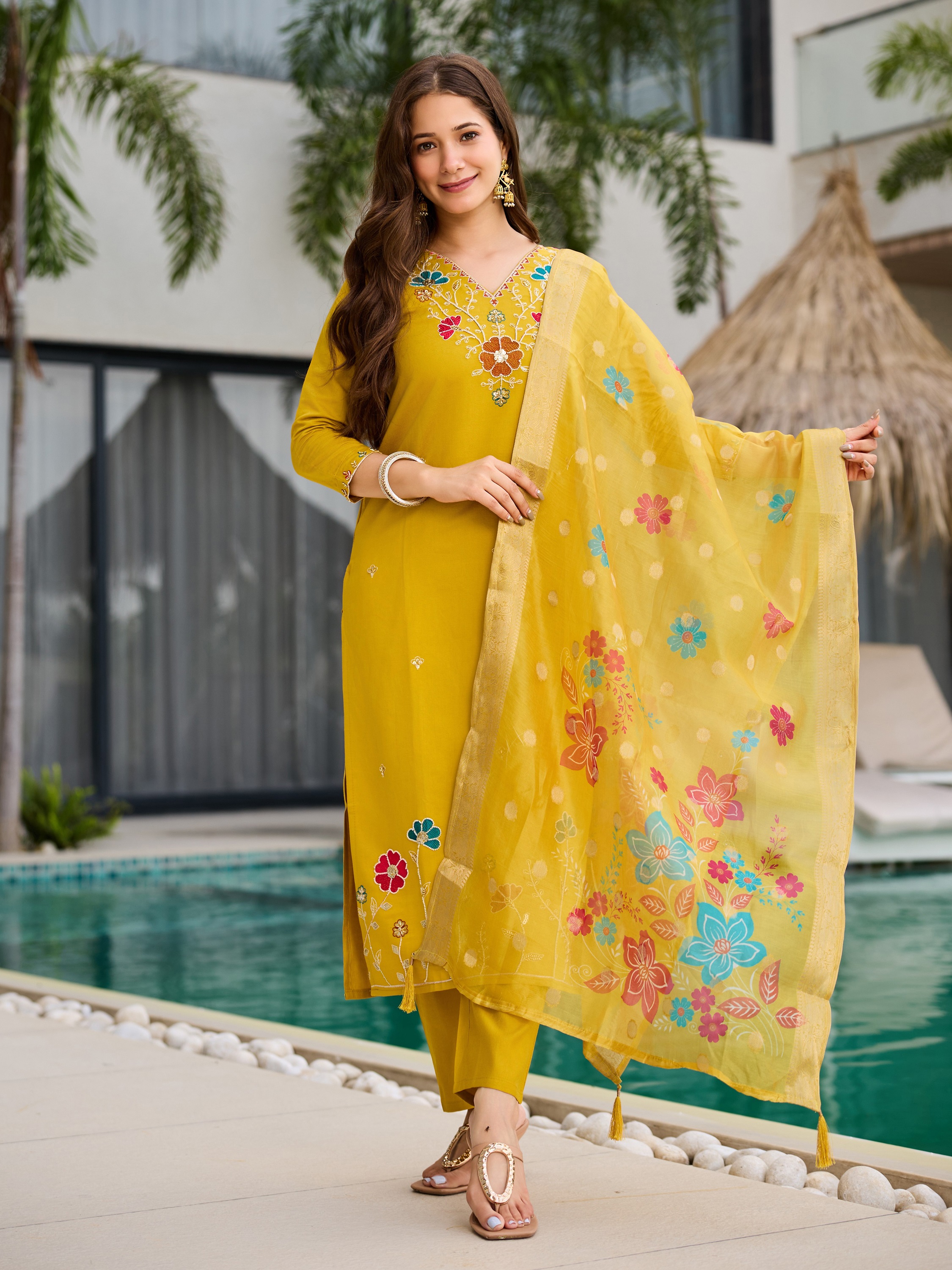
Cotton kurtis are breathable and practical, but crisp cotton can stand away from the body at the hip. A close legging balances that shape when the kurti has enough room for movement. Kanchi Cotton Jacquard Kurti Dupatta Set has a woven surface that deserves a calm lower half; a plain legging and uncomplicated shoe allow the jacquard to remain clearly visible.
Silk-blend or polished fabrics look more refined with matte leggings rather than thin, shiny jersey. The difference in sheen can make the upper garment appear dressier without introducing another competing texture. Mustard Kanchi Cotton Kurti Set with Zari Dupatta calls for a legging in a solid, supportive fabric because zari already supplies reflective detail.
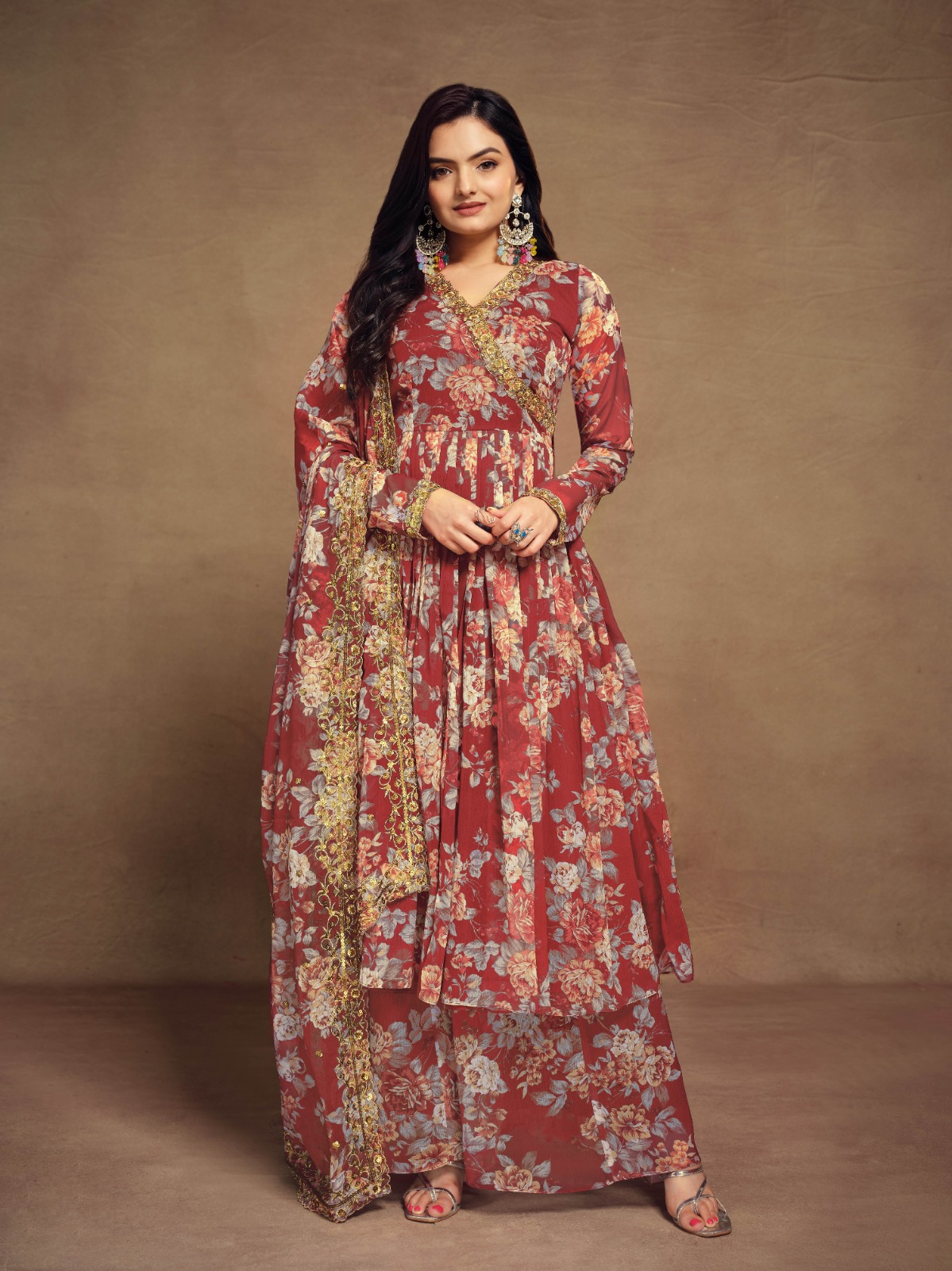
Printed kurtis need one visual anchor. Match the legging to one of the quieter colours in the print rather than automatically choosing a bright contrast. Shop Floral Digital Printed Chiffon Kurti Palazzo Set with zari embroidery is designed as a palazzo set, which illustrates an important proportion rule: a fluid, wide lower garment changes the silhouette completely.
If a similar chiffon kurti is worn with leggings, the legging should remain visually quiet and the dupatta should not be wrapped thickly around the waist. Lightweight chiffon can cling or move in unexpected ways, so opaque leggings and a smooth waistband are important for both comfort and coverage.
Dark leggings don't have to be black. Charcoal, espresso, deep indigo and dark olive can coordinate with ethnic colours while looking softer than a stark black contrast. For a short kurti, a low-contrast legging generally creates a longer line. For a long kurti, a contrasting legging can add definition if the ankle and footwear remain neat.
Getting Kurti Length and Proportions Right With Leggings Using Footwear and Dupattas
Footwear should support the kurti's vertical line, while a dupatta should add one controlled layer rather than covering every proportion the hemline has created.
Juttis and pointed flats work well with knee-length straight kurtis because they keep the ankle visible and add a heritage finish. Low block heels or wedges can help a longer kurti clear the floor visually, but the heel should remain stable enough for walking. Flat sandals suit short cotton kurtis and casual leggings, especially when the outfit is intended for daytime use.
Avoid pairing a long kurti, heavily bordered dupatta and ankle-strap footwear that cuts the leg into several horizontal sections. Multiple breaks can make a carefully fitted outfit look shorter. If ankle straps are important to the look, choose a shoe in a similar colour to the leggings.
An over-one-shoulder dupatta drape is usually the most lengthening option with leggings because the fabric falls in one vertical column. A front-wrapped dupatta adds width across the bust and waist, so it works better with a simple short kurti than with a heavily printed or embellished design.
Time-honoured collections can also guide proportion choices. Maharashtra Paithani Inspired Salwar Suits and Odisha Sambalpuri Salwar Suits may feature noticeable woven borders or regional patterning; let one border remain visible rather than hiding it beneath repeated folds. Gujarat Bandhej Salwar Suits can already provide strong colour contrast, making a solid legging in a quieter shade the more balanced choice.
Getting Kurti Length and Proportions Right With Leggings During Everyday Wear
The most wearable kurti-and-legging outfit allows comfortable movement, stays opaque in daylight and maintains a clean line after several hours of sitting and walking.
Check the legging fabric in natural light before wearing it outside. A fabric that looks opaque indoors may become sheer when stretched across the thigh or knees. A practical legging should recover its shape after bending, should not twist at the ankle and should have a waistband that doesn't roll under the kurti.
For office or daytime dressing, choose a straight or gently A-line kurti at knee level, matte leggings, minimal jewellery and a structured dupatta or scarf. For a family gathering, zari, woven borders or a richer silk-blend fabric can add formality while the leggings keep the outfit easy to move in.
Wash-care requirements also influence proportion over time. Cotton may soften or shrink slightly after washing, while synthetic blends usually retain their measurements more consistently. Follow the garment label, wash dark leggings separately during the first few washes and dry embellished kurtis away from strong direct sunlight.
A final mirror check should cover four points: the hem should not stop at an awkwardly broad part of the thigh, the leggings should lie smoothly from hip to ankle, the dupatta should not hide all garment detail and the footwear should leave the ankle visually clear. When those four elements agree, the outfit will usually look balanced without requiring excessive accessories.
Common Questions About Getting Kurti Length and Proportions Right With Leggings
What is the best kurti length to wear with leggings?
A kurti ending between mid-thigh and just above the knee is usually the easiest length to wear with leggings. A knee-length kurti also works well when the fabric is lightweight or the garment has side slits.
Can I wear a long kurti with leggings?
You can wear a long kurti with leggings, but a hem near the calf may make the lower half look visually compressed. Choose a side slit, keep the ankle visible and use footwear with a slight lift if the kurti is below the knee.
Are leggings suitable for an Anarkali kurti?
Leggings suit a short or moderately flared Anarkali kurti when the lower half remains narrow and the hem finishes above or around the knee. A heavily flared, calf-length Anarkali usually looks more proportionate with a churidar or narrow salwar.
Which leggings colour works with a printed kurti?
Choose a solid legging that matches one of the quieter colours in the print. Black, charcoal, deep indigo, espresso and dark olive are versatile, but a low-contrast colour usually creates the longest visual line.
Should leggings match the kurti or the dupatta?
Leggings generally work best when they coordinate with the kurti rather than matching a bright dupatta exactly. Matching the lower half to a quieter kurti colour keeps the outfit grounded and allows a patterned or embellished dupatta to stand out.
What footwear looks best with a kurti and leggings?
Juttis, pointed flats, flat sandals and low block heels all work well, depending on the kurti length and occasion. Keep the ankle visible and avoid several horizontal breaks when the kurti is already long or heavily bordered.


