

Full Sleeve Kurtis for Better Proportion Comfort and Outfit Pairing can make a salwar suit feel more balanced, practical and polished without relying on heavy embellishment. A sleeve that ends near the wrist creates a clear vertical line, while the right kurta length, trouser width and dupatta placement determine whether the outfit looks streamlined or crowded. Full sleeves also provide useful coverage for air-conditioned offices, mild winter days and ceremonies where a more composed silhouette feels appropriate.
The best result comes from treating a kurta set as a group of connected proportions. A long straight kurta needs a different bottom and dupatta arrangement from a short A-line kurti. Fabric matters equally: Chanderi silk can hold a dressy shape, cotton can support daily movement, and Khadi cotton gives structure without the shine of formal silk. The following guide explains how to make those decisions with greater precision.
Why full sleeves can improve the proportion of a kurta set
Full sleeves can make a kurta set look taller and more visually continuous by extending the vertical line from shoulder to wrist. The effect is especially noticeable when the sleeve, kurta and trousers share a related colour family. A narrow sleeve also prevents the upper body from appearing wider than the lower half, which can happen when a broad neckline is combined with short sleeves and a voluminous dupatta.
Proportion doesn't mean making every garment tight or long. Proportion means balancing the width and length of each visible section. A straight kurta that ends around the knee pairs naturally with slim pants because the narrow lower line offsets the longer upper line. A shorter A-line kurti can accommodate straight pants or a slightly wider palazzo because the flare already creates movement around the hips.
Full sleeves are not automatically flattering in every cut. A sleeve with excess fabric at the upper arm can add bulk, while a very tight sleeve can restrict movement and pull across the elbow. A comfortable sleeve should allow the arm to bend freely, with enough ease to slide one or two fingers between the fabric and the skin at the forearm.
Full Sleeve Kurtis for Better Proportion Comfort and Outfit Pairing
Full Sleeve Kurtis for Better Proportion Comfort and Outfit Pairing work best when sleeve width, kurta hem and bottom volume are selected together. For a straight kurta, choose a sleeve that follows the arm without clinging and pair it with cigarette pants, straight pants or a narrow churidar. For an A-line kurti, a plain straight pant keeps the outfit from becoming too wide through the entire silhouette.
How should sleeve length and cuff shape be chosen?
A sleeve ending at the wrist is the most versatile choice for workwear and formal salwar suits. A three-quarter sleeve ending several centimetres below the elbow can feel lighter in hot weather, but a true full sleeve gives the strongest continuous line and the most coverage. A simple hemmed cuff suits printed cotton, while a narrow embroidered cuff or folded border works well on festive silk and Chanderi garments.
Check the shoulder seam before judging sleeve comfort. The seam should sit close to the natural shoulder point rather than falling far down the upper arm. A sleeve with a slightly tapered lower section looks neat with a dupatta, but the cuff should not be so narrow that bangles or a watch become difficult to wear.
Which kurta length creates a balanced silhouette?
A knee-length or mid-calf straight kurta generally creates the cleanest proportion with fitted pants. A longer kurta can work with narrow trousers, provided the fabric doesn't cling around the knees. A shorter kurti can balance palazzo pants or a Patiala-style bottom, but the hem should not stop at the widest part of the hip if a leaner line is the goal.
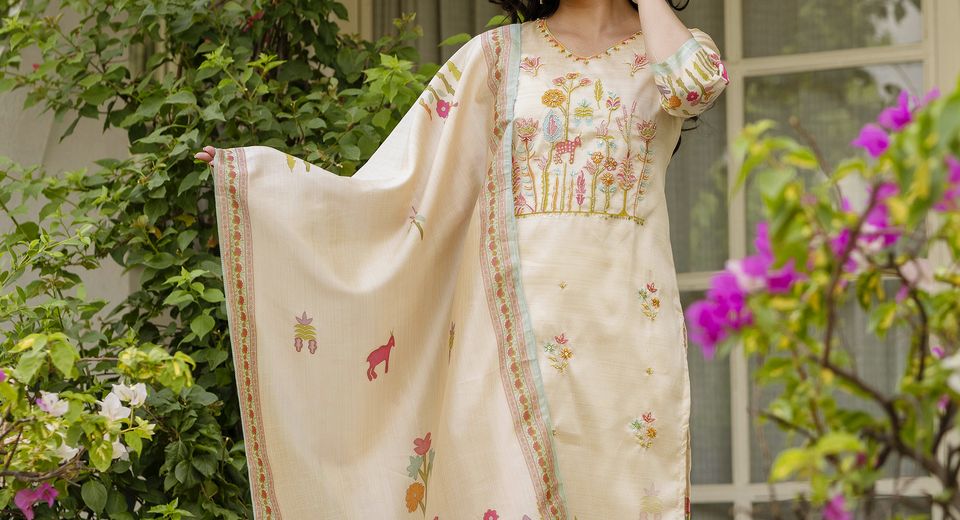
Cream Chanderi Silk Kurti Pant Dupatta Set for Women demonstrates why fabric and length should be assessed together. Chanderi silk has enough body to maintain a graceful vertical fall, while the pant keeps the lower half controlled. Designer Cream Straight Kurti Set with Dupatta offers a similar lesson in restraint: a simple straight shape leaves room for the dupatta or jewellery to provide visual interest.
Fabric choices that make long sleeves comfortable in India
Cotton is usually the most practical fabric for full sleeves in warm Indian weather because it absorbs moisture and allows air movement. Lightweight cotton suits daily commuting, errands and daytime family gatherings. Cotton can crease more readily than synthetic blends, so a neatly pressed sleeve and a structured shoulder help the outfit retain its shape during the day.
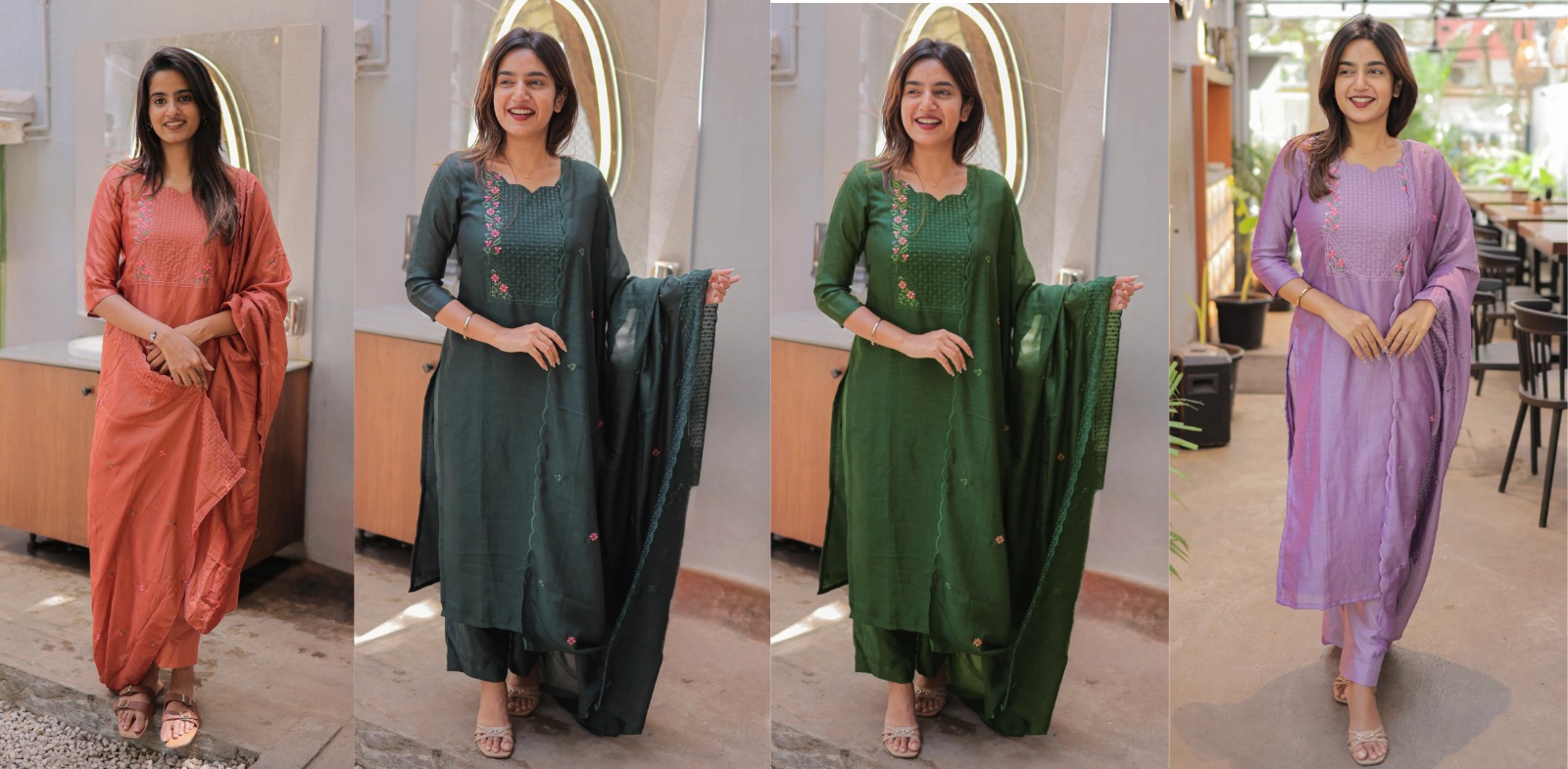
Khadi cotton provides a slightly textured, breathable option with more visual structure than very thin cotton. Cream Khadi Cotton Straight Kurta Set with Dupatta shows how texture can replace excessive ornamentation. Khadi cotton looks considered with minimal jewellery, and natural irregularities in the weave should be treated as part of the fabric rather than as a defect.
Chanderi silk and silk blends are better suited to festive afternoons, dinners and indoor celebrations where a polished finish matters more than maximum ventilation. Cream Silk Embroidered Kurti Pant with Printed Dupatta combines a dressier upper fabric with a printed accessory, showing how embroidery can be balanced by pattern rather than by adding more embellishment everywhere.
Roman silk and jacquard can feel more formal because both fabrics hold shape and catch light. A full sleeve in a structured fabric should have enough ease at the elbow and upper arm. Designer Roman Silk Kurti Set with Jacquard Dupatta is suitable for evening dressing, especially when the rest of the outfit remains relatively clean.
For humid weather, inspect the inside as carefully as the outside. Dense embroidery, polyester lining and tightly woven sleeves can trap heat even when the outer colour looks light. For long daytime wear, prefer unlined or lightly lined sleeves, breathable cotton and a dupatta that can be moved away from the neck when required.
Pairing full-sleeve kurtis with pants, palazzos and Patiala bottoms
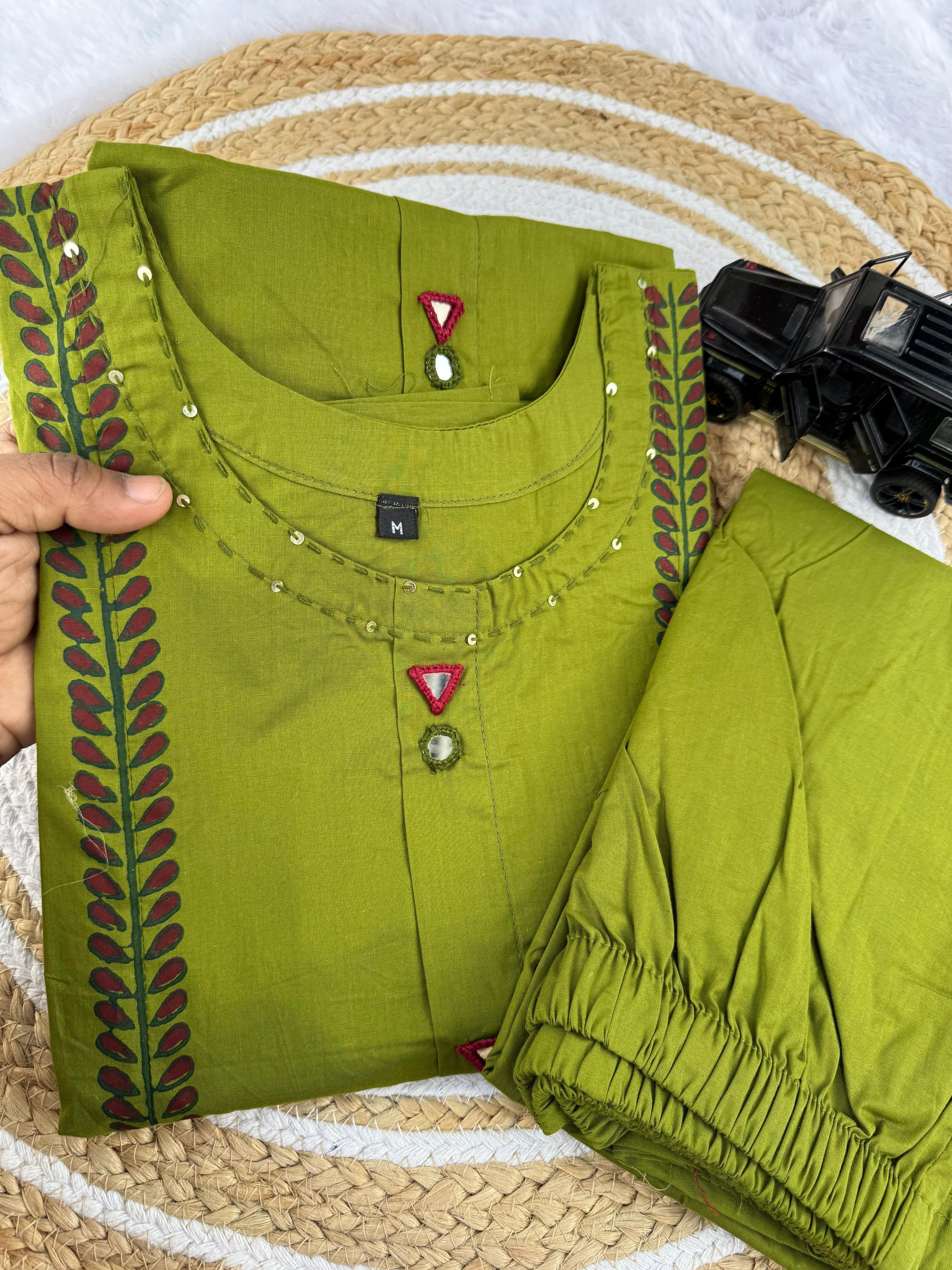
Slim or straight pants are the safest partner for a long full-sleeve kurta because they keep the lower silhouette narrow. This pairing works for office clothing, travel and semi-formal lunches. Designer Cotton A-Line Kurti Pant Set with Mirror Work uses the A-line shape to provide movement while the pant prevents the mirror work and flare from looking overly heavy.
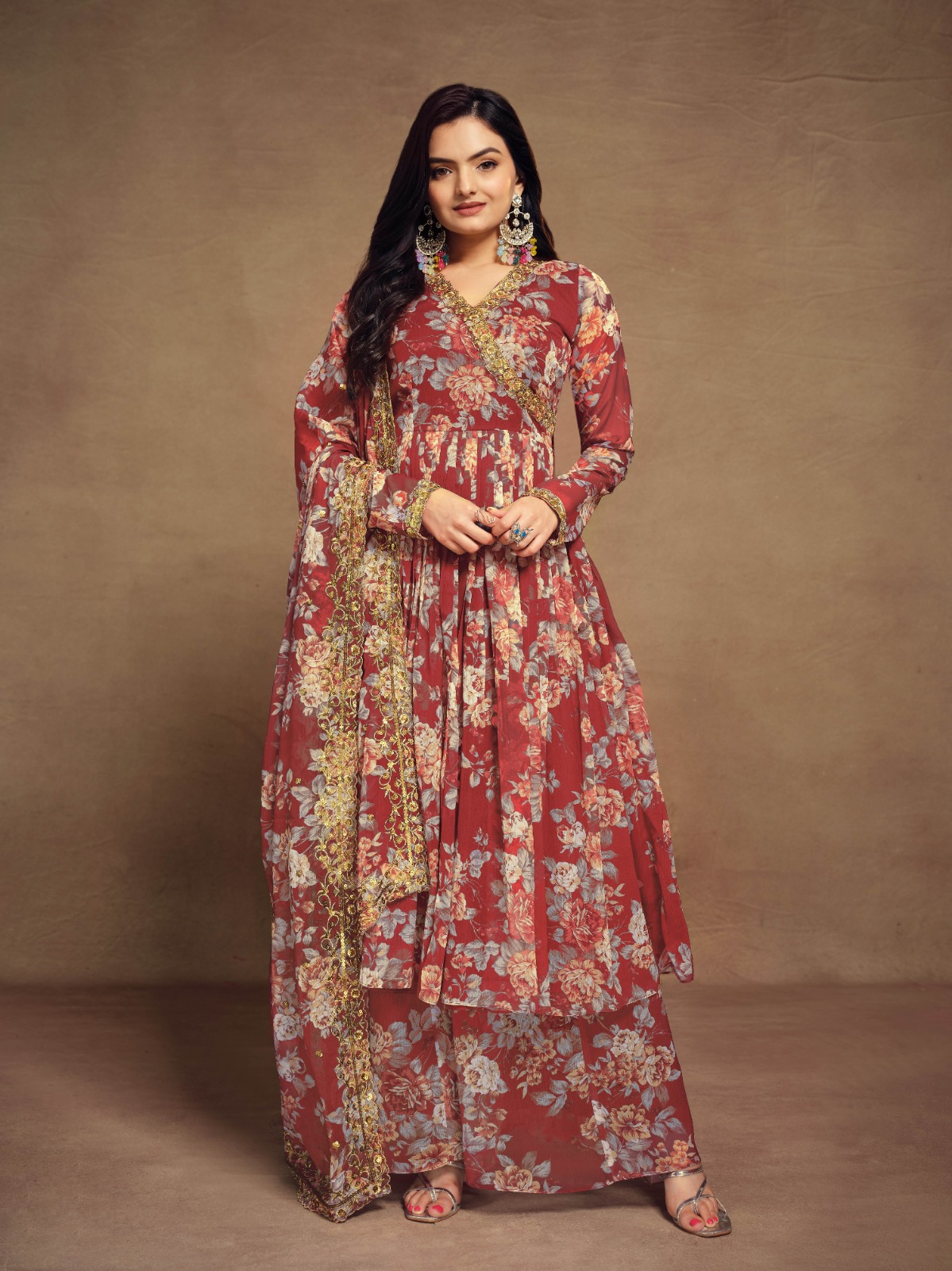
Palazzo pants create a softer, wider outline and suit shorter kurtis or kurtas with a defined waist seam. Choose a plain palazzo when the kurta has print, mirror work or embroidery. A patterned palazzo can work with a solid kurta, but the sleeve and neckline should remain uncomplicated so that the outfit has one clear focal point.
Patiala bottoms have pleats and volume around the hips and thighs, so they need a shorter kurta or a kurta with a visibly relaxed cut. Punjab Patiala Salwar Suits reflects the traditional relationship between a shorter upper garment and a fuller lower garment. Full sleeves add coverage to the upper body, but a fitted sleeve balances the generous drape below.
A straight cotton kurta with a narrow pant is a dependable daily combination. Vertical Cotton Straight Kurta Set with Dupatta shows how a directional print can reinforce height when the bottom is simple. Vertical motifs, a long front placket or an uninterrupted row of buttons can all support the same lengthening effect.
Using dupattas without disrupting the sleeve line
A dupatta should frame the kurta rather than hide the sleeve and shoulder lines completely. For a full-sleeve outfit, a single-shoulder drape or a narrow front fall usually preserves the cleanest silhouette. Pinning one side near the shoulder can also stop the fabric from repeatedly sliding over the sleeve during work or travel.
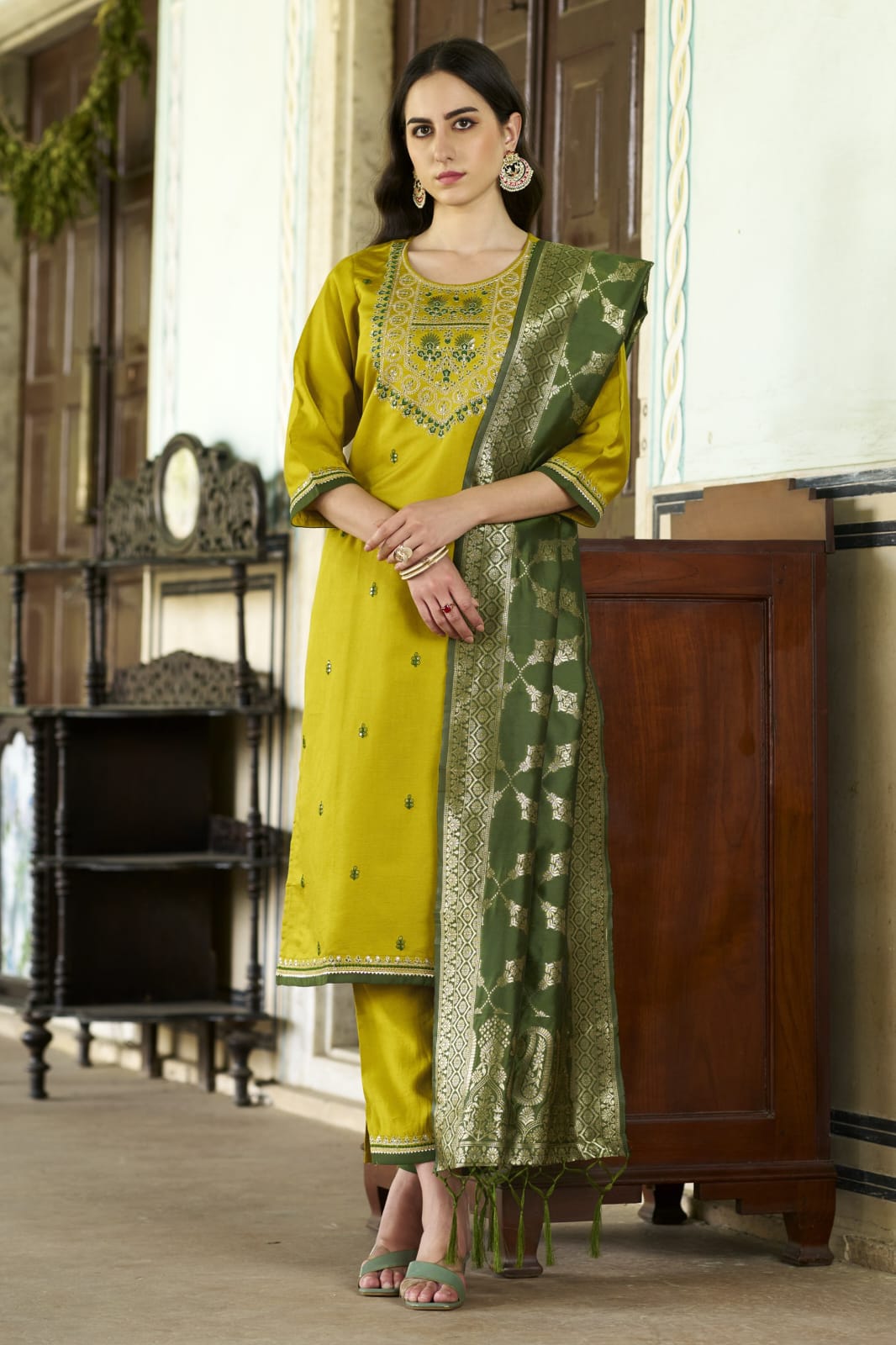
Printed dupattas add contrast to plain kurtas, while woven or jacquard dupattas make silk and evening sets look more formal. Keep the dupatta lighter in visual weight when the sleeves contain embroidery. Pink Embroidered Cotton Kurti Pant Dupatta Set is an example of coordinated colour: the embroidery supplies detail, so additional heavy jewellery or a highly ornate drape is unnecessary.
Regional textile references can guide colour and pattern decisions without requiring a fully heritage look. Kalamkari Print Salwar Suits often combine narrative motifs with earthy or contrasting colour, while Gujarat Bandhej Salwar Suits bring dotted tie-dye patterns and energetic colour into an outfit. A solid full-sleeve kurta can calm either type of dupatta, especially when the trousers match one quieter shade from the print.
Maharashtra Paithani Inspired Salwar Suits and Odisha Sambalpuri Salwar Suits offer different pattern directions for festive dressing. Paithani-inspired motifs can be paired with a restrained sleeve and plain pant so that the border receives attention. Sambalpuri-inspired patterning can work with a simple full-sleeve kurta when the dupatta is folded narrowly rather than spread across the torso.
Building outfits for work, family events and festive gatherings
For office wear, choose a breathable straight kurta, narrow pant and a dupatta that stays in place with one discreet pin. Cream, beige, muted blue, dusty pink and soft green are easy to coordinate with neutral footwear. Avoid placing heavy mirror work directly at the wrist if you type frequently or wear a watch, because raised embellishment can catch on desk edges and accessories.
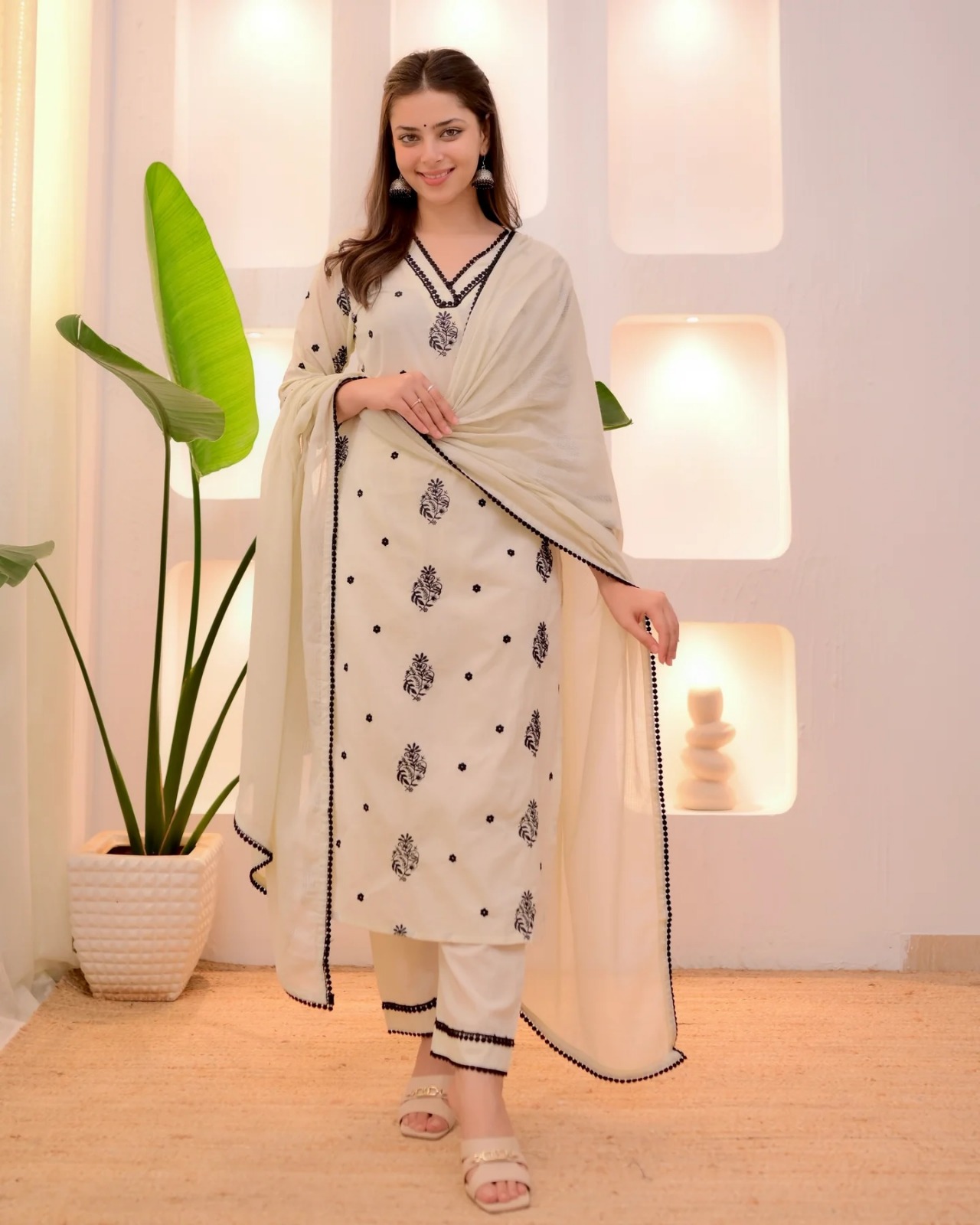
For a family lunch or daytime gathering, cotton embroidery brings detail without the weight of a heavily embellished set. Pink Embroidered Cotton Kurti Pant Dupatta Set can be styled with small earrings, flat sandals and a low bun. Rolled sleeves may change the intended proportion, so keep the cuffs at the wrist unless the garment has been designed with a fold-back finish.
For an evening celebration, silk, jacquard, zari accents and a structured dupatta create more formality. Designer Roman Silk Kurti Set with Jacquard Dupatta needs less additional ornament than a plain cotton set because the fabric surfaces already reflect light. Choose one prominent accessory, such as chandelier earrings or a decorated clutch, rather than combining several competing elements.
Full Sleeve Kurtis for Better Proportion Comfort and Outfit Pairing also applies to transitional weather. A full sleeve can replace a separate shrug in mildly cool indoor settings, making the outfit easier to pack and layer. If a jacket is added, select a cropped or waist-length layer over a long straight kurta so the two hems don't create several competing horizontal lines.
A practical fitting and care checklist
Good fit can be checked in under two minutes. Raise both arms, bend the elbows, sit down and walk several steps before deciding that a full-sleeve kurta is comfortable. The sleeve should not pull at the biceps, the armhole should not cut into the underarm, and the kurta hem should remain even when the body moves.
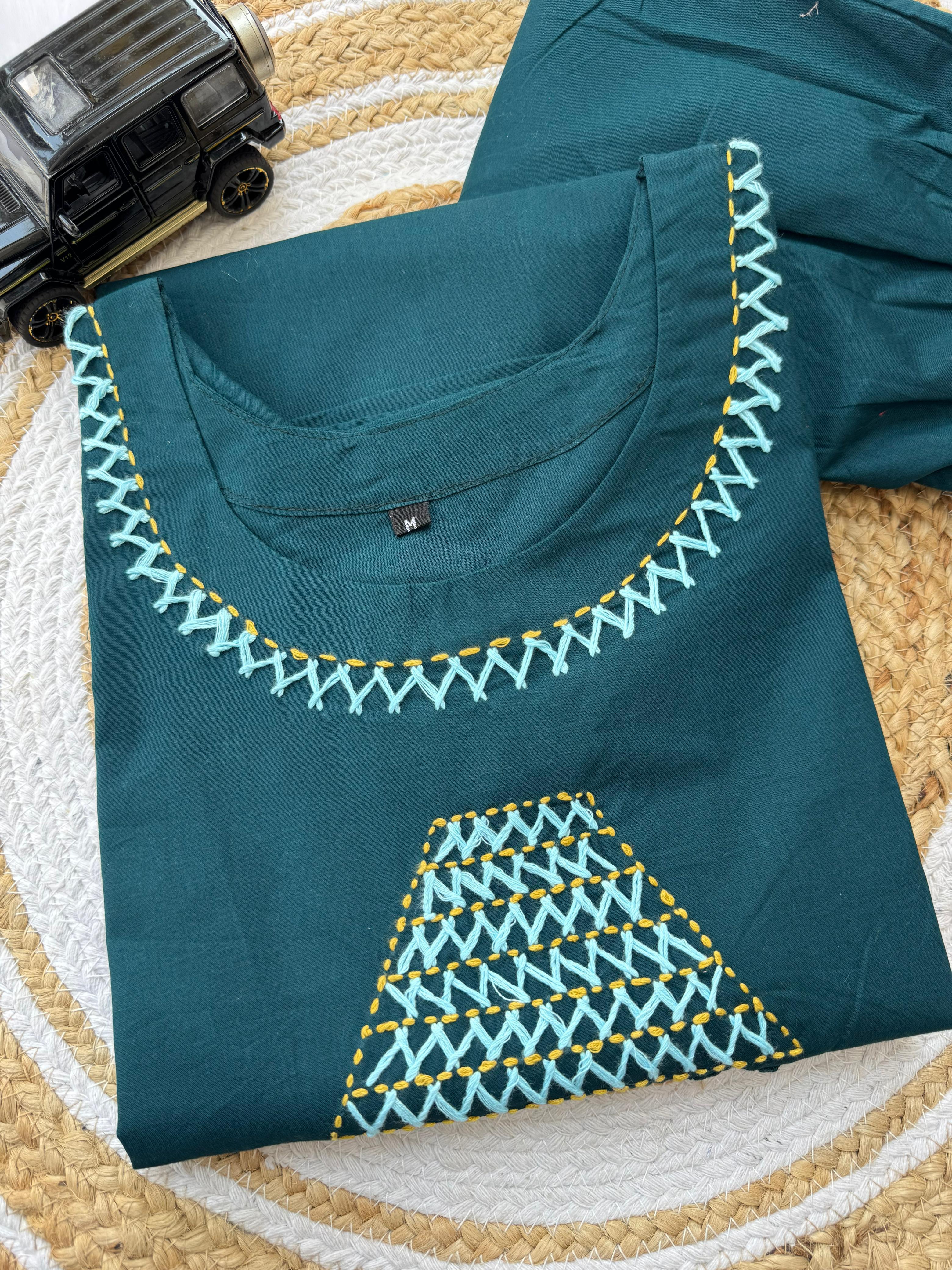
- Shoulder: The seam should sit near the natural shoulder point and should not droop more than a small amount.
- Upper arm: Leave enough ease for natural movement and avoid a sleeve that twists when the arm bends.
- Wrist: Check that the cuff accommodates a watch, slim bangle or normal hand movement.
- Kurta hem: Match a long hem with a narrow bottom and a shorter hem with a wider bottom.
- Dupatta: Test whether the fabric stays secure without repeatedly covering the face, neckline or working hand.
Care instructions should follow the fibre and embellishment. Wash cotton separately in cool water with a mild detergent, dry it inside out and avoid harsh wringing. Chanderi silk, Roman silk and jacquard should be handled according to the garment label; when dry cleaning is recommended, home soaking can distort the finish or loosen embroidery.
Press cotton on the reverse side while the fabric is slightly damp. Use a low-temperature setting for silk and place a thin cotton cloth between the iron and zari or embroidery. Store embellished dupattas folded with soft muslin or plain cotton between heavily decorated sections so the surface doesn't snag during storage.
How to make the final styling decision
Start with the occasion, then choose the fabric, silhouette and sleeve finish in that order. A breathable cotton full-sleeve set will usually outperform silk for a long commute, while a structured silk or jacquard set can provide the polish needed for an evening celebration. After selecting the kurta, keep the bottom narrow if the upper half is long or ornate, and introduce wider trousers only when the kurta is shorter or visually simple.
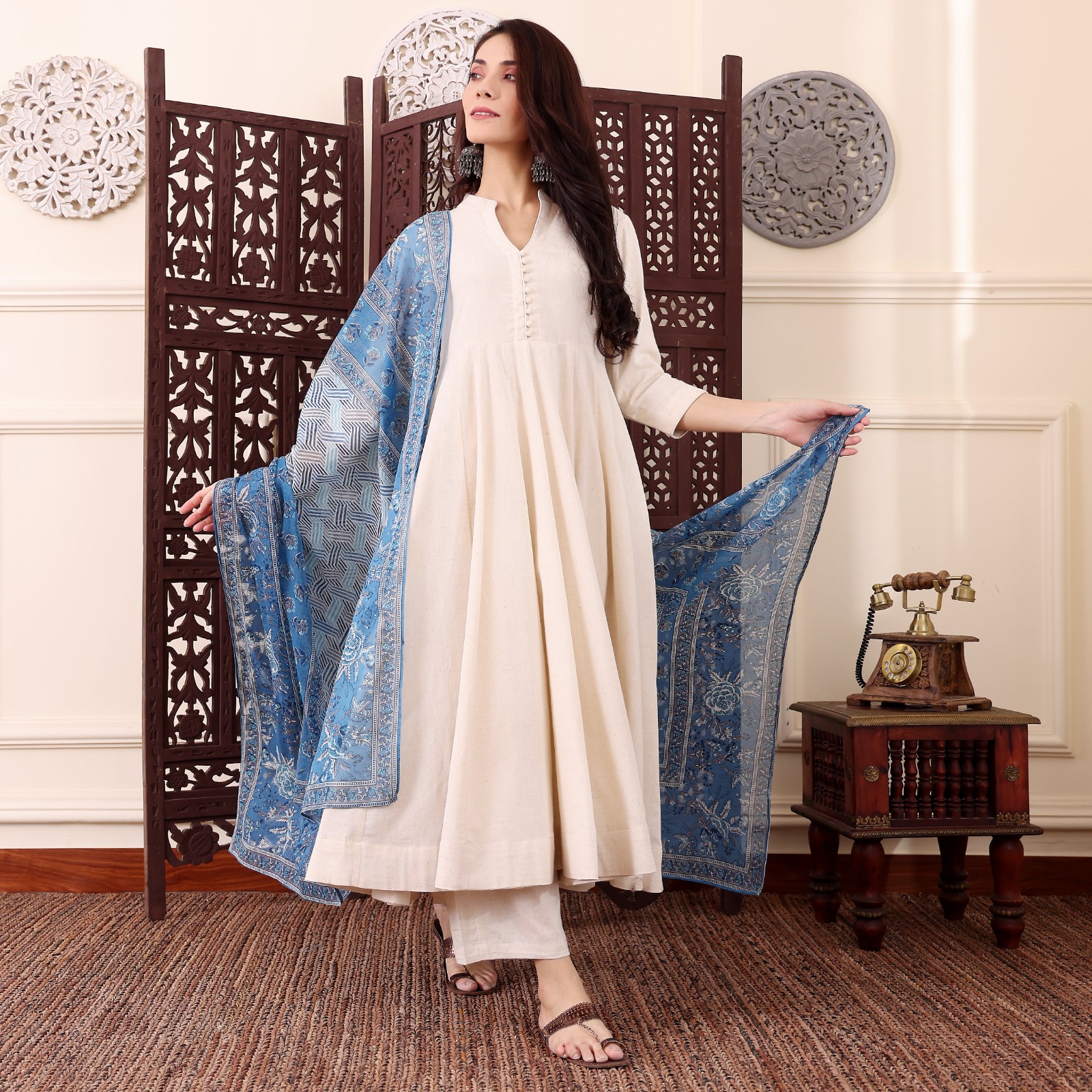
Full Sleeve Kurtis for Better Proportion Comfort and Outfit Pairing become especially effective when every garment has a defined job. The sleeve creates continuity, the kurta establishes length, the bottom controls or adds volume, and the dupatta supplies movement or contrast. That approach produces outfits that are easier to repeat, adapt and wear comfortably rather than looks that depend on one dramatic detail.
Common Questions About Styling Full-Sleeve Kurta Sets
Are full-sleeve kurtis comfortable in hot Indian weather?
Full-sleeve kurtis can be comfortable in hot weather when they use breathable cotton, lightweight Khadi cotton or another airy weave. Loose armholes, moderate sleeve ease and minimal lining improve ventilation, while dense embroidery and synthetic linings can increase heat.
Which bottoms pair best with a full-sleeve straight kurta?
Straight pants, cigarette pants and narrow churidars usually pair best with a long full-sleeve straight kurta. Palazzos work more successfully with shorter or A-line kurtis because the wider bottom balances the shorter upper line.
Do full sleeves make a kurta outfit look bulky?
Full sleeves do not automatically make a kurta outfit look bulky. A sleeve with moderate ease, a clean shoulder seam and a bottom suited to the kurta length can create a long, balanced silhouette; excess fabric and heavy layering are the usual sources of bulk.
How should a dupatta be worn with a full-sleeve kurti?
A single-shoulder drape or narrow front fall usually works best with a full-sleeve kurti because the sleeve remains visible. Pinning one shoulder and matching the trousers to a quieter shade in a printed dupatta can make the outfit look more controlled.
Which fabric is best for a full-sleeve kurti for office wear?
Cotton and lightweight Khadi cotton are practical choices for office wear because they breathe and handle regular movement. Chanderi silk can work for formal offices or meetings, but it needs careful care and may be less comfortable during long outdoor commutes.
How can full-sleeve kurtis be styled for a festive event?
Choose Chanderi silk, Roman silk, jacquard, zari accents or tasteful embroidery for festive dressing, then keep the bottom and accessories controlled. One statement accessory and a neat dupatta drape generally look more polished than several heavily embellished elements.


