

Flare, Waistline and Blouse Shapes That Work Together for Lehengas for Fuller Busts should be evaluated as one connected outfit, not as three unrelated design details. A good lehenga fit starts with the fullest bust, natural waist and finished skirt length. When those measurements relate correctly, the blouse feels supported, the waistband stays level and the skirt falls cleanly from the body. This guide explains how to choose proportions for weddings, sangeet celebrations, festive gatherings and family functions.
The goal isn't to conceal the bust. The goal is to create support, movement and visual balance. A heavily embroidered bridal lehenga, a lightweight georgette set and a contemporary readymade outfit can all work well when the waist placement and blouse construction suit the wearer.
Flare, Waistline and Blouse Shapes That Work Together for Lehengas for Fuller Busts: why proportion matters
Proportion matters more than the size printed on a lehenga label because bust, underbust, waist, hip and height rarely increase at the same rate. A wearer may need a larger blouse measurement but a smaller skirt waist, or a longer blouse with a standard skirt length. Checking each garment measurement prevents a comfortable blouse from being paired with a waistband that sits too high or too low.
Measure over the bra or supportive innerwear intended for the event. Keep the tape level across the fullest part of the bust, measure the underbust firmly without compressing, and record the natural waist where the torso bends. Add the intended footwear before finalising skirt length. A difference of only three to five centimetres in waist placement can change how the blouse and skirt meet.
Flare, Waistline and Blouse Shapes That Work Together for Lehengas for Fuller Busts also depend on the side profile. A wide skirt with a short, tight choli can make the upper body look crowded. A longer blouse with a controlled A-line skirt can distribute volume more equally. A narrow waistband may look elegant, but the waistband needs enough structure to stay level while walking, sitting and dancing.
Flare, Waistline and Blouse Shapes That Work Together for Lehengas for Fuller Busts: choosing skirt volume
Moderate, evenly distributed flare usually creates a balanced line for a fuller bust. A-line and panelled skirts widen gradually from the waistband, while circular skirts release volume more dramatically below the hips. Neither silhouette is automatically superior; the important questions are where the flare begins and how much fabric gathers at the waist.
A-line and panelled lehengas
An A-line lehenga creates a clean vertical line because each panel opens progressively from the waistband. Panel seams can direct the eye downwards, especially when embroidery follows the seam instead of forming a dense horizontal band across the midriff. The shape works particularly well with a blouse that has a deliberate length and a firm lower edge.
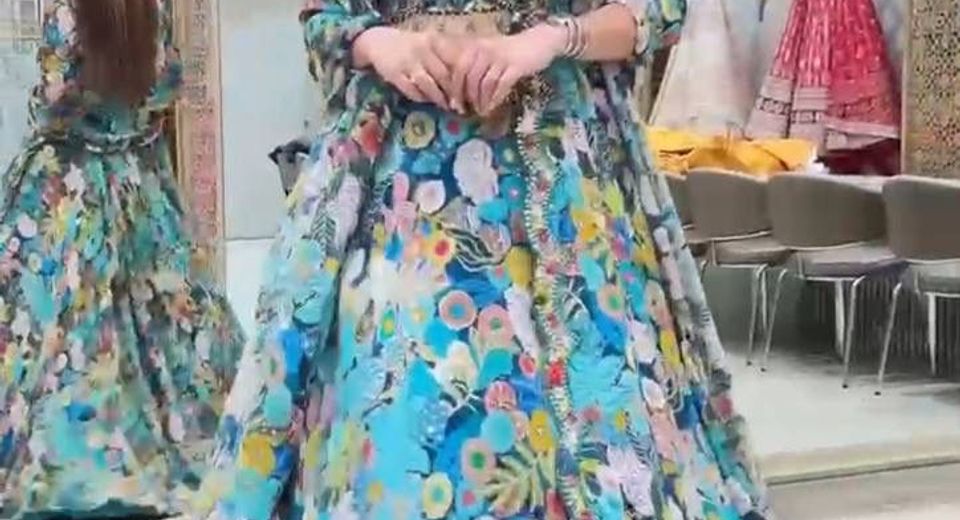
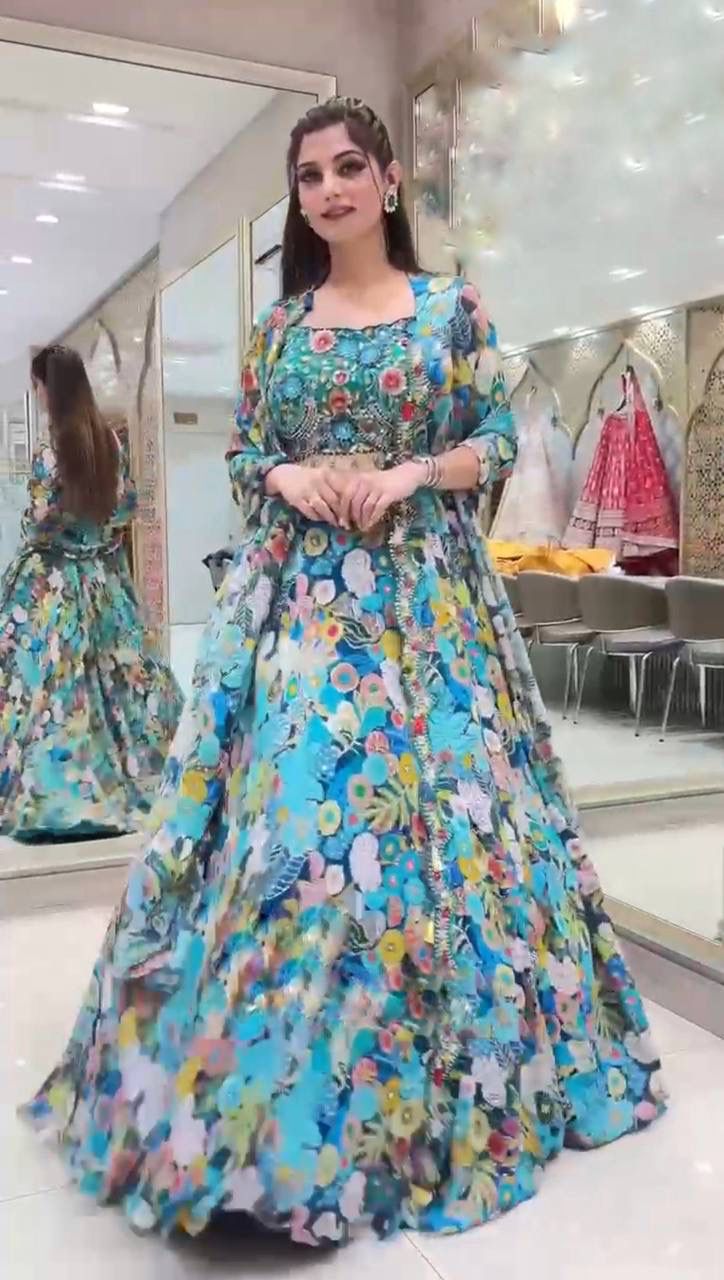
A richly embellished skirt doesn't require maximum volume to look festive. Blue Floral Georgette Lehenga Set with Heavy Flare and Pink Bridal Sequins Lehenga Set with Heavy Flare show why skirt movement should be considered alongside the blouse. Heavy flare can suit a wedding, but the waistband must remain flat and the blouse should not add unnecessary bulk across the bust.
Circular and gathered flare
A circular skirt provides a generous sweep with fewer visible gathers at the waist, while a gathered skirt concentrates more fabric where the waistband joins the body. For a fuller bust, circular or lightly gathered construction is often easier to balance than dense gathering beneath a short blouse. A petticoat or can-can should be chosen carefully because extra stiffness increases the skirt's visual width.
Use the side profile as a practical fitting test. The skirt should move away from the waist without pushing the torso forward, and the waistband should not roll underneath the blouse. Walk, sit and climb a few steps before judging the flare. A skirt that looks refined while standing may pull at the waist when seated if the waistband has no ease.
Flare, Waistline and Blouse Shapes That Work Together for Lehengas for Fuller Busts: placing the waistline
The most reliable waistline for a fuller bust is usually the natural waist or up to two centimetres below it, depending on blouse length and personal comfort. A high waistband that rises towards the underbust can shorten the torso and make the bust appear more prominent. A very low waistband can lengthen the midsection but may leave the blouse and dupatta without a stable anchor.
Measure the distance from the shoulder to the natural waist, then compare that measurement with the blouse's finished length. The blouse should end at a deliberate boundary, rather than directly across the fullest part of the bust or where the skirt waistband presses upward. A slightly longer blouse can provide additional coverage, but excessive length may look boxy when paired with a wide flare.
A waistband between four and seven centimetres wide often gives useful support without becoming the main visual feature. A wide waistband can carry embroidery and conceal minor fit adjustments, while a narrow waistband can look sharper with a minimalist lehenga. The waistband should close securely with hooks, a tie or a concealed fastening instead of relying only on a tight elastic edge.
Ready Made Lehenga options can simplify shopping for a time-sensitive wedding outfit, but ready-made sizing still needs measurement checks. A garment from the Semi Stitched Lehengas Collection may provide more control over waist placement and skirt length. Fully stitched choli shopping becomes safer when the seller gives finished garment measurements rather than only a general small, medium or large size chart.
Flare, Waistline and Blouse Shapes That Work Together for Lehengas for Fuller Busts: selecting blouse structure
A blouse with a stable shoulder line, shaped bust darts and a firm underbust or waist edge generally supports a fuller bust better than an unstructured crop top. The right design distributes tension across the shoulder, side seam and underbust instead of pulling at the centre front. A blouse doesn't need to be high-necked to provide support.
Necklines and front shaping
A soft V-neck, broad U-neck or gently squared neckline can create length through the upper body when the edges are reinforced. The neckline should be wide enough to avoid crowding the bust but not so low that the garment loses support. A sweetheart neckline can work when its inner edge has firm stitching and the bust darts or cups are correctly positioned.
High round necklines can look polished, but a very high and tight neckline may make the chest area appear compressed. Halter shapes can concentrate weight at the neck, which may become uncomfortable during a long wedding event. A broad shoulder strap or cap sleeve generally distributes pressure more comfortably.
Princess seams are useful for a fuller bust because they shape the blouse vertically from the shoulder or armhole to the waist. Side darts can provide similar shaping with fewer visible seams. Horizontal piping across the fullest bust should be positioned carefully because a raised line directly across the bust can add width. Piping near the neckline or lower edge can frame the blouse more gently.
Sleeves, lining and closures
Elbow-length, three-quarter or structured short sleeves can balance a fuller bust by adding controlled width at the upper arm. Very tight sleeves pull the armhole forward and create wrinkles across the bust. A sleeve with approximately two to three centimetres of movement ease is usually more wearable than a skin-tight sleeve for an event lasting several hours.
A lined blouse should use a breathable inner layer and a firm outer fabric that can hold darts. Cups may improve coverage, but cups don't replace correct bust shaping. A side zip is neat, while a back opening with hooks allows minor adjustment. A row of hooks can provide roughly two to three centimetres of flexibility when the construction is designed for it. Test the closure while raising both arms because a blouse that fits only with the arms down isn't properly fitted.
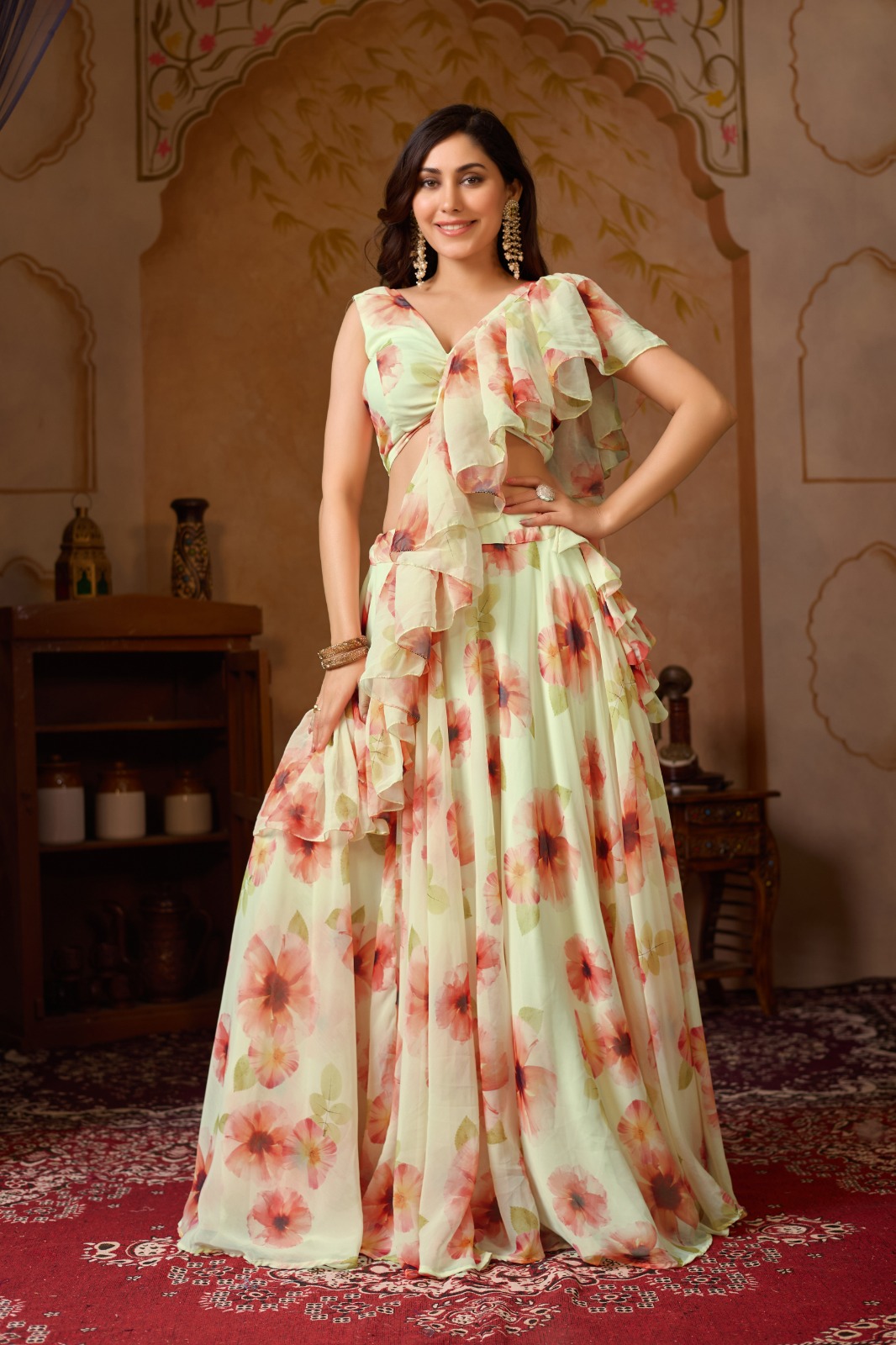
Pastel Floral Georgette Lehenga Set with Ruffle Blouse demonstrates why blouse detail should be judged at the bust line rather than only in a product photograph. Ruffles, gathers and layered trims need enough room to fall away from the chest. When a decorative ruffle begins at the fullest point, a light vertical treatment is generally easier to balance than a dense horizontal one.
Flare, Waistline and Blouse Shapes That Work Together for Lehengas for Fuller Busts: using fabric and embroidery
Fabric weight and surface texture alter the apparent proportions of a lehenga even when the measurements are identical. Georgette and net can create movement without the stiffness of multiple heavy layers, while satin reflects light and can emphasise contours when the fit is too tight. Embroidery placement matters as much as the base fabric.
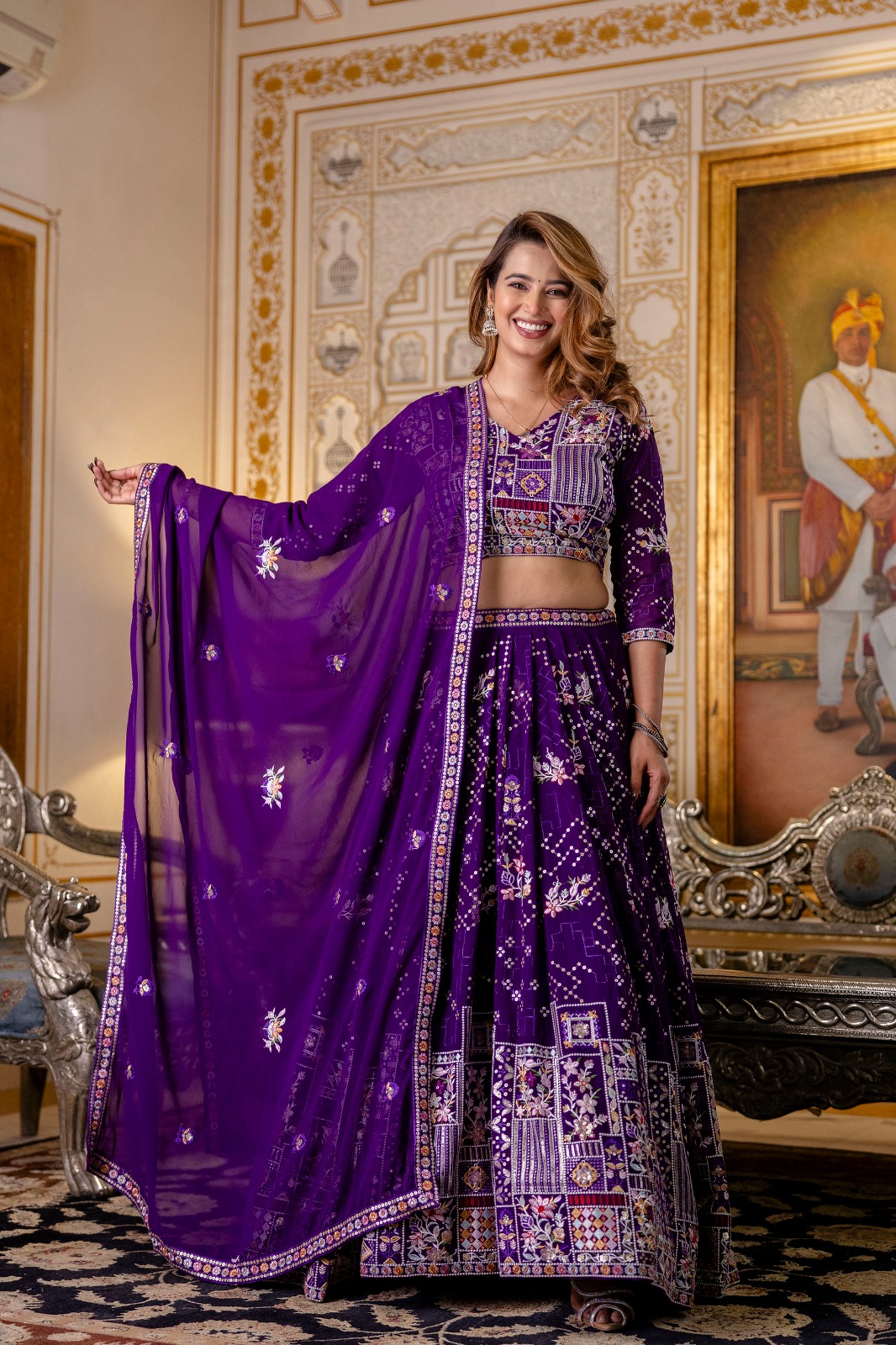
Vertical floral sprays, panel borders and narrow sequin lines guide the eye from shoulder to hem. Large motifs concentrated across the bust create a stronger horizontal focal point. Lime Floral Embroidered Butterfly Net Lehenga Set and Cream Peacock Embroidered Net Lehenga Set for Women show why motif scale should be considered with blouse shape. A detailed skirt can carry visual interest while the blouse remains cleaner around the bust.
Colour can support proportion without imposing rules about what a fuller-busted wearer should wear. A darker blouse with a brighter skirt creates separation at the waist, while a single-colour outfit creates a longer uninterrupted line. Green Lehengas and Yellow Lehengas provide useful starting points for festive styling, but colour should ultimately follow personal preference and the event dress code.
Satin needs particular attention during alterations because misplaced darts or excess tightness can create visible drag lines. Net and sequins also need careful handling: shortening a heavily embellished hem may require relocating the border rather than simply cutting away fabric. Ask an experienced tailor whether the blouse can be altered at the side seams, shoulder, centre back or neckline before purchasing.
Flare, Waistline and Blouse Shapes That Work Together for Lehengas for Fuller Busts: choosing for weddings and celebrations
A wedding lehenga should allow comfortable sitting, walking and eating for several hours, while a sangeet lehenga should allow more movement through the knees and waist. Bridal outfits can support heavier embroidery, but the blouse lining, fastening and shoulder construction need to carry the additional weight. A lighter festive outfit may need less structural support but still requires accurate bust and waist measurements.
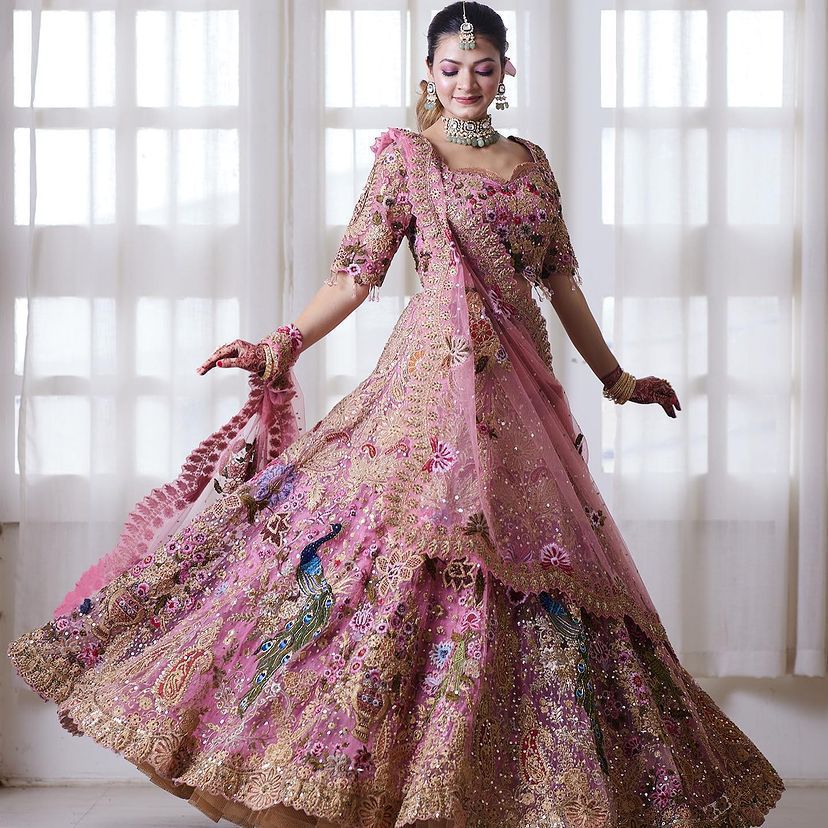
Red Butterfly Net Sequins Lehenga Set Wedding Wear and Pink Sequins Embroidered Butterfly Net Lehenga Set suit shoppers considering sequin-heavy wedding styling. Sequins can catch light beautifully, but dense decoration may feel scratchy under the arms or across the inner blouse edge. Check whether the lining covers the reverse of the embellishment and whether the armhole allows comfortable movement.
Magenta Satin Embroidered Lehenga Set Online can work for a reception or evening celebration where satin's reflective surface is part of the look. A satin blouse should not be sized by squeezing the bust into a smaller measurement because the fabric may show tension lines. Leave enough room for breathing, sitting and the undergarment that will actually be worn.
Mehendi Lehengas and Green Lehengas often invite playful colour and lighter movement, while Yellow Lehengas can suit daytime ceremonies. Occasion labels are useful only after fit has been considered. A beautiful colour can't compensate for a waistband that rolls, an armhole that cuts in or a blouse that requires constant adjustment.
Flare, Waistline and Blouse Shapes That Work Together for Lehengas for Fuller Busts: a fitting checklist before buying
Check the finished bust, underbust, waist, blouse length, skirt waist and skirt length before ordering a lehenga. Finished garment measurements are more useful than body measurements alone because ease varies between manufacturers. Ask whether the stated waist measurement includes the waistband overlap, hook placement and any elastic.
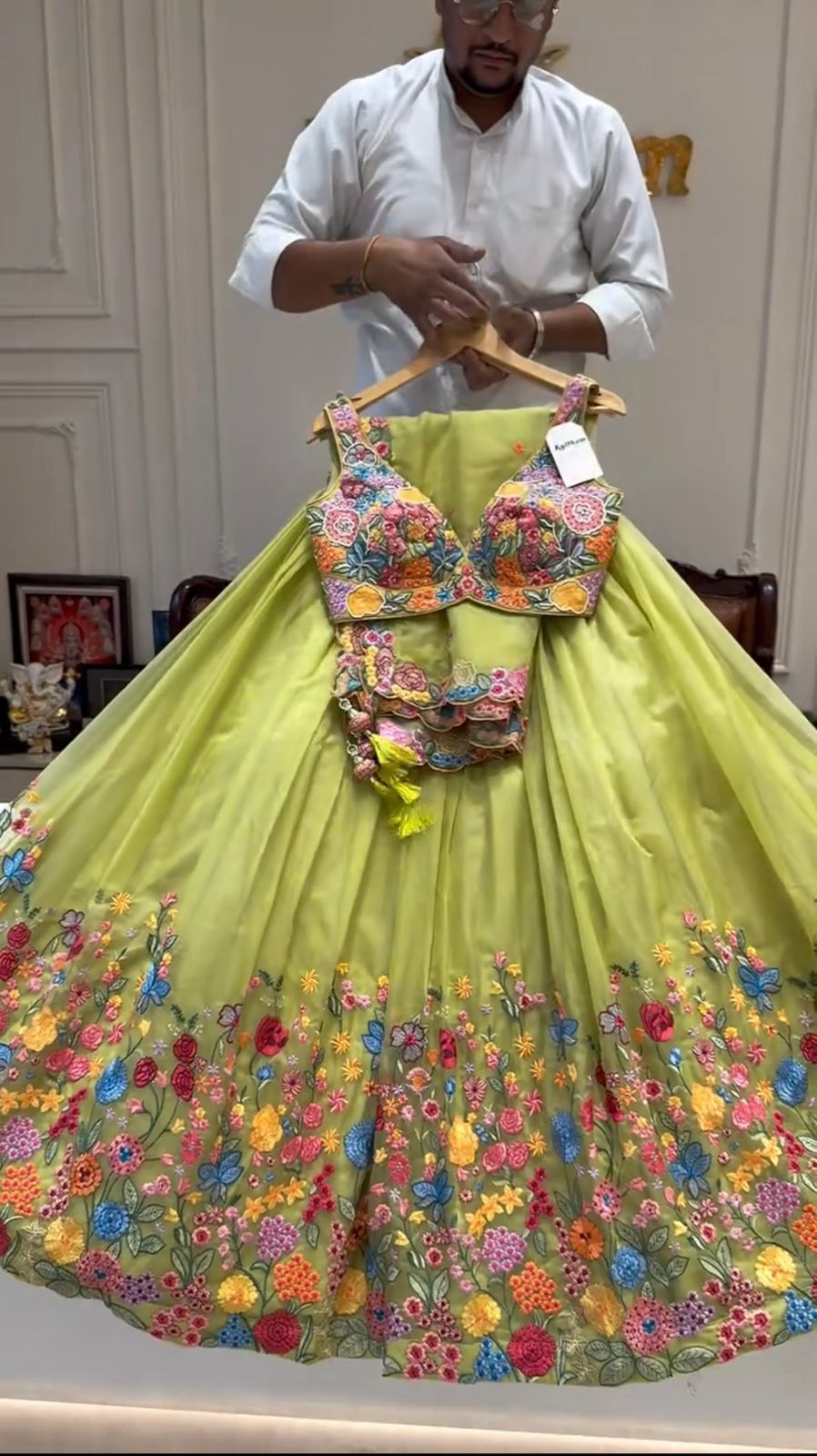
- Check the blouse: confirm that the fullest bust point sits inside the shaped area rather than above or below the darts.
- Check the armhole: raise both arms and look for pulling across the bust or diagonal wrinkles from the underarm.
- Check the waist: make sure the waistband stays level while walking, sitting and turning.
- Check the flare: confirm that the skirt opens from the intended point and doesn't create a bulky cluster at the waist.
- Check the length: try the lehenga with the final footwear, allowing approximately one to two centimetres of clearance from the floor.
- Check the dupatta: place it over one shoulder and across the bust to ensure the blouse neckline and fastening remain comfortable.
Shopping for a designer, bridal or readymade lehenga becomes more efficient when these checks happen before colour and embellishment take over the decision. Semi Stitched Lehengas Collection pieces may be worth considering when the wearer needs a customised blouse length or a more precise waistline. Ready Made Lehenga pieces are practical when the available finished measurements match the body closely.
The most dependable outfit combines a skirt with controlled or intentionally placed flare, a waistband that sits at the natural waist, and a blouse shaped with darts, seams and a stable closure. Those three choices create comfort and balance without limiting colour, embroidery or personal style.
Common Questions About Choosing Lehenga Proportions for Fuller Busts
What lehenga flare is most flattering for a fuller bust?
A-line, panelled or moderately circular flare usually creates a balanced silhouette for a fuller bust. Choose flare that begins smoothly from the waist instead of dense gathering directly beneath a short blouse.
Should a lehenga waistline sit above or below the natural waist?
The natural waist or up to two centimetres below it usually offers the most stable and balanced placement. A waistband that rises towards the underbust can shorten the torso, while a very low waistband may make the blouse and dupatta less secure.
Which blouse neckline works best for a heavy bust?
A reinforced soft V-neck, broad U-neck, gentle square neckline or well-constructed sweetheart neckline can work well. Support comes from correct darts, seams, lining and closures, not from neckline height alone.
Are readymade lehengas suitable for fuller busts?
Readymade lehengas can work well when the finished blouse and skirt measurements match the wearer. Check the bust, underbust, waist, blouse length and armhole separately, and confirm whether a tailor can make alterations before buying.
How much ease should a lehenga blouse have at the bust?
A blouse needs enough ease for breathing, sitting and arm movement without gaping or pulling. The exact amount depends on the fabric and construction, but a tailor should assess the bust, underbust, darts and armhole together rather than adding ease only at the side seams.
Can a heavy-flare bridal lehenga balance a fuller bust?
A heavy-flare bridal lehenga can balance a fuller bust when the waistband remains flat and the blouse has clean, supportive shaping. Avoid combining maximum skirt volume with dense horizontal blouse decoration if the upper body already feels visually crowded.


