

Five Outfits for Multiple Functions for Wedding Guest Capsule Wardrobe can solve a familiar problem: several invitations, changing dress codes and very little desire to buy a new outfit for every event. An effective plan begins with five distinct outfit bases that can be restyled through jewellery, footwear, draping and layers. The result isn't five near-identical looks, but a compact wardrobe that can handle a Haldi ceremony, mehendi, sangeet, wedding and reception with comfort and visual variety.
Why a capsule wardrobe works for Indian wedding functions
A wedding guest capsule wardrobe works because accessories and styling alter the perceived formality of the same garment. A lightweight saree paired with jhumkas and flat sandals can suit a daytime mehendi, while the same saree with a structured blouse, metallic heels and a choker can work for a dinner reception.
Indian weddings often combine five or more functions across different times of day. A Haldi ceremony may involve turmeric, water and outdoor seating, while a reception may require radiant evening dressing. Buying separate heavy outfits for each event creates duplication, storage problems and unnecessary packing. A capsule approach assigns every outfit a job and gives each base at least two styling directions.
Choose variety through silhouette, texture and colour rather than excessive decoration. One saree, one coordinated set, one Anarkali, one printed saree and one more festive saree can provide more useful range than five heavily embellished lehengas. A balanced wardrobe also leaves room for heat, movement, repeated wear and easy transport.
Five Outfits for Multiple Functions for Wedding Guest Capsule Wardrobe
The strongest five-outfit plan combines one easy suit, two versatile sarees, one contemporary co-ord and one more formal festive look. Each base below includes a primary function, a secondary use and a simple way to change the styling.
1. Anarkali suit for the sangeet or evening family function
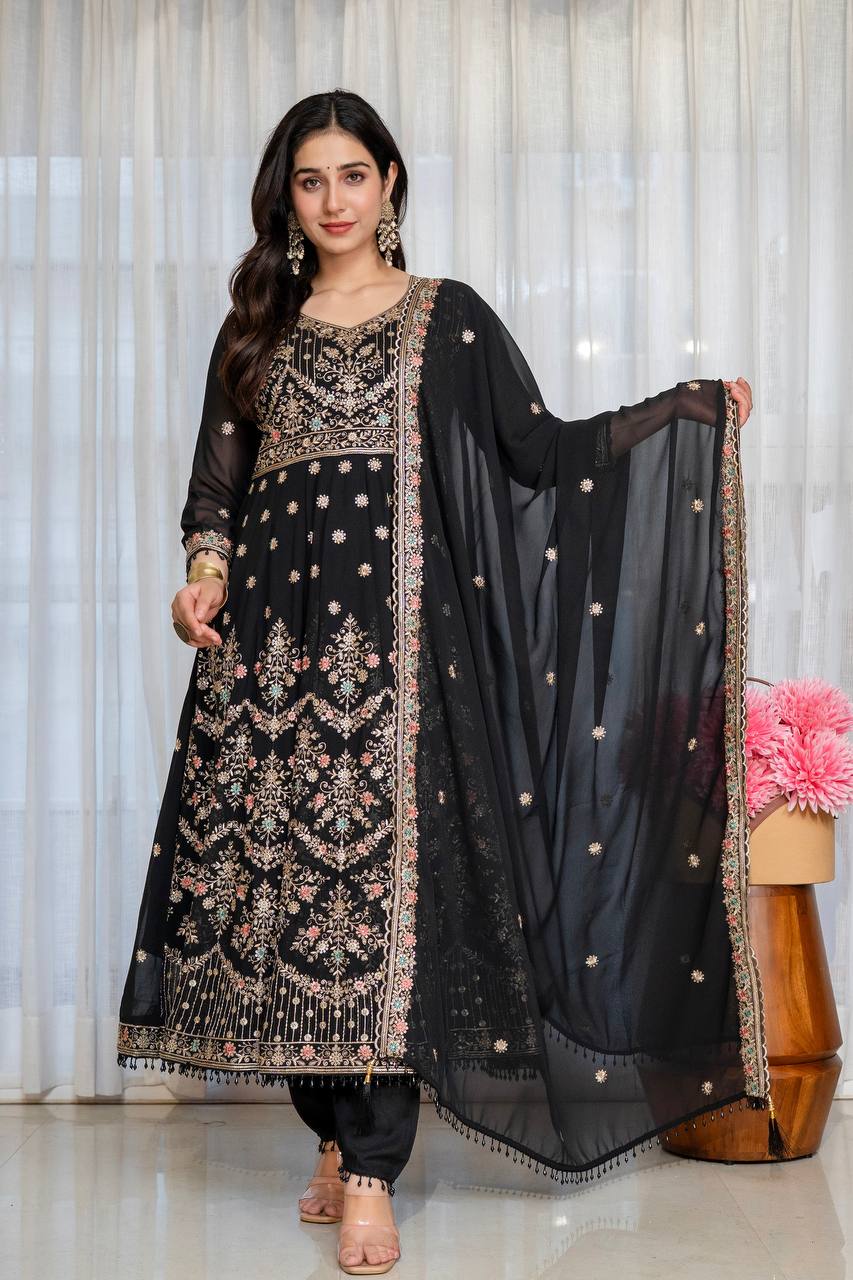
A sequin and zari Anarkali suit is a dependable choice for a sangeet because it provides movement, coverage and evening shine without requiring saree draping. The Black Anarkali Suit Set with Sequin Zari and Moti Lace Work can carry the main visual interest, so controlled styling with metallic earrings, a small clutch and comfortable block heels keeps the outfit balanced.
For a second use, remove the heavier jewellery and add a bright dupatta in fuchsia, emerald or cobalt. The black base then becomes suitable for a cocktail-style family dinner or a festive birthday gathering. A slim belt can define the waist for an indoor event, while an open dupatta and low bun create a softer traditional appearance.
Check the hem before wearing an Anarkali to a crowded dance function. A floor-skimming hem can catch on footwear or brush against food and outdoor surfaces. An ankle-grazing length with three to five centimetres of clearance from the floor is easier to manage, especially when the outfit has a flared skirt.
2. Handloom cotton saree for a daytime mehendi
A handloom cotton saree suits a daytime mehendi because breathable fibres, a manageable drape and moderate sheen are more comfortable than dense velvet or layered net. The Wine Tissue Handloom Cotton Saree with Zari & Floral Prints brings colour and festive detail while remaining more practical for warm weather than a heavily embroidered silk saree.
Pair the wine shade with a short-sleeved blouse, compact earrings and flat kolhapuri-style sandals for daytime movement. A crossbody potli or a small sling bag keeps both hands free for greeting guests and participating in activities. A loose braid or low ponytail is more resilient in humidity than an elaborate open hairstyle.
The same wine saree can move into an evening setting with a sleeveless or elbow-length blouse in black, antique gold or deep plum. Add a layered necklace, defined eye makeup and metallic heels. Switching from fabric flowers to a sleek bun also changes the mood without purchasing another outfit.
3. Contemporary co-ord set for travel and informal functions
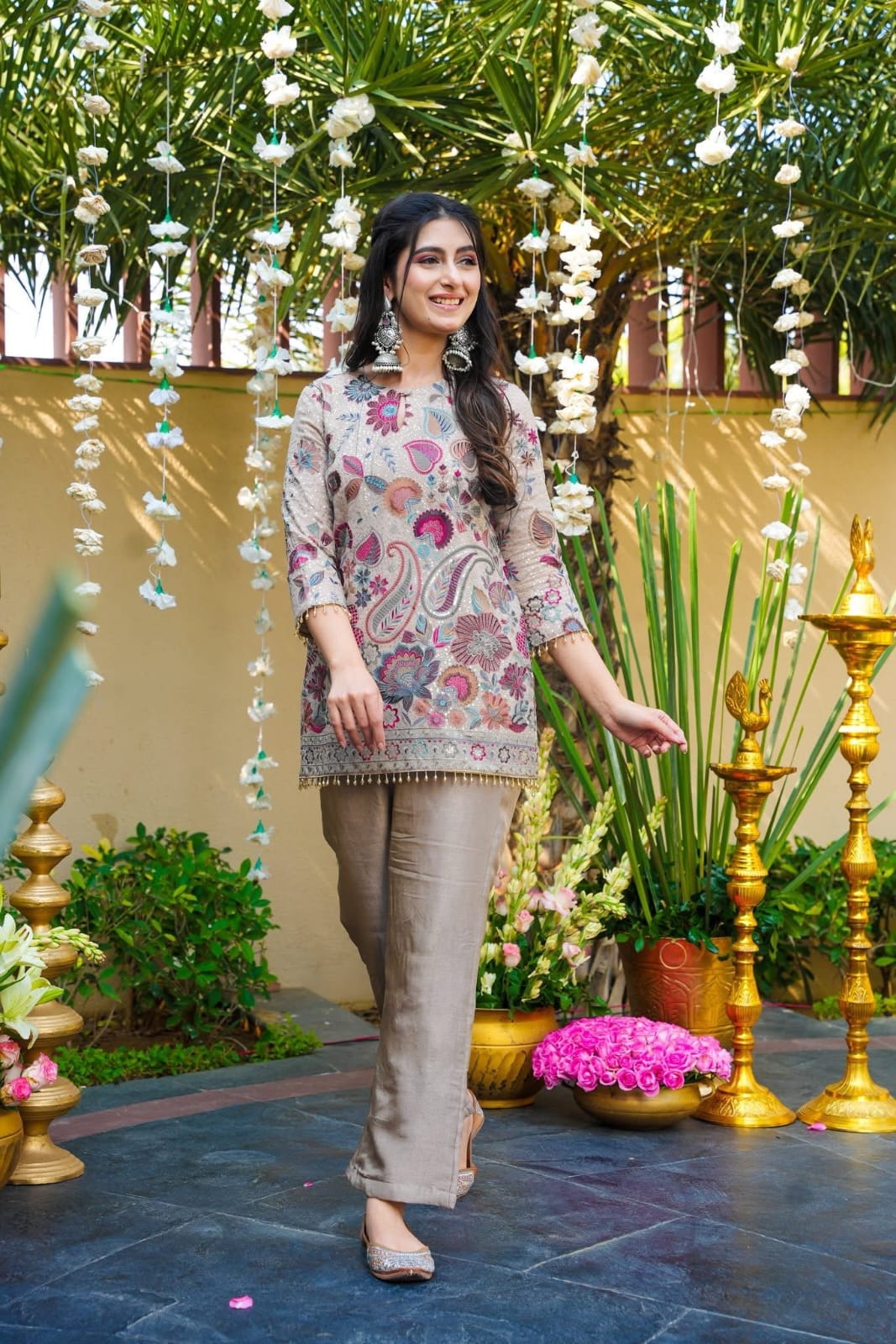
A silk co-ord set is useful when a wedding itinerary includes airport travel, a welcome lunch or an informal family gathering because the silhouette is polished without the maintenance of a full saree. The Modern Taupe Vichitra Silk Embroidered Co-Ord Set for Women offers a neutral base that can be separated into multiple combinations.
Wear the full co-ord with pointed flats, pearl studs and a structured handbag for a welcome lunch. For a second look, combine the embroidered top with plain wide-leg trousers or wear the trousers with a jewel-toned kurta from an existing wardrobe. Taupe also works with ivory, rust, bottle green and black, making it a strong neutral for a travel capsule.
Use the co-ord when you need to sit on the floor, move between venues or manage luggage. Unlike a long saree pallu, a coordinated set doesn't need frequent adjustment. Steam the pieces before packing, place tissue paper between embroidered surfaces and fold the set loosely to reduce permanent crease lines.
4. Printed linen cotton saree for a daytime wedding
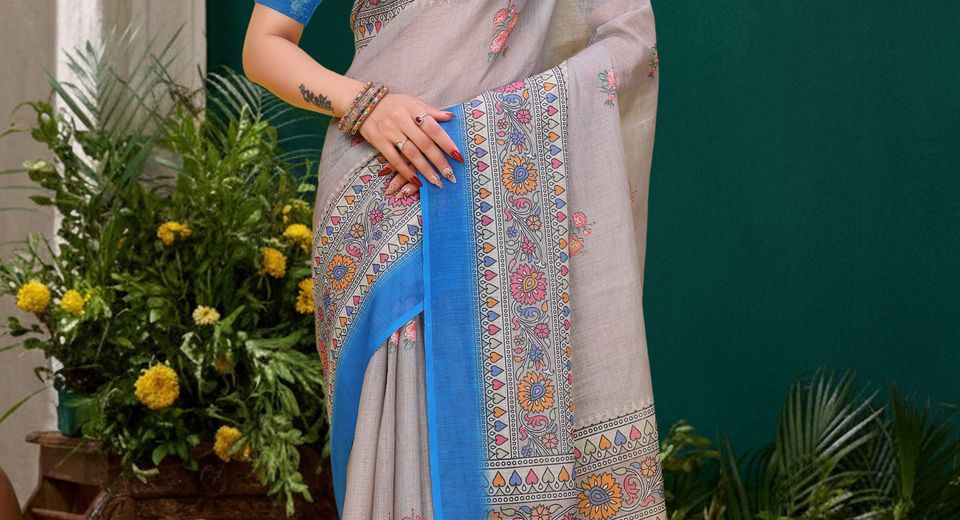
A linen cotton saree is a practical wedding-day choice when the venue is warm or the ceremony involves several hours of sitting and standing. The Grey Floral Printed Linen Cotton Saree with Blue Border Art creates interest through its print and border, so it doesn't depend on heavy embellishment to look complete.
Style the grey and blue combination with a blue blouse, oxidised silver earrings and a low block heel for a morning wedding. A white or ice-blue blouse creates a lighter appearance, while a navy blouse gives the saree more contrast for an indoor ceremony. Keep the pleats moderately narrow and secure the pallu with a discreet brooch if wind or movement is likely.
For a different function, wear the same saree with a brighter blouse in coral, magenta or marigold. Coloured glass bangles and a fabric potli can make the outfit suitable for a festive lunch. The change works because printed linen cotton already has a relaxed texture; accessories can shift it from understated daytime dressing to celebratory ethnic wear.
5. Festive floral saree for the main wedding or reception
A festive floral saree should reserve the richest colour or most noticeable border for the main wedding or reception. The Buy Navy Blue Floral Printed Linen Cotton Saree for Festive gives a deep base that photographs well in evening light while retaining the comfort of a lighter textile.
For a wedding ceremony, pair the navy saree with a contrasting blouse in pink, mustard or antique gold, then add a classic necklace and earrings. For a reception, use a matching navy or silver blouse, sharper makeup and crystal or metallic accessories. The same base therefore serves two different dress codes without appearing like the same complete look.
don't rely on the word festive alone when judging formality. A linen cotton saree can look refined, but the final impression depends on blouse construction, jewellery scale, footwear and grooming. A tailored blouse with a clean neckline and finished sleeves will usually look more occasion-ready than an ill-fitting heavily decorated blouse.
How to assign the five outfits to a wedding itinerary
Assign the lightest and easiest-to-clean outfits to daytime or high-contact functions, and reserve the most polished combinations for the main ceremony and evening reception. A simple schedule prevents last-minute decisions and avoids wearing the same silhouette twice in a row.
- Haldi ceremony: Wear the co-ord set or the least delicate cotton-based outfit with washable footwear and minimal jewellery. Avoid trailing hems and valuable pieces that could be damaged by turmeric, water or crowded outdoor seating.
- Mehendi: Choose the Wine Tissue Handloom Cotton Saree with Zari & Floral Prints with flat sandals, or use the co-ord set if you need both hands free.
- Sangeet: Wear the Black Anarkali Suit Set with Sequin Zari and Moti Lace Work with secure earrings and block heels that allow dancing.
- Wedding ceremony: Select the Grey Floral Printed Linen Cotton Saree with Blue Border Art for a daytime ceremony, especially in a warm or open-air venue.
- Reception: Style the Buy Navy Blue Floral Printed Linen Cotton Saree for Festive with a more structured blouse and evening jewellery.
If the itinerary has fewer functions, choose the outfit according to venue conditions rather than status alone. A morning temple wedding may call for breathable fabric and covered shoulders, while a hotel reception may support a more dramatic blouse and jewellery.
How to create variety without buying more clothes
Change one major styling element and one minor styling element each time an outfit is repeated. Changing only earrings may be too subtle in photographs, while changing the saree, blouse, shoes and hairstyle simultaneously defeats the purpose of a capsule wardrobe.

For sarees, the major change can be the blouse. A high-neck blouse looks more contemporary, an elbow-length sleeve adds coverage and a contrasting colour increases visual separation between two wears. The minor change can be the drape: a classic shoulder pallu appears time-honoured, while a neatly pinned front pallu can look more structured.
For suits and co-ords, use the dupatta, footwear or waist treatment as the major change. A dupatta in a contrasting colour adds ceremony; a bare neckline with statement earrings feels more modern. A belt can create a defined silhouette for a cocktail event, but a loose dupatta is usually more comfortable for a long family function.
- Jewellery: Keep one pair of statement earrings, one necklace, a bangle stack and a pair of understated studs. Combine only one dominant jewellery piece with a heavily decorated outfit.
- Footwear: Carry one neutral block heel and one embellished flat. A block heel is generally more stable on stone floors, grass and uneven venue surfaces than a narrow stiletto.
- Handbags: Choose one metallic clutch and one small crossbody bag. The crossbody works for daytime movement, while the clutch makes an evening look more formal.
- Blouses: Prioritise well-fitted blouses in navy, black, ivory and one bright accent shade. A 2.5 to 3 centimetre seam allowance makes minor alterations easier before the wedding.
Fabric, packing and care decisions that save a wedding wardrobe
Fabric selection determines whether an outfit survives travel and repeated wear. Linen cotton and handloom cotton are comfortable for warm daytime functions, while Vichitra silk, sequin work and zari provide greater visual richness for evening events but need more careful handling.

Pack each embellished or zari-rich garment in a breathable cotton cover rather than sealed plastic. Plastic can trap moisture and create a stale odour, while direct contact between metallic work and other garments can cause snags. Fold sarees along existing pleat lines, place acid-free or plain tissue between folds, and remove the clothes from luggage as soon as you reach the destination.
Air garments for 30 to 60 minutes after wearing them before storage. Blot small liquid marks with a clean, dry cloth instead of rubbing them into the fibres. Dry-clean zari, sequins and heavily embroidered garments according to the care label, and test any home stain treatment on an inside seam before applying it visibly.
Press cotton sarees on the reverse side at a moderate temperature and use a pressing cloth over prints or zari. Steam silk from a short distance rather than placing a hot iron directly on the surface. Store a saree blouse separately if dampness is present, because enclosed moisture can affect both fabric and metal embellishment.
A practical packing checklist for five wedding guest outfits
A five-outfit capsule needs planning beyond the garments themselves. Packing complete combinations reduces the risk of forgetting functional pieces such as petticoats, safety pins or suitable undergarments.

- Prepare complete sets: Place each outfit with its blouse, dupatta, jewellery, footwear plan and handbag decision.
- Carry draping tools: Pack safety pins, a small brooch, fashion tape, a petticoat where required and two spare blouse hooks.
- Plan inner layers: Use a well-fitting camisole, saree shapewear or slip according to the garment and the level of movement expected.
- Separate footwear: Keep embellished footwear in cloth bags so metal or stones don't snag sarees and dupattas.
- Reserve an emergency pouch: Include a needle, matching thread, stain-removal wipes, blister patches, hair pins and a few transparent elastic bands.
Photograph each finished combination before packing. A phone album showing the complete outfit helps during a busy wedding weekend and makes repeats easier to style differently later. The photograph also reveals practical problems such as a pallu that's too long, a blouse that needs alteration or footwear that doesn't suit the hem.
How to make the capsule feel personal rather than repetitive
A wedding guest capsule feels personal when colour, jewellery and finishing details reflect the wearer instead of following one fixed trend. A person who prefers understated dressing can use clean blouses, silver jewellery and woven bags, while someone who enjoys maximalism can add layered necklaces, bold bangles and a contrasting dupatta.
Keep one recurring element across the wardrobe for cohesion. The recurring element might be navy footwear, gold-toned jewellery, floral motifs or a preference for three-quarter sleeves. Repetition of one detail makes five different outfits feel intentional without making them look uniform.
Respect the couple's dress code, venue customs and ceremony requirements. Avoid white or very pale colours where they may be culturally unsuitable, and select modest necklines and covered shoulders for temple or religious settings when appropriate. Comfortable dressing isn't a compromise when the outfit is properly fitted, securely pinned and matched to the weather.
Five Outfits for Multiple Functions for Wedding Guest Capsule Wardrobe becomes most useful when each garment earns more than one appearance. The Black Anarkali Suit Set with Sequin Zari and Moti Lace Work can serve an evening dance function, while the two linen cotton sarees can shift between daytime ceremony and festive lunch through blouse and accessory changes. A small, deliberate wardrobe therefore gives you more combinations, easier packing and a lower cost per wear than a collection of single-use outfits.
Common Questions About Building a Wedding Guest Capsule Wardrobe
How many outfits do I need for a five-function Indian wedding?
Five outfit bases are enough for a five-function Indian wedding when each base can be restyled. Assign lighter cotton or co-ord looks to daytime and high-contact events, then reserve an Anarkali or richer saree styling for evening functions.
What should I wear to a Haldi ceremony as a wedding guest?
Wear a breathable, easy-to-clean outfit with secure footwear and minimal valuable jewellery to a Haldi ceremony. Cotton-based separates or a co-ord set are practical because turmeric, water and outdoor seating can stain delicate fabrics.
Can I repeat a saree at different wedding functions?
You can repeat a saree at different wedding functions if you change the blouse, jewellery, drape and footwear. A daytime blouse with flat sandals creates a different impression from a structured evening blouse with metallic heels and statement jewellery.
Which fabrics are best for a summer wedding guest wardrobe?
Linen cotton, handloom cotton and lightweight cotton blends are strong choices for a summer wedding guest wardrobe. These fabrics generally breathe better than velvet or heavily layered synthetic textiles, although zari, sequins and embroidery still require careful washing and storage.
How should I pack sarees with zari or sequin work?
Pack sarees with zari or sequin work in breathable cotton covers with plain tissue between folds. Avoid sealed plastic for long periods, keep embellishments away from rough surfaces and remove the sarees from luggage promptly after travel.
How can I make one wedding guest outfit look suitable for both day and night?
Change the blouse, jewellery and footwear to move one wedding guest outfit from day to night. Light earrings, flat sandals and a simple hairstyle suit daytime, while a statement necklace, metallic heels and a more defined hairstyle increase evening formality.


