

Fit Solutions When Blouse Too Tight at the Bust but Loose at the Waist begin with treating the bust and waist as separate measurements. A blouse can need more room across the fullest part of the bust while requiring a smaller waist, and buying one size larger often creates shoulder, armhole and neckline problems. A targeted alteration usually gives a cleaner result than changing the entire garment size.
A well-fitted saree blouse should allow comfortable breathing, arm movement and sitting without pulling across the bust. The waist should remain close enough to prevent folds, gaping or a shifting lower edge. Readymade blouses, cotton blouses, silk blouses and padded blouses each require slightly different fitting checks.
Fit Solutions When Blouse Too Tight at the Bust but Loose at the Waist: why does this happen?
Fit Solutions When Blouse Too Tight at the Bust but Loose at the Waist are needed when standard sizing increases the bust and waist together, even though a wearer's proportions don't increase in the same ratio.
Most ready-made size charts use a fixed relationship between bust, waist and hip measurements. A wearer may need the bust measurement of a larger size but the waist measurement of a smaller size. The result is a blouse that pulls horizontally across the bust and hangs away from the waist.
Body shape is only one factor. A prominent bust point, a high underbust, a shorter torso, rounded shoulders or a fuller upper back can change where fabric needs room. Padding also occupies interior space, so a padded blouse may feel tighter than an unpadded blouse with similar outer measurements.
Pull lines identify the likely cause. Horizontal wrinkles across the bust usually show insufficient bust ease. Diagonal lines from the side seam toward the bust can indicate that the dart or bust point is incorrectly positioned. Excess fabric below the bust or a gap near the waist hooks usually indicates too much waist width.
Banarasi Silk Golden Jari Padded Blouse for Women demonstrates why the intended undergarment matters during fitting. Padding, lining and zari structure can reduce flexibility compared with a lightweight, unlined cotton blouse.
Fit Solutions When Blouse Too Tight at the Bust but Loose at the Waist: what should you measure?
Fit Solutions When Blouse Too Tight at the Bust but Loose at the Waist require measurements of the full bust, underbust and blouse-level waist, taken while wearing the bra or shapewear intended for the saree.
Measure the full bust around the fullest horizontal point without pulling the tape tightly. Keep the tape parallel to the floor and avoid compressing breast tissue. Measure the underbust directly below the bust, because the lower edge of a padded or fitted blouse often rests at that level.
Measure the waist where the blouse will actually end. The blouse waist may sit above the natural waist, particularly with cropped designs, so measuring only the narrowest part of the torso can produce an inaccurate comparison.
Record shoulder width, armhole circumference, blouse length and sleeve opening as well. A bust adjustment can alter the armhole position, while a larger size may cause the shoulder seam to drop. Blouse length should be checked because a garment that rides upward over the bust can appear too short even when the original length is adequate.
- Full bust: Measure around the fullest area with the arms relaxed.
- Underbust: Measure where the lower blouse edge or band will sit.
- Blouse waist: Measure the garment's intended ending level, not automatically the natural waist.
- Shoulder: Measure from one shoulder point to the other across the back.
- Armhole: Check that the opening permits movement without cutting into the underarm.
- Length: Measure from the shoulder near the neck to the preferred lower edge.
Compare the blouse's finished measurements with the body measurements rather than relying only on the size label. Size labels vary between sellers and between cuts. A designer readymade blouse may have a closer fit than a relaxed cotton blouse marked with the same nominal size.
Fit Solutions When Blouse Too Tight at the Bust but Loose at the Waist: which alteration works?
Fit Solutions When Blouse Too Tight at the Bust but Loose at the Waist usually involve releasing the bust area and tapering the side seam inward from the underbust to the waist.
The tailor should correct the bust first and refine the waist second. Taking in the waist before creating bust room can increase upward pulling and place extra strain on hooks, seams and the neckline.
Side-seam adjustment
A side-seam adjustment adds room at bust level and removes excess width at the waist when the original seam contains enough allowance. The tailor opens the side seam, introduces a small wedge or panel around the bust and tapers the seam inward below the bust.
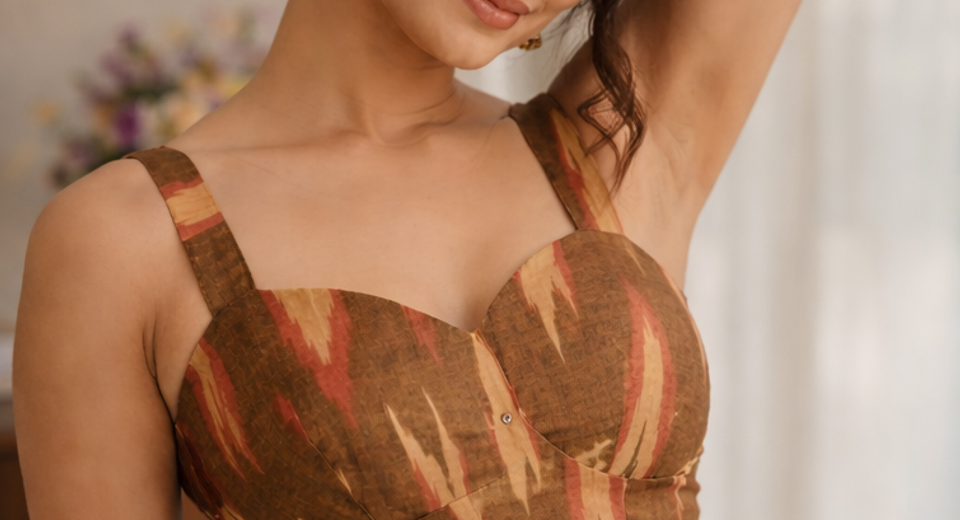
Side-seam work is especially practical for lined cotton blouses and relatively simple readymade designs. The insert should match the original fabric where possible, or sit beneath the arm where a narrow contrast panel looks intentional. Brown Ikat Cotton Padded Blouse Sleeveless shows why pattern matching deserves attention: a geometric Ikat motif can make an added wedge visible if the design doesn't align.
Dart adjustment
A dart adjustment is suitable when the blouse has broadly correct circumference but lacks shaping at the bust point. A tailor can deepen an existing dart, move the dart toward the fullest area or convert side-seam intake into a shaped dart.
The dart point should stop approximately 2.5 to 4 centimetres before the bust apex. A dart ending directly at the fullest point can create a pointed appearance, while a dart placed too far away may leave unwanted fullness.
Princess-seam adjustment
A princess-seam adjustment distributes bust shaping along a longer seam and can produce a smooth result on structured blouses. The alteration is more difficult when embroidery, zari or dense surface work crosses the seam.
Princess seams should be pinned while the wearer stands naturally and then tested with the saree drape. The seam must pass over the fullest part of the bust without creating a ridge or dragging the neckline sideways.
Fit Solutions When Blouse Too Tight at the Bust but Loose at the Waist: can readymade styles be altered?
Fit Solutions When Blouse Too Tight at the Bust but Loose at the Waist work well on readymade blouses when the shoulders, neckline and armholes already fit and the seams contain usable allowance.
Ask a tailor to inspect the inside of the garment before any cutting begins. A seam allowance of approximately 1 to 1.5 centimetres provides some flexibility for a modest adjustment. A blouse with narrow overlocked seams, no extra fabric or sealed decorative edges may require a matching gusset instead of a simple seam release.
Increasing a readymade blouse by more than one full size can change the neckline, shoulder position and bust-point placement. A larger size may solve the bust measurement but cause the shoulders to drop or the armhole to gape. A temporary fitting with pins or loose stitches is safer than approving permanent alteration immediately.
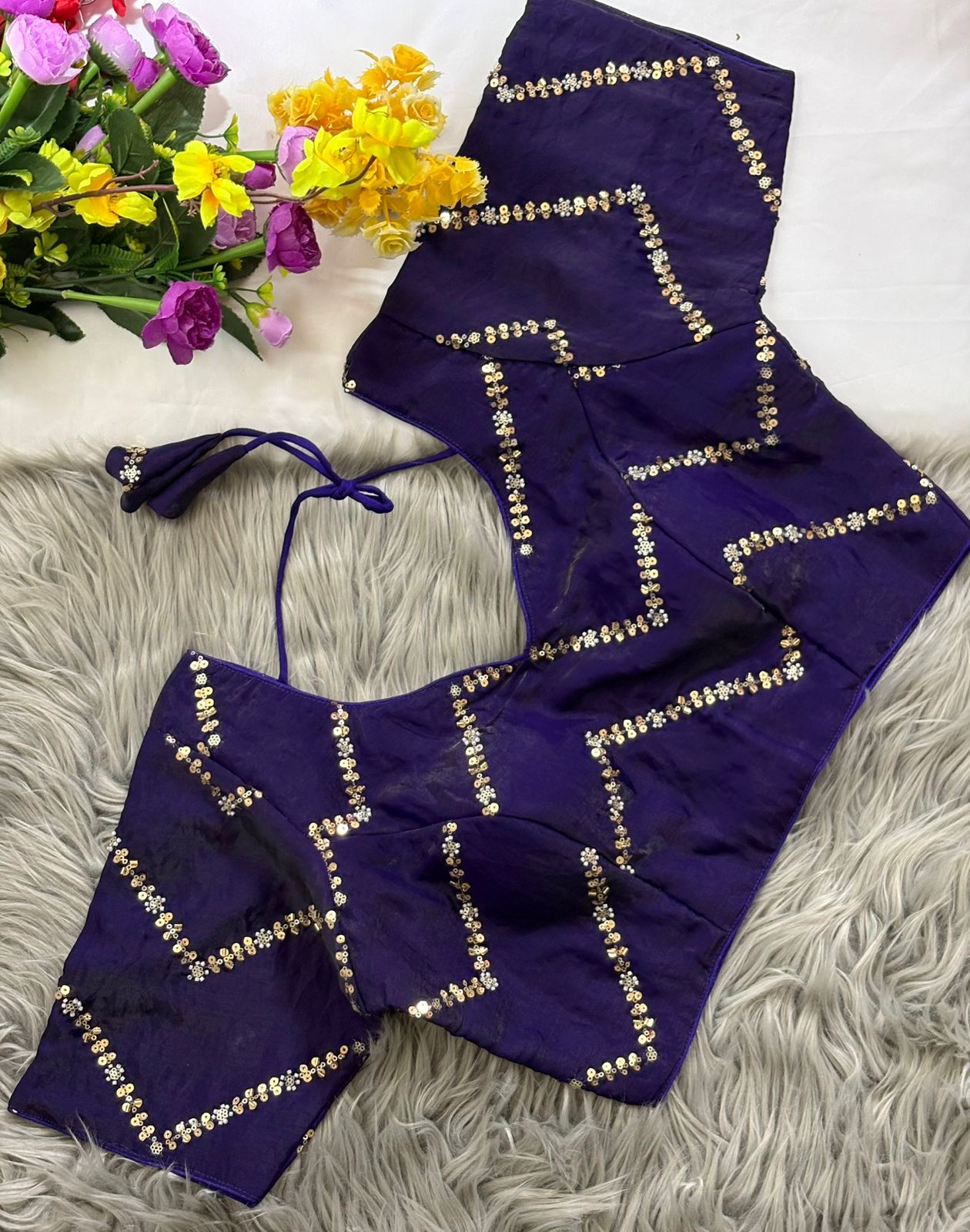
Fendy Silk Zigzag Moti Work Readymade Blouse requires particular care because dense moti work can be disturbed when a decorated side seam is opened. A concealed back-panel adjustment or a narrow gusset beneath the arm may preserve more of the original design.
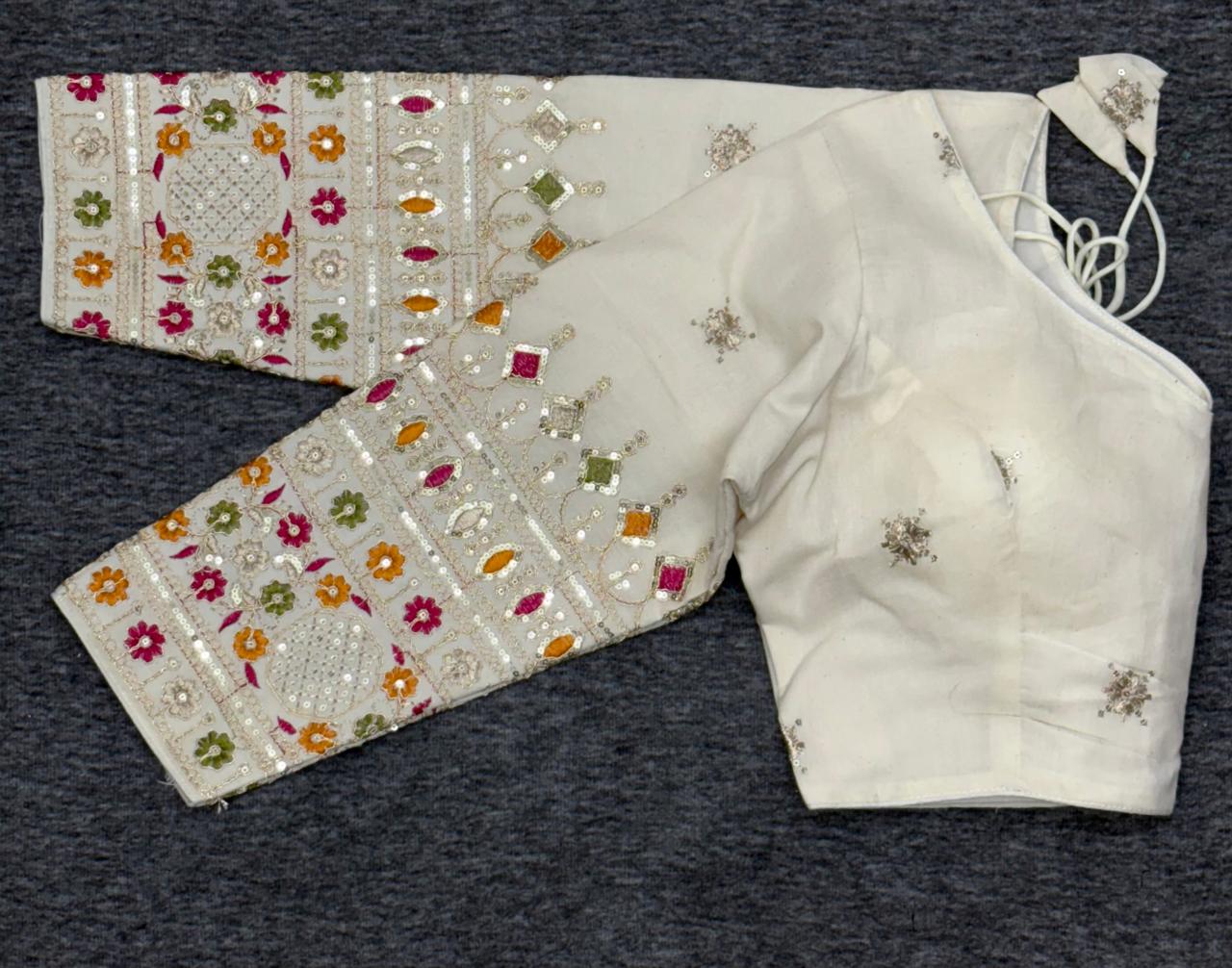
Classic Festive Wear Blouse for Stylish Saree Look should be tested with the actual saree before final stitching. Sit down, raise both arms, bend forward and place the pallu over the shoulder. A blouse that looks smooth while standing may pull at the bust or expose a back gap during movement.
Hook placement is a finishing detail rather than a substitute for bust ease. Moving hooks inward can reduce waist looseness, but tightening a closure on a genuinely tight bust can distort the side seams and increase pressure. The bust and underbust should be comfortable before the hooks are repositioned.
Fit Solutions When Blouse Too Tight at the Bust but Loose at the Waist: which fabrics are easiest?
Fit Solutions When Blouse Too Tight at the Bust but Loose at the Waist are generally easier with stable cotton, while silk and heavily embellished fabrics require more cautious seam handling.

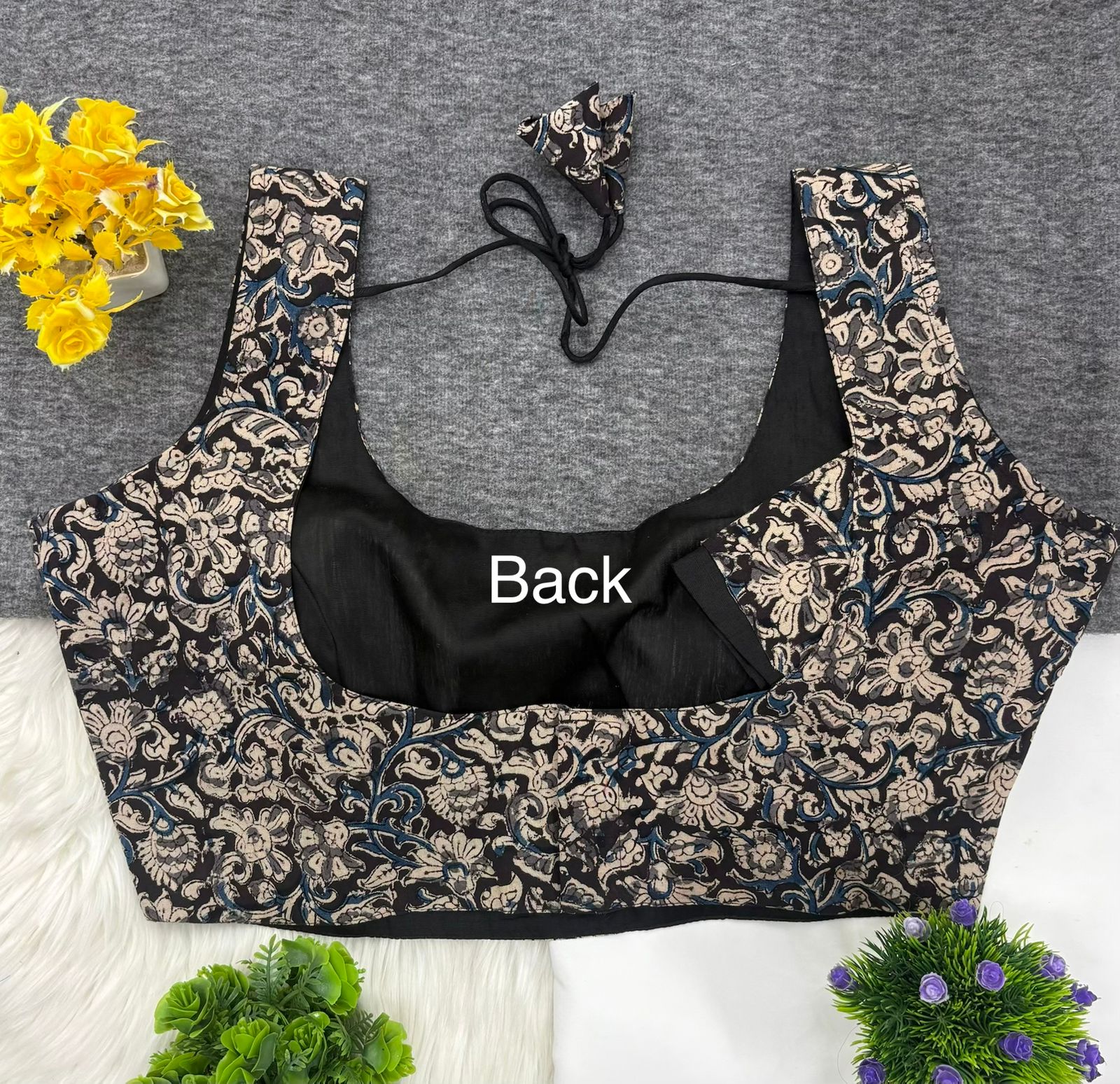
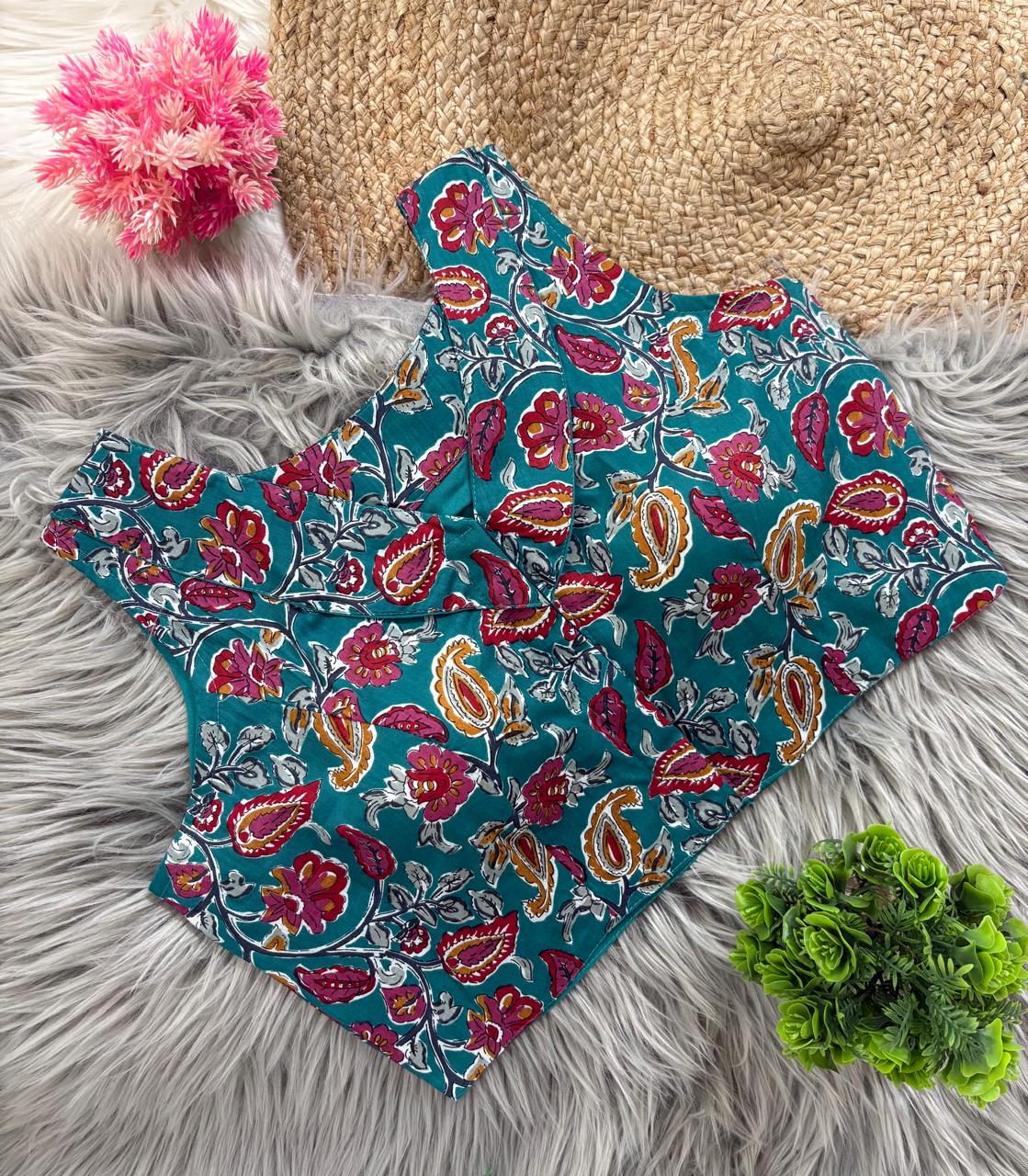
Cotton with a stable weave is easy to pin, stitch and press. Small side-seam corrections are less likely to show on a printed cotton surface, although a tailor still needs to preserve the print direction. Kalamkari Cotton V Neck Collar Blouse for Women illustrates how a printed surface can make minor seam changes less conspicuous when the pattern remains balanced.
Pure Kalamkari Cotton Padded Blouse for Women requires separate checks for fabric ease and padding placement. Cotton may permit a precise alteration, but padding can still make the underbust and bust point feel crowded if the inner cup is too large or incorrectly positioned.
Silk requires a controlled fitting process because needle marks, puckering and pressure lines may remain visible. Banarasi silk should be handled with fine pins and minimal unpicking. Zari should not receive direct high heat or rough ironing, because metallic threads can flatten or lose their surface finish.
Stretch fabric can accommodate small changes in bust fullness, but stretch should not compensate for a badly shaped waist. Continuous stretching may cause the blouse to ride upward, distort embroidery and place pressure on the hooks.
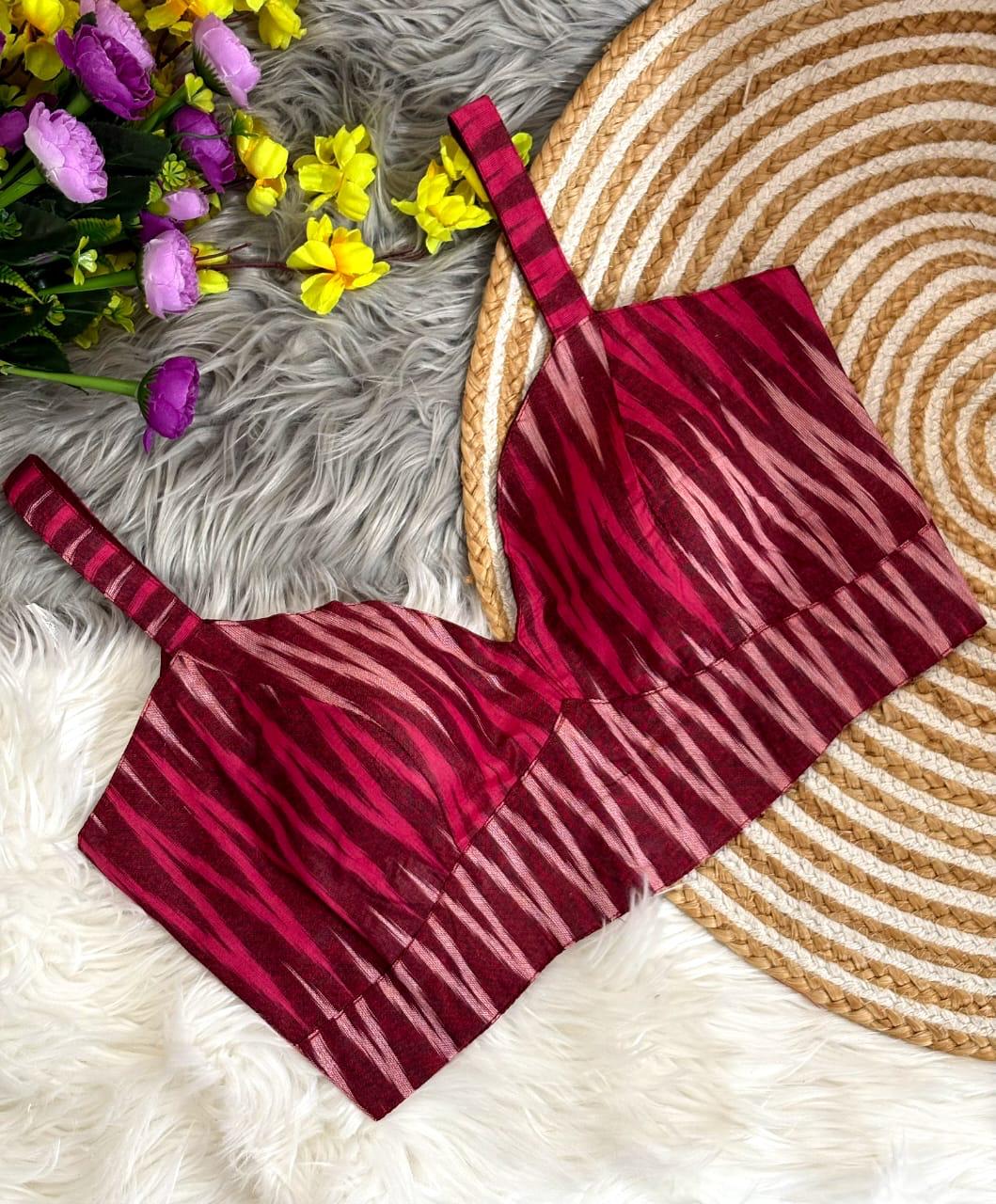
Cream Ikat Cotton Padded Blouse Sleeveless shows how a structured geometric cotton can support a neat fitted shape when the bust and waist are measured separately. A sleeveless armhole must still be checked carefully because an armhole that's too high can feel restrictive after the bust area is enlarged.
Fit Solutions When Blouse Too Tight at the Bust but Loose at the Waist: how do padding and necklines affect fit?
Fit Solutions When Blouse Too Tight at the Bust but Loose at the Waist must account for padding, neckline depth and the position of the bust point, because these details influence both comfort and visual balance.

Padding can improve support and opacity, but padding can't replace correct bust shaping. The padding should sit beneath the bust and align with the intended bust point without pushing breast tissue upward or creating a hard ridge at the edge.
Remove or reposition removable pads during the first fitting if possible. This test separates an outer-garment problem from an internal-padding problem. Fixed padding may require opening the lining, so the tailor should mark the new position before making a permanent change.
A deep V neckline can expose pulling more clearly than a high round neckline because the centre front has less structural support. A high neck or collar may conceal some movement but can feel restrictive if the bust is already crowded. Kalamkari Cotton V Neck Collar Blouse for Women should therefore be assessed both while standing and while leaning forward.
Shoulder width controls the position of the neckline and armhole. If the shoulders are too wide, the neckline may shift backward and the waist may appear loose even after a successful bust alteration. If the shoulders are too narrow, the blouse can pull at the upper bust and underarm.
Fit Solutions When Blouse Too Tight at the Bust but Loose at the Waist: how should you test the final fit?
Fit Solutions When Blouse Too Tight at the Bust but Loose at the Waist are successful when the finished blouse remains comfortable through movement and stays aligned with the saree drape.
Wear the correct bra, shapewear and saree understructure during the final fitting. Check the blouse while standing, sitting, lifting both arms, crossing the arms and bending slightly forward. The lower edge should not climb sharply over the bust, and the waist should not form a horizontal fold caused by excess fabric.
Inspect the fastening after movement. Hooks should lie flat without opening, while a dori should secure the blouse without forcing the side seams outward. The back closure should not create a ridge beneath the pallu.
Check the bust point from the front and side. The fabric should skim the bust without a pointed dart, hollow area or diagonal drag line. Check the armhole for pinching, especially in sleeveless designs such as Ikkat Cotton Padded Blouse for Women Sleeveless.
Keep a small amount of ease for real-life wear. A blouse that fits perfectly only while standing still may be too tight for a wedding ceremony, meal or long festive event. Comfort is especially important with stiff silk, padded designs and blouses worn for several hours.
Care after alteration also affects fit. Store padded blouses flat or with light support so the cups don't collapse. Avoid hanging heavy embellished blouses from narrow straps, as repeated weight can stretch the shoulder area. Follow the care instructions for silk, zari and printed cotton instead of applying one washing method to every fabric.
Fit Solutions When Blouse Too Tight at the Bust but Loose at the Waist: when should you replace it?
Fit Solutions When Blouse Too Tight at the Bust but Loose at the Waist are not always practical when the shoulders, armholes, neckline and bust point are all incorrect or when the garment has no usable seam allowance.
Replacement is often wiser when the blouse needs more than one full size of expansion, the lining is already strained, the padding is fixed in the wrong place or the embroidery crosses every possible alteration seam. A new size with a smaller waist-to-bust ratio may require less work than reshaping a poorly proportioned garment.
A replacement should be selected by finished bust, underbust and waist measurements rather than a single size label. Readymade blouse shoppers should also check closure type, lining, padding, fabric composition and whether the style has side seams that a tailor can access.
Banarasi silk, cotton and embellished silk should not be judged by appearance alone. A beautiful designer saree blouse remains useful only when the wearer can breathe, move and sit comfortably. A five-minute measurement and movement test can prevent an expensive alteration that never feels right.
Common Questions About Fixing an Uneven Saree Blouse Fit
Can a blouse be altered if it is tight at the bust but loose at the waist?
Yes, a tailor can usually release the bust area and taper the side seam inward toward the waist. The result depends on available seam allowance, lining, padding and the placement of embroidery or zari.
Should I buy a larger blouse if the bust feels tight?
Buy a larger size only after checking the finished bust, waist, shoulder and armhole measurements. A larger blouse may solve the bust problem but create dropped shoulders, a loose neckline and excess waist fabric.
How much ease should a saree blouse have at the bust?
A structured blouse commonly needs approximately 2.5 to 5 centimetres of total bust ease, depending on fabric, lining and personal preference. Stiff cotton and heavily lined styles usually need more movement room than a flexible blouse.
Can padding make a saree blouse feel too tight?
Yes, fixed or thick padding can occupy enough internal space to make the bust feel compressed. Test the blouse with the intended bra and ask whether the pads can be repositioned, reduced or removed without damaging the lining.
Is cotton easier to alter than silk in a saree blouse?
Cotton is generally easier to pin, stitch and press, while silk can show needle marks and puckering after repeated unpicking. Zari and embellished silk require low-friction handling and careful pressing with a protective cloth.
How do I know whether a readymade blouse needs alteration or replacement?
Choose alteration when the shoulders, neckline and armholes fit and the seams contain usable allowance. Choose replacement when the blouse needs more than one full size of expansion, has strained lining or has decoration across every practical alteration seam.


