

A blouse that pulls neatly at the bust can still develop an irritating gap at the back neck. Fit Causes Behind Blouse Back Neck Standing Away From the Body usually involve a mismatch between the garment's neckline, shoulder slope, upper-back shape, or closure, rather than a blouse that's simply too large. Understanding the source helps you decide whether to alter the blouse, change the fastening, or choose a different cut.
The problem matters because a lifted back neck changes the fall of a saree pallu, exposes the bra band, and creates repeated pulling when you move your arms. The same issue appears in tailored, readymade, cotton, silk, and designer saree blouses, although each fabric responds differently. A structured Banarasi silk blouse may hold a gap firmly, while a soft cotton blouse may collapse and wrinkle around the same fitting error.
Fit Causes Behind Blouse Back Neck Standing Away From the Body: What Creates the Gap?
The main causes are excess neckline width, an incorrect shoulder slope, insufficient shaping through the upper back, a high armhole, misplaced hooks, or stiff fabric that can't follow the body's curve. A back neck can also lift when the blouse is too short, because the garment rotates upward as you sit or raise your arms.
Begin by identifying where the fabric first leaves the body. A gap only at the centre back often indicates excess neckline width or a missing centre-back dart. Gaping along both shoulder edges points more often to a shoulder-slope problem. A neckline that lifts as soon as the arms move usually signals armhole tension, a short blouse length, or a closure that's pulling diagonally.
Body posture also affects the result. Rounded shoulders move the shoulder line forward, while a prominent upper back uses additional fabric across the shoulder blades. A standard readymade blouse drafted for an average posture may therefore sit correctly on the bust but float away at the back neck.
How can you identify the exact fitting error?
You can identify the fitting error by checking the blouse while standing naturally, sitting, and lifting both arms to shoulder height. Ask someone to photograph the back from a straight-on angle, because a mirror viewed over the shoulder can hide the true direction of the wrinkles.
- Centre-back gap: The neckline forms a small arch away from the skin while the shoulders remain level. Excess back-neck width or a missing dart is likely.
- Diagonal wrinkles from the neck: Lines travel toward the shoulder blade or armhole. The shoulder slope, upper-back width, or armhole may be wrong.
- Neckline standing evenly across the back: The entire upper edge floats. The back neck may be cut too high or too wide, or the interfacing may be too rigid.
- Gap appearing only after fastening: The hooks, zip, or tie may be positioned too tightly or off-centre. The closure can force the neckline upward.
- Back neck lifting during movement: The blouse may be short, the armhole may be restrictive, or the pallu and bra straps may be creating upward pressure.
Place a thin ruler or measuring tape across the upper back from one shoulder point to the other. Compare that measurement with the garment's shoulder seam and back width. A difference of even 1 to 1.5 centimetres can be visible at the neckline, especially in a fitted blouse with a deep back cut.
Fit Causes Behind Blouse Back Neck Standing Away From the Body: How Do Neckline and Shoulders Matter?
Neckline shape and shoulder slope determine whether the upper edge can follow the body without lifting. A broad U-shaped back neck distributes the opening across more surface, while a narrow V-shaped back neck concentrates tension near the centre and shoulders.
A shallow back neckline often looks modest but can fit poorly when the shoulder seam slopes downward. The fabric then travels from a lower shoulder point to a higher neck edge, creating a small standing ridge. A boat neck can show the same issue because its wide horizontal opening leaves little tolerance for shoulder variation.
The shoulder seam should finish near the natural shoulder bone rather than falling down the upper arm. A seam that's too long pushes extra fabric toward the back neck. A seam that's too short pulls the neckline outward and may create diagonal drag lines. Readymade blouses commonly show this problem when the bust size is correct but the wearer has narrower or more sloping shoulders.
Measure from the base of the neck to the shoulder point on both sides. Do not assume that left and right shoulders are identical. If one shoulder sits lower, a symmetrical blouse pattern may lift on one side. A tailor can correct the issue by adjusting the shoulder seam and reshaping the neckline instead of removing fabric from the entire back.
Why does a deep back neck sometimes fit better than a shallow one?
A deep back neck can fit better when its curve matches the wearer's upper-back shape and has stable finishing. A shallow neckline may trap excess fabric between the neck edge and shoulder blades, while a deeper curve releases that fabric.
Depth alone doesn't guarantee a good fit. A deep V cut with an overly wide opening can still gape, especially in silk or a padded blouse. Piping, facing, and seam allowance must follow the neckline curve without stretching or becoming rigid at the edge.
Fit Causes Behind Blouse Back Neck Standing Away From the Body: When Do Darts and Closures Contribute?
Darts, closures, and blouse length create a neckline gap when they redirect fabric away from the upper back instead of allowing the garment to balance around the bust and shoulders. A blouse needs enough shaping at the bust while retaining a stable upper-back line.
A bust dart that's too short or placed too low leaves excess fabric above the bust. That excess can migrate toward the back when the blouse is fastened, making the neckline look loose. A centre-back dart can remove a small amount of unwanted width, but the dart should taper gradually and end at least 2.5 centimetres before the neckline edge to prevent a pointed appearance.
Closures deserve close attention. A hook-and-eye row that's too tight pulls the centre back inward and lifts the neckline on either side. Hooks placed too far from the edge can create the opposite effect by leaving a loose flap. A back zip may sit flatter than hooks, but rigid zip tape can still make a curved neckline stand away from the body.
Blouse length affects balance more than many wearers expect. A blouse that ends above the natural waist can ride upward when the wearer bends or raises an arm. The upward movement transfers tension to the neck edge. Add 2 to 3 centimetres of length only after checking the shoulder, bust, and armhole; lengthening a badly balanced blouse won't solve the original problem.
A saree pallu pinned too tightly over the shoulder can also tug the blouse upward. Test the blouse without the saree first, then repeat the fitting with the intended pallu position. The difference shows whether the garment itself needs alteration or whether the drape and pin placement are adding tension.
Which alterations usually solve a small back-neck gap?
A small centre-back gap can often be corrected with a narrow centre-back dart, a shoulder adjustment, or a slightly reshaped neckline facing. A tailor should pin the excess while the blouse is worn before cutting or stitching permanently.
don't simply tighten every hook to remove the gap. Tightening the closure can reduce comfort, distort the bust line, and make the neckline rise higher. A qualified tailor should check the garment in motion and preserve enough ease for breathing and arm movement.
Fit Causes Behind Blouse Back Neck Standing Away From the Body: How Does Fabric Change the Fit?
Fabric changes back-neck behaviour through weight, stiffness, stretch, and recovery. Cotton, silk, brocade, and padded constructions don't hide or release fitting errors in the same way.

Cotton has enough body to reveal a neckline that's cut too wide, particularly after washing can alter the fabric's dimensions. A Kalamkari cotton blouse may feel comfortable around the bust but stand away at the back if the neckline edge has been stabilised with firm interfacing. Pre-wash washable cotton according to the care label before final tailoring, because shrinkage can change shoulder and neckline measurements.
Silk and Banarasi silk usually have a smooth surface that shows ripples clearly. Banarasi Silk Golden Jari Padded Blouse for Women illustrates why surface structure matters: zari and padding can add weight and stiffness near the bust, making a weak shoulder or neckline balance more noticeable. Silk should be fitted with the intended lining and padding already in place, not on an unlined shell.
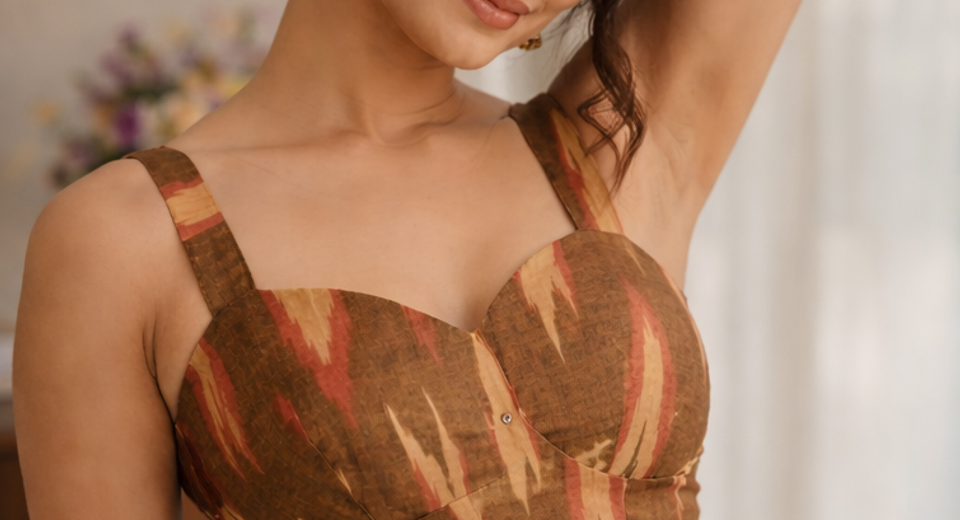
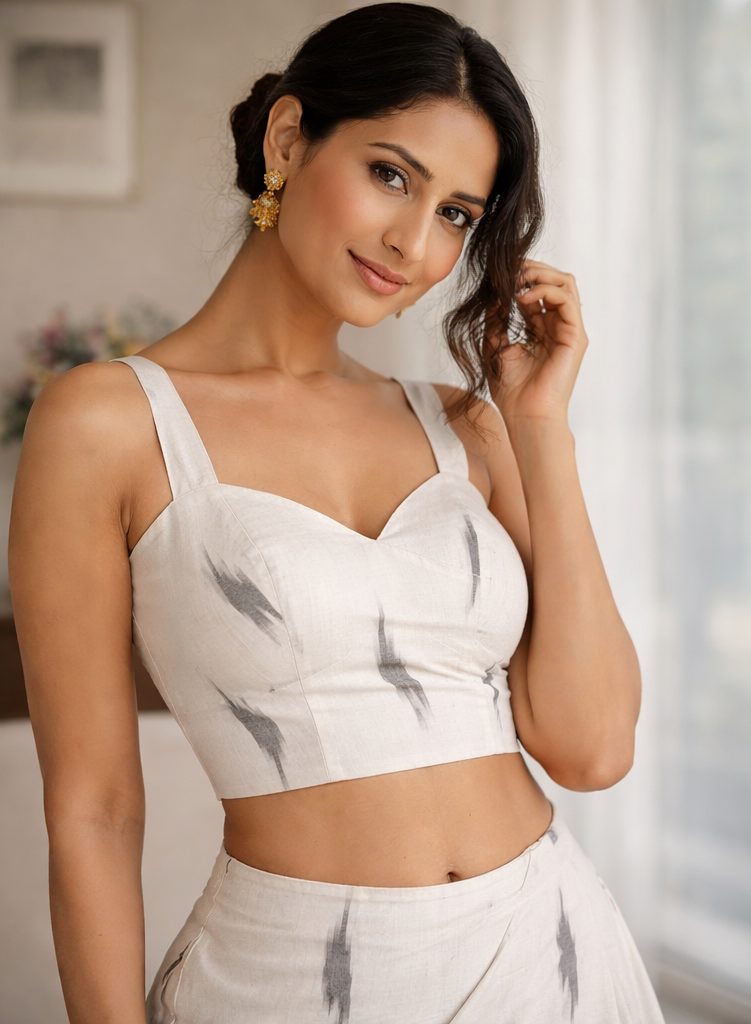
A padded blouse needs special attention at the cup edge and side seam. Padding that's too large or too high can push the bust area outward, rotating the entire garment toward the back neck. Brown Ikat Cotton Padded Blouse Sleeveless and Cream Ikat Cotton Padded Blouse Sleeveless Trendy are useful examples of why padded sleeveless styles should be checked around the armhole as well as the neckline.
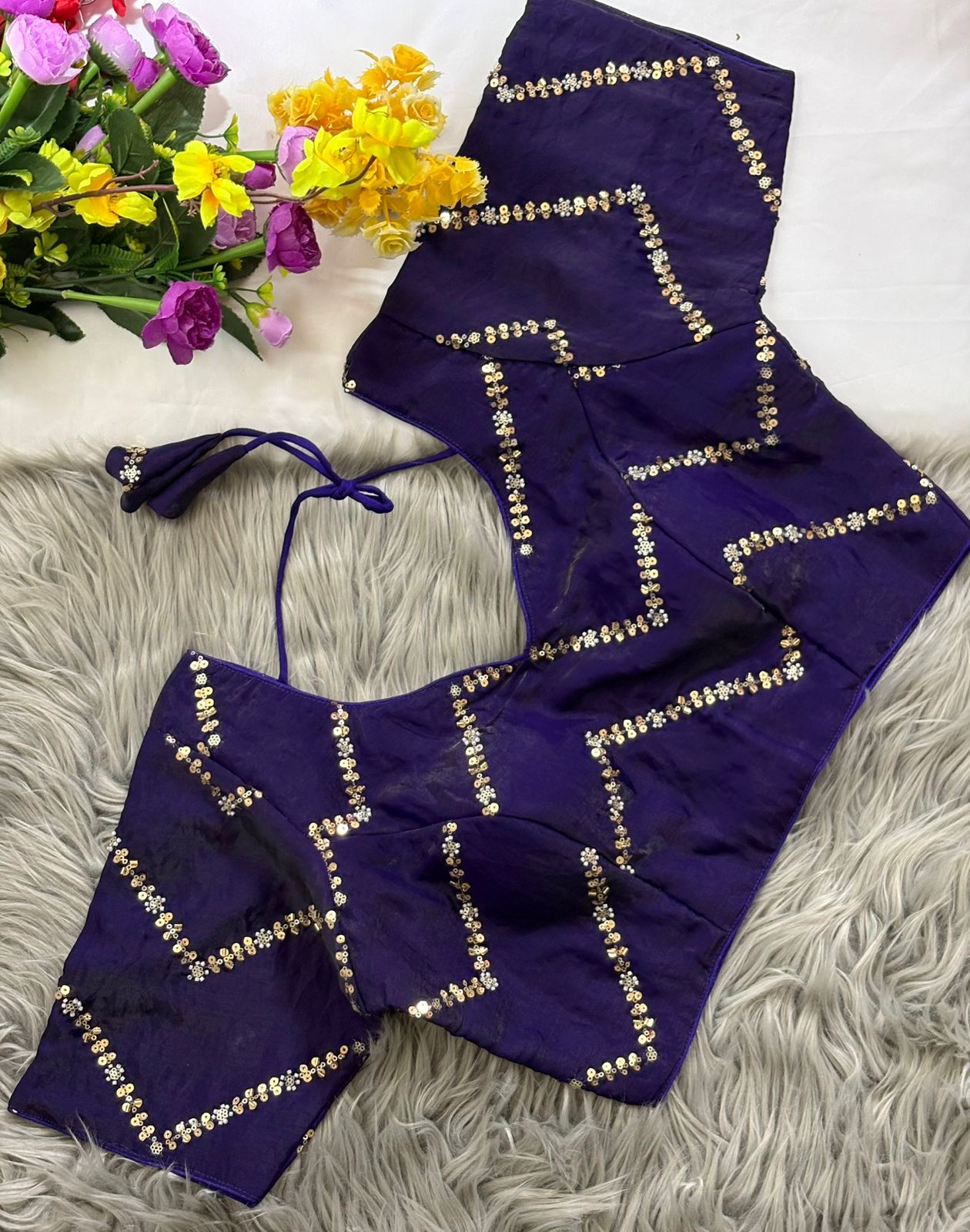
Decorative elements can add local stiffness. Moti work, dense embroidery, thick piping, and metallic zari may prevent a neckline from settling into a curve. Fendy Silk Zigzag Moti Work Readymade Blouse should be assessed with the back neck lying flat before judging the final appearance under a saree. A tailor may need softer edge finishing or a small adjustment beneath the trim rather than cutting through the decoration.
Fit Causes Behind Blouse Back Neck Standing Away From the Body: What Should You Check in Readymade Blouses?
Before buying a readymade blouse, compare the garment's shoulder, bust, armhole, neckline, and length measurements with your own body measurements. Bust measurement alone can't predict whether a back neck will sit flat.
- Measure your body: Record full bust, under-bust, shoulder width, back-neck-to-waist length, and upper-arm circumference. Take the measurements over the bra or shapewear you'll actually wear.
- Check the shoulder: Confirm that the shoulder seam ends at the shoulder bone. A loose seam is a common source of back-neck lift.
- Inspect the neckline edge: Look for even piping, stable facing, and a smooth curve. Uneven stitching can create a local gap even when the measurements are correct.
- Ask about padding: Check whether cups are removable, stitched, or moulded. Fixed padding can change the fit and may require a larger armhole or different bust measurement.
- Test movement: Raise both arms, sit down, and rotate the shoulders. A blouse that fits only while standing still may lift during a ceremony.
- Allow alteration room: Look for side seams and shoulder seams with usable seam allowance. A tiny alteration allowance may not support a significant fit correction.
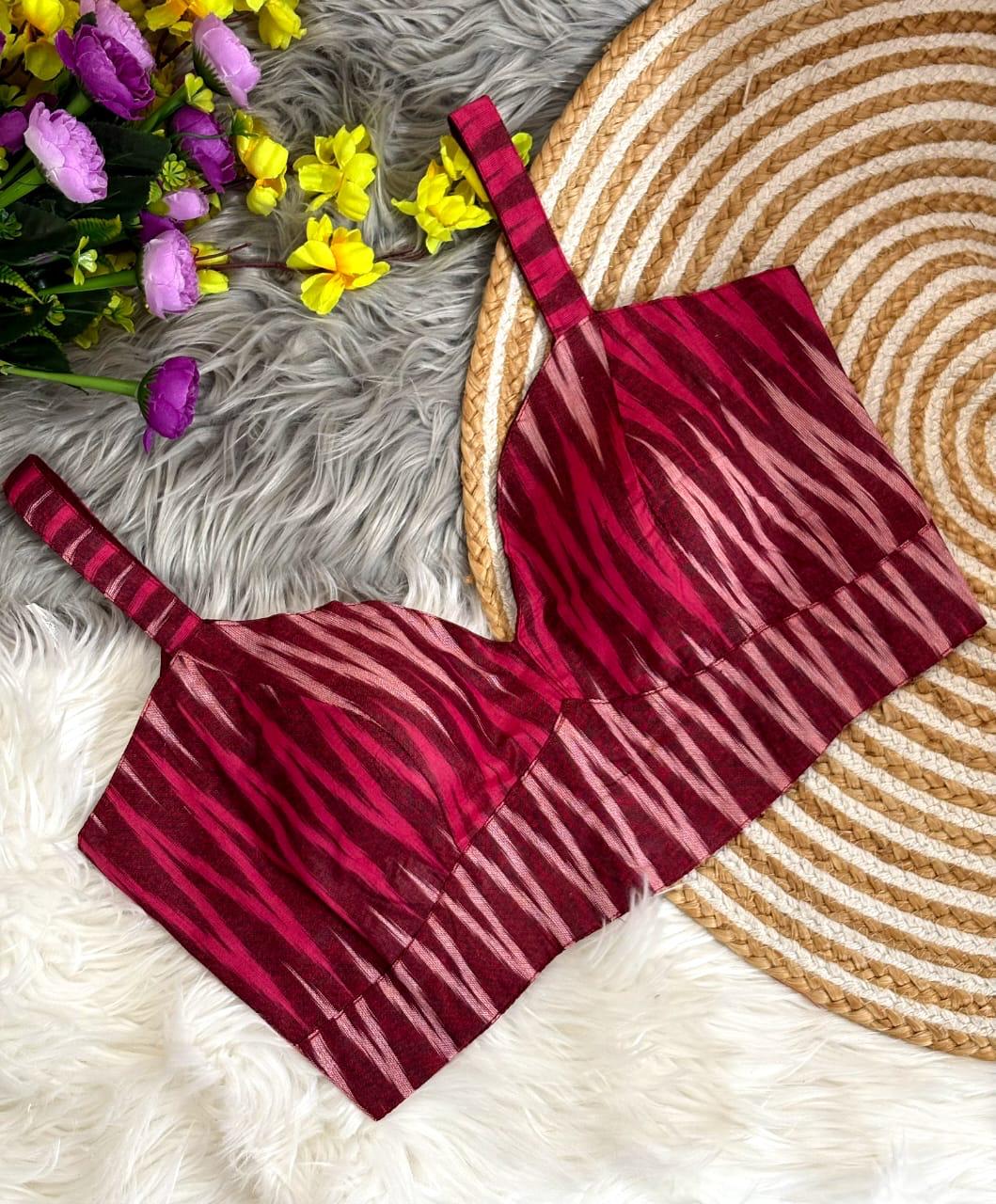
Ikkat Cotton Padded Blouse for Women Sleeveless and Pure Kalamkari Cotton Padded Blouse for Women demonstrate two practical readymade considerations: padded cotton needs an armhole and bust check, while printed cotton needs attention to shrinkage and seam stability.
Kalamkari Cotton V Neck Collar Blouse for Women may suit wearers who prefer a defined front neckline, but the collar and V must lie flat without pulling the back neck forward. Classic Festive Wear Blouse for Stylish Saree Look can be assessed in the same way by checking the shoulder seam, back closure, and pallu position together.
What should you expect from designer readymade blouses?
Designer readymade blouses usually offer more visible construction details, but a decorative design doesn't guarantee a personalised fit. Check whether the blouse has adjustable hooks, seam allowance, removable padding, or a closure that can be repositioned.
Designer saree styling often combines a heavier saree with a structured blouse. Test the complete outfit at least one week before a wedding or Haldi ceremony. Early testing leaves time for a shoulder correction, neckline reshaping, or hook adjustment without damaging embroidery or zari.
Fit Causes Behind Blouse Back Neck Standing Away From the Body: When Is Replacement Better Than Alteration?
Replacement is better than alteration when the blouse has inadequate seam allowance, a fundamentally wrong shoulder width, severe armhole restriction, or padding that can't be removed or repositioned. Small gaps are usually alterable, but major pattern differences can make repeated adjustments uncomfortable and expensive.
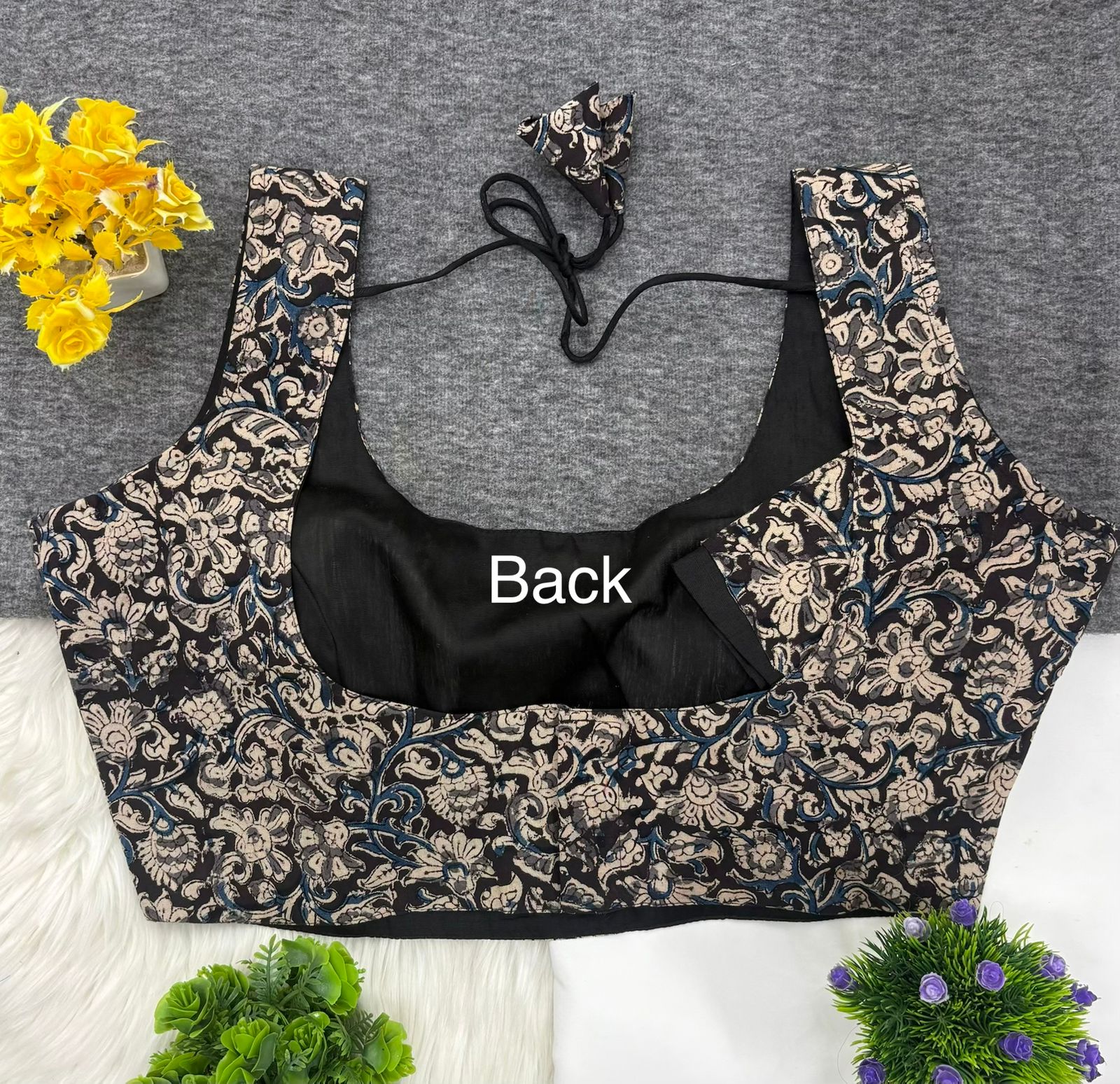
Choose alteration when the bust and waist fit well, the fabric has sufficient seam allowance, and the gap is limited to 1 or 2 centimetres at the centre back. A tailor can often remove excess width, correct the shoulder slope, or replace a stiff facing while preserving the original design.
Choose another size or style when the blouse pulls across the bust, digs into the armhole, and lifts at the neck simultaneously. Those signs indicate a broader balance problem rather than one isolated neckline defect. A slightly different cut, such as a wider shoulder or softer back curve, may provide a better result than repeated tightening.
Fit the blouse with the exact bra, padding, saree, and jewellery planned for the event. A blouse that sits flat over a thin everyday bra may behave differently with a structured padded cup or a tightly pinned pallu. Comfort should be checked after sitting for 10 minutes and moving both arms through normal dressing movements.
The most reliable correction begins with diagnosis. Check the location of the gap, observe the wrinkles, test movement, and inspect the shoulder before asking a tailor to remove fabric. Correcting the actual source protects the neckline shape, preserves comfort, and helps a readymade blouse look intentional rather than repeatedly pulled into place.
Common Questions About a Blouse Back Neck That Will Not Sit Flat
Why does my blouse back neck gape even when the bust fits?
A blouse back neck can gape when the shoulder slope, upper-back width, or neckline width does not match the wearer's body. A correct bust measurement does not guarantee a correct shoulder or back-neck measurement. A small centre-back dart or shoulder adjustment may solve the problem if the garment has enough seam allowance.
Can a tailor fix a blouse neckline that stands away from the body?
A tailor can often fix a small gap by reshaping the neckline, adjusting the shoulder seam, adding a narrow centre-back dart, or repositioning the hooks. The blouse should be pinned while worn before any permanent cutting. Severe armhole restriction or insufficient seam allowance may make replacement more practical.
Does blouse padding cause the back neck to lift?
Blouse padding can cause the back neck to lift when the cups are too large, too high, or too rigid for the bust shape. Padding pushes the front of the garment outward and can rotate the upper edge toward the back. Check the blouse with the final padding and bra before deciding on an alteration.
How should I check a readymade blouse for back-neck fit?
Check the shoulder seam, bust, armhole, back-neck curve, blouse length, and closure rather than relying only on the bust size. Raise both arms, sit down, rotate the shoulders, and wear the blouse with the intended bra. A back neck that stays flat during movement is more reliable than one that fits only while standing still.
Why does a silk blouse show more back-neck gaping than a cotton blouse?
Silk often shows gaping more clearly because its smooth surface reflects every ripple and its lining or zari may add weight. Cotton can soften and disguise a minor gap, although shrinkage and stiff interfacing can also create fitting problems. Fit silk and Banarasi silk blouses with the final lining, padding, and decorative finishing already in place.
Should I tighten the hooks if my blouse back neck is loose?
Tightening the hooks is not always the correct solution because excessive tension can lift the neckline, distort the bust, and reduce comfort. First check whether the gap comes from the shoulder, neckline, upper back, or armhole. Repositioning the hooks or making a small dart is safer when performed after a proper fitting check.


