First Time Saree Wearing Tips for a College Cultural Day should begin with movement, not photographs. A college event involves walking between classrooms, standing in queues, sitting on common chairs, climbing stairs and possibly performing on stage. The right saree, blouse fit, underskirt and footwear matter more than an elaborate drape. With one rehearsal and a small emergency kit, a first-time wearer can look polished without spending the day holding the pallu in place.
First Time Saree Wearing Tips for a College Cultural Day: choose a manageable fabric
A lightweight cotton, linen or cotton-blend saree is usually the safest choice for a first college cultural day because the fabric is easier to control and less tiring to wear. A saree that weighs less, creases moderately and stays in place will serve a beginner better than a very slippery or heavily embellished saree.
Handloom cotton gives structure to pleats and generally stays easier to manage during walking. Linen sarees can feel breathable, although some linen weaves need firmer ironing before pleating. Tissue cotton with zari can look festive while remaining lighter than many heavily embroidered options, but a zari border may need extra pins if the border is broad or stiff.
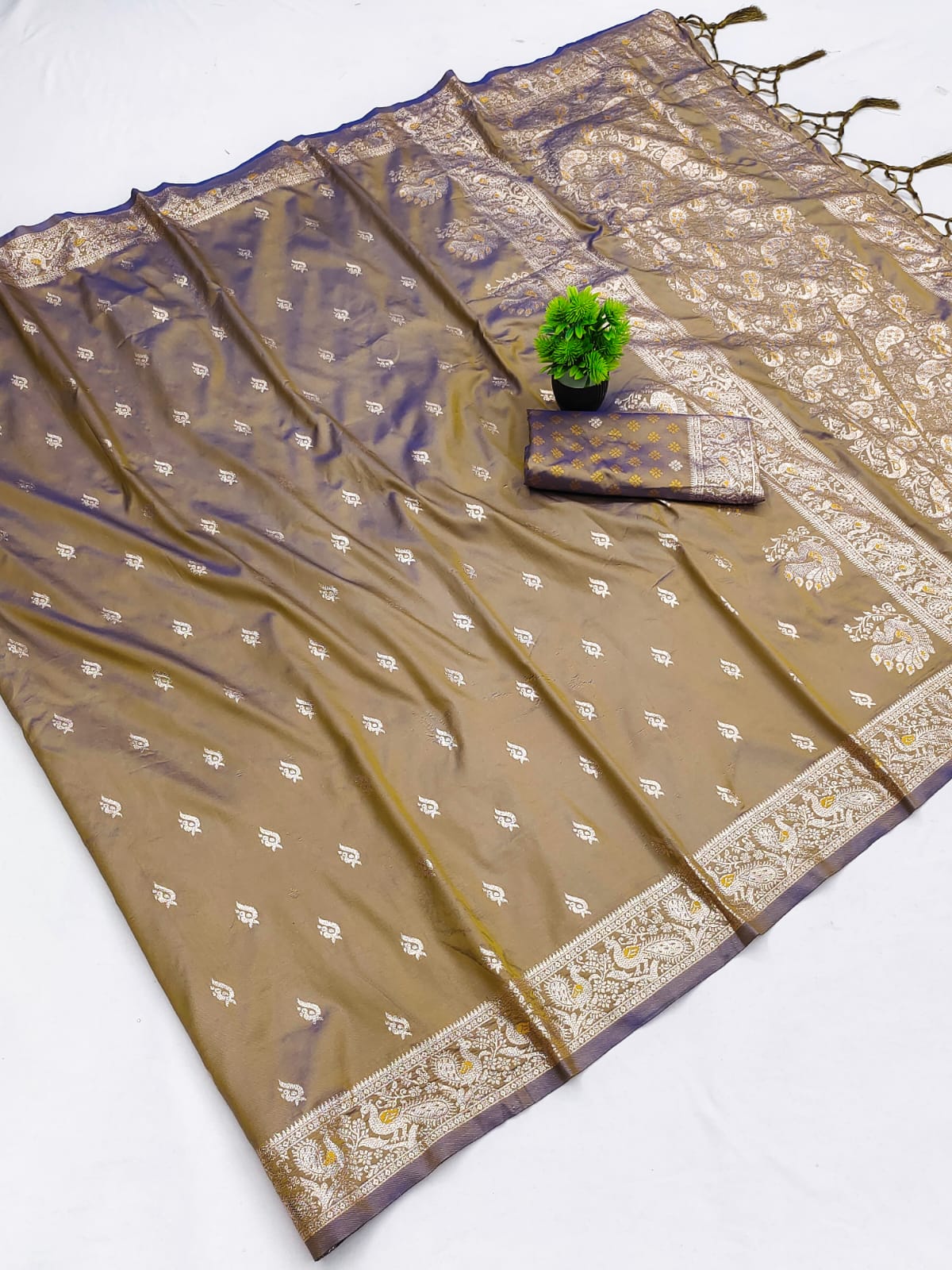
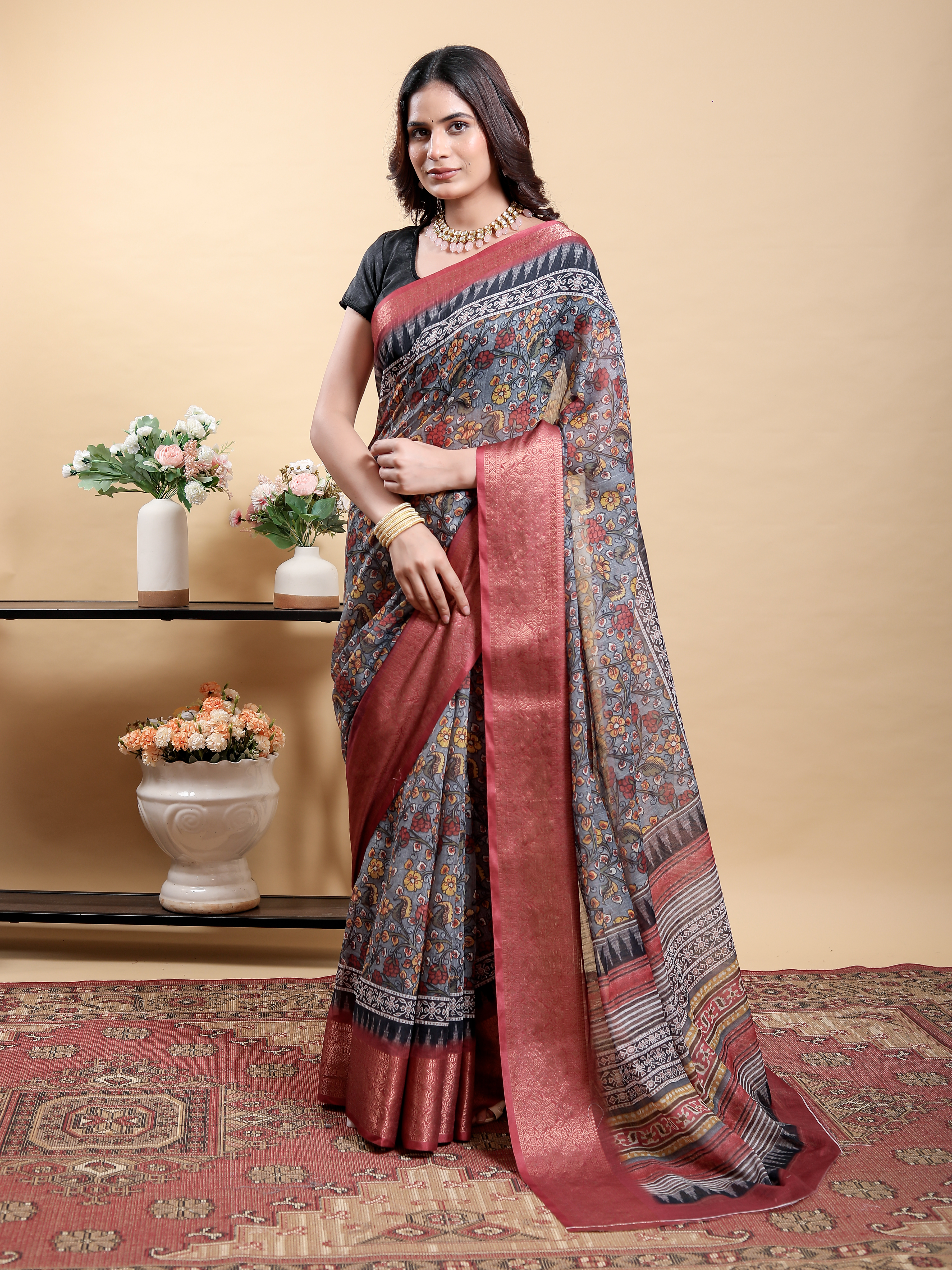
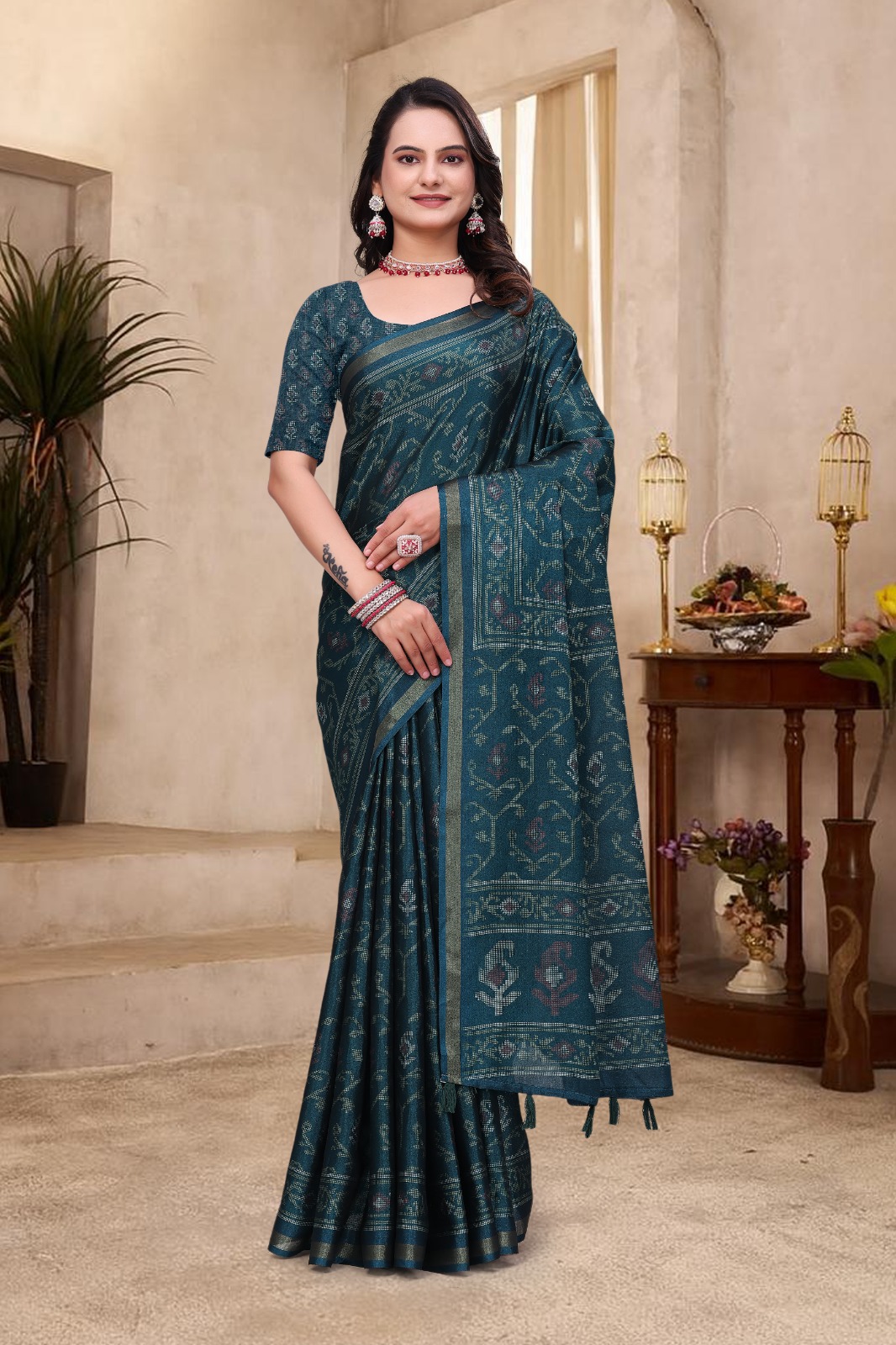
The Teal Green Cotton Saree for Women Online India is an useful example of a practical colour-and-fabric direction for a daytime campus event. The Caramel Brown Floral Handloom Saree with Printed Pallu offers another approachable option when you want visible print interest without relying on heavy surface decoration.
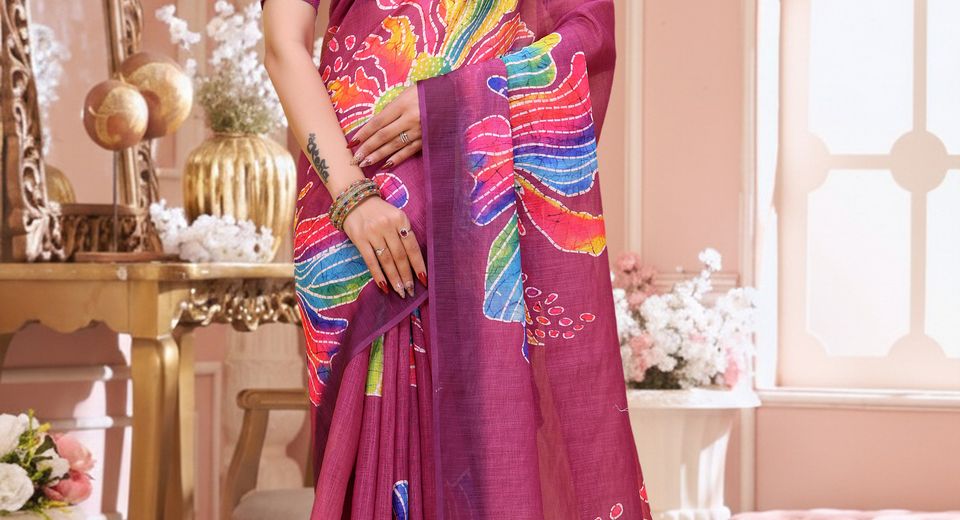
A floral saree can photograph well in outdoor light, while a darker base can make small marks less noticeable during a long day. The Multicolor Floral Cotton Saree with Woven Border and Tassel brings colour into a cultural-day outfit, but check that the tassels don't catch on bags, chair arms or costume jewellery.
Very slippery satin, thin net, highly starched fabric and dense embellishment require more adjustments than most first-time wearers expect. A Banarasi silk saree, Kanjeevaram saree or heavily zari-rich drape can be beautiful for a formal celebration, but a college cultural day with extensive walking may be more comfortable in cotton or linen. Fabric choice should follow the event schedule, venue temperature and amount of movement.
First Time Saree Wearing Tips for a College Cultural Day: prepare one day early
A beginner should iron, pre-pleat and test-pin the saree at least one day before the college cultural day. Preparing the garment early reveals problems with blouse fit, pallu length, border alignment and footwear before the event morning.
Iron the saree for controlled pleats
Iron the saree according to its fibre and avoid placing a hot iron directly on zari. Use a pressing cloth for delicate zari work, and check the care label before applying steam. Fold the saree lengthwise after ironing so the border remains aligned instead of twisting during draping.
Mark the points that affect the drape
Place a small removable fabric marker or discreet safety pin at the point where the pallu begins and at the section used for front pleats. Temporary markings reduce guesswork when you dress quickly. Remove every marker before leaving home and test the saree in a mirror from the front, side and back.
Rehearse the complete outfit
Rehearse with the exact blouse, underskirt, footwear, bag and jewellery planned for the event. A saree that looks secure in bare feet may become too short at the front when worn with platform sandals. A blouse that feels acceptable for ten minutes may become uncomfortable after several hours of sitting.
The Ivory Cream Floral Handloom Saree with Heritage Pallu illustrates why the full outfit test matters: a contrasting or detailed pallu can become the visual focus, so its fall should be checked from the shoulder rather than judged only while the saree is folded. The Pastel Floral Tissue Handloom Cotton Saree with Zari Weaves should also be tested with the final blouse and footwear because a tissue surface and zari edge can behave differently from plain cotton.
Photograph the front, side and back of the rehearsed drape in natural light. A photograph often reveals a twisted border, uneven pleat bottoms or a pallu that's too short more clearly than a quick mirror check. Make small corrections during rehearsal rather than attempting a new drape on the morning of the event.
First Time Saree Wearing Tips for a College Cultural Day: secure the pleats
Saree pleats stay in place when they're evenly folded, pressed, pinned close to the waistband and supported by a correctly fitted underskirt. Loose pleats usually result from slippery fabric, an underskirt that's too loose or a pin placed too far from the waist.
Start with five to seven front pleats, depending on the saree width and your preferred fullness. Keep each pleat approximately the same width, align the lower edges and hold the stack firmly before inserting a safety pin near the waistband. Do not force a very wide border into narrow pleats because the border may twist or fan outward.
Use a medium-sized safety pin with a smooth closure rather than a sharp, oversized pin that can snag threads. Insert the pin horizontally through the pleat stack and underskirt, but avoid pushing the point through the outermost visible layer. A second discreet pin approximately 5 to 7 centimetres below the waistband can help on a cotton saree that tends to open while walking.
The underskirt should sit firmly at the natural waist and should not slide down when you walk. A drawstring or well-fitted elastic waist is more secure than a loose underskirt. Tie the drawstring flat, tuck the excess securely and avoid a bulky knot directly beneath the pleats.
Pinning every pleat separately can create visible bumps and restrict movement. Pin the pleat bundle at the waist, then use one additional pin near the middle only when the fabric needs support. Test the arrangement by walking for five minutes, sitting, climbing a few steps and turning around.
First Time Saree Wearing Tips for a College Cultural Day: keep the pallu secure
A pallu should be secured at the shoulder and near the upper side seam when the wearer expects frequent walking, dancing or stage movement. Two well-placed pins are usually more comfortable and neater than many tight pins.
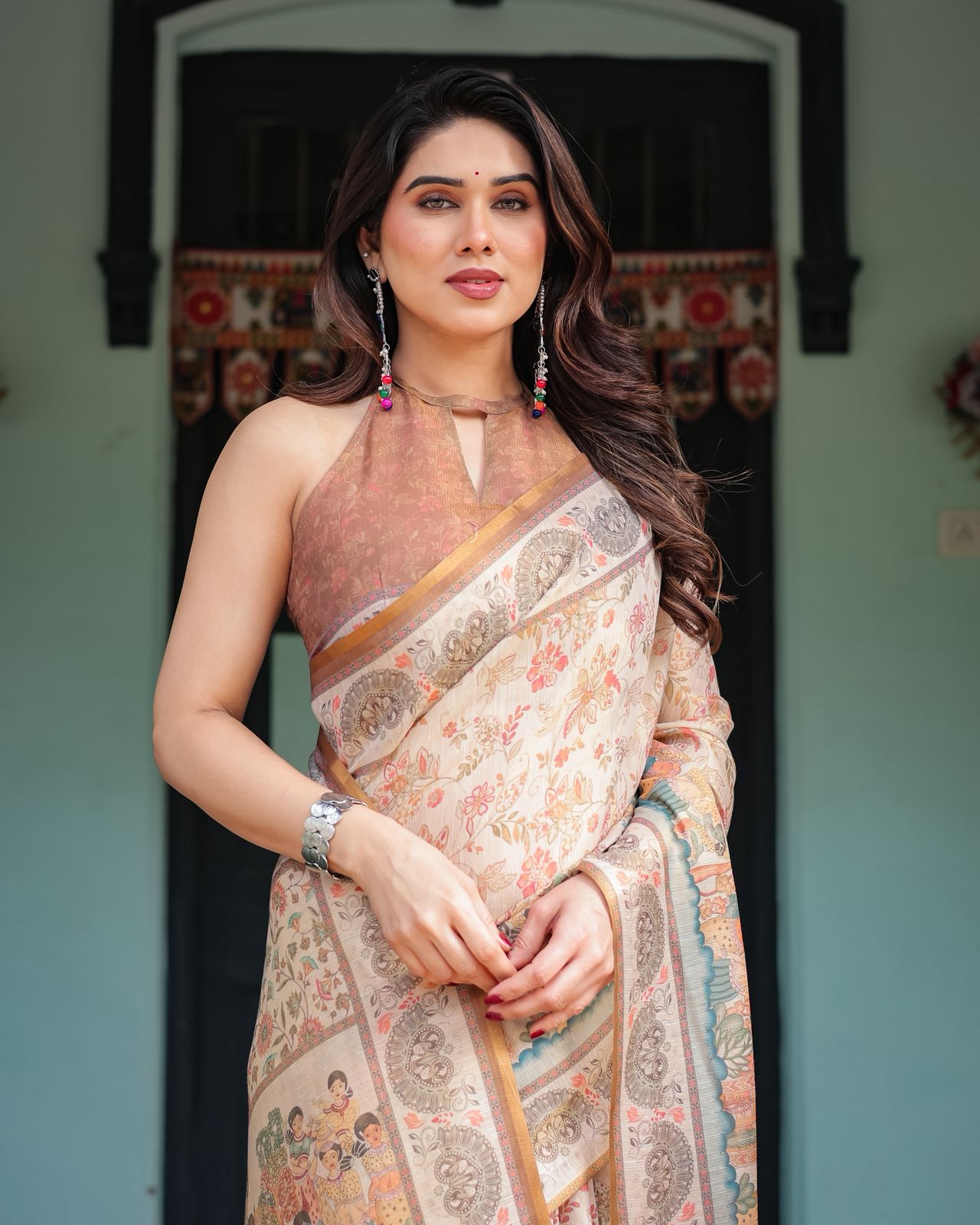
Fold the pallu into even vertical pleats, align the border and place the folded section over the shoulder. The pallu should fall around knee level for a practical college outfit, although the exact length depends on height, saree width and personal preference. A pallu that reaches the floor can catch under shoes, while an extremely short pallu may pull against the blouse.
Place one safety pin from the inside of the shoulder so the closure is hidden. Add a second pin near the blouse armhole or upper side seam if the pallu moves while you raise your arms. Pinning too close to the neck can pull the blouse fabric and cause discomfort, so leave enough ease for normal shoulder movement.
Students participating in a dance, skit or procession should perform the planned arm movements during rehearsal. Lift both arms, turn, sit cross-legged if needed and walk quickly enough to imitate the schedule. If the pallu shifts during rehearsal, shorten the pleats slightly, add concealed support or choose a more stable drape rather than waiting for the event.
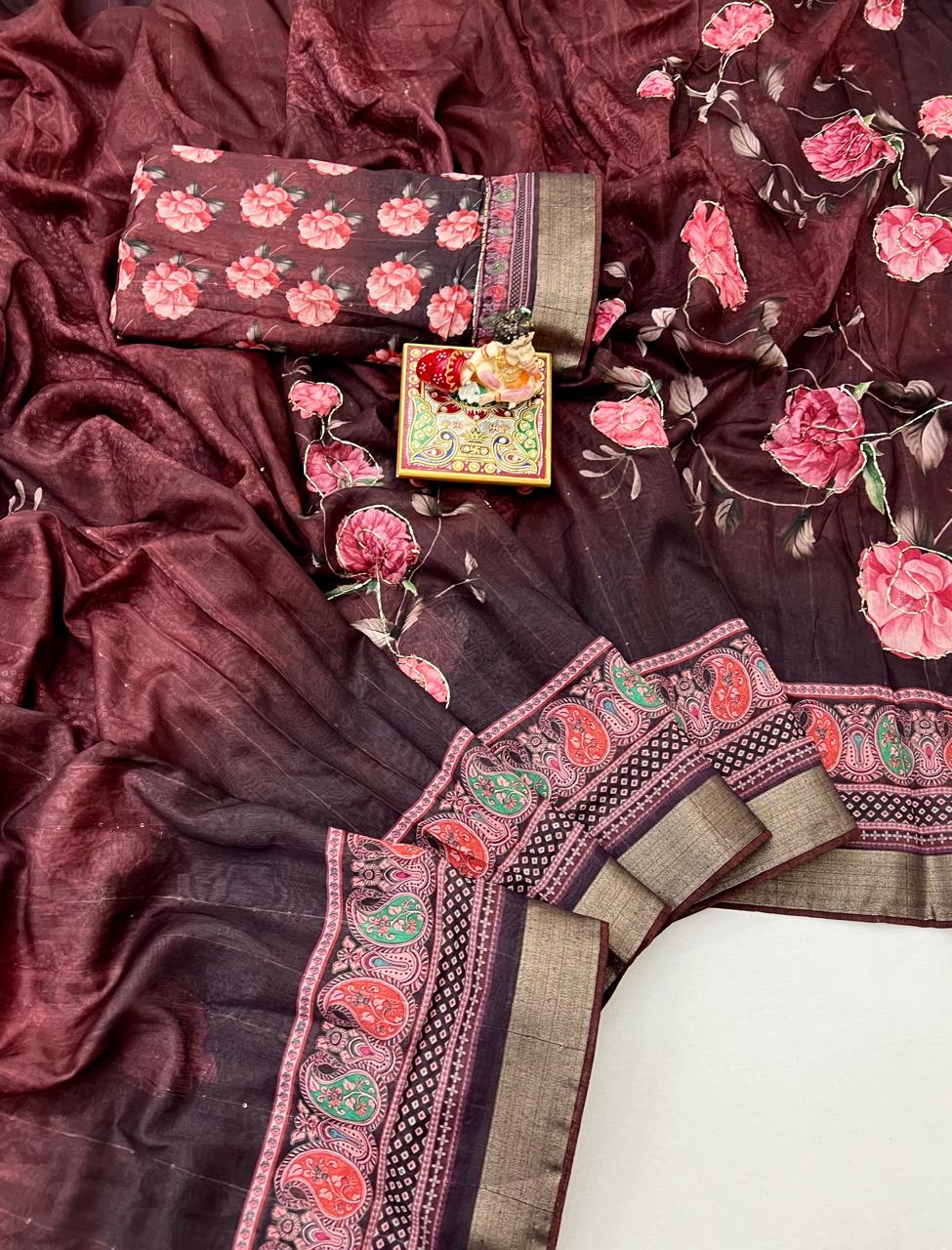
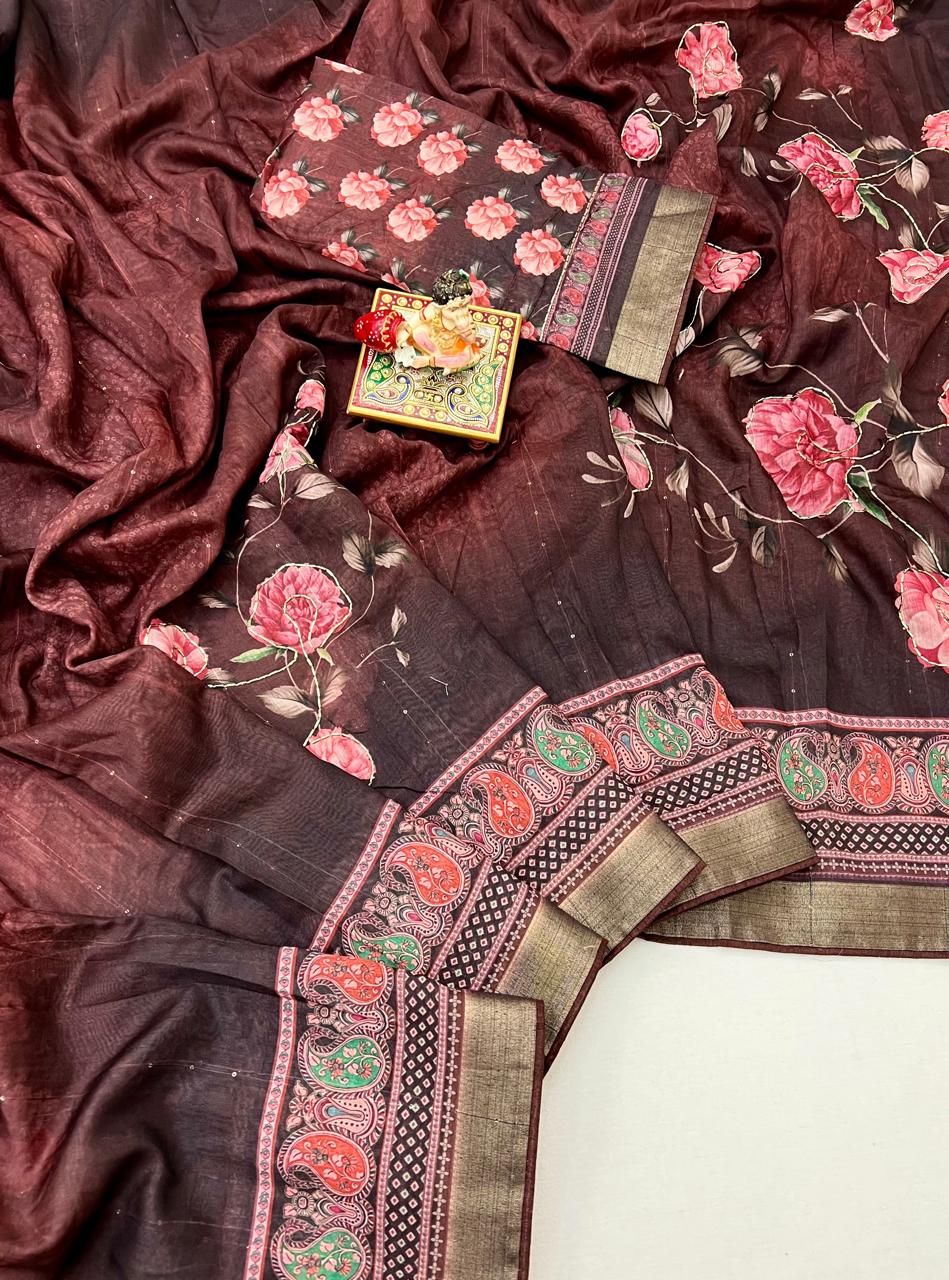
The Party Wear Maroon Cotton Saree With Designer Blouse can work for a more dressed-up cultural-day look, but the designer blouse should be checked for arm mobility before committing to a performance. The Rust Maroon Handloom Cotton Saree with Floral Print and Traditional gives a deeper colour direction that can suit an ethnic theme while retaining the manageable structure associated with handloom cotton.
First Time Saree Wearing Tips for a College Cultural Day: dress for comfort
All-day saree comfort depends on a secure underskirt, a supportive blouse, breathable innerwear and footwear that has already been worn. Each layer affects the way the saree sits and the amount of pressure placed on the waist, shoulders and feet.
Choose an underskirt with enough flare for the saree to move without pulling, but avoid excessive volume that makes stairs and crowded corridors difficult. Cotton or cotton-blend underskirts can feel more comfortable in warm classrooms. A fitted shapewear underskirt can create a streamlined silhouette, but it should never feel restrictive when sitting or bending.
A blouse should allow you to raise your arms, carry a bag and breathe normally. Check the underarm seam, shoulder width, hook strength and neckline before the event. If the blouse has a deep back or slippery lining, fashion tape can provide extra support, but proper stitching and secure fastenings remain more reliable.
Wear block heels, wedges or embellished flats that you can walk in for several hours. New footwear is a poor choice for a long college programme because blisters can develop before the main performance begins. Carry blister patches and choose a heel height that doesn't change your balance while climbing stairs.
Keep jewellery proportionate to the saree and activity. A pair of medium earrings, a bangle stack that doesn't obstruct the wrist and a small bindi can complete a cultural-day outfit without creating noise or snagging. Heavy necklaces, long earrings and multiple rings deserve extra caution if the programme includes dancing or costume changes.
First Time Saree Wearing Tips for a College Cultural Day: style and manage the day
A balanced first saree look usually needs one focal detail, one supporting accessory group and a practical hairstyle. Too many competing details can make movement difficult and hide the saree's print, border or pallu.
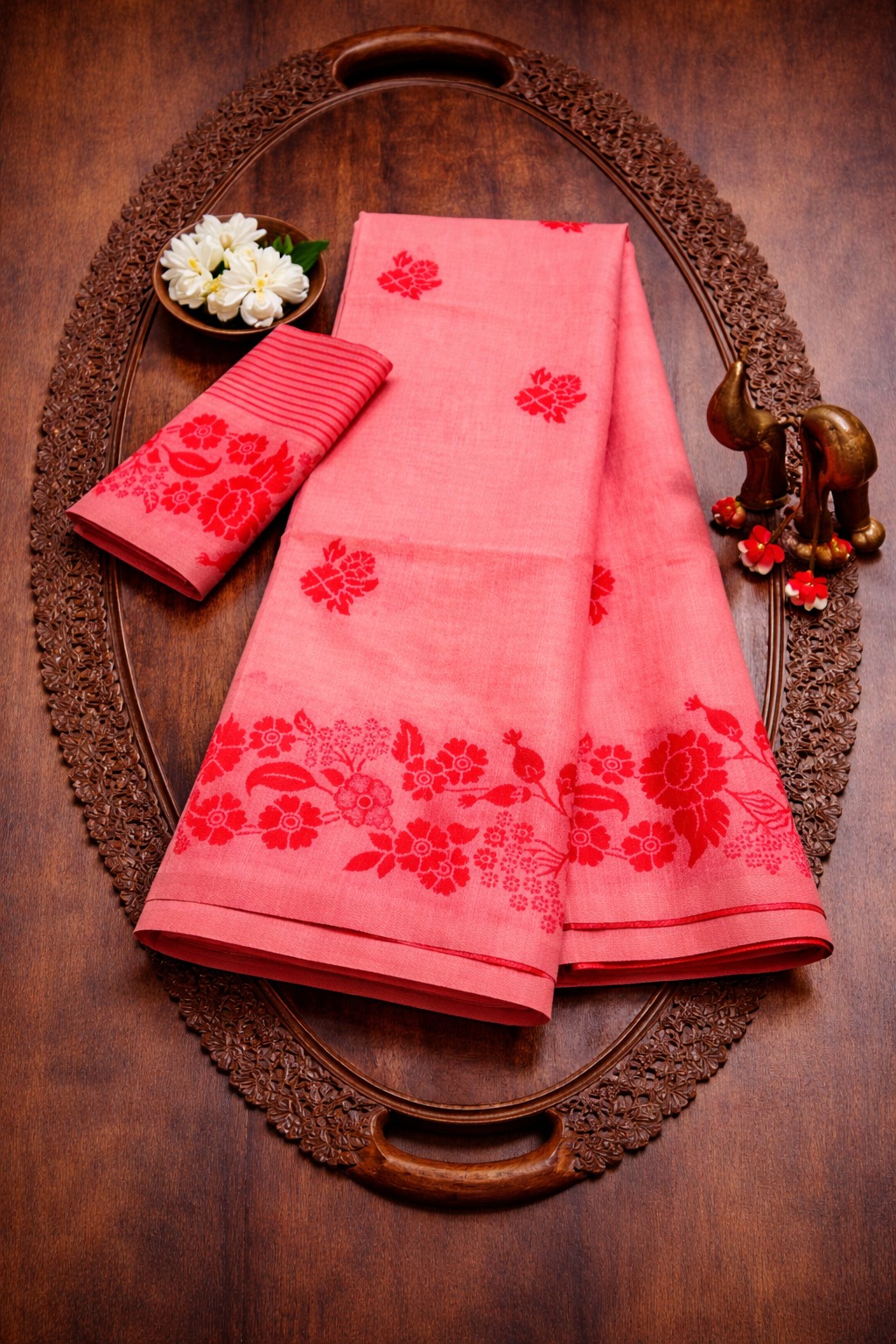
Let the saree's strongest feature guide the styling. A floral saree can pair with a solid blouse pulled from one colour in the print. A saree with a woven border may need only simple earrings and a neat bun. A zari-edged saree can take metallic earrings, but adding a heavy necklace, ornate waist belt and large hair accessories may make the outfit uncomfortable for a daytime college setting.
A low bun, braid or half-up hairstyle is usually more dependable than loose hair during a crowded event. Secure the hairstyle with pins that don't press against the back of the neck. Carry a small comb, two spare hairpins and a compact mirror if the programme lasts beyond four hours.
Budget-conscious shoppers can compare the Sarees from Rs 1000 to Rs 1500 collection with Sarees Under 20% Off and Sarees Under 10% Off before choosing a rehearsal or event saree. Discount collections should still be checked for fabric composition, blouse-piece details, border weight and care instructions rather than judged by price alone.
Keep a small emergency pouch containing two medium safety pins, two small safety pins, a needle, matching thread, fashion tape, blister patches, tissues and a stain-removal wipe. A transparent pouch makes the supplies easy to find inside a larger college bag. Carry the saree's loose end inside the bag only when necessary; avoid folding damp or stained fabric into a closed compartment for several hours.
For a more dramatic budget option, the Sarees Flat 60% Off collection and Sarees Flat 50% Off collection may offer festive choices, but check delivery timing and allow at least two days for fitting or minor alterations. An outfit that arrives the night before the event leaves too little time to test pleats, blouse comfort and footwear.
The event-day sequence should be simple: wear the blouse and underskirt first, put on the footwear, drape the saree, pin the pleats, secure the pallu, add jewellery and walk for five minutes before leaving. A friend can inspect the back and check that no pin is visible or pressing into the skin. Arriving 20 to 30 minutes early gives you time to adjust the drape without rushing between preparation and the programme.
A first saree should let you participate in the day. If a pin digs into the waist, the pallu catches under your shoe or the blouse restricts your arms, comfort is a styling problem worth correcting before the photographs begin.
The most dependable college cultural-day saree is the one you can walk, sit, climb, perform and smile in without repeated adjustments. Fabric structure, accurate measurements, two focused pins and one complete rehearsal solve most beginner problems. The result will look more confident because the wearer can focus on friends, performances and the celebration instead of managing every fold.
Common Questions About Wearing Your First Saree at College Cultural Day
Which saree fabric is easiest for a first-time college cultural day?
Lightweight cotton, linen and cotton-blend sarees are usually easiest because they offer more grip and structure than slippery fabrics. Handloom cotton is particularly practical when the day includes walking, sitting and stage activities.
How many pleats should a beginner make in a saree?
Most beginners can start with five to seven front pleats, keeping each pleat approximately the same width. The final number depends on the saree width, border size and the amount of fullness you need for comfortable movement.
How do I stop my saree pallu from falling during a college performance?
Secure the pallu at the shoulder with one concealed safety pin and add a second pin near the upper side seam if you will dance or raise your arms. Rehearse the exact movements in the complete outfit before the event.
What footwear is safest with a saree for a college function?
Broken-in flats, block heels or stable wedges are safer than new stilettos or untested sandals. The heel should not change your balance on stairs, and the footwear should be worn during the rehearsal so the saree length can be checked accurately.
Should I wear a shapewear underskirt for my first saree?
A shapewear underskirt is optional and should only be used if it allows comfortable sitting, bending and walking. A well-fitted cotton or cotton-blend underskirt with a secure waist is often easier for a first-time wearer.
What should I carry in a saree emergency kit?
Carry medium and small safety pins, matching thread, a needle, fashion tape, blister patches, tissues, a stain-removal wipe and a compact mirror. These supplies can address loose pleats, a shifted pallu, a loose hook or footwear discomfort during a long college programme.