

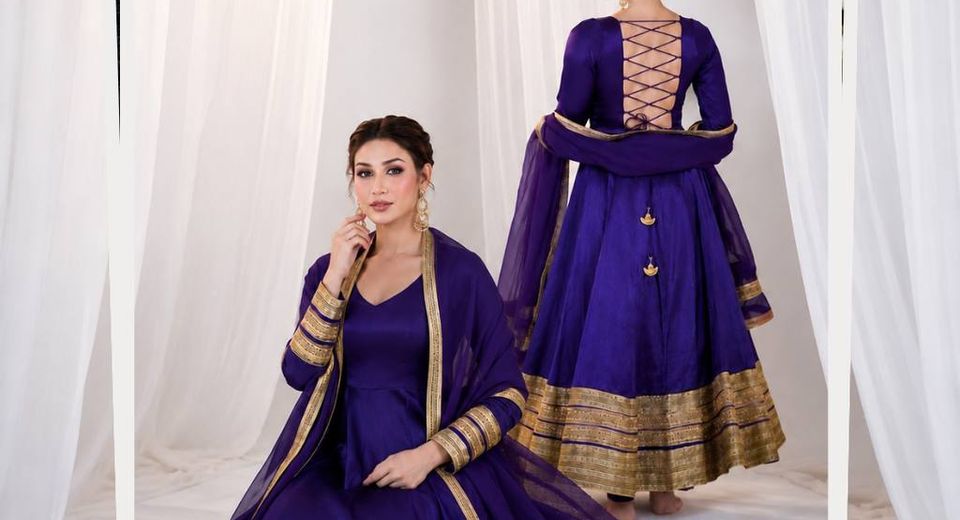
Eight Signs Your Salwar Suit Kurta Is Too Tight or Too Loose can save you from an uncomfortable outfit, an unflattering silhouette and expensive last-minute tailoring. A well-fitting salwar kurta should let you sit, raise your arms and breathe normally while keeping the shoulder seam in place and the neckline flat. Fit matters equally for a straight suit, an Anarkali, a palazzo suit and a Patiala-inspired silhouette, although the amount of ease changes with each design.
The most reliable assessment takes five minutes and requires only a mirror, a chair and the shoes you expect to wear. Put on the complete set, including the dupatta if it changes how the neckline sits. Check the garment standing still, walking, sitting and reaching forward. A beautiful print or intricate zari can't compensate for a bust seam that pulls or an armhole that restricts movement.
Eight Signs Your Salwar Suit Kurta Is Too Tight or Too Loose
The quickest answer is visible tension, unexpected gaps, displaced seams or excess fabric that changes the garment's intended shape. The following eight checks separate a genuinely poor fit from normal design details such as side slits, gathers or a relaxed cut.
1. The shoulder seam sits beyond your shoulder point
A shoulder seam that falls more than about 1 centimetre beyond the natural shoulder edge usually means the kurta is too loose across the upper body. A seam that sits on top of the shoulder but pulls inward toward the neck usually indicates a narrow shoulder or a garment that's too small. The correct seam should finish close to the point where the shoulder slopes into the upper arm.
Check both shoulders because posture and body asymmetry are common. A small difference can be corrected by a tailor, but a shoulder that's 2 to 3 centimetres off on both sides often requires a different size. Shoulder fit deserves priority because altering a set-in shoulder can disturb the armhole, sleeve head and neckline.
2. Horizontal lines pull across the bust or upper back
Horizontal drag lines across the bust, underbust or upper back show that the kurta needs more room in that area. The fabric may form a tight "X" around the bust, pull from the side seams or make embroidery sit unevenly. A blouse-like fit isn't automatically wrong, but the fabric should lie smoothly when you stand naturally.
Raise both arms and clasp your hands in front of your body. If the bust area becomes visibly strained or the back rides upward, the kurta lacks functional ease. Measure your fullest bust point while wearing a non-padded bra and compare it with the garment's finished bust measurement, rather than relying only on your usual ready-made size.
3. The neckline gaps, chokes or shifts when you move
A neckline that gaps away from the collarbone is too loose, while a neckline that presses into the throat or shifts backward is too tight or poorly balanced. A front neckline should remain close to its intended shape when you bend slightly, turn your head and lift your arms. A back neckline should not pull upward as soon as you move.
Try inserting two fingers beneath the neckline. Two fingers of comfortable space indicate that the edge isn't choking you, but a large opening that reveals the camisole or bra strap signals excess room. Neckline alterations can be limited when the garment has heavy embroidery, piping or a carefully placed border, so inspect the neckline before purchasing a heavily embellished design.
4. The armhole cuts into the underarm
An armhole that pinches, rubs or leaves a red mark after a few minutes means the kurta is too tight around the armhole or upper arm. The problem may appear even when the bust measurement seems correct. An armhole that hangs far below the underarm, creates a fold of empty fabric or exposes the inner garment during movement is too loose.
Move one arm in a circle, reach for a shelf and place both hands on your waist. The armhole should allow these actions without pulling the kurta body upward. Deep armholes often feel roomy while standing but restrict movement because the fabric must travel farther when the arm rises. A tailor may lower or reshape an armhole, but the alteration can affect sleeve attachment and side-seam balance.
5. Sleeves restrict movement or create excessive folds
Sleeves are too tight when the fabric pulls across the biceps, the cuff leaves a deep mark or you can't bend your elbow comfortably. Sleeves are too loose when they collapse into multiple folds unrelated to the design or extend beyond the wrist in a way that hides your hands. Three-quarter sleeves should generally finish below the elbow and above the widest part of the forearm for a clean proportion.
Check sleeve comfort with your arms bent at 90 degrees, because a sleeve that feels fine while hanging straight may become restrictive during a meal. Embroidery and zari on a sleeve can make a small size feel less forgiving. For example, the structured surface of Orange Zariwork Brocade Readymade Salwar Suit deserves a more careful elbow and biceps check than a plain, softly draping kurta.
6. The waist or side seams twist instead of falling vertically
Side seams should fall roughly vertically from the underarm toward the hem when the kurta is correctly balanced. A side seam that spirals toward the front, the hem that swings to one side or a waist area that bunches indicates uneven tension, insufficient ease or a body-shape mismatch. Excess fabric at the waist creates a different problem: the kurta may balloon when you sit and lose its intended line.
Stand sideways in front of a mirror and place one hand lightly at the waist. The garment should skim rather than grip, unless the design is deliberately fitted. A straight suit usually benefits from approximately 5 to 10 centimetres of total bust ease for comfortable everyday movement, while a relaxed palazzo suit may need more. The exact requirement depends on fabric thickness, lining, cut and personal preference.
7. The hem rises, clings or overwhelms your proportions
A hem that rises noticeably at the front or sides when you walk or sit usually indicates insufficient hip or thigh ease. A hem that pools around the legs, makes the kurta look shapeless or visually shortens the wearer can indicate excessive width or length. The correct hem depends on the silhouette: a straight kurta should skim the body, while an Anarkali needs room for its flare to open evenly.
Sit on a chair before judging length. The kurta should not pull sharply across the hips or expose more leg than intended. Walk at least ten steps in the full set, because side slits, a palazzo leg and a dupatta can change how the hem moves. A piece such as Off White Floral Embroidered Straight Suit Set should be assessed for both hem balance and embroidery placement, since a floral border can make an uneven hem especially noticeable.
8. You keep adjusting the kurta or can't perform ordinary actions
Repeatedly pulling down the hem, correcting the neckline, shifting the sleeves or rearranging the side seams is a practical sign that the fit is wrong. A comfortable salwar suit kurta should allow you to sit for 30 minutes, walk, eat, use your phone and lift your arms without constant correction. The need to adjust a dupatta occasionally is normal; constant adjustment of the kurta isn't.
Test the outfit with the undergarments and footwear planned for the event. A padded bra, shapewear, thick slip or high-waisted palazzo can change the fit by several centimetres. If the kurta works only when you stand perfectly still, choose a larger size or a different cut rather than hoping movement won't reveal the problem.
How much ease should a salwar suit kurta have?
A salwar suit kurta should have enough ease for normal movement without creating a large gap between the body and fabric. For a close but comfortable straight kurta, 5 to 10 centimetres of total ease at the bust is an useful starting range; 10 to 15 centimetres suits a relaxed cut or thicker fabric. Total ease means the finished garment measurement minus your body measurement, not the extra measurement added on one side.
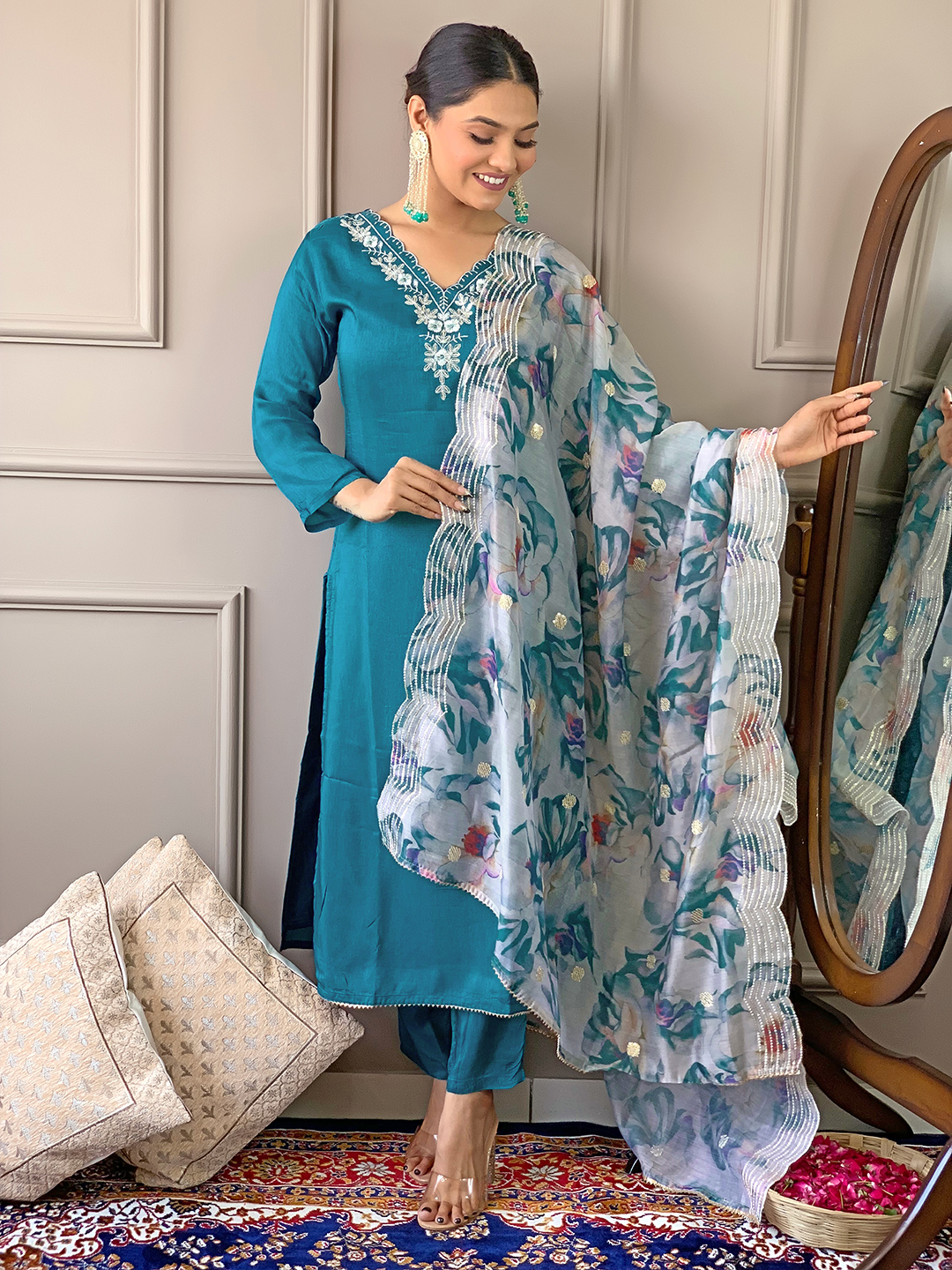
Measure the bust at the fullest point, the waist at the natural waist, the hip at the widest point and the shoulder from one shoulder point to the other. Measure sleeve length with the arm slightly bent, and measure kurta length from the highest shoulder point to the desired hem. Record every measurement in centimetres and compare it with the garment's size chart.
don't use waist measurement alone to select a salwar suit. A kurta may fit at the waist but pull at the bust or hips. The largest relevant measurement normally determines the size, after which a tailor can refine the waist, sleeve or length. A smaller size can't always be let out, especially when seam allowance is narrow or embroidery reaches the seam.
When can tailoring fix a loose or tight kurta?
Tailoring can usually fix side-seam looseness, sleeve length, kurta length and modest waist shaping, but tailoring can't reliably rescue every tight garment. A tailor can often remove 2 to 4 centimetres from each side seam if sufficient allowance exists, or release a similar amount when spare fabric is present. Seam embroidery, lining and decorative borders may restrict the usable allowance.
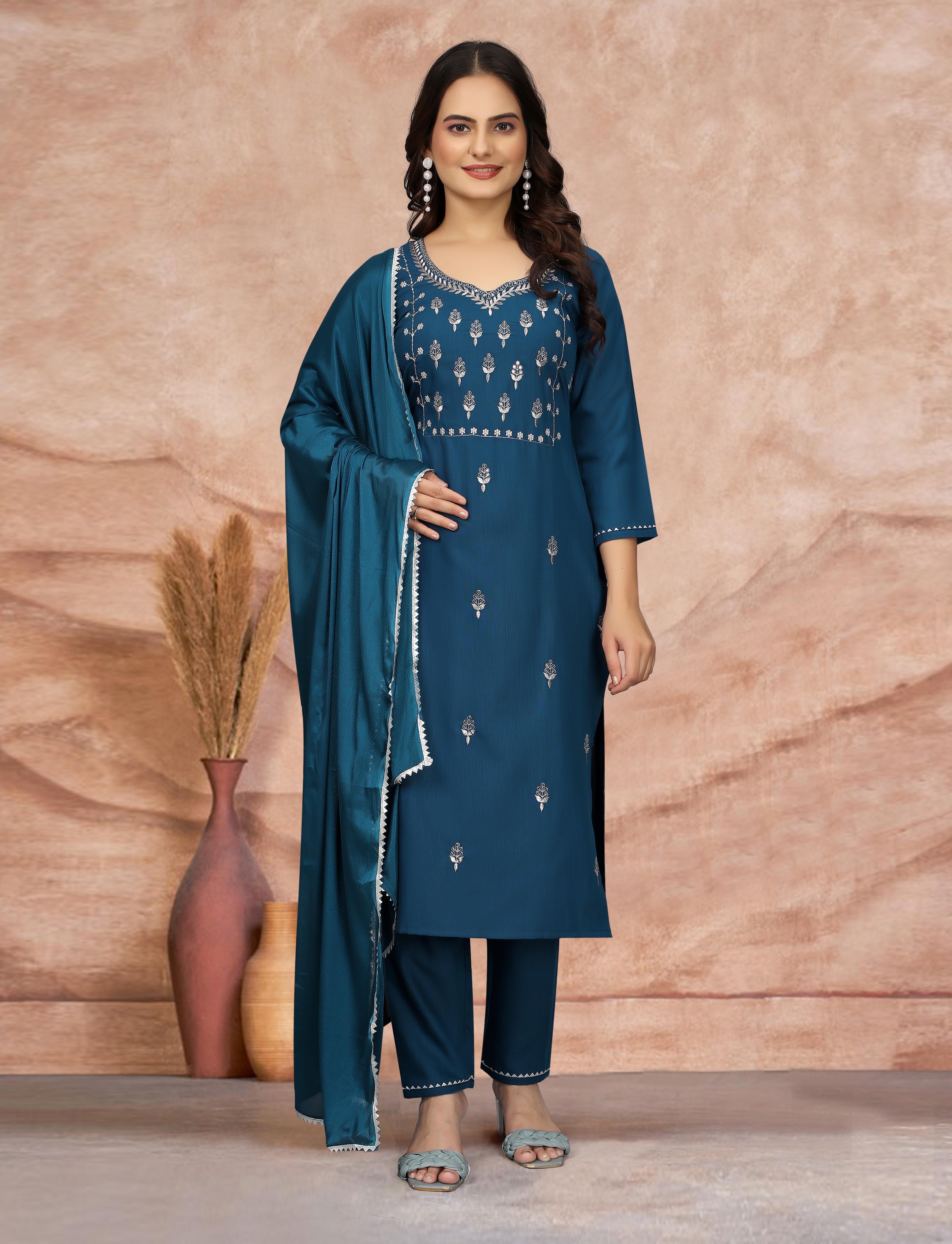
Shoulder changes are more complex than side-seam changes. Raising a dropped shoulder can alter the armhole, while widening a narrow shoulder may require fabric, matching piping or a redesigned sleeve. Neckline changes are also limited by embroidery placement. Ask to see the inside seam allowance before buying an expensive suit, particularly when the garment is brocade, lined or heavily embellished.
Length alterations are generally easier, but a border, scalloped hem or placement print can make shortening visually difficult. The Yellow Threadwork Readymade Salwar Suit and the Orange Thread Embroidered Ethnic Suit Set illustrate why embellishment placement matters: a tailor must preserve the relationship between threadwork, hem and side slit rather than simply cutting from the bottom.
How fabric and silhouette change the fit test
Fabric changes how much a salwar suit can forgive, while silhouette determines where ease is most important. Chanderi can feel airy but may have limited stretch, brocade has body and can resist movement, and softer blends may accommodate a relaxed fit more easily. A fabric that doesn't stretch should never be judged by the standing fit alone.
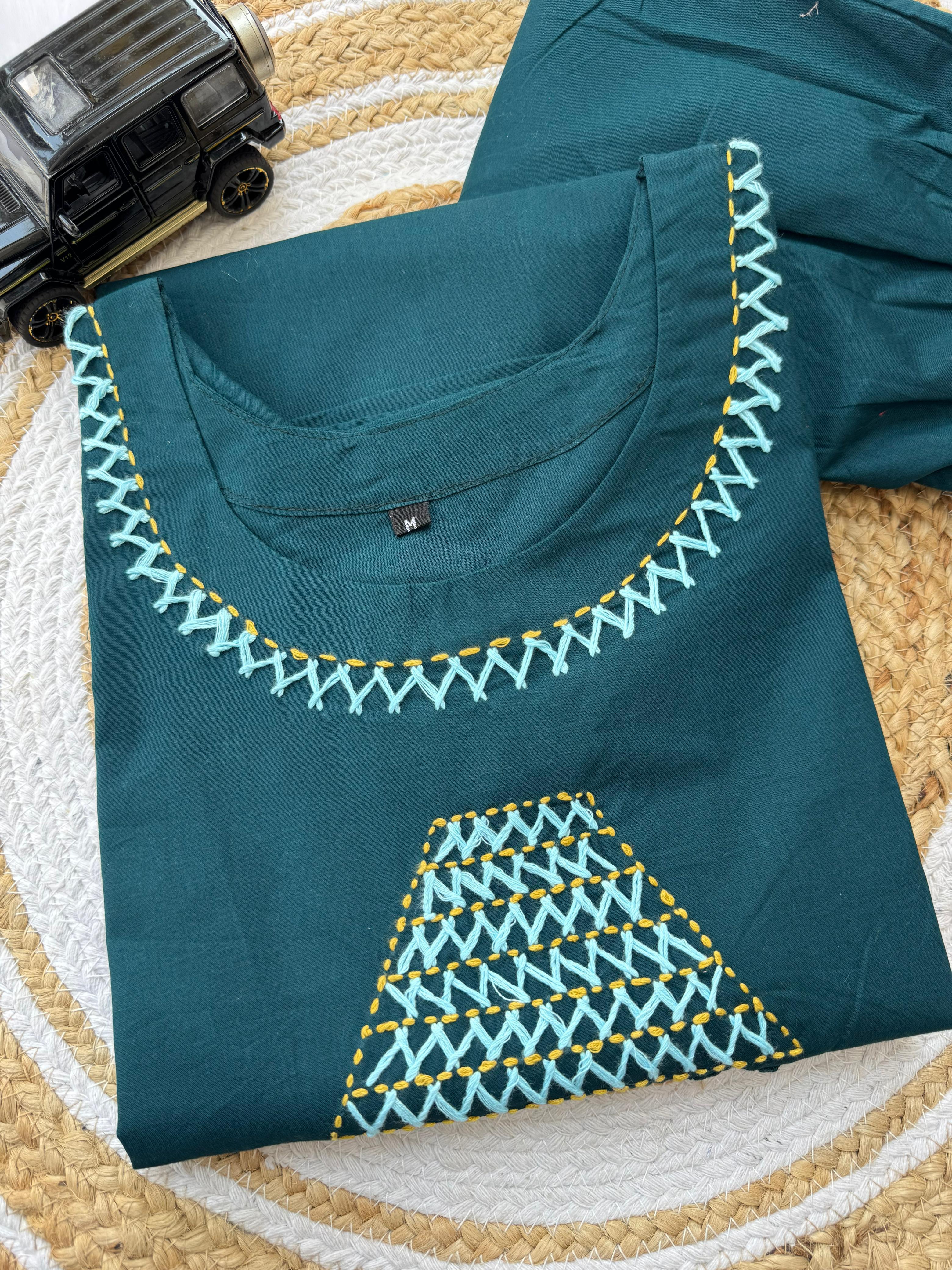
A Chanderi design such as Lavender Chanderi Kurta with Olive Embroidered Palazzo Suit needs shoulder, armhole and sleeve testing because the weave won't compensate for a restrictive cut. A palazzo suit requires enough hip and stride room in the trousers, not merely a comfortable kurta. A Patiala-inspired salwar needs volume at the seat and thigh, whereas a narrow trouser needs accurate ankle and calf measurements.
Regional design references can also influence proportion. Kalamkari Print Salwar Suits often draw attention through placement print and colour contrast, Maharashtra Paithani Inspired Salwar Suits may use a strong woven-look border, Gujarat Bandhej Salwar Suits can rely on vivid pattern scale. Odisha Sambalpuri Salwar Suits may make border alignment especially visible. Pattern, border and seam alignment should be checked after the garment is worn, not only on a flat surface.
A three-piece set should be evaluated as a complete outfit. The Designer Yellow Salwar Suit with Dupatta may feel correctly sized until the dupatta is pinned and pulls at the shoulder. The Midnight Black Blossom Salwar Suit may need a light-coloured inner layer for opacity, and that additional layer can make a close bust fit feel tighter. Wear the actual layering combination during the trial.
What to check before ordering a readymade salwar suit
Before ordering, compare body measurements with finished garment measurements, read the fabric composition and confirm whether the set includes lining. Finished garment measurements reveal actual ease; a size label doesn't. Check bust, waist, hip, shoulder, sleeve opening, kurta length and trouser length whenever those figures are available.
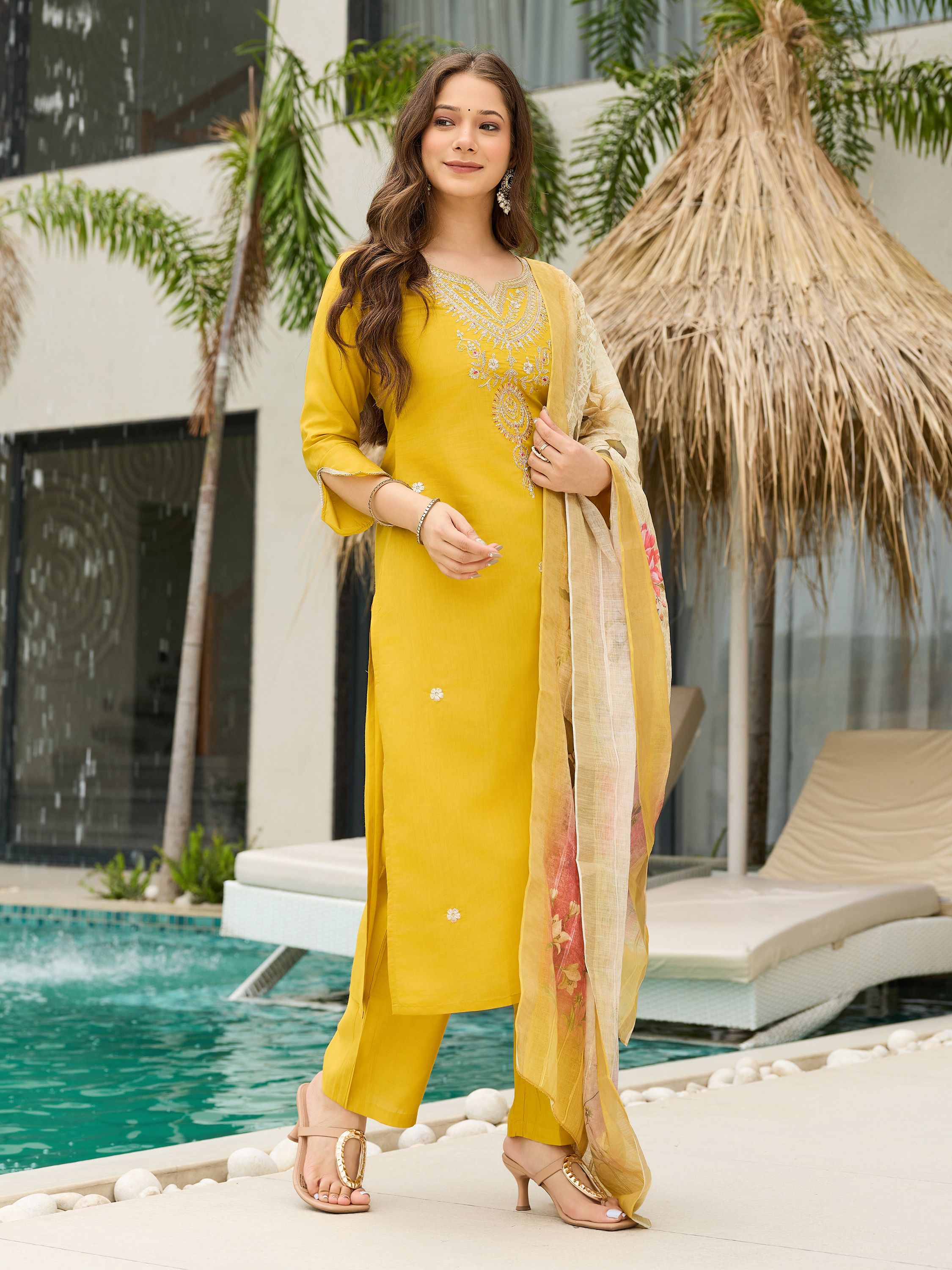
- Check the largest measurement first: choose a size that accommodates the fullest bust or hip, then plan minor alterations.
- Check the return window: keep tags attached until you've tried the suit indoors with the intended undergarments.
- Check transparency: an off-white or pastel kurta may need a slip, which changes the required ease.
- Check embellishment: zari, sequins and dense threadwork can add weight and stiffness around seams.
- Check the trousers separately: an exactly fitting kurta doesn't guarantee comfortable salwar, palazzo or straight pants.
Photographs can hide pulling because models are posed with one arm lowered and the body angled. Product images also rarely show sitting, reaching or turning. Use the garment's measurement chart and make a short movement test the moment it arrives. The Embroidered Salwar Suit Set for Women is best judged with the complete set on the body, because embroidery, lining and dupatta weight can change the drape.
How to make the final fit decision
Keep a salwar suit when the shoulder seam is correctly placed, the bust and armhole remain comfortable in motion, the neckline stays flat and the hem falls evenly. Consider tailoring when the garment is only slightly loose at the waist, sleeve or length and has usable seam allowance. Exchange it when the shoulder, bust, armhole or hip is substantially tight, because those alterations are more expensive and less predictable.
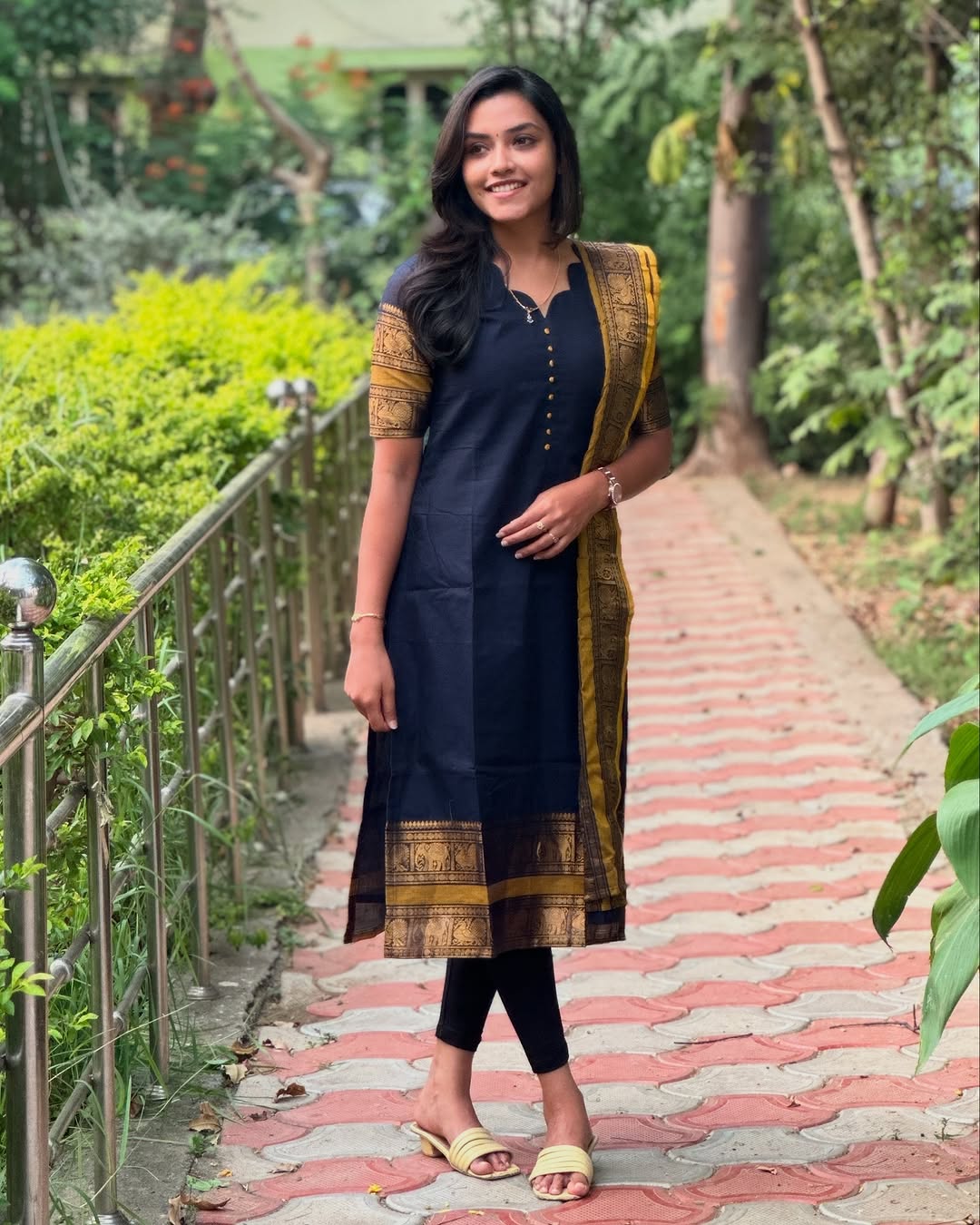
Fit should support the purpose of the outfit. A wedding guest may accept a little structured firmness in a brocade kurta for a short ceremony, but a Haldi ceremony outfit needs easy arm movement, breathable layering and a secure neckline. Everyday wear needs even more tolerance for sitting, commuting and repeated washing.
Eight Signs Your Salwar Suit Kurta Is Too Tight or Too Loose are useful because they turn a vague feeling into observable evidence. Look for seam displacement, drag lines, neckline movement, armhole pressure, sleeve restriction, twisting side seams, hem imbalance and constant adjustment. When those checks agree with your measurements and movement test, the salwar suit is far more likely to look polished and feel comfortable beyond the mirror.
Questions Readers Ask About Getting a Salwar Suit Kurta to Fit
How should a salwar suit kurta fit around the bust?
A salwar suit kurta should skim the bust without horizontal drag lines, button or seam strain, or visible gaping. Allow roughly 5 to 10 centimetres of total bust ease for a comfortable straight kurta, with more ease for a relaxed cut or thick fabric.
How can I tell if my salwar suit kurta is too loose?
A kurta is probably too loose when the shoulder seams extend beyond the shoulder points, the neckline gaps, the armholes hang low or the side seams do not fall vertically. Excess fabric should not create unexplained folds or change the intended silhouette.
Can a tailor make a tight salwar suit kurta bigger?
A tailor can enlarge a tight kurta only when sufficient seam allowance or matching fabric is available. Side seams may offer limited expansion, but tight shoulders, armholes and heavily embroidered seams are difficult and costly to alter.
Should I size up if my salwar suit fits at the waist but is tight at the hips?
Sizing up is usually safer when the hips are tight, because a tailor can shape excess waist fabric more easily than add missing hip room. Confirm the shoulder and bust after sizing up, then request modest waist or side-seam alterations if needed.
Why does my kurta ride up when I raise my arms?
A kurta usually rides up when the armhole is too tight, the sleeve restricts the upper arm or the bust and back lack movement ease. Test the garment by raising both arms; persistent upward movement indicates a cut or size problem rather than a normal styling feature.
How much room should I leave for a slip under a salwar suit?
Leave enough additional ease for the slip or inner layer to lie flat without creating bust or armhole tension. Try the salwar suit over the exact slip, bra and shapewear you plan to wear, because layering can change the fit by several centimetres.


