

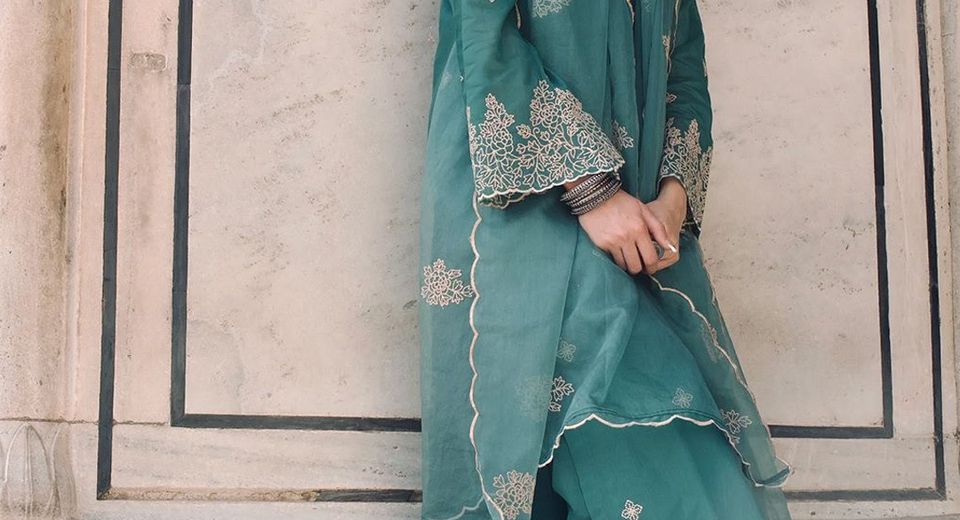
Dupatta Slipping? Necklines and Pinning Tricks That Keep It in Place can save an otherwise comfortable outfit from constant readjustment. A dupatta usually slides because of a mismatch between fabric weight, shoulder shape, neckline depth, and the direction of the drape. A few small changes, such as anchoring the fabric under a collarbone, using a flat safety pin, or choosing a less slippery lining, can keep a dupatta stable for several hours without making the outfit look stiff.
The right solution depends on whether the dupatta is Banarasi silk, chiffon, organza, georgette, cotton, or a silk blend. A heavy embroidered dupatta needs weight distribution, while a lightweight printed dupatta needs friction and a discreet anchor. The most reliable styling method combines a suitable neckline with one or two concealed pins rather than relying on a single pin at the shoulder.
Dupatta Slipping? Necklines and Pinning Tricks That Keep It in Place: why does a dupatta slide?
A dupatta keeps slipping when smooth fabric, a sloping shoulder, a low or wide neckline, and an unbalanced drape work together to pull the fabric forward. Satin-like silk blends, polished Banarasi silk, organza, and some synthetic georgettes have very little surface friction, so they move easily over a kurta.
Shoulder shape also matters. A steeply sloping shoulder gives fabric less horizontal surface to rest on, while a narrow shoulder can cause a folded dupatta to fall towards the arm. A very deep round or V-neck leaves fewer nearby seams where a pin can be hidden. A broad boat neckline may look elegant but can allow the dupatta to slide outward if the fabric is placed directly on the smooth neckline edge.
Weight distribution creates another common problem. A dupatta with dense zari, sequins, or a wide embroidered border becomes heavier at the edges. If the border hangs on one side, the border pulls the entire drape downwards. A long, loose front fall can also catch on bangles, handbags, chair arms, or moving elbows.
Length changes the amount of control required. A dupatta around 2.25 metres long is easier to arrange in a simple shoulder drape than a 2.5- to 2.75-metre dupatta with a heavily decorated border. Extra fabric needs either a second shoulder anchor or a controlled front pleat so that the weight doesn't gather at one point.
Dupatta Slipping? Necklines and Pinning Tricks That Keep It in Place: which necklines help?
High round necks, band collars, closed keyhole necklines, and modest V-necks generally provide the most stable base for a dupatta because they offer nearby seams and a defined shoulder line. A neckline doesn't physically grip fabric, but its shape determines where a concealed pin can sit and how far the dupatta can travel before sliding.
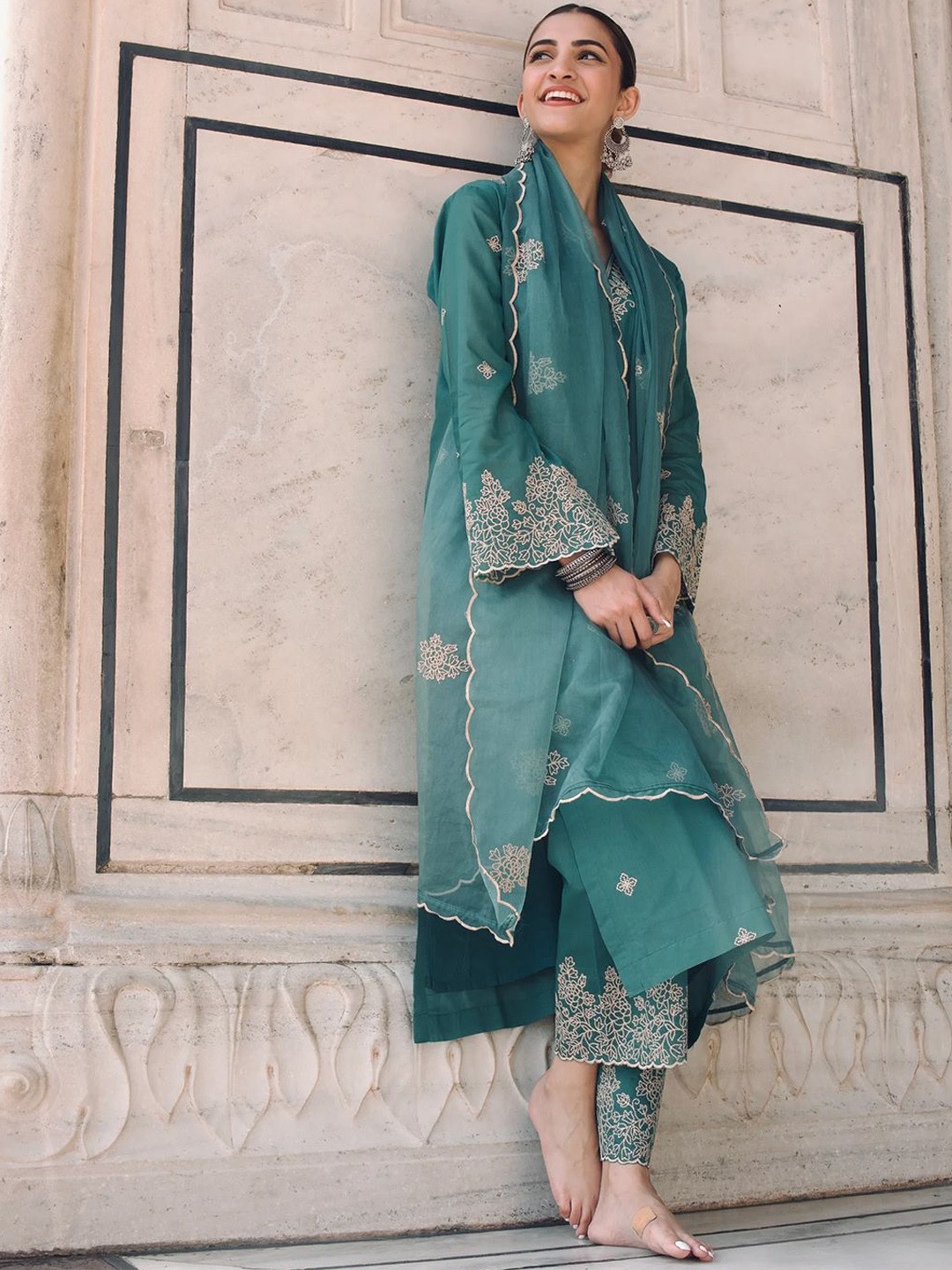
Dupatta Slipping? Necklines and Pinning Tricks That Keep It in Place with high round necks
High round necks and band collars are reliable choices for a single-shoulder or two-shoulder dupatta drape. A pin can pass through the dupatta and the kurta seam just below the collarbone, where the attachment remains hidden behind the fold. A narrow band collar also prevents the fabric from drifting towards the neck during movement.
A kurta with a structured neckline works particularly well for formal sets carrying embroidered or jacquard dupattas. Elegant Silk Embroidered Kurta Pant Set with Jacquard Dupatta illustrates why a defined neckline and a controlled shoulder fold are useful when the dupatta has visible texture and additional weight.
Dupatta Slipping? Necklines and Pinning Tricks That Keep It in Place with V-necks
Moderate V-necks and closed keyhole necklines can hold a dupatta securely when the pin is placed beside the neckline rather than across the centre opening. A pin placed directly at the point of a deep V can pull the neckline out of shape and make the fastening visible.
For a V-neck, fold 8 to 10 centimetres of fabric inward before pinning. The folded section creates a thicker anchor and keeps the pin away from the skin. A small brooch or decorative pin can cover the fold when the fastening needs to be visible.
Wide, deep, and off-shoulder necklines need an extra anchor because the fabric has fewer stable seams to rest against. A hidden shoulder pin should be paired with a second pin at the side seam, under the arm, or near the waist, depending on the drape.
Dupatta Slipping? Necklines and Pinning Tricks That Keep It in Place without bulk
The least bulky method is to pin through a folded section of dupatta and the garment seam, using a small flat safety pin from the underside. The pin should secure the fabric without piercing a prominent embroidered motif or pulling the kurta into a visible pucker.
- Arrange the dupatta on the shoulder before inserting a pin. The front and back lengths should be balanced according to the intended drape rather than adjusted after fastening.
- Fold the top edge inward by approximately 5 to 8 centimetres. A narrow fold keeps the fastening discreet, while a wider fold gives slippery fabric more grip.
- Place the pin 2 to 3 centimetres below the shoulder seam or collarbone area. Avoid placing a heavy pin directly on the edge of the neckline.
- Insert the pin from the underside, catching the dupatta fold first and then a small amount of the kurta seam allowance. Do not catch only the outer layer of the garment.
- Close the pin fully and smooth the fabric around it. A half-closed pin can snag silk, chiffon, zari, or loose embroidery.
Two small pins are usually safer than one large pin. One pin controls the shoulder and a second pin controls the front fall or side seam. Large pins create a concentrated hole and may make the garment hang unevenly, especially when the dupatta is light.
A brooch is suitable when the fastening is meant to be part of the styling. A brooch should be lightweight, have a secure clasp, and sit on a reinforced fold rather than directly through fragile net or organza. A brooch weighing more than approximately 15 to 20 grams can pull down a lightweight dupatta over several hours.
Dupatta Slipping? Necklines and Pinning Tricks That Keep It in Place for every fabric
Fabric-specific pinning works better than using the same fastening for every outfit. The surface texture, weight, opacity, and embroidery of the dupatta determine whether friction, a double fold, or a seam anchor will provide the best hold.
Dupatta Slipping? Necklines and Pinning Tricks That Keep It in Place for silk
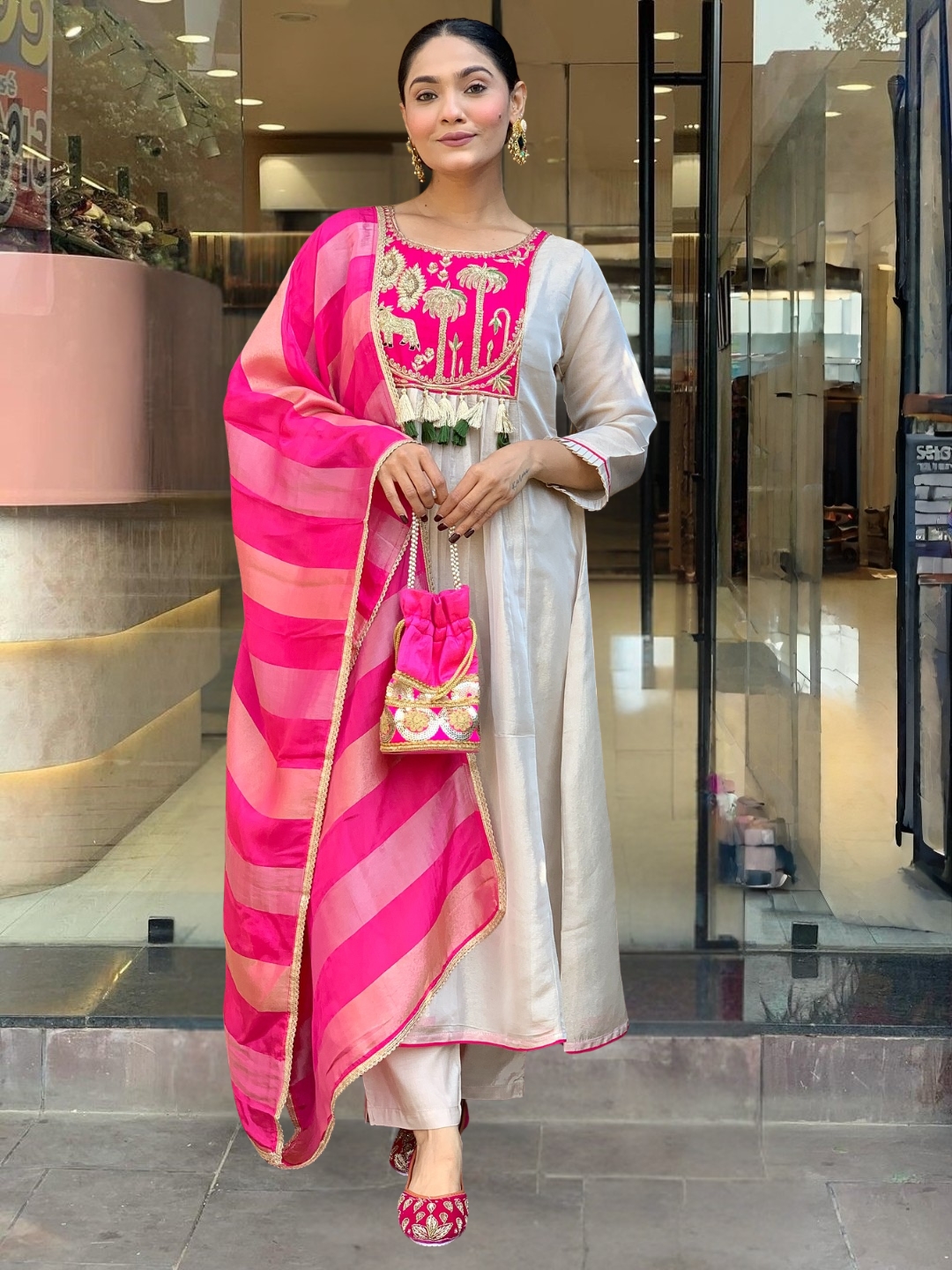
Silk and silk-blend dupattas need a double fold and a seam anchor because their smooth surfaces slide easily. Use two small pins when the dupatta has zari, jacquard texture, or heavy embroidery, placing the second pin 10 to 15 centimetres below the first.
Women's Mustard Silk Blend Kurta Set with Dupatta benefits from a shoulder fold that keeps the fabric away from the neck while preserving the fall of the silk blend. Stylish Navy Floral Silk Kurta Pant Dupatta Set can also be arranged with a compact shoulder pleat and a side-seam anchor, particularly when the floral border is heavier than the centre panel.
For a Banarasi silk dupatta, avoid pinning through a large zari motif. Pin beside the motif through the plain ground or along the inner edge of the border. This reduces the chance of disturbing metallic threads.
Dupatta Slipping? Necklines and Pinning Tricks That Keep It in Place for chiffon
Chiffon and georgette need friction from small pleats because their light, fluid weave offers little structure. Create three to five soft pleats at the shoulder, pin through the pleats, and leave the front section loose enough to retain movement.
A chiffon dupatta should not be pulled tightly across the chest. Tension makes the fabric slide faster and can distort the neckline. A lightly gathered shoulder fold provides more stability than a single flat layer.
Dupatta Slipping? Necklines and Pinning Tricks That Keep It in Place for organza
Organza and net need a reinforced fold because their open or crisp structure can show pinholes. Fold the top edge twice and place the pin through the folded section near a seam or embroidered border.
Royal Patola Printed Designer Gown with Elegant Dupatta demonstrates a useful approach for a statement dupatta: keep the printed or bordered section visible, then secure the plain upper fold near the shoulder. The fastening remains functional without interrupting the main print.
Dupatta Slipping? Necklines and Pinning Tricks That Keep It in Place for cotton
Cotton and printed viscose usually stay in place more easily because their surfaces have greater friction, but their weight can make an unbalanced drape uncomfortable. One shoulder pin and a neat front pleat are generally enough.
Onion Pink Printed Kurti Pant Dupatta Set is well suited to a simple shoulder drape with the dupatta folded to expose the print evenly. A second waist-level anchor can help when the dupatta is worn during commuting, shopping, or a long daytime event.
Dupatta Slipping? Necklines and Pinning Tricks That Keep It in Place during movement
A waist-level anchor, controlled pleats, and a practical shoulder length keep a dupatta stable during walking, sitting, and carrying a bag. The most secure drape isn't necessarily the tightest drape; it's the one that prevents fabric from catching while allowing the wearer to move naturally.
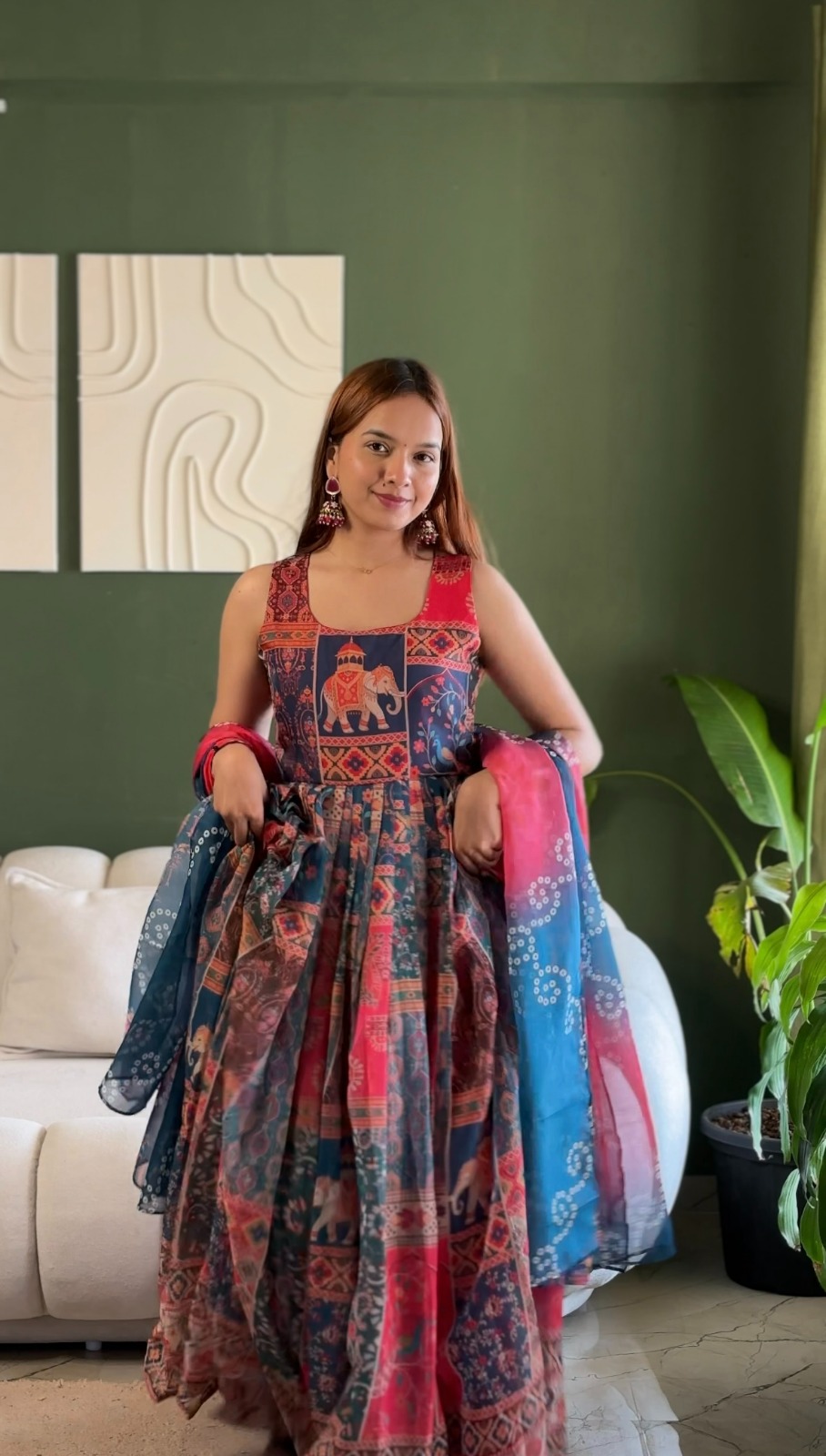
For a one-shoulder style, keep the front fall between mid-thigh and knee level for active daytime wear. A floor-skimming front fall has a higher risk of catching on footwear and furniture. For a two-shoulder drape, make the front pleats 8 to 12 centimetres wide and pin only the upper fold, allowing the lower section to fall freely.
A small hidden pin at the waist or side seam stops the front panel from swinging outward. The pin should connect the dupatta to an inner seam or the side of the kurta, not to a loose outer edge. This method is particularly helpful for Rayon Slub Embroidered Kurta Pant Dupatta Set, where the slub texture already gives some grip but the embroidered sections may add weight.
Movement tests should happen before leaving home. Walk for five minutes, sit on a chair, raise both arms, turn your head, and carry the handbag you plan to use. If the dupatta moves more than 3 to 5 centimetres during these actions, reposition the shoulder fold or add a discreet side anchor rather than tightening the entire drape.
For a Haldi ceremony or another active family function, a shorter front fall and a waist-level pin are more practical than a completely loose drape. For a seated dinner, a longer fall may be comfortable, but the lower edge should remain clear of chair wheels, footwear, and serving trays.
Dupatta Slipping? Necklines and Pinning Tricks That Keep It in Place for events
Event styling should match the amount of movement, the fabric weight, and the expected duration of wear. A two-hour indoor gathering may need one concealed pin, while a wedding ceremony lasting six or more hours usually benefits from two anchors and a pre-event movement test.
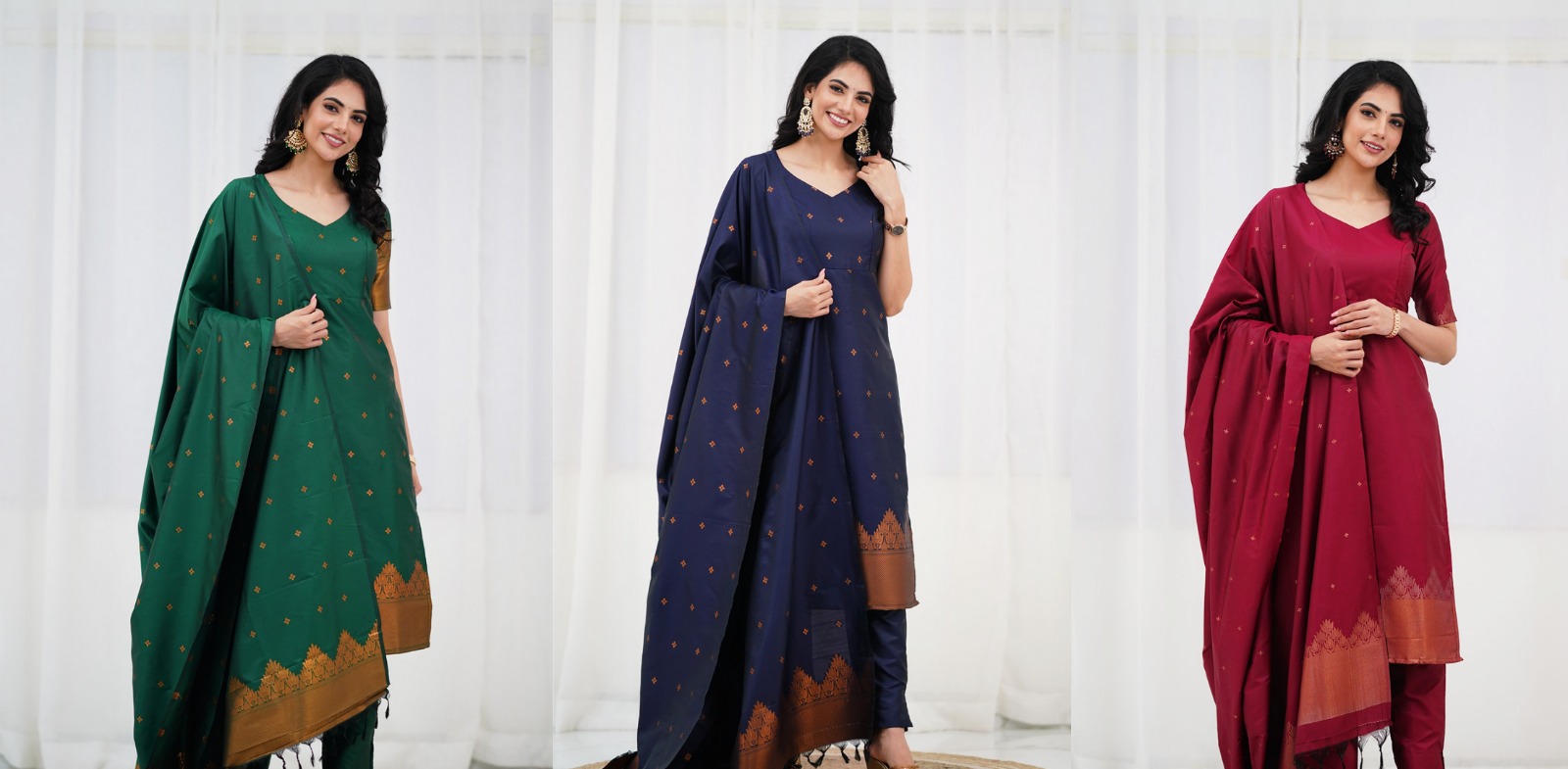
Blush Pink Embroidered Kurta Pant Dupatta Set Women and Maroon Embroidered Kurta Pant Dupatta Set for Women are suited to a formal shoulder drape where the embroidered border remains visible. Fold the upper edge behind the shoulder, pin near the seam, and use a second pin below the collarbone if the border is dense.
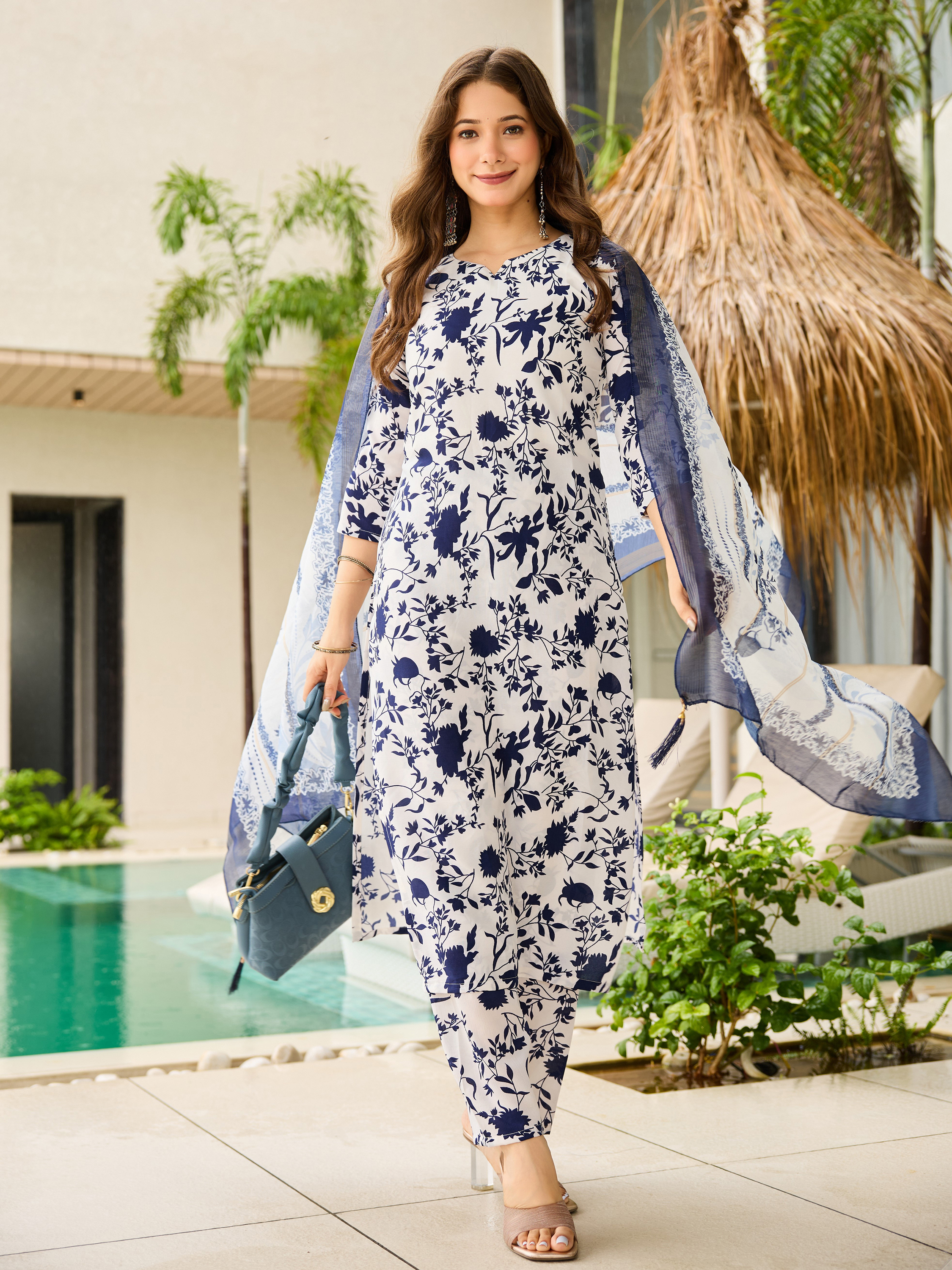
For a lighter everyday outfit, Stylish Navy Floral Silk Kurta Pant Dupatta Set can be worn with narrow pleats over one shoulder and a loose front fall. A pin should sit beneath the top pleat rather than on the visible floral panel.
When the outfit includes a very smooth silk blend, wear a cotton camisole or a garment with a slightly textured shoulder beneath the kurta if the neckline allows it. Extra fabric layers should not show, but a small increase in friction can reduce sliding. Avoid applying hairspray, fabric adhesive, or double-sided tape to a dupatta because those substances can stain silk, alter the sheen, or leave residue.
Comfort is part of secure styling. A pin should never press into the neck, restrict breathing, pull a sleeve, or create sharp tension across the bust. Remove the dupatta and reposition the anchor if the skin feels pinched after 15 to 20 minutes.
Dupatta Slipping? Necklines and Pinning Tricks That Keep It in Place: a quick checklist
A stable dupatta usually needs the right fabric fold, a nearby garment seam, and a drape length suited to the event. The following checklist helps identify the fix before adding more pins.
- Check whether the fabric is slippery, heavy, crisp, or textured.
- Choose a shoulder or neckline seam that can support the fastening.
- Fold the upper edge by 5 to 8 centimetres before inserting a pin.
- Use two small flat pins instead of one oversized pin for heavy embroidery.
- Keep pins away from zari motifs, delicate net, lace, and beadwork.
- Add a side-seam or waist-level anchor when walking or carrying a bag.
- Test the drape while sitting, walking, and lifting the arms.
- Remove pins carefully after wearing and inspect the fabric for snags.
The goal is a dupatta that stays aligned without looking tightly fixed. A clean fold, a concealed seam anchor, and a fabric-appropriate pin usually provide better results than repeated adjustments throughout the day.
Common Questions About Keeping a Dupatta Secure
How do I stop my dupatta from slipping off one shoulder?
Fold 5 to 8 centimetres of the upper edge inward and pin the fold to the kurta seam just below the collarbone. Add a second small pin at the side seam or waist if the dupatta is heavy or the outfit will involve considerable movement.
Which neckline is best for wearing a dupatta?
High round necks, band collars, closed keyhole necklines, and moderate V-necks generally offer the most secure bases. Deep V-necks, wide boat necks, and off-shoulder necklines need more careful placement and often require a second anchor.
Can I pin a dupatta without damaging silk or zari?
Yes, provided the pin passes through a folded plain section or seam allowance rather than a zari motif or embroidered thread. Use a small sharp flat safety pin, close it completely, and avoid repeatedly pinning the same spot.
How many pins should I use for a heavy embroidered dupatta?
A heavy embroidered dupatta usually needs two small pins: one at the shoulder and one 10 to 15 centimetres lower or at the side seam. Extra pins should be added only if movement testing shows that the front fall still swings or pulls.
How can I secure a chiffon or georgette dupatta?
Create three to five soft pleats at the shoulder and pin through the pleated section rather than a single flat layer. Keep the front fall relaxed because pulling chiffon or georgette tight can make the fabric slide faster.
Is a brooch safe for keeping a dupatta in place?
A lightweight brooch is safe when it is attached to a reinforced fold or sturdy border. Avoid heavy brooches above approximately 15 to 20 grams on chiffon, net, or organza because their weight can stretch the fabric and create visible holes.


