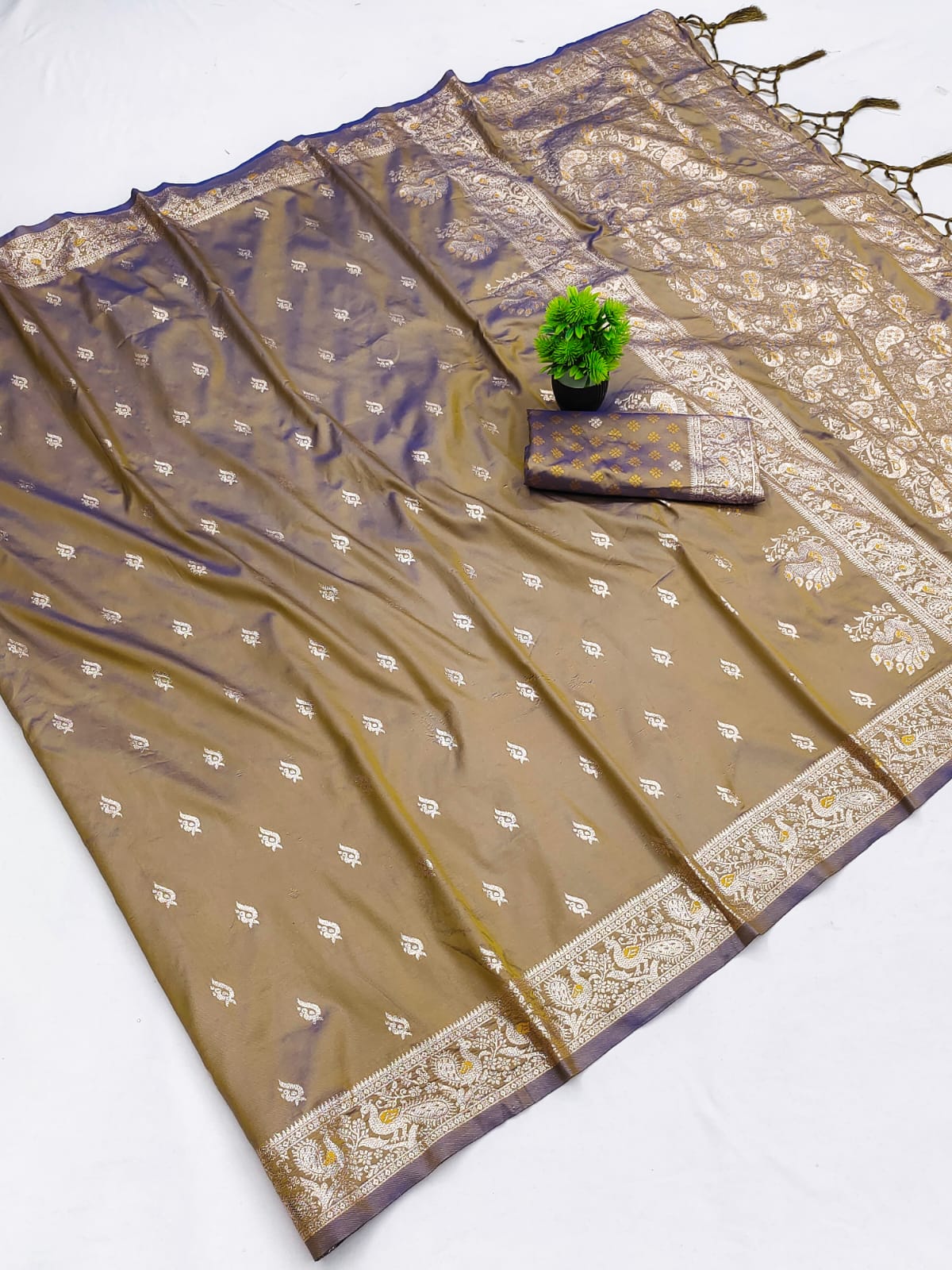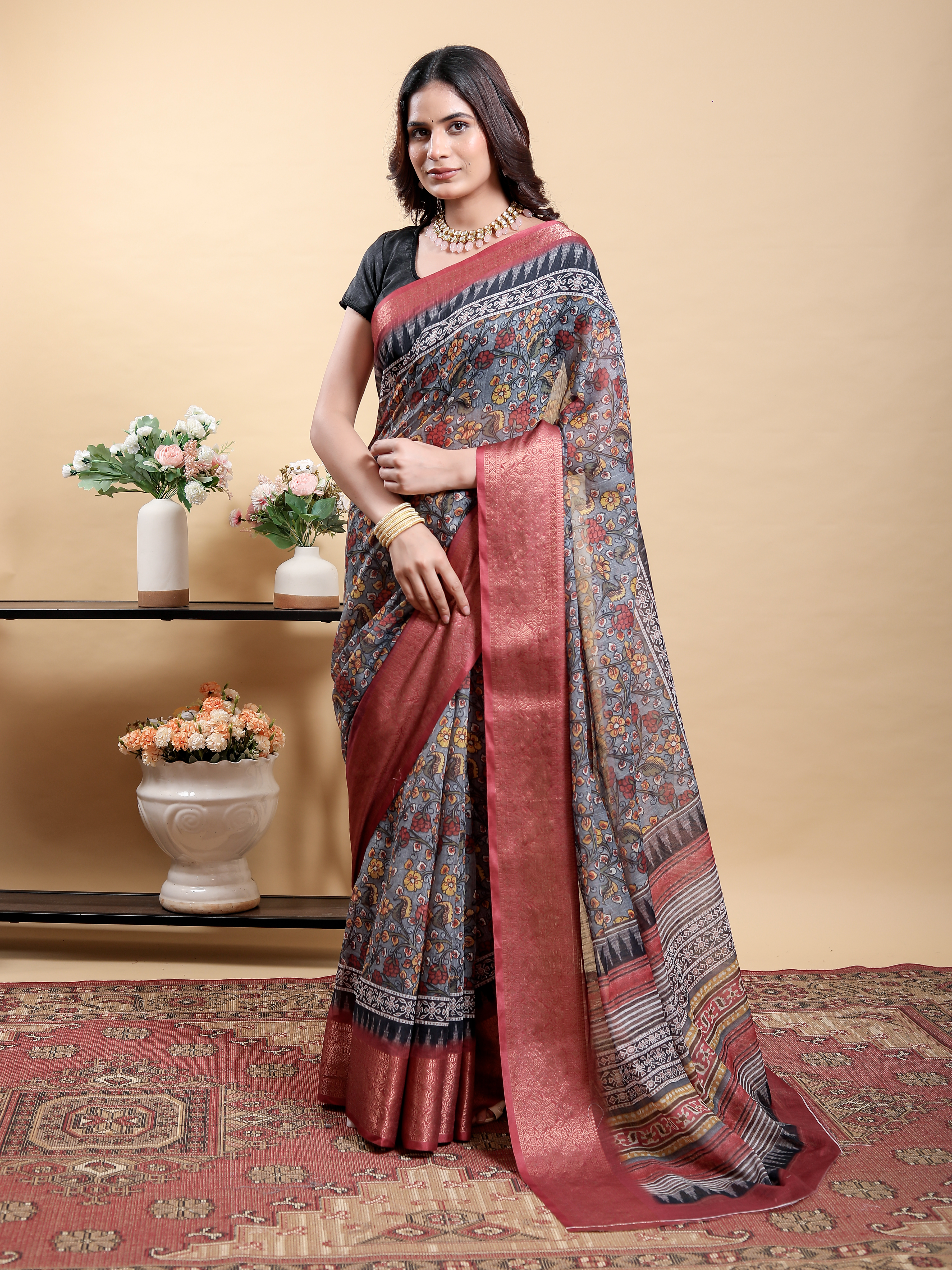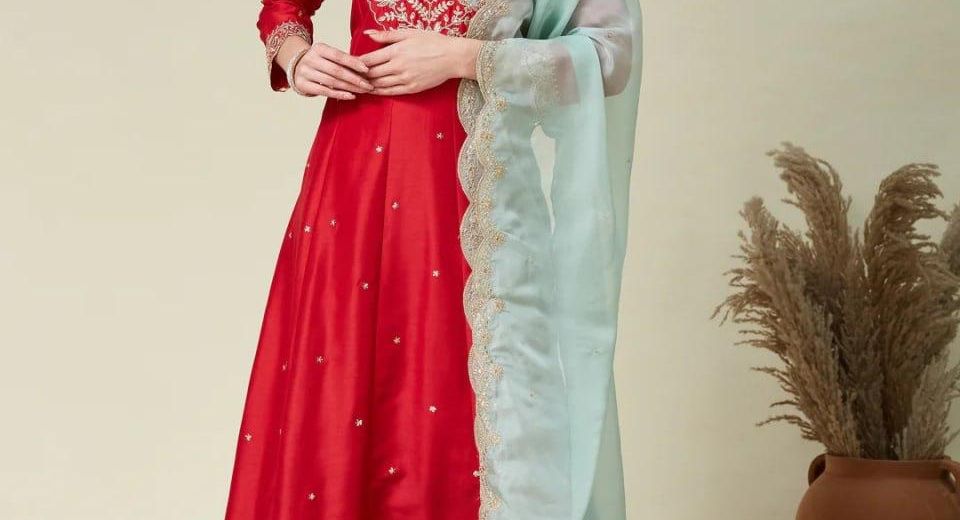
Choosing a Dupatta for an Anarkali With a Heavily Worked Yoke starts with one useful rule: the dupatta should frame the yoke, not compete with it. A dense neckline, embroidered bodice or embellished yoke already creates a focal point near the face. The right dupatta adds movement and proportion through its fabric, colour, border and drape while leaving enough of the Anarkali visible to appreciate the workmanship.
The decision becomes especially important with zari, sequins, gota patti, moti lace and dense thread embroidery. A very ornate dupatta can make the upper half of the outfit look crowded, while an extremely plain dupatta may appear disconnected from the suit. The best pairing depends on the Anarkali's base colour, the scale of the yoke, the weight of the embellishment and the formality of the event.
What fabric makes the best Dupatta for an Anarkali With a Heavily Worked Yoke?
A lightweight or moderately structured dupatta usually makes the best Dupatta for an Anarkali With a Heavily Worked Yoke. Chiffon, georgette, organza, soft net and light silk blends can provide movement or definition without adding excessive bulk around the neckline.
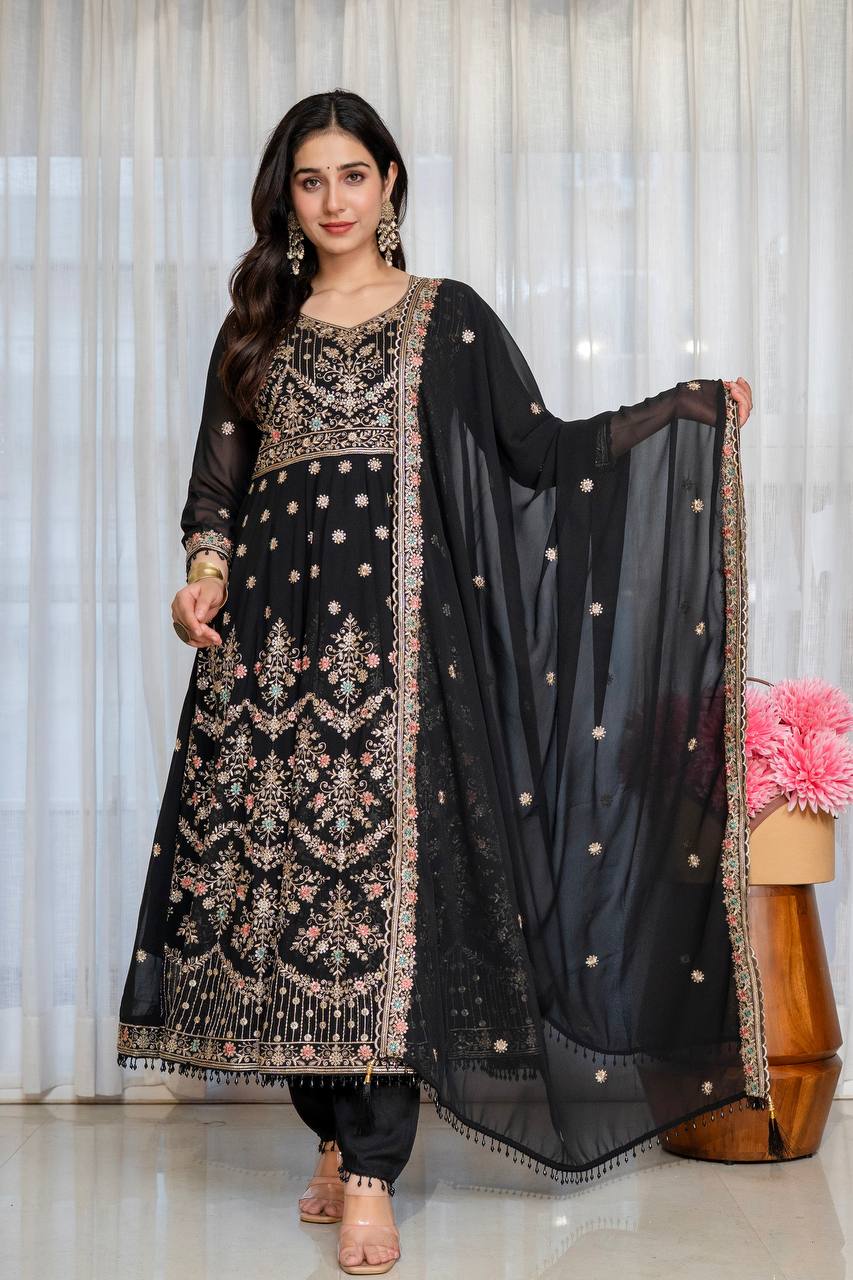
A yoke with raised zari, sequins or three-dimensional lace needs visual breathing room. A solid dupatta in a related colour is often more effective than another all-over motif. For example, a black Anarkali with gold zari can be paired with a black, antique-gold or muted beige dupatta, provided the border repeats one detail from the yoke.
Fabric weight matters as much as decoration. A stiff brocade dupatta can hold a dramatic shoulder drape, but it may sit heavily over a large embroidered chest panel. A fine georgette dupatta falls closer to the body and is easier to manage for a long evening. Organza creates a crisp outline and photographs well, although organza can stand away from the body instead of flowing softly.
For a ready-made salwar suit dupatta, inspect the finished width and border before deciding on a drape. A narrow dupatta with a substantial border may look elegant over one shoulder, while a wide, plain dupatta is better suited to a relaxed front fall. The word "embroidered" doesn't automatically indicate that the dupatta is heavy; check whether the work covers the entire surface or only the edges.
A useful fitting test is to place the dupatta over the suit before dressing fully. If the fabric pulls the shoulder downward, folds directly across the heaviest embroidery or makes the neckline difficult to see, choose a lighter option or a less covered drape.
How should colour be selected for a Dupatta for an Anarkali With a Heavily Worked Yoke?
Choose a dupatta that repeats one secondary colour from the yoke when the Anarkali already has a strong base shade. Repeating a small gold, ivory, rose, green or maroon detail creates coordination without making the outfit look overly matched.
A monochromatic pairing is the safest option for dense embroidery. A purple Anarkali with a plum or lavender dupatta looks refined when the yoke contains several metallic tones. Purple Embroidered Silk Anarkali Suit Set for Weddings illustrates why a related shade can let silk and embroidery remain central rather than introducing a distracting contrast.
Contrast can work beautifully when the yoke is mostly metallic. A black suit with gold zari can take a deep wine, emerald or antique-gold dupatta. A white Anarkali with gota patti can support a soft pink, mint, yellow or gold dupatta, depending on the colour already present in the gota work. Strong contrast is most successful when the dupatta border shares at least one material or colour with the yoke.
Use the 60-30-10 principle as a practical colour guide. Let the Anarkali provide roughly 60 percent of the visual colour, the dupatta contribute around 30 percent, and jewellery or footwear supply the remaining accent. The proportions don't need mathematical precision, but the method prevents a bright dupatta from overpowering a carefully embroidered bodice.
Black outfits offer more flexibility than they first appear to. Black with gold zari feels formal and traditional, black with silver sequins feels cooler and more evening-oriented, and black with ivory or beige creates softer definition around the face. Black Embroidered Anarkali Suit Set with Zari Work is a useful example of a suit where a controlled metallic border can connect the dupatta to the yoke.
Should a Dupatta for an Anarkali With a Heavily Worked Yoke be plain or embroidered?
A plain dupatta with an ornate border is usually the most balanced choice for a heavily worked yoke. The plain field reduces visual noise, while the border supplies enough decoration to make the dupatta feel intentionally designed for the suit.
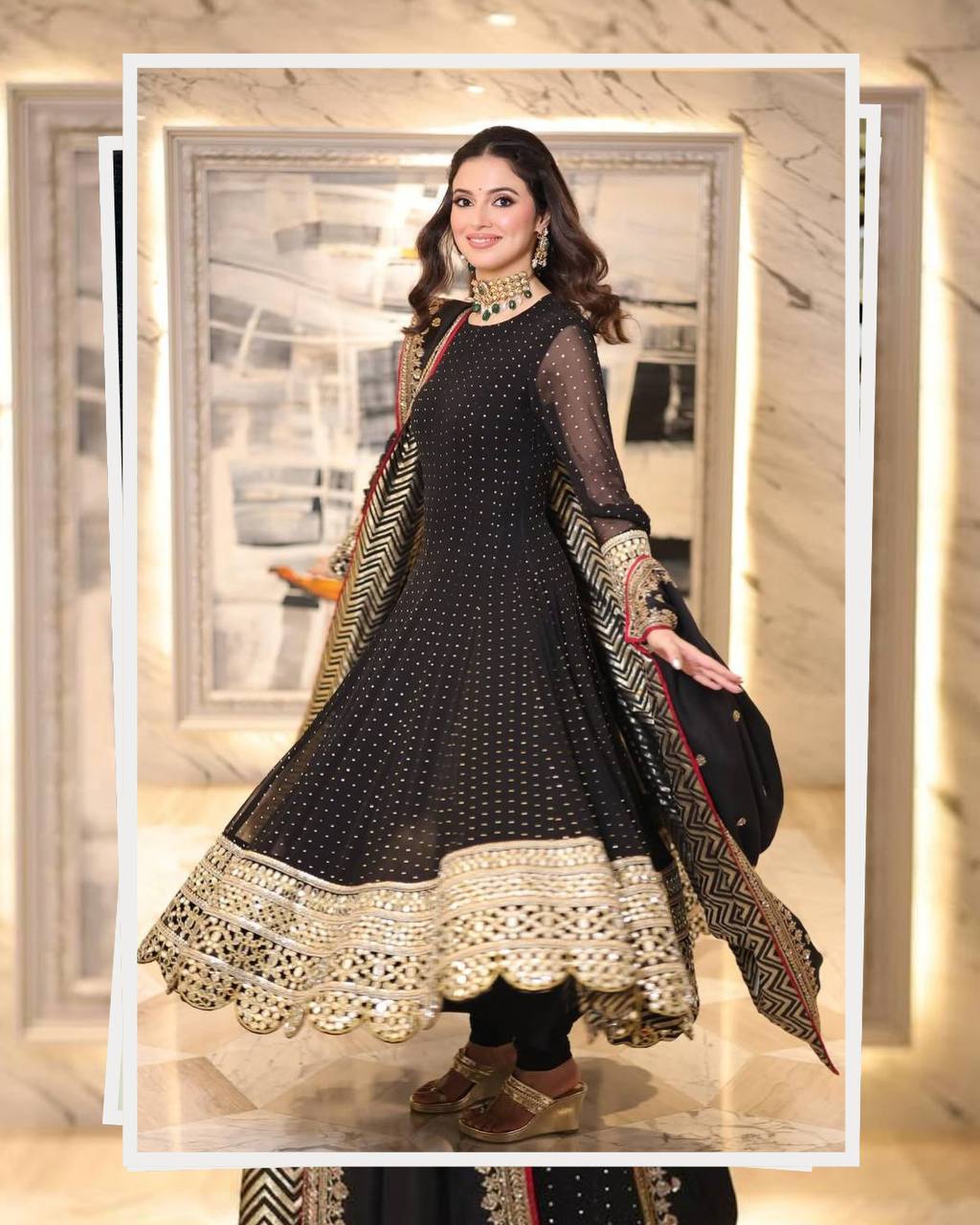
Choose an all-over embroidered dupatta when the yoke has comparatively open spacing, the embroidery is fine rather than raised, or the occasion calls for a more elaborate wedding look. Dense sequin work on both the yoke and the dupatta can become uncomfortable and visually heavy, especially when the fabric catches light from multiple directions.
Border width changes the perceived proportion of the outfit. A border between 1 and 2 inches gives a neat outline for office celebrations and formal dinners. A border of 3 to 5 inches creates a more ceremonial effect and works well for a wedding guest outfit when the Anarkali has enough flare to support the extra visual weight.
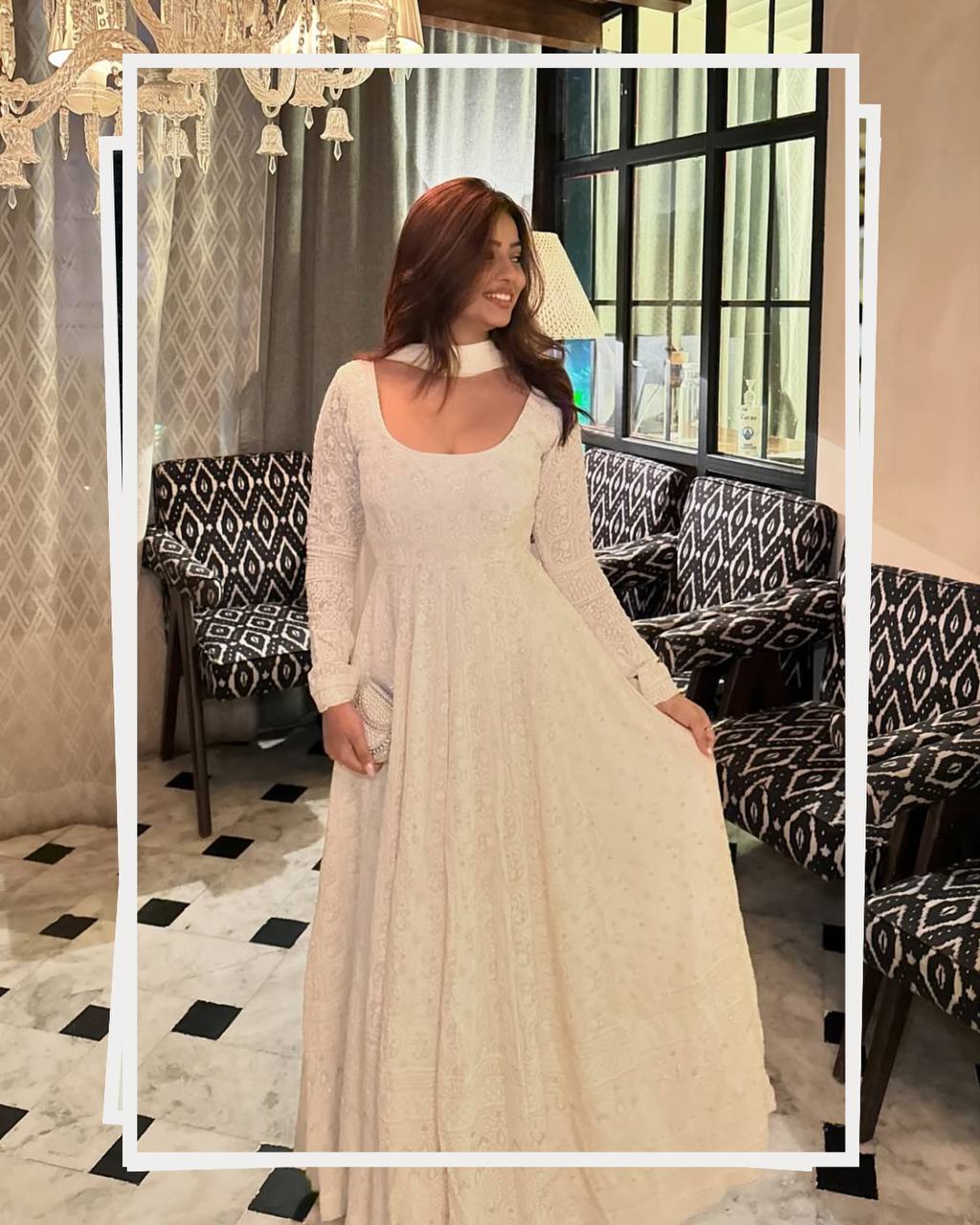
Gota patti deserves special attention because its reflective surface can look festive without covering the entire dupatta. White Embroidered Anarkali Suit Set with Gota Patti Dupatta demonstrates the value of using a classic surface accent as a frame rather than placing heavy work directly over every part of the garment.
Sequin and moti lace combinations need careful handling. A dupatta with a narrow sequin border can echo the outfit, but a second wide lace edge may compete with the yoke and sleeves. Black Anarkali Suit Set with Sequin Zari and Moti Lace Work and Black Anarkali Suit with Zari, Sequins & Moti Lace Work show why texture repetition should be selective: repeat one or two finishes, not every finish at maximum density.
Which drape suits a Dupatta for an Anarkali With a Heavily Worked Yoke?
The open shoulder drape keeps the yoke most visible because the dupatta travels from one shoulder and falls beside the body instead of covering the chest. This drape is particularly effective for photographs, wedding entrances and outfits with a prominent neckline.
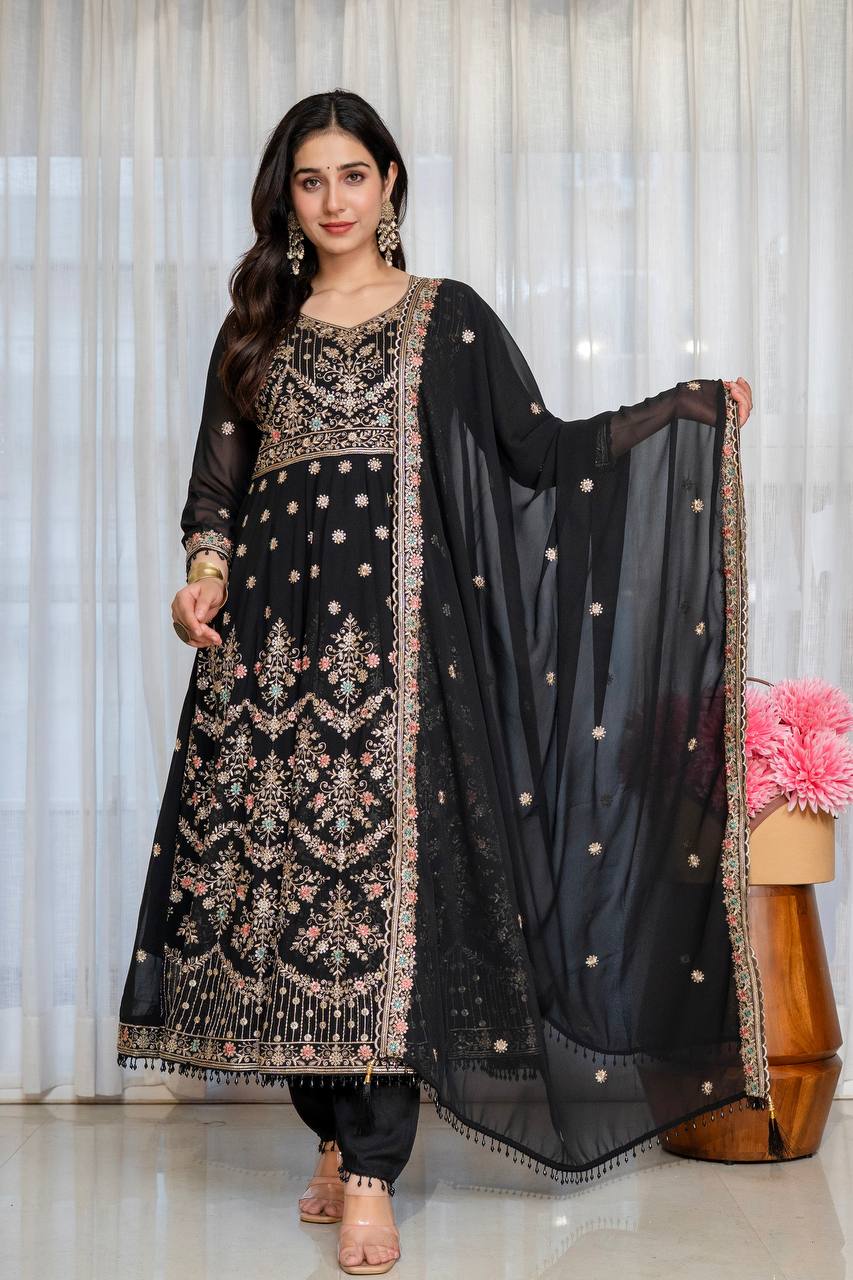
For an open shoulder drape, place one end over the shoulder opposite your preferred hand, allow the front edge to fall vertically, and bring the remaining length behind the opposite arm or across the back. A discreet pin at the shoulder prevents slipping. The drape should sit beside the yoke rather than directly on top of it.
The one-sided pleated drape offers more control for dancing, greeting guests or carrying a small bag. Pleat the dupatta into folds approximately 3 to 4 inches wide, place the pleats over one shoulder, and let the other end fall behind. Keep the front chest area clear if the yoke extends below the bust line.
A loose front drape works for a plain or lightly bordered dupatta when the Anarkali has a narrow yoke. Place the dupatta around the neck with both ends falling in front, then pull one side slightly back to avoid covering the embroidery. This style is less suitable for a heavily decorated yoke that reaches far down the torso.
The Gujarati-style front drape can look striking with a narrow yoke and a prominent border, but it covers more of the front panel. Use the Gujarati drape only when the dupatta's border is a major design feature and the yoke is visible above the crossing point. Avoid this drape for very short bodices with embroidery concentrated around the bust.
Pin placement affects the finished silhouette. Use a small safety pin inside the shoulder seam or beneath a brooch rather than placing a pin through visible zari. For delicate organza, use a fine pin and avoid repeated pinning in the same area, because tiny punctures can become noticeable under bright light.
How does occasion change a Dupatta for an Anarkali With a Heavily Worked Yoke?
Silk, zari and dense metallic embellishment suit weddings and evening celebrations, while cotton, rayon cotton and lighter embroidery are more comfortable for daytime gatherings. Fabric choice should reflect temperature, movement and the amount of time the outfit will be worn.
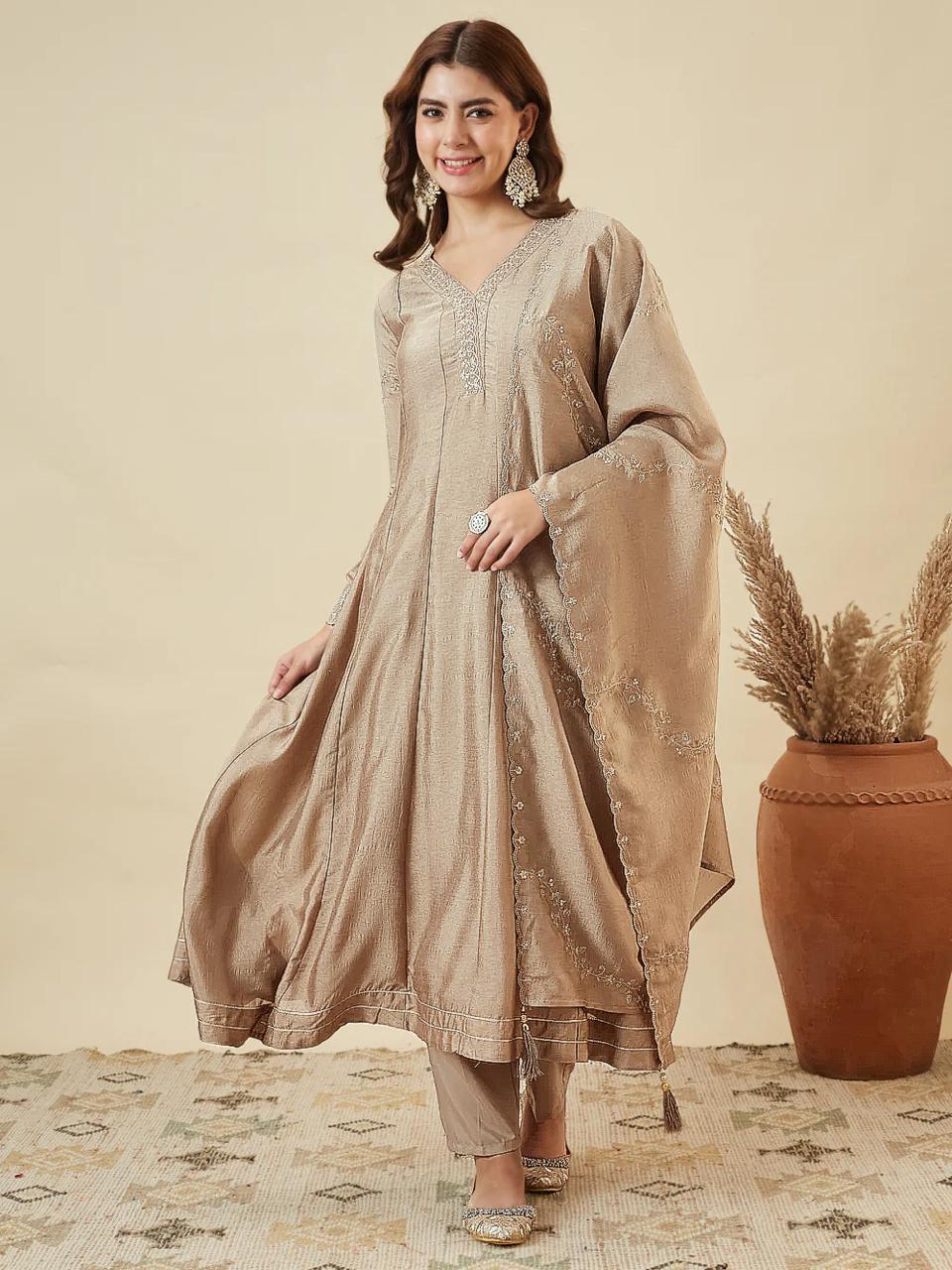
A silk Anarkali with a silk-blend or organza dupatta creates a polished wedding silhouette. Purple Embroidered Silk Anarkali Suit Set for Weddings suits a formal setting where the sheen of silk can be balanced by a controlled drape. Vichitra silk has a smooth, slightly lustrous fall, while Banarasi silk is recognised for woven brocade and zari traditions; the two surfaces should not be styled as though they behave identically.
Maroon Vichitra Silk Embroidered Anarkali Suit Set works well with a dupatta in maroon, antique gold or muted beige. Maroon tones can look deeper under evening lighting, so a warm gold border may brighten the face more effectively than a very dark contrast. Keep jewellery finishes consistent with the dominant metallic thread.
Rayon cotton and cotton salwar suits are practical for daytime festive events because they generally feel easier to wear for longer periods. Maroon Embroidered Rayon Cotton Anarkali Suit Set | Varnavi can be styled with a breathable, lightly bordered dupatta for a family lunch, cultural programme or daytime Haldi ceremony. Cotton doesn't need to look casual when the cut, colour and border are well coordinated.
Formal salwar suit ladies' styling benefits from restraint. For a work-adjacent event, choose a clean shoulder drape, a medium-width border and minimal layered jewellery. For party wear, sequins, zari or a reflective gota border can be more expressive, but the yoke should remain the visual anchor.
How can regional style inform a Dupatta for an Anarkali With a Heavily Worked Yoke?
Regional embroidery can guide the dupatta through motif scale, colour palette and border treatment. A dupatta doesn't need to copy the yoke exactly; it needs to share a visual language with the Anarkali.
Punjab Phulkari Embroidered Salwar Suits are associated with vivid thread work and bold floral energy, so a Phulkari-inspired pairing benefits from a relatively calm dupatta field with a clear border. Too many competing floral motifs can make a heavily worked yoke appear indistinct.
Kashmir Embroidered Salwar Suits often suggest delicate floral or paisley-inspired detailing. A soft, fluid dupatta in a related colour can preserve that fine visual quality. A narrow embroidered edge is usually more compatible than a large, stiff metallic border.
Hyderabad Embroidered Salwar Suits can inspire a more ornate approach when the outfit includes rich colour, metallic details or formal finishing. Coordinate the dupatta with one dominant embellishment instead of combining zari, sequins, mirror work and lace in equal quantities.
Delhi Chikankari Embroidered Salwar Suits and Lucknow Chikankari Embroidered Salwar Suits offer a useful lesson in restraint. Chikankari's delicate texture pairs naturally with a light, translucent dupatta or a softly bordered cotton option. If the Anarkali yoke is densely embellished, a Chanderi dupatta with a modest edge can add structure without obscuring the embroidery.
Regional references should inform styling rather than become a reason to mix unrelated techniques carelessly. A heavily zari-worked yoke, a dense Phulkari dupatta and a broad sequin border may each be beautiful separately, but the combination needs a controlled colour palette and a simple drape.
What should be checked before buying a Dupatta for an Anarkali With a Heavily Worked Yoke?
Check the dupatta's dimensions, fabric weight, border placement, colour under natural light and compatibility with the yoke before buying. These five checks prevent most styling and comfort problems.
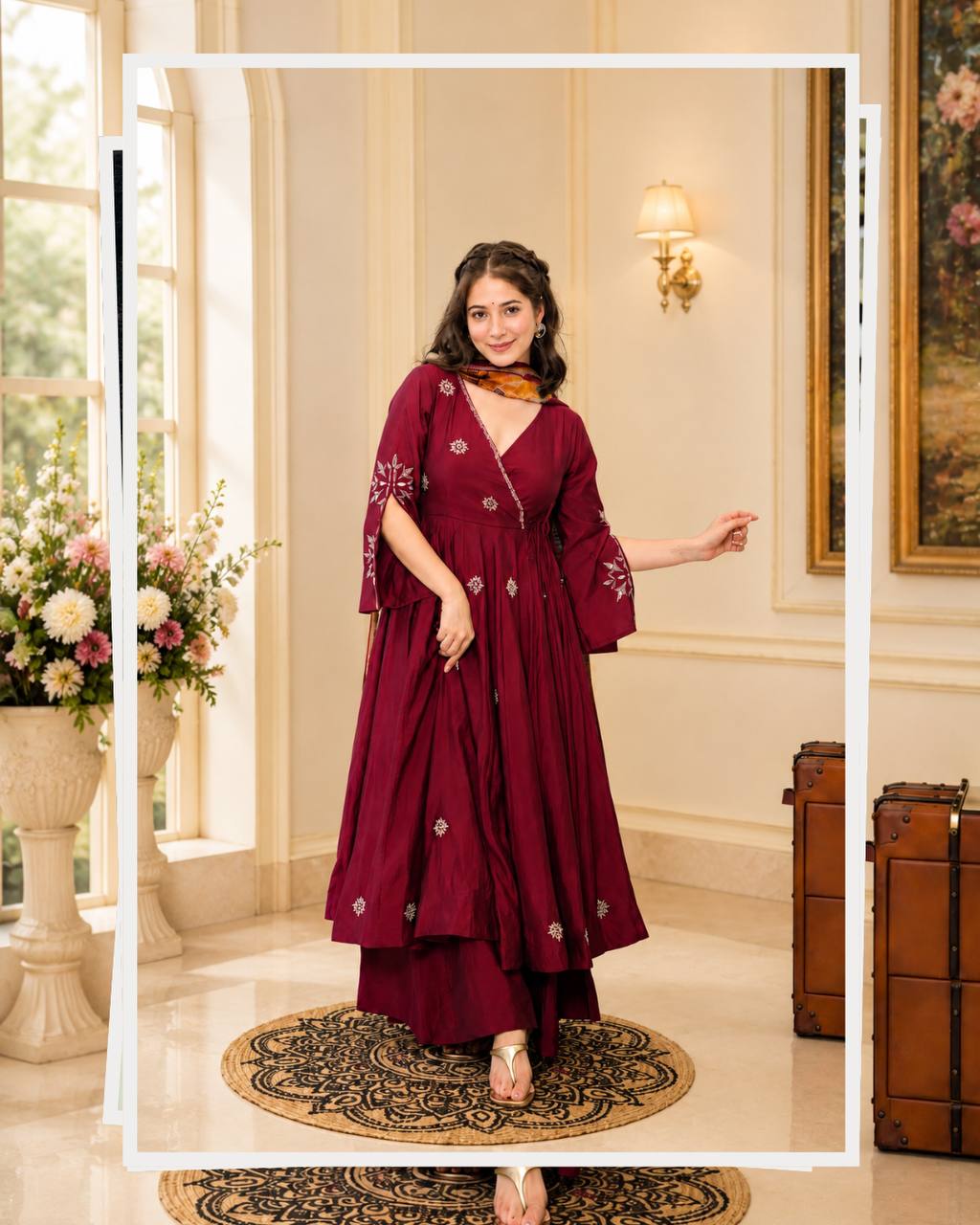
Measure the dupatta length from end to end and note its width. A length of approximately 2.25 to 2.5 metres is versatile for a shoulder drape, while a wider piece gives more coverage but can hide the yoke. Confirm whether the border runs along both long edges or only one edge, because the construction changes how the fabric can be folded.
Place a ruler or measuring tape against the yoke to estimate how much embroidery needs to remain visible. If the yoke extends 10 to 12 inches below the neckline, choose a side-fall or shoulder drape rather than a neck wrap that crosses the centre.
Inspect the reverse side of zari, sequins and moti lace. Rough thread ends or exposed metal edges can catch on silk, chiffon and georgette. A lining or finished backing improves comfort, especially for a party wear salwar suit that will be worn for several hours.
Test the colour in daylight and warm indoor light. Gold can look yellow under warm bulbs, while silver sequins can appear blue or grey in cool lighting. Photographing the full outfit from approximately two metres away also reveals whether the dupatta is overpowering the yoke.
Care affects the final choice. Dry-clean heavily embellished silk, avoid machine washing zari or sequin dupattas, and store embroidered pieces folded inside breathable cotton rather than plastic for long periods. Keep zari away from moisture and perfume, and place tissue between heavily worked folds to reduce snagging.
A successful pairing leaves the face, neckline and main yoke visible, keeps the fabric comfortable and repeats only enough colour or texture to make the outfit coherent. That principle works across readymade salwar suits, wedding Anarkalis, formal suit sets and lighter cotton styles.
Common Questions About Styling a Dupatta With a Heavily Worked Anarkali Yoke
Which salwar suit is trending now?
Anarkali suit sets with zari, sequins, gota patti and carefully framed dupattas remain strong choices for weddings and festive events. Current styling favours a visible yoke, a controlled border and a drape that allows the silhouette to move without covering the embroidery.
Where can I buy women’s suit sets online in India?
Women's suit sets are available through established ethnic-wear websites, marketplaces and specialised salwar-suit stores in India. Check the garment measurements, fabric description, dupatta dimensions, embellishment details, delivery timeline and exchange terms before ordering a readymade salwar suit.
What is the best app for buying ladies’ suits?
The best shopping app is the one that provides reliable garment measurements, clear fabric information, detailed product photographs and a practical exchange process. App popularity alone does not confirm that a dupatta will have the right length, border placement or weight for a heavily worked yoke.
Which brand is best for ladies’ suits?
The best brand depends on the wearer's preferred fabric, budget, embroidery style and occasion. Compare construction details rather than relying only on the label, especially when choosing between cotton salwar suits for daytime use and silk or zari Anarkalis for weddings.
Can a plain dupatta be worn with an embroidered Anarkali?
A plain dupatta can be an excellent choice with an embroidered Anarkali, particularly when the yoke contains dense zari, sequins or lace. Select a related colour and add a border that repeats one detail from the yoke so the pairing looks deliberate rather than incomplete.
How do I stop a heavy dupatta from covering the Anarkali yoke?
Use an open shoulder or one-sided pleated drape and pin the dupatta close to the shoulder seam. Avoid wrapping the fabric around the neck or crossing it over the centre chest when the embroidery extends below the neckline.