

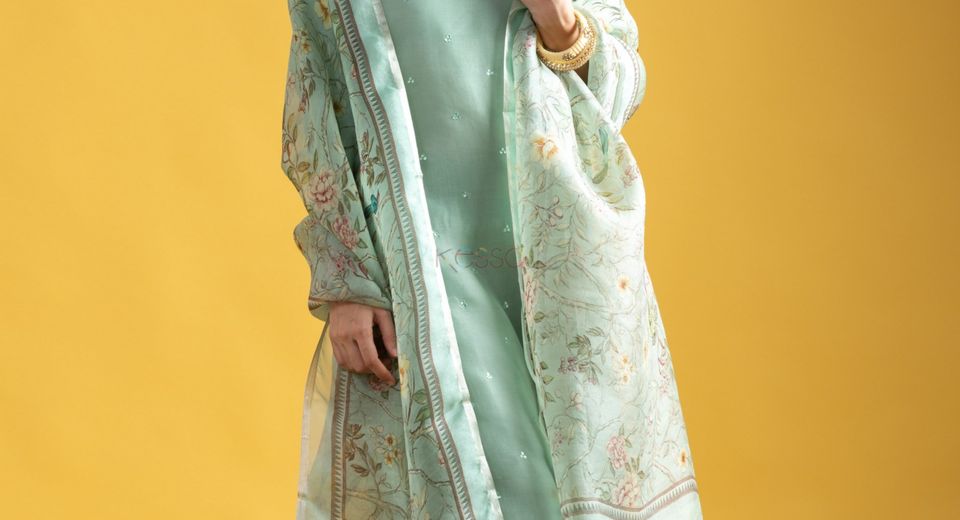
Drape, Volume and Comfort for Organza Dupatta vs Chiffon Dupatta depends on how much structure, movement and breathability you need from an outfit. Organza creates a crisp, lifted silhouette, while chiffon falls closer to the body with a softer, fluid finish. The right choice changes with the garment, weather, event length and amount of layering.
A dupatta isn't merely an additional layer. Fabric width, weave, finishing, embellishment and friction against the outfit determine whether a dupatta stays on the shoulder, forms neat pleats or keeps slipping while you move. Understanding those details makes it easier to choose between a dramatic organza layer and an easy chiffon one.
Drape, Volume and Comfort for Organza Dupatta vs Chiffon Dupatta: How Do the Fabrics Differ?
Organza dupattas are generally more structured and airy, whereas chiffon dupattas are lightweight, fluid and closer to the body. Both fabrics can be made from silk, polyester or blended fibres, so fibre content matters as much as the fabric name.
Organza has a relatively firm hand because its yarns are tightly twisted and the fabric is often finished to retain a crisp surface. The material can hold a pleat, support a scalloped border and create visible volume around the shoulders. Organza may feel slightly textured and can rustle when it moves.
Chiffon has a fine, open construction and a soft surface that allows it to slide and fold easily. Chiffon usually creates narrow, elongated pleats rather than a wide, architectural shape. The fabric packs down well, making a chiffon dupatta convenient for travel and comfortable for long periods of sitting.
Neither fabric is automatically superior. A silk organza dupatta can feel more breathable and luxurious than a heavy synthetic chiffon, while a good polyester chiffon can be more practical than delicate silk organza. Checking the label for fibre content, lining, border weight and embellishment gives a more accurate expectation than relying on the fabric name alone.
Drape, Volume and Comfort for Organza Dupatta vs Chiffon Dupatta: Which Drape Looks More Defined?
Organza provides volume and a defined outline, while chiffon brings fluid drape and lower bulk. Comfort depends on whether you prefer a dupatta that stays visibly in place or one that moves gently with the body.
What kind of drape does organza create?
Organza creates a lifted drape that holds its shape around the shoulder, neckline or arm. A single broad pleat can remain visible, and a wide border can frame the outfit without collapsing immediately.
The structured fall works particularly well with straight kurtas, lehengas and outfits that need visual balance at the upper body. A longer organza dupatta can be draped from one shoulder to the opposite wrist, but the fabric may require two or three secure pins because its crisp surface doesn't naturally cling to silk, satin or slippery lining.
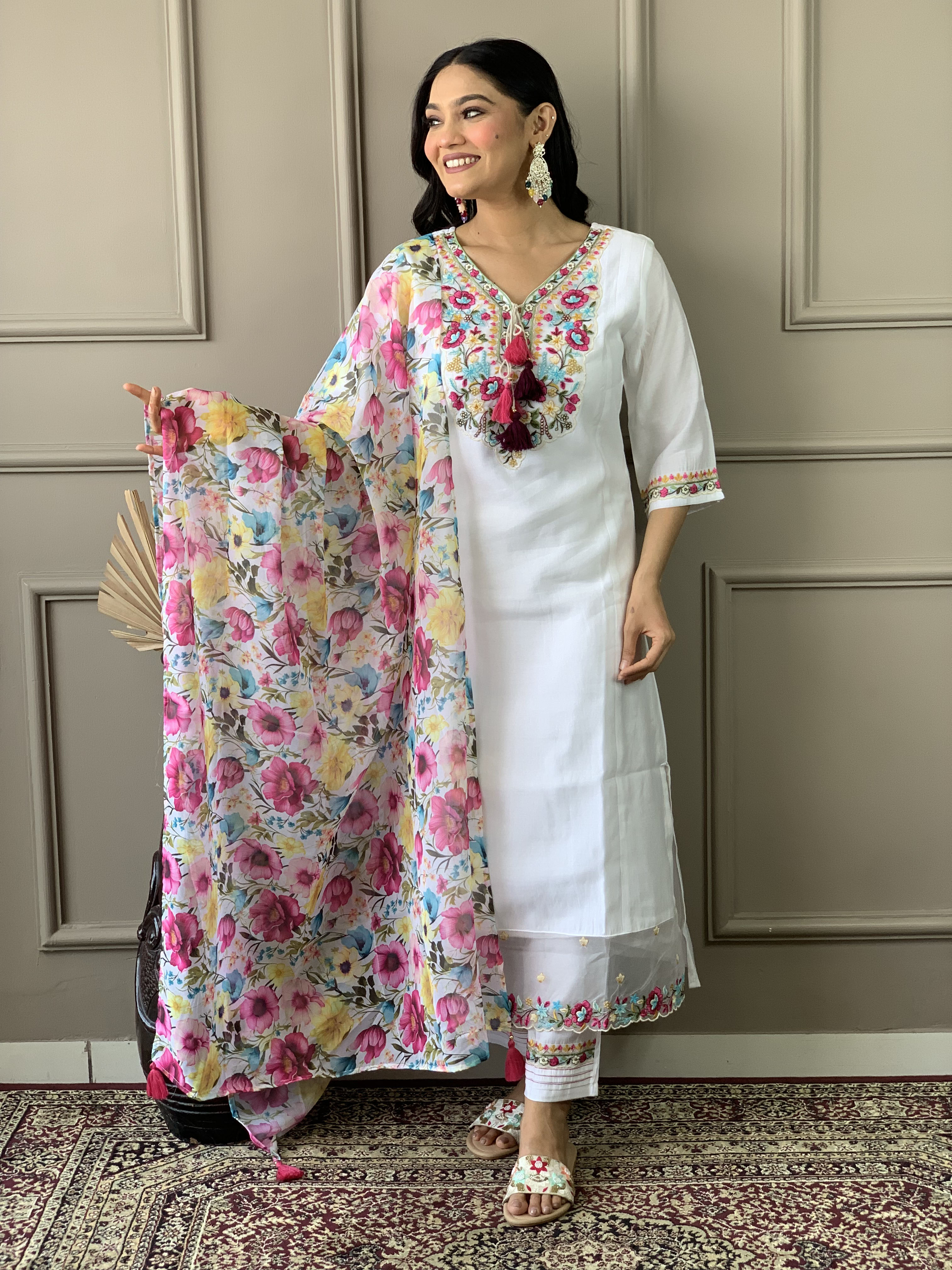
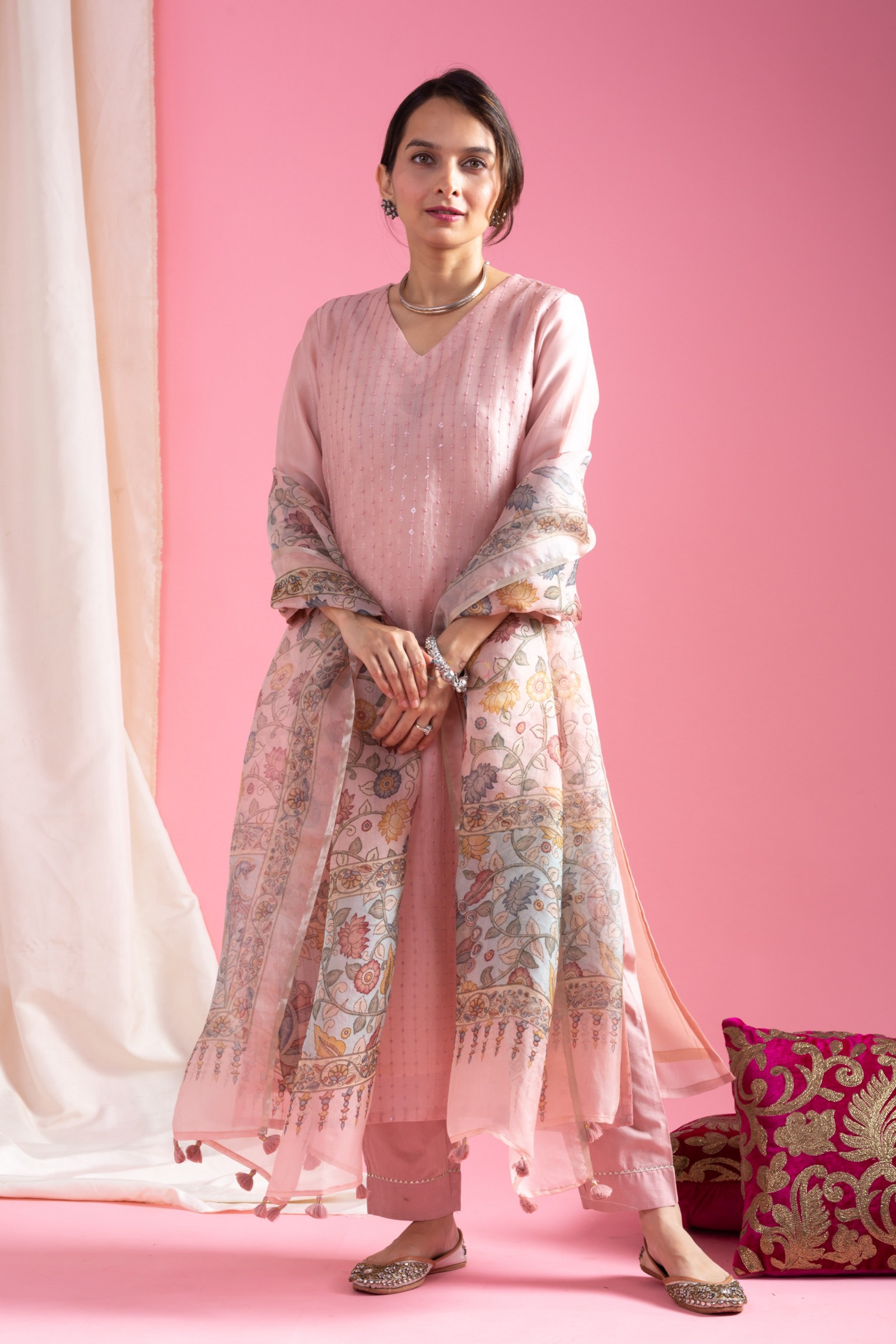
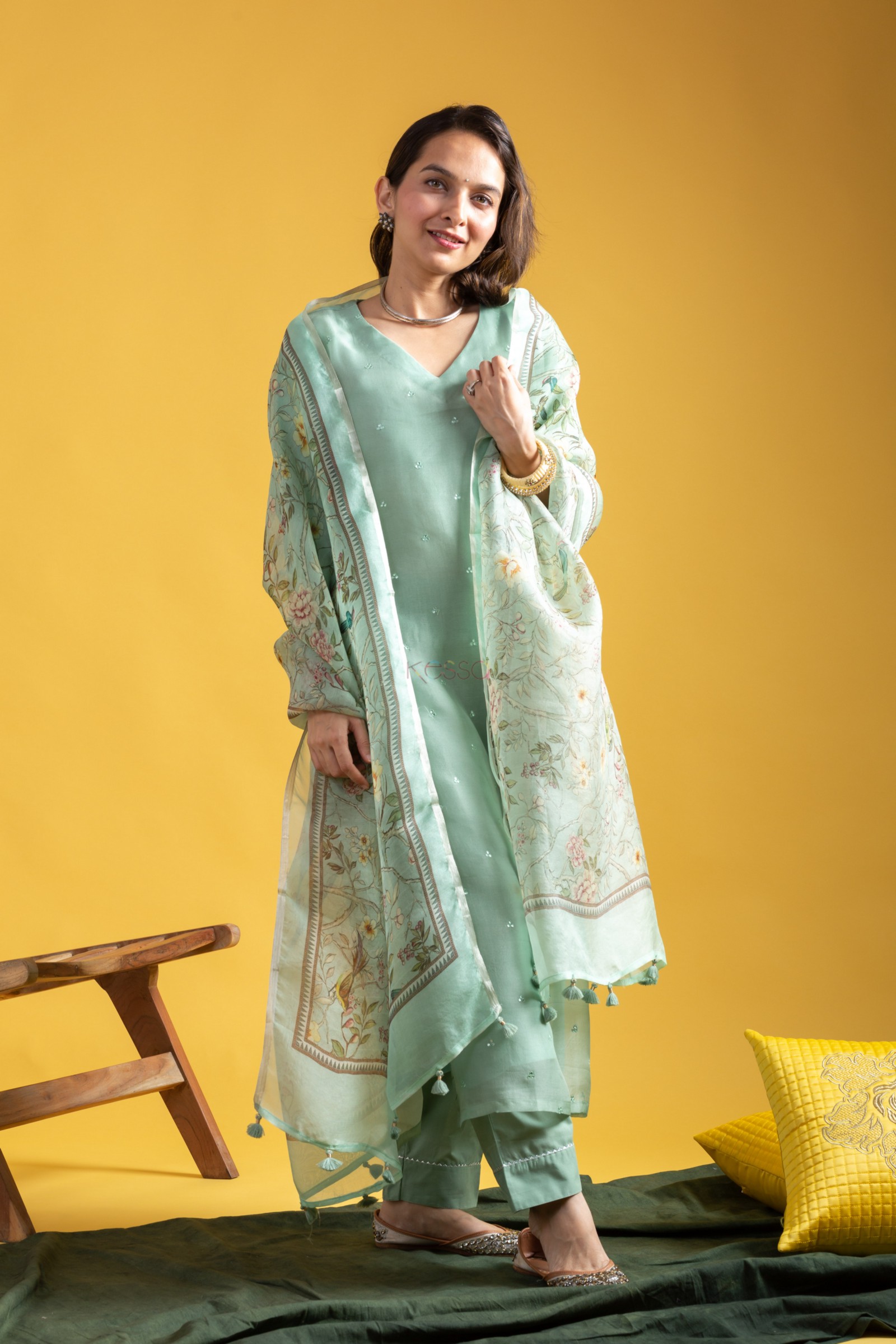
Blush Pink Chanderi Kurta Set with Organza Dupatta shows how a light base fabric and a more structured top layer can create a polished festive outline. White Chanderi Embroidered Kurta Set with Organza Dupatta offers a similar lesson: an organza layer can make embroidery appear more defined by creating space around the kurta.
What kind of drape does chiffon create?
Chiffon creates a fluid drape that follows the body, folds easily and moves with very little resistance. The fabric is useful when you want a relaxed shoulder fall, a front-looped dupatta or a narrow pleated arrangement.
Chiffon generally adds less visual volume than organza, but it also feels less restrictive while walking, dancing or sitting. The material can be gathered over one shoulder without producing a stiff ridge. A chiffon dupatta may need a discreet pin or small brooch because its smooth surface can slide during wear.
Shop Floral Digital Printed Chiffon Kurti Palazzo Set with zari embroidery demonstrates why chiffon suits palazzo silhouettes. Wide-leg trousers already create movement at the lower half, so a soft dupatta preserves that fluidity instead of adding a rigid upper layer. Floral Digital Printed Chiffon Kurti Palazzo Set with Zari Embroidery also shows how printed chiffon can carry colour and surface interest without becoming visually heavy.
Drape, Volume and Comfort for Organza Dupatta vs Chiffon Dupatta: Which Is Better in Warm Weather?
Chiffon is usually more comfortable for humid weather and long wear because it's light, flexible and less bulky, while organza is comfortable when you want airiness with more shape. Fibre content and embellishment can change the result considerably.
For a warm outdoor event, chiffon is often easier to manage because it doesn't trap as much material around the neck and arms. A lightweight polyester chiffon may still feel warm if it's densely printed or layered over a synthetic kurta, but its low bulk helps with movement. Silk chiffon can feel softer and more breathable, although it needs gentler care.
Organza can feel airy because its construction creates space between the dupatta and the body. That space doesn't necessarily equal greater breathability, however. A heavily embroidered organza dupatta with dense zari, sequins or a broad lining can become warm and noticeably heavier at the shoulder.
For air-conditioned halls, evening weddings and short ceremonial appearances, organza's structure is often worth the additional weight. For a daytime Haldi ceremony, a long family function or an event involving frequent travel between indoor and outdoor spaces, chiffon is usually easier to wear continuously.
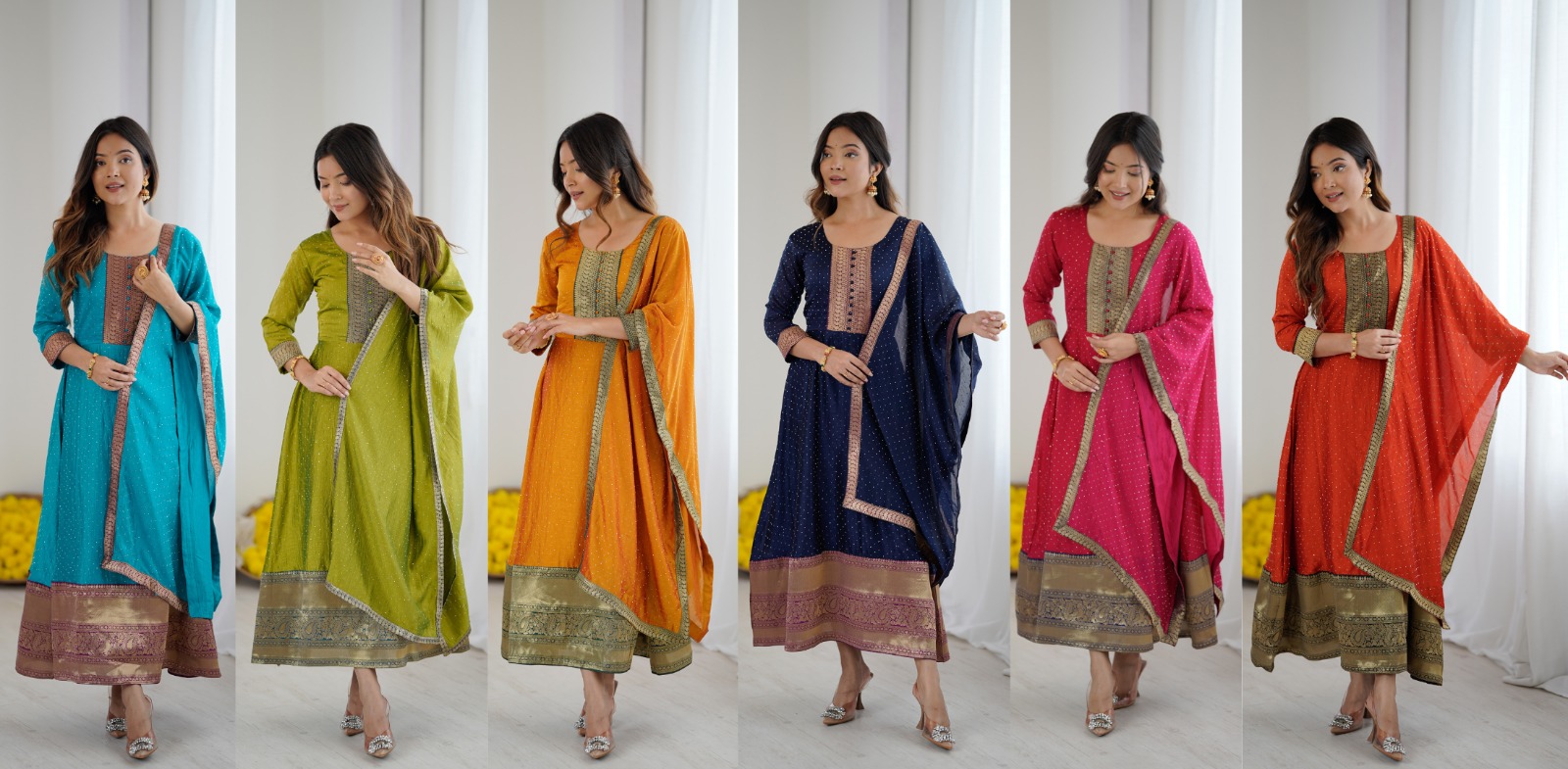
Pista Green Chanderi Kurta Set with Organza Dupatta can suit a daytime festive setting when the dupatta remains lightly embellished and the kurta is breathable. A dense border, multiple necklaces and fitted sleeves would make the same combination feel less comfortable in direct sun, so styling choices matter as much as the fabric.
Drape, Volume and Comfort for Organza Dupatta vs Chiffon Dupatta: How Should You Match the Silhouette?
Choose organza when the outfit needs lift and definition, and choose chiffon when the outfit already has volume or benefits from uninterrupted movement.
Which dupatta works with a straight kurta?
Organza usually works well with a straight kurta because the structured dupatta introduces shape without adding width to the kurta itself. A narrow shoulder drape can make a simple neckline look more formal, while a front pleat can visually lengthen the torso.
Chiffon suits a straight kurta when the intended look is softer and less formal. A long, open chiffon drape creates vertical lines and can be more practical for commuting, sitting or carrying a handbag. A small shoulder pin prevents the smooth fabric from slipping during movement.
Which dupatta works with a lehenga?
Organza works well with lehengas when the skirt has a broad flare or the blouse has detailed work. A crisp dupatta can sit securely across the shoulder and create a second frame around the blouse.
Peach Floral Organza Lehenga Set with Printed Dupatta illustrates how floral surface design and organza volume can create a festive look without relying only on metallic embellishment. Keeping the dupatta in broad, clean pleats lets the lehenga flare remain visible.
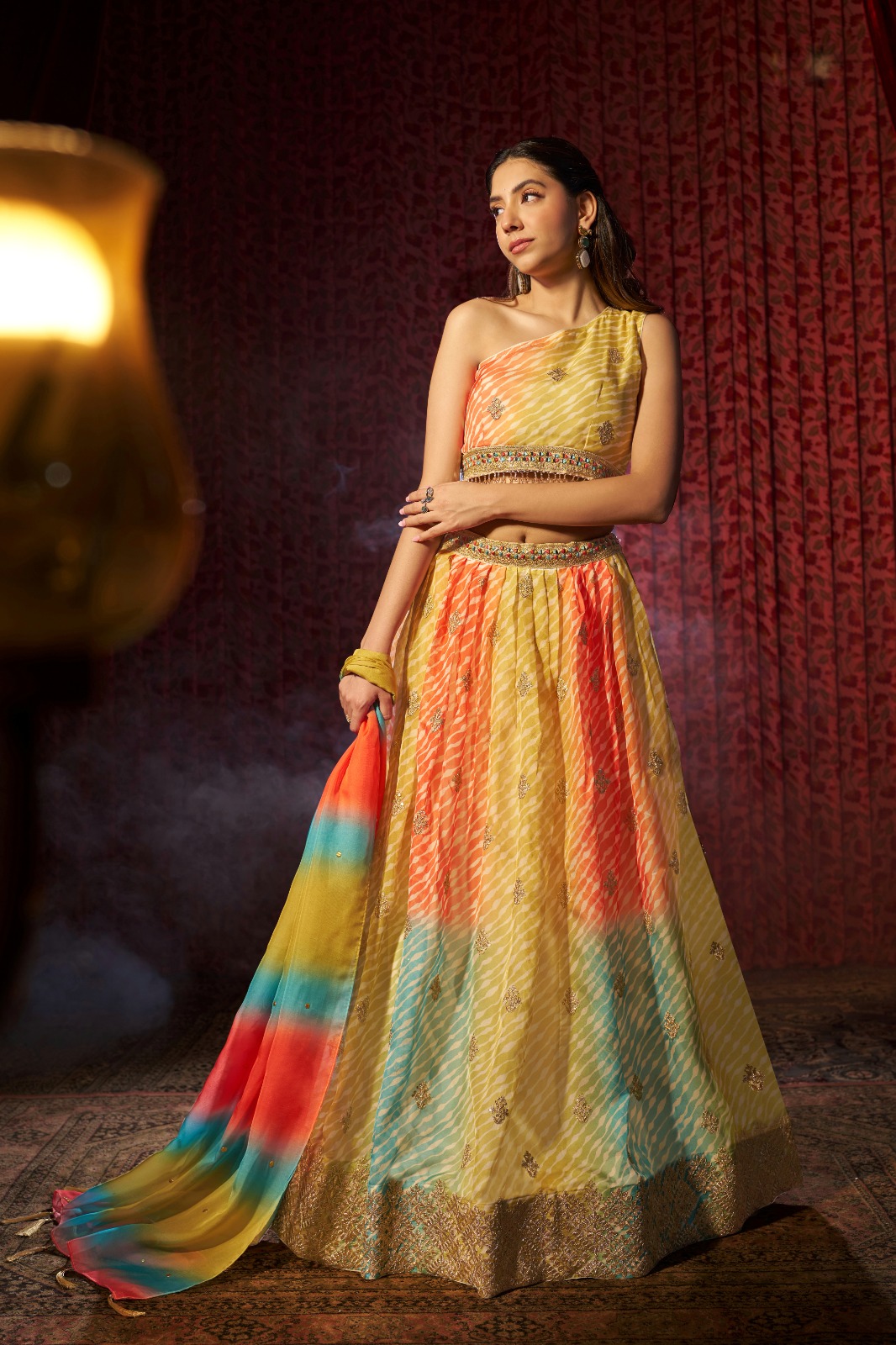
Multi Colour Organza Lehenga Choli with Digital Print, Cording Embroidery and Mukaish Work Dupatta, Semi Stitched Lehenga Set calls for deliberate draping because multiple surface techniques already provide visual detail. Broad, clean folds prevent the digital print, cording embroidery and mukaish work from competing in a tangled arrangement.
Chiffon is a practical lehenga choice when the skirt is already heavily flared or the blouse has a high-shine finish. A fluid dupatta reduces visual stiffness and allows a wearer to move more freely during dancing or extended wedding ceremonies.
Drape, Volume and Comfort for Organza Dupatta vs Chiffon Dupatta: What Do Borders and Embellishments Change?
Embroidery and borders can change a dupatta's weight, balance and comfort more dramatically than the base fabric alone. A lightweight chiffon with a heavy zari border may feel less mobile than a plain organza dupatta.
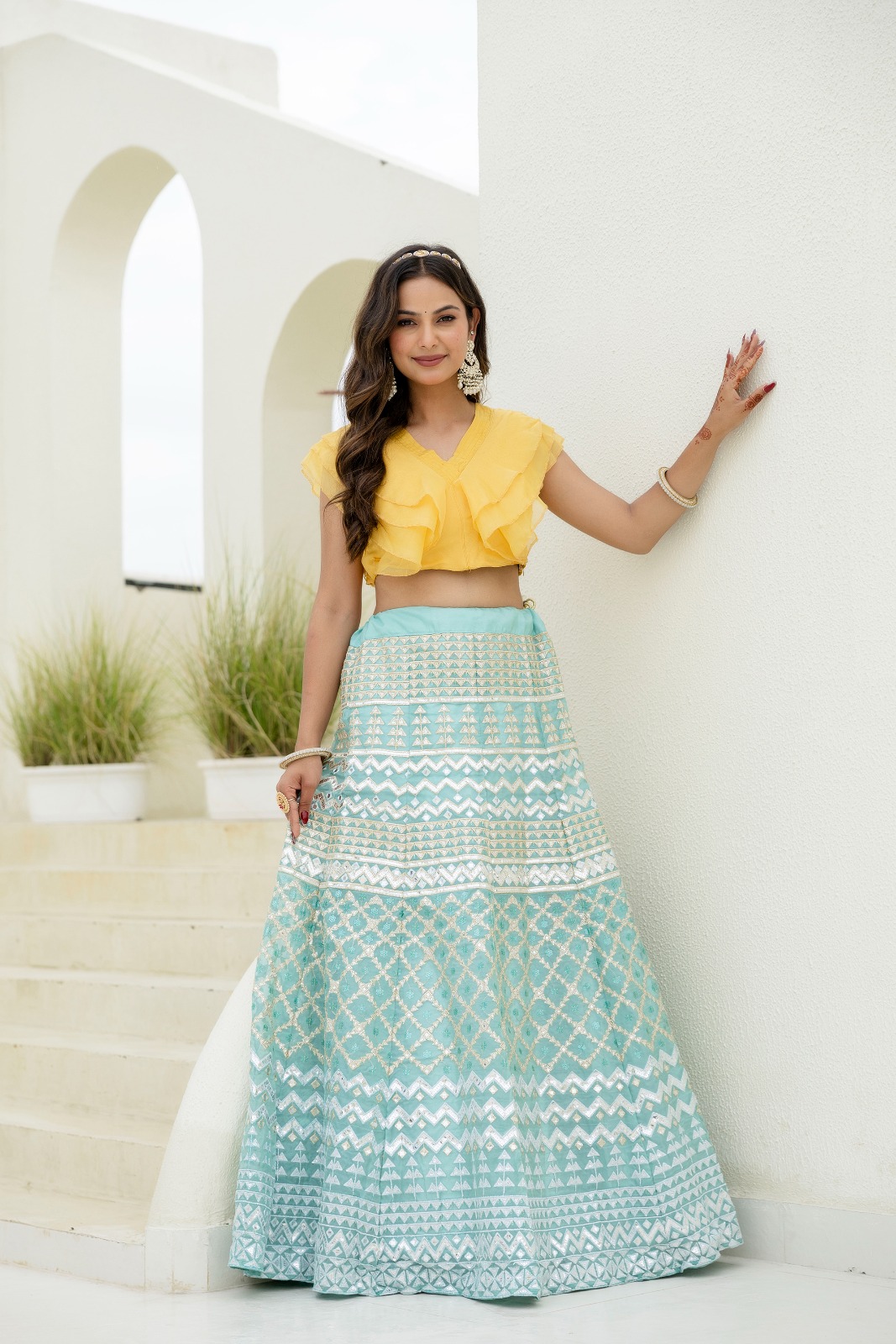
A broad border adds visual authority but also pulls the edge downward. On chiffon, the weight can create an attractive waterfall effect, yet it may cause the shoulder section to slide. On organza, a heavy border can help the fabric hold a sharper line, but the combined weight may press on the neck or shoulder after several hours.
Zari requires special attention because metallic threads can catch on jewellery, embroidery and rough surfaces. Peach Floral Organza Cotton Silk Saree brings an useful styling reference for balancing a lustrous textile with a lighter accompanying layer. When a dupatta or saree already has shine, matte jewellery and fewer stacked layers can make the outfit feel less heavy.
Small mukaish dots, fine thread embroidery and narrow printed borders usually preserve more movement than dense sequins or wide corded work. If an outfit must remain comfortable for four to six hours, examine the underside of the border and embroidery. Scratchy backing, exposed knots and stiff seam allowances often cause more discomfort than the fabric itself.
Drape, Volume and Comfort for Organza Dupatta vs Chiffon Dupatta: How Can You Secure and Care for Each?
Secure organza with structured pleats and hidden pins, while securing chiffon with lightweight pins placed close to the shoulder or neckline. Care for both fabrics by reducing friction, heat and unnecessary washing.
How should an organza dupatta be pinned?
An organza dupatta stays neater when the shoulder pleats are made first and secured from the underside with two small safety pins. Place one pin near the shoulder seam and another near the upper arm if the border is heavy.
Use a brooch through a reinforced border rather than through a delicate plain section. Avoid pulling the fabric tightly across the chest because tension can distort the weave and make the edge lift unevenly. A thin cotton or silk-blend lining at the shoulder can also reduce slipping without making the entire dupatta bulky.
How should a chiffon dupatta be pinned?
A chiffon dupatta stays comfortable when it's gathered into narrow pleats and secured with a small, smooth pin. Avoid large pins with rough clasps because fine chiffon can snag around the closure.
Fashion tape can help on a smooth blouse or satin kurta, but test the tape on an inconspicuous area first. Chiffon should not be pulled sharply from the pinned area, since concentrated tension can create a ladder-like run or a small tear.
How should both fabrics be stored and washed?
Organza and chiffon should be stored clean, dry and loosely folded in breathable cotton or muslin rather than sealed in plastic for long periods. Keep zari, mukaish and sequins away from direct contact with rough jewellery boxes or unfinished wooden surfaces.
Check the care label before washing. Hand-washable polyester chiffon may tolerate cool water and mild detergent, while silk chiffon and silk organza generally require specialist dry cleaning. Do not wring either fabric, and don't place embellished dupattas in a washing machine unless the garment's care instructions specifically permit it.
Air-dry dupattas flat or on a padded hanger away from direct sunlight. Use low heat only when the care label permits ironing, and place a pressing cloth between the iron and the fabric. Steam can relax chiffon, but excessive heat can flatten organza's finish or damage metallic zari.
Drape, Volume and Comfort for Organza Dupatta vs Chiffon Dupatta: Which One Should You Buy?
Choose an organza dupatta for visible volume, crisp borders, structured festive styling and short-to-medium wear in controlled conditions. Choose a chiffon dupatta for fluid movement, low bulk, warm-weather comfort, travel and outfits that already have substantial flare.
A simple decision test is useful before buying. Select organza if the outfit looks unfinished around the shoulders, needs a defined frame or has a relatively plain kurta that benefits from architectural detail. Select chiffon if the garment has wide palazzos, a large lehenga flare, dense embroidery or a wearer who dislikes fabric pressing against the neck.
Consider the entire four-to-six-hour experience rather than the first mirror impression. Walk, sit, raise both arms and carry the intended handbag while trying the drape. A beautiful organza silhouette that needs constant adjustment may be less successful than a chiffon arrangement that stays comfortable and secure.
For a balanced wardrobe, owning one structured organza dupatta and one fluid chiffon dupatta covers different styling needs. Organza handles formal definition; chiffon handles movement and ease. Fibre content, border weight, weather and construction should make the final decision, not the fabric label alone.
Common Questions About Organza and Chiffon Dupatta Drape
Is organza or chiffon better for a wedding dupatta?
Organza is usually better when a wedding outfit needs volume, a crisp outline and a formal finish. Chiffon is better when the wearer prioritises movement, long-hour comfort or a softer drape over a heavily embellished lehenga.
Which dupatta is more comfortable for summer?
Chiffon is generally more comfortable for summer because it is lightweight, flexible and less bulky around the neck and arms. A lightly embellished organza dupatta can also work in warm weather if the base fabric is breathable and the border is not heavy.
Does organza dupatta add volume?
Yes, organza adds more visible volume than chiffon because its crisp construction holds pleats and stands slightly away from the body. A broad border or stiff finishing can increase that effect.
Does chiffon dupatta slip more than organza?
Chiffon can slip more than organza because its smooth, fluid surface does not hold a shoulder position as firmly. Small hidden pins, narrow pleats or a discreet brooch can improve security without restricting movement.
How do you wash an organza or chiffon dupatta?
Follow the care label because silk organza, silk chiffon, polyester chiffon and embellished fabrics require different treatments. Use cool water and mild detergent only when hand washing is permitted, never wring the fabric, and send delicate zari or heavily embellished dupattas for professional cleaning.
Which dupatta is easier to pack for travel?
Chiffon is usually easier to pack because it folds into a smaller, softer bundle and resists bulky creasing. Organza can travel well when rolled around tissue paper or folded loosely, but heavy borders and embellishments need protection from crushing and snagging.


