Does a Higher Embroidery Count Mean Better Ethnic Wear? Not necessarily. A garment covered in thousands of stitches can feel stiff, pull at the seams or hide an unsuitable fabric, while a lightly embroidered outfit can show cleaner workmanship, better proportion and greater versatility. The useful question isn't simply how much embroidery a garment has, but whether the embroidery suits the fabric, construction, occasion and wearer.
Online descriptions also use "embroidery count" in different ways. A seller may mean the number of motifs, the density of stitches in a measured area, the number of embroidered panels or a broad level such as light, medium or heavy work. These measurements are not interchangeable. Understanding what the decoration contributes makes it easier to compare a silk saree, cotton kurta set, Anarkali or festive gown without judging quality by visual busyness alone.
Start with the Measurement
Embroidery count usually refers to the amount or density of decorative work, but the exact measurement depends on the seller and the technique. A reliable comparison requires knowing whether the description refers to stitch density, motif quantity, coverage or the number of embellishment elements.
Stitch density describes how closely threads sit within a defined area, such as one square inch. Motif count refers to how many flowers, paisleys, butis or geometric units appear on a garment. Coverage describes how much of the front, sleeves, hem, dupatta or pallu carries embroidery. A garment can have a high motif count but low stitch density if it contains many small, widely spaced motifs.
Embroidery count also says little by itself about the materials used. Cotton thread, viscose thread, silk thread, zari, sequins, beads and metallic cord create different weights and levels of shine. A compact silk-thread jaal may require more careful handling than scattered machine motifs, even when the visible coverage is similar.
When a product description doesn't define its count, use photographs and construction details as supporting evidence. Look at the reverse side if images are available, inspect whether the design stays sharp at the neckline and hem, and check whether the fabric appears gathered around dense work. These clues often reveal more than a single number.
Judge the Workmanship
No, because quality depends on execution, balance and function rather than decoration volume alone.
Dense work can be valuable when it's evenly placed, securely attached and designed for a ceremonial garment. A bridal dupatta, formal Anarkali or reception blouse may justify extensive zari, sequin or thread coverage because visual richness is part of the intended look. The same density can be inconvenient on a daytime cotton kurta, where breathability and easy movement matter more.
Fine embroidery has several visible markers. Curved lines should look smooth rather than jagged. Repeated motifs should maintain similar size and spacing. Thread ends should be secured instead of appearing as loose loops. Zari should follow the design cleanly, while sequins should lie flat and avoid sharp edges that catch on hair or other clothing.
Good embroidery also respects the garment's structure. A densely worked sleeve needs enough fabric stability to prevent sagging. A heavily embellished neckline needs comfortable finishing at the inner edge. A broad embroidered hem should not make a lightweight skirt twist or drag. These details show whether decoration was integrated into the garment or merely added on top.
A simple design can therefore outperform a more crowded design. A cream base with carefully spaced threadwork may look polished at a family lunch, while an overloaded multicolour surface may be difficult to style or repeat. The better purchase is the one whose workmanship remains attractive after considering use, comfort and maintenance.
Check Fabric and Construction
Fabric suitability, stitch security, design proportion, comfort and finishing matter more than embroidery quantity when judging ethnic wear.
Fabric and embroidery must work together
Silk, crepe, cotton, georgette and viscose respond differently to weight and tension. Banarasi silk and other structured silks can support substantial zari or threadwork, while very soft fabrics may need stabilisation beneath dense motifs. Cotton can carry bold embroidery comfortably, but a tightly packed synthetic backing may reduce airflow.
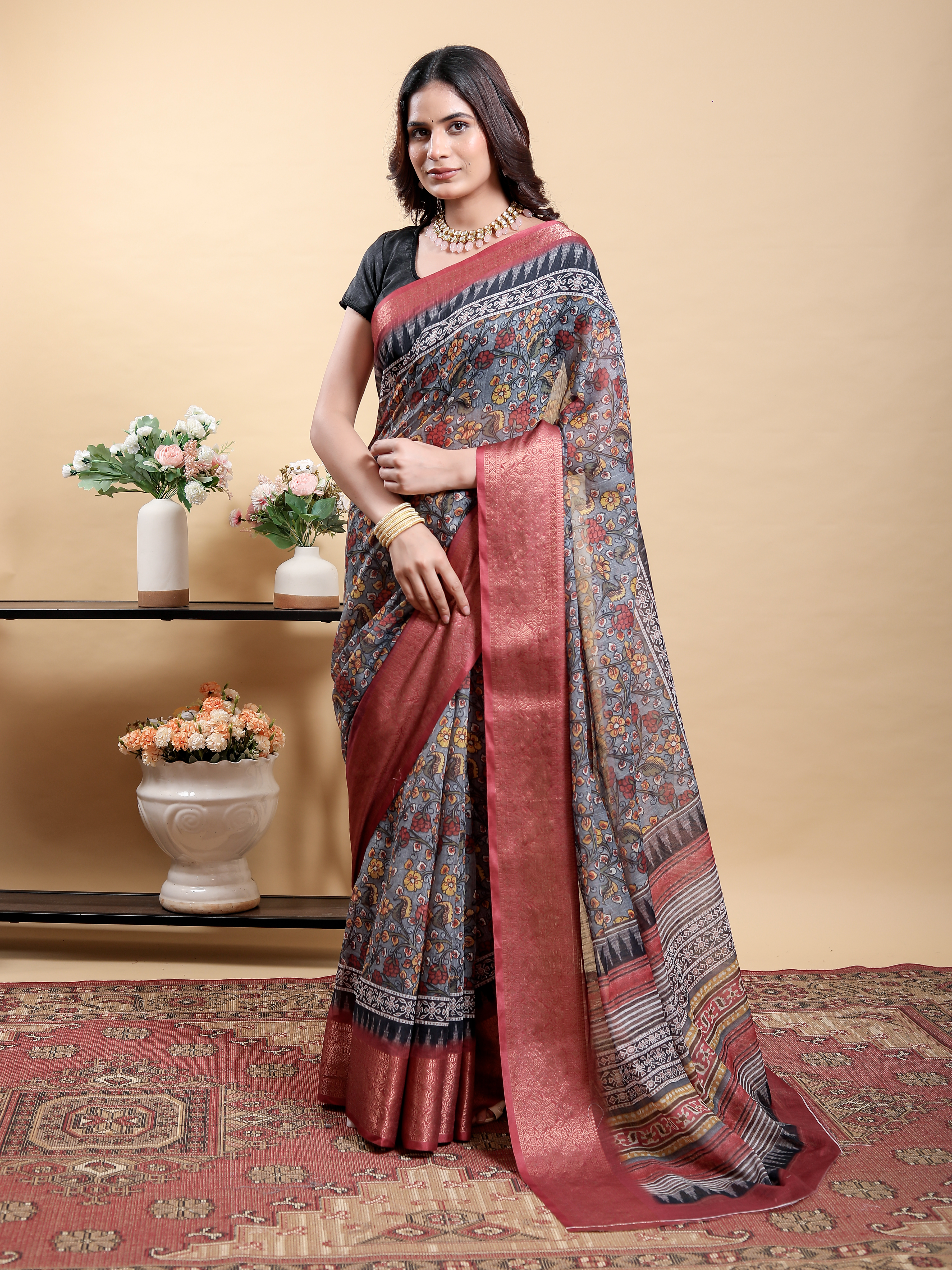
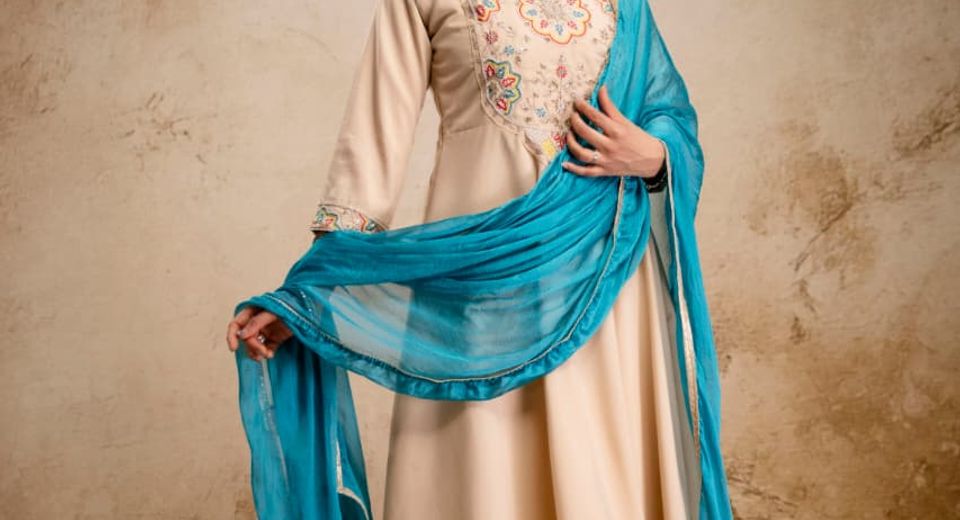
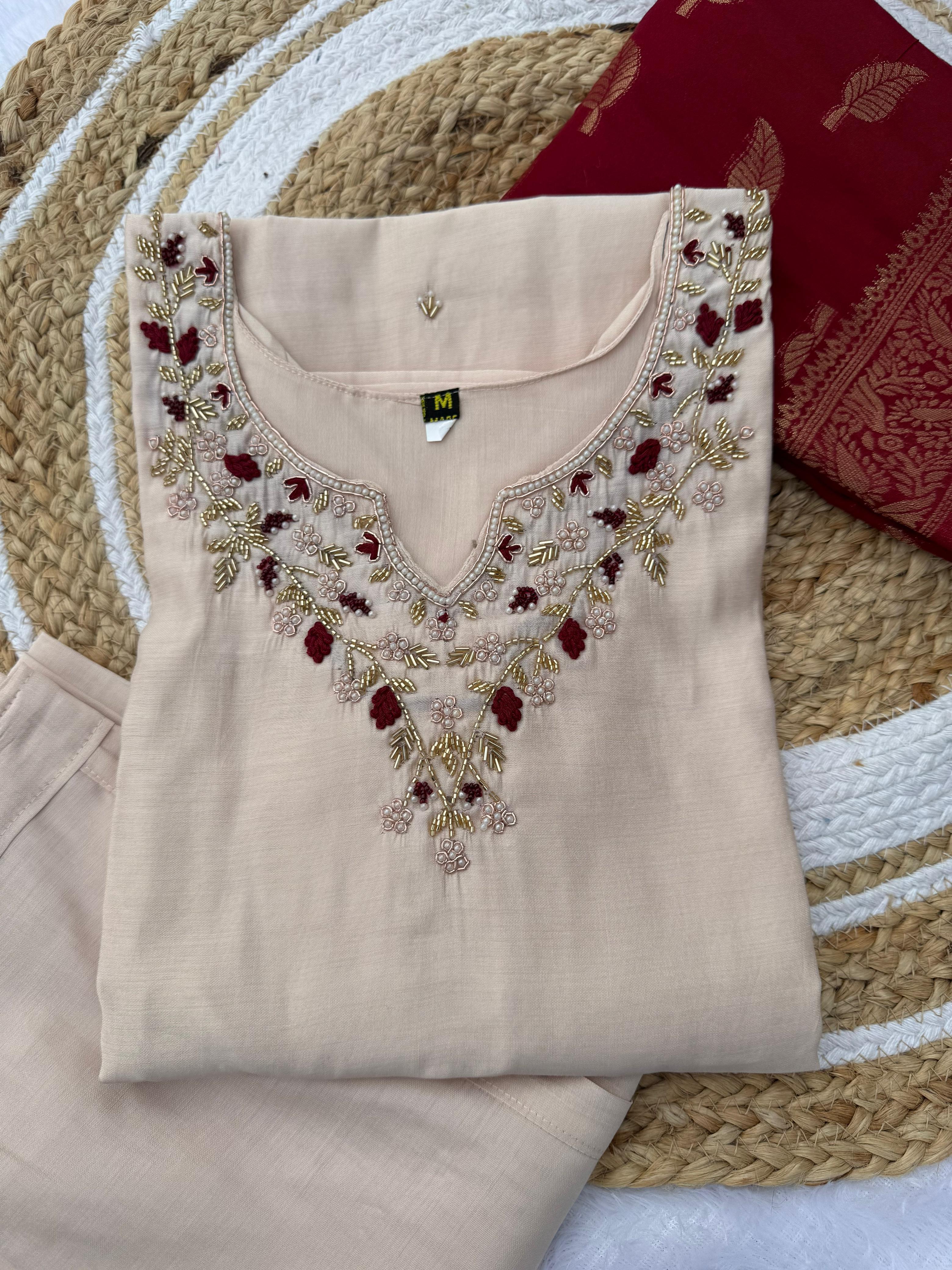
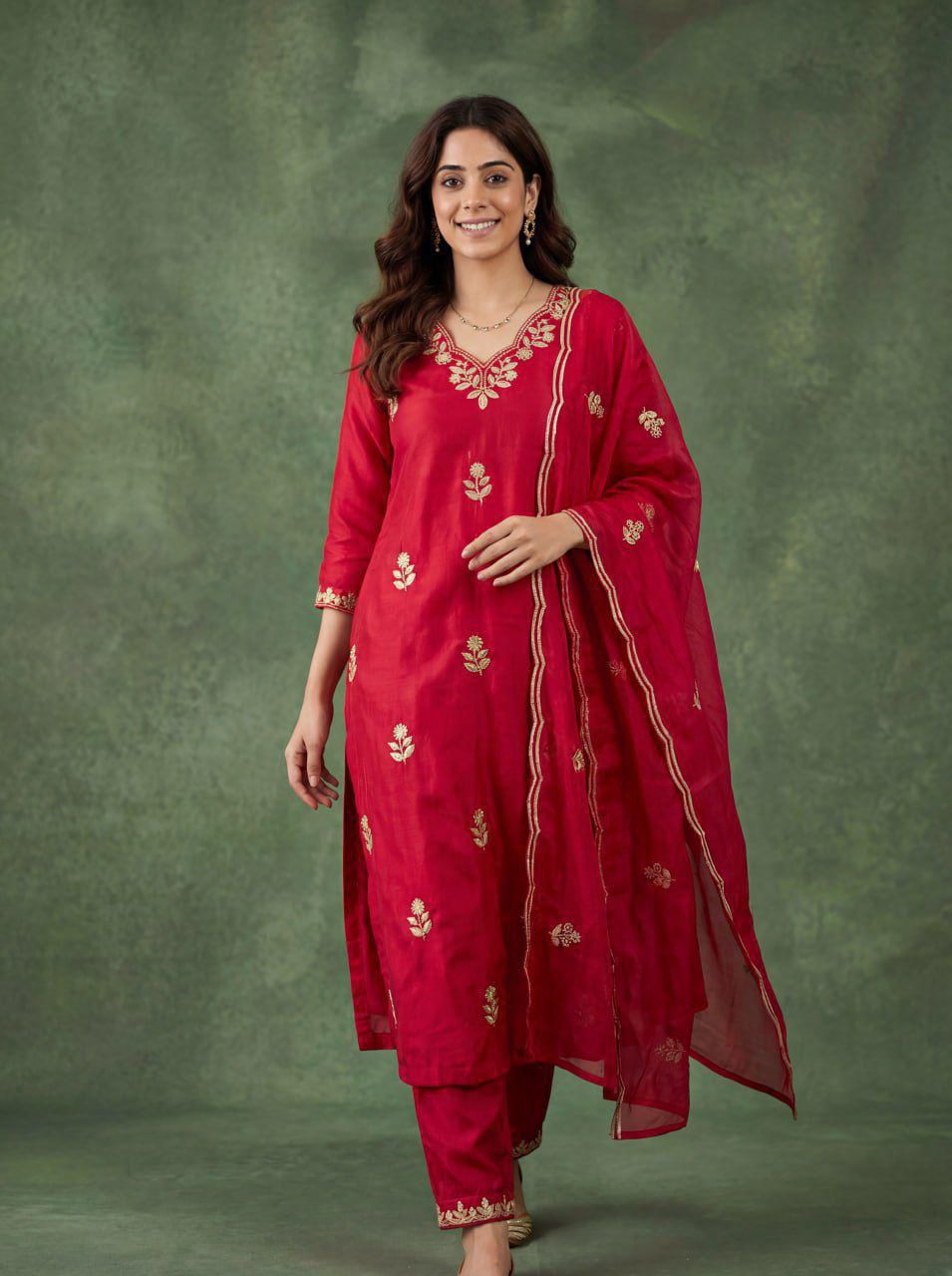
Cream Embroidered Silk Kurta Pant Set for Women illustrates why fabric and decoration should be assessed together. Silk gives the outfit a smoother, more formal base, so moderate embroidery may create enough occasion appeal without covering every visible surface. Red Cotton Embroidered Kurta Pant Dupatta Set Women offers a different balance because cotton can make embroidered festive dressing more practical for daytime gatherings and warm weather.
Construction determines how embroidery wears
Construction quality includes seam allowance, lining, closures, hem stability and the way embroidered panels are joined. Dense work near a side seam can make sitting upper if the seam is bulky. Heavy borders can pull at a shoulder or neckline when the garment lacks reinforcement. A well-made outfit distributes decorative weight rather than concentrating it at one stress point.
Examine the lining and inner finish when possible. A smooth lining can protect the skin from zari and sequins, but a poorly attached lining may bunch after washing. Necklines should lie flat, zips should move without catching thread and trouser hems should remain straight. These practical checks are stronger indicators of value than the number of motifs shown in a product photograph.
Proportion affects perceived quality
Embroidery looks considered when the scale of the design suits the wearer and garment. A wide hem can anchor a floor-length Anarkali, while the same border may overwhelm a short kurta. Small butis can create rhythm on a saree, whereas a large central motif may be more effective on a blouse back or dupatta corner.
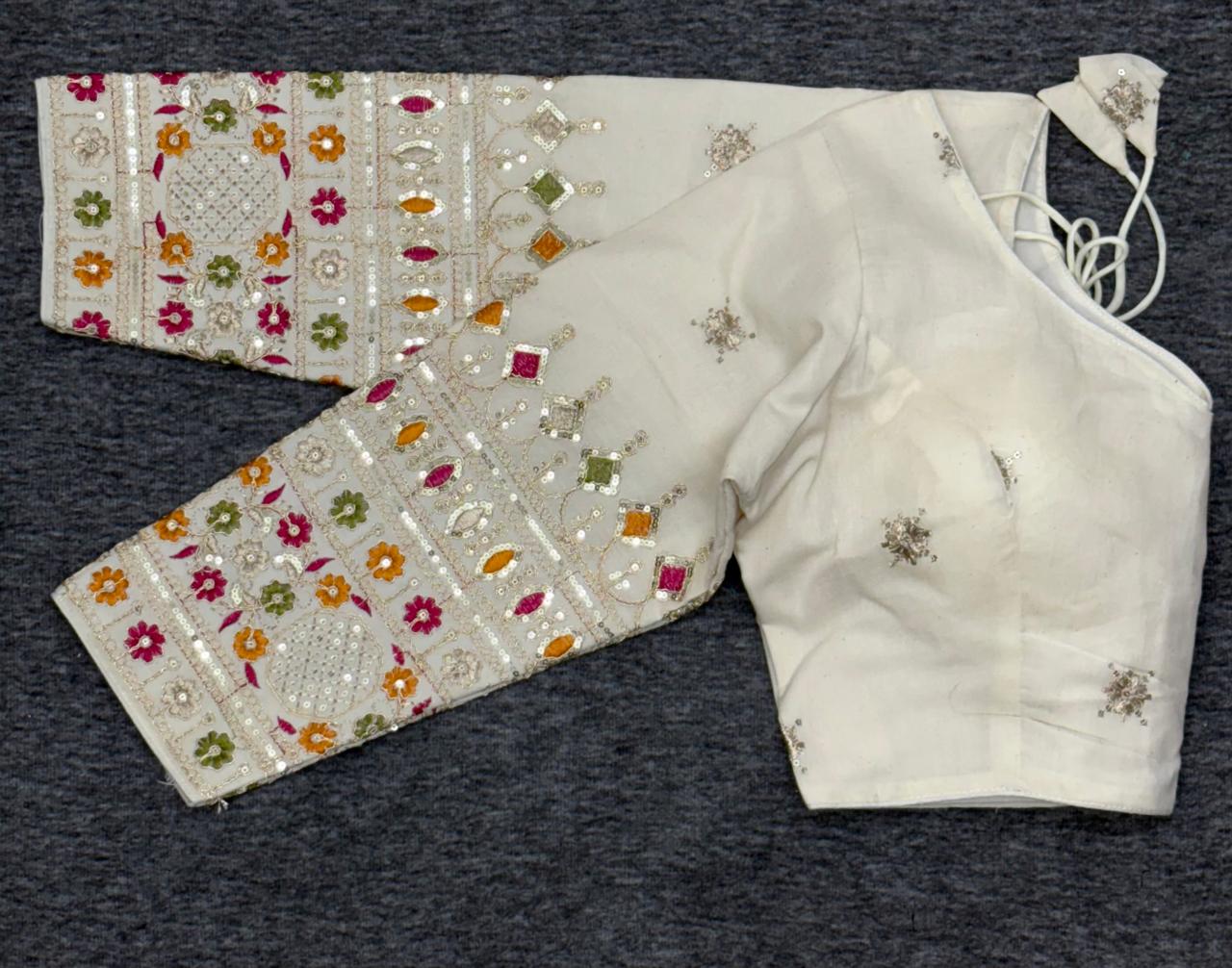
Classic Festive Wear Blouse for Stylish Saree Look demonstrates the importance of placement. A blouse doesn't need maximum surface coverage if embroidery is concentrated at the neckline, sleeve edge or back detail where it can frame the saree. Placement often creates more visual impact than adding work to every panel.
Compare Hand and Machine Work
Hand embroidery isn't automatically superior to machine embroidery, and machine embroidery isn't automatically inferior; each technique gives different strengths.
Hand embroidery often shows slight variations in line, tension and spacing because individual artisans create the stitches. Those variations can be part of the character of chikankari, kantha, zardozi or other handworked traditions. Handwork may also take longer and command a higher price, particularly when it uses skilled techniques, silk thread, metal wire or layered embellishment.
Machine embroidery can deliver consistent repeats, crisp outlines and reliable production across multiple garments. Machine work is often appropriate for printed-style florals, regular geometric borders and garments intended to be more accessible in price. The relevant question is whether the machine work is clean, securely finished and suitable for the fabric.
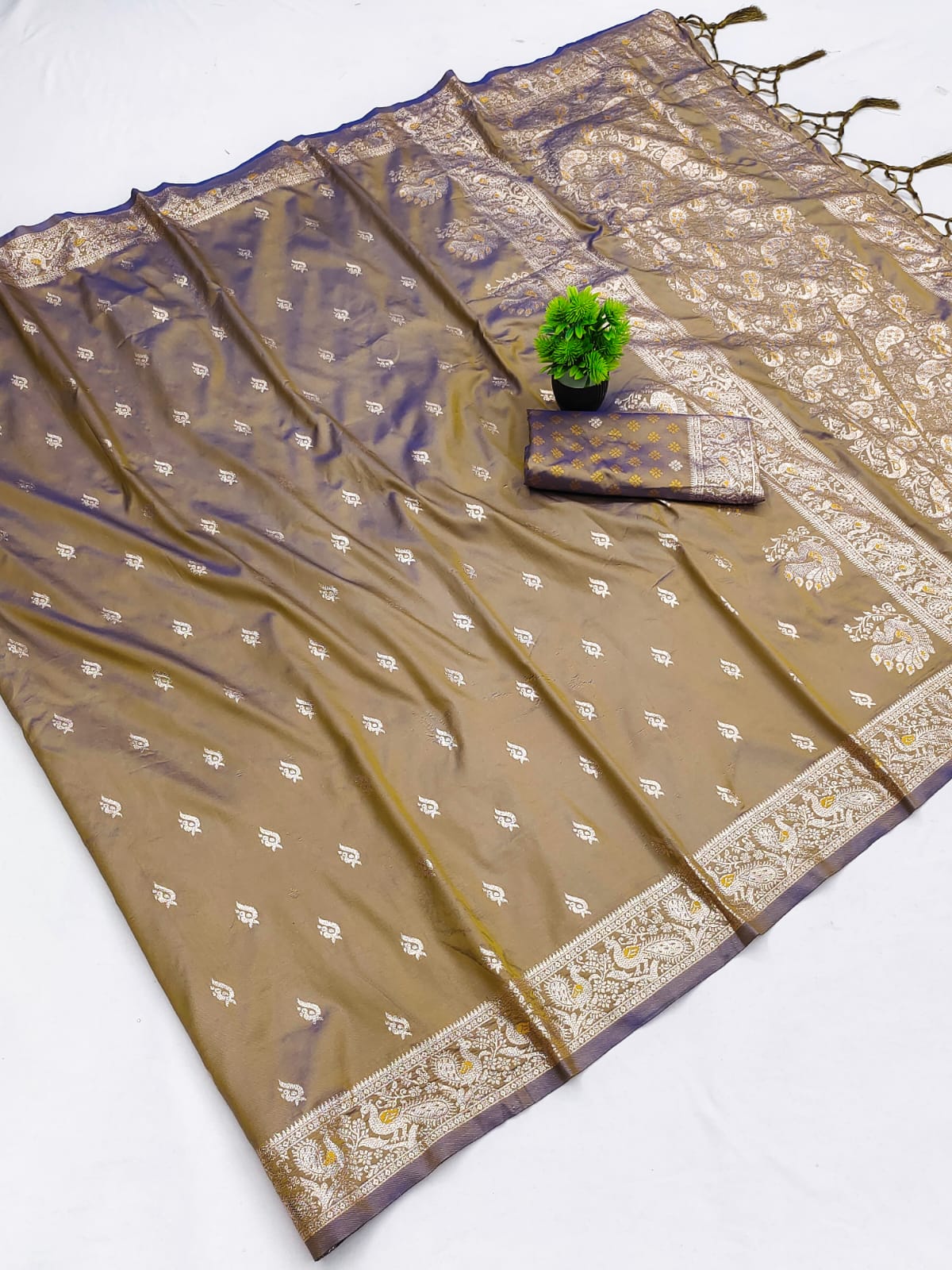
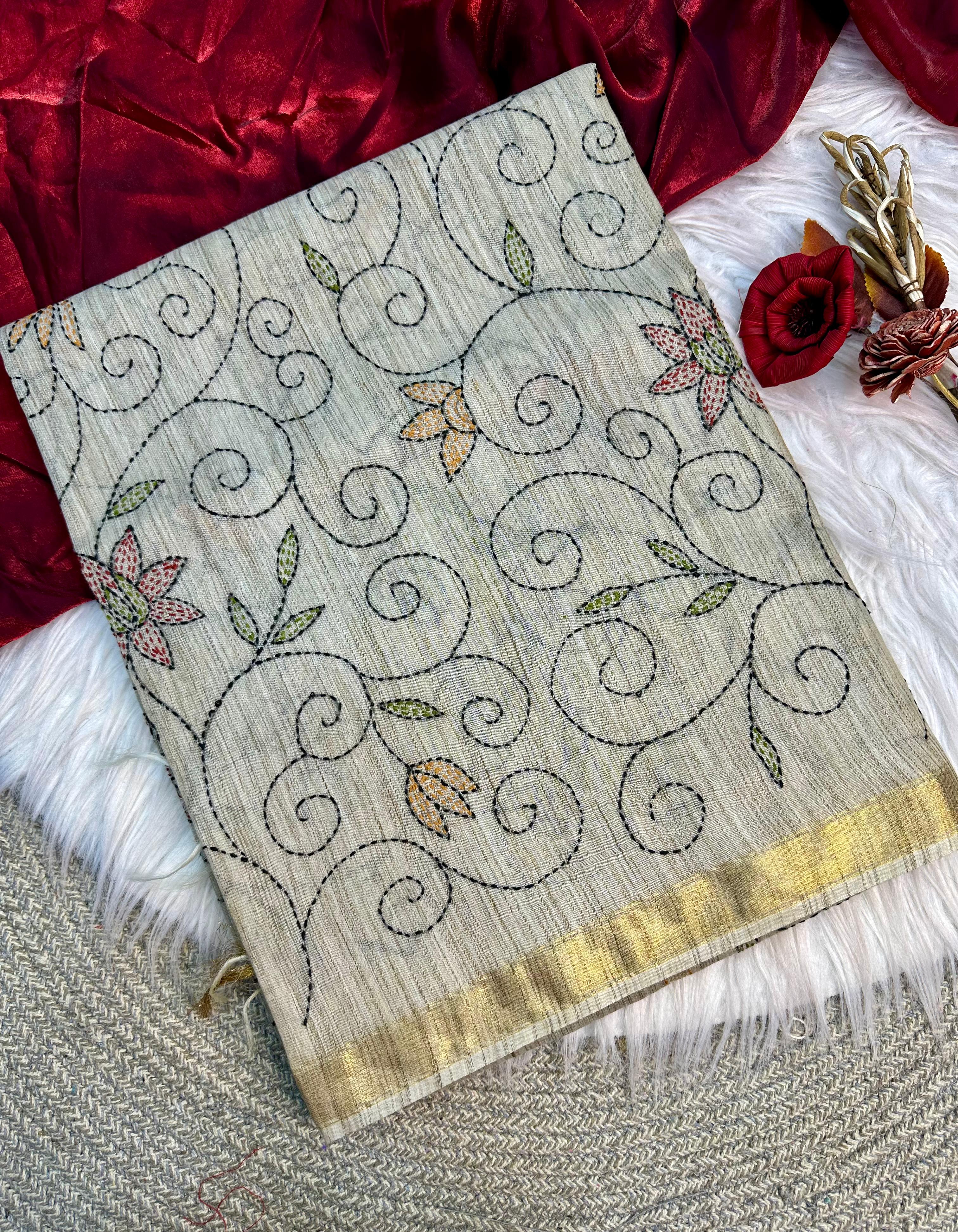
Premium Handloom Silk Saree with Handkatha should be judged by the relationship between the handloom base and the Handkatha work, not by comparing its visible stitch count with a heavily machine-embroidered suit. Handloom texture, irregularity and artisan technique can be meaningful qualities even when the surface appears less crowded.
Technique should be stated honestly in product information. Terms such as hand embroidery, machine embroidery, hand-finished, appliqué, printed embroidery effect and embellishment describe different processes. A buyer can reasonably pay more for labour-intensive handwork, but the garment should still offer sound finishing and practical wearability.
Does a Higher Embroidery Count Mean Better Ethnic Wear for Every Occasion?
The right embroidery level depends on the occasion, time of day, venue, climate and how often the garment will be worn.
- Daytime gatherings: Light or medium threadwork on cotton, Chanderi, linen blends or soft silk usually feels comfortable and photographs with enough detail. Spaced motifs and narrow borders are easier to repeat for lunches, pujas and informal celebrations.
- Haldi ceremony: Bright threadwork, floral motifs and moderate mirror or sequin accents can suit the lively setting without making movement difficult. Yellow, orange, pink and green embroidery often works well with breathable bases.
- Festive evenings: A denser border, zari highlights or a more embellished dupatta can add depth under warm indoor lighting. The outfit should still allow comfortable sitting, walking and dancing.
- Formal receptions: Heavier embroidery can be appropriate on a gown, lehenga, saree blouse or Anarkali when the lining and support are well made. The garment should be stored and cleaned with greater care.
- Office or repeated wear: Small motifs, restrained necklines and embroidered cuffs provide polish without restricting styling options. Medium-density work is often more cost-effective than an one-time heavily embellished outfit.
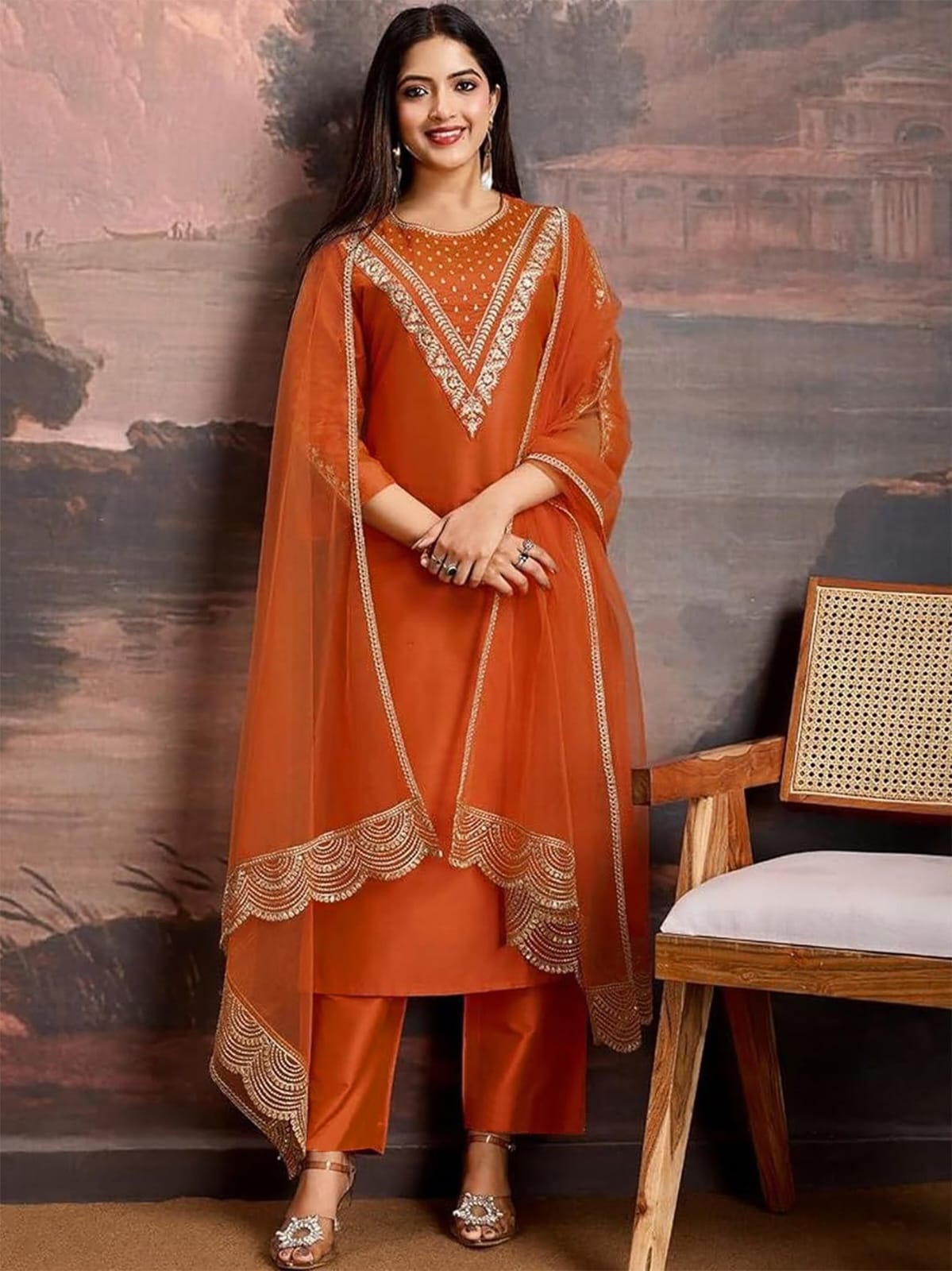
Orange Thread Embroidered Ethnic Suit Set can suit a daytime festive wardrobe when the colour and threadwork provide energy without requiring jewellery to do all the styling. Multicolor Embroidered Crepe Maxi Suit Set for Festive Wear may offer more evening presence through colour variation and coverage, but crepe drape and garment weight should be checked before purchase.
Ivory Anarkali Suit With Sequin Zari Embroidery And Dupatta is an example of a style where density can be appropriate for a formal celebration. Sequins and zari create reflective detail, but the buyer should check whether the inner finish is smooth enough for prolonged wear and whether the dupatta border adds manageable weight.
Teal Blue Vichitra Silk Embroidered Gown Set Online may provide a dramatic evening silhouette through both colour and fabric sheen. A gown doesn't need embroidery across every panel when the Vichitra silk surface, neckline and flare already create visual interest.
Does a Higher Embroidery Count Mean Better Ethnic Wear After Washing?
No, because care requirements depend on thread, embellishment, fabric and backing rather than stitch count alone.
Read the care label before washing any embroidered garment. Dry cleaning is generally safer for heavily embellished silk, zari, sequins and structured formalwear, while some cotton suits with colourfast thread may tolerate gentle hand washing. A care label that specifies professional cleaning should not be ignored merely because the embroidery appears lightweight.
Test colourfastness on an unseen seam when hand washing is permitted. Use cool water, a mild detergent and very short soaking time. Avoid wringing, brushing directly over motifs and drying embroidered garments in harsh sunlight. Excess water can place strain on dense borders, and strong sunlight can fade both the base fabric and coloured thread.
Store embroidered garments folded with soft, uncoloured cotton or acid-free tissue between embellished surfaces. Sequins, beads and zari can snag neighbouring clothes when garments are hung tightly together. Heavy sarees and dupattas should not remain on thin wire hangers for long periods because concentrated weight can distort the shoulder or fold line.
Care also affects cost per wear. A highly embellished outfit that requires specialist cleaning after every use may be less economical than a moderately embroidered garment that can be maintained safely at home. Price, stitch count and care expense should be considered together before a purchase.
Use This Buying Checklist
A practical checklist gives a more dependable answer than counting motifs in a product photograph.
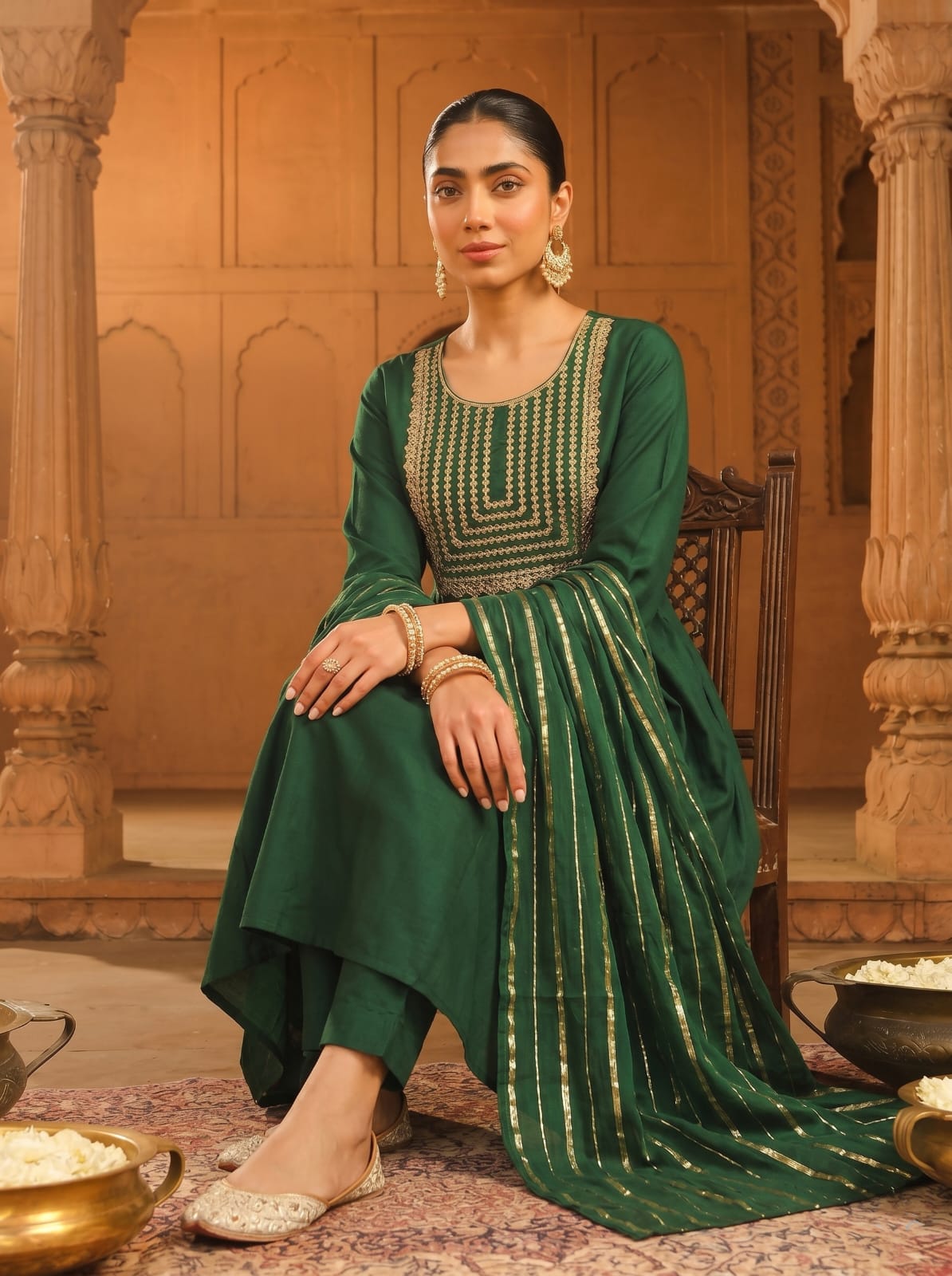
- Clarify the term: Check whether the stated count means motifs, stitch density, surface coverage or embellishment pieces.
- Identify the technique: Confirm whether the work is hand embroidery, machine embroidery, appliqué, print or a combination.
- Assess the fabric: Ask whether the base can support the embroidery without sagging, stiffness or loss of breathability.
- Inspect placement: Look at the neckline, sleeve edges, hem, side seams, dupatta and back rather than judging only the front image.
- Check the reverse: Loose threads, rough backing, uneven knots and exposed sharp elements can indicate finishing problems.
- Test movement: Consider whether the garment allows comfortable sitting, walking, lifting the arms and using the dupatta.
- Match the occasion: Choose lighter work for repeated daytime use and denser work when formal impact justifies additional weight and care.
- Calculate maintenance: Include cleaning, storage and repair needs when comparing prices.
The central buying principle is simple: embroidery should add value without compromising the garment's purpose. A high count can indicate labour, complexity or luxury, but it can't guarantee even stitching, good fabric, comfortable construction or long-term usefulness. A carefully placed border, secure threadwork and compatible fabric may offer better value than complete surface coverage.
Common Questions About Embroidery Count and Ethnic-Wear Quality
Does a higher embroidery count mean better ethnic wear?
No. A higher embroidery count indicates more stitches, motifs or surface coverage only when the seller defines the measurement. Fabric suitability, stitch security, design proportion, comfort and finishing are more reliable indicators of quality.
How can I tell whether embroidery is high quality?
Look for smooth lines, even motif spacing, secure thread ends, flat sequins and clean zari placement. Check that the neckline, seams and hem lie flat and that the reverse side does not have rough or loose finishing.
Is hand embroidery always better than machine embroidery?
No. Hand embroidery can offer artisan variation and labour-intensive detail, while machine embroidery can provide precise, consistent patterns. The better choice depends on execution, fabric compatibility, intended use and price.
What type of embroidery is suitable for a Haldi ceremony?
Light to medium threadwork, floral motifs and moderate mirror or sequin accents are usually suitable for a Haldi ceremony. Breathable cotton, Chanderi or soft silk can help the outfit remain comfortable during movement and warm weather.
Does dense embroidery make ethnic wear uncomfortable?
Dense embroidery can make ethnic wear heavier, stiffer or less breathable when the backing and fabric are unsuitable. Smooth lining, reinforced construction and well-distributed embellishment can reduce discomfort.
How should heavily embroidered ethnic wear be stored?
Store heavily embroidered ethnic wear folded with soft, uncoloured cotton or acid-free tissue between embellished surfaces. Keep pieces away from sharp hangers, overcrowded wardrobes, moisture and direct sunlight, and follow the garment's care label.