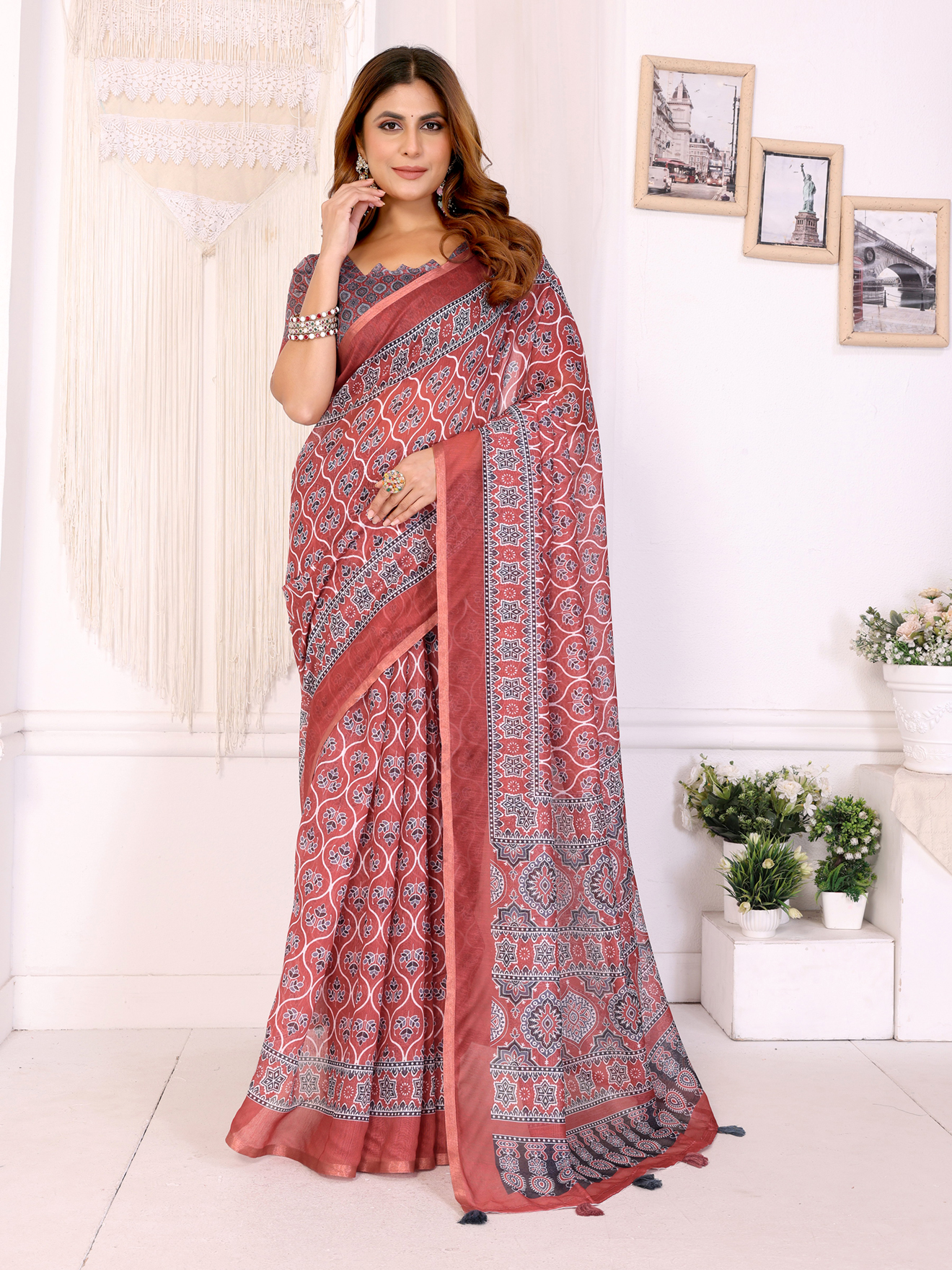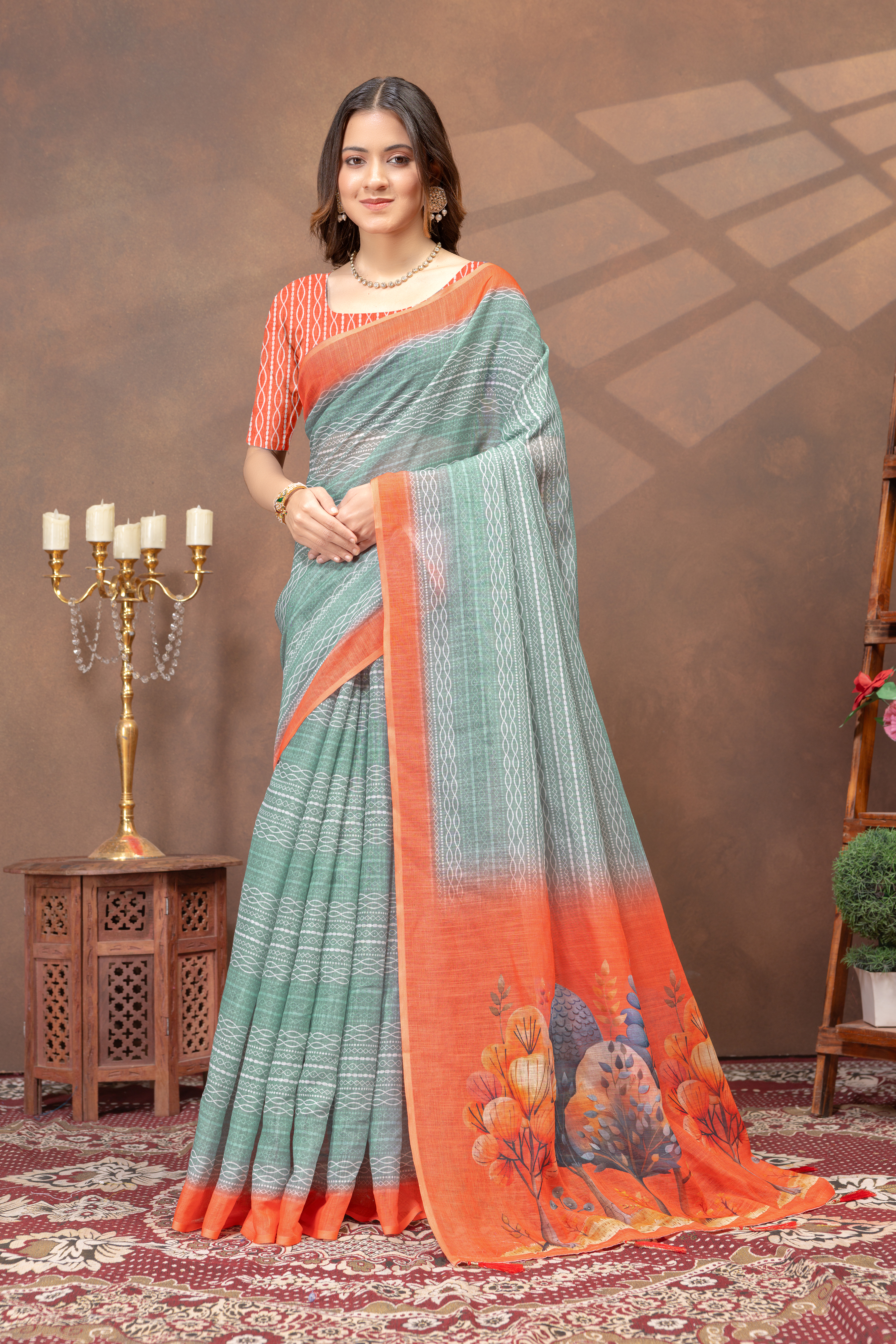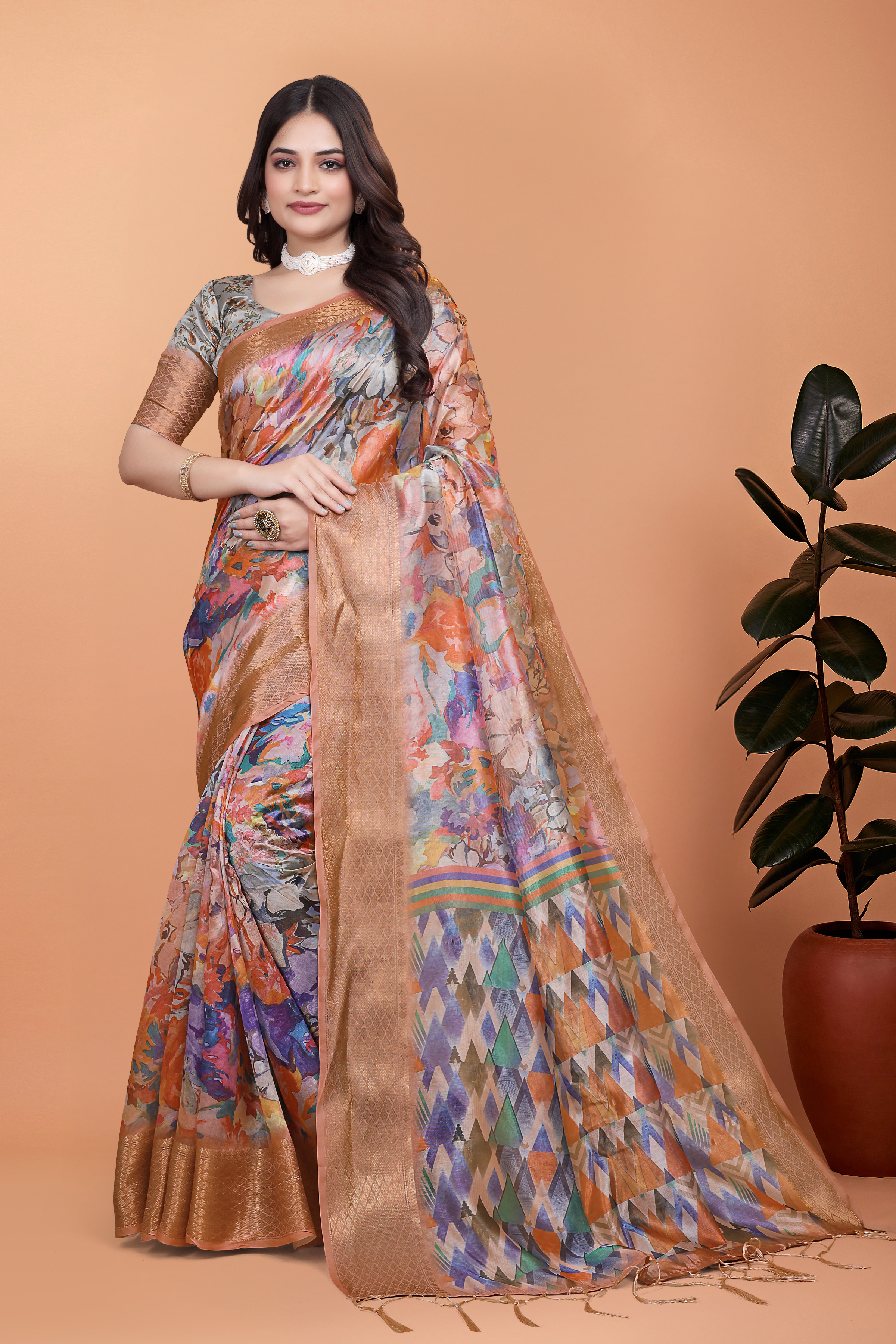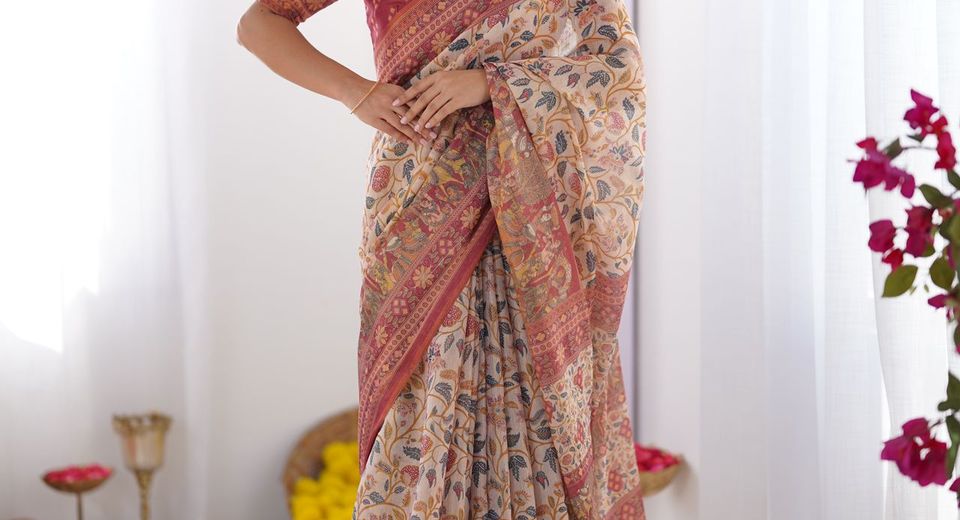
Dabu Print Sarees Carry a Different Character From Regular Block Prints because the design begins with a mud-resist layer rather than colour being stamped directly onto exposed cloth. That difference affects the edges of motifs, the depth of the dye, the feel of the surface and the way the saree may change after washing. Understanding the process helps a buyer distinguish a resist-print effect from a generic printed pattern.
Both Dabu and regular block printing use carved wooden blocks, so the two terms are often treated as interchangeable. The resemblance ends there. Regular block printing usually transfers pigment or dye onto the visible surface in one or more direct impressions, while Dabu temporarily protects selected areas with a mud mixture before dyeing. The uncovered cloth absorbs colour, and the protected areas reveal the design later.
Dabu Print Sarees Carry a Different Character From Regular Block Prints: What Creates the Difference?
Dabu Print Sarees Carry a Different Character From Regular Block Prints through their resist-dyed construction, softened outlines and layered colour development. The mud paste creates a barrier between the fabric and dye, so the final motif often appears slightly diffused rather than perfectly sharp.
Traditional Dabu printing is associated with textile-making communities in Rajasthan, particularly regions around Bagru. A printer prepares the fabric, places the wooden block carefully, applies the mud resist and adds a protective material such as sawdust. The cloth then enters a dye bath, commonly producing earthy or indigo-led palettes. Washing removes the resist and exposes the lighter pattern underneath.
Regular block printing can also be handmade and highly skilled. A floral, geometric or butti block may be dipped into dye and pressed directly on the fabric, with separate blocks used for different colours. The design normally remains visible as soon as the colour is applied. Dabu introduces an additional stage: the motif is first hidden, then revealed through washing.
Does every uneven edge prove that a saree is Dabu?
An uneven edge alone doesn't prove that a saree is Dabu; the overall print construction, colour layering and fabric finish must be considered together. Hand printing can create minor registration variations in many techniques, while machine printing can imitate soft outlines without using mud resist.
Dabu-inspired sarees may be sold with regular pigment printing, so product descriptions matter. Look for terms such as mud resist, resist dyeing, Bagru tradition or hand block printing when a seller provides process information. A clear description of the base fabric, dye method and care instructions is more useful than words such as "ethnic" or "handcrafted" by themselves.
Dabu Print Sarees Carry a Different Character From Regular Block Prints: How Does Mud Resist Work?
The Dabu process protects selected parts of the fabric with a mud-based paste before dyeing, allowing the covered areas to remain lighter than the surrounding cloth. The method involves several controlled steps, and each step can influence the final character of a saree.
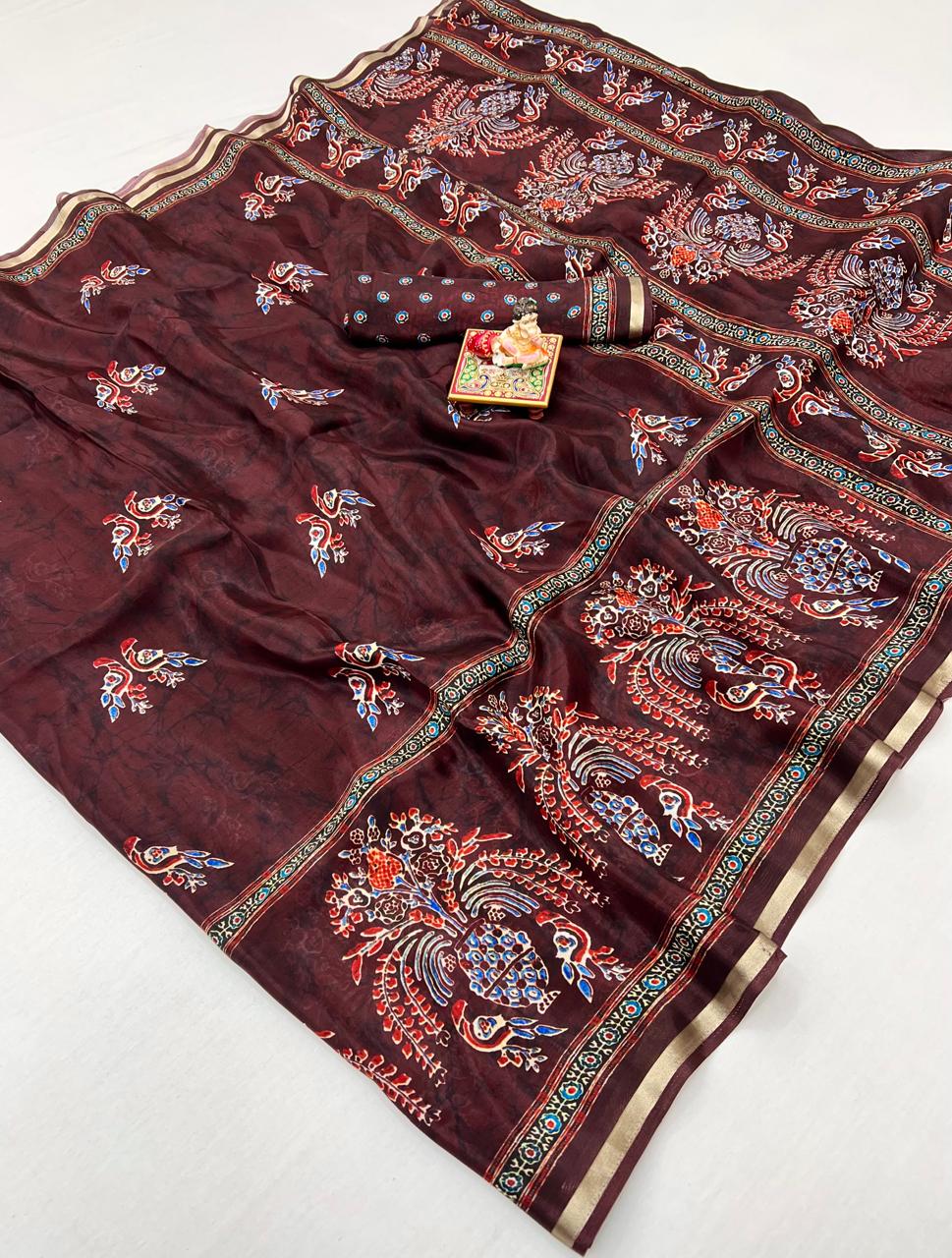
- Fabric preparation: Cotton or another suitable textile is washed to remove surface treatments, oils and loose impurities. A clean, absorbent base allows the resist and dye to behave more consistently.
- Block placement: The printer positions a carved wooden block and presses the resist paste onto the cloth. Repeated motifs require careful alignment across the length and width of the saree.
- Resist protection: Sawdust or a similar dry material may be sprinkled over the wet paste. The protective layer helps prevent the mud from sticking to surrounding cloth or breaking away before dyeing.
- Dyeing: The fabric is placed in a dye bath. Indigo can create blue grounds, while other dyes may produce rust, brown, black, mustard or related shades depending on the process.
- Reprinting: Additional colour layers or blocks may be applied after drying. A printer must allow enough time between stages to avoid muddying the design.
- Washing: Washing removes the mud resist and loose dye. The previously covered areas emerge as lighter motifs, sometimes with a softly feathered boundary.
The apparent simplicity of a Dabu motif hides demanding timing and pressure control. Too much paste can flatten detail, while too little paste can allow dye to seep into the protected area. Uneven block pressure can make one part of a border look darker than another. Such variations can signal handwork, although they should remain intentional rather than careless.
Dabu printing also requires a printer to understand how cloth absorbs dye. A tightly woven cotton and a loosely woven cotton won't produce identical edges. Humidity, drying time and the concentration of the dye bath can affect the final appearance, which explains why two sarees using a similar block may still look noticeably different.
Dabu Print Sarees Carry a Different Character From Regular Block Prints: How Do They Compare?
Regular block prints usually offer clearer direct impressions, while Dabu prints tend to show greater tonal depth, softened edges and visible interaction between resist and dye. Neither method is automatically superior; the right choice depends on the appearance, formality and maintenance a wearer wants.
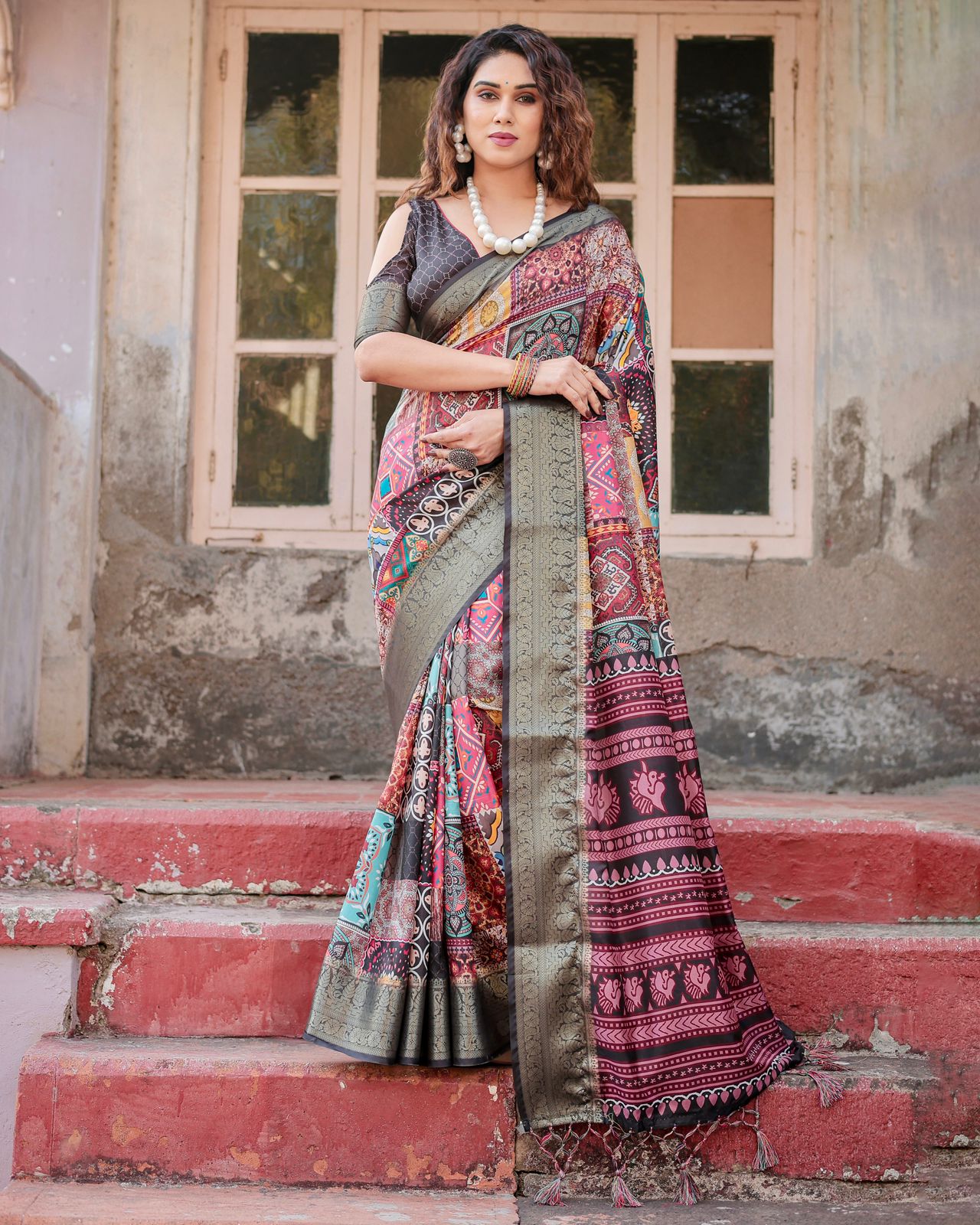
Edges and motif definition
A regular direct block print often has a distinct outline because the dye or pigment lands directly on the fabric. Dabu motifs can look gentler at the margins, with small areas where dye has travelled near the resist. A sharp geometric repeat therefore looks different from a Dabu floral, trellis or dotted arrangement even when both use wooden blocks.
Colour behaviour
Dabu colour often has a grounded, slightly weathered quality because the fabric passes through a resist and dye sequence. Indigo may show small variations from one section to another, especially in hand-processed cloth. Regular block prints can also have layered colours, but direct pigment printing generally produces a more immediately even and graphic result.
Surface and drape
Print method doesn't determine drape by itself; fibre, weave and finishing have greater influence. A Dabu print on soft cotton may feel breathable and relaxed, while a printed Banarasi silk or Chanderi base will have a different fall and sheen. Comparing print technique without checking the fabric can lead to the wrong purchase.
Multicolor Grid Print Linen Cotton Saree with Purple Border demonstrates how a structured grid can create a crisp, contemporary rhythm, whereas a Dabu layout usually gains interest from resist-softened boundaries. Black Maroon Chanderi Printed Saree for Women illustrates another important point: Chanderi's lightness and subtle translucency influence the visual result as much as the printed motif does.
Dabu Print Sarees Carry a Different Character From Regular Block Prints: Which Fabrics and Colours Suit Them?
Cotton is the most practical base for a classic Dabu look because its absorbency supports resist work and its breathable drape suits everyday wear. Cotton-linen blends can add body and a slightly textured hand, while silk bases create a more formal interpretation that should not be assumed to follow the same traditional process.
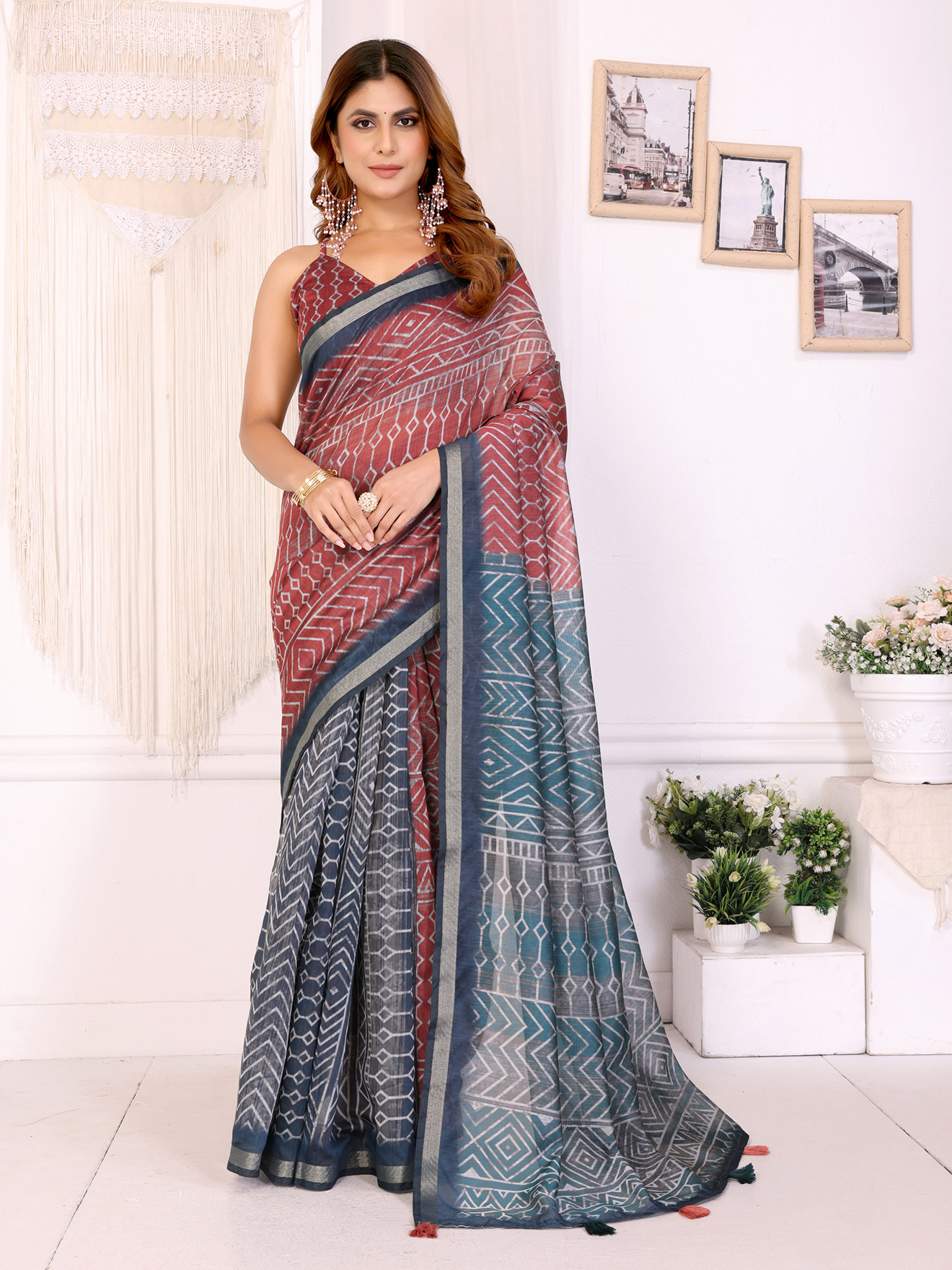
Indigo, black, rust, madder-like red, mustard, cream and brown are commonly associated with the earthy visual language of resist printing. A deep indigo ground with pale motifs creates strong contrast, while a muted brown or rust ground produces a quieter result. Colour names alone don't confirm natural dye use; a seller must specify whether dyes are natural, synthetic or a combination.
Indigo Blue Geometric Print Saree with Contrast Pallu is a useful reference for understanding why a contrast pallu changes the balance of a saree. A geometric Dabu design can look especially effective when the border and pallu interrupt the repeat. Blue Lehariya Print Dola Silk Saree With Rich Jacquard Border combines a wave-like print with a woven border, showing how printed movement and woven structure create a different visual language from resist motifs.
Royal Banarasi Silk Saree with Digital Floral Print demonstrates why digital printing should not be confused with block printing. Digital printing can reproduce detailed floral artwork with considerable precision, while a Dabu block is limited by the carved design, the resist paste and the printer's hand. Red Blue Printed Banarasi Silk Saree Online India offers another example of how the sheen and structure of Banarasi silk can dominate the appearance of a print.
Shoppers looking for affordable pattern-led drapes can compare the Printed Sarees Collection Under 3000 with Silk Sarees Under 3000 With Discount, but price should not be used as proof of hand printing. Fabric composition, finishing, blouse inclusion and washing instructions provide stronger evidence of value. Pink Georgette Sarees may suit someone seeking a fluid, festive drape, but georgette will behave differently from absorbent cotton during printing and care.
Dabu Print Sarees Carry a Different Character From Regular Block Prints: How Should You Style Them?
A Dabu print saree pairs best with accessories and blouse details that support its tactile, handcrafted appearance instead of competing with every motif. A plain blouse in a ground colour, a related contrast shade or a restrained border colour usually gives the print enough visual space.
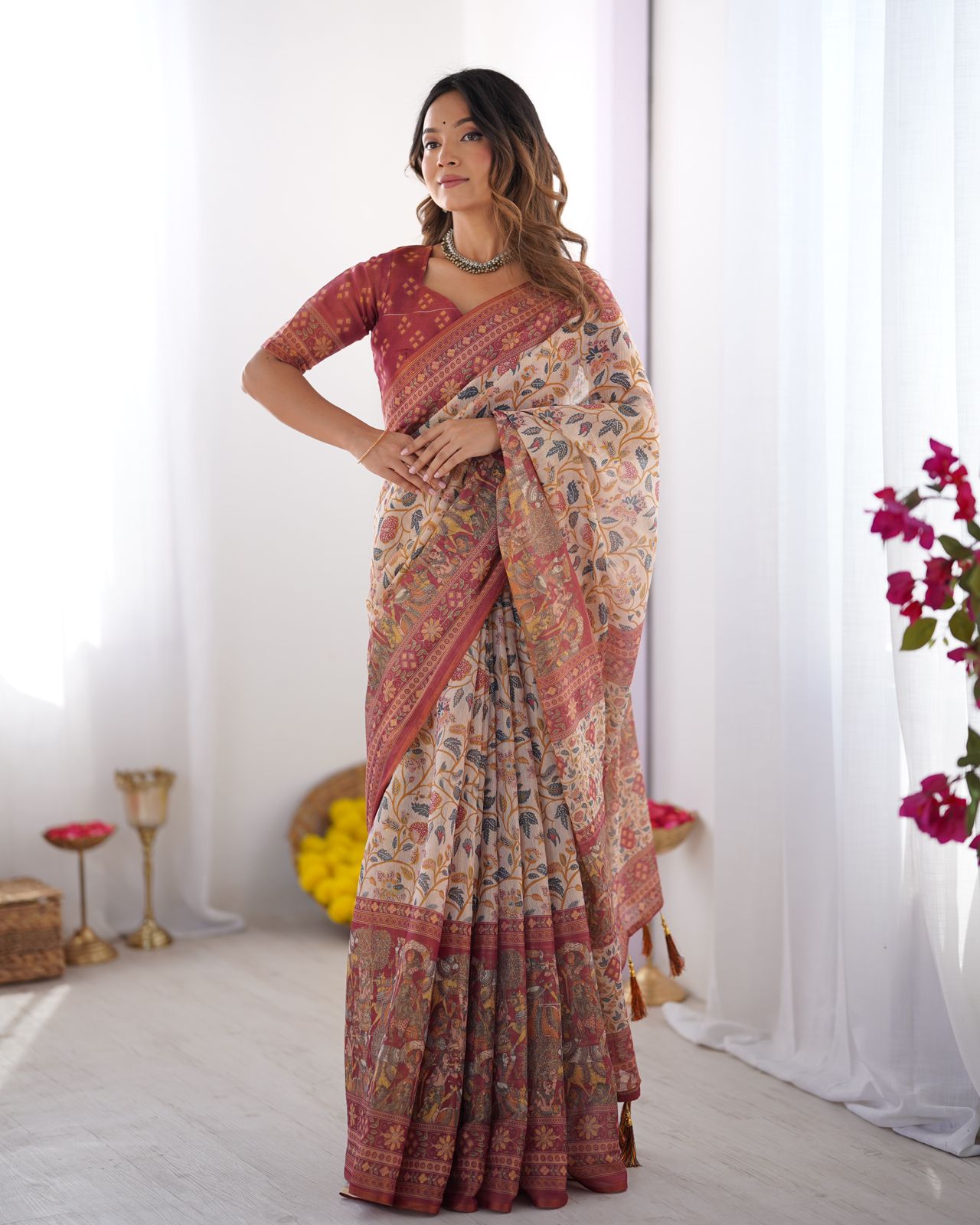
- For daytime wear: Choose a cotton blouse, small silver earrings and a practical low or mid-height heel. A neat front pleat keeps a dense repeat from becoming visually crowded.
- For work or cultural events: Wear a solid blouse with three-quarter sleeves, a narrow belt or a simple metal watch. Keep the jewellery consistent with the saree's palette rather than matching every printed colour.
- For an evening gathering: Use a silk-blend or textured blouse, antique-finish earrings and a more defined pallu drape. Avoid placing a heavily embroidered blouse beneath an already complex resist pattern unless deliberate contrast is the goal.
- For a contemporary look: Pair an indigo or black Dabu-style saree with a cropped blouse, sculptural earrings or a clean sleeveless cut. Keep the pleats pressed while allowing the pallu to retain a little movement.
Dabu print doesn't need to be styled as rural costume. The same principle works with a modern blouse and minimal accessories because the print already supplies texture and history. Elegant Mustard Dola Butti Silk Saree With Blouse shows how a warm mustard tone can be carried into a blouse-led look, while Buy Peach Abstract Print Erode Cotton Saree with Blouse Set demonstrates how a softer contemporary palette can make printed dressing feel less formal.
A saree with a busy Dabu repeat benefits from a serene blouse. A saree with a broad plain field can support a more detailed blouse, oxidised silver jewellery or a patterned potli. For a Haldi ceremony, mustard, turmeric yellow, indigo and rust create a meaningful palette without requiring sequins. For a daytime family gathering, cotton, silver and a low-contrast blouse keep the outfit comfortable for several hours.
Dabu Print Sarees Carry a Different Character From Regular Block Prints: How Should They Be Washed?
Dabu sarees should generally be washed gently in cold water, separately for the first few washes, and dried away from harsh direct sunlight. Exact instructions depend on the fibre and dye, so the care label takes priority over a general rule.
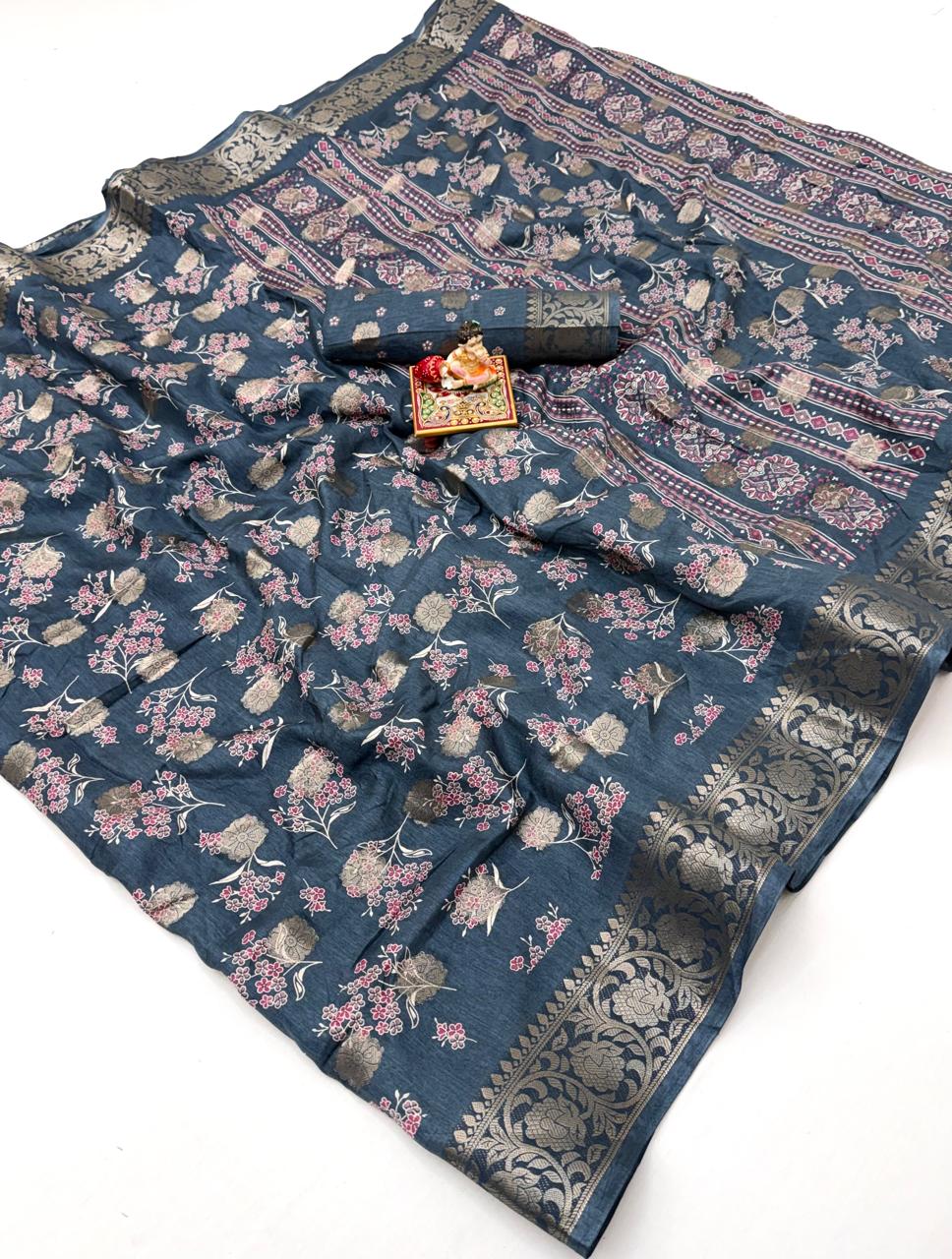
- Test a hidden corner with a damp white cloth before the first full wash. A small amount of colour transfer can occur with deeply dyed indigo or red textiles.
- Use a mild liquid detergent and avoid bleach, optical brighteners and strong stain removers. Harsh chemicals can fade both resist-dyed and pigment-printed surfaces.
- don't scrub printed motifs or soak the saree overnight. Five to ten minutes of gentle movement is usually safer than prolonged soaking.
- Rinse until the water is reasonably clear, then press out excess water without wringing or twisting the saree.
- Dry the saree inside out in shade or soft indirect light. Prolonged harsh sunlight can weaken fibres and accelerate colour fading.
- Iron on the reverse at a low or medium setting appropriate to the fabric. Place a thin cotton cloth between the iron and delicate printed areas when necessary.
Professional dry cleaning may be preferable for silk, zari borders or a saree with uncertain dye stability. Banarasi silk, Kanjeevaram silk, Chanderi and heavily finished fabrics should not be treated like everyday cotton. Folding a completely dry saree in breathable cotton storage rather than plastic helps reduce moisture-related damage.
Colour variation after washing isn't always a defect. Natural-looking dye movement, slight softening of edges and a less stiff hand can be part of the textile's character. Major bleeding, sticky residue, a strong chemical odour or rapid loss of the motif indicates a quality or finishing concern and should be documented promptly for the seller.
Dabu Print Sarees Carry a Different Character From Regular Block Prints: What Should You Check Before Buying?
Before buying a Dabu saree, check the fibre, printing method, colourfastness guidance, measurements, blouse details and close-up photographs. These details reveal more about the purchase than a broad label such as "designer" or "traditional."
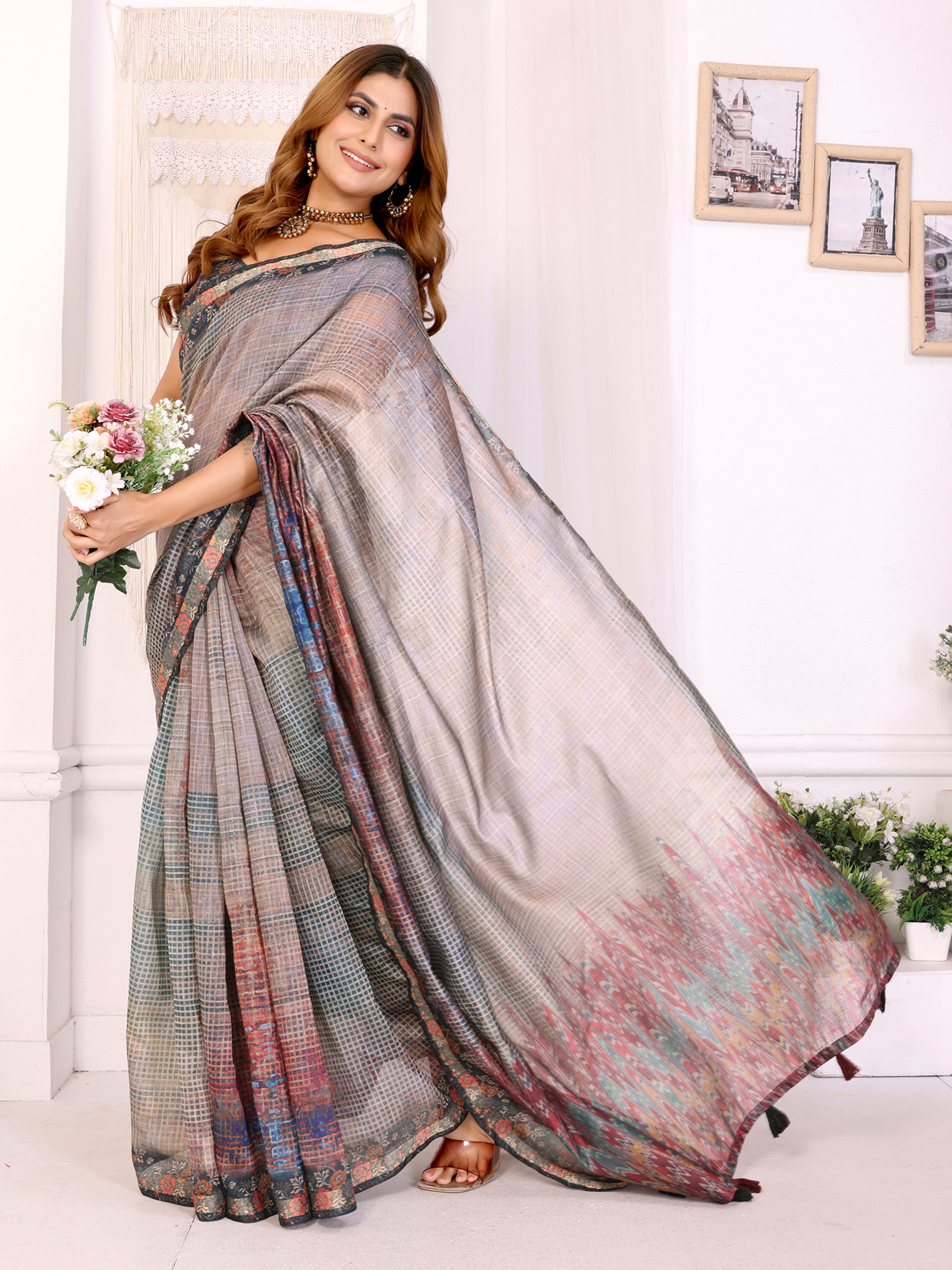
- Fabric: Confirm whether the saree is cotton, linen cotton, silk, georgette, Chanderi or another blend. Fibre determines breathability, fall and care.
- Technique: Look for a specific reference to mud resist, resist dyeing or hand block printing. Do not assume every soft-edged print is Dabu.
- Dimensions: Check saree length, width, blouse-piece length and border width. A short blouse piece may affect tailoring choices.
- Print placement: Ask whether the pallu and border are separately designed, digitally printed, woven or plain. Different construction can change the overall look.
- Colour information: Read the first-wash and colourfastness instructions, especially for indigo, black, red and dark blue.
- Price context: Compare fabric, labour, finishing and included blouse material rather than treating a low price as proof of a bargain.
Dabu Print Sarees Carry a Different Character From Regular Block Prints because process, not just appearance, shapes their identity. A careful buyer can appreciate the softened motifs and tonal variation while still checking whether the actual saree matches the claimed technique. That balance makes the purchase more informed and the garment easier to wear for years.
Common Questions About Dabu Print Sarees and Block Printing
What is the difference between Dabu print and regular block print?
Dabu print uses a mud-based resist to cover selected areas before dyeing, while regular direct block printing places dye or pigment directly onto the fabric. Dabu motifs often have softer edges and more layered colour variation.
Are Dabu sarees made with natural dyes?
Some Dabu sarees use natural dyes, but Dabu printing alone does not guarantee natural dyeing. Check the product description for a specific statement about natural, synthetic or blended dyes.
Do Dabu sarees bleed colour after washing?
Deep indigo, black and red Dabu sarees can release some excess colour during early washes. Wash the saree separately in cold water, use mild detergent and follow the care label to reduce transfer.
Which fabric is best for a Dabu print saree?
Cotton is the most practical choice for a breathable, everyday Dabu saree. Linen cotton offers more body, while silk or Chanderi creates a dressier drape but requires more careful handling.
Can I wear a Dabu print saree to a wedding?
A Dabu saree can suit a daytime wedding event when styled with a refined blouse, jewellery and polished drape. For a more formal evening wedding, silk, zari or a richer woven border may provide greater occasion weight.
How can I tell whether a Dabu saree is genuinely hand printed?
Look for a detailed description of mud resist or resist dyeing, close-up images and small, consistent variations in motif placement. Uneven edges alone are not conclusive because machine printing can imitate handcrafted effects.